Category: Technology

  • Act Fibernet rolls out AI-powered Act SmartWi-Fi® for seamless connectivity

    Act Fibernet rolls out AI-powered Act SmartWi-Fi® for seamless connectivity

    MUMBAI: Say goodbye to buffering and dead zones! Act Fibernet has unveiled its game-changing ‘Act SmartWi-Fi®’, powered by AI, designed to deliver an unparalleled Wi-Fi experience. So, whether you’re streaming, gaming, or working remotely, this innovation ensures top-notch connectivity across all your devices, 24×7, in every corner of your home.

    The magic behind this transformation? ‘Act Zippy’, a proprietary router operating system that upgrades traditional Wi-Fi to a smart, self-optimising marvel. Powered by AI and developed in collaboration with Aprecomm.ai, Act Zippy detects potential interferences in your network and resolves them in real-time using advanced features like channel switching and band steering.

    Act Fibernet chief marketing & customer experience officer Ravi Karthik summed it up perfectly, “With the number of devices connected to home Wi-Fi increasing significantly, providing a superior Wi-Fi experience is our key focus area. Act SmartWi-Fi® scans your unique home environment and automatically improves the Wi-Fi experience for all connected devices.”

    ‘Act SmartWi-Fi®’ not only promises seamless connectivity but also adds a sprinkle of cheer with its new mascot, ‘Act Zippy’, a dynamic representation of reliability and intelligence.

    Act Zippy uses advanced AI to proactively monitor and optimise your in-home Wi-Fi. It ensures you can stream in 4K without a hitch, play online games without lag and conduct Zoom calls without pixelated faces.

    Starting 10 January 2025, all new customers in select cities will automatically be onboarded to the Act SmartWi-Fi® platform. Existing customers eligible for the update will receive it in phases – and here’s the best part – it’s completely free!

    The Act team isn’t stopping here. With a promise to revolutionise the home Wi-Fi space, they’re rolling out a 360-degree campaign across outdoor media, digital platforms, and the Act Fibernet App to keep users informed about the latest innovations.

    So, are you ready to experience Wi-Fi that’s as smart as you or maybe more (definitely more)? 

  • Times Network hosts Digit Zero1 Awards in New Delhi

    Times Network hosts Digit Zero1 Awards in New Delhi

    MUMBAI: The Digit Zero1 Awards 2024, hosted by Times Network, celebrated outstanding advancements in technology and innovation, recognizing 71 winners across three categories. the Digit Zero1 Award, Digit Best Buy Award, and Digit Popular Choice Award. With over two decades of expertise and leadership in consumer technology, the Digit Zero1 Awards 2024 is recognized as the Industry’s only performance-based awards, dedicated to recognizing and celebrating excellence in technology and innovation.  The event, held in the capital city, brought together industry leaders to honor excellence in consumer technology.

    Driving the essence of these awards was a rigorous and scientific testing process conducted at Digit’s in-house testing labs. Each device was meticulously evaluated through 100+ tests conducted across key performance parameters in each category.  Winners in each category were determined based on a comprehensive performance analysis of their total scores, ensuring only the very best products were honoured. In 2024 alone, Digit’s team of experts tested over 1,000 products, setting a benchmark for thoroughness and reliability in the evaluation process, rewarding the best in each category. 

    winners

    • Beyond celebrating technological achievements, the awards served as a platform to spark meaningful conversations about the future of consumer technology. The event featured two thought-provoking panel discussions that brought together industry leaders and visionaries. The panels, titled ‘Predicting the Future of Consumer Tech in India – AI, 5G, AIoT, and More,’ and ‘Rise of India in Tech: Home-grown Brands and Their Success Story,’ delved into transformative trends shaping the tech landscape, integration of artificial intelligence, the expansion of 5G, evolution of AIoT, and the remarkable contributions of Indian brands in driving innovation and establishing India as a global technology powerhouse. 

      Delivering the special address, former union minister Rajeev Chandrasekhar said, “India, after many years of hibernation and being almost absent from the global electronics value chains and innovation discourse, has in the last four to five  years made a very significant presence. A decade ago, electronics manufacturing in India was dominated by domestic brands getting products designed outside and manufactured in China. In the last three to four  years, we are seeing not just global and Indian brands being manufactured here, but also being designed to be manufactured here. This transformation across the value chain—design, manufacturing, and testing—has been enabled by the Government of India’s pivot from an import substitution framework to an export-led electronics manufacturing and design framework. The three important trends to lookout for are, digitization, as products are becoming smarter, connected, and with AI, even smarter connected products. The second trend is India’s growing footprint in the global value chains post-COVID. The third trend is the emergence of highly intelligent digital products powered by AI and edge AI. Advancements in local AI and groundbreaking chip architectures from companies like Nvidia are driving a once-in-a-lifetime shift, replacing legacy architectures in automotive, industrial, and consumer tech with new, transformative platforms that redefine electronics innovation.” 

      Speaking at the event,  Times Network  COO & president digital Rohit Chadda announced:  “Digit provides the most authoritative product reviews and ratings in India, helping readers and consumers make the most informed decisions about their tech purchases. In 2024, Digit facilitated over Rs.200 Crore worth of online purchases through its platforms which displays the trust consumers have in our product reviews and testing methodology. Digit will take its commitment to authentic and objective product reviews a step further with the launch of a new state-of-the-art testing lab in New Delhi. Equipped with the latest technology, the lab shall extend Digit’s device testing capabilities to new product categories like home appliances using a rigorous testing methodology, delivering precise and comprehensive evaluations.” 

  • Richard Welsh Elected President of SMPTE

    Richard Welsh Elected President of SMPTE

    MUMBAI: The Society of Motion Picture & Television Engineers (SMPTE) earlier this week  announced the election of Richard Welsh as its new president, taking office on 1 January 2025. Welsh, who previously served as SMPTE’s executive vice president, will lead the organisation for a two-year term, concluding on 31 December  2026.

    “I am honored to have been elected SMPTE president and look forward to collaborating with the SMPTE community globally to advance our industry,” Welsh stated. He highlighted  that for over a century, SMPTE’s mission has been to bring moving images to audiences worldwide. Given the proliferation of video devices and on-demand content, Welsh believes the Society’s commitment to ensuring high-quality media experiences is more crucial than ever.

    As the current senior vice president of innovation at Deluxe, Welsh brings over a decade of experience on the SMPTE board, including roles as vice president of education and governor for EMEA and central/south America. He is also a board member of IBC and co-founder of Volustor, a volumetric asset management company.

    Welsh began his illustrious career at Dolby Laboratories, ultimately rising to director of digital cinema services. He also led operations for Technicolor’s digital cinema and localisation services and currently serves as an associate lecturer at Southampton Solent University while co-founding Sundog Media Toolkit

    SMPTE executive director Sally-Ann D’Amato praised Welsh as an “innovative thinker with bold plans for the future.” 

    She highlighted his commitment to expanding the organisation’s reach to diverse audiences and fostering early-career professionals, expressing eagerness to collaborate on turning his vision into reality.

  • Nemetschek group expands executive board with global tech leader Usman Shuja

    Nemetschek group expands executive board with global tech leader Usman Shuja

    MUMBAI:  Global software provider for the construction and media  (under the Maxon umbrella) industries, the Nemetschek group,  today announced the appointment of Usman Shuja to its executive board, effective 1 January 2025.

    Shuja, who was previously the chief division officer (CDO) of the build & construct division and CEO of Bluebeam, becomes the third member of the executive board, joining CEO Yves Padrines and CFO Louise Öfverström.

    Shuja, an accomplished technology leader with extensive experience driving operational excellence in high-growth companies, was unanimously appointed by the supervisory board. Since joining the Nemetschek group in September 2023, he has successfully implemented key strategic priorities, including the subscription transition of Bluebeam and the acquisition of GoCanvas, a leading SaaS provider of field worker collaboration software.

    Said Padrines:  “Shuja  brings extensive industry expertise and a deep understanding of how companies innovate and evolve to better serve their customers.”

    Added Shuja: “We have a tremendous opportunity to drive innovation, advance the industry, and deliver exceptional value to our customers and partners.”

    The Nemetschek group is a globally leading provider of software for digital transformation in the architectural engineering and construction (AEC/O) and media industries. Its intelligent software solutions cover the entire lifecycle of construction and infrastructure projects, allowing customers to plan, construct, and manage buildings and infrastructure more efficiently and sustainably.  

    Maxon, which is part of the group,  makes powerful, yet approachable software solutions for content creators working in 2D and 3D design, motion graphics, visual effects and visualisation. Among the products targeted at media and entertainment industry are:  Cinema 4D suite of 3D modeling, simulation and animation technology; the creativity-on-the-go Forger mobile sculpting app; the diverse Red Giant lineup of revolutionary editing, motion design and filmmaking tools; the leading-edge, blazingly fast Redshift renderer; and ZBrush, the industry-standard digital sculpting and painting solution.

  • Bharath Kumar takes over as APAC president of AV solutions  company Kramer

    Bharath Kumar takes over as APAC president of AV solutions company Kramer

    MUMBAI: Audiovisual experiences company Kramer has announced a significant leadership transition in its Asia-Pacific (APAC) region. Effective 15 January  2025, Bharath Kumar has taken  over as president, Kramer APAC, succeeding Marc A. Remond, who has stepped down from his position.

    Headquartered in Tel Aviv, Israel, with a global presence, Kramer’s audiovisual experts are pioneering the future of engagement technology. From AVSM solutions to cloud-based communication and collaboration technologies, Kramer aims to create more engaging, inclusive, and connected environments.

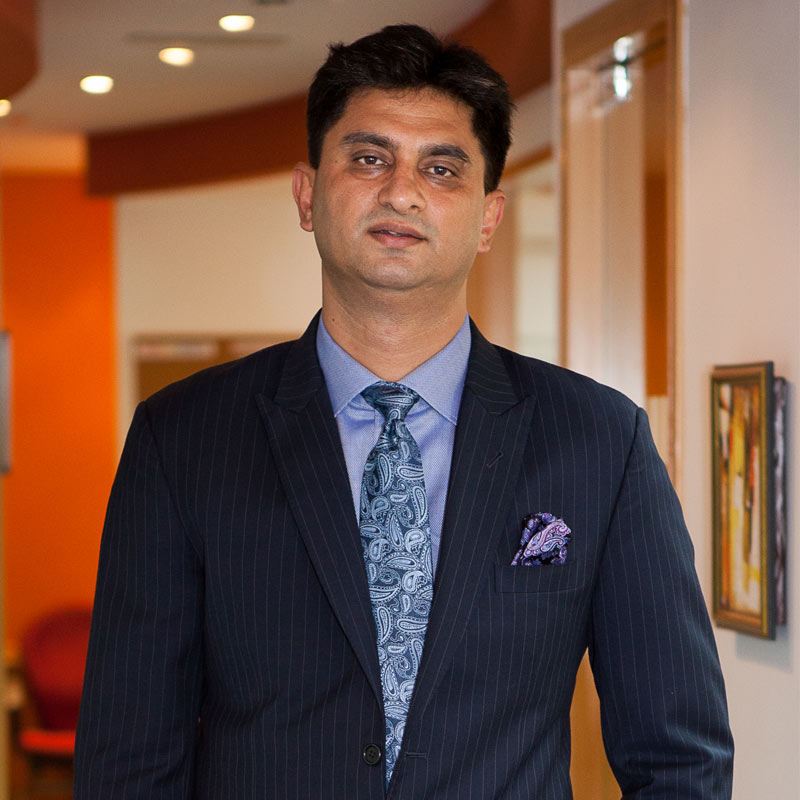
    Bharath Kumar, a veteran with 19 years at the company, is well-equipped for this pivotal role, having played a key part in the company’s growth and market presence. His contributions include establishing Kramer India, managing global accounts, and serving as the APAC vice-president sales.

    Kumar is recognised as a respected leader in the audiovisual industry, with deep knowledge of the company’s business and strong regional relationships that promise continuity and a solid foundation for future expansion.

    Marc A. Remond has made notable contributions during his tenure, including the establishment of Kramer’s new regional headquarters in the APAC region and the cultivation of strong market partnerships. The company  extended its heartfelt gratitude to Marc for his leadership and wished him success in his future endeavours.

    Kramer CEO Gilad Yron expressed confidence in the leadership transition: “As we look ahead, I am confident that Bharath’s extensive experience, industry leadership, and strategic vision will further elevate Kramer’s presence and impact in this critical region. At the same time, we are grateful to Marc for his leadership and the strong foundation he has built for Kramer’s success in APAC.”

  • Saraswathi Ramachandra joins Lightcast as managing director, India head

    Saraswathi Ramachandra joins Lightcast as managing director, India head

    MUMBAI:  Saraswathi Ramachandra has been appointed as the managing director & country head of Lightcast, marking a new chapter in her distinguished 25-year career in IT and data analytics. With a profound commitment to innovation and team building, Ramachandra sees her role as an opportunity to develop a world-class global capability center (GCC) that fosters collaboration and strategic decision-making.

    “Lightcast’s vision to establish a robust GCC aligns perfectly with my passion for innovation and talent development,” Ramachandra said. She aims to create an environment that not only supports global operations but also drives sustainable growth by leveraging Lightcast’s unique position in data, insights, and technology.

    In her previous role as director at Citi, Ramachandra led initiatives focusing on risk and fraud analytics while managing an innovation lab. She has a proven track record of building high-performing teams and enhancing operational efficiency across various organizations, including Danske IT, Cisco, and Accenture.

    Her academic credentials include a master’s degree in computer software engineering from the Birla Institute of Technology and Science, with additional executive education from Yale University in decision-making. Ramachandra’s extensive experience in setting up GCCs and managing large-scale transformations positions her to make a significant impact at Lightcast.

    Ramachandra expressed her enthusiasm for this new role, saying, “Joining Lightcast is more than just a career move; it’s a chance to make a meaningful difference in the industry.” 

    She looks forward to working with a talented team dedicated to delivering transformative solutions.

  • Asha Kulkarni joins Rise advisory board to promote gender diversity in mediatech

    Asha Kulkarni joins Rise advisory board to promote gender diversity in mediatech

    MUMBAI: Asha Kulkarni, vice-president of  partnerships &  ecosystem**  Zee Entertainment Enterprises Limited (Zeel), has announced her involvement with the Rise advisory board, a nonprofit organization that champions gender diversity within the broadcasting and media technology sectors. 

    Under the leadership of Shivani Kochhar in India, Rise focuses on impactful initiatives designed to empower women through programs like an annual mentoring initiative, the Rise Awards that honor outstanding women, and the Rise Up Academy that aims to inspire the next generation. Recently, media veteran Sulina Menon too had been co-opted onto  the board too. 

    Asha expressed her gratitude for the opportunity, stating, “It’s a privilege to contribute to empowering women and promoting inclusivity in our field. Serving as a mentor for the past year has been incredibly rewarding.” She invites others to support Rise and join their dynamic community.

    With over 20 years of experience in the media industry, Asha has developed expertise in launching and scaling OTT/D2C platforms, managing large delivery teams, and fostering strategic partnerships across the media value chain.

  • Netgear names regional heads to strengthen strategic market leadership

    Netgear names regional heads to strengthen strategic market leadership

    MUMBAI: Is leadership born or forged through experience?

    Imagine a world without connectivity—the heartbeat of modern businesses would stall.

    Just as a company thrives on sales, the networking industry thrives on innovation and strategic leadership. Who better to drive this growth than seasoned sales veterans with a knack for building connections that go beyond cables and routers?

    Netgear, a global powerhouse in networking solutions, is rewriting its growth story with a bold move: appointing Annamalai AR as the country sales head for the middle east and Africa (MEA), and Abhishek as the sales leader for India, SAARC, and Mauritius.

    These appointments signal more than just leadership changes—they mark a strategic leap into untapped opportunities across high-potential markets.

    The question is, how will these changes shape the future of connectivity?

    Annamalai, a veteran with 11 years of dedicated service at Netgear, will now oversee sales and operations in the MEA region, including Israel, Turkey, and North Africa. Known for his exceptional track record and deep market insights, Annamalai is poised to capitalise on the growing demand for tailored networking solutions in the dynamic MEA landscape.

    “I am honoured to take on this expanded role and contribute to Netgear’s success in the MEA region. These markets present immense potential, and I look forward to building on our strong foundation to drive growth and deliver innovative solutions for our customers,” said Annamalai.

    Abhishek, recognised for his strategic vision and leadership, will now lead Netgear’s sales and operations across India, SAARC, and Mauritius. His unwavering dedication and proven ability to exceed expectations make him the ideal choice to further strengthen Netgear’s presence in these diverse markets.

    “This new role is an exciting challenge, and I am eager to collaborate with our teams and partners to further enhance Netgear’s market leadership in India and neighbouring regions. Together, we will continue delivering impactful solutions to our customers,” said Abhishek.

    Netgear, APAC senior director – commercial, Marthesh Nagendra praised the new appointments, “Both Annamalai and Abhishek have been integral to Netgear’s success in their respective markets. Their leadership, dedication, and vision are essential as we continue to expand our global presence and redefine connectivity for customers worldwide.”

    These appointments align with Netgear’s mission to lead the future of connectivity by fostering innovation and nurturing leadership talent. By empowering regional leaders, Netgear is positioning itself to deliver robust, customer-centric solutions while driving growth in the rapidly evolving networking industry.

  • It’s raining new NextGen TV sets & receivers at  CES 2025

    It’s raining new NextGen TV sets & receivers at CES 2025

    MUMBAI: There is a lot of excitement in the US about NextGen TV or TV broadcasts based on the ATSC 3.0 standard.  With 76 per cent of U.S. households now able to receive the signals,  America’s local TV broadcasters are hailing the introduction of new ATSC 3.0 receivers that will first be shown at next week’s Consumer Electronics Show (CES) in Las Vegas. The affordable options will add to consumer choice, from high-end NextGen TV sets to affordable accessories that can transform Android and Fire TV devices already in consumer homes. 

    “We are very excited about the expanded offerings from accessory device manufacturers for NextGen TV. The new low-cost Atlanta  DTH (ADTH) USB receiver, powered by Tolka, is built for existing Android and Fire TV televisions and will, at a very affordable price, expand the reach of NextGen TV into homes who already have those sets. ADTH is also about to introduce a new model that works without an internet connection and will be doing a software update for deployed ADTH devices to give them the same functionality. In addition, Zinwell is adding pause functionality to their accessory device, with an add-on hard disc drive. In 2025, RCA is also coming to market with two new NextGen TV sets that will join TV options already available from Panasonic, Sony, Samsung, Hisense, and TCL,” said Pearl TV managing director Anne Schelle. “We congratulate all of the manufacturers who are selling thousands of receivers each day to consumers looking for the best possible video and audio quality from local stations.” 

    Pearl TV is a business organisation of US broadcast companies with a shared interest in exploring forward-looking broadcasting opportunities, including innovative ways of promoting local broadcast TV content and developing digital media and wireless platforms for the broadcast industry. Pearl’s membership, comprising more than 820 TV stations, includes eight of the largest broadcast companies in America: Cox Media group, Graham Media group, Gray Television, Hearst Television, Nexstar Media group, Sinclair Broadcast group, the E.W. Scripps, and Tegna. 

    Broadcasters are loading up new services with new features for NextGen TV viewers, including interactive gaming options that will be launched by GameLoop. 

    GameLoop TV launches next week in Las Vegas on local NextGen TV channel 3.2 and will bring gaming directly to viewers with no additional hardware or subscriptions required. At the heart of GameLoop’s innovation is the channel’s exciting “play now” feature, which allows NextGen TV viewers to instantly play games showcased on the channel simply using their TV remote or mobile phone. 

    “We also salute TV broadcasters Gray and Sinclair, who are working to bring fun, interactive gaming to the living room through GameLoop – a service that utilises NextGen TV for web-based family fun that will work seamlessly with millions of installed NextGen TV sets. Easy interactivity is literally going to be a game-changer for viewers,” Schelle predicted. 

    High Dynamic Range (HDR) functionality is now live on more than 200 local NextGen TV services throughout the US , with more being added to enhance viewing of key sports games and other spectacles.  Broadcasters are promoting the advantages of NextGen TV this sports season on stations throughout the country and plan to continue these promotions as they continue to rollout HDR and Dolby Atmos services nationwide. 

    A holiday promotion effort in NextGen TV markets that began before December continues through early February, with broadcasters now indicating onscreen to viewers when local NextGen TV programming is available in HDR. 

    “We’re very excited to announce that broadcast stations throughout the country are adding HDR10+ capability in their NextGen TV broadcast services to accommodate a broad array of TV manufacturers. With other flavors of HDR that also may be present in the service, this allows every receiver to present the best picture possible, showing that local television just keeps getting better and better, which is exactly what we promised with the rollout of NextGen TV services,” Schelle said. In addition to providing better video quality through HDR, many markets are adding Dolby Atmos audio coding, which delivers immersive audio capability. 

    “HDR began for sports with the Kentucky Derby last spring. It really made the Olympic Games pop with brilliant video. We know that sports is a big driver for buying new TV sets as well as for enjoying broadcast services — your favorite games look even better in High Dynamic Range,” Schelle said. 

    Throughout the country, local stations not already broadcast on over-the-air ATSC 3.0 transmissions are gaining access to NextGen TV viewers through the innovative addition of more channels through broadcast internet protocol – or broadcast IP. These additional channels are available as NextGen TV channels and have added more choices for viewers in a range of markets, from public to commercial broadcasters who now have their programming available for NextGen TV viewers. 

    Consumers can easily find details of what NextGen TV services are available in their markets by visiting WatchNextGenTV.com, a resource maintained by Pearl that lists individual services by market and a full range of more than 90 NextGen TV receivers and antenna products certified to work seamlessly with the new services. 

  • Why Indian broadcast and OTT needs to adopt the ST 2110 standard in 2025

    Why Indian broadcast and OTT needs to adopt the ST 2110 standard in 2025

    MUMBAI: The media and entertainment industry is in the midst of rapid transformation, driven by evolving technologies and shifting workflows. As broadcasters and media companies adapt to meet new challenges, trends like artificial intelligence (AI), cloud-based production, IP infrastructure, and the rise of OTT platforms are reshaping how content is created, managed, and delivered.

    Among these innovations, the Society of Motion Picture and Television Engineers (SMPTE) ST 2110 standard continues to play a pivotal role, offering a scalable and flexible foundation for the industry’s evolving needs. This article explores the key trends redefining media workflows, including the significant growth of OTT services, particularly in high-demand regions like India, and highlights why  SMPTE ST 2110 remains essential in this changing landscape.

    (For those not in the know: ST 2110 is a suite of standards from the that describes how to send digital media over an IP network. It is intended to be used within broadcast production and distribution facilities where quality and flexibility are more important than bandwidth efficiency)

    Key Trends in 2024: AI, Cloud, and IP Integration

    Three trends have stood out prominently in 2024: artificial intelligence (AI) and cloud platforms for live production. While AI has generated buzz for its potential efficiencies and cost savings, it has also raised challenges around legitimacy, trust, and synthetic content. Still, AI continues to drive backend efficiencies, particularly in media asset management and post-production workflows.

    The OTT boom in India is primarily driven by affordable data plans and smartphone penetration, with platforms like Netflix and Amazon Prime competing against domestic players such as Zee5 and ALTBalaji. This growth highlights the need for robust, scalable infrastructure to manage diverse, multilingual content streams and deliver low-latency viewing experiences to millions of users daily.

    Cloud platforms have equally made waves, enabling virtualized software stacks for live production, post-production, and content delivery. Yet challenges like latency, bandwidth, and the capex vs. opex debate have slowed widespread adoption. This is especially true in regions experiencing a rapid rise in OTT consumption, like India, where cloud-based production is critical for supporting the massive demand for mobile-first content delivery and regional programming.
     

    ST 2110 as a Backbone for Integration

    As cloud and OTT workflows rise, ST 2110 remains central to modernising media production. Initially developed to replace SDI limitations, ST 2110 has become the standard for scalable, low-latency, uncompressed IP workflows. By enabling unified transport for video, audio, and metadata on a single fabric, ST 2110 simplifies operations and reduces hardware dependencies—key for supporting the complex workflows of OTT platforms producing original content and live events.

    For regions like India, where demand for OTT-driven production is surging, ST 2110 offers the flexibility to manage traditional broadcast workflows and the rapid scaling required to meet OTT platform expectations. The ability to integrate on-premise systems with cloud-based workflows positions ST 2110 as a critical enabler for companies delivering content across traditional broadcast and streaming platforms.

    However, adoption isn’t without challenges. The high cost of entry limits ST 2110 to more prominent broadcasters and media companies, where SDI inefficiencies justify the transition. Smaller players—many of whom power regional OTT content in India—will continue leveraging SDI workflows until more cost-effective solutions emerge.

    Trends Impacting ST 2110 Adoption

    In 2024, hybrid models integrating cloud-based and on-premise workflows gained momentum. While cloud platforms offer elasticity and scalability, concerns around latency and bandwidth persist. Many broadcasters and OTT platforms are experimenting with cloud tools to scale content delivery quickly, particularly for live OTT events and regional programming that demand agility.

    The slow adoption of cloud tools also reflects economic realities—especially for OTT platforms in price-sensitive markets like India, where flexible pricing and ad-supported models remain key. This makes hybrid workflows an attractive solution, offering the best of cloud-based scalability and on-premise reliability.

    ST 2110 complements this shift by providing a scalable foundation that allows broadcasters and OTT platforms to connect on-premise production with cloud tools. As platforms in India and beyond experiment with live streaming, disaster recovery, and temporary event production, ST 2110 enables seamless transitions between local and cloud-based environments.

    Looking Ahead: What’s Next in 2025?

    Looking ahead, the growth of OTT platforms will continue to reshape content delivery and production workflows. In markets like India, OTT adoption will drive demand for scalable, flexible production infrastructure capable of supporting diverse content types—from original digital series to live events. Hybrid monetisation models, heavy investment in regional content, and the rise of AI-driven personalisation will define the next phase of competition.

    Meanwhile, IP-based infrastructure will extend into post-production workflows and content delivery, supporting the needs of OTT platforms and broadcasters alike. Standards like ST 2110 and emerging technologies like Internet protocol media experience (IPMX)  will enable flexible, cost-effective experimentation and delivery of both live and on-demand content.

    Cybersecurity will also take center stage. As media companies, broadcasters, and OTT platforms increasingly rely on cloud and IP workflows, secure-by-design solutions will be critical for safeguarding content pipelines and protecting against piracy—one of the key challenges for OTT platforms in markets like India.

    2025 and the years beyond will be exciting and challenging for broadcasters of all kinds. Trends like AI, cloud workflows, and the rise of OTT platforms—especially in high-growth regions like India—are shaping a new future for content creation and delivery. 


    (Travis Wrigley is senior director of sales – APAC at Ross Video. The views expressed in this article are his own and Indiantelevision.com need not subscribe to them)

    Main picture generated to Microsoft as a visual depiction of the theme of the article. No copyright infringement is  intended)