Category: Technology

  • SeaChange to focus on blended entertainment services at The Cable Show

    SeaChange to focus on blended entertainment services at The Cable Show

    MUMBAI: At The Cable Show which takes place from 10-12 June, Washington, D.C. June, SeaChange International will demonstrate software that it says is giving rise to the global multi-screen television phenomenon and its emerging “blended entertainment services” trend toward incorporating OTT content. SeaChange‘s feature-rich Nitro subscriber experience software will provide the exciting consumer touchpoint for multi-screen demonstrations enabled by SeaChange‘s Adrenalin video platform, Infusion advanced advertising platform and Nucleus Soft Box gateway.

    SeaChange VP strategic marketing Alan Hoff said, “Next week SeaChange will demonstrate the many ways that it is enhancing cable service providers‘ position of strength by reaching every screen with rich and fully monetised subscriber experiences at home and on the go. Multi-screen is paving the way for the new advantage of blended entertainment services, where over-the-top content can be part of the service provider experience so subscribers get more of what they want from a single trusted source.”

    SeaChange will aim to define the evolving multi-screen television experience with:

    gateway-enabled multi-device media sharing throughout the home;
    cloud-based video streaming to iPads and other IP connected devices;
    on-demand services delivered through OTT streaming players;
    content offers and promotions that increase subscriber uptake;
    Video and interactive banner advertising tailored for every screen.
    These advanced capabilities come from open SeaChange software including:

    SeaChange Adrenalin and Nitro – the multi-screen video platform that‘s enabling operators of every size to deliver streaming video experiences and promotional packages to settops, iPads, smartphones, OTT players and other IP connected devices.

    SeaChange Nucleus Soft Box – the open gateway and application framework supporting a variety of apps, content services and guides, and putting service provider branded experiences on every video device at home.

    SeaChange Infusion – the ad platform that targets across television environments (linear, on-demand, Internet) and video devices with second screen app placements as well as pre-rolls, mid-rolls, banners, overlays and click action ads.

  • Netflix dominating the subscription video-on-demand (SVOD) subscribers market

    Netflix dominating the subscription video-on-demand (SVOD) subscribers market

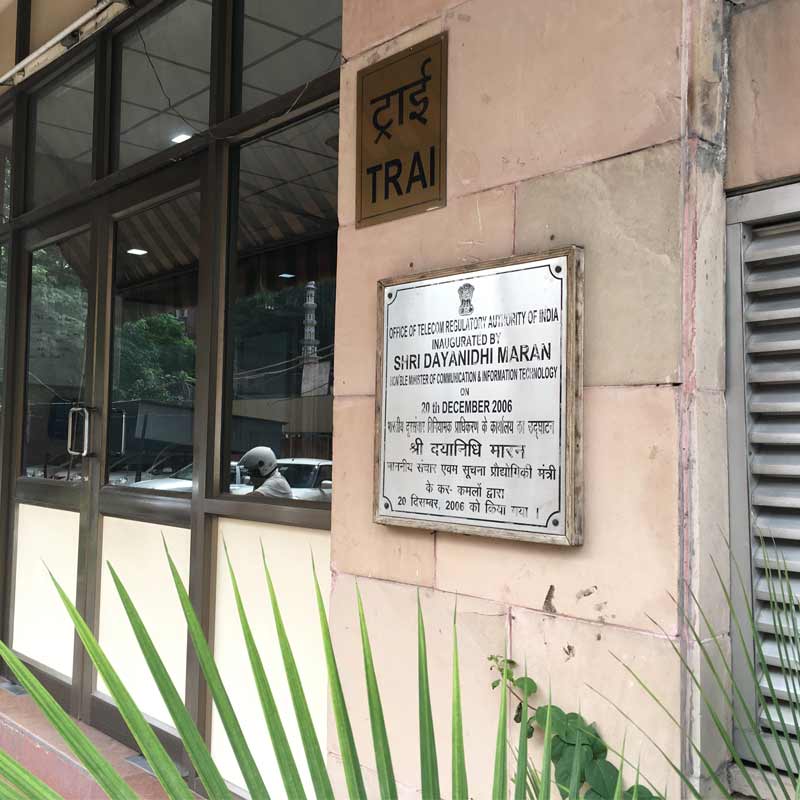
    NEW DELHI:The Telecom Regulatory Authority of India (TRAI) seems to be getting hyperactive. Just like its head the ever so aggressive Rahul Khullar.

    In the past month or so it has been releasing consultation papers and regulations like it is in a hurry. Today, it released another two draft regulations. Both relate to the interconnection agreements that broadcasters sign with distributors such as Cable TV, DTH and IPTV operators.

    Entitled the “Telecommunication (Broadcasting and Cable Services) Interconnection (Digital Addressable Cable Television Systems) (Second Amendment) Regulations, 2013” and the draft “Telecommunication (Broadcasting and Cable) Services (Fourth) (Addressable Systems) Tariff (Second Amendment) Order 2013,” they seek to amend some regulations that TRAI had passed earlier in relation to tariffs and interconnect agreements in earlier years. (Earlier, TRAI had notified the Interconnection Regulations for DAS dated 30 April 2012 as amended on 14 May last year and the Tariff Order applicable for the Addressable Systems dated 21 July 2010 as amended on 30 April last year).

    The amendments it has proposed state:

    * Multi system operators (MSOs) cannot seeks signals of a particular TV channel from a broadcaster under ‘must provide‘ clause while at the same time demanding carriage fee for carrying that channel on its distribution platform.

    * No minimum channel carrying capacity has been prescribed for the MSOs. However, the MSOs are mandated to carry the channels of broadcasters on non-discriminatory basis under the ‘must carry‘ provision.

    * The service providers of the addressable systems are allowed to price and package their offering of channels, however, they are required to comply with the modified twin conditions, as proposed in the draft amendment to the tariff order. These twin conditions are (a) the a-la-carte rate of a pay channel forming part of a bouquet shall not exceed two times the a-la carte rate of the channel offered by the broadcaster at wholesale rates for addressable systems (b) the a-la-carte rate of a pay channel forming part of a bouquet shall not exceed three times the ascribed value of the pay channel in the bouquet. The TRAI says it is doing this to ensure that the a-la-carte rates offered to the subscribers are reasonable vis-? -vis the bouquet/package rates.

    *As in the case of pay channels, operators can specify a minimum subscription period, not exceeding three months, for Free-to-Air (FTA) channels subscribed on a-la-carte basis by the subscribers.

    *Subscribers are free to choose channels on a-la-carte basis or bouquet/package basis or any combination of a-la-carte and bouquet/package.

    *Channels, such as HD orMUMBAI: According to The NPD Group, a global information company, growth in watching television programming is driving subscription video-on-demand (SVOD) viewership, and Netflix continues to clearly dominate the category.

    According to NPD‘s VideoWatch VOD report, in the first quarter of the year the number of viewers watching television shows using SVOD services increased by 34 per cent, compared to the same quarter year-ago. NPD‘s VideoWatch Digital tracking shows Netflix dominating the sector, with a 90 per cent share of video-streaming units during the first quarter, which was four percentage points lower than last year.

    In the TV category alone, which accounts for 80 per cent of streams, Netflix holds an 89 per cent share. HuluPlus showed healthy growth in 2013, with 10 per cent of TV streams in Q1, while Amazon Prime accounts for just two per cent of the overall TV units streamed.

    NPD senior VP of industry analysis Russ Crupnick said, “There‘s no doubt that Netflix is driving the growth in SVOD, particularly with increased attention to television programming. We are also seeing good gains in the streaming numbers from Hulu Plus and Amazon Prime, and while neither pose an immediate threat to Netflix it is interesting to see which services later adopters will try.”

    In the first quarter of 2012, 76 per cent of SVOD subscribers streamed only from Netflix. This year that figure fell to 67 per cent, while 10 per cent of SVOD streamers used both Netflix and Amazon Prime, and eight per cent used both Netflix and Hulu.

    Crupnick said, “Since its launch, Netflix Watch Instantly has enjoyed a virtual monopoly on the SVOD market, and the company still has a quite comfortable market-share lead. While Hulu Plus and Amazon both still have a long way to go before they come close to catching Netflix, we are beginning to see increasing trial of these services, even among some Netflix users.” 3D, requiring special type of set top boxes are to be offered on a-la-carte basis and if such channels are also offered as a part of a bouquet(s), corresponding to each such bouquet, the operator would be required to offer bouquet(s) excluding the HD and 3D channels, at a reduced price, commensurate to the rates of these HD and 3D channels.

    Written comments on these draft amendments have been invited from the stakeholders by 18 June.

    You can download the two new proposed amendment drafts by clicking on the following links:

    Telecommunication (Broadcasting and Cable Services) Interconnection (Digital Addressable Cable Television Systems) (Second Amendment) Regulations, 2013

    Telecommunication (Broadcasting and Cable) Services (Fourth) (Addressable Systems) Tariff (Second Amendment) Order 2013

  • TRAI releases draft tariff order and DAS interconnect regulations

    TRAI releases draft tariff order and DAS interconnect regulations

    NEW DELHI:The Telecom Regulatory Authority of India (TRAI) seems to be getting hyperactive. Just like its head the ever so aggressive Rahul Khullar.

    In the past month or so it has been releasing consultation papers and regulations like it is in a hurry. Today, it released another two draft regulations. Both relate to the interconnection agreements that broadcasters sign with distributors such as Cable TV, DTH and IPTV operators.

    Entitled the “Telecommunication (Broadcasting and Cable Services) Interconnection (Digital Addressable Cable Television Systems) (Second Amendment) Regulations, 2013” and the draft “Telecommunication (Broadcasting and Cable) Services (Fourth) (Addressable Systems) Tariff (Second Amendment) Order 2013,” they seek to amend some regulations that TRAI had passed earlier in relation to tariffs and interconnect agreements in earlier years. (Earlier, TRAI had notified the Interconnection Regulations for DAS dated 30 April 2012 as amended on 14 May last year and the Tariff Order applicable for the Addressable Systems dated 21 July 2010 as amended on 30 April last year).

    The amendments it has proposed state:

    * Multi system operators (MSOs) cannot seeks signals of a particular TV channel from a broadcaster under ‘must provide‘ clause while at the same time demanding carriage fee for carrying that channel on its distribution platform.

    * No minimum channel carrying capacity has been prescribed for the MSOs. However, the MSOs are mandated to carry the channels of broadcasters on non-discriminatory basis under the ‘must carry‘ provision.

    * The service providers of the addressable systems are allowed to price and package their offering of channels, however, they are required to comply with the modified twin conditions, as proposed in the draft amendment to the tariff order. These twin conditions are (a) the a-la-carte rate of a pay channel forming part of a bouquet shall not exceed two times the a-la carte rate of the channel offered by the broadcaster at wholesale rates for addressable systems (b) the a-la-carte rate of a pay channel forming part of a bouquet shall not exceed three times the ascribed value of the pay channel in the bouquet. The TRAI says it is doing this to ensure that the a-la-carte rates offered to the subscribers are reasonable vis-? -vis the bouquet/package rates.

    *As in the case of pay channels, operators can specify a minimum subscription period, not exceeding three months, for Free-to-Air (FTA) channels subscribed on a-la-carte basis by the subscribers.

    *Subscribers are free to choose channels on a-la-carte basis or bouquet/package basis or any combination of a-la-carte and bouquet/package.

    *Channels, such as HD or 3D, requiring special type of set top boxes are to be offered on a-la-carte basis and if such channels are also offered as a part of a bouquet(s), corresponding to each such bouquet, the operator would be required to offer bouquet(s) excluding the HD and 3D channels, at a reduced price, commensurate to the rates of these HD and 3D channels.

    Written comments on these draft amendments have been invited from the stakeholders by 18 June.

    You can download the two new proposed amendment drafts by clicking on the following links:

    Telecommunication (Broadcasting and Cable Services) Interconnection (Digital Addressable Cable Television Systems) (Second Amendment) Regulations, 2013

    Telecommunication (Broadcasting and Cable) Services (Fourth) (Addressable Systems) Tariff (Second Amendment) Order 2013

  • Cablemas strengthens VOD expansion and strategic partnership with ConaxXtend Multiscreen

    Cablemas strengthens VOD expansion and strategic partnership with ConaxXtend Multiscreen

    NEW DELHI: Conax, a leading global provider of solutions for securing multi-device and digital video content distribution, has tied up with Mexican cable operator Cablemas to further expand their video on demand (VOD) platform with ConaxXtend Multiscreen

    In a contract with security partner Conax, Cablemas which is Mexico‘s second largest operator, is continuing its aggressive market approach by rolling out additional VOD content to the residential and hospitality segment to a multiscreen savvy consumer looking for advanced broadband services. The platform‘s Hybrid STBs are being provided by Evolution Digital.

    Rohit Mehra, VP Americas, Conax, said: “Over the last few years, working hand-in- hand with the team at Cablemas and our strategic partners Evolution Digital and Cubiware for middleware, we continue to evolve and foster innovative and future-driven solutions for guiding Cablemas through digitisation and beyond for realising new revenue channels and churn protection. Conax and partners are privileged to work with the forward-thinking and skilled team at Cablemas.”

    ConaxXtend Multiscreen solution offers not only VOD solutions, but also advanced services such as Catch up, Live TV, nPVR and multiscreen. Conax will be demonstrating the benefits offered by the Xtend Multiscreen ecosystem this week at Canitec 2013, in Mexico City.

    Owned by power-house Televisa, Latin America‘s second largest media company, Cablemas currently serves over 1.6 million pay-TV subscribers, 315,000 VoIP customers, and 600,000 broadband customers, in more than 50 cities across Mexico.

    Integrating the VOD part of the ConaxXtend Multiscreen solution will provide Cablemas with flexibility to add more local content to their platform and add a rich library to their Hospitality and Residential markets.

    The partnership is enabling Cablem??s to revolutionise its growth and penetration of the digital TV market by providing advanced services to consumers throughout Mexico. Cablemas continues to develop for a quality product offering and customisation, both in packaging and user interface. The operator is providing a consumer experience and a vision for the future. higher security and a simple, yet elegant VOD offering and market differentiator, enabled reduce churn and illegal distribution, and increase revenue through premium VOD content – while continuing to add new features and solutions, such as a bouquet of value-added triple play services.

  • Wave Cinemas plans on expansion, upgrades technology to enhance viewing experience

    Wave Cinemas plans on expansion, upgrades technology to enhance viewing experience

    MUMBAI: The multiplex arm of Wave Infratech – Wave Cinemas, will expand its operations in North India by increasing its multiplex seats by 36 per cent to 12,411 seats from existing 9,111 seats in the next six months.

    Wave Cinemas have eight operational theatres consisting of 32 Screens with seating capacity of 9,111 seats. In next three to six months time, the multiplex operator will open multiplexes in Jammu, Merut, Ghaziabad and Rudrapur.

    Jammu and Merut will have three screens each; while Ghaziabad and Rudrapur will have four screens each consisting of overall addition of 3,300 seats in the next six months.

    Wave Cinemas is a pioneer in adoption of international standards of equipment which has changed the way the nation watches movies. Traditional to Wave Cinemas is the world-class digital sound, audio and projection systems, with seating ergonomically designed comfortably wider, having more leg-room than the present industry standards.

    To offer modern and cutting edge viewing experience to its patrons, Wave Cinemas is also installing 4K projectors in its cinemas.

    Most cinemas nowadays use digital projection technology-2K digital projectors that provide an image with a resolution of 2048 x 1080 or 2.2 million pixels. However, 4K digital projection doubles those dimensions to 4096 x 2160. This equals 8.8 million pixels, exactly four times the count of 2K projection.

    Barco 4K projectors use the 1.38″ DLP Cinema chip from Texas instruments which can project over 35 trillion Academy accurate colors and delivers a greater than 2500:1 contrast ratio.
     
    These top of the line projectors guarantee razor-sharp images combined with consistent uniformity, rich contrast and vibrant, accurate colors.

    Wave Cinemas‘ corporate head Yogesh Raizada said, “We have ensured that the best technology and international standard equipment is installed in our cinemas to make sure viewers are provided with an ultimate movie viewing experience. Bringing 4K & HFR projection technology at our multiplexes will offer the best visual quality available, a much more dynamic, engaging and immersive entertainment experience.”

    These 4K projectors have been installed at Noida, Raja Garden-Delhi and Lucknow multiplexes.

  • TRAI reveals that some MSOs control 80 per cent of DAS areas in some cities post digitisation

    TRAI reveals that some MSOs control 80 per cent of DAS areas in some cities post digitisation

    NEW DELHI: Indian cable, satellite TV has been drawing in investors like a honey pot attracts bees. The reason: it has continued to grow despite recession in other areas. It turned over Rs 34,000 crore representing around 42 percent of the total media industry with the country having 15.5 crore TV households at the end of year 2012.

    A consultation paper by the Telecom Regulatory Authority of India (TRAI) on Monopoly/Market dominance in Cable TV services says this is just the tip of the iceberg. There‘s a lot more scope for growth as TV penetration in India is still at approxminately 60 per cent of total households.
     
    TRAI had received a reference dated 12 December last year from the Indian information & broadcasting ministry seeking TRAI’s recommendations in view of the fact that it has become necessary to examine whether there is a need to bring in certain reasonable restrictions on MSOs and LCOs including restricting their area of operation or restricting subscriber base to prevent monopoly as cable TV distribution is virtually monopolized by a single entity in some Indian states.

    In the paper, TRAI has sought stakeholders‘ views on whether the state should be the relevant market for measuring market power in the cable TV sector or suggest alternatives. In the first place, TRAI wants to know if stakeholders agree that there is a need to address the issue of monopoly/market dominance in cable TV distribution and how the ill effects of monopoly/market dominance can be addressed. TRAI has sought to know whether, to curb market dominance and monopolistic trends, restrictions in the relevant cable TV market should be based on area of operation or based on market share.

    Asking a series of fifteen questions, TRAI has said it wants written comments on the consultation paper by 24 June and Counter comments, if any, by 1 July.

    Cable TV has grown significantly with the number of subscribing households increasing from just 410,000 in 1992 to more than 9.4 crore by the end of March 2012, says the TRAI consultation paper.

    And although direct-to-home (DTH) has emerged as an alternate to cable TV and its pulling in subscribers at a faster rate than cable TV, the percentage of cable TV homes is significantly higher vis-a-vis DTH subscribers which numbered an estimated 5.45 crore by the end of year 2012.

    Cable TV subscribers constitute approximately 60 per cent of the total TV homes in the country, whereas the share of DTH is about 35 per cent. DTH operates on a national basis and transmits all channels throughout the country irrespective of variations in demand of channels in different markets. Cable TV networks on the other hand operate on a regional basis and can choose channels to be supplied according to the demand in the area served. In the pay DTH sector, there are six major players providing services on a national basis. In contrast, Cable TV operators are limited in a particular area and in most cases the customer is served by a single local cable operator. On the technical front also, there are differences between DTH and cable TV in terms of the number of channels .

    The increase in the subscriber base has also led to commensurate growth on the supply side. India today has a large broadcasting and distribution sector, comprising 828 television channels, around 6,000 multi system operators (MSOs), approximately 60,000 local cable operators, 7 DTH/ satellite TV operators and a few IPTV service providers and one terrestrial TV operator, the pubcaster Doordarshan. .

    Pointing out that there are currently no restrictions on the area of operation and accumulation of interest in terms of market share in a city, district, state or country by individual MSOs and LCOs in cable TV, TRAI says it has been observed in some states that a single entity has, over a period of time, acquired several MSOs and LCOs, virtually emerging as a monopoly. In such states, operation of a major portion of the cable TV network is controlled by a single entity. Such monopolies/market dominance are clearly not in the best interest of consumers and may have serious implications in terms of competition, pricing, quality of service and healthy growth of the cable TV sector.

    Technological developments, particularly use of packet switched digital communications, have made it possible to provide Internet access as well as telephone services over cable TV networks. Therefore, cable TV networks can become a cheaper and more convenient way of providing broadband and voice services, as cable TV networks already have outreach to a large number of households. Then, there is the possibility that the effects of monopoly/market dominance in cable TV distribution could also extend to other services, such as voice and broadband, which are carried on cable.

    The Cable TV Network (Regulation) Act 1995 and the Cable TV Rules do not restrict the number of MSOs/LCOs operating in any particular area. There are MSOs which operate at the national level, while others operate either on regional level or in a smaller area.

    Some of the prominent national MSOs are DEN Networks Ltd., Digicable, Hathway Datacom, IndusInd Media and Communication Ltd. and Siti cable. Some of the prominent MSOs that are operating in regional markets are Fastway, GTPL, KAL Cables (Sumangali), Ortel, Asianet, Tamil Nadu Arasu Cable TV (TACTV) Corporation Ltd., Manthan, JAK communications and Darsh Digital. However, the majority of the remaining are small, local (city based) MSOs with a subscriber base of a few thousand.

    In the case of analogue platforms which are non-addressable, LCOs had the option of downlinking free to air (FTA) channels directly from broadcasters without the help from MSOs. Pay channels were obtained by LCOs through MSOs as these are transmitted by broadcasters in encrypted form. MSOs obtain signals from broadcasters, decrypt the encrypted signals and supply these to LCOs for distributing to consumers.

    With the implementation of DAS, the business model has undergone a change as now only MSOs can receive signals from the broadcasters as per the Cable TV Networks Rules, 1994 as amended on 28 April 2012. In the case of DAS, both FTA and pay channels received from the broadcasters are transmitted to LCOs in encrypted form by the MSO. The MSO maintains a Subscriber Management System (SMS) where details about each customer and his/her channel preferences are stored. All the channels are now decrypted at the customer end through a set top box (STB) programmed by the MSO as per details in the SMS. Therefore, in the DAS environment, MSOs play a key role in distribution of both FTA and pay channels. Thus, with the changed scenario in DAS, the issue of dominance in the cable TV sector needs to be addressed at the MSO level.

    TRAI has also observed that the level of competition in the MSOs‘ business is not uniform throughout the country; certain states (e.g. Delhi, Karnataka, Rajasthan, West Bengal and Maharashtra) have a large number of MSOs.

    On the other hand certain markets like Tamil Nadu, Punjab, Orissa, Kerala, Uttar Pradesh and Andhra Pradesh are characterized by dominance of a single MSO. However, the same MSO is not dominant in all states. While it could be argued that because of larger size, an MSO is able to reap the benefit of economies of scale and pass on the benefits to the customers, in practice such dominance in certain markets can and has led to non-competitive practices.

    In case the loss in consumer welfare due to inadequate competition outweighs the gains from economies of scale, measures will obviously be required for promoting competition. It is in this backdrop that the question arises whether there is a need for any restrictions to be imposed on MSOs/LCOs to prevent monopolies/accumulation of interest so as to ensure fair competition, the TRAI asks in the consultation paper.

    In a well-functioning competitive market, where firms are competing on fair terms and there are no artificially erected barriers of entry, there may not be any need to impose restrictions. However, if there is little or no competition in the market or in case where barriers to entry are erected by incumbents, there is the distinct possibility of the abuse of market dominance by the incumbent service provider (s).

    The TRAI paper has revealed that the MOSs have the following share of STBs seeded through phase I and phase II of digitisation: Hathway (23.5 per cent), Den (18.5 per cent), Siticable (11 per cent), IMCL (10.6 per cent), Digicable (10.1 per cent), Fastway (6.3 per cent), GTPL (6 per cent), KAL (3 per cent) and others (11 per cent).

    The exact market shares of the MSOs are not available because in the analogue platform the number of subscribers cannot be accurately ascertained due to non-addressability and the lack of transparency in reporting of subscriber base. Once DAS is implemented, cable TV services will have to be provided through a set top box and it will be possible to obtain the exact number of customers through the subscriber management system of the MSO.

    TRAI‘s studies have further shown that some MSOs are controlling more than 80 per cent of the DAS market in some cities. Since subscriber figures for the state are not available, the share of STBs seeded in DAS market could be used as a proxy for market share for the entire state.

    The size of markets catered to (across states, cities and even localities) by an MSO determines its market power and influence. One of the ways in which MSOs have tried to expand and increase their size (and influence) is by buying out LCOs and smaller MSOs. The joint venture/ subsidiary model has emerged as a result of mergers and acquisitions (M&A) of LCOs/MSOs by large MSOs. The MSOs have varying levels of ownership interest in these LCOs. Typically, MSOs provide more favorable terms and financial assistance to joint venture companies and subsidiaries. The point is that, by way of acquisition, joint venture or subsidiary, some MSOs have been increasing their presence and size leading to a situation of market dominance.

    TRAI has also found instances where the dominant MSOs are ‘â€?misusing their market power to create barriers of entry for new players, providing unfair terms to other stakeholders in the value chain and distorting the competition. MSOs with significant reach (i.e. a large network and customer base) are leveraging their scale of operations to bargain with broadcasters for content at a lower price and also demand higher carriage and placement fees. Such MSOs are in a position to exercise market power in negotiations with the LCOs on the one hand, and with the broadcasters on the other.‘

    TRAI says that large MSOs, by virtue of securing content at a lower price and charging higher carriage and placement fee from broadcasters, are in a position to offer better revenue share to LCOs. ‘They, therefore, can incentivize LCOs to move away from smaller MSOs and align with them. Such MSOs use their market power to provide unfavourable terms or make it difficult for the broadcasters to gain access to the distribution network for reaching the customers. There are instances where a dominant MSO has made it difficult for some broadcasters to have access to its distribution network for carrying content to consumers. Blocking content selectively can also become an obstacle to promoting plurality of viewpoints.‘

  • Netflix to join Nasdaq 100

    Netflix to join Nasdaq 100

    MUMBAI: OTT subscription service Netflix will become a component of the Nasdaq-100 Index, the Nasdaq-100 Equal Weighted Index and the Nasdaq-100 Ex-Technology Sector Index prior to market open on 6 June 2013.

    Netflix will replace Perrigo Company.

    The California headquartered Netflix has a market capitalisation of approximately $12.1 billion. The move comes at a time when its stock price has more than doubled since the start of the year. The company is looking at creating more original content.

  • Fanhattan unveils Fan TV STB for an improved entertainment experience

    Fanhattan unveils Fan TV STB for an improved entertainment experience

    MUMBAI: Fanhattan, which is an entertainment technology company based in Silicon Valley has come out with Fan TV – an input 1 set-top box. This brings live TV, cloud DVR and streaming services all together in one place, with a touch remote. The device will allow users to access movies and shows.

    Fanhattan is backed by the investors behind Tivo, Netflix and Sonos.

    The company designed Fan TV in partnership with Yves B?©har. The touch remote with zero buttons fits in the palm of one’s hand.

    fuseproject founder Yves B?©har said, “Fan TV is the deepest and most magical entertainment experience. Everything about Fan TV is about cohesiveness between hardware and user interface, when others still look at these elements separately,” said.

    Fan TV eliminates the need for a scavenger hunt across multiple devices and remotes when figuring out what to watch.

    Fanhattan CEO Gilles BianRosa said, “With the rapidly growing number of entertainment choices, services and technologies, finding what to watch and how to watch it has become way too complicated. People don‘t need a stack of devices in their living room, each delivering only part of their entertainment experience. Fan TV will replace the need for a separate cable box, DVR and streaming device, and will streamline your living room by bringing your entertainment life into one beautiful place.”

    Fan TV will be available later this year, and will be complemented by a multi-screen experience that lets users discover, watch and share on-the-go. Fanhattan also is rebranding its free entertainment service Fan on iOS and the web. The web app is emerging from a limited private beta test and is now open to the public.

    Fan integrates 29 streaming services making more than 100,000 movies and shows available to watch instantly across iOS and the web. On the TV, Fan will be working with many of its existing streaming partners for over-the-top content and leading pay TV providers for live TV and cloud DVR, to bring its service to America‘s living rooms.

  • Mobile games marketing platform AppLift raises $13 mn from Prime Ventures

    Mobile games marketing platform AppLift raises $13 mn from Prime Ventures

    MUMBAI: Mobile games marketing platform AppLift has raised $13 million from venture capital and growth equity firm Prime Ventures in series A funding round.

    AppLift will use the funds to further invest in its marketing and monetisation platform and accelerates the global expansion with new offices and key personnel. One year after launch, AppLift is partnering with more than 80 mobile game publishers such as King, Wooga and Kabam and over 500 media partners like RTL and Closer. As a result AppLift delivers up to one million installs per month for top mobile game publishers. This year AppLift plans to hire 50 additional engineers, product specialists and business development professionals.

    Founded by HitFox Group, Kaya Taner and Tim Koschella, AppLift has made a name for itself by delivering quality game players at scale. Media partners benefit from the opportunity to monetize in a non-intrusive and user-friendly way and receive eCPMs of up to $75. Headquartered in Berlin, AppLift has additional offices in San Francisco, Seoul and Paris.

    HitFox was already active in the space of user acquisition with the portfolio company ad2games at the time when AppLift launched. The previously established game publisher relations and technology leveraged AppLift‘s fast start.

    Serial entrepreneur and HitFox Group CEO Jan Beckers said, “The strong market position of AppLift is based on a world-class team, cutting-edge technology and a sustainable approach to partner relationships and an unwavering focus on flawless execution. With the new funding AppLift has everything required to become one of Berlin‘s biggest success stories.”

    AppLift co-founder and CEO Kaya Taner said, “Prime Ventures‘ entrepreneurial mindset is a perfect fit for us. We met them, got along immediately and agreed on a deal within five weeks. HitFox Group gave AppLift a great initial push into the market. Now Prime is the perfect addition to expand and strengthen our position internationally.”

    Prime Ventures partner Roel de Hoop said, “AppLift‘s team, technology platform and the synergies created through the HitFox Group and its portfolio companies quickly brought them ahead in the market. The closer we looked at AppLift, the more impressed we were. We saw the opportunity to invest in a leader within the fast-growing $10 billion mobile games market.”

    King director of performance marketing Shane Horneij said, “It’s great to see that AppLift has secured $13 million in this round of funding. They have been a great partner in driving large volumes of installs across Android and iOS while maintaining high quality users. We look forward to launching more titles with their team in the future.”

  • SoftBank Capital raises $51 mn to invest in New York tech startups

    SoftBank Capital raises $51 mn to invest in New York tech startups

    MUMBAI: SoftBank Capital, a venture group affiliated with Japan‘s SoftBank has announced that it raised an additional $51.02 million to invest in early-stage New York State technology startups. The additional capital extends SoftBank Capital‘s position as a complete early-to-late stage investment partner with an ongoing commitment to New York‘s emerging technology scene.

    SoftBank Capital New York partner Jordan Levy will oversee investments, with others including Ron Fisher (Managing Partner), Joe Medved (Partner), Ron Schreiber (NY Partner) and special partners, Eric Hippeau (Lerer Ventures) and Mike Perlis (President and CEO of Forbes Media), also helping to manage the fund. The major investments will focus on the high-growth sectors of social, ecommerce and software.

    This team has previously led a series of investments in New York-based startups for SoftBank Capital. These included investments in companies such as Buddy Media, acquired by Salesforce.com, Huffington Post, acquired by AOL, OMGPOP, acquired by Zynga, and Hyperpublic, acquired by Groupon.

    Levy said, “We were very pleased by some of the big successes with previous New York investments and feel our latest drop-down fund will be equally beneficial in helping to fuel the next generation of promising New York State startups.”

    SoftBank Capital has already made its first investment, leading a $10 million investment round into Work Market with other firms Union Square Ventures and Spark Capital, which follows along SoftBank‘s strategy of investing with the best firms on the eastern seaboard. Work Market provides a marketplace to revolutionise the way businesses work with freelancers, contractors and consultants. The company has also announced that Levy has joined Work Market‘s board of directors.

    Work Market CEO and co-founder Jeff Leventhal said, “We view SoftBank Capital as perfect partner for us in being able to successfully grow our business and reach a key audience of entrepreneurs and businesses, which will create a real advantage for us going forward”.

    The New York State investments are a key component of SoftBank Capital‘s diverse array of investment activities. Already this year, the firm has announced $250 million in funding targeted toward growth-stage, sector-leading technology companies intending to expand their Asian presence and a $20 million investment from Yahoo! Japan intended for early-stage investments for U.S. startups looking to break into the Japanese market.