Category: Technology

  • Dolby Surround Sound ties up with the ICC Champions Trophy 2013

    Dolby Surround Sound ties up with the ICC Champions Trophy 2013

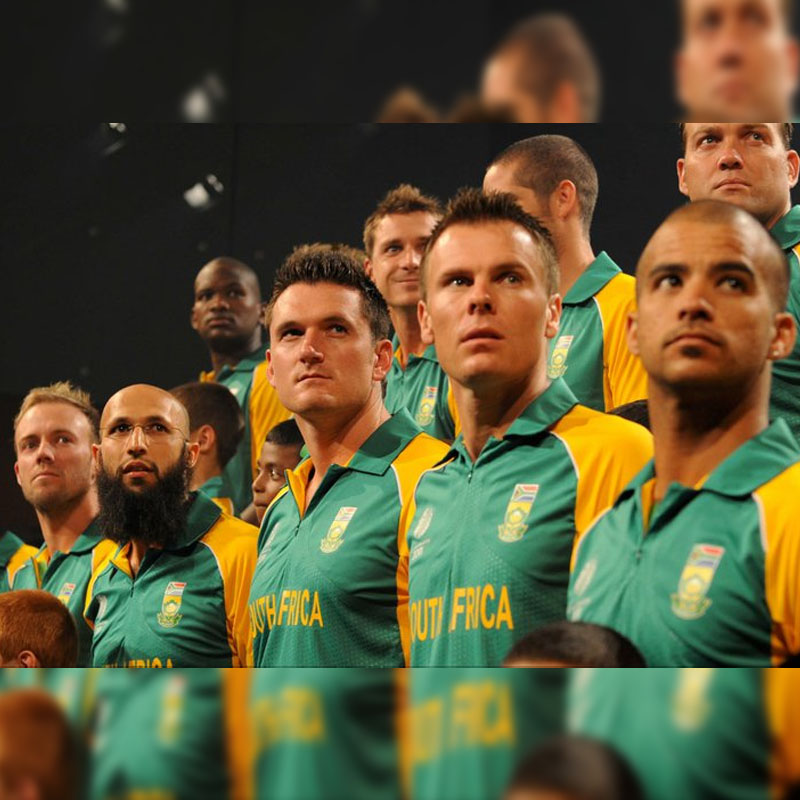
    MUMBAI: Dolby Laboratories (DLB) has announced that Star TV has selected Dolby Digital Plus as the surround sound format for the broadcast of the ongoing ICC Champions Trophy being aired on Star Cricket HD.

    Using Dolby Digital Plus, the audiences have been able to enjoy an enhanced sports entertainment experience in Dolby surround sound for the first time, right in their homes.

    “The ICC Champions Trophy is a true test of cricketing excellence with the top eight ODI teams going head to head to be crowned – Champions. We are leaving no stone unturned to make this tournament an unprecedented viewing experience. We intend to take the fan engagement to a newer level by redefining the way international cricket has been showcased till date. We are very excited to offer cricket, India‘s favourite sport, in Dolby Surround Sound, starting with ICC Champions trophy 2013. STAR Cricket HD is now offering the best audio experience, completing the HD experience for viewers by immersing them in the action happening in the field and the stadium,” said ESPN Software India COO Vijay Rajput.

    Dolby Digital Plus has been adopted by some of the world‘s leading broadcasters and claims to offer a complete digital surround sound and stereo sound in a single audio stream, making it ideal for bandwidth-constrained environments such as HD broadcasting.

    DLB India country manager Pankaj Kedia said, “We are thrilled to be extending our collaboration with Star TV, the leading broadcaster in the country. Dolby and Star TV share a common vision of bringing the very best television experience into every household.” He added, “Cricket in India has a strong following and this collaboration enables Star TV to efficiently deliver a premium surround sound experience to its audiences, making the whole experience richer, more realistic, and enveloping.

  • MIB cancels licences of 20 MSOs

    MIB cancels licences of 20 MSOs

    MUMBAI: The Information and Broadcasting Ministry (MIB) has cancelled the licences of 20 Multi System Operators (MSOs) for not meeting the conditions for providing digitised cable services.

    The ministry is working towards a switchover of the cable services from analogue to digital by 2014-end across the country.

    The deadline for phase II of the digitisation in 38 cities ended on 1 April and the disqualified MSOs were not providing services under the new digital regime.

    An official said that setting up a digital head-end was one of the conditions for MSOs to comply and the MSOs whose licenses were cancelled did not meet these conditions.

    MSOs in broadcasting are entities which receive the signal from broadcasters and then pass it on to local cable operators.

    Here is the complete list of the 20 MSOs

  • TRAI extends last date for comments on interconnect agreement draft order

    TRAI extends last date for comments on interconnect agreement draft order

    MUMBAI: For all those in the cable and satellite TV industry, you can take a breather. The Telecom Regulatory Authority of India (TRAI) which had issued the draft digital addressable system (DAS) interconnect agreement regulations on 5 June 2013 has extended the last date that they can send their comments.

    At the time of issuing the order, the last date was 18 June 2013, that is today. Under the extension, industry stakeholders can send their written comments in by 26 June 2013.

    The Draft Interconnection agreement for DAS seeks to do away with carriage fees under the must-provide clause, forces MSOs to telecast channels under the must carry provision; compliance of MSOs with the twin conditions as specified in the earlier versions of the same order.

  • TRAI reduces roaming charges for calls and SMSs

    TRAI reduces roaming charges for calls and SMSs

    MUMBAI: Telecom Regulatory Authority of India (TRAI) on Monday announced reducing the national mobile phone roaming charges. The regulator said there would be no free national roaming as of now, but it had come out with conditional free national roaming plans to bring down cellphone roaming charges, reports said.

    “TRAI has reduced ceilings for national roaming calls and SMS and instituted a new regime for providing flexibility to telecom service providers to customise tariffs for national roamers through STVs (Special Tariff Vouchers) and Combo Vouchers,” the regulator said.

    It has also mandated two types of free national roaming plans to be provided by all telecom service providers. These changes will come into effect from 1 July 2013, it said.

    “Mandating a fully free roaming regime is simply not practicable at this juncture. Compelling a transition to a fully free national roaming regime would result in telecom service providers not being able to recover their costs from roamers,” the regulator said.

    In turn, telecom service providers would pass these costs on to all consumers (predominantly non-roamers) through higher tariffs, it added.

    In 2007, TRAI had prescribed the ceiling tariffs of Rs 1.40 per minute for outgoing local calls and Rs 2.40 per minute for outgoing STD calls while on national roaming. These ceilings were reduced to Rs 1 per minute and Rs 1.50 per minute respectively, it said.

    Similarly, the ceiling tariffs for incoming calls while on national roaming have been reduced from Rs 1.75 per minute to Rs 0.75 per minute, it said.

    Tariffs for outgoing SMS while on national roaming, which were earlier under moderation, have now been capped outgoing SMS (local) at Rs 1 per SMS and outgoing SMS (STD) at Rs 1.50 per SMS. Incoming SMS will remain free of charge, TRAI said.

  • Airtel Digital TV DTH adds Freemium PPV movie service in its kitty

    Airtel Digital TV DTH adds Freemium PPV movie service in its kitty

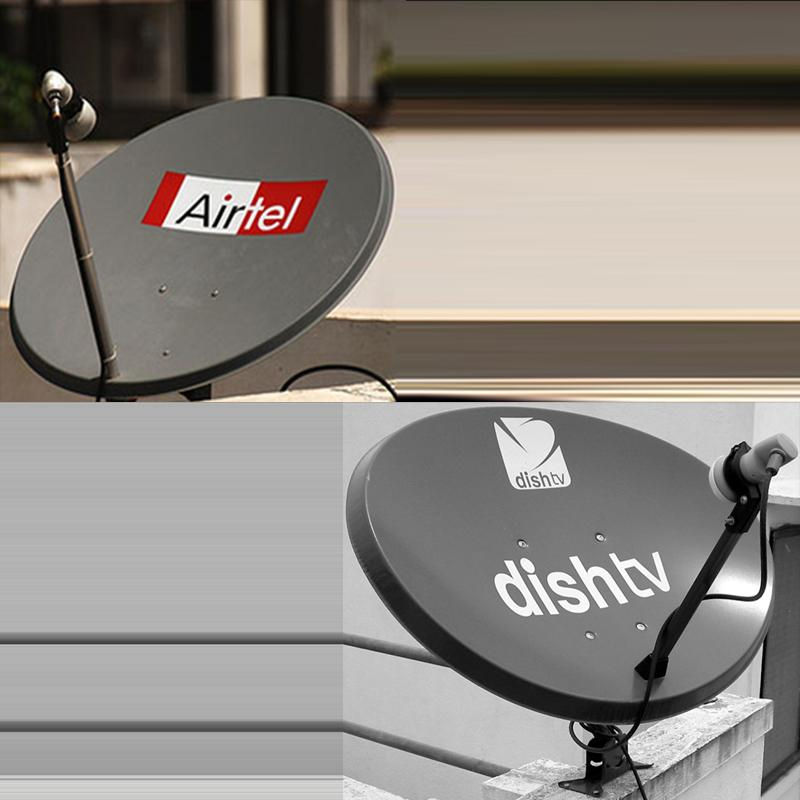
    MUMBAI: Though the concept of pay per view (PPV) isn‘t new to direct to home (DTH) operators in India, Airtel has tweaked that idea further. The service, known as Freemium PPV is essentially the ad-supported version of the PPV, while giving the customers the option of viewing the content without paying for it, or to pay for it and remove the advertisements.

    The free movie viewing will be available on 3/4 screen space, while L-shaped advertisements will be placed on the remaining 1/4th part. Anyone who wants to view the movie in full screen can do so, by paying the particular fee applicable for that particular movie. Airtel has timed the launch of this service to coincide with the celebrations for 100 years of cinema, and is the first DTH operator in India to launch such a service.

    The Freemium PPV service is available on channel no 155 on the Airtel Digital TV DTH platform, on standard, high definition and high definition recorder set top boxes.

    This is the first of its kind service, which gives customers the flexibility of either viewing the movie for free, or paying for it and getting an ad-free experience. If a consumer does watch it for free, the broadcaster still gets revenue for the advertisement, and the brand that is advertising gets its placement.

    At the moment, other operators like Tata Sky offer PPV movie channels, where you pay for a movie, or the viewing is blocked. Videocon d2h, on its part, runs three movie channels at a flat monthly subscription price, including d2h Cinema that shows relatively recent Bollywood releases.

  • Hathway’s HD rush; launches Fox International Channels in Bengaluru

    Hathway’s HD rush; launches Fox International Channels in Bengaluru

    MUMBAI: It‘s getting hot on HD. One of India‘s leading MSOs Hathway Cable & Datacom is looking at taking its HD subscriber base to 200,000 in a year‘s time and has just signed a deal to roll out Fox International Channels (FIC) HD channels into its HD packages.

    The service provider has currently launched the FIC channel HD bouquet only in Bangalore initially but will be extended to Hyderabad soon and then to the rest of the country by end of the year.

    Hathway currently caters to a modest HD subscriber base of approximately 25,000 nationwide (out of which most number of subscribers reside in metros).

    Says Hathway CEO Jagdeesh Kumar: “We have currently launched the HD zapper box only in Bengaluru because we are using the city as a test case to gauge response. But we will soon unveil the DVR box as well in the next six to eight months.”

    The HD service costs Rs 4,500 and comes with a set top box (STB) with a package of 20 HD channels that excludes the recently acquired Fox International Channel (The set includes: National Geographic Channel (NGC), FOX Traveller, Nat Geo Wild, Nat Geo Adventure, Nat Geo Music and Baby TV in HD.)

    “We have plans to carry 35 HD channels,” adds Kumar. “We aim to get in a bulk of the DTH subscribed audience back to cable in time to come, and we are confident of doing so as we have more bandwidth at our disposal hence giving a better picture to our subscribers. We can deliver consistent and better quality pictures and our viewers would not have to worry about interruptions in signals during torrential rains.”

    For Bengaluru, Kumar is pushing a promotional campaign to sign up HD subscribers early. Says he, “We are trying to keep very competitive prices and offer a good discount for early bookings. We are confident that with our superior quality and better clarity, we would be able to deliver the best for our viewers.”

    All the content available with FIC is being shot in HD and Ultra HD and the channel currently has close to 100 hours of content to showcase. The group banks on its prime property NGC, being the oldest channel in the cluster, to get in the viewers and to build a loyal fan base.

    “We are delighted to partner with Hathway in offering a better viewing experience to our audience; our channels would be available in enhanced picture quality across Hathway‘s extensive network,” says NGC Network India and Fox International Channels MD Keertan Adyanthaya. “We are currently looking at activation plans and thus do not have many advertisers on board to boast of, but we are sure that once we start getting an audience, the advertisers will follow.”

  • Reliance Games launches 3D & 2D mobile games for the ICC Champions Trophy

    Reliance Games launches 3D & 2D mobile games for the ICC Champions Trophy

    MUMBAI: With cricket enthusiasts all over the world already having put their minds and hearts into the recently commenced ICC Champions Trophy, England & Wales 2013, the cricket fanatics can now gear up to enjoy the virtual matches on their mobile phones.

    [Click and drag to move] Reliance Games, a leading developer and publisher of mobile games globally & the official gaming partner of the International Cricket Council for the fourth consecutive year, has announced the launch of a 3D and a 2D mobile game specially for the ‘ICC Champions Trophy 2013.‘

    Both the 3D & 2D mobile games allow fans to be a part of their favourite cricket team and step onto the field to fight for the trophy. The cricket game in 3D can be enjoyed by iOS and Android users for a real cricketing experience. While the cricket game in 2D, which is a casual game to play, can be downloaded by Android, Java and Blackberry users.

    Commenting on the launch of the game, Reliance Games business head Chaitanya Prabhu said, “Whenever a popular cricket tournament is going on, we see a rise in demand for cricket based games. The ICC Champions Trophy is a big property in the world of cricket, and Reliance Games is proud to be International Cricket Council‘s official gaming partner for the fourth year in a row. This year we have launched two games – one in 3D and the other in 2D so users of all kinds of mobile phones can continue to be engaged and entertained with the spirit of the sport all through the tourney.”

  • NBCUniversal’s PictureBox gets UK relaunch

    NBCUniversal’s PictureBox gets UK relaunch

    MUMBAI: NBCUniversal has started offering its movie video on demand (VOD) service PictureBox Films direct to consumers in the UK and Ireland following a redesign and rebrand of the platform.

    With the relaunch, customers can directly access 60 films on their PC, Samsung Smart TVs and iOS and Android mobile devices for ?4.99 a month. Titles will be refreshed every week. The lineup includes The Eagle, The American, Bridget Jones‘ Diary, 2 Fast 2 Furious, Jarhead and The Bourne Identity.

    PictureBox first rolled out in the UK in 2006 in conjunction with various pay TV partners and is still accessible via Virgin Media, TalkTalk, BT Vision and Top Up TV. The service is also accessible in Poland, Russia, Latin America, Brazil and Singapore via local platform providers.

  • India’s Pay TV market to create a demand of 140 million smart cards during 2013-2018

    India’s Pay TV market to create a demand of 140 million smart cards during 2013-2018

    MUMBAI: MARC Group in its latest report entitled “Smart Card Industry in India: SIM, Identity, Banking, Transport, Healthcare, Pay TV, Loyalty & PDS” expects India‘s Pay TV market to create a demand of 140 million smart cards during 2013-2018. Findings from the report suggest that with 155 million subscriber households in 2012, India is the third largest TV market after the US and China. TV signals in India are currently distributed in analogue as well as in digital and terrestrial formats. Most cable operators in the country are providing analogue TV service while all DTH operators are providing a digital TV service.

    The report found that the government of India amended the Cable Television Networks (Regulation) Act in October 2011 to announce implementation of a phase-wise digitisation programme of pay TV services throughout the country. Findings from the report suggest that this would result in all cable TV households to receive digital TV signals through a set top box (STB). As part of digitisation, every cable operator will be legally bound to transmit digital signals, which can be received at the subscriber‘s home only through a STB. Since smart cards are required in each STB, the growth in STB sales is expected to create a huge opportunity for smart cards in India.

    This study, an updated and far more extensive and analytical version of the 2011 study, provides and draws upon a comprehensive analysis of every major smart card segment in India. Key metrics and events such as smart card requirements, current and future volume and value demand, key smart card projects, project implementation timelines, success and risk factors, costs, etc have been comprehensively analysed in this report. This study aims to serve as a guide for investors, researchers, consultants, marketing strategists, and all those who are planning to foray into the Indian smart cards market in some form or the other.


  • 30 per cent of American parents let children use Facebook unsupervised: Study

    30 per cent of American parents let children use Facebook unsupervised: Study

    MUMBAI: Do parents in the US trust their children on Facebook?

    While a large percentage of adults say they monitor the activity of children in their households on social networking sites such as Facebook, almost one-third (30 per cent) do not, according to findings in the annual study of the impact of the Internet on Americans by the USC Annenberg Center for the Digital Future.

    The Center for the Digital Future director Jeffrey I. Cole said, “It‘s every parent‘s dilemma to know when to trust their children. In the last five years, we have seen many new issues about parenting and technology evolve that previous generations never encountered. How parents cope with their children using social media like Facebook represents only one aspect of these issues.”

    The study, conducted in association with Bovitz found that although 70 per cent of adults said they monitor the activity of the children in their households while on Facebook or other social networking sites, a smaller group (46 per cent) have password access to the children‘s accounts.

    The findings also show that of the adults who do not monitor the social networking activity of the children in their households, 40 per cent cite trust as the explanation; either they trust their children or they believe that monitoring online behavior would show lack of trust. Nine per cent of adults don‘t monitor their household‘s children on Facebook because they don‘t know how to use the social networking site, and seven per cent don‘t because “they don‘t have time to do it.”

    And in related questions, adults were asked at what age the children in their households should have a mobile phone or Facebook account. They responded the appropriate average is 13 for mobile phones and 15 for a Facebook account.

    The responses about parent supervision of children on Facebook are among the more than 180 issues explored in the 2013 Digital Future Project, the longest continuing study of its kind and the first to develop a longitudinal survey of the views and behavior of Internet users and non-users.

    Conducted in conjunction with Bovitz, the current study includes new questions that explore negative online attention (bullying, harassment, and unwanted sexual attention), and a closer examination of the “Millennial rift” – the vast differences between how Millennials (age 18-34) and non-Millennials use and perceive online sites and services.

    The “Millennial Rift”: Differences between Millennials and non-Millennials in the spectrum of online behavior

    The Digital Future Survey found that Millennials, when compared to non-Millennials, have different views about using the internet and report significant differences in many aspects of their behavior online.

    Buying online:

        Millennials are more involved with mobile shopping and comparison shopping than non-Millennials. 68 per cent of Millennials have done a price comparison on their mobile devices while in a store to find if there is a better deal available online, compared to 43 per cent of non-Millennials.
        Twice as many Millennials (23 per cent) as non-Millennials (10 per cent) have purchased products online on their mobile device while in a traditional retail store.
        46 per cent of Millennials compared to 24 per cent of non-Millennials have done an online price comparison in a store to find a better deal at another retail store

    Millennials as consumers of online media content – Compared to non-Millennials in the study, Millennials spend:

        three times as much time watching movies online.
        twice as much time listening to online radio.
        four times as much time watching television online.
        more than twice as much time watching paid online television services such as Hulu Plus.
        and almost twice as many watch movies sometimes or often through a fee service such as CinemaNow or Netflix.

        Online video content – More than twice as many Millennials as non-Millennials watch online versions of television shows or music videos.
        Perceptions of social networking sites – Higher percentages of Millennials (70 per cent) compared to non-Millennials (51 per cent) value social networking sites such as Facebook, Twitter, and Google Plus as important for maintaining their relationships.
        Following and friending companies and brands – Compared to non-Millennials, Millennials follow nine times as many companies and brands on Twitter, and ‘friend‘ more than twice as many companies and brands on social networking sites such as Facebook.
        Changing patterns of online purchasing; views about sales tax: The 2013 report explored a variety of new issues involving online buying, including purchasing on mobile devices and the impact of sales tax on Internet buying:

    Sales tax and online purchasing – More than half of Internet buyers (52 per cent) said that if their state starts to collect tax for online purchases, they would buy less online, and nine per cent said they would stop buying online altogether. Only 39 per cent said that sales tax charged for online purchases would not change their purchasing.

    Browsing and price-comparing in retail stores with a mobile device – The survey found popular use of mobile devices while shoppers browse in traditional retail stores:

        49 per cent of Internet purchasers who browse in local retail stores said that they have compared prices on a mobile device while in a store to see if there is a better deal available online.
        30 per cent of Internet users overall said that they have used a mobile device while in a store to determine if a better deal was available at another store nearby.
        13 per cent of online purchasers who browse locally said they have purchased a product online with a mobile device while in a store. 70 per cent of that group made the purchase from a competing online retailer, and not from the store‘s website.

    Bullying, harassment, unwanted sexual attention:problems that cross all age groups: The Digital Future Project explored the darker side of Internet use by asking new questions about online bullying, harassment, and unwanted online sexual attention.

    Online bullying and harassment – A small group of respondents (10.4 per cent) said they had been bullied or harassed online. Almost equal proportions of men (10.3 per cent) and women (10.5 per cent) reported being bullied or harassed online.

    Online bullying: a problem across all ages groups – Although bullying and harassment of young Internet users has dominated media coverage of this problem, the survey found that measurable percentages of users in all age ranges report that they have been bullied or harassed. The largest of these groups was users under 18 (18 per cent of them reported being bullied or harassed).

    Online bullying and harassment (impact) – Sixty-eight percent of those who have been bullied or harassed online report that the impact was minor. However, more than 30 per cent of those who have been bullied or harassed online said the impact was moderate or worse, and 14 per cent said it was serious. That impact was judged moderate or serious by more than twice as many women (21 per cent) as men (10 per cent).

    Unwanted sexual attention online – Compared to the percentage of those who have been bullied or harassed online (10 per cent), more than double (21 per cent) said they have received unwanted sexual attention online.
    Unwanted sexual attention online: men vs. women – Both men and women receive unwanted sexual attention online; a higher percentage of women (24 per cent) than men (18 per cent) face the problem of receiving unwanted sexual attention online.

    Unwanted sexual attention online: by age – While more than one-third of users under 18 reported receiving unwanted sexual attention online, significant percentages of users in all age categories reported it as well.

    Cole added, “Negative online attention – including bullying, harassment, and unwanted sexual communication – produces effects ranging from minor nuisances to tragic consequences. While prominent cases in the news focus on how negative online attention affects young users, our study found that these issues affect users of all ages; these issues demand continued exploration.”