Category: Technology

  • TRAI: Activation of VAS only on second confirmation

    TRAI: Activation of VAS only on second confirmation

    NEW DELHI: With the aim of reducing complaints relating to value added services (VAS) offered by telecom service providers, the Telecom Regulatory Authority of India (TRAI) on 10 July said any will be activated only after receiving a second confirmation from the customer.

    In the directions issued by it, TRAI says the service provider has to provide a system which takes a second consent from the customer before providing a value added service through any means – OBD, IVRS, WAP, Mobile Internet, USSD, SMS, Tele-calling or any other mode of activation.

    The first offer of a service is on the service providers‘ platform and a second confirmation from the customer is through a dedicated consent gateway which is owned by a third party and not by the service provider.

    At the outset, TRAI said activation of VAS by service providers has been the cause of many customer complaints. The Authority has been addressing, from time to time, consumer issues, which have come to its notice through consumer complaints, relating to activation of value added service through different modes, without the explicit consent of the consumer. These directions essentially prescribe the manner in which the explicit consent of the consumer is to be obtained for activation of value added services through different modes. While issuing these directions, the Authority has also considered the interests of the service providers and growth of value added service industry.

    In partial modification of existing directions, TRAI has directed all Service providers to implement a uniform procedure for taking explicit consent of the consumer for activation of value added service and for deactivation of value added service.

    A Common de-activation procedure using toll Free Common Short Code 155223 has been provided and all requests for de-activation have to be completed in four hours).

    VAS activation procedure will henceforth include all forms of activations and scenarios – OBD, IVRS, WAP, Mobile Internet, USSD, SMS, Tele-calling and any other mode of activation.

    The deactivation procedure should be publicised through advertisements in newspapers, updation in the website and SMS blasts.

    A full 24 hours before auto renewals of the VAS services, information about renewals to be provided to the customers, through SMS and Outbound Dialing (OBD).

    In case of wrong activation, the amount will be refunded within 24 hours of the customer‘s request. Such customer requests should be within 24 hours for VAS with validity of more than one day and within 6 hours for VAS with validity of one day.

    In case of USSD and SMS mode of activation, no activation response time should be more than 10 seconds and 60 minutes respectively and in case of non-response, the same should be treated as ‘no activation required‘.

    Upon activation of VAS service, the de-activation number, the validity of the VAS service and charges for renewal should be explicitly informed.

    A Monthly report on activations, de-activations and complaints received and their redressal to be submitted to TRAI.

    The directions for obtaining explicit consent of consumers for subscribing, renewing and deactivation of Value added services are available on TRAI website http://www.trai.gov.in
  • India to have highest IP traffic growth in four years

    India to have highest IP traffic growth in four years

    NEW DELHI: India is set to have the highest Internet Protocol (IP) traffic growth rate with a 44 per cent compound annual growth rate from 2012-2017 followed by Indonesia (42 per cent CAGR) and South Africa (31 per cent CAGR) over the forecast period, a new study has revealed.

    The Cisco Visual Networking Index (VNI) Forecast (2012-2017) projects that global IP traffic will grow three-fold between 2012 and 2017.

    By 2017, the highest traffic-generating countries will be the United States (37 exabytes per month) and China (18 exabytes per month), says the report.

    At the regional level, the Middle East and Africa (MEA) will continue to be the fastest growing IP traffic region from 2012-2017 (five-fold growth, 38 per cent compound annual growth rate over the forecast period); MEA was the fastest growing region last year as well (10-fold growth, 57 per cent compound annual growth rate for 2011- 2016 forecast period) in this category, the report said.

    Asia-Pacific (APAC) will generate the most IP traffic by 2017 (43.4 exabytes/month), maintaining its leadership from last year.

    According to the report, by 2017, there will be about 3.6 billion Internet users – more than 48 per cent of the world‘s projected population (7.6 billion). In 2012, there were 2.3 billion Internet users – about 32 per cent of the world‘s population (7.2 billion).

    By 2017, there will be more than 19 billion global network connections (fixed/mobile personal devices, M2M connections), up from about 12 billion connections in 2012.

    Global network users will generate 3 trillion internet video minutes per month, that is six million years of video per month, or 1.2 million video minutes every second or more than two years worth of video every second.

  • Google revamps Android Maps app, drops Latitude

    Google revamps Android Maps app, drops Latitude

    MUMBAI: Google has overhauled its Maps app for Android smartphones and tablets, giving it some new search, navigation, and discovery features. The changes will also soon be making their way to the company‘s iPhone and iPad apps.

    “Today‘s update is an exciting step forward for Google‘s maps – one that we hope will make it faster and easier for you to explore and discover places you want to go,” Google Maps director Daniel Graf wrote in a blog post Wednesday.

    For starters, the revamped app aims to help in navigating around traffic a little easier. In addition to current traffic conditions, one can also see reports of problems on the road and tap to see incident details. While driving, Google Maps will now alert if there‘s a better route, and more quickly reroute the driver to his destination.

    There‘s also a new Explore feature, which offers up places one might like to eat, drink, sleep, and shop. On tapping the search box, a list of suggested places without even having to type anything can be seen.

    To help one decide on where to go, the app includes a new 5-star rating system that will give the user an idea of how the user‘s friends and others have rated places like restaurants, bars, and coffee shops. Zagat badges and curated lists are also now integrated into search results, so one can quickly spot expert-approved places.

    This is also Google‘s first dedicated Maps app for Android tablets and iPads.

    “A dedicated tablet design brings all the features of this new app to Android tablets

    and iPads, which makes exploring the world from the comfort of your living room much more fluid, smooth and fun,” Graf said.

    But alongside all the new goodies, some older features are going away, including Latitude and check-ins, which is no longer part of the new Google Maps app and will be retired from older versions on 9 Aug. Google, is instead pushing the newly added location-sharing and check-in features of Google+ for Android. My Maps is also not included in this release, but will return in future versions of the app, Google said.

    Finally, the offline maps feature for Android is also no longer available. You can still access maps offline, however, by entering “OK Maps” into the search box when viewing the area you want for later.

    The new Google Maps app is compatible with devices running Android Ice Cream Sandwich and Jelly Bean, as well as iOS 6 and above.

  • No more extensions on CAFs, expect phased switch-offs

    No more extensions on CAFs, expect phased switch-offs

    MUMBAI: The Telecom Regulatory Authority of India (TRAI) has put its foot down this time on the issue of non collection of customer application forms (CAFs). The decision taken by the regulator is: no more extensions for CAFs in the DAS areas of Mumbai and New Delhi.

    As is known, the meeting between TRAI and leading MSOs was scheduled today. And Indiantelevision.com learns that the regulator has mandated the switch-off of all the non-complying customers.

    “We will be complying with the law of the land” says Hathway Cable CEO Jagdish Kumar. “Starting tomorrow we plan to downgrade all those subscribers who haven‘t submitted the forms. We will only be providing them with free-to-air channels till 15 July and post that we will be disconnecting those who don‘t send in their forms even after that warning completely by switching off their service.”

    The cat and mouse game between the regulator and leading MSOs has finally come to an end. The final decision is: no slack from the local cable operators and customers would be entertained anymore. There is a grace period of five days that the LCOs have to make the final round of collections, post which the switch-offs would commence.

    DEN Networks COO MG Azhar says: “We have collected 86 per cent CAFs in Delhi, but starting tomorrow we will be downgrading the non-complying customers to base packs.”

    The phased switch-offs begin from tomorrow. Apparently, digitisation‘s progress cannot be stalled any further.

  • Explore India’s history with the ANS Navigator app for iPhone

    Explore India’s history with the ANS Navigator app for iPhone

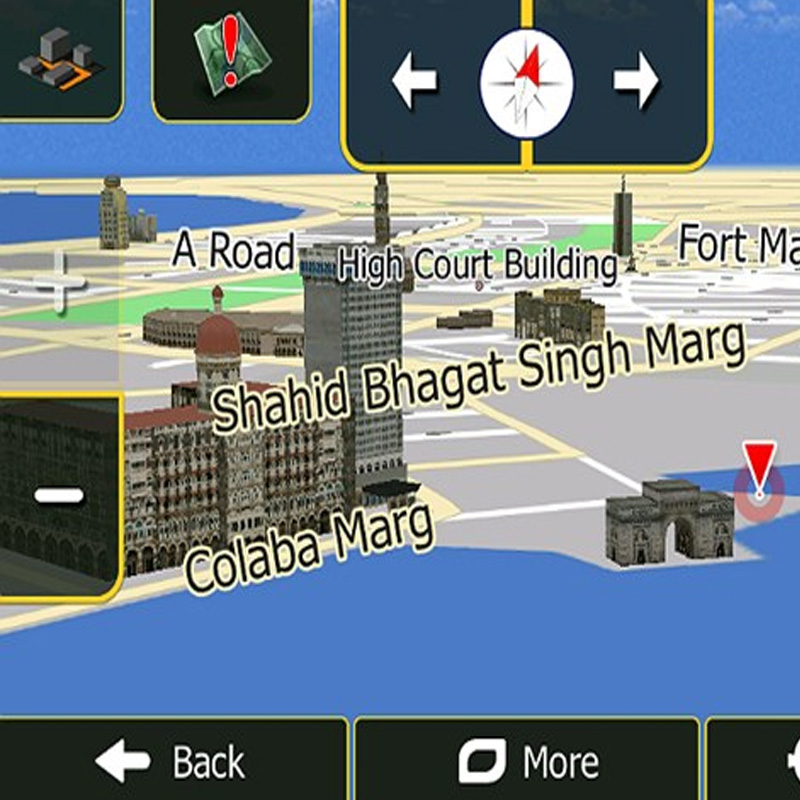
    MUMBAI: Powered by the iGO Navigation Engine, the ANS Navigator app for iPhone now includes the historical monuments content package.

    With this application upgrade, the ANS Navigator enables the user to explore India like never before. Know more of India‘s iconic heritage spanning 1000 years of history, and discover India‘s ancient temples, caves, governmental buildings and much more in almost 1,000 cities and settlements. The historical monuments database with more than 3,700 items not only unfolds the vast cultural heritage of India, but also allows one to visualise & understand the significance of the monuments by means of richer content such as descriptions, pictures and visiting times.

    Built from authentic sources such as the Archaeological Survey of India, historical monuments is the virtual passport to almost 3700 historical sites that constitute India‘s rich heritage.

    If you‘re looking for a taste of India‘s world class highlights, and want to explore some of its hidden gems, this app will lead the way and eliminate the hassle associated with travelling so that you can experience incredible India.

    The ANS Navigator App, which is designed to guide users to their destination faster and safer by offering a set of advanced and location-specific features, runs on NNG‘s renowned iGO Navigation Engine which has proven to be one of the most popular navigation applications globally.

  • Hungama app introduces its new version with adaptive streaming

    Hungama app introduces its new version with adaptive streaming

    MUMBAI: Hungama‘s next generation music app, with over a million downloads has been receiving rave reviews by users; now the app is set to engage its users with a musical experience.

    Keeping in mind the popular user demand via reviews for adaptive streaming, the app has added yet another enhancement by upgrading its version for iOS & Android with adaptive streaming for audio & video, airplay for iOS and compatibility with iPhone 5.

    With requests pouring in from consumers from various consumers outside India to facilitate a download & pay option for Android, the new build has addressed this request with Google Wallet integration.

    The Hungama app has a one of a kind, loyalty feature that rewards the user for every action on the app. The user can earn (and redeem) points every time he watches videos, play/share music, invite friends or even create playlists.

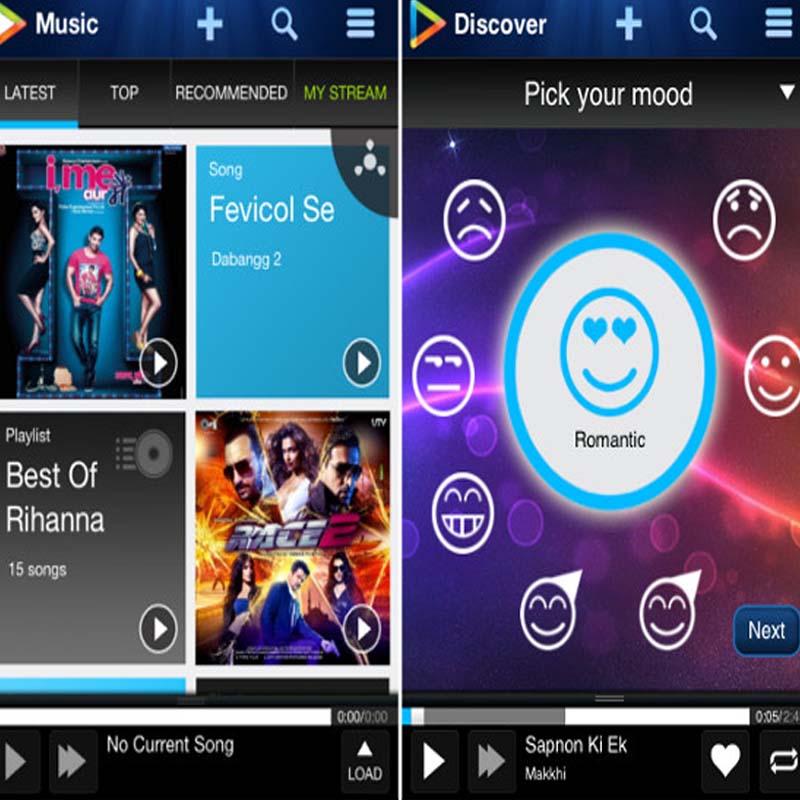
    Its innovative Mood Discovery finds and plays music to match the user‘s mood. This feature allows you to discover music based on user preferences – Mood, Tempo, Language, Genre or Era.

  • Pay-TV revenue surpasses FTA TV turnover in Spain

    Pay-TV revenue surpasses FTA TV turnover in Spain

    MUMBAI: Spanish pay-TV revenues outrun free-to-air (FTA) TV services in terms of revenues in 2012. Pay-TV turnover amounted to €1.7 billion in 2012, surpassing for the first time in its history, FTA TV revenues which amounted to €1.6 billion, advanced television reports, citing data released by Spanish telecoms regulator CMT. Pay-TV revenues grew by 2.5 per cent year-on-year, while FTA TV services dropped 17.9 per cent in 2012.

    Satellite pay-TV revenues climbed 8.4 per cent year-on-year to €1.06 billion in 2012. Mobile TV and IPTV revenues increased by 14.6 per cent and 11.6 per cent respectively; whereas cable and pay-DTT sales fell 11.6 and 19.3 per cent respectively.

    Spain‘s pay-TV user base dropped by 351,636 subscribers or 7.5 per cent in the period. Spain ended 2012 with 4.3 million pay-TV users, with satellite technology accounting for 41.3 per cent, followed by cable with 32.7 per cent, IPTV with 18.8 per cent and pay DTT with seven percent. The IPTV user base saw the most dramatic decline, shedding 126,566 subscribers in the period, followed by cable with 97,665 and pay-DTT with 93,157.

  • TaxiForSure.com launches iOS & Android apps in Bengaluru

    TaxiForSure.com launches iOS & Android apps in Bengaluru

    MUMBAI: TaxiForSure.com, the Uber and Hailo equivalent of India has announced the launch of its mobile application on iOS & Android platforms. With the mobile app, TaxiForSure lets consumers book taxis in just 15 seconds and customers can just place a request for a taxi. The new mobile apps are now available for download on itunes & Google play stores.

    With this launch, TaxiForSure.com ensures that consumers get ready access to a large network of taxis in the city. With just two taps, customers can place a request with all free taxis in their immediate vicinity. Interested drivers accept the request and customers can track the assigned taxi right to their doorstep. The app also closes the trip with the exact fare information to be paid and a copy of the bill is automatically emailed to the customer.

    Commenting on the launch, Co-Founder and Director Raghunandan G added, “We use technology to efficiently map a customer to the nearest possible driver and vice versa. With the mobile app, we aim to revolutionise commute in India. We plan to equip every city and every person in India with the ability to get an economical taxi ride at their fingertips.”

    The application is currently available in Bangalore and will be launched in Delhi and NCR region soon.

    TaxiForSure.com was founded by IIM Ahmedabad graduates Raghunandan G and Aprameya Radhakrishna in June 2011 in Bangalore. Within a time span of two years the company launched its services in Delhi and NCR region and is looking at presence in 15 cities by the year 2015.

  • TRAI to hold open house in Bengaluru on monopoly/market dominance in cable TV services

    TRAI to hold open house in Bengaluru on monopoly/market dominance in cable TV services

    NEW DELHI: Stakeholders in the cable TV services have a platform to voice their opinion. The Telecom Regulatory Authority of India (TRAI) has announced an open house to be held in Bengaluru on issues relating to monopoly and market dominance in cable TV services. 

    TRAI sources told indiantelevision.com that only one open house is planned on the subject, based on the responses received. 

    Earlier, stakeholders had been given a final opportunity to give their comments by 1 July to its consultation paper on the subject issued on 3 June, and counter-comments by 8 July. The open house will be on 16 July.

    The paper was aimed at wanting to know if stakeholders agreed that the state should be the relevant market for measuring market power in the cable TV sector or suggest alternatives. 

    In the first place, TRAI which said it had issued the paper at the instance of the Information and Broadcasting Ministry, wanted to know if stakeholders agreed that there is a need to address the issue of monopoly or market dominance in cable TV distribution and how its ill effects can be addressed.

    The paper contained a series of fifteen questions touching various aspects. TRAI has sought to know whether curbing market dominance and monopolistic trends as well as restrictions in the relevant cable TV market should be based on area of operation or based on market share.

    Those who support the area of operation option need to specify how the area of relevant market ought to be divided amongst MSOs for providing cable TV service. While those who feel that the monopolistic trends should be based on market share, should specify the threshold value of market share beyond which an MSO cannot be allowed to build market share on its own. The open house will also concentrate on devising ways of achieving this in a market where a MSO already possess market share beyond the threshold value. Furthermore, TRAI also wants comments on the suitability of the rules defined in the paper in this connection. 

    Stakeholders had to give their views about the threshold value increase indicated by the regulator, or suggest defining restrictions.

    TRAI also wanted to know if ‘control‘ of an entity over other MSOs/LCOs be decided according to the conditions mentioned in the paper or suggestion on alternatives. Stakeholders wanting different restrictions to curb market dominance have been asked to suggest these. 

    TRAI has apart from this, sought to know whether the parameters listed by it in the paper are adequate with respect to mandatory disclosures for effective monitoring and compliance of restrictions on market dominance in Cable TV sector, and the periodicity of such disclosures. 

    The regulator wanted to know of any amendments to be made in the statutory rules/ executive orders for implementing the restrictions.

  • Viacom18 & Tata Comm go cloud surfing

    Viacom18 & Tata Comm go cloud surfing

    MUMBAI: In the earlier days when telephones, internet and aeroplanes did not exist, messages were sent manually across countries through messengers. Today we watch the telecast of live matches at the same time globally. But somehow, broadcasters were caught in a time warp when it came to delivering the content syndicated to TV or VOD or online clients worldwide. The norm was to either send a tape to the broadcast customer whichever part of the world it was located or send out the show‘s episodes on a hard disk or via web-based ftp transfers online.

    No more. Telco services provider Tata Communications in partnership with Harmonics has developed what is being claimed as the world’s first cloud based broadcast quality video transcoding and delivery network. Viewers now have the choice to watch their favourite programs from other countries at the same time or a few minutes after the original playback without having to resort to piracy. What gets better for them is that they get broadcast quality videos, close enough to HD (high definition) quality rather than low resolution ones across a variety of platforms. This service is not restricted to just broadcasters but also production houses.

    How does it happen?

    Customers can upload their content to Tata Comm‘s portal while mentioning the device (iphones, tablets etc) for which they want it to be transcoded. The service picks it up and takes it to the cloud where the transcoding takes place after which it is either pushed back to the client or to wherever it has been asked to be sent to. A secure file acceleration method ensures safe delivery over the internet, says Tata Communications.

    Where huge amounts of data have to be archived, Tata Communications, is open to doing the job for clients after receiving a detailed document, along with the hard disk containing the data. A client may only be able to do one transcode at a time but Tata Communications can have multiple transcoding devices for speedy delivery with its 1gbps port.

    Tata Communications business
    head Sameer Kanse 
    says that the transcoded video
    is comparable to near HD quality

    Tata Communications says its cloud service helps reduce piracy. Viewers resort to piracy as the content is not available at the time they want to consume it legally and because the content is transported manually.

    With the Tata Communications service, shows can be simulcast or near simulcast because of quick delivery via the cloud and in the process this tends to reduce piracy, says Tata Communications business head Sameer Kanse. In this way the brand is protected, the copy is of good quality and the owners can get advertising as well as increased revenue.

    “They (clients) can either spend a lot of time protecting their content. Or they can actually make their content available before the pirates,” adds Kanse.

    On whether the system can be hacked , he says that it is much more difficult to pry open a secure network than steal a hard disk.

    He maintains that the transcoded video needn‘t be of the exact same quality as it was shot but it is comparable to near HD quality. “The service can effectively convert from any video format to any other video format – including between all common SD (standard definition) and HD formats, although its unique strength lies in its ability to handle professional grade broadcast video standards,” he says.

    What about time?

    By opting for this service broadcasters don’t have to undergo the Herculean task of setting up the hardware, maintaining and upgrading it as well as appoint people to handle it. This can be outsourced thus reducing time losses.

    IndiaCast, a joint venture between Viacom 18 and TV18 for distribution of its channels and content, has already started using the service for simulcast of its shows such as Bani, Sasural Simar ka and Na Bole Tum from Colors in Pakistan. IndiaCast COO Gaurav Gandhi says that this has cut down the time needed for this from three hours to an hour apart from that needed for file conversion to the requisite format, thanks to Tata Communications.

    With the rapid evolution of the internet it has become necessary to make content ready in multiple formats in a quick span of time. This service will take off a big burden from broadcasters‘ shoulders. “We are saying you (broadcasters) focus on creativity and we will focus on our work,” reiterates Kanse.

    IndiaCast COO Gaurav Gandhi is
    looking at using cloud based services 
    for simultaneous broadcast in other
    markets as well

    Tata Communications also provides a ‘live’ service to its customers, if asked for, which would allow seamless transmission of live content across different countries and operators. Without naming the broadcaster Kanse says that one of the ‘key’ broadcasters that recently launched on its own is taking its live service from them.

    Customers opting for the service normally ‘pay as they go’ wherein a higher commitment is priced higher and vice versa. Another aspect of pricing is the format of content in which it is received. Cost for converting tapes is higher than hard disks.

    Curbing Piracy

    Piracy of Colors by cable operators in other territories was one of the main reasons why Viacom18 chose to use this cloud based service. “We are looking to use the cloud based service actively for certain kind of programming of ours that has appeal/demand for simultaneous broadcast in other markets as well,” points out Gaurav Gandhi.

    The transcoding is currently taking place in Tata Communications Mumbai and London centres and can be sent across the globe. As far as numbers are concerned, Kanse says that he couldn’t share numbers but the increase in revenue would be ‘significant’ as there isn’t any other company providing similar services which is the need of the hour.

    Kanse was wary of revealing any client names apart from Viacom18, but apparently quite a few producers and broadcasters have taken a shine to the Tata Communications cloud based service.

    Clearly, that should put him up in the clouds.