Category: Technology

  • CODA postpones agitation on Maharashtra cable TV entertainment tax

    CODA postpones agitation on Maharashtra cable TV entertainment tax

    MUMBAI: The state of Maharashtra was to see a blackout of all news channels- Hindi, English and Marathi- from 15 July by all TV cable operators as a sign of protest in case the entertainment tax levied on them was not reduced. But that has not happened.

    Reason: The Cable Operators and Distributors Association (CODA), which was demanding that it be shaved to Rs 15 per set top box or per subscriber from the Rs 45 charged currently, decided to be patient and hold on.

    Says CODA president Anil Parab: “We sought an appointment from state revenue minister Balasaheb Thorat and he could only give it to us for next week. So we decided to defer our decision on the blackout till we meet him and gauge his response towards our demand.”

    Parab also stated that the assembly is on till 3 August so they have enough time to go ahead with their black out, in case they don‘t get Thorat‘s support.

    The cable TV operator fraternity in Maharashtra say it is unnecessarily being burdened with high taxes even though digitisation has led to greater transparency and tax payouts by them. Delhi‘s entertainment tax is at Rs 20 while in other cities it is at zero to five per cent.

  • CogMat bags social media marketing duties for Plobal

    CogMat bags social media marketing duties for Plobal

    MUMBAI: CogMat, a digital media agency based in Mumbai, has been awarded the social media marketing duties for Plobal.

    Plobal is a fast-growing interactive mobile and web platform that helps locals ask questions, join discussions, get recommendations or simply be updated with what‘s happening around them.

    Plobal co-founder Atul Poharkar said, “The whole idea about building Plobal is to create a social network that helps people discover what is happening in their city in real time. People can see updates posted directly by their favourite brands or simply ask and get recommendations from people with similar interests in their city.”

    This mobile and web platform has reinvented the face of communication by uniting lifestyle business owners and users on a common, social media platform in real time.

    “We‘re very excited to work with Plobal. They are a young, dynamic team of professionals who‘ve created an application that gives users access to real-time and relevant information pertaining to local lifestyle needs. We look forward to do something creative, yet effective, in the social media space for them,” said CogMat co-founder Mitchelle Carvalho.

  • Maa TV partners with Amagi to launch customised channel feeds to Singapore

    Maa TV partners with Amagi to launch customised channel feeds to Singapore

    BENGALURU: India’s Telugu language Maa Television Network is using Amagi’s localisation platform for creating customised local feeds to Singapore for its “Maa TV” and “Maa Movies” channels claims Bangalore headquartered Amagi Media Labs.

    Maa TV has gone live with custom feeds on SingTel mio TV since April, 2013. Maa TV network uses its existing satellite feed playout for India as the base feed for Singapore as well, but masks few hours of programming and all advertising everyday on its feed to Singapore using Amagi’s localisation platform.

    Amagi says that broadcasters with common multi-country broadcast feeds can now adapt Amagi’s patent-pending localisation platform to easily fine-tune programming played out in individual countries. Broadcasters can ‘opt out’ of specific programs or even specific spot advertising in a country and replace it with some other locally appropriate content for the country by utilising Amagi’s cloud-based localisation platform.

    “We are able to ‘reliably’ and ‘cost effectively’ comply with all regulatory aspects related to programming and advertising for Singapore on both channels. Amagi gave us an end-to-end solution which has seamlessly merged with our existing systems and workflows”, said Maa TV COO J Sekhar

    Maa TV’s Sr. general manager, P Masthanaiah added, “We were looking for solution which would efficiently enable us to generate a local feed for Singapore from our India feed and Amagi offered just that. The technology is simple yet powerful and augments the existing systems effortlessly.”

    “Regionalisation of content is a pressing need for broadcasters. Amagi’s platform can easily integrate with existing workflows and systems of a broadcaster and reliably address regionalisation needs like local advertising, local programming to meet audience preferences, content masking for regulatory or copyright restrictions, etc. We are extremely pleased by the positive response to our exclusive platform from global broadcasters and are delighted to add Maa TV network as the latest customer”, said Amagi , Co-founder and CTO S Srividhya.

  • Samsonite and Lavie appoint Trinetra Focus to handle social media

    Samsonite and Lavie appoint Trinetra Focus to handle social media

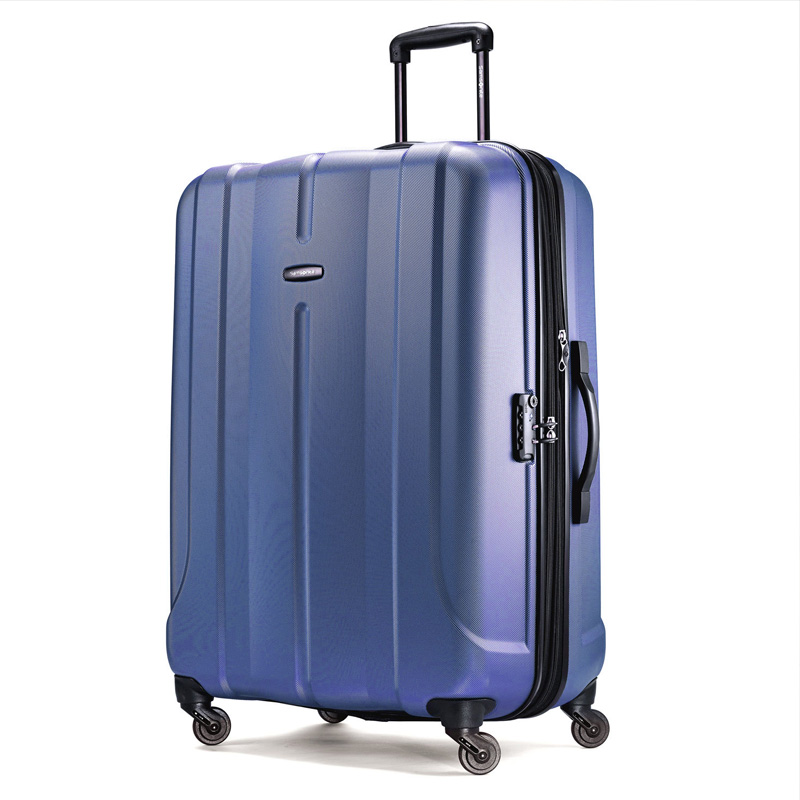
    MUMBAI: Trinetra Focus, the digital arm of Focus, has won the digital and social media duties for Samsonite and Lavie. Innovations form the core of the campaign. The focus of the mandate is to take conversations on the social media platform to the next level by ensuring continuous engagement and interactions with the target audience through novel campaigns. This will enable the brand to become a constant companion of the customer, thereby increasing the social quotient to achieve the business objectives.

    Highlighting the core objective of the mandate, Focus Circle Brands president Upendra Welingkar said “Social media plays a pivotal role in ensuring continuous brand engagement especially for the fashion and retail segment. Recent facebook statistics suggests that among the next generation of consumers 96 per cent are using social media. Many of these also claim that their purchase decisions are influenced by the information gleaned on these platforms. Making it integral for brands like Samsonite and Lavie to be present on these platforms”

    Adding his thought, Samsonite south Asia CEO E P Suresh Menon said, “For us the key challenge as far as our social media platform is concerned was engaging with the audience on a continuous basis. We have realised that channelising our energies effectively on the social media would enable us to come closer to the customer and in the long run assist us in achieving our business objectives. We were looking at agencies that could provide us with ideal balance of engagement and impact. With their futuristic approach and in-depth understanding of the target audience Focus has been able to capture that effectively”

    Speaking on the mandate, Trinetra Focus VP Saumik Barua highlighted, “For B2C brands like Samsonite and Lavie audiences tend to create a perception on the basis of their online interactions and engagements. Our prime objective is to create content and applications that positions the brand to reach the masses who would either purchase the product or inadvertedly share the brands ethos”

    The key responsibilities of Trinetra Focus will involve online reputation management, SEO consultation and most importantly amplifying social presence. In the second phase, Trinetra Focus is likely to establish the concept of social shopping wherein they will integrate iframe – a shopping tab on the website – to the facebook page allowing users to shop directly from the platform. The initiatives undertaken will be aimed towards driving the customers towards ecommerce platform.

  • Reliance Games ties up with Pacific Rim to launch mobile game

    Reliance Games ties up with Pacific Rim to launch mobile game

    MUMBAI: Reliance Games has tied up Warner Bros Pictures and Legendary Pictures‘ Pacific Rim to release a game based on the screenplay of the movie for iOS and Android platforms.

    Developed in partnership with Behavior Interactive and based on the film by Guillermo Del Toro, the Pacific Rim mobile game features epic battles amidst skyscrapers as players swipe and tap to defeat the Kaijus, aliens that have risen from the sea to wipe out humanity.

    Piloting weaponised robots known as Jaegers, Earth‘s defenders must train their jockeys from rookie to ace in a story mode based on the movie, or challenge themselves to last as long as they can against waves of aliens in survival mode. To aid in the apocalyptic fight to save humanity, new weapons, technology and devastating combos can be unlocked, as well as different Jaegers.

    “It‘s been a great opportunity to work with Warner Bros and Legendary Pictures to bring the excitement and edge-of-your-seat action of Pacific Rim onto mobile devices,” stated Reliance Entertainment-Digital CEO Manish Agarwal. “We are excited to provide an enhanced and immersive experience to moviegoers with a state-of-the-art 3D mobile game.”

    “We wanted to bring the summer blockbuster experience of Pacific Rim into the palm of your hands,” said Legendary Theatrical Marketing EVP Joel Chiodi. “The exciting and extreme fighting sequences in the mobile game compliment and extend the movie‘s spectacular action and story, helping to create a more complete movie-going experience.”

  • Smartphone based VAS to generate Rs Ten Trillion business

    Smartphone based VAS to generate Rs Ten Trillion business

    MUMBAI: The wireless Value Added Services (VAS) would subsume all services that today are delivered through different devices which are expected to create over 25,000 highly scalable new businesses with a revenue potential of Rs ten lakh crores over a period of time.

    While addressing the 14th VAS Asia 2013 Conference, at New Delhi on 12 July Telecom Regulatory Authority of India (TRAI) member R. K. Arnold said, “To achieve this, all the stake holders involved in telecom industry will have to work together to create a low cost smartphone device and make people aware of the potential of such a device.” The 14th VAS Asia 2013 conference was organised by Bharat Exhibitions.

    Welcoming the delegates to the conference Bharat Exhibitions managing director Shashi Dharan said, “The issue today with TRAI is not against the industry making money, but how does it make money is surely an issue.”

    Today the country needs to examine the fact that less than 40 per cent of the Indian population has the connectivity and out of which about four per cent own smartphones. “Mobile data could generate revenues worth Rs 40,000 crores by 2015. To achieve these numbers we need to look at the bottom of the pyramid where Mobile VAS will be most useful and economical,” said BSNL chairman & managing director Rakesh K Upadhyay.

    Dependence on the Internet for day to day life is on increase, said Bharti Airtel chief of strategy, architecture and engineering Shyam P. Mardikar, while dwelling on the vast changes that were already evident in the common man‘s work due to the mobile delivering newer and newer services.

    In a wide ranging presentation at the conference the Bharti Airtel executive demonstrated how the onrush new innovations were overtaking several traditional services like SMS. “Messaging applications have depleted dependence on SMS”, he said.

    M-Wallet, M-health services, are changing the market scenario. Text books are being replaced by wireless access to books that makes knowledge available to a much larger mass at low cost. The viability of this mode of information is making data consumption an opportunity.

    “The last mile connectivity is being replaced by a first mile super highway. The challenge for the operator is to make this happen by a dense network that would have flatter architecture with dynamic and on demand capacity as against the layered one. The move is towards a network that would be closer to the user forcing the last mile to shrink.”

    “The challenge which needs to be addressed is to create a situation where-in cross operators platform(s) needs to develop and deploy services with ease, in local language, across operators,” said OnMobile Global Ltd. co-founder & chief executive officer Mouli Raman. “The industry stakeholders need to collaborate to find the right solutions through technology.”

    Analysing the problems faced by the telecom service operators Cellular Operators Association of India director-general Rajan S. Mathews welcomed the latest changes that the TRAI has made in the regulations in VAS service provision. “However, we need to rethink on revenue sharing model between operators, application providers and government. If the Government wanted broadband to be universal, the operators should be offered 500 MHz of spectrum and not the small quantities now placed on auction,” he said.

    On the issue of refarming of spectrum use, Mathews said that the operators should be allowed to use it in the way they consider best rather than government forcing it on them as it involved huge costs that would impact service charges. He specifically pleaded for AADHAR being incorporated into the mobile to expand the services the user could obtain from them. “There is a huge opportunity in penetration of vernacular languages in the mobile smartphones specifically in speech recognition at the bottom of the pyramid level.”

    The possible fall in profitability for the operator as voice was substituted by data was a matter of concern, said Robi Axiata CMO Pradeep Shrivastava. Scale was the next step forward in Mobile VAS.

    OnMobile, Qualcomm, Radisys, IMImobile, Tri-O-Tech Solutions, One97, Dialogic, DigiVive, Gemalto, IPgallery, Ehangcom, MediaTek, Synway, BincaTunes, DONJIN, SUPRANETCOM, DSNL, D‘Well Research, InCights Mobile, Nexge and Teracom participated in the event, making it a truly global platform to conduct business.
  • STB market continues to thrive, expected to peak in 2015

    STB market continues to thrive, expected to peak in 2015

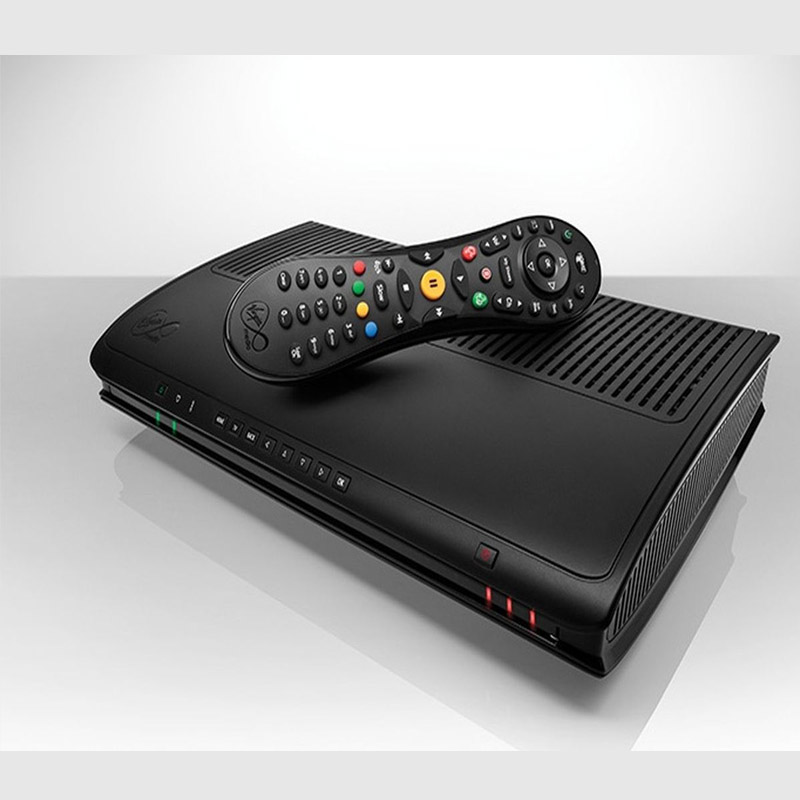
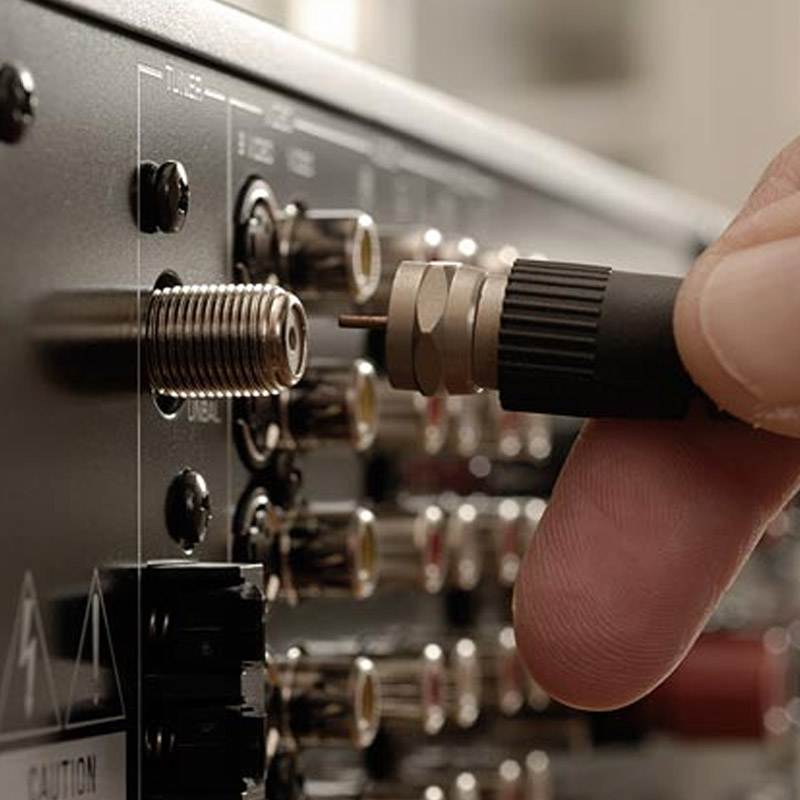
    MUMBAI: Even though the pay-TV industry has been shifting toward delivering services to computers, smartphones and tablets, the traditional set-top box (STB) continues to thrive, with market shipments forecast to hit record highs this year, according to IHS.

    Global shipments of STBs used for cable, satellite, terrestrial and IPTV digital TV services are predicted to reach 269 million units this year, which is eight per cent higher than last year. This is expected to grow another six per cent, to 286 million, in 2014, and a further one per cent, to 290 million, in 2015. However, 2015 is expected to be the peak of the market for the foreseeable future. After that, IHS predicts that STB shipments will decrease by five per cent in 2016 and by another two per cent in 2017.

    “STBs are facing a mounting challenge to their role at the dominant pay-TV video consumption device because of operators‘ growing emphasis on supporting multiscreen devices,” said Daniel Simmons, the senior principal analyst for TV technology at IHS. “However, operators are continuing to deploy STBs in order to manage the compatibility between their delivery networks and the consumer electronics devices that consumers are increasingly using to view content now.”

    “As pay-TV operators rush to accommodate changes in delivery platforms and in video formats – including the adoption of HD – STB shipments will continue to rise, hitting record levels for the next few years”, adds Simmons.

  • Satellite broadcasting companies given final opportunity to give networth details and balance sheet for 2011-12

    Satellite broadcasting companies given final opportunity to give networth details and balance sheet for 2011-12

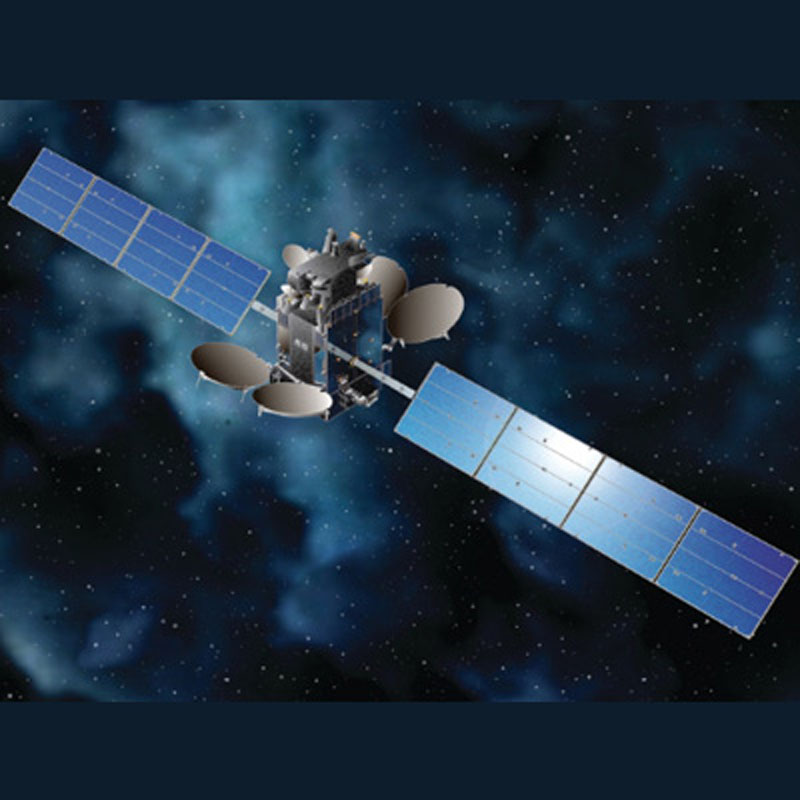
    NEW DELHI: Over forty broadcasting companies have been asked by the Information and Broadcasting Ministry to give by 15 July certain details relating to their balance sheet for the year 2011-12, networth, and details of the satellite being used by them for beaming their television channels.

    Noting that this is the ‘last and final opportunity’, the Ministry has warned that the details are not given in the proforma drawn up by the Ministry, then appropriate action will be taken ex-parte in accordance with the extant guidelines. 

    The notice also wants the composition of the Board of Directors of the company, the shareholding pattern including foreign investment, renewal details along with the renewal fee paid, details of Teleport and satellite from which Uplinking/Downlinking is being done, and operational Status of the channel including WPC validity and NOCC Certificate.

    lf the channels is not operational, then the status of PBG submission/encashment etc. has to be submitted.

    The Ministry had called meetings in batches of different channels to learn about their status, and has attached a list of 44 companies which did not attend the meetings. However, it has said that this list is not exhaustive and whichever company has not given the details according to the format should do so by 15 July.

    The list of 44 companies which failed to attend the meetings includes Broadcast Worldwide, Hindustan Broadcasting, Indo-Asian News Channel, Music Choice India , TVC Skyshop and UTV Entertainment Television.

  • KPSE-TV pulled from Time Warner Cable lineup

    KPSE-TV pulled from Time Warner Cable lineup

    MUMBAI: Negotiations failed between Journal Broadcast Group and Time Warner Cable, which means only one thing that the cable provider will no longer air KPSE-TV, My13.

    “It is unfortunate that Journal Broadcast Group has decided to pull their programming from our customers‘ lineups,” spokesman Dennis Johnson said in a statement. “Journal is demanding more than a 200 per cent increase over previous compensation without delivering more value.”

    Opposing sides had been negotiating for weeks to reach a deal that would allow Time Warner to continue airing Palm Desert-based KPSE and KMIR, Channel 6, which are owned by Journal Broadcast Group.

    KPSE programming was taken off Time Warner at midnight Wednesday, but KMIR cannot be removed during a sweeps period as per Federal Communications Commission rules.

    If a deal isn‘t reached by 24 July when the sweeps period ends, KMIR could also be removed, Johnson said.

    Television viewers would still be able to watch KMIR via other cable providers or with antennas.

  • Time Warner Cable, CBS at loggerheads over distribution deal

    Time Warner Cable, CBS at loggerheads over distribution deal

    MUMBAI: Although neither side is taking shots at each other publicly, there is an undercurrent of tension between Time Warner Cable (TWC) and CBS Corp as the two companies attempt to negotiate a new distribution deal.

    TWC‘s agreement to carry CBS-owned TV stations including KCBS in Los Angeles, the basic cable channels CBS Sports Network and Smithsonian, and the pay network Showtime expired at the end of June. Since then, there have been a couple of extensions, the latest one running to a few days before the end of the month.


    CBS is looking for a hefty increase. Chief executive Leslie Moonves has not been shy about making the case that the network should be getting more than popular cable channels.TNT, for example, gets over $1 per-subscriber, per-month, according to industry consulting firm SNL Kagan.

    CBS has yet to have a so-called retransmission consent negotiation reach the point where its signal went off a pay-TV distributor because of a contract dispute.

    Another component complicating these talks is Showtime. Because it is a premium channel, consumers opt to subscribe to it rather than having to take it as part of their pay-TV package. It is unlikely that Showtime would be yanked along with CBS‘ other channels as such a move would take money out of both companies‘ pockets.

    Neither side is commenting publicly on the negotiations.