Category: Set-top Boxes

  • Rovi announces guide solution for SD and HD digital terminal adapters in North America

    Rovi announces guide solution for SD and HD digital terminal adapters in North America

    MUMBAI:  Rovi Corporation ROVI +0.07%  , a global leader in entertainment discovery, today announced the launch of a guide solution for standard definition (SD) and high definition (HD) digital terminal adapters (DTAs) devices for North American cable operators. With the addition of this new guide, Rovi now offers discovery solutions that span across the array of cable platforms – from basic DTAs and advanced digital video recorders (DVRs) to second screen devices – that can help cable-TV service providers improve the user experience across their entire subscriber footprint.


    Frequently used for secondary televisions not connected to an advanced digital set-top and in homes that subscribe only to basic cable services, DTAs are basic cable boxes used to enable cable operators to upgrade their systems to an all-digital environment. In North America, cable companies are transitioning to all-digital in order to support bandwidth intensive services such as HD channels, multi-screen devices, and high speed data that are becoming increasingly popular with subscribers. DTAs provide cable operators with opportunities to more easily expand their service offerings, optimize the use of bandwidth, and enhance the experience for consumers by introducing a guidance experience on more set tops across their subscriber-base in North America.


    The capabilities included in the Rovi DTA Guide are the ability to find out what’s on TV, tune channels directly from the program grid, set parental controls, and set language options for the guide and audio. Rovi DTA Guide, anticipated to be broadly available to North American cable operators in early 2014, supports the growing market for DTA set-top boxes in this industry-wide transition to an all-digital environment. Rovi is currently working with many DTA providers, such as Cisco, Evolution Digital and Pace, to test and pre-port Rovi DTA guides.


    “For many cable TV subscribers, the guide has been designated as ‘only for the advanced DVR.’ Now that it is available on lower-end devices in addition to the premium set top box, cable TV subscribers including Basic and Expanded Basic households, can enjoy a better experience on every TV in their home,” said Michael Buchheim, senior vice president of product management for Rovi. “The guide experience is no longer limited to the premium digital subscribers, and cable operators will be able to use it to show the added value that they bring to their customers.”


    Rovi plans to demonstrate DTA Guides for industry executives in a private suite at Caesars Palace during the CES tradeshow in Las Vegas, January 7-10. Invited attendees can view Rovi services and technologies driving entertainment discovery and monetization, and learn first-hand how Rovi works with leading brands to unlock the full value of their entertainment offerings.
  • Cable TV prediction: US to phase out STBs by 2015

    Cable TV prediction: US to phase out STBs by 2015

    MUMBAI: The year 2013 was a big year for the Indian cable TV industry. The country that was till now running on analogue signals opened up to digitization, even if it was in few regions. While we can celebrate this achievement as we enter into 2014 and also gear up for the phase III and phase IV of digitisation, there is some food for thought coming from the US cable industry for the Indian cable TV industry. 

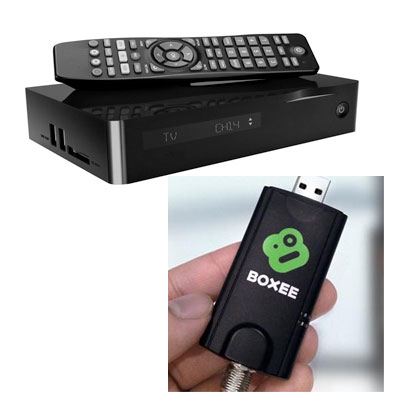
    According to the CEO of TV Predictions, Inc Phillip Swann, the Americans will see phasing out of cable TV set top boxes (STBs) by 2015 and witness an upsurge in USB dongle or CableCard like products that can be connected to a TV and signals can be received from the operator’s facility. And all this to reduce the expenses incurred due to huge sums paid to the box manufacturers.

    The predictions suggest that consumers would anytime prefer the simplicity and convenience of cable dongle over the set top boxes. That apart, the cable TV operators will also appreciate the savings.

    When the Google Chromecast Net TV device was launched, it was surely a step ahead in the cable TV industry. The dongle is one of the best-selling electronic products at Amazon.com currently.
    Some of the dongles available in the market currently are Boxee’s Live TV dongle and TBS USB DVB-C TV Stick amongst others.

    The predictions make it pretty obvious that the Americans are moving at a faster pace in the sector. Another point to ponder over here is that while in India the cable TV operators are still struggling to seed the STBs, another country is in the process of its phase out and switch to a compact technology.

    It’s not that in India, technology hasn’t improved. The direct-to-home (DTH) operators by introducing new and better facilities like recording as per preference, authority to choose channels with their high-definition (HD) boxes has already become a threat to the Indian cable TV operators who have just started seeding the standard definition STB with no added feature.

    With the world shrinking, it would not take the consumers much time to get exposed to the advancement happening in the TV/Cable industry the world over. The Indian consumers would soon wish for a compatible technology like the dongle. The New Year seems to be an alarm for the cable operators to start preparing for the huge shift.

  • Exset BV promotes PK Acharya; makes him the India director

    Exset BV promotes PK Acharya; makes him the India director

    MUMBAI: Exset India has got a new director. Exset BV, the Netherlands based broadcast solutions company, today announced that it has promoted its regional director- South Asia, PK Acharya to director Exset, India. Based in New Delhi, Acharya in his new role will be responsible for Exset’s business activities in India and will be reporting to Exset BV CEO in Netherlands.

    “The Indian market is very crucial for the Exset’s Global market share. Acharya with his vast experience in the Indian broadcasting market brings on board his understanding of India’s digital TV market. Along with his team he is expected to establish Exset’s business foot-print in India,” said Exset BV CEO Alex Borland.

    A graduate in Economics and MBA in marketing, Acharya has over 25 years’ experience in the communication and Cable TV industry. His network includes long standing personal and professional relationships with policy makers, all India distribution channel and the last mile owners in the Cable TV and internet data space.

    In the past, Acharya has been associated with companies like NG Technologies (NIG), Midas Communication Technologies, Sky Merchants, Hotwire, Genus Power Infrastructure, DEN Networks and Tripleplay Telecom. 

    “India holds great opportunity for me. Exset is a dynamically thinking company with unique solutions in Digital Monetisation System (DMS) very applicable to the Indian broadcast industry which will enable the operators to increase their ARPU. Exset has a great product in DMS and a great support team, which we will expand over the next few months. I look forward to contributing to the industry with whom I have worked over the past 25 years,” said Acharya.

  • Universal Music releases first-ever digital box set app

    Universal Music releases first-ever digital box set app

    MUMBAI: Universal Music Catalogue is hailing the release this week of ‘the world’s first-ever digital box set’ available on tablets and smartphones – a special 2013 edition of The Who’s 1969 album, Tommy.


    UMC has collaborated with developers MODO to produce a brand new iPad digital box set application, to complement the recently-released deluxe and super deluxe editions of Tommy.


    Users can download the app for free. If they already have Tommy in their iTunes music collection they can play the full tracks on tablet devices along with the visuals and extra features that accompany the super deluxe set. If not, they can play 90-second edited previews through iTunes and buy them directly.


    The digital box set also includes: a built-in music player (functional whilst reading the book and exploring the photos). The video section includes five tracks streamed into the app taken from The Who’s Live At The Coliseum ’69 show; a specially-developed Pinball Game – created using the NYC Metropolitan Opera House gig of 1970 poster image that encourages users to play and post their scores as well as links to the official Who site, official store and social channels.


    Universal Music Group International digital head Geoff Smith said: “The Tommy digital box set transforms the beautiful physical box edition into a unique and fully-immersive experience allowing fans of all ages across the world to access and explore this seminal album in a fully interactive way.”


    News of Android and Windows 8 versions of the app will be announced in due course.

  • Virgin TV anywhere launches on Android devices

    Virgin TV anywhere launches on Android devices

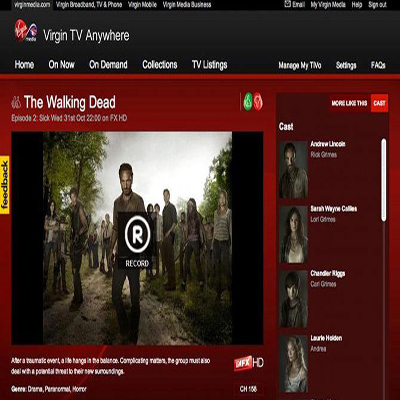
    MUMBAI: Virgin TV Anywhere recently launched a native app for Android tablets and smartphones.


    The application allows Virgin Media TiVo customers to programme on the move, with 67 channels available on mobile devices.

    To coincide with its Android launch, Virgin TV Anywhere has added nine new channels to its roster – Alibi, Dave, Drama, Good Food, Home, Really, Watch, Yesterday and CBS Reality.


    “With the arrival of these fantastic new channels, Virgin TV Anywhere is undoubtedly the market-leading service for those who want to take the best of their home entertainment with them to watch wherever they are at no extra cost,’ said Virgin Media director Scott Kewley in a report.


    The web-based version of Virgin TV Anywhere provides access to 90 channels, including BT Sport, ITV, Channel 5 and CBS Reality Premier Sport.


    Virgin TV Anywhere, which was previously released for iOS devices, is available to download from Google Play now.

  • Are Android STBs a step too far for India?

    Are Android STBs a step too far for India?

    MUMBAI: Even as the cable and television industry prepares to take on digitisation, there’s another advanced technology which has arrived rather quietly on Indian shores.


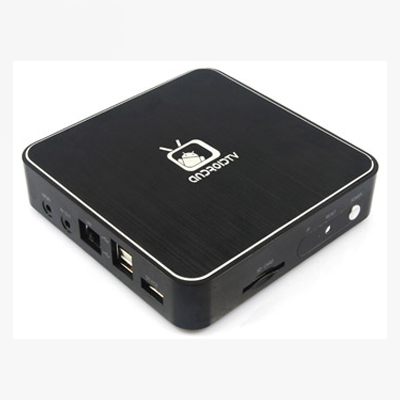
    We’re talking Android set top boxes (STBs) from Willett STB Technologies which are in the market since sometime last month. These hybrid STBs carry all the applications available on the Android Play Store and allow customers to switch seamlessly between television and the internet. Given the recent buzz about Google bringing YouTube on TV, such a technology may just be what the doctor ordered. However, for a variety of reasons, the Android STBs don’t seem to be finding enough traction in the industry.


    Speaking to indiantelevision.com, Willett STB Technologies director Deepak Wadhwa refuted the MSOs’ claim that STBs are not upgraded to carry YouTube as a Video-on-demand (VoD) service on television. “The STBs come in different models and frankly, we are ready with the technology. The Android box is the answer to this new development.”


    However, Wadhwa was quick to point out that the problem lies in MSOs’ unwillingness to accept the technology. “The MSOs are not ready to promote the boxes. Even though we are ready with the upgraded technology, there are deployment issues,” he said.


    So what was keeping MSOs from adopting the new technology? A major reason, according to Wadhwa, was the cost, where each Android STB carried a price tag of Rs 4,000. Additionally, customers would have to pay for video services.


    The Willett Android 4.2 STB is a hybrid box, with both Android and DVBC features. “The box allows customers to switch between Android play store and TV channels. It also converts a normal TV to a smart TV,” informed Wadhwa.


    Elaborating on the cost factor, he said: “The MSOs are already tied up with MPEG2 boxes. Also in smaller cities, where people are used to viewing TV at Rs 75 to Rs 100, they are opposing STBs which cost Rs 1000, so accepting the Android boxes seems a far thing to imagine.”


    Meanwhile, an MSO defended cable operators’ stance saying: “These OTT boxes don’t give us revenue which goes to the service provider instead. So why should we use them?”


    Media consultant Sanjeev Hiremath opined: “As far as the cable industry is concerned, technology gets adapted step-by-step. No one is ready to take two steps at a time. Obviously, the advantage of the Android box is that you can incorporate the experience of OTT service also in that. So then you can avoid cable and can directly take a broadband connection and experience both TV and the world of internet. If customers are not ready to pay Rs 1000-2000 for normal STBs, of course they will not buy these at double the rate.”
    Maybe, India needs to work towards faster adoption of new technologies just as it has in developing them…


  • Cisco increases its reach to 100 million digital TV homes in Asia Pacific

    Cisco increases its reach to 100 million digital TV homes in Asia Pacific

    MUMBAI:  In the rapidly-growing digital television industry in Asia Pacific, Cisco, a provider of conditional access (CA) and digital rights management (DRM) solutions, has secured content that is delivered to more than 100 million digital homes in the region.

    Using an industry-estimated average of 3.3 people per household, Cisco’s VideoGuard conditional access and digital rights management technology now provides the critical protection of premium content to over 340 million viewers.

    Cisco has also developed a research and development (R&D) center in Bengaluru that is dedicated to the development of video technology. According to the MPA report of May 2013, the company currently enjoys the largest market share of the estimated 257 million digital TV homes in Asia Pacific.

    Service Provider Video Software Solutions vice president sales, Asia Pacific Sue Taylor said, “Achieving the milestone of over 100 million digital homes in this region is a testament to our commitment to Asia Pacific over the past 20 years, and our partnerships with some of the most successful cable TV and DTH satellite platforms in the region. This industry in Asia Pacific is one of the fastest growing and most dynamic in the world. We look forward to serving million more households that can benefit from Cisco’s enhanced TV-viewing experiences, as the demand for advanced services and applications surges.”

    BOX

      Cisco® VideoGuard conditional access and digital rights management solutions make Cisco the leading CA provider in Asia Pacific with a market share of 31 per cent (Source: Screen Digest Report 2013 and Cisco’s internal subscriber data).
     

      Cisco is a trusted pay-TV technology partner for over 150 Pay-TV operators as well as media and entertainment companies worldwide, including leading Direct-to-home (DTH) and cable operator customers in Asia Pacific like Airtel Digital TV, Astro, Foxtel, Hathway, Oriental Cable Network, Sichuan Cable TV, Tata Sky and DEN Networks.

    Cisco recently announced the key milestone of over 30 million digital TV homes in India with an estimated 150 million viewers.

  • Video’s the way forward for Cisco

    Video’s the way forward for Cisco


    MUMBAI: With the ever increasing demand for video services, Cisco is among a clutch of companies that views video as the next big thing.

    Cisco TV coupled with Cisco STBs, caters to over 300 million homes globally and over 30 million households in India. The Cisco Videoscape Unity platform fulfils the demand for video on multiple screens, empowering service providers and media companies to create and connect new synchronised, personalised and intuitive multi-screen experiences at great speeds.
    Video is the next big thing for us: we see the way video will be personalised, consumed and delivered to be very dynamic believes Arora

    Says Cisco India & SAARC service provider – regional sales manager Sandeep Arora: “For Cisco, network is the platform for business enablement. Video is the next big thing for us: we see the way video will be personalised, consumed and delivered to be very dynamic.”

    “There are multiple ways by which we are driving digitisation in India and helping our partners in what we call as a glass to glass strategy, so if you see our technology platforms, we serve from the IRDs – which is a picture coming from the lens of the camera to the glass of the TV screen,” adds Arora.

    Cisco Videoscape Unity brings expertise in building comprehensive carrier-class cloud products and a flair for designing award-winning user experiences that implement each provider’s unique brand and vision. Cisco then engineers this vision into a coherent and deployable multi-screen product.

    “So while we are enabling technology platforms, we are also enabling business platforms, and since it’s a very capex (capital expenditure) driven industry, we are also using our financial arm – Cisco Capital – to drive that high capex worth of business going forward. So in the end, we are just focusing on providing the right value for the end consumer by using the Cisco technology and to be a part of the immersive experience,” says Arora.

    Six to seven years ago, Cisco acquired Scientific Atlanta – its largest acquisition till date – and over the years, it has been acquiring multiple companies to enhance its network capabilities and platform technologies. “So be it content aggregation, content creation or content distribution, all of this need to come together and we need to drive this experience,” says Arora.
    About digitisation, Arora says there have been many anxious moments during phase I and phase II. “There is a technical digitisation that has happened – with the seeding of STBs in homes – but the business digitisation is still evolving – where the revenue is pumped in – and what we are looking at is it kicking in and that’s where the business model starts functioning,” he explains.

    A behavioural change is also taking place, according to him, which is necessary for the success of both technical and business digitisation. “So with phase III and IV of digitisation approaching soon, we are moving to the bottom of the pyramid, and each phase will have its unique set of requirements and challenges, the fragmentation will also increase as digitisation penetrates further. The audience being addressed is very different, so we need to keep thinking how to redefine ourselves as we move forward,” he points out.
    While others may aspire to offer either quick and powerful cloud-based services or customer-specific experiences, Cisco Videoscape Unity is unique in that it offers both.

  • Comigo Duo Box galvanizes the TV market


    MUMBAI: Comigo, the creator of a comprehensive multi-screen TV platform, has announced the launch of a new generation of smart set-top-box, named Comigo Duo. Featuring the Android Jelly Bean 4.2.2 operating system and a strong dual-core ARM Cortex A9 processor, the set-top-box will provide new social and interactive features and capabilities for the TV viewer. Comigo Duo set-top-box is 3G / LTE enabled, ensuring that viewers can take advantage of the latest wireless communications service available.


    With a finger on the viewers‘ pulse for social and communications needs, Comigo Duo supports video conferencing (Skype), enabling the viewer to invite friends and family for a chat while watching their favourite programme. Keeping up with developments in mobile technology, Comigo will roll out new services that take advantage of the latest innovative solutions.

    With the Comigo Duo solution, consumers can also perform common home computing tasks, such as emailing, chatting, browsing, gaming and even document viewing and editing. Comigo attempts to bridge the gap between the complex user experience provided by personal computers and the intuitive user experience of a smart device in one handy package.


    “Today‘s consumer is more demanding than ever before – they want to interact and communicate with their friends and family,” said Comigo founder and CEO Dov Moran. “We have been working to overhaul the TV experience with our comprehensive multi-screen TV platform – our solutions portfolio has continued to expand to address the rapidly evolution of consumers‘ expectations.”

  • HISPASAT joins hands with Thomson Video Networks

    MUMBAI: Thomson Video Networks has announced that HISPASAT has launched a trial demonstration of Ultra HD content delivery using the High Efficiency Video Coding (HEVC) compression capabilities of the ViBE™ VS7000 multi-screen encoding platform. HISPASAT, a leading satellite transmission operator with a strong presence in Europe and South America, is deploying the VS7000 to deliver HEVC-encoded Ultra HD content to air via its HISPASAT 1E satellite platform. At IBC 2013 this month, HISPASAT will demonstrate live Ultra HD video streams using the Thomson Video Networks technology.  

    “This demonstration plays an important role in our plans to promote the deployment of the most cutting-edge compression and delivery formats – giving our customers the ability to offer their viewers the absolute highest-quality viewing experience,” said HISPASAT chief commercial officer Ignacio Sanchis. “With the Thomson Video Networks technology, we are hoping to create awareness within our customer base and deliver live Ultra HD streams that can be used in many different ways, such as demonstrating interoperability among manufacturers of TV sets and set-top boxes.” 


    Thomson Video Networks has been participating in a proof-of-concept trial with HISPASAT that ends this summer to demonstrate how its technologies can form an ecosystem to drive future commercial Ultra HD service offerings based on HEVC compression. The ViBE VS7000 will provide 4K file transcoding in HEVC, and Thomson Video Networks’ Sapphire transport stream server will play out the Ultra HD HEVC-encoded content. The open-source GPAC or VLC HEVC-enabled media players will decode the HEVC content for display on TV sets.

    This trial demonstration is also one of the first steps in the H2B2VS and UltraHD4U Eureka research projects where partners set up a satellite 4K HEVC transmission, paving the way for HEVC-based broadband and broadcast services.


    “By adding our own implementation of the new HEVC compression standard to the ViBE VS7000, Thomson Video Networks is paving the way for HD and Ultra HD content on any kind of device and any kind of network. HISPASAT is providing an important service to the media industry by proving that the technology exists today through the ViBE VS7000, and that it can be harnessed to encode 4K content in HEVC for actual Ultra HD delivery,” said Thomson Video Networks president Christophe Delahousse.


    In addition to this HEVC trial demonstration, Thomson Video Networks and HISPASAT have signed a wider cooperation agreement to jointly promote Ultra HD TV. As part of this agreement, Thomson Video Networks will be a partner to the HISPASAT 4K channel, which will be launched at IBC this year.