Category: Set-top Boxes

  • TiVo exits STB business

    TiVo exits STB business

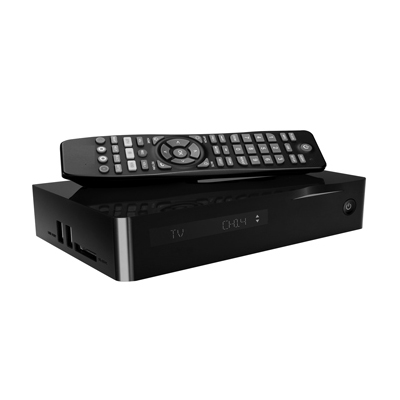
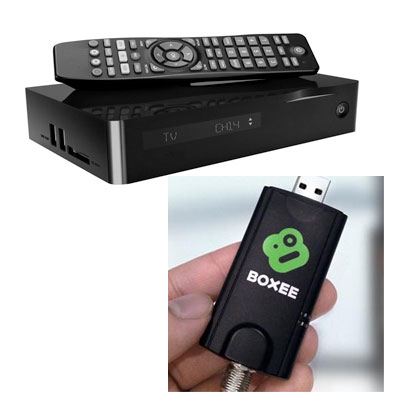
    MUMBAI: TiVo is exiting the manufacturing, sales and distribution of set-top boxes to a yet-undisclosed third party, the company has said.

    CEO Enrique Rodriguez, talking to analysts on its Q1 earnings call, said that consumers would continue to see TiVo-branded boxes in the retail sector, and specifically mentioned outlets such as Best Buy and Amazon. “Once we complete this transition, we still will have direct consumer hardware sales through TiVo.com, which we will be fulfilling through this box manufacturer.”

    Q1 revenue was $189.9 million, with core revenue up $9.7 million (5.9 per cent). Product revenue was $116.9 million, up 2 per cent year-on-year.

    Rovi Corp acquired TiVo in 2016 and Rodriguez said that synergies had already topped $100 million of its $110 million targeted savings from the combination.

    Rodriguez told analysts that its traditional markets consist of consumer electronics, or CE manufacturers, and Pay TV service providers. “The emerging markets for us are virtual service providers, content and new media companies as well as advertisers. These are the areas that we believe will drive TiVo’s future growth.”

    He added that TiVo had expanded its patent agreement with Google in Q1 to include YouTube TV. Additionally, KDDI renewed their OTT service agreement with TiVo in Japan. “In Asia, we added Telstra Corp as a licensee in Australia and renewed our IP licence deal with Alticast in Korea. In Europe, we added the number two service provider in a major European country as a customer under a six-year licence arrangement. This comes on top of renewing eight service providers in Europe last year.”

    Also Read :

    Tata Sky, Airtel DTH gain market share in 2017

    Dish TV-Videocon d2h to bank on economies of scale

  • STB cos in India, China enhancing features, providing customised solutions, Technavio enlists top vendors

    STB cos in India, China enhancing features, providing customised solutions, Technavio enlists top vendors

    MUMBAI: The global STB market is characterised by intense competition as the market is saturated in developed countries. The market share of these players is declining because of the entry of new players. The STB companies are enhancing the features of STBs and providing customised solutions to retain their market share.

    Technavio, a technology research and advisory company, has enlisted the top five leading vendors in their recent global set-top box (STB) market report. This report also lists 45 other prominent vendors that are expected to impact the market during 2017–2021.

    There is a high demand for pay-per-channels used by customers who use gateways and multiscreen devices. The ongoing shift to the HD format contributes to the growth of the market. Digitisation in China, India, and Brazil contributes significantly to market growth. The ongoing shift from analogue to the digital platform in China and India has created the demand for HD STBs in these countries.

    Competitive vendor landscape: “The global STB market is characterised by intense competition as the market in developed is expected to be stagnant in future. The market is fragmented owing to the presence of a large number of small players. The entry of new players intensifies competition and reduces the profit margins of other vendors. The players are enhancing the features of STBs and providing customised solutions to retain their market share,” says Ujjwal Doshi, a lead consumer electronics research analyst from Technavio.

    The growth of the global STB market is driven by digitisation that has been taking place in developing countries, such as Argentina, Brazil, China, and India, since 2010.

    ARRIS International: ARRIS International offers STBs, digital video and IPTV distribution systems, broadband access infrastructure platforms, and associated data and voice equipment. The wide portfolio of the company offers end-to-end solutions that offer service providers a variety of choices to customize their approach to IP transition. The company focuses on expanding its product and solutions portfolio through organic development, partnerships, and acquisitions.

    Broadcom: Broadcom offers a range of consumer electronics products including STB, central office broadband access equipment, residential gateways, and stand-alone broadband access modems. Global service providers introduce new technologies and services in STBs such as HD content, transcoding, digital video recording, and increased networking capabilities.

    Pace: Pace provides technology solutions and caters to the subscription-based TV services providers and broadband industries. It offers a wide range of media servers, STB, gateways, software, optical transport and access control network solutions, and highly specialized services.

    Roku: Roku focuses on manufacturing streaming entertainment devices. The first product launched by the company was designed to secure movies from Netflix and feature them on TV with the help of the Internet. The streaming players can be connected directly to the user’s TV and grant access to movies, TV shows, games, music, and extra channels.

    Technicolor: Technicolor provides production, post-production, and distribution services to content writers, network service providers, and broadcasters. The company offers film processing, visual effects, and animation services along with the manufacture and distribution of digital video disks, Blu-ray disks, STB, and gateways.

    The emerging markets offer opportunities for growth to vendors as the developed countries have reached saturation, according to Technavio. The availability of affordable STBs fuels growth in the market.

    ALSO READ :

    IDOS 2017: Tech needed to integrate different media in a single box

    Dish TV presses HD button; introduces new cardless set top box

    BARC India to TRAI and MIB: Tweak legislation to make data tamper-proof

    TRAI workshop on interoperable STBs later this month


  • Cable variant with 50x capacity launched, good for BharatNet, says telecom panel secy

    Cable variant with 50x capacity launched, good for BharatNet, says telecom panel secy

    MUMBAI: Sterlite Tech, an end-to-end global technology leader in smarter digital networks, has bolstered its all-new FlashFWD 5G Solution with the launch of 1152F variant cables at India Mobile Congress (#IMC2017).

    As part of its new FlashFWD 5G Series, this new indigenous cable variant comes with over 50 times the capacity of the typical cable deployed in India.

    While launching this solution, Telecom Commission (DoT) secretary (T) and chairman Aruna Sundararajan said, “I am delighted to launch Sterlite Tech’s 5G cable that has been completely made in India. This is really a next-generation product. As the world looks at more fibre deployment, I think this is one of the products that will be a leader. This technology also fulfils the Government of India objectives. As BharatNet and other optical fibre projects roll-out in the country, we will see more such technology deployments.”

    FlashFWD 1152F is NABL certified and complies with the latest global standards of IEC.60794 series, ANSI/ICEA S-87-640, Telcordia GR-20, and ITU-T Recommendations.

    Sterlite Tech CEO Anand Agarwal asserted, “We are proud to have designed and manufactured this dense network solution for mobile backhaul in India. Sterlite Tech manufactures these products across the value chain from core silicon to semiconductor-grade glass to optical fibres and optical fibre cables, making us the most integrated player globally. This solution proposes the usage of one fibre cable and one duct solution instead of putting multiple ducts, which are subsequently unusable.”

    Sterlite CTO Badri Gomatam said, “These cable solutions have 50 times the capacity of the current cables deployed in the country and future-proof for 20 years. With efficient use of limited duct space, the 1152F cable features a rugged design that protects the network in harsh weather and impact situations, increasing life expectancy to at least double the current average lifetime with lowest carbon-footprint.”

  • Govt steps helping APEJ STB market, global sales may expand at 7.5pc CAGR

    Govt steps helping APEJ STB market, global sales may expand at 7.5pc CAGR

    MUMBAI: Owing to increase in penetration of television and TV services within rural areas as well as urban areas, the set-top box market will receive a boost all across the APEJ region. Disposable incomes are on a rise in India and China, and this is helping the set-top box (STB) market turnover to grow, according to Reportlinker study. In China and India respectively, governments have taken initiatives to focus on HD pictures, HD channels and decline in TV prices. This has led to the growth of the set-top box market in the APEJ region.

    The global set-top box market is estimated to be valued at US$ 22,269 million in 2017 and is projected to reach US$ 46,091 Mn by 2027 end. Sales revenue is expected to increase at a CAGR of 7.5 per cent during the forecast period (2017–2027), the Reportlinker report added.

    Increasing demand for TVs from rural areas boosting the set-top box market in the APEJ region: Due to increase in penetration of television and TV services within rural areas as well as urban areas, the set-top box market will receive a boost all across the APEJ region. In the Asia Pacific region, consumers are more aware about the features, quality and pricing of the set-top box, helping the market achieve greater growth and acceptability.

    Increasing demand for IPTV STBs is fuelling the market for set-top boxes in North America: Increasing demand of 4K TVs is expected to provide support to the growth of the set-top box market in North America. It has been observed that the demand for IPTV based services has increased by 12 per cent and operators are viewing IP-based services as an opportunity to differentiate their products. IP transmission recording features and higher storage specifications are anticipated to support steady revenue growth of the North America set-top box market.

    Domestic production and low-cost products hampering the market growth in APEJ: In the Asia Pacific region, domestic production of set-top boxes by local companies is leading to an increase in price competition with global set-top box manufacturers. Emerging companies are acting as competitors to the established players in the market, thus making the smooth operation of this market difficult.

    Focus on HD videos and powerful interfaces with technology a growing trend in the global set-top box market: It has been observed that set-top box vendors are focussed on supporting devices that enable seamless rendering of high-quality video on a powerful user interface and set-top box vendors have started manufacturing operation systems and app based set-top boxes. The global market is moving towards the 4K android customised set-top box and smart set-top boxes. It has been observed that in the past few years, set-top box manufacturers have shipped a large number of 4K set-top boxes in the APEJ region, and consumers are more aware about the technology and features of set-top boxes in this region.

    Flexible policies and government support encouraging the use of set-top boxes in the APEJ regional market: In November 2015, the Chinese government banned 81 third party apps that allow users to turn television sets into internet streaming devices. The Chinese State Administration of Press, Publication, Radio, Film and Television proposed a rule for governing set-top boxes. In China and India respectively, governments have taken initiatives to focus on high definition pictures, towards HD channels and decline in TV prices. This has led to the growth of the set-top box market in the APEJ region. Manufacturers in this region have also utilised e-commerce retailers such as Alibaba, Ali Express, Amazon, Flipkart etc., and this has propelled the growth of this market.In terms of value, the North America set-top box market is projected to be the most attractive regional market in the global set-top box market during the forecast period

    However, the APEJ market is also poised to register high Y-o-Y growth rates throughout the forecast period. In terms of value, APEJ is anticipated to register a CAGR of six per cent during the forecast period. In 2016, the APEJ market was valued at US$ 6,067.4 Mn and is expected to witness sustained growth in terms of revenue throughout the forecast period.

  • Japan’s KDDI adopts TiVo’s remote-recording service

    Japan’s KDDI adopts TiVo’s remote-recording service

    MUMBAI: TiVo Corporation, a leader in entertainment technology and audience insights, has announced that KDDI Corporation, a leading Japanese telecommunications provider, has selected TiVo’s remote recording service for G-GuideÒ and will also implement new voice control features to deliver one of the most advanced entertainment discovery experiences in Japan.

    KDDI has deployed TiVo’s latest G-Guide HTML on its Cable Plus Set-Top Boxes (STB) to provide customers with the ability to find and discover programming. This capability is an enhancement to KDDI’s existing deployment of the G-Guide HTML for IPTV STBs last year, enabling KDDI to deliver an expanded range of solutions to cable TV service providers.

    KDDI has also adopted TiVo’s remote recording service and mobile application, G-Guide xD, allowing subscribers to record programs at any time right from their smart phones, enabling greater convenience and accessibility to the latest entertainment. This feature is available to service providers for the first time in Japan.

    With the new voice control features, subscribers can find content quickly and change between channels by giving verbal commands to the cable STB remote control, thus connecting to their favorite entertainment with ease. This is the first deployment of the voice control feature for G-Guide HTML in Japan.

    “We are very pleased to be working with KDDI to introduce these advanced functions to the Japanese market,” said TiVo SVP & GM – user experience Michael Hawkey. “Japanese consumers are often ahead of the curve when it comes to technology adoption so this latest development is a testament to KDDI’s dedication to providing its customers with new functionality to enhance their entertainment experience.”

    ALSO READ :

    ThinkAnalytics focuses on India expansion, hires former TiVo & Zee exec Samir Narsiker

    Turner selects TiVo to provide enhanced electronic programme services

    TiVo renews IP licence with Foxtel, deliver ultimate experience in Australia

    Sky picks TiVo to search entertainment across linear TV & VoD using voice


  • GST on set-top boxes & optic fibre down to 18%

    GST on set-top boxes & optic fibre down to 18%

    NEW DELHI: The Goods and Services Tax (GST) for set top boxes has been reduced to 18 per cent from the previously announced 28 per cent.

    Similarly, the GST Council also reduced the tax on coaxial cables and optical fibre to 18 per cent from the hitherto 28 per cent in both cases.

    Finance Minister Arun Jaitley said: “After considering recommendations of fitment committee, rates are being reduced in the case of 66 items.” 

    Jaitley is also the chairman of the GST Council. He said that there were 133 representations and these were considered.

    Other items relating to the electronics and the media and entertainment industry in which GST was reduced are: 

    public://gst.jpg

  • CastleMedia sets up Spyke for CPE and STBs repair

    CastleMedia sets up Spyke for CPE and STBs repair

    MUMBAI: Here’s some good news for the DTH Operators, MSOs and LCOs who used to get their STBs repaired from the neighborhood electrical shop at the hands of untrained, unqualified electricians.

    Thanks to the government’s cable TV digitisation push, the population of STBs or consumer premise equipment swelled. With close to 174 million STBs or consumer premise equipment (CPE)  of various types – digital, HD, Ultra HD, and a guesstimated failure rate of around five to eight  per cent, Mumbai headquartered Spyke Technologies (SPYKE) has stepped into the STB servicing and repair game for  distribution platforms.

    Backing the new venture are broadcast technology vets Vynsley Fernandes and CEO Ru Ediriwira of CastleMedia which has worked with leading broadcast, networking & communications product manufacturers across their product lifecycle – right from R&D and field testing to improving “user experience.”

    The company has set up service centers in Mumbai and New Delhi, and a countrywide faulty STB collection center network. The service centres are manned with about 30 tech engineers in Mumbai and 35 in New Delhi.  

    Presuming the STB failure rate at a conservative five per cent of the digital TV ecosystem in India (although actual ground information indicates failures at around 8-10 per cent), SpykeTech aims to capture between 12 per cent to 15 per cent  of the market in the next four to five years. And, helping it get there will be the offices in Bengaluru, Hyderabad, Madras, Ahmedabad and Kolkata which will come up in over the next two to three years.

    The company has invested more than Rs 35 million in Spyke on  its 2500 sq foot Mumbai office located in Vile Parle and and its Delhi office being hosted over 7000 sq feet.  Spyke will be in a position  to fix at least 18,000 STBs every month in Mumbai, while the fixing  figure for Delhi stands at 25,000 a month.

    The company is being positioned as India’s first technology lifecycle management platform for CPE offering a single window and end-to-end service model which includes repairing of STBs, broadband and data communication equipment, home media gateways, networking equipment and VSAT modules.

    Says Spyke Technologies director Sunil Ranadey:  “There exists a demand-supply gap in the country when it comes to quality servicing of not only STBs  but all CPEs. SpykeTech aims to bridge this gap. Our cloud-based proprietary software SPYKENET, is what we believe will separate the “men from the boys” in terms of CPE repairs in the country.”

    “The proprietary software will empower the DTH operators/MSOs/LCOs not only with analytical tools to analyse the faults, but will provide complete transparency with logistic movement and accounting support for their CPs, something lacking in the present system,” Ranadey added.

    Spyke is in its early setup stage but has already begun to have conversations with different distribution platforms. The sticker price for repairing an STB is being talked about as being between Rs 200 and  Rs 450 which is quite an attractive option for all TV viewers.  What’s unique about Spyke is its SpykeTech solutions which uses a powerful and collaborative software platform to support clients and customers across India.

    “SpykeNet will be the difference between us and other repairers. The software is going to be the strong analytical tool which is applicable to all cable and DTH networks,” elaborates Ranadey.

    Adds CastleMedia executive director Vynsley Fernandes: “CastleMedia has been very successful in identifying pain-points in the pay TV industry and developing solutions to address the problem. One such example was the development of a suite of mobile and on-line applications for cable TV customers to go prepaid – this was truly an innovative and pathbreaking initiative. Similarly, we see CPE management – irrespective of whether it’s STBs or other devices; continuing to impact the company bottom-lines – anywhere up to 30 per cent.  Our significant investment in setting up SpykeTech is precisely based on addressing this pan-India issue.”

    Also Read :

    Airtel launches hybrid DTH STB, to have 500+ channels, Netflix & YouTube preloaded

    DEN to launch 4k, ‘open’ STBs, give a leg-up to HD, b’band services

    Dish TV & ALi tie up – chipset tech vital for secure VAS, enriched viewing

    9 Indian companies to manufacture STBs; iCAS cost less than $0.5: Govt

  • Indian and Chinese companies tie up for pre-integrated VAS Ready STB

    Indian and Chinese companies tie up for pre-integrated VAS Ready STB

    NEW DELHI: Technology company specializing in digital media Corpus and Chinese digital products supplier Jiuzhou are to offer an STB solution bundled with Value Added Services (VAS) applications to enable operators monetize their digital investments and achieve faster ROI and profitability.

    This solution is available for MPEG-4 standard definition and high-definition version with ABV and NSTV conditional access systems.

    Thus, Indian cable TV Muti system operators can opt for the pre-integrated VAS Ready STB as it will increase their per subscriber valuation with revenue generation potential on each STB deployed.

    The STB comes with bundling of software for Adnet, Horoscope, Darshan, LifeStyle, Cooking, Box Office, TV Anywhere, and Real Estate.

    The pre-integrated VAS Ready STB from Jiuzhou offers ad revenue across STBs; additional benefits to user with VAS application; quick and easy development, rich UI and EPG; faster UI changes and a support system for STB software feature changes like barker channel, Mosaic, etc.

    Corpus Software Pvt. Ltd CEO Sachin Tummala said, “We are happy to be the trusted partner of Jiuzhou by delivering the right customer experience. This partnership is indeed proves fruitful in helping it expand the strategy for Indian MSOs both in terms of operations and delivering value to their subscribers.”

    Jiuzhou STB Business Unit GM Huangwei said, “Corpus is a forward-looking company capable of providing suitable and reliable solutions to blend with Jiuzhou products. As Jiuzhou localization plan goes deeper, we believe our mutually beneficial partnership with Corpus can be stepped to a higher level.”

  • Meet the brains behind Caavo, India-designed unique STB

    MUMBAI: Meet the brains who founded the unique Caavo, a device that delivers a unified TV experience where devices and services come together to offer ultimate control. Caavo TV box serves as a universal control system for cord cutters that have multiple streaming boxes. The device is equipped with voice recognition, and can find specific content requested across your TV sets and your cable box.

    Ashish Aggarwal is one of the co-founders of Caavo who is working on this successful project since June 2015. Before founding Caavo, Aggarwal, an MS and PhD (electrical engineering) from University of California, Santa Barbara, was employed by Violet3D between May 2009 and June 2015 in Bangalore, prior to which he worked with Harman International for over an year as the director of advanced technology in Los Angeles.

    The other co-founder is Vinod Gopinath who started working on Caavo in March 2015. Before Caavo happened, Gopinath, a post-graduate from XLRI Jamshedpur, was employed as Snap Networks COO since September 2012 in India before which he served on the board of directors of shufflr.tv (althea systems).

    Caavo delivers a unified TV experience. Rather than attempting to consolidate into one box, Caavo connects all of the pieces: pay TV, streaming, and gaming, then unites the experience. The power of Caavo lies in its ability to combine fragmented entertainment devices and the vast, yet ever changing content across all of them into something magical. Caavo’s HDMI output can be connected either directly to a TV or through an [AV Receiver]. Caavo supports Dolby and DTS pass thru from source to the AVR.

    By interconnecting pay TV, streaming, and gaming, Caavo brings together your devices, services and control. They work together seamlessly, making it easy to find and play all of TV.

    Also Read

    http://www.indiantelevision.com/dth/dth-services/dth-stbs-interoperability-to-be-ensured-with-meity-bis-help-170210

    http://www.indiantelevision.com/dth/dth-services/dish-tv-ali-tie-up-chipset-tech-vital-for-secure-vas-enriched-viewing-170211

    http://www.indiantelevision.com/iworld/telecom/mobitv-powers-jio-live-receives-us-21m-for-ip-based-video-sans-stb-170222