Category: Set-top Boxes

  • ACT Smart Wi-Fi powers up homes with 5x faster speeds across devices

    ACT Smart Wi-Fi powers up homes with 5x faster speeds across devices

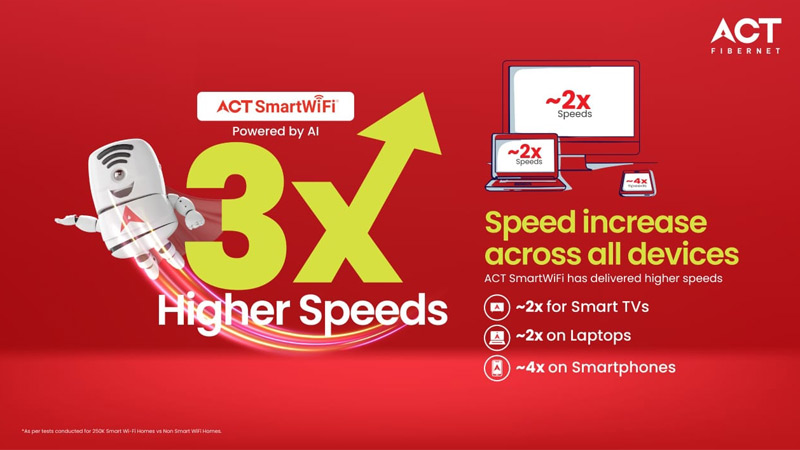
    MUMBAI: Buffering be gone! ACT Fibernet is turning homes into connectivity powerhouses with its latest report on ACT Smart Wi-Fi, powered by Zippy. The findings reveal that this intelligent home Wi-Fi solution doesn’t just promise speed, it delivers up to 5x faster performance across laptops, mobiles, and smart TVs, all while improving Quality of Experience (QoE) by 17 without customers needing to upgrade their broadband plans.

    Unlike conventional routers that treat every device the same, Smart Wi-Fi dynamically senses each device’s capability and signal strength, intelligently switching between the 2.4 GHz and 5 GHz bands. The result? Devices demanding higher bandwidth think laptops streaming 4K content or mobile gaming sessions automatically get the fastest, most stable connection, while other devices are seamlessly balanced across the network.

    The report shows that laptops and mobiles saw the largest performance gains, while even older smart TVs recorded nearly 3x improvement in stability and responsiveness. Smart Wi-Fi devices spent 71 per cent of their time on high-bandwidth channels, compared with just 48 per cent under traditional setups. High-capacity channels were used 30 per cent more often, while low-bandwidth channel usage dropped 41 per cent, ensuring smoother video calls, lag-free gaming, and uninterrupted streaming even in multi-device households.

    Quality of Experience, a holistic measure of speed, signal, stability, and latency, rose 18 per cent overall, with the most noticeable improvements on devices that depend heavily on adaptive channel switching. Adoption is already impressive: two out of three ACT Fibernet customers are now on Smart Wi-Fi, reflecting widespread satisfaction and trust.

    ACT Fibernet vice president marketing Naveen Nahar said, “Homes and offices are increasingly digital. People expect more than just high-speed internet, they expect consistency and seamless performance across all devices. Smart Wi-Fi, powered by Zippy, maximises the potential of existing broadband plans, automatically managing connectivity and bandwidth to keep streams, games, and calls smooth even in busy households.”

    The benefits of Smart Wi-Fi multiply when combined with Mesh networks, which extend signal coverage across larger spaces. Together, the technology ensures every device gets the right bandwidth at the right time, creating a self-optimizing network that adapts to the home rather than forcing the home to adapt to it.

    With ACT Smart Wi-Fi, homes aren’t just connected, they’re smarter, faster, and more reliable, turning every room into a high-speed hub that keeps up with modern digital lifestyles.
     

  • Dish TV switches on VZY Smart TVs to stream into the future of home viewing

    Dish TV switches on VZY Smart TVs to stream into the future of home viewing

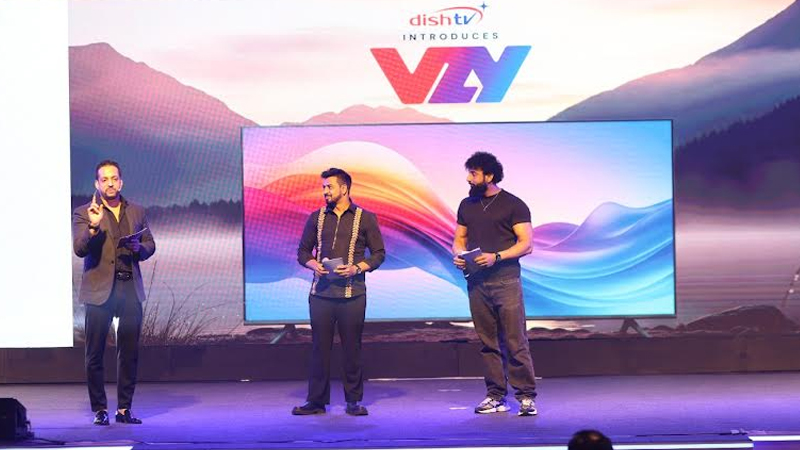
    MUMBAI: Dish TV has flipped the channel on its future and this time, it’s not just about broadcasting. The country’s leading DTH provider, trusted in Indian homes for over 22 years, has launched VZY Smart TVs, marking its grand entry into the integrated Smart TV segment.

    Standing for Vibe, Zone & You, VZY is pitched not as “just another TV” but as a full-blown entertainment universe. It blends Dish TV’s legacy in live television with cutting-edge streaming, creating what the company calls an all-in-one screen where DTH meets OTT.

    “For over two decades, Dish TV has been a trusted name in millions of Indian homes, built on innovation and customer focus. With VZY, we are building an entertainment universe that converges live TV, OTT, smart features, and immersive design,” said Dish TV India CEO & executive director Manoj Dobhal.

    What’s inside the box? Plenty of tech wizardry. VZY Smart TVs will be available in sizes from 32” HD to 55” 4K UHD QLED, with premium features such as Dolby Vision, HDR10, up to 350 nits brightness, and a bezel-less design. For audio, all models feature Dolby Audio, with select premium models stepping up to Dolby Atmos.

    Running on Google TV 5 (Android 14), the TVs come loaded with streaming staples like Netflix, Prime Video, and Youtube. Add to that voice-enabled remotes, Chromecast, Airplay, and in select models, an inbuilt DTH set-top box, offering instant access to both live TV and streaming apps.

    “The modern Indian family is digital-first and experience-driven. VZY goes beyond being just a television to deliver an immersive, curated experience,” added Dish TV India chief revenue officer Sukhpreet Singh.

    For performance, the range supports up to 2GB RAM and 32GB storage, ensuring smooth navigation and app usage. To make the smart shift easier on the wallet, Dish TV is offering Rs 0 down payment and 0 per cent EMI financing options.

    The VZY Smart TV range will hit retail shelves nationwide and will also be available through online platforms, reaching metros as well as Tier 2 and Tier 3 markets.

    With this move, Dish TV isn’t just selling a new screen, it’s making a play to own the living room once again, this time with a smarter, sleeker, and more immersive avatar.

  • Skyworth Digital appoints new vice president to lead expansion

    Skyworth Digital appoints new vice president to lead expansion

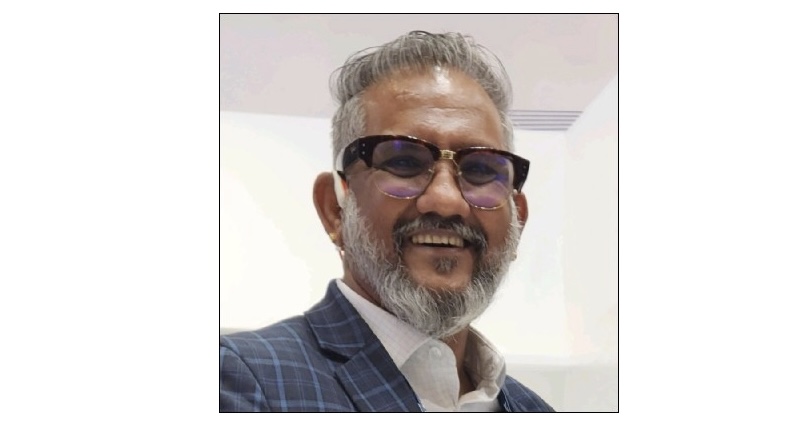
    MUMBAI: After steering Skyworth Digital’s India operations for seven years, Jayaprakash Thulasiraman has been tapped to lead the company’s new business strategy as vice president. The television and broadband equipment maker announced the appointment on LinkedIn, where it outlined the veteran’s remit: emerging business incubation, strategic partnerships, government affairs and “special assignments that call for experience, insight—and a spark of bold thinking”.

    Thulasiraman brings three decades of experience from technology and telecommunications heavyweights including Reliance, Vodafone, Motorola and Huawei. During his tenure as Skyworth’s general manager for India, the firm secured a coveted position among Tata Play’s top three partners in 2025.

    The appointment comes as Skyworth seeks to shore up its position in the broadband-focused digital television market. Under Thulasiraman’s leadership as country manager, the firm expanded its portfolio beyond traditional set-top boxes to include broadband customer premise equipment and fixed wireless access devices—a strategic pivot to capture the growing convergence of television and internet services.

    Before joining Skyworth in 2018, Thulasiraman held leadership roles at Optiva, Amdocs and Huawei, where he managed accounts for major Indian telecoms. Earlier in his career, he oversaw Vodafone India’s terminal business, orchestrating the first official iPhone launch in the country in 2007.

  • Witbe to highlight 4K-compatible Android TV testing technology at BroadcastAsia 2023

    Witbe to highlight 4K-compatible Android TV testing technology at BroadcastAsia 2023

    Mumbai: At BroadcastAsia 2023, part of the Asia Tech x Singapore (ATxSG) event, Witbe will showcase its powerful automated testing and proactive monitoring technology. Highlighted in Booth 6G1-03 will be the Witbox lineup, Witbe’s family of powerful and easily deployed testing devices capable of testing 4K video services on OTT devices and Android TV OS, along with the powerful abilities of a recently opened local Witbe Cloud network. On the show floor in Singapore, Witbe will demonstrate how these products and technologies help video service providers measure the true quality of experience (QoE) that their customers receive.

    “BroadcastAsia is always one of our favourite shows for meeting new people and sharing our automated testing and monitoring technology,” said Witbe president & co-founder Marie-Véronique Lacaze. “After the successful opening of Witbe’s own Singapore office earlier this year, I know our local team is excited for a shorter commute to BroadcastAsia and a great opportunity to meet new video service partners in the region.”

    In the spotlight at BroadcastAsia 2023 will be Witbe’s automated testing and monitoring technology, capable of testing 4K video services on the same real, physical devices that customers use. Set-top boxes (STB) and OTT devices can be tested, including ones running on Android TV OS, as well as smart TVs and mobile devices. Witbe has a specific use case designed for STB and OTT device manufacturers that are working on Google’s Android TV OS, helping them measure true QoE, monitor performance across OS updates, and verify that their content is being properly indexed in the search and voice control functions of Android TV. With over 150 companies worldwide using Android TV as their operating system of choice, specialised testing and monitoring is essential to delivering consistent performance and staying ahead of the competition.

    Witbe’s automated testing technology is also popular with QA teams, delivering the endurance, stress, and performance testing that cannot be achieved manually. Several recent updates to the Witbe Software Suite have been focused on improving ease of use for QA teams, including new AI algorithms that allow test scenarios to be scripted up to 10 times faster than previously possible. The new “Smart Navigate” algorithm makes navigating STBs and app menus as easy as dragging and dropping one block, while the updated “Smart Search” algorithm simplifies text input. At BroadcastAsia 2023, Witbe will showcase the accessibility, interconnectivity, and technical power its testing and monitoring technology delivers for video service providers.

    Witbe Highlights at BroadcastAsia 2023 Will Include:

    New Witbe Cloud APAC Data Center
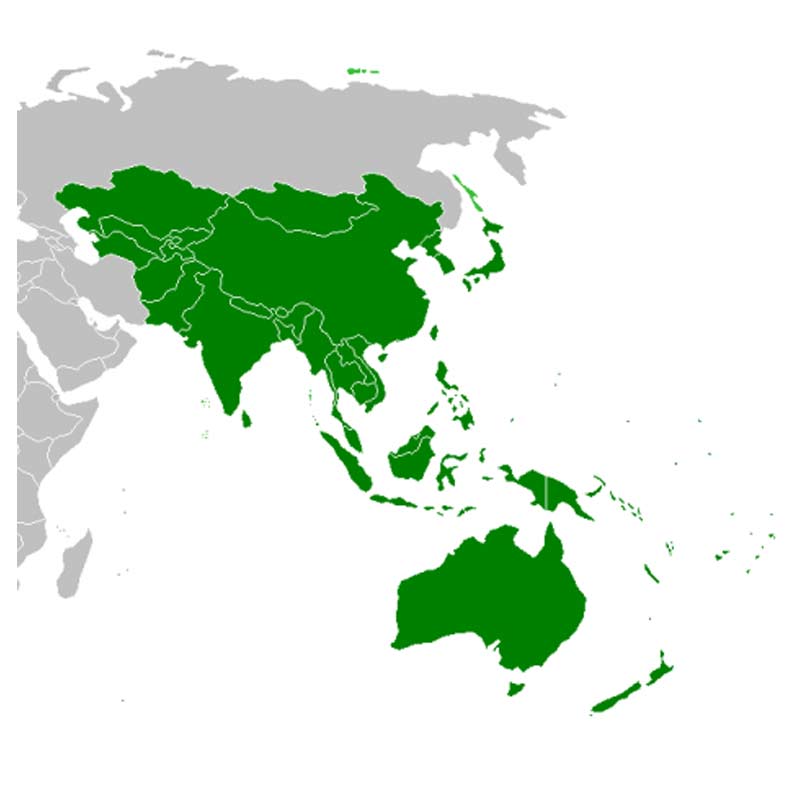
    While Witbe has had a presence in APAC since 2006, BroadcastAsia 2023 marks the first show in the region since Witbe opened its new permanent Asia headquarters in Singapore. In addition, the company has opened a Witbe Cloud network point of presence in APAC to deliver cloud services at the highest possible quality and to work more closely with video service providers in the region.

    Updates to the REC
    Witbe’s Remote Eye Controller (REC), which provides remote access to real testing devices, is regularly updated with new features to expand its technical capabilities and ease of use. Recent updates came with several major enhancements, including a “request control” feature that allows team members to easily swap access to remote testing devices and a “smart search” tab that allows team members to take control of testing devices by simply searching for the city they are in. In addition, the update increased the Witbe Software Suite’s interconnectivity by further integrating the web-based Remote Eye Controller application into Smartgate, the company’s application for service outage alerts.

    New Additions to the Witbox Testing Device Lineup
    Witbe’s Witbox family of devices packs the company’s automated testing and monitoring technology into a compact, accessible package that is simple to set up. Last year, Witbe completed the Witbox lineup with the scalable Witbox+, the most powerful testing device on the market, and the specialized WitboxNet, designed for web testing. They will both be on display at BroadcastAsia 2023, alongside the flagship WitboxOne, demonstrating the full line of reliable and accessible video testing devices.


  • LTN achieves one million live feed milestone

    LTN achieves one million live feed milestone

    Mumbai: LTN, the industry leader in transformative media technology and video transport solutions, announces it has delivered one million live video feeds via the LTN Network, the company’s proprietary multicast-enabled global IP network that delivers less than 200ms latency and 99.999 per cent reliability. 

    Ushering in the future of global media transport with reliable, scalable, and intelligent distribution for high-value content, LTN’s industry-leading, multicast-enabled IP network provides a cost-efficient, flexible alternative to traditional distribution mechanisms that drives scale and monetisation for content owners worldwide.

    On 8 May 2023, LTN managed its one-millionth live feed for a live soccer game between Arsenal de Sarandí and Gimnasia La Plata in Argentina’s Liga Profesional de Fútbol. Since its inception in 2007, LTN has delivered live feeds via the LTN Network for primary transmission, testing, and monitoring for a diverse range of high-value programming including live news coverage, entertainment, political live events, esports, and premium live sports events such as the Rio 2016 Olympic Games, NFL Draft 2020, and American Idol. 

    “Our one millionth booking on the LTN Network marks a cataclysmic shift in the status quo of live media delivery as world-leading organisations recognise the potential of IP-based distribution,” said LTN chief science officer and co-founder Dr. Yair Amir. “In an increasingly complex and fragmented market with new business models emerging and new ways of working constantly evolving, multicast enabled, intelligent IP video transport provides the best foundation to underpin the future for any media business. We’re incredibly proud of this milestone and look forward to continuing to innovate with our network to drive business results for our customers.”

    Every live feed delivered via the LTN Network includes built-in insights, rich data, and business intelligence to give customers greater visibility and control over their content compared with traditional satellite or fiber-based models. Via the LTN Network portal, customers can seamlessly access data around viewing metrics, ISP connectivity, signal continuity, packet loss, latency, and last-mile health. LTN’s advanced tools and always-on expert TOC support deliver proactive troubleshooting and empower customers to gain a deeper understanding and drive efficiencies throughout every stage of the content value chain.

    World-leading organisations such as MSG Networks, TelevisaUnivision, Deutsche Welle, Sinclair Broadcast Group, and Fox Sports have harnessed the LTN Network to deliver high-value sports, news, and other entertainment content to global viewers across traditional broadcast, over-the-top (OTT), free ad-supported streaming TV (FAST), and other digital platforms.

  • Streambox-US Video technology pioneer to enter India

    Streambox-US Video technology pioneer to enter India

    New Delhi : Streambox, the industry leading pioneer in delivering unique IP based video streaming solutions over low bandwidth connections, has announced the opening of a new sales office in Mumbai to address the vibrant post-production markets in India and southeast Asia.

    “We are truly excited to launch in India, one of the largest and most active markets in the post-production and television broadcast industries," said Streambox CEO and co-founder Bob Hildeman. "Streambox products are a perfect fit for India’s rapid growth in media production and associated activities, such as film, post production and broadcast.” 

    Streambox offers end-to-end solutions for remote collaboration across a wide range of workflows, including editorial reviews, colour grading reviews and audio. According to the company, the collaborators can view and hear a live, colour-accurate audio/video stream in their edit suites, at home on cloud-based workstations, or even using an iPad or iPhone. 

    The company has appointed Sanjeev Kr Sinha as the country sales manager for India and southeast Asia. Sinha brings more than 15 years of experience in sales and marketing in the broadcast, cable TV, OTT post-production, and education industries, said the company on Wednesday.

    "We are thrilled to have Sanjeev join our team and taking a leading role in our business expansion in southeast Asia" said Hildeman.

    Sinha added, “I am very excited to work for a global pioneer like Streambox. I see huge potential for Streambox products in the post-production and video market in India and southeast Asia, which is the hub of post-production, broadcasters and film production activity in this region.”

    Streambox has developed optimised technology that can pack functionality like HDR and 12 bit 4:4:4 RGB processing into pixels, and intelligent utilisation of available network paths to achieve higher rates of transport and playback based on its proprietary leading edge ACTL – Advanced Compression Technology Level 3/5 codec and state of the art Low Delay Multi-Path Protocol.

  • Domestic STB manufactures felt the pinch of Covid since January: Amit Kharbanda

    Domestic STB manufactures felt the pinch of Covid since January: Amit Kharbanda

    KOLKATA: The Covid2019 pandemic has hurt most businesses in India since the beginning of March. But the set top box (STB) manufacturers felt the pinch of crisis even before that, from January itself, MyBox Technologies managing director Amit Kharbanda said. Although the company ended up having six months of zero sales, it continued R&D in the interim for new products.

    Kharbanda explained that there are a decent amount of components that come from China, even for normal electronics products. As China went into shutdown from January, MyBox faced a shortage in components for manufacturing. He added that it has impacted all domestic STB companies.

    Furthermore, domestic STB companies have been struggling since ASEAN came into effect a couple of years ago. Big cable and DTH operators that used to buy products from domestic companies, switched to importing from ASEAN. Kharbanda emphasised that the competition in this space is not between Indian STB manufacturers but with the international players. In these challenging circumstances, MyBox has been able to survive as it tends to do R&D all the time whether it is with Google or Amazon, he stated.

    While the business environment was already tough for the players, the cash flow went for a toss post-Covid, Kharbanda added. The company had to cut down on its expenses. “Bankers started questioning the business model. It took time to get that issue streamlined and convince them, finding the right way of optimising the funding and everything. Now as all of that has been settled, we are hoping from this month onwards or next month we should start shipping. At the end of this year, we should at least come back closer to our quantities which we were shipping last year,” he said. MyBox sold 40 crore boxes in FY20.

    However, he mentioned that they kept up R&D during the lockdown. Some product launches including the android box, Alexa Solution have been delayed but the company has added new features during the period. Now as the business is opening up, it will release those products one by one.

    “We have been working on some very interesting solutions. One of these was the Android OTT box which we have tried to make valuable for ISPs. There are a lot of small ISPs in India. They can actually utilise the OTT box and give it as a package to their consumers. There is good ARPU source they can make on,” Kharbanda added.

    Talking about overall opportunities for STB manufacturers, Kharbanda said that India still has millions of TV unpenetrated households. Moreover, there is scope for old box replacements and new hybrid boxes. Even post-Covid, there has been a major demand for TV sets. But it does not translate into a huge benefit for domestic STB manufacturers as the large operators buy from international players, he rued. 

    Although the large DTH operators recently undertook ‘Make in India’ route for STB production, the move is more directed at getting foreign vendors here to assemble and sell rather than buying products from homegrown manufactures. However, he shared that MyBox is working closely with the government of India to push STB manufacturing here. Moreover, the ministry of commerce is also working on the issue and the ministry of information and broadcasting (MIB) is in talks with operators for boosting domestic manufacturing. Kharbanda is optimistic that these endeavours will give a much-needed nudge to the growth of STB manufacturers in India.  

  • Guest Column: Streamline Set-top-box, CAS specifications and save subscribers hundreds of crores

    Guest Column: Streamline Set-top-box, CAS specifications and save subscribers hundreds of crores

    Broadcast pay-TV in India is based on globally developed standards that enabled the fast and affordable deployment of innovative services, and intense competition. During the Covid2019 crisis, broadcast pay-TV cable and DTH platforms continued to provide consistent quality of service to all subscribers.

    In contrast, over-the-top (OTT) video streaming services required concerted interventions by broadcasters and mobile network operators to reduce video quality, bitrates, and reduce congestion. While Indian regulation of OTT video services has been very light touch, Indian broadcast pay-TV regulation has grown in complexity and cost since DTH services began in 2003. Not only are DTH and cable operators expected to divert time and resources into jumping through ever more convoluted regulatory hoops, but these additional costs would ultimately be borne by subscribers.

    Beyond India, the costs of over-regulation in various sectors have increasingly been recognised and challenged. In India, the rise of broadband internet penetration has provided direct access to new, large, well-funded foreign and local OTT players that are lightly regulated. The result is increased competition, which better serves subscribers and viewers than over-regulation.

    Read more news on TRAI

    Particularly effective measures taken elsewhere to reduce regulatory burdens have been to mandate:

    overall cost-benefit analysis for justification of all new regulations and changes, and

    sunset dates before which all regulations must be reviewed to ensure they are still justified, otherwise they automatically expire.

    Indian regulators would do well to adopt similar measures, both in policy and in practice, and save Indian subscribers hundreds of crores. The capex alone spent to support existing interoperability measures on DTH STBs have exceeded Rs 600 crore.

    TRAI’s bundling and pricing controls on content – both distribution and retail – have been widely critiqued. Also pernicious are its technology regulations – most recently its recommendations on set-top-box interoperability measures (10 April 2020) and mooted changes to the technical compliance framework for Conditional Access Systems (CAS) and Subscriber Management Systems (SMS) (Consultation Paper of 22 April 2020). Both are rooted in decades-old competition concerns, predating the internet age and massive advances in basic and digital literacy.

    The set-top-box (STB) regulations in particular fail to recognise that pay-TV operators are not in the business of providing devices, but of services. To the extent they are not prevented by regulation, broadcast pay-TV operators differentiate their service offerings with unique combinations of content

    and user experience, also VAS, and customer support.

    Read our coverage on set-top boxes

    The level of “interoperability” TRAI’s measures would enable – video and audio from one pay-TV platform to be able to be seen and heard via an STB owned by a competitor – were questionable in 2003, when STBs were relatively costly compared to dishes and installation, and the content and user experiences almost unknown without a service subscription. 

    In 2020, almost anyone can preview videos on the pay-TV providers’ websites, via search engines, or online review sites and make well-informed choices. Pay-TV operators must meet a plethora of regulated quality of service criteria in addition to bundling and pricing criteria. And for those who remain too cautious to commit, STB rental is available from all pay-TV operators.

    Unfortunately, TRAI has not performed a cost-benefit analysis on STB interoperability recently, if at all. Costs of interoperability to be borne by all subscribers are quantifiable in terms of capex and opex for each pay-TV operator platform and delays to other road-mapped innovations, which could bring greater benefit to more subscribers. If there is any benefit of TRAI’s recommended interoperability measures, it has never been quantified, nor even systematically estimated, at least not publicly. The capex alone spent to support existing interoperability measures on DTH STBs has exceeded Rs 600 crores, just for the common interface sockets. The benefit to subscribers and viewers has been zero for this white elephant, that all have paid for and none have benefited from. And at the end-of-life, the extra plastic and metal from these STBs are destined for reprocessing or landfill.

    The choice of USB port-based interoperability makes the TRAI recommendation appear simple. The simplicity of “plug and play” devices to the user hides huge amounts of standardisation and pre-integration work between USB hosts (STBs) and clients (USB dongles). Content and revenue security and subscriber privacy requirements, plus a history of USB malware exploits targeting embedded systems, make for a large development overhead to support TRAI’s recommended measures without compromising security.

    India-unique security requirements also need India-specific standardisation and pre-integration. Costs will again be borne by all existing and future Indian broadcast pay-TV subscribers, for no obvious benefit to any. The existing technical compliance framework for CAS and SMS was meant to ensure minimum content security performance, functionality, and features across platforms and maximum real choice for subscribers, as more content would be made available to each platform complying with this framework.

    Although it has not entirely met its objectives, specific incremental changes to the existing framework are preferable to establishing a new framework. Increased auditing capability is needed – especially more technical expertise – to minimise delays and reduce the number of spurious compliances reported. There is also the need to augment, revise and tighten the security parameters within the framework in line with global developments, to schedule future periodic revisions, and to provide a mechanism for urgent out-of-schedule revisions to address exceptional situations. But there is no need to constitute a brand-new framework from scratch.

    In summary, TRAI’s recently recommended set-top-box interoperability measures and mooted changes to the technical compliance framework for CAS and SMS threaten to disrupt a sector facing increasing external competition from lightly regulated OTT video and fierce internal competition. Costly, resource-diverting, and time-consuming changes to broadcast pay-TV now, due to redundant early 2000’s concerns, should be avoided. In regulating the most dependable, differentiated, and diversely available pay-TV services, take great care, and first, do no harm!

    For further details, please refer to Synamedia’s responses to the relevant TRAI consultations:

    https://www.trai.gov.in/sites/default/files/Synamedia_19122019.pdf and here:

    https://www.trai.gov.in/sites/default/files/Synamedia_04062020.pdf.

    (The author is Synamedia India Sales head Deepak Bhatia. The views are personal and Indiantelevision.com may not subscribe to them.)

  • BP Communications Limited Partners with MyBox to bring advanced digital set-top box technology to Bangladesh

    BP Communications Limited Partners with MyBox to bring advanced digital set-top box technology to Bangladesh

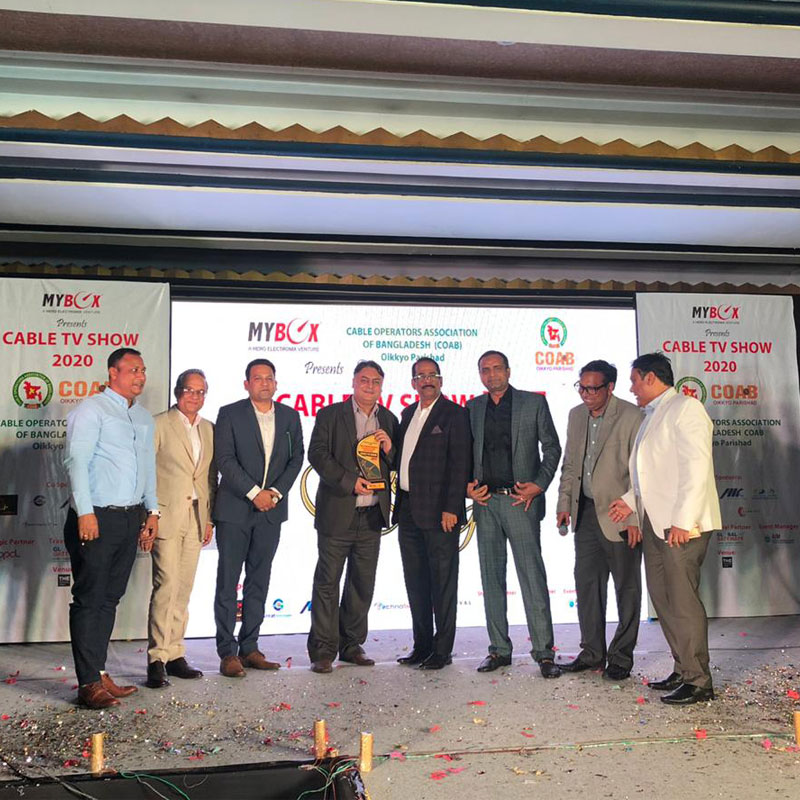
    MUMBAI: Cable Operator Association of Bangladesh (COAB) organized an event for Bangladesh cable operators in Kolkata recently to discuss the impending digitization in Bangladesh. MyBox Technologies, a leading R&D house backed by Hero Electronix, specializing in the research & development and manufacturing of set-top boxes was the title sponsor of the event. MyBox introduced its Bangladesh partner BP Communications Limited at the event.

    Bangladesh is moving towards cable digitization and approx. 35-40 million STBs would be seeded in the next 3-4 years. Seeking this opportunity MyBox has collaborated with BPCL to penetrate into the Bangladesh market addressing the need. MyBox offers HD STBs with its advanced features like Alexa Voice Service Solution, MyConnect middleware with features like Audience Measurement, Ad Book and Targeted advertisement & the Google certified OTT box.

    Mr. Pramit Reza, Chairman, BP Communications Limited said they are partnering with MyBox, for Bangladesh market, as MyBox understands the market dynamics and operators' expectation. Moreover, MyBox STBs are impeccably suitable to meet current and future business requirements of Bangladeshi distribution platform operators.

    Mr. Bankim Chandra Roy, Managing Director, BP Communications Limited said: “MyBox middleware has advertisements and TRP features and this will allow operators to add more revenue streams in addition to subscription.”

    Both Pramit & Bankim expressed their commitment to market MyBox STB and services to theBangladeshi customers.

    Amit Kharbanda, Managing Director, MyBox Technologies said: “We at MyBox are proud to be the pioneers of this offering to our esteemed partners BP Communications Limited. Our vision of being at the center of this smart digital entertainment convergence has a high resonance with this product augmentation that we are offering. MyBox believes that our solution offerings would help facilitate the urging cable digitization of the Bangladesh market and would enable the acceptance of ever-rising rapid digital evolution.”
     

  • Canadian video-tech firm Nextologies eyes India’s growth opportunities

    Canadian video-tech firm Nextologies eyes India’s growth opportunities

    MUMBAI: Slava Levin is a familiar name for many distribution heads amongst Indian broadcasters. The Ukraine-born, Canada-bred entrepreneur has built a distribution of niche, country-specific channels into Canada of transport of video globally into a highly profitable group – called the Ethnic Channels Group which also includes a tech company called Nextologies.

    “Change is the only constant and as an entrepreneur, I believe we need to keep reinventing ourselves regularly,” says Levin.

    He is currently focused on building his India base of 40 staff as well offering the Nextology tech solution to an increasing number of India companies – not just in media, but in other sectors as well.

    “India has a lot of headroom for growth,” points out Levin. “The media vertical is doing extremely well but the company wants to expand our video transport and other solutions to other sectors like hospitality, medicine and transportation. We want to broaden our services and the sectors to become a tech company in general.”

     “The game plan in India is simple. We want to build a development hub in India. We want to grow our team here from 40 to 100, to 200 to 300 and be that development hub for the world. We want to build Indian businesses, want to help Indian companies here. We plan to take products that we build here and deliver them to rest of the world,” Levin adds.

    While the company has already invested quite a bit in India, it wants to ramp up its investments by putting in a minimum of $10 million over the next two-five years.

    “Our technology team is cutting edge and they found ways to help to cut cost for distributing the various channel video feeds over the years. Our 100+ partners who we were distributing for started to knock at our door asking us how are we able to deliver solutions at the prices we were? Some of them asked us to help them use it to reduce their transport costs in other regions. And that’s how we started our Nextologies business. Amongst the first Indian broadcasters to do so was Zee TV,” says Levin, talking about the early days of the company.

    He explains that Zee TV uses the technology to deliver to locations that don’t have huge South Asian population for example in the Caribbean which is a lot cheaper than delivering it via expensive satellite transponders or fibre.

    Today, Nextologies manufactures SD/HD encoders, decoders for cable TV and satellite TV services which help deliver video over the public internet using its da Vinci and TXR technologies,  an STB solution for digital signages, hotels, hospitals, restaurants/bars, foyers, offices and waiting rooms and professional grade compliant audio/video professional broadcast-grade compliant HD/SD video and audio transmitters/receivers. Nextologies also offers customisable turn-key IPTV and OTT solutions that enable media companies and service providers to rapidly serve new platforms. Amongst the clients for whom it has developed apps and OTT solutions include SBS Plus’ Arirang TV.

    Levin says he will be visiting India a lot more often, though he has left its management to Hari Srinivas, who has been responsible for building the number of Indian channels that are customers of Ethnic Channels and Nextologies businesses.