Category: Hardware

  • Cable TV prediction: US to phase out STBs by 2015

    Cable TV prediction: US to phase out STBs by 2015

    MUMBAI: The year 2013 was a big year for the Indian cable TV industry. The country that was till now running on analogue signals opened up to digitization, even if it was in few regions. While we can celebrate this achievement as we enter into 2014 and also gear up for the phase III and phase IV of digitisation, there is some food for thought coming from the US cable industry for the Indian cable TV industry. 

    According to the CEO of TV Predictions, Inc Phillip Swann, the Americans will see phasing out of cable TV set top boxes (STBs) by 2015 and witness an upsurge in USB dongle or CableCard like products that can be connected to a TV and signals can be received from the operator’s facility. And all this to reduce the expenses incurred due to huge sums paid to the box manufacturers.

    The predictions suggest that consumers would anytime prefer the simplicity and convenience of cable dongle over the set top boxes. That apart, the cable TV operators will also appreciate the savings.

    When the Google Chromecast Net TV device was launched, it was surely a step ahead in the cable TV industry. The dongle is one of the best-selling electronic products at Amazon.com currently.
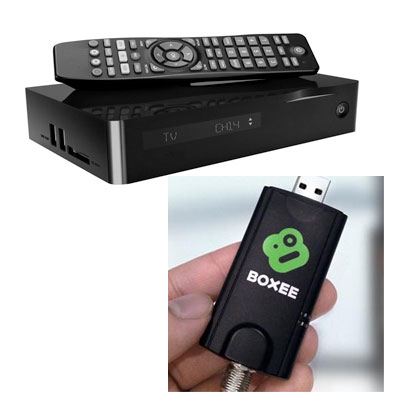
    Some of the dongles available in the market currently are Boxee’s Live TV dongle and TBS USB DVB-C TV Stick amongst others.

    The predictions make it pretty obvious that the Americans are moving at a faster pace in the sector. Another point to ponder over here is that while in India the cable TV operators are still struggling to seed the STBs, another country is in the process of its phase out and switch to a compact technology.

    It’s not that in India, technology hasn’t improved. The direct-to-home (DTH) operators by introducing new and better facilities like recording as per preference, authority to choose channels with their high-definition (HD) boxes has already become a threat to the Indian cable TV operators who have just started seeding the standard definition STB with no added feature.

    With the world shrinking, it would not take the consumers much time to get exposed to the advancement happening in the TV/Cable industry the world over. The Indian consumers would soon wish for a compatible technology like the dongle. The New Year seems to be an alarm for the cable operators to start preparing for the huge shift.

  • NationalChip’s STB solutions for Indian digitisation

    NationalChip’s STB solutions for Indian digitisation

    MUMBAI: When it comes to technology, China is one of the leading Asian countries in the world that comes to mind. So it’s no surprise when leading China based IC developer and manufacturer of digital TV solutions, NationalChip, launched new set top box chips (system-on-chip) for the Indian market.

    The company is looking to increase its market share in India’s fast-growing set-top box (STB) chip manufacturing market. As part of its growth plans, NationalChip has launched new set-top box chips (system-on-chip) for the Indian market.

    The company’s new HD STB chip is based on GX3201 that delivers HD content at over 1000 MIPS CPU performance, 1080P HD decoding and security implementation. To cater to the mid to lower end subscribers that forms the major chunk of the Indian cable TV universe, the company has launched SD STB chip based on GX3001R or GX3012Q that offers high speed CPU for user experience as well as true colour display for enhanced picture quality.

    According to NationalChip, these chips can support advanced security implementation that are demanded by most prominent conditional access vendors (CAS) and MSOs.

    “India has nearly 6,000 MSOs whereas there are only 300 MSOs in China. There is a huge opportunity for us to tap into this large cable TV market and we have the resources, the name and the technological advancement to cater to it,” says NationalChip VP Patrick Dou.

    NationalChip’s HD solution also supports OTT application that will allow subscribers to access online video content through home network internet. Currently the chip allows the viewer to use Wi-Fi connectivity to access sites such as YouTube to experience HD videos on their larger screens.

    “We are telling the MSOs here that they can secure subscription revenue and at the same time provide value added services to their subscribers with our HD solution that supports OTT application,” adds Dou.

    After having been in the industry since its inception in 2001 the chip manufacturer is looking to expand into new markets. It has identified India as one of the key markets apart from southeast Asia and Europe, Middle East & Africa (EMEA). NationalChip, which began operations in India from 2011, is working with local Indian STB manufacturers by providing them with software support to develop STBs locally.

    The company claims that its chips have been officially authorised by many CAS companies including NDS (Now under Cisco), Sumavision, NSTV, ABV, Logic Eastern, Ensurity, E-CAS, and Only One CAS. With the new product offering, the STB chip manufacturer is looking to work with other major CAS vendors in the Indian market.

    “We have a leading product lineup, turnkey solutions, track record and technical capability to support sustainable development of the Indian market,” says an optimistic Dou. On the business front, Dou says that the company has shipped 1.5 million chips to the Indian market in the last two years.

    “This might not seem like a big number but for a company which has been in the market for just two years, it’s quite an achievement,” stresses Dou. Dou is looking to up NationalChip’s market share to 30-35 per cent in the next four years, up from the current five per cent share.

    However, that will be a tough task as the STB chips market is currently dominated by big players like French Italian MNC STMicroelectronics, America’s Broadcom, and Taiwan’s ALi Corporation.

    To achieve this growth, the company is expanding to other cities in the country. Currently having its office only in Delhi it soon has plans to branch out to Mumbai, Pune, Hyderabad, Bengaluru, Ahmadabad and Chennai. The company currently has Pune-headquartered Millennium Semiconductors as its only distributor in India.

    “We have been in this business for nearly two decades now and have the right know how to take NationalChip and its advanced technology to the leading MSOs in the country. We are sure that with its advanced security feature as well as great capability to showcase HD content all leading MSOs will be more than willing to join hands with NationalChip and us,” says Millennium Semiconductor Sr.GM Technical Operation Sunil Deshmukh.

    Being the first local Chinese company to develop digital TV IC solutions since 2001, NationalChip is also the first and only Chinese IC company to achieve big deployment to support digitalisation phases in India.

  • Exset BV promotes PK Acharya; makes him the India director

    Exset BV promotes PK Acharya; makes him the India director

    MUMBAI: Exset India has got a new director. Exset BV, the Netherlands based broadcast solutions company, today announced that it has promoted its regional director- South Asia, PK Acharya to director Exset, India. Based in New Delhi, Acharya in his new role will be responsible for Exset’s business activities in India and will be reporting to Exset BV CEO in Netherlands.

    “The Indian market is very crucial for the Exset’s Global market share. Acharya with his vast experience in the Indian broadcasting market brings on board his understanding of India’s digital TV market. Along with his team he is expected to establish Exset’s business foot-print in India,” said Exset BV CEO Alex Borland.

    A graduate in Economics and MBA in marketing, Acharya has over 25 years’ experience in the communication and Cable TV industry. His network includes long standing personal and professional relationships with policy makers, all India distribution channel and the last mile owners in the Cable TV and internet data space.

    In the past, Acharya has been associated with companies like NG Technologies (NIG), Midas Communication Technologies, Sky Merchants, Hotwire, Genus Power Infrastructure, DEN Networks and Tripleplay Telecom. 

    “India holds great opportunity for me. Exset is a dynamically thinking company with unique solutions in Digital Monetisation System (DMS) very applicable to the Indian broadcast industry which will enable the operators to increase their ARPU. Exset has a great product in DMS and a great support team, which we will expand over the next few months. I look forward to contributing to the industry with whom I have worked over the past 25 years,” said Acharya.

  • Gaian launches Maya Platform for enhanced programming content delivery

    Gaian launches Maya Platform for enhanced programming content delivery

    NEW DELHI: The satellite broadcasters may have a reason to rejoice. Gaian Solutions India, a leading Technology and Consulting company that develops products and solutions for the Media and Entertainment industry, has launched its Maya Platform.


    The technology offers exciting real time localised cloud content services thus offering powerful tools to enhance Broadcasters programming content. Maya has the potential to change Satellite Broadcasters revenues by orders of magnitude. It also offers innovative solutions to free-to-air (FTA) broadcasters.


    1. Maya’s localisation technology integrates internet feeds and cloud content delivery mechanisms right into the uplink broadcast eliminating the need for internet connectivity at the edge devices. This liberates broadcasters from any kind of ecosystem challenges in commercialising localised data services.


    2. Maya is platform agnostic ensuring seamless localisation across all delivery channels be it a satellite broadcast or an OTT platform.


    3. Maya’s IRD integrates cloud and satellite reception into one device.


    4. The full HD IRD player and streamer ensures savings on broadcasters HD migration budgets.


    5. It offers a full featured Back Office and Self-Care portal to automate the work flow of sourcing, delivery, approval, distribution, proof of play and billing of local advertisements


    6. Maya allows broadcasters to report breaking news, latest events and trending topics, as they happen on Social Media platforms


    Gaian Solutions President and CEO Chandra Kotaru said, “From the outset we have set the bar for technological innovation in digital TV, achieving an unrivalled array of industry firsts. As our knowledge and expertise has grown, so the technology we use has been renewed and redefined. And that process continues today, with rapid changes in the way TV is broadcast, enjoyed and combined with other services.”

  • Universal Music releases first-ever digital box set app

    Universal Music releases first-ever digital box set app

    MUMBAI: Universal Music Catalogue is hailing the release this week of ‘the world’s first-ever digital box set’ available on tablets and smartphones – a special 2013 edition of The Who’s 1969 album, Tommy.


    UMC has collaborated with developers MODO to produce a brand new iPad digital box set application, to complement the recently-released deluxe and super deluxe editions of Tommy.


    Users can download the app for free. If they already have Tommy in their iTunes music collection they can play the full tracks on tablet devices along with the visuals and extra features that accompany the super deluxe set. If not, they can play 90-second edited previews through iTunes and buy them directly.


    The digital box set also includes: a built-in music player (functional whilst reading the book and exploring the photos). The video section includes five tracks streamed into the app taken from The Who’s Live At The Coliseum ’69 show; a specially-developed Pinball Game – created using the NYC Metropolitan Opera House gig of 1970 poster image that encourages users to play and post their scores as well as links to the official Who site, official store and social channels.


    Universal Music Group International digital head Geoff Smith said: “The Tommy digital box set transforms the beautiful physical box edition into a unique and fully-immersive experience allowing fans of all ages across the world to access and explore this seminal album in a fully interactive way.”


    News of Android and Windows 8 versions of the app will be announced in due course.

  • Virgin TV anywhere launches on Android devices

    Virgin TV anywhere launches on Android devices

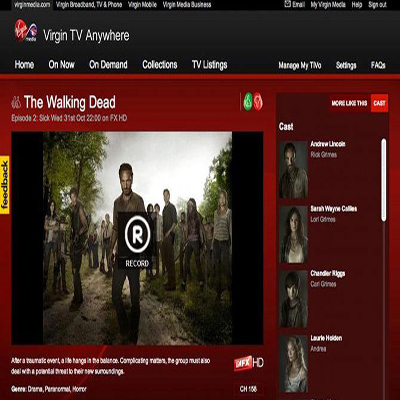
    MUMBAI: Virgin TV Anywhere recently launched a native app for Android tablets and smartphones.


    The application allows Virgin Media TiVo customers to programme on the move, with 67 channels available on mobile devices.

    To coincide with its Android launch, Virgin TV Anywhere has added nine new channels to its roster – Alibi, Dave, Drama, Good Food, Home, Really, Watch, Yesterday and CBS Reality.


    “With the arrival of these fantastic new channels, Virgin TV Anywhere is undoubtedly the market-leading service for those who want to take the best of their home entertainment with them to watch wherever they are at no extra cost,’ said Virgin Media director Scott Kewley in a report.


    The web-based version of Virgin TV Anywhere provides access to 90 channels, including BT Sport, ITV, Channel 5 and CBS Reality Premier Sport.


    Virgin TV Anywhere, which was previously released for iOS devices, is available to download from Google Play now.

  • Are Android STBs a step too far for India?

    Are Android STBs a step too far for India?

    MUMBAI: Even as the cable and television industry prepares to take on digitisation, there’s another advanced technology which has arrived rather quietly on Indian shores.


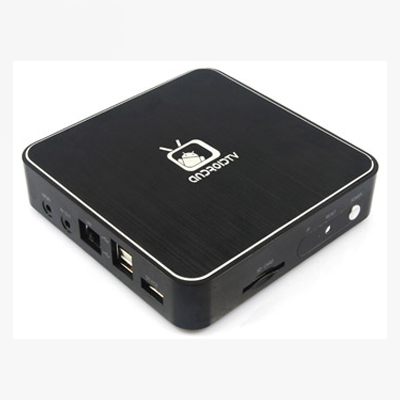
    We’re talking Android set top boxes (STBs) from Willett STB Technologies which are in the market since sometime last month. These hybrid STBs carry all the applications available on the Android Play Store and allow customers to switch seamlessly between television and the internet. Given the recent buzz about Google bringing YouTube on TV, such a technology may just be what the doctor ordered. However, for a variety of reasons, the Android STBs don’t seem to be finding enough traction in the industry.


    Speaking to indiantelevision.com, Willett STB Technologies director Deepak Wadhwa refuted the MSOs’ claim that STBs are not upgraded to carry YouTube as a Video-on-demand (VoD) service on television. “The STBs come in different models and frankly, we are ready with the technology. The Android box is the answer to this new development.”


    However, Wadhwa was quick to point out that the problem lies in MSOs’ unwillingness to accept the technology. “The MSOs are not ready to promote the boxes. Even though we are ready with the upgraded technology, there are deployment issues,” he said.


    So what was keeping MSOs from adopting the new technology? A major reason, according to Wadhwa, was the cost, where each Android STB carried a price tag of Rs 4,000. Additionally, customers would have to pay for video services.


    The Willett Android 4.2 STB is a hybrid box, with both Android and DVBC features. “The box allows customers to switch between Android play store and TV channels. It also converts a normal TV to a smart TV,” informed Wadhwa.


    Elaborating on the cost factor, he said: “The MSOs are already tied up with MPEG2 boxes. Also in smaller cities, where people are used to viewing TV at Rs 75 to Rs 100, they are opposing STBs which cost Rs 1000, so accepting the Android boxes seems a far thing to imagine.”


    Meanwhile, an MSO defended cable operators’ stance saying: “These OTT boxes don’t give us revenue which goes to the service provider instead. So why should we use them?”


    Media consultant Sanjeev Hiremath opined: “As far as the cable industry is concerned, technology gets adapted step-by-step. No one is ready to take two steps at a time. Obviously, the advantage of the Android box is that you can incorporate the experience of OTT service also in that. So then you can avoid cable and can directly take a broadband connection and experience both TV and the world of internet. If customers are not ready to pay Rs 1000-2000 for normal STBs, of course they will not buy these at double the rate.”
    Maybe, India needs to work towards faster adoption of new technologies just as it has in developing them…


  • New technology simplifies collection for cable ops

    New technology simplifies collection for cable ops

    MUMBAI: Even as industry prepares for phase III of digitisation, here comes a technology that is likely to get more than a warm welcome from cable operators.

    UPASS, a front-end automation for the cable sector and mobility solutions provider, has announced that it has successfully integrated with the subscriber management system of Media Nucleus; a development set to change the collection system. While Kottayam-based Star Vision Cable Networks is the first LCO to use the integrated solution, Media Nucleus is in talks with three other operators for installing the solution to their systems.

    It was at the recently concluded SCaT that the collaboration took place. “We finished the integration and also showcased a part of it during SCaT,” informed Media Nucleus director Santosh Nair. He explained the working of the solution as: “Each subscriber will have an ID, subscriber number or name that will be stored in the subscriber database. Once the subscriber pays the monthly fees, the collection agent will type it on the mobile phone that has all the details relating to the package etc. Also, there is a Bluetooth printer connected to this device, which will help him print a receipt immediately.  The same data will also be sent to the database, which clears the subscriber’s outstanding amount.”

    Technically speaking, UPASS’s cloud model acts as data bridge between the mobile device and the SMS server. There is an option for collection entries to be made either in cash or cheque and the relevant data is passed on to the SMS server in real-time.

    UPASS managing director Ravindra Deshmukh said: “We are excited that Media Nucleus and UPASS are collaborating to help operators overcome the challenges of billing and collection hurdles by providing data in real-time as trusted and actionable information. Our system benefits end users quickly and with self-service, regardless of data volumes and variety, or whether the data is on-premise or in the cloud.”

    The advantages of the solution are three-fold. One, it will make the collection process easier. Two, it will make the system more transparent and help MSOs with instant data on subscribers and revenue collected per day. Three, it is more economical, since it can be used even on a simple Rs 500 mobile phone.

    Nair said every operator had collection issues and with this system in place, “MSOs will just have to follow up on the data. They will get instant information, unlike earlier, when LCOs would collect data and sometimes, not even reveal it. The information will give an upper hand to MSOs as well, who can show it to their investors.”

    The new solution will help both the MSOs and LCOs by making collection easier, says Santosh Nair Explained Media Nucleus director technology and delivery Rajiv Tomer: “We had been providing the core solution of subscriber management solution and were looking at integration services to enable collection at the ground level become a part of our solution to our clients.  UPASS, having an industry benchmark solution, gave us the right option to be a go-to-market, providing end-to-end technology with a single integrated platform. We have enabled it in such a way that operators can provide the basic handset to the collection agents, which gets integrated with our SMS.”

    The solution will be available to operators at a one-time investment of Rs 2500. This apart, “the operator will have to pay less than Re 1 per transaction per month,” informed Nair, adding, “We will be meeting operators from Pune next week. We have been getting a good response for the technology.”

    Maharashtra Cable Operators Federation president Arvind Prabhoo said the technology would address the biggest problem of digitisation, which is collection. “The cost of collection for the operator is approximately Rs 25. Also, there is a huge process involved with it- right from collecting money from each subscriber to putting the data on computer etc. The solution will reduce this burden and make the system more transparent.”

    “Rs 2500 is just 10 customers for an operator, so it is very economical for them. Also, getting two-three handhelds will also reduce their burden. As for the MSO, they have for long wanted a transparent system, which they can achieve through this,” Prabhoo said.

    The UPASS solution claims that it provides customer data capture and STB activation in real time, channel/package activation from the LMO phone as well. 

  • Cable TV DAS and the head end factor

    Cable TV DAS and the head end factor

    MUMBAI: Digitisation is meant to bring about transparency and order to what has for long been talked about as an unorganized business. The pressure of scaling up in order to deliver digital cable TV has also had an expected fallout: consolidation. Smaller cable ops, independent operators have been forced to join hands with existing national MSOs like Hathway or DEN or amongst themselves. And this fusing has resulted in the reduction of the number of headends in the major metros – especially in Delhi and Mumbai where there has been a shrinkage from 110 to 15 and from 50 to seven respectively.

    “Consolidation of headends is taking place in the transition from analogue to digital phase. Also the trend now is that the MSOs set up headends only in areas where they cannot get access to a fiber line or a digital line. Also they are looking for solutions like getting a line from say Delhi or Mumbai to the nearby areas,” informs an industry expert.

    Industry experts attribute this change to factors such as rising costs of digital headends, billing procedure and administrative control.

    Explains Hathway Cable & Datacom MD & CEO Jagdish Kumar: “With digitisation has come the convergence of technologies and features like high definition content, VAS and broadband accessibility. All this in turn requires large amount of investment to manage economies of scale, thus ushering consolidation.”

    While Hathway currently has 23 headends and seven backup headends, including GTPL, several independent operators, informs Kumar, have evinced a keen interest in aligning with its ongoing digital plans, largely due to its success in Phase I and II.

    “We’ve drawn up ambitious expansion plans for Phase III and IV. We will soon make announcements on a few strategic acquisitions,” he exults.

    IndiaCast Media Distribution executive vice president Amit Arora agrees that a number of Delhi and Mumbai-based independent operators have started taking their digital feeds from bigger MSOs.

    “This arrangement is gaining popularity since it isn’t easy for every independent operator to make the huge capital investment needed for digital headends. And consolidation of headends has led to central warehousing of data and SMS,” he says.
    According to Ortel Communications CEO BP Rath, with a 200 channel headend costing nearly Rs one crore, it is not worth investing that kind of money for an independent operator who caters to say 10,000 customers in a small town.

    “So, they are joining bigger players in order to take feeds from them. While smaller operators merged with bigger players even during the analogue phase, it is now happening on a larger scale. And one will see further consolidation during phase III of digitisation,” he says.

    Apart from independent operators joining forces with bigger MSOs, the other reason for consolidation is the advent of the conditional access system (CAS) and the subscriber management system (SMS), as well as the prerequisite for getting these systems audited and approved by broadcasters.

    “When the bigger MSOs are taking so long to adjust to the new system and maintain quality as per the regulation, how will the small players be able to do it?” questions InCable managing director Ravi Mansukhani. “With consolidation, the big MSOs will take care of all the back office problems and the on-ground activity will be done by the independent operators.”

    “All this has led to a whole lot of process issues, which the smaller MSOs find difficult to manage and that is why independent operators are joining bigger players,” adds Rath.

    Ortel, which has 31 analogue headends, two digital headends and four analogue plus digital headends, is waiting for phase III. “It is only after that, we will see consolidation happening in Orissa and Chhattisgarh. Though we have our own headends, we are also talking about intercity connectivity,” informs Rath.

    Kumar too feels that “the trend will continue even in phase III and IV. The demand for digitisation will impact local independent operators, who will find it difficult to manage independently. Hence, the independent operator would continue to look to aligning with the bigger MSOs.”

    However, Arora thinks otherwise. “The consolidation process has already come to a phase where I do not see any further consolidation happening in phase III. The big wave has already happened in phase II,” he says.

    So when a smaller operator takes digital feed from a bigger MSO, how do they share revenue? “The revenue share worked out between bigger MSOs and independent MSOs is purely on mutually beneficial terms based on investments and services being provided in the market,” says Kumar.

    Arora elaborates: “Everybody has worked a different revenue model. Someone has opted for a 49:51 split, some have a 50:50, while some will have a 51:49 split. The revenue share depends on the strength and the need for funds.”

    Coming to another metro, Kolkata, unlike Delhi and Mumbai, its five big players: GTPL, Hathway, Manthan, IMCL and Digicable Network have not seen an urge to merge.

    Meanwhile, Arora sounds a cautionary note. “A takeover of one MSO by the other in Kolkata would only be possible if there is a national degree of consolidation.”

    According to Mansukhani, the biggest consolidation will take place nationally. “Right now only the small and middle level players are going to the big players and then ultimately few major players will have control.”

    Mansukhani feels that even international players will show interest in India once they see healthy cash flows of the MSOs in DAS I and II areas. “This is when the maximum consolidation will take place and this will happen once the entire phase I and II is complete.”

    Talking about the evolution of cable TV on the ground in Kolkata Manthan Broadband Services director Sudip Ghosh says, “Players with a subscriber base of more than five lakh might not consolidate headends. But Kolkata can see the consolidation of players with others having a subscriber base of around three to four lakh.”
  • Decks cleared for JAINHITS to get TV signals of MSM Discovery, ESPN and SUN channels

    Decks cleared for JAINHITS to get TV signals of MSM Discovery, ESPN and SUN channels

    NEW DELHI: In less than two months since Media Pro Enterprises India was given directions to supply the channels it distributes to JAINHITS, the country’s only headend-in-the-sky (HITS) platform, the Telecom Disputes Settlement and Appellate Tribunal (TDSAT) today directed Sun, Sony (MSMD) and ESPN to provide their television channel signals to the platform by this evening.

    The three channel aggregators between them provide more than fifty prominent channels, but had been delaying giving their channels to Noida Software Technology Park Ltd (NSTPL) – which manages JAINHITS – which had approached the authorised content aggregator for these channels owned by Sony, Sun and ESPN.

    TDSAT Chairman Justice Aftab Alam and member Kuldip Singh were not impressed by the argument that all operators had created fresh Reference Interconnect Offer for HITS which was yet to get the clearance of the Telecom Regulatory Authority of India (TRAI). They asked the counsel for respondents whether this did not amount to breach of violation of section 3.2 of the Digital Access System (DAS) regulations of the cable interconnect agreement.

    With this, JAINHITS will now be able to transmit over 250 channels to consumers all over the country. The 12 September order relating to Media Pro had brought a total of around 75 channels into the JAINHITS fold.

    The only satellite-based platform for the distribution of digital TV channels, NSTPL is currently the only distribution platform of TV channels that is providing advanced HITS services to consumers through local cable operators.

    NSTPL founder and chairman of Jain TV Group Dr. J.K. Jain said, “The mission of JAINHITS is to build and operate digital highways in collaboration with cable network owners. We thank TDSAT for the ruling as this is an important announcement not only for the 60,000 cable operators across the country but also to the consumers. Without proper digitisation, government is losing huge revenue.”

    Senior counsel for NSTPL Vivek Chib told indiantelevision.com that this order would not only be in the larger interest of the government’s digitisation policy, but would ultimately benefit the end-user with greater choice and better quality.

    NSTPL had filed the petition under sections 14 and 14A of the TRAI Act 1997 seeking directions to enter into the Interconnect Agreement on mutually agreed terms or in case the two sides are unable to come to any mutually agreed terms, as per the respondent’s Reference Interconnect Offer (RIO) and to provide to it the content/TV channels under the latter’s control.

    NSTPL obtained from the Information and Broadcasting Ministry in 2003 the licence to establish, install, operate and maintain “headends in the sky” system to provide digital cable services in India. Apparently, the licence was granted even before provisions were made for accommodation of the HITS operator in the regulatory framework. Suitable provisions were made in the regulations to accommodate the HITS operators.

    NSTPL claimed that it had even got its system checked by the Broadcast Engineering Consultants (India) Ltd.