Category: Hardware

  • NDTV India Migrates to MPEG-4 Uplink Chain

    NDTV India Migrates to MPEG-4 Uplink Chain

    MUMBAI: New Delhi Television (NDTV), one of India’s most-watched TV news networks, has migrated its satellite uplink infrastructure from MPEG-2 to a complete MPEG-4 multiple-channel-per-carrier (MCPC) chain based on Thomson Video Networks’ advanced encoding, MPEG processing, and transport stream (TS) monitoring equipment. Driven by the award-winning ViBE™ EM4000 premium HD/SD encoder, NetProcessor 9030 MPEG processor, XMS network management system, and Granite Sentinel DTV monitor, the new MCPC chain replaces aging SD MPEG-2 equipment and provides an HD-ready platform to support NDTV’s future technology requirements.


    “When we evaluated technology partners for our MPEG-4 migration, Thomson Video Networks was the obvious choice,” said Dinesh Singh, chief technology officer, NDTV Ltd. “As a high-density encoder, the ViBE EM4000 offers eight SD/HD channels in a single rack unit to save space in our existing infrastructure. With our new, state-of-the-art uplink chain, both our customers and operators have seen marked improvement in both performance and picture quality, and we really appreciate Thomson Video Networks’ technology and service support.”


    “As one of India’s leading news broadcasters, NDTV is making a big technology leap forward with its MPEG-4 migration,” said Eric Louvet, vice president worldwide sales, Thomson Video Networks. “With our latest-generation, EM4000 octo-channel platform, MPEG-4 encoding will enable NDTV to save significant satellite bandwidth that can be used later for HD programming. Since the EM4000 is HD-ready, migration to HD services is smooth and easy within the existing uplink chain.”


    Further information about the ViBE EM4000 and other Thomson Video Networks products is available at www.thomson-networks.com.


  • JAINHITS reaches out to LCOs from HP, Punjab & Haryana

    JAINHITS reaches out to LCOs from HP, Punjab & Haryana

    NEW DELHI: More than 150 local cable operators (LCOs) from Himachal Pradesh, Haryana and Punjab attended a tri-state business meet organised by JAINHITS in Simla. The meeting aimed at explaining to the LCOs, the working of the satellite based solution for digitisation of cable services.


    Earlier this year, JAINHITS had also organised a similar meet in Andhra Pradesh which was attended by around 625 LCOs.


    At the meet, senior members of JAINHITS briefed cable operators about its services and offerings. The HITS player also provided cost effective solutions to LCOs for running fully DAS compliant digital cable TV services. During this interactive meet, the LCOs were interested to know more on the entire spectrum of consumer products and services that will be provided by JAINHITS such as high speed, cloud and hybrid broadband TV (HBB TV).


    While the number of channels being offered by the company stands at 250 including all major pay TV, JAINHITS will soon roll out its full HD and multi-screen services for consumers. The key proposition of the HITS platform is its cost-effective investment for cable operators which stands at a minimum of only Rs 25,000 per month. With this, they expect to do business with 400 plus partners and install over 3000 Mini Downlink Headend’s across 640 districts of India by the end of 2014.


    Cable Operators Federation of India (COFI) president Roop Sharma expressed surprise at the overwhelming response. She said JAINHITS provides instant digitisation solution to cable operators with minimal investments and thus stands to play a pivotal role in the digitisation of all analogue networks with its triple play offering of video, voice and data. “Not only do they possess the content but have managed to attain all necessary approvals required for supplying cable TV and broadband to consumers,” Sharma said. 


    JAINHITS national sales head Jeet Narayan Singh said, “We believe that conducting these joint meetings in key cities and states across the country is of great significance. It is these sub urban regions that need to be tapped and facilitated with superior TV products and services. In our business, we have always stressed upon converting these cable operators into a ‘Leader & Cable Owner’ and an independent service entity. We feel that this approach creates room for greater involvement thereby increasing their participation in the entire digitisation process. If we are able to maintain this kind of momentum, we would soon be looking at serving half million subscriber base each in Himachal Pradesh, Punjab and Haryana.”


    Gem Enterprises partner Surinder Surya said, “One of the key propositions that allows cable operators to retain business control and simultaneously magnify its growth, is the HITS players’ instant zero capital solution for digitisation. Not only this, JAINHITS stands apart from any competition as it is the only and ideal choice to experience uninterrupted services in regions with severe climatic conditions.”


    JAINHITS has partnered with some of the leading technology outfits such as Motorola (now ARRIS) and Intelsat – as its satellite partner. The key proposition of the JAINHITS platform is centered around the conversion of LCO to MSO with minimum cost while providing all end to end solutions for digital cable and broadband services.

  • Business digitisation is yet to start in phases I and II: Cisco

    Business digitisation is yet to start in phases I and II: Cisco

    KOLKATA: The phases I and II of cable TV digitisation may have been complete technically but a lot needs to be done as far as the back end is concerned, that is the business digitization is yet to start, thinks Cisco India & SAARC regional manager and service provider Sandeep Arora.


    Arora thinks that with digitisation in municipal and rural areas also being in demand in phases III and IV across the country, the headend market is redefining itself in India. Fulfilling that would be Cisco, which is planning several innovations to enhance the consumer experience.


    “Business and technical digitisation go hand in hand. Revenues for MSOs (multi-system operator) have started flowing in. Profitability and consumer experience are expected to go up in coming days,” remarked Arora while talking to indiantelevision.com.


    According to Arora, phases I and II of digitisation of cable TV were implemented in the right frame of mind. “The players adhered to the MIB rules and the phases were well coordinated,” he said.


    The US based tech giant set up the hosted headend facility which could be leased by MSOs and local cable operators (LCOs). This will help the company garner revenues from the small LCOs and MSOs that cannot earmark huge investments for installing headends. “We initiated this in phases I and II and its deployment will substantially reduce the capital expenditure of the MSOs and the LCOs,” said Arora.


    Interestingly, Cisco garnered a market share of 53-55 per cent in the first two phases where more than 25 million cable TV homes were digitised. “In the next two phases, there is a requirement of 75 million homes to be digitised and if not more we will aim to maintain the same market share of around 55 per cent,” he added.


    Some of the clients of Cisco include Hathway, Den, KCBPL-GTPL among others.


    Cisco is eager to offer cable TV operators broadband services by upgrading their existing networks. “Broadband is a key priority for us now and it will drive growth,” he said.


    The company is offering a technology that will enable cable TV players to start two-way communications required for Internet services.

  • Quantel acquires Snell to create new force in media technology

    Quantel acquires Snell to create new force in media technology


    Quantel, the market leading innovator in news and sports production systems and high quality post, today announced that it has acquired Snell. Snell is a world leader in broadcast and media technology providing a comprehensive range of solutions for Live TV production and the creation, management and distribution of content for TV everywhere – on tablets, mobiles and web. The acquisition enables the combined business to offer customers a complete product range to create, version and deliver high quality content efficiently across multiple platforms.


    “This acquisition brings two great companies together to create a major new force in the global broadcast and media technology market. This will enable us to better serve Quantel and Snell customers around the globe,” said Ray Cross, Executive Chairman and CEO, Quantel. “Our product ranges are entirely complementary so the excellent Snell and Quantel brands and product ranges will continue. We’ll be able to combine the best in class talent and technologies from Quantel and Snell to bring exciting new products and solutions to market to help our customers transform their businesses. More local offices across the world will enable us to build closer relationships with our customers and to offer even better support.”


    “Paul Martin, Managing Director of the Snell TV Everywhere division and Robert Rowe, Managing Director of the Snell Live TV division will join the Quantel board to make sure it is business as usual for Snell customers,” continued Cross. Tim Banks, Snell Sales Director and Peter Fredericks, Snell Finance Director are also taking leading roles in the new combined organisation. “I’m really delighted that the Snell and Quantel businesses have come together to increase the scale and scope for both,” said Simon Derry, outgoing CEO at Snell. “Under Ray’s leadership the combined business will be able to write a new and exciting chapter moving forwards. I look forward to supporting Ray during the important period of transition.”


    “We will be creating a new world class facility at the company headquarters in Newbury to produce the complete Quantel and Snell product range and we look forward to the new ideas generated when the two R&D teams start to interact,” said Cross.


    The new business has the scale, talent and IP to achieve even greater success in the competitive global media technology market. With offices in 16 locations all around the globe and with combined revenues of more than $170m, Quantel and Snell is the new force in the broadcast and media technology market.

  • Vu Luxury Televisions Partners with Lakme Fashion Week Summer/Resort 2014

    Vu Luxury Televisions Partners with Lakme Fashion Week Summer/Resort 2014

    Mumbai: Vu Technologies is pleased to announce their association as the Official Technology Partner with Lakme Fashion Week Summer/Resort 2014, to be held in Mumbai from the 12th to the 16th of March at Grand Hyatt.

     Celebrities, fashion journalists, first row regulars and designers who can be found tapping away on their phones and tablets between and even during the shows, will now have the most hi tech and stylish platform as a conduit for this exciting fashion and technology merger.

     Vu and LFW are going to be at the top of their game for all those who like to update and stay updated on social media. Users can log on to Twitter to ‘Join the Conversations’, use the social media wall, a Google+ hangout zone, pose for selfies at a dedicated photo booth, plus get live feeds, and more. And this season all of this will be done using the stylish Vu luxury 40”, 65” and 84” television screens, video walls, and screens customised especially for the specific venue. If Ellen Degeneres’ Oscar selfie broke Twitter this month, the fashionistas at LFW are sure to create their own records with Vu.

     Speaking about the association with Lakme Fashion Week, DevitaSaraf, CEO of Vu Technologies says, “At Vu, we have always believed in extravagance and this is reflected in our products, which beautifully merge style with the most cutting edge technology. With the Lakme Fashion Week we aim to enhance the platform that not only pays homage to the proceedings but also provides a forum for discussion about the future of style and fashion in the country”.

    The twitter handle for LFW S/R 2014 is @lakmefashionwk & the twitter trend for this event is #lakmefw.

  • China’s Shenzhen Coship plans to set up STB making unit in India

    China’s Shenzhen Coship plans to set up STB making unit in India

    KOLKATA: China’s Shenzhen Coship Electronics Co Ltd, a cable television and broadband equipment maker, plans to set up a set-top box (STB) manufacturing facility in India.


    “We are planning to set up a set-top box manufacturing facility with a capacity to make 2.5 lakh units a month in India to start with and the scale up the operations on the back of demand,” Vipan Kumar Sharma, Country Manager, India, Coship, told indiantelevision.com, on the sidelines of Cable TV Show 2014, an exhibition of cable television industry in Kolkata.


    “We will see and evaluate the benefits and policies of the government”, he said.


    Sharma further said the company might look at a place near Delhi, in Chennai or around Pune. “We already have our technical office at Chennai and our commercial office is in Delhi,” he said. 


    The proposed STB manufacturing unit would employ about 1,000 workers, he said.


    Sharma did not disclose the investments that would be required for setting up the STB manufacturing facility but said the average cost of producing one STB would be around $22.


    Shenzhen Coship, which has already supplied 10 million STBs in India since 2007, is planning to export to India another 5 million STBs by the end of 2014.


    The company’s clients include Siticable, Kerala Communicators Cable Limited (KCCL) and Sun Direct DTH.


    Sharma said it is also in talks with Videocon d2h for supplying its STBs.


    He said demand for STBs in phase III and phase IV of digitisation would be the growth driver for the company in India. He, however, said in rural and semi-urban areas, availability of funds is an issue for the multi-system operators (MSO) and local cable operators (LCOs).


    As per the Information and Broadcasting Ministry estimates, a total of 75 million STBs would be required for installation in the third and fourth phases of digitisation. The deadline for the third phase of digitisation is 30 September and for the fourth phase is 31 December.


    Shenzen Coship has three factories in China with combined capacity to manufacture 25 million STBs  — both SD and HD — a year.

  • JAINHITS attains BIS certification for its set top boxes

    JAINHITS attains BIS certification for its set top boxes

    NEW DELHI: JAINHITS, India’s only HITS Platform based service in India, today announced that it has successfully attained the Bureau of Indian Standards (BIS) certification for its set top boxes. This certification is in line with the DeitY’s (Department of Electronics and Information Technology) recent mandate on compliance of all imported as well as locally manufactured products electronic goods across 15 categories to comply with BIS’ quality benchmarks.  


    The ruling has been brought into effect owing to the increasing demand for electronic goods in India and includes product ranges from set top box laptops to tablets, and TV sets to microwave ovens. With this outline, all such products will need to be BIS-compliant for sale, manufacture or importing in the country. 


    Adding to this, Devinder Singh, Head- Regulatory & Corporate Affairs, Noida Software Technology Park Ltd. said, “Any Certification by itself is a tedious and time taking process. Where the aspect of human safety is required it becomes all the more tedious. It not only involves monetary expenditure at various stages, but also requires time and extensive documentation, testing both in-house & various International Certification agencies like “CE”, “UL” etc. The equipments presently requiring BIS certification for import or manufacturing in India need to be tested by Govt. recognized laboratories for meeting all standards including safety and transmission. Besides BIS certified, our subscribers would get to choose from SD and HD quality, MPEG4 STBs.”       


    Motorola is the end to end technology partner providing end-to-end networks solution, including video core solutions, access network solutions and customer premises solutions (set-top-boxes). 

  • Over 200 First-Time Exhibitors Join NAB Show

    Over 200 First-Time Exhibitors Join NAB Show

    MUMbai: More than 200 companies will exhibit for the first time at the 2014 NAB Show, home to the world’s largest gathering of vendors driving the future of media and entertainment. These companies will offer a first-look at new products and next-generation technologies through interactive exhibits, live demonstrations and technology-focused pavilions. NAB Show, held April 5-10 (exhibits open April 7-10) in Las Vegas, is the annual conference and expo for professionals who create, manage and distribute entertainment across all platforms.


    The 2014 NAB Show’s 204 first-time exhibitors will join a wide variety of NAB Show exhibiting veterans on the 850,000+ square feet of space that make up the NAB Show exhibit floor. The debuting NAB Show exhibitors include AMD-Advanced Micro Devices, Clearleap, Fujitsu Semiconductor America, Giga Entertainment Media, Siemens Convergence Creators GmbH, This Technology and Ustream. There are also several new exhibitors within Intel’s new Partner Pavilion. A full list of NAB Show first-time exhibitors can be found here.


    “These are transformative times for professionals who employ audio and video technology to communicate, educate and entertain. Nowhere will that be more evident than at NAB Show,” said NAB Executive Vice President of Conventions and Business Operations Chris Brown. “The multitude of first-time exhibitors this year is reflective of NAB Show’s ability to adapt and deliver fresh perspectives on the industry’s most innovative companies and cutting-edge technologies.”


    The 2014 NAB Show exposition will comprise 1,550+ companies, including 550+ international exhibitors and some of the world’s leading brands and companies, including Accenture, Amazon Web Services, AVID, Canon U.S.A., Cisco, Clear Channel Satellite, Deluxe, Dolby Laboratories, Dome Productions, Ericsson, Evertz, FUJIFILM, General Dynamics, Grass Valley, Harmonic, Harris Broadcast, Hitachi, HP Enterprise Services, IBM, JVC, Microsoft Corporation, Panasonic, Piksel, Ross Video Limited, Sony Electronics, Technicolor, Toshiba, Verizon and The Vitec Group.


    Also on the exhibit floor this year, the new Interactive Television Pavilion will present innovations in technology, content/ad applications and services that provide personalized and consumer- controlled video experiences delivered with and through the television, mobile devices, PC and emerging digital video distribution systems. In addition, the expanded SPROCKIT program will feature a pavilion showcasing a unique collection of up to 30 market-ready startup companies positioned to transform the media and entertainment industry.


    NAB Show’s sales division reports that space is currently sold out for several exhibit communities including: Central Hall (Acquisition and Production, Radio and Pro Audio), Lower South Hall (Post Production and Display Systems) and Outdoor (Mobile Media).

  • Tech companies come together for better business practice

    Tech companies come together for better business practice

    MUMBAI: At a time when life has become dependent on technological equipments, it’s necessary to have a system that makes the movement on the tech industry smooth. That seemed to be on the minds of even the tech distribution companies because of which they came together to form The Technology Distribution Association of India (TDAI).


    The launch of the Association that was announced today has been done with in an aim to revolutionise the Indian technology-distribution industry. The Association’s motto is: “we can only build when we know how to sustain”. A first of its kind non- profit organisation in Asia Pacific & India, TDAI’s objective is to build a transparent and organised distribution services sector in India through risk mitigated best practices. While maintaining a strategic and healthy channel through good governance and appropriate compliance standards, from the manufacturer to the end user, TDAI will support the industry’s development and expansion while ensuring business hygiene.


    In the last two decades, India has seen tremendous strides in the use and adoption of Information Technology products both in the consumer as well as the commercial space. While the technology vendors have played a pre-eminent role in introducing the Indian customer to the immense benefits of their products and solutions, the widespread use of IT products and processes can, in a large measure, be attributed to the contribution of a huge distribution channel, which has facilitated easy availability through their reach, presence and financial commitment.


    The success of the distribution channel is equally accredited to all the stake holders in the supply chain: Vendors, Distributors and Dealers of IT products, services and solutions. With an aim to drive the industry’s next level of evolution through constructive dialogues amongst all stake holders, the leading Indian technology distributors have founded TDAI.


    The current members of TDAI collectively contribute nearly Rs 50,000 Crores (~ US$ 8 Billion) annually towards the total IT industry business in the country.


    TDAI will provide all industry stake holders a common ground for deliberating on regulatory issues that impact them, with a view to take those up with relevant authorities for resolution. It will act as a platform through which they could contribute inputs and information that would help shape the industry. TDAI will facilitate interaction with various Dealer Associations on common issues faced by the distribution eco-system as also a forum for discussion with Vendors on taking the channel business to its next stage of development. The initiatives of this Association will pave the way for fostering trust and goodwill amongst all stakeholders of the community.


    The current members of TDAI include: Avnet Technology Solutions, Compuage Infocom Limited, Inflow Technologies Private Limited, Ingram Micro India Limited, Iris Computers Limited, Neoteric Infomatique Limited, Rashi Peripherals Private Limited, Redington India Limited, Savex Computers Limited and Supertron Electronics Limited.

  • Govt. to earn over Rs 61,600 crore from 2G Spectrum Auction

    Govt. to earn over Rs 61,600 crore from 2G Spectrum Auction

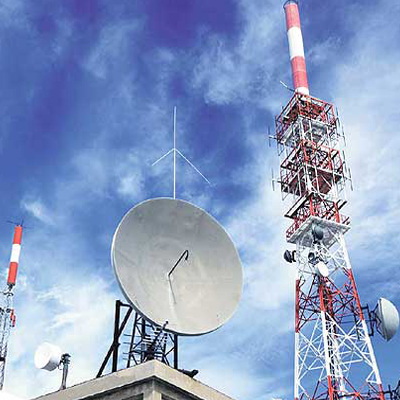
    NEW DELHI: The government is expected to earn about Rs 61,162 crore from the 2G spectrum auction that ended after 68 rounds of bidding over 10 days.


    Major telecom companies Airtel and Vodafone have bagged spectrum in the crucial 900 MHz band in important markets like Delhi, Mumbai and Kolkata.


    The government’s total revenue from the auction (which is provisional) is much higher than its initial estimate of about Rs 41,000 crore. The licences will be valid for a period of 20 years. The companies need to pay only a quarter to a third of the winning auction price upfront and the remainder by 2026.


    Telecom Secretary M F Farooqui said the government will get at least an estimated Rs 18,200 crore this fiscal, much higher than budget estimate of Rs 11,300 crore.


    With the government facing a huge budget deficit target for the current fiscal year ending in March amid a shortfall in tax collections and revenue receipts from divestment of stake in state companies, Finance Minister P Chidambaram will welcome the higher-than-expected revenues from the spectrum auction.


    Eight companies, including Bharti Airtel, Vodafone, and Reliance Industries, had applied to bid in the auction of 900 megahertz and 1800 megahertz band airwaves. The 900 megahertz band was auctioned only in three cities – Delhi, Mumbai and Kolkata.


    The stakes were especially high for Vodafone and Bharti which use 900 Mhz. They had to join the auction after the Supreme Court refused to extend their licences, which expire in November 2014. Idea too won spectrum in the 900 MHz band in Delhi.


    The Mukesh Ambani-backed Reliance Jio bagged 1800 MHz band in 14 circles out of the 22 on offer. This will help the company to not only offer data but also voice services in these regions. Reliance Jio had earlier won the rights to offer 4G broadband services across the country.


    In the 1800 MHz band, Airtel won in 15 circles, Vodafone in 10 and Idea in 11.


    Bidding for the 900 MHz band in Delhi, Mumbai and Kolkata was very aggressive, with Vodafone and Bharti Airtel forced to protect their turf. In Delhi, the winning bid was Rs 741 crore as against the reserve price of Rs 360 crore; in Mumbai, the winning bid was Rs 563 crore, while the reserve price was Rs 328 crore, and in Kolkata, the winning bid was Rs 195 crore vs a reserve price of Rs 125 crore.


    Bids for the 900 Mhz band run into higher sums as it is considered better quality spectrum which requires lower investment for telecom companies to set up infrastructure. In comparison, the 1800 Mhz band requires higher capital expenditure.


    The 2G spectrum had to be auctioned afresh after the Supreme Court ordered in 2012 the cancellation of 122 licences issued in 2008 by then Telecom Minister A Raja. The Supreme Court held that the process used by him to allot licences was “illegal” and ordered a new auction. Auctions in November 2012 and March 2013 flopped as most bidders stayed away from the sales, complaining that the floor bid prices were too high.


    The eight bidders applied to participate in the current auction after the government sharply cut auction reserve prices.