Category: Hardware

  • Is India ready for HD HEVC set top boxes?

    Is India ready for HD HEVC set top boxes?

    MUMBAI: India may be struggling with completing the strenuous task of digitising the close to 9.4 crore cable TV homes, but when it comes to keeping pace with technology as compared to the rest of the world, we are not very far behind.

    While it was direct to home (DTH) player Videocon d2h which first announced that it was working out to launch its 4K Ultra HD service, Tata Sky followed soon. And with this, came the one big question: is the country ready for a technology such as this? Answers Broadcom Corporation associate product line director Brett Tischler, “The consumer is ready for 4K technology, which gives a clearer, sharper and brighter viewing experience. When people see it, they want it.”

    Worldwide, when the first 4K Ultra HD TV was launched, it cost close to $20,000. “This has now come down to $1000. This makes the TV much more affordable. The premium consumer is quick to respond,” he adds.

    The chip making company, Broadcom has forayed into 4K technology as well. And if sources are to be believed, it is Broadcom’s chip that has been used in the 4K Ultra HD set top boxes (STBs) introduced by both Videocon d2h and Tata Sky.

    While one may feel that there is not enough 4K content available the world over, Tischler feels otherwise. According to him, 4K content can be made available on Over the Top (OTT) platforms or through Live TV, Video on Demand (VOD) and web based content. Sports and movies are the two genres which will be popular in 4K. “There are a few Hollywood movies which are being made in 4K. Also the last three or four 2014 FIFA World Cup matches were broadcast in 4K in South America,” adds Tischler.

    Broadcom, in the past had also telecast the winter Olympics using 4K technology. According to Broadcom managing director Rajiv Kapur 4K will be adopted faster world over.

    Ultra HD filming, transmission and broadcast requires a significant increase in bandwidth. “Our Ultra HD video decoder solutions with integrated high efficiency video codec (HEVC) technology reduces bandwidth usage by 50 per cent, allowing users to download Ultra HD content in half the time,” informs Tischler.

    Both Kapur and Tishler are of the view that HEVC is the standard that the industry will move towards now. And if the duo is to be believed, the operators in India will soon move towards HD HEVC set top boxes (STBs), since the technology compresses the content and reduces the bandwidth needed to half.

    “India has the potential. We have developed an optimised technology that works well in the country. It is an exciting time for the country,” opines Tischler.

    Content today is generally produced and transmitted in 8 bit but HEVC take it up to 10 bit, giving a wider colour gamut. And so a lot of the content creators will now be looking at adopting this technology. “Most producers and broadcasters know that they will need to create content in 10 bit for better experience, but if they make it in 8 bit, even that will work,” informs Tischler.

    On the flip side, with Indian DTH operators facing transponder space constraints, will the technology be accepted? Answers Tischler, “HEVC content at the same resolution is about half the size. So the 10 megabit AVC content can be reduced to 5 megabit HEVC content, without having any effect on the quality of the content. HD moving to 4K is a multiplier by four and by using the HEVC, this can be halved, and so it’s a multiplier by two.”

    For both Kapur and Tischler, cable satellite and IP TV operators either have definite plans to move to HEVC or are planning to move to it. “It is a better codec for them to use. They are already putting it in their next generation equipments,” says Kapur.

    4K Ultra HD is a premium service, which according to Kapur will start as VOD and then move to OTT and then to full channels.

    The primary obstacle for introducing 4K is gone. With TV sets being sold, the operator cannot ask the consumer to first go and buy TV and then launch the service. “TVs are selling and  the service can’t be far behind. 4K initially will be a premium product, but HEVC as an HD codec, applies to everybody. So some operators who are doing HD will go right into HEVC, and will only do HD in HEVC. So we see HEVC being adopted by some of the biggest and most developed DTH operators in the world and also some of the emerging markets which are going into digitisation,” opines Tischler.

    HEVC is future-proof and will give better returns on investment. “We have a range of HEVC chips, but the 4K p60 10 bit HEVC chip is what we are planning to put in people’s houses,” adds Kapur.

    If the operator chooses to do VOD in HEVC, they can do it using half the bandwidth. According to Kapur, the early decision of deploying boxes by the operators will now play a critical role, since changing the boxes, after the operator has installed them over a large subscriber base will be a tedious task. 

    The HEVC boxes will move into production this year and will be available by 2015. “We are right at the cusp of these developments,” informs Tischler.

    Both Tischler and Kapur are of the view that the phase III and phase IV markets in India will not be using HEVC, since MPEG 2 SD boxes will dominate these markets. “Currently, the operators are looking at grabbing as many subscribers as possible. So they want to push as many and cheapest boxes as possible. It is only later they will introduce newer technology boxes. Then they will try to grow their revenue and give more services to their consumers,” opines Kapur.

    Unlike DTH, the cable TV market in India is still dominated by the SD STBs. Will that also see introduction of HD HEVC boxes? Says Kapur, “DTH also took decades to grow from basic SD boxes to some of the latest technologies. Cable will go through similar evolution.”

    Broadcom which has some 70 offices worldwide, invests heavily on R&D. The company which has close to 35 R&D offices, spends close to 21-23 per cent of its total revenue on R&D.
  • STBs considered as telecom equipment to encourage indigenous production: Javadekar

    STBs considered as telecom equipment to encourage indigenous production: Javadekar

    NEW DELHI: The Department of Telecommunications (DoT) has issued orders confirming that set top boxes (STBs) are part of telecommunication equipments. This has been done to promote indigenous production of STBs.

    Information and Broadcasting Minister Prakash Javadekar today informed the Lok Sabha that this was done after his ministry along with other ministries took up the constraints of Indian manufacturers in the production of indigenous STBs, in view of the fact that an estimated 110 million STBs would be required for the third and fourth phase of digital access system (DAS).


    While the earlier government had introduced digitisation in the country, it failed to chalk out a clear path for it, especially for boosting indigenous production of STBs. The new government had assured all the players that it would look at every sector’s problems and work on them. This thrust to indigenous STB makers seems to be a step forward in that direction.


    Javadekar also said that a task force has been set up to finalise the modalities and study the implementation of the last two phases of DAS which need to be completed by 31 December 2014. A Deloitte report prepared for ASSOCHAM recently said about 12 million STBs have been seeded and 80 per cent consumer application forms received as of December 2013. The Telecom Regulatory Authority of India (TRAI) claims 100 per cent digitisation has taken place in the second phase of DAS.

    TRAI has also said that recommendations on the new direct to home (DTH) licences would be brought out very soon. HITS licences have been issued to two players and are expected to enable digitisation in Phase III and Phase IV markets.

    Meanwhile, the report notes ‘complaints have poured in against STBs. People in the city are complaining about digital STBs installed in their residences and commercial organisations. Visual and sound disturbances coupled with channels going off air from time to time have left viewers unhappy.’


    It also noted that ‘in the haste to install STBs in the city, cable operators have overlooked a crucial step – that of filling in the conditional access form (CAF) before installation of the device. The purpose behind mandating DAS was to identify the actual number of cable viewers in the country. But with most customers not filling in the form, the purpose still remains defeated.’


    ‘With penetration of TV in India standing at approximately 65 per cent, at present, the country has close to 80 million non-TV households, which present a key opportunity for the television distribution players. This low level of penetration holds a great potential for players to increase their subscribers and revenues. Drivers such as rising incomes, decreasing household size, multi TV phenomenon and rising urbanisation would only provide a further fillip.’

  • Chip maker Broadcom gets chirpy about India

    Chip maker Broadcom gets chirpy about India

    KOLKATA:  It’s got India on its mind.  Most Indian cable TV and DTH operators are pretty familiar with the  US-headquartered Broadcom Corp. The company provides the chips that go into the set top boxes and also for enterprise networking and mobile connectivity functions. What they probably don’t know is that it has invested more than 15 per cent of its global R&D budget in its Indian R&D centre. And that its Indian MD Rajiv Kapur is extremely gung-ho about the potential in India as its television ecosystem digitises. 


    And that’s despite the fact that there’s not been a flood of orders from those wanting to supply STBs to Indian  cable TV ops and MSOs.


    Says he:  “Right now activity is more on the technology front. The actual orders are expected to come before the end of the deadline (31 December 2014). And hence I can confidently say further growth will come. Even in the current situation, India’s revenue is being noticed from the global perspective.”


    Surely. With India’s transition from analog to digital television service, many consumers need new, full-featured set-top boxes (STBs) for home viewing. This represents a major opportunity for regional operators and set-top box manufacturers, as only a portion of the roughly 100 million STBs in consumers’ homes have already been digitised according to published government figures. Adding to this potential for set-top box growth is the trend of consumers adding more than one television to their home, as well as natural consumer upgrade cycles from standard definition to high definition, and so on.


    Meanwhile Kapur  points out that the company has invested -and is continuing to invest –  in India to develop complete solutions and also for support infrastructure.  “Our core competency is in chip making. But we have walked the extra mile by designing the complete hardware and software part. We have put many more features in the chip,” says Kapur.  


    Demand for those chips will come in the not to distant future. For  now, he says, “We see an immediate demand for standard definition STB “Zappers,” which are cost-effective and easy to deploy to new and current subscribers. In time, STBs with advanced features may either be imported or manufactured regionally due to their lower volume demand.”


    Endorsing his view is Vadodara-based VKJ Advisory CEO Vinod K Jhaveri who adds that Broadcom could and should take advantage of the current government’s stated policy to encourage indigenous production of chips in order to save the nation precious forex and make the silicon affordable. “Companies like Broadcom Corp have a great future as they can – in  the years to come – become a hub for Asia. They can use their  facilities to export  chips and semi conductors to countries like China and other Asian counterparts.”

  • “The country cannot afford to have tens of millions of bad STBs deployed”

    “The country cannot afford to have tens of millions of bad STBs deployed”

    For a company that was founded just about 23 years ago, Broadcom Corp has indeed come a long way. Founded by a student-professor combo, it is expected to announce financial toplines in excess of $8.5 billion this year. But more than that it is a market leader in providing chips for technologies such as enterprise networking, set-top boxes, and mobile connectivity functions.


    Earlier this year Broadcom president & CEO Scott McGregor had announced that both China and India are critical markets for the company at a conference in Shanghai. He had highlighted that Broadcom’s investments in research and development in India are probably the highest outside of the US. 

    Broadcom executive vice-president & general manager of broadband communications group Daniel Marotta had stated at the same conference that the company sees huge opportunities in the digitisation of the Indian cable TV business and that it had developed a special chip for the market as the ARPUs in the country are low. 


    Indiantelevision.com’s Sandhya Sutodia got in touch with Broadcom India managing director Rajiv Kapur to get further insights into how he views the progress of India’s government mandated digitisation and the opportunities available to his firm.


    Excerpts:


    What is the current state of digitisation in the country and Broadcom’s role in it?


    Digitisation has just about begun with phase III and IV still ahead of us. The new government seems to be putting its focus on various forward looking initiatives. We expect digitisation to continue with a high momentum.


    As Broadcom, we have prepared a variety of STB platforms providing a range of solutions for operators to offer to their subscribers. These range from the very basic cost sensitive SD zappers to entry HD platforms to higher end PVR and server class solutions. We offer several unique market differentiating features in each of these platforms, allowing subscribers and operators to enjoy the best of digital TV.


    Broadcom also invests heavily in hybrid solutions enhancing live TV with interactivity and over the top content and applications. Our lowest end SD solution offers USB and Ethernet interfaces at market competitive prices.


    We have a host of suppliers ready with STBs designed, both in the country and abroad, ready to ship as operators place future orders for the next wave of digitisation they are preparing for.


    How do you see the growth in the next two years?


    We expect the high growth in STB sales to continue beyond the digitisation deadlines. First reason is that subscribers may stagger their purchases of STBs for their second and third TVs in some homes.  Then, continued sales of TVs drives a healthy demand for more STBs in a market where TVs are always recycled to another room or home. Third, and most importantly, operators will continue to catch up with additional technologies and applications we invent on a continuous basis to drive improved user experiences and in turn higher retention and ARPUs for themselves.


    How are the dynamics of the business changing since the past couple of years in the Indian market?


    One visible change is a rising interest in local design and manufacturing. We are finally seeing supplies for the national optical fiber network (NOFN) which demanded a large percentage of made in India products. Small entrepreneurs are stepping up to design and manufacture electronics products locally. Operators are showing more acceptance of locally manufactured products.


    What are Broadcom’s recent innovations and solutions for the cable industry?


    We have implemented an almost complete turnkey solution for the low end cable TV market which includes a ready hardware and software stack to go along. This is so optimised that the memory footprint is very small, thus reducing costs. Additionally, market differentiating features like fast channel change have been added to enhance the user experiences in a digital world.


    We also invested in a range of STB solutions that have a unique technology that allows operators to manage their networks with high quality of service. The end-users benefit with better video and service at lower costs and faster response times.


    We have also invented new architectures for broadband on coax that are designed for deep finer, low density networks. This lowers costs of installation for operators so more customers can enjoy high speed broadband despite lack of subscriber density.


    Please share some of the latest developments at Broadcom for the STB space?


    We keep innovating on market differentiating features. With a large R&D team in India, we take advantage of the local resources to invent new features for the country. We named a few above. There are many others. For example, we automatically can adjust the volume of programs to levelize them across ads or channels. Or we can automatically reformat video received on live TV for viewing on a mobile screen in the same room or for take away. Many more examples exist.


    What concerns you about digitisation in India over the recent past?


    Rapid paced digitisation is always risky. Additionally, quality of hardware and services are critical, not just for now but for a long life of hardware ahead. I am particularly concerned about some of the suppliers that are shipping into India.


    For example, most STBs in India face a high risk of lightning or surge burn out. Operators have been experiencing this. We strongly recommend all STBs imported into the country be specified to meet a high protection standard to reduce risks and damage commonly seen here.


    Additionally, the harsh conditions in India make it important that performance of each STB is predictable and consistent for years to come despite physical damage, moisture etc. Legacy CAN tuners in TVs are known to have a varying performance from STB to STB, and over the years.


    The country cannot afford to have tens of millions of bad quality STBs deployed. We cannot waste energy and resources to replace STBs in a few years. The quality of every STB is critical.

  • BroadcastAsia 2014 to focus on 4K technology and monetisation of second screen

    BroadcastAsia 2014 to focus on 4K technology and monetisation of second screen

    MUMBAI: One of Asia’s largest information and communications technology events, BroadcastAsia, returns this year between 17-20 June at the Marina Bay Sands in Singapore. BroadcastAsia 2014 will focus on 4k technology and monetisation of second screens by broadcasters. Showcasing the ‘pay TV boom’ will be various technological displays at the exhibition as well as keynotes, case studies and conference topics.


    Summing up the event, BroadcastAsia assistant project director Calvin Koh said, “As India moves into its final stages of digitisation, the demand for higher quality digital content looks set to escalate. The industry has never been more ready to embrace the latest and most advanced technologies, and BroadcastAsia provides the ideal platform for Indian industry professionals to get acquainted with the world’s best.”


    Spread over an area of 57,000 sq m across five levels will be key Indian companies including Essel Shyam Communication, Indiasign, Interra, Monarch Innovative Technologies, Prime Focus, RGB Broadcasting Equipments, Studio Systems, Wasp 3D and Cable Quest Satcom. The event will also see participation by new exhibitors such as Akamai, Mstar Conductor, Anevia, NEC, DJI, DYVI, Rosco, Brightcove and Arris. “Nearly 90 per cent of the exhibitors are direct manufacturers,” informed Koh.


    Also present will be Blackmagic Design, which will unveil in Asia many of its recent launches including the 4K studio camera and the Cintel film scanner. Blackmagic Design Asia country manager India Vishal Alex Chacko said, “Our products with UltraHD and 6G SDI technology lead the industry in production, broadcasting and post-production workflows.”


    On the content value chain side, focus will be on sportscasting, professional audio technology and cinematography/film/production zones. While on the technology front, the spotlight will be on 4K/UHD, DVB-T2, NextGen broadcasting-OTT/Hybrid/LTE/Broadband/Cloud, video content delivery network and multi-screen streaming.


    Tracks to look out for at the conference are: Second Screen- the TV viewing transformation, second screen and social TV- redefining user experiences and DVB in Asia and advanced broadcast solutions with key speakers such as BBC Global News CEO Jim Egan, YouTube APAC head and marketing partner Benjamin Grubbs, and Twitter media director of Australia Danny Keens.


    CommunicAsia 2014 and EnterpriseIT 2014


    This year, CommunicAsia will focus on technologies including 4g/LTE, mobile marketing/payment/security, OTT, sustainable ICT and smartphones and devices. EnterpriseIT 2014 will highlight cloud computing and services, enterprise applications, enterprise networks and technologies and IP technology.


    The summit will see topics such as consumerisation of the enterprise-BYOD vs CYOD, monetizing fibre broadband for your business and digital and social disruptions being discussed. A visionary keynote will be given by Twitter APAC, America and emerging markets vice president, Shailesh Rao.


    Over 715 exhibitors from 12 international groups including China, France, Germany, Italy, Korea, Singapore, Spain, US/Canada and UK will participate in BroadcastAsia this year


    Indiantelevision.com had a little chat with Koh along the sidelines of the event. Excerpts…


    Do you see the role of BroadcastAsia changing over the years?


    Koh: Yes. Now, we have a lot of new non-traditional exhibitors with us unlike the past when we had a lot of camera exhibitors. Now we have companies such as Akamai and Arris who are participating for the first time this year. We are witnessing a new dynamic which is good for the show and the businesses that come to see not just camera exhibition but also management and delivery. BroadcastAsia and CommunicAsia allow businesses to see everything from acquisition to delivery.


    What are the key trends for this year?


    Koh: 4K is surely one of it. The other is that though second screen technologies took off about two years ago, it is important for broadcasters to know how to monetise them. Some of the conferences and case studies will discuss and show how successful businesses have monetised the second screen.


    Is adoption of technology on a rise because of reduction in rates of equipments?


    Koh: Adoption is certainly increasing but at the end of the day, broadcasters have to see what technology will give them the best ROI. For some broadcasters, second screen is an early adoption while for others, it has already been implemented. So, the need is not just to go for technology that costs less but to know where to invest and how to get good ROI. We do see companies getting efficient and providing things at a lesser price but efficiency matters.


    Where are the new entrants coming from to BroadcastAsia 2014?


    Koh: We are seeing an increase in participation from China, Singapore, UK and parts of Europe and some growth in the US.


    How does Asia stand?


    Koh: Asia is surely a place to reckon with. India, Indonesia and Malaysia are big markets for media consumption which is why a lot of exhibitors want to be present at BroadcastAsia.


    What are the key changes at this year’s BroadcastAsia?


    Koh: We have improved the physical experience. We have streamlined level four exhibition by anchoring key exhibitors to get people to come to level four. We are moving from a vendor speaking to user speaking format, where we are engaging people to talk about their experiences.

  • Indigenous STBs, courtesy ABS Productions

    Indigenous STBs, courtesy ABS Productions

    MUMBAI: Efforts have been on to spur Indian companies to manufacture cable TV set top boxes (STB) domestically – the government has been encouraging and nudging the private sector to do so.  The Mumbai-based ABS Seven Star group – which runs a health channel and a cable TV network in Mumbai – seems to have taken the bait. It has set up a new company called ABS Productions Pvt Ltd which has designed standard definition (SD), high definition (HD) and hybrid STBS – both MPEG2 and MPEG4 – and contracted Videocon group company Trend Electronics to manufacture them at its Aurangabad plant.


    “Trend Electronics also makes STBs for Videocond2h and it has very good experience doing so. Hence we have struck up a manufacturing alliance with it,” says ABS Seven Star CMD Atul Saraf.


    Saraf has hired a 20 member team for the STB manufacturing initiative – 14 of these are working on the software while the rest will be looking after the hardware. While the manufacturing unit has a 30,000 STBs per day capacity,  its first order will roll out of the assembly lines by 15 May.  “The first order is for our cable TV network ABS Seven Star, which is close to 50,000 boxes,” he says.


    Saraf points out that close to $1 million has been pumped into R&D while designing the STBs locally.


    Saraf is a firm believer of indigenous manufacturing of STBs. “When the government mandated implementation of digitisation, it was since then, that I was against importing boxes from abroad. These plain vanilla Chinese boxes are of poor quality and need to be replaced every couple of years. Also, a big disadvantage is that there are no service centers,” he says.


    He reveals that local manufacturing will ensure better service standards apart from generating employment.  “Phase III and IV markets will need approximately 100 million STBs.I hope to capture about 5 per cent of this by next year” he says.


    Based on the Broadcom chipset – ensuring better video quality – the higher end boxes will have a recording facility as well, apart from being able to deliver internet.  The Hybrid STB will also deliver a video on demand service. “We are not tying up with any OTT platform for this, but will create our own platform to facilitate the VOD service,” says he.


    In order to ensure better service, 200 Videocon d2h service centers, across India, have been roped in to bandage and spruce up the STBs should they face any problems in close proximity to their installation.


    ABS Productions has priced the  MPEG2 SD box at  Rs 1200-1300, the MPEG4 SD box at Rs 1400-1600, the MPEG4 HD box at  Rs 2,300-2,400 while Hybrid Box is priced at  Rs 3,500-3,800. 

  • The national capital gets its first Dolby Atmos screen

    The national capital gets its first Dolby Atmos screen

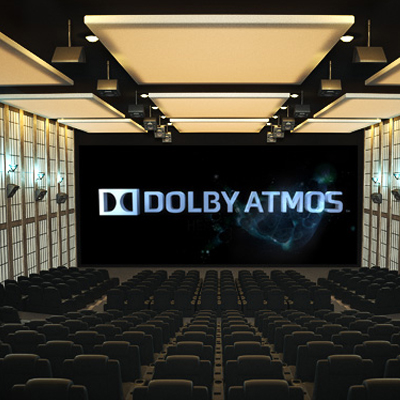
    MUMBAI: Dolby Laboratories announced the arrival of its latest audio technology, Dolby Atmos, in the capital city of India. Delite Cinemas, situated in Daryaganj, will be the first cinema in the city to offer the new technology to cinema lovers, which started on 1 May.


    Delite Cinemas owner Shashank Raizada said, “I believe Dolby Atmos will prove to be a major differentiator for the movie-watching audiences in New Delhi. It provides greater definition and dimension to movies with its unique approach to sound. With this achievement, we reinforce our mission to be the best in entertaining people by offering state-of-the-art technology and exceptional facilities, as well as providing our audiences with new and innovative concepts for an enhanced and powerful movie going experience.”


    Dolby Atmos has quickly become the preferred choice for next-generation sound in the cinema, with major studios, award-winning filmmakers, and exhibitors from around the world embracing its approach. Unlike traditional channel-based sound systems like 5.1, 7.1, and 11.1, which require filmmakers to think about the number and location of speakers, Dolby Atmos allows them to designate where in the cinema space each sound should be placed or moved to make audiences experience the film as if they were within its world.


    “We look forward to working with Delite Cinemas to bring the ultimate cinematic entertainment experience to moviegoers in New Delhi. With Dolby Atmos, you feel as if you are in the movie, not merely watching it. We are confident that moviegoers will be captivated by the remarkable clarity and dimension of the sound and will keep coming back to Delite Cinemas to get this amazing experience that Dolby Atmos provides,” said Dolby Laboratories India marketing head Ashim Mathur.

  • Digitisation at one-third of the investments by MSOs, claims JAINHITS

    Digitisation at one-third of the investments by MSOs, claims JAINHITS

    NEW DELHI: A campaign “Cable ka Shahenshah, DTH ka Baap” has been launched by JAINHITS, India’s only HITS based Direct to Network (DTN) service, relating to quality of services and its ability to deliver digitised content across terrains, anywhere in India.


    JAINHITS technology in partnership with Motorola (now ARRIS) and IntelSat offers a unique proposition to the LCOs (local cable operators) of an overnight plug and play digitisation solution that comes for an investment as low as Rs 4.99 lakh only. This makes them fulfill Telecom Regulatory Authority of India’s (TRAI) guideline requirements of All India digitisation by 31 December 2014.


    The HITS platform claims that if the 6,000 odd MSOs were to digitise their networks, they would require an investment of up to Rs 3 crores per MSO, thereby costing approximately Rs 18,000 crores as mere investments. JAINHITS on the other hand can provide direct services to over 60,000 LCOs spread across India with average investment of only Rs. 10 lakh per operator, thereby digitising the country for just Rs 6,000 crore, which is one-third of the investment required by MSOs. Thus, the massive saving of Rs. 12,000 crore is being passed on to the customers by providing cheaper services with enhanced quality viewing.


    Moreover, JAINHITS “Go Digital” entry scheme strategy will help LCOs to increase their subscriber base manifold in a short span of time. Not only this, through this partnership model LCO will witness significant increase in their customers ARPUs which are likely to double in 2014-15 with broadband and other VAS product/service roll outs. All this put together will help JAINHITS LCO partners enhance their business and earnings.


    With a mere investment of Rs 4.99 Lakh, an LCO will get all the necessary help in terms of technology, content and Set Top Boxes that will enable them to operate independently. JAINHITS offers LCO’s new product/ service roadmaps to address the ever- evolving market and customer needs along with the full technology solution roadmap for cable TV network upgradation. In addition, LCO’s also receive all necessary training on technical, legal, product, consumer satisfaction, compliance aspects etc. which facilitates them to offer standardised services.


    JAINHITS is the only platform in the country, offering complete empowerment and ownership to even the smallest LCO by making him a Leader and Cable Owner and an ISO (Independent Service Operator).


    JAINHITS national sales head Jeet Narayan Singh said, “In our endeavor to enable 60,000 small and medium operators to become MSOs and go digital independently, we are offering end to end single window solutions. JAINHITS offerings are fully DAS compliant with wider choice of channels that are cost effective and fastest way to offer Digital Cable services in any part of India. Our Broadband offering gives additional edge to ISOs and helps them to increase their revenues.”


    Through this engagement, JAINHITS provides subscriber management system (SMS), which empowers LCOs to manage his own customer base and offer, customized packs to its subscribers. In addition to this, JAINHITS LCO will be able to manage billing and create his own subscriber records as required by regulators. The SMS also provides an inventory management system and MIS system which enables the LCO to operate his business, generate reports and manage taxation etc.

  • Cisco’s technology in six million digital homes of Den Networks

    Cisco’s technology in six million digital homes of Den Networks

    MUMBAI: As India slowly inches towards 100 per cent digitisation, it is the various cable and multi system operators who are to be applauded for the increase of digitisation in the country. One of the well known technology companies, Cisco has announced that its services have reached to six million pay-TV homes on Den Networks.


    Cisco’s conditional access and middleware has been used by Den Networks since 2008 in its set top boxes. A range of Videoscape technologies from Cisco are used to cater to its subscribers. Den’s digital head-ends, networking routers, switches and set top boxes have been procured from Cisco.


    Earlier this year, Cisco expanded its Videoscape TV services delivery platform to include new cloud video capabilities. This would help media companies increase revenue, reduce operating expenses and enhance agility.


    Den currently has about 30 million viewers across the country and is looking at increasing that number through phase III and IV of digitisation. Commenting on the partnership Den Networks CEO SN Sharma said, “It gives me immense pleasure, in this highly competitive market, to reach out to more than 30 million viewers through our digital cable TV services. We expect this number to increase significantly with the completion of the remaining phases of digitisation. Cisco’s global expertise in managing the end-to-end delivery of digital pay-TV solutions gives us a strong competitive edge and empowers us to enable new services and advanced features, resulting in satisfied subscribers and encouraging growth.”


    Cisco Service Provider Video Software Solutions Vice President Sales Asia Pacific Sue Taylor said, “Cisco is excited by the success of its customers and would like to congratulate Den for reaching such a major milestone. We anticipate that the current digitisation drive will spur us on to achieve many greater milestones, both in roll-out volume and technology deployment, with the introduction of many new features using the latest designs and technologies. This will lead to overall customer enjoyment in terms of the TV viewing experience.”


    Den’s footprint now stretches over 200 cities in India covering markets such as Delhi, Uttar Pradesh, Karnataka, Maharashtra, Gujarat, Rajasthan, Haryana, Kerala, West Bengal, Jharkhand and Bihar.

  • Tyrone Systems: Forging ahead with high performance computing

    Tyrone Systems: Forging ahead with high performance computing

    MUMBAI: Technology can be a boon if used wisely and a bane if misused. In today’s fast paced world one can’t do without it and serving this very purpose is the Singapore based technology solution provider Tyrone Systems.


    For over a decade now, Tyrone has been instrumental in helping companies across the globe run highly complex businesses efficiently, securely, and reliably. One of the leading providers of servers, storage, back-up, and high performance computing (HPC) solutions, it targets to provide technology blocks customised to achieve business goals.


    The company recently launched Tyrone EDRA, a cloud based HPC-on-demand solution made available to customers on demand and on a pay as you use basis with immediate effect. By moving HPC applications to the cloud, the users seek to do away with risks associated with under-provisioning, under-utilisation of HPC resources while benefiting immensely from built in virtualisation support available in cloud based HPC environments.


    Speaking to indiantelevision.com Tyrone Systems co-founder & director Sandeep Lodha says: “We provide storage devices and solutions for TV channels. The news channels use a lot of IT applications; and with cameras on the ground and a number of OB vans, videos have become a important asset which needs to be saved and tracked consistently, since information is stored only in digital format these days. So storage becomes a very important factor.”


    Tyrone has an old association with the media and entertainment sector and it has created a niche for itself in the sector in India, Srilanka and Malaysia among others. It has a number of broadcast channels and post production names under its customer base including, Gulmarg TV (Malaysia), Maharaja TV (Srilanka) and TV9 (India).


    “70 per cent of the media and entertainment sector have implemented the solutions from Tyrone Systems and we are in talks with a lot more to get on board,” Lodha expounds.


    Similarly, in terms of post production Tyrone is well equipped with digital formatting. It helps in analogue to digital and vice versa; colour enhancement is a very important factor in post production as well and the company is doing its best to cater to the needs of the stakeholders.


    “We believe India is poised to play a big role in global opportunity for HPC applications and related services,” Lodha exults. “With the launch of Tyrone EDRA on-demand and pay-as-you-use HPC solutions, we believe we are bringing HPC within reach of those academic and commercial users, who hitherto could not afford to invest in this high capex and opex intensive application environment.”