Category: Hardware

  • India ready for 4K & hybrid technology: Broadcom Corp

    India ready for 4K & hybrid technology: Broadcom Corp

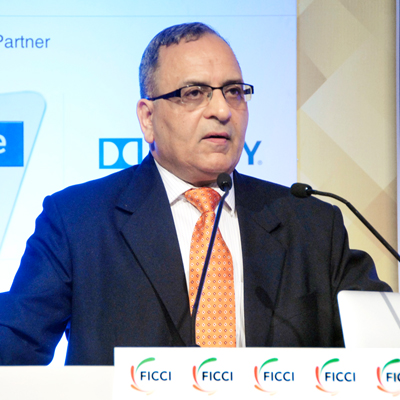
    KOLKATA: Broadcom Corp, one of the market leaders in providing chips for technologies such as enterprise networking, set-top boxes, and mobile connectivity functions, believes that the Indian market is ready for concepts like value added services (VAS), 4K, and hybrid technology.


    Broadcom interacted with more than 50 companies including satellite operators, cable operators, CAF players and OEM (original equipment manufacturers’) at the recently concluded 23rd Convergence India 2015 Expo, largest South Asian platform for Telecom, Broadcast and Digital Media. After participating in the fair, themed ‘Connecting India’, the company said it has got overwhelming response from the industry and trade visitors. 


    “Newer concepts like VAS, 4K, and hybrid technology are of interest across the broader audience,” said Broadcom India managing director Rajiv Kapur.


    “We spent time and discussed about our products and services with top 30 players of the industry apart from interacting with mid-sized companies,” informed Kapur.


    While India is a large market for Pay TV and broadband, till some years ago, the technology platform was almost missing for stakeholders to gather at a platform and address the issues, challenges and scope of working.


    “Broadcom spent quality time with big players. Even small players were interested in using and leveraging our services,” he said.


    Kapur said that the company is eyeing further growth from Indian R&D centre. “Apart from executing ideas gathered from this meet at our global R&D centre, we would execute some ideas at our research centre in India,” he concluded.

  • FY-2014: Technicolor reduces financial debt despite lower group revenues

    FY-2014: Technicolor reduces financial debt despite lower group revenues

    BENGALURU:  Global technology player in the media and entertainment sector Technicolor reported profit from continuing operations at €137 million as compared to a loss of €111 million last year. The company reported net income after tax, excluding costs due to debt repayments, at €149 million in the year ended 31 December, 2014 (FY-2014) as compared to €69 million in FY-2013. The company reported net financial debt at nominal value (non IFRS) of €645 million in the current year as compared to the €784 million in FY-2013.


    Group revenue in FY-2014 was however lower by 3.4 per cent at €3332 million as compared to the €3449 million in the previous year. Group revenue excluding legacy activities in FY-2014 was 1.4 per cent lower at €3315 million as compared to the €3362 million in the preceding year.


    Adjusted EBITDA from continuing operations amounted to €550 million in FY-2014 compared to €537 million in 2013, recording year-over-year growth of 3.1 per cent at constant currency. Adjusted EBITDA margin stood at 16.5 per cent, up by 1.0 point year-on-year, reflecting strong Connected Home  performance, driven by continued operating efficiency and better product mix, sustained revenue growth in Production Services, particularly in higher-margin VFX activities, and lower corporate costs, mostly related to transversal functions, which helped to offset the exit from legacy activities and weaker DVD Services contribution, as well as continuing investments in new Technology business initiatives says the company.


    The Group’s financial result was loss of €117 million in FY-2014 compared to loss of €288 million in FY- 2013, reflecting the following informs Technicolor:  Net interest costs amounted to €65 million in FY-2014, a significant reduction compared to €112 million in FY-2013, due to lower borrowing costs stemming from the refinancing and re-pricing transactions and from the material decrease in gross debt achieved during the period. Other financial charges amounted to €FY-52 million in 2014, of which costs related to the refinancing and re-pricing transactions for €26 million, including an IFRS reversal recognised as a non-cash charge for €20 million due to the debt prepayments done in FY-2014.


    Segment results (Company Speak Excerpts)


    Technology


    Technology revenues amounted to €490 million in FY-2014, up 1.2 per cent at current currency compared to 2013. Licensing revenues totalled €479 million in FY-2014, broadly unchanged from FY-2013, as a double-digit decline in revenues from the MPEG LA pool (which represented 45 per cent of Licensing revenues in FY-2014 compared to 53 per cent in FY-2013) was offset by robust double-digit revenue growth across other patent license programs. The Group benefited principally from a strong level of new contracts in the fourth quarter of FYT-2014 in its Digital TV program, and from additional revenues related to the LG smartphone patent license agreement signed in February 2014.


    Entertainment Services


    Entertainment Services revenues (excluding legacy activities) amounted to €1,442 million in FY-2014, down 5.7 per cent at current currency compared to FY-2013, as weaker performance for DVD Services was partially offset by strong revenue growth across Production Services, particularly in Visual Effects (VFX) activities.


    Legacy activities generated revenues of €17 million in FY 2014, down by about 81 per cent at current currency compared to 2013.


    Connected Home


    Connected Home revenues were €1,382 million in FY-2014, up 2.6 per cent at current currency compared to FY-2013, highlighting a good level of activity across most regions, as reflected by record product shipments of more than 34 million units for the year (+5.6 per cent). The Connected Home segment continued to expand faster than the market, achieving year-on-year revenue growth of 4.4 per cent at constant currency, and also succeeded to post revenue increases in each of the quarters of the year. This performance resulted from further market share gains across all regions, in particular in North America and Europe, Middle-East & Africa, as well as ongoing improvement in overall product mix, especially in Latin America. In FY-2014, HD products accounted for 79 per cent of total set top box shipments (FY-2013: 55 per cent), while Ultra Broadband devices (DOCSIS 3.0, VDSL, Fiber) represented 62 per cent of total Broadband CPE volumes (FY-2013: 52 per cent), both product categories recording significant year-on-year mix improvement, in line with the segment’s roadmap.


    Technicolor CEO Fredrick Rose said, : “I am extremely proud of the work done by everyone in Technicolor to deliver a fantastic performance in 2014 resulting in a positive net income and the initiation of a dividend. As we now embark on our Drive 2020 strategic plan, we will remain fully focused on creating shareholder value as a leader in media and entertainment services, developing and monetizing video and audio technologies.”

  • 23rd Convergence India expo ends with Annual Telecom and FTTH Council APAC Summit

    23rd Convergence India expo ends with Annual Telecom and FTTH Council APAC Summit

    MUMBAI: Themed as ‘Connecting India’, 23rd Convergence India 2015 Expo, largest South Asian platform for Telecom, Broadcast and Digital Media, came to an end today with an overwhelming response from the industry, trade visitors and participating exhibitors.

    The last day of the Convergence India 2015 Expo was a remarkable opportunity for many visitors to experience latest technologies, knowledge sharing sessions and views shared by some of the key global leaders. The expo also witnessed two landmark summits which happened on the third day – 2nd annual Telecom Summit and 2nd annual FTTH council Asia pacific summit.  

    During the 2nd Annual Telecom Summit R.K. Bahuguna, CMD, Rail Tel said “Wifi is the 4G for rural India and easy technology and cheaper technology is what we are looking for.”

    S Chandrasekhar, Group Director, Government Affairs and public policy, Microsoft shared during the 2nd Annual Telecom Summit, “There are two challenges – Physical access and affordability for rural India which we need to address”.

    The expo, inaugurated by the Hon’ble Minister Shri Ravi Shankar Prasad, Ministry of Communications and Information Technology, also witnessed various thought provoking conferences by leading industry experts like Mr. Manoj Kohli, Managing Director, Bharti Enterprise, Mr. Umang Das, Chief Mentor, Viom Networks Ltd. Etc and had interesting sessions on the topics like “Green Telecom in Digital India”, “OTT- Transforming the future of TV”, “Digital India”, “Internet for all” etc.

    Speaking at the forum, B.M Baveja, Scientist G & Group Coordinator, Department of Electronics & IT, Ministry of Communication & IT said, “Proliferation of broadband to rural masses is needed and this technology can be further exploited for the vision of Digital India to come into light.”

    During these three days, a huge number of visitors came to the 23rd Convergence India 2015 Expo and attracted over 400 companies and their CEO’s from countries like Australia, Canada, China, Japan, UAE, UK, USA, etc. to name a few, showcasing the latest trends and technologies in broadband, telecom, cable, satellite, digital India, cloud computing, VAS, LTE Networks etc. by some of the renowned brand names like Sony, HP, Broadcom, ABOX42, Ambrane, Ericsson etc.

    Prem Behl, Chairman, Exhibitions India Group, said “We are pleased to receive quality trade visitors and eminent speakers at our forum. We will continue to work on improving and contributing to the Indian ICT industry, and aim to increase the level of the show with each passing year.”

    Exhibitions India Group (EIG) has been serving the Indian Information Communication Technology sector by organizing the annual International Convergence India series of expos since 1992. The forthcoming international expo is endorsed by the Department of Telecommunication and the Department of Electronics & Information Technology, the Ministry of Communications & Information Technology.  Ministry of Information and Broadcasting has also extended its support to the event.

  • Convergence India: Take Digital India to rural areas, say experts

    Convergence India: Take Digital India to rural areas, say experts

    NEW DELHI: Leading experts from the telecom, broadcast and digital media industry stressed the need for Digital India to reach rural areas.


    Taking part in various sessions at the 23rd Convergence India 2015 Expo on its second day, the experts also stressed the need for green telecom.


    Over 120 senior executives exchanged views on topics namely, Green Telecom in Digital India, TV white space & it’s utility for mobile services, M2M Adoption, OTT- Transforming the future of TV and TV Vas—Drive for growth of Digital TV.


    Speaking at the forum, Communications and Information Technology Scientist G & Group Coordinator, Department of Electronics & IT BM Baveja said, “Proliferation of broadband to rural masses is needed and this technology can be further exploited for the vision of Digital India to come into light.”


    One of the path breaking sessions of the day was the “CEO’s Power Panel” themed as “Next Gen Television: Reshaping content with new solutions for multiscreen content delivery and interactive experiences.”  


    Appear TV CEO Carl Walter Holst said, “One of the great challenges that is present in the multi-screen world is that you really have to send all of the signals at the same time in different formats.”


    Exhibitions India Group chairman Prem Behl, which has organized the expo, said, “Convergence India 2015 expo will aid in knowledge sharing, trend forecasting, business development setting the future roadmap for a Digital India.”


    The 2015 exhibition has attracted over 400 companies and their CEOs from 30 countries including Australia, Canada, China, Japan, Norway, Singapore, South Korea, UAE, UK, USA, to name a few showcasing the latest trends and technologies in broadband, telecom, cable, satellite, digital India, cloud computing, VAS, LTE Networks etc. Over 15,000 trade visitors are expected to visit the expo over 3 days.  


  • Convergence India: Verimatrix to share digitisation revenue security strategies

    Convergence India: Verimatrix to share digitisation revenue security strategies

    MUMBAI: Verimatrix, the specialist in securing and enhancing revenue for multi-network, multi-screen digital TV services around the globe, will update attendees on revenue security solutions tailored for phase III and IV of India’s TV digitalisation roll-out at Convergence India 2015 to be held on 21-23 January in New Delhi.


    The company’s marketing VP Steve Christian will also participate in the “Post Digitalisation: Explore new business opportunities for DTH, Cable and IPTV video services” panel on 21 January. During the session, Christian will explore the advantages of an advanced cardless security approach when compared with legacy smart card solutions.


    Verimatrix will also host several demonstrations in its stand to highlight how optimised DVB cardless security solutions have proven to save costs and enhance revenues as operators digitise TV and video services. The VCAS for DVB cardless revenue security solution is immediately available across the majority of MPEG-2 SD, MPEG-4 SD, MPEG-HD and hybrid set-top-boxes, including those from LG CNS and DTV Research, which will be included in the demonstration during the show.


    It will also highlight how its new VCAS Ultra solution offers pay-TV operators an agile multi-network revenue security approach with the flexibility and scalability required to meet their future goals for growth. The solution enables service providers to take full advantage of next-generation UHD services and deploy in physical or virtualized environments via an ecosystem of tightly integrated cloud-based components, including enhanced security profiles to meet MovieLabs’ UHD video service requirements, with multi-network video watermarking and TrustZone support.

  • Modi’s ‘Make In India’ effect: Xperio Labs mulling Indian manufacturing unit

    Modi’s ‘Make In India’ effect: Xperio Labs mulling Indian manufacturing unit

    MUMBAI: Prime Minister Narendra Modi’s ‘Make In India’ initiative, which is designed to transform India into a global manufacturing hub, has started attracting various companies.


    Xperio Labs, an emerging market focused ‘Devices and Services’ company, is now evaluating the prospects of setting up a manufacturing unit in India.


    The company will be showcasing its products at the upcoming 23rd Convergence India 2015, which is being held in Delhi from 21-23 January. Speaking to Indiantelevision.com, Xperio Labs VP sales Paul Avery said, “We have both sales and support staff in Mumbai, Delhi and Bengaluru. We have also set the ball rolling for a small development team in Chennai. We look at India as our ‘hub’ for software and services and China for our manufacturing. We are also evaluating the prospects of manufacturing in India given the call for ‘Make in India’ by the Prime Minister Narendra Modi.”


    According to Avery, India is not only a significant contributor to the company’s revenue, but is a high growth market for them.


    Talking about the products that the company will showcase at Convergence 2015, Avery said, “At Convergence 2015, we will be exhibiting our range of devices namely MPEG 2 and MPEG 4 Set Top Boxes (STB), Docsis-2 and Docsis-3 wired and wi-fi modems. We also plan to run live demonstrations of our Platform as a Service (PaaS) that allows service providers to offer OTT/TV Everywhere services on a pay as you go basis.”


    Xperio Labs has worked together as a team under different brands like Scientific Atlanta/Cisco and has contributed to the transformation of the Indian cable industry since 2003. “We have seen this industry grow by leaps and bounds. We have also learnt over the years that Indian Service Providers are value conscious (not price conscious) and cable has offered stiff competition to DTH and has been able to provide a credible alternative to DTH,” he added.  


    The service company, which currently has offices in Hong Kong, Atlanta, Bengaluru, Delhi, Dubai, Mumbai, Surrey and Shanghai is initially focusing on markets in south Asia, south east Asia and middle east regions. “In the very near term, we would like to do deeper, rather than wider coverage in these markets and then look at other emerging markets such as Africa, Eastern Europe and Latin America,” said Avery.


    According to him, in the broadcast space, service providers have now started moving their focus from just offering video services to more data and voice globally and very soon next generation services, such as home security and automation services will also begin. “We plan to offer these services as part of our PaaS platform,” he informed.


    Elaborating further on PaaS, Xperio Labs CTO Ajith Nair said, “This platform allows service providers to quickly launch OTT/TV Everywhere services with minimum capex and mostly on an opex model i.e pay as you go. It also helps reduce service providers’ Time To Market (TTM) and focus on customer acquisition and retention, without being concerned about the technology and its management. Service providers can offer services like broadcast TV, on demand TV, internet radio and concierge services to name a few.”


    Xperio Labs, which has been involved with service providers for more than two decades, has seen the international service providers evolve from single service companies to triple pay, and in some cases quad play. “During this transition they have had to undergo several operational challenges and we anticipate that in the emerging market service providers will face similar challenges, and there is a broad dearth of technology companies that can help them with such challenges,” Nair opined.


    The company, according to Nair, can provide a Tier-1 engagement model at an Asia Inc price. “We also believe we can provide close-in product and operational support with an India based support team. In this way service providers can take advantage of the best of both the worlds,” he said.


    Since its inception in September 2013, Xperio Labs has been successful with a number of Tier-1 and 2 service providers in several markets like India, Nepal, Maldives, Vietnam and Philippines.


    The company has been working on providing OTT/TV Everywhere service. When asked about the progress, Nair said, “It is still in its infancy in emerging markets, it is similar to what Digital TV was 8-10 years ago, but slowly and surely we have seen a huge upswing in consumers purchasing more mobile devices namely smartphones, tablets and Phablets and hence their need to consume content on the move, or consume content on multiple screens in the home.”


    “We have made considerable progress with the technology and we are currently in the midst of launching a tier-1 MSO go TV Everywhere. Our target group is tier-1/2 MSO’s who appreciate the need to launch such services but don’t want to make a capex investment and also don’t want to build and manage the OTT infrastructure,” informed Nair.


    Xperio Labs, in order to meet the requirements of its growth plans in India is always on a lookout for strategic partners, who can, not only help them grow their reach in the market but also invest/co-develop in some of its services and technologies.


    Avery is confident about the products the company makes. “Our devices and services are built not just keeping a consumer, but also the service provider in mind, a B2B2C (Business to Business to Consumer) approach to the market. The industrial design, user interface, along with the software design and architecture of our products reflect our understanding that technology is only as good as it is useful to the people using it. In short it is an experience that we provide our customers,” he informed.


    According to Nair, digital STBs may soon cease to exist in its current form. “In the years to come, it would just be an application residing on a mobile device or television, or it would have to transform into a set of devices; a  gateway for home entertainment, communication, security, automation and health care with one or many display devices,” concluded Nair.


    Organised by Exhibitions India Group (EIG), the 23rd edition of Convergence India 2015 is themed around ‘Connecting India.’ The event is set to bring together the best minds in the ICT ecosystem under one roof to create an interactive platform for the companies to showcase their technical prowess, and tap into new business opportunities. The expo which will focus on growth opportunities, future trends and upcoming technologies for the ICT ecosystem stakeholders, will feature a wide spectrum of ICT verticals including telecom, mobility, broadcast, cable, satellite, entertainment, IT and information security etc.

  • “Traditional STBs can no longer handle complex requirements of innovative operators”: Matthias Greve

    “Traditional STBs can no longer handle complex requirements of innovative operators”: Matthias Greve


    IPTV is moving from a pure linear product to a complete TV experience with live TV, on demand services and third party content. This new world of connecting the TV to the Internet means both, opportunities and challenges for operators, developers and integrators.


    ABOX42, is one of the leading provider of hybrid, IPTV and OTT DVB smart set top boxes (STBs), with five years expertise and knowledge in end-user mass-market products and a deployment of over 120 OTT applications. ABOX42 developed a new generation of smart STBs for the global market. The ABOX42 smart STB platform is the ideal solution for any IPTV and OTT content providers, cable-operators and ISPs, who are aiming to provide an own STB for its services to its customers. The platform was designed for fast moving OTT providers, cable operators, IPTV providers and internet service companies. With its powerful smart SDK, the Smart SaaS Services and additional Smart Solutions, the ABOX42 platform offers its customers a short project cycle, short lead times in production and includes lifecycle management for ongoing software maintenance and service updates.


    ABOX42 is taking a new approach with the ABOX42 Smart Platform and its advanced customised IPTV, OTT and Hybrid Smart STBs to solve the most important key challenges by providing the solid hardware foundation and the software features for a unique TV proposition with least cost and low development effort. In an interview, ABOX42 founder and CEO Matthias Greve answers essential questions about the rapidly changing market.


    Excerpts:


    What role do STBs play now and in future, considering Smart TVs and cloud based services?


    Modern STBs like the ABOX42 M-series are designed for local TV applications as well as for emerging cloud based TV services. Since on one hand the operators need to control the user experience and on the other hand need to be ahead of competition with the introduction of new TV features, it will be more than ever mandatory to have a modern, flexible and scalable Set Top Box platform for the first screen TV experience of paying end-users. Smart TVs offer a certain range of OTT applications, but will not replace the main Set Top Box device in end-users home, which provide a unified, rich TV experience on the first and second screen.


    Do you see a “SetTopBox-less” future for operators?


    There is currently some talk from operators about virtual STBs as SmartTV apps or STBs as CI+ modules. Since there is today no standard for the virtual STB applications and the vast majority of the installed flat screen TV in the household do not support these new applications, the operator still needs to focus on its core STB. This is the device, which can be shipped to all subscribers regardless of the type or age of the TV set.


    What view should an operator take on the virtual STB?


    The best way to view these issues is to treat the virtual STB like the operator would treat an App on iPad, XBOX or PlayStation. It is an add-on but not the core of the operators TV solution.


    What are the challenges of virtual STBs as apps?


    With the virtual STB apps within SmartTV, the operator does not have the same freedom on the user interface side. Also the quality of service cannot be guaranteed over the live time of the app. It is out of the operators´ control, how for example future software updates of the SmartTV manufacture might affect the compatibility and proper functioning of the operators TV service.


    Also Virtual STB apps are not free of charge and need costly maintenance. If you support different manufactures and different version of TV sets it quickly sums up to 5 to 10 new platforms which have to be supported each year.


    What is the major shift in the STB market?


    Traditional closed STB platforms are not any longer able to handle the complex requirements of innovative operators. The market will move from old integrated, proprietary STB products to modern SmartSTB platforms where the focus has moved to the software layer. This is a similar shift like we experienced in the last few years with the move from traditional feature phones to modern Smart phones. The same trend we see in the TV middleware segment, where operators want to move from closed propriety systems to open solutions based on modern internet technologies and open standards.


    What are the specific operator challenges solely advanced STBs are able to match?


    The biggest challenge for operators today is to understand what the difference of new IPTV & OTT solutions is and how the operator can in an effective way get to the target solution in least time.


    Basically almost all Cable and Satellite Pay TV operators want to deliver new services like network PVR, VOD and want to add OTT delivery of specific channels to free up bandwidth in their traditional DVB networks. IPTV operators who started several years ago need to upgrade their user experiences from inflexible first and second-generation STB platforms to latest (third) generation. This new generation STB platforms allow the fast development of modern user interfaces, compelling services and the integration of third party services based on HTML5. In addition these new Smart STB platforms are upgradable and much more future proof than legacy STBs.


    Do SmartSTBs already match operators´ current and future demands?


    SmartSTBs have arrived and delivery of HD live TV channels over the internet with OTT technologies is a market proven technology deployed in the mass market already. A new concept of OTT DVB, allows not only live TV signal delivery over the internet, but to also include multiple audio tracks, classical TeleText, DVB Subtitle as well as modern HbbTV application via HLS streaming.


    Will future trends in the operator area be in favour of STBs?


    There are two major trends increasing the demand for STBs. Operators who already run an older generation IPTV service plan to upgrade to a latest generation IPTV & OTT solution which is modern and scalable, which can be integrated seamlessly and offers new compelling features (additional OTT services, HbbTV, nPVR, Smart TV applications) and multi-screen capabilities.


    Operators without an existing installation who want to move into the TV space with a modern IPTV (or even more often OTT) solution which is easy to role out, does not require long integration work and offers a great first screen experience combined with multi-screen capabilities.


    What are the unique possibilities given with OTT solutions and STBs?


    OTT is a great opportunity for new players to enter the TV market, or for existing operators and internet service providers to reach new customers and add new features. ABOX42 has been an innovator in the advanced Set Top Box platform field for quite a while and we recognise that our solution is picked by both traditional operators who want to move to a future proof, modern and complete solution, as well we are serving new OTT operators who are entering the TV field with compelling new product offerings and disruptive business models. We see a major increase of our business and getting more and more request from traditional operators.


    What distinguishes the new STB generation from the preceding models?


    The new SmartSTBs will be able to handle many different standards side by side, such as streaming protocols, DRM and CAS systems. This new SmartSTB generation is HTML5 browser based and much more easier for development. A new focus will become the management of the software lifecycle and cloud services to manage the SmartSTB during the entire lifecycle, like we are all used nowadays with e.g. the iPhone.


    What are characteristic innovations in the area of OTT and IPTV technologies?


    ABOX42 as innovator in the IPTV & OTT segment is already delivering products, which offer all the latest innovations. This includes support of all major DVB features in both IPTV & OTT, supporting HbbTV services, other OTT services and third party applications with different streaming formats, different DRM systems side by side on the platform. More efficient streaming with H.265 will for sure boost the video quality especially for OTT and will allow more efficient content delivery for operators.


    Do SmartSTBs and especially ABOX42 solutions meet the customers´ demands?


    ABOX42 is supporting all demanded new features with its Smart SDK and Smart mobile Toolkit for the advanced ABOX42 STB platform. We see this as one of our competitive advantages to provide a broad compatibility to OTT services, streaming formats, DRM systems as well as the support of various TV Middleware solutions.

    This way a network operator can flexibly and easily upgrade all existing customers (digital and analog TV watchers) with new OTT and interactive services such as Catch-Up TV, Video on Demand and many more. ABOX42 offers short project cycles, short production lead times and includes lifecycle management, ongoing software maintenance and service updates.


    What are currently the typical demands of ABOX42´s customers?


    Depending on legal requirements in a certain country, cloud based recording (network PVR & network timeshift) is the most compelling feature. But also HbbTV offers a great set of additional features and on demand content which is supported by more and more countries / operators. Last but not least ‘Multi-Screen’ applications are getting more and more popular since it is not only about ‘on demand’, but about ‘any place, any time’ nowadays. In general it is all about high quality content and an intuitive user interface. This is what end-users like on the new TV experience.


    What are the prospects for a retail market as a channel for multiple services and devices?


    We believe the operators including new OTT operators are in the driver’s seat to deploy compelling multi screen solutions to their customers. Most markets are dominated by pay TV offerings by operators. Looking into the hardware devices, already today lots of retail devices (iOS or Android based) can be enabled as a second screen device, where the operator controls the application for these devices (for OTT services). For the main screen (e.g. IPTV), the operator will control and provide as well the hardware device (STB).
  • Ali Corporation aims to sell 20 million chipsets by December 2016

    Ali Corporation aims to sell 20 million chipsets by December 2016

    KOLKATA: Taiwan-headquartered Ali Corporation, a set top box (STB) solution provider, is looking at an order size of between 15 to 20 million chipsets by the end of December 2016.


    “India is a big market and we are looking at it keenly. Compared to other countries, it is different because branding which is important here. Our focus is to build around the brand and the technology in India. In phase III and IV of digitisation, we are eyeing between 15 million and 20 million chipsets,” Ali Corporation country manager Shivani Pratap Singh exclusively told indiantelevision.com.


    Singh was extremely gung-ho about the potential in India as the country’s television ecosystem digitises fully by December 2016.


    With India’s transition from analogue to digital service, many consumers need new, full-featured set-top boxes (STBs) for home viewing. This represents a major opportunity for regional operators and STB manufacturers, as only a portion of the roughly 100 million STBs in consumers’ homes have already been digitised according to published government figures.


    Adding to the STB growth is the trend of consumers placing more than one TV in their homes, as well upgrading from standard definition to high definition.


    The government had previously set a target of digitising the cable TV services in the entire country by December 2014. However Information and Broadcasting Ministry recently issued a notification as per which the deadline for the areas which came in phase III was extended from 30 September 2014 to 31 December 2015 and phase IV for December 2016 as was also first broken by indiantelevision.com.


    “By December 2014, we were looking at 5 million chipsets. Due to the delay in digitisation, the clients also delayed it,” he said. If an order of 2 lakh had been placed, clients have picked up nearly 10000 to 20000 chipsets and left the remaining for later.


    Demand had grown down due to digitisation delay but Singh says that it is always balanced by the international market demand.


    The company supplies chipsets to most of the big players in the industry.


    “We at Ali, have our own system in place; our chip sets are reliable, cost effective and when the technology is upgraded, we keep on updating ourselves,” concluded Singh.

  • Local STB manufacturers confident of meeting target of DAS phase III and IV

    Local STB manufacturers confident of meeting target of DAS phase III and IV

    NEW DELHI: The Information and Broadcasting (I&B) Ministry has been assured by manufacturers of domestic set top boxes (STBs) that they will be able to meet the demand of 11 crore STBs needed for the final two phases of cable television digitisation.


    This assurance was given to I&B Ministry secretary Bimal Julka over the weekend with manufacturers to check the status of indigenous manufacturing of STBs.


    I&B Minister Prakash Javadekar had recently told that it was unfortunate that good quality STBs were being exported overseas and poor quality STBs from overseas were being installed.


    Earlier, he had said that the Ministry will take steps to solve problems of local manufacturers including those relating to taxation.


    The manufacturers appreciated the efforts of the government for resolving their long pending demand of C-form. They said that they have sufficient installed capacity to meet the full demands of STBs locally and said the government’s initiative would help give employment to about 50,000 people and would attract an investment of about Rs 500 crore. It would generate local support facility for repair of STBs and would also help in smooth implementation of digitisation initiative in the country. 

    The Finance Ministry had on 13 August extended the facility of Form ‘C’ under section 8(3) (b) of Central Sales Tax (CST) Act 1956 to STBs thus fulfilling the major demand of the domestic STB manufacturers who would charge CST @ 2 per cent against VAT of 12-14 per cent being paid earlier. 

    The phase III of digitisation to be completed by December 2015 would cover all other urban areas (municipal corporations/ municipalities) which were not covered in first two phases. Phase IV to be completed by December 2016 would cover the rest of India.


    The meeting was attended by the members of the consumer electronics and appliances manufacturers association (CEAMA) and representatives from STB manufacturers such as My Box Technologies, Dixon Technology, Videocon, Jabil, One-Eight Technologies, Skyworth Digital, Spectra Innovations, Indieon, Logic Eastern and Simmtronics.

  • Vodafone adds Broadcom Ultra HD technology to next-generation IPTV STB

    Vodafone adds Broadcom Ultra HD technology to next-generation IPTV STB

    NEW DELHI: Broadcom Corporation, which on 10 September announced the first family of eight new hybrid satellite and terrestrial system-on-a-chip (SoC) broadcast devices for set-top boxes (STBs), today said it will power Ultra HD set-top box (STB) technology in collaboration with Vodafone Germany. 


    The full line of Broadcom is being demonstrated at the International Broadcasting Convention in Amsterdam.


    Vodafone’s 4K-enabled consumer set-top box, the first Ultra HD STB to be introduced in Germany, will deliver broadband subscribers Ultra HD content at 4X the resolution of traditional HD displays. Broadcom’s high efficiency video coding (HEVC)-enabled BCM7252 device allows operators such as Vodafone to use bandwidth more efficiently, enabling uninterrupted delivery otherwise bandwidth-intensive 4K, 60 frame-per-second transmissions (4Kp60) at 50 percent of the bit rate previously required.


    “Broadcom’s pioneering Ultra HD technology will enable Ultra HD content for millions of potential Vodafone’s fixed broadband subscribers,” said Broadcom senior vice president of marketing, broadband & connectivity group Rich Nelson. “As a leading provider of silicon for Ultra HD technology, Broadcom’s BCM7252 SoC allows Vodafone to bring crystal-clear Ultra HD definition content to consumer’s home TV sets for the first time in Germany.”