Category: Hardware

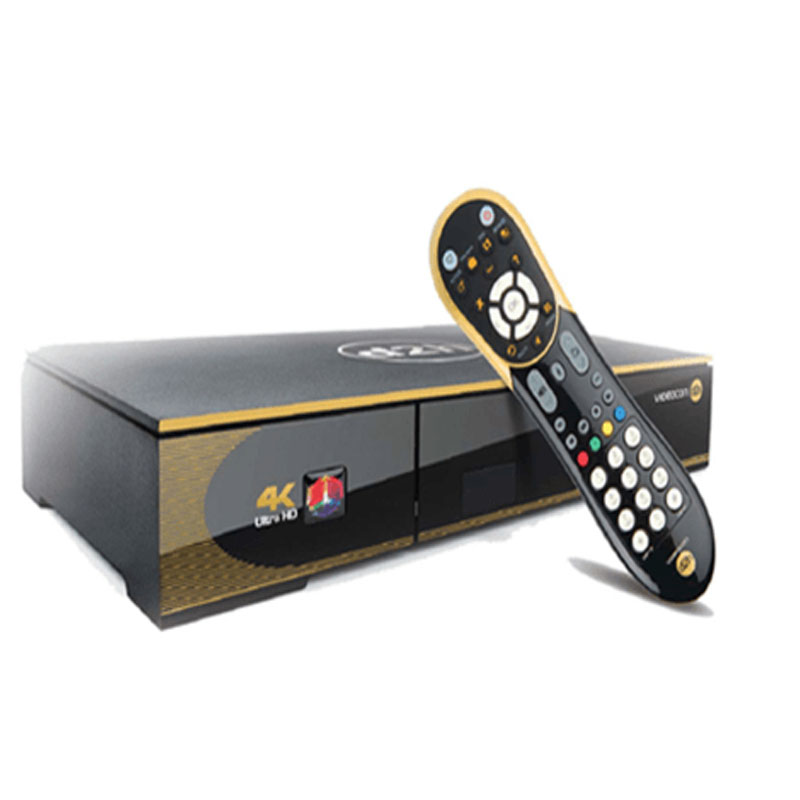
  • Reliance Jio to launch Android powered 4K STBs

    Reliance Jio to launch Android powered 4K STBs

    MUMBAI: Enjoying huge waves of success, Reliance Jio, within few months of its launch, plans to launch Android powered set-top boxes (STBs) in India. Following its idea of providing free 4G internet, this is believed to be Jio’s second step in building their envisioned Digital Ecosystem in India.

    Though they have not announced any date of the launch as of yet, several reports have surfaced hinting at the company’s plans to introduce three STBs, differing in prices and hardware. One will be the high-end STBs powered by Broadcom chipset, the other two would be powered by the Marvell processor. According to reports, the Broadcom powered by STB comes with dual core Brahma CPU and OGLES 3.1 GPU.

    The three STBs are also rumoured to support 4K UHD by default and runs on Android 6.0 Marshmallow out of the box. However, the users would require a 4K supported TV for the best experience.

    The devices come with a pre-installed Google PlayStore along with native Android apps. It also contains Jio Suite apps like Jio TV and Jio On Demand. With these STBs, the normal LCD/LED TV can be converted into a smart TV running on Android.

    Instead of the regular IR remote controller, these boxes come with Bluetooth remote controllers. They can be also controlled with smartphones using the app, similar to something Xiaomi debuted in the U.S market a couple of weeks back. The remote controller also has a mic for voice search with LAN, USB, and HDMI ports along with built-in Wi-Fi support.

    If reports are to be believed, the company has already imported 15,000 STBs priced at Rs. 5,500 per unit.

  • Reliance Jio to launch Android powered 4K STBs

    Reliance Jio to launch Android powered 4K STBs

    MUMBAI: Enjoying huge waves of success, Reliance Jio, within few months of its launch, plans to launch Android powered set-top boxes (STBs) in India. Following its idea of providing free 4G internet, this is believed to be Jio’s second step in building their envisioned Digital Ecosystem in India.

    Though they have not announced any date of the launch as of yet, several reports have surfaced hinting at the company’s plans to introduce three STBs, differing in prices and hardware. One will be the high-end STBs powered by Broadcom chipset, the other two would be powered by the Marvell processor. According to reports, the Broadcom powered by STB comes with dual core Brahma CPU and OGLES 3.1 GPU.

    The three STBs are also rumoured to support 4K UHD by default and runs on Android 6.0 Marshmallow out of the box. However, the users would require a 4K supported TV for the best experience.

    The devices come with a pre-installed Google PlayStore along with native Android apps. It also contains Jio Suite apps like Jio TV and Jio On Demand. With these STBs, the normal LCD/LED TV can be converted into a smart TV running on Android.

    Instead of the regular IR remote controller, these boxes come with Bluetooth remote controllers. They can be also controlled with smartphones using the app, similar to something Xiaomi debuted in the U.S market a couple of weeks back. The remote controller also has a mic for voice search with LAN, USB, and HDMI ports along with built-in Wi-Fi support.

    If reports are to be believed, the company has already imported 15,000 STBs priced at Rs. 5,500 per unit.

  • India, China to propel APAC, beat CAS Europe market share

    India, China to propel APAC, beat CAS Europe market share

    MUMBAI: APAC is expected to overtake the market share of Europe in future due to an increasing demand for digital TV set-up boxes in countries such as China and India. North America and Europe dominated the global CAS market in 2015. APAC region is estimated to mark a growth rate of 12.0 per cent CAGR during the forecast period 2016 to 2025.

    As per market research by ‘the Insight Partners’, increased digital TV penetration in households coupled with rising internet users will boost the CAS market at a CAGR of 9.1 per cent.

    North America is one of the key regions with the highest demand for CAS due to high adoption of internet services, followed by Europe. Developing countries in APAC and MEA are anticipated to experience significant adoption of CA systems, due to growing internet infrastructure and modernizing traditional TV services. Thus, North America and Europe dominated.

    Conditional Access System (CAS) offers a secure platform to broadcast the digital content through subscription based plans. CAS has set new dimension to the end user viewership and also has set up new revenue opportunities to operators and others who broadcast digital content. Today, CA technology and services are sophisticated, and are more than ever mission-critical for a successful pay TV business venture. In a growing competitive environment, in order to attract customers, traditional pay TV operators have had to diversify their offering from the original idea of offering premium content, to pay per view (PPV).

    The global conditional access systems market was estimated to be $ 2.32 billion in 2015, and is expected to reach $ 5.53 billion by 2025.

    Internet services exhibits a tremendous global growth and creating plethora of opportunities for the CAS market in near future along with increasing number of subscribers. This would also help the CAS market to continue its growth despite of declining STB market. The demand for internet TV and videos for home entertainment would become the prime factor driving the CAS growth. Internet service providers are using CAS for secured content delivery to subscribers. Increasing demand for personalized services and applications such as Netflix, Voot, Hot Star, etc. will accelerate the demand for CAS going ahead.

    Germany Conditional Access Systems market is expected to exhibit highest growth rate of 11.2 per cent during 2016 – 2025. This will outpace the growth rate of the U.K., thereby Germany leading the Europe CAS market by 2025.

    Some of the key players profiled in the report are Nagravision SA, Verimatrix, Inc., Irdeto, Viacess-Orca, Cisco, Inc., Coretrust, Inc., Conax AS, China Digital TV, Wellav Technologies Ltd. and ARRIS International plc.

  • India, China to propel APAC, beat CAS Europe market share

    India, China to propel APAC, beat CAS Europe market share

    MUMBAI: APAC is expected to overtake the market share of Europe in future due to an increasing demand for digital TV set-up boxes in countries such as China and India. North America and Europe dominated the global CAS market in 2015. APAC region is estimated to mark a growth rate of 12.0 per cent CAGR during the forecast period 2016 to 2025.

    As per market research by ‘the Insight Partners’, increased digital TV penetration in households coupled with rising internet users will boost the CAS market at a CAGR of 9.1 per cent.

    North America is one of the key regions with the highest demand for CAS due to high adoption of internet services, followed by Europe. Developing countries in APAC and MEA are anticipated to experience significant adoption of CA systems, due to growing internet infrastructure and modernizing traditional TV services. Thus, North America and Europe dominated.

    Conditional Access System (CAS) offers a secure platform to broadcast the digital content through subscription based plans. CAS has set new dimension to the end user viewership and also has set up new revenue opportunities to operators and others who broadcast digital content. Today, CA technology and services are sophisticated, and are more than ever mission-critical for a successful pay TV business venture. In a growing competitive environment, in order to attract customers, traditional pay TV operators have had to diversify their offering from the original idea of offering premium content, to pay per view (PPV).

    The global conditional access systems market was estimated to be $ 2.32 billion in 2015, and is expected to reach $ 5.53 billion by 2025.

    Internet services exhibits a tremendous global growth and creating plethora of opportunities for the CAS market in near future along with increasing number of subscribers. This would also help the CAS market to continue its growth despite of declining STB market. The demand for internet TV and videos for home entertainment would become the prime factor driving the CAS growth. Internet service providers are using CAS for secured content delivery to subscribers. Increasing demand for personalized services and applications such as Netflix, Voot, Hot Star, etc. will accelerate the demand for CAS going ahead.

    Germany Conditional Access Systems market is expected to exhibit highest growth rate of 11.2 per cent during 2016 – 2025. This will outpace the growth rate of the U.K., thereby Germany leading the Europe CAS market by 2025.

    Some of the key players profiled in the report are Nagravision SA, Verimatrix, Inc., Irdeto, Viacess-Orca, Cisco, Inc., Coretrust, Inc., Conax AS, China Digital TV, Wellav Technologies Ltd. and ARRIS International plc.

  • India lucrative market for 4K UHD STBs: Grand View Research

    India lucrative market for 4K UHD STBs: Grand View Research

    MUMBAI: Here’s a view on the demand for 4K or ultra high definition (UHD) set-top boxes (STBs) in India.

    American research firm Grand View Research Inc has forecast in a new report that India is “poised to emerge as a lucrative market for UHD STBs with the country expected to witness a CAGR substantially higher than the regional (Asia Pacific) average. Several DTH operators such as Tata Sky, Videocon, and Airtel have launched UHD STBs and are attempting to achieve a higher rural penetration with affordable regional packages.”

    The report says that the APAC 4K STB market was valued at just over $50 million in 2015 and will witness a high growth over the next eight years with India leading the charge.

    The Grand View Research Inc analysis states that the global 4K STB market size is projected to reach $7.18 billion by 2024. The growing inclination of the global public towards UHD video viewing can be attributed as the major reason for the 4K STB market growth.

    The demand for media-rich home entertainment services among consumers is increasing and is anticipated to fuel market growth. The growth is further fostered by favourable government initiatives, large-scale digitization programs, and mandatory installation of set-top boxes. Improved standard of living owing to increased purchasing power is positively impacting the industry growth.

    The initiatives undertaken by the Federal Communications Commission for supporting third-party STB manufacturers is paving the way for the expansion of the Ultra High-Definition (UHD) STB industry. The market is anticipated to gain traction in Asia Pacific owing to the strong presence of low-cost set-top box manufacturers, especially in countries such as Korea, Taiwan, and China.

    The increasing penetration of 3D and 4K TVs and escalating demand for large screen displays are fuelling the demand for UHD STBs. Smart features such as STB operability through voice commands given by remote control unit (RCU) is garnering high potential. The computational capabilities of STBs in combination with the advent of quality standards to satiate growing customer expectations have culminated in the STB market growth.

    Further key findings suggest:

    Internet Protocol Television (IPTV) 4K STBs accounted for over 20 per cent of the market share in 2015 and are expected to witness considerable growth over the forecast period. Increasing broadband penetration can be attributed as the major reason for the rise in the market share of IPTV 4K Set-top Box devices.

    The IPTV STB product segment is projected to gain traction owing to benefits such as integration of TV, PC, home phone, and wireless devices offering a high quality of viewing experience to the end-users.

    Key industry participants include ZTE Corporation, SAGEMCOM, Arion Technology, Roku, and Infomir. Manufacturers are emphasizing on UHD STBs incorporated with interactive 4K content to gain a competitive edge in the industry.

    Technology giants such as Apple have managed to make their mark in this competitive industry. The Apple TV device aids the streaming of (Over-The-Top) OTT content and other videos over the internet. The launch of advanced OTT devices such as Google Chromecast media streaming device and Amazon’s Fire TV STBs have opened up new avenues in the industry

  • India lucrative market for 4K UHD STBs: Grand View Research

    India lucrative market for 4K UHD STBs: Grand View Research

    MUMBAI: Here’s a view on the demand for 4K or ultra high definition (UHD) set-top boxes (STBs) in India.

    American research firm Grand View Research Inc has forecast in a new report that India is “poised to emerge as a lucrative market for UHD STBs with the country expected to witness a CAGR substantially higher than the regional (Asia Pacific) average. Several DTH operators such as Tata Sky, Videocon, and Airtel have launched UHD STBs and are attempting to achieve a higher rural penetration with affordable regional packages.”

    The report says that the APAC 4K STB market was valued at just over $50 million in 2015 and will witness a high growth over the next eight years with India leading the charge.

    The Grand View Research Inc analysis states that the global 4K STB market size is projected to reach $7.18 billion by 2024. The growing inclination of the global public towards UHD video viewing can be attributed as the major reason for the 4K STB market growth.

    The demand for media-rich home entertainment services among consumers is increasing and is anticipated to fuel market growth. The growth is further fostered by favourable government initiatives, large-scale digitization programs, and mandatory installation of set-top boxes. Improved standard of living owing to increased purchasing power is positively impacting the industry growth.

    The initiatives undertaken by the Federal Communications Commission for supporting third-party STB manufacturers is paving the way for the expansion of the Ultra High-Definition (UHD) STB industry. The market is anticipated to gain traction in Asia Pacific owing to the strong presence of low-cost set-top box manufacturers, especially in countries such as Korea, Taiwan, and China.

    The increasing penetration of 3D and 4K TVs and escalating demand for large screen displays are fuelling the demand for UHD STBs. Smart features such as STB operability through voice commands given by remote control unit (RCU) is garnering high potential. The computational capabilities of STBs in combination with the advent of quality standards to satiate growing customer expectations have culminated in the STB market growth.

    Further key findings suggest:

    Internet Protocol Television (IPTV) 4K STBs accounted for over 20 per cent of the market share in 2015 and are expected to witness considerable growth over the forecast period. Increasing broadband penetration can be attributed as the major reason for the rise in the market share of IPTV 4K Set-top Box devices.

    The IPTV STB product segment is projected to gain traction owing to benefits such as integration of TV, PC, home phone, and wireless devices offering a high quality of viewing experience to the end-users.

    Key industry participants include ZTE Corporation, SAGEMCOM, Arion Technology, Roku, and Infomir. Manufacturers are emphasizing on UHD STBs incorporated with interactive 4K content to gain a competitive edge in the industry.

    Technology giants such as Apple have managed to make their mark in this competitive industry. The Apple TV device aids the streaming of (Over-The-Top) OTT content and other videos over the internet. The launch of advanced OTT devices such as Google Chromecast media streaming device and Amazon’s Fire TV STBs have opened up new avenues in the industry

  • Siti & DishTV opt for Conax conditional access

    Siti & DishTV opt for Conax conditional access

    MUMBAI: The Essel group has been using Conax’s tech for sometime now for its Siti Network (earlier known as Siti Cable). Now the group has extended that partnership for another product for both Siti Network and DTH operator Dish TV India. This time it is for the cardless set top boxes that the two are slated to roll out.

    Based on the flagship Conax ContegoTM security hub, the Conax Cardless conditional access (CA) technology will be a key and essential security component integrated in the chipsets, which will enable use of multiple layers of content protection in the new Dish TV India and SITI Networks cardless STBs.

    Conax Cardless technology employs a unique combination of hardware security and software security providing a hardware root of trust for the best level of protection. The secure software is executed within a purpose-built hardware protected environment (Secure Execution Environment) within the chipset.

    The Conax Cardless technology provides seamless co-existence with legacy smart card population, all based on a single, unified back-end, meaning in any operation only one back-end is necessary
    “With the growing competitive landscape in the operator segment, and the need for access to costly premium content and at the same time keeping operational costs low, it is essential to employ flexible solutions that also offer a high level of security as we look to continue to grow our business”, says Dish TV India managing director Jawahar Goel. “Conax has been a long term partner and we believe their strong security solutions will continue to provide an important layer of security to our growing pay-TV business already servicing over 13 million subscribers.”

    “As we continue to advance our footprint in the Indian cable TV market and venture into digitization in phase 3 and phase 4 markets it is essential that new and cost-effective security solutions are available to us. SITI Networks is pleased to further its existing relationship with Conax and implement the Conax cardless technology going forward in our markets,” says Siti Networks CEO & executive director V.D. Wadhwa.

    “Conax’ long term relationship and partnership with the Essel group reaches a new milestone today as we look to further strengthen both the Dish TV and SITI Networks platforms and help expand its customer base with a new high security, flexible and revolutionary solution,” says Conax president & CEO Morten Solbakken. “With this unique concept they are well positioned to capture additional new market share and protect the premium content demanded by savvy consumers. We are honored to work together with Essel Group in the next step of their journey.”

  • Siti & DishTV opt for Conax conditional access

    Siti & DishTV opt for Conax conditional access

    MUMBAI: The Essel group has been using Conax’s tech for sometime now for its Siti Network (earlier known as Siti Cable). Now the group has extended that partnership for another product for both Siti Network and DTH operator Dish TV India. This time it is for the cardless set top boxes that the two are slated to roll out.

    Based on the flagship Conax ContegoTM security hub, the Conax Cardless conditional access (CA) technology will be a key and essential security component integrated in the chipsets, which will enable use of multiple layers of content protection in the new Dish TV India and SITI Networks cardless STBs.

    Conax Cardless technology employs a unique combination of hardware security and software security providing a hardware root of trust for the best level of protection. The secure software is executed within a purpose-built hardware protected environment (Secure Execution Environment) within the chipset.

    The Conax Cardless technology provides seamless co-existence with legacy smart card population, all based on a single, unified back-end, meaning in any operation only one back-end is necessary
    “With the growing competitive landscape in the operator segment, and the need for access to costly premium content and at the same time keeping operational costs low, it is essential to employ flexible solutions that also offer a high level of security as we look to continue to grow our business”, says Dish TV India managing director Jawahar Goel. “Conax has been a long term partner and we believe their strong security solutions will continue to provide an important layer of security to our growing pay-TV business already servicing over 13 million subscribers.”

    “As we continue to advance our footprint in the Indian cable TV market and venture into digitization in phase 3 and phase 4 markets it is essential that new and cost-effective security solutions are available to us. SITI Networks is pleased to further its existing relationship with Conax and implement the Conax cardless technology going forward in our markets,” says Siti Networks CEO & executive director V.D. Wadhwa.

    “Conax’ long term relationship and partnership with the Essel group reaches a new milestone today as we look to further strengthen both the Dish TV and SITI Networks platforms and help expand its customer base with a new high security, flexible and revolutionary solution,” says Conax president & CEO Morten Solbakken. “With this unique concept they are well positioned to capture additional new market share and protect the premium content demanded by savvy consumers. We are honored to work together with Essel Group in the next step of their journey.”

  • Imagine Communications extends functionality of Selenio One unified transcoding platform to OTT

    Imagine Communications extends functionality of Selenio One unified transcoding platform to OTT

    MUMBAI: Imagine Communications, empowering the media and entertainment industry through transformative innovation, today introduced a high-density adaptive bitrate (ABR) transcoding product built on Selenio One™, the company’s software-defined linear transcoding platform. Selenio One is designed to deliver new levels of performance, flexibility and cost efficiency to broadcasters, network operators and video service providers (VSPs). The latest addition to the Selenio One family, which will be previewed at IBC2016, is purpose built to enable media companies to generate new revenue and maximise the efficiency of their networks by expanding the number of high video quality ABR and linear channels they can deliver over existing infrastructures.

    Today’s VSPs, including cable operators, telecommunications companies and satellite TV providers, are struggling to cost-effectively keep pace with requirements to deliver high-quality video to an increasing diversity of Internet-connected devices. By leveraging state-of-the-art standard computing resources powered by high-performance transcoding software from Imagine Communications, the newest product in the Selenio One family provides VSPs with the ability to expand the channel-carrying capacity of their video delivery networks on demand while enabling service providers to reduce costs by moving all compression operations to a common, software-based platform.

    “The high-density transcoding instantiation of Selenio One was designed to relieve a particularly acute pain point for today’s content distributors, who have been steadily increasing the cost and complexity of their networks to accommodate shifting video consumption patterns,” said Brick Eksten, Chief Product Officer, Imagine Communications. “Selenio One redefines the operational environment for transcoding, offering cloud-like control of mixed services with the ability to define and redefine those services on the fly. Combining centralised control with dynamic service provisioning allows the operator to be more fluid in operations while providing the ability to create new services on demand.”

    This new addition to the Selenio One platform supports HEVC/H.265 and AVC/H.264 encoding in both ABR and linear transcoding formats at extremely high densities, enabling VSPs and other media companies to realise significant space and power savings. The first release of the product is capable of supporting up to 180 HD ABR or 360 HD linear channels per 4-RU server, establishing new cost-per-channel benchmarks for high quality video transcoding. Source formats supported in the first release are MPEG-2 or H.264 and HEVC/H.265 or H.264 on the output.

    Well suited for high-density terrestrial, satellite and primary distribution transcoding with ABR transcoding for over-the-top (OTT) multiscreen applications, the latest product in the Selenio One family provides a single system for any VSP looking to launch more channels, move from MPEG-2 to H.264, add HEVC/H.265, or address a multiservice lineup with linear transcode and OTT/ABR delivery.

    Imagine Communications introduced the Selenio One platform earlier this year at the 2016 NAB Show. The initial product release focused on high video quality H.264/MPEG-2 transcoding using PCIe video acceleration with integrated software multiplexing and processing. Selenio One’s software-based architecture enables service providers to customise the functionality of the platform through the selection of video processing engines. This approach ensures consistency across all compression operations through a common architecture and control system.

    All products built on the Selenio One are powered by Zenium™, a next-generation software framework that also underpins several additional solutions from Imagine Communications. Zenium utilizes a Micro Services approach to implementation and deployment that enables cloud-native component technologies to be easily distributed across multiple platforms. Zenium-powered platforms, including Selenio One, are designed to seamlessly integrate new technology as it becomes available and adapt to multiple deployment scenarios, from appliance to datacenter to cloud.

    The latest Selenio One product provides unprecedented flexibility, allowing commercial off-the-shelf (COTS) platforms to be optimised for software-only and GPU-accelerated encoding, as well as enhancing the specialised video processing and acceleration capabilities of modern processors with field-proven intellectual property from Imagine Communications.

    The first release of the high-density transcoding Selenio One includes the following features:
    • Support for up to 180 HD ABR and 360 HD linear channels per 4.3RU server
    • HEVC/H.265 and H.264 support
    • GPU-powered transcoding with Imagine’s enhanced video quality
    • Selenio One Media Manager system for redundancy and network management
    • Linux-based and distributed software architecture

    The latest release of the Selenio One platform is also a critical product within Imagine’s CloudXtream™ multiscreen solutions. The new product is tightly integrated with Telurio™ Packager to support a broad selection of packaging formats and DRM technologies. It also supports the insertion of ads and alternative content as part of the CloudXtream dynamic ad insertion solution.

    Selenio One has been shortlisted in the Playout & Delivery Systems category as a “Finalist for the IABM Design & Innovation Awards 2016.” Category winners will be announced on September 10th.

    For a demonstration of the Selenio One platform, please visit Imagine Communications at IBC2016 (Amtrium, Stand 4.A01). For more information about Imagine Communications, please visit www.imaginecommunications.com.
  • Imagine Communications extends functionality of Selenio One unified transcoding platform to OTT

    Imagine Communications extends functionality of Selenio One unified transcoding platform to OTT

    MUMBAI: Imagine Communications, empowering the media and entertainment industry through transformative innovation, today introduced a high-density adaptive bitrate (ABR) transcoding product built on Selenio One™, the company’s software-defined linear transcoding platform. Selenio One is designed to deliver new levels of performance, flexibility and cost efficiency to broadcasters, network operators and video service providers (VSPs). The latest addition to the Selenio One family, which will be previewed at IBC2016, is purpose built to enable media companies to generate new revenue and maximise the efficiency of their networks by expanding the number of high video quality ABR and linear channels they can deliver over existing infrastructures.

    Today’s VSPs, including cable operators, telecommunications companies and satellite TV providers, are struggling to cost-effectively keep pace with requirements to deliver high-quality video to an increasing diversity of Internet-connected devices. By leveraging state-of-the-art standard computing resources powered by high-performance transcoding software from Imagine Communications, the newest product in the Selenio One family provides VSPs with the ability to expand the channel-carrying capacity of their video delivery networks on demand while enabling service providers to reduce costs by moving all compression operations to a common, software-based platform.

    “The high-density transcoding instantiation of Selenio One was designed to relieve a particularly acute pain point for today’s content distributors, who have been steadily increasing the cost and complexity of their networks to accommodate shifting video consumption patterns,” said Brick Eksten, Chief Product Officer, Imagine Communications. “Selenio One redefines the operational environment for transcoding, offering cloud-like control of mixed services with the ability to define and redefine those services on the fly. Combining centralised control with dynamic service provisioning allows the operator to be more fluid in operations while providing the ability to create new services on demand.”

    This new addition to the Selenio One platform supports HEVC/H.265 and AVC/H.264 encoding in both ABR and linear transcoding formats at extremely high densities, enabling VSPs and other media companies to realise significant space and power savings. The first release of the product is capable of supporting up to 180 HD ABR or 360 HD linear channels per 4-RU server, establishing new cost-per-channel benchmarks for high quality video transcoding. Source formats supported in the first release are MPEG-2 or H.264 and HEVC/H.265 or H.264 on the output.

    Well suited for high-density terrestrial, satellite and primary distribution transcoding with ABR transcoding for over-the-top (OTT) multiscreen applications, the latest product in the Selenio One family provides a single system for any VSP looking to launch more channels, move from MPEG-2 to H.264, add HEVC/H.265, or address a multiservice lineup with linear transcode and OTT/ABR delivery.

    Imagine Communications introduced the Selenio One platform earlier this year at the 2016 NAB Show. The initial product release focused on high video quality H.264/MPEG-2 transcoding using PCIe video acceleration with integrated software multiplexing and processing. Selenio One’s software-based architecture enables service providers to customise the functionality of the platform through the selection of video processing engines. This approach ensures consistency across all compression operations through a common architecture and control system.

    All products built on the Selenio One are powered by Zenium™, a next-generation software framework that also underpins several additional solutions from Imagine Communications. Zenium utilizes a Micro Services approach to implementation and deployment that enables cloud-native component technologies to be easily distributed across multiple platforms. Zenium-powered platforms, including Selenio One, are designed to seamlessly integrate new technology as it becomes available and adapt to multiple deployment scenarios, from appliance to datacenter to cloud.

    The latest Selenio One product provides unprecedented flexibility, allowing commercial off-the-shelf (COTS) platforms to be optimised for software-only and GPU-accelerated encoding, as well as enhancing the specialised video processing and acceleration capabilities of modern processors with field-proven intellectual property from Imagine Communications.

    The first release of the high-density transcoding Selenio One includes the following features:
    • Support for up to 180 HD ABR and 360 HD linear channels per 4.3RU server
    • HEVC/H.265 and H.264 support
    • GPU-powered transcoding with Imagine’s enhanced video quality
    • Selenio One Media Manager system for redundancy and network management
    • Linux-based and distributed software architecture

    The latest release of the Selenio One platform is also a critical product within Imagine’s CloudXtream™ multiscreen solutions. The new product is tightly integrated with Telurio™ Packager to support a broad selection of packaging formats and DRM technologies. It also supports the insertion of ads and alternative content as part of the CloudXtream dynamic ad insertion solution.

    Selenio One has been shortlisted in the Playout & Delivery Systems category as a “Finalist for the IABM Design & Innovation Awards 2016.” Category winners will be announced on September 10th.

    For a demonstration of the Selenio One platform, please visit Imagine Communications at IBC2016 (Amtrium, Stand 4.A01). For more information about Imagine Communications, please visit www.imaginecommunications.com.