Category: Hardware

  • Electronic Manufacturing Cluster in Au’bad gets govt nod

    NEW DELHI: The the first Brownfield Electronic Manufacturing Cluster (EMC) in Aurangabad under the Electronic Manufacturing Clusters (EMC) scheme has received final approval from the Electronics and Information Technology Ministry.

    India Electronics and Semiconductor Association (IESA), the premier trade body representing the Indian Electronic System Design and Manufacturing (ESDM) industry, is assisting the state in this project. Reinstating their commitment to the Maharashtra region, IESA also announced their foray into Pune by officially announcing their Pune Chapter launch.

    The EMC will not only benefit the local companies by providing them common facilities and R&D support services, but, will also provide a huge boost to the electronics manufacturing in the region. The state government is committed towards the development of the ESDM sector in the state and contribution towards realization of ‘Make in India’ agenda,” Maharashtra Industrial Development Corporation CEO Sanjay Sethi said.

    The Brownfield EMC cluster, located at Shendra Five star Industrial Area, Aurangabad district is expected to have a common facility centre which will include an Electronics Manufacturing Centre, Electronics Design & Test Lab, Modular Cabinet Manufacturing Centre and Skill Development/Training Centre.

    The centre will be spread across a total area of 50,647 sq. ft. and the aggregate cost of the project is estimated at Rs 483.4 million. This particular project is divided into two phases and the Phase 1 has got the final approval to go ahead and is estimated to be completed within the next 12 months. Investment for the Phase 1 is projected at Rs 285.7 million, which includes investment in plant & machinery and park infrastructure. IESA had engaged with Deogiri Electronic Cluster Pvt. Ltd for the preparation of Detailed Project Report (DPR) for the EMC.

    “We aspire to build the city of Aurangabad as the future hub for ESDM in the country. It is a pleasure to be associated with MIDC and IESA in building the common facility centre. We believe that Aurangabad has the potential and will be a key contributor in transforming India into an ESDM hub,” said Suresh Todkar, Director of Deogiri Electronic Cluster Pvt. Ltd. (DECPL).

    IESA Chairman K Krishna Moorthy said, “Our vision is to help digitally transform India and make it the design and manufacturing hub at a global level by strengthening the ESDM ecosystem. We believe that by connecting early with all technology hubs of the nation would give us the ability to make our vision a reality.

    This EMC, now to be set up in a city that was part of the 1st wave of industrial revolution in India many decades ago and thereby having a strong R&D culture in its DNA, will naturally nurture product design and manufacturing in the ESDM industry, I believe. Establishment of the EMC and incubation facility is a visionary step and we appreciate the government of Maharashtra, MIDC and DECPL for their commitment and intense efforts to build a robust electronics development ecosystem in the state.”

  • Indian and Chinese companies tie up for pre-integrated VAS Ready STB

    Indian and Chinese companies tie up for pre-integrated VAS Ready STB

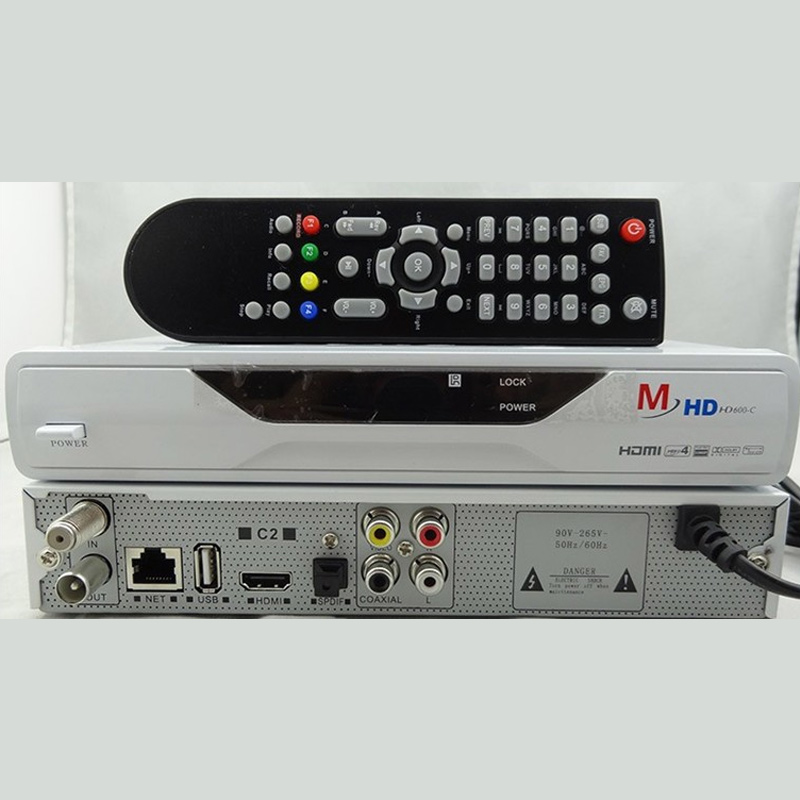
    NEW DELHI: Technology company specializing in digital media Corpus and Chinese digital products supplier Jiuzhou are to offer an STB solution bundled with Value Added Services (VAS) applications to enable operators monetize their digital investments and achieve faster ROI and profitability.

    This solution is available for MPEG-4 standard definition and high-definition version with ABV and NSTV conditional access systems.

    Thus, Indian cable TV Muti system operators can opt for the pre-integrated VAS Ready STB as it will increase their per subscriber valuation with revenue generation potential on each STB deployed.

    The STB comes with bundling of software for Adnet, Horoscope, Darshan, LifeStyle, Cooking, Box Office, TV Anywhere, and Real Estate.

    The pre-integrated VAS Ready STB from Jiuzhou offers ad revenue across STBs; additional benefits to user with VAS application; quick and easy development, rich UI and EPG; faster UI changes and a support system for STB software feature changes like barker channel, Mosaic, etc.

    Corpus Software Pvt. Ltd CEO Sachin Tummala said, “We are happy to be the trusted partner of Jiuzhou by delivering the right customer experience. This partnership is indeed proves fruitful in helping it expand the strategy for Indian MSOs both in terms of operations and delivering value to their subscribers.”

    Jiuzhou STB Business Unit GM Huangwei said, “Corpus is a forward-looking company capable of providing suitable and reliable solutions to blend with Jiuzhou products. As Jiuzhou localization plan goes deeper, we believe our mutually beneficial partnership with Corpus can be stepped to a higher level.”

  • Meet the brains behind Caavo, India-designed unique STB

    MUMBAI: Meet the brains who founded the unique Caavo, a device that delivers a unified TV experience where devices and services come together to offer ultimate control. Caavo TV box serves as a universal control system for cord cutters that have multiple streaming boxes. The device is equipped with voice recognition, and can find specific content requested across your TV sets and your cable box.

    Ashish Aggarwal is one of the co-founders of Caavo who is working on this successful project since June 2015. Before founding Caavo, Aggarwal, an MS and PhD (electrical engineering) from University of California, Santa Barbara, was employed by Violet3D between May 2009 and June 2015 in Bangalore, prior to which he worked with Harman International for over an year as the director of advanced technology in Los Angeles.

    The other co-founder is Vinod Gopinath who started working on Caavo in March 2015. Before Caavo happened, Gopinath, a post-graduate from XLRI Jamshedpur, was employed as Snap Networks COO since September 2012 in India before which he served on the board of directors of shufflr.tv (althea systems).

    Caavo delivers a unified TV experience. Rather than attempting to consolidate into one box, Caavo connects all of the pieces: pay TV, streaming, and gaming, then unites the experience. The power of Caavo lies in its ability to combine fragmented entertainment devices and the vast, yet ever changing content across all of them into something magical. Caavo’s HDMI output can be connected either directly to a TV or through an [AV Receiver]. Caavo supports Dolby and DTS pass thru from source to the AVR.

    By interconnecting pay TV, streaming, and gaming, Caavo brings together your devices, services and control. They work together seamlessly, making it easy to find and play all of TV.

    Also Read

    http://www.indiantelevision.com/dth/dth-services/dth-stbs-interoperability-to-be-ensured-with-meity-bis-help-170210

    http://www.indiantelevision.com/dth/dth-services/dish-tv-ali-tie-up-chipset-tech-vital-for-secure-vas-enriched-viewing-170211

    http://www.indiantelevision.com/iworld/telecom/mobitv-powers-jio-live-receives-us-21m-for-ip-based-video-sans-stb-170222

  • Wire and cable market in India to expand at 15.61 pc CAGR by ’20

    MUMBAI: Industry experts forecast the global electric wire and cable in India market to expand at a CAGR of 15.61 per cent during 2016-2020.

    Electric Wire and Cable in India Market Research Report covers the market landscape and its growth prospects over the coming years and discussion of the key vendors effective in this market.

    The report, by Market Reports World, contains a comprehensive market and vendor landscape in addition to a SWOT analysis of the key vendors. The study was conducted using an objective combination of primary and secondary information including inputs from key participants in the Electric Wire and Cable in India industry.

    Following companies were the key players covered in the market report: Finolex Cables, KEI Industries, Havells India, and Polycab Wires. Other prominent vendors in the India market are: Cable Corporation of India, Cords Cable Industries, Apar Industries Limited, KEC International, LS Cable India, Shilpi Cable Technologies, Universal Cable, and V-Guard Industries.

    One of latest trends in the India market is increase in sales of HVDC power cables. HVDC underground power cables have become viable options for long distance and high-voltage safe power transfer. HVDC power systems provide a viable option for long distance bulk power delivery. The European Commission has selected 43 major energy projects to build cross-border infrastructure to create an internal energy market and enhance the security of energy supply. For these projects, high loads of electricity would be required to be transferred from one country to another. HVDC cables are expected to become a viable option for such assignments in the future. India is likely to follow this trend during the forecast period. In addition, these HVDC light cables find preference over their AC counterparts, especially in submarine power transmission, due to their lightweight and dimensions.

    According to the report, one of the primary drivers in the market is growth in renewable power generation in India. A huge emphasis is given to the commercialisation of renewable energy worldwide, which will create an enormous demand for electric wire and cables. This is because most of these renewable energy resources are set up in places where proper T&D infrastructure is not available. Future expansion of existing networks worldwide is also expected. These expansion activities are fueled by emerging economies such as India, which are on the threshold of integrating regional grids to form a nationwide electric grid network to allow a seamless flow of electricity. All this calls for extensive T&D infrastructure development activities.

    Further, the report states that one major challenge in the market is compliance to regulations. Electrical wire and cable manufacturers in India are required to comply with various safety rules and regulations for the installation of power cable systems. These regulations are scripted and decided by regulatory bodies such as American National Standards Institute (ANSI), International Electrotechnical Commission (IEC), and Institute of Electrical and Electronics Engineers (IEEE). The rules vary depending on the circuit voltage, temperature rating, and environmental conditions.

  • Power transmission towers & cables market forecast to expand at 7 pc CAGR by ’23

    MUMBAI: The power transmission towers and cables market is expected to exceed more than US$ 14 billion by 2023 expanding at a CAGR of more than 7.0 per cent in the given forecast period 2015 and 2023, according to Market Research Engine’s new report which also covered Indian companies such as Kalpataru Power Transmission.

    Power transmission towers and cables are used to transmit and distribute or broadcast the electricity to all the end user from power production unit. The important supporting element of transmission line is transmission tower. It is a fundamental part of global power transmission infrastructure. These power transmission tower having variety of design, shape and located at an suitable height from land. These towers are made up of different materials includes steel, concrete, lattice and wood. For transmitting power to a particular location it uses transmission lines which having heavy conductor and various types of cable. The power transmission towers and cables has view increase growth in the current period, as growing requirement for electricity in all over world. It changes the old power transmission tower and cable infrastructure into latest version.

    The major driving factors of transmission towers and cables market are as follows:

    • Require for efficient transmission scheme
    • Rising demand for electricity across the world

    The restraints factors of transmission towers and cables market are as follows:

    • Complex development and approval procedures holdup projects

    The patient engagement solutions market is segmented on the lines of its type and geographical region. Under type segmentation it covers power transmission cable and power transmission towers. The transmission towers and cables market is geographic segmentation covers various regions such as North America, Europe, Asia Pacific, Latin America, Middle East and Africa. Each geography market is further segmented to provide market revenue for select countries such as the U.S., Canada, U.K. Germany, China, Japan, India, Brazil, and GCC countries.

    The report covers detailed competitive outlook including the market share and company profiles of the key participants operating in the global market. Key players profiled in the report include General Cable Technologies Corp., Southwire Co. LLC, Zhejiang Shengda Steel Tower Co. Ltd., KEC International Ltd., Kalpataru Power Transmission Ltd., Nexans S.A., Prysmian S.p.A., Shandong Dingchang Tower Co. Ltd., Nanjing Daji Iron Tower Manufacturing Co. Ltd., and Sumitomo Electric Industries Ltd.

  • 5G TV may rival cable, satellite & IPTV: Report

    5G TV may rival cable, satellite & IPTV: Report

    MUMBAI: TV and video delivery is likely to become a core capability of next generation 5G wireless services, concludes a new report from Strategy Analytics. Recent demonstrations have suggested that 5G will support 1Gbps data throughput rates. Combining 5G with other networking enhancements and technologies would allow operators to support TV-equivalent services which could eat into the $500Bn global TV and video market currently served by cable, satellite, IPTV and terrestrial broadcast service providers.

    Strategy Analytics, Inc. provides the competitive edge with advisory services, consulting and actionable market intelligence for emerging technology, mobile and wireless, digital consumer and automotive electronics companies.

    “Data rates get the headlines, but other network technologies will also make or break the business case for 5G TV services,” says Service Provider Analysis director Sue Rudd. “The efficiency of the end-to-end network will determine whether 5G TV is possible, but we have seen enough from early demonstrations by operators like Verizon, Deutsche Telekom, SK Telecom, AT&T and BT to suggest that it will arrive sooner or later in many parts of the world.”

    The report points out that the number of households and devices supported by a 5G TV service within any cell will make or break the 5G TV business case. The number of termination locations can be increased by a factor of three or more by deploying several network enhancements that deliver ‘trunking’ efficiency in the Radio Access Network (RAN). These include MIMO and beamforming for optimal spectrum use, virtualization of cell sites, dynamic throughput over backhaul networks and network slicing to guarantee data rates to the household.

    “Television is already being transformed by new digital services like Netflix and Amazon,” notes Michael Goodman, Director, TV and Media Strategies. “The arrival of 5G TV wireless services could herald another wave of TV disruption through the 2020s and beyond.”

    “The emergence of 5G TV would represent a further stage in the convergence of media and communications, and wireless and fixed services,” says David Mercer, VP and Principal Analyst. “It would also raise important questions relating to the roles of different ecosystem players and the future structure of the media value chain.”

    Also Read:

    Verizon completes purchase of XO Comm fiber business

    Regulations 2016: Of DeMon challenges, changing goalposts & rampant litigation

    Sports TV 2016: Digital explosion, player consolidation & confusion

    Tata Elxsi to showcase latest innovations & solutions in BroadcastAsia 2016

  • LG, Sony to stop making 3D TV sets

    LG, Sony to stop making 3D TV sets

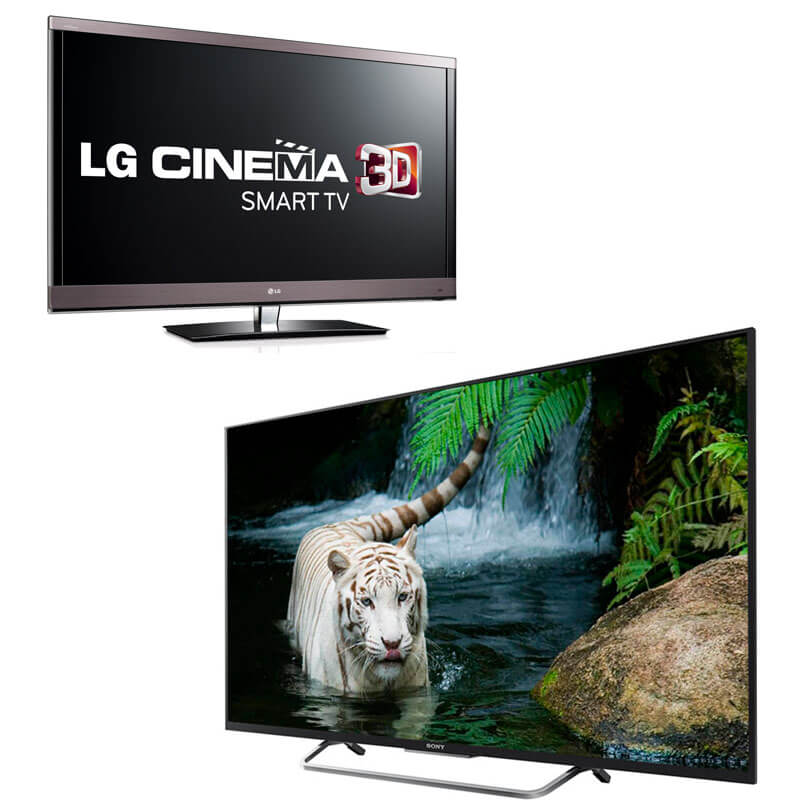
    MUMBAI: At one stage it was touted as the future of television. Thanks to the stupendous success that James Cameron’s 3D version of Avatar achieved at the box office with its spectacular 3D graphics and colors. A rash of manufacturers rushed in rolling out 3D TV sets which could be watched with either wearables or with a screen to make the images jump out at viewers. 3D channels by DirectTV, Sky, ESPN, Comcast, Sony and other players in different parts of the world were launched.

    But 2017 will be the year when 3D TV was given a quite burial or cremation if you so like. The world’s largest manufacturers of TVs – LG, Sony – informed CNET last week that they were going to stop integrating 3D capabilities into the TV sets they manufacture from 2017.

    The reason: the technology required viewers to sit stationary and view the programming from a specific angle. Which consumers did not buy into at all.

    The channels that were launched were shuttered quickly but 3D TV capabilities continued to be offered by manufacturers. Until this year, that is.

    “3D capability was never really universally embraced in the industry for home use, and it’s just not a key buying factor when selecting a new TV,” said LG’s director of new product development Tim Alessi, to CNET. “Purchase process research showed it’s not a top buying consideration, and anecdotal information indicated that actual usage was not high. We decided to drop 3D support for 2017.”

    Manufacturers will now be focusing on 4K, UHD, HDR and smart TV features going forward.

  • LG, Sony to stop making 3D TV sets

    LG, Sony to stop making 3D TV sets

    MUMBAI: At one stage it was touted as the future of television. Thanks to the stupendous success that James Cameron’s 3D version of Avatar achieved at the box office with its spectacular 3D graphics and colors. A rash of manufacturers rushed in rolling out 3D TV sets which could be watched with either wearables or with a screen to make the images jump out at viewers. 3D channels by DirectTV, Sky, ESPN, Comcast, Sony and other players in different parts of the world were launched.

    But 2017 will be the year when 3D TV was given a quite burial or cremation if you so like. The world’s largest manufacturers of TVs – LG, Sony – informed CNET last week that they were going to stop integrating 3D capabilities into the TV sets they manufacture from 2017.

    The reason: the technology required viewers to sit stationary and view the programming from a specific angle. Which consumers did not buy into at all.

    The channels that were launched were shuttered quickly but 3D TV capabilities continued to be offered by manufacturers. Until this year, that is.

    “3D capability was never really universally embraced in the industry for home use, and it’s just not a key buying factor when selecting a new TV,” said LG’s director of new product development Tim Alessi, to CNET. “Purchase process research showed it’s not a top buying consideration, and anecdotal information indicated that actual usage was not high. We decided to drop 3D support for 2017.”

    Manufacturers will now be focusing on 4K, UHD, HDR and smart TV features going forward.

  • India poised to emerge as lucrative market for UHD STBs

    India poised to emerge as lucrative market for UHD STBs

    MUMBAI: The growing inclination of people towards ultra-high definition video viewing can be attributed as a major reason for the 4K Set-Top Box’s (STB) market growth. According to a report by Grand View research, the global 4K STB market size is projected to reach US$7.18 billion by 2024.

    The demand for media-rich home entertainment services among consumers is increasing and is anticipated to fuel market growth. Improved standard of living owing to increased purchasing power is positively impacting the industry growth. The growth is further fostered by favorable government initiatives, large-scale digitization programs, and mandatory installation of set top boxes.

    Valued at at over US$ 50 million in 2015, the is projected to witness high growth over the next eight years, especially in countries such as Korea, Taiwan, and China.

    India is poised to emerge as a lucrative market for UHD STBs with the country expected to witness a CAGR substantially higher than the regional average. DTH operators like Tata Sky, Videocon, Airtel, etc have launched UHD STBs and are attempting to achieve a higher rural penetration with affordable regional packages.

    The increasing penetration of 3D and 4K TVs and escalating demand for large screen displays are fueling the demand for Ultra High-Definition (UHD) STBs. Smart features such as STB operability through voice commands given by Remote Control Unit (RCU) is garnering high potential.

    Internet Protocol Television (IPTV) 4K STBs accounted for over 20 per cent of the market share in 2015 and are expected to witness considerable growth over the forecast period. Increasing broadband penetration can be attributed as the major reason for the rise in the market share of IPTV 4K Set-top Box devices. The IPTV set top box product segment is projected to gain traction owing to benefits such as integration of TV, PC, home phone, and wireless devices offering a high quality of viewing experience to the end-users.

    Key industry participants include ZTE Corporation, SAGEMCOM, Arion Technology, Roku Inc., and Infomir LLC. Manufacturers are emphasizing on UHD STBs incorporated with interactive 4K content to gain a competitive edge in the industry.

    Technology giants such as Apple Inc. have managed to make their mark in this competitive industry. The Apple TV device aids the streaming of OTT content and other videos over the internet. The launch of advanced OTT devices such as Google Inc.’s Chromecast media streaming device and Amazon’s Fire TV STBs have opened up new avenues in the industry.

  • India poised to emerge as lucrative market for UHD STBs

    India poised to emerge as lucrative market for UHD STBs

    MUMBAI: The growing inclination of people towards ultra-high definition video viewing can be attributed as a major reason for the 4K Set-Top Box’s (STB) market growth. According to a report by Grand View research, the global 4K STB market size is projected to reach US$7.18 billion by 2024.

    The demand for media-rich home entertainment services among consumers is increasing and is anticipated to fuel market growth. Improved standard of living owing to increased purchasing power is positively impacting the industry growth. The growth is further fostered by favorable government initiatives, large-scale digitization programs, and mandatory installation of set top boxes.

    Valued at at over US$ 50 million in 2015, the is projected to witness high growth over the next eight years, especially in countries such as Korea, Taiwan, and China.

    India is poised to emerge as a lucrative market for UHD STBs with the country expected to witness a CAGR substantially higher than the regional average. DTH operators like Tata Sky, Videocon, Airtel, etc have launched UHD STBs and are attempting to achieve a higher rural penetration with affordable regional packages.

    The increasing penetration of 3D and 4K TVs and escalating demand for large screen displays are fueling the demand for Ultra High-Definition (UHD) STBs. Smart features such as STB operability through voice commands given by Remote Control Unit (RCU) is garnering high potential.

    Internet Protocol Television (IPTV) 4K STBs accounted for over 20 per cent of the market share in 2015 and are expected to witness considerable growth over the forecast period. Increasing broadband penetration can be attributed as the major reason for the rise in the market share of IPTV 4K Set-top Box devices. The IPTV set top box product segment is projected to gain traction owing to benefits such as integration of TV, PC, home phone, and wireless devices offering a high quality of viewing experience to the end-users.

    Key industry participants include ZTE Corporation, SAGEMCOM, Arion Technology, Roku Inc., and Infomir LLC. Manufacturers are emphasizing on UHD STBs incorporated with interactive 4K content to gain a competitive edge in the industry.

    Technology giants such as Apple Inc. have managed to make their mark in this competitive industry. The Apple TV device aids the streaming of OTT content and other videos over the internet. The launch of advanced OTT devices such as Google Inc.’s Chromecast media streaming device and Amazon’s Fire TV STBs have opened up new avenues in the industry.