Category: Hardware

  • Cable & b’band solutions co C & D Tech acquired by KPS Capital

    Cable & b’band solutions co C & D Tech acquired by KPS Capital

    MUMBAI: KPS Capital Partners has announced the acquisition of C & D Technologies, Inc. and its affiliates through a newly created subsidiary. The financial terms of the transaction were not disclosed. Paul, Weiss, Rifkind, Wharton and Garrison LLP acted as legal advisor to KPS and its affiliates.

    Blue Bell, Pennsylvania-based C & D manufactures, designs, supplies and services fully integrated standby power systems to regulate and control power flow and provide standby power. It is a leader in solutions and services for the utility, telecommunications, uninterruptible power supply, cable, broadband and renewable energy markets.

    C & D operates four manufacturing plants located in the United States, Mexico and China , with sales and distribution in Canada, Latin America, Europe, the Middle East and India. The Company has approximately 1,400 employees.

    KPS managing partner David Shapiro said: “We are proud to acquire C & D and look forward to working closely with CEO Armand Lauzon and the Company’s management team to aggressively develop the C & D platform both organically and through strategic acquisitions. Is a leading global provider of energy storage solutions and services, with a long history of innovation, quality and service to its customers. As a result of the acquisition of KPS, C & D is now well capitalized, with a solid and Access to strategic, operational and financial resources of KPS “.

    C & D CEO Armand Lauzon said: “We are very excited about this partnership with KPS for the next stage of growth and evolution of C & D. C & D strives to offer its customers quality, technology and services of unparalleled quality. Focus and commitment, as evidenced by its 26 years of successful investments in global manufacturing and industry businesses. KPS’s focus on manufacturing excellence and its commitment to investment in research and development, accompanied by significant capital resources, will accelerate the Numerous C & D growth initiatives.”

  • APAC may lead US$ 6-bn b’cast equipment market growth by ’23

    APAC may lead US$ 6-bn b’cast equipment market growth by ’23

    MUMBAI: The global broadcast equipment market is expected to expand from USD 4.38 billion in 2017 to USD 5.82 billion by 2023, at a CAGR of 4.87 per cent between 2017 and 2023.

    Although North America is expected to hold the largest market share, the broadcast equipment market in APAC is likely to witness the highest growth rate between 2017 and 2023. The major players in the broadcast equipment market include Cisco Systems, Inc. (US), Ericsson AB (Sweden), Harmonic Inc. (US), Evertz Microsystems, Ltd. (Canada), and Grass Valley (Canada).

    The CAGR projection has been done by MarketsandMarkets, which provides quantified B2B research on 30,000 high-growth niche opportunities/threats with the help of 850 fulltime analysts and SMEs, in recently published report titled: “Broadcast Equipment Market — by application, technology, products and geography – to 2023.”

    The rising demand for ultra high definition (UHD) content production and transmission, radical shift of products from hardware oriented to software and open architecture based, and increasing D2C offerings through OTT services and multi-channel networks in developed economies are some of the factors driving the growth of the broadcast equipment market.

    Increasing use of video servers to store and play out multiple video streams to drive the growth of broadcast equipment market 

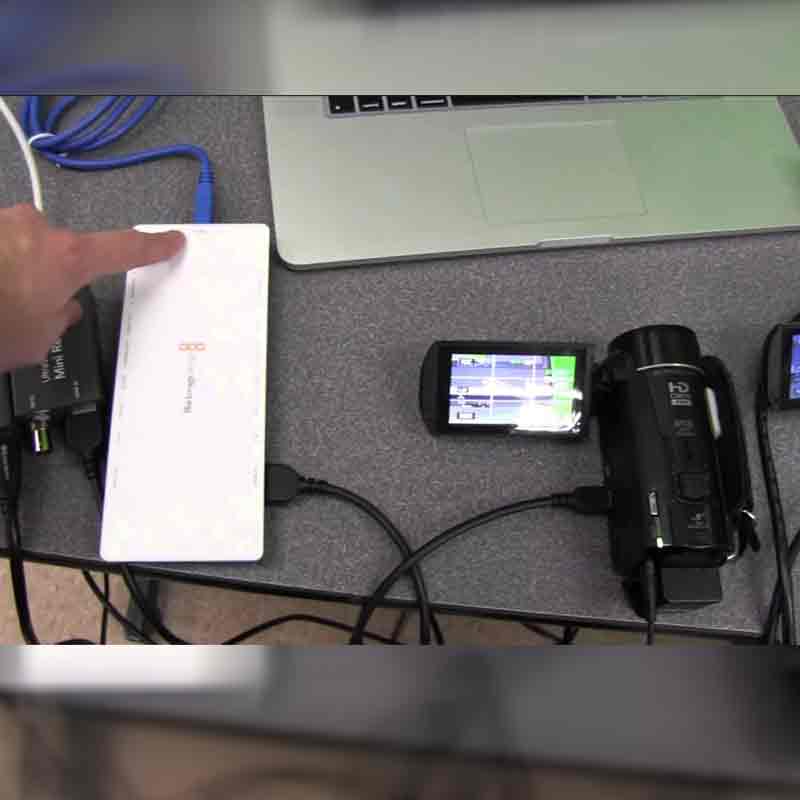
    The broadcast equipment market, on the basis of product, has been segmented into dish antennas, amplifiers, switchers, encoders, video servers, transmitters and repeaters, modulators, and others.

    The market for video servers is likely to grow at the highest rate between 2017 and 2023. The increasing number of broadcasters offering direct-to-consumer (D2C) propositions through OTT services, along with traditional distribution routes, is fueling the growth of the market for video servers. In broadcasting, servers act as hosts and are used to deliver various contents or videos. These servers are used to store and play out multiple video streams without degrading the video signals. 

    Broadcast video servers often store hundreds of hours of compressed audio and video (in different codecs), play out multiple and synchronized simultaneous streams of videos, and also ensure quality interfaces such as SDI for digital video and XLR for balanced analogue audio, and AES/EBU digital audio.

    Market for digital broadcasting expected to grow at a high rate between 2017 and 2023 

    The market for digital broadcasting is expected to grow at a high rate between 2017 and 2023. Digital broadcasting offers several advantages over analogue broadcasting, including choice of programming and services such as additional channels, HD offerings, radio data services, and pay programs. It also allows consumers to avail better quality content with considerably lesser signal interference, without compromising on picture quality.

    North America held the largest share of the broadcast equipment market in 2016. The increasing number of cable and satellite television channels and the rising penetration of the Internet have provided broadcasters with many choices for their own creative and political expression. The growing cultural diversity throughout North America has also led to the increase in the number of broadcast channels, which, in turn, has boosted the demand for broadcast equipment in this region. Europe is also one of the potential markets for broadcast equipment. The broadcast equipment market in APAC is expected to grow at the highest rate between 2017 and 2023.

    MarketsandMarkets research claims to impact 70-80 per cent of worldwide companies’ revenues. It is currently servicing 5000 customers including 80 per cent of global Fortune 1000 companies. 

    Also Read:

    What’s driving the APAC broadcasting equipment market’s growth

    DD modernisation cost over 3 years was Rs 383 crore

  • Japan’s KDDI adopts TiVo’s remote-recording service

    Japan’s KDDI adopts TiVo’s remote-recording service

    MUMBAI: TiVo Corporation, a leader in entertainment technology and audience insights, has announced that KDDI Corporation, a leading Japanese telecommunications provider, has selected TiVo’s remote recording service for G-GuideÒ and will also implement new voice control features to deliver one of the most advanced entertainment discovery experiences in Japan.

    KDDI has deployed TiVo’s latest G-Guide HTML on its Cable Plus Set-Top Boxes (STB) to provide customers with the ability to find and discover programming. This capability is an enhancement to KDDI’s existing deployment of the G-Guide HTML for IPTV STBs last year, enabling KDDI to deliver an expanded range of solutions to cable TV service providers.

    KDDI has also adopted TiVo’s remote recording service and mobile application, G-Guide xD, allowing subscribers to record programs at any time right from their smart phones, enabling greater convenience and accessibility to the latest entertainment. This feature is available to service providers for the first time in Japan.

    With the new voice control features, subscribers can find content quickly and change between channels by giving verbal commands to the cable STB remote control, thus connecting to their favorite entertainment with ease. This is the first deployment of the voice control feature for G-Guide HTML in Japan.

    “We are very pleased to be working with KDDI to introduce these advanced functions to the Japanese market,” said TiVo SVP & GM – user experience Michael Hawkey. “Japanese consumers are often ahead of the curve when it comes to technology adoption so this latest development is a testament to KDDI’s dedication to providing its customers with new functionality to enhance their entertainment experience.”

    ALSO READ :

    ThinkAnalytics focuses on India expansion, hires former TiVo & Zee exec Samir Narsiker

    Turner selects TiVo to provide enhanced electronic programme services

    TiVo renews IP licence with Foxtel, deliver ultimate experience in Australia

    Sky picks TiVo to search entertainment across linear TV & VoD using voice


  • India uses low-cost Net-enabled devices, Datawind leads: CMR

    India uses low-cost Net-enabled devices, Datawind leads: CMR

    NEW DELHI: Low rate providers of Internet and tablets DataWind Inc. has claimed the top slot with 34.2 per cent market share in 1Q’ CY 2017, followed by IBall and Samsung at 16.3 per cent and 14.7 per cent, respectively.

    According to the latest CMR report, DataWind also holds a remarkable 70% market share in the sub-Rs 5,000 tablet segment (approximately $75), which is the largest and fastest is growing segment of the market constituting 50% of the overall market. The CMR study also shows that DataWind is the only company in the top three sellers which has increased its market share.

    Datawind president and CEO Suneet Singh Tuli said, “We continue to see tremendous demand for our low cost Internet-enabled tablets and smartphones from consumers in India. I am truly honoured and humbled with the overwhelming response from our customers. Devices bundled with free internet browsing; local manufacturing, patented technology and our strong & committed team were the key factors which worked for us.”

    Tuli added ‘DataWind firmly believes that digital and internet divide can be addressed through technology intervention, at an affordable price point. We are focused on driving the cost downward to a level where access to technology becomes ‘universally affordable’ and democratization of technology finds its true meaning.”

    DataWind’s products break the affordability barrier and deliver internet access across traditional mobile networks as DataWind executes a vision to empower the next three billion internet users. The results reinforce the fact that DataWind is the only tablet provider in India focused on providing affordable tablets and Internet access. All DataWind devices come bundled with one year of free unlimited Internet access, and feature the most affordable ongoing plans available on the market due to the company’s unique, patented technology that reduces up to 97% the amount of data needed for web browsing.

  • GST on set-top boxes & optic fibre down to 18%

    GST on set-top boxes & optic fibre down to 18%

    NEW DELHI: The Goods and Services Tax (GST) for set top boxes has been reduced to 18 per cent from the previously announced 28 per cent.

    Similarly, the GST Council also reduced the tax on coaxial cables and optical fibre to 18 per cent from the hitherto 28 per cent in both cases.

    Finance Minister Arun Jaitley said: “After considering recommendations of fitment committee, rates are being reduced in the case of 66 items.” 

    Jaitley is also the chairman of the GST Council. He said that there were 133 representations and these were considered.

    Other items relating to the electronics and the media and entertainment industry in which GST was reduced are: 

    public://gst.jpg

  • Shift towards Lazor/LED, projector market expanding at 22% CAGR

    Shift towards Lazor/LED, projector market expanding at 22% CAGR

    MUMBAI: Projectors are one of the fastest growing product lines in India due to the booming education market. Changing lifestyles, decrease in price and rising spending on electronics has led to an upsurge in demand for high-end products including projectors.

    Various emerging segments such as Education and Audio Video System Integration in commercial segment are booming with demand for projectors. India’s education sector is moving towards the digital age. Educational system integrators are thriving in India and helping to cater to the growing requirement of audio-visual equipment. Further, the market is expected to grow at a faster pace due to the revival of delayed projects affected by the Indian general election of 2014.

    According to “India Projector Market Outlook, 2019”, India’s projector market was growing with a CAGR of 21.74% by volume over past four years. IT, corporate, media, entertainment, rental, BPO and education sectors were the major industries driving the sales of projectors.

    The education sector is reportedly the biggest segment of digital projector sales in 2014 followed by mid-size and small business segments. Beyond this, development in the home entertainment and gaming segment is also being scaled up with the arrival of 3D, HD and Wi-Fi support features within current projector models. These days the projection technology is more sought after in homes with spectacular increase in availability of full HD and 3D content in form and availability by HD DTH and Blu Ray discs.

    The technology used in projectors can generally be broken down into two types: DLP and LCD. Both the technologies LCD and DLP have an almost equal market share in 2014 with DLP technology slightly ahead. However, in future the trend is expected to reverse with LCD technology to dominate the market heavily. Moreover, the market will continue its shift towards new technologies like Lazor Interactive/LED Interactive Android due to the low maintenance cost and superior technology. High-Definition (HD) projectors are replacing the Standard-Definition (SD) projectors due to increasing popularity among consumers.

    Out of the total shipment, almost one-third market is captured by 1024×768 display resolutions, followed by 800×800 resolutions. Higher resolution projectors are less likely to require signal compression and its associated loss in quality. Hence, High-Definition will be the most popular display resolution in future with highest market share by 2019.

    In this crowded market, BenQ is the No. 1 brand in India followed by Epson, InFocus, Hitachi, Panasonic and many others. “Apart from all these flagship players, Canon which has recently entered the category is expected to emerge as a big player in future,” said a research analyst.

    The company, which has launched nine LV and XEED series projectors, is targeting Rs. 100 Crore revenue by 2017. It has tied up with Ingram Micro as the national distributor for its mass products and will partner with AV integrated solution providers for high-end projectors. Moreover, the company will also be using its own retail stores ‘Canon Image Square’ to sell its projectors. Aggressive marketing and distribution strategy coupled with a well-know brand image will push the sales of these projectors.

    The metro markets dominate the consumption but new demand is expected from tier II and tier III cities with rapid urbanization of these towns. The vendors are targeting more than 30 Indian towns beyond the top eight metropolitan centers for projectors.

  • CastleMedia sets up Spyke for CPE and STBs repair

    CastleMedia sets up Spyke for CPE and STBs repair

    MUMBAI: Here’s some good news for the DTH Operators, MSOs and LCOs who used to get their STBs repaired from the neighborhood electrical shop at the hands of untrained, unqualified electricians.

    Thanks to the government’s cable TV digitisation push, the population of STBs or consumer premise equipment swelled. With close to 174 million STBs or consumer premise equipment (CPE)  of various types – digital, HD, Ultra HD, and a guesstimated failure rate of around five to eight  per cent, Mumbai headquartered Spyke Technologies (SPYKE) has stepped into the STB servicing and repair game for  distribution platforms.

    Backing the new venture are broadcast technology vets Vynsley Fernandes and CEO Ru Ediriwira of CastleMedia which has worked with leading broadcast, networking & communications product manufacturers across their product lifecycle – right from R&D and field testing to improving “user experience.”

    The company has set up service centers in Mumbai and New Delhi, and a countrywide faulty STB collection center network. The service centres are manned with about 30 tech engineers in Mumbai and 35 in New Delhi.  

    Presuming the STB failure rate at a conservative five per cent of the digital TV ecosystem in India (although actual ground information indicates failures at around 8-10 per cent), SpykeTech aims to capture between 12 per cent to 15 per cent  of the market in the next four to five years. And, helping it get there will be the offices in Bengaluru, Hyderabad, Madras, Ahmedabad and Kolkata which will come up in over the next two to three years.

    The company has invested more than Rs 35 million in Spyke on  its 2500 sq foot Mumbai office located in Vile Parle and and its Delhi office being hosted over 7000 sq feet.  Spyke will be in a position  to fix at least 18,000 STBs every month in Mumbai, while the fixing  figure for Delhi stands at 25,000 a month.

    The company is being positioned as India’s first technology lifecycle management platform for CPE offering a single window and end-to-end service model which includes repairing of STBs, broadband and data communication equipment, home media gateways, networking equipment and VSAT modules.

    Says Spyke Technologies director Sunil Ranadey:  “There exists a demand-supply gap in the country when it comes to quality servicing of not only STBs  but all CPEs. SpykeTech aims to bridge this gap. Our cloud-based proprietary software SPYKENET, is what we believe will separate the “men from the boys” in terms of CPE repairs in the country.”

    “The proprietary software will empower the DTH operators/MSOs/LCOs not only with analytical tools to analyse the faults, but will provide complete transparency with logistic movement and accounting support for their CPs, something lacking in the present system,” Ranadey added.

    Spyke is in its early setup stage but has already begun to have conversations with different distribution platforms. The sticker price for repairing an STB is being talked about as being between Rs 200 and  Rs 450 which is quite an attractive option for all TV viewers.  What’s unique about Spyke is its SpykeTech solutions which uses a powerful and collaborative software platform to support clients and customers across India.

    “SpykeNet will be the difference between us and other repairers. The software is going to be the strong analytical tool which is applicable to all cable and DTH networks,” elaborates Ranadey.

    Adds CastleMedia executive director Vynsley Fernandes: “CastleMedia has been very successful in identifying pain-points in the pay TV industry and developing solutions to address the problem. One such example was the development of a suite of mobile and on-line applications for cable TV customers to go prepaid – this was truly an innovative and pathbreaking initiative. Similarly, we see CPE management – irrespective of whether it’s STBs or other devices; continuing to impact the company bottom-lines – anywhere up to 30 per cent.  Our significant investment in setting up SpykeTech is precisely based on addressing this pan-India issue.”

    Also Read :

    Airtel launches hybrid DTH STB, to have 500+ channels, Netflix & YouTube preloaded

    DEN to launch 4k, ‘open’ STBs, give a leg-up to HD, b’band services

    Dish TV & ALi tie up – chipset tech vital for secure VAS, enriched viewing

    9 Indian companies to manufacture STBs; iCAS cost less than $0.5: Govt

  • A-Pac the biggest market for SOIs, to flourish by 2024

    MUMBAI: Silicon on Insulator (SOI) caters to the demand of the electronic industry, and thus the market will increase and expand with the varied demands in the electronics domain. The electronic boom in the industry has caused a surge in consumer electronics such as digital cameras, television, gaming consoles, kitchen appliances etc, according to Persistence Market Research report. This surge will help sustain the market for SOI for the coming years.

    The global market for SOI is segmented geographically into Asia Pacific, North America, Europe and rest of the world. Asia Pacific region is said be the biggest market for SOI followed by Americas and Europe. The growing electronic market in countries such as China, India and South Korea will project a strong demand for SOI for the forecasted years. In Americas and Europe the R&D investment and government funding in SOI research projects for aerospace and military are will boost the SOI market. North America and Western Europe with strong programs of clean energy and increasing technological investment in Renewable energy will also participate in the market dynamics of SOI.

    The new age in semiconductor era has propelled our technology to a newer heights. Semiconductor are the fundamental blocks of any electronic device ranging from micron sensors to large machines.

    The new age calls for an efficient and faster system that will reduce the dependency over complex and slow processing systems. The traditional silicon wafers have high power consumption and lower performance parameters owing to functional difficulties and thus create the need for Silicon on Insulator (SOI). SOI composition of an intermediate layer of insulating silicon dioxide between a thin and a thick layer of silicon allows it be used according to variable performance and function. SOI provides the best substitute for conventional substrates as it consumes low power and the output is high and efficiently fast. The difference in thickness of the silicon layers differs by application and intended usage.

    The usage SOI attributes to higher performance in electronic devices and thus SOI has its perfect application in hand held computing and communication devices, also imparting a longer battery life to them. The usage of SOI has led to an exponential broadening of communication bandwidth and therefore is being employed in satellite communication and direct-link entertainment. One of the significant markets for SOI is aerospace and military.

    SOI finds its extensive application in sensors for satellites because it helps in the computation of accurate readings and has sturdy operation capabilities. With the development Photo Voltaic technology and an increasing investment by countries to reduce carbon footprint will further increase the SOI market. There is still a scope of advancement in terms of radiation resistance and thermal capacity for SOI. The volatility in the prices of silicon could hinder the growth of the SOI market.

    Though the market is largely segmented some of the key players identified in the Silicon on Insulator market are IBM Corporation, Soitec SA, ARM Holdings PLC., ARM Holdings PLC., Shin-Etsu Chemical Co., Ltd, Taiwan Semiconductor Manufacturing Company Limited, United Microelectronics Corporation.

  • Convergence: Sinclair Broadcast co ties up with India’s Saankhya

    MUMBAI: ONE Media 3.0, a wholly-owned subsidiary of Sinclair Broadcast Group, Inc. has announced an agreement with Saankhya Labs, a leader in the development of Cognitive Software Defined Radio (SDR) chips, to accelerate the development of ATSC 3.0 (the Next Generation standard) chipsets.

    Under the agreement, Saankhya Labs will begin the development of a global standards supporting ATSC 3.0 chipset that will enable various type of consumer devices to receive the Next Generation television standard. Those devices will include televisions, cell phones, tablets, dongles, gateways and automotive units.

    The intent is to accelerate and stimulate the activities associated with the incubation of the ATSC 3.0 chipset development as a pre-cursor to a full-fledged development program. During the project incubation stage, key team members of Saankhya Labs will engage in chip architecture definition and algorithm identification in collaboration with Sinclair and ONE Media 3.0 technical leads.

    The complete ATSC 3.0 standard is on track for final approval by the standard-setting body in the coming months and governmental approval for use in the U.S. is expected by year-end. This new standard promises to revolutionize the broadcast industry by permitting mobility, convergence with broadband Internet platforms, addressability, conditional access, increased capacity and dramatic quality improvements. Early development of the chipsets anticipating final approval should accelerate adoption of the dramatic new capabilities enabled by the standard as broadcasters begin deployment.

    “We are pleased to begin working with Saankhya Labs to fast-track development of a global ATSC 3.0 device ecosystem that is focused on mobility, and provides support for all global broadcast transmission standards,” said Sinclair’s Vice President for Advanced Technology Mark Aitken.

    “ONE Media 3.0 and Sinclair, as digital innovators and the largest U.S. broadcaster, are committed to “mobile first” services, advanced data delivery as well as emergency and educational connectivity. Saankhya Labs’ software defined technology will allow us to exploit the underlying flexibility of the Next Generation standard in evolving beyond ‘3.0’ in support of the unique needs of large markets like the United States and India.”

    “We are excited to partner with One Media 3.0 and Sinclair to develop an ATSC 3.0 chipset that is set to revolutionize the mobility broadcast and data delivery services industry. Based on ‘Pruthvi,’ Saankhya’s award winning Software Defined Radio (SDR) platform, the next generation ATSC 3.0 chipset will enable true convergence of networks and devices. The new-age chipset bears testimony to Sinclair and Saankhya’s commitment to innovate and Make in India,” said Saankhya Labs CEO Parag Naik.

    Sinclair is one of the largest and most diversified television broadcasting companies in the country. Including pending transactions, the Company owns, operates and/or provides services to 173 television stations in 81 markets, broadcasting 513 channels and having affiliations with all the major networks.

    ONE Media 3.0, LLC, a wholly-owned subsidiary of Sinclair, was formed for the purpose of developing business opportunities, products and services associated with the ATSC 3.0 “Next Generation” broadcast transmission standard and TV platform. Saankhya Labs, founded in 2007, is a fabless semiconductor company specializing in the development of Cognitive Software Defined Radio (SDR) communications processors and modules supporting a broad range of emerging data communication standards.

  • Siemens & Sumitomo win US$ 520m Pugalur-Trichur HVDC and cable VSC order

    MUMBAI: A consortium between Siemens and Sumitomo Electric Industries Ltd. has been awarded an HVDC order from Indian transmission operator Power Grid Corporation of India to supply a high-voltage direct current (HVDC) transmission system.

    The about 200-km long HVDC connection will be India’s first DC link featuring voltage-sourced converter (VSC) technology. VSC is the latest innovation in HVDC technology offering a very stable and highly flexible reactive power control independent of active power control and additional features to support the AC systems like blackstart capability. Furthermore, this solution is ideal to be combined with XLPE cable technology. Siemens will be supplying two converter stations with two parallel converters, each rated 1000 Megawatts (MW), featuring its VSC HVDC technology while Sumitomo Electric will be responsible for XLPE HVDC cable system in the DC circuit.

    The combined order volume for Siemens and Sumitomo Electric is approximately $520 million. The grid connection is scheduled to go into operation in the first half of 2020.

    “We are proud to announce that this project will be the first HVDC link in India featuring VSC technology”, states Siemens Energy Management CEO Ralf Christian. “Latest innovations will help achieving ambitious grid programs, like the “24 x 7 Power for all” initiative of India’s Ministry of Power, to meet the growing power demand.”

    The Pugalur-Trichur ±320 kilovolt (kV) HVDC system will connect Pugalur in the southern state of Tamil Nadu to Trichur in Kerala State in South-West India. The Trichur converter station will be connected via underground XLPE HVDC cable to a transition station also being built by Siemens. Sumitomo Electric’s DC-XLPE cable has unique characteristics among industries to maximize utilization of HVDC system, enabling normal operation temperature at 90 degree, which is suitable for the hybrid system with bulk power overhead line. Sumitomo Electric will supply 128 km XLPE HVDC cable system comprising four cables for a route of 32 km each. From the converter station at Pugalur power will be transmitted via an overhead line to the transition station. The Siemens scope of supply for the turnkey project encompasses design, engineering, supply, installation as well as commissioning and major equipment supplies of the complete HVDC stations, including converter valves, transformers, cooling systems and control and protection technology.

    Siemens and Sumitomo Electric enter into Cooperation Agreement: Sumitomo Electric of Japan and Siemens have entered into a cooperation agreement to collaborate in the field of HVDC transmission for selected projects to combine the innovative technologies of both parties. The partnership of Siemens with its recent achievements in DC converter technology and Sumitomo Electric, a pioneer in developing HVDC cables with cross linked polyethylene insulation, aims to provide optimized customer tailored solutions to enhance performance capabilities in the field of HVDC transmission systems.

    “With this project, Siemens will increase its local presence by expanding its engineering and manufacturing capability for HVDC technology in India,” states Siemens Energy Management – Transmission Solutions CEO Mirko Düsel. “Furthermore we are glad to partner with Sumitomo Electric to contribute to the continuous support of stable energy supply and economic development
    in India.”

    “We are pleased to announce this innovative partnership which accommodates the needs of the growing HVDC transmission system market, and we believe this cooperation between technology leaders, Siemens and Sumitomo Electric, will strengthen both company’s capability to provide state-of-the-art HVDC solutions to the customers worldwide,” states Sumitomo Electric managing executive officer Masaki Shirayama.

    The new transmission link will support major initiatives of India’s Ministry of Power to achieve ‘24 x7 Power for all’ in the country. By bringing in new technology Siemens and Sumitomo Electric will help in achieving this ambitious grid program to meet India’s growing power demand.