Category: Hardware

  • Guest Column: Combatting sophisticated streaming piracy, from the dark web to Lazada

    Guest Column: Combatting sophisticated streaming piracy, from the dark web to Lazada

    GURUGRAM: Synamedia’s piracy investigators have verified a disturbing trend in India and South East Asia. Research both on the dark web and open internet by the company’s anti-piracy experts shows that illegal streaming of over-the-top (OTT) services using stolen subscriber credentials is now well established, with both local and international OTT video services being targeted.  And the growing popularity of premium streaming services, such as those of live sports, makes this an increasingly lucrative business for pirates.

    Fortunately, there are a number of ways that legitimate OTT providers can combat content theft without impacting genuine subscribers.

    Hacking tools are rife on the dark web

    Synamedia’s expert team found that pirates are using the dark web and Telegram to exchange and sell software that allow OTT accounts to be hacked, as well as selling subscribers’ stolen credentials to each other. Both generic credential cracking tools and configuration files tailored to specific OTT platform offerings are available.

    Investigation also revealed that dealers are selling thousands of illegally obtained credentials for the most popular Indian OTT platforms in bulk, on closed e-commerce sites popular with pirates.

    Pirates can also buy leaked credentials that have been taken from well-publicised, large-scale account breaches such as those suffered by major airlines, content providers and hotel chains. The re-use of these credentials for OTT piracy relies on poor security awareness, where people use the same username and password across multiple accounts, even after data breaches have been made public.

    Validated login credentials may then be sold in bulk to other dealers or offered free of charge to pirates to establish credibility. For example, we found that thousands of one South East Asian OTT platform’s credentials were being sold in bulk for approximately $1 per credential.

    Pirates are posing as legitimate businesses

    Pirates are increasingly posing as legitimate businesses as their levels of sophistication increase. Blatant examples of pirates selling illegal subscriptions to consumers on social media platforms such as Facebook, Telegram, and WhatsApp are rife. Pirates are also posing as legitimate platforms on popular Asian e-commerce sites such as Lazada, Shopee and my24hrshop.com, where some even use the real OTT providers’ logos and branding to confuse consumers.  

    These pirates are typically charging consumers between a half to one fifth of legitimate subscription fees, with premium services that include live sports packages and new movies attracting the highest rates.

    They are also offering a wide range of payment options including bank transfer, credit card and online payment. Dealers on some platforms accept PayPal and crypto-currency payments to hide their identities.

    Some credentials are being used to feed long-established illegal re-distribution from piracy networks. In this case, the pirate operator typically takes out legitimate OTT subscriptions, and takes advantage of credentials sharing to repackage and offer this content for sale as an illicit subscription service.

    Combatting streaming piracy

    These illegal streaming services compete head-on with legitimate OTT services, stealing revenues and devaluing content. There is an urgent need to disrupt these pirates’ ecosystems with a more forensic, inference-based approach designed to help drive up legitimate revenues and reduce consumers’ reliance on illegal streams.

    Legitimate providers don’t just have to contend with the lower subscription fees charged by pirate services. Pirate operators also often offer a greater choice of channels, more flexible packaging options, and contract free subscriptions – things that many consumers find more convenient, even if morally they know it is wrong.

    This point was discussed in a research report on global sports piracy recently published by Synamedia. The report concluded that an important element in the fight-back is for legitimate streaming providers to adopt more flexible solutions and services that offer sports fans more appealing themes, mixes of access and payment models. This would make it easier for sports fans to choose legitimate services over pirate streams.

    Adopting technologies and approaches that can demonstrably move the anti-piracy needle are vital. For example, Synamedia’s new intelligence-first security model makes it possible to measure the efficacy and Return on Investment of anti-piracy initiatives. Using these advanced technologies, solutions and services that draw on a blend of human and digital intelligence, a detailed picture can be built of the pirate ecosystem, crack the criminal mind-set and – working closely with law enforcement agencies – ultimately shut down pirates’ businesses. This hard data can help Synamedia customers not only protect revenues, but also negotiate fair content licence terms such as sports rights and ensure compliance.

    With streaming piracy an increasingly existential threat to the industry, there is no time to lose.

    The writer is head of sales – India at Synamedia. The opinions expressed here are his own and Indiantelevision.com may not subscribe to them.

  • DVB to showcase future of media delivery at DEMOS 2020

    DVB to showcase future of media delivery at DEMOS 2020

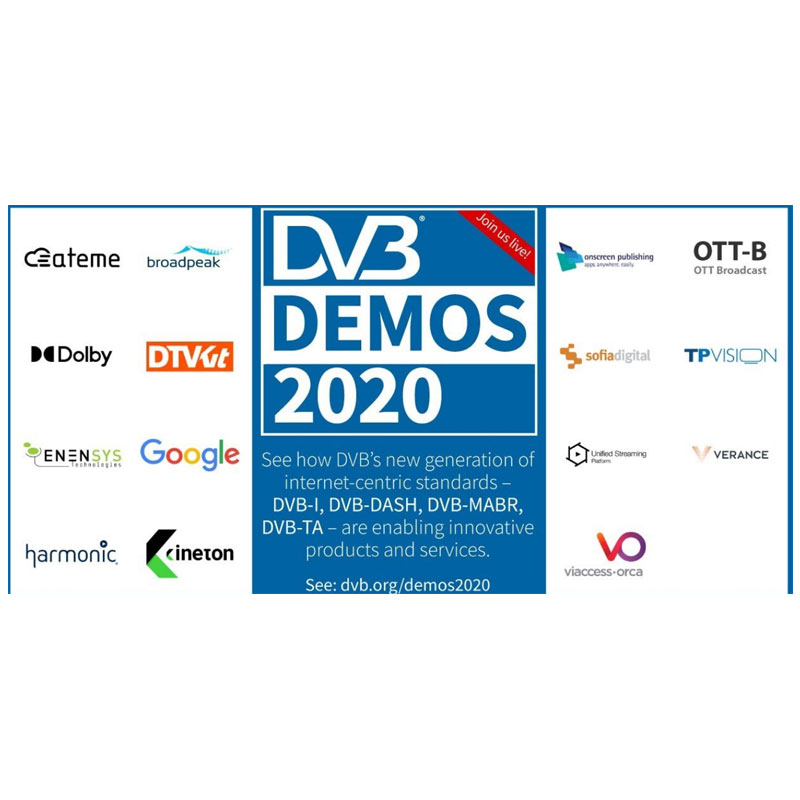
    GENEVA: DVB, a consortium of the world’s leading media and technology companies working together to design open technical specifications for digital media delivery, will host DVB DEMOS 2020, an all-day online event on Thursday, 26 November. The event will bring the industry together to witness the future of media delivery. Fifteen different exhibitors will participate in DEMOS 2020, showcasing products and services based on the latest generation of internet-centric specifications from DVB, comprising DVB-I (including DVB-DASH), DVB-MABR and DVB-TA.

    "In recent years, DVB's focus has shifted to addressing the challenge of fragmentation in IP-based media delivery technologies," said Emily Dubs, head of technology at DVB. "DVB DEMOS is the first time we'll bring together such a broad cross-section of vendors, all using our next-gen specifications. The aim is to showcase how hybrid and broadband delivery can benefit from the reliability and robustness that defined the success of digital television while opening up new possibilities for innovative services."

    Technology demos followed by one-on-one meetings with vendors

    DVB DEMOS will kick off with a live stream featuring a series of short technology demonstrations, viewable on the DVB DEMOS 2020 web page and on DVB's YouTube channel. Attendees also have the opportunity to book appointments for more in-depth demos and discussions in private online meeting rooms. Exhibitors will include ATEME, Broadpeak, Dolby, DTVKit, ENENSYS Technologies, Google, Harmonic, Kineton, OnScreen Publishing, OTT Broadcast, Sofia Digital, TPV Technology, Unified Streaming, Verance and Viaccess-Orca.

    DVB DEMOS will show how DVB-I serves as a common media layer across a variety of delivery channels, providing end users with a seamless experience. Another key highlight will be how DVB-DASH and DVB-MABR enable scalable low-latency streaming on par with broadcast services. The first solutions based on DVB-TA will also be exhibited, showing how targeted advertising opens the door to new revenue streams for broadcasters. Additionally, attendees will get a first-hand look at how broadcast services can be easily integrated within IP-based platforms.

    Many of the demos will bring into play collaboration between the exhibitors, illustrating the interoperability that is a cornerstone of DVB's approach. Different combinations of streams, service lists, clients and players will be highlighted to show how a standards-based ecosystem increases the possibilities for innovation.

    DVB DEMOS 2020 is free to attend. Registration is required to join the afternoon session and to book appointments with exhibitors.

    DVB DEMOS will start at 10:00 CET on 26 November. To see the full DVB DEMOS schedule, visit https://dvb.org/demos2020. For more information about DVB, visit www.dvb.org.

  • Need tougher penalties to deliver knockout blow to piracy: Synamedia EVP

    Need tougher penalties to deliver knockout blow to piracy: Synamedia EVP

    For over 30 years, Synamedia has helped service and content providers around the world to deliver, protect and monetise video content. More than 200 top satellite DTH, cable, telco and OTT operators, broadcasters and media companies arm themselves with Synamedia's secure and advanced solutions. The video software provider company recently published a report that sets out an evidence-based approach to fight sports piracy. Indiantelevision.com got in touch with Sue Couto, executive vice president and general manager of Asia Pacific and Latin America at Synamedia, for insights on the changing landscape of video content consumption, as well as the company’s long-waged war against piracy, and what needs to be done to deliver a knockout blow to this menace.

    How would you summarise what has been happening in the pay-TV market in India over the last few months?

    Unsurprisingly, pay-TV and OTT viewing increased considerably after the Covid2019 lockdown at the end of March, with OTT taking the lion’s share but DTH services also performing well.  

    According to research from BARC, weekly viewing minutes increased by 43 per cent across all services during lockdown. There was a strong uptick in the number of OTT service activations for players like Disney+Hotstar, SonyLIV and Zee5, with viewers bingeing on new releases and existing on-demand content. Meanwhile on DTH platforms, users consumed reruns of top soap operas that aired to fill the gaps left in linear schedules by the lack of new releases and live sport.

    Fast forward and the pent-up demand for live sports boiled over as the postponed IPL got under way in Dubai. The first match was watched by 400 million viewers across broadcast and OTT channels, buoyed by a flurry of new subscriptions to sports channels.

    On a less positive note, streaming pirates had a good lockdown reaching India citizens and the Indian diaspora. With no live sports to bring in money, many turned to illegally streaming Hollywood and Bollywood movies showing on OTT platforms due to the movie theatres being closed. Mulan was pirated as soon as it was released, according to our anti-piracy intelligence team.

    The success of the streaming pirates over the last six months underlines the urgent need for the industry, technology vendors and governments to work together to combat this threat.

    Synamedia is the leading provider of video solutions in India to the pay-TV industry. Can you give an overview of your activities in India and how you plan to grow your business here?

    India is a strategic market for us, and the business outlook remains good. Recognized for our innovation in areas such as set-top box security and combating streaming piracy, we have a team of 1,000 R&D professionals based in Bangalore and recently appointed industry veteran Deepak Bhatia as general manager and head of sales for India.

    The video landscape is rapidly changing, with global OTT players and well-established local OTT platforms disrupting the market with enticing streaming services. Traditional DTH pay-TV providers are ramping up to compete by, for example, offering their own OTT services and becoming aggregators for third-party streaming platforms. We have a long and successful track record of supporting pay-TV operators in India, and we are currently helping them with this transition.

    For example, our video platform helps operators to embrace IP and a hybrid model, add OTT services and move to the cloud at their own pace, without any subscriber disruption and while protecting investments in set-top boxes.

    We are also seeing strong traction for our anti-piracy solutions and services and our new Iris addressable advertising solution.

    Security – and especially the growing and existential threat from streaming piracy – is a major issue. Live sport is a particular hot button. How are you helping customers to combat this threat?

    Streaming piracy is growing because the barrier to entry is low and the return on investment very high. Earlier this year we published our ‘Charting Global Sports Piracy’ report which shows the scale of the problem. The global study of 6,000 sports fans found that 50 per cent of sports fans in India who watch illegal sports streams were willing to pay for pirated content, depriving content owners of significant revenues.

    Shutting down pirates’ businesses is becoming harder because they have sophisticated operations, use the latest technologies, and use legitimate payment systems and cloud providers to host their services. Which is why we launched a new intelligence-first security model that is laser-focused on eradicating streaming pirates’ businesses and protecting legitimate providers’ revenues.

    The approach combines digital and human intelligence to zero in on the increasingly sophisticated streaming piracy underworld. It provides forensic insights into the minds, motivations and behaviours of pirates, and their infrastructure and business models, for a more powerful, targeted anti-piracy response. Significantly, the hard data we are gathering makes it possible to move away from the traditional ‘best-effort’ cost model to one that proves the efficacy and ROI of any anti-piracy spend for the first time.

    As well as introducing a redesigned counter-piracy operations center – Synamedia EverGuard – the center of Synamedia’s intelligence and analysis platform, we have enhanced our Streaming Piracy Disruption (SPD) managed service. Also, part of the portfolio is CSFEye, our credentials sharing and fraud detection solution.

    Shutting down pirates requires the industry and governments, regulators and law enforcement bodies to work together. Technology alone will not stem the tide without law makers bringing in tougher penalties, for example. We hope to see the government in India and elsewhere mandate the use of technologies such as watermarking – in the same way that the government mandated conditional access technologies in the past. 

    In August you announced a new addressable advertising solution, Iris. Can you describe Iris and explain why you believe it is a gamechanger?

    Synamedia Iris is our addressable advertising solution for pay-TV providers, broadcasters, OTT and hybrid service providers. It helps the TV industry combat the erosion of ad revenues to digital platforms and generate new income from advanced TV advertising. And it builds on our long track record in the targeted advertising space: we have worked with media and digital agencies for over 10 years, including Sky in the UK on the development of the AdSmart platform.

    One unique feature is that Iris works on one-way set-top boxes, making it an attractive proposition where broadband coverage is often patchy and one-way set-top boxes are still popular. Using innovation our Iris team has overcome the challenges of one-way and hybrid networks, opening up considerable revenue-generating opportunities for customers.

    An end-to-end solution, Iris removes the friction points that characterize piecemeal addressable advertising products. It supports unified campaign management, delivery, and measurement to multiple screens across apps and live, linear and catch-up services. This simplifies the execution for service providers helping them to merchandise their inventory efficiently and minimize operational costs.

    Harnessing data from multiple sources, Iris enables sophisticated audience insights and anonymized household, user and device-level profiles that can be checked against an advertiser’s desired characteristics. Combining the most effective advertising screen available with the precision of digital campaigns, Iris provides cross-platform ad measurement to exploit all forms of video inventory in a single campaign. Big brands and new advertisers can reach their target audiences cost effectively without wasting impressions, while consumers enjoy a more relevant viewing experience, and service providers boost income.

  • Guest Column: Streamline Set-top-box, CAS specifications and save subscribers hundreds of crores

    Guest Column: Streamline Set-top-box, CAS specifications and save subscribers hundreds of crores

    Broadcast pay-TV in India is based on globally developed standards that enabled the fast and affordable deployment of innovative services, and intense competition. During the Covid2019 crisis, broadcast pay-TV cable and DTH platforms continued to provide consistent quality of service to all subscribers.

    In contrast, over-the-top (OTT) video streaming services required concerted interventions by broadcasters and mobile network operators to reduce video quality, bitrates, and reduce congestion. While Indian regulation of OTT video services has been very light touch, Indian broadcast pay-TV regulation has grown in complexity and cost since DTH services began in 2003. Not only are DTH and cable operators expected to divert time and resources into jumping through ever more convoluted regulatory hoops, but these additional costs would ultimately be borne by subscribers.

    Beyond India, the costs of over-regulation in various sectors have increasingly been recognised and challenged. In India, the rise of broadband internet penetration has provided direct access to new, large, well-funded foreign and local OTT players that are lightly regulated. The result is increased competition, which better serves subscribers and viewers than over-regulation.

    Read more news on TRAI

    Particularly effective measures taken elsewhere to reduce regulatory burdens have been to mandate:

    overall cost-benefit analysis for justification of all new regulations and changes, and

    sunset dates before which all regulations must be reviewed to ensure they are still justified, otherwise they automatically expire.

    Indian regulators would do well to adopt similar measures, both in policy and in practice, and save Indian subscribers hundreds of crores. The capex alone spent to support existing interoperability measures on DTH STBs have exceeded Rs 600 crore.

    TRAI’s bundling and pricing controls on content – both distribution and retail – have been widely critiqued. Also pernicious are its technology regulations – most recently its recommendations on set-top-box interoperability measures (10 April 2020) and mooted changes to the technical compliance framework for Conditional Access Systems (CAS) and Subscriber Management Systems (SMS) (Consultation Paper of 22 April 2020). Both are rooted in decades-old competition concerns, predating the internet age and massive advances in basic and digital literacy.

    The set-top-box (STB) regulations in particular fail to recognise that pay-TV operators are not in the business of providing devices, but of services. To the extent they are not prevented by regulation, broadcast pay-TV operators differentiate their service offerings with unique combinations of content

    and user experience, also VAS, and customer support.

    Read our coverage on set-top boxes

    The level of “interoperability” TRAI’s measures would enable – video and audio from one pay-TV platform to be able to be seen and heard via an STB owned by a competitor – were questionable in 2003, when STBs were relatively costly compared to dishes and installation, and the content and user experiences almost unknown without a service subscription. 

    In 2020, almost anyone can preview videos on the pay-TV providers’ websites, via search engines, or online review sites and make well-informed choices. Pay-TV operators must meet a plethora of regulated quality of service criteria in addition to bundling and pricing criteria. And for those who remain too cautious to commit, STB rental is available from all pay-TV operators.

    Unfortunately, TRAI has not performed a cost-benefit analysis on STB interoperability recently, if at all. Costs of interoperability to be borne by all subscribers are quantifiable in terms of capex and opex for each pay-TV operator platform and delays to other road-mapped innovations, which could bring greater benefit to more subscribers. If there is any benefit of TRAI’s recommended interoperability measures, it has never been quantified, nor even systematically estimated, at least not publicly. The capex alone spent to support existing interoperability measures on DTH STBs has exceeded Rs 600 crores, just for the common interface sockets. The benefit to subscribers and viewers has been zero for this white elephant, that all have paid for and none have benefited from. And at the end-of-life, the extra plastic and metal from these STBs are destined for reprocessing or landfill.

    The choice of USB port-based interoperability makes the TRAI recommendation appear simple. The simplicity of “plug and play” devices to the user hides huge amounts of standardisation and pre-integration work between USB hosts (STBs) and clients (USB dongles). Content and revenue security and subscriber privacy requirements, plus a history of USB malware exploits targeting embedded systems, make for a large development overhead to support TRAI’s recommended measures without compromising security.

    India-unique security requirements also need India-specific standardisation and pre-integration. Costs will again be borne by all existing and future Indian broadcast pay-TV subscribers, for no obvious benefit to any. The existing technical compliance framework for CAS and SMS was meant to ensure minimum content security performance, functionality, and features across platforms and maximum real choice for subscribers, as more content would be made available to each platform complying with this framework.

    Although it has not entirely met its objectives, specific incremental changes to the existing framework are preferable to establishing a new framework. Increased auditing capability is needed – especially more technical expertise – to minimise delays and reduce the number of spurious compliances reported. There is also the need to augment, revise and tighten the security parameters within the framework in line with global developments, to schedule future periodic revisions, and to provide a mechanism for urgent out-of-schedule revisions to address exceptional situations. But there is no need to constitute a brand-new framework from scratch.

    In summary, TRAI’s recently recommended set-top-box interoperability measures and mooted changes to the technical compliance framework for CAS and SMS threaten to disrupt a sector facing increasing external competition from lightly regulated OTT video and fierce internal competition. Costly, resource-diverting, and time-consuming changes to broadcast pay-TV now, due to redundant early 2000’s concerns, should be avoided. In regulating the most dependable, differentiated, and diversely available pay-TV services, take great care, and first, do no harm!

    For further details, please refer to Synamedia’s responses to the relevant TRAI consultations:

    https://www.trai.gov.in/sites/default/files/Synamedia_19122019.pdf and here:

    https://www.trai.gov.in/sites/default/files/Synamedia_04062020.pdf.

    (The author is Synamedia India Sales head Deepak Bhatia. The views are personal and Indiantelevision.com may not subscribe to them.)

  • Simon Roehrs Joins Riedel Communications as Director, APAC

    Simon Roehrs Joins Riedel Communications as Director, APAC

    Riedel Communications today announced that Simon Roehrs has been appointed director of the company's Asia-Pacific operations. Based in Singapore, Roehrs brings a rich background in sales executive management from prominent media technology companies to his new role.

    Roehrs began his career as a software developer and application support specialist at DVS GmbH, where he became lead programmer for the company's flagship products with a focus on the postproduction and broadcast studio industries. After the acquisition of DVS by Rohde & Schwarz, Roehrs later moved into a role as a solutions architect and service engineer based in Singapore and covering the APAC region, subsequently moving to Tokyo after a promotion to regional manager for APAC. Prior to joining Riedel, Roehrs had also served as APAC sales director for Lawo and as Japan cluster manager/regional director for Vizrt.

    "In the past couple of years, Riedel has significantly increased its impact and investment in the APAC region. We have successfully built a regional framework to support our growing customer base served by our subsidiaries in Japan, China, Singapore, and Australia, and by our network partners. Simon is the perfect person to take the helm," said Martin Berger, Chief Sales Officer at Riedel. "Not only does he bring deep technical industry expertise and regional knowledge to this important role, but he is a believer in industry standards and a highly influential speaker at major Asian conferences such as SMPTE Hong Kong, BIRTV, InterBEE, and Broadcast Asia. We look forward to working with Simon as we continue to expand Riedel's influence in Asia-Pacific."

    "I am happy to be able to continue building on the great foundation Riedel has established within the APAC region, especially developing its talent, products, and vision," Roehrs said. "I am very excited to contribute to Riedel becoming an even more influential leader in IP and strengthening the brand in the APAC region. In addition, I will provide my team with a dynamic work environment in which they feel comfortable and happy so they can perform at the highest level. Freedom and responsibility are important aspects of my leadership, and I firmly believe it will help them to grow and push boundaries."

    Further information about Riedel and the company's products is available at www.riedel.net.

    Follow Tellychakkar for the consumer facing news & entertainment

  • Compaq Television partners with Germany-based Mimi Hearing Technologies for the exclusive patent technology for upcoming Smart TVs

    Compaq Television partners with Germany-based Mimi Hearing Technologies for the exclusive patent technology for upcoming Smart TVs

    Compaq Televisions through a collaboration with Berlin-based, multiple CES Innovation of the year awards winner, Mimi Hearing Technologies, has integrated  Mimi’s technology into Compaq Smart Televisions, scheduled to launch this July.  The Compaq smart TVs will be the equipped with Mimi Sound Personalization technology, that adapts the audio to each individual’s unique hearing ability for an immersive, high-fidelity, and intelligible TV experience.

    Mimi Sound Personalization, driven by cutting edge audiology research, adapts the sound based on an individual’s or a group’s hearing profile, and through real-time adjustment and optimizes the alignment between a viewer’s hearing and the sound system. For example, spoken dialogue in music, films, and documentaries will be perceived more easily by the audience, and sound more distinct at lower volumes. Mimi improves the sound quality and digital audio becomes more accessible and enjoyable. By integrating the technology, Compaq TVs will ensure ease and wellness in hearing along with a personalized and enhanced smart TV viewing experience.

    Anand Dubey, CEO at Compaq Televisions said, “Every individual’s hearing ability and profile is unique, which is especially true for a country like India where noise pollution is high and can lead to varied perception of sound, creating a wide spectrum of hearing profiles. Hence, we felt the need to address this overlooked deficiency in Televisions. Mimi focuses not only on the intensity and delivery mechanism of various components of sound, but also on the audio envelope which is customized to the environment and user profile, delivering a top-notch sound experience.

    “We are happy to announce this partnership with Compaq Televisions, bringing our award-winning sound personalization to users through a tailored TV sound experience. It's great to work with a company that embraces the latest technology with a focus on perfecting sound. Achieving perfect sound quality is difficult when ‘perfect’ can vary so greatly from person to person. Mimi bridges the gap between hearing and audio, optimizing the most complex link of the audio chain: the variability individual hearing, ensuring the listener gets a personalized sound experience.” said Philipp Skribanowitz, CEO & Co-Founder of Mimi Hearing Technologies.

    As part one of the largest upcoming brand launches in televisions in India, Compaq will be rolling out 8 smart TV models across various sizes, and will be equipped with an array of next-generation features and functionalities, going far beyond simply enhancing the basic TV experience. Mimi technology integration is just one of many highly differentiating feature of the new innovative Compaq Televisions.

    Follow Tellychakkar for the consumer facing news & entertainment

  • SmarDTV Global reinforces position in India

    SmarDTV Global reinforces position in India

    MUMBAI: SmarDTV Global, with more than 20 years’ experience and millions of devices successfully deployed across the globe, is a European leading company in designing, developing and delivering secure and reliable devices for the digital pay TV industry. 
The company has established longstanding partnerships with top key specialists in the overall pay tv ecosystem: system on chip (SoC), security providers, software, hardware, app creation and manufacturing, acquiring a deep understanding and knowledge of complex and constantly evolving ecosystems. Cumulating inhouse expertise in security data communication and access control, hardware design and software engineering in the video industry, SmarDTV Global is able to solve pay TV operators’ problems by overcoming new technology challenges and handling complex integration for them in an end-to-end solution.

    The company is focusing on long-term and sustainable relationships with customers to create together durable successes, keeping up innovation, while minimizing investments. Today, SmarDTV Global  can help and support them during the ongoing digital pay-tv transition, with a wide range of consumer devices from broadcast to hybrid solutions, on satellite, cable or terrestrial networks including new IP-based services.

    With an international presence, the company is close to its  customers to deliver tailored solutions and support.  SmarDTV Global is innovating by co-defining with customers enriched TV viewing experiences and creative features for the best value to monetise.

    The company provides worldwide operators with 100+ products including set-top-boxes and conditional access modules (CAM) for the consumer market and solutions for the professional and hospitality industry. The largest operators have selected its solutions in 100+ countries with a full presence in extended Europe.

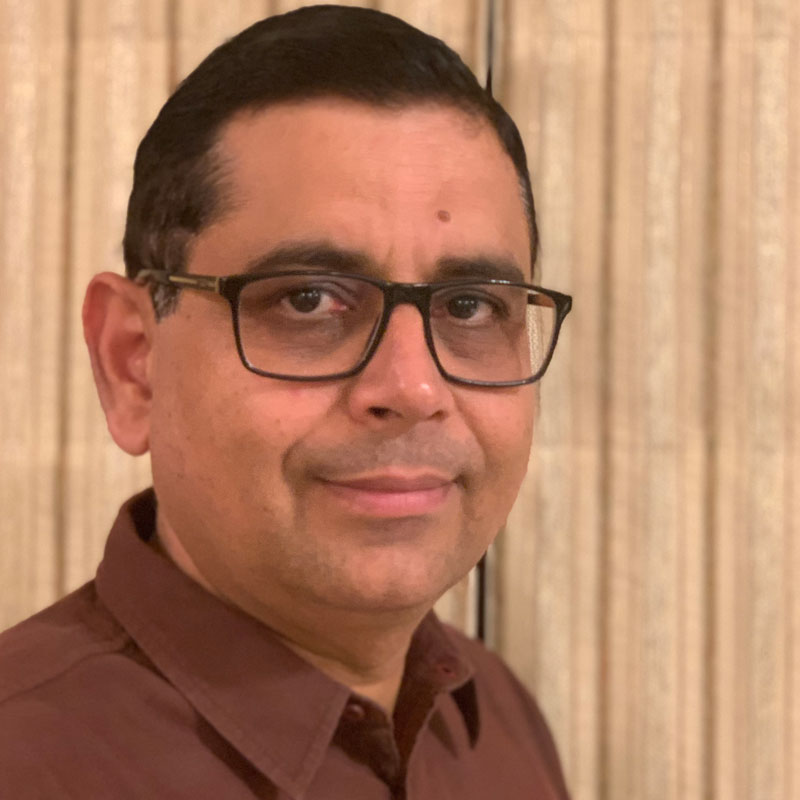
    Sumeer Raina – Sales & marketing
    director


    SmarDTV Global, as a key contributor to the worldwide pay tv industry, reinforces its position in Asia and mainly in India with SmarDTV Global Technology, its Bengaluru office focused on R&D development, customer delivery and support and an office in Noida to contribute to develop sales and marketing products, closely working on Indian market expectations and customers’ requests.

    “SmarDTV Global can actively contribute in the Indian pay tv business, benefiting from a broad experience and knowhow in delivering accurate and cost-effective devices, supporting operators to cope with new technical, commercial and skills challenges as complexity constantly increases with growing and evolving ecosystems” said SmarDTB Global chief operating officer Hervé Mathieu. “To overcome such exciting challenges, we are extremely pleased to announce that business development veteran Sumeer Raina joins us as sales & marketing director to focus and strengthen SAARC business opportunities."

    Sumeer’s responsibility encompasses business expansion plan in the SAARC region, contributing to SmarDTV Global marketing & business Sales strategies thus by acceleratingthe company’s growth and revenue.

    Sumeer brings 20 years of rich broadcast & telecom experience in business development leadership. Prior to joining SmarDTV Global, Sumeer gained leadership momentum and expertise working with technology multinational companies like Huawei Technologies, Nagravision SA and STMicroelectronics. He has has worked on different products ranging from digital content security, semiconductors, telecom and pay TV. He has a strong understanding of the whole gamut of the value chain in technology business. He is a graduate of Pune University in electronics engineering and has honed his business management leadership being part of Harvard Business School Alumni.

    SmarDTV global sales team is strengthened with Sumeer’s presence in India. He is excited to accelerate business plans in India and extended SAARC region to deliver high quality customized products with local technical and commercial support. The Product offering encompasses the video domain ranging from set top boxes, CAM and with any differentiator break through to come.

    Sumeer believes being a global technology leader in CAM technology, SmarDTV Global can be an advisor and offer Indian customers help to migrate CI Plus 2.0 standard (USB CAM) for STB’s and TV in line with recent mandate from TRAI.

    Please visit www.smardtv.com for more information.

    Contact : Nadine FAVENNEC, nadine.favennec@smardtv.com | +33442838000

  • IBC2020 cancelled due to Covid2019

    IBC2020 cancelled due to Covid2019

    MUMBAI: IBC2020 show, the world's most influential media, entertainment and technology show, has been cancelled in view of the Covid2019 pandemic.

    It was scheduled to be held this September at the RAI Amsterdam.

    “Right now, despite the best work of the IBC team and our Dutch colleagues, there are still many unknowns. Therefore, we cannot guarantee that we will be able to deliver a safe and valuable event to the quality expected of IBC,” said IBC CEO Michael Crimp in a statement.

    It is also evident that important aspects of a large-scale event such as IBC will be greatly altered by social distancing, travel restrictions, masks etc. so much so that the spirit of IBC will be compromised, he added.

    “Whilst this is hugely disappointing for us all, IBC will continue to play a vital role in supporting the industry to get back on track wherever we are able. For more than 50 years, IBC has provided the central annual meeting place for the Media, Entertainment & Technology community. For example, over the coming months IBC will continue to engage with the industry through its digital platform IBC365. Details of our plans will follow soon,” said the CEO in the statement.

    Last year, IBC attracted more than 56,000 attendees from 150 countries around the world, exhibiting more than 1,700 of the world's key technology suppliers and showcasing a debate-leading conference.

    The CEO concluded the statement with the hope of welcoming all next year at IBC2021, in Amsterdam.

    IBC is run by six leading international bodies are the organisations behind IBC, representing both exhibitors and visitors. Their insights ensure that the annual convention is always relevant, comprehensive and timely. IBC’s board is formed by the leaders of these international bodies and hold extensive experience across the industry.

  • Evreka Offers Its Technology Free of Charge For The Fight Against COVID-19

    Evreka Offers Its Technology Free of Charge For The Fight Against COVID-19

    MUMBAI: As a start-up from Turkey, Evreka, announces that in the light of their global experience urban cleaning/disinfection/sterilization, until the COVID-19 pandemic is over, they will provide their technology appealing to both people and to operations, completely free of charge to all relevant institutions and organizations all around the World.

    Evreka, who is the leader in its sector, has announced that it will provide its technologies free of charge and calls on all humanity to support the fight against the pandemic.

    Real-time process management, location-based job tracking, the involvement of citizens, resource planning and management capabilities, which are part of the company's solutions for waste management and city cleaning processes, play a supportive role in managing this crisis situation. With the technology that Evreka will provide free of charge to all relevant institutions and organizations: 

    • Cities can be disinfected more effectively, and operations can be tracked,

    • The symptoms faced by people can be controlled and monitored,

    • People can report their medication needs.

    With this move, Evreka displayed an attitude that could set an example for all companies in this regard. Thus, a big step was taken to overcome these challenging times as soon as possible. Evreka invited all humanity to be part of the solution, in order to grow and strengthen the fight against the virus.

  • Planetcast to showcase ‘Cloud.X Turbo’ at NAB 2020

    Planetcast to showcase ‘Cloud.X Turbo’ at NAB 2020

    MUMBAI: At NAB 2020, Planetcast will showcase its latest and most powerful cloud platform ‘Cloud.X Turbo’. The event will take place from 18-22 April at Las Vegas Convention Center. As a part of the live demo, Planetcast will highlight the latest technological advancement in its cloud platform. Cloud.X Turbo has been successfully deployed for reputed global broadcasters and is garnering positive customer reviews. Cloud.X Turbo offers immense flexibility to broadcasters as they can make critical changes at the operations level, which is a great power to have. It has an excellent capability to integrate legacy platforms on any third party playout solution to provide a super high quality and delivery.

    The new wave of technology is sports broadcasting

    The company will also showcase it latest sports broadcasting media asset management software Media.X sports which is capable of handling complex workflows of sports broadcasters. Media.X sports is equipped to handle large volumes of content and operated on direct to customer model. Online viewership is rising rapidly for sporting events and our latest product can deliver the linear streams to online platforms in a highly secure and efficient manner.

    Content delivery over IP

    At the event,  it will reveal the latest version of its IP delivery solution ‘Recaster’. The indigenously developed proprietary technology developed by Planetcast can delivery your content from anywhere to anywhere in any format. Broadcasters can create their own content delivery network completely managed by Planetcast. Recaster is a highly affordable and reliable delivery mechanism for the broadcast world. Recaster is also suitable for live sports and other live events which involves picking and dropping of signals or a group of signals from event location to MCR for live distribution.

    B2B online marketplace for content related services

    Making content related services like editing, dubbing, subtitling, content enrichment, translation etc a completely online experience is the vision behind our latest offering ‘Planetshare’. Planetshare offers complex content related services online, just like shopping from ecommerce website. Planetshare is all set to change the way content is treated around the globe. At NAB 2020, visitors will get world exclusive preview of Planetshare.

    Also on the show

    Planetcast, a global leader in digital broadcast technologies offers technology led managed broadcast services. Planetcast operated one of the largest Teleport in this part of the world uplinks 280+ television channels from its premises. Planetcast manages playout for reputed Indian and

    Global broadcasters by engaging its latest cloud technologies.

    Planetcast has recently entered into a long term service provisioning arrangement with Intelsat for Inflight and maritime communication services in India to provide uninterrupted internet connectivity to cruise ships and airplanes while sailing in Indian waters or flying in Indian airspace respectively.