Category: Headend Equipment

  • ISE attracts record attendance and looks forward to largest-ever show in 2015

    ISE attracts record attendance and looks forward to largest-ever show in 2015

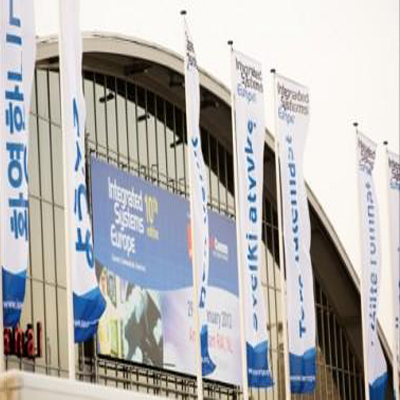
    MUMBAI: After attracting more than 50,000 registered attendees for the first time in its history from 4–6 February, Integrated Systems Europe has further cemented its reputation as the world’s most popular event for professional AV and electronic systems integration. The final total attendance of 51,003 surpassed even the organisers’ own most optimistic expectations, with Europe’s recovering economies and a record 952 exhibitors helping to fuel attendee growth of 15% over last year’s figure of 44,151.

    Also acting as key draws to the event were an enlarged Professional Development programme including off-floor training sessions hosted by ISE’s co-owners CEDIA and InfoComm International, with both associations also contributing seminars to the event’s new on-floor Theatres dedicated to Residential and Commercial Solutions. Between them these sessions attracted over 2,400 people, with InfoComm experiencing an almost three-fold increase in its education traffic over 2013 after offering free session vouchers to every 2014 attendee.

    ISE 2014’s pre-show events programme included the third edition of the Smart Building Conference, the all-new Investor Showcase and Audio Forum, and an Opening Keynote Address, ‘Kick-Starting the Market for Building Automation’, by Cisco’s Dr Dirk Schlesinger. Between them these events attracted a further 1,000 attendees, with hundreds more also signing up for partner events during the show such as the SVGE’s Sport Facility Integration Summit, digital-signage market briefings and tours from Invidis Consulting and the Themed Entertainment Association tour.

    Mike Blackman, Managing Director, Integrated Systems Events, says: “Our big theme this year was content, and we believe we have delivered on our promise to enhance our event – and attract more attendees – by offering a combination of technical training, market intelligence, real-world case studies and networking opportunities that is unmatched by any comparable event in Europe.”

    While the show’s attendance continues to rise impressively, there has been no dilution in the spending power of ISE’s visitors if the show’s exhibitor rebooking trend is anything to go by. By the time the doors closed on Thursday 6 February, on-site rebooking for ISE 2015 stood at 33,450 net square metres, compared with the 2014 show’s total net footprint of 36,035. The rebooking figure is 10% higher than the equivalent a year ago.

    “By all standards of measurement, ISE 2014 was extraordinarily successful,” comments David Labuskes, CTS, RCDD, Executive Director and CEO, InfoComm International. “It was a great way to kick off the industry calendar, and a spectacular way to begin InfoComm International’s 75th year. What started out as a small show in Geneva 11 years ago has blossomed into a truly thriving event. That first ISE was an important early step in our association’s journey beyond its US borders, but would be largely unrecognisable to this year’s ISE attendees.”

    “ISE 2014 was phenomenal in every respect,” echoes Wendy Griffiths, Executive Director, CEDIA Region 1. “This year’s event demonstrated outstanding international growth and CEDIA benefited hugely from this success. More CI companies became CEDIA members at the show than ever before, every CEDIA session in the new ISE Residential Solutions Theatre was jam-packed and CEDIA training courses available off the show floor were also well-attended.”

    The next Integrated Systems Europe will take place at the Amsterdam RAI from 10–12 February 2015.

    Ends


    Click here to download a selection of high-resolution images from ISE 2014.

    Additional information is available from: Dan Goldstein, ISE Director of Marketing & Communications, dgoldstein@iseurope.org


    About CEDIA: CEDIA is an international trade association of companies that specialize in designing and installing electronic systems for the home. The association was founded in September 1989 and has more than 3,500 member companies worldwide. CEDIA Members are established and insured businesses with bona fide qualifications and experience in this specialized field. For more information on CEDIA, visit: www.cedia.org or www.cedia.co.uk.


    About InfoComm International®: InfoComm International® is the international trade association of the professional audiovisual and information communications industries. Established in 1939, InfoComm has 5,000 members, including manufacturers, systems integrators, dealers and distributors, independent consultants, programmers, rental and staging companies, end-users and multimedia professionals from more than 80 countries. InfoComm International is the leading resource for AV market research and news. Its training and education programs set a standard of excellence for AV professionals. InfoComm International is the founder of InfoComm, the largest annual conference and exhibition for AV buyers and sellers worldwide. InfoComm also produces trade shows in Europe, Latin America, the Middle East and Asia. Additional information is available at www.infocomm.org.
     

  • ISE Theatres a resounding success

    ISE Theatres a resounding success

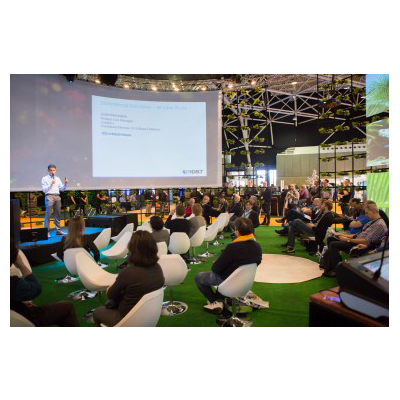
    AMSTERDAM: New for ISE 2014, the Residential Solutions Theatre and Commercial Solutions Theatre have proven to be a big draw for visitors. Covering a range of topics, including audio connectivity, collaborative technology and home automation, the free-to-attend sessions have been well received throughout the show.


    Lighting design was a hot topic in the Residential Solutions Theatre with independent lighting designer Tad Trylski declaring: “There is a lighting design-shaped hole in current AV systems training.


    “There is a lot of expertise in controlling the light, but the gap exists in the lighting design skills themselves and/or how to work with lighting designers,” he added, during ‘The Science of Lighting Designers’.


    Trylski is currently working with CEDIA on potential courses, and advises that to best use light, and make huge efficiency gains: “The qualitative design must come first. Where and when do you want the light, and what do you want to use it for?”


    The biggest mistake engineers make is to work to the plan (rather than a section), and simply place lots of downlighters lighting the floor. Instead, they should light the walls (giving more perceived light with fewer lights) and specific tasks.


    He gave an example of a typical developers one-bedroom apartment, where using lots of 50W downlighters used 1,200W (with other lights adding more than 600W), whereas a using a lot of linear LEDs, floor mounted wall washers, and by putting lighting close to the task, cut the total energy use to just 632W. “It’s slightly more difficult to install, but the savings are phenomenal and it looks a lot better,” he told visitors.


    Over in the Commercial Solutions Theatre, InfoComm sustainability officer Allen Weidman stated that Smart Buildings are a market waiting to happen. They will be a great opportunity for integrators “to add value and claim the space. It’s there for the taking” as no one else has made it their own, he added.


    The biggest problem is the lack of standards or best practice for Smart Buildings Technology (SBT). “We don’t even have an accepted definition for SBT,” he said. “We really need open source in this area,” pointing to the Raspberry Pi-based Ninja Blocks project for home automation.


    The market could be huge. China has just started replacing 76 million analogue electricity meters with smart meters, while the US already has 46 million smart meters (40% of households) installed, and it is calculated that SBT could save $20-25 billion in the US alone each year.


    Google just spent $3.2 billion on Nest, which makes smart thermostats, smoke detectors and door openers, showing that “data will be the business driver,” he said. “Sensors are the key to the future for everything, to which smartphones will be connected.”


    Sessions continue in the theatres today, opening at 11:00 with Keith Yates discussing ‘Using science to solve the low frequency problem in media rooms and home theatres’ in the Residential Solutions Theatre, and ‘DreamHack: the technology behind a major eSports tournament’ with Jonas Bengston of DreamHack in the Commercial Solutions Theatre.

  • Record numbers and new emphasis on content for ISE 2014

    Record numbers and new emphasis on content for ISE 2014

    MUMBAI: As ISE 2014 prepared to open its doors today, over 950 exhibitors were putting the finishing touches to their stands, helping to ensure that the 11th Integrated Systems Europe will be not just the largest tradeshow for professional AV and systems integration ever held in Europe, but also the brightest and the busiest.


    The 2014 total of 952 exhibiting companies represents an increase of more than 6% on last year’s figure, and over 200 of those companies are completely new to ISE, giving visitors a wealth of new business opportunities in every technology sector served by the event. The show will occupy more than 36,000 net square metres for the first time, while pre-registration also reached record levels.


    Yet Mike Blackman, the event’s Managing Director, believes the real story of ISE 2014 lies behind these impressive numbers. “This week we’ve been drawing a parallel between ISE and the B2B magazines that support us as media partners,” Blackman comments. “If ISE were a magazine, the exhibitor stands on our show floor would be our advertising. Like a magazine, that’s where we derive the bulk of our revenue, but also like a magazine, we can only grow if we develop editorial content – and that’s been our big focus this year.”


    By ‘editorial content’, Blackman is referring to the supporting conferences, education sessions, networking opportunities and other ‘event experience’ enhancements that increasingly define large trade-shows like Integrated Systems Europe. In the case of ISE 2014, there are more of these than ever – all the result of extensive industry consultation, and many supported by new partnerships.


    The day before the show, Monday 3 February, saw hundreds of delegates attend the Smart Building Conference, Investor Showcase and Audio Forum pre-show events, followed by the Opening Keynote Address, ‘Kick-Starting the Market for Building Automation’, by Cisco’s Dr Dirk Schlesinger.


    On the show days themselves, the content theme will be picked up in two new show-floor Theatres, showcasing Commercial and Residential Solutions respectively and between them hosting more than 40 free-to-attend, non-technical seminars from11:00 each day.


    The Theatre sessions fall under ISE’s new ‘Professional Development’ education brand, to which the show’s co-owners, CEDIA and InfoComm International, also contribute significantly with their own training programmes. This year InfoComm is offering two free education session vouchers to every ISE attendee, while CEDIA is hosting many new courses as well as exclusive market-research presentations – the latter in the Residential Solutions Theatre.


    Elsewhere there is a new Sport Facility Integration Summit on Wednesday 5 February; a new Entrance (F) to reduce congestion and ease access to Halls 7 and 8; a ‘Discovery Zone’ featuring young companies new to ISE, the launch of the show’s ‘M2D’ (‘Manufacturer to Distributor’) match-making portal; and new wayfinding systems and information points to guide attendees around an increasingly diverse and colourful show floor.


    “With pre-registration levels indicating that our attendee growth will at least match that of our show floor, we are confident ISE 2014 will be yet another record-breaker,” concludes Blackman. “However, our real achievements are the ways in which we have enhanced our event to make it useful and relevant to new visitor groups, helping to ensure that those who are visiting the show for the first time have a genuine desire to return next year.”

  • Cable TV DAS and the head end factor

    Cable TV DAS and the head end factor

    MUMBAI: Digitisation is meant to bring about transparency and order to what has for long been talked about as an unorganized business. The pressure of scaling up in order to deliver digital cable TV has also had an expected fallout: consolidation. Smaller cable ops, independent operators have been forced to join hands with existing national MSOs like Hathway or DEN or amongst themselves. And this fusing has resulted in the reduction of the number of headends in the major metros – especially in Delhi and Mumbai where there has been a shrinkage from 110 to 15 and from 50 to seven respectively.

    “Consolidation of headends is taking place in the transition from analogue to digital phase. Also the trend now is that the MSOs set up headends only in areas where they cannot get access to a fiber line or a digital line. Also they are looking for solutions like getting a line from say Delhi or Mumbai to the nearby areas,” informs an industry expert.

    Industry experts attribute this change to factors such as rising costs of digital headends, billing procedure and administrative control.

    Explains Hathway Cable & Datacom MD & CEO Jagdish Kumar: “With digitisation has come the convergence of technologies and features like high definition content, VAS and broadband accessibility. All this in turn requires large amount of investment to manage economies of scale, thus ushering consolidation.”

    While Hathway currently has 23 headends and seven backup headends, including GTPL, several independent operators, informs Kumar, have evinced a keen interest in aligning with its ongoing digital plans, largely due to its success in Phase I and II.

    “We’ve drawn up ambitious expansion plans for Phase III and IV. We will soon make announcements on a few strategic acquisitions,” he exults.

    IndiaCast Media Distribution executive vice president Amit Arora agrees that a number of Delhi and Mumbai-based independent operators have started taking their digital feeds from bigger MSOs.

    “This arrangement is gaining popularity since it isn’t easy for every independent operator to make the huge capital investment needed for digital headends. And consolidation of headends has led to central warehousing of data and SMS,” he says.
    According to Ortel Communications CEO BP Rath, with a 200 channel headend costing nearly Rs one crore, it is not worth investing that kind of money for an independent operator who caters to say 10,000 customers in a small town.

    “So, they are joining bigger players in order to take feeds from them. While smaller operators merged with bigger players even during the analogue phase, it is now happening on a larger scale. And one will see further consolidation during phase III of digitisation,” he says.

    Apart from independent operators joining forces with bigger MSOs, the other reason for consolidation is the advent of the conditional access system (CAS) and the subscriber management system (SMS), as well as the prerequisite for getting these systems audited and approved by broadcasters.

    “When the bigger MSOs are taking so long to adjust to the new system and maintain quality as per the regulation, how will the small players be able to do it?” questions InCable managing director Ravi Mansukhani. “With consolidation, the big MSOs will take care of all the back office problems and the on-ground activity will be done by the independent operators.”

    “All this has led to a whole lot of process issues, which the smaller MSOs find difficult to manage and that is why independent operators are joining bigger players,” adds Rath.

    Ortel, which has 31 analogue headends, two digital headends and four analogue plus digital headends, is waiting for phase III. “It is only after that, we will see consolidation happening in Orissa and Chhattisgarh. Though we have our own headends, we are also talking about intercity connectivity,” informs Rath.

    Kumar too feels that “the trend will continue even in phase III and IV. The demand for digitisation will impact local independent operators, who will find it difficult to manage independently. Hence, the independent operator would continue to look to aligning with the bigger MSOs.”

    However, Arora thinks otherwise. “The consolidation process has already come to a phase where I do not see any further consolidation happening in phase III. The big wave has already happened in phase II,” he says.

    So when a smaller operator takes digital feed from a bigger MSO, how do they share revenue? “The revenue share worked out between bigger MSOs and independent MSOs is purely on mutually beneficial terms based on investments and services being provided in the market,” says Kumar.

    Arora elaborates: “Everybody has worked a different revenue model. Someone has opted for a 49:51 split, some have a 50:50, while some will have a 51:49 split. The revenue share depends on the strength and the need for funds.”

    Coming to another metro, Kolkata, unlike Delhi and Mumbai, its five big players: GTPL, Hathway, Manthan, IMCL and Digicable Network have not seen an urge to merge.

    Meanwhile, Arora sounds a cautionary note. “A takeover of one MSO by the other in Kolkata would only be possible if there is a national degree of consolidation.”

    According to Mansukhani, the biggest consolidation will take place nationally. “Right now only the small and middle level players are going to the big players and then ultimately few major players will have control.”

    Mansukhani feels that even international players will show interest in India once they see healthy cash flows of the MSOs in DAS I and II areas. “This is when the maximum consolidation will take place and this will happen once the entire phase I and II is complete.”

    Talking about the evolution of cable TV on the ground in Kolkata Manthan Broadband Services director Sudip Ghosh says, “Players with a subscriber base of more than five lakh might not consolidate headends. But Kolkata can see the consolidation of players with others having a subscriber base of around three to four lakh.”