Category: Headend Equipment

  • Sony and LiveU zoom in on future with bonded IP breakthrough at IBC 2025

    Sony and LiveU zoom in on future with bonded IP breakthrough at IBC 2025

    MUMBAI: When Sony meets LiveU, the broadcast world gets a sharper focus. At IBC 2025, the two tech titans announced a first-of-its-kind collaboration that promises to change how stories get from the field to the newsroom fast, reliable, and without the usual workflow headaches.

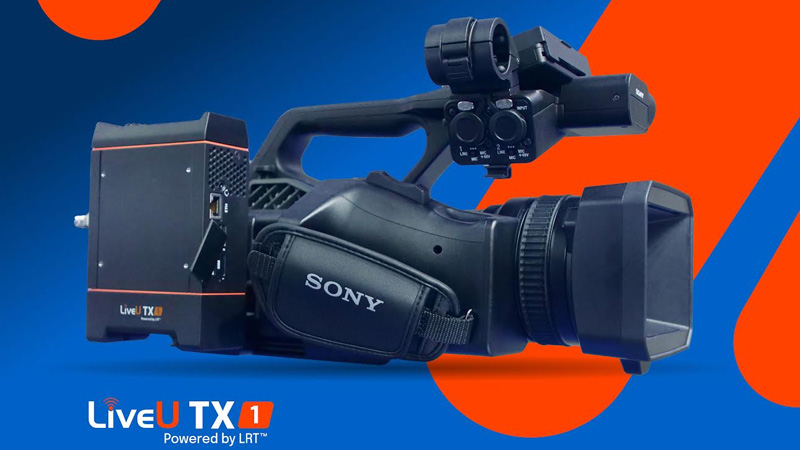
    The star of the show? The new LiveU TX1, a compact transmission unit built specifically for Sony’s professional camera range. Think of it as a tiny powerhouse: it clips neatly onto cameras like Sony’s freshly launched PXW-Z300, turning them into mobile broadcast hubs. With its small form factor, TX1 slashes production timelines by offering ultra-fast file transfers and bonded IP connectivity on the go.

    At its core is LiveU’s patented LRT (LiveU Reliable Transport) protocol, famed for keeping live feeds smooth, stable, and sharp even in tricky conditions. By combining multiple network connections, TX1 ensures resilient video performance that broadcasters can actually trust for mission-critical operations.

    “Our customers want to be able to deliver files shot on camcorders from wherever the story takes them, back to their galleries, easily, swiftly and reliably,” said Sony Corporation head of media solutions business Masakazu Murata. “Through our collaboration with LiveU, the leading company in video-over-bonded-IP transmission, we are now able to offer customers a workflow integrated with Sony’s ecosystem even for mission-critical operations that require bonding. We look forward to working with LiveU to further streamline workflows and make a significant contribution to the broadcast industry.”

    LiveU CEO and co-founder Samuel Wasserman said, “We are proud to announce this important collaboration with Sony, the global leader in electronics, gaming, entertainment, and imaging technologies. This partnership represents a strong vote of confidence in LiveU’s cutting-edge technology and the innovation we bring and will continue to bring to the market. I would like to thank the Sony team for their professional and collaborative spirit and wish us all great success on our shared journey.”

    The deal signals more than just a shiny new gadget. It’s the start of a broader roadmap where Sony’s camera heritage and LiveU’s connectivity know-how combine to shape the next phase of broadcast production. Journalists, content creators, and live producers can expect fewer cables, faster turnaround, and workflows that keep pace with the news cycle.

    While the TX1 made its debut at IBC 2025, broadcast professionals will need a little patience: the unit will be available through Sony’s accredited distributors and resellers, with release details scheduled for 2026.

    For now, though, one thing is clear, when it comes to capturing the moment and sending it back in real time, Sony and LiveU are keeping the world’s broadcasters firmly in the picture.

  • Sony cards speed past limits with blazing 1800 MB/s read and 1700 MB/s write

    Sony cards speed past limits with blazing 1800 MB/s read and 1700 MB/s write

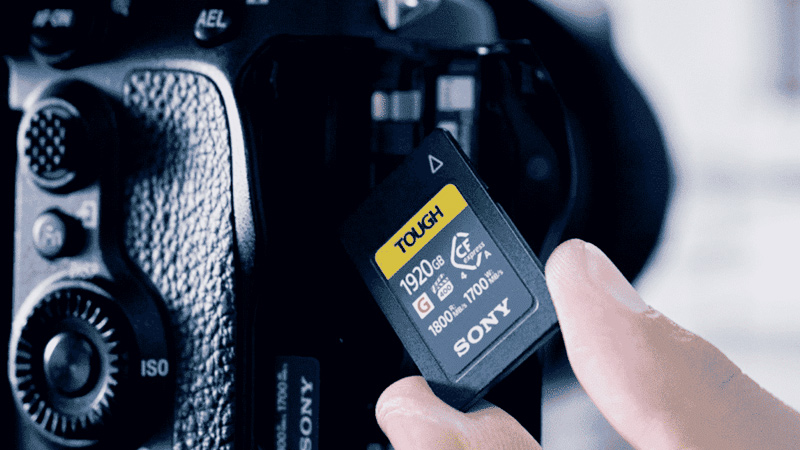
    MUMBAI: When it comes to speed, Sony just hit fast-forward. The tech giant has launched its Cfexpress 4.0 Type A cards in India, promising blistering performance for professional creators with read speeds up to 1800 MB/s and write speeds up to 1700 MB/s more than double their predecessors.

    The new CEA-G1920T (1920 GB, Rs 97,490) and CEA-G960T (960 GB, Rs 59,990) cards, along with the MRW-G3 card reader (Rs 17,990), hit stores and e-commerce platforms on 20 August 2025. Built for Sony’s Cinema Line and Alpha cameras, the cards are designed to handle the ever-demanding world of high-bitrate 4K and above video, long shoots, and instant data transfer.

    The upgrades aren’t just about speed. With a minimum sustained write speed of 400 MB/s, these cards guarantee uninterrupted recording of cinematic-quality footage. Their durability has also been levelled up, the reinforced resin body is five times stronger than previous models and can survive drops from 7.5 metres. Bend resistance has been enhanced to withstand forces up to 150 newtons, making them ready for the chaos of on-location shoots.

    The compact design means portability without compromise, supporting lightweight camera bodies while packing in serious storage muscle. Meanwhile, the MRW-G3 reader, built exclusively for Cfexpress Type A, supports USB 40 Gbps transfer speeds, ensuring that even massive files fly from card to system in record time. With its heat-dissipation design, the reader is also engineered for stability during prolonged workflows.

    For photographers, videographers, and filmmakers juggling huge files under pressure, Sony’s latest launch isn’t just storage, it’s a workflow accelerator. With capacity, speed, and ruggedness in one pocket-sized package, these cards ensure creators spend less time waiting and more time making.


  • Ray-Ban Meta smart glasses make stylish AI debut in India with voice, camera and livestream power

    Ray-Ban Meta smart glasses make stylish AI debut in India with voice, camera and livestream power

    MUMBAI: Meta Platforms and Essilorluxottica have officially launched their Ray-Ban Meta smart glasses in India, combining iconic design with high-tech performance. The AI-powered eyewear offers voice-activated assistance, live translation (coming soon), real-time video capture, and livestreaming capabilities—all without needing to lift a finger.

    Starting at Rs 29,900, the Ray-Ban Meta collection enters the Indian market with the promise of making smart eyewear more accessible, stylish and useful. Pre-orders are live at india.ray-ban.com, and the glasses hit stores on 19 May 2025.

    The new collection comes equipped with a 12MP ultra-wide camera for high-quality stills and immersive 1080p vertical videos. Five microphones allow seamless transitions between calls and music, while discreet open-ear speakers boost audio with better bass response and noise suppression—without blocking ambient sounds.

    Users can now livestream directly to Instagram or Facebook Live using voice commands, with a maximum runtime of 30 minutes. They can toggle between the phone and glasses camera mid-stream, delivering content with an eye-level POV.

    “Hey Meta” voice prompts activate on-the-go AI support, enabling users to ask questions, get recommendations, or translate signs. Soon, the AI will support real-time conversations in Spanish, French, Italian, and English—even in airplane mode, provided language packs are pre-downloaded.

    The collection includes styles like Wayfarer, Wayfarer Large, and Skyler in finishes such as Shiny Chalky Grey and lens options ranging from Transitions®, prescription, polarised, to sun and clear. Lenses promise advanced clarity and comfort with added UV protection.

    The compact glasses come with a classic charging case and improved Meta View app (iOS and Android), which allows users to manage multiple glasses, import and edit photos and videos, apply effects, and post to social platforms in seconds.

    The Meta AI features will receive ongoing updates, making the eyewear smarter over time. The blend of fashion and function positions the Ray-Ban Meta smart glasses as a new tech-lifestyle hybrid for Indian consumers.


  • Nikon Z5II goes full throttle on video with N-RAW, low-light beast mode, and blazing autofocus

    Nikon Z5II goes full throttle on video with N-RAW, low-light beast mode, and blazing autofocus

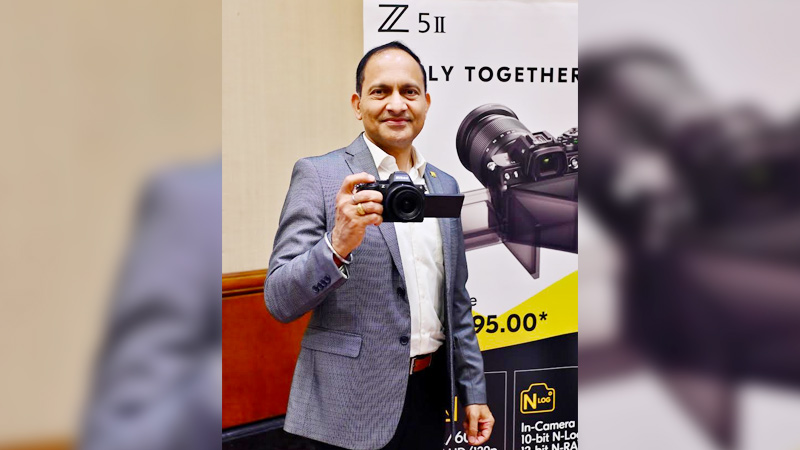
    MUMBAI: Nikon just gave creators a reason to ditch the tripod and hit record. At a buzzing launch event held at New Delhi’s Eros Hotel on 23 April, Nikon India pulled the wraps off the Z5II—a full-frame mirrorless camera that aims to put professional-grade video in more hands without frying budgets.

    The Z5II brings to the table a 24.5 MP BSI CMOS sensor, 4K/60p video, and full HD 120p slow motion—ticking every box for filmmakers, wedding shooters, and street-style documentarians alike. But its real claim to fame lies under the hood: blazing 3.5x faster autofocus and low-light AF down to -10EV, which means your shoot doesn’t have to stop when the lights go out.

    “With the introduction of the Z5II, Nikon is once again elevating the standards of professional-grade photography, making top-tier innovation more accessible to all creators,” said Nikon India Pvt. Ltd MD Sajjan Kumar.

    Armed with in-camera 12-bit N-RAW and 10-bit N-Log, the Z5II caters to video pros who love tinkering in post-production. The EXPEED 7 engine drives intelligent autofocus, while a 5-axis in-body vibration reduction system ensures every handheld take looks like it was shot on rails.

    Its vari-angle touchscreen helps shooters nail tricky angles, and a bright 3,000 cd/m² EVF outshines the competition. For run-and-gun creators, the Z5II’s high-speed burst at 14 fps, paired with 3D-tracking AF, is a ticket to freeze-frame wizardry.

    “‘Truly Together’, the Z5II is crafted for hybrid creators who demand flexibility and performance in every frame,” Kumar added.

    The camera also features AI-driven subject detection, capable of spotting nine types-from pets to sports cars. It seamlessly works with Nikon’s Z Mount lens ecosystem and supports USB-C, HDMI, and Picture Control customisation, giving creators more control without the learning curve.

    Priced at Rs 1,49,995 (body only), the Nikon Z5II hits stores on 24 April 2025. As hybrid creators blur the lines between filmmaker and photographer, Nikon seems ready to roll.

  • Birla Cable’s Q2 FY25: Profit slump despite revenue growth

    Birla Cable’s Q2 FY25: Profit slump despite revenue growth

    Mumbai: In the post-pandemic world, where homes turned into workspaces and streaming hubs, ultra-fast internet became a lifeline, tethering us to a digital reality. But behind those seamless connections lies the backbone of fibre optic networks, powered by companies like Birla Cable. Yet, even as the demand for digital infrastructure surges, Birla Cable finds itself navigating choppy waters. The company’s Q2 FY25 financial results, released on October 24, show revenue climbing, but rising operational costs have squeezed profits, casting a shadow over an otherwise bright sector.

    For Q2 FY25, Birla Cable reported a standalone revenue from operations of Rs 18,171.67 lakh, reflecting a 4 per cent year-over-year increase from Rs 17,470.86 lakh in Q2 FY24. Consolidated revenue also improved, reaching Rs 18,274.92 lakh, up from Rs 17,761.15 lakh in the same quarter last year. This proliferation in revenue, while encouraging, wasn’t sufficient to shield the company’s profit from erosion due to escalating costs.

    Net profit for the quarter plummeted drastically to Rs 200.49 lakh on a standalone basis—a 62 per cent dip compared to Rs 529.80 lakh in Q2 FY24. The consolidated profit mirrored this trend, declining to Rs 181.97 lakh from Rs 504.65 lakh the previous year. The profit drop was intensified by rising raw material costs, which reached Rs 14,426.19 lakh for standalone operations—a 5.7 per cent increase from the preceding quarter.

    Operational costs across the board contributed to the decline in profitability. Total expenses rose to Rs 18,013.94 lakh, a significant jump from Rs 17,060.28 lakh in Q2 FY24. Employee expenses stayed steady at approximately Rs 840 lakh, while finance costs soared to Rs 395.05 lakh from Rs 327.87 lakh in the previous year. Depreciation expenses added further strain, climbing to Rs 383.01 lakh, indicating investments in infrastructure that are yet to yield returns.

    One bright spot was the other comprehensive income (OCI), which surged to Rs 1,683.36 lakh from Rs 661.69 lakh in the prior year on a standalone basis. However, this gain primarily reflected revaluations in investment portfolios and other non-core elements, which have limited impact on operational performance.

    The cash flow statement shows a decline in cash and cash equivalents to Rs 10.19 lakh by the end of Q2, a stark reduction from Rs 23.30 lakh in the same period last year. This drop stems from increased operating expenses and reduced cash generation, with net cash flow from operating activities down to Rs 5,082.14 lakh. This cash compression hints at tighter liquidity, potentially influencing the company’s future capital expenditures.

    Birla Cable’s Q2 FY25 financial results underscore a revenue-positive but profit-challenged quarter, reflecting the complex interplay of market demand and rising costs. As a leader in India’s cable manufacturing sector, Birla Cable’s future profitability will likely depend on its capacity to manage costs amidst fluctuating raw material prices and financial expenses. While revenue growth suggests demand resilience, sustaining profitability will require cost discipline and a favourable macroeconomic environment.

  • Transforming workforce training for Birla Opus Paints with VR innovation: An AutoVRse case study

    Transforming workforce training for Birla Opus Paints with VR innovation: An AutoVRse case study

    Mumbai: Birla Paints, a new entrant in the market, is ambitiously aiming for a quick rise to the top spot. With plans to install production units in and outside India, there is a sudden need for an effective training program for the newly hired workforce. AutoVRse comes to offer the answer through immersive virtual reality (VR) training that caters to linguistic diversity and ensures effective skill acquisition and retention.

    A trained and skilled factory workforce is of utmost importance for manufacturing companies. Whether you are expanding to newer geographies or growing your production per plant, scaling traditional safety and process training comes with its challenges:

    “We implemented a comprehensive digital training program, utilizing immersive VR simulations and gamified learning modules to upskill their factory workforce. This innovative approach not only improved knowledge retention and engagement but also significantly reduced training time and costs, ultimately boosting productivity and ensuring a safer working environment.” exclaimed Anuj.

    Skill Diversification: With diverse job roles spanning from manufacturing to customer service, ensuring uniform skill development across the workforce poses a significant challenge. Tailoring training programs to address the specific needs of each department while maintaining consistency can be complex.

    Language Barriers: Birla Opus Paints operates in regions with linguistic diversity. Ensuring effective communication and comprehension across all levels of the workforce to scale your training across geographies is a major challenge in India.

    Cost constraints: Implementing extensive training programs, particularly those utilizing Virtual Reality (VR), can result in cutting down expenses. Balancing the need for high-quality impactful training with budgetary constraints poses a challenge for most training initiatives.

    Sustainability of learning: Ensuring that the skills acquired through training programs are retained and applied consistently in real-world scenarios is a must. Sustaining the impact of training beyond the initial sessions requires ongoing reinforcement and support mechanisms.

    Remote work challenges: With the rise of remote work arrangements, providing effective training to employees working from different locations becomes challenging. Maintaining consistent training standards and accessibility for remote workers requires innovative solutions.

    Employee engagement and motivation: Keeping employees engaged and motivated throughout the training process can be a challenge, particularly with repetitive or mandatory training modules. Designing training experiences that are interactive, engaging, and relevant to employees’ roles is crucial.

    Measuring training effectiveness: Assessing the impact and effectiveness of training programs is essential for continuous improvement. Developing reliable metrics and evaluation methods to gauge the success of training initiatives and identify areas for improvement poses a challenge.

    “Addressing these challenges requires a holistic approach that combines innovative technology, and tailored training strategies, and a commitment to continuous improvement. By overcoming these hurdles, Birla Paints can ensure that its workforce remains skilled, adaptable, and equipped to meet the evolving demands of the industry,” said AutoVRse enterprise and sales lead Anuj Gupta.

    Birla Opus Paints recognised VR training as the right solution to its needs and picked AutoVRse as the perfect partner to create truly effective and scalable training modules in VR.

    In 4 foundational steps, AutoVRse is helping Birla Opus Paints address the immediate requirement to train the incoming workforce and scale the training program across use cases and geographies.

    Step 1: Beginning with off-the-shelf VR training lessons

    To cater to the immediate requirement of Birla Opus to train the workforce in their new plants, the easy first step was to dip into AutoVRse’s content library of readymade VR training modules… These modules cover key processes along with working at height, electrical safety, fire safety, and lock-out-tag out, ensuring complete training in Hindi, Kannada, Tamil, and more. By leveraging AutoVRse’s proven instructional design philosophy, trainees can gain better skill retention, setting the stage for a solid foundation of protecting work and protocols.

    Step 2: Customide training modules for increased ROI

    Recognizing the need for customized training experiences, Birla Paints utilizes the personalisation options presented with AutoVRse. With the Unity SDK and VRseBuilder, you can tailor training scenarios without the need for coding expertise. This flexibility will allow them to create diverse and challenging situations, which ensures maximum engagement and improvement of skills among trainees. By customizing the modules, Birla Paints optimizes the ROI according to the session, making every training effective and impactful.

    Step 3: Integration with corporate IT systems and scaling with VR-native LMS

    As training initiatives expand, Birla Paints focuses on seamless integration with its existing corporate IT systems. AutoVRse’s VR-native LMS proves instrumental in consolidating training data and simplifying management tasks. Integration with single sign-on (SSO) and Learning Management Systems (LMS) streamlines administrative processes, allowing Birla Paints to efficiently track progress and demonstrate ROI. With all VR training data centralized, Birla Paints gains valuable insights into employee development and skill enhancement.

    Step 4: Scaling XR across teams and use cases

    To further enhance training effectiveness, the last step poised by AutoVRse for Birla Paints is VRseBuilder, an all-in-one platform for VR app creation and management. By adhering to the VRseBuilder philosophy of simplicity and accessibility, Birla Paints will empower its teams to develop immersive training experiences effortlessly. Through VRseBuilder, they can foster a culture of continuous learning and skill development, ensuring employees are best prepared for workplace challenges. With AutoVRse’s innovative solutions, Birla Paints embarks on a journey towards safer, more efficient manufacturing processes.

    “AutoVRse’s training modules adhere to a set of instructional design principles aimed at maximizing learning retention and real-world application” added Anuj.

    Mimic the real world: By creating training environments that closely resemble real-world scenarios, AutoVRse ensures high-fidelity learning experiences.

    Engage learners with active tasks: Through interactive tasks and simulations, trainees are actively involved in the learning process, enhancing knowledge retention.

    Train with variation and repetition: AutoVRse incorporates varied scenarios to reinforce concepts, ensuring comprehensive skill development through repeated exposure.

    Provide instant actionable feedback: Trainees receive immediate feedback on their performance, fostering a culture of continuous improvement and learning.

    Enable real-world behavioral change: By leveraging the immersive nature of VR, AutoVRse facilitates genuine behavioral change, as skills learned in virtual environments directly translate to real-world applications.

    “AutoVRse and Birla Paints are revolutionizing the manufacturing industry, empowering employees with the skills and knowledge needed to thrive in a dynamic workplace environment.” finally exclaimed, Anuj.

    In conclusion, with a focus on instructional design principles that prioritize real-world applicability and engagement, Birla Paints aims to foster a culture of continuous learning and skill development among its workforce with AutoVRse. By embracing VR technology, Birla Paints has not only enhanced workplace safety and efficiency but also positioned itself as a leader in next-generation manufacturing training. As they continue to evolve and innovate, the partnership between AutoVRse and Birla Paints serves as a testament to the transformative power of VR training in shaping the future of manufacturing education. Together, they are paving the way for a new era of training excellence, where virtual reality becomes an indispensable tool in empowering the workforce of tomorrow.

  • Interra Systems Simplifies Video Caption Creation With Machine Learning-Based QC Solution

    Interra Systems Simplifies Video Caption Creation With Machine Learning-Based QC Solution

    CUPERTINO: Interra Systems, a leading global provider of software products and solutions to the digital media industry, today announced BATON Captions, a new addition to its BATON platform. Leveraging cutting-edge machine learning (ML) and automatic speech recognition technology, BATON Captions brings simplicity and cost savings to the creation, management, and delivery of captions for traditional TV and video streaming. BATON Captions allows broadcasters and other media professionals to address all of their captioning needs, from caption generation to QC, auto corrections, review, and editing.

    Keeping in mind the high volumes of content being generated and distributed today, a defining feature of BATON Captions is that it offers industry-leading performance. Utilizing the high-performance solution, media companies can dramatically expedite the caption creation and verification processes for both live and VOD content.

    "Captions have long been mandated by all major broadcasters, and now with the rise in global consumption of online content, captions and subtitles represent an amazing opportunity for television viewers to watch and comprehend foreign-language content with ease. However, captions can be tedious and expensive to produce. Also, when transitional issues happen throughout the file-based workflow, the delivery of captions becomes more complex," said Anupama Anantharaman, vice president, product management at Interra Systems. "BATON Captions leverages our industry-proven expertise in captions and subtitles QC to simplify this process and improve workflow efficiency. Using this solution, broadcasters and media companies can ensure that when content is delivered in multiple video quality levels within OTT video streams, the captions maintain a high quality."

    BATON Captions reports on any drop or inaccuracy in captions and audio, as well as compliance issues, providing broadcasters with automated options for correcting alignment, text, and spelling mistakes. Captions can be checked against actual audio essence, corrected, and exported to any industry-supported caption format. Through auto time stamping with state-of-the-art speech recognition technology, BATON Captions adds accurate time to dialogs in scripts, resulting in faster, more efficient caption generation.

    Through web-services-based API support, BATON Captions can easily be integrated with third-party tools. Broadcasters have the option of deploying the captioning solution on premises or in the cloud for added flexibility. The application comes with a feature-rich review and editing platform with frame-accurate playback options. Offering support for a host of subtitle and closed caption formats, BATON Captions helps drive globalization of content for broadcasters and other media professionals.

    Interra Systems will demonstrate its new BATON Captions solution at the 2020 NAB Show, April 19-22 in Las Vegas, booth SU5510. More information about Interra Systems solutions can be found at www.interrasystems.com.

  • Catvision to install 200 headends by December 2016

    Catvision to install 200 headends by December 2016

    KOLKATA: Catvision, a manufacturer, re-seller and system integrator, which has installed more than 60 headends till now, aims to install around 200 more headends by the end of 2016 through its joint venture company Catvision Unitron.


    By looking at an additional 200 headends, the company is aiming at about 25 per cent share in the headend installation vertical by 2016.


    Speaking to Indiantelevision.com, Catvision managing director Athar Abbas said, “We have installed more than 60 headends in locations like Guwahati, Dimapur, Sonipat, Dehradun among others till now. In phase III and IV, we are looking at a market share of 25 per cent. By December 2015, we are looking at 100 headends and another 100 by 2016.”


    Catvision signed a joint venture agreement with Belgian company Unitron Group NV to set up a 50:50 joint venture called Catvision Unitron in India. The company develops AV encoders for the cable television industry.


    Now the JV develops CATV digital systems and products with the latest world-class technology. Unitron Group NV of Belgium has years of experience in the state-of-the-art digital headend technology, and is one of the leading companies in Europe in providing solutions for TV distribution to multi- dwelling units and residential complexes.


    On the other hand, Catvision has experience in the CATV industry in India, a market that is migrating to digital technology totally by the end of 2016.


    “This joint venture with Unitron has enabled Catvision to become a leading player in India and surrounding countries in the emerging digital TV space,” Abbas said.


    As was reported earlier by Indiantelevision.com, the company aims to manufacture around 15 lakh STBs to be used in the third and fourth phases of cable TV digitization process in India.


  • Tyrone Systems: Forging ahead with high performance computing

    Tyrone Systems: Forging ahead with high performance computing

    MUMBAI: Technology can be a boon if used wisely and a bane if misused. In today’s fast paced world one can’t do without it and serving this very purpose is the Singapore based technology solution provider Tyrone Systems.


    For over a decade now, Tyrone has been instrumental in helping companies across the globe run highly complex businesses efficiently, securely, and reliably. One of the leading providers of servers, storage, back-up, and high performance computing (HPC) solutions, it targets to provide technology blocks customised to achieve business goals.


    The company recently launched Tyrone EDRA, a cloud based HPC-on-demand solution made available to customers on demand and on a pay as you use basis with immediate effect. By moving HPC applications to the cloud, the users seek to do away with risks associated with under-provisioning, under-utilisation of HPC resources while benefiting immensely from built in virtualisation support available in cloud based HPC environments.


    Speaking to indiantelevision.com Tyrone Systems co-founder & director Sandeep Lodha says: “We provide storage devices and solutions for TV channels. The news channels use a lot of IT applications; and with cameras on the ground and a number of OB vans, videos have become a important asset which needs to be saved and tracked consistently, since information is stored only in digital format these days. So storage becomes a very important factor.”


    Tyrone has an old association with the media and entertainment sector and it has created a niche for itself in the sector in India, Srilanka and Malaysia among others. It has a number of broadcast channels and post production names under its customer base including, Gulmarg TV (Malaysia), Maharaja TV (Srilanka) and TV9 (India).


    “70 per cent of the media and entertainment sector have implemented the solutions from Tyrone Systems and we are in talks with a lot more to get on board,” Lodha expounds.


    Similarly, in terms of post production Tyrone is well equipped with digital formatting. It helps in analogue to digital and vice versa; colour enhancement is a very important factor in post production as well and the company is doing its best to cater to the needs of the stakeholders.


    “We believe India is poised to play a big role in global opportunity for HPC applications and related services,” Lodha exults. “With the launch of Tyrone EDRA on-demand and pay-as-you-use HPC solutions, we believe we are bringing HPC within reach of those academic and commercial users, who hitherto could not afford to invest in this high capex and opex intensive application environment.”

  • Business digitisation is yet to start in phases I and II: Cisco

    Business digitisation is yet to start in phases I and II: Cisco

    KOLKATA: The phases I and II of cable TV digitisation may have been complete technically but a lot needs to be done as far as the back end is concerned, that is the business digitization is yet to start, thinks Cisco India & SAARC regional manager and service provider Sandeep Arora.


    Arora thinks that with digitisation in municipal and rural areas also being in demand in phases III and IV across the country, the headend market is redefining itself in India. Fulfilling that would be Cisco, which is planning several innovations to enhance the consumer experience.


    “Business and technical digitisation go hand in hand. Revenues for MSOs (multi-system operator) have started flowing in. Profitability and consumer experience are expected to go up in coming days,” remarked Arora while talking to indiantelevision.com.


    According to Arora, phases I and II of digitisation of cable TV were implemented in the right frame of mind. “The players adhered to the MIB rules and the phases were well coordinated,” he said.


    The US based tech giant set up the hosted headend facility which could be leased by MSOs and local cable operators (LCOs). This will help the company garner revenues from the small LCOs and MSOs that cannot earmark huge investments for installing headends. “We initiated this in phases I and II and its deployment will substantially reduce the capital expenditure of the MSOs and the LCOs,” said Arora.


    Interestingly, Cisco garnered a market share of 53-55 per cent in the first two phases where more than 25 million cable TV homes were digitised. “In the next two phases, there is a requirement of 75 million homes to be digitised and if not more we will aim to maintain the same market share of around 55 per cent,” he added.


    Some of the clients of Cisco include Hathway, Den, KCBPL-GTPL among others.


    Cisco is eager to offer cable TV operators broadband services by upgrading their existing networks. “Broadband is a key priority for us now and it will drive growth,” he said.


    The company is offering a technology that will enable cable TV players to start two-way communications required for Internet services.