Category: Components

  • Siemens & Sumitomo win US$ 520m Pugalur-Trichur HVDC and cable VSC order

    MUMBAI: A consortium between Siemens and Sumitomo Electric Industries Ltd. has been awarded an HVDC order from Indian transmission operator Power Grid Corporation of India to supply a high-voltage direct current (HVDC) transmission system.

    The about 200-km long HVDC connection will be India’s first DC link featuring voltage-sourced converter (VSC) technology. VSC is the latest innovation in HVDC technology offering a very stable and highly flexible reactive power control independent of active power control and additional features to support the AC systems like blackstart capability. Furthermore, this solution is ideal to be combined with XLPE cable technology. Siemens will be supplying two converter stations with two parallel converters, each rated 1000 Megawatts (MW), featuring its VSC HVDC technology while Sumitomo Electric will be responsible for XLPE HVDC cable system in the DC circuit.

    The combined order volume for Siemens and Sumitomo Electric is approximately $520 million. The grid connection is scheduled to go into operation in the first half of 2020.

    “We are proud to announce that this project will be the first HVDC link in India featuring VSC technology”, states Siemens Energy Management CEO Ralf Christian. “Latest innovations will help achieving ambitious grid programs, like the “24 x 7 Power for all” initiative of India’s Ministry of Power, to meet the growing power demand.”

    The Pugalur-Trichur ±320 kilovolt (kV) HVDC system will connect Pugalur in the southern state of Tamil Nadu to Trichur in Kerala State in South-West India. The Trichur converter station will be connected via underground XLPE HVDC cable to a transition station also being built by Siemens. Sumitomo Electric’s DC-XLPE cable has unique characteristics among industries to maximize utilization of HVDC system, enabling normal operation temperature at 90 degree, which is suitable for the hybrid system with bulk power overhead line. Sumitomo Electric will supply 128 km XLPE HVDC cable system comprising four cables for a route of 32 km each. From the converter station at Pugalur power will be transmitted via an overhead line to the transition station. The Siemens scope of supply for the turnkey project encompasses design, engineering, supply, installation as well as commissioning and major equipment supplies of the complete HVDC stations, including converter valves, transformers, cooling systems and control and protection technology.

    Siemens and Sumitomo Electric enter into Cooperation Agreement: Sumitomo Electric of Japan and Siemens have entered into a cooperation agreement to collaborate in the field of HVDC transmission for selected projects to combine the innovative technologies of both parties. The partnership of Siemens with its recent achievements in DC converter technology and Sumitomo Electric, a pioneer in developing HVDC cables with cross linked polyethylene insulation, aims to provide optimized customer tailored solutions to enhance performance capabilities in the field of HVDC transmission systems.

    “With this project, Siemens will increase its local presence by expanding its engineering and manufacturing capability for HVDC technology in India,” states Siemens Energy Management – Transmission Solutions CEO Mirko Düsel. “Furthermore we are glad to partner with Sumitomo Electric to contribute to the continuous support of stable energy supply and economic development
    in India.”

    “We are pleased to announce this innovative partnership which accommodates the needs of the growing HVDC transmission system market, and we believe this cooperation between technology leaders, Siemens and Sumitomo Electric, will strengthen both company’s capability to provide state-of-the-art HVDC solutions to the customers worldwide,” states Sumitomo Electric managing executive officer Masaki Shirayama.

    The new transmission link will support major initiatives of India’s Ministry of Power to achieve ‘24 x7 Power for all’ in the country. By bringing in new technology Siemens and Sumitomo Electric will help in achieving this ambitious grid program to meet India’s growing power demand.

  • Electronic Manufacturing Cluster in Au’bad gets govt nod

    NEW DELHI: The the first Brownfield Electronic Manufacturing Cluster (EMC) in Aurangabad under the Electronic Manufacturing Clusters (EMC) scheme has received final approval from the Electronics and Information Technology Ministry.

    India Electronics and Semiconductor Association (IESA), the premier trade body representing the Indian Electronic System Design and Manufacturing (ESDM) industry, is assisting the state in this project. Reinstating their commitment to the Maharashtra region, IESA also announced their foray into Pune by officially announcing their Pune Chapter launch.

    The EMC will not only benefit the local companies by providing them common facilities and R&D support services, but, will also provide a huge boost to the electronics manufacturing in the region. The state government is committed towards the development of the ESDM sector in the state and contribution towards realization of ‘Make in India’ agenda,” Maharashtra Industrial Development Corporation CEO Sanjay Sethi said.

    The Brownfield EMC cluster, located at Shendra Five star Industrial Area, Aurangabad district is expected to have a common facility centre which will include an Electronics Manufacturing Centre, Electronics Design & Test Lab, Modular Cabinet Manufacturing Centre and Skill Development/Training Centre.

    The centre will be spread across a total area of 50,647 sq. ft. and the aggregate cost of the project is estimated at Rs 483.4 million. This particular project is divided into two phases and the Phase 1 has got the final approval to go ahead and is estimated to be completed within the next 12 months. Investment for the Phase 1 is projected at Rs 285.7 million, which includes investment in plant & machinery and park infrastructure. IESA had engaged with Deogiri Electronic Cluster Pvt. Ltd for the preparation of Detailed Project Report (DPR) for the EMC.

    “We aspire to build the city of Aurangabad as the future hub for ESDM in the country. It is a pleasure to be associated with MIDC and IESA in building the common facility centre. We believe that Aurangabad has the potential and will be a key contributor in transforming India into an ESDM hub,” said Suresh Todkar, Director of Deogiri Electronic Cluster Pvt. Ltd. (DECPL).

    IESA Chairman K Krishna Moorthy said, “Our vision is to help digitally transform India and make it the design and manufacturing hub at a global level by strengthening the ESDM ecosystem. We believe that by connecting early with all technology hubs of the nation would give us the ability to make our vision a reality.

    This EMC, now to be set up in a city that was part of the 1st wave of industrial revolution in India many decades ago and thereby having a strong R&D culture in its DNA, will naturally nurture product design and manufacturing in the ESDM industry, I believe. Establishment of the EMC and incubation facility is a visionary step and we appreciate the government of Maharashtra, MIDC and DECPL for their commitment and intense efforts to build a robust electronics development ecosystem in the state.”

  • Wire and cable market in India to expand at 15.61 pc CAGR by ’20

    MUMBAI: Industry experts forecast the global electric wire and cable in India market to expand at a CAGR of 15.61 per cent during 2016-2020.

    Electric Wire and Cable in India Market Research Report covers the market landscape and its growth prospects over the coming years and discussion of the key vendors effective in this market.

    The report, by Market Reports World, contains a comprehensive market and vendor landscape in addition to a SWOT analysis of the key vendors. The study was conducted using an objective combination of primary and secondary information including inputs from key participants in the Electric Wire and Cable in India industry.

    Following companies were the key players covered in the market report: Finolex Cables, KEI Industries, Havells India, and Polycab Wires. Other prominent vendors in the India market are: Cable Corporation of India, Cords Cable Industries, Apar Industries Limited, KEC International, LS Cable India, Shilpi Cable Technologies, Universal Cable, and V-Guard Industries.

    One of latest trends in the India market is increase in sales of HVDC power cables. HVDC underground power cables have become viable options for long distance and high-voltage safe power transfer. HVDC power systems provide a viable option for long distance bulk power delivery. The European Commission has selected 43 major energy projects to build cross-border infrastructure to create an internal energy market and enhance the security of energy supply. For these projects, high loads of electricity would be required to be transferred from one country to another. HVDC cables are expected to become a viable option for such assignments in the future. India is likely to follow this trend during the forecast period. In addition, these HVDC light cables find preference over their AC counterparts, especially in submarine power transmission, due to their lightweight and dimensions.

    According to the report, one of the primary drivers in the market is growth in renewable power generation in India. A huge emphasis is given to the commercialisation of renewable energy worldwide, which will create an enormous demand for electric wire and cables. This is because most of these renewable energy resources are set up in places where proper T&D infrastructure is not available. Future expansion of existing networks worldwide is also expected. These expansion activities are fueled by emerging economies such as India, which are on the threshold of integrating regional grids to form a nationwide electric grid network to allow a seamless flow of electricity. All this calls for extensive T&D infrastructure development activities.

    Further, the report states that one major challenge in the market is compliance to regulations. Electrical wire and cable manufacturers in India are required to comply with various safety rules and regulations for the installation of power cable systems. These regulations are scripted and decided by regulatory bodies such as American National Standards Institute (ANSI), International Electrotechnical Commission (IEC), and Institute of Electrical and Electronics Engineers (IEEE). The rules vary depending on the circuit voltage, temperature rating, and environmental conditions.

  • Power transmission towers & cables market forecast to expand at 7 pc CAGR by ’23

    MUMBAI: The power transmission towers and cables market is expected to exceed more than US$ 14 billion by 2023 expanding at a CAGR of more than 7.0 per cent in the given forecast period 2015 and 2023, according to Market Research Engine’s new report which also covered Indian companies such as Kalpataru Power Transmission.

    Power transmission towers and cables are used to transmit and distribute or broadcast the electricity to all the end user from power production unit. The important supporting element of transmission line is transmission tower. It is a fundamental part of global power transmission infrastructure. These power transmission tower having variety of design, shape and located at an suitable height from land. These towers are made up of different materials includes steel, concrete, lattice and wood. For transmitting power to a particular location it uses transmission lines which having heavy conductor and various types of cable. The power transmission towers and cables has view increase growth in the current period, as growing requirement for electricity in all over world. It changes the old power transmission tower and cable infrastructure into latest version.

    The major driving factors of transmission towers and cables market are as follows:

    • Require for efficient transmission scheme
    • Rising demand for electricity across the world

    The restraints factors of transmission towers and cables market are as follows:

    • Complex development and approval procedures holdup projects

    The patient engagement solutions market is segmented on the lines of its type and geographical region. Under type segmentation it covers power transmission cable and power transmission towers. The transmission towers and cables market is geographic segmentation covers various regions such as North America, Europe, Asia Pacific, Latin America, Middle East and Africa. Each geography market is further segmented to provide market revenue for select countries such as the U.S., Canada, U.K. Germany, China, Japan, India, Brazil, and GCC countries.

    The report covers detailed competitive outlook including the market share and company profiles of the key participants operating in the global market. Key players profiled in the report include General Cable Technologies Corp., Southwire Co. LLC, Zhejiang Shengda Steel Tower Co. Ltd., KEC International Ltd., Kalpataru Power Transmission Ltd., Nexans S.A., Prysmian S.p.A., Shandong Dingchang Tower Co. Ltd., Nanjing Daji Iron Tower Manufacturing Co. Ltd., and Sumitomo Electric Industries Ltd.

  • Imagine Communications extends functionality of Selenio One unified transcoding platform to OTT

    Imagine Communications extends functionality of Selenio One unified transcoding platform to OTT

    MUMBAI: Imagine Communications, empowering the media and entertainment industry through transformative innovation, today introduced a high-density adaptive bitrate (ABR) transcoding product built on Selenio One™, the company’s software-defined linear transcoding platform. Selenio One is designed to deliver new levels of performance, flexibility and cost efficiency to broadcasters, network operators and video service providers (VSPs). The latest addition to the Selenio One family, which will be previewed at IBC2016, is purpose built to enable media companies to generate new revenue and maximise the efficiency of their networks by expanding the number of high video quality ABR and linear channels they can deliver over existing infrastructures.

    Today’s VSPs, including cable operators, telecommunications companies and satellite TV providers, are struggling to cost-effectively keep pace with requirements to deliver high-quality video to an increasing diversity of Internet-connected devices. By leveraging state-of-the-art standard computing resources powered by high-performance transcoding software from Imagine Communications, the newest product in the Selenio One family provides VSPs with the ability to expand the channel-carrying capacity of their video delivery networks on demand while enabling service providers to reduce costs by moving all compression operations to a common, software-based platform.

    “The high-density transcoding instantiation of Selenio One was designed to relieve a particularly acute pain point for today’s content distributors, who have been steadily increasing the cost and complexity of their networks to accommodate shifting video consumption patterns,” said Brick Eksten, Chief Product Officer, Imagine Communications. “Selenio One redefines the operational environment for transcoding, offering cloud-like control of mixed services with the ability to define and redefine those services on the fly. Combining centralised control with dynamic service provisioning allows the operator to be more fluid in operations while providing the ability to create new services on demand.”

    This new addition to the Selenio One platform supports HEVC/H.265 and AVC/H.264 encoding in both ABR and linear transcoding formats at extremely high densities, enabling VSPs and other media companies to realise significant space and power savings. The first release of the product is capable of supporting up to 180 HD ABR or 360 HD linear channels per 4-RU server, establishing new cost-per-channel benchmarks for high quality video transcoding. Source formats supported in the first release are MPEG-2 or H.264 and HEVC/H.265 or H.264 on the output.

    Well suited for high-density terrestrial, satellite and primary distribution transcoding with ABR transcoding for over-the-top (OTT) multiscreen applications, the latest product in the Selenio One family provides a single system for any VSP looking to launch more channels, move from MPEG-2 to H.264, add HEVC/H.265, or address a multiservice lineup with linear transcode and OTT/ABR delivery.

    Imagine Communications introduced the Selenio One platform earlier this year at the 2016 NAB Show. The initial product release focused on high video quality H.264/MPEG-2 transcoding using PCIe video acceleration with integrated software multiplexing and processing. Selenio One’s software-based architecture enables service providers to customise the functionality of the platform through the selection of video processing engines. This approach ensures consistency across all compression operations through a common architecture and control system.

    All products built on the Selenio One are powered by Zenium™, a next-generation software framework that also underpins several additional solutions from Imagine Communications. Zenium utilizes a Micro Services approach to implementation and deployment that enables cloud-native component technologies to be easily distributed across multiple platforms. Zenium-powered platforms, including Selenio One, are designed to seamlessly integrate new technology as it becomes available and adapt to multiple deployment scenarios, from appliance to datacenter to cloud.

    The latest Selenio One product provides unprecedented flexibility, allowing commercial off-the-shelf (COTS) platforms to be optimised for software-only and GPU-accelerated encoding, as well as enhancing the specialised video processing and acceleration capabilities of modern processors with field-proven intellectual property from Imagine Communications.

    The first release of the high-density transcoding Selenio One includes the following features:
    • Support for up to 180 HD ABR and 360 HD linear channels per 4.3RU server
    • HEVC/H.265 and H.264 support
    • GPU-powered transcoding with Imagine’s enhanced video quality
    • Selenio One Media Manager system for redundancy and network management
    • Linux-based and distributed software architecture

    The latest release of the Selenio One platform is also a critical product within Imagine’s CloudXtream™ multiscreen solutions. The new product is tightly integrated with Telurio™ Packager to support a broad selection of packaging formats and DRM technologies. It also supports the insertion of ads and alternative content as part of the CloudXtream dynamic ad insertion solution.

    Selenio One has been shortlisted in the Playout & Delivery Systems category as a “Finalist for the IABM Design & Innovation Awards 2016.” Category winners will be announced on September 10th.

    For a demonstration of the Selenio One platform, please visit Imagine Communications at IBC2016 (Amtrium, Stand 4.A01). For more information about Imagine Communications, please visit www.imaginecommunications.com.

  • Imagine Communications extends functionality of Selenio One unified transcoding platform to OTT

    Imagine Communications extends functionality of Selenio One unified transcoding platform to OTT

    MUMBAI: Imagine Communications, empowering the media and entertainment industry through transformative innovation, today introduced a high-density adaptive bitrate (ABR) transcoding product built on Selenio One™, the company’s software-defined linear transcoding platform. Selenio One is designed to deliver new levels of performance, flexibility and cost efficiency to broadcasters, network operators and video service providers (VSPs). The latest addition to the Selenio One family, which will be previewed at IBC2016, is purpose built to enable media companies to generate new revenue and maximise the efficiency of their networks by expanding the number of high video quality ABR and linear channels they can deliver over existing infrastructures.

    Today’s VSPs, including cable operators, telecommunications companies and satellite TV providers, are struggling to cost-effectively keep pace with requirements to deliver high-quality video to an increasing diversity of Internet-connected devices. By leveraging state-of-the-art standard computing resources powered by high-performance transcoding software from Imagine Communications, the newest product in the Selenio One family provides VSPs with the ability to expand the channel-carrying capacity of their video delivery networks on demand while enabling service providers to reduce costs by moving all compression operations to a common, software-based platform.

    “The high-density transcoding instantiation of Selenio One was designed to relieve a particularly acute pain point for today’s content distributors, who have been steadily increasing the cost and complexity of their networks to accommodate shifting video consumption patterns,” said Brick Eksten, Chief Product Officer, Imagine Communications. “Selenio One redefines the operational environment for transcoding, offering cloud-like control of mixed services with the ability to define and redefine those services on the fly. Combining centralised control with dynamic service provisioning allows the operator to be more fluid in operations while providing the ability to create new services on demand.”

    This new addition to the Selenio One platform supports HEVC/H.265 and AVC/H.264 encoding in both ABR and linear transcoding formats at extremely high densities, enabling VSPs and other media companies to realise significant space and power savings. The first release of the product is capable of supporting up to 180 HD ABR or 360 HD linear channels per 4-RU server, establishing new cost-per-channel benchmarks for high quality video transcoding. Source formats supported in the first release are MPEG-2 or H.264 and HEVC/H.265 or H.264 on the output.

    Well suited for high-density terrestrial, satellite and primary distribution transcoding with ABR transcoding for over-the-top (OTT) multiscreen applications, the latest product in the Selenio One family provides a single system for any VSP looking to launch more channels, move from MPEG-2 to H.264, add HEVC/H.265, or address a multiservice lineup with linear transcode and OTT/ABR delivery.

    Imagine Communications introduced the Selenio One platform earlier this year at the 2016 NAB Show. The initial product release focused on high video quality H.264/MPEG-2 transcoding using PCIe video acceleration with integrated software multiplexing and processing. Selenio One’s software-based architecture enables service providers to customise the functionality of the platform through the selection of video processing engines. This approach ensures consistency across all compression operations through a common architecture and control system.

    All products built on the Selenio One are powered by Zenium™, a next-generation software framework that also underpins several additional solutions from Imagine Communications. Zenium utilizes a Micro Services approach to implementation and deployment that enables cloud-native component technologies to be easily distributed across multiple platforms. Zenium-powered platforms, including Selenio One, are designed to seamlessly integrate new technology as it becomes available and adapt to multiple deployment scenarios, from appliance to datacenter to cloud.

    The latest Selenio One product provides unprecedented flexibility, allowing commercial off-the-shelf (COTS) platforms to be optimised for software-only and GPU-accelerated encoding, as well as enhancing the specialised video processing and acceleration capabilities of modern processors with field-proven intellectual property from Imagine Communications.

    The first release of the high-density transcoding Selenio One includes the following features:
    • Support for up to 180 HD ABR and 360 HD linear channels per 4.3RU server
    • HEVC/H.265 and H.264 support
    • GPU-powered transcoding with Imagine’s enhanced video quality
    • Selenio One Media Manager system for redundancy and network management
    • Linux-based and distributed software architecture

    The latest release of the Selenio One platform is also a critical product within Imagine’s CloudXtream™ multiscreen solutions. The new product is tightly integrated with Telurio™ Packager to support a broad selection of packaging formats and DRM technologies. It also supports the insertion of ads and alternative content as part of the CloudXtream dynamic ad insertion solution.

    Selenio One has been shortlisted in the Playout & Delivery Systems category as a “Finalist for the IABM Design & Innovation Awards 2016.” Category winners will be announced on September 10th.

    For a demonstration of the Selenio One platform, please visit Imagine Communications at IBC2016 (Amtrium, Stand 4.A01). For more information about Imagine Communications, please visit www.imaginecommunications.com.

  • DJI Makes Your Smartphone Smarter with the New Osmo Mobile

    DJI Makes Your Smartphone Smarter with the New Osmo Mobile

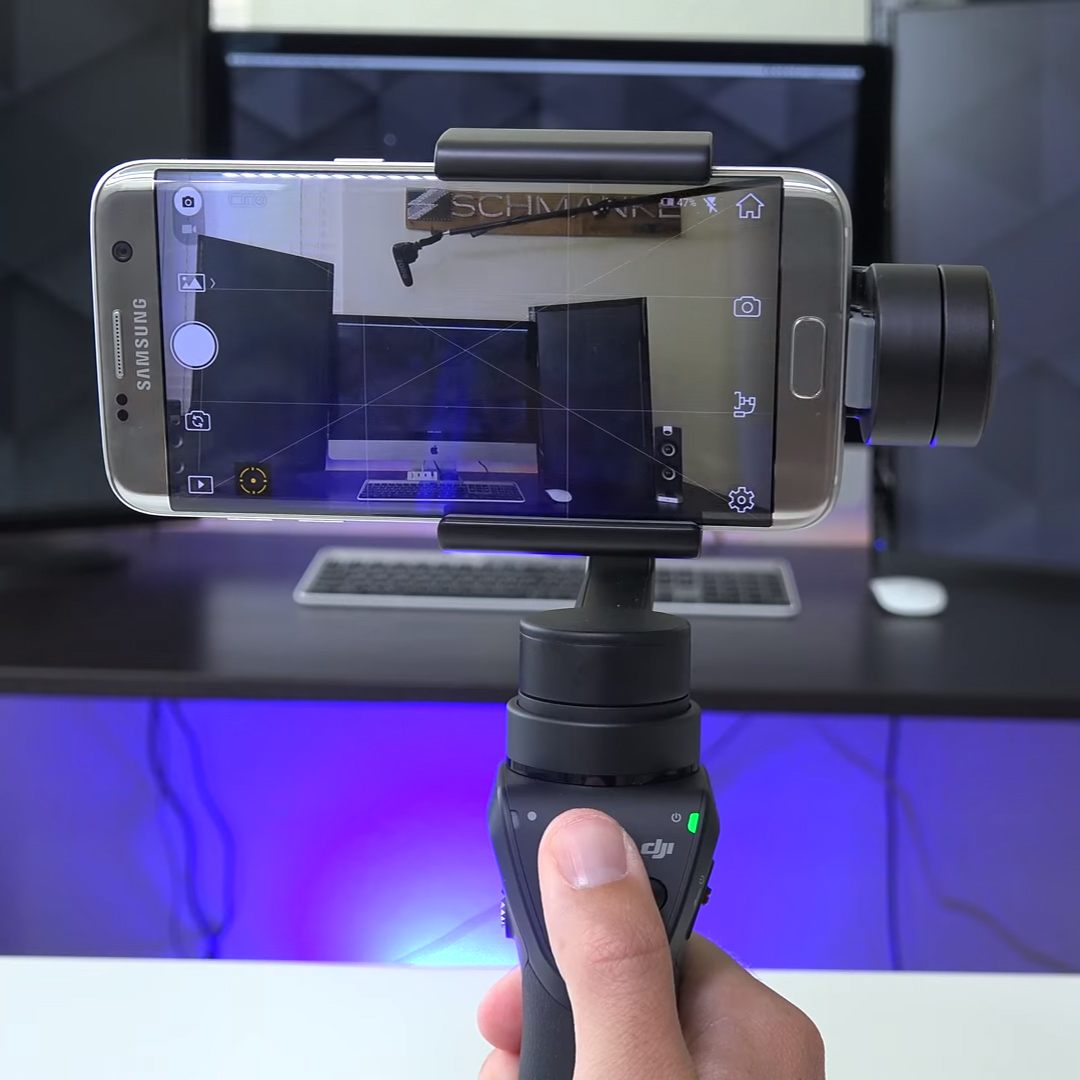
    MUMBAI: DJI, the world leader in creative camera technology, Thursday launched the Osmo Mobile, an extension for smartphones that turns them into intelligent, precision camera systems.

    Using DJI’s signature three-axis gimbal stabilization and SmoothTrack™ technology, the Osmo Mobile enables smartphone users to shoot effortless, high-quality photos and videos on the go.

    In combination with the DJI GO App, cinematic photos and videos can be live streamed or shared instantly on various social media channels. DJI’s ActiveTrack function allows users to simply tap the screen to automatically create perfectly framed shots of objects in motion. Users no longer have to choose between directing a shot or taking part in it.

    “DJI continues to revolutionize the way we capture and share memories,” said Frank Wang, DJI CEO and Founder. “The Osmo Mobile combines the best of DJI’s beloved Osmo smart stabilization technology with the robust DJI GO app. This is a breakthrough, allowing smartphone users unprecedented control of and creative possibilities for their devices.”

    The Osmo Mobile’s three-axis stabilization technology increases precision down to 0.03 degrees of accuracy. In combination with DJI’s SmoothTrack technology, which compensates for shaking and small movements, the Osmo Mobile makes it easy for anyone to capture smooth, cinematic shots.

    By using the trigger control, users can access various modes, as well as switch between the phone’s front and rear cameras. Camera settings, such as ISO, shutter speed and white balance are reachable directly onscreen.

    The Osmo Mobile is compatible with most recent smartphone models, including the iPhone 5, iPhone 6, iPhone 6s Plus, the Samsung Galaxy S7 and Huawei Mate 8. It should accommodate any Android or iOS smartphone with a width between 2.31 and 3.34 inches.

  • DJI Makes Your Smartphone Smarter with the New Osmo Mobile

    DJI Makes Your Smartphone Smarter with the New Osmo Mobile

    MUMBAI: DJI, the world leader in creative camera technology, Thursday launched the Osmo Mobile, an extension for smartphones that turns them into intelligent, precision camera systems.

    Using DJI’s signature three-axis gimbal stabilization and SmoothTrack™ technology, the Osmo Mobile enables smartphone users to shoot effortless, high-quality photos and videos on the go.

    In combination with the DJI GO App, cinematic photos and videos can be live streamed or shared instantly on various social media channels. DJI’s ActiveTrack function allows users to simply tap the screen to automatically create perfectly framed shots of objects in motion. Users no longer have to choose between directing a shot or taking part in it.

    “DJI continues to revolutionize the way we capture and share memories,” said Frank Wang, DJI CEO and Founder. “The Osmo Mobile combines the best of DJI’s beloved Osmo smart stabilization technology with the robust DJI GO app. This is a breakthrough, allowing smartphone users unprecedented control of and creative possibilities for their devices.”

    The Osmo Mobile’s three-axis stabilization technology increases precision down to 0.03 degrees of accuracy. In combination with DJI’s SmoothTrack technology, which compensates for shaking and small movements, the Osmo Mobile makes it easy for anyone to capture smooth, cinematic shots.

    By using the trigger control, users can access various modes, as well as switch between the phone’s front and rear cameras. Camera settings, such as ISO, shutter speed and white balance are reachable directly onscreen.

    The Osmo Mobile is compatible with most recent smartphone models, including the iPhone 5, iPhone 6, iPhone 6s Plus, the Samsung Galaxy S7 and Huawei Mate 8. It should accommodate any Android or iOS smartphone with a width between 2.31 and 3.34 inches.

  • Yatra launches cutting edge technology

    Yatra launches cutting edge technology

    MUMBAI: Yatra.com strengthened their travel booking offering by launching a series of exciting new features. These innovative technological solutions cater to different touch points in their business and further ease the booking process. The features launched – a Facebook chat bot to enable booking tickets, a self serve platform to address customer queries, and a market place chat platform to enable travellers to chat in real time with the sellers – are leading edge technology features that are a first for the Indian travel Industry.

    Yatra.com president Sharat Dhall says, “It has been our constant endeavour to stay in touch with the pulse of the traveller and up-grade our products accordingly. Today we are excited to unveil the chat bot for Facebook Messenger, a first in the Industry and a convenient way for travelers to quickly see travel options and make bookings. Facebook has a wide user base, and this chat option will enable travellers to experience Yatra in a seamless fashion without moving out of Facebook. Also the self serve and market place chat tools help ease the booking process and improve the overall customer experience.”

    Today’s traveller, thanks to the internet, is very well informed and believes in thorough research before deciding on their travel. Facebook is the largest social network and a number of travellers also take advice from friends before making travel plans. In addition, Yatra has a vast reach of almost 1.5 lakh Facebook followers who are looking to make bookings and enquiring about best deals. To leverage this audience, Yatra has launched an intelligent chat bot which helps customers search and book flights directly from their FB messenger. Itis an intuitive platform which helps consumer search in natural language and can handle even complicated queries. Chat bots let users perform tasks within messenger apps that would otherwise be done in a separate app. The company can use these bots to target users on platforms they frequent rather than making them download the company’s app to book.

    Yatra had earlier launched a holidays marketplace, as it enabled a wide range of packages and the best prices as buyers and sellers could directly interact and complete the transaction with no intermediaries. The marketplace chat platform that has just been launched serves as a direct connect between the customer and the re-seller. It has been built with the ability to have text based chats or direct voice calls. Customers can also share attachments via the chat. Discreetness is given due importance with customer privacy being completed maintained.

    Yatra has also introduced a self serve platform that can answer customer queries as it works like an automated FAQ machine, where responses to generic queries are pre-fed. In addition, based on the kind of queries posted by customers, the base of responses can be enhanced making the tool all the more powerful and efficacious.

  • Yatra launches cutting edge technology

    Yatra launches cutting edge technology

    MUMBAI: Yatra.com strengthened their travel booking offering by launching a series of exciting new features. These innovative technological solutions cater to different touch points in their business and further ease the booking process. The features launched – a Facebook chat bot to enable booking tickets, a self serve platform to address customer queries, and a market place chat platform to enable travellers to chat in real time with the sellers – are leading edge technology features that are a first for the Indian travel Industry.

    Yatra.com president Sharat Dhall says, “It has been our constant endeavour to stay in touch with the pulse of the traveller and up-grade our products accordingly. Today we are excited to unveil the chat bot for Facebook Messenger, a first in the Industry and a convenient way for travelers to quickly see travel options and make bookings. Facebook has a wide user base, and this chat option will enable travellers to experience Yatra in a seamless fashion without moving out of Facebook. Also the self serve and market place chat tools help ease the booking process and improve the overall customer experience.”

    Today’s traveller, thanks to the internet, is very well informed and believes in thorough research before deciding on their travel. Facebook is the largest social network and a number of travellers also take advice from friends before making travel plans. In addition, Yatra has a vast reach of almost 1.5 lakh Facebook followers who are looking to make bookings and enquiring about best deals. To leverage this audience, Yatra has launched an intelligent chat bot which helps customers search and book flights directly from their FB messenger. Itis an intuitive platform which helps consumer search in natural language and can handle even complicated queries. Chat bots let users perform tasks within messenger apps that would otherwise be done in a separate app. The company can use these bots to target users on platforms they frequent rather than making them download the company’s app to book.

    Yatra had earlier launched a holidays marketplace, as it enabled a wide range of packages and the best prices as buyers and sellers could directly interact and complete the transaction with no intermediaries. The marketplace chat platform that has just been launched serves as a direct connect between the customer and the re-seller. It has been built with the ability to have text based chats or direct voice calls. Customers can also share attachments via the chat. Discreetness is given due importance with customer privacy being completed maintained.

    Yatra has also introduced a self serve platform that can answer customer queries as it works like an automated FAQ machine, where responses to generic queries are pre-fed. In addition, based on the kind of queries posted by customers, the base of responses can be enhanced making the tool all the more powerful and efficacious.