Category: Components

  • Motorola razr 60 ultra flips the script with AI muscle, Alcantara finish and triple 50MP cameras

    Motorola razr 60 ultra flips the script with AI muscle, Alcantara finish and triple 50MP cameras

    MUMBAI: Motorola has launched the razr 60 ultra, setting a bold new benchmark in the premium flip phone segment. With a Snapdragon® 8 Elite processor, moto AI-powered capabilities, triple 50MP camera system, and the world’s first Alcantara finish on a smartphone, the new razr blends design with raw AI horsepower. Priced at an effective Rs 89,999 (launch price Rs 99,999), the device will go on sale starting 21 May on Amazon, Reliance Digital, and leading retailers.

    Built for the AI age, the razr 60 ultra features moto AI tools like Look & Talk, Catch Me Up, Remember This, and Next Move—turning the phone into a true personal assistant. Its Snapdragon® 8 Elite chipset delivers an AnTuTu score of 2.7 million, and the 3nm architecture fuels its CPU, GPU, and NPU cores for elite-level performance across apps, games, and voice/image recognition.

    Design-wise, the razr 60 ultra breaks ground with three finishes: Alcantara (Pantone Scarab), real wood (Mountain Trail), and vegan leather (Rio Red). Its new hinge, made from titanium and tested for 800,000 flips, is stronger and smoother. The phone is also IP48-rated and features Corning® Gorilla™ Glass-Ceramic on its 4.0” external pOLED display, offering 10x better drop resistance.

    The foldable device boasts a 7.0” 165Hz pOLED main display—the world’s first Pantone™ Validated flip screen. Users get Super HD (1220p) visuals, 464ppi sharpness, and peak brightness of 4500 nits, enhanced by Dolby Vision, HDR10+, and SGS Eye Comfort Certification. The external display mirrors that capability, supporting full app interaction, games, and Google Gemini assistant—without even flipping open.

    For photography, the phone features the world’s first 3 x 50MP flip camera system. This includes a 50MP main lens with OIS and 2x optical-quality zoom, a 50MP ultrawide + macro lens, and a 50MP internal selfie camera. Enhanced by moto AI and Pantone™ colour validation, the cameras support Dolby Vision video capture, 8K and 4K HDR, Horizon Lock, and AI Adaptive Stabilisation for cinematic content.

    The razr 60 ultra also includes a 4700mAh battery with 68W TurboPower charging—delivering a day’s power in 8 minutes—and 30W wireless charging with reverse power share. Connectivity spans 17 5G bands, Wi-Fi 7, Bluetooth 5.4, and UWB.

    The phone runs Android 15 with three years of OS updates and four years of security patches. Its Hello UI offers customisation, Smart Connect for cross-device synergy, and Moto Secure for privacy control. Features like Pay Attention, AI Image Studio, and AI Playlist Studio enrich creative and productivity workflows.

    According to Motorola India MD T.M. Narasimhan, “With the motorola razr 60 ultra, we’re proud to introduce a device that perfectly blends iconic design with next-gen intelligence. This launch is a bold stride in our mission to deliver meaningful innovation to the flagship smartphone segment”.

    Motorola is offering an instant Rs 10,000 bank discount and 12-month no-cost EMI options. Operator benefits via Jio include Rs 15,000 in bundled content, data and partner coupons, making the deal even sweeter for early adopters.

  • Hitachi Vantara flexes its storage muscle with triple-threat guarantee for enterprises

    Hitachi Vantara flexes its storage muscle with triple-threat guarantee for enterprises

    MUMBAI: In the unglamorous world of data storage, where blinking boxes keep the digital world from collapsing, Hitachi Vantara just turned up the drama. The company launched a triple-play of service guarantees on 21 April 2025, giving its Virtual Storage Platform One (VSP One) a serious shot of swagger—with built-in promises for cyber resilience, performance, and sustainability. No more crossed fingers or desperate prayers to the server gods.

    The new features arrive as IT teams around the globe scream into the digital void. They’re juggling fragmented systems, drowning in ransomware anxiety, and praying their monthly power bill doesn’t resemble the GDP of a small country. Hitachi Vantara has finally decided enough is enough, pitching its upgrades as the antidote to modern IT headaches.

    “IT complexity, cyber threats and sustainability challenges continue to put enterprises under extreme pressure,” said Hitachi Vantara chief product officer Octavian Tanase. “With VSP One’s latest enhancements, we are eliminating those roadblocks by delivering a unified, automation-friendly platform with guaranteed performance, resilience and efficiency built in. This is more than just data storage—it’s a smarter, more sustainable way to manage enterprise data at scale.”

    So what’s in this triple scoop of enterprise storage goodness? First, a performance guarantee promises that applications will run like greased lightning—or at least predictably fast—with minimal fiddling. The company backs it with Everflex service credits if speeds don’t meet the bar.

    Then comes the cyber resilience guarantee, loaded with AI-driven ransomware detection powered by Cybersense and immutable snapshots. Translation? If ransomware comes knocking, your data won’t run off to join it. And if all else fails, Hitachi promises up to 100 per cent credit for the affected storage volume.

    Finally, the sustainability guarantee adds a little green to the grey server room. Hitachi claims VSP One can cut carbon footprints by up to 40 per cent, with power-efficient architecture and SLA-driven energy tracking.

    VSP One’s new features don’t exist in a vacuum. They slot neatly alongside Hitachi’s other crowd-pleasers, including a 100 per cent data availability guarantee, a 4:1 data reduction promise, and non-disruptive controller upgrades under its modern storage assurance guarantee. Because who wants to buy the same terabytes twice?

    Unlike many storage vendors slapping together software layers like digital lasagne, VSP One comes fully integrated. No awkward API speed-dating or twelve different dashboards to babysit.

    “Ransomware continues to threaten the viability of today’s enterprises,” said Index Engines VP – strategic partnerships Jim McGann. “The addition of VSP One’s Cyber Resilience Guarantee, including Ransomware Detection powered by CyberSense, equips organizations with the intelligence and automation needed to strengthen their cyber resilience. By integrating advanced tools like VSP One and CyberSense, IT teams can streamline recovery workflows, minimise downtime and validate the integrity of critical data with greater confidence to minimise the impact of an attack.”

    Whether you’re a midsize IT manager who just wants to sleep at night or a global enterprise exec tired of apologising for downtime, Hitachi Vantara seems to be saying: we’ve got your back, your data, and your carbon bill.
     

  • Star power goes green as Shailesh Singh and Virral Patel join iline

    Star power goes green as Shailesh Singh and Virral Patel join iline

    MUMBAI: In a bold and eco-savvy move, acclaimed producer Shailesh R. Singh and actor-entrepreneur Virral Patel have officially been named co-founders of iline, India’s first electric vehicle (EV)-only logistics platform. Founded in 2024, Iline is already making clean waves across Delhi NCR and Gurgaon and now, it’s driving full speed ahead with a mission to transform last-mile delivery into a sustainable powerhouse.

    At a time when urban logistics is one of the biggest culprits behind carbon emissions, iline’s all-EV fleet is more than just a green alternative, it’s a solution. For every kilometre driven by an iline vehicle, nearly 350 grams of carbon emissions are eliminated. That’s not just mileage, it’s meaningful impact.

    Welcoming the new leadership team iline.AI,CEO Prakarsh Dwivedi said, “iline is redefining the future of last-mile delivery in India. With Shailesh R. Singh’s strategic insight and Virral Patel’s tech-first thinking, we’re creating a delivery ecosystem that’s intelligent, sustainable, and people-focused. This collaboration sets the stage for iline’s evolution from a bold startup to a catalyst for nationwide green mobility and inclusive growth.”

    Shailesh R. Singh said, “As a producer, I have always believed in the power of purpose. With iline, we are combining purpose with performance – creating logistics solutions that are clean, smart, and built for the future.”

    Virral Patel added, “We started iline to prove that technology can serve both business and the planet. With AI at the core and EVs on the ground, we’re making logistics not just faster, but better for the environment.”

    The iline platform is built around a dual-app ecosystem, a customer app that offers booking, real-time tracking, and AI-powered ETAs, and a pilot app for delivery partners to manage rides, monitor battery health, and view earnings. Going a step greener, iline also offers unique incentives like a CO₂ savings tracker and a green rewards system.

    The company’s catchy motto “Kam Pollution, Zyada Solution” is more than just a line. It’s a philosophy. iline is building a robust network of EV drivers and using AI to optimise delivery infrastructure for sectors like e-commerce, food delivery, hyperlocal services, and retail.

    As India charges toward its green future, iline’s leadership and innovation could turn it into a national model for clean, inclusive growth. And with Bollywood at the wheel, the journey’s bound to be a blockbuster.

  • Kamal Haasan hits Las Vegas tech show, NAB

    Kamal Haasan hits Las Vegas tech show, NAB

    MUMBAI: Actor-producer Kamal Haasan, currently deep in the throes of Thug Life preparations, sent social media into a frenzy today after his production house, Raaj Kamal Films, posted images of the actor exploring the NabShow at the Las Vegas Convention Centre.

    Haasan, known for his tech-savvy approach to filmmaking, was spotted perusing the latest film equipment, including cameras, sparking speculation about potential innovations in his upcoming projects. The photos, which quickly went viral, showed the actor immersed in the world of cutting-edge cinematic technology.

    The NabShow, a major event for broadcast, media, and entertainment professionals, provided Haasan with a glimpse into the future of filmmaking. Fans and industry insiders alike buzzed with excitement, wondering what new tricks the actor might be adding to his already impressive cinematic arsenal.

    Adding to the excitement, Haasan’s highly anticipated film, Thug Life, co-written with Mani Ratnam, is set to hit theatres on 5 June. The film boasts a star-studded ensemble cast, including Silambarasan, Ashok Selvan, Aishwarya Lekshmi, Abhirami, and Nassar.

    Haasan is also gearing up for the release of Indian 3, the third installment in Shankar’s acclaimed “Indian” franchise. Looking ahead, the veteran actor is set to embark on his 237th film, collaborating with stunt choreographers Anbariv, known for their work on blockbuster hits like Beast, Leo, KGF, and Salaar.

  • Intel chips in with TSMC for US fab fix amid foundry fatigue

    Intel chips in with TSMC for US fab fix amid foundry fatigue

    MUMBAI: Fab mates in the making? In a twist worthy of Silicon Valley drama, Intel and Taiwan’s TSMC are reportedly close to a blockbuster chip deal with Washington pulling a few strings from the wings.

    According to The Information, via Reuters, the two semiconductor giants have reached a preliminary agreement to form a joint venture that would see TSMC operate a 20 per cent stake in Intel’s U.S.-based fabs. The rest of the ownership remains under wraps, though whispers of potential investor pitches to AMD, Nvidia, Broadcom, and Qualcomm have swirled since early 2024, despite public denials by some of the players involved.

    Behind the scenes, the Biden administration and the U.S. Department of Commerce are said to be stage-directing the high-stakes collaboration. With Intel’s IDM 2.0 strategy stalling and its fabs failing to fire on all cylinders, this venture appears designed to stabilise an American chip titan without handing over control to foreign ownership, something the U.S. government has firmly resisted.

    The stakes are silicon-sharp. Intel has spent tens of billions of dollars on its domestic fabs, but only a select few are equipped for advanced 18A process technologies, the bedrock for Intel’s next-gen processors. The challenge? Many of these fabs are tailored for Intel’s own chips, not contract manufacturing, a space where TSMC reigns supreme.

    TSMC’s planned 20 per cent stake also raises eyebrows given its existing 165 million dollars investment in Arizona’s Fab 21, which already serves top-tier clients like Apple. How the Taiwanese foundry plans to juggle its own fab expansion with the new Intel tie-up remains unclear.

    Chip watchers say this uneasy alliance may be less about synergies and more about survival, with the White House acting as the matchmaker. As part of a broader push to keep chipmaking competitive and domestic, Washington seems determined to bring Intel back into the game, even if it means nudging rivals into bed together.

    Adding to the plot, Intel recently brought in industry veteran Lip-Bu Tan as CEO to guide its comeback after it fumbled the AI-driven semiconductor surge. While Intel and TSMC have stayed silent on the matter so far, industry insiders suggest that this deal, if sealed, could redefine global chip geopolitics.

  • Act SmartWi-Fi® transforms in-home internet with AI-driven performance boost

    Act SmartWi-Fi® transforms in-home internet with AI-driven performance boost

    MUMBAI: If buffering wheels and dead zones have been your unwelcome houseguests, Act Fibernet just sent them packing. In a game-changing move, Act SmartWi-Fi® has turbocharged home internet speeds, delivering up to three times faster performance across devices, with Smart TVs and laptops doubling in speed, and smartphones enjoying a 4x boost. And this is just the beginning.

    Launched across 250,000 homes, Act SmartWi-Fi®, powered by Aprecomm’s agentic AI, is already redefining connectivity. Over the first 15 days, the AI-powered router OS, Act Zippy, successfully steered 80 per cent of Smart TVs, 70 per cent of laptops, and 60 per cent of smartphones to optimal wifi channels—automatically dodging congestion, interference, and dead spots before users even noticed a problem.

    Act SmartWi-Fi® does more than just boost speeds—it monitors, diagnoses, and optimises wifi performance in real-time. By analysing over 15 parameters at any given moment, the AI ensures users experience top-tier internet quality 24/7. From dynamic channel switching to band steering, the system fine-tunes connectivity so every device in the home operates at peak efficiency.

    Act Fibernet’s chief marketing & customer experience officer Ravi Karthik, hailed the early success of the launch. “We are thrilled to see the transformative impAct of Act SmartWi-Fi® on our customers’ digital lives. Our initial launch data validates our commitment to delivering on our promise—ensuring a significantly superior online experience for our customers. Whether streaming on a Smart TV, working on a laptop, or browsing on a mobile device, Act is redefining what high-performing internet looks like in Indian homes”, Ravi said.

    Aprecomm CEO Pramod Gummaraj, whose AI-driven technology powers this revolution, highlighted the innovation at play, “Our agentic AI solution, which currently enables Act SmartWi-Fi®, works to optimise for every device and application to enable a superior wifi experience. This delivers, among other benefits, improved speed, reduced latency, and enhanced reliability. We’re proud to be part of this journey to enhance connectivity for millions of users.”

    Act Fibernet has long been at the forefront of India’s broadband revolution. With Act SmartWi-Fi®, the company is not just improving speeds—it is redefining what seamless connectivity looks like. As digital demands grow, Act’s AI-driven approach ensures that Indian homes stay ahead, enjoying uninterrupted, high-performance internet for streaming, working, gaming, and beyond.

  • Hyundai-Samsung debut Private 5G Redcap Tech to power smart factories

    Hyundai-Samsung debut Private 5G Redcap Tech to power smart factories

    MUMBAI: The future of smart manufacturing just got faster, leaner, and sharper. Hyundai Motor Company and Samsung Electronics have teamed up to bring Private 5G (P-5G) Redcap (Reduced Capability) technology to the factory floor, promising seamless communication, reduced power consumption, and cost efficiency. The game-changing tech will take centre stage at MWC25 Barcelona from 3–6 March 2025, where Hyundai will showcase its impact on the mobility manufacturing sector.

    Hyundai has always pushed the envelope in future mobility, from electrification to software-driven innovations. Now, with Samsung’s cutting-edge network solutions, it has become the first in the mobility manufacturing sector to verify P-5G Redcap technology. The collaboration aims to revolutionise how factories communicate, automate, and optimise workflows.

    “Hyundai Motor was the first Korean company to implement P-5G in mass production,” said Hyundai Motor and Kia VP & head of the E-forest center Jae Min Lee. “We are also the industry’s first to verify P-5G Redcap technology, reinforcing our global leadership in smart manufacturing solutions. We will continue to accelerate its commercialisation.”

    Samsung’s Networks Business also sees this partnership as a beacon for the industry. “The recent collaboration with Hyundai Motor represents how the two leaders in their respective industries can creatively drive business innovation and unlock new real use cases by merging best-in-class expertise. Samsung’s Redcap-powered private 5G network solutions will open up more possibilities for enterprises, manufacturers, and public institutions, serving as a gateway to driving more efficient 5G networks,” said Samsung Electronics VP & head of B2B·B2G business development, Simon Lee.

    Since January 2025, Hyundai has rigorously tested Samsung’s P-5G solutions, including radio, core, and management systems, using its in-house vehicle inspection equipment at Samsung’s Suwon campus. The companies even developed a custom vehicle inspection device to put the network’s capabilities to the test.

    The results? Seamless, interference-free communication, crucial for centralising control over industrial robots and devices. P-5G Redcap simplifies configurations, shrinks infrastructure requirements, and optimises bandwidth use—all while cutting costs and power consumption. Compared to traditional Wi-Fi, it offers superior speed, data processing, connection stability, and low latency.

    Previously, high-performance equipment dominated Redcap applications, but Hyundai has now integrated Qualcomm’s Snapdragon X35 5G Modem-RF System chipsets into its Diagnostic Scan (D Scan) system. This enables high-speed wireless communication for vehicle inspection tools, cameras, and tablets, ensuring a more efficient workflow.

    Samsung’s P-5G solution, equipped with optimised Redcap software, more than doubles uplink capacity for real-time IoT data transmission while keeping power consumption in check. Its integrated management system automates network functions, adding another layer of efficiency.

    Hyundai has already put this cutting-edge technology into action. In October 2024, it deployed P-5G Redcap at its Ulsan plant in South Korea, equipping the facility with dozens of automated guided vehicles. Over at Hyundai Motor Group Metaplant America (HMGMA), more than 200 autonomous mobile robots now operate seamlessly, thanks to the technology’s adaptation to local regulations.

    The results have been staggering. Communication disruptions and downtime have plummeted, allowing Hyundai to patent a dual wireless communication solution that combines 5G networks with Wifi. Since deployment, the system has maintained zero communication-related downtime—a major feat in industrial automation.

    Looking ahead, Hyundai plans to integrate P-5G into its new EV-dedicated plant in Ulsan, set to open in 2026. As the company continues its Redcap rollout, it is laying the groundwork for a smarter, faster, and more connected manufacturing ecosystem.

  • Arri appoints industry veteran Chris Richter as managing director

    Arri appoints industry veteran Chris Richter as managing director

    MUMBAI: Cinema tech and video filming equipment leader Arri  has appointed Chris Richter as its new managing director, effective February 2025. Richter brings nearly three decades of experience in the motion picture industry to the Munich-based company.
    The appointment follows Richter’s swift ascent through Arri’s executive ranks, having served most recently as senior vice president of sales & rental for the Arri group.  He joined the company in 2017, initially establishing and managing its global certified pre-owned programme before taking charge of sales across the EMEAI region (Europe, Middle East, Africa, and India).
    Prior to joining Arri, Richter spent over two decades at Eastman Kodak, where he held the position of vice-president motion picture and entertainment, directing sales and marketing efforts across the EMEA and Asia Pacific regions. His tenure at Kodak included strategic postings in the United Kingdom, United Arab Emirates, South Africa, and Bulgaria.
    Throughout his career, Richter has demonstrated particular expertise in sales strategy, new business development, and team leadership. At Arri, he played a pivotal role in expanding the company’s high-end camera systems and lighting solutions business, managing multinational teams across diverse geographical territories.
    “I’m humbled and honoured to start this new position as managing director at Arri,” Richter said of his appointment. 
    His elevation to the top role comes at a time when the century-old company continues to innovate in professional camera and lighting technology for the global film industry.


  • “Data orchestration is the priority for many customers, but AI-driven pipelines are rapidly becoming a competitive advantage” – Dell Technologies’ Alex Timbs

    “Data orchestration is the priority for many customers, but AI-driven pipelines are rapidly becoming a competitive advantage” – Dell Technologies’ Alex Timbs

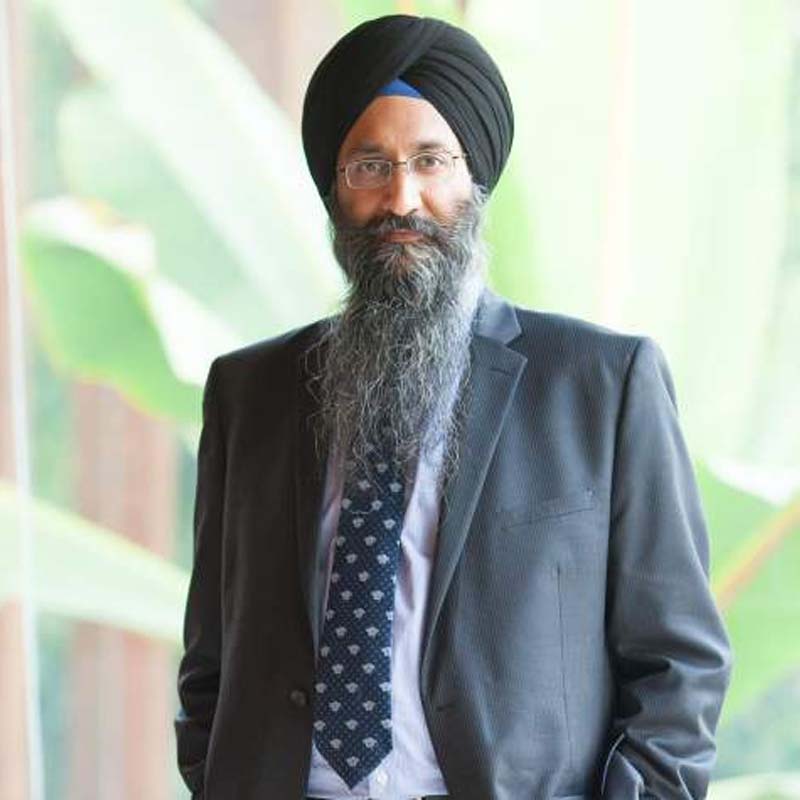
    Alex Timbs is not your regular business executive from Dell Technologies. The Ozzie Brisbane-based gent  takes a keen interest in everything right from sport to tech when he is not in his day job at Dell Technologies as a media industry expert.

    He likes to tinker around with almost every new tech that comes up, apart from having a creative bent of mind. He spent a good decade and a half at an animation studio working on some of the well-known animation and VFX franchises like Matrix and HappyFeet before switching to the vendor side at Dell. 

    Because of his understanding of both sides of the coin, Alex’s clients more often than not call on him to help him find some workflow solutions and not just about storage which he is an expert in. A courtesy he extends every time. And these are relationships which have seen emerge as amongst the top executives in the storage vertical at Dell.

    Indiantelevision.com’s founder, chairman and editor in chief Anil Wanvari got in touch with the affable gentlemen over several zoom calls to distil down whatever he had to say about the the transformative impact of AI on content creation and the evolving landscape of media storage solutions. Excerpts from the various conversations with Alex. This one is only part one of the interview; the second part will follow mid-this week.  

    On what were the workflows for animation and post-prod when he started out.

    I spent nearly 16 years at Animal Logic, and the transformation I witnessed was remarkable. . I vividly remember my early days at Animal Logic, where we were working on Matrix 2 using film scanners. The workflow seems almost archaic now – we’d send work out for overnight printing. Even during Happy Feet, our dailies process involved sending work out to be printed overnight. The next morning, everyone would gather in the theatre to review footage on actual film, Our technology backbone consisted of SGI boxes, with one particular suite costing around 1.5 million Australian dollars. Individual machines were running between 30,000 to 50,000 dollars each.
    Then came this revolutionary shift towards personal computers. It was transformative – suddenly we had access to incredibly powerful technology for just 5,000 to 10,000 dollars. This technological deflation has continued throughout my career and is accelerating with AI and generative technologies. Each year, we see the capability-to-cost ratio improving exponentially. What’s fascinating is how this democratisation of technology has fundamentally changed the way we approach content creation.

    This technological deflation has continued throughout my career and is accelerating with AI and generative AI. It’s been fascinating to watch this snowball effect, enabling us to do exponentially more with less.

    On his transition from a major animation studio to Dell Technologies

    I’ll be completely honest – I was incredibly skeptical about joining what I perceived as a sales company. I didn’t think I’d last more than 12 months, assuming I’d be bored out of my mind. But here I am, over five years later, and it’s been an extraordinary journey. Dell has a massive media and entertainment focus that many people don’t realize. We have a team of subject matter experts from various backgrounds – broadcasters, film studios, game studios – with over 100 years of combined industry experience.
    I actually had a relationship with Dell’s technology before joining them. Back in 2006-2007, I purchased an Isilon system (now PowerScale) to replace 14 individual storage silos. We went from needing two people working shifts to manage data movement to requiring just a quarter of one person’s time. That experience showed me the real impact technology could have on production workflows.

    On the major challenges media companies are facing today
    The biggest challenge we’re seeing is data management – and it’s not what people might expect. When we go to major trade shows, everyone assumes AI will dominate the conversation. But in reality, most customers want to discuss data orchestration. They’re grappling with questions like: How do I support globally distributed workflows? How do I enable freelance artists working from home? How do I manage this tsunami of data being created by automation and new tools?
    Many media companies are dealing with hundreds of millions, if not billions of files. They need help regaining control of their data. This includes automated solutions for deprecating or deleting data efficiently. It’s becoming a critical issue, especially as generative AI tools create even more data at an exponential rate.
    All of this is happening against a backdrop of global economic uncertainty. Companies are making more utilitarian decisions, seeking certainty in their investments. They want to know exactly what return they’ll get, whether that’s efficiency gains or cost control. Agility is also crucial – the ability to shift where data lives and how it’s accessed has become fundamental to modern workflows.

    Alex TimbsOn how  companies are  implementing AI in their production pipelines
    We’re seeing AI adoption across every scale of production. Whether it’s an individual working from home or a team of 1,000 artists, most customers are starting their AI journey. They’re gravitating towards validated solutions and partners who understand the unique infrastructure needs of this technology.
    The fascinating thing about generative AI in media production is its diverse application. While it doesn’t handle true 3D environments well yet – it’s more ‘2.5D’ with depth mapping – we’re seeing it used for face replacement, frame blending, character development, and environmental creation. But the implementation varies significantly, what we call the ‘T-shirt size’ approach.
    “A small ‘T-shirt size’ might be an individual or small workgroup doing exploratory work using local SSD storage. As projects evolve and more people start collaborating, you need shared flash storage – even for small teams of 30-40 people working with just 30 terabytes of data. The largest enterprises might invest in Nvidia superpods or specialized AI servers with large VRAM-capable GPUs for distributed AI use cases.”

    On his perspective on cloud storage in media production
    We’re seeing a significant shift in cloud strategy. The future is definitely hybrid, but cloud-first isn’t the right approach for many customers. In fact, we’re seeing considerable repatriation from the cloud. The reality is that sustained workloads in the cloud can be very expensive.
    That said, certain workflows make perfect sense in the cloud. Broadcasters who need to scale dynamically for specific events and then scale down – it would be foolish to buy infrastructure that sits idle most of the time. But there’s been a recent rationalization of strategy. Customers are becoming more sophisticated in their understanding of when cloud makes sense and when it doesn’t.

    On his perspective on the key trends in media technology that one should keep an eye on. 
    The industry is at a fascinating inflection point. We’re seeing the convergence of real-time workflows, often driven by game engines, with AI tools. This combination is radically speeding up the creation process. At the same time, there’s a growing focus on operational efficiency – automating repetitive tasks, improving asset management, and making more informed decisions about data lifecycle.
    The key is finding the right balance between innovation and practicality. Success isn’t about rushing to adopt every new technology; it’s about understanding your specific needs and implementing solutions that deliver measurable value while protecting your creative assets and IP.
     

  • Seagate to acquire Intevac in £119m deal

    Seagate to acquire Intevac in £119m deal

    MUMBAI: Seagate Technology Holdings plc (Nasdaq: STX), a mass-data storage firm, has announced plans to acquire thin-film processing systems supplier Intevac Inc (Nasdaq: IVAC) in an all-cash transaction valued at £119m.

    Under the terms of the agreement, Seagate will pay $4.00 per share, whilst Intevac will distribute a one-time special dividend of $0.052 per share upon closing. The company’s board of directors has also declared a regular quarterly dividend of $0.05 per share, payable on 13 March 2025 to stockholders of record as of 28 February 2025.

    The total consideration of $4.102 per share, including both dividends, represents a 45 per cent premium to Intevac’s closing price of $2.83 on 11 December 2024, and a 21 per cent premium to its closing price of $3.38 on 12 February 2025.

    The transaction will proceed via an all-cash tender offer for all outstanding Intevac shares, subject to a minimum tender condition of 50 per cent plus one share. Two of Intevac’s largest stockholders, Palogic Value Fund LP and Bleichroeder LP, who collectively hold approximately 22 per cent of outstanding shares, have agreed to support the deal.

    Intevac, founded in 1991, is known for its thin-film process technology and manufacturing platforms, particularly serving the hard disk drive industry with its 200 Lean platform. The company has been instrumental in enabling heat-assisted magnetic recording media production.

    The acquisition, expected to close in late March or early April 2025, has received unanimous approval from Intevac’s board of directors. Seagate anticipates the deal will positively impact its non-GAAP earnings per share over the long term.

    Houlihan Lokey is serving as financial adviser to Intevac, with Wilson Sonsini Goodrich & Rosati as legal adviser. Wachtell, Lipton, Rosen & Katz is acting as legal adviser to Seagate.