Category: Components

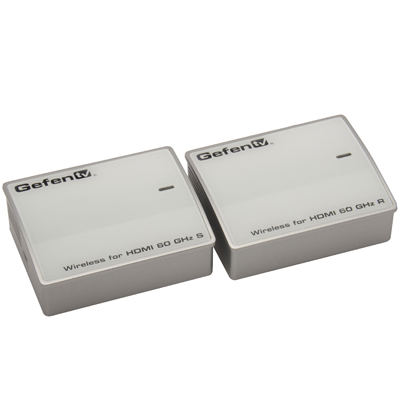
  • Gefen’s New Wireless for HDMI 60 GHz Extender

    Gefen’s New Wireless for HDMI 60 GHz Extender

    MUMBAI:  Gefen’s new Wireless for HDMI 60 GHz is designed for any in-room transmission of high quality, 1080p full HD video up to 33 feet (10m). It delivers 3DTV, is plug and play and supports all audio formats including the new lossless High Bit Rate (HBR) 7.1 channel Dolby True-HD and DTS-HD Master Audio. The ability to pass through uncompressed video, lossless audio and 3DTV is ideal for cutting-edge, high performance commercial or residential installations.


    This extender uses the best technology currently available for an impeccable method of wireless extension that takes full advantage of the WirelessHD specification, which is based on the 60 GHz EHF (Extremely High Frequency) radio band. This high quality method of extension eliminates the need to run cables, making it a great solution for retrofits or any environment that wants to streamline cabling.


    The editors of Electronic House magazine gave a formal nod to this new extender from Gefen by awarding it a Product of the Year award for 2014. Endowed by a panel of distinguished industry leaders and the editors of Electronic House and CE Pro, Gefen joins an exclusive group of products deemed the most noteworthy. Announced on January 7, 2014 at the International CES in Las Vegas, Nevada, the GefenTV Wireless for HDMI 60 GHz was selected as best in the A/V cables and interconnects category. 


    Due to its in-room transmission and use of the uncluttered 60 GHz frequency band, this extender can perform seamlessly alongside other wireless devices in adjacent rooms with zero interference. It is very easy to install, requiring a connection of the video source to the sender and of the display or projector to the receiver.  Content is transported wirelessly at 4Gbps from source to display. This extender also features a small footprint and a compelling MSRP. Included is a risk-free warranty backed by Gefen’s reputation and well-regarded customer support team.

  • KCCL launches Cardless security solution from Conax including latest chip technology from ALi

    KCCL launches Cardless security solution from Conax including latest chip technology from ALi

    MUMBAI: Conax, a leading global provider of solutions for securing digital video content distribution on all networks and devices, today announced that Kerala Communicators Cable Ltd has entered a pilot project to deploy the new Conax Cardless solution launched in September at IBC Expo. KCCL is a consortium of over 3000 independent cable TV networks in Kerala, South India. The pilot project includes an upgrade of KCCL’s existing Conax Contego™ security back-end to include support for the new Conax Cardless secure CA client. The solution consists of Conax Cardless CA and uses Coship STBs with secure chipsets from ALi Corporation, seamlessly complementing the existing card-based STB population. Coship is one of the vendors in a portfolio of licensed STB partners for the Conax Cardless offering.


    KCCL operators represent 70% of cable TV services in the southwestern Indian state of Kerala – a region with a population of 33 million people. The enhanced Conax Contego security hub will empower KCCL network operators to easily operate both Smart Card and Cardless clients and differentiate between security requirements of diverse consumer groups and content. Now KCCL will be able to offer a cost efficient solution for targeting low ARPU segments and enabling rapid digitization – as well as reducing churn.


    Through a strategic partnership with ALi Corporation, the Conax solution will provide KCCL with a highly secure Cardless solution utilizing a unique combination of hardware (security) and software security; for a revolutionary level of protection not available in pure software solutions. The secure software is executed within a purpose-built hardware protected environment (Secure Execution Environment) within the ALi chipset, the main CPU in the set-top-box level of protection. KCCL has chosen to deploy Conax security evaluated set-top-boxes from Coship. To enable rapid development of the cardless set-top-boxes from Coship and other STB vendors, Conax and ALi are providing a reference design with an embedded Conax Cardless security core.


    -Mr. Nassir Hassan Anwar, Director, KCCL, “We are pleased  to further strengthen our relationship with security partner Conax based on the Conax brand value, long experience and reliability in India, 24/7 support, flexibility of operations and open policy for STB selection. Upgrading KCCL’s security back-end to include Conax Cardless, using Ali chipsets and Coship STBs, will allow member operators to easily create new product offerings using cards or cardless clients based on varied consumer groups. The Conax solution will continue to enable KCCL operators with a future-proof, secure roadmap.”


    The combined solution will enable KCCL to capture new business in the next phase of digitization in South India, while expanding their platform for additional business models and content offerings. The Conax Contego solution will also provide KCCL with easy upgrade for integrating future offerings such as VOD, multiscreen and over-the-top content viewing.

    -Tom Jahr, EVP Products & Partner, Conax, “Conax is very proud that KCCL, a forward-thinking consortium with a unique business model and vision for the future, has chosen to partner in the Conax Cardless pilot deployment.  Our aim is to enable KCCL to benefit from the best of both worlds, employing the cardless solution for low-end video content and smart card security for premium content. With the new solution, Conax is providing KCCL with the comprehensive and flexible tools for developing secure business models and capturing future growth.”


    -Tony Chang, General Manager of International Business Unit, ALi Corporation, “Only a few months after the launch of Conax Cardless security solution at IBC including the latest generation of ALi’s secure cable STB SoC, we are proud that KCCL has chosen Conax Contego supporting both Smart Card and Cardless clients with ALi’s secure chipsets. Using the reference design provided by ALi and Conax, we are pleased that Coship was able to rapidly deploy a cardless STB, thus together we are enabling KCCL to rapidly respond to different market needs. This also further confirms the technical leadership of ALi’s secure chipset solutions in both standard and high definition, as well as the partnership with Conax on delivering cost effective cardless solutions to the low APRU segment.”


    Technical recap:

     
    · Conax Cardless is fully supported as one of the client options for the Conax Contego™ security back-end, making it easy for KCCL to expand their security hub to include cardless content distribution


    · Utilizing a dedicated security core in the new chipset technology from ALi, Conax combines hardware security and software security to place a cardless security client within the ALi chipset integrated in the STBs from Coship. As the security of the solution relies on both software and hardware security, Conax Cardless has a significant market advantage over competitors’ software solutions.

  • NationalChip’s STB solutions for Indian digitisation

    NationalChip’s STB solutions for Indian digitisation

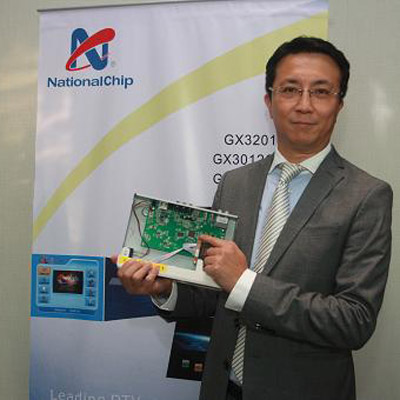
    MUMBAI: When it comes to technology, China is one of the leading Asian countries in the world that comes to mind. So it’s no surprise when leading China based IC developer and manufacturer of digital TV solutions, NationalChip, launched new set top box chips (system-on-chip) for the Indian market.

    The company is looking to increase its market share in India’s fast-growing set-top box (STB) chip manufacturing market. As part of its growth plans, NationalChip has launched new set-top box chips (system-on-chip) for the Indian market.

    The company’s new HD STB chip is based on GX3201 that delivers HD content at over 1000 MIPS CPU performance, 1080P HD decoding and security implementation. To cater to the mid to lower end subscribers that forms the major chunk of the Indian cable TV universe, the company has launched SD STB chip based on GX3001R or GX3012Q that offers high speed CPU for user experience as well as true colour display for enhanced picture quality.

    According to NationalChip, these chips can support advanced security implementation that are demanded by most prominent conditional access vendors (CAS) and MSOs.

    “India has nearly 6,000 MSOs whereas there are only 300 MSOs in China. There is a huge opportunity for us to tap into this large cable TV market and we have the resources, the name and the technological advancement to cater to it,” says NationalChip VP Patrick Dou.

    NationalChip’s HD solution also supports OTT application that will allow subscribers to access online video content through home network internet. Currently the chip allows the viewer to use Wi-Fi connectivity to access sites such as YouTube to experience HD videos on their larger screens.

    “We are telling the MSOs here that they can secure subscription revenue and at the same time provide value added services to their subscribers with our HD solution that supports OTT application,” adds Dou.

    After having been in the industry since its inception in 2001 the chip manufacturer is looking to expand into new markets. It has identified India as one of the key markets apart from southeast Asia and Europe, Middle East & Africa (EMEA). NationalChip, which began operations in India from 2011, is working with local Indian STB manufacturers by providing them with software support to develop STBs locally.

    The company claims that its chips have been officially authorised by many CAS companies including NDS (Now under Cisco), Sumavision, NSTV, ABV, Logic Eastern, Ensurity, E-CAS, and Only One CAS. With the new product offering, the STB chip manufacturer is looking to work with other major CAS vendors in the Indian market.

    “We have a leading product lineup, turnkey solutions, track record and technical capability to support sustainable development of the Indian market,” says an optimistic Dou. On the business front, Dou says that the company has shipped 1.5 million chips to the Indian market in the last two years.

    “This might not seem like a big number but for a company which has been in the market for just two years, it’s quite an achievement,” stresses Dou. Dou is looking to up NationalChip’s market share to 30-35 per cent in the next four years, up from the current five per cent share.

    However, that will be a tough task as the STB chips market is currently dominated by big players like French Italian MNC STMicroelectronics, America’s Broadcom, and Taiwan’s ALi Corporation.

    To achieve this growth, the company is expanding to other cities in the country. Currently having its office only in Delhi it soon has plans to branch out to Mumbai, Pune, Hyderabad, Bengaluru, Ahmadabad and Chennai. The company currently has Pune-headquartered Millennium Semiconductors as its only distributor in India.

    “We have been in this business for nearly two decades now and have the right know how to take NationalChip and its advanced technology to the leading MSOs in the country. We are sure that with its advanced security feature as well as great capability to showcase HD content all leading MSOs will be more than willing to join hands with NationalChip and us,” says Millennium Semiconductor Sr.GM Technical Operation Sunil Deshmukh.

    Being the first local Chinese company to develop digital TV IC solutions since 2001, NationalChip is also the first and only Chinese IC company to achieve big deployment to support digitalisation phases in India.

  • Gaian launches Maya Platform for enhanced programming content delivery

    Gaian launches Maya Platform for enhanced programming content delivery

    NEW DELHI: The satellite broadcasters may have a reason to rejoice. Gaian Solutions India, a leading Technology and Consulting company that develops products and solutions for the Media and Entertainment industry, has launched its Maya Platform.


    The technology offers exciting real time localised cloud content services thus offering powerful tools to enhance Broadcasters programming content. Maya has the potential to change Satellite Broadcasters revenues by orders of magnitude. It also offers innovative solutions to free-to-air (FTA) broadcasters.


    1. Maya’s localisation technology integrates internet feeds and cloud content delivery mechanisms right into the uplink broadcast eliminating the need for internet connectivity at the edge devices. This liberates broadcasters from any kind of ecosystem challenges in commercialising localised data services.


    2. Maya is platform agnostic ensuring seamless localisation across all delivery channels be it a satellite broadcast or an OTT platform.


    3. Maya’s IRD integrates cloud and satellite reception into one device.


    4. The full HD IRD player and streamer ensures savings on broadcasters HD migration budgets.


    5. It offers a full featured Back Office and Self-Care portal to automate the work flow of sourcing, delivery, approval, distribution, proof of play and billing of local advertisements


    6. Maya allows broadcasters to report breaking news, latest events and trending topics, as they happen on Social Media platforms


    Gaian Solutions President and CEO Chandra Kotaru said, “From the outset we have set the bar for technological innovation in digital TV, achieving an unrivalled array of industry firsts. As our knowledge and expertise has grown, so the technology we use has been renewed and redefined. And that process continues today, with rapid changes in the way TV is broadcast, enjoyed and combined with other services.”

  • New technology simplifies collection for cable ops

    New technology simplifies collection for cable ops

    MUMBAI: Even as industry prepares for phase III of digitisation, here comes a technology that is likely to get more than a warm welcome from cable operators.

    UPASS, a front-end automation for the cable sector and mobility solutions provider, has announced that it has successfully integrated with the subscriber management system of Media Nucleus; a development set to change the collection system. While Kottayam-based Star Vision Cable Networks is the first LCO to use the integrated solution, Media Nucleus is in talks with three other operators for installing the solution to their systems.

    It was at the recently concluded SCaT that the collaboration took place. “We finished the integration and also showcased a part of it during SCaT,” informed Media Nucleus director Santosh Nair. He explained the working of the solution as: “Each subscriber will have an ID, subscriber number or name that will be stored in the subscriber database. Once the subscriber pays the monthly fees, the collection agent will type it on the mobile phone that has all the details relating to the package etc. Also, there is a Bluetooth printer connected to this device, which will help him print a receipt immediately.  The same data will also be sent to the database, which clears the subscriber’s outstanding amount.”

    Technically speaking, UPASS’s cloud model acts as data bridge between the mobile device and the SMS server. There is an option for collection entries to be made either in cash or cheque and the relevant data is passed on to the SMS server in real-time.

    UPASS managing director Ravindra Deshmukh said: “We are excited that Media Nucleus and UPASS are collaborating to help operators overcome the challenges of billing and collection hurdles by providing data in real-time as trusted and actionable information. Our system benefits end users quickly and with self-service, regardless of data volumes and variety, or whether the data is on-premise or in the cloud.”

    The advantages of the solution are three-fold. One, it will make the collection process easier. Two, it will make the system more transparent and help MSOs with instant data on subscribers and revenue collected per day. Three, it is more economical, since it can be used even on a simple Rs 500 mobile phone.

    Nair said every operator had collection issues and with this system in place, “MSOs will just have to follow up on the data. They will get instant information, unlike earlier, when LCOs would collect data and sometimes, not even reveal it. The information will give an upper hand to MSOs as well, who can show it to their investors.”

    The new solution will help both the MSOs and LCOs by making collection easier, says Santosh Nair Explained Media Nucleus director technology and delivery Rajiv Tomer: “We had been providing the core solution of subscriber management solution and were looking at integration services to enable collection at the ground level become a part of our solution to our clients.  UPASS, having an industry benchmark solution, gave us the right option to be a go-to-market, providing end-to-end technology with a single integrated platform. We have enabled it in such a way that operators can provide the basic handset to the collection agents, which gets integrated with our SMS.”

    The solution will be available to operators at a one-time investment of Rs 2500. This apart, “the operator will have to pay less than Re 1 per transaction per month,” informed Nair, adding, “We will be meeting operators from Pune next week. We have been getting a good response for the technology.”

    Maharashtra Cable Operators Federation president Arvind Prabhoo said the technology would address the biggest problem of digitisation, which is collection. “The cost of collection for the operator is approximately Rs 25. Also, there is a huge process involved with it- right from collecting money from each subscriber to putting the data on computer etc. The solution will reduce this burden and make the system more transparent.”

    “Rs 2500 is just 10 customers for an operator, so it is very economical for them. Also, getting two-three handhelds will also reduce their burden. As for the MSO, they have for long wanted a transparent system, which they can achieve through this,” Prabhoo said.

    The UPASS solution claims that it provides customer data capture and STB activation in real time, channel/package activation from the LMO phone as well. 

  • Radiation norms non-compliant mobiles can no longer be sold in India

    NEW DELHI: The government, which had introduced stringent mobile radiation norms from 1 September last year, has now said in new norms that non-complaint phone makers will not be permitted to operate in India.


    Companies manufacturing or importing mobile phones for sale in India will have to ensure that the handsets are compliant with new norms. In the EMF (Electromagnetic Frequency) Radiation Standards issued last year, mobiles to be manufactured from 1 September 2012 were to have one tenth of the radiation levels compared to the then mobiles.

    The government had also said at that time that the mobile handsets with existing designs which were compliant with 2.0 W/kg averaged over 10 gram of human tissue would continue to co-exist up to 31 August 2013. Thereafter, only the mobile handsets with revised SAR value of 1.6 W/kg would be permitted to be manufactured or imported in India.


    It is expected that this may also help in curbing illegal imports and help Indian manufacturers such as Micromax, Karbonn, Lava and Spice to avoid pricing pressure in the market since they will not compete with lesser known rivals.


    Under the new rule put in place by the Communication and Information Technology Ministry, the exposure of radiation emitted from a mobile phone over a gram of human tissue should not be more than 1.6 watt if a consumer uses it for six minutes.


    All companies will have to display radiation emitted from mobile phones on the handset in terms of SAR (specific absorption rate) unit. According to a Department of Telecom official, no fresh stock of non-compliant mobile phones will be allowed to be sold from 1 September.


    Bureau of India Standards is also working on certain norms which are expected to provide clause for seizure of non-compliant handsets, the official said. These guidelines made India one of the select few countries in the world to have stringent, established in the interest of public health, for mobile towers and mobile handsets. Indian standards are now 10 times more stringent than more than 90 per cent countries in the world.


    Furthermore, the Manufacturer‘s mobile handset booklet will contain safety precautions. All cell phone handsets sold in the market in India will comply with relevant standards and shall be available in hands free mode.


    A scientific study in India-specific context is being undertaken jointly by the Department of Telecom and Department of Science and Technology in collaboration with the Indian Council for Medical Research, the Ministry of Environment and Forests, and the Science & Technology Ministry to derive norms based on credible scientific evidence taking into account diversity of Indian social context.


    While guidelines for consumers on mobile handset usage have been issued and placed on the DoT Web site (http://www.gov.dot.in), they include keeping distance – Holding the cell phone away from the body to the extent possible; using a headset (wired or Bluetooth) to keep the handset away from and not pressing against the head, and limiting the length of mobile calls and using text.


    Radio Frequency (RF) energy is inversely proportional to the square of the distance from the source – being very close increases energy absorption much more. Other precautions include putting the cell phone on speaker mode and not carry a mobile phone that is close to the chest or pants pocket. When a mobile phone is switched-on, it automatically transmits at high power every one or two minutes to check (poll) the network.

  • ‘Our aim is to see that India is a top 5 market for us in 2 years’ : Sony chairman, CEO and president Sir Howard

    ‘Our aim is to see that India is a top 5 market for us in 2 years’ : Sony chairman, CEO and president Sir Howard


    Sony Corporation expects India to be among its top five markets by sales in the next two years.


    Betting big on 3D, Sony chairman, CEO and president Sir Howard Stringer is targeting 30 per cent of its India sales to come from 3D products by 2012.


    The first non-Japanese head of Sony feels that the company needs to improve its broadcasting business in India and build synergies across all its verticals.


    Stringer was in Mumbai to inaugurate Sony Media Technology Centre (SMTC) in association with Whistling Woods International (WWI), Indiantelevision.com‘s Ashwin Pinto unravels Stringer‘s plans in India.


    Excerpts:

    India only forms three per cent of Sony‘s global sales of around $88 billion. How do you explain this, given the large consumer base here?
    While this is true, our aim is to see that India is a top five market for us in the next two years. Year on year we have experienced a 50 per cent growth in turnover. Our commitment is to establish a strong brand here.


    We were not quick to come here with all the facets of our business. Twelve years back, India was not a focus market for us. You have to remember that our television sets have premium margins; they are expensive.


    Now as India‘s economy has grown, Indian consumers are getting aspirational for our products. You can only be as big as the market is. We expect solid growth in the coming four years.

    Is it fair to say then that India has become very important for Sony?
    Yes! When it comes to entertainment, we love India. We are trying to cash in on our success. We are the No. 1 consumer electronics brand here.


    On the television front, we do the IPL. Our film studio has had great success here. Everything that we do works here. The size of the Indian film industry is why India is so important. We have a good relationship here.


    A few years back, we started building infrastructure for 3D; digital cinema has helped us grow here and in other markets. Being in this industry is like no other. This is a wonderful business to be in.

    Are you confident that 3D will penetrate here?
    Yes! India will adopt 3D faster due to the size and scale of the film industry. People said that I should not tie my career in with 3D. However, I have never doubted this medium. 3D is not about special effects; it is about capturing the reality around us.


    Avatar focused a lot on special effects and the story was secondary. That is why I think that it lost the Best Picture Oscar.


    However now what you are seeing is that the technology is being integrated with the storyline. On television, it will be a feature but not everything needs to be in 3D. For instance, you would not want to see Gadaffi in 3D. We have a channel 3D Net. Sony Pictures Imageworks made Alice In Wonderland. 3D is an art form. Sony is home to engineers and film directors working on this technology.

    From a revenue standpoint, what difference is 3D making to Sony?
    It is becoming an important avenue with home video sales declining. You can charge a premium on tickets. Of course, there are films that are not good and so 3D will not work there. However if the product is good, then it offers a premium.

    What content is coming from Sony in 3D?
    The Smurfs is coming in 3D. Spiderman 4 is currently being shot. We are present across the spectrum of 3D. Last year, Hollywood made 40 films in 3D. By 2013, you will see 120 films using this technology. 3D is actually growing faster than HD.

    We were not quick to come to India with all the facets of our business. Now as India‘s economy has grown, Indian consumers are getting aspirational for our products. You can only be as big as the market is. We expect solid growth in the coming four years

    What is the size of the 3D market?
    In India, we have a 60 per cent share of 3D related products. Sony‘s target is that 30 per cent of India sales will come from 3D products by 2012.


    We launched 3D LCDs last year in India. More 3D capable products will be launched by us, one after the other.


    Globally, we are targeting sales of more than $12 billion for the current fiscal from 3D products. This includes consumer and professional products and games.

    There has been criticism that the 3D experience at home is not good. Your views?
    I do not agree. With high quality glasses, 3D becomes a riveting experience. We haven‘t had complaints about our products. The problem, though, is there is a lack of awareness about 3D.


    I have seen stores abroad where 3D TV sets are on display, but the glasses are not offered. So the picture is fuzzy and unclear. We test our 3D by seeing how many consumers can view it at a time. 3D is not a fad. At the moment you cannot view 3D glassless, but it will come in at some point in time.

    How did the collaboration with Whistling Woods International come about?
    Through the new initiative, we can learn from each other. This was not a hard choice. We have been impressed by their staff and use of technology.


    Whistling Woods International is a mirror of the American Film Institute (AFI), of which I am the chairman. We have a film studio and Whistling Woods International is a great school. We want to create a new world of Indian filmmaking.


    The Sony Media Technology Centre (SMTC) is the result of an on-going conversation. It is one of just three facilities we have globally. The others are in Hollywood and in the UK.


    The facility will provide a forum for us to offer our latest high definition and 3D technologies. We will be able to share Sony‘s expertise in 3D content creation with aspiring filmmakers and industry professionals. We aim to enhance and develop India‘s entertainment industry by popularising HD and 3D content creation.

    SMTC continues an effort started a year back with the opening of the first Sony 3D Technology Centre in Los Angeles where over a 1000 industry professionals have visited and trained to date.


    What is the investment being made here?
    We are investing $4.5 million in this centre. Sony has installed HD and 3D content creation and digital cinema projection equipment in Whistling Woods International. Sony will also provide its knowhow in HD content creation from acquisition to post -production of content. The 3D market will grow and we know that creation of high quality 3D content is essential to this growth.


    As a filmmaker ,you have to know what you are doing all the time. That is because your work is out there for everybody to see. India produces more films than any country. Your films are seen in 80-90 countries globally. As you migrate towards the latest technologies and go digital, the Indian film industry will be able to go global. Digital allows you to be both national and international.

    As a filmmaker ,you have to know what you are doing all the time. That is because your work is out there for everybody to see. India produces more films than any country. Your films are seen in 80-90 countries globally. As you migrate towards the latest technologies and go digital, the Indian film industry will be able to go global. Digital allows you to be both national and international.

    SMTC continues an effort started a year back with the opening ofustry professionals have visited and trained to date.

    What is the investment being made here?
    We are investing $4.5 million in this centre. Sony has installed HD and 3D content creation and digital cinema projection equipment in Whistling Woods International. Sony will also provide its knowhow in HD content creation from acquisition to post -production of content. The 3D market will grow and we know that creation of high quality 3D content is essential to this growth.


    As a filmmaker ,you have to know what you are doing all the time. That is because your work is out there for everybody to see. India produces more films than any country. Your films are seen in 80-90 countries globally. As you migrate towards the latest technologies and go digital, the Indian film industry will be able to go global. Digital allows you to be both national and international.

  • ‘India and China are our key markets in Asia’ : Dolby Laboratories senior director, broadcast Jason Power

    ‘India and China are our key markets in Asia’ : Dolby Laboratories senior director, broadcast Jason Power


    Driven by the rapid development in digital and mobile technologies, sound company Dolby is expanding its market base from cinema to the broadcasting sector.


    Dolby is pushing Dolby Digital Plus, an enhanced version of the Dolby Digital system, which allows broadcast operators to deliver surround sound. But Dolby also works with the entire value chain to ensure a better consumer experience.


    As the Indian broadcasting sector digitises, Dolby sees a big opportunity. It has stitched deals with three DTH operators and is in talks with the cable TV operators. It wants to work with content providers to boost the quality of their sound.


    In an interview with Indiantelevision.com’s Ashwin Pinto, Dolby Laboratories senior director, broadcast Jason Power talks about the company’s growth across all media platforms and its India plans.


    Excerpts:

    What strategy has Dolby followed in the past few years to enhance the consumer’s entertainment experience?
    Our focus lies in all those things which are going digital and High Definition (HD). This is where we see a big opportunity as we create technologies that enable entertainment to be replayed at its best. While people know us for doing this best for cinema over the past 10 years, we have also been focusing on the broadcast sector and other areas where digital entertainment has been happening.

    Dolby has been closely linked to the transition to high definition around the world. Dolby has been there to make sure that the audio complements the HD picture.


    Now HD content is moving to digital devices such as the mobile phone. We ensure that content is replayed at its pristine best, regardless of the platform which includes online delivery.

    What new products have you added to your portfolio recently?
    The most exciting product for broadcasting is Dolby Digital Plus. Dolby Digital has been synonymous with HDTV. Dolby Digital Plus is the new generation of that technology and an ideal combination for new HD television services. It is being used in Europe and the US.


    In India, it is currently being used by three direct-to-home (DTH) operators – Airtel digital TV, Tata Sky and Sun Direct. Using our technology, they can now offer 7.1 channels of surround sound.

    How is Dolby Digital Plus an improvement?
    It allows surround sound to be added at attractive data rates. It minimises the data rate that broadcasters need to use for transmitting audio. There is a 40 per cent saving over the previous technology. Most importantly, it allows for future innovation. The Blu Ray disc, for example, has features for 7.1 channel audio, for interactivity in the audio. We can offer these same benefits to broadcasters. It can keep DTH competitive.

    What kind of product research does Dolby do to make sure that clients and consumers are satisfied?
    Satisfying consumers is what we are about. We believe that to be successful, we have to make a difference to the entertainment experience.


    To make the technology a difference, we want to help the industry create a surround sound. We work with content makers to help produce in surround sound. We work with broadcasters to help them handle that surround sound in their station. We also work with operators to help them transmit that surround sound.


    We work with set-top box (STB) vendors to help them input our technology. We also work with home cinema manufacturers. We do educational drives and training to help operators understand our technology better and see how people hook up systems better. We are present across the value chain.

    What have the learnings been from working with so many parties?
    In the broadcast business where we have over 1000 channels using our technology, we find the eco system complex. Many parties are involved in the chain. There is production, broadcasters, equipment vendors, STBs, chip suppliers and middleware. There are all these layers. You have to support all these players if you want to give the consumer at home a better experience.


    A key part of our success is our engagement with all the parties all the way through the value chain. We have not just tried to flog the technology in one small piece. We have engaged with the whole industry to help make surround sound a reality for them. We have nurtured and catalysed the process happening in the industry. This has been essential to our success in the broadcast business.

    For us, the Indian market will be content driven. China, on the other hand, will be more manufacturing centric

    Which are your top three markets in Asia?
    You have to split it between the consumer audience and manufacturing. Clearly, there are TV manufacturers in Korea. But in terms of consumption and getting content on the air in our technology, India and China are key. They have large populations going through an exciting digital transition. DTH is exploding in India. The HD transition is just happening. Digital cable transition will happen in the coming years. This is why we are excited about India.

    Earlier Dolby was known for its work in cinema. When did you shift the focus to broadcast and mobile entertainment and how has it benefited you?
    We remain focussed and invest heavily on cinema. We innovate in terms of audio formats for cinema. We are involved in 3D for cinema.

    But we have steadily grown other businesses as digitisation has spread globally. Broadcast and PC is our second largest biggest segment.

    How important will the role of sound be in a digital Indian television landscape?
    What is interesting is that India has a passion for entertainment. Consumers are hungry for changing the quality of their entertainment experience; we can provide that change.


    HD is about video and audio. Both are equally important – or it is incomplete. We think that for HD to make a difference and a valuable proposition, it needs to be more than just a pretty picture on the wall. We can turn it into an immersive experience where the consumers feel that they are in there.


    We want to put your right in the middle of a cricket match, right in the middle of a rainforest or in the middle of your favourite drama, for instance. Picture gives you detail and something to watch for, but it is the sound that makes it real for you.

    What other products do you offer for the broadcast sector?
    The other product is Dolby Volume. It is a different challenge. It deals with the issue of volume inconsistencies across TV services. It can even be used in TV sets to level out sound differences.

    How big a challenge is it to market your products to television platforms and services in India and abroad?
    Our technology is used in over 50 per cent of TV sets shipped around the world. It is a challenge to market but we have invested in this area; we have improved the relevance of our technology. Our USP is about providing a richer, more immersive experience through surround sound for digital entertainment.

    What is the value add that the DTH players will get by partnering with Dolby?
    We are helping the three Indian DTH companies adopt our technology. They have included our technology in their STBs so that they can transmit on surround sound. We work upstream with broadcasters to help them provide a selection of surround sound content to feed on HD services. NGC, Discovery, ESPN are some channels that are making use of our surround sound technology. Our focus now is to work with local channels to help produce content in surround sound.

    Have you set any targets in terms of the amount of business you expect to see from India?
    We want our technology to be adopted by all the six DTH operators. We are also excited about digitisation of cable. We can help incentivise consumers to switch over to digital cable.

    To what extent did the economic downturn affect business?
    We have seen growth globally in the broadcast business. Our touch rate to digital television has doubled in the past two years. We have met our forecasts.


    We have benefited from the macro effect of HDTV rolling around the world. This insulated us from the downturn.

    Could you give me an example of how Dolby worked with a broadcaster to make the HD transition?
    We have worked with the DTH operators here. With Airtel we have worked not just in terms of enabling our technology in their transmission through STBs, but also to help them publicise this to the consumer and explain the difference.


    In the UK Sky was the first significant sized HDTV operator in Europe; so we worked with them on content. Cricket production was the first place we got involved in; we helped them work on mixing surround sound to their cricket coverage with minimal additional effort.

    In terms of sound, don’t movies and sport benefit the most?
    They do. However there are other genres like audience shows, live entertainment shows and talent shows that can also get a boost. They can be really immersive. I have seen people bend our format to all kinds of content.
    How big is your R&D effort?
    Our investment is sizeable. We have state of the art research going on in audio and imaging. We contributed some of the fundamental IP into MPEG 4 video encoding; we have some technology around high dynamic range imaging. We recently announced a product targeted at very high end post production facilities.
    Are you looking at setting up an R&D hub in India?
    That is something we would be open to. We have decentralised our research to use local talent. Five years back, we used to do most of our search in the west coast of the US. Now we have eight research locations dotted around the world. We are familiar with talent coming from here.
    How are you tackling China?
    We have been present there for a long time; our technology is a standard part of HD television there. We have 11 channels using our technology. As the digital TV transition is taking place, it is also an exciting market for us. We license our technology for STB manufactures. We partner with government agencies like Cesi. We help their members have access to our technology for the Chinese and global market.

    How are India and China different as markets?
    In India, it will be content driven for us; it is about making sure that there is local content using our technology.


    China, on the other hand, will be more manufacturing centric. It will be about enabling their manufacturers compete on a worldwide stage; we will give them audio features that the global market demands.

    On the cinema front, you have done work in stereoscopic 3D. Have exhibitors in India and overseas supported you in this, given the added investments they have had to make?
    Exhibitors are happy that they are able to command a premium price for 3D exhibition. It has helped them fund the investment in digital cinema exhibition.


    Some chains in India use us. According to our feedback, we provide the sharpest and clearest picture. Our glasses are reusable. It is not a wear once and throw away model. Theatres that are very quality conscious tend to like us more.

    How do you see 3D TV progressing?
    We are excited about the potential for 3D in broadcast. We see moves by major TV manufacturers to promote 3D TV sets. The interesting thing is that making a flat panel TV to a 3D one requires little cost. They can offer this additional benefit without there being a big impact on their cost.


    We see big forecasts of 3D TV shipments coming from broadcasters to transmit in 3D. We have published an open specification that broadcasters can use. We have exciting ideas about what we can offer in the future.

    In developing solutions for new media like mobile, you work with several partners like Nokia and LG. How has this experience been?
    We work with LG across different fields. With Nokia it is with the mobile phone and is a newer relationship. We work with them not just as an entertainment device but as an entertainment library device. You can have movie content on the phone and enjoy it with your headphones; you could also connect the phone to a home cinema system and enjoy the content in HD, Dolby surround System. We help these companies establish a completely new value proposition.


    We also work with companies like Netflix and AT&T to help their content get decoded in our formats. Then they can deliver this content through whatever pipes they choose in the best possible audio.


    What are the challenges in developing solutions for new media?
    We have partnered closely with the industry to make sure that technology is there in the form that they need it in. There are specific chips that are used in mobile phones. We also work with the chosen chip set vendors of handset manufacturers to make it easier for them to have our technologies available on a chip.
     
    The other part is creating technology to improve the headphone listening experience. When a consumer hits the Dolby button on the mobile phone, the whole experience should come alive. That is our goal. The challenge was creating a complex technology which you then make available in a form that works so that it is practical to implement on the mobile phone.
    What work does Dolby do in gaming?
    Our technology is included in Xbox, Playstation and Nintendo among other manufacturers. We work with game developers to see how best to include our technology. We also have a new technology called Dolby Axon. It is a voice communications application that helps interactive gamplay.
    What are the challenges in developing solutions for new media?
    We have partnered closely with the industry to make sure that technology is there in the form that they need it in. There are specific chips that are used in mobile phones. We also work with the chosen chip set vendors of handset manufacturers to make it easier for them to have our technologies available on a chip.

    The other part is creating technology to improve the headphone listening experience. When a consumer hits the Dolby button on the mobile phone, the whole experience should come alive. That is our goal. The challenge was creating a complex technology which you then make available in a form that works so that it is practical to implement on the mobile phone.

    What work does Dolby do in gaming?
    Our technology is included in Xbox, Playstation and Nintendo among other manufacturers. We work with game developers to see how best to include our technology. We also have a new technology called Dolby Axon. It is a voice communications application that helps interactive gamplay.
  • Ficci faults increase in indirect taxes as wrong signal to corporates


    NEW DELHI: The president of Ficci, H Khorakiwala, I congratulated the finance minister’s “terrific budget” on the social sector front, but said he has lost an opportunity due to the indirect taxes imposed, which has given a wrong signal to the corporate world.

    He specially lauded increased spendings on health, education and agriculture, and also the GDP spending that has been raised.

    He said however that the corporate sector is not happy with the indirect and direct tax burdens, especially various instances of multiple taxation, and it would have been better had he taken measures to ensure keeping the growth rate at 9.2 per cent.

    Responding to a question, he refused to term this as an anti-growth budget, stressing that not that there will be no growth, but it would have been better had he taken this opportunity.

    He also said that the inclusive economic development is sustainable in the long term.

    There will be somewhat retardation in the IT sector due to the taxes imposed and this is a disappointment for the sector.

    Ficci Secretary General Dr Amit Mitra further clarified the body’s stand, saying that it is not as if the 9 per cent growth rate will slow down, because that has happened due to the private sector and corporates, as well as public participation, but the industry had expected something in the budget that would perhaps push the growth rate beyond what is there now, to 10 per cent.

    “That is an opportunity that the finance minister has missed and this is disappointing,” he said.

    Specifically on the IT sector, Mitra held the imposition of MAT is “too premature. The government could have done this when the IT industry would turn more mature, when we started dealing with imbedded technologies, rather than the preliminary technology we are dealing with now.

    He also said that the tax on stock options for employees is also a deterrent for the industry.

    “The government could have lowered taxes and asked for better collection and that would have helped industry, since the minister admitted that tax collection has increased. Instead, he imposed taxes, which is not the right thing.

    However, he said that the reduction of the fiscal deficit, “for the first time in 25 years, will help curb inflation, added with the benefits that the farm sector has been given, which lies at the core of inflation.

  • Dopod launches in India with convergent mobiles

    Dopod launches in India with convergent mobiles

    NEW DELHI: Dopod International Corporation, a leading PDA phone and Smartphone provider, today opened their India operations, setting up office in New Delhi. The company is launching here with three models that has convergent technology powered by Microsoft.

    Dopod also announced the appointment of Ajay Sharma as the Regional Sales Manager, Dopod Communications (India) Private Limited, to oversee its Indian operations.

    Sharma told indiantelevision.com “Initially, we are introducing three handset models – C800, C720 and 818Pro in India. These devices are aimed at providing the combined power of telecom and IT through a unique, convergent solution with Microsoft.”

    Sharma will manage Dopod International’s new office, serving as India’s first Regional Sales Manager, India, overseeing all marketing and business development activities in the region.

    Asked about the company’s investment plans in India, Sharma said: “Presently, we are just setting up a distribution base here to cater to the Indian market. In due course we will be investing a substantial amount in marketing and sales related activities”.

    The models being introduced are 818Pro, a GSM Quad Band PDA phone that enables users to communicate by voice, any place around the world; the C720W, which supports Bluetooth v2.0 w/A2DP & AVRCP, and USB 1.1 for charging and data transfer and also provides GSM Quadband with GPRS & EDGE & hi-speed WLAN access 802.11g.; and C800, which has a sliding QWERTY keypad and 5-way navigation button that “makes messaging a breeze”.

    The last also offers the “ultimate connectivity”, with Bluetooth v2.0 w/A2DP & AVRCP, and a USB port for charging and data synchronisation, and provides GSM Quadband with GPRS & EDGE & hi-speed WLAN access 802.11g.

    Company executives explained that Dopod have entered the Indian market late, after it has seen the expansion phase into the B and C class cities, and the Class A cities have matured into creating a large demand for convergent mobile phones.

    “Dopod International would offer sophisticated and innovative converged solutions to the Indian consumers, which would be at par with the best designs and trends prevalent internationally. The distribution of its handsets models in India would start through a strategic tie-up with National Distributor, Jaina Marketing & Associates,” Sharma said.

    Asked about the roadmap for the company in India, Sharma said, “In the first phase Dopod plans to make its handsets available to Indian customers in 10 cities: Delhi, Mumbai, Kolkata, Chennai, Bangalore, Hyderabad, Pune, Ahmedabad, Surat and Chandigarh.

    Dopod International Corporation was founded in 2002, and has expanded rapidly, Sharma said.

    By the end of 2007, Dopod plans to set up operations in 25 cities in the country.Talking about the models on offer, Sharma said: “818Pro is designed simply to appeal to the no-fuss crowd. It is a light, small and futuristic device which comes in lifestyle design with incredibly enhanced features.”

    The machine packs a host of comprehensive connectivity options, including WiFi 802.11b/g, Bluetooth, Infrared, GPRS (on top of basic features like SMS and MMS), making it “an unparalleled choice for not only general consumers but also mobile business professionals”, Sharma claimed.

    Powered by the advanced Microsoft Windows Mobile Version 5.0, the 818Pro comes with a full suite of applications for viewing and editing files, like Pocket Word, Excel, Power Point, managing address book and e-mails like Pocket Outlook while allowing users full access to the Internet.

    In addition, the 818Pro also comes bundled with the WorldCard Mobile Business Card Capture Solution software. “This means users can now enjoy easy business card data input. All they need is to take a picture of a business card with the intelligent software and all their contacts are instantly captured, recognised, sorted and stored,” according to Sharma.

    Model C720W has a lean and mean design, Sharma said, adding that runs on user-friendly Windows Mobile 5.0 Smartphone operating system. “Windows Mobile 5.0 with DirectPush Technology allows you to instantly synchronise emails, calendars and schedules, and besides, you can access PDF, Word, Excel and PowerPoint documents allowing you to work even while on the go,” Sharma explained. It has a built-in 128 MB ROM, 64 MB RAM with persistent storage and a Micro-SD card slot, he added.

    Model C800 is the “slimmest PDA Phone with slide-out QWERTY keyboard”, but apart from that has all the features of C720W.