Category: Hardware

  • ACT Smart Wi-Fi powers up homes with 5x faster speeds across devices

    ACT Smart Wi-Fi powers up homes with 5x faster speeds across devices

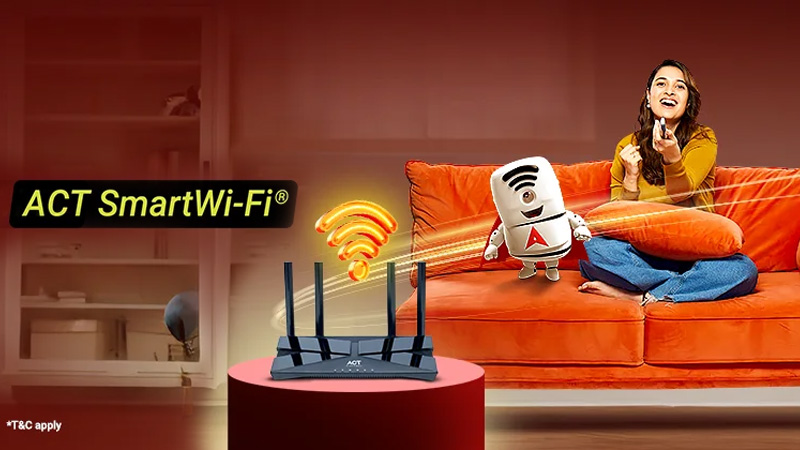
    MUMBAI: Buffering be gone! ACT Fibernet is turning homes into connectivity powerhouses with its latest report on ACT Smart Wi-Fi, powered by Zippy. The findings reveal that this intelligent home Wi-Fi solution doesn’t just promise speed, it delivers up to 5x faster performance across laptops, mobiles, and smart TVs, all while improving Quality of Experience (QoE) by 17 without customers needing to upgrade their broadband plans.

    Unlike conventional routers that treat every device the same, Smart Wi-Fi dynamically senses each device’s capability and signal strength, intelligently switching between the 2.4 GHz and 5 GHz bands. The result? Devices demanding higher bandwidth think laptops streaming 4K content or mobile gaming sessions automatically get the fastest, most stable connection, while other devices are seamlessly balanced across the network.

    The report shows that laptops and mobiles saw the largest performance gains, while even older smart TVs recorded nearly 3x improvement in stability and responsiveness. Smart Wi-Fi devices spent 71 per cent of their time on high-bandwidth channels, compared with just 48 per cent under traditional setups. High-capacity channels were used 30 per cent more often, while low-bandwidth channel usage dropped 41 per cent, ensuring smoother video calls, lag-free gaming, and uninterrupted streaming even in multi-device households.

    Quality of Experience, a holistic measure of speed, signal, stability, and latency, rose 18 per cent overall, with the most noticeable improvements on devices that depend heavily on adaptive channel switching. Adoption is already impressive: two out of three ACT Fibernet customers are now on Smart Wi-Fi, reflecting widespread satisfaction and trust.

    ACT Fibernet vice president marketing Naveen Nahar said, “Homes and offices are increasingly digital. People expect more than just high-speed internet, they expect consistency and seamless performance across all devices. Smart Wi-Fi, powered by Zippy, maximises the potential of existing broadband plans, automatically managing connectivity and bandwidth to keep streams, games, and calls smooth even in busy households.”

    The benefits of Smart Wi-Fi multiply when combined with Mesh networks, which extend signal coverage across larger spaces. Together, the technology ensures every device gets the right bandwidth at the right time, creating a self-optimizing network that adapts to the home rather than forcing the home to adapt to it.

    With ACT Smart Wi-Fi, homes aren’t just connected, they’re smarter, faster, and more reliable, turning every room into a high-speed hub that keeps up with modern digital lifestyles.
     

  • Sony and LiveU zoom in on future with bonded IP breakthrough at IBC 2025

    Sony and LiveU zoom in on future with bonded IP breakthrough at IBC 2025

    MUMBAI: When Sony meets LiveU, the broadcast world gets a sharper focus. At IBC 2025, the two tech titans announced a first-of-its-kind collaboration that promises to change how stories get from the field to the newsroom fast, reliable, and without the usual workflow headaches.

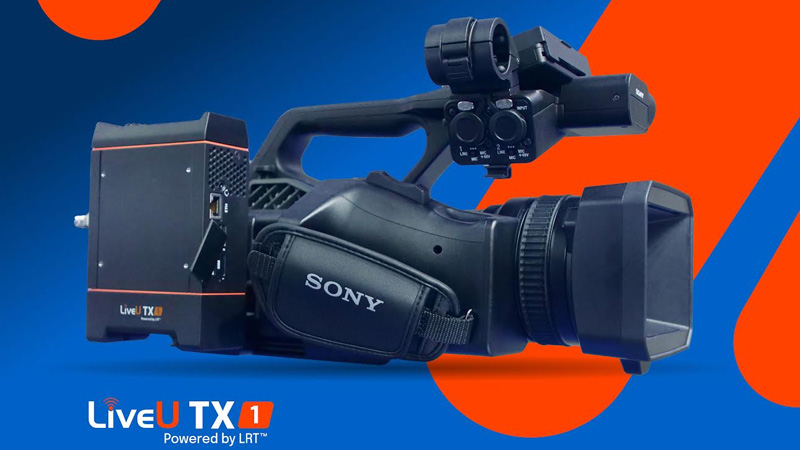
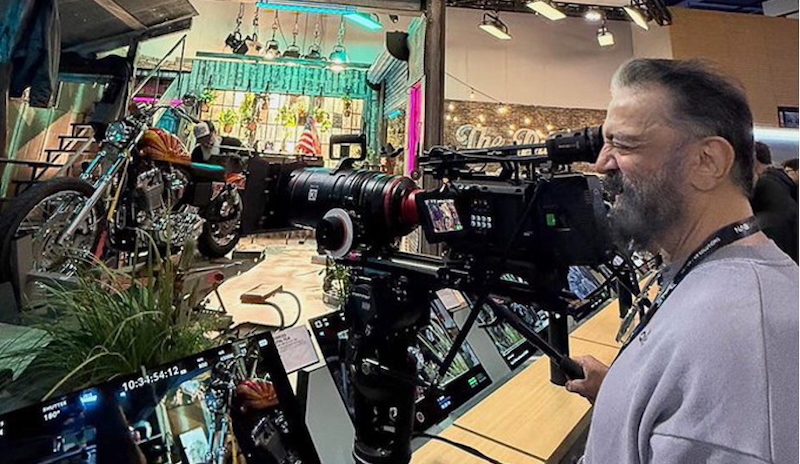
    The star of the show? The new LiveU TX1, a compact transmission unit built specifically for Sony’s professional camera range. Think of it as a tiny powerhouse: it clips neatly onto cameras like Sony’s freshly launched PXW-Z300, turning them into mobile broadcast hubs. With its small form factor, TX1 slashes production timelines by offering ultra-fast file transfers and bonded IP connectivity on the go.

    At its core is LiveU’s patented LRT (LiveU Reliable Transport) protocol, famed for keeping live feeds smooth, stable, and sharp even in tricky conditions. By combining multiple network connections, TX1 ensures resilient video performance that broadcasters can actually trust for mission-critical operations.

    “Our customers want to be able to deliver files shot on camcorders from wherever the story takes them, back to their galleries, easily, swiftly and reliably,” said Sony Corporation head of media solutions business Masakazu Murata. “Through our collaboration with LiveU, the leading company in video-over-bonded-IP transmission, we are now able to offer customers a workflow integrated with Sony’s ecosystem even for mission-critical operations that require bonding. We look forward to working with LiveU to further streamline workflows and make a significant contribution to the broadcast industry.”

    LiveU CEO and co-founder Samuel Wasserman said, “We are proud to announce this important collaboration with Sony, the global leader in electronics, gaming, entertainment, and imaging technologies. This partnership represents a strong vote of confidence in LiveU’s cutting-edge technology and the innovation we bring and will continue to bring to the market. I would like to thank the Sony team for their professional and collaborative spirit and wish us all great success on our shared journey.”

    The deal signals more than just a shiny new gadget. It’s the start of a broader roadmap where Sony’s camera heritage and LiveU’s connectivity know-how combine to shape the next phase of broadcast production. Journalists, content creators, and live producers can expect fewer cables, faster turnaround, and workflows that keep pace with the news cycle.

    While the TX1 made its debut at IBC 2025, broadcast professionals will need a little patience: the unit will be available through Sony’s accredited distributors and resellers, with release details scheduled for 2026.

    For now, though, one thing is clear, when it comes to capturing the moment and sending it back in real time, Sony and LiveU are keeping the world’s broadcasters firmly in the picture.

  • Harman plugs Sound United acquisition; expands product portfolio

    Harman plugs Sound United acquisition; expands product portfolio

    ONNECTICUT: Harman’s $350 million swoop for Sound United is a seismic play in the global audio rivalry, vaulting Samsung’s prized subsidiary to the very top of the premium audio hierarchy. Overnight, the deal delivers Harman an army of industry icons: Bowers & Wilkins, Denon, Marantz, Definitive Technology, Polk Audio, HEOS, Classé, and Boston Acoustics—all famed not just for pedigree or hi-fi bravado, but cult customer devotion across the globe. 

    Sound United’s arrival telescopes Harman’s reach across every lucrative audio battleground—home audio gear, amplifiers, AV receivers, headphones and automotive audio now all under a single, thundering umbrella. By merging marque names, Harman becomes master of a 21-brand constellation, boosting its chances to dominate both traditional and emerging markets—from living room soundscapes to next-gen connected cars and wearables.

    Importantly, Sound United will run as a standalone strategic business unit, preserving each brand’s authenticity and loyal following even as it benefits from Harman’s vast distribution, R&D clout and Samsung’s global hardware ecosystem. The strategy: capitalise on fresh growth while leaving beloved products and sound signatures unspoiled, reassuring audiophile and casual buyers alike.

    For Harman, the move is about more than scale; it’s about future-proofing. Plugging Sound United’s legendary R&D and boutique appeal into Harman’s tech and supply chains means a faster track to innovation—from smarter, immersive hi-fi systems to AI-driven sound and car audio.

    “This is a bet on unmatched experience, quality and the next wave of audio technology,” says Harman lifestyle division president Dave Rogers.

    Analysts predict the expanded Harman will use its new firepower to take on both established peers and disruptors, targeting a global audio market expected to pass $75 billion by the end of the decade. For consumers and audiophiles, it signals more choice, greater technology trickle-down, and the lasting power of classic brands standing tall—with a turbocharged engine behind them.

  • Sony cards speed past limits with blazing 1800 MB/s read and 1700 MB/s write

    Sony cards speed past limits with blazing 1800 MB/s read and 1700 MB/s write

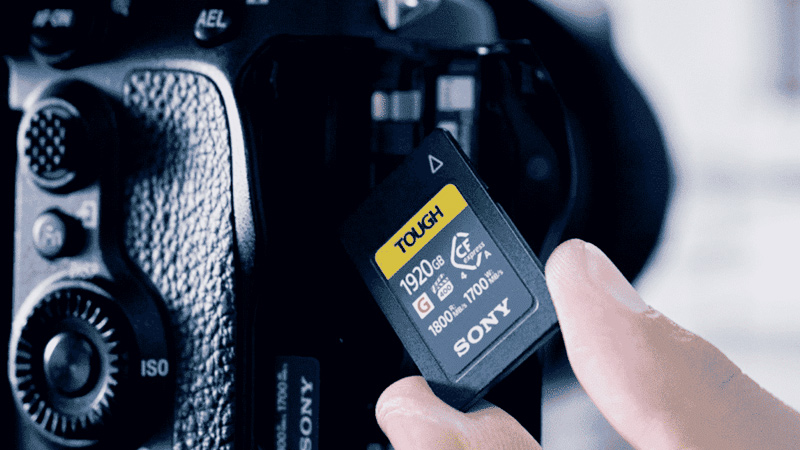
    MUMBAI: When it comes to speed, Sony just hit fast-forward. The tech giant has launched its Cfexpress 4.0 Type A cards in India, promising blistering performance for professional creators with read speeds up to 1800 MB/s and write speeds up to 1700 MB/s more than double their predecessors.

    The new CEA-G1920T (1920 GB, Rs 97,490) and CEA-G960T (960 GB, Rs 59,990) cards, along with the MRW-G3 card reader (Rs 17,990), hit stores and e-commerce platforms on 20 August 2025. Built for Sony’s Cinema Line and Alpha cameras, the cards are designed to handle the ever-demanding world of high-bitrate 4K and above video, long shoots, and instant data transfer.

    The upgrades aren’t just about speed. With a minimum sustained write speed of 400 MB/s, these cards guarantee uninterrupted recording of cinematic-quality footage. Their durability has also been levelled up, the reinforced resin body is five times stronger than previous models and can survive drops from 7.5 metres. Bend resistance has been enhanced to withstand forces up to 150 newtons, making them ready for the chaos of on-location shoots.

    The compact design means portability without compromise, supporting lightweight camera bodies while packing in serious storage muscle. Meanwhile, the MRW-G3 reader, built exclusively for Cfexpress Type A, supports USB 40 Gbps transfer speeds, ensuring that even massive files fly from card to system in record time. With its heat-dissipation design, the reader is also engineered for stability during prolonged workflows.

    For photographers, videographers, and filmmakers juggling huge files under pressure, Sony’s latest launch isn’t just storage, it’s a workflow accelerator. With capacity, speed, and ruggedness in one pocket-sized package, these cards ensure creators spend less time waiting and more time making.


  • Dish TV switches on VZY Smart TVs to stream into the future of home viewing

    Dish TV switches on VZY Smart TVs to stream into the future of home viewing

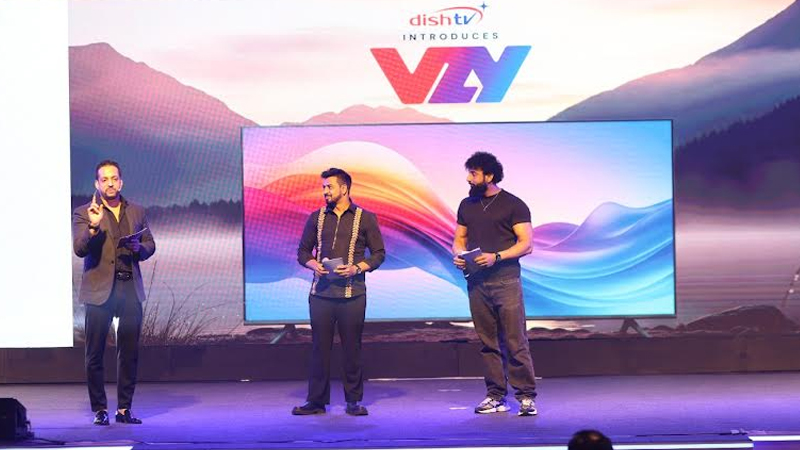
    MUMBAI: Dish TV has flipped the channel on its future and this time, it’s not just about broadcasting. The country’s leading DTH provider, trusted in Indian homes for over 22 years, has launched VZY Smart TVs, marking its grand entry into the integrated Smart TV segment.

    Standing for Vibe, Zone & You, VZY is pitched not as “just another TV” but as a full-blown entertainment universe. It blends Dish TV’s legacy in live television with cutting-edge streaming, creating what the company calls an all-in-one screen where DTH meets OTT.

    “For over two decades, Dish TV has been a trusted name in millions of Indian homes, built on innovation and customer focus. With VZY, we are building an entertainment universe that converges live TV, OTT, smart features, and immersive design,” said Dish TV India CEO & executive director Manoj Dobhal.

    What’s inside the box? Plenty of tech wizardry. VZY Smart TVs will be available in sizes from 32” HD to 55” 4K UHD QLED, with premium features such as Dolby Vision, HDR10, up to 350 nits brightness, and a bezel-less design. For audio, all models feature Dolby Audio, with select premium models stepping up to Dolby Atmos.

    Running on Google TV 5 (Android 14), the TVs come loaded with streaming staples like Netflix, Prime Video, and Youtube. Add to that voice-enabled remotes, Chromecast, Airplay, and in select models, an inbuilt DTH set-top box, offering instant access to both live TV and streaming apps.

    “The modern Indian family is digital-first and experience-driven. VZY goes beyond being just a television to deliver an immersive, curated experience,” added Dish TV India chief revenue officer Sukhpreet Singh.

    For performance, the range supports up to 2GB RAM and 32GB storage, ensuring smooth navigation and app usage. To make the smart shift easier on the wallet, Dish TV is offering Rs 0 down payment and 0 per cent EMI financing options.

    The VZY Smart TV range will hit retail shelves nationwide and will also be available through online platforms, reaching metros as well as Tier 2 and Tier 3 markets.

    With this move, Dish TV isn’t just selling a new screen, it’s making a play to own the living room once again, this time with a smarter, sleeker, and more immersive avatar.

  • Acer flexes Predator power with AI laptops, monster desktops and more

    Acer flexes Predator power with AI laptops, monster desktops and more

    MUMBAI: Gamers, creators and AI developers, brace yourselves Acer just dropped a tech arsenal that roars as loud as its name. From AI-powered laptops to monster desktops, lightning-fast monitors and even a keyboard that can outlast your weekend grind, the Predator lineup is here to push the limits of power, speed and play.

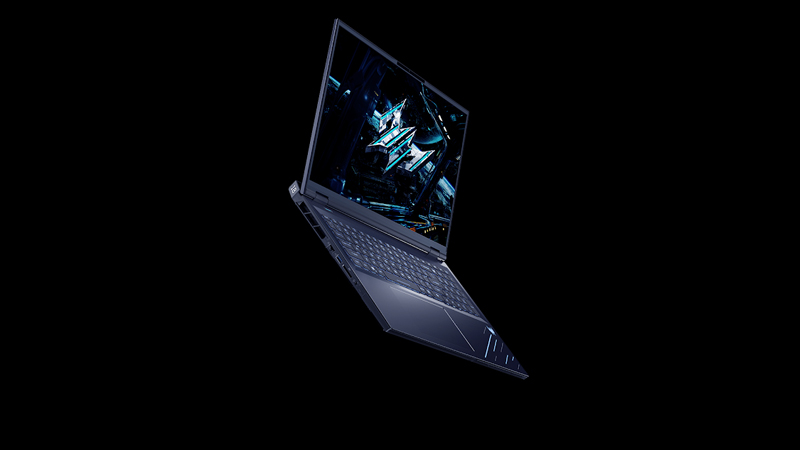
    Leading the charge is the Predator Helios 18P AI, a hybrid beast that blends gaming brawn with workstation brains. Powered by up to an Intel Core Ultra 9 Processor 285HX with Intel vPro, the system supports a jaw-dropping 192 GB EEC memory critical for error-free performance where every byte counts. Graphics duty falls to the Nvidia Geforce RTX 5090 Laptop GPU with DLSS 4, paired with 6 TB PCIe Gen 5 SSD storage, Thunderbolt 5, and Wi-Fi 7. Its 18-inch Mini LED 4K panel hits 1,000 nits HDR brightness and covers 100 per cent of the DCI-P3 colour gamut, perfect for creators. Keeping the monster cool are Acer’s 6th Gen Aeroblade fans and liquid metal thermal grease. Price tag? 3,999 dollars in North America and EUR 4,999 in EMEA, starting early 2026.

    For desktop warriors, the Predator Orion 7000 is a liquid-cooled powerhouse, packing up to an Intel Core Ultra 9 285K CPU with integrated AI acceleration, paired with an Nvidia RTX 5090 GPU. Gamers get access to Nvdia NIM Microservices for cutting-edge AI assistant development. Cooling is handled by the Cyclonex 360 system, improving efficiency by 15 per cent and cutting motherboard temps by 9°C, while up to 128 GB DDR5 RAM and 6 TB SSD storage keep things screaming fast. Prices start at EUR 3,999 in EMEA and AUD 8,199 in Australia. Its sibling, the Predator Orion 5000, offers a slightly leaner build with an Intel Core Ultra 7 265F, NVIDIA RTX 5080 graphics, up to 2 TB SSD and 4 TB HDD storage, starting at EUR 2,999. Both sit inside ARGB-lit, eco-friendly 45L recycled-plastic chassis.

    Display junkies can feast their eyes on the Predator X27U F8 monitor. At 720 Hz refresh rate, it’s one of the fastest on the planet. The 26.5-inch OLED IPS panel runs at WQHD (2560×1440) and switches to 1280×720 at 720 Hz for pro-level esports. HDR 500 True Black and 99% DCI-P3 colour ensure visuals pop, while AMD FreeSync Premium Pro smooths the ride. Launch prices: 1,299 dollars in North America, 1,199 euros in EMEA, and RMB 9,999 in China.

    And for the finishing touch, Acer introduced the Predator Aethon 550 TKL keyboard, priced at USD 129 / EUR 129. With tri-mode connectivity (wired, Bluetooth, 2.4 GHz), a battery life of 150 hours, hot-swappable switches, and customisable per-key RGB, it’s built for both precision and flair.

    Acer’s Predator lineup isn’t just flexing, it’s redefining what next-gen gaming and AI machines can do. Whether you’re dropping headshots, training models, or cutting 4K edits, this is hardware that doesn’t just keep up; it dares you to push harder.

  • Motorola turns up the volume with Bose-tuned Loop and bass-heavy buds

    Motorola turns up the volume with Bose-tuned Loop and bass-heavy buds

    MUMBAI: When it comes to sound, Motorola just dropped the bass, literally. The smartphone giant, now calling itself India’s leading AI phone brand, has launched two true wireless earbuds designed to take on every mood, beat and playlist: the moto buds Loop powered by Bose Audio, and the moto buds Bass with segment-best 50db active noise cancellation.

    Priced at Rs 7,999 (with a bank offer cutting Lop to Rs 6,999) and Rs 1,999 for Bass, the earbuds go on sale 1st September and 8 September respectively, across Flipkart, Motorola.in, and retail stores. Both arrive armed with features aimed squarely at India’s growing tribe of music junkies, gamers, and on-the-go professionals.

    The moto buds Loop stand out with an open-ear design tuned by Bose, 12mm ironless drivers, and spatial sound for 3D-like immersion. They deliver 8 hours on a single charge and 39 hours with the case, plus a quick 10-minute top-up for 3 hours of playback. Add IP54 water resistance, a memory alloy frame, and trekking green finish, and Loop is more style statement than accessory.

    For bass-heads, the moto buds Bass promise Super Bass tuning, Hi-Res LDAC audio, and 12.4mm composite dynamic drivers. With 50db ANC across a 4kHz range, users can toggle between Adaptive, Transparency, or Noise Cancelling modes at will. Battery life stretches to 7 hours (ANC off) plus 41 hours with the case, totalling a marathon 48 hours. Quick cadds 2 hours of playback in 10 minutes. At just 51g, with triple-mics on each bud and finishes like dark shadow, blue jewel, and posy green, these are built for marathon listening sessions without compromise.

    Connectivity gets a boost too both models feature Bluetooth 5.3, Google fast Pair, and Crystaltalk AI to cut through background chaos on calls. With smart connect and moto ai integration, users can switch devices or trigger commands (“Catch me up”) hands-free, making them lifestyle companions as much as audio gear.

    Motorola India MD T.M. Narasimhan summed it up: “With Loop and Bass, we’re blending technology, design and usability to create audio experiences that resonate with evolving lifestyles.” Translation? Whether you crave Bose-tuned clarity or chest-thumping bass, Motorola now has a bud for every beat.

  • Nixer unveils CV1 at IBC 2025, a no-nonsense AoIP monitor for broadcast pros

    Nixer unveils CV1 at IBC 2025, a no-nonsense AoIP monitor for broadcast pros

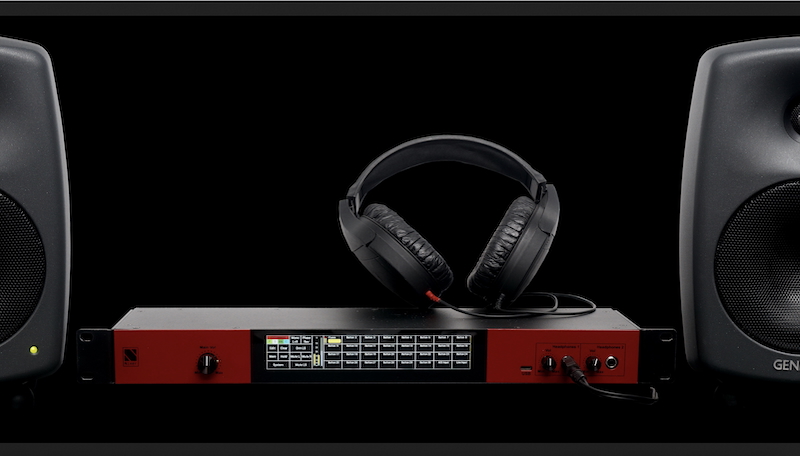
    AMSTERDAM: Nixer Pro Audio has lifted the lid on its latest innovation at IBC 2025: the CV1, an all-in-one audio-over-IP monitoring unit aimed squarely at broadcast control rooms, production suites, recording studios and live performance setups.

    Modelled on its RLC64 rackmount, the CV1 has been overhauled following requests from a national broadcaster, and is pitched as a fast, flexible and integration-friendly solution.

    The speaker-free box is designed to slot neatly into high-end workflows, working with premium external loudspeakers and loudness meters via dedicated AES and line outputs. It supports Dante, Ravenna/AES67 and ST 2110 out of the box, with AVB-Milan waiting in the wings.

    “In live broadcast operations and recording studios, sound quality is paramount,” said Nixer Pro Audio founder & chief executive Nick Fletcher. “Being able to hear everything through proper external monitors gives audio professionals greater assurance and control.”

    The CV1 packs in dual headphone outputs with independent level controls, access to 32 stereo inputs—including 30 AoIP channels plus AES and line—and touchscreen switching. Output tools include individual channel mutes and a dim function with attenuation from 0 to 30 dB. Engineers also get phase reverse, mono sum and monitoring trims for quick fault-checking.

    Eight AoIP outputs allow routing flexibility across complex setups, while the unit can natively return AES, line or AoIP sources back to the network—cutting out format converters and extra rack gear. Engineers can rename source buttons directly on-screen and tailor meter and output behaviour to suit.

    Distributors and integrators are already eyeing the CV1 for live broadcast, radio, music production, post, and remote gallery work. Optional upgrades in 2026 will open up wireless AoIP monitoring via iPads and web UI.
    “The CV1 reflects our core philosophy: listen to customers and give them exactly what they need,” Fletcher said.

    The unit is now shipping worldwide, with Nixer showing it off at stand 8.F96 at IBC 2025.

  • Sony to push Crystal LED Capri at IBC 2025, slashing costs for virtual production walls

    Sony to push Crystal LED Capri at IBC 2025, slashing costs for virtual production walls

    MUMBAI: Sony has taken aim at the booming virtual production market with its latest LED wall series, the Crystal LED Capri—a more affordable sibling to its flagship Verona line. Capri promises the same high-end visuals, but at a price that opens the doors to smaller studios, broadcasters and rental companies.

    The Capri models—ZRD-VS25FB and ZRD-VS25FM—boast a 2.5mm pitch, 1,500 cd/m? brightness, and a refresh rate of up to 7,680Hz. Colour coverage crosses 98 per cent of the DCI-P3 gamut, while anti-reflection coatings and real-time off-axis colour correction (from v3.0 of Sony’s virtual production tool set) promise studio-grade consistency even in curved or ceiling-mounted configurations.

    Fully compatible with Brompton’s Tessera SX40 and Megapixel’s Helios controllers, Capri integrates seamlessly into the virtual production workflows already in place across the industry. Its flexible 1:1 cabinet design, tool-free assembly, and rugged frame make it ideal for temporary setups and fast-moving shoots.

    “We’ve broadened our line-up to support high-quality virtual production at every level,” said Sony Europe business development head Sebastian Leske. Sony Electronics professional display solutions vice-president  Rich Ventura added: “With Capri, we’re giving a wider range of users the tools to create spatial content in high fidelity.”

    Capri complements rather than replaces Verona. Both series share controllers and luminance levels, allowing studios to combine walls and ceilings seamlessly—a common configuration where Verona serves as the main wall and Capri goes overhead.

    Sony will showcase the Crystal LED Capri series at Stand 13.A10 during IBC 2025, to be held from 12–15 September at the Rai, Amsterdam.

  • GenXAI acquires Softgrid Computers to turbocharge AI innovation and scale global tech muscle

    GenXAI acquires Softgrid Computers to turbocharge AI innovation and scale global tech muscle

    MUMBAI: When a brainy AI firm joins hands with a code-savvy software shop, the result isn’t just more horsepower-it’s a new machine altogether. GenXAI, the AI-powered enterprise performance management (EPM) solutions provider, has acquired Softgrid Computers Pvt. Ltd., a name synonymous with application development and web design brilliance. The announcement came in June 2025, setting the tone for a future of deeper tech, global ambition, and sharper tools.

    This acquisition arms GenXAI with Softgrid’s decade-old strength in mobile-first digital builds, pairing it with its own AI smarts that already power collaborations with tech majors like Anaplan and SAP. The result? A platform ready to create more intelligent, intuitive digital experiences-at scale.

    “At GenXAI, we’ve always been driven by a vision to redefine the future of technology. Our partnerships with platforms like Anaplan and SAP demonstrate our commitment to excellence. Softgrid Computers shares our passion for transformative solutions and together, we’re poised to achieve greater milestones. With this collaboration, we combine GenXAI’s expertise in AI-driven solutions with Softgrid’s legacy in custom application development and web design”, said GenXAI founder & executive chairman Rakesh Agarwal.

    From front-end design to back-end intelligence, the combined entity promises to fuse form with function-turning legacy digital builds into adaptive, intelligent tools for startups, large enterprises, and government bodies worldwide. The unified venture will offer cutting-edge platforms embedded with real-time AI decision engines, opening new markets and widening its tech moat.

    “At Softgrid, we’ve always believed in building meaningful digital experiences through innovation and craftsmanship. Joining forces with GenXAI allows us to amplify our vision with the power of AI and reach new heights of impact. This is not just a milestone-it’s the beginning of a transformative journey for our team, our clients, and the future of technology”, said Softgrid co-founder Ajay Golani.

    With Softgrid on board, GenXAI has stitched together a broader technology portfolio that now spans web, mobile, and AI-first ecosystems. This will accelerate its push into international markets and boost its appeal among digital-first enterprises hungry for intelligent automation and agile infrastructure.

    The acquisition marks more than just growth. It’s a signal of intent from GenXAI-to scale up, smartly. And as tech firms race to bake AI into every interface and back end, this merger might just give it the edge in staying not only relevant but revolutionary.