Category: Year Enders

  • GUEST ARTICLE: Innovation in video content to look to in the coming years

    GUEST ARTICLE: Innovation in video content to look to in the coming years

    Mumbai: Video content is driving massive growth in most sectors worldwide, be it tech, banking, or education. It distinctly stands out as the easiest way to build a knowledgeable user base and to provide the information that potential users are looking for. YouTube has been vital in driving this change, which is why it is still the most visited website on the planet. Facebook shifted its focus to video much later than YouTube, but it invested significantly more to establish itself as a major portal for video content. Facebook is currently the second-most-used website, right after YouTube. YouTube has become the perfect platform for establishing your brand identity and vision and being in the public eye.

    Platforms like Myntra and Amazon use live commerce through videos to boost sales and effectively create a community around these creators and their products. This has been one of the most significant developments in a post-pandemic world where target audiences desire to see their products live but are not really looking for an in-store experience. Live commerce perfectly fills that gap and has been a great success.

    As previously cost-prohibitive solutions make their way into smaller production studios and, in some cases, home studios, innovation in video content and content production will only grow from here. Technology like Volume’s LED wall, made famous by productions like The Mandalorian and The Batman, is now available in more accessible and cost-friendly studios. This could easily make the concept of shooting on location absurd and massively cut down on production budgets.

    The introduction of editing templates on platforms such as Instagram and TikTok makes it possible to shoot, edit, and post video content directly from the phone. Apple has already been heavily pushing mobile filmmaking with the filmmaking-oriented Pro Max version of the iPhone.

    DJI, another major player in the video production industry, recently launched the DJI Ronin 4D, which combines steadicam-level stability with a great camera all in one device without having to acquire any additional parts of the kit. This enables you to just pick up and shoot and gives you even better chances to capture that beautiful, once-in-a-lifetime moment.

    IoT, or the internet of things has also been making producing videos that much easier. Easily creating communication channels that can connect different filmmaking units, video villages or even collaborating creators. You can easily automate your entire studio setup and have it ready to shoot as you enter the space. At the current speed at which artificial intelligence systems are growing, we may soon have fully automated AI production studios for creating all the content we see.

    Many other nuanced industries and sectors are constantly bringing their expertise and solutions to the video and imaging industry. This essentially makes innovation happen at incredible speeds, and we are continuously introduced to better technologies before we can even fully grasp the current ones. It is an incredible time to be a part of the industry or to be creating content. The future of content and video creation looks brighter and more expensive than ever.

    I hope everyone comes along for the ride, creating and consuming content in better ways than we ever have.

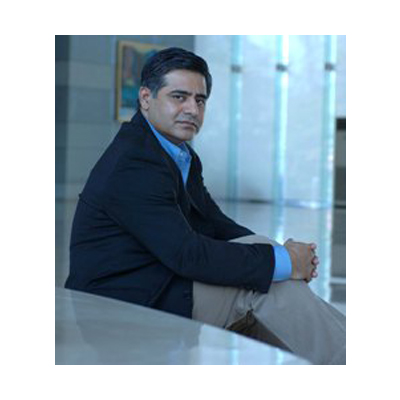
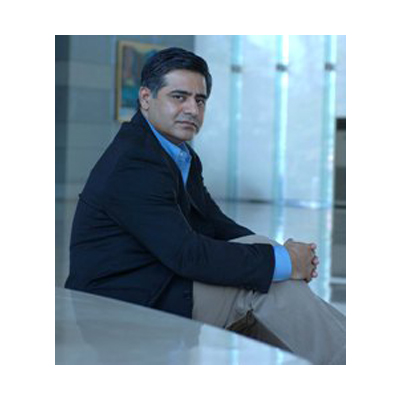
    The author of this article is StudioBackdrops.com founder and CEO Archisman Misra.

  • Zee Theatre stars share the professional and personal triumphs of 2022

    Zee Theatre stars share the professional and personal triumphs of 2022

    Mumbai: This year, the entertainment industry shed the dejection imposed by pandemic-related restrictions and began to regain its dynamism. As 2022 winds to a close, Zee Theatre luminaries recount the highpoints of the year gone by in the personal as well as professional arenas.

    Karan Veer Mehra, who stars in Lights Out, says, “2022 has been a mixed bag because the first half kept me busy with work and the second half brought with it a lot of family time in Delhi with my near and dear ones. The highpoint was, of course, the birth of my sister’s beautiful baby boy. I wish everyone a safe, merry, and joyous 2023 and hope it will bring many wonderful gifts with it.”

    Sahitya Akademi Award-winning playwright and director Mahesh Dattani, whose play Final Solutions has enjoyed wide viewership, says 2022 was a year of travel with trips to the USA and Bali. He adds, “This was also a year when I began in-person rehearsals and classes after the pandemic. I got over my caveman syndrome and actually stepped out into the world! My resolution for 2023 is to just do my thing and respect others when they do their thing! And I want to stay healthy and alive, not just in terms of mortality, but alive to my senses and retain my passion for life and art.”

    Dilnaz Irani, who stars in Shireen Shah, shares, “This year, I shot for two films, opened two new plays, did an interesting sitcom, a cameo in a web series, and a few ads. I’m also doing a Tamil web series, which was a very different experience for me, so professionally I couldn’t have asked for a better, more fulfilling year. I also got to travel abroad to meet family members, so even personally, life has been great.

    As for resolutions, I hate setting goals as they take away from the freedom to discover life as it unfolds. So, my resolution is not to have any! I just want to live in the now, have fun, and be grateful. I wish everyone the same, along with a lot of happiness.”

    Manoj Pahwa, who narrates Saadat Hasan Manto’s classic story Toba Tek Singh in Zee Theatre’s anthology Koi Baat Chale, says, “There is no certain calculation that can calibrate the year gone by, although I am grateful for the work that I was able to do this year. I am also grateful for my family and friends, who have supported me in my endeavours this year and always. My son got married in 2022, so that was a very precious moment for the entire family. As for goals, I have never believed in restricting myself to a certain list of things. I just go with the flow and have never been dismissive of the work that has come my way.”

    About Koi Baat Chale, he says, “It was a wonderful and challenging experience as one had to do justice to the essence of the story, and I am glad that the audience response has been so positive.”

    Actor Pawan Chopra, who stars in The Will, adds, “2022 was a period of introspection and rediscovering yourself. It was also spent remembering the huge personal loss of many close friends and my mother, who was the inspiring force behind my acting journey. This year, I also paused a little after 20 years of working nonstop. 2022 was also about reinvention and taking lessons from nature’s fury; covid-19 taught us that anything can happen at any time. Life can’t be taken for granted, so your body, mind, and soul have to be prioritised.”

    In 2023, the actor wants to do work that will even surprise and challenge him. He concludes, “I am waiting with open arms to embrace 2023 and feel it will be the best year for everyone.”

  • GUEST ARTICLE: Importance of big data analytics: how is it transforming the advertising ecosystem

    GUEST ARTICLE: Importance of big data analytics: how is it transforming the advertising ecosystem

    Mumbai: We live in an era where everything is linked to our mobile devices, and honestly, people rely on them for almost everything. This has been a catalyst for brands due to the way marketers make the most of their mobile campaigns. Moreover, I believe that the saying of Peter Sondergaard, “Information is the oil of the 21st century, and analytics is the combustion engine,” stands true in the current digital advertising landscape, as big data analytics is giving marketing practitioners an extra edge.

    Big data describes the complex, unstructured, and large data sets that now easily get refined and structured in real-time via modern technology. It is massively impacting digital advertising in terms of better ROAS, personalisation, brand visibility, and a lot more because of its speed and storage capabilities, which are even revolutionising adtech. Data analytics has not only allowed marketers to reshape their advertising strategy, but it has also provided them with a better understanding of their customers, allowing them to effectively bridge the gap between audience and brands. Because adtech vendors, marketers, advertisers, campaign managers, and others have been able to efficiently monitor campaign performance, the global big data market size revenue is currently $70 billion and is expected to reach $103 billion by 2027.

    Embracing big data analytics does wonders for business backends and campaign operations because the adverts seen today incorporate algorithms that help marketers make informed decisions. So let’s talk more about it in brief.

    Key technology of big data & how does it work?

    A bunch of technologies like cloud computing, machine learning, and predictive analytics encompass big data analytics. They all work in close coordination with each other and let marketers add more value to the information.

    Cloud computing provides scalability with the IT efficiencies needed for data monitoring, whereas machine learning is a subset of AI that automates and produces fast deliverables with accuracy in results.

    Afterwards, predictive analytics uses statistical algorithms via machine learning to identify the likelihood of futuristic results based on the historical data. These technologies are appropriate for all businesses, large and small, because they identify profitable opportunities while reducing risks. Therefore, the global market share of cloud computing & AI-machine learning will be $168.6 billion & $126 billion, respectively, by 2025, whereas predictive analytics will hold a market share of $41.52 billion by 2028. This is because all such technologies remove various physical obstacles from the data mining process, analyse user behaviour, and manage supply chains, all of which enhance business goals at all levels.

    How do big data analytics help marketers successfully fulfil a campaign’s KPIs

    User acquisition & retention: Onboarding a consumer to an app is still easy, but encouraging him to take the respective in-app actions is a real task for marketers. Herein, Big Data helps them get into the consumers’ shoes, hold their interests, and provide them with offerings that are personalised to their requirements. It enables marketers to analyse user behaviour and past actions, based on which they can showcase the content that a user would like to view. This increases user retention and engagement while also developing user loyalty to a brand.

    Effective media buying: Marketers with the help of big data, can better develop their offerings and can opt for a better pricing model from a variety of sources to maximise revenue. This mechanism brings inventory into a real-time auction, enabling advertisers to tap into the right audience with automated processes and accurate traffic.

    Forbids fraud: With data becoming more real-time, fraud is a real-time concern that cannot be overlooked, as it can eat up marketing budgets without the advertisers’ knowledge. To cure this cause, big data comes into the picture and provides marketers with insights and sources that drain the ad spend. Enlightening themselves on the same, they can make wiser investments in the channel/sources that drive meaningful results while maintaining the campaign’s safety and sanity at all stages of its execution.

    I believe that technological innovations have changed the way brands sustain in the evolving digital ecosystem because considering the paradigm shift from traditional to digital advertising; nowadays, not only the marketers but consumers’; habits have also adapted to digitalisation. So, I can say that big data analytics has started changing the future of advertising since it removes the bottlenecks in the marketing funnel, focuses on personalisation and improves conversion; powered and backed by artificial intelligence.

    The author of this article is Xapads Media country head – MENA Gagan Uppal.

  • Trai, broadcasters mend fences over NTO 2.0; OTT next?

    Trai, broadcasters mend fences over NTO 2.0; OTT next?

    Mumbai: 2022 was the year that saw a volatile relationship between the Telecom Regulatory Authority of India (Trai) and broadcasters that lasted for two years improved immensely. That is because, towards the end of the year, the regulatory body issued amendments to the new tariff order (NTO) and interconnection regulations. It decided not to prescribe a ceiling on the maximum retail price (MRP) of pay channels.

    Trai is maintaining the maximum price of Rs 19 on a channel’s MRP that is part of a bouquet. Earlier, the proposed price was Rs 12. Channel bundle discounts cannot be more than 45 per cent. The discount offered as an incentive by a broadcaster on the MRP of a pay channel shall be based on the combined subscription to that channel, both a la carte and in bouquets. Having done all of this, Trai then asked broadcasters to put sports and popular entertainment channels back into bouquets. Last year, the broadcasters pulled these channels. NTO 2.0 will now be implemented in February 2023.

    Broadcasters were also told to inform the regulatory body of any change in the name, nature, language, per-month MRP, composition, or MRP of channels by 16 December. This information was published on their websites as well. DPOs were instructed to contact their respective RIOs by 16 December.

    Distributors have to report the discounted retail price of à la carte channels and their bouquets and the composition of bouquets for paid and free-to-air channels by 1 January 2023. They must publish this information on their websites as well.

    It should be noted that the groundwork for this reconciliation began in February, when the Indian Broadcasting and Digital Foundation (IBDF), which represents TV channels, withdrew petitions filed in the Supreme Court challenging the NTO 2.0 introduced by the Telecom Regulatory Authority of India in January 2020. As a result, NTO 2.0 2020 and 2021 have been mired in litigation. However, Trai reportedly indicated at the start of the year that it would initiate consultation if the petitions in the Supreme Court were withdrawn. The broadcasters felt strongly enough that Trai would introduce a consultation process before proceeding further. That is what Trai did. In May, it floated a consultation paper called “issues related to the new regulatory framework for broadcasting and cable services.” It asked a few questions, including whether it should continue to prescribe a ceiling price for a channel’s inclusion in a bouquet. It also asked about the steps that should be taken to ensure that popular television channels remain accessible to a large segment of viewers. It asked whether there should be a ceiling on the MRP of pay channels.

    In response, the IBDF requested a few things, including the removal of bundling restrictions. It had pointed out the struggle that the pay TV industry is facing due to the loss of subscribers. It also argued that pricing should be left to market forces, which would ensure high-quality content.

    Trai chairman P.D. Vaghela spoke at CII’s Big Picture Summit about the need to move towards forbearance, which is what the IBDF had earlier called for. But for this, all the service providers have to work in a cohesive manner. He had said that Trai’s recent consultation on tariff-related issues for television channels and bouquets was the result of multiple discussions with each group of stakeholders — broadcasters, multi-system operators, DTH players, and local cable operators. “I can assure you that if all service providers work in a cohesive manner, Trai may take further steps to move towards forbearance,” he said.

    Elara Capital’s Karan Taurani gave Trai 8/10 for the amendments that will allow the industry to move forward. He also noted that this is, for the most part, a return to NTO 1.0. “Broadcasters were not in favour of many of the proposals in NTO 2.0. One of the proposals was in the form of discounting. 94 per cent of TV consumption happens through bouquets. A la carte is not more than seven per cent. A la carte has a significant impact on ancillary channels. The discount cap was settled at 45 per cent instead of 30 per cent which broadcasters were against. This overhang is out of the way. Also, Trai had reduced the price of an a la carte channel to Rs 12. This has been done away with, as a la carte revenues would eventually have seen a huge crash. A la carte’s share would have risen to 14–15 per cent from seven per cent. Overall, if the a la carte price of Rs 12 had been maintained, broadcasters’ subscription revenue would have been negative.

    He added that, over time, things have been resolved and we are moving towards a more certain scenario. “With the removal of uncertainty, broadcasters’ revenues will grow as they can go for price hikes, which I expect to be in the range of six to seven per cent. I would give Trai an 8/10. What Trai did was implement this after getting suggestions from broadcasters. Earlier, they did things out of their own will. Now they sat back and had multiple discussions. Then they reached a consensus. This is very beneficial to the entire industry as a whole. It will have a big benefit for the distributors, broadcasters, and the TV industry. This industry is already seeing a lot of pressure from OTT in terms of eyeballs moving away. Incremental growth in terms of the number of households has not been much (5–6 per cent). The industry came together from all ends and found a solution. 2022 has ended on a positive note compared to the start of the year.”

    He said that it has gone back to NTO 1.0. The only change is that the discount is capped at 45 per cent which is a non-event as broadcasters’ discounts range from 35 to 50 per cent. “45 per cent is a fair number.” He went on to say that previously popular sports and entertainment channels had gone a la carte due to high content costs. Now they will return to the bouquet. “The cap being revised to Rs 19 will have a positive impact. Arpus will move back to where they were a year ago. A lot of channels will get bundled back into the bouquet.”

    He believes, however, that this move will have no effect on the drop in the pay TV universe. This drop is not due to channel pricing. It is coming from other factors like OTT penetration, smartphone viewership, etc. Broadcasters, however, gain an additional revenue driver as a result of the amendments. “Uncertainties will not hinder revenue growth,” he added. To get viewers back, he said broadcasters have to innovate in content creation and marketing. “These things need to be changed from their end. Pricing is not an issue. It is about the quality of the content and the fact that audience preferences are changing over time.”

    For this very reason, he does not see niche genres like English entertainment benefiting. That is because most of those viewers have migrated to OTT. These genres on television will always see consumption pressure. These channels are already provided for free as part of a bundle.

    A DPO executive agrees that the amendments are just a modified version of NTO 1.0. “This will have a positive impact for the broadcasters. 80-85 per cent of consumers choose from the suggested pack of the DPOs which is bouquets.”

    Trai is now expected to come out with another consultation paper for DPOs that will address issues like NCF, multi-TV connections, and revenue sharing among various players. “We are bringing out another consultation paper to take up these issues soon. I am sure that through constant dialogue with all the industry stakeholders, we will find solutions that will stimulate growth in the television broadcasting sector,” said Vaghela.

    Meanwhile, the DPO executive said that there should not be a cap on the NCF. The NCF he noted is quite marginal, and the NCF has to be shared between LCOs and MSOs. For DPOs to manage this is difficult. He also wants more transparency in the deals that are happening. The discount structure given by every DPO is very different. “How the incentive is being passed by a broadcaster to each and every DPO is not transparent. Some of it is obscure. Marketing and promotions are part of it. Incentives are a part of it. There should be a little bit of transparency in that.”

    He added, however, that the pay TV universe being affected is more on account of Freedish, which he insists is causing havoc. Sports content is also available on it, and it is free for rural and urban viewers. Urban viewers in low-Arpu (average revenue per user) areas consume it. “DD Freedish is eating into pay TV like anything.” That, he noted, is more of a challenge than OTT. “Actually, pay TV is getting sandwiched between DD Freedish and OTT. Neither DD Freedish nor OTT are regulated.”

    Trai’s amendment was welcomed by IBDF president K Madhavan, who said it was the result of constructive dialogue between the industry and the regulator.

    “NTO 2.0 is the outcome of the strong collaboration between industry and Trai. Rather than pursue a litigative approach to address pending demands, our approach of engaging in constructive dialogue has allowed us to make strong progress in creating a more conducive environment for the industry on the pricing front,” he said.

    Looking ahead, Trai is said to be preparing to start a consultation process in January to frame a regulatory mechanism for OTT. It will also look at the convergence of content.

    Trai is considering whether communication and broadcasting apps should come under the purview of the same regulatory framework.

    The two kinds of OTTs fall under the ambit of the IT Act. For the record, communication OTTs are regulated by the department of telecommunications, while broadcasting OTTs are handled by the ministry of information and broadcasting (MIB).

    It is about striking a balance. “Our objective will be to introduce a light-touch framework that irons out the inconsistencies created by technological disruptions. We cannot have a regulatory imbalance between conventional technologies of yesteryear and new technologies. Yet, at the same time, we should not stifle innovation and competition,” Vaghela said at CII’s Big Picture Summit.

    He had added that the primary area that requires the attention of the regulatory regime is the convergence of content. The same content is available in several places, including television, smart connected screens, and smartphones. Since there is a difference in the distribution mechanism on these platforms, they pose a regulatory challenge. “Therefore, in the new technological world of convergence, we need to deliberate on the possible alignment of a regulatory regime, keeping in mind the scenario of multiple screens with the same content,” he had said.

    The Delhi High Court has now asked Trai to expedite the consultation process with all the stakeholders for regulating OTT communication services such as Facebook Messenger and WhatsApp.

    “Considering the extensive prevalence and use of internet telephony, Trai would expeditiously conduct this stakeholders’ consultation and give its recommendations accordingly,” said the order.

    Meanwhile, Wing Communications CEO and founder Shiva Bhavani stated that light touch regulation is critical for the OTT industry to grow and survive without losing its creative spark. He further said that whether the OTT industry needs separate policies is a matter for debate. Since there is an IT Act, of 2000 that manages issues related to the internet, anyone aggrieved by any OTT content can use the provisions of this Act to seek redress of grievances. Self-regulation, he noted, should ensure that responsible content is displayed that does not violate general laws or upset the peace of the land. If too much control is applied, it will suffocate creativity, and people will walk on eggshells at all times.

    “What is needed is a broad framework within which OTT platforms can function normally while adhering to laws and not promoting content that shows divisiveness and discrimination or extreme graphic details that can impact minds.”

    He added that, while too much regulation is not desirable in a free world, it is necessary to have some basic rules in place to ensure that the platforms remain responsible for the content they release. “It is imperative that platforms adhere to the general law of the land and do not release any divisive content that can impact the minds of viewers. Since it is on-demand content that is available on a subscription model, OTT platforms offer content that would not pass the censorship test. While freedom of expression is good, some form of overarching rule is needed to make sure that things don’t spiral out of control. When over 40 per cent of the population is active on the internet, there is a risk of impacting a large number of people through misrepresentation of facts or the promotion of hateful content. So, in order to keep the playing field level, a line must be drawn somewhere.”

    Streaming, he said, is a rapidly growing segment that is buoyed by deeper penetration of the internet and the rise in the sale of smartphones. This sector is poised to see growth in excess of 10 per cent, and the rollout of 5G is expected to stimulate further acceleration. “A light touch in regulation is critical for the sustained growth of this sector. The industry needs stricter IP protection and anti-piracy measures.”

    He added that there are areas where some regulation could come in handy as far as OTT platforms are concerned. It is essential that the content abide by Indian law and not violate the nation’s integrity. Content that incites violence and disrupts public order should be considered illegal and prohibited. The view is similar in the case of content that spreads hate and dissent or depicts criminal acts in graphic detail. “Considering the growing size of the impressionable young viewers, it would help to bring in some kind of responsible behaviour. Nobody desires an executive order that will police the sector, but the need for some form of accountability remains. It remains to be seen how this will be accomplished through light touch regulations.”

    Also worth noting is the fact that in April 2022, Trai floated a consultation paper on the need for monitoring cross-media ownership and control, mechanisms, and related issues in the wake of drastic changes in the sector with the advent of digital technology.

  • “We are willing to work with anybody who has the requirement and space for kids content”

    “We are willing to work with anybody who has the requirement and space for kids content”

    Mumbai: 2022 was a busy year for Sony YAY!, the kids’ entertainment channel from Culver Max Entertainment Pvt. Ltd. (formerly known as Sony Pictures Networks). The channel celebrated five years of existence and launched its three-pronged approach of “Entertain, Experience, and Explore” with the aim of making it the most preferred destination for kids.

    The channel aims to become the destination for unlimited entertainment. Experience means going beyond television and reaching out to kids wherever they are. The channel explored actionable initiatives drawn from key kids’ insights that are derived from its listening mechanism. Realising that the ad revenue pie is stagnant, it is actively looking at other areas. It is, among other things, working on creating content for other OTT platforms like Netflix.

    In an exclusive conversation with Indiantelevision.com, Sony YAY! VP of marketing & head of on–air promotions and licensing Sujoy Roy Bardhan noted that licensing will play an important role going forward. It will also produce kids’ content for other digital platforms, and several ideas are currently on the table. Since ad revenue is limited, players in the category need to venture beyond that, he stresses. He is spearheading the marketing, OAP, and licencing for Sony YAY!, right from brand strategies to digital, advertising, communications, and on-air promotions. He is entrusted with driving the brand’s visibility and creating relatability amongst the target audience. A seasoned professional in the broadcast industry, he brings with him a diverse range of experience spanning close to 15 years.

    Prior to joining Sony YAY!, he was the Viacom18 marketing director for close to a decade. In his role at Viacom18, he was responsible for creating the brand marketing strategy for the network’s kids channels-Sonic and Nickelodeon. Although a major chunk of his career has been on the brand side, he kicked off his career in an agency, where he handled several brands and assisted them in crafting their brand strategies. He holds a master’s degree in marketing and is an avid traveller with love for dogs that is unparalleled.

    Edited Excerpt:

    On how 2022 was for Sony YAY!

    2022 has been a fantastic year with respect to the Barc ratings. With a consistent number one position in the Hindi-speaking markets, we are among the top three players in urban India. We have also hit the nail on the head when it comes to the right mix of content that we currently have on the channel. It is not just that we have shows that are doing well; it is also about having a solid library. This is how one sustains a position for a longer period of time. Over the years, we have figured out what is right for the category and what is not. Of course, the pandemic changed the nature of content consumption for kids, as they had so much more time to devote to content watching.

    In the past, we created a lot of IP. Now, over the past 1.5–2 years, what we have also done is look at acquired content that we can translate to make it palatable for Indian kids. So we found the Oggy property. We have also brought in Japanese content like Obocchama-kun which did extremely well. We have the right mix of homegrown Indian content and acquired content, which a kid will not be able to distinguish. It has to fit in seamlessly.

    On how the amendments by Trai will help the kids genre

    We will have to wait and see how the uptake is with respect to the consumer. In this category, the child is not the actual purchaser of the plan. Thankfully, we are in a leadership position, so that nagging power can come into play. I think that today’s kids know what they want and will make enough effort to get their channels. There will be a propensity for players to value their channels more than they currently do. Our current price is Rs 2.

    On viewership trends seen in the kids genre in 2022

    Consumption has remained fairly stable post-pandemic. The pandemic has grown consumption drastically, and now it has settled down to a reasonable level where our spikes are fairly under control in most markets. It still remains a time-consuming led market. Co-viewing has become a very big thing in the category. There is now a lot more content that we are delivering that is helping kids and parents watch the content together. Taarak Mehta Kka Chhota Chashmah is one such example where kids and parents like to watch it together.

    Content consumption has become more snacky. So we diversified in terms of content this year. Our strategy was to ensure that kids consumed a lot more variety on the channel that they used. The category is dominated by humour and is animation-based. Down South, people consume it more. They tend to be a little more flirtatious with the kids’ genre. In comparison to the North, they give more content a chance.

    On the strategy of local IPs

    A lot of them are giving us good numbers but are not finding space on the channel. But they are doing well on digital platforms like YouTube. So, for instance, Kicko and Super Speedo do well on YouTube, and this translates into numbers for the mobile game. This game got a crazy number of downloads. This is how we create an ecosystem for characters.

    On the impact of media consolidation have on the genre

    More than the mergers, it is about how people are looking at content development in the category. Content needs investment, and this category is fairly underinvested in terms of the kind of revenues that it gets. Now I think that most of it has to be looked at in terms of whether we keep circling around broadcasting as being the core business for kids. We need to look at expanding the kids’ genre into other things outside of television. Then you can look at building newer IPs. Otherwise, the situation in the category does not change, and it is fairly myopic in that sense.

    On extensions being looked at beyond broadcast

    What we have already done is break the strategy into three pieces: entertainment, experience, and exploration. So entertainment is what we do on the channel, which is about the acquisition of new characters, building a show library, etc. Experience is what we do with characters to make them a touch-and-feel experience. We tied up with Kidzania through a pet rescue mission with animal-based characters. We take our characters beyond television. We have done a tonne of mall activations, and this feeds into creating the connection that we want to build with our characters.

    Then we went into licensing. We realised that owning IPs is a great thing, but it does not matter unless you do something with them. We work with many partners, like the furniture category for Oggy and the Cockroaches. Rather than simply delivering content on television, it is about becoming involved in and collaborating with the lives of children. So that is the current scope that we work with.

    The third piece is exploration. We are trying to say that animation is for everyone. It is not just for kids. So, who is the kids’ plus audience that we can look at? As a result, we created Sudha Murthy’s Stories of Wit and Magic for Netflix. If we understand kids very well and our strength is to create content, then it does not matter where the content is sitting for kids to consume. It just has to make business sense for us. Any platform that is interested in getting content that resonates with kids will get it from us. It could be SonyLIV, Netflix, Prime Video, etc. We are willing to collaborate with anyone who has a need for and space for children’s content.

    On the growth plans for creating content for other OTT platforms

    We’re working on a concept centred on Karna that combines sci-fi with swashbuckling Bollywood animation. This is for an older audience. We are currently in the development phase of it. The aim is to make it a series that attracts a much older audience. That is definitely not being made for our channel. We are working on the pilot. We also have several other ideas on the table. We can build a lot of concepts, and it depends on how many are greenlit by people who want that content.

    We can build content around a lot of themes. We are not doing the last mile of animation. What we do is design stories, characters, story arcs, etc. Each platform has content gaps in terms of the TG to which it caters. We focus on justifying telling a story to that TG in the animation space.

    On holding kids’ attention given the choice of media

    It is extremely difficult. Our thumb rule is to simply be present where kids are engaging. If it is on an OTT platform, we need to create content for that platform. It could be Kidzania, where kids visit on the weekends. We want to be a part of kids’ lives wherever they are. The partnership with Kidzania is working great. Kids can experience what our brand stands for. We believe in creating a happy world, which is why we came up with the concept of ‘Happyverse’ this year. This is what we believe in. This is what the brand stands for. We are creating a world where kids can experience pure happiness. Happyverse is at a very early stage. I hope that this builds as a concept or a philosophy over a period of time. You can introduce a philosophy, but for that to be actually ingrained into everything that you do and to be able to reflect that into a kid’s mind, it’s going to take a while. We changed our logo this year, too.

    We delve into both the longer form of content and the shorter “snippet” kind of content. If you want to watch a 45-minute movie, we have 71 films about characters we created who are settled with children and have a large fan base. We also have snacky content around characters that we are trying to build so that kids get a sense of those characters. This leads to our channel.

    On TV ad revenue growth being a challenge

    With respect to viewership, the genre delivers extremely well, but it does not translate to ERs. Even with co-viewing, the genre is under indexed with respect to revenue. This has been the standard. The current estimate is still Rs 500 crore, and a drastic change is needed in terms of perception. People have to believe that this category is good enough.

    On Barc

    Between the cuts that we get, it is limiting. We get 2–14. We need to segregate the cut and get teens involved as well. Teen is a cut that we do not have. This could help the category monetise better.

    On growing licencing revenue

    It will steadily increase its contribution percentage to double digits. Creating content for other people is at an exploratory stage. You have to judge the market’s appetite.

    On live action versus animation

    Live action has been tried. Kids come to this category to have that leap of imagination. Animation allows them to have this. Kids organically believe that animation is a curated space for them. Unless there is a very hard concept for us to refuse, we will stay in animation.

    On the importance of having aspirational characters

    Is it even important to have aspirational characters? I would flip it and ask if we have an aspirational world? The characters can be simply silly, but if the story takes the characters and kids to a world that they want to explore, that will really work. For instance, Honey Bunny is silly, but the world is about how friends come together, the adventures that they can go on, etc. That is the story that we sell. The importance of building the world cannot be overstated. The story and story appeal will have an overlay of the character. That is the method used to create content.

    On the studios that Sony YAY! works with for content creation

    We work with many studios. Sometimes we work with more than one studio on one character. Because we own most of our IP, we can move from one studio to another. That is how we created a library. You must have a certain number of episodes to build visibility of the character, and thus to create a connection and endearing characters.

    On digital monetisation of kids’ content

    Currently, advertising-based video on demand (AVoD) is an extremely limiting space. Thanks to regulation, there is a lot more screening of ads that kids are exposed to. Whether subscription video on demand (SVoD) is a great way to go depends on what the platform is offering. What is the strength-building proposition of the SVoD? Monetisation will mostly be led by SVoD. You have to build a strong proposition. There is no SVoD monetisation for kids. It is a bundled piece.

    On whether Sony Zee and other players will consider adding more kids channels

    I see space for more content. I think we need to build IPs that can have a solid licensing and merchandising program. That is how it works abroad. Kids’ content creation is not just about the broadcast piece. Licensing and content have to come together. This exploration has not happened yet in India in a big way.

    In a country of 1.4 billion people, with one third of the population being kids, we have a lot to explore. It is regarded as a collaborative business effort in other countries. You need to have a viewpoint on the ecosystem that can be built around characters.

    On piracy being a problem for licencing and merchandising

    More than piracy I believe that educating people on licensing is a big problem. Kids are one of the few categories where there is huge scope for licensing. You need to have licensing rights for an image to use it for your product. People need to be educated on this. It is also confused with “merchandising.”

    Licensing is a one-of-a-kind kids category proposition. Otherwise it is just celebrities beyond this. People are not seeing the kind of licensing possibilities that can happen in the kids’ genre. But slowly, this is changing. People are taking cognizance of this.

    On the expectations for 2023

    I expect that a lot of the work that we started in 2022 will start to bear fruit in 2023. The licensing deals will fructify. The products will be on the market in a very big way. Content explorations will see the light of day in 2023. The Netflix deal is already there, and that show was one of Netflix’s top shows. We have seven to eight other concepts being developed, and the TG is very different for each. For instance, we are exploring the junior TG on the digital front. We are doing a girl-oriented animated teen show on digital. Anything that TV limits us from doing, we are doing on digital. These are two very big pieces of our business.

  • A year where cricket rights value soared

    A year where cricket rights value soared

    Mumbai: 2022 was a year when cricket rights boards, notably the Board of Control for Cricket in India (BCCI) and the International Cricket Council (ICC), laughed all the way to the bank. That is because the value of their rights properties rose manifold compared to the previous rights deal. That happened in large part due to the fact that the value of streaming is being recognised. In a country that is young and mobile-first, players believe that this area will be monetised handsomely in the next five years. It was also a year when sports broadcasting got a new entrant in Sports18, which immediately made an impact by bidding aggressively for the Indian Premier League’s digital rights. One of the top priorities will be the Sony-Zee Sports Joint Venture. Zee has already made moves towards re-entering the genre. For Disney-Star, it was about being selective about what to bid on and for which platform.

    Cricket rights were split for the first time, indicating that the acquisition costs are too high for one player to bear, regardless of how well capitalised it is. Both the IPL and ICC rights will be shared. The IPL broadcast rights are with Disney-Star, while the digital rights are with Viacom18. Meanwhile, after winning the ICC rights for what was said to be more than 2.5 times the next highest bid, Disney-Star sublicensed the TV rights to Zee Entertainment Enterprises (Zeel).

    The IPL auction ran for three days, and the BCCI got a lot of praise for how it was handled. The drama and suspense matched Alfred Hitchcock at his best. That is because the identities of the bidders were anonymous, even to the BCCI. After three days of action, the BCCI became richer by Rs 48,390.52 crore. This was three times the figure that Star India had paid back in 2017. What is noteworthy is that this time the digital rights cost more than the TV rights.

    Disney Star was awarded the India TV rights package A for Rs 23,575 crore (Rs 57.50 crore per match for 410 matches). Package B for India’s digital rights went to Viacom18 for Rs 20,500 crore (Rs 50 crore per match for 410 matches). Package C, which was the rights for 18 non-exclusive digital matches in a competitive bid, also went to Viacom18 for Rs 3,257.52 crore (Rs 33.24 crore per match for 98 matches). Package C, for the record, was the premium that Viacom18 had to pay to maintain digital exclusivity. This was seen as the BCCI’s masterstroke. This meant that the value of digital rights per match exceeded the value of TV rights per match. The per-match value of digital (packages B and C) is Rs 57.98 crore. TV’s per-match value is Rs 57.40 crore. This was a stark contrast to 2008. At that time, when Sony had taken over the rights, the value of digital was not great.

    Disney-Star admitted that economic factors forced it not to chase digital rights. The company said that it made disciplined bids with a focus on long-term value. An analyst noted that it probably chose to retain TV rights in part to protect its distribution income in addition to growing revenue. Sony Pictures Networks India (SPNI) managing director & CEO N.P. Singh had spoken about the importance of fiscal prudence, which he noted is critical for strategic management. Zeel, for its part, had said that its job is to create value for shareholders.

    For the record, package D for the rest of the world sold for Rs 1,058 crore (Rs 2.58 crore per match for 410 matches). Viacom18 won in Australia, South Africa, and the UK. Times Internet got MENA and the US.

    There was a lot more drama on the cricket rights front. Everyone was taken aback when Disney-Star paid a reported $3.04 billion for the ICC rights. The new four years were substantially more than the $2.02 billion it had paid for eight years for global rights the last time around. Further, the grapevine had it that Disney-Star’s bid was more than 2.5 times the next-highest bid. Then it sublicensed the television rights to Zeel, indicating a sharing of the risk. Disney-Star is also said to have paid around $255 million for the seven-year rights to cricket in Australia. Among the other cricket rights acquisitions that took place, Sony retained the rights to England cricket.

    Talking about Zeel’s aim behind acquiring the TV rights for the ICC, Zee Entertainment Enterprises Ltd. (ZEEL) managing director & CEO Punit Goenka said that the company will always evaluate all the necessary steps that will enable it to make sports a compelling value proposition for the company.

    Breaking Even: The question is, will the rights holders make money? According to JM Financial’s research, the IPL TV rights owner Disney Star can expect to make money in the third year. Meanwhile, the digital rights winner, Viacom18, will have to wait for five years to make money. Because there will be 94 matches in 2027, advertising revenue will increase. The report has not assumed any incremental subscription revenue for Disney Star, as they are the incumbent broadcaster for the IPL.

    A media expert noted that cricket on a standalone basis is not viable anymore. However, for a large network like Disney-Star, it is a must-have as it can drive the network as a whole both on TV and OTT. Disney-Star’s sharing of the ICC rights has allowed for a sharing of the risk. On the ad sales front, Disney-Star could try to monopolise ad sales by offering IPL and other cricket properties only to those advertisers who place ads on the whole network for the year.

    “That is partly how paying a premium could make economic sense.” Elara Capital’s Karan Taurani said that both the IPL and ICC will make a marginal profit. He noted that if one looks at trends, the sports broadcasting market is getting more fragmented with Viacom18 and Jio getting into the fray. Zeel also bought cricket rights, and Taurani feels that the company could launch a channel. This shows that content costs will stay high for the near term. Sports as a genre is viewed heavily both on TV and digitally. Another trend is that sports is the most important genre in the TV industry today. “It will outperform other genres.”

    Cricket is moving to digital in a very big way. Today, digital is only 25 per cent of revenue, but the content cost of digital is more than 50 per cent. He feels that in the coming three to four years, digital will contribute 50 per cent of IPL’s revenue. So the digital cost moving up is justified. He said that the price inflation for the IPL and ICC was expected. A lot of that has to do with economic inflation, and the balance is due to competition intensity. “More TV players are realising the importance of sports. It is showing a large amount of consumption. On OTT, you are sure that the cricket content will definitely work, which is not always the case with a web series. People realise that no other genre can make up for the value add of cricket and sports.”

    Talking about the Sony-Zee JV, he said that their strategy is clear. SPNI already has a large number of sports offerings on TV and digitally. Zee, he thinks, will start making moves in this space on TV. “They will have a plethora of content to offer.”

    Zee will air the ILT20 in January on linear and on Zee5. Sony, for example, renewed the rights to the Australian Open, a tennis Grand Slam. It also took over the rights to the French Open and the US Open. For Disney+Hotstar, Taurani said it is about having the balance of having sports content on both TV and digital. “They have become selective in their approach as cricket has become expensive. They will invest in other forms of content besides just sports. Taking TV and digital rights for the ICC and IPL covers their bases. The aim clearly is to have a strong recall on both platforms when it comes to sports.”

    A New Player: This year Viacom18 got into sports broadcasting. It launched two channels: Sports18 and Sports18 Khel. The Fifa World Cup was the marquee property for 2022, and it was streamed for free on JioCinema in addition to being broadcast on TV. There were English, Hindi, Malayalam, Bengali, and Tamil feeds for JioCinema. A 4K feed was done, and it was available across telecom operators. While there were initial complaints of technical glitches, these got sorted out. The ownership of the JioCinema app was transferred to Viacom18 after BodhiTree Systems, a platform of James Murdoch’s Lupa Systems, and media and entertainment industry veteran Uday Shankar announced a partnership with Viacom18. After the ownership transfer, all the sports content was shifted from Voot to JioCinema.

    As previously stated, Viacom18 was aggressive in acquiring the IPL’s digital rights. It also has the broadcast and digital rights to a host of other properties, like LaLiga, Serie A, the Durand Cup, the NBA, SA20, which is South Africa’s Twenty20 cricket league, ATP Masters 1000, and the BWF World Championships. Regional language TV channels will also be part of the plan.

    As far as Viacom18 is concerned, Taurani feels that the main play will be on digital when it comes to sports. For Jio, it is about getting subscribers. “Digital is a bigger play for Viacom 18 in sports.The larger picture is retaining Jio subscribers, adding subscribers, and driving ARPUs. Jio has its own distribution, so it can get better ARPUs compared to the competition.” It remains to be seen whether their strategy for leveraging IPL digital rights will be a combination of AVoD (advertising-based video on demand) and SVoD (subscription video on demand).

    Speaking about the Fifa World Cup, he said that recovering the amount only through AVoD was possible. JioCinema also got a lot of attention as a destination. But relying only on AVoD will be very difficult with the IPL, as the content cost is very high. “Revenue has to move toward the cost of content. Nobody could have predicted how quickly digital would grow. I think that for big properties it is better to segregate content costs and unbundle them.”

    For the ICC rights, it has taken a measured approach, which experts feel is because most matches do not feature India. As one of them said, “80 per cent of Indian viewers for an ICC event only watch the India matches.”

    An expert agrees with Taurani that for Viacom18 Sports, it’s more about digital. But he feels that AVoD will be the big play. “Read the tea leaves. Look at what they did with the Fifa World Cup, giving it away for free on digital while airing it on TV. And it was not cheap. The rights are estimated to be worth Rs 400 crore. This was a big, disruptive move, which I feel is only the beginning.” 

    D&P India Advisory published a report titled “Beyond 22 Yards,” the IPL Valuation Report 2022, in which it stated that monetising the current IPL viewership audience is difficult. When compared to other leagues, the IPL has ad rates that are on the lower end. The ad rates charged are a function of the monetisation potential of the viewers, which in the case of the IPL is largely the low- to middle-income population of India. Thus, the monetisation of media rights is a tough task for broadcasters in India, which indirectly influences broadcasting revenue for franchisees. This also tells us that there is a significant potential for IPL to generate value going forward.

    This is what the report suggests could happen if the IPL expands its window or broadcasters find ways to better monetise their content. Also, the growing purchasing power of the Indian middle class should help increase ad rates in the future.

    It is also worth noting that Viacom18 spoke about advertisers after bagging the digital rights for the IPL. “This will be an exceptional opportunity for advertisers to reach a larger, younger, more relevant, and highly engaged audience. The targeting opportunities because of Viacom18’s strategic partnership with Jio will be unparalleled,” the company had said. The company had also spoken about reaching out to DD Freedish users.

    OTT Platforms Airing Cricket: It is worth noting that some of the smaller cricket boards, which are not expensive, are being aired by OTT platforms on an exclusive basis. So, for instance, FanCode aired the India versus West Indies series, and Prime Video aired the India versus New Zealand series. What was unique about the West Indies series is that FanCode gave the TV rights to DD on an FTA basis. Normally, rights are only given to DD Freedish. FanCode’s target was for the event to grow its fanbase to 100 million users. However, experts believe that the trend of an OTT platform acquiring all cricket rights will not continue beyond a certain point. Cricket rights are prohibitively expensive. But this trend will grow for less expensive sports properties.

    Flash Forward to 2023: Looking at 2023, all the sports broadcasters are expected to bid aggressively for the BCCI rights as every match features India. Going by the success of the IPL, it is very likely that the TV and digital rights will again be sold separately. This will enable more unbundling of cricket rights. While Test cricket is seen as struggling to maintain its relevance among a younger audience, it still has a dedicated fan following in the country. Taurani feels that the BCCI rights will see a decent increase in value, but it will not be as much as the IPL. The incumbent Disney-Star pays Rs 60.1 crore per match on average. It is worth noting that, back in 2018, Jio was one of the bidders.

    Ad Revenue: 2023 could be difficult for the genre, especially with the expensive cricket properties. Experts are split on how the genre will fare. Taurani said that the scene this year was muted. He expects revenue growth of 10 per cent as new-age companies reduce ad spending. Next year will also be affected for the same reason. New-age businesses consider the disproportionate impact.

    “They contribute 20 per cent of sports ad spend, and they have cut their marketing spends by 30 to 40 per cent. Other categories will not compensate for the drop off when it comes to expensive cricket properties.” For instance, FMCG looks at CPRP, which is why it is not in the IPL.

    He estimates that sports broadcasting made around Rs 5,000 crore this year, with the bulk going to the IPL and the Twenty20 ICC World Cup. “Non-cricket made around Rs 500 crore. Non-cricket will not scale up beyond a point. Kabaddi has seen local advertisers, but scaling up for these local non-cricket leagues will be a big challenge.”

    He feels that the lack of performance on the international stage is why other sports are still lagging. The exception in terms of this when it comes to viewership are events like the Olympic Games, which are about national pride.

    Meanwhile, Tam Media Research CEO L.V. Krishnan is far more optimistic. He pegs ad spends on sports a little higher at Rs 5,500 crore in 2022, and he sees it growing to Rs 7,500 crore in 2023. Ad revenue grew by 15 per cent this year, and he sees potential growth of 30 per cent in 2023. He noted that while India is still all about cricket, wrestling made a comeback in 2022. Soccer and kabaddi are the other two sports in the top four in terms of ad revenue.

    “India is still completely about cricket. 86 per cent of sports advertising revenue goes to cricket. Wrestling had previously been harmed by covid, but after the restrictions were lifted, wrestling rose to second place. Pro Kabaddi is interesting. Volumes of sponsorship advertising in this genre increased by 25 per cent in 2021. The ad volume has grown more with repeats and highlights than with the live telecast. That is due to a dramatic jump in the cost of live telecasting. This is the biggest change being seen.”

    While startup spending is affected, he feels that other companies will step up to the plate and spend on sports in 2023. “There are enough established brands wanting to take that space.” For him, the big thing is the ODI World Cup, which will happen in the second half of 2023.

    He expects advertisers to save money for that event, which falls during the festive season. So sports advertising could be 3-5 per cent less in the first half of 2023 than in the same period this year. He also mentioned that language feeds are attracting advertisers because they are less expensive than national feeds. He also said that DD Sports on DD Freedish brings its own audience. So advertisers target the rural market.

  • Producers who made our year 2022 entertaining!

    Producers who made our year 2022 entertaining!

    Mumbai: Despite the general dissatisfaction with the type of content Hindi cinema producers produced this year, 2022 had a few films and OTT shows that truly stood out and had audiences hooked. While connecting with audiences and relearning new content consumption patterns were challenges this year, a few producers understood the pulse of the market and successfully gave us some breakthrough content.

    Here are the producers who broke through the clutter and made an impact in 2022:

    Sanjay Leela Bhansali: A look at the harsh reality of female exploitation in a patriarchal society, Sanjay Leela Bhansali’s Gangubai Kathiawadi rightly deserves the praise that came its way for its beautifully filmed, detailed, and nuanced depictions that were powerfully narrated. The producer was also praised for giving us a commanding female protagonist, Gangubai, played by Alia Bhatt, who towered above her tragic situation and emerged as an influential figure. Apart from receiving rave reviews for its filmmaking and its performances, the film made Rs 210 crore globally and became the fifth-highest grossing Hindi film in 2022.

    Sameer Nair: Applause Entertainment, a content studio led by Sameer Nair, produced 14 shows in 2022 across different OTT platforms, a huge achievement in itself. The ultimate name in adapting global content for Indian audiences, Applause gave us Rudra: The Edge of Darkness, Criminal Justice: Adhura Sach, Tanaav, Mithya, and Bloody Brothers, some of the most binge-watched shows of the year. Committed to bringing some of the best content to Indian screens, the studio has also rolled out an exciting slate of projects, including Scam 2003, Gandhi, City of Dreams 3, and some intriguing films with names like Vidya Balan and Kapil Sharma (Zwigato).

    Alia Bhatt: As a debutante producer, Alia Bhatt hit it out of the park in her very first production, Darlings. A dark comedy that highlighted the existing reality of marital abuse, the young producer took a chance by backing an unconventional film that was praised by critics and appreciated by audiences. A mix of clever storytelling and fine performances, the film was an impressive attempt at an under-explored genre and took the OTT by storm.

    Arunabh Kumar: A popular name in the web-series era, Arunabh Kumar made quite an impression in 2022 with shows like Gullak 3, Kota Factory 2, Hostel Days, and Pitcher 2. Someone who well understands the content young India enjoys consuming, the producer is the man behind some of the most popular shows and was among those who pioneered online content in India.

    Nikhil Advani, Monisha Advani, & Madhu Bhojwani: With shows like Rocket Boys and Mumbai Diaries, Emmay Entertainment’s commitment to bringing original, impactful, and meaningful content to audiences is evident. Producers Nikhil Advani, Monisha Advani, and Madhu Bhojwani combine their expertise to deliver viewers some quality content that made headlines in 2022.

  • Digital, live commerce was significant in 2022 and will be so in 2023 too

    Digital, live commerce was significant in 2022 and will be so in 2023 too

    Mumbai: From the digital medium booming to the metaverse, NFTs, web 3.0, and blockchain becoming the new buzzwords, several trends took shape in the year that went by.

    With 2022 coming to an end, Indiantelevision.com had a chat with Wunderman Thompson South Asia CEO Shamsuddin Jasani, aka Shams, on the trends that topped the charts of 2022 and which the industry is likely to witness in 2023.

    Digital

    Even though it was much expected and a lot has been spoken about it, but guess the digital trend caught up more swiftly than anybody thought it ever could. Shams says, “This was the year where digital overtook tradition from the perspective of advertising spends for the first year. This was coming, but I think the pandemic accelerated in terms of consumption.”

    Commerce

    According to him, “Live commerce, I think that’s something which is coming up – social commerce was a big buzzword and it is still going to be a big buzzword. I think live commerce, where people are showcasing the products live and there’s a live community that is buying something, that is going to happen.”

    He goes on, enthusiastically, “I think next year, you will see a lot more being done on e-commerce and a lot more innovations that are happening in commerce, because I think that is where people are spending more and more time. So, of course, people are consuming video content, and people are consuming audio content, but I think an increasing amount of time is being spent on e-commerce platforms. So you will also see a lot of innovations happening on the commerce platform from an advertising perspective, not just from an autonomous perspective because the time spent on a lot of Flipkart or Amazon or even a food app is now substantially more than what it was. So I think, and this is a completely off-the-cuff thing, that you could see some great things happening in the entire commerce ecosystem.”

    ONDC

    All of us are well aware that the Open Network for Digital Commerce (ONDC) has been set up by the government to develop open e-commerce. It is a set of specifications designed to foster open interchange and connections between shoppers, technology platforms, and retailers.

    Speaking on the same, Shams cites, “I think the new big thing that’s going to happen next year is how do we latch on to the very important ONDC, which the government is backing in a very big way. That is going to be very, very interesting for 2023. And how the ONDC plays a role for marketers and brands is going to be very, very interesting. So, the entire thing is going to be very interesting for the entire commerce market from the perspective of how you have a D2C role, how you have a marketplace role, and how, where, and when ONDC comes into play, and as a brand, how do you see this entire end-to-end commerce ecosystem being most critical.”

    Technology like the metaverse, web 3.0, and 5G

    He is of the view that one of the other big things that have happened is that ecosystems are coming up, like the metaverse, web 3.0, and 5G, which is coming up next year. He points out, “How we as brands and agencies will be up the curve? Clients and consumers are going to adopt it. How can we also try to be there with them is another trend that I think is visible to us?”

    Elucidating on the metaverse phenomenon, Shams states, “It’s like there is a technology, and it is up to you to use that technology. I think this year the buzzword was metaverse, and people were talking about it. And I don’t know if it’s innovation, but it is more in terms of actually just exploring the entire metaverse that is there. Next year, you will see a little more relevance creeping into the metaverse, and much more being done on it that’s there.” 

    Influencers to content creators

    He also discusses the change from influencers to content creators. “So the whole buzzword has changed from saying that these are influencers to content creators. People are no longer interested in influencers posting something online and being influenced by it – they want people to create content, and then people are consuming that content. So I think the whole transformation of addressing them as influencers to content creators, I think that’s another shift that’s happened, and hence, how as advertisers as marketers, are we working with content creators, I think that’s a trend, which is big now, and which is going to be very big in 2023, as well, as is the entire content-creating community,” he wraps up.

  • We have to come to terms with the fact that we are heading into an era of complete transparency

    We have to come to terms with the fact that we are heading into an era of complete transparency

    Mumbai: With 2022 drawing to a close Indiantelevision.com caught up with RD&X Network co-founder, and chairman Ashish Bhasin to get his views on the adex. He feels that television channels need to focus on putting out good-quality content. Out-of-home advertising badly needs a common measurement system, or else it will continue to struggle. He is also optimistic about the India growth story in the mid to long term though in the short term there may be blips.

    Bhasin has been a well-known personality in the advertising and media industries in Asia Pacific for the past 34 years. He is one of the world’s only unified marketing and advertising AI automation platforms. Prior to this, he was Dentsu International’s CEO for APAC, chairman of India, and a member of the Dentsu International Global executive team.

    An astute businessman, he built the Dentsu Aegis Network in India from a 50-member team to a 3000-member powerhouse, which became the second-largest Advertising and Marketing Communications Group in India, overturning for the first time the existing ranking, which has historically been in place for over 80 years. He thereafter drove the growth and resurgence of Dentsu APAC, overseeing 17 countries and 14000 people.

    Prior to this, he had set up several of Lintas India’s (IPG) businesses and successfully led Lintas India for 20 years. He also had the global roles of executive VP, Lowe Worldwide, and Asia regional director for integrated marketing.

    He was appointed as the 2021 Asia-Pacific Effie Awards chairman. He has served as the head of jury for the Asia Pacific Effie Awards 2017 and has served on several global juries, including Cannes Lion 2016, Cannes Lion 2007, Dubai Lynx 2008, Festival of Media Global 2013 at Montreux, and Asia’s Most Promising Brands and Leaders 2013 in Dubai.

    He serves on or has served on most industry bodies in India, including as AAAI president, MRUC chairman, Goafest 2017 and 2018 chairman, AAAI-IBF committee 2010–2018 co-chairman, Broadcast Audience Research Council (Barc) board member, Audit Bureau of Circulation (ABC) board member, Media Abbys 2012 and 2013 chairman, Readership Studies Council of India chairman, and founding chairman of the Sydenham Institute of Management’s Alumni Association.

    He has been conferred a PhD (Honoris Causa) for his outstanding contribution to the advertising and media industries.

    Excerpts:

    On how the adex fared in 2022

    I think that overall we should land at low double-digit growth for the year. Given the fact that last year saw a revival and that this year has seen a revival on top of that, I would say double-digit growth is good.

    On the exponential growth being seen in digital ad spends

    The general trend that digital is growing faster than other media continued this year as well. However, India is a market where all media are growing and all have some room for growth. It is not like some of the Western markets, where it is TV v/s digital. In India, both are growing. In the West, print is really, really struggling in many ways, but in India, print grew in 2022. I think that digital growth got affected a bit because the big tech companies had headwinds, though this was seen more globally than in India.

    Also, the startup funding situation got affected. When there was a boom and money was flowing, the first thing startups spent money on was marketing and advertising activities to build brand awareness and onboard customers. The moment that cycle breaks, there is an issue. Startups take years to turn a profit. So they rely heavily on funding. If that gets affected, then marketing and advertising spending are the first things that take a hit. India was relatively less impacted, but India is a part of the global ecosystem. Therefore, the impact was felt in the second half of the year. So while digital did grow fast in India in 2022, it would have been even better had it not been for these factors.

    On whether companies have a better understanding of how to use digital

    It is about a continuum of knowledge improvement. Things are moving in that direction. However, we have a long way to go. A better understanding of digital is directly correlated to two things. One is a better understanding of data. We talk about big data. But I am not sure too many people are able to use it in as intelligent and effective a manner as they could. Data is stored in a silo. The other big problem is that digital has grown in silos in different areas like data analytics, performance, search marketing, and social media. They’ve evolved into super-specialties. These must be brought together. Adtech is not even talking to martech. There is a need to bring it all together. That is when the real impact of the medium will come. I predict that the future of digital advertising will be platform-based, and it will entail the unification of ad tech and martech into what is called madtech. Unless technologies start talking to each other, it will not be effective.

    On the need for media agencies to be more tech-savvy

    That is a huge and pressing need. I think that agencies have totally under-invested in technology. Their solution to every problem has always been to put more people on the job. This drives up costs and squeezes agencies’ margins. People who do not invest in technology are at the receiving end of the equation. Agencies have to do more and more for less money. Talent is expensive, and people want to do high-end work. They are not interested in repetitive, mechanical work. Technology can automate repetitive tasks easily. Also, automation can remove errors, make processes more efficient, and release manpower from doing work that can be done better by a computer. Talent can be released to do things like analysis and strategic input. Here, agencies have been pretty lacking. This has been a weakness in some ways.

    Unfortunately, I do not see this changing. They invest in front-end display systems and not in real technology. My fear is that this space will be usurped and taken away from agencies if they do not act soon. We are already seeing global trends such as in-housing emerge. There is a need for agencies to invest very heavily in technology. I feel they have missed the boat. Agencies are in a bad position when it comes to margins because of this.

    On tech impacting the media buying and selling business

    The first thing that unified technology will do is bring more visibility to the whole process. Right now, there are two to three problems for both clients and agencies. First of all, there is the whole complexity issue. Earlier, you had the two walled gardens of Google and Facebook, and they accounted for about 80 per cent of ad spend globally, including in India. Now 22 walled gardens have come up like Amazon, Tiktok, and Quora. I heard that Marriott and Uber are also moving in that direction. Whichever company is in the digital space and has rich consumer data at scale, that company is putting up a walled garden. There will be 2222 walled gardens, created by anyone who has data. This will make life even more complex. Tools were supposed to have helped us, but today you have 5,000 tools that do not talk to each other.

    Another problem is addressability. If Mercedes wanted to advertise a car 20 years ago, you could put an ad in TOI and reach 10,000 relevant people, but there would be a lot of waste since the ad would get seen by a million people beyond the 10,000 you targeted. Then, when digital came along, we thought that it would bring in sharper segmentation. But as we move towards a cookieless world, addressability remains a huge issue. Almost 30-40 per cent of advertising dollars are still being squandered. We do not know if the monies are being directed to the right consumer. The third area is transparency. There is a black hole between what the client is spending and what the final publisher is getting. That is being obfuscated by several players in the food chain. Everybody is now very uncomfortable about it. In the US, ANA has given an assignment, I read, to PWC and Kroll to look into this.

    Now, Kroll is a company that you would normally use for fraud detection, forensics, etc. The level of distrust and lack of transparency has reached a record high. So complexity, addressability, and transparency are the three very big problems. The only solution is to create a platform that can unify everything. Silos lend themselves to these problems. That is where the future is, and I am banking on that. RD&X Network is developing one such platform, ReBid, that can unify AdTech and Martech in real-time. I hope that the whole ecosystem can create solutions like these that will resolve these problems.

    On whether the drop in television viewership this year impacted growth badly

    I do not think so. TV is still growing, but for better growth to happen, the content has to be excellent. Television’s growth going forward is clearly going to depend on content. If content is not good, then eyeballs will move to other avenues like OTT. Ad funds will also follow, though there may be a time lag sometimes. Ad spending will eventually follow the eyeballs. It is a very simple rule that occurs 100 per cent of the time. The customer is becoming more discerning, and the options available through OTT are vast. If you have good content, you will get good customers and strong growth. If you do not have good content, then the situation will become difficult. People watch a piece of content, not a channel. People focus on engaging content. The focus must shift towards creating great content. TV has a huge reach, and that is its advantage.

    On some news channels dropping out of Barc

    It is not a good sign at all, and it is not a sensible step. I find it amusing that some media companies are okay with Barc when it comes to their GEC channels but have an issue with the same system when it comes to news. It is a myopic view. I understand that some companies feel compelled to do something when their ratings fall. But Barc is an ecosystem that was created by industry. It is jointly owned by clients through ISA, agencies through AAAI, and broadcasters through the IBF. Now our own system is important, as you need a currency that is commonly agreed upon. I am sure that a thousand improvements can be made with Barc. The industry needs to ensure that this happens and not start saying that the ratings do not suit me. So I will pull out. The answer does not lie there.

    On measurement issues plaguing different media verticals

    Whenever a medium does not have measurement, that medium really suffers. A classic example of that is “Out of Home.” In a country like India, where people spend a lot of time stuck in traffic and where there are so many out-of-home opportunities, the outdoor medium has not been utilised to its full potential. That is because there is no commonly agreed-upon measurement system. Today, clients put millions of dollars into advertising, and they want accountability. Many are listed companies, and so they are also accountable. You cannot just put money in. You need metrics to show if there are relevant returns.

    On whether print is struggling to remain relevant

    I do not think so. In a country like India, there is a lot of trust in the printed word. It has a very important role to play. As a psyche, we believe and trust in print, especially in this fake news era. However, trends are definitely changing. The challenge of print is engaging younger audiences. Also due to covid, the print habit has to be recreated. Print is a very habit-driven medium. I feel that print advertising will get more localised. Regional languages and Hindi print will grow better than English and national print. But it is still a very relevant medium in India. It needs to make sure that research and measurement are top-notch. Those writing the epitaph of print are making a big mistake.

    On the role that in-cinema advertising plays

    It has a tactical advantage and is beneficial. It is something that is not as well structured as it should be. Any medium will get better as it gets more structured and better measured. In-cinema advertising has to professionalise itself and present itself in terms of facts and numbers. What the ROI is for advertisers has to be made clearer. It is an interesting niche, but not big in the larger scheme of things.

    On how web 3.0, the metaverse will impact media buying and selling

    These are big words that people do not understand even as they use them. In the coming three years, another 250 million Indians will be online. They will not come from Mumbai, Delhi, or Kolkata. They will come from tiers two, three, and four towns and cities and from rural areas. This will create a need for more unification of data for media planning and buying. Platforms, software that helps unify the process, and ad tech, martech, and databases from different places will play a big role.

    This is where media buying and selling will need to change. A.I. will help predict how a campaign will work. It will do a hundred other things that you cannot imagine today. This is why I feel very displeased that media buying and planning agencies have not invested enough in technology. The reason for that is that everyone is looking at it from a short-term point of view. You have to invest a lot in it upfront and reap the benefits years and decades later.

    On how covid has changed the relationship between agencies, advertisers, and consumers

    Covid accelerated trends that were already there. Nobody had ever imagined that we would be able to do so much remotely. But human beings are very adaptive. When the time came, we managed to do quite a bit. So the whole relationship has changed. The mystery and the black box have been reduced. People want transparency and to see how things are progressing. So relationships are becoming more transactional, more tactical, and more short-term in general. This is the new way of working. Also, we have to come to terms with the fact that we are heading into an era of complete transparency. We have to adapt to that.

    On the expectations from 2023 and if an expected hard land recession will cause a big problem

    It will be a mixed year. Globally, there are economic headwinds. Recession is being discussed in Europe and the United States. India still seems to be in a good position and doing pretty well. We are getting into a two-speed world. 2023 should also be a good year and see a 10 per cent+ ad growth in India, in my view. But a lot will depend on macroeconomic factors. We are no longer isolated from the world. If there is a crisis elsewhere, we might see a slowdown here as well, though we may be doing well. We can already see it in some areas, like the slowdown in funding for start-ups. India has produced many great startups because we have great technology and great manpower at very affordable rates. This is not going to change. Yes, if there is a shortage of capital in the global startup economy, there will be a temporary slowdown here. India is not isolated. But once the recovery happens, Indian startups will be the first ones to get off the blocks and start running.

    Unless something dramatically impacts the macroeconomic situation here, I think 2023 will still be a good year with another double-digit growth. India is the fastest-growing major economy at the moment. India is not going anywhere near a recession. So the hard-land recession will not happen here. There is so much scope for growth in India. The next 10 years belong to India. If India does well, then advertising by default will also grow. While there may be short-term blips, in the medium to long run we will do well. We should not be fazed by short-term blips.

  • #Retrace2021: Influencer-led purchases played a big role in driving growth: SUGAR CEO Vineeta Singh

    #Retrace2021: Influencer-led purchases played a big role in driving growth: SUGAR CEO Vineeta Singh

    An established name in the Indian beauty & personal care market, SUGAR Cosmetics was among the early movers into the D2C (direct-to-consumer) space as a digital-first cosmetic brand. Nurtured by Vineeta Singh, an IIT & IIM graduate who co-founded the beauty startup in the year 2015 along with her husband, the brand today boasts over two million app downloads on iOS and Android and 1.8 million-plus Instagram followers. Not only this, it has established retail touchpoints in over 35,000 outlets across 130+ cities and has raised $21 million in series C funding in early 2021.

    The persistent entrepreneur was third-time lucky after her first two start-ups did not take off. However, the second startup, Fab Bag, a subscription business that offered women an assortment of beauty products every month for a small fee- gave her enough data and insights to kickstart her third one. Singh realized that the makeup brands that were available—foreign or local—didn’t cater to Indian skin tones or the Indian way of life, and poured her academic learning and freshly-learned consumer insights into SUGAR. Unlike most digital-first brands, SUGAR was early to develop an omnichannel presence. The gamble paid off and today the seven-year-old startup has hit an annual run rate of Rs 500 crore as of November 2021, having closed FY21 at approximately Rs 130 crore revenue.

    The massive push to the digital economy that the pandemic offered also proved to be a boon and gave the brand a huge opportunity to connect directly with its consumers.  The multi-faceted serial entrepreneur who describes herself as “CEO @ SUGAR Cosmetics. Mom. Running, cycling, swimming person – in that order” believes that “women make the best all-rounders.”

    IndianTelevision’s Anupama Sajeet, caught up with Vineeta Singh- CEO & cofounder of SUGAR Cosmetics– for an exclusive chat on the key innovations the Beauty brand brought into its portfolio in the past year and its expansion plans in 2022. She also shares her thoughts on trends witnessed by the beauty industry last year while also delving upon the learnings that she carries into the new year.

    Edited excerpts:

    On key changes/innovations brought in 2021 by the brand

    Despite the difficulties that all brands faced during the second wave of the pandemic in 2021, SUGAR Cosmetics launched 30+ new products. Keeping the market scenarios in mind, we also extended our skincare category with the launch of a coffee and citrus-based skincare range. SUGAR Cosmetics also built conversational & educative content using strong videos and infographics, exploring experiential retail marketing tactics and deploying stronger content even on the brand-owned app.

    As we continued to grow stronger on building powerful content, we also ensured that we strengthened our content distribution channels from digital and OOH to TV. Our SUGAR x Taapsee campaign TV Commercial aired on prime TV channels in eight languages witnessed over 50 Million views.

    On the brand’s association with the non-fiction show ‘Shark Tank India’ on Sony

    I am very grateful to have been invited to ‘Shark Tank’ as one of the Sharks. As this wasn’t a kind of brand collaboration, my acceptance of this offer by ‘Shark Tank India’ was purely a personal interest to nurture the entrepreneurship boom in the country. It’s a sheer pleasure being a part of this iconic show that has helped create several multi-million-dollar companies across geographies, over the years, along with a unique viewing experience to the audience not only educating them but entertaining them at the same time.

    On leveraging influencer marketing to connect with consumers

    For SUGAR, influencer marketing has played a big part in creating online and offline popularity for the brand. Not only in the sense of getting our engagement levels high, but also the direct response from consumers through the sales conversions has seen a spike when we have engaged in influencer marketing strategies. In the near future, we plan to take our association to the next level, by creating an exclusive community of these mini brand ambassadors and rolling out an exclusive program for them.

    On expanding the brand’s current consumer demographic

    As a brand, we continue to stay laser-focused and loyal to the 18-to-25-year-old target group. However, with retail rapidly blitz-scaling to become a significant part of our business over the last three years, the brand has also attracted a slightly older target group of 25-to-34-year-olds. What’s common though in both audience sets is that they’re digital-savvy, more peer and influencer-led than celebrity-led and know what a good lipstick looks like. We are definitely foraying into Tier 2 – 3 cities and are already available in more than 500+ cities through just our retail channels.

    On major trends witnessed in the Beauty & Cosmetic industry in 2021 

    We are seeing a dominance of peer/influencer-review led purchases over celebrity-promoted ones. Traditional retail, of course, continues to dominate the lion’s share of colour cosmetics and beauty sales in India but with the democratisation of data and access to low-cost internet, there’s a massive Tier 2/Tier 3 city audience that’s waiting to consume beauty brands like never before. In terms of new product trends, apart from transfer-proof lipsticks and mask-proof makeup, hybrid products are a new rage. Such products have gained a surge in sales for SUGAR through our illuminating moisturizers, lip primers, lip balms, hydrating primers, and more.

    On key trends that might dominate the industry in 2022

    2022 will see further integration of tech in beauty. I definitely see a lot more experimentation happening on these lines as consumers and brands explore the blurred boundaries between the digital and real world. Also as the growing GenZs community joins in as early adopters of makeup – I see a lot of influence of their buying behavior skewed on brands that focus on sustainability, and who explore themes around realistic beauty and inclusivity. Adoption of an omnichannel approach and focus on conversational commerce will also gain popularity among a lot of brands.

    On brand USP amid tough competition from rising players in the D2C cosmetics space

    The three main USPs of the brand – highly coveted colours, the right pigments that compliment all skin tones, and makeup made with formulations that last long, has helped the brand to build a cult following in a short span of time. Our products are just more value for the price tag we command – it will be hard to find products that are more pigmented, longer-lasting, and more suited to the Indian skin tone.

    SUGAR, as a brand has always been more creator-led, than celebrity-led in a cluttered market, where brands spend more time talking about discounts than the power or beauty and cosmetics. Ensuring all SUGAR Cosmetics products are manufactured in regions across the globe that excel in providing high quality for that specific product – has also been a major contributor to maintaining quality. With a clutter-breaking persona, signature low-poly packaging and chart-topping products –SUGAR will continue to keep providing more value and better quality than any other competitor in our price range. We will also continue to be a squarely millennial-focused brand.

    On looking ahead: Goals & plans for 2022

    We will further strengthen our core pillars – distribution, product, content, and community. We aim to be in over one lakh stores in 2022 and make SUGAR one of India’s top three brands in the overall colour cosmetics category with a company turnover of more than Rs 500 crores. We currently employ more than 2000 women and we also aim to raise that number to 3000 so that the brand is truly built by women for women.

    On the personal learnings that she will take into the new year

    Covid-19 has changed the way the world behaves. For SUGAR, we came out stronger with so much gratitude in our hearts. Firstly, towards our customers who continued to support endlessly, secondly towards our retail, warehouse, and HQ employees who were nothing less than frontline workers. Another learning has been that no matter what challenge is thrown at us, agility matters. We realised that growth is not about how fast you get to it, but how well you sustain it once you have arrived. And, lastly, we learnt to not stop making bold and brave decisions, like we always did!