Category: Year Enders

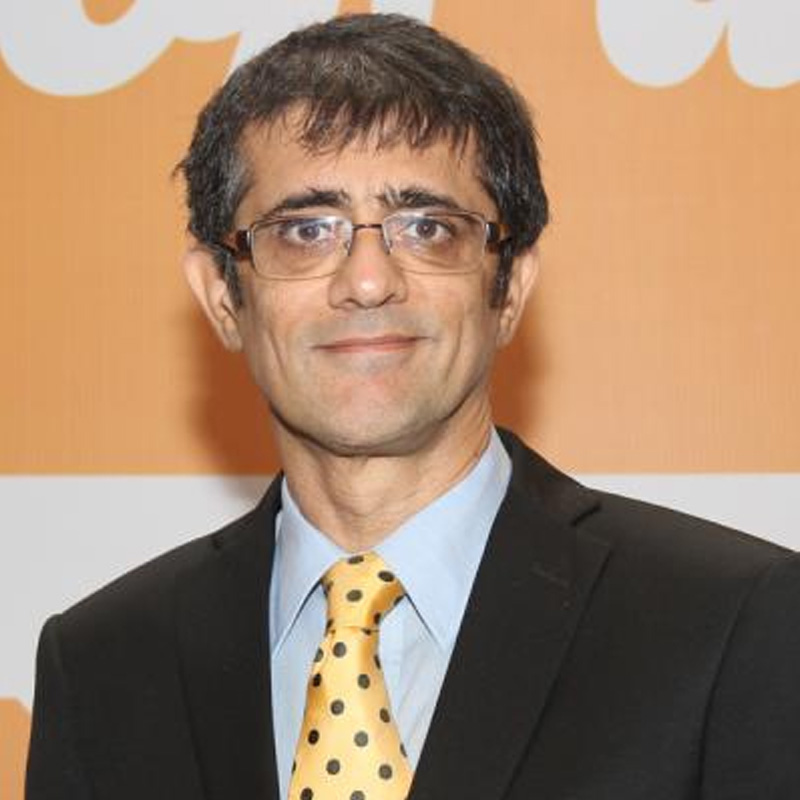
  • GEC 2011 – Facts beyond Fiction-Ormax Media co-founder and CEO Shailesh Kapoor

    GEC 2011 – Facts beyond Fiction-Ormax Media co-founder and CEO Shailesh Kapoor

    Over the last two years, since the launch of Colors in 2008, we have come to expect a very dynamic and unpredictable Hindi GEC environment. The year 2010 was no different. Star Plus showed a resurgence in the first half of the year, backed by two successful new launches – Pratigya and Sasural Genda Phool. In the last quarter, Sony‘s rise to the no. 3 position was the big story. KBC, followed by Jhalak Dikhhla Jaa, helped Sony inch ahead of Zee TV in what continues to be a see-saw battle. Also helping Sony‘s cause have been its new fiction properties – Saas Bina Sasural and Krishnaben Khakhrawala – and the fact that most of Zee TV‘s fiction launches in 2010 were non-starters, given the expectations set by the channel‘s strong pedigree in fiction content over the last few years.

    But for me, the big story of 2010 was the rise of non-fiction. Amidst scepticism, KBC returned on the small screen, with a revamped format, the original host, and a new channel. The program‘s consistent deliveries in a tough weekdays 9pm slot surprised many cynics who thought Sony was flogging a dead horse. Bigg Boss too reached its best-ever performance, across four seasons. But what caught most by surprise was the incredible opening ratings of Jhalak Dikhhla Jaa on Sony. Truly, the fiction vs. non-fiction divide is not the way we have known it till 2009. It is far more balanced today. The table below illustrates this point using data from our product Characters India Loves (CIL). The percentage of respondents choosing non-fiction characters over fiction characters has improved consistently in the last year and a half.

    Month Fiction Share % Non-Fiction Share %
    Sep 2009
    80
    20
    Dec 2009
    74
    26
    March 2010
    75
    25
    June 2010
    64
    36
    Sep 2010
    64
    36
    Dec 2010
    62
    38
    Each CIL study covers 2400+ respondents across six cities in 15-44 yrs. SEC ABC (70% females, 30% males)


    In a highly cluttered environment characterized by ever-decreasing loyalty levels, the role of marketing became ever so important. If a new non-fiction show did not generate enough buzz when it launched, it stood very little chance of resurgence. However, for fiction, the resurgence could come over weeks, as content evolved. Many fiction shows opened to good numbers but struggled to hold on, while many others showed consistent growth on the back of powerful content.

    The table below lists the top 10 non-fiction and fiction launch marketing performances in 2010, as measured by Showbuzz, which tracks the UA (Unaided Awareness) and TA (Total Awareness) of new shows on television.

    Top 10 Non-fiction and Fiction Launches in 2010 (Showbuzz)
    Non-Fiction Fiction
    Show
    UA TA
    Show
    UA TA
    Bigg Boss 4
    63 96
    Gulaal
    38 76
    KBC
    50 98
    Tere Liye
    35 87
    Khatron Ke Khiladi 3
    42 98
    Ganga
    34 89
    DID Li‘l Masters
    33 90
    Kaali
    30 75
    Jhalak Dikhhla Jaa
    31 92
    Behenein
    27 92
    Indian Idol
    30 94
    Kaashi
    24 71
    Rahul Dulhania Le Jayega
    25 92
    Jamuniya
    24 61
    Masterchef India
    19 75
    Rishton Se Badi Pratha
    21 79
    National Bingo Night
    18 78
    Sasural Genda Phool
    21 74
    Zara Nachke Dikha
    17 78
    Chaand Chhupa Badal Mein
    21 73

    A lot rides on the first month and a half of 2011. Before the ICC World Cup and the IPL kicks in, Colors will look at making an impact within fiction in 9-10pm. If the channel has to give Star Plus a close fight for the top spot, Phulwa and Mukti Bandhan will have to necessarily deliver good numbers.

    Sony has managed a steadily growing year, especially in the last four months. The channel seems set to become a consistent no. 3 in 2011, if its fiction content continues to get stronger, like it has in recent times.

    But in all this, don‘t rule out the biggest story of 2010-11 – SAB TV. Breaking every notion of the GEC viewing, the family-inclusive de-stress channel has reached never-before numbers, within striking distance of Sony and Zee TV at times. The way the mood of the country is moving, it will be no surprise if SAB manages to grow further. Comedy, along with reality television, is where the next level of growth lies.

    (Shailesh Kapoor is the Co-founder and CEO of Ormax Media, a company specializing in consumer research in the media and entertainment industry.)

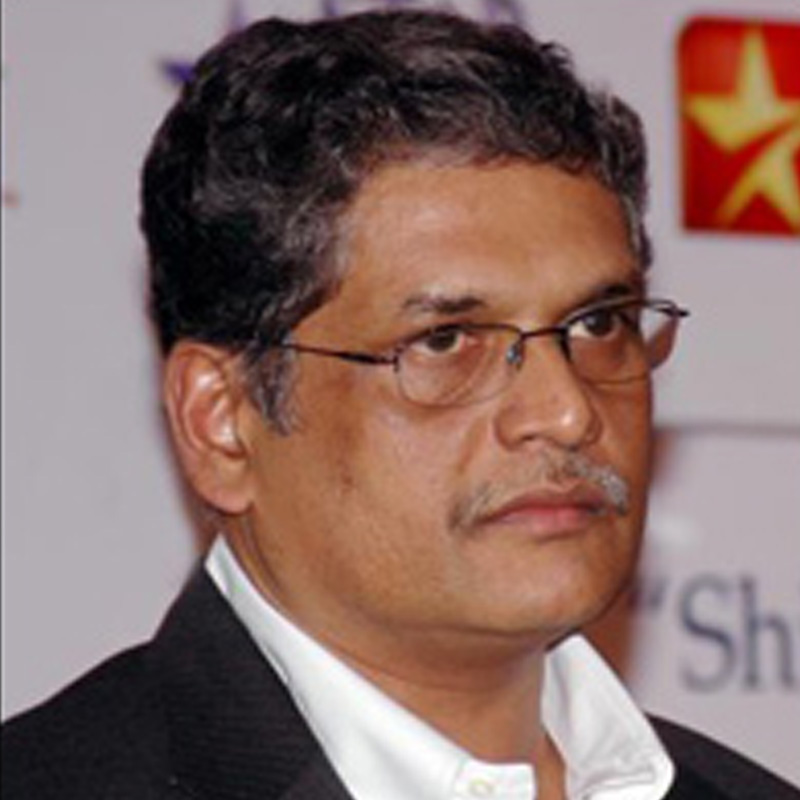
  • TV news consumption in the south – TV9 Kannada and News9 Karnataka director Mahendra Mishra

    TV news consumption in the south – TV9 Kannada and News9 Karnataka director Mahendra Mishra

    The news television in each state in southern India has its own typical character that doesn‘t resemble each other. It‘s so hetergenous and state-centric that most often one state doesn‘t know how the neighbouring states behave.

    The reason is not difficult to understand. Each state has its own distinct langauage, culture and social system. There is hardly any similarity among these states except for the Idlis-Sambhar-filter coffee that they all seem to be pretty comfortable with. But again Kerala is an exception. Here coconut rules more than coffee. Clearly, it‘s unfair to put all the states in one basket and analyse their respective media behaviour in 2009.

    Andhra Pradesh

    Let‘s begin with Andhra Pradesh.The sleepy state until 2008 woke up to a new reality in 2009. Till 2008 there were a few news channels that you could count on fingers. TV9, ETV2, NTV and TV5 were the only news channels in the market. Saptagiri of DD, ETV, Gemini TV, Teja TV, Maa TV and Zee Telugu were the entertainment channels. Some of the entertainment channels telecast news too. Like Gemini, Teja, Maa, and Vissa channels had couple of news slots after dedicating major space to entertainment.

    As 2009 Lok Sabha and assembly elections neared and Tollywood megastar Chiranjeevi announced his entry into active politics, a new tsunami of news channels hit AP within a couple of months.

    The new channels that 2009 saw included Sakshi TV, HMTV, HYTV, I News, Maha TV, Studio-N, Zee 24 Gantalu and ABN Andhra Jyothy. All these channels are in Telugu except HYTV and HMTV that run English and Urdu bulletins in addition to Telugu. But these channels have very little, almost insignificant viewership.

    Most of the news channels were launched by politicians from different parties with low investment. Surprisingly, despite being recession and media companies resorting to cost-cutting, these channels not only survived but also gave unprecedented pay hikes to their employees. And all this meant that the IT state came to be known for something else – for having the largest number of dedicated news channels in the country, apart from having the largest cable TV penetration.

    There was an impression that people were hardly interested in news unless there was a controversy or a coup. But all that proved a misconception as the news channels kept garnering better TRP share than the entertainment channels in AP.

    The TRP war became so intense and cut-throat that sensationalism took a new high in the state. These channels went big on the general elections. Whether it was a road show of actor-turned-politician Chiranjeevi or a public meeting of a low-profile candidate, the channels gave live coverage to all the events.

    Despite the fact that some of the news channels were launched with low investments, they later managed to afford several OB vans and huge infrastructure in district headquarters to ensure that elections were covered live.

    Post election, the channels never ran out of their staple TRP diet, be it India‘s biggest corporate scam of Satyam Computers, tragedy with Chief Minister Y S Rajasekhara Reddy, worst-ever floods in the history of AP, months-long fight for CM post by Jagan Mohan Reddy or the Telangana issue. These major issues ensured that news channels gained numbers while the GEC channels suffered.

    2010 looks poised to witness even more news channels in Andhra Pradesh. With no local English news channel in AP, Reliance group and Deccan Chronicle are planning to come up with dedicated local English news channels. As far as potential for news coverage is concerned, there would be no dearth of news at least in 2010 as Telangana issue keeps everyone on the toes.

    Karnataka

    Unlike Andhra Pradesh, the TRP war wasn‘t too intense in Karnataka. TV9 Kannada remained the top channel not just in the state but also at the national level for a week (Tam). The Rajeev Chandrasekhar-promoted Suvarna news channel did try to make a comeback in a new avatar with a new team in place but failed to offer any measurable competition to TV9 kannada.

    The gap between TV9 kannada and Suvarna channel was as wide as before with minor flactuations intermittently. Udaya Varthegalu, run by Sun group, continued to be in deep slumber except for a certain period when Karnataka Premier League matches were telecast live by the channel, defying all the logic of being a news channel.

    It was more of a cable driven TRP war (rather than content driven which should be the case) in Karnataka as rivals made their best possible efforts to remove TV9 from its position on the cable networks in different parts of the state. They offered big monies to the cable networks to replace TV9 with their channels and succeeded in doing so to some extent but that didn‘t work in the long run.

    One of the most important tasks TV9 Kannada took up in 2009 was adopting 5 worst flood-hit villages in North Karnataka when the floods struck the state.The response was so overwhelming that the channel collected Rs 30 million for rebuilding the villages from all over the state. It was the largest collection ever for any social cause by any media company in Karnataka.

    The Reddy brothers turned out to be another big threat for the channels.They control cable networks in a large part of Bellary and neighbouring districts and most often the channels find themselves in trouble when the content is not favourable to the Reddy brothers. TV9 became a major target and it was completely cut off in the region by the Reddys when they didn‘t find the channel favourable during the state government crisis in September-October 2009.Now there are confirmed reports that they are planning to launch their own news channel that wil be officially used to build their image in public.

    As news channels became the favourite dish for politicians, they couldn‘t resist themselves from taking a plunge. For example, Belgaum‘s BJP MLA and Karnataka minister Satish Jarkhohalli decided to launch a Kannada news channel by Ugadi.

    TV9 launched India‘s first 24/7 city centric English news channel NEWS9 for Bengaluru market in early 2009. The channel was meant to provide Bengalureans the local content that makes sense for them, in addition to the regular national, international, sports, business and entertainment news. The channel was received so well that it took over as the city‘s most preferred English news channel in a very short span.

    The channel made it possible for Bengalureans to see their neighbourhood story on a massive scale and in a way where their voice was also heard by authorities who didn‘t care about anything so far. It became the city‘s voice quickly.The channel‘s growth saga continues as it plans to enter other markets in the days to come.

    Tamil Nadu

    It‘s the Marans‘ Sun network that rules Tamil Nadu, almost in a monopolistic manner. The year 2009 was no different just as before, and predictably, 2010 wouldn‘t be any different.

    The fact that the state has the lowest news consumption (around 2%) among all the four southern states, and it hasn‘t grown much over the last few years, speaks volumes of the way news television works in the state.

    This is the only state in the country where one network commands over 85-90 per cent of eyeball share in the overall TV viewership, be it news or GEC. Others did try to make an entry but in vain. This is largely due to the Sun network‘s monopoly in cable business (through Sumangali Cable Vision) across the state.

    Any channel has to be at the mercy of the Sumangali cable network. And the network has been extremely selective when it comes to distribution. It has traditionally chosen to carry only those channels which don‘t compete with Sun network. But it has been accommodative enough to carry its harmless rivals like DMK-run Kalaignar Seidhigal, Jayalalithaa‘s Jaya Plus and Raj News channels due to their internal political equations. Since these channels happen to be from different political families (except Raj News), they end up being the political tools to serve the interests of their bosses.

    Raj News did try to be an independent voice but failed, all thanks to Sumangali‘s monopoly.The crux is that majority of the Tamil viewers are deprived of choices and the Marans continue to drive the eyeballs in the state.

    The reason why the Tamil-dominated, culturally rooted Chennai still remains the nation‘s second most English news consuming market after Bangalore is that the average urban Chennaiite doesn‘t have any choice but to depend on the English news channels for an independent, unbiased story.

    NDTV-Hindu was another non-political, independent media vehicle that launched in 2009 but it couldn‘t make any significant impact.

    You hate it or love it, but you can‘t afford to ignore the Sun network, largely because you are hardly left with any choice minus this network. So the story ends here.

    Kerala

    The state always looks hungry for more and more political news. Even if there is an ordinary story, people are eager to explore a political angle to that. This is the reason why Kerala is one of the highest news consuming states not just in south but in the country (over 6%).

    In 2009, Kerala was second to Andhra followed by Karnataka and Tamil Nadu. It‘s also among the largest English news consuming states in the country.

    Other than political news, Gulf related news rules the state, especially in the northern part of the state. Looks like the trend is here to stay.

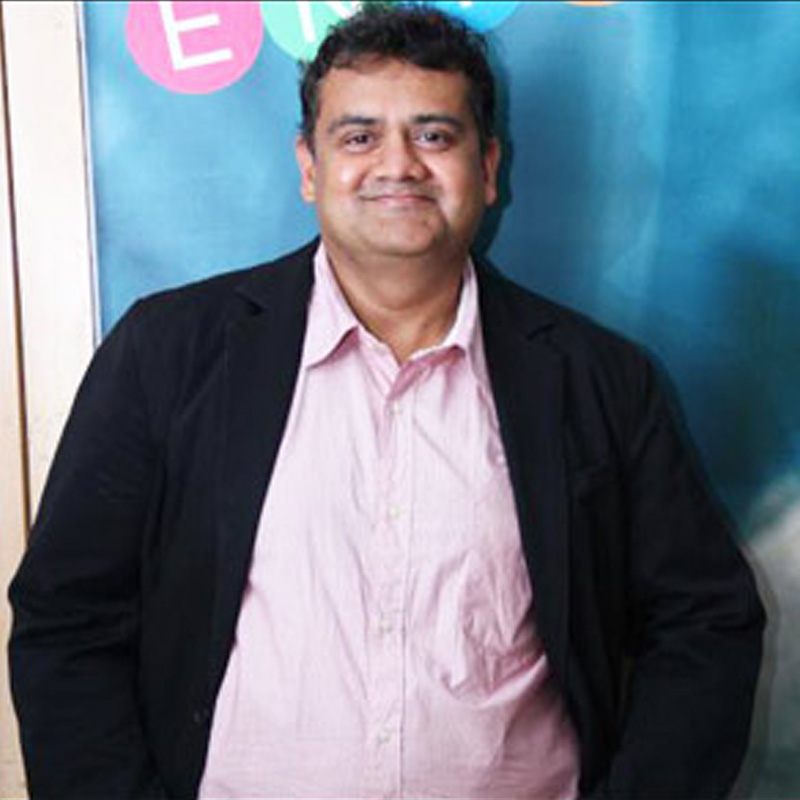
  • Radio: The 5 Metro Phenomenon – By Reliance Media World CEO Tarun Katial

    Radio: The 5 Metro Phenomenon – By Reliance Media World CEO Tarun Katial

    India lives in its villages…

    Does it, anymore?

    Let’s look at the statistics…

    A recent Ernst & Young study indicates that 58 per cent of advertisers on radio in the country are national corporate advertisers, while 42 per cent are from towns or states in which the station is based. Not surprisingly, the larger radio networks have taken home a higher share of national advertiser revenues.

    Now, let’s look at the larger picture. India is tipped to become the 5th largest consumer market in the world by 2025, with urban India defining the growth of the domestic economy in the coming years. An independent study has shown that around 45 per cent of Indians will be living in urban areas by 2050, up from 30 per cent in 2007-08.

    This tells us that while the tier II and III cities ensure spread and reach for radio, the metros will continue to play a critical role as far as advertisers and revenues are concerned. Adex data only re-iterates this, when it shows that 70 per cent of the total advertising consumption in the radio industry comes from the 5 metros (Mumbai, Delhi, Kolkata, Bangalore and Hyderabad).

    So why do advertisers focus on the metros?

    The answer lies in the fact that the core economy and majority of the educated consumers belong to this cluster. Add to that the fact that people are migrating in increasing numbers from small towns and villages to metros, accelerating the economic growth of these cities, creating concentrated centers with large markets.

    Distinctly higher demographic development, better infrastructural facilities, lower poverty ratios and higher purchasing power are just few of the things that favour the market. Even though the future growth potential of the smaller key urban towns is universally acknowledged, concentration of media spends in metro markets is a well-established reality.

    Globally, radio is used extremely effectively as a tool for brand building. In India too the developments of the recent past have accelerated the growth of the radio industry propelled by the increasing radio listener base, favourable demographics, political advertising, prospects from phase III expansion and the increase in its space in the advertising mix of brands.

    The recession, while had its rippling effect on the radio industry, led several new and first time advertisers to flock to radio after understanding its cost effectiveness, coupled with its high reach and impact. While the ‘West’ was melting down due to the recession, India was empowering itself with effective streamlining of resources and delivering optimal returns to both clients and listeners.

    Today radio offers multiple platforms at a single point to the ‘value demanding’ advertiser, thus moving out from selling vanilla radio to a more holistic approach. While corporate and retail advertising will continue to retain its critical place as a source of revenue, other sources such as on-ground activation, in programme placement, internet and cross media sales are also becoming significant revenue streams. Similarly larger networks work effectively for advertisers who want to reach deeper into the country. 

    The key five metro markets performance for any media platform is critical to business health. An advertiser looks at maximising reach across the 5 metros – selecting media which can deliver this without excessive spillover. That is where radio plays an important role in the advertising mix.

    Advertisers today divide their budgets across the top two players and this works excellently for Big FM which has been performing consistently in the five metros and today commands the second highest reach across these markets, ahead of its contemporaries (Delhi, Mumbai, Kolkata and Bangalore, as per RAM and Hyderabad, as per IRS-09 R2 data).

    Going by the way radio is being used extensively as a medium of communication and advertising, the future promises nothing but bigger opportunities and greater growth prospects for this industry, led by the metros!

  • Kids channels travel the extra mile in 2009

    Kids channels travel the extra mile in 2009

    Kids channels ran the extra mile in 2009, expanding the genre by 7.9 per cent as they localised and became more interactive with their target group consumers.

    The 5.8 per cent share of the overall TV viewership pie was led by a 13 per cent growth in the Hindi speaking market (HSM) as the tiny-tots migrated from other genre channels. This despite various property launches among Hindi general entertainment channels (GECs), reality shows and the Indian Premier League (IPL).

     
    Kids Genre Share %
     
    2008
    2009
    % Growth
    All India
    5.4
    5.8
    7.98
    HSM
    5.7
    6.5
    13.35
    Source: TAM, C&S 4-14
     

    Admits Nick India SVP and GM Nina Elavia Jaipuria, “During the year, kids moved away from news, sports, cable and music. This is because within such categories, kids have mostly acted as passive viewers. Kids always prefer to be active audiences, thereby desiring for tailor-made content that suit their viewing tastes.”

    Agrees Turner International India VP and deputy general manager entertainment networks – South Asia Monica Tata: “Changes in genre consumption amongst kids and family audiences, who preferred a bit more of news and regional entertainment, combined with single TV phenomenon has led to this blip in 2009 kids genre shares.”

    The HSM market also saw a boost in its 2009 viewership as the target group was provided with more choices due to increased competition. Last April, Viacom18‘s Nick edged out market leader Cartoon Network to become the most-watched kids channel across the HSM. Later, Hungama TV from the Disney stable also occupied the number one spot during various weeks, thereby offering kids with more selection penchants.

    So what led to such fluctuations in the HSM space?

    Says Jaipuria, “2009 brought in more food to the audiences and with consumers acting as the clear kings, broadcasters became more innovative and stepped outside the television sets. Competition rose high, and content was infused with various spikes and reactive strategies to pull in more audience stickiness. This led to quite a few fluctuations in the top slot.”

    Within the all-India and HSM category, again, there are a few transitions. While Cartoon Network continues to hold the fort in the all-India segment, the channel has seen a three per cent dip over the previous year to end 2009 with a 24 per cent market share.

    Sibling channel Pogo too has managed to retain the number two slot in the space. The channel has seen a rise in its market share from 20.34 per cent in 2008 to 22.23 per cent in 2009.

     
    Kids Genre Share % All-India
    Channel
    2008
    2009
    Cartoon Network
    27.53
    24.10
    Pogo
    20.34
    22.23
    Nick
    15.56
    19.29
    Hungama
    19.06
    17.61
    (Disney XD) Jetix
    10.79
    9.10
    Disney Channel
    6.697
    7.25
    Spacetoon Kids TV
    0
    0.42
    Source: TAM, C&S 4-14, All India
     

    Says Tata, “2009 sealed another year of supremacy for Cartoon Network and Pogo as the clear kids‘ favourite channels across India with a combined market share of 44.1 per cent.”

    The HSM leadership slice, however, has a new story to narrate as with the year ending, the segment has seen a rise of a new leader in Nick. Dethroning market leader Cartoon Network from the top, the Viacom18 channel has emerged as the No 1 channel in the HSM space.

    The channel has closed the year with a 23 per cent market share, one point above the new second in command, Cartoon Network.

     
    Kids Genre Share % HSM
    Channel
    2008
    2009
    Nick
    20.18
    23.01
    Cartoon Network
    24.33
    22.08
    Pogo
    17.95
    21.33
    Hungama
    25.03
    20.98
    Disney Channel
    8.15
    8.17
    (Disney XD) Jetix
    4.33
    3.91
    Spacetoon Kids TV
    0
    0.53
    Source: TAM, C&S 4-14, HSM
     

    Says Jaipuria, “The Nicktoon-characters have helped Nick establish space and engagement with the kids leading to an increase in the stickiness of the channel.”

    Also, the channel has managed to take viewers beyond television, thus making it more tangible. “And I think we did that very successfully with our experimental 360 degree marketing philosophy – we wanted to be in every place where children are,” she adds.

    Meanwhile, when combined, Cartoon Network and Pogo are still placed at the top and enjoy an increased combined relative share of 43 per cent in 2009 (compared with 42 per cent in 2008) in HSM, says Tata.

    South Story
    And now, as far as trekking the southward street is concerned, the journey was a little more rutted as the genre de-grew by 10 per cent. As per Tam, the segment that had grabbed a 4.02 per cent of the overall kids‘ pie in 2008 fell to capture a 3.6 per cent of the slice in 2009.

     
    Kids Genre Share %
     
    2008
    2009
    % Growth
    South
    4.02
    3.6
    -10.447
    Source: TAM, C&S 4-14
     

    Says Tata, “South India also has very unique viewing dynamics in terms of consumption of TV genres compared with the rest of India, with each of the four states having distinct consumer preferences and habits.”

    Elaborating further, Jaipuria explains that southern viewers prefer general entertainment channels more than any other category as they cater to kids and family through regional characters and localised products.

    Meanwhile, CN indisputably continues to rule the region exhibiting its leadership crown. Placing itself at the second spot, however, is not CN‘s sibling channel Pogo, the second in command in the all-India market, but Disney‘s XD channel that is fed on action adventure content and targeted at only boys between the age-group of 6-10.

     
    Kids Genre Share % South
    Channel
    2008
    2009
    Cartoon Network
    30.30
    26.13
    Disney XD (Jetix)
    23.13
    24.10
    Pogo
    22.28
    20.91
    Chutti TV
    16.12
    19.05
    Nick
    2.85
    3.59
    Hungama
    2.84
    3.28
    Disney Channel
    2.43
    2.94
    Spacetoon Kids TV
    0
    0
    Source: TAM, C&S 4-14, South
     

    Says Tata, “Despite challenges, Cartoon Network continued its leadership and sustained its number one position with the highest market share in 2009.”

    Advertising potential

    As the year hit straight into slowdown, kids broadcasters faced an ad slump. As a result, initially kids channels were stressed to move to quarterly deals with big advertisers, slash ad rates and see brands walk out. However, things began to improve from the second half of the year wherein the category grew by almost 20 per cent over 2008.

    Says Jaipuria, “In 2008, the ad revenue size of the all-India kids sector accounted for about Rs 1.5 billion. And despite recession, the size has grown by about 20 per cent to end the year at about Rs 1.7-1.8 billion.”

    Apart from traditional advertisers, broadcasters state that a lot of non-traditional advertisers across sectors like FMCG, investment banks and durable products are also eyeing the kids space. The rationale behind this, they feel, is an increase in the co-viewing pattern and also the mere pester power of kids who have the ability today to influence parent‘s decisions.

    According to marketers, almost 30 per cent advertisers reach out to the adult audience (that is 15+). These include companies such as Procter & Gamble, Eureka Forbes, Samsung, Honda Jazz, Gillette, Titan, Aegon Religare Life Insurance, LIC India, Godrej Sara Lee, Sun Direct TV, Tata-Sky, Reliance Big TV, Johnson & Johnson, Colgate Palmolive, Hindustan Unilevers, Reckitt Benckiser, SC Johnson, Marico, Vodafone, Bharti Airtel, LG Electronics, Voltas, Whirlpool, Hitachi, Tata Tea and L‘Oreal.

    And thus, CN is looking at upping its non-traditional clientele in the New Year.

    Says Tata, “We expect great growth from non traditional clients as over 30 per cent of advertisers on Cartoon Network are non-traditional advertisers, strongly reiterating that animation cuts across age-groups and compelling content has legs that travel across.”

    Welcome 2010

    As localisation almost became a mantra for kids broadcasters in 2009 to drive viewership range, the year witnessed the increase of home grown content. Kids channels plan to remain aggressive in creating more localised products to improve viewership as a whole.

    Says Tata, “Today, there is a marked increase and recognition within the industry on the merit and need for localised content. Cartoon Network and Pogo have led the way in both home grown animations as well as live action shows with Pogo‘s Original Productions. As we see it, 2010 will have a stronger focus on localisation with more increased local collaborations.”

    The year also intends to call for a further exploration of different programming as kids already consume a wide cross section of genres that include action, comedy, drama, movies and game shows. “2010 will see exploration within these genres mining different proportions,” says Tata.

    Meanwhile, kids channels believe that digital media will play a key role during the year and fast become a key growth avenue for broadcasters.

    Says Tata, “The real and virtual world divides are getting blurred as is evident from Cartoon Network‘s patented research study on kids‘ lifestyle, New Generations 2009. 49 per cent of the kids aged 7-14 years have used a computer in the past one month, and 15 per cent of all kids 7-14 who surfed the internet in the past one month, two-thirds are at least weekly users. In 2008, it was 10 per cent.”

    Challenge ahead….

    Currently, kids broadcasters populate about seven per cent of the total television viewership region but in terms of ad revenues, it is just 2 per cent of the total television ad pie.

    Thus, the challenge ahead will continue to be to get rid of the baggage that the space has been carrying over the years where advertisers are used to paying to the GECs.

    Meanwhile, for kids channels gearing up for more action down South this year, the braving of the swords will be even more.

    Disney, which already has two of its channels (Disney XD and Disney Channel) talking in Tamil and Telugu, recently localised Hungama TV in these two markets. And now Nick, the only kids channel to stay out of this play zone, is also readying for a launch in the southern market later in the year.

    Says Jaipuria, “South is an extremely challenging zone. This is because in this region, kids are used to watching general entertainment channels in their local language which exhibit regional relevance. Therefore, just syndicating HSM product and dubbing will not help in creating channel stickiness. It will be an extremely challenging task to dub and make relevant content.”

    It is pertinent to note here that kids broadcasters are being propelled to speak in the southern language because South India comprises a substantial viewing of the all India universe. In 2010 (first 2 weeks only, Tam‘s expanded Universe estimation), South comprised 27 per cent of All India kids Universe (42.7 million Kids All India).

    “Thus, by the sheer size of the market, there is immense scope of expansion for revenue and viewership,” says Tata.

    Elaborating on this, Madison Media Group CEO Punitha Arumugam notes that treading the South zone will help kids channels not just garner national but also attract regional revenues.

    “The entry of new players in the South zone will actually help the genre to grow with each grabbing a share of its own pie. However, the share of revenues will not grow much but, instead, only get dispersed,” she opines.

  • 2009 a dynamic year for Indian cable industry – By ACT Television MD Sunder Raju

    2009 a dynamic year for Indian cable industry – By ACT Television MD Sunder Raju

    The year 2009 has been a dynamic one for the Indian cable industry. Several developments and key decisions that took place hint towards a very promising 2010 for the industry as a whole and, of course, the consumer. Continuing its boom, the cable industry is all set to ensure that the TV is not an ‘idiot box‘ anymore!

    Problems faced by Southern operators

    Cable business is spreading its wings all over India. In urban Karnataka and Madhya Pradesh, it has also undergone a massive change in the last couple of years as the industry, from being extremely fragmented earlier, has now become more systematic and corporatised. With a growing market share in these states, digital cable is becoming a larger chunk of the pie and is on its way to give DTH a run for its money.

    However, there are still some pertinent challenges that lie in the path, especially for Southern operators. One of the challenges faced by them is that vis-?-vis digital, DTH has a larger geographical presence. Despite DTH being much more expensive than cable, it has higher penetration because digital runs through a cable network, and that limits any player‘s footprint to the area already cabled by them.

    Also, though the cable industry has changed massively, it is still fragmented. Hence, any operator going national needs to accommodate a number of industry-specific issues, such as adjusting to rapid technological change, working and accommodating with different workforce demographics, changing and restructuring the entire face of the organisation.

    Another challenge lies in the fact that since a large part of the cable industry is still unorganised, the corporate players within the industry at times face content related challenges. Large corporate players, as a policy, do not relay illegal films unlike the small players that telecast all kinds of content in order to get a higher viewership.

    Also there is an oversupply of service providers in the Indian market, with various small players present everywhere. This is also because starting an analogue business requires small investments. In addition to this, with growing inflation, there is less advertising to support the services. Domestic regulations limit advertising to just 10 minutes per hour.

    Last but not the least, with DTH penetrating in every corner of the country, analogue service providers are now facing a major roadblock where profitability is concerned. Consolidation is the way of the future and will bail them out.

    An eventful 2009

    Cable industry has seen a major shift in the last couple of years when more and more organised players have entered the market. This shift in the industry has not only improved customers‘ TV viewing experience with better picture quality, consistent network and improved content on local channels, but it has also drastically improved the quality of overall customer service. For example, ACT Television not only offers a call centre service but also offers instant personalized customer service through its professionally trained cable operators.

    In my opinion, a very important development of 2009 that will make 2010 a smooth year for corporate players is that legal action would be initiated against small cable television operators showing unauthorized and prohibited programmes including obscene films. Moreover, if the programmes televised by the channel create resentment among a particular community, the affected persons can also lodge their complaint with the district administration.

    Towards the end of 2009, HITS (Headend-in-the-Sky) was approved. HITS will allow use of satellites to distribute cable signals instead of the traditional cables that operators use. This is similar to the DTH system – the only difference being that in this case, cable operators will download signals for further distribution in homes.

    As far as the HITS policy is concerned, while the government has taken a major step in addressing the challenges of digitising the country‘s television homes, the work is only half done. They also have to set a timetable for the pay channels to go exclusively digital. Without this step all that has been done is a policy statement without teeth in the area of encouraging enforcement. Ideally both announcements should have come together but a quick decision soon on compulsory digitalisation for pay channels will ensure that the advantage of digital would be experienced by the customer.

    Parts of India have recently been exposed to the Internet Protocol Television (IPTV) services. Companies offering IPTV are mostly conducting pilots in bigger cities of India, such as Delhi, Mumbai, Bangalore.

    A promising 2010

    With 111 million Television Homes and 85 million C&S Homes, India is bound to see many changes in the coming year and years ahead. Indian cable TV industry has a huge potential and that is being recognized by people.

    More and more customers are demanding better picture quality, more channels and better customer service – all at affordable prices. Hence, digitalisation is inevitable and seems to be the only way forward for analog service Providers. Also the need of the hour is clearly training and a reminder that “the customer is King.”

    Also, cable TV offers many other benefits such as city specific channels, that provide complete city related information throughout the day to viewers. This gives viewers a pulse on the city and keeps them updated on events and happenings in their immediate surroundings. Often something that impacts life in the city is covered first by the local city channels and they are surely becoming indispensible.

    Not only this, cable TV has become a great platform for providing, entertainment, information and also education. This is rapidly changing the TV viewing habits in our country which has close to 51 million urban households and 60 million rural households.

    Strategic partnerships with various content houses will determine how any service provider progresses. This will also put an end in the near future to broadcast of pirated content.

    Building a robust subscription income, digitising rapidly and developing broadband as a revenue stream seems to be the business model all the leading multi-system operators (MSOs) are going to chase after having spread their tentacles across the country. Apart from this ‘Value Added Services‘ are a definite means to generating revenues. Services like education on TV, web browsing, gaming and ticket booking have a huge potential in the Indian market.
     

  • Happy News Year – By Times TV Group MD & CEO Sunil Lulla

    Happy News Year – By Times TV Group MD & CEO Sunil Lulla

    Good Morning and a Happy News Year. I am happy to report The News from the front lines of the news battleground. Returning after a sabbatical, it gives one a fresh perspective into what went by and what to, perhaps, expect next.

    2009 had begun on the back of the most alarming news event of the decade: the terror attacks of Mumbai.

    2009 also witnessed the biggest news event of 2009, the General Elections and an accidental death of a Chief Minister, which was widely covered.

    Not much changed in the stack up of the news channels – the #1s continued their reign respectively, Aaj Tak, Times Now and CNBC. New channels came into the offing. Some changed ownership. Regional News was the hero of the year, clocking most significant viewership…

    If I take this route ahead with this news bulletin, it would be so conventional. While I have been asked to comment on the year, which went by and what to expect in the coming year, I thought I would rather report what my candid conversation with folks connected with TV News broadcasting reveals. Turning this rewind-forward commentary, to views gathered from experts (names withheld on request) over a few candid conversations.

    1. Profitability
    Business leaders in the domain believe the big challenge is profitability. Of the listed news entities, only one network has stayed ahead, going by its public reports. Others have taken a hit! Perhaps due to the challenging financial conditions of the last two years and/or due to the increase in costs structures.

    See it any way, profitability of the TV news industry is under significant strain. This may be bad news for investment but it is also a big opportunity for businesses to spruce up their act. With over 200 news channels across all languages and genres, certainly a challenging act. A prominent investment banker believes the next two years provide opportunity for consolidation, projects some of the news networks may dither off the horizon and those focused around profitability are most likely to succeed.

    Profitability for news is not a bad term. It is essential, as firms which do not make the cut, eventually vanish and so does the editorial associated with it. Hence for the “freedom of the press” to exist, being profitable is even more essential.

    There are 4 underlying fundamentals to profitability

    Market Positioning: Each news Network has a position in the minds of its viewers. News is not vanilla. Most viewers have a choice and a repertoire and a set of channels they almost never visit. News networks need to invest in growing their position. With the wide range and choice that exists in the market place, positions can be adopted by way of brand offering and editorial experience. This is what leaders of news networks need to apply themselves to.

    Ad Revenues: The gap in revenues amongst the top 3 of top 5 is decreasing and growth of the leaders is not as significant in historical periods. Yet the category as such is not saturated. The leaders need to pick the pace. Set the standard. Up the price and ante and not crowd to the median price point.

    One of the challenges the industry faces is to learn to sell audiences and not just market shares. The quantity and quality of audiences. Not just Tam audiences, but the homes the news network reaches. This change in strategy and market-based positioning can be the sleigh on which the next Christmas fortune may be written.

    Subscription Revenues: Some of the news networks have been successful in turning “Pay”. For some the earning – learning has been lower than market potential. But strong brands can move ahead and begin to grow their revenue curve by focussing on subscription revenues.

    The worry of viewership shares is driving the channels to commit for larger ground paid connectivity. But true strong brands will find its loyal viewers ask for them. One cannot be indifferent and say news is news..that‘s why the pecking order has stayed largely stable. There are ” News Brands” and they have a demand, for which they can charge. Brands are language agnostic.

    Cost Structures: It‘s not about the quantum of costs but about the nature of the cost structure. Is this sustainable in the medium turn for businesses to be profitable? Is there potential to find cost arbitrage in the nature of news gathering and ground connectivity amongst news channels? Can local channels work co-share resources or reportage or news blocks, so prominent in the mature US markets, as an example. Each News Network has an astute understanding of what works for itself and what is rarely used, arbitrage that. Rationalize to build essential cost structures and not unsustainable ones. As an illustrative example, Is it really necessary to be in international markets, if say a channel is losing money? Is that sustainable?

    2. Editorialisation, Not Sensationalism
    The editorial independence of TV news networks continues to grow with balanced strength, Aligned to its viewers needs and to provide objectivity in news reporting. The term sensationalism is sometimes used to describe the dramatic visualisation of a story. It is not a replacement for the quality of editorialisation which continues to grow. Who will determine what is what? The editorial flow of news is committed to providing the news in a simplistic, objective manner. It must use the metaphor to create the necessary visual drama for its viewers to understand.

    News is no more simple. There are multiple views, all of which are right. There are various hierarchies: the government, justice, social justice, the lobbyist, the consumers rights, the editorial right et al. All need to be balanced and put together in a manner which is cohesive and does not tempt the remote button to be pushed.

    We acknowledge there are temptations and those may exceed the boundaries. But then social networking, blogging, independent reports etc keep flexing these boundaries and new ones get created. India has been largely balanced, informative, educative and in many recent a time, bought to the table excesses, be it of state or individual. The very same which accuse of sensationalism are those which cause it. Strange isn‘t it? When it does not suit you, the media is no more your friend?

    The media, my dear was never your friend. It is as unbiased “as a potato”, what you do with it, will give you the taste you want. News is all pervasive and has bought to society a new spectrum of information.

    3. Corridor of Collaboration
    In recent times, with the advent of the News Broadcasters Association (NBA) and other cooperation measures introduced by many news networks, the industry is getting better equipped to collaborate and compete. Those who embrace this approach are likely to see better fortunes for themselves. Transparency in collaborations creates for better understanding, deters suspicion and makes for a stronger market place. Be this by way of sharing of local news with national channels or the other way around. Or news blocks on networks, co-branded or branded otherwise.

    The practice of sharing the local advertising time, via local avail, has already begun and seems to a market gainer for all. There is more to be done, as not all news networks are members of the NBA. The corridor of togetherness will drive new practices, forge collaborations and result in better profitability. As an illustrative example, connectivity costs, news gathering and sharing, best practices in terms of disciplines, new technical alliances, taxation and import policies.

    So what is the news forecast for 2010? All is well. Yet nothing much may change and there may be more bitter rather than sweet moments, unless the industry takes rapid and conscious charge of the above. I am very optimistic of the industry and so were the experts I spoke with – from editors to business leaders, to media experts, to consumers…

    The news is important and everyone wants to be in it. So hang in and make the TV news industry hang in too.

  • 2009: Television media can certainly say “Aal Izz Well”By Zeel chief revenue officer Joy Chakraborthy

    2009: Television media can certainly say “Aal Izz Well”By Zeel chief revenue officer Joy Chakraborthy

    In view of the global economic meltdown and its imminent impact on the advertising, 2009 was bound to be a challenging and tumultuous year. But, even as we entered into a rather gloomy 2009, there seemed to be a glimmer of hope that India would manage to insulate itself, at least in part, from the global downswing. And guess what?

    Our 1.1 billion-plus population, which until now has always been perceived as the hindering factor to growth, came to our rescue wherein the consumption of basic amenities of “ROTI, KAPADA & MAKAAN” ensured that organic growth across sectors is not stifled. Top this up with our undying quest for “KUSHI” (or constant up-gradation of our standard of living) which during the 2nd half of the year spurred the growth rates back onto the high single-digit figures.

    In the first half of the year, the fear of an impending downturn led to cost-rationalisation initiatives . . . especially in the sphere of marketing budgets. This resulted in marketers intensely re-evaluating their ad-spends. With focus on sustaining consumption of their products (which was coming from every nook & corner of India), marketers re-visited their basics of reach and frequency.

    Also, marketers adopted a stingy spending strategy. With splurging on high-value flashy media initiatives becoming a luxury that no one could indulge in, it was imperative to gain market shares in a declining market. The FMCG sector increased their ad investment by nearly 30 per cent, but on cost-effective options that yielded them better returns on media investments. This helped them grow their sales by six per cent.

    So, one of the most important positives to have emerged from 2009 is that marketers have realized the true potential of television in terms of reach and cost-efficiencies. With FMCG leading the way and viewing TV more optimistically than print, other sectors such as auto and telecom followed suit.

    So, let’s see how Television has evolved during last year:

    The emergence of Colors not only transformed the Hindi GEC space into a “3-player” genre but, more importantly, provided viewers with varied & diverse content and advertisers with multiple options to reach out to their consumers. This facilitated the genre to grow both in terms of viewership and ad revenue.

    Given the multiplicity of options and lower switching costs coupled with the marketers’ imperative of cost rationalization and reach maximization, “purple” GRPs became their key buying parameter. Broadcasters who quickly took advantage and managed to get their content propositions right reaped the highest benefits.

    Towards this end, while most networks busied themselves in attracting higher GRPs (to become No. 1) by initiating extravagant programmes with high-value celebrities and airing movies, Zee, on the other hand, focused on developing relevant and strong properties which helped us become leaders in “prime time”.

    So, the key to TV sales evolved around developing relevant, cost effective but plain vanilla sales propositions with high service quotient. As such, with our sales approach to optimally monetize these “purple” GRPs, we garnered highest revenue.

    Moreover, with marketers demanding “localization”, regional channels gained acceptance and emerged as key drivers of growth. Our host of regional channels capitalized on this through complementary media propositions to our advertisers.

    A key TV sales imperative emerging from the cost-conscious marketer was the need to leverage “network strength” across genres / markets as compared to offering a proposition based on merely one or two channels. The wider the range of the network’s bouquet, the better the ability to provide a comprehensive package to the marketer and thereby garner maximum share of client spends.

    Despite all the above sales approaches, the two factors which, to my mind, truly provided the only competitive advantage in this hyper-competitive environment are “people” and “relationships”. Broadcasters who stayed away from rampant “right-sizing” initiatives have benefited not only because of highly energized sales but also, more importantly, as it gave them more “feet on the street” whose relationships with clients and agencies could now be leveraged.

    In summation, Indian media (in general) and the television media (specifically) can certainly say “Aal Izz Well” and look forward for another enthralling year of high competitiveness.

  • Challenger channels are emerging in South India – By Star India president (South) Jagdish Kumar

    Challenger channels are emerging in South India – By Star India president (South) Jagdish Kumar

    2009 began ominously with dark clouds looming in the aftermath of the meltdown of financial markets in the US. In the midst of this turbulence, Star India was on the verge of concluding a very significant and strategic deal in its history – the acquisition of Asianet channels in South India.

    Having worked on the deal negotiations and complicated regulatory processes for over a year, it was frustrating to hear many doomsday prophets questioning the rationale for making large investments in an under developed media market when businesses across the world were experiencing a severe liquidity crunch. Conventional wisdom said corporate USA will conserve cash and any new investment proposal will either be deferred or cancelled.

    However defying conventional wisdom, we just got the deal done! Star India‘s long term commitment to the media market in India was reinforced when on 9 January 2009 Star network‘s footprint expanded to cover all of South India with the acquisition of channels in Malayalam, Kannada and Telugu. This step from Star truly represents the adage: when the going gets tough, the tough get going! There was never a doubt in any of our minds that the value we derived from acquiring Asianet far out-weighed the price we paid for it.

    Hence while most media companies in India started 2009 with either downscaling/terminating of operations or approaching the market with hesitation and extreme caution, Star started the year with renewed vigour and hope. With its expanded footprint over non-Hindi regional language markets, Star is currently the biggest television network in India with access to 130 million viewers.

    South India is home to 45 per cent of the cable & satellite homes in India. The region is witnessing tremendous economic progress with per capita incomes far higher than the national average. For various reasons, Star had been guilty of ignoring the South Indian market with the exception of Tamil Nadu where its Tamil language channel Vijay TV has been delighting Tamil viewers with innovative content. The network of channels in Star‘s current portfolio consists of a mix of businesses at varying positions in each of the markets:

    In Malayalam, Asianet is the leading channel

    In Tamil, Star Vijay is a challenger channel with its own distinctive brand

    In Kannada, Suvarna is fighting a close battle with the leading channels

    In Telugu, Sitara is still taking baby steps.

    What have we learnt from 2009?

    When one looks back at the year gone by, there are 5 themes which strike out:

    1. South India is not one market; it consists of numerous distinct markets:
    Each of the language markets in Kannada, Malayalam, Tamil and Telugu have distinctive characteristics which sets them apart from each other significantly. Even within the main language markets, there are internal differences which cannot be ignored by television broadcasters.

    Karnataka is a good example to illustrate the multi-faceted features of the market. Besides Kannada language speakers, Karnataka is also home to people who speak Coorgi, Tulu and Konkani. Each of these languages is spoken by people who are proud of their own long history and culture. Furthermore parts of Karnataka in northern, eastern and southern borders of the state have a large populace who are influenced by Marathi, Telugu and Tamil respectively. The capital city Bengaluru has developed into a microcosm of India with people from all over the nation making it their home. Kannada language speakers are a minority in Bangalore.

    Television broadcasters have to factor in the diversity of the market in all their programming and marketing decisions. It is perilous to consider the market as homogenous.

    2. Content needs constant innovation with a blend of tradition and contemporariness:
    The significant earning and consuming populace of the region (25 years and above) are people who grew up in the traditional and conservative environment of the 1980s and 1990s. At the same time they are also modern and contemporary in their attitudes which come along with the economic prosperity the region is experiencing. Television viewers who are entertained by religious/mythological content are also equally captivated by a talk show which is anchored by a transgender host.

    Television broadcasters have to master the art of being a jack of all trades and master of none.

    3. It‘s distribution, distribution and distribution:
    South Indian states have always had the highest penetration of cable & satellite homes in India. With increasing importance of the tier 2 and tier 3 towns, distribution presents immense challenges.

    Each of the regional markets in the South have numerous competing local channels which are backed by political interest and local businessmen. This has created a huge demand and supply mis-match for analogue cable bandwidth. While the distribution market is trending towards consolidation, it is still characterized by territory wars between the major multi-system operators (MSOs). Local cable operators (LCOs) are offered television signals either free or with huge discounts. Such predatory pricing by competing MSOs results in blockage of subscription revenues at the LCO level. In order to compensate for lack of subscription revenues, MSOs are forced to charge exorbitant prices for carriage and placement.

    Television broadcasters face huge challenges in getting distribution. The pay TV market is fraught with risks associated with poor cash collections.

    4. Today’s leader could be tomorrow’s challenger:
    For a long period of time, each of the markets had a dominant leader and a there was a huge distance between the leader and second ranked channels. The Sun network channels dominate the markets in Tamil Nadu, Andhra Pradesh and Karnataka and the Kerala market is dominated by Asianet.

    With the proliferation of channels in each of the markets, the gap between the leader and the challengers is decreasing. With the exception of Tamil Nadu where Sun TV continues to maintain a massive lead over the next best channel, the other markets are witnessing healthy competition in the leadership stakes. Incumbent leading channels in non-Tamil markets are experiencing viewer fatigue with long running fiction serials and audiences are willing to experiment with fresh concepts.

    Television broadcasters have to plan “disruption” in programming and scheduling in order to make inroads into the market. The audience is ready for the next big idea.

    5. Movies can make or break channels:
    South India has a prolific movie industry. 70 per cent of the annual production of approximately 1000 movies in India is produced in South Indian languages. Movies constitute more than 50 per cent of the GRPs of most of the channels. All major networks in South India have created entry barriers by acquiring movie libraries on a long term basis.

    Movies are an essential weapon in a broadcaster’s armoury. Movies are extensively used to attract audiences; thwart competition; promote programming and boost ratings.

    Crystal gazing into 2010

    2010 promises to be an exciting year for the Star network in South India. We are looking forward to strengthening our presence in South India. The challenges in 2010 for television channels in South India will be the following:

    1. Diversified distribution due to the increased penetration of digital boxes (cable and DTH):
    Increasing penetration of digital boxes by DTH players led by Sun Direct will provide numerous opportunities for television channels to reach their audiences. This will open avenues for content providers to monetize niche content. Competition from DTH players is also driving cable networks to install digital boxes to cable subscribers. The surge in addressability by the penetration of cable and DTH digital boxes augurs well for television channels.

    2. Shorter lifecycle of programs and increasing churn of audiences:
    Television audiences are becoming increasingly impatient and the days of long running serials are coming to an end. The market is waiting to see freshness and innovation in content. Television channels have to constantly look to renew their offerings.

    3. MSOs will start consolidating and reduction of territory wars in cable:
    MSOs are entering a period where their equity masters (private and public) are pursuing positive cash flows. Hence the era of easy money availability for network acquisition/operations will come to an end. This implies that MSOs will have to consolidate and entrench themselves deeper into their own territories rather than encroach on other MSOs‘ territories.

    4. Talent wars:
    Good talent in all aspects of the television business will be scarce. Finding and retaining talent will make the difference between leaders and challengers.

  • 2010 will be known as the year of radio -By ENIL CEO Prashant Panday

    2010 will be known as the year of radio -By ENIL CEO Prashant Panday

    The way the world changed in the first decade of the 21st century can be gauged by the year-end covers of two prominent magazines. Time Magazine (Dec 7th issue) called this decade the “Decade from Hell”. In contrast, Business Today‘s cover (Dec 27th issue) called this decade “India‘s best decade.” Clearly, the center of gravity of the world of business has shifted towards the East!

    While Indian industry battled the slowdown of 2009 rather bravely, and the Indian economy still grew at over 7 per cent, the advertising industry wasn‘t that lucky. As the downturn hit the ad industry, the bean counters took over and the focus of CEOs shifted towards management of bottom lines.

    The first item to be cut was obviously the advertising line. Most media companies – who rely heavily on advertising for revenues – saw revenue drops of between 5 and 25 per cent in the first nine months of 2009. While the last quarter of the year looks better, the overall growth in 2009 is still expected to end negative.

    There were more companies recording revenue de-growths than those recording positive growths. For every one Colors coming in and grabbing new revenues, there was a Star Plus and Zee that lost revenues heavily. The sum total: negative growth. Borrowing the terminology of business news channels, the “market width” was negative!

    The few media companies that recorded positive growths in revenues did so on the back of inorganic growth (some parts of the business did not exist last year). Or they were in the early part of their growth cycle (hence last year‘s comparative revenue base was small). In other words, the quarters were incomparable.

    Different media sectors exhibit different growth rates to “maturity” (time taken to grow to a reasonable size). My observation is that radio companies typically take three years to hit maturity – i.e. to max out on ad volumes. After this, revenue growth happens only on the back of pricing increases.

    In the case of newspaper editions, I am told this can extend for up to 10 years. Many Hindi publications (Hindustan for eg) have grown aggressively in recent years on the back of an increase in editions, and these editions obviously represent “inorganic” growths.

    In the case of TV, it‘s more complicated. With unhindered competition, it is difficult to say how much time a channel takes to maturity. A successful channel like Colors appears to be hitting mature levels of GRPs, ad volumes and revenues in record quick time. Another channel like NDTV Imagine still appears some distance away from that. The revenue growth of Colors should be seen as inorganic growth.

    In 2009, almost all “mature” companies experienced air-pockets in their path, and saw revenues tank. The notable exception? Sun TV of course! This one behemoth – much like China – continues to grow with scant regard for the problems the rest are facing!

    How did media companies react to this slowdown? In the most obvious way. Cutting costs. Payroll, marketing, programming, G&A, travel….even electricity were all cut to barebones levels. Headcounts were cut. Incentives were cut. Product companies cut back drastically on R&D (Consumers should expect to see a deficit of innovative products in 2-3 years time). Most media companies also took salary cuts. In the end analysis, anything that could be cut was cut. Today, media companies are structured like they should have been in the first place. Fit and ready to run the marathon!

    So the key question is: Is the worst behind us? Most would respond by saying: Yes. But is the worst really behind us? My strong suspicion is that we have now recovered from last year‘s levels, but are still a few months away from a real recovery. Real turnaround could be delayed till August-September of 2010 (next season). Most media companies are recording growths on year-on-year basis post November 2009 (low base effect of 2008). But how many are recording growths compared to two years back? Very few. Reversing this 2-year decline will take time and I see that happening only by August-September 2010. The pain will continue longer!

    The key challenge for the media going forward in 2010 is managing ad pricing. Pricing has taken a huge hit in 2009. Average media pricing is down by about 25 per cent as advertisers asserted themselves on the back of negative sentiments. To be fair, most advertisers have had big savings in 2009. Media companies have co-operated wholeheartedly as the businesses of their clients got hit.

    As client businesses revive, our hope is that inventory pricing will climb back to at least 2008 levels, if not higher. Now the media companies are looking for an appropriate quid pro quo!

    The second challenge is managing the bottom line as the markets recover – and as costs start to surge. One of the key costs to be cut in 2009 was payroll cost. Now with the media markets opening up, there is a huge pent-up pressure on payrolls that needs to be released slowly. Companies will have to be careful in rewarding key people – while still keeping overall payroll budgets in check. Likewise, programming and marketing costs will tend to surge. Not to mention travel and the G&A.

    Keeping a focus on costs will have to continue for at least another full year if not longer. A connected challenge is one of holding on to key people. As the market booms, there is always a willing “buyer” of managerial and creative talent!

    To be sure, 2010 will be a better year than 2009. There is no doubt about that. At least in terms of profitability. Hopefully, media companies will go back to putting some of that profitability back into what is required for long-term growth: Brand building, programming, training…I also expect that there will be a large number of M&A deals in 2010 and beyond.

    The crippling impact that 2009 had on the weaker players could put many of them on the block. With the stock markets willing to bet again on the more profitable media companies, there should be a large number of deals fructifying. In the TV space, hopefully, some of these acquisitions will lead to an extinguishing of the channel! There‘s just too much unworthy stuff still being broadcast!

    I am quite sure that 2010 will be known as the year of radio. Phase III policy of radio reforms is around the corner. Hat‘s off to the Ministry of I&B for betting big on radio! If they announce the policy quickly, the auctions of as many as 800 channels in 300 new towns could well be completed in 2010 itself.

    And by 2011, the radio industry could start offering a serious alternative to regional print publications. With much economic activity expected in the smaller markets in the next decade, the potential for radio to become a far bigger medium is very tangible.

    But before the government thinks of growth, it has to address the “survival” question first. It‘s a known fact that the radio industry is bleeding from multiple cuts – and this has been going on right from its inception in 2000. With more than Rs 20 billion invested in just Phase II in One Time Entry Fees and capex, and more than Rs 5 billion of accumulated losses incurred in the last three years, there is no way the industry can survive. Unless the government chips in with support yet again.

    The radio industry has requested for the licence period to be extended from 10 years to 15 (if not 20). This would give them some time to get some returns on their capital. The other bugbear, of course, is music royalties.

    In most of the Phase III towns, there is simply no viability till the time that music royalties can become reasonable. In most developed radio markets, radio broadcasters pay up to 4 per cent of their revenues as music royalties. This is when more than 90 per cent of the population listens to radio every week. In India, we are requesting for the same – but scaled down to reflect the percentage of listenership that radio has at present. When radio listenership becomes 90 per cent in India, we are willing to pay 4 per cent then. This is a good time for the music industry to aid in the growth policies of the government. Can they accept this global benchmark for at least the new Phase III stations?

    If the radio industry survives (government extends licence period) and if music royalties are sorted out, it‘s possible that in the next few years, radio will become 8 per cent of the ad industry. It‘s my view that as soon as the government completes Phase III, it has the opportunity to immediately announce Phase IV. It should draw its attention back to the bigger towns and increase the number of channels to at least 25.

    If Colombo and Singapore can have 25 channels, why can‘t Mumbai and Delhi? There are, of course, the usual spectrum problems. The government needs to clean out the current “squatters” on the FM band. And demand more accountability from AIR – either they launch more channels of their own, or they make it available to the private sector. After all, air waves are public property – let there be good use of the same.

    If this happens, and if a multitude of programming formats becomes available, radio listenership will grow fast. And with that the share of radio could rise to upwards of 10 per cent of the total ad industry. Of course, there will be a lot more investment needed to be made – but if there is viability and a semblance of profitability, then the radio industry will not be found lacking!

    All in all, I expect the tide to change soon. I expect a lot more radio to become available in 2010 and then, again, going forward. The next five years could well be the most glorious years for radio – a great future….if, of course, it survives the present!
     

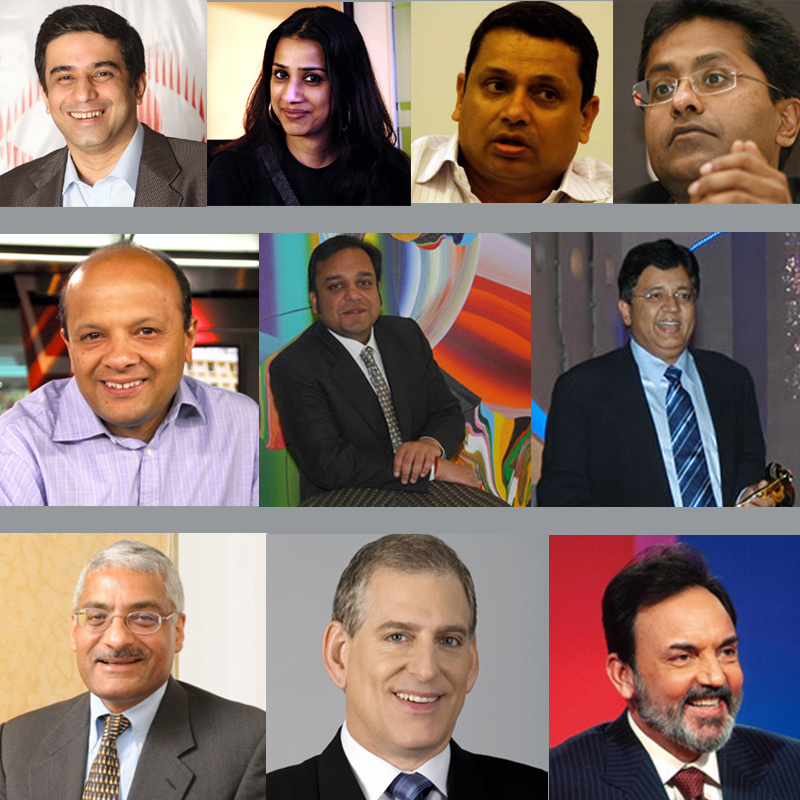
  • 2009: Top 10 Executives

    2009: Top 10 Executives

    2009. A year when most of the television industry gasped as the Indian economy slowed down and advertising and distribution revenues dried up even as costs went up. Executives burnt the midnight oil grappling with the downturn. Most of them deserve a salute for coping with the tough times. But there were some who came out triumphant and did wonders for the companies they lead. Indiantelevision.com takes a look at those who made the cut in our 2009‘s Top 10 Executives listing.

    Our list is by no means comprehensive, but these gents and ladies clearly stood above the rest. The executives have not been listed in order of importance or achievement, and sure there are many more who made a difference. We raise a toast to them.

    In the meanwhile take a dekko at our Top 10 Executives of 2009.

    Rajesh Kamat & Ashvini Yardi

    Rajesh Kamat did what was considered nigh impossible in 2009. Under his leadership, Colors, one of the late entrants in the general entertainment television sweepstakes, toppled both the leader Star Plus and the second placed Zee TV from their perches. He did not stop at that. With the help of clever engaging and disruptive programming from his programming head Ashvini Yardi, he maintained that top slot for the rest of the year.

    And Kamat achieved that in just a matter of 13 months – a feat which could well enter the Guinness Book of World Records.

    For long, rivals Sony and Zee had taken a shot at the top spot, but Star Plus appeared to be unshakeable. Kamat and his band of merry programmers however made it look fairly easy with a mix of differentiated, disruptive programming and distribution (Kamat‘s 3 Ds) on the back of savvy marketing. As the year was ending, he had actually got his company close to profitability with revenues of close to Rs 6.5 billion.

    Kamat‘s success has to be juxtaposed against what happened to other players who dared to challenge the leader: new entrants 9X (launched by former Star CEO Peter Mukerjea) and Real took a beating and almost wound up. The other player NDTV Imagine ended up at the No 5 spot, and finally found a new owner in Turner.

    During his days at Star Kamat had seen the channel rise from obscurity to leader. And he had gained amazing consumer insights during his earlier stint at Coke. He brought all of that bear in his uphill battle against the leaders. He gambled with a young enthusiastic team and the gamble paid off.

    Today, he is the most sought after TV executive in the country. And he was rewarded with additionally responsibility just as the year ended: he was given additional charge of strategy, legal distribution and finance of the Viacom 18 group bringing the channels MTV and Nickelodeon under his charge.

    2009 also saw him take an extremely calculated risk. Nine months from launch, he took the channel pay putting it as part of the One Alliance bouquet, distributed by MSM Discovery. The timing would not have been better as IPL gave the channel a good mileage. Later he got Amitabh Bachchan to don the hat of Pop Philosopher for Bigg Boss and now Big B is taking the channel to US and UK as brand ambassador. Additionally, he got his son Abishekh to host Bingo, a popular international format. At the time of writing, Bingo has done it once again for Kamat: the show has generated higher ratings than other game shows.

    A large part of that credit goes to Yardi who has been the creative driving force behind Colors. A woman with a vision to create a channel so unique and distinguished from anything ever viewed by India, she has always given priority to innovation and creativity. Her focus on fresher concepts and disruptive programming is what elevated Colors to its leadership position so quickly.

    From the word go, Yardi stressed that the shows on her channels have to have “meaningful entertainment”. The characters are not in black or white but have different shades. Yardi strongly believes that Colors offers ‘something for everyone‘ and ‘everything for some‘.

    Known for incorporating audience insights in her search for the perfect television shows, be it fiction, reality, game show or any other format, Ashvini has been responsible for making entertainment bigger than ever and effectively changed the way Indians viewed television.

    2009 saw shows with hard hitting messages such as Na Aana Is Des Laado and Uttaran climbing to the top positions on the charts while the Colors flagship show, Balika Vadhu, continued to reign over peoples‘ hearts and minds. And as far as reality shows go, 2009 was the year for the biggest ever changes in the reality television scene. With Fear Factor getting a lot more exciting and the Big B Amitabh Bachchan himself hosting the third season of Bigg Boss, reality in India touched new heights in 2009.

    Genius clearly does not go unnoticed, and in Ashvini‘s case, her talent has been recognized from time to time by peers and various industry institutions. She has been the recipient of many an honour, amongst them being the Media Personality of the Year title at India Today Woman‘s Summit, apart from being hailed as one of the top 50 powerful people of 2009 in India by Business Week.

    Perhaps defining Ashvini in one word may not be easy, but trendsetter comes rather close. And now, she is at it again, conquering newer peaks, bringing in fresher ideas and ready to set some new trends in 2010.

    Uday Shankar

    While most media observers and trade writers in India tend to think that Star India CEO Uday Shankar missed the mark in 2009 because of the toppling of Star Plus from its leadership perch, the word overseas and in corporate circles is that he did an excellent job and continues to do so; that the Murdochs are pleased as punch with him.

    During the year, the former journalist continued the network‘s spread into regional language markets and even managed to get leadership status in one of them. He kept a sharp eye on profitability in difficult economic times, returning pleasing figures for the network.

    Viewed from a different perspective he staved off an aggressive attempt from No 3 Zee TV to usurp his GEC flagship channel Star Plus from its No 2 spot, even though he conceded the leadership position to rival Colors. He gambled with risqué programming during the year, something which got him a rap on the knuckles from the government, but also got reams of media coverage and some praise for pushing the envelope with shows like Aap Ki Kacheri.

    And as the year ended, he was gearing up to do battle and regain Star Plus‘ numero uno status: he had restructured the Hindi GEC, bringing in whiz kid Gaurav Banerjee to look after the channel. Star Plus GM Keertan Adhyanthya was moved out to head Star Movies and Star World. He had also put wunderkinder Sameer Rao in charge of Star Utsav and Star Gold.

    With Rupert Murdoch‘s News Corp restructuring its broadcast business in Asia, Uday Shankar got his pat on the back when he was delegated with many more tasks during 2009. He was handed over the responsibilities of managing the sales and distribution offices of Star in West Asia, Britain and the US, besides growing the Indian market and being under the direct mentoring of James Murdoch, the group‘s head of Asian and European operations.

    Uday also gets to look at the movie business with Fox Star Studios India CEO Vijay Singh. The grandiose plans are to distribute 18 movies a year and be involved in production. Avatar has become the biggest Hollywood hit in India, grossing over Rs 1 billion.The biggest catch in the distribution net is Shah Rukh Khan‘s My Name is Khan, set for release in February.

    His big win for 2009 was the runaway success of Star Jalsha in just its first year of existence as a Bengali general entertainment channel. It created waves in east India with its programming which gelled with audiences. Then he drove his team to come up with new programming at Vijay TV and Star Pravah – initiatives which are bound to start bearing fruit over the next few months.

    If there was one area which looked a little worrisome for Uday Shankar during 2009 it was the loss of the leadership position of Star Plus, its flagship channel in the Hindi entertainment space. Star Plus conceded it near nine-year monopoly to newbie Colors mid way through 2009. But that did not deter him as he continued to focus on re-jigging the programming and on the bottomline. The network also courted controversy thanks to its dare bare all on TV show Sach Ka Samna adapted from The Moment of Truth.

    Meanwhile, keeping pace with rival MTV, Shankar also saw Channel [V] re-furbish its content with a host of new shows under his leadership as the channel shifted gears to 60 per cent music and 40 per cent reality show content.

    He has his work cut out for him in 2010, but knowing Shankar he well might deliver. Yet once again.

    Sameer Manchanda

    He could well be labeled the cable cowboy of India. He has aspirations – like his esteemed US counterpart John Malone who agglomerated cable systems all over the US into one national network – to transform the fragmented Indian cable industry and create a giant Indian cable TV network.

    And to that end he took his company DEN Networks public this year raising Rs 3.64 billion through an initial public offering. The market cap of DEN today is Rs 24.72 billion.

    It looked tough seeing it through, but he finally cobbled together investors who helped in the oversubscription of the issue.

    The man being referred to is Sameer Manchanda, chairman and promoter of DEN Networks Ltd and the joint managing director of IBN18 Broadcast Limited.

    Manchanda is a feisty fighter. He spent many years with NDTV when he broke away to set up IBN18 Broadcast, along with Rajdeep Sardesai and Raghav Bahl in 2005. Channels such as CNN-IBN, IBN7, and IBN Lokmat, followed. All three channels have become a news force to reckon with and Manchanda was appointed as the president of the News Broadcasters‘ Association.

    A fellow of the Institute of Chartered Accountants of India, he has always been credited with stitching lucrative deals for the company. He founded DEN in 2007 and he was quick to seize the opportunity in cable TV. He prepared the base for expansion by getting distrib veterans Anuj Gandhi and SN Sharma on board and then went about building the network in the North.

    He first expended DEN in Delhi and Uttar Pradesh, the two lucrative carriage revenue markets for cable networks from broadcasters. DEN also gobbled up Amogh Broadband Services, a leading MSO promoted by former Karnataka chief minister D Kumaraswamy‘s family. It is also a major force in Haryana and Rajasthan.

    In 2009 DEN paced up in Gujarat and made a breakthrough in Mumbai by entering into a joint venture with Ravi Singh‘s cable network in Ghatkopar, a suburb in central Mumbai.

    Manchanda can be credited with the success of DEN‘s IPO in 2009, but the challenges are lying ahead. The biggest of them all: to spread digitisation across the network, launch broadband services, and make market corrections.

    Punit Goenka
    “I would not like to be in his shoes as expectations of him are very high because he is my son, but he has shaped up well,” these are the words Subhash Chandra spoke about Punit Goenka recently. The son has now come of age and all indications are that he is likely to take over the reins of the entertainment conglomerate his father, the chairman of Zee TV, built.

    According to insiders, Punit‘s management initiatives and style have impressed Chandra greatly and he is looking at hanging up his corporate boots in a couple of years and focus on his social responsibilities.

    Punit was hoicked into the MD‘s role at Zee Entertainment Enterprises Ltd (Zeel), giving him total operational responsibility for the Zee Network which includes a Top 3 Hindi GEC, Zee TV, and a clutch of popular channels including Zee Cinema. And he did leave his stamp. First, he yanked the six regional general entertainment channels (R-GECs) from ZNL into the Zeel fold. Then he merged the ETC Networks channels (ETC Music and ETC Punjabi) into the company he heads. He hived off the education business, and started playing an active role in the news business by becoming a non-executive director of Zee News Ltd.

    The year also saw him buying out Ten Sports from Taj Television after some hard nosed negotiation, even as his father‘s loss making T-20 format – the Indian Cricket League – ran out of steam following a backlash from the Indian cricket board and IPL Commissioner Lalit Modi.

    His major successful play was on the Hindi GEC front. Zee TV was under attack from a hungry for leadership Colors and an extremely defensive leader Star Plus. Goenka took a decision not to splurge to buy GRPs. While the other two forked out top dollar on big movies and big ticket celebrity driven reality and formatted shows, he along with his team of Nitin Vaidya (COO -national channels and Zee TV business head) and programming head (Ajay Balwankar, now in Sony Entertainment television), focused on traditional soaps and low cost formats. Pavitra Rishta, Agle Janam Mohe Bitiya Hi Kijo, Chhotti Bahu, Dance India Dance (an adaptation of Bangla dance reality show Dance bangle Dance) were his ripostes which helped the channel generate GRPs. So much so that it took up the No 1 spot in week 34 with 281 GRPs. Zee TV began the year with 190 GRPs.

    Though No 2 or No 3 today in terms of GRPs, the channel today is No 1 in terms of monetizable GRPs, a statement with which even the top bosses at Star Plus and Colors will concur.

    His staff acknowledges the fact that Punit is very easily accessible and always encourages new ideas. With that kind of zeal, it is no wonder that his father thinks Zeel is in good hands.

    Kalanithi Maran
    Kalanithi Maran proved yet again how he could cruise along in a year of global economic storm while the other media barons were scaling back their expansion plans. Far from groaning under financial woes, he searched for new growth.

    And the architect of the Sun TV empire found them in the areas of DTH, TV broadcasting and FM radio.

    Sun Direct is the fastest growing DTH company with a subscriber base of 5 million. Built on mass pricing, the business model is to grab market share while waiting for opportunities to lift ARPUs (average revenue per user) that stayed below Rs 100 in 2009.

    Critics say Sun Direct is leaning heavily on subscribers from the four southern states and predatory pricing can‘t be sustainable. But certain facts stay formidable in Maran‘s favour. His DTH company has the lowest losses on a per subscriber ratio, possibly because of hard bargaining to stay away from minimum guarantee deals with broadcasters.

    Also, Sun Direct has 80 per cent of its customers from the south, a rock-solid base that would provide him economies of scale as he starts scratching into the other markets where he doesn‘t have a distinct advantage.

    In the TV broadcasting arena, as the industry reeled under an advertising slump, Maran posted a robust revenue growth of 35 per cent. He fortified his position and launched two kids and a comedy channel during the course of the year, blocking out possible gaps in the marketplace.

    A master strategist, Maran believes that viewer tastes change every 3-4 years. He introduced a big-ticket weekend non-fiction programming based on the international format show Deal or No Deal that not only gave him viewership but also revenue spikes. The show ran across Maran‘s flagship general entertainment channels: Sun TV (Tamil), Gemini (Telugu), Surya (Malayalam) and Udaya (Kannada).

    Sun has emerged as one of the leading FM radio broadcasters, setting up a pan India presence. In 2009, Sun brought its FM radio stations outside Tamil Nadu and Pondicherry under the Red FM umbrella, offering advertisers a wider listener base and an opportunity to capitalise on a unifying programme format across key cities.

    Since the summer of 2009, Maran also corrected a single deficiency in his rapidly-growing media empire: He widened the talent pool, making a series of senior appointments including Ajay Vidyasagar as CEO and Ravi Menon as programming head.

    So what does the roadmap look like for Sun in 2010? Maran is tapping subscription revenues more aggressively, has floated a UK subsidiary to accelerate international revenues, hiked advertising rates after a gap of two years, and is readying the release of the mega-budget movie Enthiran. Looks like another blockbuster year for the man who rules the southern media landscape.

    Man Jit Singh

    His is a radical turnaround story. When he took charge of Multi Screen Media Ltd (the company that runs Sony Entertainment Television), Man Jit Singh had several tasks to handle. CEO Kunal Dasgupta had left suddenly in the first quarter of 2009, his flagship channel Sony was doddering around in the doldrums with sinking ratings, morale was low and the organisation had few clues as to how they could deal with the rapidly changing dynamics of the GEC business. Newcomer NDTV Imagine had beaten it to the No 4 slot, a far cry from its heydays when Sony was scrapping for the No. 1 slot in the early part of this decade.

    As interim CEO, Singh took the bit in his teeth, lopped off 50 staff, letting go off channel head Albert Almeida. He initially focused on seeing through a successful IPL as the network had invested for its channel Max while acquiring the rights for the cricket extravaganza. In the reworked deal, BCCI sold the nine-year rights for Rs 82 billion, parceling out the India

    That out of the way, he began the hunt for someone who would take up the corner office as CEO, apart from launching a new prime time programming band along with COO NP Singh and programming head Gurdeep Bhangoo The search for a CEO proved futile as did the new lot of programmes. He aborted both – hoisting himself into the CEO‘s seat and started scouting for a channel head. He found one in Ajit Thakur

    The programming was rejigged and a low cost idea plumped for: telecast reruns of its long running award-winning and successful thriller and horror fictional shows, CID and Aahat. In the meantime, a new programming head was appointed: Ajay Bhalwankar was brought in from Zee TV.

    In no time at all, the ratings shot up and Sony had got back into the reckoning, toppling NDTV Imagine from the No 4 slot. From 70 gross rating points Sony was clocking 170-190 GRPs, ahead of Imagine and close enough to possibly play catch up with Zee TV and Star Plus which were generating between 240-270 GRPs. The channel garnered almost two and half times more ratings within six months of the revamp.

    Along with his team, Singh sewed an exclusive content agreement with leading film production house YRF for a programming block which would help differentiate it from the regular fare. While the initiative generated a lot of hype, it did not generate the mass TRPs that were expected.

    For Singh, 2010 will be a crucial year with IPL 3 on it way in the next two months. Also, a rejuvenated and cash loaded NDTV Imagine (following the Turner deal) is definitely going to make a serious and concerted effort to reclaim its fourth place in the Hind general entertainment space.

    Steve Marcopoto
    2009 was Turner‘s fifteenth anniversary of operating in India. And 2009 was the year when the network clearly signaled that it was no longer satisfied in having a minor league play in India. In the first part of the year, it announced that it was launching WB Channel expanding its presence in the English entertainment channel space. In the second half of the year, Turner announced that it was pitching its tent in the rough Hindi general entertainment channel space. And leading Turner‘s charge into the big stake game was Turner Broadcasting System APAC head Steve Marcopoto.

    Marcopoto winged his way into the country on several occasions before he signed on the dotted line of a deal which resulted in Turner acquiring a 92 per cent stake in NDTV Imagine for $117 million. It took months of negotiation between the NDTV management and him and his team before a deal was hammered into shape. And it surely was a moment of triumph for him, making him one of the key media executives in India.

    For years, Turner has operated in India through channels such as CNN, Cartoon Network, Pogo and through a distribution joint venture with Zee TV, labeled Zee Turner.

    It has maintained its leadership position in the kids‘ segment with Cartoon Network and Pogo, currently ranked No. 1 and 2 respectively on an all-India basis. Growth has been steady and India revenues account for 25 per cent of its regional operations, making it Turner‘s largest and fastest growing market.

    During the year, Marcopoto persisted with the Turner mission to further develop the Indian animation industry. Along with Pogo and Cartoon Network India head Monica Tata and creative director Vishnu Athreya, he made various acquisitions, co-creations and initiatives such as Snaptoons (Short New Asia Pacific Cartoons), bringing the pre-school series Sesame Street to India in a local avatar – Galli Galli Sim Sim and nurturing one of the most successful homegrown, animated heroes – Chhota Bheem, amongst others.

    2010 will come with its set of challenges: he has to ensure a smooth transition of Imagine into the Turner fold, and work closely with CEO Sameer Nair to draw up strategies to make the investment pay off in the medium-to-long term. Marcopoto will also have to create compelling content and build the Turner brands across every possible platform, including TV, online, merchandising and mobile.

    Lalit Modi
    To say that Lalit Modi had an eventful year is an understatement. This year he showed his ability to turn a challenge into an opportunity while taking steps to make the IPL a global brand. He shrewdly renegotiated the IPL TV deal with Multi Screen Media in a fresh deal valued at Rs 82 billion ($1.6 billion).

    The earlier ten-year contract, which Sony couldn‘t protect, was worth $918 million for telecast and $108 million for promotion of the tournament. Then the IPL was forced to relocate to South Africa due to the elections. Undaunted by the challenge, Modi and his team worked around the clock at short notice and pulled off a success, thus silencing naysayers. With this move, the IPL took its first steps towards becoming a global brand.

    Modi‘s clout lies in bringing in the money while expanding the reach of the IPL. A deal was done for theatrical rights with Dar Capital and is worth Rs 3.3 billion. It is a known fact that cinema receipts suffer when the IPL is on. The message from Modi is clear – If you cannot beat us, join us.
    In 2009 Modi also announced a base price of $225 million for the two new IPL franchises who will come in later this year. This is more than double what the highest franchise paid in 2008. This gives an idea of just how much the IPL has grown in value in a short space of time.

    It is this ability of Modi to run a steady ship while raking in the moolah no matter what obstacles there are which made BCCI president Sharad Pawar throw his weight behind him when the IMG contract was cancelled by N Srinivasan. The contract was eventually re-negotiated.

    While there is a faction within the BCCI that would like to see Modi out, the fact is that he will head the IPL till 2012. Even BCCI members who have issues with Modi admit that they need him. Modi is effecting changes that are rapidly changing the perception of the game by stakeholders.

    Apart from the IPL, Modi also managed to get the Champions Twenty20 League off the ground. He formed a partnership with Cricket Australia and Cricket South Africa for this. The TV deals done by ESPN Star Sports saw cricket reach more countries than ever before in Europe and other territories. While the ratings in India were not great, one can expect Modi to come up with more innovations.

    In 2009 Modi also took up the issue of piracy on a war footing. Under his guidance an association in conjunction with the cricket boards of England, South Africa and Australia was formed. This move has the backing of the ICC and is the first time that sports broadcasters and stakeholders are making a concerted effort to fight this problem.

    In 2010 Modi is showing no signs of slowing down. The deal with YouTube this year could change the face of sports broadcasting in the years to come. And with the commercial success of the IPL, Modi is thinking in terms of spreading the global reach of the game. He has already hinted that the US may be the next frontier and is in that country at the moment. The aim is to possibly do an event within the next 18 months.

    Dr Prannoy Roy

    At the beginning of 2009, Prannoy Roy looked an extremely worried man. The psephologist turned hardcore newsman had got himself into a corner. Two of his diversifications were burning up cash and how, scorching the main mother news network.

    The first was a general entertainment joint venture channel NDTV Imagine with US major studio NBC Universal. The second was his lifestyle programming forays into NDTV Lifestyle. Roy had launched these services earlier when the times were good, and revenues were in full flow, but with the economic downturn he was being battered. It was imperative that something be done.

    The economics doctorate from the Delhi School of Economics decided to take the battle to the frontlines along with his senior management team spearheaded by KVL Narayan Rao. Get rid of the diversifications and focus on your core competence – news – became the mantra. Along with the senior team and investment bankers, he spent a large part of the first part of the year scouting for buyers for his non-news verticals.

    The other focus of the team was: reduce the group‘s high interest burden which had come its way courtesy its need for cash for its diversifications. He bought back NBC Universal‘s 26 per cent indirect stake in NDTV Networks Plc. The company‘s $100 million step up coupon bonds due 2012 were bought for $72.4 million. This drastically lowered its borrowings and concomitant high interest bill. NDTV was also freed from the undertaking to provide a $40 million guarantee to the bond-holders.

    He also shut down a local news channel he had started in Metro Nation Delhi, cutting down costs.

    NDTV Lifestyle was put on the auction block and around Diwali, he managed to find a buyer for it. The US-based Scripps Networks Interactive bought up 69 per cent of the company on a fully diluted basis for $55 million, in what was seen as an extremely profitable sale.

    Then just as the year was ending he unveiled his final coup de grace: he found a buyer for the hungry for cash NDTV Imagine. Turner Asia Pacific Ventures bought out 92 per cent of NDTV‘s stake in Imagine for $67 million, while investing in fresh equity in the company to the tune of $50 million, bringing up the value of the transaction to $117 million.

    The moves were lauded by all media watchers and the company‘s bottomline started showing improvement.

    And Prannoy ended the year with a beaming smile on his face. Yes, the network still has its work cut out for it. But the comeback has begun.

    Harish Thawani
    This year this street smart maverick renewed the deal with the BCCI with his company Nimbus for another four years till 2014 in a deal worth Rs 20 billion, thus ensuring stability. Thawani has asserted in interviews that the payout per match is similar. Of course, the deal does not include new media.

    Thawani also maintains that rationalisation was bound to happen with the economic environment. He insists that everybody in a deal has to benefit and that the days of bids reaching stratospheric levels are gone. The fact that the BCCI did not bother to go through a tender for the rights, as Nimbus had the first right of negotiation, shows that Thawani got his calculations right in terms of what these rights are worth. After all, the BCCI would have conducted some talks with other sports broadcasters to find out if they were willing to pay more.

    Thawani is known for being proactive in terms of deals being done. He asserts that the company got a 10 per cent discount on the earlier deal on account of the mandatory feed sharing act being passed. Even not going for the new media rights this time around was a deliberate strategy. Highlights and clips got more traffic than live streaming under the old deal. Therefore for him it was not a cost effective proposition.

    Last year Nimbus had complained to the BCCI in a letter about the quality of facilities for broadcasting which forced cricket‘s richest body to take action. Thawani is also said to have been a strong force behind the BCCI instituting the Corporate Trophy.

    On the distribution front, it is expected that Neo would have doubled its revenue for 2009. This is creditable given that Neo had to do the distribution on its own after the deal with Star went sour a couple of years back.

    Moreover the channel‘s audience deliveries have been better than the competition‘s at times as was seen with the India versus Sri Lanka series. Neo Cricket now claims to have finished as the top sports channel for two years in a row. Overseas, Neo Cricket bolstered its presence with several deals last year and is now present in 25 countries including Japan, Korea, Singapore.

    Thawani, though, is looking beyond just cricket. He has plans for two new channels in the lifestyle and film genres. And, yes, the IPO could be round the corner.