Category: Year Enders

  • Prasar Bharati: A year of controversies

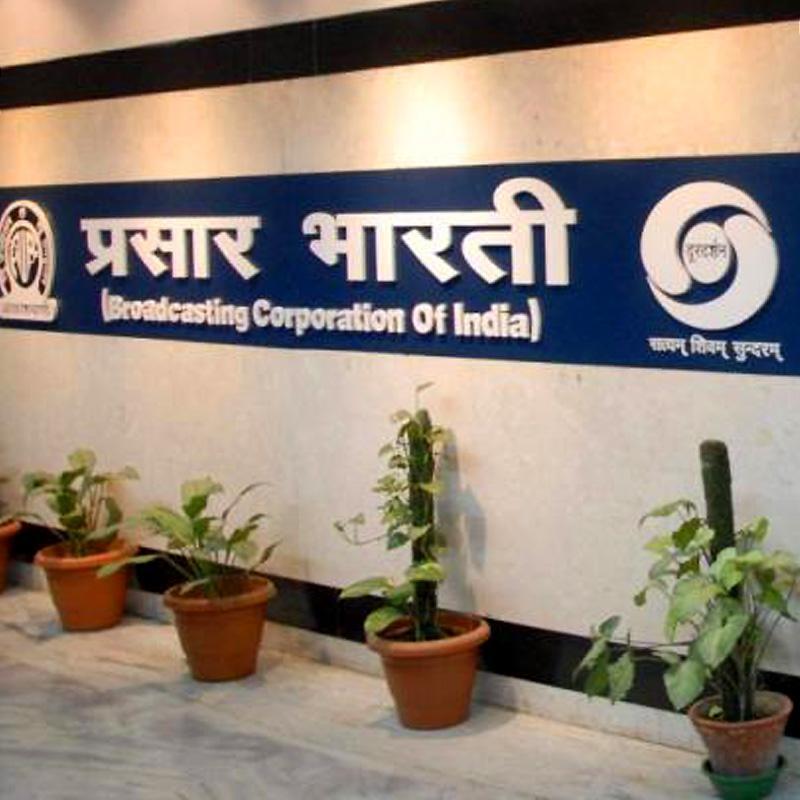
    Prasar Bharati: A year of controversies

    The successful and neat coverage of the Commonwealth Games on the one hand and the messy affair of the B S Lalli ouster dominated a major part of the activities of Prasar Bharati during 2010, the only other tremor being the lightning mass casual leave towards the end of the year.

    Lalli‘s woes

    Following a reference to her by Prime Minister Manmohan Singh, President Pratibha Devisingh Patil finally gave her consent early in December to an inquiry by a Supreme Court judge into financial irregularities by Prasar Bharati chief executive officer Baljit Singh Lalli.

    The Central Vigilance Commission had in mid-November established four of the seven charges by the Central Vigilance Commission (CVC) against Lalli. The charges were related to contracts for management of advertisement revenue arising from the telecast of cricket matches on Doordarshan during 2007; the non-telecast by Doordarshan of T-20 cricket World Cup matches held in South Africa in September 2007; engagement of legal entities to represent Prasar Bharati; purchase of radio broadcasting rights for 13 cricket series held during 2007-09; and hiring of transport and accommodation for the conduct of the Commonwealth Youth Games in Pune in 2008.
     
    Though this initially led to Lalli’s wings being clipped with a three-member committee with the Members (Personnel) and (Finance) along with the CEO being asked to run the pubcaster, it was ultimately decided to suspend Lalli and Information and Broadcasting Ministry additional secretary Rajiv Takru was appointed the officiating CEO of Prasar Bharati, pending inquiry by a Supreme Court judge.

    As Takru who is an Indian Administrative Service officer of 1979 batch is a senior Ministry official, this raised the issue about whether this implied a complete takeover of the autonomous pubcaster by the Ministry.

    The Board also formed five committees dealing with the subjects of finance, personnel, production and content, project monitoring and implementation and strategy and vision with a view to streamline the functioning of the national broadcaster.

    CWG and its aftermath

    Though the coverage of the Commonwealth Games in October went off without any hitch despite fears, Prasar Bharati‘s total revenue from the Commonwealth Games stood at Rs 581 million, falling far short of the expected target of Rs one billion.

    Of this, Doordarshan posted revenue of Rs 559.9 million, contributing to a major slice of Prasar Bharati‘s income during this period.

    Doordarshan had earned only Rs 36.98 million from the Olympic Games in Beijing in 2008, Rs 1.3 million from the Commonwealth Youth Games in Pune in 2008, and Rs 360,000 from the World Military Games in 2007 in Mumbai and Hyderabad.

    The pubcaster is attempting to get exclusive telecast rights in the country of the Olympic Games 2012 in London.

    The Commonwealth Games were covered by Prasar Bharati in agreement with UK-based Satellite Information Services (SIS) Live. The British broadcasting group had been shortlisted out of the two consortiums which had filed their bids when the last date closed for this purpose.

    Disgruntled Staff

    Prasar Bharati was jolted out of its complacency when a majority of the staff of Doordarshan and All India Radio went on a lightning mass casual leave under the aegis of the National Federation of Akashwani and Doordarshan employees on 23 and 24 November, affecting transmission for around 48 hours.

    NFADE, an umbrella organisation of 21 service associations, was protesting against the ‘mess created in Prasar Bharati over the last two years’ and seeking a repeal of the Prasar Bharati Act 1990 on the ground that it has no relevance in today’s context.

    While radio was badly affected and beamed repeat programmes, Doordarshan kendras managed by taking the feed from Delhi.

    The NFADE had threatened a second round of 72-hour mass casual leave from 13 to 16 December, but this was prevented almost at the last minute after hectic negotiations, and the pubcaster setting up a committee headed by V Shivakumar, Member (Personnel) in the Prasar Board, which will have representatives of the Federation to examine the various grievances raised by them.

    The Ministry assured NFADE that it was prepared to examine various clauses of the Prasar Bharati (Broadcasting Corporation India) Act 1990.
     
    The Group of Ministers on Prasar Bharati is already dealing with the issue, although Minister Ambika Soni said that repealing the Act as demanded by the NFADE would be counter-productive and the United Progressive Alliance would be accused of trying to control the media.

    Government to continue support to Prasar Bharati

    The Group of Ministers (GoM) attached to Prasar Bharati, reconstituted early in 2010 with Home Minister P Chidambaram at its head, recommended in mid-December that the level of government support should be maintained for the public service broadcaster for the next five years from 2010-11 to 2014-15.

    This support will be reviewed after this period is over. However, the GoM has also said 50 per cent of the annual operating expenses of the Prasar Bharati should be borne by the pubcaster from its internal extra budgetary resources while the remaining 50 per cent will come from government grants.
    The GoM also recommended that the accumulated arrears of space segment and spectrum charges of the pubcaster up to 31 March 2010 should be waived, and future charges would be included in the total operational expenses.

    The GoM is also clear that plan capital funding by government to the pubcaster may be in the form of grant-in-aid and not in the form of loan. The loan-in-perpetuity and capital loan should be converted into grants, and the interest on loan-in-perpetuity, capital loan and penal interest should be waived.

    The ban on recruitments should be relaxed and the GoM set up a four-member Committee of Joint Secretaries to look into various demands of employee organisations. This is in addition to the Committee under Prasar Bharati Board Member (Personnel) V Shivakumar after the mass casual leave by employees.

    In addition, a scheme of Rs 6.2 billion has been approved for Doordarshan and Rs 9.08 billion for All India Radio for the purpose of digitisation under the Eleventh Plan and is already under implementation.

    Clearly, this was done because the pubcaster is under financial stress. Prasar Bharati has posted revenue of Rs 4.66 billion for the six-month period ended September, while expenditure stands at Rs 12.05 billion.

    Prasar Bharati had posted revenue of Rs 11.76 billion for the fiscal ended March 2010 while expenditure stood at Rs 29.49 billion.

    Staff shortage

    Despite long agitation by various sections of staff in Prasar Bharati and even strong strictures by Parliamentary Committees, All India Radio and Doodarshan continue to suffer from massive shortage or sanction of trained manpower.

    A total of 46 low power transmitters are presently relaying partial transmission (including ten each in Andhra Pradesh and Orissa) and activities at 22 Doordarshan studio centres are limited.

    Similarly, a total of 24 stations of All India Radio in different parts of the country are only working as relay kendras, while another five – Dharmanagar and Longtherai in Tripura, Dungarpur in Rajasthan, Rairangpur in Orissa, and Suryapet in Andhra Pradesh – are technically ready but not commissioned because of shortage or sanctioning of trained operational and maintenance staff.

    Doordarshan at present has 66 studio centres and 1415 transmitters. In the case of AIR, stations are functioning at a total of 238 places. AIR has a total of 380 transmitters (177 FM, 149 MW, and 54 Short Wave).

    Some of the AIR transmitters are working sub-optimally as they have outlived their useful life of more than 20 years. Problems have also been faced in AIR because of shortage of staff. The old transmitters are being replaced in phased manner with state-of-the-art Digital Technology Transmitters. Replacement or upgradation of 34 FM Transmitters, 40 Medium Wave Transmitters, and five Short Wave transmitters have been taken up in the Eleventh Plan, and the quality is expected to improve after this work is completed.

    Early in 2010, Prasar Bharati had been reprimanded by the Parliamentary Committee on Empowerment of Women for its lethargy in not finalising recruitment rules and failing to make recruitment in the Indian Broadcasting (Programme) Service started in 1990 to train a separate cadre of employees for All India Radio and Doordarshan. Towards the end of the year following an agitation by employees, a task force was set up to go into manpower and recruitment problems.

    While the Committee welcomed the decision that all Central Government employees recruited for Akashvani or Doordarshan until 5 October 2007 are to be deemed as on deputation with effect from April 2000 until their retirement, it regretted that its recommendation in 2009 for finalisation of recruitment rules to implement this within three months had not been complied with.
     
    The Prasar Bharati Amendment Bill 2010 giving effect to the recommendation of the GoM for treating all government officers and employees recruited by All India Radio or Doordarshan as on 5 October 2007 to be on ‘deemed deputation‘ with effect from April 2000 till the time of their retirement was introduced in Parliament towards the end of the year.

    It had observed in 2009 that there was a shortage of 44.8 per cent of the sanctioned strength in group ‘A‘ and about 40 per cent in Group ‘B‘ in Doordarshan, and 58.8 per cent of the posts in Group ‘A‘ were vacant in All India Radio. As many as 4629 posts in Doordarshan and 6433 posts in All India Radio remain unfilled.
    It noticed that recruitment to the post of programme executives was last made 18 years earlier in 1991. The case is no different in various other categories of AIR and Doordarshan.

    However, Soni said towards the end of the year that the government was considering a roadmap for taking new initiatives in the Prasar Bharati set up. The initiatives would aim to firm up the mandate given to Prasar Bharati as a public broadcaster, Soni added.

    Though the Prasar Bharati (Broadcasting Corporation of India) Act was passed in June 1990, it was notified as a statutory corporation only from November 1997. Section 11 of the Act had given employees the option to decide whether they wanted to join the Corporation or go back to the government, but no action was taken as the rules for various categories of employees have not been drawn up in the past 12 years.

    After a long gap of almost 20 years, the Ministry sent a proposal to the Union Public Service Commission for reviewing of the Departmental Promotion Committee for the year 1990 to 1993 for promotion of programme executives and other feeder grades of the Indian Broadcasting (Programme) Service.

    The much-delayed action was taken on the directions of the Principal Bench of the Central Administrative Tribunal (CAT) in New Delhi for promotions to Junior Time Scale of the IB(P)S.

    DD Modernisation

    Early in 2010, the Union Cabinet gave the green signal on the proposal for digitisation of transmitters and studios in the Doordarshan network during the 11th Plan, and Prasar Bharati got a plan allocation of Rs 6.2 billion to begin work on 40 digital terrestrial transmitters and other equipment.

    The approval by the Cabinet Committee on Infrastructure covered the networking of DTT through satellite, augmentation of Digital Media centers (DMCs) by providing the following: equipment and facilities for maintaining the digital infrastructure; five sets of digital measurement equipment at zonal offices; 60 UPS at High Power Transmitters to ensure uninterrupted power supply, R&D and Training; digitalisation of 31 partially digitalised and 8 analogue studio centers; digitalisation of archiving facilities; and digitalisation of news automation system and e-governance and IT scheme.

    Earlier, Doordarshan had set aside an amount of Rs 12.09 billion of a total approved outlay of Rs 13.69 billion just for digitisation in the 11th Five Year Plan (2007-2012).

    The Ministry had prepared a proposal for Rs 6 billion to Doordarshan for completing digitisation. The Government is confident of meeting its deadline of complete digitisation of the electronic media by 2017.

    The DD Urdu channel, which had failed to take-off despite being included for mandatory carriage by all cable operators, is set for a revamp and re-launch. The channel, which was launched on 15 August 2006, had initially begun beaming with sponsored programmes or those taken from other channels of Doordarshan. It has begun commissioning of new programmes.

    Additionally, the channel had allotted a daily slot to the Maulana Azad National Urdu University for the telecast of informative and educational programmes produced by its Media Research Institute after a five-year MoU that continues till 2012.

    The channel is telecast on INSAT 4A satellite and has also been brought on the Digital Video Broadcast – Hand-held (DVB-H) mode.

    DD Urdu presently telecasts a fresh band from 5 pm to 11 pm and the shows are then repeated on the channel.

    The channel has been riddled by a number of controversies. Initially, it had been found that blank tapes had been submitted by producers who had failed to complete the shooting of their 13-episode series when the channel was first launched. Later, there were complaints of lack of trained staff.

    AIR Modernisation

    While the Planning Commission in a report had said that a sum of Rs 59 billion would be required over the next ten years for digitisation of All India Radio, the Information and Broadcasting Ministry has prepared a proposal for Rs eight billion for expediting digitisation in AIR.

    Doordarshan and AIR, which beam terrestrially to reach all over the country, have both stepped up the process of digitisation, which will free up spectrum currently used for analogue transmission, allowing more channels to come in.

    All India Radio has 374 transmitters as compared to 299, when Prasar Bharati was formed. But 200 new AIR transmitters have been approved in spillover schemes under the 11th Five Year Plan.

    The Planning Commission, in its report on Going Digital presented in October 2006, decided to go in for 100 per cent digitisation of FM radio and five short wave radio stations. Thus, Prasar Bharati would require Rs 94.31 billion over a period of ten years.

    As far as AIR is concerned, an outlay of Rs 36.8 billion is meant for the infrastructure required for digitisation, which includes Rs 5.35 billion for external services (short wave transmission).

    The Commission said the revenue generation capacity is expected to increase and it is expected that just over Rs 169 billion would be earned by Prasar Bharati during this period.

    At present, AIR employs transmission in MW, SW and FM band in analogue mode only. Only one Low Power DAB transmitter at Delhi has been set up for experimental purposes.

    Keeping in view the worldwide trends of transition in digital mode, AIR plans to introduce Digital Radio Mondale (DRM) transmission below 30 MHz – MF and HF band – by upgrading its existing DRM compatible transmitters. All new transmitters including the replacement of old transmitters would be done by DRM compatible transmitters. For transmission, above 30 MHz introduction of DRM + and DAB are being examined.

    However, all digital transmission as and when introduced, will be in simulcast mode for about 10 years. This would be necessary as receivers in the beginning may prove costly. Once the receivers become affordable by the masses, the simulcast mode would be phased out.

    With a view to provide digital quality direct sound broadcast to the listeners, it is proposed to expand the existing DTH services during the 11th Plan.

    AIR has plans to introduce its audio multimedia contents both in satellite and terrestrial mode to the mobile hand held devices in DMB/ DVB-H/ other standards.

    It is proposed to use the Internet platform to serve listeners having internet connectivity. This will support non-linear listening. Though no additional spectrum is required for DRM transmissions in MW and SW band, additional spectrum would be required for DRM transmitters in FM and VHF band as well as ‘L’ Band.

    During the migration from Analogue to Digital Radio, new frequency assignments are to be identified to facilitate smooth migration and for some time, both the existing analogue transmissions as well as new digital transmissions would continue. Hence, there will be spectrum constraint during this transition phase. Also, the spectrum for digital migration may need to be identified for both Prasar Bharti as well as private FM broadcasters.

     
    The Telecom Regulatory Authority of India (Trai) had suggested a three-stage process of digitisation: Tier One cities by 2013, Tier Two cities by 2014 and Tier Three cities by 2016. But this needed indepth study and consultation with the stakeholders including cable operators, multi-system operators, and broadcasters, the regulator said.

    Meanwhile, All India Radio is all set for an exponential growth. Presently broadcasting FM channels from 172 stations, AIR has commissioned another 320 FM radio stations. As many as 246 of these will be transmitters beaming programmes from other centres.

     
    Of the AIR FM stations under implementation in various parts of the country,
    Uttarakhand is to get the largest number with seven. Following this will be Andhra Pradesh, Uttar Pradesh, Assam and Maharashtra who are to get six channels each. Arunachal Pradesh and Orissa will have five each and the other states will get two to four channels each.
    A sum of Rs 1.44 billion has been allocated in the Eleventh Plan for expansion and revamping of the FM transmitter network while a sum of Rs 3.85 billion has been approved for expansion and revamping of the Medium Wave channels of All India Radio.

    In addition, there is a non-plan allocation of Rs 900 million from Internal Extra Budgetary Resources (IEBR) for programme activities, and Rs 100 million for development of programmes under the Software Plan Scheme.

    A scheme of Rs One billion has been approved by the Government for strengthening the transmission of broadcasting signals in Jammu and Kashmir to counter hostile propaganda from across the border.

    AIR also received a boost with the Government deciding to permit relay of All India Radio news (unaltered) by private FM radio channels on such terms and conditions as worked out with Prasar Bharati. The government, thus, rejected the view of Telecom Regulatory Authority of India (Trai) that news should be allowed to be accessed from AIR, Doordarshan, Press Trust of India, United News of India, and any other authorised news agency or television news channel.

    Controversies

    The year was not without its share of controversies as far as Prasar Bharati was concerned. Doordarshan issued disconnection notices to seven channels to make place for the high definition channels that were launched to coincide with the Commonwealth Games on DD Direct Plus which is the only free to air direct-to-home platform.

    But Doordarshan was forced by the Telecom Disputes Settlement and Appellate Tribunal (Tdsat) to let channels of the Zee group, Enter 10 Television and Seven Star Satellite remain on DD Direct Plus.

    The country‘s only free-to-air DTH platform has a capacity of 59 channels while it beams 57 TV channels, apart from 21 channels of All India Radio. The TV channels include 21 Doordarshan channels.

    The augmentation of the capacity of the country’s only free direct-to-home platform DD Direct Plus to 97 channels will cost Rs 554.3 million. The augmentation in the first phase will be completed on 31 March 2011. The plan is to increase DD Direct Plus‘ capacity to 200 by the end of the financial year 2011-12.

    In yet another controversy, CEO Lalli denied any move to change the frequency of the popular All India Radio FM Gold from 106.4 to 100.1 MHz. Lalli blocked any move to change the frequency, when it was brought to his notice on 31 October.

    Asked why FM Gold was on the same frequency which was used by Radio Dhamaal in 10 other cities, Lalli said this was the work of the Wireless Planning and Coordination (WPC) wing of the Department of Telecommunication. However, he said he had already made a noting in this regard for the reference of the Information and Broadcasting Ministry. FM Dilli on 100.1 MHz had been launched especially to carry commentaries of the Commonwealth Games, and the channel has been shut down.

    Indo-Bangla Treaty

    India and Bangladesh agreed in 2010 to exchange programmes through their respective radio and TV organisations and provide facilities for visiting radio and TV persons in each other’s country associated with the development of broadcasting.
     
    The two countries will also exchange two journalists each including those engaged in dissemination of Government information. This followed the signing of a Cultural Exchange Programme for 2010-2012 to promote cooperation in the fields of art and culture, youth affairs and sports, and mass media.
  • The tough task of building a non-tabloid news channel in India -NewsX Co-promoter & Editor-in-Chief Jehangir Pocha

    The tough task of building a non-tabloid news channel in India -NewsX Co-promoter & Editor-in-Chief Jehangir Pocha

    Nothing worth doing is easy, and building a genuine, non-tabloid news channel in India is certainly worth doing. But it‘s clearly very difficult.

    It‘s widely put out that the problem is the viewer. It‘s posited that he (and it‘s almost always considered to be a “he”) is of only average intelligence, attracted by gaudy sets, sensational presenters, cluttered screens, and animation that is more animated than a Korean video game.

    Yet, at NewsX, we have seen our viewership and appreciation for our non-tabloid content swell significantly. Shows like Art Talk, the only one of its type that no one would have thought of as a TRP driver, are sometimes the most watched shows of the week! Our reporting from Kashmir, Naxal areas, and bomb blast sites often get more viewers than other channels‘ Bollywood shows. In fact, on weekends, when other channels load up on entertainment, lifestyle and sports, our news bulletins and shows score so well we‘re almost always one of the most-watched news channels.
     
    The fact is that viewers (men and women) are desperate for real, non-sensational, non-tabloid news channels, and a very sizable segment of them are rapidly evolving in their taste, knowledge and interests. One can see this in Bollywood, where these new viewers drive the success of films, such as Peepli Live.

    But it is the broadcast industry itself, with its many distortions, that puts barriers in the way of reaching these viewers and consolidating them.

    This is especially problematic for new entrants.

    The biggest problem is distribution. The cost of distributing a new channel is prohibitive, and the monopolistic nature of distribution means new channels have limited leverage. There is also no incentive for distributors to want to encourage and develop new channels, as their limited carriage bandwidth is already overloaded.

    In fact, too many distributors do the opposite – work with established channels to hinder new ones. Sad. And bad for democracy. A more enlightened approach, that could benefit everyone, would be to introduce digitisation, and end the artificial scarcity in distribution by creating limitless bandwidth. This would grow the entire industry, from the number of broadcasters, to the revenue of distributors, and the quantum of advertising. Yet, the government and industry leaders are failing at this.

    The faults of the Tam system are also well established, but again, the inaction on fixes is worrying. There is always a vested interest in the status quo, but isn‘t there now more advertiser, agency, public and broadcaster interest in revamping and refining Tam? As it is, the final ratings for English news channels is determined every week by just 5 to 7 individuals! They‘re among the most powerful people in the country, except they don‘t know it.

    Tam is like a microscope – when inefficient, it can vaguely show only huge items, or bundles of viewers. This was acceptable when there were only a handful of channels with huge viewership. But the TV industry is now much more fragmented. So there is a need for Tam to become efficient and more clearly show smaller bundles of viewers. Company marketing heads and CEOs I have spoken to all know this. They all have this gnawing feeling that they‘re not necessarily spending their advertising budgets well and not getting the best bang for their buck.

    That‘s one reason India is one of the only countries in the world where print is still heavily favoured by advertisers. There‘s just a greater comfort factor with print, and its substantially better metrics and measurements. So, if anyone wants to grow TV advertising, they should know reforming Tam is the key.
     

  • Music channels face uncertainty

    Music channels face uncertainty

    Year 2010 saw major changes in the music and youth TV channel genre. Firstly, the space got further cluttered with the launch of a new player – Mastiii. Secondly, at least three channels – MTV, UTV Bindass and 9XM – were fighting week-on-week to know who is first among the equals. And thirdly, the focus of the channels shifted – some went for pure music and others for pure youth.

    The 13-odd channels in the genre (as per Tam) are locked in a rat race. From January –December 2010, in the C&S 15+ age group of Hindi speaking Market (HSM), MTV and 9XM were leading the pack with a 14 per cent average market share. UTV Bindass was, however, in hot pursuit with 13.9 per cent.

    To add on to the fierce competition, Sri Adhikari Brothers’ Mastiii, which launched in July, quickly climbed and captured a good 12.6 per cent average share.

    Meanwhile, Channel [V], Zoom (Bollywood and lifestyle channel), B4U Music, ETC and E24 (Bollywood news channel), which Tam puts in the same genre, followed with 9.1 per cent, 8.8 per cent, 7.7 per cent, 6.5 per cent and 6.3 per cent respectively of the overall pie.

    The also rans include Zing, Imagine Showbiz and Vh1.

    The question remains: How the music and youth channels will survive with such competition? Industry pundits peg the whole pie between Rs 2.5–3 billion yearly and believe the market is small while the players are too many. Some say that the music space has undergone tremendous transformation and today they all have the more or less same generic content – be it music or reality shows.

    But how true is it? Answers Channel [V] EVP and GM Prem Kamath, “TV is not the primary medium for music anymore as it is available everywhere. More importantly, the greatest monetisation in television comes from differentiation. The biggest limitation of the music television model has been that there is no scope whatsoever in differentiating the content of one channel from another. Every channel has access to the same pool of music and, hence, very little differentiates one channel from another.”

    And to counter this situation, Channel [V] has cut down its reliance on music drastically. The channel airs music only between 7-10 am band, which is a prime slot for music channels.

    However, at the same time, pure play music channels – 9XM and Mastiii – are doing great so far as ratings go. What is their success mantra?

    9XM programming head Amar Tidke says, “It’s all about how you package your content. Yes, you have to break through the clutter and for that we have animated characters.”

    Tidke believes that other “youth channels” have diluted the music proposition. And on the point that music is skewed towards Bollywood only, Tidke strongly replies that it is wholesome music. “Bollywood music contains all the forms of music including romantic, sad, sufi, bhajans, etc. So it is wrong to say that we are neglecting other forms of music,” he says.

    And while Channel [V] and Bindass are youth channels, through and through, MTV, the long standing undisputed leader of the genre, changed its positioning twice in the year.

    While MTV continued cutting down its music content to 20 per cent, in the later part of the year it backtracked and increased it to 50 per cent. Some rival channels executives believe the step taken by MTV is rather unfortunate. “The channel has lost its positioning. It had a head start with cult shows like Roadies. But they have spent a lot and the latest seasons of the shows did not perform well. The high cost may have been a reason behind going back,” one senior executive on condition of anonymity said.

    However, MTV India channel head Aditya Swamy said that the channel has adopted a new “Raw” identity. “MTV as a brand is much bigger than a TV channel,” Swamy said. “We felt that a good combination of music and reality is necessary, so we have increased the music content.”

    However, experts believe that pure music channels 9XM and Mastiii are forcing the older music channels to relook on their music content. “MTV and Channel [V] had taken steps to reduce their music content as they repositioned themselves as youth brand channels. MTV could now be trying to play a fine balance between their reality and music content,” says a media tracker.

    Meanwhile, on the reality content front, MTV’s reign is shaking as UTV Bindass has succeeded with bold homegrown reality shows like Emotional Attyachaar and Dadagiri. And Channel [V] also is upping the ante with new reality shows.

    Also, as per ad sales executives, a pure play music channel can have a revenue upside of Rs 600-650 million, if it leads the genre and buying music is not expensive. And that precisely is the opportunity Sri Adhikari Brothers’ saw while launching Mastiii.

    As might be the case with MTV, the reality content doesn’t come cheap. It increases your cost significantly, while results are not always that great. So is it not safe to play pure music? Kamath disagrees. “Music is very easy form of content to put on a channel, but then there is a limit to grow. Moreover, many pure play music channels are getting good ratings from retro songs, which are not sampled by youth,” he says. Channel [V] claims of targeting youth in the 15-34 year segment.

    Meanwhile, the year 2010 saw a slight increase in the whole genre, presumably because of the launch of a new channel and the combined effort of other channels to market their shows.

    However, 2011 will be a tougher year for the players. There is one more new player in Sony Entertainment waiting for licence to launch its music channel – Sony Mix. Imagine Showbiz has also changed ownership and is now in the hands of Anil Ambani. So wait for more uncertainty in the genre.
     

  • 2010 a year of wait for FM radio

    2010 a year of wait for FM radio

    For the private FM radio broadcasters, 2010 was more of a wait for positive government policies that would fuel the sector’s growth that has been somewhat stunted.

    But the year ended on a positive note that things would move in 2011 – at least as far as permitting news and launching Phase III of FM radio was concerned. And some steps were also taken towards taking a decision on increasing foreign direct investment in the radio sector.

    Besides, some positive steps were taken towards revenue sharing on copyright of radio and other music, though this still needs to be ironed out with the music industry not too happy with the outcome so far.

    With the Group of Ministers (GoM) on FM radio Phase III finalising the e-auction model, the radio sector is poised for an exponential growth in India. The e-auction will also pave the path for a transparent process much along the lines of the 3G auctions held last year.
     
    There is a proposal for allowing 806 private FM Radio stations in Phase III in addition to the 245 channels at present. In addition, All India Radio (AIR) is getting ready to launch a total of 320 FM radio stations.

    The GoM headed by Finance Minister Pranab Mukherjee decided against the conventional open auction model and instead chose the e-auction method.

    A total of 216 cities and towns are to get private FM radio for the first time in Phase III, out of the 302 identified by the Government and split into four categories. Of the 86 cities and towns which have private FM radio channels, 67 are to get additional channels.

    Among the four main metros (which fall in first category), Mumbai will get two more channels while Delhi and Chennai will get one each. Kolkata has filled its quota of nine private FM channels.

    The GoM also extended the licence period for the radio stations to 15 years from the existing 10 years. Some decisions were also taken with regard to Prasar Bharati rentals and music royalty by the GoM.

    The GoM accepted the Government proposal to permit relay of All India Radio news (unaltered) by private FM channels on terms and conditions worked out with Prasar Bharati, thus rejecting the view of the Telecom Regulatory Authority of India and the industry-led Federation of Indian Chambers of Commerce and Industry (FICCI). The regulator had recommended that news should be allowed to be accessed from AIR, Doordarshan, Press Trust of India, United News of India, and any other authorised news agency or television news channel.

    In the absence of a regulatory authority with a localised presence and absence of monitoring arrangements for private channels and in view of the sensitivities involved, the Government feels it is not possible to allow complete freedom to broadcast news even though the news may be sourced from authorised sources. There was a possibility of sensationalising news by the private channels in their presentation.

    However, it is clear that the issue has not ended since some private FM operators are contemplating taking up the issue with the government.

    However, no final decision has been taken so far on lifting the foreign direct investment (FDI) cap on the sector to 26 per cent from the current 20 per cent. Trai had initially proposed to raise the FDI limit to 49 per cent but cut it down to 26 per cent in its June recommendations last year. A meeting of the Committee of Secretaries headed by the Cabinet Secretary had towards 2010-end decided the note prepared by the Information and Broadcasting Ministry should be referred to the Union Cabinet. The current foreign investment limit in FM radio stands at 20 per cent.

    With FM Phase III expanding to smaller tier ‘D‘ cities, it is likely to provide greater freedom and multiple ownership, promotion of local content, talent and culture. Formats like talk shows, dramas, classic and folk music concerts, programming specifically for children, short stories and plays with a social message too are likely to be incorporated.

    Currently, the radio sector generates annual revenues worth $49.5 million and is growing at around 20 per cent annually,

    according to the joint report by KPMG and Ficci. The radio advertising industry is projected to grow at a CAGR of 12.2 per cent over 2010-14, reaching $ 342.7 million in 2014 from the present $192.8 million in 2009, as per PriceWaterhouseCoopers.

    Meanwhile not too happy with the growth of community radio, the government is organising consultation workshops in different parts of the country to increase awareness of the advantages of local radio stations.

    The country at present has a total of just over 100 community radio stations (71 with Educational Institutions, 24 with non-Governmental Organizations, and eight with Krishak Vigyan Kendras and agricultural

    science universities though the scheme was announced in April 2005.

    The Ministry says it encourages setting up of the Community Radio Stations as CRS promises to provide opportunities to the local communities to express themselves, and empower women. The main aim of starting the CRS in educational institutions is to provide different and useful information to the people in nearby villages.

    Although community radios were allowed since April 2005, the Central Government in December 2006 had liberalised the Policy on Community Radio by bringing in the civil society and voluntary organisations, agricultural universities, ICAR institutions, Krishi Vigyan Kendras etc, under its ambit. The policy was liberalised to allow greater participation by the civil society on issues of development and social change. Earlier, only educational institutions were permitted to launch community radio channels. Under the new guidelines, limited advertising and announcements relating to local events, local businesses and services and employment opportunities has been allowed up to a maximum duration of five minutes per hour of broadcast.

    A total of 48 Community Radio Stations are presently functioning in 16 states and union territories which included 42 from educational institutions and six from non-governmental organisations. Twenty letters of Intent have been issued in 2009, taking the total to 189 LoI so far.

    A total of 584 applications, including 240 applications from educational institutions, have been received from various organisations for setting up CRSs. While 79 had been rejected, a total of 316 applications were under process.

    Tamil Nadu has the largest number of CRS – 26 (up from ten at the end of 2009), followed by Uttar Pradesh with 13, Maharashtra with ten, Karnataka with nine, and Delhi with six. The number of stations in other states – Andhra Pradesh, Bihar, Chandigarh, Gujarat, Haryana, Kerala, Madhya Pradesh, Orissa, Puducherry, Punjab, Rajasthan, Uttarakhand, and West Bengal – varied between one and five.
    Clearly waiting for Phase III, no new FM channel has been launched in the country over the past 18 months. There are just over 245 private FM radio channels in the country, and the government earned revenue of Rs 1.33 billion between 2006 and September 2009 from private FM radio stations.

    FM Radio broadcasting was first launched in the country in 1999.

    Maharashtra has the largest number of private FM stations – 31 – followed by Uttar Pradesh and Tamil Nadu with 21 each and Rajasthan with 19.

    Kerala has 17 stations, while Gujarat and Madhya Pradesh have 16 each. West Bengal has 15 channels, Karnataka has 14, Andhra Pradesh has 13, Punjab has 12 and Delhi has ten stations.

    Permission given to 20 FM channels has been revoked by the Information and Broadcasting Ministry for various reasons. Of the channels that were revoked, nine belonged to Century Communications, eight to Pan India Network Infravest, two to Kushal Global, and one to Singla Properties.

    While the majority of these were refused because the channels were not operationalised within the prescribed time, the others commenced but after some time remained non-operational for a period of more than six months.

    While the Government gave permission to 266 channels including the 20 revoked later, one could not be operationalized in Aizawl in Mizoram as the Common Transmission Infrastructure is not yet ready. Under the Grant of Permission Agreement, the channels are expected to commence operations within one year of such agreement.

    Meanwhile, the Copyright Board sought to resolve the friction between the music companies and the FM radio, laying out a revenue share model for the industry that was earlier working on a fixed cost structure. FM radio companies will have to share two per cent of their net advertising revenues (total ad income minus agency commission and government taxes) with the music companies as royalty, according to the Copyright Board directive.

    The new revenue share model will work in favour of the FM radio broadcasters, while upsetting the music companies who are already weighing legal options as they see their earnings from the sector shrink.

    The FM radio broadcasters coughed out Rs 1.2 billion, or 18 per cent of their net ad revenues, as music royalty in FY‘10, according to industry estimates. A two per cent share, as the Copyright Board has directed now, would mean the music companies would have taken away just Rs 140 million in FY‘10.

    In May 2008, the Supreme Court authorised the Copyright Board to decide on the royalty rates for the industry. The Copyright Board had asked the radio and music companies to file evidence supporting their stand on the royalty issue earlier this year.

    The year 2010 ended with the music industry serving notices to various hotels and pubs in many cities and towns to pay requisite music licence fee to play music, events at these venues to mark the end of the year. Following intervention by the Phonographic Performance Ltd. (PPL), legal notices were issued to venues that have not paid the requisite music licence fee to play music at their year-end events. PPL plans to initiate strict legal action against defaulters in case the licence fee does not get paid ahead of their planned events.

    Under the statutory sanction of section 35 in the Indian Copyright Act, playing commercial music in public without paying the requisite licence fee is an offence liable to contempt of court. Section 35 grants exclusivity to PPL to issue licences to hotels/pubs for playing music during the events in their respective premises. The tariff is calculated on the basis of the number of hours the music is to be played and the number of people expected to attend the event. The penalty can be imprisonment for three years and a fine of up to Rs 200,000.

    For the sector that is under severe revenue crunch, 2011 could be the turning point as the government opens up new geographies under Phase III.

  • The day the music died – Channel [V] GM Prem Kamath

    The day the music died – Channel [V] GM Prem Kamath

    One of the most frequent questions I am asked is why Channel [V] is abandoning music. It is probably a question that can be asked as equally of several other ‘music channels‘.

    On the face of it, it‘s a pretty relevant question – in large measure because channels like ours have built their reputation on playing music and a large part of our fan base tuned in to hear it. So if the average viewer is often left perplexed by why a music channel would suddenly start beaming a host of reality shows, their befuddlement is entirely understandable.

    A big part of the answer to that question lies in how music consumption itself has changed.

    Firstly, TV is no longer the primary medium for consuming music. Gone are the days when one would eagerly wait for the next episode of BPL Oye or Timex Timepass (for those of you old enough to remember these) to check out the latest in music. Today the newest track is a torrent away and the newest video, a youtube click. When one has such options of video-on-demand and personalised playlists, little reason why the classical music channel should be relevant anymore.

    Secondly, the dynamics on the Indian music industry are uniquely skewed against conventional music television. The Indian music scene is entirely dominated by Bollywood. This is at once a boon and a curse for the industry. On the plus side, Bollywood brings with it an almost unlimited demand for new music. All of it is pre-paid for and this minimises the risks for artists and musicians. However, on the flip side, it has become an 800-pound gorilla the might of whom few independent bands can stand up against. What this has led to is the commoditisation of content from a television perspective.

    As any television executive will tell you, the greatest monetisation in television comes from differentiation. The biggest limitation of the music television model has been that there is no scope whatsoever in differentiating the content of one channel from another. Every channel has access to the same pool of music and, hence, very little differentiates one channel from another.

    Finally, whether or not a channel restricts itself to music depends on what business they define themselves to be in. Channel [V] has always been iconic to the youth of this country. More than a music channel, we have always seen ourselves as a youth entertainment channel. Time was when music was the best way for a channel to connect with the youth of this country. That time has passed – probably for good.

    Youth entertainment tastes go well beyond music today and content has to follow suit. Testament is borne to this by the astounding success we have met with post our re-launch. Channel [V] has increased its share five-fold in a span of 12 months and today leads the youth entertainment genre. Over 80 per cent of our content today is non-music and we are much the richer for it. Music continues to be a not entirely insignificant 20 per cent still and will remain so as long as we believe that it is an integral youth hot-button. As we have often said, we are faithful to the viewer and not the genre. If youth entertainment tastes shift in this country, our content will shift along with it.Of course, to keep up with youth trends and remain a relevant and sought-after youth channel is easier said than done.

    Too much has been said about how India is a country of the young. Too little has been done about it.

    Few categories in the country have seen as much of a sea change as television has. A young and nascent industry by any standards, changes that took 50 years in the West have been compressed into just over a decade here. From DD to DTH, the changes have come in the form of newer technology, global exposure and exploding choice. And the young consumers of this country have been at the very epicenter of this whirl-wind. Whereas most marketers, including the TV industry, have ironically been on the outside looking in.

    The trouble with marketing to the young is that those doing the marketing are far from young. It‘s a problem that the gaming industry in the West recognised very early on – after all over 90 per cent of its sales were to people below 20 years of age. Their solution was to hire their prospective customers – as consultants, game-testers, designers and evangelists. They rightly believed that to create a game that truly captured the imagination of a 14-year-old, you need a 14-year-old to tell you how.

    But unlike gaming, the challenge of programming television for the young goes beyond just understanding their needs. Youth Television‘s challenge is a lot more fundamental – it is to stay relevant to a generation of digital natives who are increasingly gratifying their entertainment needs from a variety of sources outside TV.

    Television is no longer the young, sexy and alluring medium it once was. Sure, it‘s still the largest and most cost effective medium to reach out to any segment of the population including the young. And yes, in sheer numbers, the quantum of reach it offers is truly staggering. But it is in its role as an agent of change, as a definer of trends and as a lighthouse to the young that TV has been lagging of late.

    From being the only window that beamed in those wonderfully hypnotizing images from all around the world, it is now so ubiquitous and so ingrained into our lives as to be often taken for granted and overlooked. For the young who have grown up with television, it holds hardly any charm as a lifestyle medium – after all they haven‘t known or seen a world without it.

    Nor is TV the beacon of information it once was. That space has quickly and irrevocably been usurped by the Internet. Granted, the overall net penetration numbers in this country still remain abysmal. But among the young, the access rates are not only higher but also growing at a blistering pace. What‘s more, mobile phones are ensuring that the net is well and truly available to anyone who wishes to access it.

    TV once was the sole repository of everything cool and glamorous – from fashion to lifestyle to relationships. An entire generation of people looked up to it to tell them what to wear, how to look, how to speak and where to hang out. That‘s a position it has vacated over a period of time to various media – to a resurgent movie industry with its new-found urban acceptance, to one-for-every whim lifestyle magazines and even to newspapers in their dolled up page 3 avtaars.

    And finally to top it all, even in its most functional gratification, as a means for just killing time, the young are finding options that are newer, more alluring and certainly much cooler. Ask any teenager and he‘ll tell you how much more fun it is to while away at the mall than to be watching TV at home. Or how much cooler it is to be hanging out with friends at the local Barista than to be watching it on TV.

    So is TV doomed to exist as a once cool has been medium with as much relevance to youngsters as the blocky black telephone that still sits in the corner of some living rooms? Or is there really a way that TV can reinvent itself to once again be a central part of every teenagers and young adult‘s life?

    At Channel [V] we believe there is.

    The only way to counter change is paradoxically through change.

    When Apple decided to stray from its mainstay of computing and venture into the ultra competitive world of personal electronics, few gave them a chance against the might of giants like Sony. But the iPod has not only gone on to redefine the way people consume music, it has changed the very face of the music industry and its commerce for ever. It did so through some audacious imagination and some good, old-fashioned trend spotting.

    Exactly what television needs if it has to fire the imagination of the young again.

    The trends are all around us for anyone who cares to look.

    Today‘s youth are characterised by their ambition and their impatience. It‘s really an ‘AND‘ generation not an ‘OR‘ generation. It‘s career and personal life; it‘s work and fun, it‘s this and that. TV cannot buck this trend. We cannot expect people to choose between TV and hanging at the mall. We‘ll have to make both possible. It‘ll have to be TV at the mall, TV on the Internet, TV on the mobile and TV while driving. Thankfully, we have the technology today that makes this possible. What we now need is the mindset to see it through.

    This is also the ‘NOW‘ generation. When impatience is a virtue, attention spans can only be non-existent. Bollywood has recognised this and our movies are getting shorter. TV will need to reinvent its format too. Mobisodes have often been written about but not really been worked upon. If 30-minute episodes are the norm merely to aid commercial scheduling, I‘m afraid we‘ll get little sympathy from the viewer. We‘ll have to find ways of monetising formats that our consumer prefers rather than the other way round. Once again, streaming video on the net has been a step ahead of TV in this regard.

    Other signs and trends abound. The rise of user generated content, the voracious appetite for reality, the extreme need for self-expression and individuality, unbounded ambition, the increasingly transactional nature of relationships, friends being the new family, urban atomization – the list goes on.

    It is said that those in the midst of great change rarely recognise the momentous nature of it. India and its young are in the midst of exactly such a change. It is change that will leave very few things in its path untouched – including the way we buy, organise and consume our television. And there are untold spoils for those who recognise this and exploit it.

    To remain relevant and preferred, Youth TV will have to constantly reinvent and recharge itself.

    And oh, by the way, those who mourn the passing away of music channels would do well to not shed a tear. The music hasn‘t died. It has merely shifted screens.

  • Testing time for sports broadcasters

    Testing time for sports broadcasters

    2010 was a year for sports where there was as much action off the field as on it. The two mega events, the Indian Premier League and the Commonwealth Games, were marred with controversies. And yet, like strong teams that recover fast, the genre raked in around Rs 15 billion of advertising income.

    The IPL, battered by allegations of financial irregularities, match-fixing and the infamous exit of Lalit Modi, seems to have survived the storm. Starting on a promising note as Sahara and Rendezvous Group entered the IPL ring with winning bids of over $300 million, the valuations got progressively mauled amidst the controversies. Though the dust has still to settle, the encouraging fact is that the spectator interest is riding high.
     
    Multi Screen Media, the official broadcaster of cricket‘s hottest property, is looking at an ad revenue of Rs 10 billion upwards from the fourth edition of the IPL that kicks off on 12 March 2011.

    The franchises, on the other hand, will have to take the rough road. While revenue growth is under pressure, the break even period is getting stretched. Worse, equity deals will be hard to consummate.

    That leads us to the second controversy of the year. The Commonwealth Games, assaulted by scams, disappointed terribly on the revenue front. Prasar Bharati, which had set itself a target of Rs 1 billion, ended up with a meagre Rs 581 million.

    Apart from the Asian Games and the Commonwealth Games, the third event that did not do well on the ad revenue front was the Champions Twenty20 League. ESPN Star Sports (ESS) marketed the event and did improve on the past performance but the acquisition price still stays imbalanced with the revenue generation.

    ESS did better for some of the other properties including the soccer World Cup. According to industry estimates, ESS collected Rs 1.2 billion from the World Cup.

    Sports broadcasters are creating a family of channels that would help up their revenues. The most obvious formula is to have a dedicated cricket channel, the most popular sporting content in the country. Zee Entertainment Enterprises Ltd (Zeel) launched Ten Cricket and rebranded Zee Sports as a soccer-focussed channel. Ten Sports is positioned as a multi-sports channel while a golf channel is on the anvil.

    On the sports marketing front, IMG and Reliance Industries floated a joint venture to build alternate sports. The first to grab their attention is basketball as they entered into a 30-year deal with the Basketball Federation of India (BFI). It is looking at creating a basketball league three to five years down the line.

    The joint entity is also looking at developing football. The company bagged a 15-year sponsorship deal with the All India Football Federation (AIFF) for Rs 7 billion.

    The challenge for sports broadcasters in 2011 is to build profitable business models amid high acquisition costs.
     

  • 2011 will be a challenging year for Indian sports biz -Broadreach Media director Peter Hutton

    2011 will be a challenging year for Indian sports biz -Broadreach Media director Peter Hutton

    2010, the year of the tweet, comes to a close with Indian sport in much better shape for the New Year, with the Commonwealth Games leaving behind a legacy of completed stadia and some rather more cautious administrators. Add Delhi‘s new monuments to the vision, or something, of Suresh Kalmadi to the opening of the new Grand Prix track and the investments in cricket facilities across the country, and the overall picture for the infrastructure of Indian sport looks much more optimistic.

    Though stadium builders have been busy, sporting performance has not been as consistent despite the abundance of talent available. The Indian cricket team has gone into a series of tournaments with one hand tied behind their back as the board continually “rotate” their tired squad. That rotation has lowered television ratings of the bilateral tours with advertisers understandably preferring to bet on the quality of the ICC events and the bigger series against Australia and South Africa rather than gamble on the questionable selections for tours to Bangladesh, Zimbabwe and the rest. A tour without Sachin, Dhoni and Harbajan is not an easy sell.

    The form on the pitch also affects the returns of the broadcasters, even if most tours are largely pre-sold. The three Indian cricketing high points for 2010 all came on Neo Sports, the home test series against Australia with its terrific finish in Mohali, the win in the Asia Cup and a home victory in January against South Africa.

    The disappointments were spread between the broadcasters, Neo‘s home ODI series with Australia suffering from poor weather, while on Ten Sports India lost twice to the home side and failed to make the final of the triangular in Zimbabwe, then again lost a triangular in Sri Lanka (winning only 2 of 5 games) and the biggest disappointment of all, the struggles on Star Cricket in the ICC‘s T20 tournament when India lost to Sri Lanka, West Indies and Australia.

    Away from national team cricket, ESPN Star Sports gambled on an expensive marketing campaign to breathe life into the Champions League and were rewarded with much improved ratings, though the initial billion dollar price tag still dominates the industry perception of the event as over-priced.

    The IPL managed to squeeze in yet more commercial content with mid-over advertising breaks. It would be nice to think that those forced breaks will go the way of the televised post game parties come the new IPL season in April.

    This year‘s tournament is going to be very keenly watched by the industry, potentially overshadowed by the World Cup that immediately precedes it and, of course, missing its chief cheerleader. IPL life without Lalit will never be the same, but the world’s most remarkable sporting story of the last decade is one that the BCCI tamper with at their peril.

    The ratings game for 2011 will be an interesting battle with ESPN Star Sports having the upper hand in terms of year round events. They have the cricket World Cup through February and March, then India‘s prime time tour to England in the Summer, the Champions League in September as well as the mouthwatering prospect of India in Australia in December.

    Ten Cricket has what should be an excellent ODI series of India in South Africa in January, then India in West Indies in May, while Neo has a long period away from the limelight before India‘s home series against England and the West Indies dominating October to December. Centre of attention for Neo will be the much awaited IPO rather than their cricket content in 2011.

    There‘s plenty of interest off the pitch in the next year for the industry, with virtually all the cricket boards set to go to market for the next five years of television rights sales. Neo enters this negotiation period with the advantage of having the Indian home rights all secured already and ESPN Star Sports secure in their long term deals with the ICC and the Champions League.

    As a result, the focus of attention will be the other nine national team boards. Some of the existing deals end in 2012, some in 2013, but the next 12 months will be key in determining where the bulk of cricket content will end up with some negotiations already underway.

    Of the nine boards coming up for grabs, Ten currently holds five (Pakistan, Sri Lanka, South Africa, West Indies, Zimbabwe), ESPN Star Sports two (England and Australia), Neo one (Bangladesh) and Sony one (New Zealand). For each broadcaster there is the challenge of judging the valuation trend of bilateral cricket as that trend underpins the price that they‘ll be prepared to pay.

    Though competition between broadcasters will no doubt help keep the prices up for the various boards, the advertising money is suffering a “flight to quality” with a concentration on the prime time Indian tours, the ICC events, the IPL and the Champions League.

    The ICC, Champions League and IPL events effectively have a secure “window” (even if the IPL‘s is not official) where no other cricket fights for viewers’ attention. As a result the remainder of the international cricket calendar is squeezed into an increasingly small number of months, which can only further damage the ratings for bilateral, non Indian cricket. In December, for example, Zee‘s ad sales team have had the considerable challenge of trying to raise money on Pakistan v South Africa and Sri Lanka v West Indies at a time when both clashed with India playing at home. These problems will only increase in the next five years as bilateral cricket competes for dates in shortened seasons.

    Away from cricket, Hero Honda‘s investment in the Hockey World Cup paid off with great national attention and showed the advantage of investing in non cricket events. Big time hockey returned in December with the Champions Trophy held in India.

    The sale of those broadcast rights will be the first of the content battles this year and will give an indication of the funds available to the major buyers. Meanwhile, Indian hockey has overcome the criticism of having a lack of organisation, by now having two seperate organisations. Hopefully one of them will create a domestic format and a national team calendar that creates year round interest, with the Nimbus franchise based initiative an imaginative development.

    In football, the headhunting of Kushal Das as the new CEO of the Indian federation was a very welcome symbol of the gradual transformation of the national body into a more organised, professional and accountable organisation. The very fact that the national league fixtures were for the first time issued for the whole year before the start of the season is a very positive indication that Indian football is finally beginning to enter the modern age. However, the “stars” of the national team are not part of this season‘s national league, with Bob Houghton‘s personal influence in the Indian game shown by his ability to take the team into a long camp for the Asia Cup event, where India enter with little hope but plenty of good wishes.

    The IMG-Reliance deal to support the next decade of Indian football could be exactly what is needed, a long term investment that will hopefully deal with infrastructure challenges and create the vehicle to bring new money and excitement into the Indian version of the sport. The excellent development stories in the last year behind the professional clubs in Pune and Shillong show the potential for sensible footballing investments.

    However, a primary challenge of the new agency will be to create a strong enough format that will overcome historical credibility issues and find suitable broadcaster support; it‘s easy to forget that the IPL revolution wouldn‘t have happened without Kunal Das Gupta‘s decision to invest so heavily for Sony despite the industry cynics. A similar long term broadcasting vision is needed to support the long term development of Indian football and hockey.

    In international football, the big sale for the Indian territory will be the European Championships rights for 2012. Last time round the event was a huge success for ESPN Star Sports and reinforced their aggressive position on the World Cup. There is plenty of noise around the Premier Leauge and Champions League, but it‘s only the World Cup and European Championships that seriously affect the ratings and advertising markets in India.

    In terms of sporting content being made available to viewers, one of the most welcome signs from 2010 was the success of the Total Sports Asia sale of the Spanish national football team TV rights to a Bangla language channel and Procam‘s work with Times Now to develop horse racing content. The imagination shown by these agencies makes the point that although the majority of international content will always head to conventional locations, “sports” content does not always need to be on the big sports channels.

    Champions League cricket on Disney worked very well and experiments of this nature help grow a sporting audience as well as keeping everyone in the industry on their toes. Despite the increasing relevance (and audience share) of Neo Sports, and the growth in Ten‘s portfolio of channels (golf is still promised to follow), there are still plenty of sports events not available to an Indian audience. American football, a lot of the NBA, many of the Premier League games, NHL ice hockey, Manchester United TV and international athletics content are all not available live on India‘s hundreds of channels unlike neighbouring markets such as the Middle East, Singapore and Hong Kong.

    This will be a very challenging year for the Indian sports business, with broadcasters and DTH platforms needing a clearer focus on a HD and 3D strategy as well as taking on the challenge of providing increasing content on broadband and mobile in India. The cricket World Cup may take a large amount of advertising money out of the market, but there are plenty of other options to claim attention in a busy year.

    2010 has been a relatively low spending year for all the broadcasters; it‘s unlikely they will have that choice in 2011.

  • Be ready for more franchise properties – Zeel sports business CEO Atul Pande

    Be ready for more franchise properties – Zeel sports business CEO Atul Pande

    Like most of the media industry, 2010 was a significant year for sports and sports broadcasting. Jury is still out on whether things got better or far worse, but clearly there are trends and issues which continue to emerge which the industry will have to deal with going forward.

    Given the continuing increase in high impact live sporting events being broadcast, the sports channel shares moved up to 6 per cent of total viewing in the industry. In March and April, driven by the show case event of the year – the IPL – the business share went upwards of 10 per cent.

    World Cup Football, which was the summer event, did not deliver cricketsque ratings despite the hype. Live cricket continued to drive the viewership numbers of the business.

    After the slump of 2008, and marginal improvement in 2009, 2010 definitely delivered a marked improvement in advertising revenues. The rates improved and settled back to superior levels, and in some T20 matches commanded very high premiums.

    The industry is estimated to end the year at close to Rs 16 billion, which is a 25 per cent growth over last year. Cricket continues to be 80 per cent of the ad revenue by share, and over 70 brands committed to the category consistently this year.

    While numbers in other sports continued to be relatively small, the growth rates there are higher and sponsorship interest is more evident. Soccer continues to be the second largest sport in terms of advertiser interest. World Cup Hockey, which was marketed aggressively, indicated that hockey could generate revenues and viewer interest again if the Indian team started doing well.

    If one looked at various viewership trends emerging within the industry, it appears that ODIs and Tests are holding their ratings, while T20s continue to drive viewership growth. IPL numbers continue to demonstrate the fact that the there is a clear shift from GEC to this category in those months – especially when the more popular and successful teams play.

    However, T20 performance in Champions League also indicates that team affiliation as well as team performance is driving viewership, which clearly comes through in Indian Cricket team ratings across various events. This year also demonstrated through the Hockey World Cup that this product can be built strongly, and viewers will come back; as is soccer which through EPL, UEFA Champions League and other European leagues, is building a fair degree of traction in viewership across the board.

    Golf is another fast growing sport which now boasts of a critical mass of dedicated viewers, as is Motor Sports which have their enthusiastic fan base. Indian football continued to trundle along, and while the ratings are comparable to EPL, does not garner advertiser support. Also, the support for this category is very geography specific and does not lead to advertising efficiencies.

    Tennis gets a lot of airtime because of ATP events but the real penetration comes only in the Grand Slams. US specific leagues, while delivering high quality sporting action, suffer because of poor telecast times, but still have enough following to demand time slots.

    Fighting sports continued to stay strong, and rather surprisingly demonstrated good growth in the hinterland. CWG and Asiad, in spite of their tremendous build ups, languished in terms of ratings, and continued to confound the sports channels and analysts.

    The other big shift which came through this year was the impact of DTH revenues on the affiliate model. This is an addressable opportunity, and is already demonstrating that it could overtake analogue cable revenues, perhaps as early as 2012. Already, with most sports broadcasting businesses‘, revenues from DTH being in the range of 40-45 per cent of total affiliate revenues, they are demonstrating very high double digit ( and in the case of some operators – triple digit ) growth rates.

    Also, this platform is expanding the scope of its services by providing differentiated viewership such as pay-per-view options, High Definition and 3D. This platform could be a game changer for the sports broadcasting business and start delivering subscription revenues of the kind which the industry deserves and has been counting on for its survival.

    Cable analogue continues to perplex, and is not able to deliver any significant growth to the sports channels. While digital services on the ground are expanding, the service delivery and the service orientation still lags behind what is required by this industry.

    From an overall perspective, though, affiliate revenues continued to be the big dampener this year. Worldwide, sports broadcasting industry is driven by subscription revenues, and the same model has to now transcend into India. Sports is premium and specific content, supported by viewers who are driven by loyalty to franchises and teams; they will pay top dollar for this quality content. Our underdeclared affiliate system and the pricing regime continues to put the revenue model of the industry under grave threat.

    Cricket, which drives the revenue side of the sport, continues to be a financial challenge for all broadcasters. The exorbitantly priced Champions League aside, the rights fees of other cricket events and national board‘s rights continue to hurt the industry as the revenue model in our country (especially affiliate) is not supporting this business.

    The 2009 Nimbus deal with BCCI was an indicator of things to come, and the next round of rights biddings will demonstrate the appetite which various broadcasters will have around these properties. In my opinion, these exorbitant prices, unless they reach a win-win ‘Broadcaster-Board‘ equilibrium, will by itself drive more franchise cricket; various national boards will use this opportunity with broadcaster support to build their own leagues consisting of international players. This space will be an interesting one to watch as it will put competing variables at play which the ICC and the member boards will have to grapple with. This is probably the most significant content issue in the industry and will be interesting to watch how it unfolds.

    Speaking of Franchises, I think that it is the way most of the sport will move in our country. With the exception of IPL, the other sports viewing in India is mostly around the national teams, and there are just not enough broadcast opportunities to drive viewer commitment and interest.

    Also, the overwhelming financial impact of one product will necessitate movement in this direction. I forecast 2011 as the year when we may see two to three big ticket launches of alternate sports franchise driven platforms in India. In the long term, this will be a game changer for the business and will drive our sporting landscape towards a US-based multi-sport franchise system.

    The story is not written completely yet, but 2010 demonstrated that the winds of change have started blowing in the business. The actions of local federations, broadcasters and International Governing Bodies in 2011 will determine the way our industry will move forward. Expect big structural changes beginning to happen for the good for the sport and the viewers. The road to that destination is long and winding but the view en route should be exciting.

    So sit back and enjoy and watch the action!

  • TV ad revenue poised for healthy growth – MSM president network sales, licensing & telephony Rohit Gupta

    TV ad revenue poised for healthy growth – MSM president network sales, licensing & telephony Rohit Gupta

    2010 has certainly brought the smiles back to the television networks as it has been the best year the industry has seen in the last decade. Ad sales growth rates are expected to be close to 20 per cent, up from the original estimates of 15 per cent made after the first quarter.

    The irony is that as an industry, we need to thank the recent economic slowdown since it changed the way clients looked at their overall media spends. They made huge reductions in budgets and the scenario looked bleak for us all, with no quick recovery in sight.
     
    But for me, the big story of 2010 was the rise of non-fiction. Amidst scepticism, Kaun Banega Crorepati (KBC) returned on the small screen – with the original host (Amitabh Bachchan), a revamped format, and a new channel. The programme‘s consistent deliveries on tough weekdays at the 9 pm slot surprised many cynics who thought Sony was flogging a dead horse.

    Bigg Boss too reached its best-ever performance, across four seasons. But what caught most by surprise was the incredible opening ratings of Jhalak Dikhhla Jaa on Sony. Truly, the fiction vs. non-fiction divide is not the way we have known it till 2009. It is far more balanced today.

    In a highly cluttered environment characterised by ever-decreasing loyalty levels, the role of marketing became ever so important. If a new non-fiction show did not generate enough buzz when it launched, it stood very little chance of resurgence. However, for fiction the resurgence could come over weeks, as content evolved. Many fiction shows opened to good numbers but struggled to hold on, while many others showed consistent growth on the back of powerful content.

    Clients wanted more accountability – they needed maximum impact for every rupee spent and television was the only medium which gave them those efficiencies and better ROI as it delivered by far the lowest cost per contact across various media platforms.
    There was accountability for every spot that got aired and suddenly marketing heads and agencies started seeing television in a more positive light. Discussions shifted from a 10-second rate to more value creation. Big money shifts started to happen from other media like print, outdoor and below the line marketing budgets to television as all other media showed negative growth. Television was the only medium with a positive growth during this period. I say this with a lot of conviction as during this period I was in close contact with all the large advertisers. The fact that we close to doubled our IPL revenues in the worst economic scenario goes to show the power of television.

    The continuous growth, the C&S households and the very positive trends in the DTH business will continue to fuel this very aggressive growth in our business and help the profitability of broadcasters, in line with other industry trends. Acquiring content, whether it is sports‘ rights, movie rights, reality shows and even the basic daily fodder of soaps has seen costs reaching alarming levels. This increased profitability will eventually lead to better quality of content reaching out to the millions of viewers.

    Also, the overall increase in households every year will continue to help the industry grow at a dynamic pace for many more years, like it did for us in 2010. What was heartening to see was that overall trading levels across all genres went up substantially during the year with the exception of news.

    We are currently seeing an overall increase in the size of our market, with the Indian economy at its best and GDP growing close to 9 per cent. This has prompted large segments like the FMCG to increase their marketing spends substantially. Increased competition in the telecom industry has spurred a growth of overall spends and has also opened up a huge new category for us in the handset business.

    Other categories like consumer durables and automobiles no longer spend only at festival time, but advertise across the year. One more interesting fact is that despite the large number of channels within each genre, there is still room for growth for everyone. Next year, despite two large sports properties back-to-back (the World Cup and IPL) pulling away over Rs.15 billion from the market, other genres will continue to grow at a healthy rate. This would not have been possible a few years ago.

    A key look at some of the main genres:

    Hindi GECs – This genre will continue to grow and be the main revenue driver for broadcasters. Like last year, we expect trading levels to grow continuously based on the reach it delivers to media. There will be further consolidation here as this is an expensive business and only the fittest companies or those with deep pockets will survive.

    Impact properties will continue to propel the growth in this genre and the industry expects new benchmark rates to be set. We saw this happening on KBC this year and for our network we now have two channels – Sony and Sab- figuring in the top 5 in this genre.

    Sports – Previously major growth in this genre would only be seen when a cricket World Cup happened. This is not the case any longer and it has now become a huge genre with the coming of IPL, four to five India series and some ICC tournaments taking place every year.

    In this segment also rates will continue to grow as cricket continues to deliver on media plans. We are also seeing more brands now using Cricket as their core medium for communications. IPL has expanded the overall advertiser base for cricket as large FMCGs are now taking big positions on the league and are no longer restricted to only brands with a male TG skew.

    Hindi Movies – This has been a rock steady genre for a long time and revenues have been growing at a consistent pace over many years. In 2010, despite a minor drop in overall viewership, the revenues were not impacted. Over 80 per cent of the revenues are still controlled by the top three players -Max, Zee Cinema and Star Gold, despite some new players entering in the last couple of years. Trading levels in this genre have been traditionally low but that has changed and the genre now operates at the same levels as the GECs.

    Regional Channels – This genre has significantly consolidated its position over the last few years and now contributes close to 30 per cent of the overall revenues. Apart from the southern states which were the mainstay for this genre, Bengali and Marathi saw substantially high growth rates last year. In the south, Tamil continues to dominate, with Kannada doing extremely well last year.

    English Language Genre – This genre across the Movie, Entertainment and Infotainment segments has seen a massive growth this year which will not only continue well into the future but also be a key genre to reap the benefits of digitization. An increase in the number of homes with a 2nd television set and greater penetration of DTH in the metro markets will benefit all channels, as there is a substantial growth in the SEC A & B segments of viewers, that most large brands are now targeting. An increased affluent middle class population is a key consumer of this genre. Another big consumer of this segment in the metros is the youth which is also a key segment for most brands.

    Kids‘ Genre : This segment has not witnessed the dynamic growth seen in other segments. The leading players have been losing their audiences to GECs. This has impacted their overall revenues which have only seen a marginal increase this year. The kids‘ channels need to develop compelling content to win back their audiences in order to achieve the high growth rate they have had in the past. Herein lies a great opportunity for them to increase their stake in the pie.

    News Genre : From the quarterly financial results as well as from my personal discussions with media agency heads, it is evident that the news channels have hit troubled waters. I am sure the senior management of these channels must have had numerous brainstorming sessions over the drop in revenues. English news channels seem to be particularly badly hit and are probably heading toward negative growth. However, there is a slight possibility of the Hindi news channels posting a minor positive growth. Personally, as a keen follower of the news, I feel that the channels need to bring back quality news to Indian television and leave the entertainment to the GECs.

    Although 2010 has proved to be a great year for Indian television, one question still remains unanswered: Is television still an undervalued medium? My honest answer to this would be: Yes. Approximately 10 million new households are added each year in India, translating into 45 million new eyeballs. Yet, the cost per contact of television remains lower than other key media.

    Out of the overall 134 million TV homes, 103 million are C&S homes, of which we only get data for a mere 39 million homes. The balance data from 64 million homes remains unaccounted for. This is representative of the huge opportunity cost that we bear and it needs to be addressed immediately, so that television can get its fair due.

    Another cause for concern is the narrow vision of the channels. We tend to concentrate only on our individual businesses, and thus miss the larger picture. The immense potential of this industry continues to go unnoticed

  • “What‘s On” in 2011 . . . And What‘s Not -By Zeel chief revenue officer & head niche channels Joy Chakraborthy

    “What‘s On” in 2011 . . . And What‘s Not -By Zeel chief revenue officer & head niche channels Joy Chakraborthy

    With macro-economic indicators – like a high growth GDP rate and a steady increase in consumer spending – expected to propel media into a 20 per cent plus growth trajectory in 2011, the television advertising industry couldn‘t have asked for a more conducive environment as it embarks on its last leg to become the largest media. As such, 2011 promises to be a defining year, with television expected to grow at above 20 per cent and thereby significantly narrowing the gap with print. 

    So, what are key trends that will fuel this growth:

    •The Hindi GEC genre will continue to be the primary source of audience engagement & entertainment. The reasons behind its popularity have been innovative programming, differentiated content and well thought-out distribution processes. These strategies synchronized well with the unarticulated desires of the viewers who were looking for fresh contents instead of the tedious “saas bahu” sagas.

    •Nonetheless, soaps – which have been the mainstay of television advertising – have experimented with certain innovations in the content area and which have yielded positive results. The good news is that content based around social issues are expected to take the viewers engagement quotient to a much higher level. Also, the PLC of soaps has drastically reduced from being an unending saga extending into 5 years plus into a much crisper & shorter version (not lasting beyond 18 months to maximum of 2 years). All these continuous re-inventions will help enhance the interest level of the audience.

    •Moreover, to complement regular soaps, celebrity-based reality content is emerging as a tried and tested content formula to develop “impact properties” that engender high audience involvement with regular appointment viewership and also result much higher ad yields. Also, constant experimentations on the various types of “reality” have drastically expanded the width of such content, which – over a period of time – will emerge as an independent genre itself.

    •Another form of “impact properties” is the airing of movies by GECs which, by attracting large scale viewership, has emerged as an absolutely high value advertising proposition for clients as well as the GECs. As such, channels are racing towards blocking new releases that have the potential to be monetized.
    With all the Hindi GECs now being available across the globe, a new source of international revenue will emerge as a focus area for most multinational clients.

    •Regional GECs are neck-to-neck with Hindi GECs, when it comes to viewership share. With the number of regional channels having increased to 150+, ad revenue growth across regionals will gallop at 30 per cent plus, which is well above that of other genres.

    •The English niche genre is set to expand with a proliferation of new channels creating a high demand for differentiated content, which will not only boost the television industry into a propitious phase of rapid growth, but also result in an exponential increase in ad rates.

    •2011 will be a mega year for sports with the World Cup and IPL being one-after-the-other. With the ad spends being swerved towards cricket – during this period – what remains to be seen is the impact that it will have on the fortune of other genres.

    •The music genre – a crowded, highly fragmented and low viewership genre – is all set to expand on the back of rising music acquisition cost which will help create differentiation in content, thereby resulting in channel preference. Nonetheless, as it goes through this process of developing individual channel preferences, the going will be tough for pure music channels as we are likely to see a lot of shuffling in the content and programming to attract the audience.

    •Pay TV household is expanding at a faster pace (led by DTH). The greatest opportunities naturally lie in the development of digital distribution platforms for TV such as DTH, digital music, digital media advertising (internet, mobile, digital signage) & global cinema content. Rapid growth in the digital addressable platforms, leading to targeted viewing, will fuel ad revenues to grow at a fast pace.

    •With the imminent launch of 3G, content distribution will take a huge leap through a series of co-opetitive advertising initiatives, all of which will create new sources of revenues.

    •Sectorally speaking, on the back of a stable economic growth, lifestyle products (like high-end cosmetics, auto consumer durables, etc.) along with financial are expected to be the high growth drivers for the next year.
    Not only do the above represent a huge scope of growth but, more importantly, given the ability of the industry to not only leverage emerging opportunities but also to ride series of disruptions (be it technological or economical) – that it may face in the coming year – there surely is no stopping on its march to media dominance.