Category: Year Enders

  • When ads are better than soaps!

    When ads are better than soaps!

    By Ramanujam Sridhar

    It’s that time of year when we reflect on the old year, As an avid television viewer (and may my tribe flourish), I continue to find TV commercials often more entertaining than the soaps and serials my wife seems glued to. The advertising industry realizes that the remote control is an even more potent destroyer of poor advertising than clients and is hence pushing the envelope more and more to ensure that we don’t switch channels. Social issues have been sensitively portrayed and subtle brand messages conveyed. What better tribute to creativity than the Tanishq remarriage ad. Beautifully shot, it shows a woman doing the saat phere with her husband even as a child keeps calling her and trying to join the holy walk. We realize that it is the woman’s daughter from her first marriage perhaps, and the husband cheerfully asks the child to join in. Commercials like these need a lot of courage to create and more importantly, run, and I doff my hat to my friends in advertising and marketing who have the guts to push the envelope in more ways than one. The Google ad for Tanjore paintings is another one that created ripples as did some of the commercials for Idea Cellular and the latest Vodafone video streaming ad is as cute as advertising can get.

    Advertising which sucks

    And yet, I find a lot of advertising quite convoluted, where the idea seems to be stretched needlessly like some of the TV soaps that have long outlived their sell by date. The new campaigns for Fevikwik – a brand that had great advertising for years – seem to be that of an agency and a creative team which is too full of itself. Equally annoying are the new five star commercials. Some of the big budget ones like Pepsi’s much touted ‘Yes Abhi’ too hardly set the Indian pulse racing. While celebrity endorsements keep multiplying, there seems to be an inverse relationship between the amount paid to the celebrity by way of fees and the creativity of the commercials that they are involved in. Why are advertising agencies giving up so easily on celebrity scripts and coming up with such inane stuff?

    What’s with the programming?

    I am not a great follower of TV programming so I really should be the last person to complain, but our big anchors are becoming quite insufferable as they play God, passing judgments on people and events with impunity. They also seem to flit from topic to topic with the attention span of a few days and issues are just buried as they worry least about sensitivities and only about TRPs. Soaps are extended mindlessly for ages on end, timings are changed, characters dumped, and just about every possible character mayhem is managed with ease. The sports programming that I watch a lot is really cloying as India is shown to be the greatest superpower of all time based on a few home series wins and it seems really weird given the poor performances abroad.

    To hell with editorial responsibility

    The old issues of ‘paid editorials’ and ‘irresponsible journalism’ continue to haunt poor viewers like me. Unfortunately, the TV channels don’t seem to care as they keep outwitting each other in their quest for TRPs and viewer eyeballs. Self regulation will never work and I guess, the time is right for viewers to be more discerning, more militant even, and when their sensitivities are not respected, we must exercise our rights and instead of switching channels, maybe the channels will learn only if we switch off the TV set entirely!

    May that never come to pass however! Here’s wishing you all a wonderful year of TV viewing!

    (Ramanujam Sridhar is the founder CEO of brand-comm and director of Custommerce. The views expressed in the above article are the author’s personal views)

  • Consolidation & cooperation, the way forward

    Consolidation & cooperation, the way forward

    India’s cable TV industry is about to enter into a pivotal year, probably the most important in its 20-year old year history. As it does so, it needs to take a leaf out of the US cable industry playbook, a 60-year old franchise that’s been through rate regulation, digitalization, broadband and now, as it stares down the barrel at Netflix and Google, comes together to embrace consolidation and co-operation.

    At a recent investor day, industry godfather and arch value creator, John Malone, chairman of Liberty Media, urged cable MSOs to unite and create a national internet streaming platform as well as cooperate to drive technical moves, new content plays and more homogeneity in product innovation. 

    “The history of the cable business is replete with the industry solving its balkanization and scale problem through joint efforts,” said Malone.  “That can be done again. I see no reason why a vehicle, whether it’s Xfinity [from Comcast] or the equivalent, can’t be syndicated. Whether Hulu could be bought and syndicated. Or whether you’ve got some entrepreneur who’s going to come in and start something that the industry at large could get behind and give it the ability to purchase content on a ubiquitous basis.”


    It’s a critical movement for cable operators in particular. High levels of receivables and low levels of liquidity amongst MSOs is not encouraging for investors and promoters and sends out poor signals for Phase III and IV of digitalization

    Taking a leaf out of Dr Malone’s book and in the spirit of consolidation and co-operation, here are the key moves India’s cable TV operators must drive across the value chain in 2014 and beyond:

    Billing and monetization

    MSOs are coming together and slowly working with LCOs to implement gross billing but it needs to be accelerated in Q1 2014. While close to 21 million households in Phase I and Phase II have been seeded with cable STBs, monetization and ROI has been painfully slow, making the Rs 50 billion plus invested in capital expenditure appear to be an extremely expensive cost of capital. Without the comfort of carriage and placement fees, MSOs need at least Rs 100 per sub per month to breakeven on the digital cable business line – in general, the industry is well short of that at present.

    Den, Hathway and SitiCable appear to be making the right moves but each of the national MSOs need to join together with LCOs to drive billing to consumers and ensure pass through of revenues across the value chain. It’s a critical movement for cable operators in particular. High levels of receivables and low levels of liquidity amongst MSOs is not encouraging for investors and promoters and sends out poor signals for Phase III and IV of digitalization.

    Product, technology and the B2C ecosystem

    More MSOs must come together to ensure that there is homogeneity and innovation across product and technology. Scale through alliances ensures better economies to invest in STBs, CAS, middleware and more advanced functionality. Hathway and DEN appear to be the best positioned to do this with a combined base of 13 million gross digital subs. This is a good start but to seriously challenge DTH and lower capital costs and drive improved product functionality, more MSOs need to come to the table.

    Negotiating capital costs and driving a product roadmap for the next 30 million households will start becoming easier with consolidation. Phase I and Phase II did not require much consolidation and as a result, 90 per cent of STBs seeded came from the top five MSOs. However, Phase III and IV require alliances, consolidation and cooperation as the markets are fragmented and sub scale. 

    It’s also important to note that the first big chunks of cable digitalization in the US, Taiwan and Korea occurred as cable operators banded together to drive down costs, improve functionality and better the consumer experience. To be sure, multiple vendors were used for STBs but across CAS, middleware, compression and billing, often technology solutions were sourced from single vendors.

    Furthermore, the main cable TV players in India must band together to offer an innovative, simple, and functional product set with consistent, strong user interfaces. Digitalization means that all operators will reclaim analogue bandwidth and with superior capacity, this should just mean more channels but more HD channels and broadband.

    Billing systems and the creation of a robust B2C cable TV ecosystem is also important but doing this together rather than apart is important for large and small cable TV MSOs across India. The situation that the US finds itself in today – “Snow white and the seven dwarfs” (Malone’s acerbic reference to the product evolution and functionality at Comcast and its fellow cable MSOs) – is where India is heading at present with only a few MSOs driving digitalization and B2C decision making.

    Broadband and network evolution

    Cable TV broadband remains in its infancy. In spite of the spectre / threat of 4G broadband after 2014-15, cable still has headroom to grow through DOCSIS 2.0 and 3.0 technologies. Hathway has recently deployed DOCSIS 3.0 across selected markets; a strong broadband product with or without a bundle is critical for cable operators’ value creation story as it helps generate margins. New license fees are a concern but broadband with scale still offers plenty of returns.

    Longer-term, larger cable TV operators also need to start transitioning networks to (internet Protocol) IP and ensure cloud-based delivery of services and content to all devices. This will help drive TVE (TV everywhere)-type offerings in the future and ensure cable has a competitive advantage over DTH – the same issue is playing out in the US.

    Content

    Locality is always the cable operators’ last preserve and locality anchored to local content is a strong competitive advantage. While some regional MSOs have developed local content,the national ones have yet to get into the game though both Hathway and Den may have plans to do so in the future, in what may become an important differentiator over time.

    Depth over width

    The cable TV story has thus far been mostly about width and will remain so for some time as operators focus on digitalizing their entire footprint before acquiring more of the last mile. However, the long-term game has to be about acquiring and consolidating the last mile where feasible and at the right valuation as well as potential consolidation and M&A amongst other national MSOs. 

    This provides a level playing field and competitive advantage to programming and technological discussions and allows cable operators to start inheriting some telecom-type muscle and work on ramping up real talent into its ecosystem.

    Note that there is limited value creation across aggregators over the long–term in the history of global media; most of are usually displaced and made obsolete over time due to changes in consumption, delivery and technology. Ownership of assets, especially in the cable TV business, is crucial and in cable TV, the last mile and network remains everything along with consolidation and scale.

    Just ask Dr Malone.  

    (Vivek Couto is Media PartnersAsia executive director and co-founder. The views expressed in the above article are the author’s personal views)

  • The year of big movie acquisitions

    The year of big movie acquisitions

    By Neeraj Vyas

    If we were to reflect on the landmark moments of 2013, we could proudly say that it has been an impactful year with many highs. To start off, Indian Cinema celebrated 100 years of diverse and distinctive movies. It is a momentous occasion for the world’s largest producer of feature films with over 1200 releases a year in more than 25 languages. The casts got bigger, the designing of the film got more glamorous, the locations more exotic and the technical values are at par with anywhere else in the world.  

    On the flip side, most of this additional cost was passed on the broadcaster and acquisitions became hugely expensive. Surprisingly, these high costs have not deterred many broadcasters from acquiring big banner films at pre-production stage even though it is almost impossible to gauge how well the film will be received by television audiences. In future, movie deals will probably be governed by the revenue generated at the box office.

    On the digital front too, the channel focused on building its brand equity and connect, apart from trying to keep strengthening the positioning of the brand.With competition within channels heating up to garner maximum viewership, the stakes attached to such upmarket films has evolved to be much more complicated than it has been in previous years. Marketing budgets for the television premiers of these films is something which has seen a huge increase with each channel upping the level of spends and trying to be distinctively innovative with each premier. For Aashiqui 2, the biggest romantic musical of the year, at MAX, we raised the bar for marketing innovations across all mediums of communication. The channel engaged with its viewers across all platforms – print, online and outdoors raising to a crescendo with the stars of the movie engaging with some lucky viewers thereby creating a much required stickiness for the brand. The main aim was to attract fresh viewers and entice older ones to watch the film again.

    The digital space is constantly evolving and our endeavour is to customise everything we do on the digital platform. Some of the innovations on the social platform were the IPL Jhumping Jhapak app. Also, MAX was the first Hindi movie channel to integrate live tweets on Jab Tak Hai Jaan.

    From an overall industry perspective, I feel the highpoint was the rollout of digitisation across the country in phases. Although much delayed and slower than anticipated, it opened out a whole new opportunity for channels to increase shelf space. The proposed ad cap pushed many networks to launch new channels to adequately maximise their inventory supply. At MAX, our focus was to consciously deliver better films and energise the brand to engage with our loyal viewers.  

    Looking forward, the film channels will also need to re-evaluate the way advertising is sold so that the true value is gained in return for the delivery of this product to large chunks of audiences.

    (Neeraj Vyas is senior VP and business head, Sony Max. The views expressed in the above article are the author’s personal views)

  • The year of the great tossing

    The year of the great tossing

    The year Indian news television channels got a sneak peek at what Pi Patel must have experienced while battling the raging storm in mid-seas in Ang Lee’s Life award winning Life Of Pi. Like Pi, news channels were tossed around, heaved up and down, had spear sharp rain and high waves buffeting them, got scalded by the hot sun, went through bouts of starvation and dying thirst – and they lived – at least most of them did – to tell the tale. It was a tough, tough year for them no doubt.

    Rising inflation, a tough economic environment which saw advertising spends being slashed, rising costs for carriage on cable TV and DTH, further fragmentation and evaporation of viewership – all led to their top lines and even bottomlines being beaten black and blue. Net result: layoffs, restructuring, reorganisation, was the name of the game. To top it all, the regulators – the Information & Broadcast (I&B) ministry and Telecom Regulatory Authority of India (TRAI) – too got into the act. The I&B pushed ahead with its digitisation drive even as it cracked down on them for paid content, and the TRAI ordered a reduction in advertising time permitted on air on channels.

    The news television industry has always had problems of plenty. More than 100 TV channels battle for a piffling Rs 2000 crore in ad spends. And more jumped onto the bandwagon during 2013 -an estimate is that around 25 new news channels made their debut. As though there wasn’t enough competition for the small morsels of advertising available in the various states and languages all over the country. But what kept the whole industry gloomy was the heartbeat aka advertising revenue which stayed flat for the whole year; and for some it even dipped. The big players were the ones who got to taste a little blood while the others struggled to make money out of inventory.

    The alarm bells started ringing out earlier in the year when TAM Media the viewership ratings agency did a rejig with its panels and started reporting on LC1 towns and also a new set of data reflecting the digitisation that was spreading across phase 1 towns. As an outcome, some of the channels ended up showing near zero viewership. TAM said this was because real viewership patterns were cropping up with deeper penetration of people meters.

    NDTV India, one of the older news broadcast networks, tried in vain to prosecute TAM’s parent AC Nielsen in the US on charges of fraud, but the NY court shooed it away, saying it should fight the legal battle on Indian turf. Allegations of TAM being rigged started rising to a cacophony and unanimously several channels decided to unsubscribe from TAM including NDTV, Times, CNN and Zee. A fierce battle issued between channels, advertisers and TAM that also saw support grow for the Broadcast Audience Research Council (BARC).Angry advertisers threatened to pull out advertisements from channels that had unsubscribed from TAM- including the seven big networks. After weeks of an impasse, resolution finally came about with rolling ratings of four weeks and silver, gold and platinum packs for clients. The major change coming about was the conversion of TRPs to TVTs. Satisfied channels finally went back to TAM but are still clinging on to the new lifeline-BARC.

    It was in the second quarter of the year that a bunch of channels in Kolkata under the Saradha group went belly up with the financial and real estate group going bust. Questions were raised about the MIB’s laxity in issuing broadcasting licences. In a bid to tighten its procedures, it wrote to all channels, asking them to provide them with details about their operations and to see if they were still complying with the licence terms. Some 67 channels did not; and had their licences revoked. The MIB also became stricter about norms relating to directorial appointments on news channels’ boards.

    But the big big fight of the year was the one that blew up when the TRAI introduced a quality of service regulation that restricted advertising air time to just 12 minutes per hour. Broadcasters who were accustomed to showing 20 to 25 minutes of ads experienced a jolt when this came out. They all collectively revolted, specially the news channels claiming that their revenue would be affected in an industry that is already suffering much losses. The News Broadcasters Association (NBA) also met the I&B ministry to ask TRAI to go easy on this regulation.The industry seems to have pacified the ministry on the content front at least, with the NBA, the Broadcast Editors Association, and the Indian Broadcasting Foundation (IBF)’s Broadcast Complaints Content Council (BCCC) in place. This despite, 2013 saw paid news being discussed very aggressively. Suggestions to set up a body to monitor broadcast – just like how the Press Council of India (PCI) does for the print media – were made. But the NBA opposed this strongly, saying that the self-regulatory mechanisms that are in place are enough to ensure that the news channels stay in line.

    The news channels yelped that they feared a shut down if the ad cap were to be implemented right away. They suggested that the ad cap, if necessary to be implemented, should be concurrent with the completion of digitisation in the country as then there would be more revenue flowing in. I&B minister Manish Tewari seemed to concur and even came out in their support on this approach.

    The interim order got smiles on some of their phases. The year 2013 was choppy to say the least for most of the news industry. High carriage fees, a slowdown in advertising growth, and extremely thin subscription revenues had forced even the older and long established news networks to look for solutions to keep their businesses viable. Almost all of them reorganized, consolidated their news operations which led to lopping off of bloated employee payrolls. The big buzzword during the year was the integrated newsroom – wherein a centralized bureau of journos and news crew helps service web, TV, and other online properties for a news network having several news channels.Finally the regulator decided to give the news channels some more time. A new advertising limit per hour was set. 20 minutes of ad time for news channels and 16 minutes for GECs till 30 September and after that everyone would have to together switch to 12 minutes and would have to submit compliance reports. But this formula did not go down well with the NBA even as the TRAI announced that it would rap violators on their knuckles. Some NBA members– along with some other niche channels – decided to take steps to protect themselves. They challenged TRAI’s mandate in the Telecom Disputes Settlement Appellate Tribunal (TDSAT) which heard arguments from all the affected parties for nearly 20 days. The NBA’s appeal to the tribunal got them an interim order preventing the regulator from taking any action against erring channels, allowing them to heave a collective sigh of relief. Even as the TDSAT was about to deliver its judgment, a coincidental verdict was given by the Supreme Court which stated that the tribunal had no power to hear or adjudicate on challenges to TRAI regulations. Swiftly, the TDSAT dismissed the case and the NBA immediately moved the Delhi Court to hear its plea. The Delhi High Court after listening to the initial appeal decided to get into its details later, giving the next hearing date as 13 March 2014. It however gave an interim order disallowing the TRAI from taking any coercive actions against channels not following the 12 minute ad cap.

    At the time of writing, Zee Media Corp was slated to take the same route following the announcement of the merger of DMCL – the company that produces the Times of India-challenger newspaper DNA – with it. It had prepared for the merger by donning a new moniker, dropping Zee News and naming itself as Zee Media Corp. The year saw it running a skeleton Telugu news channel, even as it launched Zee Rajasthan Plus.Network18, NDTV, UTV Bloomberg, BAG Network, among many others shed staff. Network 18 bid adieu to nearly 350 people, NDTV shut down its Mumbai bureau itself and Bloomberg handed over the much dreaded pink slip to 30 staffers. Roles of those retained were redefined and they were given additional responsibilities.

    Several other new offerings are lined up for 2014 including an English news channel, English business channel and two regional channels for Odisha and Bihar-Jharkhand . The company also repackaged itself and came up with a new positioning which seeks to attract India’s youth to watch its news channels.

    The year 2014 looks set to be an exciting one with national elections on the anvil. Even international channels have taken note of this with Al Jazeera, France 24 and BBC World News sprucing up their presence in the country. But there are challenges that the broadcast news sector will have to face: the ad cap situation needs resolution, carriage fees need further reduction, and the struggle to make money continues. But what’s keeping the sector hopeful is the scheduled completion of digitisation by end 2014. The hope is that the dark clouds will part to reveal a silver lining. And then clear skies.With controversy surrounding the Sahara group and its consistent clashes with the Securities Exchange Board of India, it decided to drop the Sahara name from all the channels, retaining the Samay as a brand. India TV too changed its complete look while it has also brought on board several news professionals including veteran Q W Naqvi. Bag Films hired former Star group president Ravina Raj Kohli on its advisory board while IBN7 CEO Dilip Venkatraman left the organisation after giving it a new look. The ABP group announced that it would launch new services but was stalled on account of the MIB’s tough stance on licensing norms and procedures. Even then a rumour that persisted through the year was the rumour that its former partner Star India would re-enter the news channel business.

    The year 2014 looks set to be an exciting one with national elections on the anvil. Even international channels have taken note of this with Al Jazeera, France 24 and BBC World News sprucing up their presence in the country. But there are challenges that the broadcast news sector will have to face: the ad cap situation needs resolution, carriage fees need further reduction, and the struggle to make money continues. But what’s keeping the sector hopeful is the scheduled completion of digitisation by end 2014. The hope is that the dark clouds will part to reveal a silver lining. And then clear skies.

  • India-A hotbed for news channels

    India-A hotbed for news channels

    “To improve is to change, to be perfect is to change often.” This quote from Winston Churchill is in my opinion the best way to describe 2013 for the Indian television market scenario and BBC Global News, the parent company of BBC World News and bbc.com.

    Let’s first take a broad look at the changes in the Indian market.  While regulation forced the industry to adopt digitisation, it is commendable that the industry responded and today MSOs have had around 70 to 80 per cent success in seeding STBs in phase I and phase II. Digitisation has happened and is progressing – but at the moment that is only the technical side. Addressability remains a concern. But large changes such as this in markets as humongous and diverse as India are bound to take time. Our outlook is positive and we are hoping that once business models start to take shape, this change will be positive for all stakeholders. But there is no doubt that traditional models are being disrupted. The cable industry will have to look at differentiation, quality of service and value added services to drive revenue growth. The capacity constraint that drove carriage revenues is likely to moderate with digitization. There is demand for niche content. New launches are happening in the super-niche format. The demand for Pay-TV is growing with increase in the availability of premium content. Consumers are willing to pay for HD content. Cable operators have also started offering HD-enabled STBs.

    The other major change is the pattern of consumption of content. Viewing has become personal with the consumer demanding and expecting flexibility in terms of timing, volume of content consumed and place of consumption. Increasing mobile & broadband penetrations and affordability of smarter devices are offering alternative digital distribution platforms. Consumption of live TV on-the-go and catch up TV is on the rise.  All these are very positive changes that signal well for the robust growth of the industry.

    It has also been a year of evolution for BBC Global News. We moved into state of the art brand new studios in the heart of Central London in what is easily the world’s largest and most advanced newsroom. Both in anticipation and in response to audience trends, we have successfully converged our news operations to deliver the best multimedia, multi platform international news. Our improved look on TV, our website, our apps – all these make for a greatly enhanced experience for the consumer. Our new brand campaign ‘Live the Story’ is not just an advertising tool, it is an ethos for the way we approach content and we want to reinforce that message in the market. It is in recognition of this ethos that World News America received an Emmy award for “Best continuing coverage of a news story” for Ian Pannell and Paul Wood’s reports from Syria. And among our many editorial highlights was the 100 women season with Mishal Husain’s exclusive interview with Malala featuring not just on BBC World News but across all BBC platforms domestic and international. Indeed one of the catalysts for 100 Women was the Delhi gang rape attack in December last year.

    It is great to see the audience responding to us. In India, BBC World News has maintained its status as the leading international English news channel among the country’s affluent, influential opinion leaders, business decision makers and frequent international travellers, according to the latest Ipsos PAX survey. BBC World News also beats India’s domestic news channels to take the number one spot amongst the highly desirable, upscale audience.  BBC Global News, including BBC World News and bbc.com is the only news brand across TV, online and mobile to show quarter on quarter growth. Social media is equally important for us to improve our engagement and we continue to achieve important audience milestones on Twitter. @bbcworld now has more than 5 million followers and @bbcbreaking has passed the 8 million follower mark.

    As economics and politics in India become even more interesting with the country entering election mode, we have just announced a season of programmes focusing on India to air in February 2014. India Direct will delve behind the headlines to bring audiences insight on our country as we strive to be significant player on the global stage. The India Direct season will give BBC audiences around the world the opportunity to see everyday life in India. Through programmes like Fast TrackOne Square Mile and Working Lives, the BBC’s unrivalled network of journalists explore the issues faced by people here – from the economic opportunities and challenges to living life at every level of society; from its traditions and history to future plans and innovations.  We are looking forward to what promises to be a really insightful coverage of India. We also hope to bring an international perspective to the coverage of the elections. As the world focuses on India, our journalists will also showcase India to the rest of the world with our global coverage.

    The world of media and journalism is very dynamic and India is a vibrant market. We believe that the changes in the media landscape are all positive; we ourselves are steadily progressing in tandem with global trends and certainly have a very positive outlook for India. We believe that the market respects and appreciates our content and that our ability to provide superior international news content on multiple platforms will differentiate us and keep us growing.

    (Preet Dhupar is BBC Global News COO for India. The views expressed in the above article are the author’s personal views)

  • The year the industry entered the ICU

    The year the industry entered the ICU

    Perhaps that best expresses what Television News underwent in 2013. Simply because it spells out to say: What (the) Hell Ever Happened!

    A pause would have been a positive sentiment; in a year that felt like the roller coaster was going to crash. Yes, flat revenues, would have been a positive. Flat viewership would have been a positive.

    If the TV News industry was a human body, it would have woken up at the end of the year, from a long and deep coma only to discover, multiple organ attacks and multiple surgeries on its meager body had thrashed whatever hope it started the year of 2013 with.

    There was a name change, a year that saw a new expression (and that’s the biggest positive outcome of 2013) – ‘TVT’ replace ‘TRP’ to aid acknowledgement of the growth of TV viewers, was the silver lining on an otherwise dark cloud. But still to gain currency and translate into value. So, at this stage for TV News, just a name change.

    Then came hope, with the promise of new infusion of body muscle with a change in thinking around foreign investment in TV News. But on the day the good Doctor did not show up and the patient will limber on trying to find investment funds. The strong may survive, but many will perish, without new hope of quality investment.

    Tossed from one operating theatre to another, the patient remains in ICU. Not knowing if the doctor will pull the plug or resuscitate.

    A series of cardiac attacks followed, with circulation of blood (advertising income) threatening to be restricted, cutting away supply of oxygen and threatening the very survival of the TV News industry and the consequent ill effects on democracy. Tossed from one operating theatre to another, the patient remains in ICU. Not knowing if the doctor will pull the plug or resuscitate. The patient though is showing visible signs of fighting strong.

    Finally, the cost of medication went up, with Digital Addressable System (DAS) 2 – carriage fees, which were expected and promised to go down (as was experienced with DAS1) headed northwards. The daily dose of vitamins just got more expensive.

    In this mayhem and bodily torture, what kept the soul and the body together, you may ask? The kindred of the TV News industry survives on the very one thing it does best – delivering quality news, round the clock, with commitment.

    There was lots of news. It became more social and digital and TV News leveraged that growth engine.

    It has built a sound set of principles and a robust mechanism to work together as an industry, in unison. This antibody resisted all those attacks and kept intact body and soul. Nourishing it for another day, another year.  One that the TV News industry, knows will not be easy. But it has got smarter and knows how to work together.

    For 2014, the TV news industry must make a Bang – big audacious news and glory. With a major election in sigh, the industry must learn to stick together even more, grow its value and turn away the woes and the Whew to bold steps of business collaboration, to drive down costs and bring profitability into the industry.

    Be it carriage, ad price, inventory, news standards, governance – the TV News business can evolve the industry’s future by creating its own self-regulation on best business practices and best shareholder practices to bring the shine back into it.

    2014 brings hope, renewed faith and will be full of News! Good News! BANG!

    (Sunil Lulla is MD and CEO of Times Television Network. The views expressed in the above article are the author’s personal views)

  • The year of the big risk

    The year of the big risk

    MUMBAI: As the headline states, Year 2013 will go down in history as the year of the big risk in Indian television and media. Whether it was with big jump into cable TV digitisation or in the area of experimenting with new programming formats or working on changing the status quo in TV ratings or in battling the Telecom Regulatory Authority of India’s (TRAI’s) ad cap, the year saw everyone playing a long hand. India’s economic growth slowed down; inflation went on the rampage as did the dollar when it appreciated drastically against the rupee, but the industry took things in its stride.

    The biggest of the gambles was the leap of faith the industry took (as though it had a choice) on the government mandate of digitising India’s fragmented nearly 100 million subscriber strong cable TV market. With no clarity on how it would roll out, everyone in the ecosystem plunged ahead – almost recklessly – into phase I and phase II, distributing nearly 18 million set top boxes (STBs). This at a time – when even a year later after digitisation commenced – there is no understanding between the multi-system operators (MSOs) and the local cable operators (LCOs) or the broadcasters on who would do the billing and take a call on how the revenues would be split post the completion of the set top box (STB) seeding and who would own the subscriber.

    The other pieces of good news during mid-2013 were the $110 million investment the Sameer Manchanda-led MSO DEN Networks attracted from Goldman Sachs and the $18.5 million that Hathway got from Prudence.

    The industry, however, took to digitisation in fits and starts. Some cities such as Chennai, thanks to a state government with a vested interest in cable TV, chose to not obey the centre’s digitisation order. Others went to court and delayed things a bit. The TRAI and the ministry of information and broadcasting (MIB) however kept at it doggedly. Though both played a soft hand, they pushed the industry hard. Deadlines were extended, consultation and supplementary consultation papers were issued and recommendations made to accommodate the industry. But they kept at it and the fact is that STBs moved into Indian cable TV homes on a scale unprecedented globally.

    Some roadblocks remained in the 42 towns where digitisation has made some progress: complete collection of Consumer Application Forms (CAFs), incorporation of subscriber information into the subscriber management system and consumer billing. LCOs have been loathe to part with all their subscriber data, as there is no surety that the MSOs will not cut them off once they have all the info.

    But just as the year was ending, light was showing through, with Hathway and the Maharashtra Cable Operators Federation (MCOF) working on hammering an agreement that could put in place a business model for LCOs and MSOs that could be replicated nationally. The other pieces of good news during mid-2013 were the $110 million investment the Sameer Manchanda-led MSO DEN Networks attracted from Goldman Sachs and the $18.5 million that Hathway got from Prudence. The efforts of InCable to set up HITS under the leadership of Tony D’Silva and the Rs 300 crore investment by Grant Investrade Limited (GIL) in InCableNet and InDigital was also notable. The cherry on the cake was the setting up of cooperatives across the country.

    DTH players, were not so lucky. Their efforts to consolidate or expand or raise capital did not meet with much success.

    DTH players, however, were not so lucky. Their efforts to consolidate or expand or raise capital did not meet with much success. Reliance Digital TV and the Sun group talked for a large part of the year to merge their respective DTH services, but the dialogue stopped when expectations on valuations by each of them did not match. Airtel also had many conversations to raise capital from investors, but was unsuccessful. Tata Sky, however, managed to get an injection of funds from the Tata group, even as it failed to convince ISRO to give it its transponders which it so desperately needs to expand its consumer offering. But it has not deterred it as it went ahead and started a massive box replacement programme, upgrading millions of consumer STB’s to MPEG-4 so that it could pack more channels into homes.

    The second gamble that the broadcast industry took was when it took on the advertiser and advertising agency fraternity in the gross vs net billing issue and on who is liable for the tax on the commission that agencies get from marketers. Advertisers and agencies had threatened to cut off the advertising lifeline for broadcasters if they even tried to change the century old tradition of gross billing. Indian broadcasters called their bluff, and even blacked out TV commercials for a day. Belligerent agencies, advertisers and broadcasters glared at each other for a while. Finally, a solution was worked out; net billing was introduced – in a format which was to the satisfaction of all concerned, including the tax collector who accepted that broadcasters need not make any payments for past commissions made to agencies by advertisers.

    At one stage, seven TV networks walked away from TAM, leaving its future uncertain. TAM, broadcasters, marketers and agencies once again sat across the table and the ratings agency agreed to change the way it would deliver the viewership numbers. TV ratings were jettisoned and viewership per thousand was ushered in.

    The third punt the industry took was in the area of reaching a consensus on changing the Indian TV ratings currency run by TAM Media Research for more than a decade. The year commenced with news broadcaster NDTV continuing with its case in a New York Supreme Court, charging TAM Media and AC Nielsen of corruption and manipulation of TV ratings. The court turned down NDTV’s plea. Though later, it went in appeal, which was also dismissed by an American judge, who asked the Indian newscaster to fight its case in Indian courts.

    TAM  Media spent the year fighting fires on several fronts. The pubcaster DD was pretty irked with it as the network’s shows did not generate much rating despite its wider reach and penetration in both urban and rural India. TAM at the beginning of the year added less than class 1 (LC1) towns to its reporting to find a solution around that. Simultaneously, it started reporting on the digitised phase I and phase II towns. The change in the universe saw the ratings of some private broadcasters plummet, while those of others went up. Sony Entertainment Television attributed the drop in ratings for its much touted IPL to the addition of LC1 towns.

    This got the private broadcasters’ goose. One by one like dominoes around mid-this year, they announced that they were cancelling their subscriptions to TAM as they had lost faith in the currency. At one stage, seven TV networks walked away from TAM, leaving its future uncertain. TAM, broadcasters, marketers and agencies once again sat across the table and the ratings agency agreed to change the way it would deliver the viewership numbers. TV ratings were jettisoned and viewership per thousand was ushered in.  

    BARC remained in the news throughout the year, with its several meetings, road shows and several biddings. As we came to the end of the year, BARC had finalised the French audience measurement company Médiamétrie as its ratings partner, using audio watermarking technology.

    The industry also quickly revived a comatose Broadcast Audience Research Council (BARC), hired a CEO in Partho Dasgupta, and quickly went about shortlisting vendors, suppliers in a bid to have another ratings system in place by mid-2014. BARC remained in the news throughout the year, with its several meetings, road shows and several biddings. As we came to the end of the year, BARC had finalised the French audience measurement company Médiamétrie as its ratings partner, using audio watermarking technology.

    2013 was also the year of the TRAI, which is led by its warlike and extremely determined chieftain Rahul Khullar. He went around whipping almost everyone in the TV ecosystem in a bid to drive ahead digitisation and also the seeding of boxes in phase I and II towns. And then he pursued the MSOs diligently to get aggressive on customer application forms and billing. The TRAI was hyperactive to say the least. Consultation papers, open houses, private meetings – it went the whole hog in trying to bring about some change and order in the way the industry operates. At the time of writing, an extremely irritated regulator had once again pulled up broadcasters and MSOs asking them to sign inter connection agreements with the latter being told to announce subscriber packages, so that true digitisation could be said to have been achieved.

    Amassive shot in the dark that the broadcast industry took was in challenging the TRAI’s stance on curtailing TV commercial air time to 12 minutes. TV channels and networks approached the TDSAT and appealed that the TRAI had no right to do what it was threatening to implement and that it would damage the industry permanently.

    A massive shot in the dark that the broadcast industry took was in challenging the TRAI’s stance on curtailing TV commercial air time to 12 minutes. TV channels and networks approached the TDSAT and appealed that the TRAI had no right to do what it was threatening to implement and that it would damage the industry permanently. Just as its arguments were beginning to sink in through several hearings, there came the news that the Supreme Court, in another hearing, had declared that TDSAT is not the right platform to challenge TRAI regulations, the High Court is. What that meant was that the months of work done by TRAI, broadcasters and TDSAT came to nought and the argument moved to the High Court where the appeal would begin afresh.

    Year 2013 saw some new risk takers diving into the already competitive television market. Among these figure: News Nation, Zee Rajasthan Plus, Jia News, &Pictures, Zee Anmol, Star World Premiere HD, InSync and Romedy Now. But several others who were willing to roll their dice did not get government clearances. Estimates are that around 50 channels are awaiting licensing from MIB. Epic TV, Blue TV, Maha Movie are some of those which figure in this list. But the MIB released data in early December 2013 which revealed that around 784 channels have been licensed to beam over India. The MIB also cancelled 61 licences of broadcasters, in the wake of the collapse of the Saradha group, as they had provided insufficient information about changes they had made in the management or their operations after being licensed.

    Year 2013 saw some new risk takers diving into the already competitive television market. But several others who were willing to roll their dice did not get government clearances.

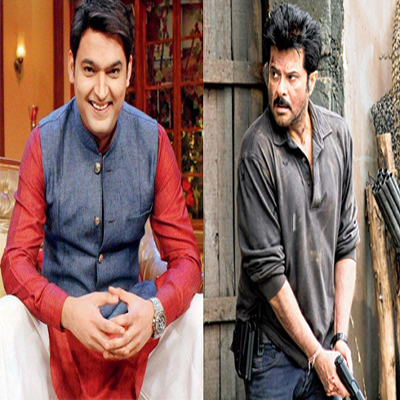
    On the Hindi GEC front, channels for the most part walked the tried and tested path in soap, drama, reality TV, though attempts at mythogolicals and historicals did bear fruit. Colors walked unknown terrain when its CEO Raj Nayak wagered with the Indian adaptation of American thriller24 with Anil Kapoor in the lead role, and also with a new stand-up comedy show Comedy Nights with Kapil. The first got critical acclaim; the second, a vast popular following. Nayak also gambled with seasons, bringing back shows such Na Bole Tum Na Maine Kuch Kaha for its second season.

    Star Plus continued to lead the genre for almost the entire year, with second, third and fourth places being traded between Colors, Zee TV, Sony, Life Ok and Sab. Period dramas and mythological drams such as Saraswati ChandraMahadevMahabharata from Star Plus and Life Ok did well with viewers. Staid old Zee was the real risk taker this year with its reality show –Connected Hum Tum (adapated from Armozia Formats). It tracks the life of ordinary folks on TV. India’s oldest existing private network flagged off shows such as Jodha AkbarBudha and added another leg to its DID franchise in DID Super Moms. It did phenomenally well for Zee TV. Sony too had a winner in its period drama – Maharana Pratap, even as its long serving CID,Adalat continue to keep it amongst the top six Hindi GEC roster. Life Ok was the surprise of the year as it has emerged as a strong contender. Channel V, Sony, Zee TV all refreshed their packaging and branding through the year.

    Colors walked unknown terrain when its CEO Raj Nayak wagered with the Indian adaptation of American thriller 24 with Anil Kapoor in the lead role, and also with a new stand-up comedy show Comedy Nights with Kapil.

    The year also saw channels risking with the film industry in a big way. Star India announced that it was forking out almost Rs 900 crore for exclusive telecast rights of all of Salman Khan’s and Ajay Devgn’s films which will be released till 2017. Then film maker Kamal Hassan attempted to premiere his film Vishwaroopam on DTH platforms but had to retreat when theatre owners protested.

    What started with Amitabh Bachchan in 2000, has now snowballed with Madhuri Dixit, Salman Khan, Mithun Chakraborty, Karan Johar, Shilpa Shetty, Anil Kapoor all becoming permanent fixtures on the small screen. Other film stars too made TV shows a must stop to promote their films. Whether it is a Hrithik Roshan or an Ajay Devgn, they definitely stopped over on the sets of a Taarak Mehta Ka Ooltah Chashmah or a reality show to promote their films. While this helps create excitement on the respective shows, too many appearances on television has made them seem rather deja vu for viewers.

    Whether it is a Hrithik Roshan or an Ajay Devgn, they definitely stopped over on the sets of a Taarak Mehta Ka Ooltah Chashmah or a reality show to promote their films. 

    Film folks turned to TV production too during 2013. Anil Kapoor co-produced 24, Sanjay Leela Bhansali produced Saraswati Chandra, Anurag Kashyap announced a fictional show starring Amitabh Bachchan, who is also reviving his production house Saraswati Audio Visuals to co-produce the show with Endemol. His wife Jaya Bachchan has also announced that she is going to make her TV debut. The Bachchans’ TV fiction show debut is much awaited as it is the septuagenarian who opened the doors for Bollywood’s big stars to host or be a part of non-fiction shows with his fabulous performance on Kaun Banega Crorepati.  

    Sports in India still means cricket for the masses. However, the year 2013 saw efforts being made to kick start other sports such as football, hockey, and even badminton through leagues. At the forefront of this was the Rupert Murdoch-owned Star India which coughed up Rs 3,851 crore to acquire the rights to domestic and international cricket from the Board of Control for Cricket in India until 2018. The deal covers 96 matches, including all the international matches India plays at home and local tournaments such as Ranji Trophy, Duleep Trophy and Irani Trophy. It even invested huge monies in becoming an associate sponsor of the Indian Premier League and followed it by paying close to Rs 200 crore to become the sponsor for Team India. This just a year after it scooped out close to Rs 1,700 crore to Disney to acquire its 50 per cent stake in their ESPN Star joint venture. The year also saw Star India rebranding and relaunching the six channels under the Star Sports umbrella Star 1,2,3,4,5,6 and introducing Hindi language commentary.

    Sports in India still means cricket for the masses. However, the year 2013 saw efforts being made to kick start other sports such as football, hockey, and even badminton through leagues. At the forefront of this was the Rupert Murdoch-owned Star India which coughed up Rs 3,851 crore to acquire the rights to domestic and international cricket from the Board of Control for Cricket in India until 2018.

    2013 has also been the year when Sony Entertainment’s billion dollar plus investment to acquire the rights to broadcast the Indian Premier League for 10 years was being questioned. Viewership ratings showed some slack, even as the entire league was embroiled in a betting and fixing scandal, which involved players from different teams. Fears were that viewers would be put off, but these were short lived and it is evident from the fact that Sony has started selling inventory for the 2014 edition at higher advertising rates than earlier years.

    In the meanwhile, on the news front, it was the year of pink slips. Almost every news network trimmed the fat on bloated payrolls as the economic crisis bit deeply. Efficiency is the buzzword today in television as TV networks grapple with a tough competitive environment, high costs, and shrinking margins. News channels like NDTV, Network 18 and Bloomberg reorganised their operations, and told excess staff to go home, with journos and camera crews being the hardest hit. Zee Media (earlier Zee News) too got shareholder approval to merge the group’s English newspaper DNA with itself. Its plan is to create an integrated newsroom serving TV, internet and print. It is quite likely that the process of doing this will result in excess staff being ejaculated. Already, its cousin sister channel Ten Sports relocated staff from Dubai to Noida, a move that saw many of them putting in their papers.

    On the news front, it was the year of pink slips. Almost every news network trimmed the fat on bloated payrolls as the economic crisis bit deeply.

    Efficiency was also the buzzword with advertisers, this year, in getting a better bang for the buck. Hence, companies such as Amagi Media saw takers for its geotargeting advertising service. Bengaluru-based Amagi Media announced its deal with Hindustan Unilever (HUL) and the Viacom18 kid’s channel Nickelodeon. The deal meant that an HUL TV commercial could run simultaneously on Nick nationally in different versions, depending on geographical location using Amagi’s DART platform. The platform also entered in a partnership with Zee TV, Zee News and Zee Business.

    With all the twists and turns in the year 2013, the upcoming year looks set to be even more interesting. Will the industry earn rewards for all the risks it took? Or, will it be forced to to continue to play the role of the great gambler?  That’s a bet we at indiantelevision.com  are not willing to wager on.
  • English GECs bet big on digitisation

    English GECs bet big on digitisation

    The early exit of BBC Entertainment and focus on target segmentation marked the English general entertainment channel (GEC) genre as digitisation propelled change in 2012.

    Audience stickiness continued to be a challenge for the English channels, forcing them to ramp up marketing to ensure that perception fell in line with their product offerings.

    In a digital environment, channels will have to increase their local feel and touch. AXN, which has completed 15 years in India, is getting more aggressive in the marketplace. The India operations is in the process of shifting from Singapore and there will be more local shows.

    “Operationally, we will have the scheduling and programming move to India. We will thus be able to sensitise to the Indian tastes and needs. We will also be able to move to the market quicker and respond to advertiser queries faster,” says AXN‘s newly appointed India head Sunil Punjabi.

    The positioning of the channel also changed from the ‘heart of action and adventure‘ to ‘It‘s Thrilling‘. A survey was conducted in January 2012 and it was found that AXN viewers wanted content that went beyond action. There was craving for a deeper, richer and engaging experience.

    Explains Punjabi, “Our aim is to broaden the genre. Our focus now rests on content that is high on energy and engagement. That is why we moved away from our action position to thrills. We have added layers to our strategy.”

    A part of this strategy is to provide light content early and then move on to the later part of prime time with shows that have substance. The aim: to evenly split between dramas and reality. Says Punjabi, “Unlike our competitors, we don‘t have sitcoms. Serious dramas are not their main focus. And non-fiction and reality shows comprise just 20 per cent of their content lineup.”

    Star World has been striving to bring shows relevant to the English content viewing audience. A case in point is the airing of the Australian TV series ‘Packed To The Rafters‘. And to make the show more relatable to the audience, Star World made Karan Johar the face of the campaign.

    “From our Hindi and regional GECs, one of the biggest learning is that viewers seek life lessons from the daily soaps they watch. The issues faced by the Star World audience, the English speaking, urban Indian youth, is quite myriad and they don‘t get to see shows which reflect their life on TV. Our audience will be able to resonate with the issues faced by the characters in Packed to the Rafters and emulate the way they resolve the conflicts,” says Star India senior VP, English programming Rasika Tyagi.

    In March 2012, Star World created a block called ‘Crime At Ten‘ that imbibed the American style of showcasing programmes in a checkered format. The property showcased the latest seasons of crime shows, including ‘Dexter‘, ‘Castle‘ and ‘Criminal Minds‘ that aired on weekdays at 10 pm.

    Big CBS, the JV between RBNL and US media conglomerate CBS, is pushing CBS flagship shows as well as adding layers through localisation.

    According to Big CBS business head Anand Chakravarthy, DAS (digital addressable systems) is one of the biggest things to have happened for the genre. “With the first phase of digitisation having started, the genre penetration has grown substantially in Delhi, Mumbai and Kolkata – the three biggest markets for English GEC. Carriage fee reduction has also happened,” he says.

    But not everybody shares this sense of optimism. BBC Worldwide Channels was not willing to wait for digitisation to take matured shape. Two channels – BBC Entertainment and CBeebies – were shut late in the year. BBC Worldwide Channels, Asia senior VP, GM Mark Whitehead bemoaned the fact that India was the only country where they had to pay carriage fees. “The nature of the Indian market for pay-TV channels make the economics of running channels very challenging at this time. We have reluctantly concluded that we need to close our channels.”

    For those who cared to wait, wider distribution of channels is beginning to happen. A case in point is FX and Fox Crime, both uniquely positioned in this space.

    Comedy Central, which has completed a year, is hoping segmentation would start paying in a digital form of distribution. Viacom18 Media senior VP, GM English entertainment Ferzad Palia says that he is encouraged by feedback received on Twitter and Facebook. “Even with digitisation, you need to get more English language speaking homes into the overall sample. We find that comedy works both with mature and new audiences. But there is room for improvement in terms of things like scheduling.”

    Converting Snacking into loyalty: To get viewers to stick on, some English GECs are trying out a better balance of content. Also, a stripped strategy is being followed which makes it easier for fans of a certain show to follow what is going on.

    Punjabi says that the genre would continue to have this challenge of converting snacking to loyalty. AXN‘s strategy is to have branded slots which will help viewers to recall the type of programming on a particular time band. “Hence we are building loyalty on slots. AXN has the highest spread of programming genres and we believe we have a lot more to offer to our viewers.”

    Another way to building loyalty is airing seasons back to back. Before a new season kicks off, older seasons are aired. This helps market these shows and more sampling takes place. “But this strategy is not followed for reality content as that does not make sense,” avers Punjabi.

    Zee Network business head niche channels Anurag Bedi also feels that longer seasons of shows are key to building loyalty. “Longer seasons in prime time are what our current focus is on. Currently we have brought on ‘Numbers‘ on Zee Cafe which will air on the channel till its sixth season. Then we have ‘Gossip Girl‘ season four, five and six. Bringing newer seasons of the popular shows and understanding the viewership needs builds loyalty,” he says.

    Zee Cafe implemented the stripped strategy with the understanding that Indian viewers have a set way of consuming television, which is Monday to Friday. “The Indian viewers prefer daily shows and clubbing number of seasons together helps retain the viewer over a long period of time. Stripped format coverts snacking into loyal viewership,” says Bedi.

    Big CBS took the simulcast route to build stickiness. ‘X-Factor‘, ‘America‘s Got Talent‘ and ‘American Idol‘, for instance, were simulcast across the three channels. “Now we will no longer simulcast. We are building our primetime band,” says Chakravarthy.

    To increase reach and boost sampling, many channels in the genre air movies. Sporting properties are also seen as an opportunity by Big CBS Prime which shows martial arts and wrestling. Chakravarthy explains that movies are shown on the weekend. “Movies become a great destination for sampling the channels as they pull in a larger audience. They also offer good sponsorship opportunities. The aim of having sporting properties is to broad base the channel. Sports bring in both younger and older audiences.”

    The ad pie: English general entertainment channels raked in about Rs 1.3 billion in 2012.

    Multi Screen Media president networks sales, licensing and telephony Rohit Gupta believes that shifting AXN‘s operations to India will help the broadcaster to work more closely with clients. “AXN has seen a 20 per cent revenue growth. We will be able to focus on shows that work well in India and offer more tailored solutions to clients,” he says.

    Palia claims that 150 brands advertised on Comedy Central. “Many TVCs are funny. So people on our channel are more receptive towards them as they are in a similar frame of mind,” he said.

    The Future: The genre can expect more channel launches amid digitisation as better distribution revenues are realised.

    Chakravarthy expresses satisfaction that digitisation is forcing broadcasters to focus more on content. “Everybody is trying to bring in really good quality shows. The genre and the audience will gain,” he says.

  • Music channels sing growth tune in 2012: Punit Pandey, EVP & Business Head, 9X Media Group

    Music channels sing growth tune in 2012: Punit Pandey, EVP & Business Head, 9X Media Group

    The Music Broadcasting scenario in 2012 has registered a significant growth both in terms of viewership, which is more consumption of the genre leading to absolute GRPs, and also in terms of ad revenues as compared to 2010.

    Way back in early 2010, the youth & music genre had a viewership share of 5.6 per cent in the total TV space, which went up to 6.7 per cent in 2011 and has grown to 8.5 per cent by end of 2012. One of the key reasons for the growth in consumption is the number of channels launched in these three years. There currently exist 15 Hindi music/youth channels catering to youth (the C&S 15-24 ABC target segment), which had only a count of eight in early 2010.

    Music genre revenues for the year 2012 were in the region of Rs 5.50 – Rs 6 billion with the Hindi Music genre contributing the lion’s share at approximately Rs 4.25 – 4.50 billion. In 2011 this number was around Rs 3.50 – 4 billion and should translate to Rs 4.80 – 5 billion in calendar year 2013.

    I would optimistically call this a significant growth given the nature of the content on a pure play music channel. Music which forms over 90 per cent of the content on any pure play music channel is a generic commodity. Therefore the key differentiator between pure play music channels is the packaging and the presentation by the channel which is the ‘Viewer Experience’.

    Like at 9XM, we give equal attention to content and the on-air presentation. The A Cappella version of Maa Tujhe Salam or the Ganesh special collaboration with Taufiq Quershi or the special rendition of the popular freedom song Yeh Desh Hai Veer Jawano Ka aired on 9XM has always resonated well with the viewers giving the channel an edge over other similar pure music channels. With viewers now having the option to choose the channels they want to watch, content may soon become more important than distribution in the digital era and therefore the on-air presentation will play a bigger role in case of pure music channels like ours.

    Another trend in the music broadcasting sector is the launch of regional and niche channels. At 9X Media, we have launched regional channels such as 9X Tashan (the Punjabi music channel) and 9X Jhakaas (Maharashtra’s first Marathi music channel) and have also ventured into the niche category with 9XO (International music channel) and 9X Jalwa (Timeless Bollywood Hits channel). These regional channels get their fair share of loyal viewers thus bringing in ad revenues from regional as well as national clients with regional focus. The niche channels are now part of media plans to target a specific set of consumers who are loyal viewers of such channels. With digitisation, the subscription revenues for such channels are also on the rise.

    In the first phase of digitisation which was restricted only to the four metros of Delhi, Mumbai, Chennai and Kolkata, niche television channels have gained ground. These channels have witnessed an increase in viewership thanks to the higher reach of digital networks. While analog networks had the bandwidth to carry only 80 to 90 channels, digital networks can carry as many as 500 channels.

    Also, broadcasters earlier had to shell out exorbitant carriage fees to cable operators. In the digital era, this fee is expected to drop significantly.

    The implementation of Digital Addressable System (DAS) in the second phase will cover 38 cities. This will positively impact the music television genre on account of increase in viewership driven by increasing Reach and TS (Time Spent) Viewer. This in turn should help to increase genre revenues. Music channels would now be included in Media plans to boost incremental reach along with frequency. Also, as music channels broadly do not operate at high PCS levels like the GECs, with DAS this factor gets negated. Hence, Music channels will witness increased reach.

    2012 also witnessed the change in the programming strategy of some of the music and music + youth channels, with Channel [V] dropping music from its content and MTV lowering the music content substantially. In 2013, we may see more channels going this route because of higher GRP / Revenue potential. Ad sales deals could be CPRP (Cost per Rating Point) driven instead of ER (Effective Rate) driven. However such a business model will need larger break even periods.

  • TV industry immune to 2012 slowdown

    TV industry immune to 2012 slowdown

    In 2012, the television industry was immune to the slowdown effect. The advertising revenue for the sector has seen double-digit growth and will be even better in 2013.

    FMCG advertising on television continued to be strong. The auto industry advertised more on television. Though the sector didn‘t do well in sales in 2012, several car launches happened and many are due in 2013 as well. The telecom sector has also been hot on television.

    Television continues to be the cheapest medium to advertise in. It also has the advantage of being an accountable medium as it has a regular audience measurement system to reflect viewership for shows and channels. In print you do not know how many people have seen your ads. In a tough situation, the client demands accountability which only television offers. That is why auto shifted budgets from other mediums and moved more towards television.

    Another factor in television‘s favour is that each year millions of new TV sets are added, which is not the case with any other medium.

    All the four major networks – Sony, Star, Zee and Network18 – have done well. The trading levels across genres rose and big properties fared well.

    The key is to be in the top three to four channels in each genre. Then there is nothing to worry about. If you are languishing in the lower rung, then you will not do well.

    Having said that, there is oversupply in some genres. News, for example, is a different ballgame and trading levels are not going up in this genre. The same challenge exists in the kids genre which has an oversupply of GRPs (gross rating points). In regional-languages, the Marathi genre interestingly operates at 40 per cent higher trading levels than Bengali.

    Digitisation will help grow the business. Niche channels have actually grown with digitisation. Pix, for instance, has grown GRPs by 20-30 per cent. Networks, though, will continue to rely heavily on advertising for the next two to three years before the real impact of digitisation is felt.