Category: Year Enders

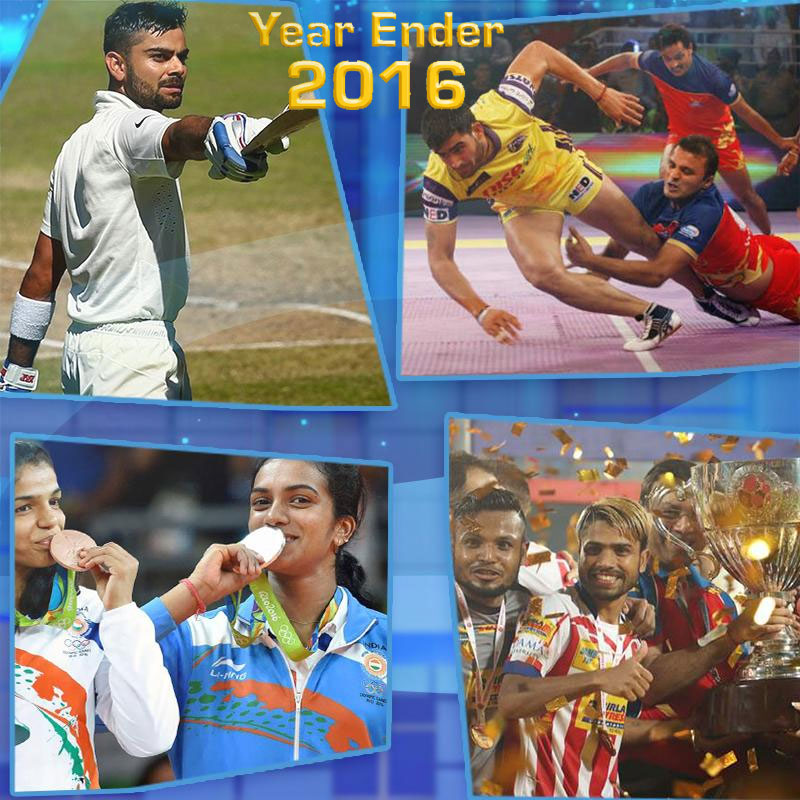
  • The year the telecom sector quaked

    The year the telecom sector quaked

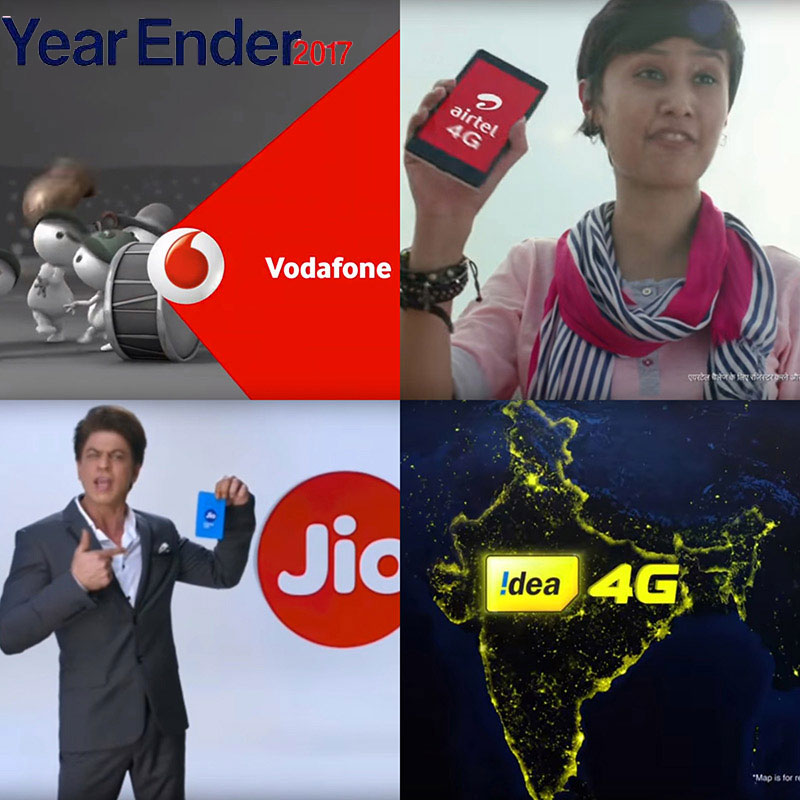
    An interplay of myriad factors contributed to India’s telecom industry witnessing both turmoil and revolution in 2017. Consolidation was the buzzword as some of the largest telecom operators merged even as Reliance Jio Infocomm Ltd (RJio) emerged as a frontrunner for Reliance Communications’ (RCom) assets according to reports. RJio can also take credit for ushering in a data revolution in the country.

    Moreover, smartphone penetration during the year increased three-fold with the aggregate number of users at more than 300 million. With smartphones still accounting for less than 50 per cent of handset users (650 million) in the country, another surge in data consumption is on the anvil.

    The price war

    Indian tycoon Mukesh Ambani sparked a price war in 2016 with the launch of Reliance Jio. As a consequence, the country’s large telcos have been burning through cash this year to hold on to their market share. Vodafone and Airtel tried luring customers through cheap data and unlimited calling offers. Reliance Jio, however, clearly won that battle. Within the first month of commercial operations, Jio announced that it had acquired 16 million subscribers. This was the fastest scaling up by any mobile network operator anywhere in the world. The operator crossed the 50 million subscriber mark 83 days from its launch, crossing 100 million subscribers on 22 February 2017. By October 2017, it had around 130 million subscribers. 

    With telcos looking to push for higher data pack purchases, 4G became cheaper than 3G. Today, 4G data costs are as low as 1 paisa per MB.

    Sectoral consolidation 

    From as many as 13 players at one point in time, we are now left with just five major contenders even as RCom sits on the brink of leaving the fray. Earlier this year, Vodafone India and Idea Cellular decided to merge operations to create India’s largest telecom operator worth more than $23 billion beating Sunil Bharti Mittal-led Airtel. With this deal, Vodafone India’s valuation stood at Rs 82,800 crore and Idea’s at Rs 72,200 crore. 

    RCom, reeling under a debt of around Rs 46,000 crore, shut down its voice services from 1 December 2017 after it failed to close its wireless business merger deal with Aircel. The Telecom Regulatory Authority of India (TRAI) has issued a directive to RCom’s customers to move to other networks by the end of this year. Vodafone, Airtel, and Jio created special packs for RCom customers to lure them to their networks. 

    Telcos and handsets 

    In July 2017, Jio introduced JioPhone–the company’s first affordable 4G feature phone powered by KaiOS. The phone was made available for a security deposit of Rs 1500, which could be reimbursed on returning the phone after three years. This phone was released for beta users on 15 August 2017 and pre-booking for regular users started on 24 August 2017. 

    To strengthen its presence amidst the battle for market share, Airtel launched Android-powered 4G smartphones in partnership with Indian cellphone manufacturer Karbonn Mobiles. Airtel also partnered various other mobile handset manufacturers, including Intex, to create an ‘open ecosystem’ of affordable 4G smartphones.

    Not one to be left out of the party, Vodafone and domestic handset maker Micromax came together to offer a smartphone priced a shade under Rs 1000 with a three-year rider.

    Internet of Things

    Despite posing privacy risks, Internet of Things, or IoT, remained one of the buzzwords in tech circles this year. According to Vodafone Plc’s annual IoT barometer report 2017-18, the percentage of companies with more than 50,000 connected devices active has doubled in the last 12 months with over 84 per cent of IoT adopters saying that their use of IoT has grown in the last year. From the Indian organisations that were a part of the study, 81% felt that IoT was key to digital transformation.

    In India, Vodafone marked itself as the first brand to undergo this evolution. The telco repositioned itself as a contemporary and future-fit brand. It is a significant metamorphosis for one of India’s most iconic and loved brands since the ‘Power to you’ tagline was introduced in 2009. This new positioning, a part of Vodafone’s rebranding exercise across 36 countries, is designed to underpin its belief in new technologies and digital services playing a positive role in transforming society.

    Net neutrality  

    In what was seen as a sign of things to come, the US Federal Communications Commission voted in December to scrap net neutrality, which requires internet service providers to treat all internet traffic equally. The TRAI, not too long after, came out in strong support of net neutrality in a series of recommendations following a long process of consultations on the issue. The regulator believes that the licensing terms should be amplified to provide explicit restrictions on any sort of discrimination in internet access based on the content being accessed, the protocols being used or the user equipment being deployed. 

    With IoT being the talk of the town, networks fighting to grab RCom’s assets and customers, and an ongoing telco war between Airtel, Vodafone, and Jio to become the country’s numero uno operator, it will be interesting to watch how the industry shapes up in 2018.

  • The year of big switch in sports broadcasting

    The year of big switch in sports broadcasting

    MUMBAI: This year has been nothing short of a roller-coaster ride for sports broadcasters. The industry saw it all–channel launches (pay as well as free to air [FTA]), rebranding, and battles for rights  for numerous domestic and international properties. Renowned properties changed hands while new ones also found a home in the country. It was a year that witnessed the less-fancied sports going from strength to strength in a market that has been dominated by cricket for far, too, long.

    Among the marque developments during the year was how the aggressive Uday Shankar and team stole the rights for the IPL by bidding for the entire package, rather than individual rights for digital and TV, like the rest of the bidders. What was also uncanny was the slender margin that it pocketed the property as compared to everyone else’s cumulative bid. Yes, it bid high, but has not Uday shown that he is the risk taker bar none on several occassions in the past by betting on sports like kabaddi, football, tennis,hockey, table tennis, badminton and encouraged the setting up of leagues for the poorer sports? And his efforts have borne fruit as these  have managed to rope in the viewers, advertisers and revenues. But his challenge will be to able to steer Star Sports in India in the aggressive manner he is known to do now that the India operations of Star India are in the process of coming under the Disney fold following their sale – along with other properties by the Murdochs  – to the mouse house. Star Sports meanwhile lost its leader Nitin Kukreja earlier this year when he departed to head one of the team owner’s franchise operations.

    Of course, streaming service Hotstar set its landmarks in terms of viewers that it managed to rope in for almost every tournment it rolled out.  Star Sports nearest rival now is the NP Singh headed Sony Pictures Networks India which let go of the IPL rights by bidding only for the television piece of the rights. Though its bid was higher than Star Sports’ it still did not manage to retain the rights.

    2017  was remarkable for the fact that digital players – among which figure Amazon, Facebook – are open to come head on with traditional television to snap up sports telecast rights. They of course lost to Star but who knows if they will become key game changers in terms of sports rights pricing going forward.

    The year was also remarkable for the fact that Chinese brands of mobile phones have put their might behind building sports in India by becoming sponsors for almost every major property. Either  OPPO or Vivo or some other brand has paid top dollar to be associated with Indian sport. Whether this bodes well or not only time will tell, but it would be good if Indian brands too get their foot into play.

    Launched in 2016, Veqta, India’s OTT subscription service dedicated to sports, got great traction for the first live property after the launch of the subscription package on Veqta. The boxing bout between Floyd Mayweather and Conor McGregor and the digital campaign was a huge success, garnering around 1.4 billion digital impressions across various media. Within a month of activation of a subscription package, the platform crossed over 150,000 downloads. This made it clear that in India there is a big demand for alternative sports, apart from mainline sports like cricket, and there are people willing to pay for premium sports content.

    Let’s see how each broadcaster fared this year:

    Star India

    While it restructured its bouquet, Star Sports 3 SD and Star Sports 4 SD and their HD feeds went off air. The broadcaster bet big on a regional channel as well as going Hindi with Star Sports 1 Tamil and Star Sports 1 Hindi. Moreover, it also launched Star Sports Select 1 and Star Sports Select 2, taking the broadcaster’s sports bouquet to a total of 11 channels.

    Star Sports telecast Ultimate Table Tennis’ (UTT) inaugural season in 2017 to promote table tennis as a sport in India. The league played a pivotal role in achieving this objective by working in cohesion with the stakeholders: the Table Tennis Federation of India, the franchises, and the broadcaster. Unlike other major sporting leagues being run in the country like IPL and ISL, UTT had club-based franchises instead of the usual city-based franchises. 

    The broadcaster then took a dive into going FTA route with Star Sports First. The country’s first private FTA channel hopped on board FreeDish and got off to a roaring start in cricket-crazy India. This enabled sports fans and enthusiasts to watch their favourite sports in Hindi without paying any subscription fee. Rather surprisingly, Star Sports First contributed to 31 per cent of the overall viewership for Pro Kabaddi League (PKL) season 5. With the launch of Star Sports First, it increased its channel count to 12, thereby becoming the broadcaster with the most number of sports channels in the country.

    The broadcaster took the lead on cricket in the country by acquiring the rights for the Indian Premier League (IPL) by comfortably winning it for $2.55billion for its global rights. Both the TV and digital rights for the next five years from 2018 are with Star. It will also be introducing virtual reality as a game changer.

    The digital ad revenue for the tenth season more than doubled as compared to previous season which was Rs 1.2 billion.

    Recent reports suggest that a caveat is being created to ensure broadcasters share their telecast with pubcaster DD for its terrestrial network and FreeDish. This would be made possible as and when the government formally issues a directive as both the law and information & broadcasting ministries were being consulted, under a regulation called the Sports Broadcasting Signals (Mandatory Sharing with Prasar Bharati) Act 2007.

    Sony Pictures Network (SPN) India

    SPN India started this year with the completion of the first phase of the acquisitions of Ten Sports from Subhash Chandra-led Zee Entertainment Enterprises Limited (Zeel). This involved a monetary transaction of $30 million out of the total $385 million in consideration. The second phase of the deal was mutually concluded by both the parties because of certain condition with Zeel’s receipt of the remittance of $ 36.32 million from SPN.

    SPN India roped Sachin Tendulkar as its brand ambassador for the sports bouquet. On the same day, Sony rebranded its sports portfolio by adding two HD channels Sony Ten 2 & 3 HD which took its total count to 11 channels in the sports cluster. Each channel picked its favourite sport with Sony Six and Six HD dedicating itself entirely to cricket while Sony Ten 1 and Ten 1 HD took to wrestling. Football was handed over to Sony Ten 2 and Ten 2 HD. Sony Ten 3 and its HD counterpart was given to all Hindi feed for any sport. International sports can be viewed on Sony ESPN/HD. Sony is also focusing on golf with Sony Ten Golf HD, which is a very niche market in India.

    SPN India, the official broadcaster (till 2017) of IPL, crossed the Rs 13,000 million mark in terms of ad revenue. After a decade of holding strong, it lost out to Murdoch’s Star India with its aggressive biding price which paled Sony’s proposition of Rs 11,500 crore for just India’s rights.

    The broadcaster also won the exclusive rights for the shortest format of cricket – the T10 Cricket League which is also its inaugural season. Sony has both the TV and digital rights for the league, hosted by the Emirates cricket broad.

    DSport

    DSport is a sports TV channel launched by Discovery Communications India specifically for the Indian subcontinent in February this year. The channel is focused on bringing the most live sports content, over 4000 hours, from around the world to audiences in India. Its wide portfolio of live sports content includes the exclusive rights for many of the leagues of wrestling, football, cycling, horse-racing, golf, tennis, motorsports, and many more.

    To name a few of the exclusive leagues in DSport portfolio are, wrestling properties including American Ring of Honor and Lucha Underground. The third edition of the HBL Pakistan Super League will be aired exclusively on Dsport.  Dsport also acquired the exclusive India broadcast rights of the inaugural edition of the Laver Cup as well as the ICC World XI Tour of Pakistan.

    TS Panesar was appointed as the business head in the second half of 2017.

    Nimbus Communication

    Launched in 2006, Neo Sports and Neo Prime have lost their sheen over the years. Their current portfolio includes leagues like FIFA Club World Cup, The Coppa Italia and Coupe de France in football. In tennis,Davis Cup and Fed Cup are the only two leagues the broadcaster owns. The broadcaster also owns some of the leagues from other sports like basketball, table tennis, motor racing, horse racing and many more.

    Conclusion

    The year 2017 was made memorable because of the shift in the ownership of IPL rights from Sony to Star, the country’s first private FTA sports channel, and the consolidation of other sports in the country. While plans are afoot by broadcasters for the upcoming year, here are some events to look out for in 2018.

    SPN India is likely to make an aggressive bid for the Indian cricket team home rights in a bid to shore up the rights for the few cricketing events with it. Star India is also expected to leave no stone unturned to acquire the rights with the vision of having a monopoly in the Indian sports and cricket industries. We know that Sony already has the Rs 11,000 crore that it was ready to splurge on the IPL rights. The BCCI is expected to open the bid early next year for a period of five years. Furthermore, to enhance the fan experience, Star India wants to make a mark with its first IPL edition and will introduce virtual reality for the 2018 season.

    The stage is set for a dogfight between the two big players in the sector–Star and Sony. Just the prospect of this off-field battle is mouth-watering. 

    Also read: 

    Comment: Does Star stand to gain or lose by sharing IPL with DD?

    Star’s Uday Shankar on distribution challenges, IPL, FTA vs. pay TV, innovations, Made in India content…and much more

    Star India to introduce VR for IPL 2018

    ISL piggybacks on EPL’s popularity to gain viewership

  • The growth of DTH in India

    The growth of DTH in India

    MUMBAI: Dish TV, Videocon d2h and FreeDish. These were the three names that dominated India’s DTH sector headlines in 2016. The Essel Group’s Dish TV India is likely to forge the mother of a merger, (if permitted by shareholders and government departments) with another fast-growing rival — the Dhoot family led Videocon d2h even after denying it throughout the year.

    Further Vidoecon d2h was the second player in the Indian television carriage ecosystem that reported a net profit after tax or PAT– this was for the quarter ended 30 September 2016 or Q2-17.  The other player that had started reporting PAT much earlier was Dish TV.

    And, the public broadcaster Prasar Bharti-owned FreeDish increased its capacity allowing the number of channels to grow from 80 to 120 to reach India’s hinterlands and hence generate larger subscription numbers.

    As per the last available exact data from a government website, the total number of active DTH subscribers in India was 55,981,376 as on 31 December 2015. The number of active DTH subscribers of Airtel was 11,343,424 with a market share of 20.26 per cent of the total number of active DTH subscribers in the entire country;  the number of active DTH subscribers of Dish TV was 13,952,866 with a market share of 24.92 per cent of the total number of active DTH subscribers in the entire country. Among all the pay DTH Operators in India, Dish TV had the largest number of DTH subscribers as on 31 December 2015 and was the market leader.

    The number of active DTH subscribers of Reliance was 1,786,705 as on 31 December 2015 and its market share was 3.19 per cent of the total number of active DTH subscribers in the country. Among all the DTH Operators in India, Reliance had the smallest number of DTH subscribers.

    The number of active DTH subscribers of Sun Direct was 5,698,544 as on 31 December 2015 and Sun direct had a market share of 10.18 per cent; the number of active DTH subscribers of Tata Sky was 12,045,410 which had a market share of Tat Sky was 21.52 per cent; the number of active DTH subscribers of Videocon D2H was 11,154,427 and its market share was 19.93 per cent of the total number of active DTH subscribers in India

    With rise in disposable income and increasing number of digital pay-TV households, India is the most compelling market for DTH services. With around 28 lakh or 2.8 million subscribers added in the first quarter of fiscal 2017 (Q1-17), DTH households at a gross level crossed over 9 crore or 90 million by 30 June 2016 as per TRAI data.

    The DTH industry in India has added about 14 lakh (1.4 million) active subscribers in the quarter ended 30 September 2016 (Q2-17, current quarter) as compared to the immediate trailing quarter (Q1-17). The number of active DTH subscribers in the country increased to 6.19 crore (61.9 million) as compared to 6.05 crore (60.5 million) in Q1-7. TRAI had reported 4.05 crore (40.5 million) active subscribers for the corresponding year ago quarter Q2-16.

    The highly fragmented Indian television carriage industry witnessed a consolidation of sorts. The proposed Dish TV and Videocon d2h merger seems to indicate the way ahead in the DTH space. The merged entity would have some 2.64 crore or 26.4 million subscribers, which is approximately 45 per cent of active Indian DTH subscribers. Long-term benefits of the merger synergies could negate potential short-term apprehensions, analysts felt.

    The growth of OTT and VOD services on the other hand has been modifying the dynamics at the higher end of the home entertainment segment. Of the 16.8 crore or 168 million TV households, only around 9 lakh or nine million Indians are HD subscribers. Services such as Amazon Prime, Netflix, Hotstar, Voot and Eros Now, etc may attract DTH subscribers owing to competitive prices for wider and better content including international dramas and shows.

    On the whole, however, the DTH sector slackened in subscriber numbers with the government’s mandate to push ahead with digitisation of television not being adhered to by cable TV operators who stalled its progress with legal challenges.  Looking at the status quo, the powers that be were left with no option but to push back the sunset for the final phase of digitisation (DAS IV) by three months from 31 December 2016 to 31 March 2017. A few industry experts feel that this could be pushed back further to 30 June 2017 and maybe even to the end of calendar year 2017. Delays will only result in retardation of growth of the carriage industry and hence affect the rate of implementation of improved services for the viewers.

    The I&B ministry had broadly accepted TRAI recommendations to increase DTH licence duration to 20 years and for paring the annual fee to eight per cent of adjusted gross revenue (AGR). Some of the regulator’s ideas however lead to consternation. DTH and Cable TV operators had opposed a very appropriate TRAI move to introduce interoperable set-top boxes allowing users to change their service providers without having to change their dishes or STBs. Despite the expected churn that such recommendations are sure to usher in, over the long run, customer satisfaction is likely to be the only yardstick that will determine growth or fall of a service provider.

    But is inter-operability possible? Here is the DTH players take on this: DTH players, six of whom pay government Rs 800 crore as licence fee per year in addition to non-refundable entry fee of Rs.10 crore, said that it was not feasible DTH players have invested around Rs 20,000 crore in STBs. Asia’s industry body CASBAA said that even full STB interoperability cannot ensure technical interoperability of services. It also believes that regulator-imposed technical interoperability requirements will impose large burden on Indian consumers and industry players and risk stifling innovation in development of new features.

    Let us see how these players are placed in the ecosystem, how they have performed, while bearing in mind that TRAI has released numbers only up to 30 June 2016. Publically available information is limited to three entities that have reported their numbers until 30 September 2016 at the time of filing this report. In alphabetical order, they are: Airtel Digital TV services or Airtel DTH, a segment of the Indian Telecom major Bharti Airtel Limited, Dish TV India Limited (Dish TV) and Videocon d2h Limited or Videocon d2h.

    As mentioned above, the market share in terms of subscribers of the DTH leader Dish TV as 2016 dawned was 24.92 per cent, whereas that of Airtel was 20.26 per cent of the total active DTH subscribers in India, followed by Videocon d2h’s 19.93 per cent.  The three operators’ combined subscriber additions for the annual period ended 31 March 2016 as compared to the previous year increased by 12.3 per cent. Though Videocon d2h and Airtel Digital TV had both shown a little spike in subscriber addition between Q2-2016 and Q3-2016, the combined addition by the three showed a change of just 3.59 per cent.

    In the first half year period of the current fiscal (H1-17) all the three players showed about 17 per cent increase in subscriber numbers. Airtel DTH, Dish TV and Videocon d2h added 6.8 lakh, 6 lakh and 6.6 lakh subscribers respectively, or total of 19,2 lakh, a shade lower than the 19.63 subscribers added in the first half year of the previous year (H1-16).

    As per the latest TRAI data publically available, the country’s total DTH homes are around 9.15 crore or 91.5 million.  However, the growth in active as well as inactive subscribers remained similar over the past three quarter-year periods in 2016.  TRAI data shows that over a third of these subscribers were inactive. However, the regulator observed that active subscribers grew 3.36 per cent in the quarter-year to 31 March (to a total of 6.05 crore or 60.5 million). But at the same time inactive subscribers also increased at 3.05 per cent to 3.01 crore or 30.1 million, the conclusion being tardy growth.

    Of late, TRAI has modified its calculation method for inactive subscribers. It now considers even subscribers that have been disconnected for less than 120 days as ‘active’.

    Regulatory processes in the broadcast and distribution business saw acceleration around mid-year. The draft Interconnection Regulations, 2016 and the draft Quality of Service and Consumer Protection Regulations, 2016, were released by TRAI seeking comments from stakeholders.

    DTH operators however felt there were some omissions, optimistic presumptions as well as unanswered questions in the drafts, but they largely appreciated TRAI’s spirit of transparency and non-discrimination leading to DTH getting the level playing field it sought. Restrictions on the carriage fee could correct the industry’s macro environment, they felt.

    DTH companies brought in various schemes to prod up their sagging fortunes. Dish TV unveiled an all new High Definition (HD) campaign. It also aligned its efforts to train an efficient workforce of DTH technicians with the PM scheme. Dish TV also added 32 new educational channels launched by the HRD Ministry on its platform.

    During this time Prasar Bharti was actively moving towards business. As pay channels Aajtak and Big Magic came on DD FreeDish, possibilities opened up for more as DD prepared migration to MPEG-4, taking its capacity to 112. Now, as mentioned above, FreeDish capacity has reached 120 channels. As BARC indicated the importance of FreeDish in reaching out to rural India, channels started making a beeline to be on DD’s FTA platform. Further, 100 per cent FDI has been allowed for broadcast carriage services like cable services, teleport, and head-end-in-the-sky (HITS).

    Airtel DTH revenues have been on the rise and despite its lower subscriber base. It has now overtaken Dish TV in terms of revenue. In H1-17, Airtel DTH reported revenue of Rs 1,691.40 crore, 21.5 per cent higher than the Rs 1,391.6 crore in H1-16. Operating profit (EBIDTA) in H-17 was 27.2 per cent higher at Rs 626.1 crore as compared to Rs 514 crore in H1-16. Airtel DTH’s capex in H1-17 was almost flat (0.9 per cent lower) at Rs 457.1 crore as compared to Rs 461.40 crore in H1-16.

    Dish TV, as Asia Pacific’s largest DTH company in terms of subscriber numbers, has on its platform more than 545 channels and services including 22 audio channels and over 50 HD channels. It has a vast distribution network of over 2,297 distributors in 9,350 towns.

    Dish TV managing director Jawahar Goel said, “Buoyed by digitisation, notwithstanding the relative seasonal weakness in 1Q, the industry collectively added around 15 per cent higher subscribers compared to the same quarter last fiscal. Dish TV maintained its lead in incremental subscriber additions during the quarter.  About the regulatory overhangs, Goel said that the resolution of the DTH license fee matter should go a long way in ensuring non-discrimination amongst various distribution platforms.  Goel is hoping for a logical outcome of the TRAI paper on Interconnection Framework for Broadcasting TV Services Distributed through Addressable Systems.

    Videocon d2h subscribers have access to over 550 national and international channels and services, including approximately 45 high definition (HD) channels and services, and over 42 audio and video services through its Music Channel Services through several subscription packages, as well as the option of choosing add-ons and a la carte channels.

    In H1-17, Videocon d2h revenue increased 13.8 per cent to Rs 1,539.4 crore from Rs 1,352.9 crore in H1-16. Adjusted EBIDTA in H1-17 increased 34.8 per cent to Rs 510.2 crore from Rs 378.6 crore in H1-16. Capex in H1-17 was 16 per cent lower at Rs 335 crore as compared to Rs 399 crore in H1-16.

    ARPU’s have been increasing over time, slowly but steadily. Airtel DTH has the highest reported ARPU among the three. Its ARPU in Q2-17 was Rs 232, Rs 8 higher than the Rs 224 in Q2-16, and Re 1 lower than the Rs 233 in the immediate trailing quarter. Dish TV APRU (net of taxes) was Rs 162 in Q2-17 as compared to Rs 161 in Q2-16. Videocon d2h ARPU in Q2-17 was Rs 219 as compared to Rs 205 in Q2-16 and Rs 214 in Q1-17. It may be noted that Dish TV ARPU numbers according to IND AS don’t include service tax hence comparing the ARPU between players will not be an apples to apples comparison.

    End points

    The merger between Dish TV and Videocon d2h will turn the game into a three corner fight from four corner one – the other major protagonist in the game being TataSky. Reliance DTH and Sun Direct are marginal players and DTH seems for now a small forgotten part of the overall business of their leaders. It is quite likely that they may be sold off or merged with bigger players in the carriage eco-system.

    The Dish TV-Videocon d2h merger will make the Essel group that controls Dish TV, as the largest player in the world in terms of subscriber numbers once its cable TV company Siti Networks Limited are reckoned.

    The carriage industry in India is evolving. It has travelled some distance, but has a long way ahead. The players are more focused towards investors and not consumer oriented. Some players such as Dish TV have realised the importance of consumers and have started offering packages across price ranges. This can happen only at the cost of ARPUs’, that fact is amply demonstrated by the fact that despite a lower consumer base, Airtel DTH (and probably Tata Sky) has higher revenues than Dish TV. By the time the Dish TV – Videocon d2h merger is complete, it is quite likely that the latter’s revenues will exceed the formers. But over a long period of time, once subscriber bases are stable to an extent, it is also quite likely that Dish TV will be numero uno on that count too.

  • The growth of DTH in India

    The growth of DTH in India

    MUMBAI: Dish TV, Videocon d2h and FreeDish. These were the three names that dominated India’s DTH sector headlines in 2016. The Essel Group’s Dish TV India is likely to forge the mother of a merger, (if permitted by shareholders and government departments) with another fast-growing rival — the Dhoot family led Videocon d2h even after denying it throughout the year.

    Further Vidoecon d2h was the second player in the Indian television carriage ecosystem that reported a net profit after tax or PAT– this was for the quarter ended 30 September 2016 or Q2-17.  The other player that had started reporting PAT much earlier was Dish TV.

    And, the public broadcaster Prasar Bharti-owned FreeDish increased its capacity allowing the number of channels to grow from 80 to 120 to reach India’s hinterlands and hence generate larger subscription numbers.

    As per the last available exact data from a government website, the total number of active DTH subscribers in India was 55,981,376 as on 31 December 2015. The number of active DTH subscribers of Airtel was 11,343,424 with a market share of 20.26 per cent of the total number of active DTH subscribers in the entire country;  the number of active DTH subscribers of Dish TV was 13,952,866 with a market share of 24.92 per cent of the total number of active DTH subscribers in the entire country. Among all the pay DTH Operators in India, Dish TV had the largest number of DTH subscribers as on 31 December 2015 and was the market leader.

    The number of active DTH subscribers of Reliance was 1,786,705 as on 31 December 2015 and its market share was 3.19 per cent of the total number of active DTH subscribers in the country. Among all the DTH Operators in India, Reliance had the smallest number of DTH subscribers.

    The number of active DTH subscribers of Sun Direct was 5,698,544 as on 31 December 2015 and Sun direct had a market share of 10.18 per cent; the number of active DTH subscribers of Tata Sky was 12,045,410 which had a market share of Tat Sky was 21.52 per cent; the number of active DTH subscribers of Videocon D2H was 11,154,427 and its market share was 19.93 per cent of the total number of active DTH subscribers in India

    With rise in disposable income and increasing number of digital pay-TV households, India is the most compelling market for DTH services. With around 28 lakh or 2.8 million subscribers added in the first quarter of fiscal 2017 (Q1-17), DTH households at a gross level crossed over 9 crore or 90 million by 30 June 2016 as per TRAI data.

    The DTH industry in India has added about 14 lakh (1.4 million) active subscribers in the quarter ended 30 September 2016 (Q2-17, current quarter) as compared to the immediate trailing quarter (Q1-17). The number of active DTH subscribers in the country increased to 6.19 crore (61.9 million) as compared to 6.05 crore (60.5 million) in Q1-7. TRAI had reported 4.05 crore (40.5 million) active subscribers for the corresponding year ago quarter Q2-16.

    The highly fragmented Indian television carriage industry witnessed a consolidation of sorts. The proposed Dish TV and Videocon d2h merger seems to indicate the way ahead in the DTH space. The merged entity would have some 2.64 crore or 26.4 million subscribers, which is approximately 45 per cent of active Indian DTH subscribers. Long-term benefits of the merger synergies could negate potential short-term apprehensions, analysts felt.

    The growth of OTT and VOD services on the other hand has been modifying the dynamics at the higher end of the home entertainment segment. Of the 16.8 crore or 168 million TV households, only around 9 lakh or nine million Indians are HD subscribers. Services such as Amazon Prime, Netflix, Hotstar, Voot and Eros Now, etc may attract DTH subscribers owing to competitive prices for wider and better content including international dramas and shows.

    On the whole, however, the DTH sector slackened in subscriber numbers with the government’s mandate to push ahead with digitisation of television not being adhered to by cable TV operators who stalled its progress with legal challenges.  Looking at the status quo, the powers that be were left with no option but to push back the sunset for the final phase of digitisation (DAS IV) by three months from 31 December 2016 to 31 March 2017. A few industry experts feel that this could be pushed back further to 30 June 2017 and maybe even to the end of calendar year 2017. Delays will only result in retardation of growth of the carriage industry and hence affect the rate of implementation of improved services for the viewers.

    The I&B ministry had broadly accepted TRAI recommendations to increase DTH licence duration to 20 years and for paring the annual fee to eight per cent of adjusted gross revenue (AGR). Some of the regulator’s ideas however lead to consternation. DTH and Cable TV operators had opposed a very appropriate TRAI move to introduce interoperable set-top boxes allowing users to change their service providers without having to change their dishes or STBs. Despite the expected churn that such recommendations are sure to usher in, over the long run, customer satisfaction is likely to be the only yardstick that will determine growth or fall of a service provider.

    But is inter-operability possible? Here is the DTH players take on this: DTH players, six of whom pay government Rs 800 crore as licence fee per year in addition to non-refundable entry fee of Rs.10 crore, said that it was not feasible DTH players have invested around Rs 20,000 crore in STBs. Asia’s industry body CASBAA said that even full STB interoperability cannot ensure technical interoperability of services. It also believes that regulator-imposed technical interoperability requirements will impose large burden on Indian consumers and industry players and risk stifling innovation in development of new features.

    Let us see how these players are placed in the ecosystem, how they have performed, while bearing in mind that TRAI has released numbers only up to 30 June 2016. Publically available information is limited to three entities that have reported their numbers until 30 September 2016 at the time of filing this report. In alphabetical order, they are: Airtel Digital TV services or Airtel DTH, a segment of the Indian Telecom major Bharti Airtel Limited, Dish TV India Limited (Dish TV) and Videocon d2h Limited or Videocon d2h.

    As mentioned above, the market share in terms of subscribers of the DTH leader Dish TV as 2016 dawned was 24.92 per cent, whereas that of Airtel was 20.26 per cent of the total active DTH subscribers in India, followed by Videocon d2h’s 19.93 per cent.  The three operators’ combined subscriber additions for the annual period ended 31 March 2016 as compared to the previous year increased by 12.3 per cent. Though Videocon d2h and Airtel Digital TV had both shown a little spike in subscriber addition between Q2-2016 and Q3-2016, the combined addition by the three showed a change of just 3.59 per cent.

    In the first half year period of the current fiscal (H1-17) all the three players showed about 17 per cent increase in subscriber numbers. Airtel DTH, Dish TV and Videocon d2h added 6.8 lakh, 6 lakh and 6.6 lakh subscribers respectively, or total of 19,2 lakh, a shade lower than the 19.63 subscribers added in the first half year of the previous year (H1-16).

    As per the latest TRAI data publically available, the country’s total DTH homes are around 9.15 crore or 91.5 million.  However, the growth in active as well as inactive subscribers remained similar over the past three quarter-year periods in 2016.  TRAI data shows that over a third of these subscribers were inactive. However, the regulator observed that active subscribers grew 3.36 per cent in the quarter-year to 31 March (to a total of 6.05 crore or 60.5 million). But at the same time inactive subscribers also increased at 3.05 per cent to 3.01 crore or 30.1 million, the conclusion being tardy growth.

    Of late, TRAI has modified its calculation method for inactive subscribers. It now considers even subscribers that have been disconnected for less than 120 days as ‘active’.

    Regulatory processes in the broadcast and distribution business saw acceleration around mid-year. The draft Interconnection Regulations, 2016 and the draft Quality of Service and Consumer Protection Regulations, 2016, were released by TRAI seeking comments from stakeholders.

    DTH operators however felt there were some omissions, optimistic presumptions as well as unanswered questions in the drafts, but they largely appreciated TRAI’s spirit of transparency and non-discrimination leading to DTH getting the level playing field it sought. Restrictions on the carriage fee could correct the industry’s macro environment, they felt.

    DTH companies brought in various schemes to prod up their sagging fortunes. Dish TV unveiled an all new High Definition (HD) campaign. It also aligned its efforts to train an efficient workforce of DTH technicians with the PM scheme. Dish TV also added 32 new educational channels launched by the HRD Ministry on its platform.

    During this time Prasar Bharti was actively moving towards business. As pay channels Aajtak and Big Magic came on DD FreeDish, possibilities opened up for more as DD prepared migration to MPEG-4, taking its capacity to 112. Now, as mentioned above, FreeDish capacity has reached 120 channels. As BARC indicated the importance of FreeDish in reaching out to rural India, channels started making a beeline to be on DD’s FTA platform. Further, 100 per cent FDI has been allowed for broadcast carriage services like cable services, teleport, and head-end-in-the-sky (HITS).

    Airtel DTH revenues have been on the rise and despite its lower subscriber base. It has now overtaken Dish TV in terms of revenue. In H1-17, Airtel DTH reported revenue of Rs 1,691.40 crore, 21.5 per cent higher than the Rs 1,391.6 crore in H1-16. Operating profit (EBIDTA) in H-17 was 27.2 per cent higher at Rs 626.1 crore as compared to Rs 514 crore in H1-16. Airtel DTH’s capex in H1-17 was almost flat (0.9 per cent lower) at Rs 457.1 crore as compared to Rs 461.40 crore in H1-16.

    Dish TV, as Asia Pacific’s largest DTH company in terms of subscriber numbers, has on its platform more than 545 channels and services including 22 audio channels and over 50 HD channels. It has a vast distribution network of over 2,297 distributors in 9,350 towns.

    Dish TV managing director Jawahar Goel said, “Buoyed by digitisation, notwithstanding the relative seasonal weakness in 1Q, the industry collectively added around 15 per cent higher subscribers compared to the same quarter last fiscal. Dish TV maintained its lead in incremental subscriber additions during the quarter.  About the regulatory overhangs, Goel said that the resolution of the DTH license fee matter should go a long way in ensuring non-discrimination amongst various distribution platforms.  Goel is hoping for a logical outcome of the TRAI paper on Interconnection Framework for Broadcasting TV Services Distributed through Addressable Systems.

    Videocon d2h subscribers have access to over 550 national and international channels and services, including approximately 45 high definition (HD) channels and services, and over 42 audio and video services through its Music Channel Services through several subscription packages, as well as the option of choosing add-ons and a la carte channels.

    In H1-17, Videocon d2h revenue increased 13.8 per cent to Rs 1,539.4 crore from Rs 1,352.9 crore in H1-16. Adjusted EBIDTA in H1-17 increased 34.8 per cent to Rs 510.2 crore from Rs 378.6 crore in H1-16. Capex in H1-17 was 16 per cent lower at Rs 335 crore as compared to Rs 399 crore in H1-16.

    ARPU’s have been increasing over time, slowly but steadily. Airtel DTH has the highest reported ARPU among the three. Its ARPU in Q2-17 was Rs 232, Rs 8 higher than the Rs 224 in Q2-16, and Re 1 lower than the Rs 233 in the immediate trailing quarter. Dish TV APRU (net of taxes) was Rs 162 in Q2-17 as compared to Rs 161 in Q2-16. Videocon d2h ARPU in Q2-17 was Rs 219 as compared to Rs 205 in Q2-16 and Rs 214 in Q1-17. It may be noted that Dish TV ARPU numbers according to IND AS don’t include service tax hence comparing the ARPU between players will not be an apples to apples comparison.

    End points

    The merger between Dish TV and Videocon d2h will turn the game into a three corner fight from four corner one – the other major protagonist in the game being TataSky. Reliance DTH and Sun Direct are marginal players and DTH seems for now a small forgotten part of the overall business of their leaders. It is quite likely that they may be sold off or merged with bigger players in the carriage eco-system.

    The Dish TV-Videocon d2h merger will make the Essel group that controls Dish TV, as the largest player in the world in terms of subscriber numbers once its cable TV company Siti Networks Limited are reckoned.

    The carriage industry in India is evolving. It has travelled some distance, but has a long way ahead. The players are more focused towards investors and not consumer oriented. Some players such as Dish TV have realised the importance of consumers and have started offering packages across price ranges. This can happen only at the cost of ARPUs’, that fact is amply demonstrated by the fact that despite a lower consumer base, Airtel DTH (and probably Tata Sky) has higher revenues than Dish TV. By the time the Dish TV – Videocon d2h merger is complete, it is quite likely that the latter’s revenues will exceed the formers. But over a long period of time, once subscriber bases are stable to an extent, it is also quite likely that Dish TV will be numero uno on that count too.

  • Star’s five marketing strategies that helped sports grow in 2016

    Star’s five marketing strategies that helped sports grow in 2016

    “Business has only two functions: marketing and innovation,” is a lesser known observation of Milan Kundera, the Czech-born French writer who’s more famous for Unbearable Lightness of Being and more such thought-provoking novels.

    Why are we cross referencing Kundera in a write-up for sports marketing campaigns? Simply because Star India and its bouquet of sports channels, marketed under brand Star Sports, are following Kundera’s words to a T— and successfully too.

    In a dynamic world of sports broadcasting where events are now held and telecast almost round the year — at times various big ticket events held and aired live the same day in different part of the globe in different time zones — it is difficult to ensure the success of every league or tournament in terms of advertising revenue. Behind the numbers’ game, lot of research is done to finalise marketing strategies, which are aimed to ensure that audiences are given exactly what they want, where they want and how they want.

    With some smart packaging, marketing and advertising, Star India has managed not only to acquire broadcast rights for the region for some of the big sporting events, but also get the eyeballs — and advertising revenue — to justify the millions of dollars it is sinking into Indian sports. A business newspaper reported last year that Star India has bet Rs. 200 billion (Rs. 20,000 crore) on sports. This money has been ploughed into not only getting the rights for Indian cricket, Summer Olympics and sundry other games, but also into building lesser sports like kabaddi and cash in on football’s popularity by creating an Indian football league with participation of retired international stars.

    We look at five marketing strategies of Star India, helmed by Chairman and CEO Uday Shankar and his deputy Sanjay Gupta, which helped the respective sports aired on Star Sports grow in terms of viewership in India.

    1. India vs. England Test Series

    In an age where T20 and slam-bang form of cricket is being aggressively promoted and vastly followed, it has been a refreshing change to see Test cricket getting good viewership. India had been itching to take revenge over England, a side which had defeated the Indian cricket gladiators in three consecutive Test series prior to this.

    Building up the tension with #scoretosettle, Star Sports network used the Virat Kohli factor very effectively and the response was satisfying. The five-match Test series had a reach of 159 million viewers. BARC recorded a total of 728 million impressions in the India urban market and a total of 1,217 impressions in the all-India market. The fourth Test had the highest rating with 4.9, proving the series was the biggest of the year.

    Virat Kohli scored a brilliant 235 in the fourth Test and the rise of Karun Nair and Jayant Yadav had Indian viewers glued to their TV screens. There would have been additional viewers reached via Star’s digital platform Hotstar that too streamed the matches. The series was won 4-0. It was not only Team Virat that put on a sterling performance in recent times, but also Star Sports in terms of viewership.

    2. ICC Cricket T20 World Cup

    In a heavily marketed campaign of the year, the T20 World Cup was being played on the Indian soil for the first time in its history. Quirky, gripping and nationally-emotional TVCs were made and beamed on national television starting early 2016. With #T20WC as easy and relatable as ever, the match between India vs. Pakistan trended with #maukamauka, setting the tone for brilliant support for the Men in Blue. India defeated Pakistan comfortably, riding on Virat Kohli’s brilliant half century after the team, at one time, was tottering at 23/3 due to a fearful Mohammed Amir spell. India reached the semi-finals, only to be defeated by eventual winners West Indies.

    The tournament reached 393 million people in India, one of the highest viewed tournaments in 2016. The India vs. Pakistan game got a rating of 17.3 across the Star Sports network, becoming the most watched T20 game ever since the 2007 WC final played between the arch-rivals.

    While the cricket on display was high quality, credit must be given to the marketers who too did their job magnificently. Video snippets and memes capturing Mauka-man’s reactions were also pushed in real-time during the match and after it, which contributed to #IndvsPak overtaking the tournament’s official hash tag during the game.

    The Mauka Mauka campaign, originally devised in 2015 by Ranchi-born Suresh Triveni for Star Sports, not only connected with cricket fans instantly, but also got featured in a Forbes’ list of five best sports marketing campaigns that went viral in 2015. Even as the campaign’s character still connects with viewers when used by Star Sports, writing about it in 2015 Forbes said, “Occasionally, a campaign hits a nerve and it catches the attention of a whole country. For India, this is that campaign.”

    3. Rio Summer Olympics 

    It doesn’t get bigger than the Olympics, does it? In one of the most apt hash tags in Indian markets last year, Star Sports used #issebadakuchnahi in the build up to the Rio Olympics 2016. Rest as they say, is history. Female badminton player PV Sindhu reached the finals and was part of an extensive marketing programme by the Star network.

     The tall and powerful Indian, who catapulted overnight as a superwoman in an overtly patriarchal country, lost to Spain’s Caroline Marin in a well-fought three-set final 21-19, 21-12 and 21-15. The match recorded 17.2 million impressions, the most viewed programme on that day across all genres in India. In total, 202 million viewers tuned in to watch the Rio Games on television and 10 million (Star’s internal figures) watched the live streaming on Star’s digital sibling, Hotstar.

    The whole scenario of Indian alternative sports or non-cricket games has changed after the Rio Olympics. Fans found new heroes in gymnast Dipa Karmakar, Sindhu, wrestler and bronze medallist Sakshi Malik, Aditi Ashok and various other sports personalities. As part of the story-telling, Star Sports brought their stories to fans via videos, images and content and ensured continuous engagement with fans throughout the tournament with conversations peaking when India clinched two medals (badminton and wrestling). So thought out was the marketing engagement unleashed by Star Sports that it even dug out the noodle-haired Indo-Canadian Kamal Sidhu, one of India’s fav music veejays and TV anchors during the mid 1990s and early 2000s, as the host for pre-live Olympics programmes.

    #BillionCheers, a 360-degree campaign that happened before, during and after the Olympics helped #Rio2016 become one of the top trending hash tags in India in 2016.

     4. India Super League

    The Indian football extravaganza was one of the hottest tournaments in 2016 in terms of viewership. The league saw the arrival of 2010 World Cup Golden Ball winner Diego Forlan join hands with Mumbai City FC, taking the side to the semi-finals for the first time in three editions. The league was won by Atletico de Kolkata, which defeated fellow first season finalists Kerala Blasters at a wildly-cheering houseful Kochi Stadium in Kerala.

    Using the Diwali fervour as a peg to enhance viewership, Star Sports network used a tagline of ‘Ye Diwali Football wali’ to connect the game to the audiences and the soccer culture of the nation. While 41 million fans tuned in to television to watch the final, it was a rise of 41 per cent viewership compared to the final of ISL 2015. In Kerala, the ISL matches were viewed more than the 2016 T20 cricket WC semi-final between India and West Indies and the Euro 2016 final.

    In West Bengal, the match had a higher viewership than the IPL 9 final. The league saw a total viewership of 216 million and a steep growth in rural viewership, cumulatively reaching 101 million viewers in a new high for the sport. This edition of the league also registered double view-time as compared to 2015 on the digital platform Hotstar.

    5. Kabaddi World Cup

    Arguably the alternative sport of 2016, kabaddi grew manifold with two editions of Pro Kabaddi League (PKL) and the men’s World Cup in the same year. The viewership of every event grew as time progressed and the game can now boast of having a dedicated audience, both on ground and on TV and digital platforms. The fourth edition of the PKL posted 10 million average BARC impressions and is the only league in the country to have registered a growth trend in four editions. The league has shown a growth of 51 per cent in the last four seasons and has been one of the key reasons for India’s good performance in the World Cup.

    As India snapped up the World Cup, the men’s edition clocked a whopping 114 million impressions spread across 33 matches over 16 days. Star helped building its audience with #readytoraid and a TVC that captured well rural India, the topography the game is primarily associated with.

    The women’s kabbadi challenge was even better. In the marketing strategy, Star Sports highlighted that women regularly challenge gender stereotypes in the society and can cross the line in kabaddi as well – the hash tag being an apt #crosstheline. After women’s kabaddi in PKL IV, the first two matches got a viewership of 38 million, the highest any women’s sport has got in India ever. The tournament had a total viewership of 90.4 million, with an average of 6.7 million impressions as per BARC data. This number is 2.3 times higher than the second semi-final between New Zealand and West Indies, the highest rated women’s game till date. Thus, women’s kabaddi Challenge features amongst the top 10 sporting events watched on Indian television over the last one year.

  • Star’s five marketing strategies that helped sports grow in 2016

    Star’s five marketing strategies that helped sports grow in 2016

    “Business has only two functions: marketing and innovation,” is a lesser known observation of Milan Kundera, the Czech-born French writer who’s more famous for Unbearable Lightness of Being and more such thought-provoking novels.

    Why are we cross referencing Kundera in a write-up for sports marketing campaigns? Simply because Star India and its bouquet of sports channels, marketed under brand Star Sports, are following Kundera’s words to a T— and successfully too.

    In a dynamic world of sports broadcasting where events are now held and telecast almost round the year — at times various big ticket events held and aired live the same day in different part of the globe in different time zones — it is difficult to ensure the success of every league or tournament in terms of advertising revenue. Behind the numbers’ game, lot of research is done to finalise marketing strategies, which are aimed to ensure that audiences are given exactly what they want, where they want and how they want.

    With some smart packaging, marketing and advertising, Star India has managed not only to acquire broadcast rights for the region for some of the big sporting events, but also get the eyeballs — and advertising revenue — to justify the millions of dollars it is sinking into Indian sports. A business newspaper reported last year that Star India has bet Rs. 200 billion (Rs. 20,000 crore) on sports. This money has been ploughed into not only getting the rights for Indian cricket, Summer Olympics and sundry other games, but also into building lesser sports like kabaddi and cash in on football’s popularity by creating an Indian football league with participation of retired international stars.

    We look at five marketing strategies of Star India, helmed by Chairman and CEO Uday Shankar and his deputy Sanjay Gupta, which helped the respective sports aired on Star Sports grow in terms of viewership in India.

    1. India vs. England Test Series

    In an age where T20 and slam-bang form of cricket is being aggressively promoted and vastly followed, it has been a refreshing change to see Test cricket getting good viewership. India had been itching to take revenge over England, a side which had defeated the Indian cricket gladiators in three consecutive Test series prior to this.

    Building up the tension with #scoretosettle, Star Sports network used the Virat Kohli factor very effectively and the response was satisfying. The five-match Test series had a reach of 159 million viewers. BARC recorded a total of 728 million impressions in the India urban market and a total of 1,217 impressions in the all-India market. The fourth Test had the highest rating with 4.9, proving the series was the biggest of the year.

    Virat Kohli scored a brilliant 235 in the fourth Test and the rise of Karun Nair and Jayant Yadav had Indian viewers glued to their TV screens. There would have been additional viewers reached via Star’s digital platform Hotstar that too streamed the matches. The series was won 4-0. It was not only Team Virat that put on a sterling performance in recent times, but also Star Sports in terms of viewership.

    2. ICC Cricket T20 World Cup

    In a heavily marketed campaign of the year, the T20 World Cup was being played on the Indian soil for the first time in its history. Quirky, gripping and nationally-emotional TVCs were made and beamed on national television starting early 2016. With #T20WC as easy and relatable as ever, the match between India vs. Pakistan trended with #maukamauka, setting the tone for brilliant support for the Men in Blue. India defeated Pakistan comfortably, riding on Virat Kohli’s brilliant half century after the team, at one time, was tottering at 23/3 due to a fearful Mohammed Amir spell. India reached the semi-finals, only to be defeated by eventual winners West Indies.

    The tournament reached 393 million people in India, one of the highest viewed tournaments in 2016. The India vs. Pakistan game got a rating of 17.3 across the Star Sports network, becoming the most watched T20 game ever since the 2007 WC final played between the arch-rivals.

    While the cricket on display was high quality, credit must be given to the marketers who too did their job magnificently. Video snippets and memes capturing Mauka-man’s reactions were also pushed in real-time during the match and after it, which contributed to #IndvsPak overtaking the tournament’s official hash tag during the game.

    The Mauka Mauka campaign, originally devised in 2015 by Ranchi-born Suresh Triveni for Star Sports, not only connected with cricket fans instantly, but also got featured in a Forbes’ list of five best sports marketing campaigns that went viral in 2015. Even as the campaign’s character still connects with viewers when used by Star Sports, writing about it in 2015 Forbes said, “Occasionally, a campaign hits a nerve and it catches the attention of a whole country. For India, this is that campaign.”

    3. Rio Summer Olympics 

    It doesn’t get bigger than the Olympics, does it? In one of the most apt hash tags in Indian markets last year, Star Sports used #issebadakuchnahi in the build up to the Rio Olympics 2016. Rest as they say, is history. Female badminton player PV Sindhu reached the finals and was part of an extensive marketing programme by the Star network.

     The tall and powerful Indian, who catapulted overnight as a superwoman in an overtly patriarchal country, lost to Spain’s Caroline Marin in a well-fought three-set final 21-19, 21-12 and 21-15. The match recorded 17.2 million impressions, the most viewed programme on that day across all genres in India. In total, 202 million viewers tuned in to watch the Rio Games on television and 10 million (Star’s internal figures) watched the live streaming on Star’s digital sibling, Hotstar.

    The whole scenario of Indian alternative sports or non-cricket games has changed after the Rio Olympics. Fans found new heroes in gymnast Dipa Karmakar, Sindhu, wrestler and bronze medallist Sakshi Malik, Aditi Ashok and various other sports personalities. As part of the story-telling, Star Sports brought their stories to fans via videos, images and content and ensured continuous engagement with fans throughout the tournament with conversations peaking when India clinched two medals (badminton and wrestling). So thought out was the marketing engagement unleashed by Star Sports that it even dug out the noodle-haired Indo-Canadian Kamal Sidhu, one of India’s fav music veejays and TV anchors during the mid 1990s and early 2000s, as the host for pre-live Olympics programmes.

    #BillionCheers, a 360-degree campaign that happened before, during and after the Olympics helped #Rio2016 become one of the top trending hash tags in India in 2016.

     4. India Super League

    The Indian football extravaganza was one of the hottest tournaments in 2016 in terms of viewership. The league saw the arrival of 2010 World Cup Golden Ball winner Diego Forlan join hands with Mumbai City FC, taking the side to the semi-finals for the first time in three editions. The league was won by Atletico de Kolkata, which defeated fellow first season finalists Kerala Blasters at a wildly-cheering houseful Kochi Stadium in Kerala.

    Using the Diwali fervour as a peg to enhance viewership, Star Sports network used a tagline of ‘Ye Diwali Football wali’ to connect the game to the audiences and the soccer culture of the nation. While 41 million fans tuned in to television to watch the final, it was a rise of 41 per cent viewership compared to the final of ISL 2015. In Kerala, the ISL matches were viewed more than the 2016 T20 cricket WC semi-final between India and West Indies and the Euro 2016 final.

    In West Bengal, the match had a higher viewership than the IPL 9 final. The league saw a total viewership of 216 million and a steep growth in rural viewership, cumulatively reaching 101 million viewers in a new high for the sport. This edition of the league also registered double view-time as compared to 2015 on the digital platform Hotstar.

    5. Kabaddi World Cup

    Arguably the alternative sport of 2016, kabaddi grew manifold with two editions of Pro Kabaddi League (PKL) and the men’s World Cup in the same year. The viewership of every event grew as time progressed and the game can now boast of having a dedicated audience, both on ground and on TV and digital platforms. The fourth edition of the PKL posted 10 million average BARC impressions and is the only league in the country to have registered a growth trend in four editions. The league has shown a growth of 51 per cent in the last four seasons and has been one of the key reasons for India’s good performance in the World Cup.

    As India snapped up the World Cup, the men’s edition clocked a whopping 114 million impressions spread across 33 matches over 16 days. Star helped building its audience with #readytoraid and a TVC that captured well rural India, the topography the game is primarily associated with.

    The women’s kabbadi challenge was even better. In the marketing strategy, Star Sports highlighted that women regularly challenge gender stereotypes in the society and can cross the line in kabaddi as well – the hash tag being an apt #crosstheline. After women’s kabaddi in PKL IV, the first two matches got a viewership of 38 million, the highest any women’s sport has got in India ever. The tournament had a total viewership of 90.4 million, with an average of 6.7 million impressions as per BARC data. This number is 2.3 times higher than the second semi-final between New Zealand and West Indies, the highest rated women’s game till date. Thus, women’s kabaddi Challenge features amongst the top 10 sporting events watched on Indian television over the last one year.

  • Guest Column: As digital spreads wings, bolstering security is paramount

    Guest Column: As digital spreads wings, bolstering security is paramount

    The dream of moving towards a cashless society has never been closer than it is today in India. With the recent decision of demonetization, the public is being actively urged to move online for their transactions, big or small. Aiding the public in this move has been a slew of ads, demos, tutorials and YouTube videos galore, followed by a huge migration to online shopping, boosting the digital economy of the nation. However, as a landscape changes, so does how we navigate it. And, as the market rises to meet this new demand, new and relevant questions arise — questions about the security parameters and overall security strength of e-commerce platforms.

    Immediately after the demonetization announcement that caught the entire nation off-guard, there was a noticeable drop in sales on e-commerce portals. But now things are stabilizing and the stats are looking up. In the wake of demonetization, India’s mobile wallet industry is expected to soar from US$ 22.41 million in 2015-2016 to US$ 4.37 billion in 2022. This means a huge jump in the value of mobile wallet transactions from US$ 3 billion to US$ 800.35 billion during the same period, according to a July forecast by Assocham-RNCOS titled Indian M-wallet Market: Forecast 2022.  Every second, three more Indians experience the internet for the first time and by 2030, more than 1 billion of them will be online.

    Besides making this the most exciting time to be a part of the ecommerce sector, these advances are also expected to make businesses efficient in the long run. Digital payments are now seen as the future and are believed to be a way of life soon. However, with this clickable economy and with commerce involved, there is also a valid risk of cybercrimes.

    Security in OTT e-subscriptions

    In fact, let’s first look at the OTT platforms like Amazon Prime, Netflix, Hotstar and others, which are witnessing an increased demand for paid content. What it means is an increased set of security features to manage subscriptions and paid-content access.

    The three key areas of security for OTT content are authentication, geo-blocking and control of account sharing. Netflix as a provider uses message security layer instead of using HTTPS protocol. Being tied to SSL and TLS, HTTPS suffers from fundamental security issues unknown at the time of their design. Examples include padding attacks and the use of MAC-then-Encrypt, which is less secure than Encrypt-then-MAC.

    MSL is a modern cryptographic protocol that takes into account the latest cryptography technologies and knowledge. It supports the following basic security properties:

    -Integrity protection: Messages in transit are protected from tampering.

    -Encryption: Message data is protected from inspection.

    -Authentication:  Messages can be trusted to come from a specific device and user.

    -Non-replayable: Messages containing non-idempotent data can be non-replayable.

    MSL has pluggable authentication and may leverage any number of device- and user-authentication types for the initial message. The initial message will provide authentication, integrity protection, and encryption if the device authentication type supports it. Future messages will make use of session keys established as a result of the initial communication.

    With MSL Netflix has eliminated many of the problems they faced with HTTPS and platform integration. Its flexible and extensible design means it will be able to adapt as Netflix expands and as the cryptographic landscape changes.

    Securing trust in e-commerce 

    This demonetization era calls for the strengthening of cyber security mechanisms. Anyone with an email address and a social media account is at threat and can be a target. The most common kinds of cyber-crimes associated with e-commerce are to do with data privacy and protection, and include bogus deals and purchases, trademark and copyright infringement, payment frauds, disputes in B2B and B2C transactions, FEMA violations, issues of web content ownership, contract violation, hacking, phishing, cyber stalking and cyber-squatting.

    Nearly 45 per cent of transactions are done via mobile, giving scope for several cons. According to a joint study by Assocham and PwC released in August 2016, cyber-crimes in India have surged around 350 per cent between 2011 and 2014.

    India has germinated into a fertile ground for e-commerce, but consumers are exposed to security threats too. Fraud in the e-commerce sector leads not only to financial loss, but also a loss of reputation and simultaneously, a severe loss in business. Once a loyal customer, the individual switches to a competitor for his needs in case of breach of trust. Consumer trust in such a complex and interactive environment has become the need of the hour.

    Addressing the risk of fraud

    At HGS Interactive, our teams are proactive in addressing the risk of fraud that ecommerce companies can face by taking a hard look at their business models and vulnerability to fraud so that their customers can buy their products with confidence.

    We understand that effective fraud risk management is a continuous process of reviewing and addressing the significant risks of fraud. Network security, confidentiality and authentication are three essential components of an e-commerce website. Several companies such as PayTM use 128-bit encryption technologies for storing information, which makes it tough to crack a password. Front-end payment card validation wherein MOD 10 checks, BIN checks, authorization responses, customer profile checks, security questions, login analysis, basic site rules such as number of orders placed through one account, value of orders or back-end manual order reviews must  be put into place.

    Digital signatures and dynamic IP protection are exemplary methodologies and should be implemented on all ecommerce websites. A secure and reliable web hosting service is a prerequisite to guarantee optimum performance of an ecommerce website, all through the year.

    HGS Interactive recently worked for Nakshatra, which is one of India’s most reputed diamond jewelery brands and is from the pioneer Gitanjali Group. We ensured we hosted their web app on a safe hosted service provider to whom we mandated extremely strong privacy and data security policies enforced actively. Whether it is for a top jewelery brand or numerous other clients across sectors, high-end and world class web and digital security is of paramount importance. Financial information is typically stored by payment gateways primarily for small and medium businesses, while larger platforms prefer to have their own security parameters and store the data themselves, as it provides more control and security over this extremely sensitive data.

    Hosting providers like Amazon Web Services and DigitalOcean provide full access to their security profiles, but skill and expertise is required to manage and stay ahead of the curve and avoid being hacked. Credit data is stored in an encrypted format and never as pure text, so it is protected as long as the encryption is strong.

    Encryption equals protection

    I strongly believe that encryption of data equals protection. Encryption lets you scramble information using a mathematical formula, which is tough to break without a “key”. You can implement technologies like SSL (Secure Sockets Layer) and SHTML (Secure-HTML), with web forms to secure your ecommerce website. Encryption can also be incorporated in your email package through a technology known as S/MIME (Secure/Multipurpose Internet Mail Extensions). It is mandatory to have these in place during transactions to prevent vulnerable attacks from networks.

    Firewalls are another essential aspect in stopping attackers before they can breach your network and gain access to your critical information. Major certifications reaffirm credibility, while a full-featured secure environment is expected to boast security measures like virtual private cloud, encrypted data storage, identity and access management, and Multi-Factor Authentication (MFA) to provide users with peace of mind.

    To summarize, customers expect a safe experience when shopping on any ecommerce website. And as a responsible business, protecting their personal and financial information is not only the paramount responsibility of any business, but it is also considerably easier and far less costly than recovering from a breach. It is crucial to ensure the security of the existing infrastructure and upgrade present systems and oversee the smooth transition to the more advanced digitization of India.

    Also Read

    Irdeto joins Frog by Wyplay community to offer integrated security solutions

    Jaitley, stakeholders discuss broadband speed & penetration, wi-fi, digitisation, open Net & cyber security

    http://www.indiantelevision.com/sites/drupal7.indiantelevision.co.in/files/styles/large/public/sachin-karweer.jpg?itok=sSyD4McyThe author, Sachin Karweer, is Business Head, HGS Interactive, a Hinduja Group company that creates new paradigms for digital consumer experience. The views expressed here are personal and Indiantelevision.com need not necessarily subscribe to them
  • Guest Column: As digital spreads wings, bolstering security is paramount

    Guest Column: As digital spreads wings, bolstering security is paramount

    The dream of moving towards a cashless society has never been closer than it is today in India. With the recent decision of demonetization, the public is being actively urged to move online for their transactions, big or small. Aiding the public in this move has been a slew of ads, demos, tutorials and YouTube videos galore, followed by a huge migration to online shopping, boosting the digital economy of the nation. However, as a landscape changes, so does how we navigate it. And, as the market rises to meet this new demand, new and relevant questions arise — questions about the security parameters and overall security strength of e-commerce platforms.

    Immediately after the demonetization announcement that caught the entire nation off-guard, there was a noticeable drop in sales on e-commerce portals. But now things are stabilizing and the stats are looking up. In the wake of demonetization, India’s mobile wallet industry is expected to soar from US$ 22.41 million in 2015-2016 to US$ 4.37 billion in 2022. This means a huge jump in the value of mobile wallet transactions from US$ 3 billion to US$ 800.35 billion during the same period, according to a July forecast by Assocham-RNCOS titled Indian M-wallet Market: Forecast 2022.  Every second, three more Indians experience the internet for the first time and by 2030, more than 1 billion of them will be online.

    Besides making this the most exciting time to be a part of the ecommerce sector, these advances are also expected to make businesses efficient in the long run. Digital payments are now seen as the future and are believed to be a way of life soon. However, with this clickable economy and with commerce involved, there is also a valid risk of cybercrimes.

    Security in OTT e-subscriptions

    In fact, let’s first look at the OTT platforms like Amazon Prime, Netflix, Hotstar and others, which are witnessing an increased demand for paid content. What it means is an increased set of security features to manage subscriptions and paid-content access.

    The three key areas of security for OTT content are authentication, geo-blocking and control of account sharing. Netflix as a provider uses message security layer instead of using HTTPS protocol. Being tied to SSL and TLS, HTTPS suffers from fundamental security issues unknown at the time of their design. Examples include padding attacks and the use of MAC-then-Encrypt, which is less secure than Encrypt-then-MAC.

    MSL is a modern cryptographic protocol that takes into account the latest cryptography technologies and knowledge. It supports the following basic security properties:

    -Integrity protection: Messages in transit are protected from tampering.

    -Encryption: Message data is protected from inspection.

    -Authentication:  Messages can be trusted to come from a specific device and user.

    -Non-replayable: Messages containing non-idempotent data can be non-replayable.

    MSL has pluggable authentication and may leverage any number of device- and user-authentication types for the initial message. The initial message will provide authentication, integrity protection, and encryption if the device authentication type supports it. Future messages will make use of session keys established as a result of the initial communication.

    With MSL Netflix has eliminated many of the problems they faced with HTTPS and platform integration. Its flexible and extensible design means it will be able to adapt as Netflix expands and as the cryptographic landscape changes.

    Securing trust in e-commerce 

    This demonetization era calls for the strengthening of cyber security mechanisms. Anyone with an email address and a social media account is at threat and can be a target. The most common kinds of cyber-crimes associated with e-commerce are to do with data privacy and protection, and include bogus deals and purchases, trademark and copyright infringement, payment frauds, disputes in B2B and B2C transactions, FEMA violations, issues of web content ownership, contract violation, hacking, phishing, cyber stalking and cyber-squatting.

    Nearly 45 per cent of transactions are done via mobile, giving scope for several cons. According to a joint study by Assocham and PwC released in August 2016, cyber-crimes in India have surged around 350 per cent between 2011 and 2014.

    India has germinated into a fertile ground for e-commerce, but consumers are exposed to security threats too. Fraud in the e-commerce sector leads not only to financial loss, but also a loss of reputation and simultaneously, a severe loss in business. Once a loyal customer, the individual switches to a competitor for his needs in case of breach of trust. Consumer trust in such a complex and interactive environment has become the need of the hour.

    Addressing the risk of fraud

    At HGS Interactive, our teams are proactive in addressing the risk of fraud that ecommerce companies can face by taking a hard look at their business models and vulnerability to fraud so that their customers can buy their products with confidence.

    We understand that effective fraud risk management is a continuous process of reviewing and addressing the significant risks of fraud. Network security, confidentiality and authentication are three essential components of an e-commerce website. Several companies such as PayTM use 128-bit encryption technologies for storing information, which makes it tough to crack a password. Front-end payment card validation wherein MOD 10 checks, BIN checks, authorization responses, customer profile checks, security questions, login analysis, basic site rules such as number of orders placed through one account, value of orders or back-end manual order reviews must  be put into place.

    Digital signatures and dynamic IP protection are exemplary methodologies and should be implemented on all ecommerce websites. A secure and reliable web hosting service is a prerequisite to guarantee optimum performance of an ecommerce website, all through the year.

    HGS Interactive recently worked for Nakshatra, which is one of India’s most reputed diamond jewelery brands and is from the pioneer Gitanjali Group. We ensured we hosted their web app on a safe hosted service provider to whom we mandated extremely strong privacy and data security policies enforced actively. Whether it is for a top jewelery brand or numerous other clients across sectors, high-end and world class web and digital security is of paramount importance. Financial information is typically stored by payment gateways primarily for small and medium businesses, while larger platforms prefer to have their own security parameters and store the data themselves, as it provides more control and security over this extremely sensitive data.

    Hosting providers like Amazon Web Services and DigitalOcean provide full access to their security profiles, but skill and expertise is required to manage and stay ahead of the curve and avoid being hacked. Credit data is stored in an encrypted format and never as pure text, so it is protected as long as the encryption is strong.

    Encryption equals protection

    I strongly believe that encryption of data equals protection. Encryption lets you scramble information using a mathematical formula, which is tough to break without a “key”. You can implement technologies like SSL (Secure Sockets Layer) and SHTML (Secure-HTML), with web forms to secure your ecommerce website. Encryption can also be incorporated in your email package through a technology known as S/MIME (Secure/Multipurpose Internet Mail Extensions). It is mandatory to have these in place during transactions to prevent vulnerable attacks from networks.

    Firewalls are another essential aspect in stopping attackers before they can breach your network and gain access to your critical information. Major certifications reaffirm credibility, while a full-featured secure environment is expected to boast security measures like virtual private cloud, encrypted data storage, identity and access management, and Multi-Factor Authentication (MFA) to provide users with peace of mind.

    To summarize, customers expect a safe experience when shopping on any ecommerce website. And as a responsible business, protecting their personal and financial information is not only the paramount responsibility of any business, but it is also considerably easier and far less costly than recovering from a breach. It is crucial to ensure the security of the existing infrastructure and upgrade present systems and oversee the smooth transition to the more advanced digitization of India.

    Also Read

    Irdeto joins Frog by Wyplay community to offer integrated security solutions

    Jaitley, stakeholders discuss broadband speed & penetration, wi-fi, digitisation, open Net & cyber security

    http://www.indiantelevision.com/sites/drupal7.indiantelevision.co.in/files/styles/large/public/sachin-karweer.jpg?itok=sSyD4McyThe author, Sachin Karweer, is Business Head, HGS Interactive, a Hinduja Group company that creates new paradigms for digital consumer experience. The views expressed here are personal and Indiantelevision.com need not necessarily subscribe to them
  • BARC India gets thumbs up for 2016…but challenges remain

    BARC India gets thumbs up for 2016…but challenges remain

    In the early part of the 2000 decade, Indians – still trying to settle down under a Bharatiya Janata Party (BJP)-led government at New Delhi with AB Vajpayee as the PM – always expected something unusual. And, journalists on the media beat were no exceptions. But it even took such scribes by surprise when many of them received an unmarked envelope. Inside was a list of all homes in which the then TV audience measurement company had installed peoplemeters to collect data on viewing patterns. The hint was clear: peoplemeter homes can be breached and, hence, viewership data could be manipulated.

    A small caveat and reference to the context needs to be added here: around that time, Star TV India having sunk in millions of dollars over the past decade was riding a wave of stupendous rise in terms of revenue, reach and viewership — all on the back of the success of the Amitabh Bachchan-hosted game-show Kaun Banega Crorepati. Other TV channels not only felt the heat, but had been seeing their bottomlines turn scarlet. And nothing they did on the programming front helped them change that colour. Panicking, they settled on attacking the credibility of the edifice that provided agencies and advertiserswith data to negotiate prices on advertising on the channels. A CEO of one of the top four GECs then called indiantelevision.com and told us that he could provide us the peoplemeter household details, if we were interested.

    The peoplemeter list incident was reported by media in few places and soon everything was forgotten. It was life as usual in an industry that believed then more in status quo rather than push for fresh changes and transparency.

    Cut to 2016. When in the third week of November the barely two-year-old Broadcast Audience Research Council (BARC), India’s current TV audience measurement company, in an unprecedented move conveyed to its subscribers that it was suspending for a four-week period the measurement process of three television channels there were ripples in the industry.

    The shockwaves, medium size on the Richter scale, if one can use that terminology, however, didn’t go unnoticed or unreported. Shock was more because of the fact that such moves by an industry body are few and far between in India and rarer in the television and entertainment industry, which has been the target of various allegations, starting from slush funding of movies, under-reporting of incomes by film and TV stars, the rampant casting couch and manipulation of data, amongst others.

    Why are we getting anecdotal — and being anecdotal and its criticism is a buzzword these days — for a year-ender piece on BARC? Simply because it’s one of the highlights of 2016 — a push, albeit minor, for more transparency, credibility of an organisation and the work it does.

    Though some critics would say BARC may have jumped the gun in show-causing the three news channels, it goes on to impress on the stakeholders of BARC, and the TV industry in general, that the status quo is likely to be shaken up and which could be good for the whole industry. That the three news channels pulled up by BARC got interim relief from the courts is another story.

    That an organisation like BARC India, a joint venture amongst the Indian Broadcasting Foundation, The Indian Society of Advertisers (ISA) and The Advertising Agencies Association of India (AAAI), is holding its ground and trying to be real global in terms of best practices, technology used and data is laudable. However, we think its three stakeholders, probably, would do well to come out openly and more strongly in support of such BARC actions.

    Apart from such actions aimed at transparency, the year 2016 could be termed a usual one for the barely two-year-old BARC when its rural data opened up various opportunities for all stakeholders, its on-ground education initiatives bringing in more organisations within its fold for data (it’s not commonplace for government organisations to subscribe to private sector-generated data) and its weekly data itself generating excitement within the industry.

    But looking forward isn’t it time that BARC and its direct stakeholders start thinking of digital measurement?

    It may be argued that consumption of digital media by Indians is just a blip on the viewership radar vs. traditional TV, which still remains to be fully exploited in terms of numbers and reach, but independent digital data is always more credible than those handed out by individual companies.

    In Jan 2016, BARC India ushered in the terminology Impressions’000. A year down the line, Impressions’000 has become synonymous with TV viewership data. While the terminology was introduced keeping in view the long term perspective of digital measurement, it is now time to ask if 2017 should be the year when industry adopts Impressions’000 not only as the sole metric for public reporting of data, but also as the single, universal measure for judging channel/programme performance. There is sufficient justification for all sections of industry to reference Impressions’000 to understand trends or make comparisons.

    Why we making such suggestions? Firstly, the TV viewership ecosystem is growing. In fact when BARC India unveiled All-India (urban +rural) measurement, the TV universe had doubled. Along with this, there has been a year-on-year growth in the number of TV channels — not just at an absolute level, but also at the genre level like Hindi GECs, English GECs, and English Movies. A quick visit to Ministry of Information and Broadcasting website will reveal the increase in number of licensed TV channels and those standing in the queue. However, while such additions of new TV channels to the existing universe are welcome from the point of view of consumer choice, these, inevitably, lead to viewership fragmentation too.

    With an increase in the denominator of TV universe and fragmentation of viewers, it can be argued that growth in viewership is not captured when the same is represented in percentage terms or Ratings%. In fact, referring to Ratings% may give the mistaken notion of a decline, where if one looks at an absolute number of viewers (as represented by Impressions’000), one sees a healthy growth in viewership. This is also validated by the fact that India has witnessed in 2016 launch of many new channels (as well as addition of HD feeds) even in genres where many claim a “decline” was witnessed when seen from the perspective of Ratings% .

    Looking forward, the industry could move to using Impressions rather than Ratings% as the standard of TV viewership. But, as they say, while observers may have views, it’s the professionals – who are actually carrying out their businesses using BARC data – who know the best.

    Considering BARC is an audience measurement organistaion, what ratings/impressions should it get for 2016? We feel its thumbs up….but many challenges remain.

  • BARC India gets thumbs up for 2016…but challenges remain

    BARC India gets thumbs up for 2016…but challenges remain

    In the early part of the 2000 decade, Indians – still trying to settle down under a Bharatiya Janata Party (BJP)-led government at New Delhi with AB Vajpayee as the PM – always expected something unusual. And, journalists on the media beat were no exceptions. But it even took such scribes by surprise when many of them received an unmarked envelope. Inside was a list of all homes in which the then TV audience measurement company had installed peoplemeters to collect data on viewing patterns. The hint was clear: peoplemeter homes can be breached and, hence, viewership data could be manipulated.

    A small caveat and reference to the context needs to be added here: around that time, Star TV India having sunk in millions of dollars over the past decade was riding a wave of stupendous rise in terms of revenue, reach and viewership — all on the back of the success of the Amitabh Bachchan-hosted game-show Kaun Banega Crorepati. Other TV channels not only felt the heat, but had been seeing their bottomlines turn scarlet. And nothing they did on the programming front helped them change that colour. Panicking, they settled on attacking the credibility of the edifice that provided agencies and advertiserswith data to negotiate prices on advertising on the channels. A CEO of one of the top four GECs then called indiantelevision.com and told us that he could provide us the peoplemeter household details, if we were interested.

    The peoplemeter list incident was reported by media in few places and soon everything was forgotten. It was life as usual in an industry that believed then more in status quo rather than push for fresh changes and transparency.

    Cut to 2016. When in the third week of November the barely two-year-old Broadcast Audience Research Council (BARC), India’s current TV audience measurement company, in an unprecedented move conveyed to its subscribers that it was suspending for a four-week period the measurement process of three television channels there were ripples in the industry.

    The shockwaves, medium size on the Richter scale, if one can use that terminology, however, didn’t go unnoticed or unreported. Shock was more because of the fact that such moves by an industry body are few and far between in India and rarer in the television and entertainment industry, which has been the target of various allegations, starting from slush funding of movies, under-reporting of incomes by film and TV stars, the rampant casting couch and manipulation of data, amongst others.

    Why are we getting anecdotal — and being anecdotal and its criticism is a buzzword these days — for a year-ender piece on BARC? Simply because it’s one of the highlights of 2016 — a push, albeit minor, for more transparency, credibility of an organisation and the work it does.

    Though some critics would say BARC may have jumped the gun in show-causing the three news channels, it goes on to impress on the stakeholders of BARC, and the TV industry in general, that the status quo is likely to be shaken up and which could be good for the whole industry. That the three news channels pulled up by BARC got interim relief from the courts is another story.

    That an organisation like BARC India, a joint venture amongst the Indian Broadcasting Foundation, The Indian Society of Advertisers (ISA) and The Advertising Agencies Association of India (AAAI), is holding its ground and trying to be real global in terms of best practices, technology used and data is laudable. However, we think its three stakeholders, probably, would do well to come out openly and more strongly in support of such BARC actions.

    Apart from such actions aimed at transparency, the year 2016 could be termed a usual one for the barely two-year-old BARC when its rural data opened up various opportunities for all stakeholders, its on-ground education initiatives bringing in more organisations within its fold for data (it’s not commonplace for government organisations to subscribe to private sector-generated data) and its weekly data itself generating excitement within the industry.

    But looking forward isn’t it time that BARC and its direct stakeholders start thinking of digital measurement?

    It may be argued that consumption of digital media by Indians is just a blip on the viewership radar vs. traditional TV, which still remains to be fully exploited in terms of numbers and reach, but independent digital data is always more credible than those handed out by individual companies.

    In Jan 2016, BARC India ushered in the terminology Impressions’000. A year down the line, Impressions’000 has become synonymous with TV viewership data. While the terminology was introduced keeping in view the long term perspective of digital measurement, it is now time to ask if 2017 should be the year when industry adopts Impressions’000 not only as the sole metric for public reporting of data, but also as the single, universal measure for judging channel/programme performance. There is sufficient justification for all sections of industry to reference Impressions’000 to understand trends or make comparisons.

    Why we making such suggestions? Firstly, the TV viewership ecosystem is growing. In fact when BARC India unveiled All-India (urban +rural) measurement, the TV universe had doubled. Along with this, there has been a year-on-year growth in the number of TV channels — not just at an absolute level, but also at the genre level like Hindi GECs, English GECs, and English Movies. A quick visit to Ministry of Information and Broadcasting website will reveal the increase in number of licensed TV channels and those standing in the queue. However, while such additions of new TV channels to the existing universe are welcome from the point of view of consumer choice, these, inevitably, lead to viewership fragmentation too.

    With an increase in the denominator of TV universe and fragmentation of viewers, it can be argued that growth in viewership is not captured when the same is represented in percentage terms or Ratings%. In fact, referring to Ratings% may give the mistaken notion of a decline, where if one looks at an absolute number of viewers (as represented by Impressions’000), one sees a healthy growth in viewership. This is also validated by the fact that India has witnessed in 2016 launch of many new channels (as well as addition of HD feeds) even in genres where many claim a “decline” was witnessed when seen from the perspective of Ratings% .

    Looking forward, the industry could move to using Impressions rather than Ratings% as the standard of TV viewership. But, as they say, while observers may have views, it’s the professionals – who are actually carrying out their businesses using BARC data – who know the best.

    Considering BARC is an audience measurement organistaion, what ratings/impressions should it get for 2016? We feel its thumbs up….but many challenges remain.