Category: Year Enders

  • DTH’s year of consolidation

    DTH’s year of consolidation

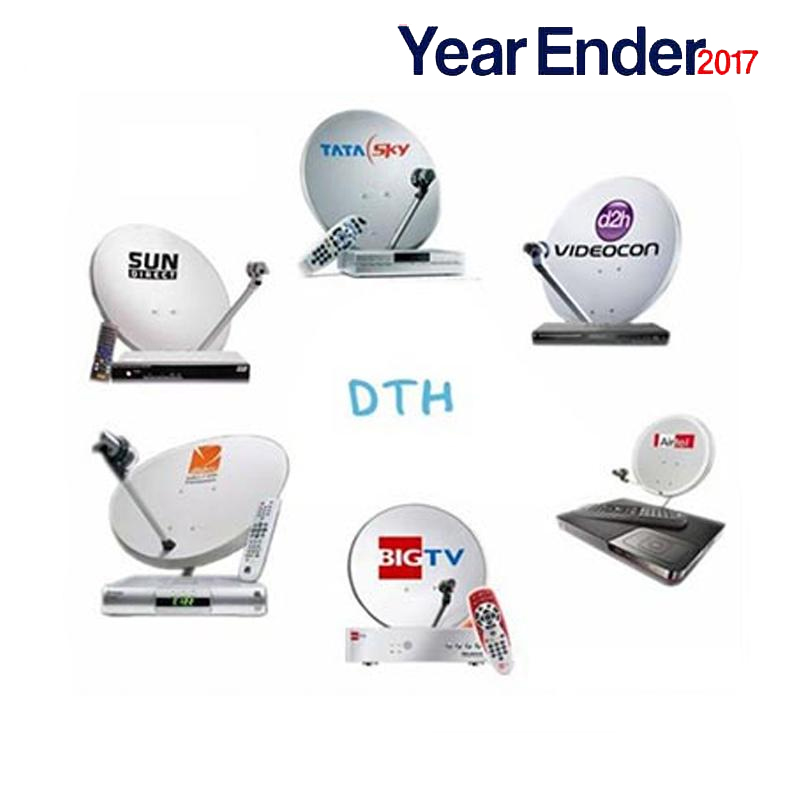
    MUMBAI: It would be safe to say that this was the year of the big DTH challenge. India’s cable TV multi system operators (MSOs) could not go into many phase IV areas and DTH stepped in wherever analogue broadcast signals were switched off following the crossing of the digital addressable system (DAS) deadline. Whether it was Tata Sky, FreeDish, Videocon d2h, Airtel Digital TV, Sun Direct or Dish TV, they all played a part.

    The going, however, was not as smooth as it could have been. High capex and opex and low ARPUs continued to dog the video distribution vertical making it an extremely low or no-margin business. While in the early days customer acquisition was the driver for most distribution platform operators, currently their eye has been on cost-efficiencies. This was evident from the ongoing overtures three of the players were making to others. Dish TV and Videocon d2h were already going through the throes of merging, the Anil Ambani-owned Reliance Big DTH was shopping around having conversations with almost every player, and there were talks of Airtel and Tata Sky possibly getting into bed with each other.

    The first nearly came to pass in 2017 with the two companies getting clearances from all quarters—government, courts and company law board—but getting stuck over the year end because of a technical difficulty. Reliance Big TV was sold to an IT and electronics company Veecon that sells security scanners and tablets–the wealth of its promoters is rumoured to be from selling religious lockets. Veecon said it would renew the Big TV licence by giving the requisite bank guarantees and ensure TV continuity for its approximately 1.2 million customers and jobs for nearly 500 people. It also announced that it would take Reliance Big DTH free to air (FTA) and announced a partnership with Sri Adhikari Brothers to launch a clutch of channels that would prove to be drivers of the platform. How Veecon will pay off Big TV’s payments to broadcasters was not clear at the time of writing and will decide whether the platform will ever take off.

    However, its announcement came at a time when the government had shut the door for private broadcasters and DD FreeDish, which had shown gee whiz growth rates, had come up as a powerful DTH player. New Ministry of Information and Broadcasting (MIB) minister Smriti Irani refused to make channel renewals for which several broadcasters took it to the Telecom Disputes Settlement Appellate Tribunal (TDSAT). An interim order gave the channels, whose licence was soon to expire, relief that they could continue by paying similar prices till Prasar Bharat came up with an alternative proposal and a convincing explanation to throw out private TV channels off DD Free Dish. It is expected that Prasar Bharati will formulate its new policy akin to the FM radio auction wherein 50 per cent of revenue is shared, apart from the bid amount, in e-auctions. Talk internally is that none of this would happen and DD Free Dish is most likely going to be used solely to relay government channels.

    Media reports also said sometime in the second half of the year that there could be more synergies between the Tatas and News Corp-promoted Tata Sky and Airtel Digital TV with possible merger talks taking place. That hasn’t happened as of now but the Airtel group did end up buying out certain telecoms asset of the Tatas.

    Also, private equity firm Warburg Pincus announced its decision to own 20 per cent stake in Airtel Digital TV for $350 million, leaving 80 per cent with Airtel’s promoters. That valued the Mittal-owned DTH service at a whopping $1.7 billion, which was mouthwatering news for the DTH pioneers. By September, Airtel claimed ownership to 14 million subscribers with revenue of $550 million.

    The year was significant for the fact that the DTH operators led by Tata Sky and Airtel Digital decided they had to take a tour of the court. The Harit Nagpal-led operator challenged the Telecom Regulatory Authority of India’s (TRAI) order on tariff and the reference interconnect regulations. The order stated that all stakeholders must abide by rates fixed by broadcasters. Joining Tata Sky in court was Airtel.

    Dish TV, the oldest DTH player in the country, appointed Anil Dua as its new CEO even as the company’s integration with Videocon d2h was on the anvil. Dish TV’s CMD Jawahar Goel raised an alarm over Star India’s monopoly in cricket events that, after its acquisition of the rights for the Indian Premier League (IPL), would force DTH players to include Star Sports channels and result in the broadcaster pricing the sports channels exorbitantly. No government reaction was forthcoming on this issue. Dish TV also took Star channel Life Ok to the TDSAT claiming that it could not rebrand itself as an FTA from a pay channel without sufficient intimation. Life Ok is today Star Bharat and a leading channel in BARC viewership ratings, riding on the expanded viewership courtesy Doordarshan’s FTA KU-band platform called DD FreeDish.

    For the quarter ended 31 March 2017, not only did subscriber additions dip drastically, but were also the lowest for a quarter in the financial year 2016-17. Airtel, Dish TV and Videocon saw total addition of just 8.33 per cent to 41.13 million for the concerned financial year. By 30 September 2017, there were just 2.47 million additions to the DTH industry as per TRAI, which was way below the 3.37 million it gained in the same six months in 2016. Moreover, active subscribers added in the July-September quarter were just 0.78 million, half of the figure from the corresponding quarter a year ago. Dish TV, Airtel DTH and Videocon d2h make up 63-65 per cent of the total active subscribers while Tata Sky holds about 21 per cent and Sun Direct 11 per cent. DD Free Dish is estimated to have 22 million subscribers and is expected to touch 40 million in two to three years.

    The second half of the year saw the introduction of the goods and services tax (GST) that gave a breather to those consuming cable and DTH services. Whereas customers once paid anything between 10-30 per cent as entertainment tax as well as a 15 per cent service tax, it was now fixed at 18 per cent. The Punjab government also announced that it would be adding a new entertainment tax to cable and DTH connections with the latter having to bear Rs 5 a month.

    Sun Direct is a major DTH player in the south holding about 40 per cent of the area. It also makes up 97 per cent of its total subscribers. Sun Direct took up an HEVC media solution from Harmonic to increase its HD channel number to 80.

    Profit after tax (PAT) for Videocon stood at Rs 168 million for the quarter ended 30 September 2017, which was just Rs 12 million for the previous quarter and Rs 148 million for the corresponding quarter a year ago. Dish TV, however, was in the red with net loss of Rs 178.7 million for the quarter as against PAT of Rs 689.6 million for the same quarter a year ago. During the quarter ended 30 September 2017, Airtel reported PAT of Rs 12,990 million down from Rs 27,350 million from a year ago.

    Videocon d2h and Airtel showed good average revenue per user (ARPU) numbers in 2017. The former raked in Rs 212 for the quarter ended 30 September 2017 from 13.25 million subscribers (a 0.21 million increase from the previous quarter). The ARPU for the previous quarter was Rs 198 while a year ago quarter was Rs 209. Dish TV’s ARPU for the same quarter was Rs 149, a rupee higher than the trailing quarter. It had a total of 15.1 million subscribers. ARPU for Airtel Digital TV stood at Rs 233 in the respective quarter, up from Rs 228 in the previous quarter and Rs 232 in the year ago quarter. Tata Sky does not release its financial numbers but analysts pinpoint its ARPU to be close to Rs 300.

    Dish TV introduced numerous value-added services (VAS) to encourage more viewers such as the Dance Active and Disney Active series, cardless STBs, 32 educational channels under Swayam Prabha. Early on in the year, it cut the rate of its base pack to Rs 33 a month to counter the free services by DD Free Dish. It even went to the extent of allowing people to curate their own packs by picking individual channels. Dish TV added 23 channels, which included nine HD ones.

    Tata Sky came up with a Make My HD pack for as low as Rs 30 per month and a regional HD Access pack at Rs 50 per month for users subscribed to regional SD channels. The channel targeted the south market with a South special pack at Rs 290. Dish TV campaigned for HD in all homes by removing the access fee on it and advertising a cost as low as Rs 169 per month (excluding taxes). Countering DD Free Dish, the oldest DTH player also introduced an FTA pack with a price translating to Rs 32 a month.

    On the technology front, Airtel’s hybrid STB was officially the first to launch in the market, bringing to consumers the best of both worlds–satellite channels and content available on the internet. The STB also came preloaded with Netflix and YouTube allowing even a regular TV to turn ‘smart’ courtesy an inbuilt wi-fi feature and Google voice search. Dish TV launched its new card-less security feature with Verimatrix as well as an artificial intelligence-enabled chatbot called ADI.

    For the coming year, the industry will likely see the outcome and growth of the first merger between Dish TV and Videocon and the synergies they bring to the industry. FreeDish is expected to be a big player in the remote parts of the country, especially with FTA broadcasters dancing to their tune. DTH operators have to still work hard to increase ARPU and maintain profitability.
     

  • 2017 a year of rebranding and extending time slots for Hindi GECs

    2017 a year of rebranding and extending time slots for Hindi GECs

    MUMBAI: The year 2017 was a roller-coaster ride for Hindi general entertainment channels (GEC) in the truest spirit of the term. The tussle for the top slot in the Broadcast Audience Research Council (BARC) ratings has seen pay TV and free-to-air (FTA) channels hold on tight to the rope.

    Be it upping the ante on content experimentation, bigger budgets, launching new time slots, shutting down time slots, rebranding channels or introducing innovations in the traditional working style, broadcasters have gone beyond their limits to make their audiences drool. We at Indiantelevision.com bring to you the highlights of the year that was across Hindi GECs.  

    Star Plus

    Known for experimenting, Star Plus continued to innovate in 2017. It reintroduced Star Dopahar, after a gap of eight years, earlier this year with fresh shows. The success of the early prime time encouraged the channel to go ahead with bringing back the Dopahar (Hindi for afternoon) slot. 10-second ad rate for the afternoon band was approximately Rs 40,000-50,000.

    Four new shows were introduced – Tu Sooraj Mein Saanjh, Piyaji, Kya Kasoor Amla Ka?, Dhai Kilo Prem and Ek Aastha Aise Bhi. But after winning the rights of the Indian Premier League this year, it decided to pull the plug on the afternoon band. Apart from the time slot, Star Plus experimented with the content as well. The channel launched a historical show Aarambh on 24 June 2017. Before the launch of the show, it was supposed to be a 32-episode series but due to low ratings, it went off air at 24 episodes. The show had brought together the best of talent from across genres in India ranging from veteran actress Tanuja Mukerji to writer Vijayendra Prasad from Baahubali and director Goldie Behl under one banner.

    On the fiction front, Star Plus launched Iss Pyar ko Kya Naam Doon season 3, Dil Sambhal Jaa Zara, Rishton Ka Chakravyuh, Pardesh and Koi Laut Ke Aya Hai and others. On the non-fiction side, the channel launched Dance Plus season 3 along with a new dance reality show Dance Champions. This year, Hindi GEC also witnessed a comeback of The Great Indian Laughter Challenge after nine years. The first four seasons were aired on Star One and the fifth season was launched on Star plus. The broadcaster also bought an American music reality show to India, Lip Sing Battle based on Lip Sync Battle with Farah Khan.

    Towards the end of 2017, the channel is all set to launch yet another unique show TED Talks India: Nayi Soch, a global first Hindi TV talk show created in partnership with TED, the non-profit devoted to ‘ideas worth spreading,’ and hosted by Bollywood superstar Shah Rukh Khan. The show was launched on 10 December.

    Colors

    Maintaining the trend, Viacom 18’s Hindi GEC channels Colors, extended its programming to an early evening band starting 5 pm onwards and also introduced a new time slot on weekends. This year, Colors drew back its prime time to begin at 5.30 pm on weekdays. The channel launched two new shows Bhaag Bakul Bhaag and Savitri Devi College and Hospital at 5.30 pm and 6 pm. The channel shifted its fiction show Thapki Pyaar Ki to 5 pm.

    Back in 2015, the channel had opened a new slot at 8 pm on weekends for Balaji Telefilms’s Naagin. The experiment really worked for the channel as the show topped the ratings charts. In 2017, the channel again experimented and extended the weekend slot to 7 pm with Swastik Production’s Mahakaali in July. Innovating more with the weekend programming lineup, the channel launched an afternoon band on weekends with Aunty Boli Lagao Boli at 12pm on Sunday.  It’s a new Live interactive game show, developed and conceptualised by Viaan Industries – promoted by entrepreneur Raj Kundra and Shilpa Shetty Kundra. After launching a 12 pm slot on Sunday, the channel launched another show at 1pm, Rasoi Ki JungMummyon Ke Sang.

    Colors has always been strong on the mythological and fantasy drama side and is currently airing three shows including, Mahakaali, Shaani and Chandrakanta.

    Zee TV

    2017, has been an exciting year for Zee TV. The network gobbled up RBNL’s TV broadcast business which includes Big Magic and Big Ganga. After acquisition, the network revamped Big Magic into Zee Magic. The channel launched four shows including Shaktipeeth Ke Bhairav that will depict the mythical story of 52 shaktipeeths from the perspective of one of the most powerful and raging forms of Lord Shiva – Bhairav. Kunwara Hai Par Humara Hai, Tera Baap Mera Baap and Deewane Anjane are amongst them.

    The other acquisition was 9X Media’s music channels for Rs 160 crore. 9X Media, along with its subsidiaries, operates a bouquet of six music channels – 9XM (Latest Bollywood), 9X Jalwa (Evergreen Hindi), 9X Jhakaas (Marathi), 9X Tashan (Punjabi), 9XO (English), 9X Bajao (Hindi Classics).

    The Subhash Chandra-led company also made its mark by completing 25 years in the TV industry. To celebrate the monumental achievement, it rebranded Zee TV with a new logo and tagline ‘Aaj Likhenge Kal’.

    The network launched a kids drama Bhootu at the 6.30 pm time slot. Two fiction dramas and a homegrown reality show have been, time and again, propping up Zee TV’s ratings in 2017– Kumkum Bhagya (which did it for the channel in the previous calendar year also) and Kumkum Bhagya – Kundali Bhagya. And Zee TV’s home grown reality show is the music talent hunt Amul Sa Re Ga Ma Pa Little Champs. Zee TV topped the ratings amongst the Hindi GEC in BARC weekly data for top 10 channels across genre: (All India (U+R) : 2+ Individuals). Zee TV was ranked second after the Sun Network’s flagship Tamil GEC Sun TV in week 44 of 2017. This time around for Zee TV, it was the spinoff that had a larger viewership in the Hindi GEC HSM (U+R) and Hindi GEC HSM (U) market than the original.

    Sony Entertainment Television

    Sony started off the year by extending its primetime to start from 7 pm. This year, SET has introduced variety. On the fiction front, SET is one of the few Hindi GECs which has focused on mythological and historical shows this year apart from daily dramas. The channel launched Peshwa Bajirao, Vighanharta Ganesh, Mere Sai- Shardha & Subri, Porus and Prithvi Vallabh. Swastik Production’s Porus is rumoured as one of the most expensive TV shows at a production value of nearly Rs 400-500 crore and the ad rates for a 10-second slot is pegged between Rs 1.5-2 lac per episode.

    The channel found itself in a fix when the Broadcasting Content Complaints Council asked it to remove the controversial show Pehredaar Piya Ki. The soap opera, with a story-line where a minor boy is shown married to a young adult woman, who also doubles up as his security guard, had come under criticism for allegedly promoting regressive ideas like child marriage, which is an offence under Indian laws.

    On the non-fiction front, the channel launched a slew of new shows like Indian Idol, Super Dancer season2 and many more. Apart from this, the channel launched Sony’s iconic property Kaun Banega Crorepati (KBC season 9 ). This time, the show has seen many changes in the format with one being that the show had shortened to just 35 episodes with each one having a duration of 50-60 minutes. The entire inventory was sold out prior to launch with brands such as Jio, Vivo, Axis Bank, Datsun, etc on board.

    The Kapil Sharma Show, which it had snagged from Colors, went off air since the lead Kapil Sharma was busy with his own film promotions. It is expected to re-launch soon.

    Star Bharat

    On 28 August 2017, Life OK was revamped with a new name, logo, tagline and a lineup of fresh original shows. It debuted on the free-to-air DTH platform DD FreeDish with its parent having successfully bid for a place after coughing up a shade over Rs 160 million. That Star Bharat continues to be available on other cable and DTH platforms could be another masterstroke.

    Earlier reported by Indiantelevision.com, in week 36, Star Bharat took the second position in the GEC category garnering 669588 (000s) Impressions and 378234 (000s) Impressions, respectively, in the urban+rural and rural markets. The two-week-old channel’s reach too had gone up by 15 per cent from week 35-36, while the ratings or impressions grew by 29 per cent. In contrast, in week 34 of BARC India ratings, Life OK (the earlier avatar of Star Bharat) was placed at 10th  spot in the urban + rural market with 328571 (000s) Impressions, while in the urban market it did slightly better at sixth position with 213162 (000s) Impressions.

    Sab TV

    The year 2017, has been the year of re-branding for Sab TV. In July 2017, the channel went under re-construction and got a new logo, tagline and a brand ambassador.  Bollywood actor, the ever so popular and young, Varun Dhawan was signed on as the channel’s brand ambassador to help attract this untargeted demographic. After the revamp, the average ratings of the channel before rebranding was 193 million impressions, which has increased to 212 million impressions, post rebranding.

    Another year has come to an end but the creativity and innovation don’t stop. With full digitisation expected take place soon and with the growth of the country’s internet connectivity, GECs are expected to utilise digital mediums to reach out to masses wherever they might be. TV isn’t just going to be about the living room box anymore.

  • The year of hiccups for marketers

    The year of hiccups for marketers

    MUMBAI: The year 2017 was when brands were unwillingly thrown into a roller-coaster ride only to emerge dizzy and faint. The highs weren’t enough to ride out the lows.

    2017 will be seen as a year of turmoil for brands. Just when the effects of last year’s demonetisation were ebbing away, the government threw another spanner in the works in the form of the goods and services tax (GST).

    Much before its implementation, marketers and consumers cheered on the GST to be a saviour for the industry, touted to solve multiple tax complications. But its launch timing, months after demonetisation, crippled the Indian economy even further primarily due to faulty implementation.

    The year began with the economy regaining its composure after the ban on bills of Rs 500 and Rs 1000, which led to troubled times for businesses across the country, especially in the cash-dependent sectors. No one was spared from the effects, be it kirana stores, big FMCG players or media and advertising agencies. As physical money became dear, online payment apps were the saving grace. Paytm, Mobikwik, Zappr and the likes became a must-have app for a majority of Indians and their profits grew four fold by March 2017. 

    In the months after GST was passed, sales crashed, margins dropped and marketers became extra cautious before investing in new products and advertisements. Brands steered away from marketing and advertising post August, which otherwise is considered as the ideal period for creating new campaigns as the festive season in India commences from September and goes up all the way till the new year.  

    The crashing economy brought down infrastructure, including real estate, to its knees and crushed consumer demand with the implementation of the new Real Estate Regulation and Development Act (RERA) in May. Slow implementation of the new real estate regulation across the country as well as uncertainty over the impact of GST on home prices pulled down consumer sentiment this year. According to a report by the Centre for Monitoring Indian Economy (CMIE), home loan growth in April-October fell by 32.7 per cent from a year ago, one of the biggest declines in the last five years.

    It was not only the FMCG and real estate sectors that had a nightmarish 2017. The USD35 billion liquor industry was subjected to one of the worst hangovers not only because of GST but also because of a Supreme Court ban on all alcohol sales within 500 meters of highways across India from 1 April 2017. Although the ban was implemented to curb drunken driving on highways, it dried up the hospitality industry, state government and liquor companies who ended up losing Rs 50,000 – Rs 70,000 crore. The market fell nearly 30 per cent in the immediate quarter after the highway ban and at least 1,500 retail outlets closed down.

    After all the bad news, 2017 also saw some strong revenue figures and new entrants in the market. Patanjali recently became India’s most trusted FMCG brand as per The Brand Trust Report India Study 2017. Valued at over Rs 30 billion, Patanjali estimated its annual turnover of the year 2016-17 to be Rs 10,216 crore. In November this year, the company also signed a memorandum of understanding (MoU) of Rs 10,000 crore with the Government of India at the World Food India 2017. To buck up against the Baba Ramdev-led ayurvedic company, top FMCG players went the whole nine yards in their bids to recapture the markets they lost. While Hindustan Unilever Limited (HUL) launched its version of ayurvedic products under brand Ayush, homegrown FMCG major Dabur is in the process of modernising its ayurveda portfolio and introducing new products. The multimillion-dollar company also launched a traditional ayurvedic product Dashmularishta and menstrual pain relief tonic Ashokarishta. 

    Lever Ayush, in its first campaign, took a potshot at Patanjali by pointing out the naive ways in which we categorise ayurvedic products like skincare creams, soaps and toothpaste. It went on to say that not every product with green packaging or leaves on the cover essentially fit ayurvedic ingredients. The company has managed to create its dominance in the southern market by aggressive marketing and advertising. 

    According to a Nielsen Report, herbal segment in India accounts for 41 per cent of the Rs 45,000 crore personal care market. Hence, sectoral leader HUL has come out all guns blazing in a field so far ruled by Patanjali, while Colgate-Palmolive has placed its own natural products to take back its market in the toothpaste segment and Dabur India now has a major share in the honey segment as opposed to Patanjali. 

    Television remained the strongest sector for advertisers this year despite depressed economic conditions while digital continued to ride on a high growth trajectory. Advancement in infrastructure, evolving audience measurement technology leading to better content and lowering data costs induced viewers to greater digital consumption. Television advertising is expected to grow at over 10.3 per cent with free to air channels gaining significance, localised content and high-definition experience boosting regional channels’ viewership and sporting leagues outside of cricket becoming increasingly popular.

    public://Untitled-2_18_0.jpg

    public://Untitled-3_22_0.jpg
    Source: Group M

    Print media continued to witness a slowdown in 2017 where while English newspapers remained under pressure, regional language papers demonstrated strong growth.

    The out of home (OOH) industry registered a slowdown in growth rate at seven per cent majorly due to adverse impact of demonetisation and GST but is projected to grow at a CAGR of 11.8 per cent primarily driven by development of regional airports, privatisation of railway stations, growth in smart cities, setting up of business and industrial centres, and growing focus on digital OOH.

    The year also saw a rise in influencer marketing and brands sent out messaging by using ‘internet celebrities’ to put in a good word for the product on social media. According to Business Insider Affiliate Marketing Report, approximately 15 per cent of the digital media industry’s revenue is achieved through affiliate (influencer) marketing. A recent report suggested that 40 per cent consumers are sold on a product or idea if an influencer they followed were to recommend it. 

    The turmoil in the Indian telecom industry can be attributed to several things. Smartphone penetration in the country increased this year by three folds and today India has over 300 million smartphone users which is projected to grow by more than 50 per cent in the next few years. According to Counterpoint research, 300 million people out of 650 million phone users own a smartphone, making India a big market for brands and telcos. Indian tycoon Mukesh Ambani sparked a price war in 2016 with the launch of Reliance Jio with other telecom giants scattering to acquire market share. Vodafone and Airtel lured customers with data at cheap prices and unlimited calls. But Reliance Jio clearly won that war. Within the first month of commercial operations, Jio announced that it had acquired 16 million subscribers. This was the fastest ramp-up by any mobile network operator anywhere in the world. Jio crossed the 50 million subscriber mark in 83 days since its launch subsequently crossing 100 million subscribers on 22 February 2017. By October 2017 it had about 130 million subscribers. 

    On 21 July 2017, Jio introduced its first affordable 4G feature phone, powered by KaiOS, named as JioPhone. The price announced for it was Rs 0 with a security deposit of Rs 1500 which could be withdrawn back by the user by returning the JioPhone only after 3 years. This phone was released for beta users on 15 August 2017 and pre-booking for regular users started on 24 August 2017. 

    In order to strengthen its presence in the ongoing battle of the telecom sector, Sunil Bharti Mittal-led Bharti Airtel launched Android powered 4G smartphones in partnership with Indian mobile company, Karbonn Mobiles. Airtel will partner with multiple mobile handset manufacturers to create an ‘open ecosystem’ of affordable 4G smartphones and bring them to market for virtually the price of a feature phone. It is also in talks with Intex mobiles for similar offerings. Domestic handset maker Micromax and Vodafone came together to offer a smartphone, effectively at a price of Rs 999 if the buyer retains the device for three years.

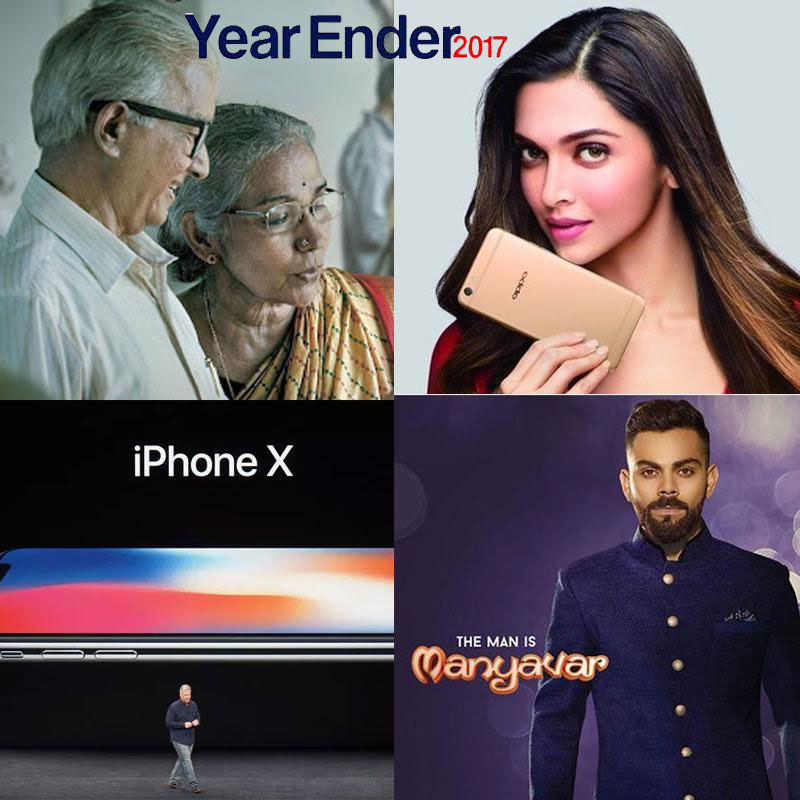
    With data becoming much cheaper this year and mobile manufacturers selling handsets at throwaway prices, mobile handsets became much affordable and smartphone penetration increased three folds. A lot of this has to be credited to Chinese players who took the Indian smartphone market by storm. While Vivo and Oppo were aggressive in marketing their products, both invested heavily in OOH advertising in 2017. We saw a lot of hoardings and static banners with Deepika Padukone (Oppo), Ranveer Singh (Vivo) and Virat Kohli (Gionee) promoting their respective brands (as brand ambassadors). While Vivo came on board as the title sponsor for India’s premier cricketing league IPL, rival Oppo became team India’s official jersey sponsor for all its matches for five years. 

    According to various reports, today Chinese brands such as Lenovo, Oppo, Vivo, Gionee and Xiaomi have captured over 50 per cent share of India’s smartphone market even as Apple and Samsung fought a tough battle to hold on to their reigns.

    Amidst all this, the biggest highlight of the year in the space was the launch of Apple 8 and Apple X. The company launched its flagship phones in much fanfare in September this year on its 10th anniversary.

    Still recouping from the setbacks of 2017, marketers are pinning hopes on 2018 that improved market sentiment will bring them back to a steady growth path. The prospects of good economic growth, coupled with a revival in demand and consumption, will help them overcome the hit they took in volumes and profits in 2017.

  • 2017: The year OTTs went regional in India

    2017: The year OTTs went regional in India

    MUMBAI: Over-the-top (OTT) services were undoubtedly the centre of attraction in 2017. The boom in India’s internet users, mainly aided by the growth of Reliance Jio, ensured that OTT players got the right reception and target audience. Not just  mainstream TV broadcasters but even smaller players exponentially increased their consumer engagement on digital.

    Viewership increased as data cost decreased. Consumers were entertained and content makers got a boost to create fresh stories. The online content library was flooded with genres like comedy, thriller, drama, romance, rom-com, suspense, action, humour, reality, etc.

    Regional India was the focal point for 2017 and will continue to be in 2018. It also enabled new companies to take a risk in the OTT space. Tamil, Telugu, Malayalam, Kannada, Bengali, Marathi, Punjabi and Gujarati languages have been pampered the most by the creators.

    Comedy emerged as the ultimate king in 2017 along with the rise of stand-up comedy. Ideas increased and so did production cost due to competition. Movies jumped over TV to directly go for digital movie premieres. However, this turned out to be a costly affair for OTT players but a good bargain for producers.

    Another trend was of creators holding IP rights for content instead of the platform.

    There’s no shortage of OTT platforms now, just like the rising number of TV channels. Let’s take a look at how some of the main players performed last year.

    Amazon Prime

    Amazon Prime, which recently completed one year in India, hiked its annual subscription fee to Rs 999 from the initial annual subscription of Rs 499 in India. In its first month, Amazon had 5.82 million active users, according to data from app tracker App Annie. That number almost doubled by May to 9.57 million. Total engagement time tripled from 622 million minutes to 1,815 million minutes in the same period. In the month of August, Amazon India had a big fall when its director and country head, Nitesh Kripalani resigned, but then Vijay Subramaniam, who has been in the entertainment industry for 25 years, joined Amazon for the interim as content head in June 2017.

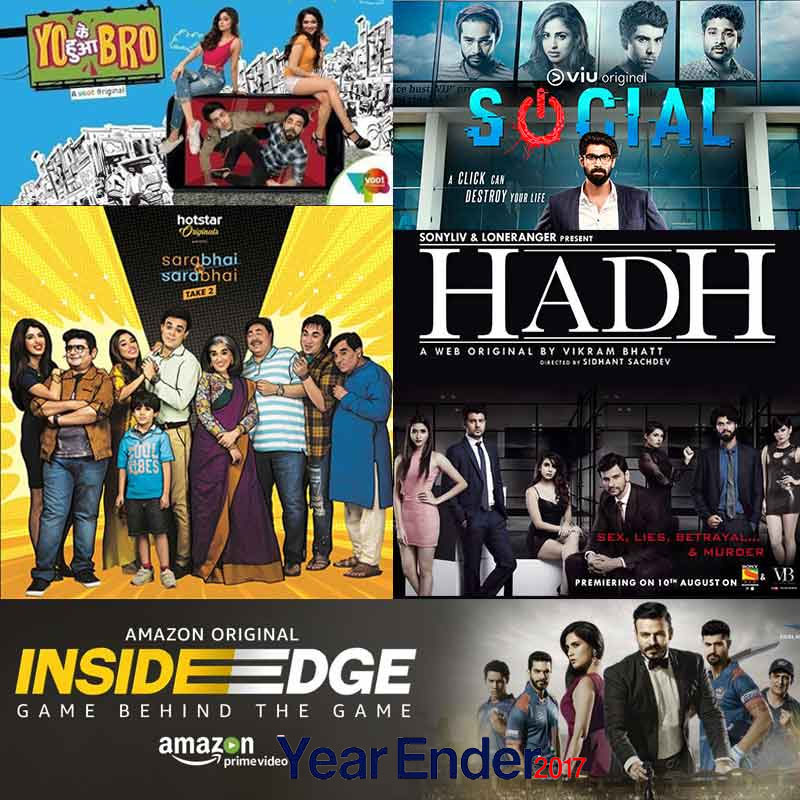
    It launched the first original series Inside Edge in collaboration with Excel Media & Entertainment in July 2017, which is now available on Apple TV, Sony PlayStation and Vodafone along with the library of Amazon Prime. The OTT platform is expected to come up with four Indian originals series, i.e., Breathe, The Remix, Comicstaan and Mirzapur in 2018.

    Amazon realised that kids content will play an important role. It tied up with Green Gold Animation for Chhota Bheem and its new series Kalari Kids. It also commissioned an animated version of mega-blockbuster Baahubali.

    Amazon Prime Video has bet big on Indian movies by releasing them on the platform before they leave theatres. It has signed a digital rights deal for five movies of Bollywood actor Salman Khan before it goes on to television for $10 million. Tubelight was the first and Salman’s next four movies, including Tiger Zinda Hai, will come to Prime first, television next. It has also bagged the streaming rights for the movies like Lipstick Under My Burkha, 2.0, Arjun Reddy and much more along with the streaming rights for the year’s most controversial movie – Padmavat.

    Comedy is a big market in India, so Amazon went after it by associating with OML for 14 exclusive stand-up comedy specials and six new series created by stand-up comedians like Anuvab Pal, Biswa Kalyan Rath, Kenny Sebastian, Zakir Khan, Sumukhi Suresh and Varun Thakur. 

    Viu

    Viu, the OTT video service by PCCW, focused on regional content in the year 2k17 and extended the library with over 3000 hours of compelling original content in Asia. As of October 2017, the global number of downloads was 26 million to which India contributes 9.5 million. Viu rolled out its first ad campaign titled ‘Kaaf feels Bro’ from 28 August. The company has appointed Times Network’s Shantanu Gangane as the head of marketing of Viu in January. It has also enrolled Eros International Media’s Sameer Gogate as distribution and monetisation head of Vuclip for converting certain costs in revenues through non-ad revenues.

    In the beginning of the year, the platform promised to create long and short form regional original shows and started with Telugu as a region with shows such as Cinema Pichollu, Pelli Gola and PillA as well as Gehraiyaan, Spotlight, No. 1 Yaari, Munching with Mahathalli and Social. It also experimented with cricket comedy chat shows like What the Duck and Virender Sehwag’s micro-original Viru ke Funde. Viu also partnered with Nicotex for an adventure journey series I Can You Can. Apart from Indian languages, it has a big original content library of Korean language shows, which is now available for Indian audience. It inked a licensing deal with content house Shemaroo Entertainment to access a handpicked catalogue of Hindi movies.

    Viu created a new trend of bilingual content in Telugu and Hindi like Social, which is the first such show. There will be more bilingual shows next year.

    As a part of the global strategy, Viu has formed strong partnerships with Samsung, Micromax, Vikram Bhatt’s Loneranger Productions and Annapurna Studios for creating refreshing original localised content that keeps the viewers glued.

    Amazon’s Fire TV streaming stick, which launched last month in India, has added Vuclip’s streaming service Viu as an app on its platform.

    Hotstar

    As an early entrant in the OTT space, Hotstar has been building a differentiated proposition for its free and premium users comprising local and international TV shows, movies and live sports, helping it cross 175 million downloads and 60 million users in January 2017. Hotstar continues to have the largest number of active users about 69 million in May, according to AppAnnie. Based on the November report, Hotstar topples the chart across all platforms with 15 billion minutes total time spent in the month.

    Hotstar has appointed Punitha Arumugam as platform evangelist, with the mandate to showcase the power of the platform to India’s leading brands. 

    This year, Hotstar launched an original series in Tamil, in association with celebrated film director, Balaji Mohan, titled As I’m Suffering from Kadhal on 6 June. Apart from Tamil, the series was dubbed in Telugu,with English subtitles available for both languages. Hotstar brings back comedy show Sarabhai vs Sarabhai this year. It streamed Kabaddi World Cup in Ahmedabad in stereoscopic 3D virtual reality. News platforms like Republic TV and ABP News were added to its live feed.

    Disney acquired 21st Century Fox in December but before the acquisition could take place, Hotstar inked a multi-year SVOD deal with Disney India to showcase the studio’s hits exclusively on its premium offering in India which includes movies like Lucasfilm Star Wars: The Force Awakens, Disney’s The Jungle Book and Moana, Marvel’s Captain America: Civil War and Doctor Strange, Disney.Pixar’s Finding Dory amongst others.

    The highly anticipated premiere of Game of Thrones Season 7 launched on the platform on 17 July, with the first episode available for viewing within minutes of its American telecast.

    A new storytelling format, CinePlay, was launched under its originals banner that showcased classics and contemporary stories from the theatre world presented in a cinematic fashion. In April, Hotstar became the first ‘Made in India platform’ to cross 100 million downloads on Google Play Store and crossed more than 200 million downloads across Play Store, App store and other Android app stores.

    Jio TV

    The game changer of telecom and digital industry, Jio TV, has recently launched a web version of JioTV app which allows Jio users to access over 500 TV channels. This service was previously exclusive to mobile users via the app. Now with the support for web platform, users will be able to access TV channels through their web browser as well.

    Reliance Jio offers a suite of apps which includes JioTV, JioCinema, JioMusic, and more. Jio’s suite of apps is free along with the Jio Prime membership and users can enjoy all the content on these apps for free. On the other hand, JioTV, an online version of cable TV, that’s free as of now, has partnerships with almost all national and regional channels, and allows users to stream content up to seven days old. It also has JioCinema, which is a free movie streaming service.

    Jio had 42 million users in May and gained momentum in a short while with free data and free content service. Based on the November report by App Annie, Jio TV grabs the second position leaving behind all the OTT players with 8.8 billion minutes total time spent on the platform in the month.

    Netflix

    Netflix’s focus this year was entirely content, partnerships and technology to build a great experience in India. IT has announced six original productions in the country, namely Sacred Games, Selection Day, Again, Bard of Blood in association with Red Chillies Entertainment, our first kids original series from India, Mighty Little Bheem and Love Per Square Foot, the first mainstream film from India to be exclusively available on Netflix. Over 2017, Netflix tied up with Airtel Digital TV, Videocon and Vodafone to make it easier for Indian consumers to watch Netflix, whether on a set-top box or on a mobile.

    Simran Sethi joined Netflix International Originals Production Group in August after leaving the position of SVP of scripted development at Disney’s Freeform to lead the creative Indian content. Netflix executive Nick Nelson moved to Ownzones Media Network as the new head of product innovation.

    According to a Netflix survey, Indians are the second-highest public bingers in the world (88 per cent), just behind Mexico (89 per cent).

    SonyLiv

    SonyLiv played safe this year. It launched the first regional original series, in the Marathi language titled YOLO – You Only Live Once, conceptualised and developed by Indian Magic Eye. Later, it launched the first ever Gujarati rom-com web series titled Kacho Papad Pako Papad in May. SonyLIV and Jossbox have co-produced a web-series called House Proud. In the month of October, the platform came up with the second season of the home-grown originalLoveBytes 2 focussed primarily on youth issues. In association with Beyond Originals, SonyLiv served the last original of 2017 titled Black Coffee. Along with that, to see India fit-n-fine, in the beginning of the year, it launched health and wellness segment LIV Fit.

    SonyLiv partnered with Web Talkies, Pocket Aces (for Filter Copy and Gobble) and Fanform Mediaworks for originals content. It bet long on short films from the catalogue of Pocket Films by including 50 award-winning shorts in its bouquet. It joined hands with super chef Sanjeev Kapoor and food YouTubers like Rajshri Foods, Varun Inamdar and Ruchi Bharani to expand its unique food content library. 

    SonyLiv has appointed Times Internet’s regional head Maruti Indoria as national sales head for its sports division in February.

    To expand the reach, it has signed deals with Videocon d2h, Amazon Fire TV and Apple TV to enable customers to access a seamless broad selection of content available on SonyLIV app.

    Voot

    Viacom18’s digital venture Voot was a complete package of fun without pay. However, they unlike others, it planned a significant regional line-up for the next year. It launched several web series back to back this year which includes Time Out, Yo Ke Hua Bro, Stupid Man Smart Phone and Untag.

    Voot has also put the spotlight on the kids section and rolled out a hi-decibel TVC campaign to promote it Voot Kids in Hindi, Kannada and Marathi. It has included various internationally acclaimed characters in its kitty and aims to expand their kids library with 30 plus shows in the year 2018. In association with HDFC, Voot has launched digital talent hunt show for kids in the mid of the year.

    In its partnership with Google, Voot has turned its mobile website into a Progressive Web App (PWA) and won the coveted International Broadcasting Convention 2017 (IBC2017) Innovation Award for Content Distribution for its Progressive Web App (PWA) product – Voot Lite, in Amsterdam on 17 September. Next year, it is experimenting with making video available offline on its PWA.

    The key strategy of streaming Bigg Boss has awarded the platform with 550 million views till date and 60 minutes average time spent per viewer per day. However, shows like Splitsvilla, which is watched 52 per cent by males, has also added 150 million views.

    In 2017, Voot has gained 32 million monthly active users, six million plus daily active users and 50 minutes time spent per viewer per day. Their daily time spent has taken it to the second position after Netflix, according to App Annie November report. Also, it has secured third position with 7.5 billion minutes total time spent on the platform across all OTT platforms, followed by Hotstar and Jio TV, reported by App Annie.

    ALTBalaji

    ALTBalaji, the ad-free subscription-based platform that launched this year on 16 April with seven originals, today has 12+ original shows available on the platform apart from original regional stand-up comedy in languages like Marathi, Punjabi and Gujarati and content for kids. ALTBalaji recently launched the first Bengali original show Dhimaner Dinkaal and also has a Tamil original Maya Thirrai on the app and the website. It launched a big bunch of Hindi web series including Romil & Jugal, Bewafaa sii Wafaa, Boygiri, Class of 2017, CyberSquad, Pammi Aunty, Karrle Tu Bhi Mohabbat Season 1, Dev DD, Ragini MMS Returns and BOSE: Dead/Alive.

    ALT’s kid’s kitty is full with twelve shows including Get Crafty With Rob, Ding Dong Bell L-O-L, Moe Doe, Happy Lucky ki Katti Batti, Mademoiselle Zazie, Ratz, Nursery Rhymes and many more.

    Last year, Nachiket Pantvaidya was promoted to Group COO of Balaji Telefilms. In his current role as the Group COO and CEO ALTBalaji, Nachiket has additional responsibilities at Balaji Telefilms across the television and movie business.

    Within six months of its launch, ALTBalaji has been ranked amongst the top three revenue-grossing video streaming apps in the country, as per ‘State of Video Streaming Apps in India’ report compiled by App Annie Intelligence.

    ALT will begin 2018 with its Urdu language original series title Haq Se along with three Hindi originals The Test Case, Karrle Tu Bhi Mohabbat Season 2 and Mangalyaan.

    ZEE5, Ozee & Ditto TV

    The year was quite low key for Zee Entertainment Enterprises Limited’s (Zeel) already existing digital platforms Ozee and DittoTV. In the mid of the year, Zeel announced the launch of its new digital entertainment platform ZEE5. Existing platforms Ozee and DittoTV will be defunct and merge into the new platform Zee5, and the subscribers of both the existing platforms will be auto-upgraded. On Zeel’s 25th anniversary celebration, it launched the new logo of ZEE5.

    Yupp TV

    YuppTV, this year, added a new category of original series to its bouquet of offerings. It partnered various directors and production houses to provide original video content. Mid-year, it launched its first series, Endukila, written and directed by Laxman Karya. Later in November, YuppTV along with prominent producer Swapna Dutt, Vijayanthi Movies has launched another new web original Mana Mugguri Love story.

    YuppTV partners with leading production house, Yash Raj Films, to offer premium Hindi cinema to its subscribers on YuppFlix. Vodafone has also joined hands with YuppTV to expand its Vodafone Play service. It collaborated with cab aggregator Ola for its connected car platform for ridesharing, Ola Play.

    YuppTV, recently received funding from Emerald Media, a Pan-Asian platform established by leading global investment firm KKR for investing in the media and entertainment sector, wherein Emerald Media acquired a significant minority stake in the company for US$50mn.  YuppTV had earlier raised its Series A round of funding from Poarch Creek Indian Tribe of Alabama.

    Sun NXT

    Sun TV Network launched its digital content app compatible with every screen format, ranging from smartphones to living room TV called Sun NXT. The platform has a movie library of over 4000 titles, over 40 channels streaming live and catch-up TV programmes in Tamil, Telugu, Malayalam and Kannada. The company claimed that the app had already crossed more than 1.1 million downloads, within four days from its launch.

    Hoichoi

    Shree Venkatesh Films (SVF), a media and entertainment company of West Bengal, launched the first ever Bengali digital platform Hoichoi in September. In the last few months, the platform has released ten originals – Hello, Cartoon, Holy Faak, Dupur Thakurpo, Byomkesh, Bouma Detective, Paranoia Series, Bhootoorey and Stand Up across multiple genres like drama, detective, adult comedy, rom-com, thriller and non-fiction. The platform is aiming to expand the reach by launching on Amazon Fire TV, Roku TV and Apple TV in January 2018.

  • Making the news: A look at what news broadcasters did in 2017

    Making the news: A look at what news broadcasters did in 2017

    MUMBAI: News channels were thrown into a storm of activity in 2017 with each player keeping up its oars to wade out of challenges that hit at them like ten-foot waves. With elections and sensational news driving up viewership at various points throughout the year, English news channels had to fight back to the onslaught that was Republic TV.

    The entry of Arnab Goswami-led channel Republic TV increased the overall news viewing pie at the time of its launch but the hype did not last long and the genre went back to its minuscule share.

    To add to the theatrics, there were several top-level executive shifts in 2017. Let’s take a look at the various channels and their performance during the year.

    English News

    Republic TV stole the limelight with the news channel becoming the news itself. After its launch in May, the genre witnessed tough competition between Goswami’s former employer Times Now and his newly launched baby. According to BARC India, Republic TV hasn’t budged from the top from its inaugural week till week 50. It claimed to have 52 per cent market share in its very first week of operations, which started on 6 May 2017.

    Times Network had two big events to boast of-the rebranding of ET Now from a full-time business news channel to a general news channel and the launch of Mirror Now. Mirror Now’s launch got good response, especially from Bangalore and Chennai, with Faye D’Souza as the executive editor.

    For Times Television staffers who were working the late-night shift at the Kamala Mills Compound in Mumbai, the night of 28 December 2017 was a nightmare. The conflagration that swept through restaurant 1Above and claimed 14 lives could have gutted the Times TV Network premises, too, which was on the first floor of the same building.

    The net result: Times channels including Times Now, ET Now and Mirror Now went off air. And most distribution platforms carried an apology notice, in place of the live feed, which stated that the channel signals could not be received because of technical difficulties. In a recent interaction with Indiantelevision.com, Times Network MD and CEO MK Anand said that the channels’ success was the result of a combination of brand, process and team.

    Anand expects news to be more active and exciting in 2018. “And with better market conditions, now that GST and demonetisation are behind us, the overall English and news space is poised for a truly great ride through the new year,” he said. 

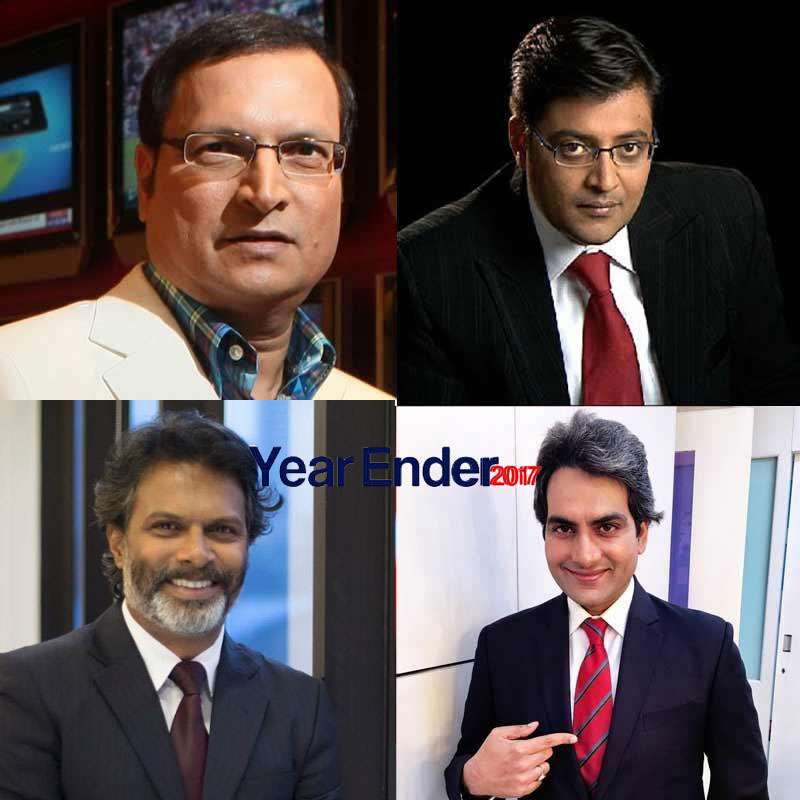
    The disruption that Republic TV brought about in the TV news genre was momentous and chaotic. Arnab’s new avatar unleashed not only a slew of litigations (the fight for copyright over phrases like ‘the nation wants to know’, for example) but also a flurry of allegations of malpractice and biased reporting. The News Broadcasters Association (NBA) wrote to the Telecom Regulatory Authority of India (TRAI) and to the Broadcast Audience Research Council (BARC) to hold up Republic TV’s ratings and get them checked, accusing it of broadcasting the channel on two LCNs on cable TV. When BARC refused to do so, NBA channels pulled out of the ratings for a week. Months later, Republic TV became a part of the NBA.

    NDTV group saw many ups and downs in 2017, which began with the raid at the NDTV office and home of cofounders Prannoy Roy and his wife Radhika Roy. In June, the CBI raided the residence of the Roy family alleging that the promoters and a private company linked to them, RRPR Holding, were involved in defrauding ICICI Bank and allegedly causing it losses involving loans extended in 2008.

    In the same month, NDTV Profit was shut down and the group decided to transfer its business programming from Profit to regular business and finance segments of NDTV 24X7. In September, there was a rumour that Spice Jet’s Ajay Singh was set to take a controlling stake in the company which was vehemently denied. Singh was apparently unimpressed with the channel’s litigations and bad finances.

    The saddest for it was the demise of KVL Narayan Rao, CEO and executive vice chairperson of the NDTV group at the age of 63. Later, Suparna Singh was appointed as the CEO of NDTV.

    In the month of December, NDTV group came up with a turnaround plan to improve profitability, which involved reducing the workforce by up to 25 per cent. A part of this plan was implemented in the last quarter and included the much-noted move to new technologies, including mobile journalism.

    Zee Group’s Sudhir Chaudhary was elevated as editor-in-chief of Zee News, Zee Business and WION (World in One News). The network launched several regional channels including Zee Hindustan, Zee Uttar Pradesh/Uttarakhand and it reworked Zee Salaam from a GEC to a news channel.

    In October, India Today Group elevated Kalli Purie as the vice chairperson from the editorial director (broadcast and new media). The group CEO Ashish Bagga, resigned in the month of July and in his replacement Vivek Khanna was appointed. Rajeev Dubey was elevated to managing editor business (TV and digital).

    Hindi News 

    India TV chairman and editor-in-chief Rajat Sharma was elected as president of NBA. Ashok Venkatramani left ABP News as the CEO in 2016 and joined Chrome Data Analytics and Media as a consulting director in July 2017. 

    A news director or an editor leaving a media house isn’t exactly headline material. But in this case, it is noteworthy because of the circumstances leading up to his departure and 16-year-long association with the channel. India TV news director Hemant Sharma was under the scanner for his role in an alleged case of corruption involving certain officials in the Union Health Ministry and owners of a medical college. Sharma left India TV to pursue his first love – writing.

    TV18 Broadcast president- revenue Joy Chakraborthy said, “2017 started off on a weak note with the effects of demonetisation very clearly there. However, budget onwards, things started to pick up and we had a great first quarter. July saw the rollout of GST, the effects of which are gradually waning and business is picking up. 2017 also saw the re-alignment of media spends from Hindi, regional and English across genres, with monies moving out of English to Hindi and regional.”

    Regional News 

    Zee Media has increased its regional reach by launch Zee Salaam (Urdu) and Zee Uttar Pradesh/Uttarakhand last year.

    Jagdish Chandra, after spending eight years at ETV network, joined Zee Media Corporation Limited (ZMCL) as the CEO for the regional channels in January. In his new profile at Zee Media Corporation Limited, he handled a large bouquet of channels, including 24 Ghanta (Bengali), Zee Madhya Pradesh-Chhattisgarh, Zee Punjab Haryana Himachal (Punjabi and Hindi), Zee Sangam (Hindi), Zee 24 Taas (Marathi), Zee Purvaiya (Hindi), Zee Kalinga (Oriya), Zee Marudhara (Hindi), Zee 24 Gantalu (Telugu), and Zee Kashmir.

    In the month of March, Chandra got additional responsibility as CEO of DNA and in next couple of months, Zee Media Corp restructured the top deck for its regional news network, reducing the role of Chandra to just three channels – Zee Rajasthan, Zee Hindustan and Zee Salam (Urdu) and DNA Jaipur. Chandra continued to be on the board of ZMCL and DNA while stepping down as CEO of DNA in the same month.

    iTV Network expanded its regional news space with the launch of India News Gujarat on 4 December 2017, just before the Gujarat elections. Uday Nirgudkar joined News18 Lokmat as group editor by quitting from the post of channel head of Zee24 Taas and CEO and editor-in-chief of DNA newspaper. Senior journalist Vijay Kuvalekar took over as the editor of the news channel.

    Umesh Kumawat, who was the senior editor at ABP news, started his new innings at TV9 Marathi in 2017, but within a month resigned from the post of managing editor of the channel.

    Focus Group, which already has footprints in the regional news market including Focus Haryana, Bangla, Odisha and NE, intends to launch a Kannada news channel by the end of 2017.

    For news channels, next year holds much promise. As general elections are due in 2019, a lot of positive news can be expected, with supporting developments during the year. Branded content is likely to continue its upward trend. With advertisers beginning to realise the value of regional channels, we are in for some exciting times in 2018.

  • Guest Column: The comeback of full-service agencies in India

    Guest Column: The comeback of full-service agencies in India

    By 2020, we will be close to a billion digitised screens. With the advent of cheaper data and smartphones and by virtue of tech giants such as Google, Facebook and Amazon entering the grassroots of India, digitisation has become inevitable. And it’s going to be mobile plus digitised television (OTT) that’s going to drive most of the scale.

    If digital is where maximum content is going to be consumed, surpassing Dish/Cable TV in most geographies, then brands will slowly and steadily move towards exploring digital in a much-evolved fashion and at a large scale. This means media and creative agencies will have to rethink their game plan, which has not changed much in the past two to three decades. Many questions arise, such as will mainline agencies reverse integrate their creative and media thinking to digital? Will digital agencies be able to manage the scale and responsibilities of managing multi-million-dollar campaigns? Will there be a need of creative and media standardisation? How many agencies will a client want to deal with to achieve the end objective? Who will win the rat race? And the list goes on, as we start thinking about how agency life will be when digitisation takes over completely.

    In my view, consolidation to make a full-service agency that gives solutions across screens plus creative and media is going to be the future. To date, most agencies are not fully prepared to manage this new world of ‘non-line,’ that is not just online or only offline but both together, as the lines are starting to fade. Mainline and digital agencies are poles apart in creative as well as media thinking but both are eventually chasing one goal. And that’s where the need of a full-service agency is, which creates and advertises one campaign with one objective across multiple platforms and formats. Not to ignore the fact that advertising bodies will also play an equal role in the entire standardisation process. And, sooner or later, it’s a self-evolving cycle that we will all get into, like the one mentioned below-

    1)  Consumers will become more and more digitised; thus, brands will want to get them through digital mediums across mobiles, TVs, PCs, tablets, and even hoardings

    2)   One master creative created in various sizes and formats will start to be the new norm with a fair bit of shoulder content for digital

    3)   And then planning will get more standardised across various mediums and consolidate into one form

    4)   KPIs will become more standardised as well to judge campaign effectiveness against various brand objectives

    5)   Possibly, there will be one tool that agency networks will create and connect to plan and buy across in a truly ‘non-line’ fashion

    This model of a full-service agency exists in mature markets such as the US, Japan, Singapore and will soon be a reality in India as well. Such a model increases planning and operational efficiencies and also ensures standardisation, right from planning to execution to industry benchmarking.

    It’s about time large agency networks wake up to the reality of a full-service model or soon a challenger start-up that is nimble to take such decisions will start changing the name of the game!

    The author is VP operations & media – West & South, WATConsult. The views expressed are personal and Indiantelevision.com may not subscribe to them.

  • Guest column: Taking Indian content to the global market

    Guest column: Taking Indian content to the global market

    The year 2017 has been a year of paradigm shifts in the wake of Digital India. Over the last couple of years, international OTT and VOD players such as Netflix, Amazon Prime Video, etc, have been making inroads in the Indian market to unlock the true potential that our increasing digital-first audience provide. Telecom, print, broadcasting, FMCG, and virtually every industry has ventured into the digital space. India’s journey on the digital path saw a rise in the number of homegrown content streaming platforms, with some creating original content and some taking and distributing content from external creators. While it came as a boon to India’s digitally driven audience, there was still a paucity of locally relevant content creators and platforms. On the other hand, short length format shows/series soon began to launch in regional markets as well. Additionally, region specific OTT platforms took shape. These developments assured that not just millennials, but family audiences as well were fed entertaining content on digital that matched their tastes and preferences.

    Internet penetration and adoption in India has been at an all-time high. As per the KPMG India – Indian M&E report 2017, currently there are 462 million internet users in the country out of which 82 per cent of them access the web through mobile devices. Competitive mobile data pricing and the overwhelming mass adoption of 4G led to a revolution of gigantic proportions for content creators in the digital space. It positively aided the growth of OTT/VOD platforms and thereby, short format content. However, while we continue to open windows for international players and brands to get more and more access to Indian audiences, either by placing our shows on their platforms or striking partnerships to deliver their content here, the most significant question for me is how far are we actually taking ourselves beyond India and Hollywood?

    While India’s vision of digital continues to get served, how is that making a difference to the country’s economy? How far are we expanding our digital footprints beyond existing geographies by leveraging both homegrown and international OTT platforms? The year 2018 might well be a step in this direction which in turn would begin to provide the answers to us. A SWOT analysis for the possibility of this happening in the near future would give some key insights on the plan of action.

    Focus on the strength – Content, the driving force

    While we speak about the generalisation of Indian content across territories through OTT platforms, a similar example was already set this year. Dangal’s staggering success numbers in other countries and approx Rs 200 crore (fifth-highest earning non-English film in global box office history) in China speaks for itself. A similar fate followed for Secret Superstar. These examples prove the potential that lies for Indian content creators to venture into untapped regions beyond India. These mega movies clearly state that strategy plays a vital role in accomplishing the desired results. India is another key selling factor is the original content curated by every media and entertainment entity which brings a fresh perspective. With such great pool of data that lies with us, only selling it won’t serve the purpose. Where do you sell it and how is what will decide its best outcome.

    Understand weaknesses

    The major roadblock in venturing into other regions is the language barrier. Upon deciding the target regions, next thing to consider is the national language of the country and whether its audience prefers the global language. Analysing this would mean additions or modifications for dubbing or sub-titles in the content, such that it match the sensibilities of the audience across different languages and sensibilities.

    Tap into the right opportunities

    India’s rich content resonates well with the masses. We are fed with entertainment from across the world, likewise, there also exists a majority of Indian diaspora in regions where we haven’t made in-roads yet. Evaluating such regions helps tapping onto a ready audience base. In order to expand the reach further, it is very crucial to research about the consumption pattern of the region, the inclination towards short-format content, internet usage statistics, number of mobile device users in that region. The digitally savvy audience looks for great content, be it from any source. A populous region having an audience base with varied tastes automatically ensures effective penetration of content into a newer market.

    Evaluate the threats –  adapt a differentiated approach and have an evolving nature

    The digital world in itself is quite vast with various existing and upcoming mediums that provide access to entertaining content making it widely available. A stark comparison would be between Asia’s first premium VOD service Hooq and the homegrown platform Voot. Hooq’s strong strategy reflects in its distinguished offering. It serves its customer with varied options to choose from Hollywood, local and regional shows across multiple platforms. On the other hand, Voot has tactfully planned its expansion across geographies in a short span of time. There is this agnostic nature of the players from other territories looking at a similar expansion plan that would increase the competition for Indian content creators to gain visibility overseas. Building a differentiated plan of action and being flexible is the key in such a scenario.

    While we analyse the various means by which we can best cater to the potential markets across territories, the digital platforms and content creators should continue to maintain a strong foothold within India itself. Having a catalogue of rich content and effective reach pan-India will attract more international brands that look at reaching out to their TG in the country. This in turn will bring in more international buyers which will eventually pave way for homegrown content to have a global presence few years down the line without having to actually root for the expansion, the other way round. This indeed will be a game changer in taking Indian content to global markets.

    The author is the CEO of Worldwide Media.The views expressed are personal and Indiatelevision.com may not subscribe to them.

  • The year of sex scandals

    The year of sex scandals

    MUMBAI: The year 2017 will be known for the open-to-the-public-eye exposure of the dark underbelly of the media and entertainment industry. And it did not happen just in Hollywood or in American prime-time news — the Indian entertainment ecosystem was not sequestered from it.

    No, no not all. Skeletons spilled out of the closet as allegations were hurled at TV hosts, journalists, on-screen talent, creative and business icons that they could not keep a check on their excessive libido and lust and keep their pants and zippers up. Accusations of sexual molestation and abuse saw them fall from grace.

    Several of them faced the axe. Some issued denials and protested their innocence. Some of them admitted to the excesses and misuse of their positions and apologised — their organisations stated that they were bringing in place processes to prevent recurrences.

    Amongst the major scandals that hit media-dom and entertainment-dom include:

    The Viral Fever gets a virus

    The Viral Fever’s (TVF) Arunabh Kumar had become a darling of the new-age digital content generation. Almost everything he touched on behalf of brand partners was lapped up by millions who had been starved for content for too long.

    And then an anonymous post was made by a woman online. In it, she alleged that Kumar had preyed on her. His company pooh-poohed the post, saying it was put up to discredit TVF. More women surfaced to complain. The denials continued and the same digital generation that swore by him came out in hordes and trolled and slammed his behaviour on various social outlets.

    A video production executive filed a first information report (FIR). Another FIR followed. The police swooped in, Kumar was questioned several times, and he was arrested and released on bail immediately. Under pressure from investors, the company decided to let go of Kumar, who, in his parting post, said that TVF was bigger than any individual.

    Shilpa Shinde’s long running feud

    Actor Shilpa Shinde—who is stealing the limelight on Colors’ happening show Bigg Boss—had been feuding with her Bhabhiji Ghar Par Hai producer Sanjay and Benaifer Kohli about an exclusivity clause for over a year that prevented her from taking up other assignments and the mental harassment it caused her. Benaifer Kohli, on her part, had highlighted Shinde’s unprofessional behaviour, which included throwing tantrums, leaving the show mid-way and also demanding a higher per-day fee. The channel supported Kohli and Shinde was let go. Both filed suits against each other; the Kohlis wanted Shinde to cough up Rs 12.5 crore for losses caused to them on account of her walking out; Shinde wanted Rs 32 lakh for alleged back payments not made.

    Shilpa approached the actors’ union, which did not support her. All was quiet while the two fought a legal battle behind the scenes.

    And then in March Shinde shocked the world by alleging that Sanjay Kohli had touched her inappropriately and even made suggestive statements to her. She filed an FIR while the couple filed a defamation suit. The husband-wife duo denied the allegations outright and questioned her motives having taken so long to hurl such accusations.

    Somehow, Shinde stopped mouthing the charges, the controversy seemed to have lost steam—probably, it did not have too much of it in the first place—and she then moved on to reality show Bigg Boss.

    Were her charges real? Or was she just gathering enough of a bad girl and controversial reputation to push her candidature and be considered for selection to the Bigg Boss house?

    These are questions to which answers will emerge when she emerges from the Big Boss house. But, for the Kohlis, it left an extremely bad taste in the mouth.

    Harvey Weinstein: A giant collapses

    Harvey Weinstein probably did not know what hit him. One morning, he was the toast of Hollywood–an Oscar-winning producer of the Weinstein Co and the next he was consigned to being a bad memory everyone wanted to forget. Almost 50 actors, and some of them top-notch A graders — right from Rose McGowan Gwyneth Paltrow to Angelina Jolie to Selma Hayek to Ashley Judd to Kate Beckinsale to Annabella Sciorra to Darryl Hannah — came out and alleged that Weinstein had made passes or propositioned them for sex or groped them or even raped them. He denied all allegations and initially announced he would sue The New York Times, which first broke the story.

    The furore against him grew. The greater his denials, the more Hollywood women stepped forward to reveal the violations that were made into their personal spaces by somebody they once revered like the almighty.

    As the scandal continued to grow, he was evicted from the board of the company he cofounded with his brother, from the Producers’ Guild of America, he was stripped of his membership to the BAFTAs, the Academy of Television Arts & Sciences, and the Academy of Motion Pictures Arts & Sciences, and then his lawyer and later his wife left him.

    What next, only time will tell. But his image has been tarnished forever.

    Weinstein continues to insist that most of the acts he was accused to have been involved in were consensual and that he unequivocally denies any allegation of rape.

    The amazing downfall of Amazon’s Roy Price

    He had close to $4.5 billion dollars to spend every year on content for Amazon’s video play. But Roy Price paid the price for allegedly giving in to his lusty nature and repeatedly propositioning Isa Dick Hackett, an executive producer of the popular Amazon show The Man in the High Castle in 2015. Within hours of her disclosures to The Hollywood Reporter, Price was told to carry his personal belongings and leave Amazon Studios forever. He had joined Amazon in 2004 and oversaw the launch of its digital video store and then its video streaming unit, Amazon Prime.

    Price was also allegedly linked to the Weinstein scandal when Rose McGowan, who first blew the whistle on Harvey, reached out to Jeff Bezos on Twitter telling him that she had told the head of Amazon Studios that the former had raped her. And before that she had also directed a message on Twitter at Price stating: “Remember when I told you not to do a deal with him and why?”

    Post his departure, Amazon also undid a few deals that the streaming site had signed with the Weinstein Co. They ran into tens of millions of dollars. Many say that the price both paid was not enough.

    Pixar’s Lasseter: Animation’s poster boy goes down

    Pixar’s John Lasseter was not kidding around when he announced that he was taking a leave of absence after confessing to certain missteps when building the company that is a part of Disney and has produced classics such as Toy Story.

    He was the poster boy of the animation industry, renowned as a creative genius who entertained hundreds of millions of kids the world over with Pixar’s 3D CGI movies.

    Then news began to trickle out about his alleged hugging and kissing and passing lewd remarks at women at Disney and Pixar and placing his hands on their knees and legs.

    In response, Lasseter sincerely apologised in his sabbatical announcement memo. “I especially want to apologise to anyone who has ever been on the receiving end of an unwanted hug or any other gesture they felt crossed the line in any way, shape, or form. No matter how benign my intent, everyone has the right to set their own boundaries and have them respected. My hope is that a six-month sabbatical will give me the opportunity to start taking better care of myself, to recharge and be inspired, and ultimately return with the insight and perspective I need to be the leader you deserve,” he said.

    With the Lasseter myth busted, his six-month leave might extend beyond that period considering the growing number of sexual harassment scandals that are hitting the limelight and the growing public outcry against them.

    Den of Vice

    The Shane Smith-headed firm has been living up to its name. It apparently is a den of vices with charges being filed against senior male executives who preyed on women employees and even bought off their silence in a few cases.

    This was revealed following an investigation by The New York Times, which stated in its report that more than two dozen women–mostly in their twenties and thirties–had been groped, kissed, and had advances made on them by males ranging in the ages of twenties to forties.

    Vice Media settled four cases of sexual transgressions or defamation against employees, including the current president Andrew Creighton, by making hefty payments. The latter had been accused by a woman executive of propositioning her for sex; he apparently bought her silence for $135,000. Vice, however, stated that the woman had initiated and pursued a sexual relationship with Creighton.

    Jason Mojica–an executive who led Vice’s documentary film units–was accused by two women of sexual abuse. Former Vice journo Abby Ellis disclosed that in 2013 he tried to kiss her against her will and she beat him off with an umbrella several times. Then Helen Donahue, a former employee, said that he groped her breasts and buttocks at a holiday party in 2015.

    Vice has since fired Mojica and another two employees, has brought in a new HR head, created a diversity and inclusion board, which includes social activist Gloria Steinem, and issued a ban on supervisors dating juniors.

    Both Vice founders, Smith and Suroosh Alvi, have admitted that there were problems at the $6 billion valued media firm. “From the top down, we have failed as a company to create a safe and inclusive workplace where everyone, especially women, can feel respected and thrive,” they said in a statement.

    There are many other media executives who have been blamed or implicated in scandals throughout 2017. Amongst these include:  Netflix House of Cards star Kevin Spacey and comic Louis CK, NBC TV journalist Matt Lauer, ABC TV journo Mark Halperin, Def Jam founder Russel Simmons, television host Charlie Rose, and director Brett Ratner. Even documentary maker Morgan Spurlock vlountarily disclosed that he had two questionable encounters with women and resigned from his firm. Probably to preempt any shaming that may have hit him had he not. According to a Time magazine report, the figure runs into hundreds.

    According to a Time magazine report, the allegations of sexual misconduct by people in positions of power in the media and entertainment ecosystem run into hundreds in the US. India, however, had just two pretty prominent ones in 2017. Hopefully, their tribe will not increase in 2018 and thereafter.

    Also Read:

    The year the telecom sector quaked

    The year of big switch in sports broadcasting

    Kids genre grows on TV despite digital onslaught

    Guest column: Taking Indian content to the global market

    Guest Column: How 2018 could become a landmark year for OTT entertainment in India

  • Kids genre grows on TV despite digital onslaught

    Kids genre grows on TV despite digital onslaught

    MUMBAI: There was no dearth of excitement in the kids’ entertainment space in 2017. Despite the digital onslaught, original content producers grew from strength to strength, keeping children enthralled on television. TV viewership grew during the year even as doomsayers predicted that the end of the good old box was nigh.

    Among the major events of the year, Toonz India Media Group struck a deal with ReachMe.TV in the US to enable streaming of Toonz TV through the latter’s mobile web platform. Green Gold Animation signed a deal with Netflix for creating a spinoff of popular character Chhota Bheem for snippets of Mighty Little Bheem.

    Here’s a look at what each channel did this year.

    Disney

    A favourite among young adults, the Disney channel is known for television programming for children through original series, movies and third-party programming. This year witnessed top-level corporate reshuffling. The company promoted Amit Malhotra as the country head for Singapore and Malaysia. Earlier, Malhotra was the general manager for media networks, responsible for businesses across all functions in the media networks in Southeast Asia (SEA). Abhishek Maheshwari was elevated to country head (India).

    There were reports that Doordarshan was in talks with Disney for kiddy content in evening slots. Disney also launched a three-week campaign for merchandise, celebrating the spirit of sisterhood, featuring two young daughters and how the Frozen sisters inspired them in their day-to-day lives.

    Furthermore, Disney’s sister channel—Hungama—came up with Chacha Bhatija who go on a new adventure in the second movie.

    Turner

    Turner India creates and manages the sales, distribution and marketing of entertainment brands in India and South Asia, including CNN International, Cartoon Network, Pogo, Toonami, HBO and WB.

    It turned out to be a fruitful year with great deals and partnerships. Turner India was successful in imparting a larger-than-life feel to its characters through a tie-up with Amaazia, an upcoming amusement park in Surat. The park is owned and operated by Gujarat-based Rajgreen group. Scheduled to open in 2019, the park will serve as a medium for Turner’s kids channel Cartoon Network (CN) to launch new products and conduct ‘meet and greets’ with its animated characters. Out of the four sections in Amaazia, only the theme park is branded by CN. The rest are a water park, family recreational hub, and serviced apartments and retail shopping area.

    Apart from having a chase comedy in the bouquet, Pogo came up with another indigenous slapstick comedy show for its fans. Focussing more on home-grown content, Tik Tak Tail was the chase comedy that it experimented with in September and then came the slapstick show Andy Pirki. It also announced the launch of a brand-new show, Grizzy and the Lemmings. Moreover, Cartoon Network came up with the fifth and sixth parts of Oggy and the Cockroaches.

    Discovery Kids

    The channel announced a deal with IM Incorporated, a London-based content distribution company, to premiere Sunny Bunnies in India. Angry Birds Sing the Blues came up for the first time in Indian television in a series format.

    Nickelodeon

    This year, Nickelodeon came up with the Halo Movement—a new year-round pro-social initiative celebrating kids who are helping and leading others. In terms of viewership, too, the channel has done pretty well for itself. In week 50 of Barc data, the channel was ranked number one with 127600 impressions (000s) sum. Another important event was the Nickelodeon Kids’ Choice Awards 2017, which honoured the best in the world of entertainment across film and television.

    Sony Yay

    On 18 April 2017, Animax Asia was replaced by Sony Yay. While the former focussed on serving young adults, Yay concentrated on children of all ages. Animax was handed over to SonyLiv.

    The channel is building local characters to monetise and launched four original shows Guru AurBhole, Sab Jholmaal Hai, Prince Jai aur DumdaarViru, and Paap-o-Meter and it holds the IP rights for all of them. The channel also associated with ‘animals matter to me’ to make Diwali ‘pawsome.’

    Although 2017 wasn’t an eventful year, there were plenty of nuggets of action with the latest entrant, Sony Yay, throwing its hat into the ring and fighting it out with the existing players in the kids genre. We will have to wait and see how channels gear up to take on the growing trend of digital in 2018 and whether OTT adds significant value for kids.

  • Guest Column: How 2018 could become a landmark year for OTT entertainment in India

    Guest Column: How 2018 could become a landmark year for OTT entertainment in India

    Art imitates life–this oft-repeated saying is particularly suited for the global entertainment landscape at present. The growing penetration of technology in our lives has led to widespread transformation in the way that we consume entertainment and has led to the establishment of over-the-top or OTT entertainment as a distinctive segment in its own right. The last couple of years, in particular, have seen rapid development in both OTT technologies as well as their end-user adoption.

    India, as the fastest growing large economy in the world, has been at the forefront of this tech-led renaissance. A recent KPMG report highlighted how OTT video content consumption in India has exploded, accounting for nearly half of the overall data usage within the country. This dominance is expected to grow to 75 per cent by the year 2020, as data tariffs fall and smartphones become more affordable. With the OTT entertainment landscape registering massive growth in 2017, could 2018 become a landmark year for this high-potential space? The following trends indicate that this could indeed be the case:

    The rise of regional content

    With Indian viewers consuming more online content, OTT has moved beyond metropolitan and tier-1 cities. The increased internet penetration across the country means that more and more consumers from rural and semi-urban geographies are consuming online content. This is driving the demand for entertainment that these users can relate to, that speaks to them in a language that they are familiar with.

    Regional content, as a result, is on the rise; studies indicate that 45 per cent of OTT users in India access content in regional languages. Hindi-based content remains popular, but with leading OTT players actively looking to tap into nascent regional markets across the country, regional content is expected to assume an important role in the overall OTT landscape.

    Cross-platform OTT viewing will grow

    The linear and scheduled content delivery model that traditional TV follows does not suit the evolved entertainment sensibilities and preferences of the new-age, digital-first consumers. They want their choice of entertainment delivered to them at the touch of the button, to be consumed on a device of their choice, at the time that they want to. This is driving the growing adoption of OTT entertainment in India.

    But 5-inch smartphone screens can hardly deliver the immersive experience that television enables, which is why some leading OTT platforms are also focussing on enabling a seamless, holistic, and completely native viewing experience across multiple platforms. The increased penetration of smart TVs is marrying the flexibility of OTT content with the richness of wide-screen entertainment. This will allow viewers across the county to get the best of both worlds, and will further entrench OTT’s proposition as the dominant entertainment paradigm in India.

    More AR/VR-based content to drive immersive entertainment

    There is perhaps no other medium which can deliver the immersion and engagement that virtual reality and augmented reality do. But despite the proliferation of cutting-edge VR-based devices such as Oculus Rift, Microsoft HoloLens, Vive, and PlayStation VR in the market, there is a significant lack of content that can be delivered through it. Most VR/AR solutions are, as a result, restricted to gaming at present. This is set to change in the near future; as more and more content developers and OTT platforms develop the capabilities to deliver content that is tailored for enabling an immersive, engaging, and highly interactive video entertainment experience. This will lead to the evolution in the way the entertainment is delivered and consumed and could end up transforming the global OTT landscape.

    l High demand of OTT video advertising

    Cutting-edge tech such as precision segmentation, interactivity, data, and analytics enable OTT video platforms to deliver superior ad performances in an immersive and engaging environment. This technological differentiation will drive the popularity of OTT video ads amongst digital marketers in 2018. Recent industry reports corroborate this sentiment. It is expected that OTT video advertisements will continue to play a major role in driving the overall digital advertising landscape, helping it reach revenues to the tune of Rs 15,000 crore by 2020.

    Live events streaming

    Recent technological advancements have redefined the live entertainment landscape by making it possible to deliver immersive, seamless, and glitch-free online streaming experiences in real-time. Popular sports tournaments are now being streamed live across the world by leading OTT platforms, while other prominent live events such as music concerts are also finding enhanced viewership through the OTT medium. With more and more users looking to catch their preferred live entertainment on the move, we can expect collaborations between IP owners, OTT players, and traditional broadcasters to enable live streaming of major events in 2018.

    public://ABHESH_1.jpgThe author is the chief operating officer at nexGTV. The views expressed are personal and Indiantelevision.com need not necessarily subscribe to them.