Category: Year Enders

  • #Throwback2020: Heavyweights of M&E industry

    #Throwback2020: Heavyweights of M&E industry

    NEW DELHI: Finally, we are over with 2020, a year that will go down in history for perhaps all the wrong reasons. While it brought businesses and industries across the board to a standstill, the time also taught everyone to come out of their comfort zone and think differently. The media and entertainment (M&E) industry was no different.

    Apart from serving regular entertainment and keeping the content pipeline steady, the industry also saw regulatory interventions, scams, big movements, great strategies, new platforms and trends emerging that challenged its status quo. Be it the coverage of Sushant Singh Rajput’s death that triggered the debate over toxicity on news channels, the release of the highly acclaimed Scam 1992, TRP racket, arrests in the news and broadcast world, or Uday Shankar’s decision to step down from Disney Star India – all these developments and more had the industry grapevine buzzing.

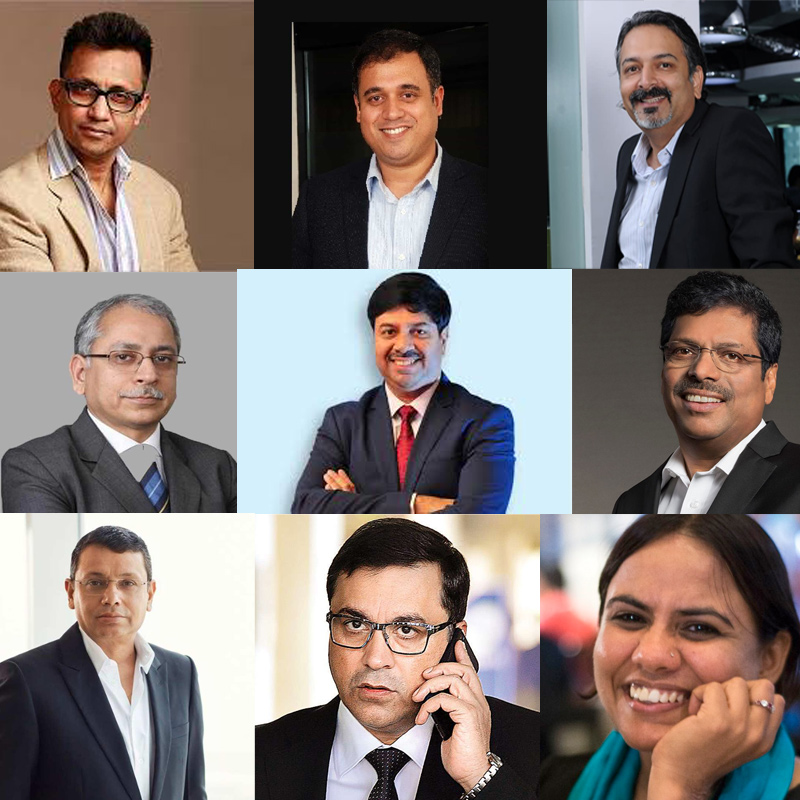
    Indiantelevision.com skimmed through all these conversations of 2020 and selected top heavyweights of the M&E sector of India who steered these discussions and shaped the industry – for better or worse, only time will tell.

    Arnab Goswami, ARG Outlier Media

    The MD, editor-in-chief and co-founder of Republic Media Network became the newsmaker in the second half of the year for multiple reasons. Goswami aggressively went after the police, political leaders and several lobbies in the film industry during the investigation into Sushant Singh Rajput’s death. While several industry members and advertisers questioned his style of editorial reporting, some also blamed him for spreading toxicity in the news. Goswami, however, maintained that he will be relentless in his search for the truth for his audiences. He was soon caught up in a legal storm in two separate cases as police charged his media network for rigging TRPs, and abetment to suicide of an architect and his mother. Members of the Republic, including Goswami, were arrested during this time and multiple lawsuits were filed in both matters. Undaunted, Goswami has continued with his combative editorial style and is expanding the network’s footprint in different languages both in the online and offline space.

    Sunil Lulla, BARC

    2020 has been a very busy year for current BARC CEO Sunil Lulla. He had to make some tough calls and introduced landmark initiatives that changed the course of the industry. It began with the Telecom Regulatory Authority of India (TRAI) interfering with BARC and making recommendations on its functioning, governance, transparency, accountability, operations and robustness. Lulla took a stand on the matter and clearly established that BARC is an integrated business body and is not influenced by the government.

    Later, in a landmark move, BARC came up with algorithms to mitigate the impact of landing pages, which was welcomed by the industry. Towards the end of the year, the agency has been weathering the TRP scam, which brought ignominy to the entire news broadcast industry – so much so that BARC decided to pull back the weekly ratings for the news genre. The scam got murkier with several ex-BARC employees getting arrested. The regulatory body is now drawing a new mechanism to ensure that the methodology is more precise and the industry is able to trust those ratings once again. However, amidst this entire storm Lulla is standing tall and leaving no stone left unturned to maintain the integrity and sanctity of the organisation.

    Shashi Shekhar Vempati, Prasar Bharti

    He was the man behind the uninterrupted supply of entertainment and news to the remotest corners of the country. Vempati led Doordarshan and All India Radio carried on operations uninterrupted throughout the pandemic. During the first lockdown, when fresh content dried up on GECs, Vempati’s team brought back yesteryear shows on the channel and gave everyone some respite from the wrath of the Coronavirus. This decision was so successful that it broke all viewership records of Doordarshan. The state-run broadcaster ensured that people in the far-flung areas were able to access news and updates in their own native languages via Doordarshan and All India Radio. Vempati’s team also initiated tele-classes for students so that their year does not go waste. He is now on a government committee that will closely look into the operations of BARC to assess the existing rating system (the committee was formed after TRP scam was busted).                     

    K Madhavan, Star & Disney India

    An old hand at Star India, K Madhavan, the man who was responsible for building the network’s regional business replaced Sanjay Gupta as he took on the mantle of the TV business across verticals and markets at the end of last year. The network continued to grow in 2020 and post the big announcement of Uday Shankar’s departure, Madhavan was given the responsibility of leading Star & Disney India. Madhavan was also elected the president of the Indian Broadcasting Federation 2020-2021. He will be working closely with the I&B ministry, TRAI, and other bodies to look after the broadcaster’s interest and policy implementation. Madhavan also steered the ninth CII Big Picture Summit this year with hundreds of delegates from all over the world participating in it.

    Uday Shankar, Former The Walt Disney Company

    The biggest shocker for the M&E industry came when Uday Shankar announced his departure from Disney Star India. Shankar ended his 13-year long stint at the organization on 31 December. After taking over the reins of Star India in 2007, he transformed the company into one of the largest and most successful media conglomerates in Asia. He led Star Sports to be the largest sports broadcaster in India. In the general entertainment segment, Star India has a presence in all major regional markets along with a massive dominance in the Hindi speaking market. From launching Hotstar in India to expanding Disney+’s operation in Asia as Disney APAC boss, he has left a rich legacy in the OTT segment as well.

    Adding another feather to his cap, Shankar has been elected president-elect of Ficci for 2020-21, the first-ever media and entertainment executive in India to lead a national industry chamber. 

    Pradeep Dwivedi, Eros STX

    In 2020, Dwivedi spearheaded the global ambitions of 40-year-old production house Eros Now. He led the merger of Eros Now with US-based production house STX Filmworks and uniquely positioned the combined entity Eros STX across the US, China and India. Eros STX will be a publicly traded, independent content and distribution company with global reach. It will now be able to create and distribute both Bollywood and Hollywood content. On the domestic front, Eros Now expanded into linear business and capitalised on the growing demand for OTT with its originals and existing library. Dwivedi was also chosen as VP & area director for IAA Asia Pacific.

    Ajit Mohan, Facebook

    It has been an interesting year for the social media platform in India. It inked a partnership with Jio to establish itself as a strong content player, worked towards bringing small businesses on the platform to expand its base and increase ad spends, joined the government’s atmanirbhar initiative, launched Instagram Reels, Watch on Facebook and WhatsApp pay to further offer new products to the audiences and keep the engagement going on. On the content front, Mohan has been stressing the imminent need for new rules that guide and give clarity over some of the regulatory aspects of what should be allowed and what shouldn’t. He has urged for global cooperation between Indian authorities and others to clearly set these guidelines. The platform also faced government scrutiny as it was summoned by a parliamentary committee for letting content from a right-wing outfit go unchecked. However, Mohan has staunchly denied such violations and stated that the platform takes its safety and security protocols very seriously.

    Barun Das, TV9 Network

    At the outset of the year, Das took on the News Broadcasters Association with an iron hand as the latter questioned the meteoric rise of the network. He took on the veterans and explained to them the television business in an official release. Later, the network announced its big decision to foray into the Bangla market with the launch of a news channel. However, during a discussion with Indiantelevision.com on the ongoing TRP scam investigations, Das urged for zero tolerance towards such criminal activities. He also reminded the industry that the ones who initially flouted these ratings are the ones who are now questioning it. Today, thanks to his hard drive and innovation, what was once a southern news network, is amongst the leading news networks in the country. Additionally, Barun surprised many when he went out on a limb and announced increments for his staff in September with retrospective effect at a time when the news industry was struggling.  Some say this had a ripple effect on the industry with others too rolling back their salary cuts. 

    NP Singh, SPNI

    The ongoing Covid crisis was unprecedented and had a cascading impact on the entire ecosystem. Owing to the nationwide lockdown, there was a complete cessation of content production for TV and OTT films, sports, and events. Advertising spends declined drastically but it did not deter the plans of Sony Pictures Networks MD and CEO NP Singh. He is currently basking in the success of original series Scam 1992: The Harshad Mehta Story on SonyLIV. Despite challenges, Singh expanded offerings: in sports, the recent extension of its broadcast deal for WWE content provides SPN the rights to showcase WWE Network through SonyLIV; SPN has curated content from WWE’s extensive archives library, which includes events, iconic matches, and interviews with legends, reality shows and documentaries on its own platforms. The network also continued with its flagship shows like KBC.

    Megha Tata, Discovery Communications

    Last year, broadcasters pushed the digital agenda, realigning their content strategies, business models to cater to consumers’ interests. Under the leadership of Discovery Communications India south Asia MD Megha Tata, the network entered the Indian OTT space with the launch of Discovery Plus offering premium content at an annual subscription of Rs 299 and a monthly subscription of Rs 99.

    Post pandemic, there has been a massive surge in the OTT content consumption and no network wants to miss the bus. However, as a broadcaster, Tata clearly emphasised protecting the linear business as it is still funding the digital business. She believes there is still time for digital business to reach profitability and monetisation status and TV has to play a key role in that. Contrary to the popular opinion that TV is dying, Tata noted that all linear and digital platforms will continue to co-exist. For her, both mediums are important – one is the business of today and the other is the business of tomorrow. She was also elected as the president of the India chapter of the International Advertising Association (IAA).

    Ekta Kapoor, Balaji Telefilms

    Known as the ‘Czarina’ of the TV industry, Ekta Kapoor, over the years, has emerged as one of the most powerful women entrepreneurs. This year, Kapoor was nominated to receive the fourth highest civilian honour – Padma Shri Award. Apart from dominating the Hindi GEC space, she has clearly stated her intentions for the OTT space by targeting the nation’s low- and mid-income consumers. AltBalaji is likely to release four to five of its big-budget movies in 2021 when Kapoor expects viewers to flock back to cinemas. Balaji Telefilms is set to take over the content studio Ding Infinity to produce 100 per cent premium original cut through the cluttered content. Recently the supreme court granted her interim protection from arrest in an FIR against her for alleged objectionable content in her web series XXX season 2.

    Punit Goenka/ Amit Goenka / Rahul Johri at ZeeL

    Zee Entertainment Enterprises Ltd (ZeeL), which has been going through money circulation points for over 12 months, unveiled a massive restructuring process as part of Zee 4.0 Strategy. It includes restructuring across content, revenue, and digital arms with a renewed focus on revenue maximisation and foraying into newer territories.

    Under this strategy, the company will integrate all of its digital assets under a single umbrella, which includes Zee5 (Domestic AVOD+SVOD), Zee5 Global, SugarBox and Digital Publishing. 

    ZeeL roped in Rahul Johri as president for south Asia enterprise to spearhead the built-in revenue and content material monetisation crew. In other key shuffles in the top leadership, ZeeL elevated CEO (broadcast) Punit Misra as president – content and international markets, while Amit Goenka, the younger brother of Punit Goenka, has taken over as the president – digital businesses and platforms.

    Kevin Vaz, Star & Disney

    Star & Disney India recently elevated Kevin Vaz as CEO of infotainment & kids genre. This is in addition to his regional entertainment portfolio where he is heading Star India regional channels portfolio across Maharashtra, Bengal, Tamil Nadu, Andhra & Telangana, Kerala and Karnataka. He was given the responsibility following the departure of Anuradha Aggarwal who was head of English, infotainment and kids cluster at the company.

    Anuj Gandhi, IndiaCast

    The group CEO of IndiaCast, a joint venture between TV18 and Viacom, Anuj Gandhi is heading a team of professionals for traditional and new media platforms. With a distinct understanding of content, monetisation, and market, Gandhi is a firm believer that in the world of multi-screen obsession, linear TV will remain present. In addition to Gandhi’s responsibility at IndiaCast, he is also involved with Reliance Jio as head of content acquisition for all Jio video and audio apps. IndiaCast Media in the month of March announced an agreement with Cox Communications with the launch of Aapka Colors on Contour TV.

    Sameer Nair, Applause Entertainment

    In 2020, Applause Entertainment spearhead by Sameer Nair developed a robust and varied pipeline of shows and has successfully released 18 series spanning different genres across multiple platforms. Nair has focused on creating a combination of smart originals of international formats, book to screen adaptations, and Applause Originals. The studio has created the official Indian adaptations of popular international shows including The Office, Criminal Justice, Hostages and Your Honor. It is presently developing Indian versions of the hit series Call My Agent, Fauda and Luther. They’ve developed a rich slate of original content with shows like Rasbhari, Undekhi, Bhaukaal, Hasmukh among others, and book to screen adaptations of Avrodh, Hello Mini, and the recently released Scam 1992: The Harshad Mehta Story has been successful in wowing critics and audiences alike.

    Abhishek Rege, Endemol Shine India

    Endemol Shine India, over the last couple of years, has been actively pursuing a two-pronged strategy – preserve and grow its non-scripted portfolio with newer formats and platforms; and significantly scale up the scripted portfolio. Endemol Shine India CEO Abhishek Rege believes Banijay and Endemol will continue to compete with each other, instead of amalgamating under one umbrella. For Rege, the digital streaming space will add to its revenue from the scripted content. To this end, the studio has made series like Arya for Hotstar Originals and Bombay Begums for Netflix. It is bullish on acquiring book rights – including The Sane Psychopath, based on Salil Desai’s novel, content based on American novelist Robin Cook’s books, and an original series based on Amitav Ghosh’s Ibis Trilogy. With this, Rege hopes it will catapult Endemol Shine India onto an international pedestal.

    Sunil Rayan, Disney + Hotstar

    He is not a familiar face in the media and entertainment industry but now the ecosystem has its sharp eye on him. Early in 2020, Sunil Rayan was mandated to head India’s top OTT contender Disney+ Hotstar. The position had been vacant since Ajit Mohan left in 2018. His appointment excited the industry due to his accomplishments across global brands like Google, McKinsey & Company, IBM, Mastech, Infosys.

    Rayan joined the platform at a very crucial time – Disney+Hotstar has upped its focus on originals, has been aggressively chasing Bollywood movies with big names. The platform which already has about 26 million subscribers, is also highly focused on sports and gaming, where Rayan’s tech understanding will be instrumental. 

    Sudhanshu Vats, former Viacom18 CEO

    After a stint of eight years at Viacom18, ex- group CEO and MD Sudhanshu Vats decided to quit the organisation in April. Vats charted the growth of the broadcaster to grow from a six-channel network to 54-channel media empire in India. Along with expanding Viacom18’s base in regional markets taking on Star India, ZeeL, he also steered the group’s studio business with bold bets in unconventional storytelling. Under his leadership, Viacom18 entered the digital arena with the launch of Voot. During his tenure, he proved to be an effective leader who earned admiration across the industry. While he joined Viacom18 from FMCG leader Hindustan Unilever, he has been appointed as MD and CEO at Essel Propack Ltd post-departure.

    RS Sharma, TRAI

    Industry watchdog Telecom Regulatory Authority of India (TRAI) has also undergone a change in leadership. Ex-TRAI chairman Ram Sewak Sharma stepped down from his position in October. During his tenure, the telecom industry saw a significant shift, more so than the broadcasting industry. After his term got extended in 2018, many consultation processes were initiated by TRAI would have a long-lasting impact on new technologies.

    Sharma has left behind a mixed legacy as many major reforms were taken ahead under his leadership, like new tariff order for the cable TV and broadcasting industry, net neutrality for the telecom industry. At the beginning of this year, TRAI again brought an amendment to NTO 2.0. that has been panned by the industry and legally challenged in courts. But Sharma, firm on his position, strongly defended the move till his last day at TRAI. He also led the mandate of overhauling the TV measurement system as TRAI floated a consultation paper this year. Though he has been highly criticised for the deteriorating relations between the regulator and the industry, he spearheaded technological advancements in the sector.

    Monika Shergill, Netflix

    Netflix is scaling up its local content library in India, one of its key international markets. To understand the pulse of the market, it hired industry veteran Monika Shergill as director of series in India in 2019. Now, she is handling Indian content slate for the platform as VP content. Shergill is working on what she has been doing for years with leading entertainment brands in the country, churning out stories that audiences can connect with.

    She has aided the streaming service to capture a slice of the OTT pie in India delivering original movies and series such as Masaba Masaba, A Suitable Boy, Jamtara, and Bulbul. Like her peers in the industry, Shergill has also focused on direct-to-digital releases in 2020 as theatres were shut for a long period. Backed by strong localised content, Netflix has significantly scaled its subscriber base and market revenue, according to reports. 

    Aparana Purohit/ Gaurav Gandhi/ Vijay Subramaniam, Amazon Prime Video

    The team at Amazon Prime Video has excelled in capturing the Indian market. While Amazon boss Jeff Bezos committed to double its investment in India, these three local executives have made it possible to push his Indian dream. The streaming service has rolled out a number of original series which has struck a chord with Indian viewers. It also came outshining at the Flyx Filmfare Awards which has awarded digital originals for the first time. The top executives have also ensured that it is also a frontrunner in the race of direct-to-digital releases. 

    Tarun Katial, Former Zee5 CEO

    Katial is one of the most celebrated executives in the media and entertainment business. After building up the business at Big FM from scratch, he joined Zee5 in 2018 to take the homegrown OTT to new heights. From setting up the team and business, he turned Zee5 into a leading streaming platform in the market. Before putting down papers for one of the most coveted roles in the media world, he helped Zee5 expand its offerings during the pandemic as well.

    2020 was the first year when Zee5 has contributed to its parent organisation’s overall domestic subscription revenue. It has forayed into the short video segment with the launch of HiPi, close on the heels of the TikTok ban. Moreover, Katial has worked on a self-regulation code for the OTT industry as chairman of IAMAI.

    Danish Khan, SPNI

    Khan is one of the emerging leaders of the M&E industry. His acumen at picking up trends and content preferences of the audiences is well-proven with the success that SonyLiv has enjoyed in the last year with shows like Avrodh, Scam1992: The Harshad Mehta Story, JL 50 and others. Khan has steered the success of the platform and managed to get strong subscriptions for it as the competition in the category is growing fast with both local and global players spending heavily on content creation. A seasoned professional, Khan has a great understanding of business, content, revenue and consumer.

    Sunil Taldar, Airtel DTH

    Under Taldar’s leadership, Airtel has been able to scale up its DTH business over the years, reaching 16.6 million subscribers at the end of FY20.  As Covid2019 has led more consumers to tune into OTT, the company has increased its focus on the hybrid set-top box segment. The DTH operator is sparing no effort to stay relevant in the changing industry scenario. While it is breaking into the top tier of the market with the XStream box, it is also addressing opportunities in the lower end too.

    Harit Nagpal, Tata Sky

    In an age of great disruption, Harit Nagpal has ensured that Tata Sky stays resilient through innovations. The market leader in the DTH space has reinvented its approach to acquire and retain consumers. It introduced Tata Sky Binge+, a smart set-top box earlier this year and pushed it aggressively through various campaigns. Nagpal has always been quick to adapt and evolve with market dynamics. To push its hybrid boxes, the company has struck partnerships with all major OTT platforms.
  • #Throwback2020: Linear TV ad volumes on the mend, revenues sluggish

    #Throwback2020: Linear TV ad volumes on the mend, revenues sluggish

    NEW DELHI: For linear television, 2020 was like a ride to hell and back, owing to the Covid2019-induced lockdown. It was the first time that shoots were canned wholesale, there were no new shows running, and advertising volumes hit abysmal lows. All was not doom and gloom – the industry saw meteoric rise in viewership, initially banking on reruns of old classics like Ramayan and Mahabharat, followed by marquee properties like the IPL, KBC, and Bigg Boss making their way to our screens. While this may have resulted in an uptick in subscription revenues, advertising prospects remained stunted through the year. Here’s a quick overview of how advertising fared on linear television in 2020. 

    The maths of it 

    The first quarter of FY21 saw the industry incurring huge losses as advertisers pulled out advertising monies as production and supply chains across industries took a big hit.

    Average ad volumes per day dipped to 752 hours in April-June ‘20 quarter, as compared to 1,032 hours in January-March ’20, according to TAM data. The ad revenues for broadcasters witnessed a year-on-year decline of 59 per cent in Q1 of FY21, as shared by ICRA. Depending on genres, advertisement revenues were impacted by 25-60 per cent (vis-a-vis pre-Covid average monthly revenues) in Q1 FY21. While news and movie genres were on the lower end of the spectrum, with an average decline of 25-30 per cent in advertisement revenues, GECs and sports channels witnessed a sharp 50-60 per cent reduction in advertisement revenues. 

    This was despite a meteoric rise in TV viewership in those months. BARC data reports a nine per cent increase in TV viewership during January-June ‘20 as compared to the corresponding period last year; the growth was led by the news, kids, and movie channels. Understandably, the viewership declined by three per cent for GECs, given the lack of fresh programming. 

    The industry started getting back on its feet steadily as lockdown restrictions eased and businesses started moving forward, the IPL and festive season gave it further momentum. The ad volumes in the second half of the year showed outstanding growth. Average ad volumes per day rose by 39 per cent in the fourth quarter compared to average ad volumes of the previous three quarters, TAM data showed. 

    Caption– Source: TAM

    According to BARC estimates, advertising volumes grew by 10-11 per cent over 2019 during Dussehra and Diwali 2020. Ad volume for Ganesh Chaturthi was up seven per cent over last year. Another study, by TAM, revealed that there were 655 new advertisers who made an appearance on GECs in September-November 2020, as compared to the past two years. This new league of advertisers included names like Facebook, Airtel Payments Bank and WhiteHat Education Technology.

    As per ICRA, TV broadcasters saw a strong sequential recovery of 86 per cent in advertising revenue in Q2 FY21. However, it still remained 20 per cent lesser on a year-on-year basis. GECs too regained their popularity. 

    As expected, the biggest share of this improving pie landed in the IPL’s kitty. Despite the sponsorship rate for the league going down by 25 per cent, the industry is positive that the league would have made 10-15 per cent more in revenues (https://www.indiantelevision.com/mam/media-and-advertising/sponsorship/eventually-ipl-2020-scored-big-with-advertisers-sponsors-201111) as compared to 2019, clocking around Rs 2,000 crore on TV alone.  Comprehensively, TV broadcasters in ICRA’s sample set reported a 21 per cent year-on-year decline in revenues in H1 FY21. 

    On an overall level, the industry has indicated mixed projections for the state of ad revenues for broadcasters in 2020. While Edelweiss has pegged it to grow by 6.5 per cent, KPMG and GroupM are indicating a contraction. 

    Talking to Indiantelevision.com in April this year, the industry indicated a negative growth for 2020 (https://www.indiantelevision.com/mam/marketing/mam/covid-19-might-push-traditional-advertising-towards-negative-growth-200428). 

    Madison Media and OOH group CEO Vikram Sakhuja said the advertising growth, which was pinned by his firm at around 10 per cent at the beginning of the year, will take a big hit in this calendar year. “We were expecting around a six per cent growth for traditional and around 28-30 per cent for digital media. However, looking at the current scenario, traditional media might observe a negative growth, while digital will also shrink considerably. We will be lucky if we can see a one-two per cent growth this year.”

    The rise of new categories

    Top ranks of advertisers on television underwent some shuffling as industries dealt with the crisis. As per TAM data, personal care/personal hygiene sector had a 20 per cent share of ad volumes, followed by F&B with 18 per cent share. Education became the only new entrant in the top 10 list of sectors advertising on TV. It was possibly because of the new home education module that people were forced to live with. Ed-tech companies like Byju’s, WhiteHat Jr, and Vedantu advertised heavily on television. 

    Source: TAM 

    Additionally, Ecom-media/entertainment/social media moved up five positions to achieve the second spot in leading categories advertising on television.

    Source: TAM 

    Hand sanitisers also registered robust growth and it was reflected in the television ad volumes too. Most of the leading exclusive brands in the year belonged to the category, along with social media, ed-tech, and OTT services. 

    Source: TAM 

    On the contrary, the FMCG sector that jumped the fence to go digital in 2020 might have taken out some from the TV pie. For instance, India’s largest advertiser Hindustan Unilever spent Rs 1,936 crores in the July-September quarter, 17 per cent less than the corresponding quarter in 2019. While the ad volumes from FMCG brands clung back to pre-Covid levels, it is yet to be seen if the revenues will turn back or not. 

    The year saw the television industry in a massive flux, struggling to keep up with the rapidly changing state of affairs. While categories like news remained on a positive incline through the year, GECs suffered losses for the most part of it. In terms of ad revenues, it might be clocking much less than what was forecast at the beginning of 2020, but industry projects fair tidings from the second quarter of 2021. It will be interesting to see how the industry fares in the coming year. 
     

  • #Throwback2020: The year ed-tech platforms thrived

    #Throwback2020: The year ed-tech platforms thrived

    NEW DELHI: 2020 threw up education headlines that were previously unimaginable. Closure of schools and university campuses across the country, cancellation of exams and ensuing protests, resumption of exams and protests thereof, and learning going truly digital – it was a year of chaos and disruption for education. With the threat of the virus showing no signs of abating, educational institutes remained shut and students moved in front of the screens. The obvious beneficiaries of this unprecedented surge in e-learning were ed-tech start-ups, which lapped up the opportunity to jumpstart their growth.

    Several education technology enterprises which had been vying to establish a steady financial footing managed to secure their place in the market as the pandemic ensured people remain indoors. Riding high on the digital wave with rapid adoption of mobile phones and penetration of the internet, these platforms emerged as convenient options for students to continue learning within the four walls of their homes.

    According to the Indian Private Equity and Venture Capital Association (IVCA) and PGA Labs data, Indian ed-tech start-ups witnessed a total investment of $2.22 billion in 2020 as compared to $553 million in 2019. Byju’s raised the most capital of $1.35 billion, followed by Unacademy which raked in $264 million this year.

    Behind the boom in e-learning

    Credited as India’s first ed-tech unicorn, Byju’s emerged as a key player in the e-learning space. The start-up had already been in robust growth mode after its collaboration with Disney last year to make learning fun for young students. It gained a surge in its usage after the government enforced a 21-day lockdown in March. Students reeling under increasing academic pressure began exploring digital alternatives as they navigated new rules of online schooling.

    Another Bengaluru based start-up, Unacademy, which began its journey almost a decade ago on YouTube, also recorded as many as 30 million registered users as demand for e-learning soared. Students aspiring to qualify in various competitive examinations, turned to the platform after traditional coaching centres also faced closure.

    Data states that Indian online education platforms have raised $4 billion in the past five years (2016-2020) and Byju’s Unacademy and Vedantu have led the charts and attracted the highest funding.

    Coursera, Toppr, upGrad, meritnation, Getmyuni, Brainlyand Flintbox were other major players that held significant market share in the country in 2020. With their live online classes, course videos and personalised doubt-clearing sessions with online tutors, the platforms managed to make inroads into student groups.

    Apps like eduTinker helped teachers – used to chalkboards and notebooks – to navigate the unfamiliar space and overcome challenges posed by new digital tools. These apps are not only aids to school education but also prepare students to pick up new skills. Among these extracurricular activities, coding is currently hot property thanks to White Hat Jr, which was recently acquired by Byju’s. Vendatu, too, launched Super Coders to provide coding lessons.

    Apart from children, youngsters too migrated online to learn new skills or explore hobbies. Universities also began offering free online courses for those committed to learn digitally. Ed-tech start-up Yellow Class did just that. It offers a chance to children to get into new hobbies like drawing or dancing. Some platforms like Elearnmarkets.com and StockEdge.com also provide certified courses in the stock markets and other financial market courses for small investors.

    Long road ahead

    A recent report by IVCA pegs India’s education market at$117 billion with around 360 million learners in 2019-20.

    While 2020 may prove to be a watershed year for e-education in India, there is still a long road ahead. Online platforms have proved to be convenient options when institutions were shut, but their real test would be when schools reopen and online sessions are replaced with actual classrooms.  There are still no clearly defined benchmarks of how efficiently students learn in these virtual classrooms. But, going ahead, ed-tech start-ups could collaborate with schools and other educational institutes in a way that ultimately benefits students in the post-pandemic world.

    How well these ed-tech platforms would complement the traditional system of education in India in the time to come is a story waiting to be told. Nonetheless, the groundwork has been laid in 2020.

  • Guest column: Looking back at 20 to look ahead at 21

    Guest column: Looking back at 20 to look ahead at 21

    MUMBAI: Many media and entertainment industry professionals would have already activated their “OOO” messages, while the others would be counting down to call time on what would have been the craziest year yet in their careers. However, before we do that, a little bit of looking back and some amount of looking ahead to 2021 is par for the course.

    For many of us (including me), the dominant sentiment is: did you ever imagine?

    For no one predicted the onset of the pandemic, and even when we started accepting the new “strange”- it continued to surprise us basis how it played out. What mattered was the vantage point and the ability to be both adaptively agile and resilient at the same time.

    Here is a bit of crystal ball gazing even at the risk of falling flat on my face, given how unpredictable and unchartered the waters seem to be. These observations are based on conversations with marketers and experts, and my personal experiences of the last nine months of seeing media and brands in various stages of lockdown and unlock phase. 

    1. Resilient television (linear – let us call it LTV) will continue to be the highest reach, most brand-safe medium in the near term. However, LTV’s babies – connected TVs, streaming and OTT – will start to make their impact felt with advertisers demanding “video neutral” planning that drives incremental reach. With media owners offering viewership, optimisation and brand lift measurement (a la Star’s Sirius); this may become a reality sooner than later. Also, with programmatic and addressable options eventually opening up, measurement and DSP integration will be the key.

    2. Fickle subscription behaviour will finally begin to change, thanks to the fillip provided by Covid2019’s last few months, with urban audiences willing to pay for content behind the paywall. It will be visible on video as well as be heard on audio and consumed on digital avatars of erstwhile print and upcoming digital offerings. So Disney+ Hotstar will continue to dominate the space that Amazon Prime Video and Netflix are increasingly winning with deep pockets of locally produced content. Spotify playlists and substack subscriptions will start showing signs of choice overload and the role of the algorithm (no prediction can be complete without mentioning these and AI) to make better quality recommendations will become critical. 

    3. Enter retailer and e-commerce media  will become key lines on media plans thanks to increased online shopping which saw 25 to 30 million new shoppers giving the addressable size a lift to 150 million. With large numbers (>70 per cent) of e-consumers willing to continue during the unlocking, this growth and behaviour seem irreversible. The opportunities for social commerce (Meesho, Instagram/Facebook shops) and D2C brand investments will further open up opportunities for consumer experiences and conversations with voice, local/vernacular content and video becoming key components.

    4. Doctors and healthcare professionals will be a video call away, giving telehealth/telemedicine a huge shot in its arm. While this part of the advertising landscape is regulated and is unlikely to change, given the sheer magnitude of the opportunity and its big data/ technology ramifications- this may lead to a transformation in pharma/wellness/healthcare communications and demand generation.

    5. News as a genre will continue to find consumption and advertising growth. Given the uncertainty and unpredictability of the environment, consumers will gravitate towards established news platforms and the tussle between social media and legacy news giants will lead to an “infomedic” with fake news and ways to counter toxic, harmful, misleading content gaining more urgency.

    (The author is CCO, Zenith. Indiantelevision.com may not subscribe to his views.)

  • Throwback2020: Not in moolah but digital marketing grew in virtue

    Throwback2020: Not in moolah but digital marketing grew in virtue

    NEW DELHI: It has been quite a few years that the digital marketing industry is enjoying a fabulous run rate in India. It is a no-brainer that growing internet penetration, cheap data rates, and just the sheer availability of digital entertainment and logistical options have contributed to its stellar rise. While the traditional modes of advertising have been struggling to keep the  cash registers ringing, partly because of the continuing dip in the economy and partly due to the Covid2019 lockdown’s impact on businesses across the spectrum, digital marketing enjoyed quite a positive stay in an otherwise positively uncomfortable 2020. 

    The year was a mixed bag of challenges and opportunities for the digital marketing industry, though the latter were overpowering. Despite a slump in growth numbers, the industry seems to be staring at a rather bright future. Tech advancements, positive sentiments within the industry, and the sheer scope of growth ahead makes the ride an interesting prospect for the future too. 

    The spike in digital adoption

    For nearly two-months, starting March, the whole country was forced to stay indoors following strict lockdown rules, courtesy the global viral pandemic Covid2019. It forced people to work online, connect online, shop online, teach online, consult online and do what have you online. This led to a crazy uptake in digital adoption. 

    Logicserve Digital founder & CEO Prasad Shejale said: “The pandemic has definitely caused a huge shift in the industry. While the country’s economy and GDP took a massive hit, the digital industry has been rapidly growing with regards to its consumption, penetration as well as engagement. The global e-commerce sales growth and number of digital adopters accelerated in the initial three months; in the normal course that would have taken three years.”

    According to a Kantar report released in May this year, India’s monthly active internet user base is estimated to reach 639 million by the end of 2020, from the currently estimated 574 million. The country had clocked 734.82 million wired and wireless broadband subscribers up to 31 October 2020 according to Telecom Regulatory Authority of Indian monthly telecom data reports.

    Mobile became the preferred choice of internet consumption and the average time spent on smartphones in a day grew with average usage growing 11 per cent to 5.5 hours in March 2020 (pre-Covid) from about 4.9 hours on average in 2019. This further grew by another 25 per cent to 6.9 hours April onwards (post-COVID), a report by Vivo and CMR highlighted. 

    India also saw the biggest jump in video consumption, of 40 per cent to over 2.9 billion hours during the week starting 22 March as compared to the last week of December 2019, when it was 2.1 billion hours, as stated by an Internet & Mobile Association of India (IAMAI) and Nielsen report. 

    Naturally, this sharp spike in digital consumption had a positive impact on digital marketing and advertising too. 

    Digital marketing growth story 2020

    At the beginning of the year, a DAN report had predicted that the digital advertising industry would grow 27 per cent in 2020. However, that might not turn out to be the case entirely. 

    The sector, much like every other business, took a hit in Q1 FY21, because of the market uncertainties and lockdown. Ad rates went down as much as by 15-20 per cent according to an industry insider. 

    A panel discussing the widening scope of digital marketing with Indiantelevision.com founder, CEO, and editor-in-chief Anil Wanvari in June stressed that the growth digital marketing has clocked in the year will not be immediately visible in the CAGR, but will be a defining factor in how the advertising pies of individual marketers changed. It insisted that after six months of struggle in 2020, the industry will have a very prosperous six years ahead. 

    iProspect India AVP-strategic solutions Nihal Nambiar had said: “Digital, in 2020, will definitely not have a similar CAGR of 27 to 30 per cent as it has been recording for the past few years.” But he mentioned that he is looking forward to some positive quarters ahead in terms of brands moving to digital platforms.

    Shejale pointed out: “Various reports suggest that in spite of the slowing economy, the digital segment has seen a growth of around 20-27 per cent by November 2020. The numbers might vary in different research articles. However, this is the broad range within which the growth is seen, and it’s very promising.” 

    However, GenY Medium co-founder & CEO Yashwant Kumar is more hopeful and is expecting that the industry will grow by 35-40 per cent in 2020-21. 

    He noted: “Digital advertising has gained tremendously during the pandemic and has become the preferred medium with a huge surge in e-commerce across categories together with consumers spending a lot more time with their families at home on their connected TVs and mobiles. Digital has been consistently growing at 27 per cent CAGR over the past few years ahead of television, print and outdoor. We are seeing a significant movement towards digital in Q2 and Q3 this year after a slow Q1. My expectation is that digital advertising will grow by 35 to 40 per cent for the year 2020-21.” 

    While the industry has contrasting views towards the growth numbers, KPMG’s ‘A Year Off Script’ report released in September indicated that online advertising is expected to result in a 12 per cent growth overtaking traditional media like television which will contract by 17 per cent this year. 

    The report added, “At ₹22,300 crore, total digital advertising revenue will beat the ₹21,700 crore revenue of TV over FY21.”  

    Trends that defined the industry in 2020

    The biggest trend that strengthened the roots of the digital marketing industry in 2020 was the sheer influx of rural users in the internet world. As per a report by the Internet and Mobile Association of India (IAMAI) and Nielsen, rural India had 227 million active internet users, 10 per cent more than urban India’s about 205 million, as of November 2019. A Kantar report further suggested that this number will increase to 304 million by 2020. “Local language content and video drive the internet boom in rural India, with a 2.5 times increase in penetration among the population in the last four years,” it added. 

    This, added with digital retailers going deep into the heartland India, led to a great jump in the need for “hyperlocal” content by brands. This kept the digital agencies busy through the year. 

    Additionally, giants like Facebook, Swiggy, and Instagram entering the local market with thier own shopping platforms, growth of edtech companies like WhiteHat Jr, Vedantu, and Instagram releasing a new content section called Reels, were some new found opportunities for the digital industry to explore. 

    Wavemaker India chief client officer and head-west Shekhar Banerjee had mentioned in an earlier conversation with Indiantelevision.com that brands went heavy on performance marketing in 2020. “Apart from the usual search, social, and e-commerce mix, one platform that has become the biggest gainer during the period is the e-groceries section, taking a huge part of the digital pie. Going ahead, hyperlocal platforms, with their changing business models will be more conducive to advertising.”

    Another interesting opportunity for the digital marketing industry came in the form of online events. Almost 95 per cent of the physical events moved to online platforms giving digital agencies great opportunities to work with brands. It included marquee events like IPL, which was hosted without a live audience and saw viewers engaging with it either through TV or digital platforms. 

    OTT platforms also saw a remarkable rise in viewership during 2020. Kumar highlighted, “According to one industry report (Velocity MR Study), Amazon and Netflix saw +60 per cent growth in their subscriber base in the AMJ '20 quarter. Similar numbers have been reported for other platforms like Hotstar, YouTube and others. This massive shift towards the OTT platforms becoming the go to destination for entertainment, sports and news is driven by increased consumption of video content by consumers across all the age groups and demographic segments. Daytime video usage by the working professionals has become the new norm as they have started watching TV or streamed video content during their work breaks or while actively working.” 

    Additionally, what moved the industry significantly was FMCG brands getting more serious about digital platforms. As per industry experts, FMCG brands increased their expenditure on digital platforms to 12 per cent, compared to around 7 per cent in 2019. 

    This also paved the way for a significant hike in influencer marketing activities. 

    Mompresso co-founder & COO Prashant Sinha said, “Digital marketing has seen transitional growth in the year 2020. The majority of advertising and marketing spends by brands this year has been towards digital channels and with no doubt, this will continue to grow further in 2021. We can also expect to see big portions of these budgets to go towards influencer marketing and macro and micro-influencer led campaigns. The overall digital marketing industry has seen a boost this year, where creators, brands, and marketers have learned to work together. Brands have revaluated the metrics and shifted focus to prioritize channels where they receive the most engagement. While video content has dominated the space, more diversification is expected. Live streaming and user-generated content will continue to be popular among influencers and marketers.” 

    The growth in the e-gaming industry resulted in increased ad spends by players and also the development of a whole new media option for the brands. While most of the marketers still sat on the fence about exploiting the medium, it is expected that it will flourish in the coming quarters. 

    The year was a mixed bag of challenges and opportunities for the digital marketing industry, though the latter were overpowering. Despite a slump in growth numbers, the industry seems to be staring at a rather bright future. Tech advancements, positive sentiments within the industry, and the sheer scope of growth ahead makes the ride an interesting prospect for the future too. 

  • 2020: The tipping point for the Indian OTT ecosystem

    2020: The tipping point for the Indian OTT ecosystem

    KOLKATA: The Covid2019 pandemic has walloped many industry verticals this year but digital-first categories including over-the-top (OTT) or streaming video services have actually been given a leg up. A host of new users, paid subscribers have tuned in to consume online platforms, due to stay-at-home directives, limited social activities, enforced theatre shutdowns, fewer entertainment options. With multifold growth across metrics, the sector has witnessed growth that would have normally taken four to five years.

    The Indian OTT industry has been steadily growing in the past couple of years, especially since Jio democratised internet for the country’s masses. As the country entered into lockdown, fresh content on TV dried up and OTT platforms emerged as the most sought after medium for entertainment. India’s data consumption went through the roof with demand on OTT and VoD platforms rising by a whopping 947 per cent within July compared to the pre-pandemic period, according to data from internet exchange DE-CIX.

    As the curtains to 2020 are being pulled down, we look at not only statistics but at the emerging trends as well.

    Indian consumers are willing to pay more than ever for OTTs:

    Along with the growth in consumption and users, the number of paid subscribers has also gone up during the year. Back in 2017-18, there was a myth in the market that Indian subscribers would not pay for premium content. While 2019 was already indicating otherwise, 2020 has strongly broken all notions. According to a Boston Consulting group report, pandemic has increased growth of over-the-top (OTT) subscriptions by 60 per cent. It is not only a fad but more than half of these new users are likely to continue using the service. A PwC report has also forecast that subscription based video-on-demand (SVoD) will be the prime driver of revenue, growing at a 30.7 per cent CAGR.

     Although global streaming giant Netflix has not released any country-focused data as yet, it is likely to end the year with 4.6 million paid subscribers in India, as per estimates from researcher Media Partners Asia (MPA). Previously held estimates for 2019 were two million subscribers. Media giant The Walt Disney Co. (Disney)’s digital arm Disney+ entered in India combined with the existing Hotstar service as Disney+Hotstar. Now, Indian streamer accounts for 30 per cent of Disney’s overall subscriber base that is 26 million subscribers. Among indigenous players, ZEE5 also contributed significantly to its parent company’s overall revenue, thanks to its subscription revenue growth. Other platforms like ALTBalaji saw daily additions of 17,000 subscribers at the beginning of lockdown. Newly launched subscription services like Voot Select, Discovery Plus also claimed that the platforms exceeded expectations around customer acquisition.

    Launches, relaunches, the rush continues, even as some exit

    India is seen as the new streaming Mecca and the OTTs are rushing in like lemmings.  Both international and local players launched their services this year. Apple+ which launched towards late 2019, pushed forward with its customer acquisition plans through the year. And one of the most awaited services, Disney+ entered the country through its Indian cousin Hotstar, part of the Star India network, which it acquired the previous year from Twenty First Century Fox. The service was branded Disney+Hotstar and it was introduced just as India was entering the Covid2019 lockdown. Discovery began its video streaming journey with the launch of Discovery+. Hollywood Studio Lionsgate strengthened its direct-to-consumer presence with Lionsgate Play, while it was playing earlier in a distribution partnership model. SonyLiv went in for a relaunch, serving out a very different looking new version Voot from Viacom18 introduced its Voot Select offering.  ErosNow – a part of Eros Media – went for a refresh announcing the launch of new extensions and services  after its merger with US entertainment mid-sized player STX Entertainment.  

     A host of new hyperlocal platforms have also been launched like Aha as they strive to capture a piece of the regional language preferring audiences. Telugu diaspora targeted YuppTV took another shot at domestic audiences by launching an educational service as well as launching new shows.

    Like in satellite television, pan Asian or global  streaming services backed with relatively less capital and by local entrepreneurs, went belly up or restricted their focus on specific countries. Five year old Hooq – a streaming service which promised a lot – shut shop by May 2020, including its Indian operations. The just as the year 2019 was ended, another streamer Viu promoted by HongKong based PCCW, wound up in India.  The biggest disaster was the downward spiral of the Jeffrey Katzenberg-Meg Ryan run short from professional produced video streamer Quibi after guzzling down nearly a billion dollars in investment worldwide. In the US, AVod service Tubi, which had its eye on India, was acquired the Murdoch-run Fox Corp for $440 million. Expect some India play from this player going forward.

    OTT platforms increases direct-to-digital releases:

    The streaming services started premiering movies directly on the platforms earlier but this year saw movies with big names also debuting on those platforms as theatres were closed for six months across the country. Deep-pocketed  players including Amazon Prime Video, Disney+Hotstar went aggressive to acquire big-budget movies. A PwC report has stated that global SVoD revenue will overtake box office spend in 2020.

    At the initial phase of the lockdown, Disney+Hotstar launched  its ‘Multiplex’ feature and went on an acquisition binge acquiring titles such as Laxmmi Bomb, Dil Bechara, Lootcase, Sadak 2. Amazon Prime Video, the Jeff Bezos owned platform, also released Gulabo Sitabo , Shakuntala Devi and several others. Netflix jumped on the bandwagon with the likes of Ludo, and  Gunjan Saxena. Platforms like SonyLIV, Zee5 also turned to old, unreleased films. This trend is not only limited to India but is reflected globally. For instance, WarnerMedia has announced to release its entire 2021 movie slate on HBO Max and simultaneously in theatres. At the same time, ShemarooMe also launched Box Office to release small budget Bollywood movies. 

    Higher investment in original content:

    As the user base, consumption rate grows; appetite for quality premium content amongst India’s massive populace has also ballooned. For consumer stickiness, broadcaster led OTT platforms are heavily investing in original content. One of the early movers in the OTT segment SonyLIV has reinvented itself this year with a higher focus on churning out original content like its runaway hit Scam 1992. The idea was to increase its subscriber base significantly. Viacom18’s Voot also launched a subscription service called Voot Select with a promise of releasing more than 30 originals. Other international OTT players like Amazon Prime Video, Netflix, Disney+Hotstar are also upping their content significantly. London-based technology research and consulting firm Omdia has projected that the three OTT players are expected to collectively spend approximately Rs 2824.9 crore ($383 million) on original content in India in 2021.The OTT players are collectively expected to spend Rs 4,905 crore ($665 million) in 2021. However, Covid2019 restrictions have postponed around 30 per cent of the projects programmed to start in 2020.

    Enriching content library with diverse content, new features:

    Many of the OTT players are aiming to build themselves as super apps. ZEE5 has forayed into short-video category HiPi, gaming. Times Internet’s MX Player has also built a short video platform Mx TakaTak which has been considered as one of the most successful user generated apps post the  TikTok ban. To provide more value to users, ZEE5 partnered with an edu-tech platform at the beginning of the year. During the lockdown, Disney+Hotstar, Voot expanded their health and wellness portfolio on the back of new partnerships. Another niche area,  the kids segment , has also emerged as a big area of attention. While Voot already launched Voot Kids in 2019, ZEE5 added a dedicated section for kids this year with content focused on a blend of fun and learning. Amazon Prime Video which has already established a stronghold with its rich original content, has forayed into live sports acquiring rights for broadcasting New Zealand cricket matches in India. 

    Rising regional market:

    A recent BCG-CII report has shown that 35-40 per cent of the consumption on OTT services happens in local languages. And the hours of original programming in local languages have tripled in the past two years standing at 1,400-1,800. Throughout the year, a number of hyperlocal platforms have sprung up. Many among them, like the Telugu language Aha have committed huge investments to release more than 50 originals in a year. Bengali OTT platform Hoichoi has also announced a huge line up of content on its third anniversary. SunNXT is also looking at investing Rs 200 core for original content in FY 22. National players like ZEE5, Voot, and MX Player have strengthened their local offerings producing many hits across languages. Even international players have also gone deeper into regional markets as digital infrastructure across tier-II and III cities and  rural areas has increased, gradually leading to more traffic.

    Business models expand

    The year 2020 also saw attempts being made at unearthing a new business model transactional video on demand, with ZEE5, Shemaroo and bookmyshow announcing initiatives in this direction. The latter two at least have been planning their services seriously in building such a model. They are taking heart from the tremendous success that Universal’s Trolls World Tour had from digital rentals logging in almost $100 million in collections.

    Of course, the most prevalent model in the OTT ecosystem is the AVoD one or one that depends on advertising and offers free content to subscribers. Amongst the biggest players in this space is MX Player which claims around 200 million subscribers. Of course all the Indian majors – Disney + Hotstar, ZEE5, SonyLiv, Voot – have skin in this game, but their premium shows, sports events, and films are behind pay walls. The free content is used to upsell subscribers to premium services. Advertising is expected to contribute 43 per cent of all OTT revenues.

    Almost every player experimented with pricing during the year. Netflix was the prime example with the introduction of the mobile only plan of Rs 199 per sub in 2019, followed by a mobile+ package of Rs 349 in 2020 which offered streaming to handsets, tablets or laptops. Others too launched varying pricing points to cater to different audiences.  

    Connected TV viewership growth:

    The lockdown has not only increased consumption but has brought significant change in how online content is consumed. While India has been always described as mobile centric market, the growth in high-speed broadband connectivity, and affordable smart TVs has brought more users to connected devices. Moreover, the spike in family viewing has boosted connected TV viewership. A few leading players like ZEE5, Amazon Prime Video, Disney+Hotstar has seen it as a potential trend which can emerge soon. In addition to that, the steady rise in home broadband and increasing OTT partnerships with internet service providers will boost the viewership.

    Challenges ahead:

    2020 has definitely been the tipping point for Indian OTT market, albeit few challenges. The regulatory intervention into online content has ignited the fear of censorship with a negative sentiment looming over the players, and the creative fraternity. A number of petitions are pending before several Indian courts challenging a number of shows. While users flock to OTT platforms for more progressive content, it would be a challenge for the latter to balance between creative freedom and the regulatory noose.

  • Guest column: Looking back and beyond

    Guest column: Looking back and beyond

    Mumbai: Looking back, none of us had remotely fathomed the enduring chaos that 2020 would unfold. More than the startling impact of the global pandemic, I believe it was the abruptness of the situation, subsequent lockdowns and the looming uncertainty that caught us off guard. However, though in the face of adversity, the undying human spirit coupled with technology helped us adapt quickly to the disruptive reality. An overwhelming year as this introduced us to the humane side of technology that kept us connected and fastened us to some semblance of stability. 

    Undeniably, the impact on businesses was harder. For media and entertainment, the complete halt on shoots and production was a major roadblock, but I feel the hurdles prompted content creators to realign their programming choices, adapt to changing trends and be more accepting of risks. The skyrocketing success of the most iconic shows from the past made headlines, generated viewership growth and reinstated the power of content that engages and inspires. Not only did this lead to a surge in family viewing in 2020 but was key to the 20 per cent increase in daytime viewership including a spike in average time spent on television (as per a BARC –Nielsen Report).

    This reassuring response spilled over to niche categories like Infotainment and English movies as well with the latter surging by 95 per cent in non-prime time viewership. To cater to the new set of viewers on Sony BBC Earth and Sony Pix, we introduced afternoon slots and expanded our offerings that opened to positive feedback. Our marketing and programming innovations were driven by this sole intent of being a consumer-first brand and be visible at all touchpoints.

    Talking of touchpoints, social media topped that list with a growth of over 87 per cent as per industry estimates (as per Hammerkopf Consumer Snapshot Survey). With more than four hours being spent on the platforms daily post lockdown, social media engagement led brands to explore avenues that would connect across demographics and geographies. Launching AR Filters on Instagram and Facebook and hosting FB Live Workshops for Sony BBC Earth and Sony PIX were reflective of this paradigm shift.

    Another pioneering transition was in education, with the surge in digital learning, it opened brands to the benefits of constant engagement and showcasing of more content. Driven by the purpose of offering a holistic experience to young minds and reach more students, we ensured an online presence for our existing school contact programme. This was achieved via a microsite that hosted e-bulletins, recorded videos, live interactions and more. With more than 3.6L pageviews and increasing by the day, this has emerged as an effective delivery mechanism for us, and I believe it is here to stay.

    As regards online engagement, Sony Pix hosted an online gaming tournament with around two thousand gamers that fetched more than one million-plus views.

    In culmination, from a business standpoint, I feel understanding of audience behaviour, adaptability and innovation were my biggest takeaways of 2020. Despite the challenges, Sony Pix managed to chart growth in consumer viewership and reach.

    On a personal level, I hope we remember 2020 not just as a year of impediments but as one that gave us a chance to pause, reflect and rejig our way of life. Forward to 2021, I wish for all to start over with more empathy and awareness towards self and the world at large as we inch towards a year of hope.

    (The author is Sony Pictures Networks India English cluster business head Tushar Shah. Indiantelevision.com may not subscribe to his views)

  • #Throwback2020: India’s Top Brand Ambassadors

    #Throwback2020: India’s Top Brand Ambassadors

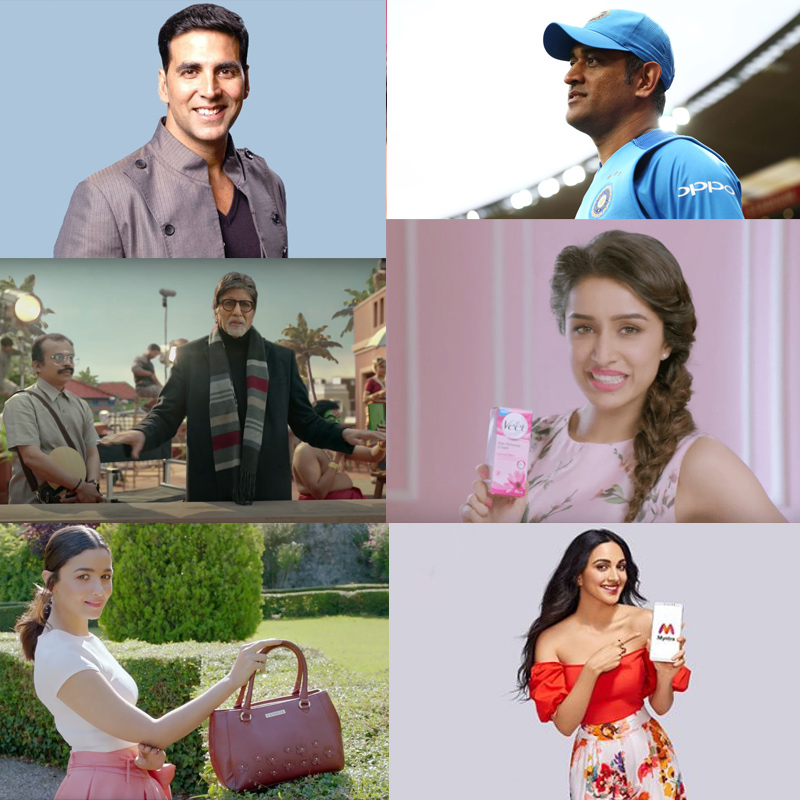
    New Delhi: Brand ambassadors – they are the icons, the celebrities which consumers associate with a brand because they extoll its virtues on television, print, and digital adverts. The role of any and every brand ambassadorin 2020 came with added responsibilities than ever before. They were not just selling products or services but trust and assurance to the potential customer that whatever they are promoting  is safe to use in the times of coronavirus.

    It is to their credit that  many of them stepped forward on the government’s call for social messaging, telling the homebound to stay that way and resort to social distancing,  masks and extreme sanitisation  measures every time they stepped out.

    While expensive, expansive shoots were a no-no for about four months in the early stages of the pandemic, many celebs found innovative ways to continue filming from their homes with the help of remotely located directors and production teams, Once the unlock orders were passed and proper standard operating procedures put in place for TV commercial and other shoots, the brand ambassador band played out in full swing. Several brands roped in new ambassadors this year and several new ambassadors started shining on air.

    Here are India’s op 10 brand ambassadorsin terms of ad volume on TV according to Tam data (from Jan 2020 – Nov 2020).

    Akshay Kumar

    The 50 plus year old actor has emerged as the king of endorsements in the Bollywood fraternity. He is associated with brands across different categories such as Protein Plus, Dollar Industries, RB, CarDekho, Honda, Nirma, Pagarbook and several others. Kumar has a kitty of over 20 brands including traditional and new-age brands.

    Known for his discipline, fitness, and integrity the actor’s credibility reached its peak when he interviewed prime minister Narendra Modi at his residence just before the 2019 general elections. Over the years his fan base has increased and brands have found him to be a credible face when it comes to creating a strong recall.

    Virat Kohli

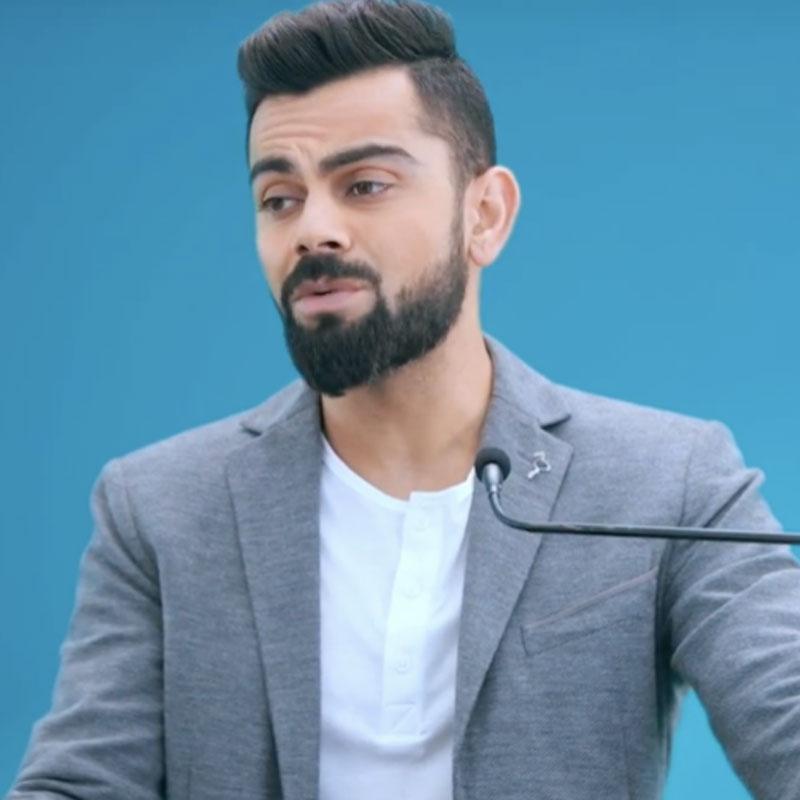
    The current Indian cricket team captain is one of the most successful brand ambassadors from the world of cricket. He represents a variety of virtues such as discipline, aggression, commitment, team-player, and most recently soon-to-be-father. Kohli has been breaking multiple records and cricket experts across the world have been lauding his success.

    Going by the latest reports, his brand value is above Rs 320 crore and is slated to grow as he has a good number of years left in his career before his retirement. Kohli endorses brands like Great Learning, Blue Star, WellMan, Himalaya Men, Google Duo, MPL, Shyam Steel, Amaze inverters and batteries, Puma, Hero MotoCorp, Colgate, Volini, Too Yumm, Wrogn, Tissot, Audi, Royal Challenge.

    Kareena Kapoor

    The leading lady of Bollywood is one of the most expensive ambassadors in the industry. Kapoor represents virtues such as finesse, quality, beauty, glamour and fitness. She has been in the industry for over 20 years and has emerged as a big influencer and commands a very strong social following. A brand report in August clearly stated that Kapoor leads the brand endorsement chart among the women in Bollywood. She endorses brands such as Lux, Puma, Vectus Group, RB, Airbnb, Prega News, VIP Bags, and others.

    Amitabh Bachchan

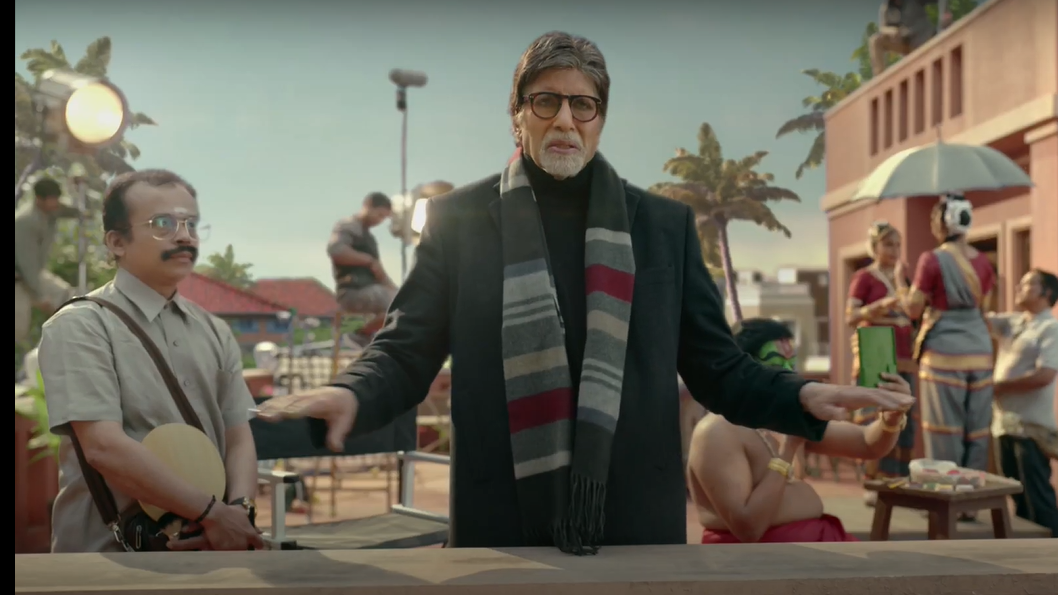
    He is known as the evergreen brand ambassador of the industry. Bachchan is the easiest choice for any brand manager to make since he cuts across multiple age-groups, communities and commands an unwavering love and respect from the audiences. He represents virtues such as patience, calmness, commitment, etiquettes, politeness, friendly, family man, elderly and many other things. He is among the veterans in the industry and commands an ability to shift the needle of sales on any product. Some of the brands that he endorses are – Ghadi Detergent, Dr Fixit, FirstCry, Gujrat Tourism, RBI, TVS and others. He has a kitty of over 15 brands.

    Kiara Advani

    She is the new girl on the endorsement block. Advani emerged in the industry with her performance in Kabir Singh and since then has bagged multiple roles in films and contracts from brands. She represents youth and beauty. Advani is associated with Myntra, Colgate, Limca, Priyagold, boat, Giordano Handbags, and others.

    Ranveer Singh

    He is one of the most revered youth icons the industry has seen in a long time. Be it his dressing sense, commitment towards maintaining his shape, love towards his lady lass, Singh is much followed by youth (both male and female) across geographies. Singh represents virtues such as – living the moment, lively nature, commitment, carefree attitude, and others. He is undoubtedly the darling of brands. Some of the brands that he represents are Harman JBL, Thums Up, Jio, Eduauraa, Royal Stag, BigMuscles Nutrition, Astral Pipes, Bingo, Ching’s, Kotak Mahindra, Siyaram’s and others.

    Alia Bhatt

    They hated her, they trolled her and then finally they started liking her. Alia Bhatt has emerged as a popular brand ambassador in the last three years. She is followed by youth and cuts across the age group of 18 – 30 years old. She is associated with brands such as PhonePe, MakeMyTrip, Lux, Nestle, Capresse, JSW Paints, Tresemme, Vicco, and others.

    MS Dhoni

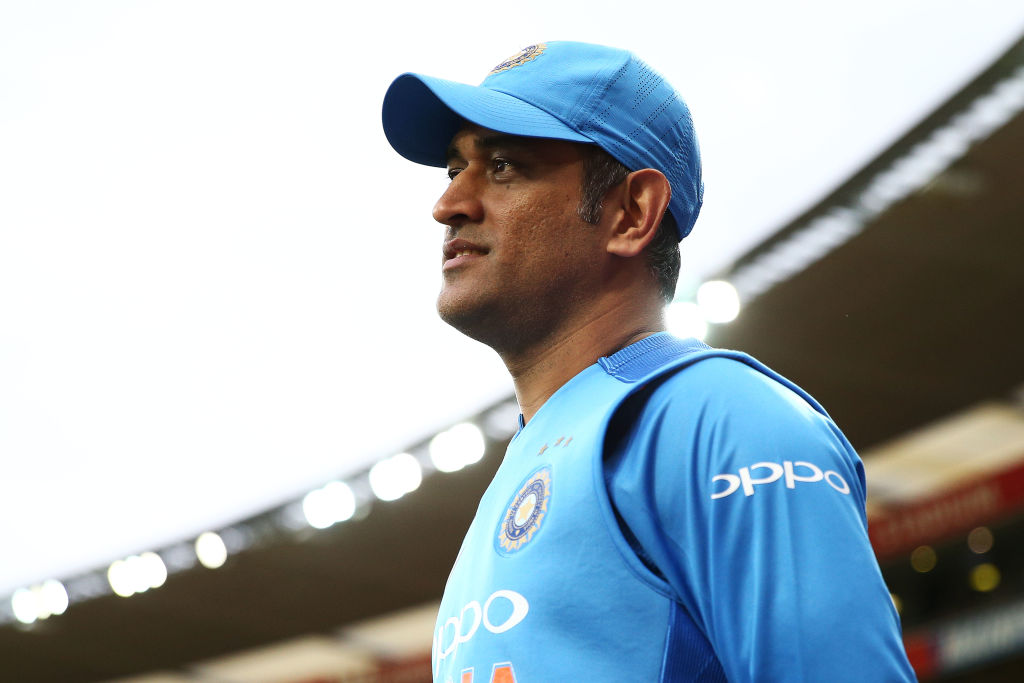
    He is the legend of Indian cricket has etched a name for himself in the history books. The story of a boy rising from a small town to the highest levels of the game is nothing less than inspirational. Audiences have always loved this story and brands have backed it. Despite retirement from cricket (minus the 20:20 format) Dhoni still represents virtues like leadership, skills, calmness, patience, sportsman spirit, family man, mentor and much more. He has been associated with brands such as India Cements, PokerStar, Oppo, Khatabook, GoDaddy, Snickers and others.

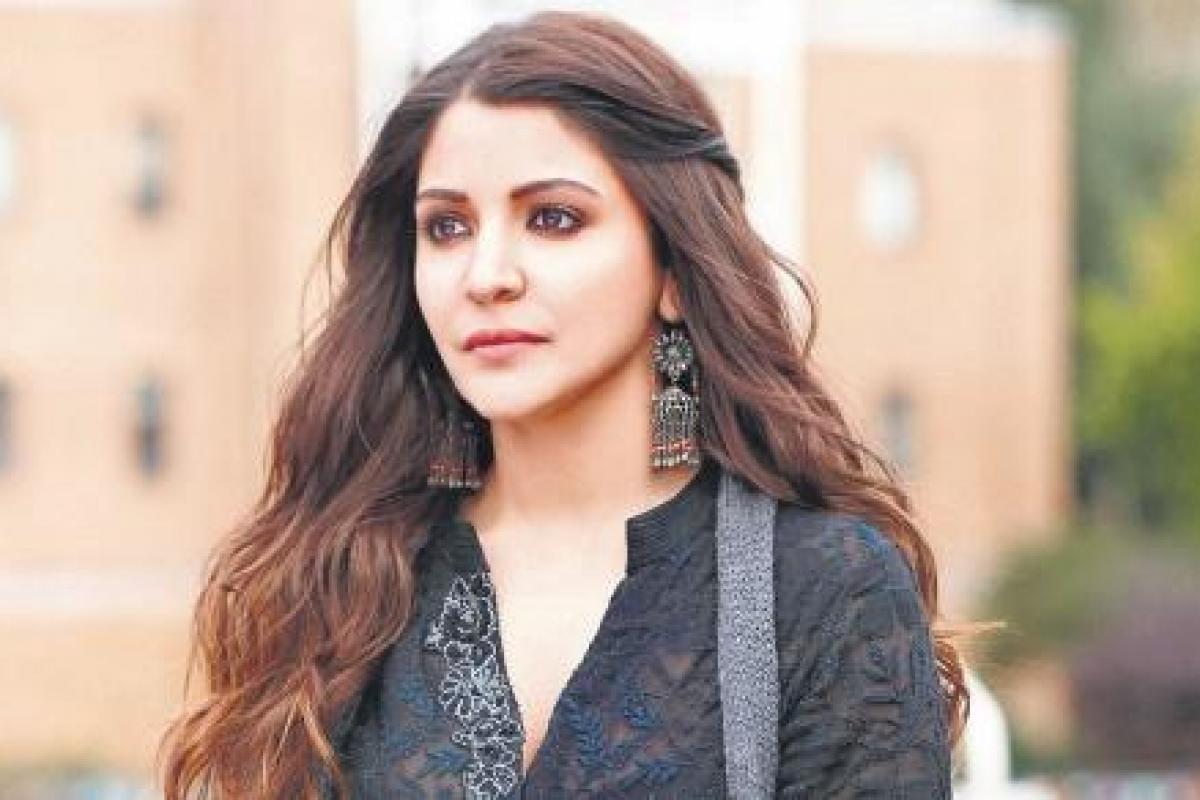
    Anushka Sharma

    The soon-to-be-mother and a popular Bollywood actor has emerged as a top ambassador this year on the back of Prega News spending heavily on advertising. The brand immediately signed Sharma as she broke the news of her pregnancy and launched a massive campaign with her.

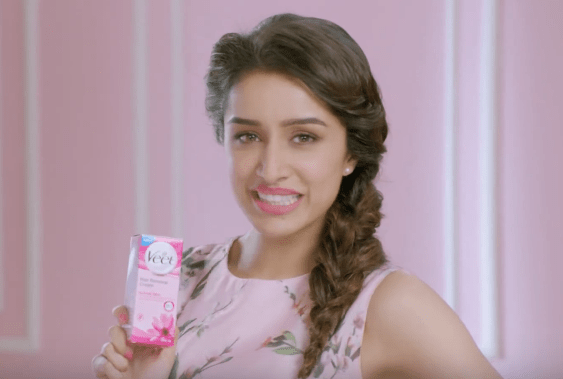
    Shraddha Kapoor

    She is one of the most under-rated actors of Bollywood and was seen in almost all the big box-office hits of 2018 and 2019. Kapoor has built her brand saliency step-by-step and has emerged as one of the most popular and credible faces of the industry. She represents hard work, persistence, patience, beauty, glamour, fitness and other such virtues. Kapoor represents brands such as The Body Shop, Vogue Eyewear, 2bme, Lakme, Veet, Hair & Care, Hershey’s, 

  • Throwback2020: DD’s importance stood out this year

    Throwback2020: DD’s importance stood out this year

    NEW DELHI: 2020 was a challenging year for public broadcasting. But it was also the year when public broadcasting made its presence felt and reminded people of the reason it exists. That the mission was fulfilled at the peak of the pandemic, when everything was paralyzed, but Doordarshan and All India Radio (AIR) continued their services uninterruptedly.

    Unfortunately, we lost some colleagues to the pandemic. Our reporters tested positive for the coronavirus while they were out in the field. So in that sense, public broadcasting went through the test of times.

    One key area where public broadcasting came through was in delivering social messages and creating awareness about the pandemic. Doordarshan emerged as the top five social advertisers, which underscores the value of public messages put out by us. We also saw record viewership ratings in the early days of the lockdown.

    Then, the tele-classes on Doordarshan ensured that the academic year did not go waste for students from far-flung areas. India is blessed with the only free to air satellite platform DD FreeDish, reaching thirty-five million plus households. With thirty plus Doordarshan channels and fifty-one educational channels, we have eighty-six channels delivering tele-classes across different languages.

    This year reminded us why people tune into Doordarshan. It remains the only platform where the entire family can come together and watch iconic content, no matter which region they belong to. This will be our focus going forward- to create selective iconic content that is not only a part of the heritage of the country but will appeal to the entire population and becomes a benchmark for the decades to come. Content like Mahabharata, Ramayana, Shaktimaan, which have a recall value that spans decades.

    But it’s not just content, but also a question of production values. People, especially youth, have high expectations. The benchmark is, what they call ‘over the top (OTT) quality,’ coupled with the latest use of technologies, graphics, and visual effects. We will try to ensure that the projects we work on bring in those elements.

    At the same time, we need to acknowledge that public broadcasters operate on public funds. There are constraints. So it cannot invest in the same manner that a private sector media house could do.

    NewsOnAir application proved to be a dramatic game-changer this year on the radio front, just like DD FreeDish proved to be a game-changer on the television front. It ensured that traditional radio listening is no longer restricted to the terrestrial reach of the transmitters. Now, it does not matter where you are, you can listen to your favourite channel. It has changed radio listening habits for audiences across the world.

    It also brought all radio services of AIR under one umbrella. Unlike TV where everything is uplinked in the satellite so you can monitor what is going on, with radio, it used to be restricted to that particular radius of a few kilometres. But, now we can tune into any of the radio stations among the 200 livestreams. It has also brought a degree of transparency and accountability.

    We also saw Doordarshan regional channels discovering life beyond the satellite way of traditional broadcasting. From our TV rating standpoint, they may be struggling with the private channels, because there are hundreds of channels, so it’s a huge challenge for a public broadcaster to stand out. However, on the digital side, each of these channels has acquired a distinct place. Several of them crossed half a billion subscriber base on YouTube, because of teleclasses being available on demand.

    I have a special mention for north-east Doordarshan because it saw dramatic growth in the news this year. The news was available in languages that were otherwise not available in Garo, Khasi, and Assamese. DD News Guwahati and DD News Shillong performed very well digitally as youth increasingly consumed content through the internet and smartphones.

    Apart from that, the most interesting thing has been the DD archives. In order to take full advantage of the nostalgia, we had started putting the archival content online, digitising it and making it available online. Old plays, old serials, old songs, all content will be made available. So it has driven renewed interest in regional languages.

    On the revenue side, the income was fairly steady, except for some disruptions, on the radio side. There were some hiccups for DD FreeDish too and some channels had to leave, but many new channels came on board, including three movie channels in the recent auction. Overall DD FreeDish remains on a steady path and a source of substantial revenue.

    On the advertising side, we definitely saw an uptick in commercial advertising because of the renewed interest in Mahabharata. But some of the biggest sporting events did not happen, so that was a disappointment. Hopefully, we will catch up in 2021.

    (Shashi Shekhar Vempati is the CEO of Prasar Bharati. This is an excerpt from a conversation he had with Srishti Choudhary)

  • What 2020 taught me about the advertising business

    What 2020 taught me about the advertising business

    MUMBAI: Indiantelevision.com is happy to bring you the year ender 2020 series Throwback 2020– a wrap  up of major developments in the media, entertainment, advertising and marketing sectors during one of the most challenging 12 months mankind has faced in a century. We are also bringing you perspectives from executives – their POVs – of the year just gone by. Here’s one from Dentsu Webchutney CEO Gautam Reghunath, wherein he talks what the annus horribilis has taught him and his team at the agency. Read on to learn more from him. 

    Your Core Team Will Make or Break You.

    Great teams aremade through endless iterations of roles cultures, processes, structures and tackling problems when they emerge. They are more than a bunch of well performing people put together. The only way to build these teams is through endless optimisations of how this team works together. I’ve never been more thankful to have had this core in place. Investing in culture and setting up a great core team has always been a priority at Webchutney but the last 12 months have just solidified how it is especially important during a rough year. 

    Agency creativity is now a rare product. We’re doubling down on it. 

    The truth is that over the past decade, creativity as a service has taken a back seat at most big agencies. In our industry right now distribution, productivity and  efficiency are what’s valued, but the side effects are that they are all becoming commoditised. There’s little differentiation between agencies. As for Webchutney, it is only smart for us to maintain our focus of differentiation to creativity, a truly scarce resource whose value is always on the rise.

    Remote-talent might just have saved advertising.

    Clever, creative people don’t just live in big cities. Social media platforms have thrived on it but advertising will have to learn to embrace creativity from across the country for its own sake. But not before a serious change to what’s required. Remote work requires new infrastructure and management styles that we aren’t used to or taught. The hardest challenge with remote is trying to change the fundamental nature of agency floors: we're social creatures, we communicate synchronously, we ideate together, often loud. Self-discipline is hard. In advertising, it’s even harder. Companies which figure it all out have a massive talent arbitrage opportunity.

    Resourcefulness and initiativestood out more than ever this year.

    Resourcefulness is a competitive advantage. Too many organizations hire when they should be optimizing the people they’ve already got. Efficient people want to work in an efficient environment. The people who have stood out for me this year are the ones who’ve shown excitement about the opportunities for us this year, an ability to contribute the right way and those who’ve displayed apotential to learn and adapt. Initiative is contagious.

    Client relationships – stop taking them for granted.

    Over a period of time, agencies typicallystart takingclient relationships for granted. But the reality is that every day, they’re choosing to be your client or not. No year has this played out more than 2020. Somewhere a client relationship starts resembling a subscription you renew every year. Digital agencies who’ve grown up on project work might deal with this better. We’ve fought so hard for a seat at the table over the years that because we were always pitching, we developed a skill of communicating who we are and what we’re bringing that some of the older agencies forgot to do consistently. 

    Make a Plan, But Don’t Plan on Sticking to It.

    Dwight D. Eisenhower once said, “Plans are nothing; planning is everything.” The key decisions this year challenged my willingness to evolve more than my aptitude or intelligence. 2020 taught me that you can make progress by planning but it’s more by deviating that the chances of success increase. It’s also proven to us in advertising that that we have so much more to learn as an industry on how to reinvent ourselves. Nobody ever regrets making fast and decisive adjustments to changing circumstances.