Category: Specials

  • Brisk sales for Rai Com’s TV and movie content at MIPCOM

    Brisk sales for Rai Com’s TV and movie content at MIPCOM

    MUMBAI: Rai Com’s MIPCOM sales have been moving at a brisk pace over the last few days, with many titles being picked up for significant territories.
     
    The market was especially strong for TV content. Season 1 and 2 of Anti Drug Squad was sold to MHZ (US), with negotiations ongoing for the Czech Republic and Croatia. In these last two countries, there is also strong interest in the series Rosso San Valentino and Una Buona Stagione.
     
    Rogers Omni TV (Canada) has acquired a large package of programming hours for two slots in Italian with English subtitles.
     
    The series Volare was sold to Russian Kultura TV. The Russian market also showed great general interest in period series.
     
    Inspector Montalbano and The Young Montalbano continue their success story all over the world. For both series as well as for the series Don Matteo, Rai Com is in promising negotiations with Strong Media as part of this group’s initiative to launch a new TV channel serving francophone Africa (Senegal, RDC, Ivory Coast).
     
    Movie rights have also sold briskly. The Mafia Only Kills in Summer by PIF was sold to YLE in Finland, HBO Eastern Europe, MTVA in Hungary and Czeska Televize in the Czech Republic. Finnish group YLE also acquired the rights to Viva La Liberta by Roberto And? and, straight from the Venice Film Festival, The Dinner by Ivano De Matteo.


  • MIPCOM 2014: What do buyers want in 4K?

    MIPCOM 2014: What do buyers want in 4K?

    MUMBAI: 4K is on everyone’s mind. Even when Indian direct to home (DTH) players, Videocon d2h and Tata Sky launched their 4K set top boxes (STBs), everyone questioned if there was enough content available in 4K. The same was discussed even at the just concluded MIPCOM 2014 at Cannes in the session ‘What do buyers want in 4K?’


    The session which saw Sky Deutschland EVP programming Gary Davey, France Télévisions director of future media Eric Scherer, Atlantic Productions director of operations Ruth Sessions and Red Bull Media House head of commercial distribution Bernhard Hafenscher speaking on the issue which was moderated by journalist & industry consultant Chris Forrester.


    Talking about the general prospect for 4K in the world, Davey said that a platform like Sky Deutschland is excited about the sea change that content is set to witness. “We will be very active on 4K. While we haven’t decided a launch date as yet, we are committed to it,” said Davey.


    What is interesting is that the take-up for 4K has outperformed even high definition (HD). So, is it the broadcasting push, the industry push or the consumer pull? Said Davey, “According to me, people just love the idea of big screen viewing with higher resolution.”


    For Sessions, content creators today are telling stories for multiple platforms and so a lot of them are filming it in 4K. Atlantic Productions has been filming in 4K for the past four years. “We have always been hungry for resolution and I believe in future proofing. So for the right projects, where we thought that stories that we are saying today will be relevant for the next 10-15 years, we film in 4K,” said Sessions adding that stories benefit when told in 4K.


    Television today has the risk of being over passed by new barbarians-Netflix and by millennial kids. “France TV too, have decided to test with 4K,” added Scherer.


    During the discussion, one thing which came out clearly was that it is sports and sports events which will be most important in 4K. “People can become a part of the sport, when they watch it in 4K. Once the market grows, we will have a lot of content in 4K,” said Hafenscher.


    The other content created in 4K will include high end documentary movies and arts content. “You have to pick the projects for 4K. It needs to mean something and add value,” informed Davey.

    In 3D and 4K quality, there is a lot of information in every shot. “There is so much going on in the image, because of the depth,” said Sessions.


    While content creators are excited about filming in 4K, the extremely high production cost is what keeps them on their toes. “The cost depends on the category of the content. It is expensive, but not multiple of costs. The cost increases also because of multiple use of cameras,” informed Scherer.


    So will 4K percolate to broadcasters? “It will take a little longer than people expect. For a long time, we will be cherry picking the content in 4K. In fact all the promise that ultra HD had made has not been realised as yet,” informed Davey.


    According to the panel, in the next five years, the world could see two-three 4K channels, which would start as special events and then move to a full-fledged channel.


  • Spice Studios “Buddha” in Cannes Mipcom 2014.

    Spice Studios “Buddha” in Cannes Mipcom 2014.

    MUMBAI: “Buddha” an Indian Historical Magnum Opus drama TV Series produced by Spice Studios, a subsidiary of Founder  Chairman, Dr Bhupendra Kumar Modi’s Smart Global conglomerate in India headed by Ms Ridwana, a 32 yrs, young entrepreneur who has over 10 yrs experience in entertainment industry..Spice Studios, Buddha is in now being offered at MIPCOM 2014.


    Buddha TV show is a biographic dramatisation in the style of a historical fiction of the life & teaching of Lord Buddha produced on a scale and grandeur never before seen in the annals of Indian television.


    Indian talented and hardworking actor Himanshu Soni who has played the lead role of Siddharth/Lord Buddha in this series is in Cannes to promote the series, which he says has brought a phenomenal changed his life and imbibed moral values in him.


    He says the teachings and messages of Lord Buddha given by him 2500 years ago are equally relevant even in today’s world.


    Being in Cannes, its very business oriented serious market which gives the players a large n immense opportunity do business, trade, and market positioning of their brand n business. It has participation of 112 countries this year and looks very promising to grow further next years. As young and fresh entry into media I love to hear the selected speakers here and learn their insights. The right weather in Cannes makes it perfect to make any business deal here.

    After Producing two Super Hit Block Buster films like ‘Oh My God’ and ‘No Problem’ in India, in Joint venture says the Co-Producer & Creative Producer Ms. Ridwana who is also currently attending the MIPCOM, that the TV show ‘Buddha’ has been a dream project of Spice Studios and today the company has successfully made it reach to the viewers of India, Srilanka, Indonesia, Myanmaar, Cambodia and Thailand and many countries through Zee TV and soon it will be on all major platforms around the globe. The company intends to take this show to at least a 100 countries across the globe in the coming times. Dr BK Modi, producer with Ms Ridwana Co-producer will be brining 2 major releases next year.


  • Radio Canada and Fox International Channels content sales sign output agreement

    Radio Canada and Fox International Channels content sales sign output agreement

    CANNES: CBC/Radio-Canada French Services executive vice president Louis Lalande and FOX International Channels (FIC) chief operating officer and National Geographic channels International chief executive officer Ward Platt have announced that they have signed an output agreement that will expose FIC content sales library of National Geographic productions to more viewers, including Canadian teachers and students.

    Radio-Canada has acquired over one hundred hours of National Geographic documentaries to be broadcast on the ICI Explora channel starting in January 2015.  Also in January 2015, ICI Explora will introduce a new slot in prime-time exclusively devoted to National Geographic productions, starting with six documentaries on big cats. Radio-Canada has indicated its interest in a variety of documentaries and series currently in production to expand the programming line-up of Découverte,La semaine verte, Zone doc and Les Grands Reportages on ICI RDI.
     
    The partners have also signed an agreement, which allows Curio.ca, Radio-Canada’s education platform – to air 200 hours of National Geographic documentaries previously acquired and aired on ICI Explora as well as additional hours secured specifically for Curio.ca.  This collaboration enables teaching institutions and libraries throughout Canada who subscribe to Curio.ca to access National Geographic’s outstanding factual content.
     
    Curio.ca is a new web portal that allows instructors at all levels – elementary, secondary and postsecondary to stream highly relevant video and audio content in classrooms to support their teaching. Content is organised into seven main subject categories – arts, business, education, health, history and geography, science, and social sciences. The portal, which features over 4000 news stories, documentaries and series, is currently accessible to over two million Canadian students.
     
    Speaking about the deal Lalande said “It’s perfectly consistent with our multi-platform and multi-screen approach whereby we try to offer our audiences the best of worldwide productions. This is a great example of the kind of collaboration intended by A space for us all, the strategic plan unveiled by CBC/Radio-Canada in June that will help us better meet the expectations of Canadians.”
     
    “This expanding partnership with Radio-Canada presents the perfect opportunity to introduce French-speaking Canadian audiences and a new generation of bright minds to inspiring, high-quality programming that encapsulates the core of the National Geographic brand,” commented Platt.
     
    In addition to the extensive acquired hours, Radio-Canada and National Geographic Channels International will pursue the development and co-production of stories that will resonate for both partners including a project focused on the Arctic.


  • Twitter to launch ‘Twitter TV Ratings’ worldwide

    Twitter to launch ‘Twitter TV Ratings’ worldwide

    CANNES: It is a big development for broadcasters around the globe. Social networking site Twitter had earlier this year launched ‘Twitter TV Ratings’ in the US. The network will slowly launch it in the UK, Italy and Australia.


    “We will be rolling it out across the world,” said Twitter researcher Anjali Midha during a presentation in Cannes at the ongoing MIPCOM 2014.


    With this, the Twitter team wants to put the power of Twitter in the hands of the broadcasters, so that they know how the programmes are doing day after day or week after week and to also find out the subsequent reach from that activity. “The reason we know that reach is important is because we see that Twitter really drives live ratings,” added Midha. 


    Twitter helps broadcasters know about live viewing as well as week after week viewing. “Twitter is conversational, it is live, it is public, it is the global town square. The audience takes the show and makes it their own, it is distributed, it permeates the entire culture,” said Twitter TV creative lead Fred Graver.


    Throwing some statistics, Graver said that Twitter conversations are shared with 271 million users, 78 per cent of whom are on mobile and “we process 500 million tweets a day, which is 60,000 tweets a second,” he informed.  


    According to him, 95 per cent of public conversation happens on Twitter. What’s interesting is that 70 per cent of tweets are created and consumed during the broadcast of a show. “People who see those tweets when it is live, say they want to watch the programme, either then or later online. We are amazed by the way our partners adapt the platform,” he added.


    He further went on to give examples of broadcasters who are using Twitter. “In the past one week, we have seen Channel 7 putting tweets inside promotions, Channel 1 in Russia putting hashtags and handles in news broadcast. There is a live musical jukebox in India that is powered by Twitter.”


    The key to the social media platform is data, which proves the value of audience and how they are valuable to advertisers. In the session on ‘TVxTwitter’, another point that was touched was money. “A lot of the money is drifting away to digital from TV. It is a fact. Twitter has devised an ‘Amplify’ programme that helps broadcasters capture the money by capturing the conversation on Twitter,” he said.


    Talking of partnership, Twitter UK’s head of broadcast partnerships Dan Biddle said that Twitter is the ‘water cooler conversations’ that won’t wait till the next day. He also delved on how producers could make the second screen important to their brand as the first screen. “Take the content and tweet. You give people the tweet that they hoped they had tweeted. It is not only about the share, it is also about the reach,” informed Biddle.  


    Biddle gave ways of reaching out to the audience:


    Use Hashtags: these are the moments, they are the campfire around which we tell stories. Every time you put a hashtag, people tweet more.


    Use @handles: That’s your presence and relationship on Twitter, that’s the voice that you have which talks to the audience.


    Interactions: How do you make followers? How do you turn the hashtags into something more? It is important that you reward conversations on Twitter.


    “We don’t see as many @handle’s as we see hashtags, which is strange. @handle is the voice of you, your show and it is the voice that can connect even after your show is over,” he said.

    According to Biddle, the first screen is the first screen only for one week, till the time the show is on air. For the rest of the time, it is the mobile, the second screen, which becomes important.  So let people know you are on Twitter and the trick to that is it you let people know that you are there, put it out on shows, during advertising,” he added.  


    Twitter is a part of your digital strategy.  “While it is the heart of digital strategy, there is more to it. It can help you drive audiences to SVOD, OTT, where ever you want,” he informed.

    According to Twitter officials, they find the best results when they work with their partners from the beginning.


    Midha who spoke on the data, started off by giving the one big phenomena, that the impressions were shifting to Twitter during live moments. “The World Cup Brazil 2014 saw 33 per cent increase in tweets and 85 per cent increase in impressions.  The audience has shifted to Twitter while the content is on TV,” she said.


    Talking of the US primetime market, Midha said that roughly 3/4th of all programming, now includes either a hashtag or some sort of tweet or voting mechanism. “That’s quite a lot.” This apart, on an average five integrations happen during a single telecast. But the big question is: Does this work? “It does work. And we are getting early results,” she said confidently.


    Citing example of the US reality show, Anjali said that the actual tweets per minute when the broadcaster introduces the hashtag, sees a 20 per cent lift in tweets as against when the audiences organically create it. She pointed out that 66 per cent of people prefer to see TV tweets from official show accounts.


    An important finding is that for a lot of people, actors and the cast are the most preferred source for news from TV. “Live tweeting from casts sees 64 per cent lift in total conversation volumes, while from show account it sees a hike of 7 per cent,” she informed.


    The session also delved on how broadcasters can monetise content through Twitter Amplify. “It is a partnership between Twitter, content and advertisers,” said Twitter Amplify international head Marie Sornin.


    Explaining how it functions, Sornin said that as TV broadcasters tweet some content, that tweet gets distributed to followers. The advertiser gives its ad to the broadcaster to integrate with the content. The broadcaster pays Twitter to distribute the message to a targeted audience. “So the advertiser pays to the content creator and the content creator pays Twitter to distribute the message,” she informed adding that Twitter Amplify leads to monetisation, more participation and engagement.


  • FreemantleMedia Latin America partners with 360Powwow

    FreemantleMedia Latin America partners with 360Powwow

    CANNES: FremantleMedia Latin America (FMLA) announced a new strategic partnership with media and Entertainment Company, 360Powwow to develop original Spanish-language content for the Latin American market.


    The deal will see FMLA further strengthen its pan-regional production activity and co-create a mix of titles across the lifestyle, entertainment and high-end scripted genres. FremantleMedia will retain the global distribution rights across both format and finished tape products.
     
    As part of the partnership, FMLA will continue FremantleMedia’s long-standing relationship with globally-renowned fashion expert, creative director of Marie Claire, and Project Runway judge, Nina Garcia, who will work alongside FMLA and Powwow 360 on fashion genre content via an exclusive development agreement.
     
    FremantleMedia Latin America CEO Adrian Santucho believes that its goal is to develop new content using Powwow’s culture-transcending talents and its executive team expertise. “A partnership between FremantleMedia Latin America and Powwow creates an exciting opportunity to offer innovative content for the US Hispanic and Latin American markets.”
     
    Powwow CEO Daniel Gutman added: “The strategic alliance with FremantleMedia Latin America is in line with our mission to develop the best quality content with the most talented people in our industry.”


  • Turkey named the new ‘Country of Honour’ for MIPCOM 2015

    Turkey named the new ‘Country of Honour’ for MIPCOM 2015

    CANNES: Reed MIDEM has announced that Turkey will be the ‘MIPCOM 2015 Country of Honour.’


    Organised by Reed MIDEM, MIPCOM 2015 will take place in Cannes, from 5-8 October 2015.


    Turkey, which is one of the most dynamic and prolific drama-producing nations, takes the torch from Mexico, which was ‘Country of Honour for MIPCOM 2014’. Turkish produced shows are currently aired in more than 100 countries worldwide. The territory’s annual drama exports exceed $150 million. Major international hits from Turkey include the Ottoman Empire costume drama series Magnificent Century now in its fourth season, which has been a top-rated show in the international market.


    Turkey has a population of more than 76 million, giving it a strong domestic market for TV content. Its high-quality output covers all genres including drama, feature films, documentaries and animation. In recent years, the country has become a fresh source for adaptable formats. At the crossroads of Europe and Asia, Turkey also acts a valuable production hub, offering quality technical infrastructure.


    Istanbul Chamber of Commerce vice president Dursun Topcu said, “The Turkish television industry ranks as the second-fastest growing in the world. As the Country of Honour, we would like to share this dynamism at MIPCOM 2015, which provides a global showcase for Turkey to advertise its treasures to the world.”


    The MIPCOM focus on Turkey will feature a series of high-level conferences from Turkish industry figures, screening showcases to preview the country’s latest programme, and business networking events.


    “The Country of Honour programme allows TV executives from around the world to discover the richness of Turkey’s TV and entertainment industry,” commented Reed MIDEM director- television division Laurine Garaude.


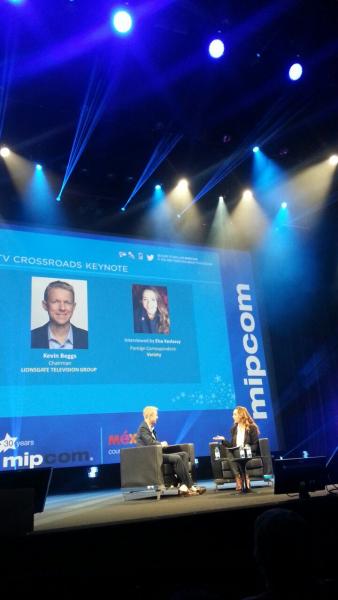
  • “Asia is a priority market for Lionsgate”: Kevin Beggs

    “Asia is a priority market for Lionsgate”: Kevin Beggs

    CANNES: Lionsgate is scrutinising the Asian market.  For the company which has been in the channel business in Asia through joint ventures for the past five years, the region now features in the priority market list.


    Addressing the audience at MIPCOM 2014, Lionsgate chairman Kevin Beggs said that with its Hong Kong office, the company is also pushing into India. “Shows like Orange is the New Black in China represent a huge revenue growth for us, which before was pretty close to nothing,” he said, adding that while the region is temperamental in a way, it is also very promising.


    The theatrical side of Lionsgate is in deep discussions about bringing more films into Asia. “We are looking at developing shows that could find itself in the market now. It’s a priority for the company, but it is also an emerging market for us, that will go a long way at making us strong, and we are focused on it,” informed Beggs.  


    Lionsgate, the creators of ‘Orange is the New Black’, ‘Manhattan’, ‘Mad Men’ is a firm believer of having a global look, while making a show. “Both Mad Men and Orange Is The New Black are high quality shows, which we were hoping would be liked by the global audiences. It has exceeded expectations,” he said.


    The company keeps its eyes open for finding great partnerships across the globe. “We are talking to people all the time. We are finding the perfect shows that we can co-commission or commission simply for the UK or Germany or France pay market. It is a high priority for us,” informed Beggs.


    Lionsgate has auctioned many formats so far in different markets. “We always look for the right thing to adapt,” he added.


    Beggs also touched upon the streaming services that have started playing a key role. “While television has ad breaks with 42 or 43 minutes of drama, the streaming services have no advertising obligation. And they have a much longer running time and no breaks. The storytelling of ‘Orange is the New Black’ on Netflix is very different. It takes a lot of digressions on the shows, and because people will re-watch, one has a lot of freedom to tell a story in a much more serialised and novelised way. There is no need for a dramatic ending before a commercial break, so that people can come back. So the pacing is interesting from our standpoint as well,” he said.


    He feels that in a scenario like this, the writers have to do a great job and also as producers “we need to understand the audience and what would hold them back. Audiences can watch the whole season of a series in a few hours and would wait for the next season, which would take a year. So this is different,” he informed.


    Beggs believes that there will be more streaming players in the future. “It the next two years or so, there will be six to seven new streaming services or may be more,” he stated. Citing the reason for the change, which could see some big players jumping into it, he said that streaming business, on a pay basis, does not need a huge number of subscribers to breakeven.  “Brands will follow where the audiences are,” he concluded.


  • MIPCOM 2014: Best time to invest in India, say Indian media barons

    MIPCOM 2014: Best time to invest in India, say Indian media barons

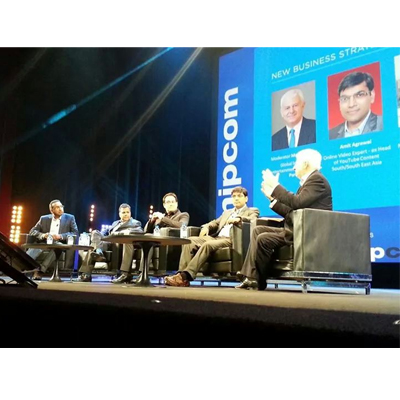
    CANNES: Indian content market is going through an exciting phase, and putting the scenario upfront to the world, through one of the biggest stages at the ongoing MIPCOM 2014 was the India panel which comprised of Colors CEO Raj Nayak, Balaji Telefilms group CEO Sameer Nair, Rajshri Entertainment managing director and CEO Rajjat Barjatya and online video expert and ex-head of YouTube content south/south east Asia Amit Agrawal. The session on ‘New business strategies from India’ was moderated by PwC global leader, entertainment and media Fenez Marcel.


    Setting the stage for some heated discussion was Nayak when he highlighted one of the biggest issues the country faces: lack of broadband. “Lack of connectivity is an issue. If the experience of watching becomes smooth, it will be a game changer,” he said.


    Comparing the online market in India with that of the world, Agrawal said that the Indian market has both traditional medium and online play “and both are very strong,” he informed adding that this meant huge opportunity to tap into.  


    Agrawal went on to say that while India consumes a lot of content online, almost 30-40 per cent of this content is not made in India. “That’s a huge chunk. I am seeing an emergence of micro-communities with technology. This will enable the content producer to tackle the right community. It will happen and very soon, may be in the next 12-18 months,” he stressed.


    There is too much of fragmentation in the country, currently. Mentioning the Telecom Regulatory Authority of India’s regulation about ad-cap for pay TV, Nayak said, “Once this happens, the supply and demand ratio will change. This will also help in the yield going up, because the demand will go up. We have to come at a point where the FTA channels will carry advertising with no limitations, pay channels which will have 10+2 advertising and very premium channels will have no advertising.”


    Barjatya who wears the hat of both traditional movie maker and digital feels that India is at a cusp of digital revolution. “For me the opportunity is to reach the global audience, especially through mobile. Traditional media rules cannot be applied on mobile,” he said.  


    The YouTube journey in India started with traditional media content that was distributed to audience which was moving away from traditional media. “But now, over the last one and a half years, I see so many online channels coming up on comedy, food, music, news, tech bloggers have all come up,” informed Agrawal.  


    With a contradicting viewpoint, Nayak said that YouTube is the biggest competitor to the broadcaster. And that it is due to this, that the broadcaster, since the last month, has taken its hit show Comedy Nights with Kapil off YouTube. “I am a big believer of digital media and I feel it is the future, but I also feel that it will co-exist with television and they will grow parallel.”


    Viacom itself is looking at a lot of short formats. “But the problem is that unless broadband issue is not addressed, monetisation will remain a huge problem. If you look at the money, YouTube does Rs 500-600 crore business from India, where television is a Rs 7000 crore business, so the numbers are small and that will not grow until and unless the bandwidth issues are addressed,” said Nayak.


    Nayak believes that no one in India has so far mastered the art of monetising content on the digital media, social media the way it should be, given its increasing reach and targeting abilities.. 


    “Monetisation will happen with broadband and hopefully this should be resolved with the rollout of 4G,” he added.


    The panel also put forth its wish list for the new government formed under Prime Minister Narendra Modi. According to Nair regulation for content already exists, which is beneficial to the whole industry. Highlighting PM Narendra Modi’s ‘come make in India’ campaign, he said that the government is giving open invitation for people to come to India. “As for Raj’s point that producers in India are not partnering with broadcasters and thus not sharing risks, we are looking at that very seriously and are encouraging everyone else to do it. If there is a risk-reward mechanism, everyone can benefit,” explained Nair.  

    As for Nayak, keeping in mind the dynamic & tech-savvy PM the country currently has, who understands the power of the Digital media, connectivity and broadband will get addressed in a much faster footing.  Given that electricity is still erratic in rural India, people will communicate and consume content through mobile phones. “I would ask him to release spectrum because that’s a big issue that’s coming in the way of growing business. Another thing that I would request  is complete implementation of the digitisation, process which is expected to be over by 2016 . He further added that broadcasters are not getting their fair share of subscription revenue and this can only happen once the digitisation process is complete and all stakeholders start seeing the benefits,” he said.


    Barjatya’s wish list consists of wiring up India and encouraging Indian entrepreneurs to have a global outlook rather than be restricted to Indian audiences alone. “We need to appeal to the audience outside of India,” he said.


    For Agrawal, the government should remove hurdles. “Out of all the YouTube content that we produce, more than 70 per cent of the viewership for programme comes from global audiences. We haven’t done a great job in marketing ourselves and make people aware of the country,” he added.


    Nayak is hoping for a dynamic change in the media industry, with the new PM.   


    The discussion also touched upon the consumer behaviour in the country.  “We see a lot of consumption happening on handheld devices. When we began, 10 per cent of our views were from handheld devices, today it is almost 50-50 and that number is higher in India than in the rest of the world. India’s next billion people will access internet on mobile, and will not know about PCs,” opined Barjatya.


    Agreeing to this, Nayak said that the reason it will happen is because for mobile, one doesn’t need electricity. “We have 160 million homes and 900 million handheld devices right now, which is expected to go up to 1.5 billion handsets. So the explosion is happening. Power will take a lot of time to be addressed, but if you have internet, you can consume content,” he informed.


    Nair classified the audiences and the programmes being made. He said, “The television industry currently is programming for newer audiences who are more into household dramas. Then there are also those who have already lived through all this and are now looking for more. The audience is evolving. There will be more niche channels.”  


    All the panelists felt that this is the best time to invest in India. “In India, people are ready to match dollar to dollar. And we are ready to put the money where our mouth is,” announced Nair.  


    Concluding the session with one advice to entrants in the market, Nair said, “It is important to be patient. We are still at the ground floor, but we can build.”


  • I want to restore choice and option for consumers, says Netflix’s Ted Sarandos

    I want to restore choice and option for consumers, says Netflix’s Ted Sarandos

    CANNES: For Netflix chief content officer Ted Sarandos this is the golden age of storytelling. Sarandos was giving a keynote on day two of MIPCOM 2014.


    Talking about Netflix and its engagement with the audience, he said, “We have been able to innovate and advance technology that favours the consumer. We have been able to innovate the audience, who are on-demand viewers.”


    Netflix which has 50 million paid subscribers in 40 countries, recently launched in France and Germany. Talking about the viewership pattern Sarandos said, “We have been very encouraged with viewing behaviour in France and unsurprisingly, Orange is the New Black is the most watched show in France and Germany for Netflix, in the first couple of weeks and we are excited about it since the shows have not been previously available in these markets.”


    According to Sarandos, what works for Netflix is the fact that it caters to the desire of people who have heard about shows, but not been able to see it. 


    Netflix offers 70 per cent TV shows and 30 per cent movies, “and that’s the way people watch as well,” he informed.


    On his catalogue being small at the time of launch, he said, “What we launch within a new territory is half of the programming that the territory will have in the next 12 months. And we are literally adding content everyday wherever we launch.”


    For Sarandos, it is each passing day that gives him the idea of the viewing habits of consumers. “So what you see at the launch is what we know pretty much about the market without even being there and then depending on the viewing behavior, we licence content that people want to see.  So it is an intentional move to launch with less content,” he added.


    Netflix also recently launched in Germany and talking about the lessons from the market he said that viewing hours per subscriber was very impressive.


    The platform offers consumers the level of choice that they haven’t seen yet. “So while there are a lot of pre-conceived notions, one needs to have dubbed content while also have subtitled programming.”


    The platform may also have plans for original French production. “We have found large audiences for existing French content around the world already. We have started working with French animation houses for co-productions,” he said while adding that they have already aggregated a lot of audiences around the world for French shows.  

    So is the business profitable overseas? Answered Sarandos, “We are investing continuously in expansion, we want to be a global company. We are at serious investment phase.”


    Sarandos believes that Netflix is a destination for content, for ability to choose and enjoy in one’s own timetable.


    The platform which is now also moving into making movies, but doesn’t get involved in writing the script, aims to be active on distribution. “We pick storytellers and let them tell the stories. We don’t dictate creative storytelling,” he said.


    Netflix doesn’t want to kill windowing, instead wants to restore choice and option. He also touched upon the point of Netflix’s data analytics. “We use the data to help determine the potential size of the show. The ability to invest in the show was because of the data we had. We didn’t use the data to influence the creative of the show,” he clarified. 


    Will Netflix move to sports and news as well? Sarandos quickly said, “It is on-demand that makes Netflix desirable and sports and news are linear events, so we can’t do anything interesting in sports and news right now.”