Category: Specials

  • FICCI pushes for 10-year tax holiday for AVGC industry

    FICCI pushes for 10-year tax holiday for AVGC industry

    NEW DELHI: With the nation waiting for the maiden Narendra Modi government’s Budget 2015, every sector is speaking its heart out with regards to their expectation from the Union Budget.


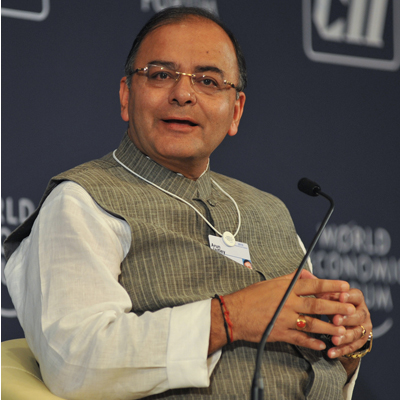
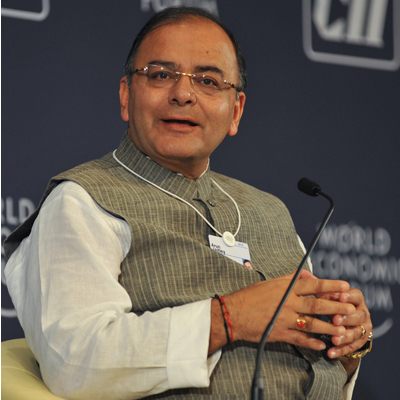
     The entertainment wing of the Federation of Indian Chambers of Commerce and Industry (FICCI) in its wish-list submitted to the Finance Minister Arun Jaitley- who also holds the Information and Broadcasting portfolio, addressed the issues faced by not just broadcast, cable and radio sectors, but also pointed out the changes needed in the cinema and animation sectors.


    Cinema


    Referring to the film sector, FICCI wants Digital Cinema Services to be included under the Negative List for Service Tax exemption, as this will help the industry, which is struggling against piracy. Digital Cinema service distributors were exempted from Service Tax vide notification of March but with the introduction of the Negative List in Service Tax, this circular got rescinded.


    It wants the Government to exempt performing artists from levy of Service Tax, which will help the industry that already suffers from very high rate of indirect taxes in India. Levy of service tax on artists increases the cost of the film producers and distributors, which ultimately gets passed on to the consumer.


    On-screen advertising in cinemas and multiplexes may be exempted from levy of service tax as the on-screen advertising within cinemas caters to advertisers with small businesses, with limited resources. The on-screen advertising forms an important source of revenue for the exhibitors, which are already reeling under the pressure of multiple taxes. Until recently, on-screen advertising within cinemas and multiplexes was subject to service tax till 30 June 2012. Since 1 October 2014, the negative list of services has been amended whereby on-screen advertising within cinemas shall be liable to service tax.


    There should be a clarificatory instruction on the on applicability of service tax on revenue sharing arrangements for exhibition of films. At present, service tax is levied on revenue of such sharing arrangements for exhibition of films between producers, distributors, sub-distributors, and exhibitors. But the exhibitions of films are carried out on a principal to principal basis and neither party renders any service to another.


    Furthermore, Rule 4(a) of the Service Rules 2012 should be amended suitably to include post-production services, as this will provide parity with goods imported for re-export and will promote growth of such services. At present, services performed on the goods temporarily imported for re-export are not liable to Service Tax due to specific provision in POPS Rule. But in case of post-production services such as dubbing, editing, title printing etc. the above rule is not applicable and Service Tax is payable.


    FICCI wants reversal of the increased withholding tax to eliminate the differentiation for the transactions with entities in nations having treaties and other entities. This withholding tax rate has a significant impact on payments to be made for acquisition of content. There is a direct impact on companies distributing foreign films in India and Indian films distributed outside India with non-residents with no treaty jurisdictions such as Croatia, Fiji, and Monaco etc. While the withholding rate for transactions with major treaty nations such as UK and US is in the range of 10 per cent to 15 per cent, the rate of 25 per cent is punitive for the same transactions which do not originate from treaty nations. (It pointed out that the Tax on royalty and fees for technical services earned by non-resident taxpayers has been increased from 10 per cent to 25 per cent in the cases where India does not have a Double Tax Avoidance Agreement (‘Treaty’) with the country of service provider.


    FICCI also wants a suitable reduction in the existing period of 90 days before end of the financial year (under Rule 9A and 9B of IT Rules) as this will grant relief to assesses whose feature films have incurred losses and have been released for exhibition in the last quarter of the financial year. It said that in certain cases where not all rights of exhibition of a feature film are sold and it is released for exhibition on a commercial basis within 90 days before end of the financial year, the feature film performs poorly and it is exhibited only for a short duration.


    Consequently, the film producer may not recover costs. In such cases in view of the prevailing IT Rules, the film producers are unable to claim a deduction of entire production cost and the loss is to be carried forward to the next financial year. Accordingly, such film producers are unable to claim losses in the year the feature film is released for exhibition despite no further scope of income. A similar situation exists in the case of expenditure of distribution rights in view of Rule 9B of IT Rules.


    Animation and Special Effects


    Referring to animation, special effects (VFX), gaming and comics (AVGC), FICCI wanted a 10-year Tax Holiday for the AVGC industry and lifting of service tax on studios developing original content. It wanted restoration of STPI advantage scheme for AVGC or ITES for another 10 to 20 years and cover/encourage exports as well as IP creation.


    It wants animation as one of the priority sectors and said the Minimum Alternate Tax (MAT) applicability for units undertaking Animation work in SEZ should be withdrawn to encourage export of animated contents.


    Encouragement should be given to entities through reduced tax rates/incentives for exploitation of self-developed content in overseas markets. Exemptions should be granted to overseas payments to foreign artists stationed overseas from withholding taxes. A 50 per cent reimbursable MDA (Market Development Assistance) should be given for travel and registration fees to international market events and withholding tax on revenues accruing from sales of mobile games in non-India markets as well as removal of withholding tax on the development contracts given to mobile game developers outside India should be removed. Also, there should be removal of withholding tax paid by expats working in India for Indian mobile game development companies. This was because of long gestation period, potential to generate IPs, and potential to generate future stream of incomes.


    The Government should consider setting up of co-production fund for a minimum of five years with Rs 110 crore each year with the Children’s Film Society, India, for AVGC. This will help the industry immensely and in the next five years India can boast of over 100 successfully implemented co-productions and shows, which will be extremely strong original intellectual property out of India, one of the strongest libraries establishing and restoring forms of art, culture and creative styles and designs which will be known throughout the globe. India would emerge a true leader in the digital content economy and it will ensure jobs for over 400,000 to 500,000 creative, techno creative and artistic youth of the country in the next five to seven years.


    The industry body says the excise duty on local manufacture should be brought down from 12.5 per cent to zero per cent (similar to film and music industry). This will enable CVD to be brought to zero. In addition, the Import duty on consoles (Gaming hardware) should be brought down to zero per cent. This will increase the installed base of gaming consoles to enable the local developer ecosystem to flourish.

  • News channels’ budget special

    News channels’ budget special

    MUMBAI: Will Arun Jaitley successfully meet the expectations of the common man or are the aspirations too high? Will we get new schools and colleges? Will the number of AIMS increase? What will happen to health security? Will medical treatments become more affordable? Will there be any rationalization of taxation?

    The Ministry of Finance will be under the spotlight in the coming days as the country seeks answers to many such questions.

    Indiantelevision.com takes the opportunity to throw a set of questions to various news channels on their plans and offerings to meet viewer’s aspirations.

    ET Now

    The theme for Budget 2015 for the channel is Budget for Achhe Din. “This being the first full-fledged budget from Modi government, the common man’s and various stakeholders’ expectations for achhe din are really high and this perhaps would be the chance for the government to testify the promises made,” says ET Now managing editor R Sridharan.

    With the budget being a highly anticipated event, news channels are gearing to grab as much attention as possible. ET Now is content with the advertiser response. “The response has been phenomenal and we have brought on-board the maximum (and exclusive) budget sponsors within our category. Besides, we have sold out complete inventory on FCT and non FCT elements during budget week and budget day,” adds channels spokesperson .

    Budget also tests the editorial prowess. “All stakeholders of the budget viz. India Inc., market participants, traders, retail investors and the common man would largely depend on us to bring the fastest news updates, analysis, reactions and verdict on the budget,” he says.

    ET Now is looking at providing the most comprehensive and decisive analysis on budget to its viewers. “Every year our budget verdict is closely watched. This year we have a power packed line-up of pre-budget programming named Budget Marathon all through the budget week, which will consist of budget debates, a daily call-in show on personal finance and special editions of our extremely popular show market makers,” he informs.

    So why should one tune into ET Now? Sridharan says, “The sheer depth and expertise of ET Now’s budget coverage will be unmatched as compared to any other English business news channel. Foremost economist Swaminathan Aiyar and Motilal Oswal joint managing director Raamdeo Agrawal will lead ET Now’s programming on budget day. Aiyar, is the most respected economic expert in India who has been analysing budgets for more than 45 years now. In addition to our seasoned anchors, ace fund manager Punita Kumar Sinha will also be part of our stellar line up of experts. With the combined might of these three, the viewers will gain tremendous insights and knowledge ranging from economy, markets, finance and investments.”

    “Each of our experts is a stalwart in his or her area. Be it institutional investors or retail investors, market participants look to our panel to get the most decisive analysis of budget proposals. We have the most authoritative voices on the channel,” he informs.

    NDTV Network

    NDTV, as part of its budget special, will throw all the key questions to find out if the Narendra Modi led government will be able to live up to the expectations of 1.25 billion Indians.

    The channel, through its budget programming, will find out if the growth stimulus is pro-subsidy or pro-investment?

    NDTV senior vice president corporate affairs and senior editor real estate Manisha Natarajan says that the first full budget will be the Modi government’s first real acid test. “Join NDTV as we balance the numbers and find out how Budget 2015 affects you,” she says.

    The programming of the 24 hours English news channel NDTV 24/7 during budget will be as follows:

    Pre-Budget programmes

    23 and 24 February: Budget ADDA at 5:30 pm. In the build up to the Union Budget, Shweta Rajpal Kohli will be joined by the captains of the industry to outline their wishlist for the first proper budget of the Narendra Modi government.

    26 February: Rail Budget Live (12–1 pm): The rail budget presentation will be followed by analysis with railway industry experts and policy makers.

    27 February: Economic Survey Special (9-10 pm). Senior economists, industry voices and policy makers debate and discuss the Economic Survey 2015.

    28 February: Union Budget 2015. Industry and political voices, policy makers and economists join Prannoy Roy and Shweta Rajpal Kohli from 9 am to 3 pm to look at the Narendra Modi government’s first budget.

    9-11 am: Pre-Budget expectations and analysis

    11 am – 1 pm: Budget Speech Live from Parliament

    1-3 pm: Post Budget analysis

    The scheduling of the network’s business channel NDTV Profit is as follows:

    Betting on the Budget: Presented by Prashant Nair, the viewer will get insights into the expectations of the financial markets from the Union Budget. The show will have top-notch market participants who will discuss and debate what the budget can do for the economy and of course for the financial markets.

    B-School Budget: Moderated by Shweta Rajpal Kohli, in this show young business students talk about their perceptions and understanding of the budget and how they might perhaps do it differently.

    Budget ADDA: In the build up to the Union Budget, captains of industry outline their wishlist for the first proper budget of the Narendra Modi government. The show will be anchored by Shweta Rajpal Kohli.

    Programming on Budget Day 

    Name – Union Budget 2015

    Anchors – Vikram Chandra and Prashant Nair

    Timing – 8 am to 5 pm 

    Pre Analysis – 8 am to 11 am 

    Budget Speech – 11 am to 1 pm 

    Post speech analysis – 1 pm to 5 pm 

    News X

    When queried about its special coverage for budget 2015, NewsX editor in chief Rahul Shivshankar says, “NewsX has a new mission for the new NDA government for their first budget – Mission 10 per cent. This is also our branding for the coverage, which will all dovetail into this special theme- how to attain double digit growth for India.”

    NewsX will be breaking the mould with a new virtual gfx (graphics) technology to present the big numbers in the budget.

    Talking about the motto of News X, Shivshankar says, “We believe that one of our primary functions is to ensure that the voice of the common person reaches the newsmakers. We are doing a series of roundtables with experts and opinion makers which will be suggestive of what the government focus for the budget should be.”

    During the budget, viewers tune in to a channel to follow the editorial content. The channel with better content garners more viewership. “NewsX has a detailed roll out plan for budget programming. From 19-27 February, our programming Your Budget, Your Expectations would highlight the expectations of the common person from the FM and PM. From 21-25 February on our budget show Mission 10 per cent at prime time, we will debate on issues like growth, fiscal deficit, tax, growth and aspirations of the youth with eminent panel of experts. From 27-28 February our prime focus will be on the political and economic implications of the Rail Budget and Union budget including Economic Survey. Overall, our editorial focus will be to be non jargonistic, to simplify the numbers and ensure the coverage is detailed yet tailored to the common person,” he informs.

    The panel of experts is a very important part of any presentation and the NewsX panel of experts will have former advisor to PMO Subhashish Gangopadhyay, Vivian Fernandes, former cabinet secretary TSR Subramanian, economist BB Bhattacharya, founder Air Deccan/Industrialist Captain Gopinath, senior journalist MK Venu, convener economic cell BJP PN Vijay, direct tax expert KPMG Prashant Kapoor and personal tax expert KPMG Ashish Gupta.

    When asked why should people choose NewsX over others Shivshankar replies, “For clarity. It’s as simple as that. We put the viewer before the numbers.”

    Times Now

    Times Network’s 24 hours news channel Times Now has named its special coverage Super Budget in concurrence with the theme that this budget will perhaps be a kick-starter for the next phase of growth.

    Super Budget 2015 will be a congregation of debate shows, interviews, analysis and discussions with Times Now editor in chief Arnab Goswami and economists like Omkar Goswami, Lord Meghnad Desai, Dr. Rajeev Kumar and Sunil Alagh who will discuss issues regarding the common man’s expectations from the budget 2015,” says a Times Now spokesperson.

    The channel is known for its innovative adaptations, as during every special presentation it comes with a new technical innovation. The budget will be another effort to showcase innovate formats both in terms of technology and editorial styles.

    When questioned about the impact of budget presentation in news channels, the spokesperson asserts, “The budget is a crucial exercise that plays a key role in determining not just the economy but also impacting our lives. Viewers watch news channels for information around the budget, how the subject matter experts are reacting to the budget and how the budget will impact our life. Times Now tries to simplify the budget by analyzing it in simple terms bereft of jargons.”

    The channel will continue its strategy of bringing the budget to its viewers in a simple and understandable form. “We will be analysing how the budget will impact our daily lives and the impact it will have on corporate and the markets. With a range of experts from industry the analysis is aimed to be sharp and fast with path breaking graphics to support the same,” he adds.

    With all the news channels having more or less the same presentation, it is highly challenging to emerge as viewer’s choice. “In all budgets, Times Now has been the choice of viewers. We have managed to garner record shares in each budget. With a team that comprises two of India’s best voices on economics in Dr. Omkar Goswami and Lord Meghnad Desai, the channel promises to deliver sharp analysis. Additionally experts like Dr. Rajiv Kumar, Sunil Alagh and Sanjeev Sanyal will provide industry viewpoints to the budget. All this packaged in an interesting format makes for exciting viewing,” reiterates the spokesperson.

    Ad rate hike

    According to media buyers, the news channels will see a minimum hike of 50 per cent in the ad rate. A media executive says, “Budget is one of the major event for news channels and they prepare special marketing campaigns for it so that brands come and endorse.”

    Another executive from the media planning community adds on condition of anonymity, “The hike in ad rate is directly proportional to content in store. Better content delivered by prominent dignitaries grabs more attention and hence the channel get better price for their ad slots.”

    Though economic reform is a 365 days agenda, the general budget plays a vital role in the economic condition of the country. It remains to be seen if budget 2015 takes India, which was recognised as ‘fragile five’ couple of years back, one step forward towards the fantastic or favourite five in global economy.

    (The channels are listed in alphabetical order and not on the basis of viewership ratings or accolades.)  

  • Infrastructure status for b’cast industry, reduce customs duty on STBs: FICCI budget wish-list

    Infrastructure status for b’cast industry, reduce customs duty on STBs: FICCI budget wish-list

    NEW DELHI: The Broadcasting industry should be granted infrastructure status to push the digitisation agenda of the government. 


    In its wish-list submitted to Finance Minister Arun Jaitley – who also holds the Information and Broadcasting portfolio – the entertainment wing of the Federation of Indian Chambers of Commerce and Industry (FICCI) said that in the present era of convergence, the distinction between Telecom, IT and Broadcasting sectors is getting blurred. 


    The Telecom sector is already treated as “infrastructure service” and so giving the infrastructure service status to broadcasting will provide a level playing field to the sector.


    Broadcasters and distributors will be aided with better and affordable financing options in the very capital intensive growth phase. 


    The FICCI wish-list covers television and radio broadcasting, cinema and animation and gaming, apart from suggestions relating to advertising in the media. 


    At the outset, FICCI says the Indian media and entertainment industry grew from Rs 821 billion in 2012 to Rs 918 billion in 2013, registering an overall growth of 11.8 per cent. Given the impetus introduced by digitisation, continued growth of regional media, new government formation, strength in the film sector and fast increasing new media businesses, the industry is estimated to achieve a growth rate of 15.3 per cent in 2014 to touch Rs 1059 billion. The sector is projected to grow at a healthy CAGR of 14.2 per cent to reach Rs 1786 billion by 2018. 


    Television clearly continues to be the dominant segment, but strong growth has been posted by new media sectors, whereas gaming and digital advertising recorded a strong growth of 25.5 per cent and 38.7 per cent compared to the previous year. The music sector has shown a decreasing growth (-9.9 per cent growth in 2013 over 2012 compared to 18 per cent growth in 2012 over 2011) despite strong content and digitisation.


    Radio is anticipated to see a spurt in growth after the roll-out of Phase III licensing. The benefits of Phase I cable digital access system (DAS) rollout, and continued Phase II rollout are expected to contribute significantly to strong continued growth in the TV sector revenues and its ability to invest in and monetize content. 


    The sector is expected to grow at a compounded annual growth rate (CAGR) of 18.1 per cent over the period 2013 to 2018.


    Set Top Boxes 


    It said the expected investment in set top boxes alone is around Rs 20,000 to Rs 25,000 crore and therefore wants the customs duty levied on STBs to be on the transactional value and not the maximum retail price. Basic customs duty should be reduced to five per cent if not zero per cent as this will help push digitisation faster, which would lead to transparency which will result in manifold increase in the tax revenues from Service Tax, Entertainment tax and Income-Tax. 


    Television Sector


    Referring to tax withholding on Transponder hire charges (Section 9(1)(vi) Explanation 6 of Income Tax Act, 1961), FICCI pointed out that the Finance Act 2012 amended the section to retrospectively include payment for transponder hire and other charges as royalty. However FICCI wanted a clarification to be issued that Transponder hire charges are not “royalty” as Courts in India have held that such charges are not ‘royalty’ or ‘Fee for Technical Service’ (FTS). The law was retrospectively amended to nullify the effect of the judicial decisions. This is an artificial deeming provision hurting industry. These are standard services and no transfer of technology. OECD commentary also does not treat such payments as “royalty” or “FTS”. 


    On tax withholding rate on Royalty (Section 115A (1) (A) & (B) of Income Tax Act, 1961), FICCI said the Finance Act 2013 increased withholding rate from 10 per cent to 25 per cent. However, it wanted that the 10 per cent withholding rate should be restored as most of the Tax Treaties have 10 per cent or 15 per cent rate and most of the contracts are on ‘grossed up’ basis leading to 37 per cent tax burden on Indian payer. This assumes almost 100 per cent profit on the payment at current corporate tax rate and is absurd, says FICCI. The change will also reduce the cost to Indian business/consumer and would benefit Broadcasting, DTH and HITS sectors. 


    Section 72A of the Income Tax Act 1961 allows carrying forward of losses in case of amalgamation or merger for service industry. Currently, all industrial undertakings in the Manufacturing, Software, Electricity, Telecom, etc. sectors are allowed carry forward of losses in case of merger /amalgamation, but the services industry undertaking in general is not allowed such carry forward. Section 72A(7)(aa) should be amended to include Broadcasting, Media and Entertainment sector if not all services sector undertakings to ensure a level playing field with other services industry like Telecom, Software etc. as this will encourage consolidation for rapid growth.


    Credit under the ‘Served From India Scheme’ under the Foreign Trade Policy is currently available as set off against excise and customs duty liability and the period of utilisation of SFIS credit is two year and is not transferable. Therefore, the SFIS credit should be allowed as set off against Service Tax liability in addition to Excise and Customs Duty liability. SFIS credit should be made transferable or tradable outside the group entities similar to DEPB scheme. The period of utilization of SFIS credit should be increased from two to five years. FICCI says that for the purpose of CENVAT credit, there is no distinction between Service Tax and Excise duty and not all companies have import requirement and thus the benefit of the scheme is not really received by such company. Making SFIS credit transferable will give level playing field with DEPB and other incentives schemes.


    Doordarshan 


    FICCI wants Doordarshan to launch DD Kids, a channel dedicated to kids’ content in “digital terrestrial” space as it would promote intellectual property creation in India in the field of animation and other content for children. 


    Radio 


    Referring to radio, the industry body said it wanted reduction of customs duty on radio broadcasting equipment to four per cent especially on transmitters, consoles etc which are not produced in India. It said there is no justification for the high CVD and additional CVD being charged and India has one of the highest import duty rates for transistors. 


    It wanted a removal of the service tax on advertisement in radio since it competes with newspapers at local level even though there is no service tax on advertisement on newspapers. This will also provide a level playing field to radio. 


    Referring to FM Radio Phase III, FICCI wanted assistance to raise money, provide priority Provide tax holiday for five years for new capital investment in Phase III and provide a fiscal sector lending sector status so that radio industry is able to access easier availability of finance at with lower interest rates. This was because a large amount of capital is required for the roll out of phase III of FM radio privatization.

  • IBN7 gears for budget with ‘BK’

    IBN7 gears for budget with ‘BK’

    MUMBAI: Amidst high expectations of investors in India and globally, key stakeholders are now hoping for the next leg of reforms to be revealed in the upcoming Union Budget. The economy is on the path of recovery – will Budget 2015 give it further impetus? Will the common man benefit? What will be the impact in areas that affect the common man such as housing, inflation, commodity prices etc.? As the euphoria continues around the ‘Modi wave’, and the new government gears up to present the first full budget on 28 February, IBN7 has lined up a series of special pre-budget programme that will analyse and identify the expectations of people from the budget.


    The pre-budget series will have a special character BK (Budget Kumar) who will draw attention to the issues and concerns of the people and bring it to the attention of the Finance Minister. BK will stamp his own unique style on the show – adding a different dimension to the channel’s budget programming. Owing to the common man’s perspective, Union Budget 2015 will be a test on the promise of good times by the Modi government. IBN7 will present a unique way of understanding the nation’s expectations by becoming one of them. BK will leave no stone unturned to bring forth the voice of the common man and his / her hopes from our elected government.

  • “Govt. should reconsider extending excise duty concessions to consumer durables”: Anirudh Dhoot

    “Govt. should reconsider extending excise duty concessions to consumer durables”: Anirudh Dhoot

    MUMBAI: With the government of India deciding to withdraw the sops offered to the consumer durable industry, the move has come as a shocker to the sector.


    Commenting on the decision taken by the government, Videocon director Anirudh Dhoot said, “The Indian government’s decision to not extend excise duty concession has come as a setback to the consumer durable industry.”


    Dhoot further requested that the government should reconsider the increased excise duty sops in the upcoming budget as it will give a boost to manufacturing and bring revival to the sector.


    Speaking about Prime Minister Narendra Modi’s highly anticipated and pet project, ‘Make in India’ campaign, Dhoot said that the country was capable enough to hold up the “Make in India” campaign. But going further he cautioned that in order to achieve this vision, the foremost action was to formulate policies and grant infrastructural support favouring electronic components and panel manufacturing in India. Dhoot’s Direct To Home (DTH) company Videocon d2h is also into the manufacturing of indigenous Set Top Boxes (STB).


    “We expect better guidelines and framework that strengthens consumer durable industry and benefits homegrown produce from this budget,” Dhoot added.


    On a concluding note Dhoot feels that at an overall level, the Union Budget needs to adopt a pragmatic approach towards addressing the needs of the consumer durable sector to manage its fiscal position. “This can take India back to a higher growth trajectory,” declared Dhoot.

  • DTH Operators’ Association sends wish list to the MIB ahead of Budget 2015

    DTH Operators’ Association sends wish list to the MIB ahead of Budget 2015

    MUMBAI: Ahead of this year’s Union budget, the Direct-To-Home (DTH) Operators’ Association of India has sent its wish list to the Ministry of Information and Broadcasting (MIB) asking for infrastructure status to be granted to the sector, amongst other demands.


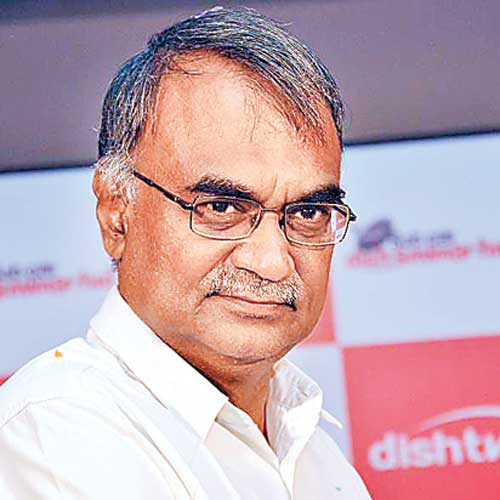
    Speaking about the details mentioned in the letter, DTH Operators’ Association president and Dish TV CEO RC Venkateish spelled out the top demands. “One, we have asked for the service tax for DTH services to be put in the negative list of service tax. We have also asked for reduction of withholding tax on satellite from 25 per cent to 10 per cent. Thirdly the sector has demanded for infrastructure status for the DTH sector. Fourth, the letter mentions that license fee needs to be brought down from 10 per cent to eight percent adjusted GR. Finally, we also asked for content cost to be passed through by effectively asking to bring it down to six per cent on GR,” he said.


    The letter also seeks lowering of duties on digitals set top boxes (STB). The previous ministry under the UPA government had suggested scaling down the license fee from 10 per cent to six per cent. “While the previous government didn’t take any action, we hope the new government will definitely will,” Venkateish concluded.


  • Sky’s Jeremy Darroch to give keynote at MIPTV

    Sky’s Jeremy Darroch to give keynote at MIPTV

    MUMBAI: Sky group CEP Jeremy Darroch will give a media mastermind keynote on 13 April, 2015, as part of the MIPTV conference programme, it was announced by Reed MIDEM, organiser of MIPTV.


    Darroch became the group chief executive of Sky following the acquisition of Sky Italia and a majority interest in Sky Deutschland, which transformed the pay TV and home communications company into one of Europe’s leading investors in content.


    The MIPTV keynote will be the first time Darroch will address the international media industry since completing the transaction. This year, the theme for MIPTV conference is “The Millennial Shift,” tapping into the heart of this savvy generation of media users whose habits are shifting to newer forms of entertainment.


    In three strands of conferences, MIP Digital Fronts, Drama at MIPTV and Junior@MIPTV, this year’s programme will offer the global media industry unprecedented access to the hottest entertainment trends, companies, personalities and emerging media players on the cutting edge when it comes to engaging and embracing millennials.


    Darroch joined Sky in 2004 as CFO, and was appointed chief executive of the company in 2007. Under his leadership, Sky has grown into Europe’s leading entertainment company, increasing spend on its own original commissions as well as striking partnerships with some of the world’s biggest content producers.


    He said, “2015 will be a great year for entertainment programming on Sky. The launch this month of Fortitude, our most ambitious drama yet, and the first to launch simultaneously across all five of our markets, is just the first in a slate of exciting new shows that we are bringing to screen this year. I look forward to coming to MIPTV 2015 to lift the lid on our plans and talk to the industry about the scale of the opportunity as we work together to create a powerhouse for TV content across Europe.”


    Reed MIDEM director of television Laurine Garaude added, “We are privileged to welcome Jeremy Darroch for this keynote address. Given Sky’s pivotal position in the creation of original content with transnational appeal, his insight will be of great value to the MIPTV audience.”


  • 2014: The roller-coaster year for West Bengal media

    2014: The roller-coaster year for West Bengal media

    A trip down memory lane in 2014 has seldom been a tempest in a teapot; but, a year fraught with a bumpy roller-coaster ride, at least for the media in West Bengal… almost as unpredictable and enigmatic as its leader. West Bengal, centre staged and witnessed many ups and downs on the news channels. Many bled during the year, with a slowdown in the second half, but only one channel triumphed and reigned supreme. It was none other than ABP Ananda, which was rated highest week after week.

    City-based ABP Ananda emerged as a great opinion maker, backed by concrete facts and figures, and powerful, impact reporting. “In fact, its viewership increased after West Bengal Chief Minister Mamata Banerjee’s diktat not to watch the channel,” quoted a media analyst.

    The channel has built a strong presence in the Bengal and Maharashtra markets and has firmed up plans in Punjab as well. ABP Group, in the year 2014, said that it aims to launch 3 – 4 regional news channels in the next 2 – 3 years in the western region, followed by northern India.

    Worthy of note, Zee Entertainment Enterprises Limited (ZEEL), which has a major stake in the news share in the north and western India, gained control in the east through its 24×7 Bengali news channel – 24 Ghanta. The channel inducted veteran journalist and Hindustan Times deputy resident editor Anirban Choudhury as the new face on its board and saw a turn for the better in the programme content and style.

    TV18 Broadcast too launched a 24-hour Bengali news channel called ETV News Bangla in March 2014, in the presence of West Bengal Chief Minister Mamata Banerjee. The channel aims to redefine regional channels in Bengal. ETV News Bangla has caught the attention of various localities in Kolkata.

    Star India too hinted that it plans to start a Bengali sports channel. The Indian unit of Rupert Murdoch’s News Corp empire, Star India aims to expand beyond cricket coverage into sports such as hockey, football and even, kabaddi.

    There was excitement in the air! News of non-operational Mahua Bangla, a Bengali general entertainment channel and Mahua Khabor, a 24-hour Bengali news channel, spread like wild fire that they were to go live again in the year 2014! This sparked renewed vigour among job seekers as the parent company, Mahuaa Media Private Limited (MMPL), which closed down the two channels in 2013 in Kolkata, was “exploring all possibilities” to arrange funds in the range of Rs 150 – Rs 200 crore to breathe life into the sick channels.

    The most interesting development was that production company Channel Eight, which was earlier compelled to disassociate itself from the Bengali GEC Aakash Aath, after it didn’t get the 51 per cent stake in the channel as promised, within a month joined the channel again after it got its stake. The GEC said that though the focus of the channel has changed, it intends to keep news in the mixed bag. It also launched a couple of new shows such as comedy serial – Ghhente Gha directed by Manish Ghosh and scripted by Padmanabha Dasgupta.

    Focus Bangla, a 24×7 Bengali news channel, is bullish about its growth in the regional market. It had introduced many new slots for programmes featuring one-to-one interviews with experts from various fields.

    Narsingha Broadcasting also aimed to foray into television media business. The company was to launch a Bengali satellite news channel in 2014 but its plans were deferred to the early part of next year!

    On the whole, West Bengal, has a small market size with a few 24-hour satellite channels owned by big corporates, which makes it difficult for others to survive in the market place. In the past one and half years, the advertising pie in Bengal has also gone down. On top of that, the money market companies made their exit, further putting a severe fund crunch in the media market. The Saradha chit fund scam was a golden egg for most news channels.

    Bengali GECs, news, and other television channels which generated around 35 – 40 per cent of the advertisement revenue from Non-Banking Financial Institutions (NBFCs) till last fiscal year were all bleeding as the NBFC players understood that even after spending a huge amount, they were not being able to make an impression on the minds of people to invest in deceptive schemes, thanks to the Saradha Group’s chit fund business, which went bust in the beginning of the financial year 2013-14.

    Many other companies, which are engaged in money marketing have reduced their ad spend, firstly to stay away from the authorities’ watchful eye and secondly, they seem to think that even after spending a huge amount on ads, investors are not gullible enough to put in their hard-earned money into the chit fund schemes.

    In 2014, Bengal saw careful media coverage of Lok Sabha elections by the regional television channels. These included 24×7 Bengali news channels like ABP Ananda, 24 Ghanta, ETV News Bangla, Focus TV, Kolkata TV, Tara Newz, and infotainment channels like Aakash Bangla, which had three news slots for all the election coverage. 

    The 2014 elections were notable for the vast array of outlets that an interested consumer could avail to create his own media experience on multiple screens. However, a continuous simmering political situation called for more political debates, phone-in shows in 2014.

    On the other hand, the entertainment channels saw phenomenal growth as the regional market is growing. The advertising market is also growing day by day. The viewer bouquet is fast growing too.  Changes in programme structure have been incorporated in 2014. Serials, reality shows, films are given extra weightage.

    Each channel has grown in terms of viewership. The viewers just want consistent performances and channels, which can give them quality content and programmes; and hence, no one gets to lose their market share.

    Bengali viewers are natural lovers of football. Many of them have been losing interest; but, with the advent of Indian Super League (ISL), with daily exciting coverage, celebrity owners and great sponsors, it ensured more new viewers from all demographics. Not to mention that Sourav Ganguly’s Atlético de Kolkata, finally won the coveted Cup.

    The GECs continue to dominate the Kolkata advertisement market, with high production values and a robust content bank based on local programming.

    Overall, the Bengali media is surging ahead in leaps and bounds with more channels in the foray, new programmes on view and a bunch of creative minds behind them!

    With this change in tide, which is nothing but technology-driven, the media groups had taken the route of social networking sites and web as tools for promoting their programmes and started getting live viewership ratings and responses.

    The face of media is fast changing, where the media once uni-directional in its approach is now becoming bi-directional in communication and the future looks bright!

  • Hindi GECs 2014: The year of experimentation

    Hindi GECs 2014: The year of experimentation

    MUMBAI:  Experimentation, experimentation and experimentation. 2014 was the year when India’s Hindi general entertainment channels (GECs) went to the lab and tested out many new programming concoctions for the Indian viewer.

    Whether it was in the form of new channels or new programmes or new time slots or episode budgets, channel and creative heads played the quintessential scientist.

    Three new channels emerged in the specialised Hindi GEC space: Sony Pal, Zindagi and Epic TV. They had yet to make a mark on Indian viewing habits, though Zindagi was the only one that got the thumbs up from TV critics. 

    Star Plus continued to lord it over all in the ratings space for most of the year, but the second, third, and fourth spots witnessed a see-saw battle between Zee TV, Life OK and Colors. Sony, which once ranked second amongst GECs sank to a lowly sixth position during 2014 even as it’s flanking laughter channel Sab, stayed steady through 2014 at the fifth spot.  The year also saw the near demise of what was once the No. 4 GEC – Sahara from the troubled Subrata Roy-run Sahara Group.

    Star Plus: The year started on a good note for Hindi GEC market leader, Star Plus.  An extra dose of fiction entertainment was on offer to the audiences. It made a strategic move of extending its prime-time (6 pm – 11.30 pm) weekday fiction band to Saturdays too. The move worked wonders for the channel and helped further to maintain its Numero Uno position on the ratings chart.

    Taking a cue from the runaway success that Colors’ Comedy Nights with Kapil had raked in, the channel launched Mad in India, placing it head to head with it. But sadly, Gutthi (Sunil Grover) failed to connect with the audiences. 

    In a bid to attract the younger Indian demographic to the channel, it decided to focus on real urban stories, rather than melodrama based on the heartlands. It took the big budget, limited episode route, streamlined its programming and made the channel look peppy.

    On offer for traditional Star Plus viewers was the YoYo Honey Singh- backed India’s Raw Star (IRS), the more current and urban-based Airlines and film-maker Ashutosh Gowariker’s Everest – a story about a girl wanting to clamber on to the world’s largest peak and the city-focused Nisha Aur Uske Cousins.

    Just as 2014 was ending, it unveiled, the spell-binding Private Investigator (PI) and Tu Mera Hero.

    Aamir Khan’s much talked-about Satyamev Jayate (SMJ) made a comeback in two seasonal parts in keeping with CEO Uday Shankar’s commitment to do socially-relevant programming. Estimates are that while IRS entailed an investment of Rs 55 – 60 crore, SMJ cost Rs 4 crore an episode and Everest about Rs 50 lakh an episode. These are the budgets that TV producers have been dreaming of.                                                                                                                                                                                       The heavy investment was worth it as the network’s sales folks managed to make advertisers fork out Rs 3.5 – 4 lakh per 10 seconds spot and Rs 6 – 12 crore per sponsor for SMJ (Airtel was the presenting sponsor with Aquaguard being the co-sponsor and Coca-Cola, Johnson & Johnson, Skoda Auto, Axis Bank, Berger Paints and Dixcy Scott, the associate sponsors) and Rs 3.3 – 4 lakh per 10 second spot for IRS. Almost all the inventory for the shows was sold out, making it a win-win year for Star Plus.

    With many launches to its kitty, the channel executives had to bring the curtains down on some earlier shows: finite mythological series Mahabharat and drama Saraswatrichandra.  The former helped Star Plus get a tremendous connect with mythological show lovers, and its producer Swastik Productions walked away with many awards.

    The Sanjay Leela Bhansali produced Saraswatrichandra, which was handed over to the Sanjoy Wadhwa run Sphere Origins, too ran its course and was shut down in 2014.

    On the other hand, existing fiction shows have always been great contributors to Star Plus’ ratings. To connect with the youth a lot more, storylines changed to have a progressive outlook. Diya Aur Baati Hum continued to grab eyeballs as it turned out to be the highest-rated No. 1 fiction show across all channels, followed by series like Yeh Hai Mohabbatein and Yeh Rishta Kya Kehlata Hai. Shows like Veera and Saath Nibhana Saathiya too continued to win over audiences this year.

    Colors: The year saw a tug of war between Colors and Zee TV for the second position. Colors finally won the battle and stood steadfast at No. 2. What created the magic for the Channel in 2014?

    Colors this year created a league of its own with its strong non-fiction portfolio. From the fifth edition of Fear Factor: Khatron Ke Khiladi with the tagline ‘Dar Ka Blockbuster’ to India’s Got Talent, from Jhalak Dikhlaja to Bigg Boss 8, it has kept viewers on the edge of their seats and given them a dose of entertainment 365 days of the year. Comedy Nights with Kapil too contiued to make people laugh and stood strong at the ratings chart.

    The fact of the matter is that advertisers have never shied away from investing in these brand properties. For Jhalak, the channel had increased its ad rates by 15 – 18 per cent over last year whereas for Bigg Boss it hiked them by a whopping 30 per cent.

    Apart from a different theme, the 2014 season of Bigg Boss observed a lot of brand integrations on the show. To go beyond the 10 sec to 30 sec TVC, it had brands from TVS Scooty Zest to Britannia; from Garnier Men’s Products posters to using Oppo Smartphones for any task.

    Another highlight was that after five long years, the channel changed its title sponsor with Vodafone dropping out and Snapdeal coming in.

    Further strengthening its non-fiction band, for the very first time the channel launched a celebrity talk show – The Anupam Kher Show Kuchch Bhi Ho Sakta Hai. The finite series was hosted by actor-producer Anupam Kher.

    On the fiction front, with new shows failing to deliver good numbers, old programmes continued to shine and the longest-running series Balika Vadhu is a case in point. Madhubala too won the hearts of many until mid-year and sadly had to end its three-year sojourn with the channel.

    To encourage appointment viewing, it got on-board new and riveting shows like Udaan, Shastri Sisters and Meri Aashiqui Tumse Hi.

    Star Plus’ loss was Colors gain as it went about cherry picking most of the prime events:  Sansui Colors Stardust Awards; from the sixth edition of Mirchi Music Awards to Indian Television Academy Awards, to the 13th Indian Telly Awards.

    It also announced its association with RFS Entertainment to captivate Indian audiences with Got Talent World Stage Live. Hosted by the badshaah of Bollywood, Shah Rukh Khan, it is a first-of-its-kind global on-ground extension of Simon Cowell’s Got Talent franchise.

    Zee TV: It was a year of back-to-back launches for Zee TV. The channel which takes pride in creating original non-fiction formats has had many firsts to its name.  Be it Sa Re Ga Ma Pa, Dance India Dance (DID) or Antakshari, it has consistently tasted success with its non-fiction originals in a market dominated by internationally-acquired formats like Bigg Boss and Kaun Banega Crorepati (KBC).

    Zee’s first attempt with Cinestars ki Khoj, an acting-based reality show in 2004, did not work out. After almost a decade, this year it was miraculously brought back which in its first edition gave recognition to actors like Ankita Lokhande (Archana Deshmukh on Zee TV’s Pavitra Rishta). But once again it did not really set the ratings chart on fire.

    After a year of non-fiction shows on weekends, Zee TV decided to give DID a break. With an aim to strengthen its weekend slot with fresh content, the channel got on-board for the first time a superhero trilogy called Maharakshak Aryan simply to engage with the family a lot more. 

    The channel felt that an original superhero series was a fresh theme. From its slick production values to innovative visual effects and ingenious cinematography, the show has definitely raised the bar for action thrillers and the fantasy genre on Indian television. To further strengthen its weekend slot, it also launched a light-hearted show titled – Neeli Chhatri Wale.

    For Zee TV, India’s first private Hindi GEC channel, launching a number of new shows in a year is nothing new. What is noteworthy is the fact that the channel has produced the top four weekday fiction launches of 2014. That’s quite an achievement.

    If one takes a look at the opening week averages of all the fiction launches across GECs for the year, it is very clear from the numbers as to who has ruled the ratings charts.

    Jamai Raja leads the pack with 5,488 TVTs, Satrangi Sasural that opened in week 49 with 4,970 TVTs, stands at number two,  Bandhan with 4,366 TVTs and Aur Pyar Ho Gaya with 4,044 TVTs followed at number three and four respectively.

    Its other prize property, Kumkum Bhagya, too has done well. After a six-year stint, the channel’s longest running and most popular series – Pavitra Rishta sadly had wound up.

    On 23 June, the Zee TV network launched Zindagi to break free from the stereotype framework and melodrama with shows never before seen on the Indian small screen. True to its philosophy and tagline Vasudhaiva Kutumbakam, shows like Humsafar, Maat, Kitni Gir hain Baaki Hain were handpicked from across the border.

    Life OK: The channel, which is not your run-of-the-mill type catering to the entire family, has played a different game in 2014. This year’s highlights include its first big-ticket Bollywood event, The 20th Annual Life OK Screen Awards. The show registered a whopping 9 million TVTs, three per cent more than the 6.9 million TVTs (ratings provided by Life OK itself) garnered by Colors from its last year’s edition.

    Riding high on the success of Screen Awards, the channel decided to get more Bollywood stars on-board and launched Life OK Now Awards which celebrates excellence in the field of film, television and music every month.  The popcorn generation was its target over a successful three-months run.

    Its belief was in narrating a variety of stories from different walks of life. It thus launched an action-packed serial – Pukaar – Call for the Hero. With a different perspective, Pukaar had men as the main protagonists. Based on a story with an army background, it saw well-known film producer-director Vipul A Shah making his debut on television. Close to Rs 13 lakh has been spent per episode on production.

    Life OK too took the comedy route with Comedy Classes – but the show quickly fizzled out.

    Not only did big film producers make their way to the network, but the channel attracted a lot of film celebrities too. To make the content line-up bolder and stronger, it got an action reality series – Dare 2 Dance with celebrity Akshay Kumar as its host.

    On the fiction front, viewers saw gorgeous actress Sonali Bendre making her debut on television with the series christened – Ajeeb Daastan Hai Yeh. Actress Bhagyashree too made her debut on television with a gutsy series – Laut Aao Trisha.

    Moreover, after a successful three-year run, the channel’s flagship property Mahadev saw its shutters come down and this paved the way for a new show Mahakumbh- Ek Rahasya, EkKahani. The channel’s crime properties – Savdhaan India and Shapath continued to fly high on the ratings chart.

    Sab TV: This family channel from the Multi Screen Media (MSM) stable, can be credited for the rise in the comedy genre with its popular shows Tarak Mehta Ka Ooltah Chashmah, Lapataganj and Chidiya Ghar, by experimenting with a new format based on live audience participation titled Tu Mere Agal Bagal Hai.

    The sitcom was like no other. The cast acted in front of a live audience which the channel believed was the USP of the show. Launched as a daily soap, it was penned as a finite one. Again, a first of its kind, the channel launched India’s only alien comedy TV serial – Badi Door Se Aaye Hai.

    Tarak Mehta Ka Ooltah Chashmah continues to win the hearts of many and is the chart leader. Not only that, but the team was also invited by our country’s PM Narendra Modi to help him with Swachh Bharat Abhiyan campaign.

    F.I.R continued to be very gripping. In between for a month (July – August), the show tried a stint of stand-up comedy with live audience but failed to capture viewers.

    Sony Entertainment Television (SET): It was a year of struggle for Sony and it ended the year at the bottom rung of the TAM TV ratings ladder. This despite the fact that it experimented with concepts, shows, formats and even programme and marketing spends.

    The channel’s hopes were riding high on Amitabh Bachchan’s fiction debut Yudh, but the dark content was unpalatable. The 20-episode drama launched in July dashed all hopes as it only made around 1,199 TVTs in its opening week. The buzz generated around Big B failed to translate into ratings.

    What clicked this year was its only famous property – Kaun Banega Crorepati 8, giving some respectable numbers to the channel to barely survive. This time around, it moved out of its comfort zone, set in Film City with the launch and mid-season episode being shot like events in Surat and Raipur with live audiences. It also went on a big bang 360 degree promotional exercise with 100 on-ground events. The channel spent an outrageous 30 per cent of the total budget on marketing.

    Sony is pinning its hopes high on yet another launch, another high-investment property – Box Cricket League (BCL), a sports reality show. Played with a soft ball and filmed in a studio it will have 19 matches with around 120 celebrities playing the game.

    Fiction turned out to be a near disaster for the channel. Its biggest fiction launch of the year – Itna Karo Na Mujhe Pyaar with Ronit Roy, did not do as well as it was expected. But both, Balaji Telefilms, the producer and the channel’s management think it will build on its viewers over time.

    Other fiction series like Humsafars, Hum Hai Na and Tum Aise Hi Rehna have only a glimmer of hope. The only silver linings are the channel’s crime and investigation properties – CID, Crime Patrol and Adalat and the historical Maharana Pratap.

    MSM launched a new channel – Sony Pal on 1 September aimed at women and housewives with stories about the fairer sex and family. With the ‘Yeh Pal Hamara Hai’ tagline, it was meant to compliment its sister channels Sony Entertainment and Sab. It launched with nine new shows and Juhi Chawla as its face. Pal like the network’s other GEC initiatives did not make much headway with viewers.

    As the year came to a close, another big experiment saw the light of day with the launch of Epic TV. After a wait of almost a year or more. Headed by former Disney executive Mahesh Samat, Epic is India’s first genre-specific Hindi entertainment channel.

    Covering genres ranging from action, drama, comedy to narrative non-fiction, it seeks to celebrate India’s heritage by creating unique and original content within Indian history, folklore and mythology, using a contemporary story-telling format.

    Discovery Communications India too entered the Hindi enertianment space, with the launch of its Investigation Discovery (ID) channel.

    Hopefully, India’s demanding TV viewers will lap it up. And hopefully, India’s GEC executives will continue to experiment in 2015 and possibly continue with their efforts to redefine India TV audience’s entertainment tastes.
  • “The market is expanding faster than expected and more brands are going digital”

    “The market is expanding faster than expected and more brands are going digital”

    As 2014 comes to an end and as the media and entertainment industry bids adieu to the year, company executives are leaving no stone unturned when it comes to listing down the achievements it has attracted throughout the year. 

    On the same lines is Vdopia, a programmatic buying and selling platform for mobile and online video advertising. It tags itself as a pioneer in mobile and online video advertising, enabling major brands to engage their desired audiences in premium content environments around the world. 

    Vdopia SVP-APAC Preetesh Chouhan pens down the major digital happenings in the year 2014 for Vdopia and the entire industry and also the future of digital platforms in the coming year.

    Major digital happenings…

    Digital Video Revolution – 

    •             Video viewing on PCs has almost doubled in three years in India. (source – comScore)

    •             India now has over 59 million video viewers. (source – comScore)

    •             73 per cent online audience now watch digital video. (Source – eMarketer)

    •             The share of video in internet data traffic is expected to rise from 41 per cent in 2011-12 to 64 per cent in 2016-17. (Source – Assocham and Deloitte)

    Emergence of specialised apps –

    •             App downloads in India likely to cross nine billion by 2015 (Source – Assocham -Deloitte)

    •             Mobile TV registered a 400 per cent growth rate in viewership. 

    m-commerce revolution India –

    •             India has reached 50 million digital buyers. (eMarketer)

    •             1 out of 3 customers of Flipkart arrive via mobile.

    •             33 per cent of Flipkart revenue originates via mobile based transactions. (Flipkart)

    •             60 per cent of all orders received by Snapdeal originate on mobile phones. (Snapdeal)

    Micro-video multiplied –

    •             Micro-video ads can transcend the mobile, tablet, PC and even TV gap, could eventually result in micro-video becoming the most portable video format across screens.
    Television is going digital:

    •             Television content is no longer being consumed only within the four walls of the viewer’s living room.

    •             TV remains one of the primary modes of communication reaching out to 60 per cent of the population, online videos are witnessing a steady surge in consumption even as internet penetration in India currently stands at about 16 per cent.

    Coke Studio, for example. While the latest season of the show on MTV received lukewarm response on TV, it went on to garner more than 54 million views on YouTube and across social media platforms.

    •             By 2018-end, India’s internet user base is expected to touch 494 million as against 938 million TV viewers.

    Marketers in India are leveraging digital marketing –

    •    96 per cent of the Indian marketers have high confidence in the ability of digital marketing to drive competitive advantage. It is among the highest in Asia-Pacific APAC with only Australia leading with 97 per cent.

    •    Indian marketers believe that the key driver to adopting digital is a growing internet population (70 per cent in India against 59 per cent in APAC).

    The big achievements for Vdopia…

    •    Launched Chocolate, a global programmatic buying and selling platform exclusively for mobile video advertising. 

    •    After major metros and cities, Vdopia’s reach has expanded to tier 2 cities, tier 3 cities and small towns.

    Lessons learnt…

    •    The market is expanding faster than expected and more brands are going digital. The demand has grown for new category of content and rich media video ad formats for better engagement. Like, travel, auto, humour, lifestytle, how-to videos etc.

    •    With 70 per cent growth in Asia Pacific, programmatic is the future. 

    Future of digital platforms in 2015…

    Digital India program – The Indian government’s $17 billion ambitious Digital India programme has the potential to be a game changer for the country. (Source – Forrester)
    P.S. – Currently, nearly 74 per cent of the population has mobile phones, most of which though is in the hands of urban India. 

    Focus on mobile content – In 2014 out of 885million mobile users, 185 million are mobile internet users. (IDC and India Digital Review). It’s a changing world, and businesses absolutely need to focus on ways they can give their marketing efforts a mobile component.

    Focus on Content – Content has been an integral part of digital marketing strategies for a few years now, but with so much of it out there, your content needs to be better and smarter. Content that’s relevant and interesting isn’t just a good idea, it’s a requirement. 

    Programmatic advertising will be understood by the majority of marketers – More than two-thirds of marketers are now using programmatic in one form or other shows programmatic might have become mainstream over the course of 2014. It’s a safe bet that this trend will continue in 2015 as more marketers realise the benefits of programmatic in their paid media programmes (Media Week).

    Clients will dictate the future of programmatic – Fundamentally, we believe the future of programmatic market landscape will be driven by the clients’ diverse characteristics and needs. Clients are either transactional or not, large or small, international or local, e-merchants or brick and mortar, large media spenders or not.

    Spending on RTB display advertising will accelerate – Spending on real time-bidded display advertising will accelerate at a 59 per cent compound annual growth rate through 2016, making in the fastest growing segment of digital advertising over the next few years. (IDC)


    (These are purely personal views of Vdopia SVP-APAC Preetesh Chouhan and indiantelevision.com does not necessarily subscribe to these views.)