Category: Specials

  • FICCI FRAMES: Broadcasting stalwarts feel it is possible to survive the digital wave

    FICCI FRAMES: Broadcasting stalwarts feel it is possible to survive the digital wave

    MUMBAI: Is the past too old to be relevant in the future, and will it actually ‘perish’ if ‘change’ does not take place?

    These questions were discussed by panelists at a session to discuss the formula to Survive the digital wave: Change or perish.

    On the dias were The India Today Group Chairman and Editor-in-chief Aroon Purie, Discvery Asia Pacific Managing Director and President Arthur Bastings Viacom 18 group CEO Sudhhanshu Vats, Disney India MD Siddharth Roy Kapur, NDTV Group Director and CEO Vikram Chandra, and Hungama CEO Neeraj Roy, and the session was moderated by Pranjal Sharma with questions also coming from the delegates.

    “The fundamental is still the same, produce quality and you will have consumers and that’s the way forward as far as I am concerned,” asserted Purie.

    Bastings said staying with the mood of the occurrences is a must. “We cannot only have a channel. We need to have, whatever is there in the ecosystem. Once you have everything you can decide your core business and the rest depending on the performances you can plan your investments,” he added.

    During the course of the discussion, the AVOD model was questioned numerous times. Offering content for free is habit forming which might hurt the ecosystem and what is happening to TV now can happen to OTT too a few years later.

    Vats, whose Viacom’s digital AVOD offering VOOT was launched recently, said: “The consumer is paying. He may not be paying me but is paying for the data. As the payment mechanism develops, bundling can happen. So to say that the consumer is not paying is actually not a correct conclusion.”

    Kapur had a somewhat different point of view as compared to Vats. ‘Waiting for later’ was is not a saleable proposition for him. “We launched 500 channels and did not make consumer pay anything for it. We believe if we form a habit that consumers will later come, pay and watch, does that mean that we open a series of screens and let people walk in for free. I do not think so.”

    “Yes, people are watching movies on mobile phones but that does not mean theatre screens are going away” he added

    Chandra said there was room for profits and opportunities, “It is possible to monetize and it is possible to make profits. But you cannot put archival content, you need to create content exclusively for that very platform and only then will you taste success. The mindset that I will put archival content on digital is a slightly wrong mindset that the broadcasters have been following.”


     

  • FICCI FRAMES: Prasad says -Indian broadcast industry needs an improved rating system

    FICCI FRAMES: Prasad says -Indian broadcast industry needs an improved rating system

    Mumbai, 30 March: Communication & IT Minister Ravi Shankar Prasad today said the Digital India initiative of the Government is a $ 1 trillion business opportunity across IT and IT enabled services, telecom and electronics manufacturing.

    Speaking at the inauguration of the 17th edition of FICCI Frames Media & Entertainment Industry Conclave, Prasad said Digital India is aimed at empowering the citizens of India digitally.

    He said nearly $400 billion will be added from the electronics manufacturing including mobile phones, solar panels etc, while a $ 350 billion opportunity will be presented by the IT and ITES sector. The Communication services will provide business opportunities of $ 250 billion.

    The Minister said: “the aspirational urge of Indians is driving the digital world in a phenomenal way. And the Government’s job is to create an enabling eco-system for its growth.”

    Speaking about the Media & Entertainment Industry, Prasad who had been the Information Minister under Mr Atal Behari Vajpayee said Indian content has a global reach and “we must utilize its strength to depict virtues of our rich cultural heritage”. Prasad suggested that the epic stories of Ramayana and Mahabharata should be taken to the world via quality film making.

    Prasad said the Government recognized the importance and relevance of promoting media and entertainment industry. Hence, visa processes were being eased for film shootings.

    A National Centre of Excellence was coming up for the media and entertainment industry and a new film facilitation office was also being set up.

    He added that a new category in the National Film Awards – Most Film Friendly State – had been introduced to felicitate the state that provides greater access to the film industry.

    He said with the spread of internet new platforms were emerging which would lead to change in business models.

    The Minister asserted at the same time that Internet should remain democratic, plural and inclusive. “Internet is the finest creation of human mind, it should not be abused by few,” he said.

    Stressing that the television rating system must improve, Prasad said he was not impressed with TAM’s alternative – BARC – either.

    It was imperative for the television rating data to be more fair and reasonable. “I was not impressed by the TAM, and I am not impressed by the alternative too. How can a few thousand boxes determine what India is watching?” he asked. He said there was a need for a structured, fair and reasonable system to allow creation of quality content.

    He said several of his government initiatives like Skill India, Stand Up India, Aadhar roll out, Make in India, and Smart Cities involve enormous use of digital technology.

    “If the industry needs more policy initiatives, the government is open to it,” the Minister asserted.

    Prasad said with 250,000 gram panchayats being connected through Optic Fiber Network, the entire country was being brought under the broadband regime.

    He claimed that India is now the second largest mobile phone market. The internet penetration had reached 400 million, with 60% of it being mobile internet. He also said that India with one billion mobile phone connections had overtaken the United States to becomethe second largest mobile phone market in the world behind China.

    He asserted that with successful Aadhar enrolment, the government has been able to save Rs 15,000 crore through direct delivery of subsidies.

    Driving home the importance of Digital India and the opportunities it was offering, the Minister cited examples of a mathematics teacher-cum-App maker from Rajasthan, and a 68 year old person from Telangana who became digitally literate in order to communicate with her grandson in Dubai through skype. He said “Indians first watch, then adopt, enjoy and become empowered”.

     India’s talent combined with the power of Information Technology would act as a springboard to launch India into the big league, said Prasad.
    He ended by expressing his unhappiness towards the rating system in India, “I was never happy with TAM and I am not very happy with BARC either, I request Uday and the industry to have an improved rating system” he concluded


  • FICCI FRAMES: Prasad says -Indian broadcast industry needs an improved rating system

    FICCI FRAMES: Prasad says -Indian broadcast industry needs an improved rating system

    Mumbai, 30 March: Communication & IT Minister Ravi Shankar Prasad today said the Digital India initiative of the Government is a $ 1 trillion business opportunity across IT and IT enabled services, telecom and electronics manufacturing.

    Speaking at the inauguration of the 17th edition of FICCI Frames Media & Entertainment Industry Conclave, Prasad said Digital India is aimed at empowering the citizens of India digitally.

    He said nearly $400 billion will be added from the electronics manufacturing including mobile phones, solar panels etc, while a $ 350 billion opportunity will be presented by the IT and ITES sector. The Communication services will provide business opportunities of $ 250 billion.

    The Minister said: “the aspirational urge of Indians is driving the digital world in a phenomenal way. And the Government’s job is to create an enabling eco-system for its growth.”

    Speaking about the Media & Entertainment Industry, Prasad who had been the Information Minister under Mr Atal Behari Vajpayee said Indian content has a global reach and “we must utilize its strength to depict virtues of our rich cultural heritage”. Prasad suggested that the epic stories of Ramayana and Mahabharata should be taken to the world via quality film making.

    Prasad said the Government recognized the importance and relevance of promoting media and entertainment industry. Hence, visa processes were being eased for film shootings.

    A National Centre of Excellence was coming up for the media and entertainment industry and a new film facilitation office was also being set up.

    He added that a new category in the National Film Awards – Most Film Friendly State – had been introduced to felicitate the state that provides greater access to the film industry.

    He said with the spread of internet new platforms were emerging which would lead to change in business models.

    The Minister asserted at the same time that Internet should remain democratic, plural and inclusive. “Internet is the finest creation of human mind, it should not be abused by few,” he said.

    Stressing that the television rating system must improve, Prasad said he was not impressed with TAM’s alternative – BARC – either.

    It was imperative for the television rating data to be more fair and reasonable. “I was not impressed by the TAM, and I am not impressed by the alternative too. How can a few thousand boxes determine what India is watching?” he asked. He said there was a need for a structured, fair and reasonable system to allow creation of quality content.

    He said several of his government initiatives like Skill India, Stand Up India, Aadhar roll out, Make in India, and Smart Cities involve enormous use of digital technology.

    “If the industry needs more policy initiatives, the government is open to it,” the Minister asserted.

    Prasad said with 250,000 gram panchayats being connected through Optic Fiber Network, the entire country was being brought under the broadband regime.

    He claimed that India is now the second largest mobile phone market. The internet penetration had reached 400 million, with 60% of it being mobile internet. He also said that India with one billion mobile phone connections had overtaken the United States to becomethe second largest mobile phone market in the world behind China.

    He asserted that with successful Aadhar enrolment, the government has been able to save Rs 15,000 crore through direct delivery of subsidies.

    Driving home the importance of Digital India and the opportunities it was offering, the Minister cited examples of a mathematics teacher-cum-App maker from Rajasthan, and a 68 year old person from Telangana who became digitally literate in order to communicate with her grandson in Dubai through skype. He said “Indians first watch, then adopt, enjoy and become empowered”.

     India’s talent combined with the power of Information Technology would act as a springboard to launch India into the big league, said Prasad.
    He ended by expressing his unhappiness towards the rating system in India, “I was never happy with TAM and I am not very happy with BARC either, I request Uday and the industry to have an improved rating system” he concluded


  • Discovery to showcase Indian content across the world, to further strengthen local programming

    Discovery to showcase Indian content across the world, to further strengthen local programming

    MUMBAI: The flagship Discovery Network is all set to optimise the content programming and channels under its stable, even as the network foresees a growth in India’s GDP in the year 2016 and plans to broaden its portfolio in the nation.

    The network is re-focusing on expanding its scale in India by coming up with better programming line-up, catering to the regional market and by going local using the local talent available in India.

    Discovery Communications, which launched in India back in 1995 with only one channel, has now grown into a conglomerate with as many as 11 channels in five languages. The leader in the factual entertainment genre, Discovery roughly has 550 advertisers on board with approximately 275 million cumulative households across India.

    The company’s portfolio in South Asia comprises Discovery Channel, Animal Planet, TLC, Discovery Science, Discovery Turbo, Discovery Tamil, Discovery Kids, Investigation Discovery, and three high-definition channels namely Discovery HD World, Animal Planet HD World and TLC HD World.

    “No other market in the entire world has shown a growth like India. We want to become a multi-genre platform and want to grow as a media company. With the fresh content line-up, we are broadening our portfolio from what it looks like and are targeting the local audience”, said Discovery Networks International president J B Perrette.

    The network believes that the strong brands under them are extremely powerful and are doing economically well for them.

    Discovery Networks is also considering launch of its over-the-top (OTT) platform in India soon once the bandwidth stabilizes and once 4G gets in place in the country. The network is dependent on the response from the market rather than following one particular model.

    The network already has two direct-to-customer OTT products offering in Europe – Dplay and Eurosport – which are doing exceptionally well for them. “The consumption of video content is rapidly increasing in Norway. The country has proved to be a beneficiary market for us”, added Perrette.

    Known for providing high quality content to its viewers across the nation, Discovery is embarking on a very ambitious content production programme with $2 billion global investment. “We are seeing enormous traffic in India. This year, we have invested $2½ billion on our content programming globally to provide good quality shows on our flagship channels”, added Perrette.

    As it is not a platform only for documentaries, the network will bring new non-fiction genres like sports, kids, non-organic fiction, etc to India. For the first time, the network will broadcast shows produced in India to the rest of the world.

    “Over the years we have increased our local productions in India, and will continue to invest in content to better serve our viewers and clients. Some of the local programmes also find resonance around the world, just like the global content which is viewed in India,” Perrette said.

    Targeting the younger generation at large, the network plans to providing content across all its platforms in an easy, simple, accessible way providing various options of entertainment.


  • Discovery to showcase Indian content across the world, to further strengthen local programming

    Discovery to showcase Indian content across the world, to further strengthen local programming

    MUMBAI: The flagship Discovery Network is all set to optimise the content programming and channels under its stable, even as the network foresees a growth in India’s GDP in the year 2016 and plans to broaden its portfolio in the nation.

    The network is re-focusing on expanding its scale in India by coming up with better programming line-up, catering to the regional market and by going local using the local talent available in India.

    Discovery Communications, which launched in India back in 1995 with only one channel, has now grown into a conglomerate with as many as 11 channels in five languages. The leader in the factual entertainment genre, Discovery roughly has 550 advertisers on board with approximately 275 million cumulative households across India.

    The company’s portfolio in South Asia comprises Discovery Channel, Animal Planet, TLC, Discovery Science, Discovery Turbo, Discovery Tamil, Discovery Kids, Investigation Discovery, and three high-definition channels namely Discovery HD World, Animal Planet HD World and TLC HD World.

    “No other market in the entire world has shown a growth like India. We want to become a multi-genre platform and want to grow as a media company. With the fresh content line-up, we are broadening our portfolio from what it looks like and are targeting the local audience”, said Discovery Networks International president J B Perrette.

    The network believes that the strong brands under them are extremely powerful and are doing economically well for them.

    Discovery Networks is also considering launch of its over-the-top (OTT) platform in India soon once the bandwidth stabilizes and once 4G gets in place in the country. The network is dependent on the response from the market rather than following one particular model.

    The network already has two direct-to-customer OTT products offering in Europe – Dplay and Eurosport – which are doing exceptionally well for them. “The consumption of video content is rapidly increasing in Norway. The country has proved to be a beneficiary market for us”, added Perrette.

    Known for providing high quality content to its viewers across the nation, Discovery is embarking on a very ambitious content production programme with $2 billion global investment. “We are seeing enormous traffic in India. This year, we have invested $2½ billion on our content programming globally to provide good quality shows on our flagship channels”, added Perrette.

    As it is not a platform only for documentaries, the network will bring new non-fiction genres like sports, kids, non-organic fiction, etc to India. For the first time, the network will broadcast shows produced in India to the rest of the world.

    “Over the years we have increased our local productions in India, and will continue to invest in content to better serve our viewers and clients. Some of the local programmes also find resonance around the world, just like the global content which is viewed in India,” Perrette said.

    Targeting the younger generation at large, the network plans to providing content across all its platforms in an easy, simple, accessible way providing various options of entertainment.


  • KPMG-FICCI: TV industry to touch Rs 1,09,700 crore by 2020

    KPMG-FICCI: TV industry to touch Rs 1,09,700 crore by 2020

    MUMBAI: If 2015 was a good year for media and entertainment industry with a growth rate of 12.8 per cent taking it to Rs 1157 billion,(RS 1,15,700 crore) with advertising revenues touching Rs 475 billion (Rs 47,500 crore), 2016 promises to be even better. Estimates show that the industry is to touch  Rs 1315 billion by this year end, with television alone commanding Rs 617 billion (Rs 61,700 crore). And the industry stalwarts project even rosier tidings for 2020.

    As per KPMG- FICCI Indian Media and Entertainment Industry Report 2016 that was released on 30 March at FICCI Frames 2016, the sector is projected to grow at a CAGR of 14.3 percent to be valued at Rs 2260 billion (Rs 2,26,000 crore) by 2020, with advertising revenue touching a whooping Rs 994 billion (Rs 99400 crore) at a CAGR growth of 15.9 per cent.

    Television continues to thrive:

    While 2015 saw the growing stress on the need to transport from traditional media to digital options, the current report reassures the continued importance and relevance of television as a medium, which is projected to grow at a rate of 15.1 CAGR between 2015- 2020, and touch Rs 1,09,760 crore by 2020, out of which Rs 364.5 billion (Rs 36,450 crore) will be contributed by advertising revenue. TV ad revenue is expected to touch Rs 210.3 billion (Rs 21,030 crore) by the end of 2016. On the other hand, subscription revenue for broadcasters is expected to grow at a CAGR of 15 per cent between 2015- 2020, to Rs 733 billion (Rs 73,300 crore). Subscription revenues for TV is estimated to have grown at 13 per cent to reach Rs 361 billion (Rs 36,100 crore). While the figures show a positive growth in advertising revenues, a delayed digitisation process would slow down the subscription growth.

    Digital, the fastest growing medium:

    Digital Advertising will continue to grow at a high CAGR of 33.5 per cent, the highest growing medium of all. The evident shift would be towards mobile and video advertising backed by the opening up of bandwidth in the country by 2020. The report estimates that by 2020 digital advertising will touch Rs 255.2 billion  (Rs 25,520 crore) and contribute 25.7 percent of the total advertising revenue.

    Impact of BARC India ratings on Television:

    There are no two opinions about the fact that roll out of BARC ratings was a major event that changed the face of the industry, and perhaps its rules as well.  The implementation of BARC was a major theme in 2015. While inclusion of rural markets and increase in sample size led to a reshuffle of rankings in the ratings of TV channels, particularly highlighting the viewership of FTA channels, there was no immediate impact on ad budget allocations among channels or genres. Going forward, sustained trends in ratings could lead to advertisers re-thinking their ad spend mix and broadcasters their content strategy.

    Paid C&S penetration of TV:

    The number of TV households in India has increased to 175 million (17.5 crore), at 62 percent growth rate. The figures are estimated to touch 200 million (20 crore) by 2020, with paid cable and satellite subscriber base growing to 174 million (17.5 crore) and command a lion share of 87 per cent of total TV households. However, when considering distribution, challenges in improving addressability, increasing monetisation continues to plague the industry, the report foretells. Meanwhile, competition in the TV distribution space is expected to intensify with Reliance Jio coming in the cable TV business.

    ARPU continues to back DTH growth:

    As per industry observations shared in the report, DTH has seen an ARPU growth of 10 per cent in 2015, driven by price hikes,  and increased HD feed penetration which constitutes 15 percent of the total subscriber base in the sector. This trend is expected to rule the sector in the upcoming years as well, with average ARPU of HD subscriber estimated to grow to 1.5 to 2 times that of a non HD subscriber. The report also hints at a growth in demand and adoption of 4K STBs, though lack of enough 4K content could be a disadvantage to this growth.

  • KPMG-FICCI: TV industry to touch Rs 1,09,700 crore by 2020

    KPMG-FICCI: TV industry to touch Rs 1,09,700 crore by 2020

    MUMBAI: If 2015 was a good year for media and entertainment industry with a growth rate of 12.8 per cent taking it to Rs 1157 billion,(RS 1,15,700 crore) with advertising revenues touching Rs 475 billion (Rs 47,500 crore), 2016 promises to be even better. Estimates show that the industry is to touch  Rs 1315 billion by this year end, with television alone commanding Rs 617 billion (Rs 61,700 crore). And the industry stalwarts project even rosier tidings for 2020.

    As per KPMG- FICCI Indian Media and Entertainment Industry Report 2016 that was released on 30 March at FICCI Frames 2016, the sector is projected to grow at a CAGR of 14.3 percent to be valued at Rs 2260 billion (Rs 2,26,000 crore) by 2020, with advertising revenue touching a whooping Rs 994 billion (Rs 99400 crore) at a CAGR growth of 15.9 per cent.

    Television continues to thrive:

    While 2015 saw the growing stress on the need to transport from traditional media to digital options, the current report reassures the continued importance and relevance of television as a medium, which is projected to grow at a rate of 15.1 CAGR between 2015- 2020, and touch Rs 1,09,760 crore by 2020, out of which Rs 364.5 billion (Rs 36,450 crore) will be contributed by advertising revenue. TV ad revenue is expected to touch Rs 210.3 billion (Rs 21,030 crore) by the end of 2016. On the other hand, subscription revenue for broadcasters is expected to grow at a CAGR of 15 per cent between 2015- 2020, to Rs 733 billion (Rs 73,300 crore). Subscription revenues for TV is estimated to have grown at 13 per cent to reach Rs 361 billion (Rs 36,100 crore). While the figures show a positive growth in advertising revenues, a delayed digitisation process would slow down the subscription growth.

    Digital, the fastest growing medium:

    Digital Advertising will continue to grow at a high CAGR of 33.5 per cent, the highest growing medium of all. The evident shift would be towards mobile and video advertising backed by the opening up of bandwidth in the country by 2020. The report estimates that by 2020 digital advertising will touch Rs 255.2 billion  (Rs 25,520 crore) and contribute 25.7 percent of the total advertising revenue.

    Impact of BARC India ratings on Television:

    There are no two opinions about the fact that roll out of BARC ratings was a major event that changed the face of the industry, and perhaps its rules as well.  The implementation of BARC was a major theme in 2015. While inclusion of rural markets and increase in sample size led to a reshuffle of rankings in the ratings of TV channels, particularly highlighting the viewership of FTA channels, there was no immediate impact on ad budget allocations among channels or genres. Going forward, sustained trends in ratings could lead to advertisers re-thinking their ad spend mix and broadcasters their content strategy.

    Paid C&S penetration of TV:

    The number of TV households in India has increased to 175 million (17.5 crore), at 62 percent growth rate. The figures are estimated to touch 200 million (20 crore) by 2020, with paid cable and satellite subscriber base growing to 174 million (17.5 crore) and command a lion share of 87 per cent of total TV households. However, when considering distribution, challenges in improving addressability, increasing monetisation continues to plague the industry, the report foretells. Meanwhile, competition in the TV distribution space is expected to intensify with Reliance Jio coming in the cable TV business.

    ARPU continues to back DTH growth:

    As per industry observations shared in the report, DTH has seen an ARPU growth of 10 per cent in 2015, driven by price hikes,  and increased HD feed penetration which constitutes 15 percent of the total subscriber base in the sector. This trend is expected to rule the sector in the upcoming years as well, with average ARPU of HD subscriber estimated to grow to 1.5 to 2 times that of a non HD subscriber. The report also hints at a growth in demand and adoption of 4K STBs, though lack of enough 4K content could be a disadvantage to this growth.

  • Budget allocations for Digital India, northeast go up for Communication and Information Technology Ministry

    Budget allocations for Digital India, northeast go up for Communication and Information Technology Ministry

    New Delhi: The allocation for capital outlay on telecommunication and electronic industries is Rs 125 crore for the Departments of Telecommunications Communications and Information Technology (DeiTY), according to the Union Budget presented by Finance Minister Arun Jaitley on February 29.

    While the capital outlay on telecommunication and electronic Industries has been sharply increased for the telecommunications department from Rs 16 crore in the revised budget of 2015-16 to Rs 80 crore for 2016-17, it had been cut from Rs 69 crore in the revised estimates of the DeiTY for 2015-16 to Rs 45 crore for 2016-17.

    Interestingly, this works against the interests of the broadcasting industry, since set top boxes, antennae, headends and other equipment would fall under the DeiTY’ help to public or private industry under the head of  ‘capital outlay on telecommunication and electronic Industries.’

    The total budgetary outlay for the Telecommunication Department is Rs 21214.66 crore, while it is Rs 3328.82 crore for DeiTY for 2016-17

    Under Digital India programme, there are separate allocations for the Manpower Development Programme to ensure availability of trained human resources; Electronics Governance to deliver all Government services electronically to the citizens in his/her locality through integrated and inter-operable systems via multiple modes, while ensuring efficiency, transparency and reliability of such services at affordable costs; the National Knowledge Network with multiple gigabit bandwidth to connect Knowledge Institutions across the country; Promotion of Electronics/IT Hardware Manufacturing;  R&D in IT/Electronics/CCBT; and Foreign Trade and Export Promotion to reimburse Central Sales Tax to Electronics Hardware Technology Parks (EHTP) and Software Technology Park (STP) units.

  • Budget allocations for Digital India, northeast go up for Communication and Information Technology Ministry

    Budget allocations for Digital India, northeast go up for Communication and Information Technology Ministry

    New Delhi: The allocation for capital outlay on telecommunication and electronic industries is Rs 125 crore for the Departments of Telecommunications Communications and Information Technology (DeiTY), according to the Union Budget presented by Finance Minister Arun Jaitley on February 29.

    While the capital outlay on telecommunication and electronic Industries has been sharply increased for the telecommunications department from Rs 16 crore in the revised budget of 2015-16 to Rs 80 crore for 2016-17, it had been cut from Rs 69 crore in the revised estimates of the DeiTY for 2015-16 to Rs 45 crore for 2016-17.

    Interestingly, this works against the interests of the broadcasting industry, since set top boxes, antennae, headends and other equipment would fall under the DeiTY’ help to public or private industry under the head of  ‘capital outlay on telecommunication and electronic Industries.’

    The total budgetary outlay for the Telecommunication Department is Rs 21214.66 crore, while it is Rs 3328.82 crore for DeiTY for 2016-17

    Under Digital India programme, there are separate allocations for the Manpower Development Programme to ensure availability of trained human resources; Electronics Governance to deliver all Government services electronically to the citizens in his/her locality through integrated and inter-operable systems via multiple modes, while ensuring efficiency, transparency and reliability of such services at affordable costs; the National Knowledge Network with multiple gigabit bandwidth to connect Knowledge Institutions across the country; Promotion of Electronics/IT Hardware Manufacturing;  R&D in IT/Electronics/CCBT; and Foreign Trade and Export Promotion to reimburse Central Sales Tax to Electronics Hardware Technology Parks (EHTP) and Software Technology Park (STP) units.

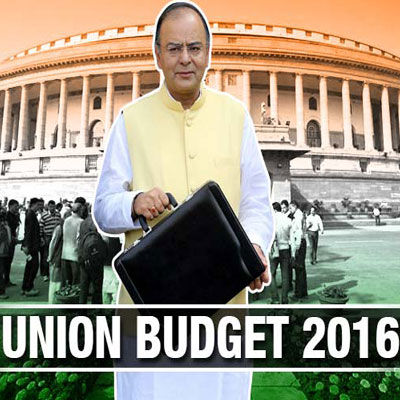
  • Union Budget 2016: What it means for the media & entertainment industry

    Union Budget 2016: What it means for the media & entertainment industry

    MUMBAI: 29 February marked an important date in the year’s calendar as Indian Finance Minister Arun Jaitley presented the Union Budget 2016, amidst expectations from all sections. With an aim to give equal attention to all sectors that need financial assistance, Jaitley presented the nine pillars of his budget that focused on multiple subjects; from eCommerce to start-ups; from education to increasing jobs; and from agriculture to health.

    In a quest to find out what it really means for the media and entertainment industry, Indiantelevision.com reached out to several industry stalwarts to find out how they interpret the Union Budget 2016.

    Here’s what they have to say:

     M&E Tax Advisory India, EY, partner and head Rakesh Jariwala

    “As part of the budget proposals, India has levied an equalisation levy – what is known as ‘google tax’ globally. The tax @ six per cent of the consideration will apply on services relating to online advertisement, provisions on online ad space or other facility or services for the purpose of online advertisement, when such services are provided by a non-resident to either an Indian resident or a non-resident having a permanent establishment in India. The payer for these services are required to deduct 6% prior to making the payment. This is the first time that online services are being taxed in India.”

     Videocon director Anirudh Dhoot

    “The Finance Minister presented a balanced budget with a focus on infrastructure and agriculture sectors. By keeping the fiscal deficit target to 3.5 per cent of the GDP, the budget addresses long term positive impact on businesses. For consumer durable and home appliances industry specifically, the budget brings mixed responses. While the focus is more on dispute resolution and simplification of provision, the voluntary income disclosure will dampen the market. The government has lowered the corporate tax for new manufacturing units at 25 per cent with a view to promote industrial activity and generate jobs. With regard to small units having a turnover of Rs 5 crore, the corporate tax rate has been reduced from 30 per cent to 29 per cent. However, there is no relief on the corporate tax for big manufacturers. Government has stressed on GST implementation and proposed changes in customs duty to push make in India initiatives, which is aimed at improving the overall business environment.” 

     Sony Pictures Networks India CEO NP Singh

    “From an overall budget perspective, the enhanced public spending through various social schemes and infrastructure investments should further help to expedite economic growth. The government has also balanced spending with fiscal prudence by reigning-in fiscal deficit. From a media industry perspective, there were no major changes. I feel that a change in the definition of industrial undertaking for the services industry as well as a push to define the GST roadmap would have been sector-positive. There is a landmark attempt in the budget to simplify the tax administration, which should herald a friendlier tax regime.”

     Dentsu Aegis Network South Asia CEO and chairman and Posterscope & MKTG – Asia Pacific chairman Ashish Bhasin 

    “Overall there are some positives and some negatives in the budget. Not increasing the service tax is a positive, particularly for the advertising and media sector. The general expectation was that Service Tax may go up in anticipation of higher GST rates. Controlling the fiscal deficit and several steps to invigorate the rural economy and rural consumption are positive signals. A rural consumption revival will help the economy and the advertising and media sector tremendously. On the negative side, there was an expectation based on what the Finance Minister said in the past, that corporate tax rates would come down. That is not to be so for most large companies. Introducing double taxation on dividends is also a negative. In balance this seems to be a mixed bag budget with a positive bias. If it is able to spur overall economic growth, we could see good times ahead for the advertising and media sector.”

     Times Network CEO and MD MK Anand

    “Digitisation, in my opinion is the most important factor for the broadcast sector currently, we are very happy about the excise duty changes proposed for set-top-boxes, which will help in the last mile infrastructure of Digital Addressable System (DAS) Phase 3 and 4. Overall, a stable and positive fiscal situation is good for the economy and that will support our ad sales growth projections. All in all budget 2016 looks good for the Broadcast sector.”

     Viacom18 Group CEO and National Media and Entertainment Committee CII chairman Sudhanshu Vats

    “Kudos to the government for presenting a disciplined and inclusive budget. The emphasis on rural development and commitment to the fiscal deficit target augur well for the economy in the long-run. The proposal for a more conducive excise duty regime for STBs and other ‘entertainment-access devices’ is welcome. While many of us from the industry were anticipating more sector-specific announcements, I’m sure that this budget will benefit the larger economy and therefore, by extension, have a positive impact on our industry as well.”