Category: Specials

  • FICCI Frames 2016: Digitization is a boon, but subject to how it is utilized by all stakeholders

    FICCI Frames 2016: Digitization is a boon, but subject to how it is utilized by all stakeholders

    MUMBAI: Even as a general consensus emerged on digitization being a boon, questions were raised at the ongoing FICCI FRAMES meet on whether the concept and advantages of the concept have been fully understood.

    Even as the TV industry has leapfrogged to more than 800 channels, and Indian Pay TV made the leap from analogue to digital and travelled from single to multi-platforms, the session on ‘Future Proofing Broadcast Distribution’ showed there are still some apprehensions on how the new technology can be used.

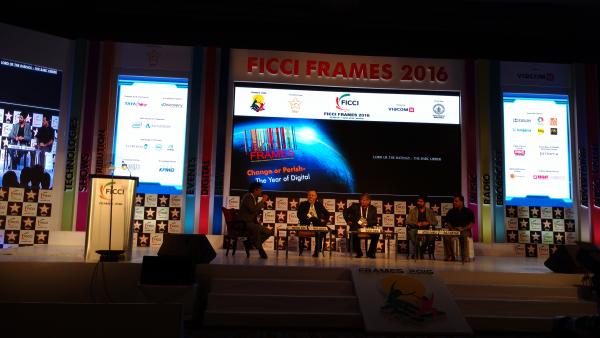
    The panelist included Times Network MD& CEO MK Anand, Ortel Communication CEO Bibhu Prasad Rath, Indusind Media and Communication MD & CEO Tony D Silva and Microsoft Corporation India Microsoft Azure and server business country head Srikanth Karnakota. The session was moderated by Zee Network president (Legal & Regulatory) Avnindra Mohan.

    Mohan set the ball rolling with a perplexing question on whether the industry had fully understood the implications of ditigization and convergence and whether stakeholders realized that they can use the same network for delivering different content through different modes of mediums. Thus, he said it shows a paradigm shift in the entire gambit of the distribution system.

    “Digitization has been a boon for the broadcast industry. From the broadcaster point of view, digitization started when the Direct to Home (DTH) system launched in 2003 in India. English news and other English general entertainment channels were being treated as the outsiders for the broadcast business. We had 65 million viewers in English from 2000 to 2005 whereas the total number of television viewers was 400 million. The number of English viewers has grown to 200 million now and that happened because of digitization,” says Anand.

    Anand added that in the next five to ten years, the English entertainment viewership should cross 300 million which is almost close to Hindi general entertainment channels viewership due to digitization.  “Times Now has a very strong and loyal audience in a month we cross the viewership of two and half crores but people don’t know that we have 13 crores of viewers on New Media platform,” informs Anand.

    Being a multi-system operator sharing views on the kind of business opportunities Ortel Communication can have in such a scenario, Rath felt India has grown in a unique fashion for the last two decades but the quality of the networks has been compromised. “The Set Top Box is not a solution to a network and we need to handle Phase III and IV in a different manner and not as Phase I and II”, he added.

    Noting that “we in India do not have one definition for Digitisation.It has been portrayed differently by others”, D’silva asked what the country wanted to achieve through digitization. “I believe there should a national objective about what they want to achieve from digitization. In most the industry today including DTH, 50 per cent of revenue goes in tax”. He felt progress was difficult unless the tax was supportive, but this was not going to happen. “It is the MSOs who are putting up the money and buying the STBs. So there has to be a logical regime of taxation. The STB is the only starting point of digitization. There should be an environment where technology and digitization should go hand in hand,” he felt.
  • FICCI Frames 2016: Live Updates: Sports gets serious what’s next?

    FICCI Frames 2016: Live Updates: Sports gets serious what’s next?

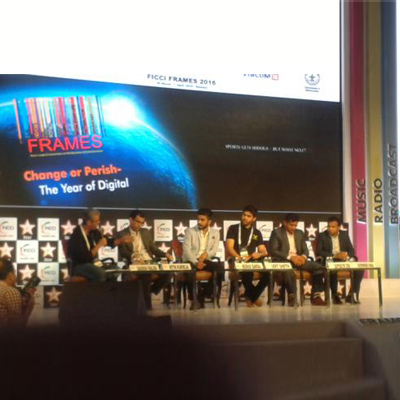
    MUMBAI: The sports ecosystem has seen a see of development in recent past. Non-cricket as a whole graduated from a flying bubble to a serious entity. Pro Kabaddi, from an un-orthodox experiment has become a case study. Cricket is a serious business for the broadcast ecosystem and has been from a long period of time, but now Sports as a whole has become serious business: But What’s next? and that is what the next session of FICCI Frames 2016 is all about.

    Indiantelevision.com will bring to you the updates of the session live and exclusive.

    The panelists will be quizzed by ESPN Cricinfo, Senior Editor: Gaurav Kalra
    Star Sports, President, Nitin Kukreja 
    Owner Gujrat Lions IPL franchise: Keshav Bansal
    USports CEO Supratik Sen
    SE TransStadia MD and CEO: Udit Sheth
    FC Goa CEO Sukhwinder Singh

    Kalra throws the ball at Nitin’s court. Asks him for his initial comment.

    “This Country is in verge of witnessing something special,” Nitin gets the ball rolling.

    “I still remember the morning we launched Kabaddi. We were still unsure. From there to now, we have learned a lot.” “We have learned that all stakeholders need to work together. Some stake holders need more convincing,” ‘collaboration is the key’ the biggest outcome from Nitin’s initial remarks. “Judging our success, it has come at the back of all our stake holders,” he gives credit to all the stake holders.

    Now Kalra goes to the CEO of the most successful PKL team, Supratik Sen narrates how the interest on PKL came. “Ronnie came and said we are going to invest on Kabaddi and that’s where it all started. It was quite a challenge, in the initial days we heard ab gilly danda kyun nhi khel lete, but when we spoke to the 40 plus age group, the women and men have played it in their lives, the answer became easier.”

    He further talks about the challenges, “Our challenge was to take it to the masses, so we reached out to them and got our talent, the we transformed these athheletes, into stars as we could mould them.

    Nitin now asked about the perception ‘Kabaddi won’t work’ He terms it ‘Outsiders view’ “The second season has completely changed the face of the game, the stakes are higher now. You need to go to Ranchi to know how big Hockey is, go to Hyderabad to see how popular Kabaddi is” he remarks.

    “Sporting has become even more local, even when it comes to sporrt revenuee. We were used to ccheer for team Inddia, but now there is a team Goa and team Kolkata” Nitin now talks about the paradigm shift.

    “We don’t expect to make profit from our IPL investment. This investemt is more about marking and building a brand that will reach to millions,” realistic Keshav narrates.

    Kalra quizzes on how to build interest on football to FC goa?

    Singh now has the mic, “While cricket remains the religion, but if we manage to package well and make it more and more engaging for the fans, and allow financial partneers to come forward and be a part pf the process, there is a way to sustain it.”

    “We are not sitting idle when the games are done. We are investing in the grassroots and keeping the aspiration about the game alive in the nine months when there is no league” Singh adds.

    Is there an area we need to pay urgent attention, which has been neglected, to develoe a culture around sport? — kalra

    Udit: Sport infrastructure wasnt thought of as a montisisng asset in our country. India has about 80 stadiums, but none of them are designed for television broadcast. When I was in talks with the Gujarat government, we told them we werent there to build a stadium, but to buld a sporting culture,” infrastructure is too a key, its not about getting them there but keeping them there and provide them quality experience……. great thoughts from Singh.

    What role can broadcasters play in developing a sports culture? A heavyweight question and there can be no one better than Nitin to answer this.

    Ratings are important,  from an advervenue perspective. But we realise that sport is not just a television product. We realise that grassroots play an important role too,” he is not done yet now he sheds light on the fact that the clubs too need to take a lot of responsibilities we can do it to a certain extent, but the clubs will have to take it upon themselves to build the culture foreward”

    Keshav now has the mic, “The success of any team worldwide largely depennds on how they perform, Brand building is important, and its a gradual process. The teams who have been in the league from thhe staart have an advantage. They had the time to build their legacy, and meerchandisisng followed. We are also working on building a brand, ut it will take time. Ultimately performance will speak.”

    Are you monetisisng kabaddi enough? shoots a delegate sitting in the ballroom……Well can there be enough monetising ever? ……… Karla diverts the question to Nitin, “As long as you are dong the right thing for the sport, as long as you are investing in the right areas, the money will follow. Its a question whether its in one year two year or three years,”…….. answers Nitin

    Karla now follows the ticker and wraps the session……

    It was Indiantelevision.com Reporter Papri Das sending all the live updates from the venue…

    Hope you liked the coverage….

    Please give us your feedback…. tweet us @ITVNewz…

    This is Anirban Roy Choudhury signing off for today……. 

  • FICCI Frames 2016: Live Updates: Sports gets serious what’s next?

    FICCI Frames 2016: Live Updates: Sports gets serious what’s next?

    MUMBAI: The sports ecosystem has seen a see of development in recent past. Non-cricket as a whole graduated from a flying bubble to a serious entity. Pro Kabaddi, from an un-orthodox experiment has become a case study. Cricket is a serious business for the broadcast ecosystem and has been from a long period of time, but now Sports as a whole has become serious business: But What’s next? and that is what the next session of FICCI Frames 2016 is all about.

    Indiantelevision.com will bring to you the updates of the session live and exclusive.

    The panelists will be quizzed by ESPN Cricinfo, Senior Editor: Gaurav Kalra
    Star Sports, President, Nitin Kukreja 
    Owner Gujrat Lions IPL franchise: Keshav Bansal
    USports CEO Supratik Sen
    SE TransStadia MD and CEO: Udit Sheth
    FC Goa CEO Sukhwinder Singh

    Kalra throws the ball at Nitin’s court. Asks him for his initial comment.

    “This Country is in verge of witnessing something special,” Nitin gets the ball rolling.

    “I still remember the morning we launched Kabaddi. We were still unsure. From there to now, we have learned a lot.” “We have learned that all stakeholders need to work together. Some stake holders need more convincing,” ‘collaboration is the key’ the biggest outcome from Nitin’s initial remarks. “Judging our success, it has come at the back of all our stake holders,” he gives credit to all the stake holders.

    Now Kalra goes to the CEO of the most successful PKL team, Supratik Sen narrates how the interest on PKL came. “Ronnie came and said we are going to invest on Kabaddi and that’s where it all started. It was quite a challenge, in the initial days we heard ab gilly danda kyun nhi khel lete, but when we spoke to the 40 plus age group, the women and men have played it in their lives, the answer became easier.”

    He further talks about the challenges, “Our challenge was to take it to the masses, so we reached out to them and got our talent, the we transformed these athheletes, into stars as we could mould them.

    Nitin now asked about the perception ‘Kabaddi won’t work’ He terms it ‘Outsiders view’ “The second season has completely changed the face of the game, the stakes are higher now. You need to go to Ranchi to know how big Hockey is, go to Hyderabad to see how popular Kabaddi is” he remarks.

    “Sporting has become even more local, even when it comes to sporrt revenuee. We were used to ccheer for team Inddia, but now there is a team Goa and team Kolkata” Nitin now talks about the paradigm shift.

    “We don’t expect to make profit from our IPL investment. This investemt is more about marking and building a brand that will reach to millions,” realistic Keshav narrates.

    Kalra quizzes on how to build interest on football to FC goa?

    Singh now has the mic, “While cricket remains the religion, but if we manage to package well and make it more and more engaging for the fans, and allow financial partneers to come forward and be a part pf the process, there is a way to sustain it.”

    “We are not sitting idle when the games are done. We are investing in the grassroots and keeping the aspiration about the game alive in the nine months when there is no league” Singh adds.

    Is there an area we need to pay urgent attention, which has been neglected, to develoe a culture around sport? — kalra

    Udit: Sport infrastructure wasnt thought of as a montisisng asset in our country. India has about 80 stadiums, but none of them are designed for television broadcast. When I was in talks with the Gujarat government, we told them we werent there to build a stadium, but to buld a sporting culture,” infrastructure is too a key, its not about getting them there but keeping them there and provide them quality experience……. great thoughts from Singh.

    What role can broadcasters play in developing a sports culture? A heavyweight question and there can be no one better than Nitin to answer this.

    Ratings are important,  from an advervenue perspective. But we realise that sport is not just a television product. We realise that grassroots play an important role too,” he is not done yet now he sheds light on the fact that the clubs too need to take a lot of responsibilities we can do it to a certain extent, but the clubs will have to take it upon themselves to build the culture foreward”

    Keshav now has the mic, “The success of any team worldwide largely depennds on how they perform, Brand building is important, and its a gradual process. The teams who have been in the league from thhe staart have an advantage. They had the time to build their legacy, and meerchandisisng followed. We are also working on building a brand, ut it will take time. Ultimately performance will speak.”

    Are you monetisisng kabaddi enough? shoots a delegate sitting in the ballroom……Well can there be enough monetising ever? ……… Karla diverts the question to Nitin, “As long as you are dong the right thing for the sport, as long as you are investing in the right areas, the money will follow. Its a question whether its in one year two year or three years,”…….. answers Nitin

    Karla now follows the ticker and wraps the session……

    It was Indiantelevision.com Reporter Papri Das sending all the live updates from the venue…

    Hope you liked the coverage….

    Please give us your feedback…. tweet us @ITVNewz…

    This is Anirban Roy Choudhury signing off for today……. 

  • ‘Make an Indian’ through the right type of kids content

    ‘Make an Indian’ through the right type of kids content

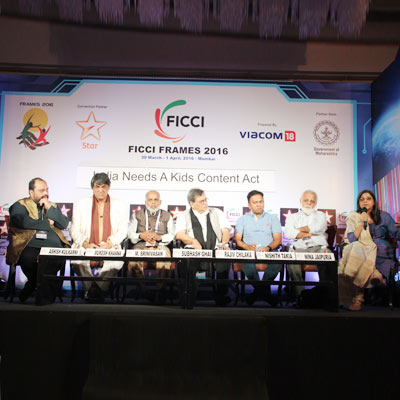
    MUMBAI: In a country where one third of the population is composed of children, very little has been done to encourage and promote kids content. While most will argue and point to the vibrant plethora of content for kids that kids’ networks in India boast of, it is just a fraction of what is required and can be achieved. To discuss the issues that held the industry back from catering quality kids content,  industry stalwarts like filmmaker Subhash Ghai, CFSI chairman Mukesh Khanna, GEAR Education founder Shrinivasan, Green Gold founder and CEO Rajiv Chilaka, Bioscopewala Pictures president Nishith Takia and Viacom 18 Kids cluster head Nina Jaipuria were a part of a panel. Moderated by FICCI animation chairman and Screenyug Creations founder Ashish SK, the panel addressed the need to have a Kids Content Act.

    The panellists unanimously agreed that India lacks any guidelines on what kind of content kids should consume, which exposed them to content that isn’t meant of them. Today’s kids are tomorrow’s future, and hence what content today’s kids consumed would have a character building influence on the adult of tomorrow, was the argument that Ghai had in support of the Act.

    “The formative years till the age of 8 years are crucial for a child. That is why pre-school content for kids has great power to familiarise them with our culture and add morals and values to their lives,” Shrinivasan stressed. “India lacks any form of parenting education. Parents often mistake the TV to be their babysitter, and expect their children to learn life values from it. Therefore we must pay attention to what kids are consuming on television.”

    A large part of the panel discussion was dominated by the need to have more Indian content for kids that reflected Indian culture and connected today’s kids with the roots of their parents. Both Ghai and Khanna felt that this generation of kids were so taken by the second screen – be it the mobile phone or the tablet — they were slowly drifting away from their own culture and embracing the west. They pointed at westernised kids’ content available right now and the lack of proper home grown content that adhered to the values of the land. Chalika also pointed out that he grew up amidst Archie comics and American and British superheroes and characters.

    Jaipuria however begged to differ with her fellow panellists. Pointing out to the progress of her own network, Jaipuria shared that 65 per cent of what Nickelodeon showrd was originally home grown, and the rest was either dubbed or tweaked to make it relatable for the local kids. Bringing in a fresh perspective to the digital era, she shared that soon all players would be in an even field thanks to digitisation. This would lead to such a huge demand for kids content that she doubted the country could meet at the moment with any measure of sustainability. Her reason for supporting an act was to ensure that the industry and all its sections — the creators and the distributors– were prepared with a ready supply of quality kids content for the near future.

    To make that a reality, there were certain legal, financial, and logistical hold ups, the moderator pointed out. Takia, who has been closely involved with the making of the recent National Award winning children’s film Delhi Safari, painted a sad picture of the current motion pictures sector for kids’ films. “Our film did extremely well in China and South Korea, but failed miserably in India. The movie was pulled out of screens way too quickly. Most of the money we made was from foreign market. This shows how we need to create an environment where children’s films reach their due audiences. The act may consider screen reservation or other ways to ensure viewership of such films,” he said. Government sanctions, subsidies, and entertainment tax reliefs were also brought up while discussing the act.

    “The ease of producing a children’s film is the key to take this industry in the right direction. Outside India, most animated children’s films are co-produced but Indian film makers can’t do that. We are restricted by law,” said Khanna. “The act should deal with this and allow filmmakers to co-produce the films and share the financial burden of creating something which requires a huge budget.”

    To address the visibility issue, Ashish proposed a free to air DD Kids channel so that kids living in the most remote parts of the country could enjoy quality content.

    The one take away from the discussion was perhaps the phrase ‘make an Indian.’ Giving a clever twist to the extremely popular ‘Make In India’ phrase that prime minister Modi had devised , the panellists urged that content creators should ‘make an Indian’ out of the tiny tots, riding on powerful home grown kids content that reflected the country’s culture.

    With so much stress on raising the country’s kids to the right type of ‘Indian’, is there a risk of homogenising kids content and regulating creativity? — A question the panel raised but did not answer.

  • ‘Make an Indian’ through the right type of kids content

    ‘Make an Indian’ through the right type of kids content

    MUMBAI: In a country where one third of the population is composed of children, very little has been done to encourage and promote kids content. While most will argue and point to the vibrant plethora of content for kids that kids’ networks in India boast of, it is just a fraction of what is required and can be achieved. To discuss the issues that held the industry back from catering quality kids content,  industry stalwarts like filmmaker Subhash Ghai, CFSI chairman Mukesh Khanna, GEAR Education founder Shrinivasan, Green Gold founder and CEO Rajiv Chilaka, Bioscopewala Pictures president Nishith Takia and Viacom 18 Kids cluster head Nina Jaipuria were a part of a panel. Moderated by FICCI animation chairman and Screenyug Creations founder Ashish SK, the panel addressed the need to have a Kids Content Act.

    The panellists unanimously agreed that India lacks any guidelines on what kind of content kids should consume, which exposed them to content that isn’t meant of them. Today’s kids are tomorrow’s future, and hence what content today’s kids consumed would have a character building influence on the adult of tomorrow, was the argument that Ghai had in support of the Act.

    “The formative years till the age of 8 years are crucial for a child. That is why pre-school content for kids has great power to familiarise them with our culture and add morals and values to their lives,” Shrinivasan stressed. “India lacks any form of parenting education. Parents often mistake the TV to be their babysitter, and expect their children to learn life values from it. Therefore we must pay attention to what kids are consuming on television.”

    A large part of the panel discussion was dominated by the need to have more Indian content for kids that reflected Indian culture and connected today’s kids with the roots of their parents. Both Ghai and Khanna felt that this generation of kids were so taken by the second screen – be it the mobile phone or the tablet — they were slowly drifting away from their own culture and embracing the west. They pointed at westernised kids’ content available right now and the lack of proper home grown content that adhered to the values of the land. Chalika also pointed out that he grew up amidst Archie comics and American and British superheroes and characters.

    Jaipuria however begged to differ with her fellow panellists. Pointing out to the progress of her own network, Jaipuria shared that 65 per cent of what Nickelodeon showrd was originally home grown, and the rest was either dubbed or tweaked to make it relatable for the local kids. Bringing in a fresh perspective to the digital era, she shared that soon all players would be in an even field thanks to digitisation. This would lead to such a huge demand for kids content that she doubted the country could meet at the moment with any measure of sustainability. Her reason for supporting an act was to ensure that the industry and all its sections — the creators and the distributors– were prepared with a ready supply of quality kids content for the near future.

    To make that a reality, there were certain legal, financial, and logistical hold ups, the moderator pointed out. Takia, who has been closely involved with the making of the recent National Award winning children’s film Delhi Safari, painted a sad picture of the current motion pictures sector for kids’ films. “Our film did extremely well in China and South Korea, but failed miserably in India. The movie was pulled out of screens way too quickly. Most of the money we made was from foreign market. This shows how we need to create an environment where children’s films reach their due audiences. The act may consider screen reservation or other ways to ensure viewership of such films,” he said. Government sanctions, subsidies, and entertainment tax reliefs were also brought up while discussing the act.

    “The ease of producing a children’s film is the key to take this industry in the right direction. Outside India, most animated children’s films are co-produced but Indian film makers can’t do that. We are restricted by law,” said Khanna. “The act should deal with this and allow filmmakers to co-produce the films and share the financial burden of creating something which requires a huge budget.”

    To address the visibility issue, Ashish proposed a free to air DD Kids channel so that kids living in the most remote parts of the country could enjoy quality content.

    The one take away from the discussion was perhaps the phrase ‘make an Indian.’ Giving a clever twist to the extremely popular ‘Make In India’ phrase that prime minister Modi had devised , the panellists urged that content creators should ‘make an Indian’ out of the tiny tots, riding on powerful home grown kids content that reflected the country’s culture.

    With so much stress on raising the country’s kids to the right type of ‘Indian’, is there a risk of homogenising kids content and regulating creativity? — A question the panel raised but did not answer.

  • FICCI FRAMES 2016: Updates: Lord of the Ratings- The BARC order

    FICCI FRAMES 2016: Updates: Lord of the Ratings- The BARC order

    Stay tuned: Indiantelevision.com brings live realtime updates from FICCI Frames; power-packed session Lord of the Ratings- The BARC Order.
     
    The session features industry leaders from the Broadcasting and Advertising sectors who will share their experience of using the new ratings system, and also debate ways to make more intelligent reading of this vast data. 
     
    Moderator: Paritosh Joshi, CEO, India TV
    Panelists: Partho Dasgupta, CEO, BARC
    Raj Nayak, CEO, Colors
    Shashi Sinha, CEO, IPG Mediabrands
    Hitesh Chawla


    Paritosh gets the session up and rolling. 
     
     
    Nowhere in the world an effort like BARC has been put off Shashi Sinha makes the initital remarks..
     
    Paritosh shoots a question on volatilty…… In response to Paritosh’s questions of BARC data being volatile, Partho says, “Things are rapidly changing and in this scenario, things are meant to be volatile.”
     
    Raj as always with smiles on his face yes and no to Partho’s answer, “The volatility comes not from GECs but mostly from the niche channels.”  
     

    Discussion heats up, Paritosh asks Partho if he acknowledges the fact that the data is erroneous: he says in reply: “Relative errors are a part of statistics and this is sampling which has cost implications.”


    Raj cuts in: “We are measuring content not viewership. There is no dichotomy. You may not mix and match every platform but the measurement is there.”

    Raj bats for Partho, jokes and says, “Partho’s position is the most amiable one. He is like the Election Commissioner of India.”

    Paritosh now throws one more googly towards Partho and he being a batsman with supreme temperament bats it with cool, calm and content. What happens when tempering is attempted?

    You can monetise what you can measure Paritosh’s question on the relationship between measurement and monetisation spurs up a new debate. Seperate rural and urban monetisation, “Digital can be monetised, we launched VOOT two days back. We are content creator and we will bundle ourselves and rake as much as possible. I am even of the opinion that rural and urban should be sold separately why should we have same selling if there are different measurement available” says Raj.


    Shashi Sinha has the mike: “Our game plan is to get all guys aligned and for user everything will be integrated.”

    Hitesh shares his experience and mentions that the “economics does make a sense” in his line of business, which is solely data oriented.

    “Around the world, in terms of scale, we have the larger sample in the world. We also have the least advertising revenue”, Partho.

    Shashi cuts in, ”Don’t walk into the trap. Technology has been an issue. Globally technology is cheaper. We have to ramp up. The idea is to enter the home and capture data.”

    Finally the wait is over Shashi Sinha goes to the remark made by the Minister of Telecom Ravi Shankar Prasad. Just to remind readers the Minister said “India needs a better rating system.” Shashi’ finds the statement ‘intriguing’ “They are not happy with data. Government was involved in the process from the very begining. Hence we were a little intrigued with the comments made.” 


    After seperate rural-urban selling proposition Raj now hits another nail with a valid point, “BARC’s work is to roll out data, now to say which channel is number one or two. I strongly feel FTA channels and pay channels should be rated seperately.” 


    Such exquisite measurement body but is it really helping you monetise better Raj asks Paritosh, “Measurement system for that, broadcasters need to be blamed for this. But I think as media evolves the ad revenue will also increase. For  me what is the most important avenue for revenue and that is separate rural and urban separate monetisation,” “though Shashi may not happy with that but that’s what I feel” replies Raj

    Paritosh thanks the packed house, round of applause and the sessions marks its conclusion.

    Thanks a lot stay tuned for more live updates.

    Let us know your feedback with a tweet @ITVNewz  

    “What we do is we see the data in the backend, first we check if there is a content reason for the change in behaviour, but if content is not the reason we with our three vigilance to check the ground issues and once we get a clear scenario get the hard evidence we quarantine the houses.”


  • FICCI FRAMES 2016: Updates: Lord of the Ratings- The BARC order

    FICCI FRAMES 2016: Updates: Lord of the Ratings- The BARC order

    Stay tuned: Indiantelevision.com brings live realtime updates from FICCI Frames; power-packed session Lord of the Ratings- The BARC Order.
     
    The session features industry leaders from the Broadcasting and Advertising sectors who will share their experience of using the new ratings system, and also debate ways to make more intelligent reading of this vast data. 
     
    Moderator: Paritosh Joshi, CEO, India TV
    Panelists: Partho Dasgupta, CEO, BARC
    Raj Nayak, CEO, Colors
    Shashi Sinha, CEO, IPG Mediabrands
    Hitesh Chawla


    Paritosh gets the session up and rolling. 
     
     
    Nowhere in the world an effort like BARC has been put off Shashi Sinha makes the initital remarks..
     
    Paritosh shoots a question on volatilty…… In response to Paritosh’s questions of BARC data being volatile, Partho says, “Things are rapidly changing and in this scenario, things are meant to be volatile.”
     
    Raj as always with smiles on his face yes and no to Partho’s answer, “The volatility comes not from GECs but mostly from the niche channels.”  
     

    Discussion heats up, Paritosh asks Partho if he acknowledges the fact that the data is erroneous: he says in reply: “Relative errors are a part of statistics and this is sampling which has cost implications.”


    Raj cuts in: “We are measuring content not viewership. There is no dichotomy. You may not mix and match every platform but the measurement is there.”

    Raj bats for Partho, jokes and says, “Partho’s position is the most amiable one. He is like the Election Commissioner of India.”

    Paritosh now throws one more googly towards Partho and he being a batsman with supreme temperament bats it with cool, calm and content. What happens when tempering is attempted?

    You can monetise what you can measure Paritosh’s question on the relationship between measurement and monetisation spurs up a new debate. Seperate rural and urban monetisation, “Digital can be monetised, we launched VOOT two days back. We are content creator and we will bundle ourselves and rake as much as possible. I am even of the opinion that rural and urban should be sold separately why should we have same selling if there are different measurement available” says Raj.


    Shashi Sinha has the mike: “Our game plan is to get all guys aligned and for user everything will be integrated.”

    Hitesh shares his experience and mentions that the “economics does make a sense” in his line of business, which is solely data oriented.

    “Around the world, in terms of scale, we have the larger sample in the world. We also have the least advertising revenue”, Partho.

    Shashi cuts in, ”Don’t walk into the trap. Technology has been an issue. Globally technology is cheaper. We have to ramp up. The idea is to enter the home and capture data.”

    Finally the wait is over Shashi Sinha goes to the remark made by the Minister of Telecom Ravi Shankar Prasad. Just to remind readers the Minister said “India needs a better rating system.” Shashi’ finds the statement ‘intriguing’ “They are not happy with data. Government was involved in the process from the very begining. Hence we were a little intrigued with the comments made.” 


    After seperate rural-urban selling proposition Raj now hits another nail with a valid point, “BARC’s work is to roll out data, now to say which channel is number one or two. I strongly feel FTA channels and pay channels should be rated seperately.” 


    Such exquisite measurement body but is it really helping you monetise better Raj asks Paritosh, “Measurement system for that, broadcasters need to be blamed for this. But I think as media evolves the ad revenue will also increase. For  me what is the most important avenue for revenue and that is separate rural and urban separate monetisation,” “though Shashi may not happy with that but that’s what I feel” replies Raj

    Paritosh thanks the packed house, round of applause and the sessions marks its conclusion.

    Thanks a lot stay tuned for more live updates.

    Let us know your feedback with a tweet @ITVNewz  

    “What we do is we see the data in the backend, first we check if there is a content reason for the change in behaviour, but if content is not the reason we with our three vigilance to check the ground issues and once we get a clear scenario get the hard evidence we quarantine the houses.”


  • Kids content growth is fastest in digital, and monetizing models need to keep up

    Kids content growth is fastest in digital, and monetizing models need to keep up

    MUMBAI: ‘Kids content has already gone digital, catering to its target audience,’ was the unanimous consensus at a session on ‘Kids Go Digital’ at the ongoing FICCI Frames 2016

    Unlike most discussions on digital media, there were no “if’s, ‘but’s and ‘maybe’s” and panelists — Chuchu TV CEO Vinoth Chander, Godimensions’ founders Shravan and Sanjay Kumaran, Nazara Technologies CEO Manish Agarwal  and Viacom 18 Digital Ventures COO Gaurav Gandhi – discussed how to take digital kids content to the next level, expand its market in India and make the most of the resources and eyeballs at disposal. Whizkidz Media founder Amit Agarwal, moderated the panel discussion.

    “Kids content growth is fastest in digital as its consumers are native to the medium. While you and I are adapting to the medium, they are born in the digital world and hence take naturally to it,” said Gandhi, adding that over the years the demography of kids born in the digital world will only grow.

    Currently kids’ content on digital platform is mostly on YouTube which has a few issues. Firstly, there is hardly any premium kids content available in India, then there is a lack of character driven shows, and most of the content for children is targeted at preschoolers leaving out a huge chunk of the audience. Moreover, most of the viewership comes from foreign markets, and the market in India still needs to be developed.

    Reflecting on how one markets kids content, Gandhi had a cryptic answer: “In their own language”. “You need to think like them and market your content on their own terms.”

    Speaking from personal experience, Gandhi added that using TV as a medium is a good start, as a huge chunk of the audience is still on TV. “Sampling videos on YouTube, TV and even reaching out to them through schools and play schools is also a good way to understand them and share your content.”

    As far as Chander was concerned, organic reach has worked wonders for him and his company ChuChu TV and he would vouch for strategically placed promotion within their own YouTube content. “We want to concentrate on quality content, rather than marketing as the former does the latter for us,” Chander said categorically. He also stressed that kids usually take more to visual content, and therefore propagating the message through videos and pictures would work better.

    “Kids are smart,” said Agarwal on the topic of edutainment. “Do not trick them into consuming content that you sell as entertainment, which is actually educational and is meant for learning. You need to separate your own consumers from their parents.” To back his argument Agarwal narrated about his own failed experiment with a gaming app that was intended to teach mathematics to kids. “A minute into the game they figured that this was no game but a trick to teach them, and immediately they got disinterested. For them games is entertainment, and just that.”

    The young entrepreneurs in the panel however differed. The Kumaran brothers said “Kids do like content that mirrors the teachings of their parents. Moreover, content that has an educational value that teaches a skill set like a programming code, or their everyday school syllabus with diagrams and videos, will work immensely well.”
     
    Expectedly monetizing models came up when discussing content production and business opportunity. “Time spent on content is what advertisers swear by. If that is so, as per market insight, kids will spend more and more time on digital or second screens than on TV, it is already happening,” said Agarwal hinting that ad revenue on kids content on digital platform will only grow.
     
    Gandhi shared another statistic from a BCG study: “Out of top 200 YouTube channels that garnered 10 billion views, 5 percent had kids content while 26 percent of the viewership came from children. It indicates that kids watch repeatedly, and they get obsessive over characters,” Gandhi said. Pointing out the simple demand supply ratio in economics, he added, “money will follow.”