Category: Specials

  • International Emmys Kids Awards presented at MipTV, Cannes

    International Emmys Kids Awards presented at MipTV, Cannes

    CANNES: International Emmy Kids Awards in Cannes’ famed TV market and festival MIPTV on the evening of 5 April 2016.

    Amongst the big winners was  Australian studio Matchbox Pictures Nowhere Boys Series 2  which took home the best series award.  Dutch producer NL Film & TV/KRO-NCRV pocketed the Best TV movie/miniseries award for Rabarber (Rhubarb).  Bing from British producers Acamar Films,/Brown Bag Films, UK was victorious in the pre-school category while the best animation award was given to Ronja, The Robber’s Daughter (NHK/NHK Enterprises/Dwango/Polygon Pictures, Japan) . My Life: I Am Leo (Nine Lives Media, U.K.) and Best i Mest (All-Round Champion) (NRK, Norway) won in the factual and non-scripted entertainment categories, respectively.

    The awards were held at a glittering ceremony attended by 200 plus industry execs at Cannes Carlton hotel. Several TV and digital personalities and animation characters presented the awards. Among them figured: YouTuber Cyrina Fiallo, Quebec comedian Cathleen Rouleau, Miss SupraNational Stephania Stegman, co-presenting with Majid Entertainment’s animation character Amoona, German preschool character Die Maus from WDR’s The Program with The Mouse and actor Gil Ofarim from WDR’s kids’ series Arman’s Secret and Jeemtv soccer mascot Saham.

    “Producers of children’s programming have a great responsibility towards their viewers and the broader audience and we are honored to be recognizing and showcasing the world’s best at MIPTV,” said International Academy President Bruce L. Paisner. “We congratulate all the winners for their outstanding achievements and for setting the high-quality standard we all expect for kids.”

  • BBC Worldwide secures new digital deals in India with Hungama and Vuclip

    BBC Worldwide secures new digital deals in India with Hungama and Vuclip

    MUMBAI: BBC Worldwide announced on the second day of MipTV, two new licensing deals with India’s digital services providers, Hungama, and Vuclip. With these SVOD deals, India viewers will have access to award-winning and popular BBC drama series never before seen in India.

    From end April 2016, viewers of Hungama will be able to watch BBC programmes premiering in India for the first time including crime drama Prey (Series 1) – in which John Simm (Life on Mars, State of Play) stars as a man on the run, desperate to clear his name for the sake of his family; Not Safe For Work– a comedy drama which follows Katherine (played by Zawe Ashton) who is reluctantly relocated from London to Northampton as part of public spending cuts and she meets a disparate yet similarly disillusioned group of workmates; and sci-fi, comedy and horror drama Save Our Skins –  in which protagonists  Ben and Stephen wake up one morning to realise the human race has disappeared and they are the only two humans left on Earth. These programmes, and more will be available on demand for viewers to watch at their own convenience.

    Subscribers of Vuclip’s OTT service, Viu can now catch blockbusting BBC dramas including the modern reworking of Tolstoy’s epic masterpiece, War and Peace, starring Paul Dano, Lily James and James Norton; and BAFTA-nominated Doctor Foster in which Doctor Gemma Foster, a loving wife and trusted doctor’s seemingly perfect world is shattered when she suspects her husband of having an affair.

    “Over the last few months, we have seen an upward trend where BBC’s dramas are being increasingly snapped up by Indian clients for their linear TV and digital TV platforms. A study commissioned by BBC Worldwide last year showed that international audiences, including India, love original British drama,” said BBC Worldwide (India) SVP & GM Myleeta Aga.  “With more and more Indians going online to watch their favourite dramas, we are excited to work with Hungama and Viu to satisfy viewers’ demands by bring critically acclaimed and highly rated BBC programmes to their subscribers.”

  • BBC Worldwide secures new digital deals in India with Hungama and Vuclip

    BBC Worldwide secures new digital deals in India with Hungama and Vuclip

    MUMBAI: BBC Worldwide announced on the second day of MipTV, two new licensing deals with India’s digital services providers, Hungama, and Vuclip. With these SVOD deals, India viewers will have access to award-winning and popular BBC drama series never before seen in India.

    From end April 2016, viewers of Hungama will be able to watch BBC programmes premiering in India for the first time including crime drama Prey (Series 1) – in which John Simm (Life on Mars, State of Play) stars as a man on the run, desperate to clear his name for the sake of his family; Not Safe For Work– a comedy drama which follows Katherine (played by Zawe Ashton) who is reluctantly relocated from London to Northampton as part of public spending cuts and she meets a disparate yet similarly disillusioned group of workmates; and sci-fi, comedy and horror drama Save Our Skins –  in which protagonists  Ben and Stephen wake up one morning to realise the human race has disappeared and they are the only two humans left on Earth. These programmes, and more will be available on demand for viewers to watch at their own convenience.

    Subscribers of Vuclip’s OTT service, Viu can now catch blockbusting BBC dramas including the modern reworking of Tolstoy’s epic masterpiece, War and Peace, starring Paul Dano, Lily James and James Norton; and BAFTA-nominated Doctor Foster in which Doctor Gemma Foster, a loving wife and trusted doctor’s seemingly perfect world is shattered when she suspects her husband of having an affair.

    “Over the last few months, we have seen an upward trend where BBC’s dramas are being increasingly snapped up by Indian clients for their linear TV and digital TV platforms. A study commissioned by BBC Worldwide last year showed that international audiences, including India, love original British drama,” said BBC Worldwide (India) SVP & GM Myleeta Aga.  “With more and more Indians going online to watch their favourite dramas, we are excited to work with Hungama and Viu to satisfy viewers’ demands by bring critically acclaimed and highly rated BBC programmes to their subscribers.”

  • Polish Broadcaster TVN to unveil original documentary series ‘(l)egend’  on its OTT platform

    Polish Broadcaster TVN to unveil original documentary series ‘(l)egend’ on its OTT platform

    MUMBAI: Polish broadcaster TVN S.A., part of the Scripps Networks Interactive family, continues to expand the high-quality offerings for its subscribers with a new, original documentary series set to debut on its OTT platform, player.pl, April 16.

    “With 30 episodes, “(L)egend” takes viewers behind the scenes of Poland’s Legia Warsaw football team, which boasts 100 years of history, 11 Polish championships titles and is the all-time leader of The Ekstraklasa league, with millions of supporters in Poland and beyond.

    “(L)egend” reveals that Legia Warsaw is not only defined by its players and coaching staff, but rather far more goes into the football club’s identity and history. It’s about the fans, devotion and colors of the club… the respect manifested towards players and legends… the anger after defeat… the euphoria after victory. It’s the raw emotion accompanying the football team on a daily basis.

    Featured in this series are such legends as Lucjan Brychczy and current team captain, Jakub Rzeźniczak, as well as ordinary fans, such as Ela Mrowińska, whose parents gave the name in honor of Legia — each presenting the history of their beloved club through the prism of their own experience.

    TVN board member for digital and e – commerce Christian Anting said, “Our original ‘(L)egend’ documentary series brings a whole new quality to the Polish market of sports TV programs. Never before have the identity and emotions of the football club been presented in such extensive and diversified way. By premiering the series on player.pl, we give viewers around the world, regardless of location, a chance to learn about the unique history of Legia Warsaw. Projects such as ‘(L)egend’ are a great way to honor and support sports organizations, while expanding our extensive offer.”

    Legia Warszawa S.A deputy CEO Jakub Szumielewicz said,  “We are very proud that – thanks to the ‘(L)egend’ series – we are able to familiarize more than seven million Poles with the magnificent, 100-year history of Legia Warsaw. We established our cooperation with Player.pl, because we wanted to choose the media capable of carrying out such a huge educational mission. We believe that viewers will not only join in the common celebration of Legia Warsaw’s important anniversary, but will also participate in creating the new history of the team, taking into account its DNA.”

    Viewers can keep up with the “(L)egend” series by registering on player.pl platform free of charge. The first episode will be available April 16. Additionally, every user who registers on player.pl will be able to visit a special website dedicated to the 100-year history of Legia Warsaw. This website, launching April 16 as well, will feature additional material showing the world of emotions related to supporting the team.


  • Polish Broadcaster TVN to unveil original documentary series ‘(l)egend’  on its OTT platform

    Polish Broadcaster TVN to unveil original documentary series ‘(l)egend’ on its OTT platform

    MUMBAI: Polish broadcaster TVN S.A., part of the Scripps Networks Interactive family, continues to expand the high-quality offerings for its subscribers with a new, original documentary series set to debut on its OTT platform, player.pl, April 16.

    “With 30 episodes, “(L)egend” takes viewers behind the scenes of Poland’s Legia Warsaw football team, which boasts 100 years of history, 11 Polish championships titles and is the all-time leader of The Ekstraklasa league, with millions of supporters in Poland and beyond.

    “(L)egend” reveals that Legia Warsaw is not only defined by its players and coaching staff, but rather far more goes into the football club’s identity and history. It’s about the fans, devotion and colors of the club… the respect manifested towards players and legends… the anger after defeat… the euphoria after victory. It’s the raw emotion accompanying the football team on a daily basis.

    Featured in this series are such legends as Lucjan Brychczy and current team captain, Jakub Rzeźniczak, as well as ordinary fans, such as Ela Mrowińska, whose parents gave the name in honor of Legia — each presenting the history of their beloved club through the prism of their own experience.

    TVN board member for digital and e – commerce Christian Anting said, “Our original ‘(L)egend’ documentary series brings a whole new quality to the Polish market of sports TV programs. Never before have the identity and emotions of the football club been presented in such extensive and diversified way. By premiering the series on player.pl, we give viewers around the world, regardless of location, a chance to learn about the unique history of Legia Warsaw. Projects such as ‘(L)egend’ are a great way to honor and support sports organizations, while expanding our extensive offer.”

    Legia Warszawa S.A deputy CEO Jakub Szumielewicz said,  “We are very proud that – thanks to the ‘(L)egend’ series – we are able to familiarize more than seven million Poles with the magnificent, 100-year history of Legia Warsaw. We established our cooperation with Player.pl, because we wanted to choose the media capable of carrying out such a huge educational mission. We believe that viewers will not only join in the common celebration of Legia Warsaw’s important anniversary, but will also participate in creating the new history of the team, taking into account its DNA.”

    Viewers can keep up with the “(L)egend” series by registering on player.pl platform free of charge. The first episode will be available April 16. Additionally, every user who registers on player.pl will be able to visit a special website dedicated to the 100-year history of Legia Warsaw. This website, launching April 16 as well, will feature additional material showing the world of emotions related to supporting the team.


  • MipFormats, Cannes: Demystifying India’s content formats space

    MipFormats, Cannes: Demystifying India’s content formats space

    CANNES: How do you work with India? Is it a new TV and digital formats’ paradise? These  – among others – were some of the questions raised and answered in the Producer’s Toolbox at MipFormats in Cannes on 3 April in Auditorium A in the famed Palais des Festivals.

    The session began with IndianTelevision Dot Com Group founder, CEO Anil Wanvari giving the 100 strong audience from about 25 countries a quick snapshot view of the Indian television industry.

    He estimated that the TV content creation business is about $620 million with about $500 million of this being accounted for by the Hindi General entertainment space. While soaps, drama, Bollywood films and songs account for a major chunk of the spend, around $90 million (including the format licence fee, production margins, and production and talent costs) is spent on TV formats.

    Wanvari also pointed out that almost all the European majors have set up shop in India, including Endemol Shine, Zodiak, Fremantle, BBC WorldWide productions.  And they have managed to build robust business.

    Wanvari highlighted the potential for new content ideas that has popped up courtesy the proliferation of platforms in the OTT and VOD space. The last couple of years have seen the entry of Hotstar (with about 40 million users; targeted to hit 100 million by end this year), Hooq, VuClip, Voot (from Viacom18), Ditto TV, OZee (from the Zee TV group), ErosNow, ZengaTV, and Netflix. Others like AltDigital (from Balaji Telefilms) are firming up plans for a launch. And the digital opportunity is only going to explode further with the impending launch of 4G services from the Reliance group which is investing about $22 billion on its broadband and 4G mobile play.

    CA Media-backed OML (Only Much Louder) COO Ajay Nair was pretty gung-ho about the Youtube promise. “We are about to launch six new shows – four of which are  formats –  with India’s top comedy talent with the support of brands. As most youth are on mobile devices, brands are willing to support any fruitful engagement they can have with them.”

    GoQuest Media CEO Vivek Lath announced the formation of GoQuest Formats a new company looking to acquire formats – even paper ones from all over the world to market them globally. “We are looking at travel show formats, convergence formats,” he said.

    Grey Matter Entertainment co-founder Rahul Sangari spoke about his music format The Remix which was produced in Vietnam and became the no 1 show there on VTV. “We are going into production in three weeks in China too,” he said. “We are looking forward to closing deals in 16 territories and hope  to do signups in the UK and the US too,” he said.
    Sangari was also pretty oprtimystic about a TV and app integrated show called Street Stars which focuses on street performers which is represented by Dentsu StoryLab at Mip.

    Zee TV’s Yogesh Karikurve opined that foreign companies wanting to explore the format opportunity in India would do well to explore licensing their formats, preferably before opting to set up a full fledged production operation.

    Nair emphasized that any international company needs to find a local partner to do the production and also liaise with the telecast partner, rather than just licence a format.

    Sangari’s view was that the need for an Indian partner arises because “India is a very different country; the cultural sensibilities and nuances have to be born in mind while creating, developing and selling a format in the country is concerned.”

    Lath said that music and dance shows have been rating well in India. “But formats targeting the new millenials  will have legs,” he said.

    Sangari agreed that India had yet to develop in terms of forking out large licensing fees for formats.  Lath interjected and said that should not be a worry for any large format distributor or creator. “Collectively if it is licensed on the regional language channels along with the mainline Hindi channel , then the licence pad can expand,” he stated.

    Karikurve talked about the potential for  factual entertainment  formats as that is a genre that ithe Zee TV group is investing in greatly in that genre. Nair agreed but added that ‘dating,’ extreme sports, music and comedy formats were becoming relevant. He ended the discussion  forecasting that around 40-50 international formats could make their way into India on digital and traditional television in the not too distant future as the appetite is definitely there. .


  • MipFormats, Cannes: Demystifying India’s content formats space

    MipFormats, Cannes: Demystifying India’s content formats space

    CANNES: How do you work with India? Is it a new TV and digital formats’ paradise? These  – among others – were some of the questions raised and answered in the Producer’s Toolbox at MipFormats in Cannes on 3 April in Auditorium A in the famed Palais des Festivals.

    The session began with IndianTelevision Dot Com Group founder, CEO Anil Wanvari giving the 100 strong audience from about 25 countries a quick snapshot view of the Indian television industry.

    He estimated that the TV content creation business is about $620 million with about $500 million of this being accounted for by the Hindi General entertainment space. While soaps, drama, Bollywood films and songs account for a major chunk of the spend, around $90 million (including the format licence fee, production margins, and production and talent costs) is spent on TV formats.

    Wanvari also pointed out that almost all the European majors have set up shop in India, including Endemol Shine, Zodiak, Fremantle, BBC WorldWide productions.  And they have managed to build robust business.

    Wanvari highlighted the potential for new content ideas that has popped up courtesy the proliferation of platforms in the OTT and VOD space. The last couple of years have seen the entry of Hotstar (with about 40 million users; targeted to hit 100 million by end this year), Hooq, VuClip, Voot (from Viacom18), Ditto TV, OZee (from the Zee TV group), ErosNow, ZengaTV, and Netflix. Others like AltDigital (from Balaji Telefilms) are firming up plans for a launch. And the digital opportunity is only going to explode further with the impending launch of 4G services from the Reliance group which is investing about $22 billion on its broadband and 4G mobile play.

    CA Media-backed OML (Only Much Louder) COO Ajay Nair was pretty gung-ho about the Youtube promise. “We are about to launch six new shows – four of which are  formats –  with India’s top comedy talent with the support of brands. As most youth are on mobile devices, brands are willing to support any fruitful engagement they can have with them.”

    GoQuest Media CEO Vivek Lath announced the formation of GoQuest Formats a new company looking to acquire formats – even paper ones from all over the world to market them globally. “We are looking at travel show formats, convergence formats,” he said.

    Grey Matter Entertainment co-founder Rahul Sangari spoke about his music format The Remix which was produced in Vietnam and became the no 1 show there on VTV. “We are going into production in three weeks in China too,” he said. “We are looking forward to closing deals in 16 territories and hope  to do signups in the UK and the US too,” he said.
    Sangari was also pretty oprtimystic about a TV and app integrated show called Street Stars which focuses on street performers which is represented by Dentsu StoryLab at Mip.

    Zee TV’s Yogesh Karikurve opined that foreign companies wanting to explore the format opportunity in India would do well to explore licensing their formats, preferably before opting to set up a full fledged production operation.

    Nair emphasized that any international company needs to find a local partner to do the production and also liaise with the telecast partner, rather than just licence a format.

    Sangari’s view was that the need for an Indian partner arises because “India is a very different country; the cultural sensibilities and nuances have to be born in mind while creating, developing and selling a format in the country is concerned.”

    Lath said that music and dance shows have been rating well in India. “But formats targeting the new millenials  will have legs,” he said.

    Sangari agreed that India had yet to develop in terms of forking out large licensing fees for formats.  Lath interjected and said that should not be a worry for any large format distributor or creator. “Collectively if it is licensed on the regional language channels along with the mainline Hindi channel , then the licence pad can expand,” he stated.

    Karikurve talked about the potential for  factual entertainment  formats as that is a genre that ithe Zee TV group is investing in greatly in that genre. Nair agreed but added that ‘dating,’ extreme sports, music and comedy formats were becoming relevant. He ended the discussion  forecasting that around 40-50 international formats could make their way into India on digital and traditional television in the not too distant future as the appetite is definitely there. .


  • Address the advertising challenges in the digital world to convert the non-believers

    Address the advertising challenges in the digital world to convert the non-believers

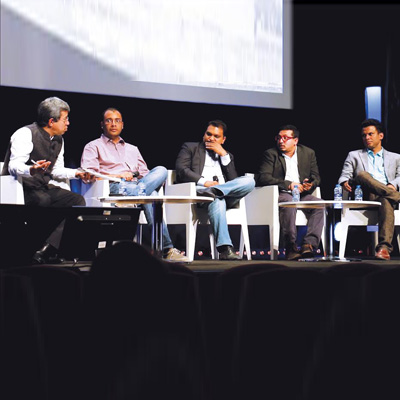
    MUMBAI: What do you do when you have a discussion to moderate, a ready panel of speakers on stage, but your audience is even less than the number of speakers? Well, you take the mike and charge forward without a care in world – not to put on a show, but because some issues need a serious, straightforward and honest discussion. The audience will definitely follow.

    That’s exactly what the charismatic chairman and MD of Grey Group India Sunil Lulla did when moderating a session on day three at FICCI Frames 2016. The topic was simple and burning — The Advertising Challenge amidst disruptive technology, digital innovations enabling targeted and smartadvertising — and Taboola APAC VP Ran Buck set the tone of the discussion with his key note on the issue. Buck shared his experiences on how the digital world behaved internationally from his experience of working with the brand discovery platform Taboola that helps advertisers find relevant end users.

    Lulla took control of discussion and the first thing he did was to throw a question at the audience – ‘How many believed that the digital medium will be the largest advertising revenue driver in the coming years?’ — to which most of  the audience responded by raising their hands. Next, he relayed an objective to the panellists — to convert all the non-believers in the room to believers by the end of the discussion. What a way to get the audience involved right from the start!

    The quickest way to get the ball rolling was to go through the panel as each one pointed out opportunities or challenges in advertising in the digital world.

    The panellists –  POKKT Video Ads CEO and founder Rohit Sharma, Zapr Media Labs co-founder Sandipan Mondal, Ping Digital Broadcast co-founder Rajeshree Naik, Vidooly founder Subrat Kar, Yahoo India MD and VP Gurmit Singh, and Adsparx CEO Kunal Lagwankar.

    Mondal, seated on the extreme end of the panel, pointed out the obvious and very straightforward reason to believe in the digital advertising boom. “It’s digital where the eyeballs are, and where more eyeballs will shift to. And advertisers follow eyeballs.” Gurmit Singh went into the details when chalking out the opportunities the digital age posed for advertisers and other stakeholders in the business. “If you follow the rate at which digital startups are being acquired by the big players and notice the value at which the deals happen, it gives you the idea how much the market analysts and value setters are betting on the digital platforms.”

    “Going forward,” Singh added, “Mobile will be the biggest traction driver and it is already going big in India. There are several stats and data to showcase the tremendous growth of the smartphone penetration in India. This will be followed by the huge video boom that again poses an awesome opportunity for brands to tap into. The other trend that will have a strong impact onadvertisers and will open up new vistas for them is native advertising.”

    Privacy right, Kar said, was currently a big challenge for digital advertisersand policy makers needed to come together and educate and come up with solutions for advertisers on this front.

    Having worked closely in the video advertising space on digital media, there was no one better than Lagwankar to shortlist the hiccups in the business currently. “Firstly,” he said, “it is a major challenge to retain the TV experience of seamless transition between content and advertising on VOD platforms. It’s not a bandwidth issue, but a design and aesthetics one.”

    “Secondly, ad-blockers take away a major chunk of the advertising revenues from publishers; and thirdly, content providers and distributors need to come up with a way to give seamless streaming of content between all platforms or screens, and address the needs of each screen individually,” Lagwankar stated.

    Being the optimist that she is, Naik stated, “Any barrier is dwarfed by the opportunities the medium offers for advertisers.” As the need of the hour was to state the barriers, Naik listed out a few as well. “We need a clear understanding of the medium. Lack of understanding such as equating views as metrics to measure reach and visibility by advertisers will set the industry crumbling faster than anything.”

    The often abused term ‘digital video measurement’ was tackled by the panel with a fresh perspective.  Advertisers have been heard citing the lack of a standard measurement of eyeballs on the digital platform as an excuse to not spend as much advertising dollars as they do on traditional media. Newspapers have distribution and sales count; TV has got BARC; what has the web got?

    “Perhaps web doesn’t need a ratings system,” came Singh’s head turning answer. “Web metrics at a large work differently, even within the different digital players. Some sites and apps use cookies and adtags to monitor and record consumer behaviour.”

    “There is also SDK code in apps that can be used to track how consumers interact with ads or record other analytics for the brands,” Sharma further accentuated the point. Hence the traditional concept of ratings might not be required for a vibrant medium like the web that has other powerful technological tools to fulfil the same need for advertisers.

    While the discussion on the stage covered everything including whether long form television ads would work on digital platform and content branding, a member from the audience got up and pointed out the ‘Skip button’, which was a problem of mammoth proportions.

    “While we all are banking on digital videos to drive ad revenue, what are we doing about the ‘skip ad’ button that is also the second most clicked button?” the panel was quizzed.

    Agreeing that traditional form of advertising would need some heavy tweaking to survive and coexist with ad blocking, Singh stated that digital medium empowered the end users to skip the ads, and further encouraged people to stay in the medium.

    It ultimately came down to how an ad was relayed to the consumer, whether it was in the viewer’s face, or packaged as good content with a value addition. After all, for a viewer, a good story was a good story, be it an ad or entertainment content.

    By the time the finishing bell rang, Lulla and the panellists had a hard time reaching the exit, as a sea of people hounded them for ‘one last question.’

  • Address the advertising challenges in the digital world to convert the non-believers

    Address the advertising challenges in the digital world to convert the non-believers

    MUMBAI: What do you do when you have a discussion to moderate, a ready panel of speakers on stage, but your audience is even less than the number of speakers? Well, you take the mike and charge forward without a care in world – not to put on a show, but because some issues need a serious, straightforward and honest discussion. The audience will definitely follow.

    That’s exactly what the charismatic chairman and MD of Grey Group India Sunil Lulla did when moderating a session on day three at FICCI Frames 2016. The topic was simple and burning — The Advertising Challenge amidst disruptive technology, digital innovations enabling targeted and smartadvertising — and Taboola APAC VP Ran Buck set the tone of the discussion with his key note on the issue. Buck shared his experiences on how the digital world behaved internationally from his experience of working with the brand discovery platform Taboola that helps advertisers find relevant end users.

    Lulla took control of discussion and the first thing he did was to throw a question at the audience – ‘How many believed that the digital medium will be the largest advertising revenue driver in the coming years?’ — to which most of  the audience responded by raising their hands. Next, he relayed an objective to the panellists — to convert all the non-believers in the room to believers by the end of the discussion. What a way to get the audience involved right from the start!

    The quickest way to get the ball rolling was to go through the panel as each one pointed out opportunities or challenges in advertising in the digital world.

    The panellists –  POKKT Video Ads CEO and founder Rohit Sharma, Zapr Media Labs co-founder Sandipan Mondal, Ping Digital Broadcast co-founder Rajeshree Naik, Vidooly founder Subrat Kar, Yahoo India MD and VP Gurmit Singh, and Adsparx CEO Kunal Lagwankar.

    Mondal, seated on the extreme end of the panel, pointed out the obvious and very straightforward reason to believe in the digital advertising boom. “It’s digital where the eyeballs are, and where more eyeballs will shift to. And advertisers follow eyeballs.” Gurmit Singh went into the details when chalking out the opportunities the digital age posed for advertisers and other stakeholders in the business. “If you follow the rate at which digital startups are being acquired by the big players and notice the value at which the deals happen, it gives you the idea how much the market analysts and value setters are betting on the digital platforms.”

    “Going forward,” Singh added, “Mobile will be the biggest traction driver and it is already going big in India. There are several stats and data to showcase the tremendous growth of the smartphone penetration in India. This will be followed by the huge video boom that again poses an awesome opportunity for brands to tap into. The other trend that will have a strong impact onadvertisers and will open up new vistas for them is native advertising.”

    Privacy right, Kar said, was currently a big challenge for digital advertisersand policy makers needed to come together and educate and come up with solutions for advertisers on this front.

    Having worked closely in the video advertising space on digital media, there was no one better than Lagwankar to shortlist the hiccups in the business currently. “Firstly,” he said, “it is a major challenge to retain the TV experience of seamless transition between content and advertising on VOD platforms. It’s not a bandwidth issue, but a design and aesthetics one.”

    “Secondly, ad-blockers take away a major chunk of the advertising revenues from publishers; and thirdly, content providers and distributors need to come up with a way to give seamless streaming of content between all platforms or screens, and address the needs of each screen individually,” Lagwankar stated.

    Being the optimist that she is, Naik stated, “Any barrier is dwarfed by the opportunities the medium offers for advertisers.” As the need of the hour was to state the barriers, Naik listed out a few as well. “We need a clear understanding of the medium. Lack of understanding such as equating views as metrics to measure reach and visibility by advertisers will set the industry crumbling faster than anything.”

    The often abused term ‘digital video measurement’ was tackled by the panel with a fresh perspective.  Advertisers have been heard citing the lack of a standard measurement of eyeballs on the digital platform as an excuse to not spend as much advertising dollars as they do on traditional media. Newspapers have distribution and sales count; TV has got BARC; what has the web got?

    “Perhaps web doesn’t need a ratings system,” came Singh’s head turning answer. “Web metrics at a large work differently, even within the different digital players. Some sites and apps use cookies and adtags to monitor and record consumer behaviour.”

    “There is also SDK code in apps that can be used to track how consumers interact with ads or record other analytics for the brands,” Sharma further accentuated the point. Hence the traditional concept of ratings might not be required for a vibrant medium like the web that has other powerful technological tools to fulfil the same need for advertisers.

    While the discussion on the stage covered everything including whether long form television ads would work on digital platform and content branding, a member from the audience got up and pointed out the ‘Skip button’, which was a problem of mammoth proportions.

    “While we all are banking on digital videos to drive ad revenue, what are we doing about the ‘skip ad’ button that is also the second most clicked button?” the panel was quizzed.

    Agreeing that traditional form of advertising would need some heavy tweaking to survive and coexist with ad blocking, Singh stated that digital medium empowered the end users to skip the ads, and further encouraged people to stay in the medium.

    It ultimately came down to how an ad was relayed to the consumer, whether it was in the viewer’s face, or packaged as good content with a value addition. After all, for a viewer, a good story was a good story, be it an ad or entertainment content.

    By the time the finishing bell rang, Lulla and the panellists had a hard time reaching the exit, as a sea of people hounded them for ‘one last question.’

  • Challenges faced by the OTT players in India; the way ahead

    Challenges faced by the OTT players in India; the way ahead

    MUMBAI: With the majority of the OTT players operating on a freemium model, subscriptions are enjoying a new prominence as a revenue model for digital content and apps. While India saw Ditto TV working on the subscription revenue model, Balaji is all set enter the digital space with its digital platform Alt Digital Media.  

    The panel discussion on ‘Cracking the money code- Challenges and solutions for Digital Subscription models’ at FICCI FRAMES 2016 discussed the revenue models and the profit generation formula for this sector. Industry stalwarts included VUClip CEO Nickhil Jakatdar, Nazara Technologies CEO Manish Agarwal, ALT Entertainment chief strategy officer Eklavya Bhattacharya, Eros Digital COO Karan Bedi and Spuul India CEO Rajiv Vaidya. The session was moderated by BBC World News presenter Ros Atkins.

    After throwing light on the revenue models that each of the platforms followed, the panellists broadly discussed the revenue models that are followed in India with their positives and negatives and the various challenges that OTT was facing due to certain issues like infrastructure, piracy, etc.

    Initiating the discussion with how the ‘freemium’ model helped the OTT platforms, VUClip’s Jakatdar said, “The thing with such an emerging market is that if you don’t give content for free to the viewers, they will switch to some other place where they are getting it. You need to have content beyond the subscription pay wall. For example, in Malaysia, we found that Korean content works well there and is extremely popular. We got the simulcast content rights for Korea which they had to pay for, but the library content was for free.”

    He further added that, “We believe in micro payments which means that viewers can pay per content they view.  This means that they can buy data for a single day and don’t have to pay a monthly subscription. This is working well for us.”

    “Even as we use the freemium model, the free content for is important. If we look at the free content on the platforms as an ad-revenue driver, then we may find it difficult to sustain in this space ,” he further added.

    Differing with Jakatdar, ALT Entertainment’s Bhattacharya opined, “I don’t agree that the consumers will move to a different platform if you charge them. That’s going happen if you provide the same content on different platforms. It is definitely a challenge to provide exclusive quality. People don’t want to watch free content. They want to watch good content. The key for such platforms is to target the most loyal audiences and to provide them good quality and exclusive content which they can’t resist to buy. If you are creating content and hoping that you can break-even on advertising, it’s not going to work out. If you are confident about your content, people will definitely pay for it irrespective of the cost. If you create content that the consumers can’t get anywhere, they will come to you.”