Category: Specials

  • OTT players have many content, technical challenges to overcome: Akamai’s Dev Gupta

    OTT players have many content, technical challenges to overcome: Akamai’s Dev Gupta

    MUMBAI: More and more ‘OTT players’ are entering India’s fast churning online video ecosystem in a bid to make something out of the double digit growth rates in digital ads in India. If one were to go by industry estimates some thirty odd new digital video services will launch in this market by the next financial year. Those jumping the gun to make fast money in all this disruption fail to realise the challenges that this new media poses in the long run.

    How will all these players co exist and be self-sustaining without a well defined USP when there is only a limited space for apps in smart devices? Which ones will get loyal users and which one will be forgotten in a pile of uninstalled apps?

    The key to having an edge over the rest out there is to see the larger picture and build an ecosystem around content, network and technology — something that technology based companies such as LeEco have realised and already implementing through their massive web of CDNs or Content Delivery Networks. While big players have the financial and technological backbone to support CDNs, the emerging players thus turn to media solutions providers such as Akamai to build this ecosystem for them.

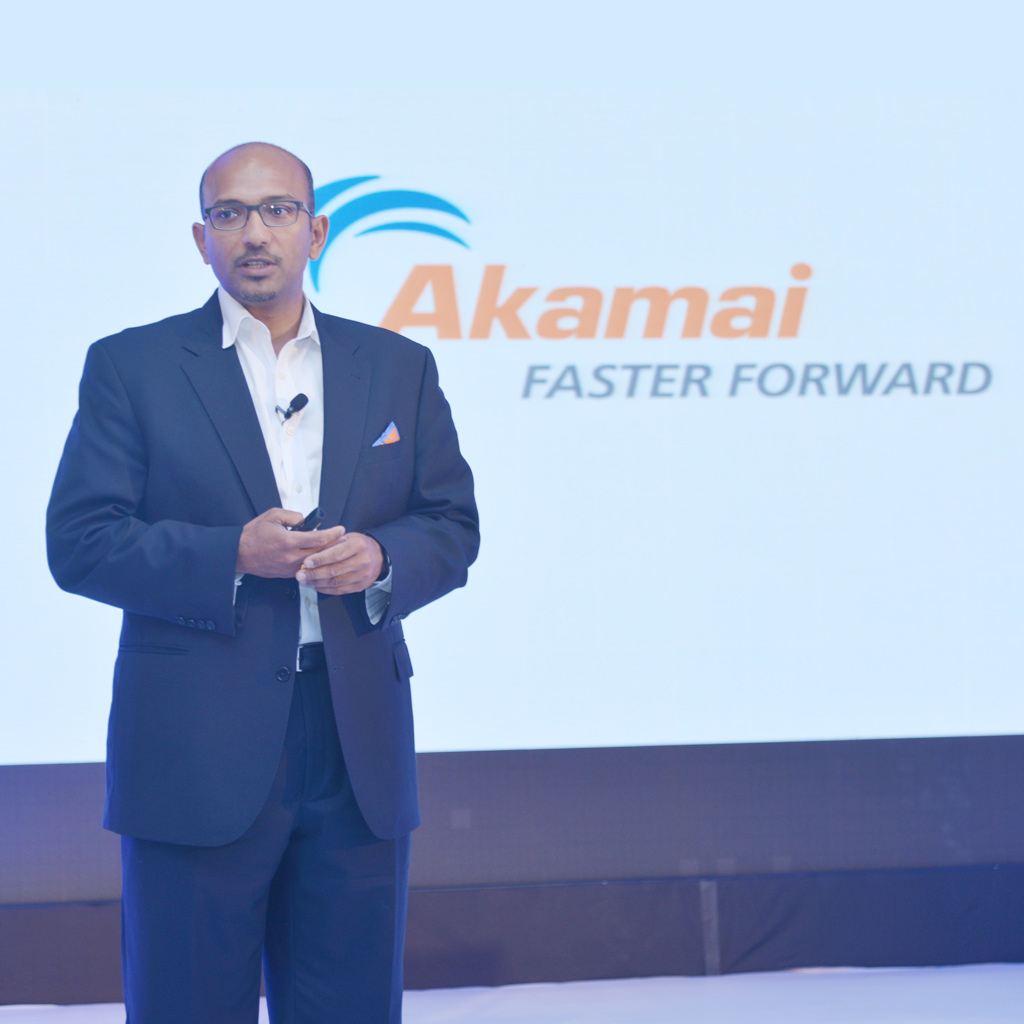
    Speaking at indiatelevision.com initiative ‘Vidnet 2016′, Akamai’s global VP for Media Solutions Services, Dev Gupta, laid down the fundamentals of what an aspiring or existing OTT player must heed to if it planned to survive in the market till when the space becomes revenue generating.

    Global trends such as growing audience size, longer watch hours spent on online videos, and preference for higher bit rate videos or inclination towards high quality streaming point towards the fact that the consumer is not only giving significant time to digital videos but also is picky about the content and how it is served to him or her, pointed out Gupta.

    “Add to that the growing number of connected devices options in the market, and the OTT player has already found itself challenged to deliver the right type of content for the right type of device and operating system, in the right format. Easier said than done,” Gupta reiterates.

    Gupta insisted it is essential for each player to get the basics right to ensure a seamless service for the end user. ‘It starts with securing the content for the consumers which includes getting the rights and licenses of the content in place, ensuring your distribution channels be it for offline or online viewing and theft proofing the entire content flow from content producer to the audience from end to end,” he stated.

    The next important step in ensuring a profitable future in this business is to position oneself as a trustworthy brand that includes protecting the audience’s privacy and their payment information. “If you have content sitting in your servers or clouds, without a doubt there will be people trying to hack into it. Similarly, if you have databases with credit card information of millions of customers, who have put faith in your service by sharing delicate information with you, it needs to be protected as dearly as the content,” Gupta advised.

    Having a clear brand strategy in communication is also a must, according to Gupta.

    Players with AVOD business model have to especially make sure the advertisement do not dilute the experience of the content. Gupta further added that every player must be ready to handle multiple fold challenges, including different operating systems, devices and formats.

    Gupta aptly concluded with a final advice: be nimble.

  • Vidnet 2016: India’s First Focused OTT Conference

    Vidnet 2016: India’s First Focused OTT Conference

    MUMBAI: In today’s mobile-first-with-the-young-generation scenario, content creation, distribution and consumption is constantly evolving.

    Capturing the rapid emerging mood of innovation is Indiantelevision.com’s breakthrough conference, Vidnet 2016: Content on the Go which is to be held on 24 August at the swanky Westin Hotel in Mumbai’s Goregaon suburb.

    Indiantelevision.com’s Vidnet is a day-long congregation of the OTT ecosystem to discuss business models, tech trends, revenue streams, content creation and consumption patterns, success stories within the ecosystem and the way forward for its various constituents.

    The morning will begin with the Vidnet 2016 Summit, which will be followed / accompanied by a closed door VOD / OTT / broadcast CTO conference called Vidnet Tech.

    Vidnet Tech is chaired by Broadcast Media Consultant and Project Specialist, Vynsley Fernandes, Castle Media Pvt Ltd.

    Industry biggies and who’s who of the media and entertainment fraternity are set to attend the event in different capacities. Some confirmed attendees are Ajit Mohan, CEO, Hotstar, Neeraj Roy, MD and CEO, Hungama Digital, Uday Sodhi, Executive VP and Head, Digital Business, Sony Pictures Network India, Abhimanyu Singh, CEO, Contiloe Entertainment, Ajay Chacko, Co-Founder, Arre, Archana Anand, Business Head, DittoTV, Shamsuddin Jasani, Managing Director, ISOBAR, Mahesh Narayan, Managing Director, Saavn, Salil Kapoor, Managing Director, Hooq India, Vivek Bhargava, MD & CEO, iProspect, Tushar Vyas, CSO, GroupM, Baskar Subramanian, Co-founder, Amagi, Gautam Mehra, Data Stack, Aparna Joshi, Radioandmusic.com.

    Vidnet will begin at 10.30 am with an introductory note by Anil Wanvari, CEO, Founder & Editor-in-Chief of Indiantelevision.com Group.

    It will be followed by Presentation on OTT trends in the APAC Region by Vivek Couto, Media Partners Asia.

    The sessions and individual key notes will address holistically many pivotal issues and questions pertaining to the OTT and VOD ecosystem and usher new knowledge paradigms which will set industry trends in time to come.

    For full information on the agenda and list of speakers, visit http://vidnet.in/

    Speaking on the initiative, Anil Wanvari said: “There’s disruption in the video ecosystem, with viewers wanting to consume content wherever and on any device – at home or on the move. The industry has responded through independent or broadcaster affiliated on-demand offerings –either through an ad model or through subscription. Nobody knows what will work, what is needed to make it work and for how long. We hope that Vidnet – Content on the Go will help OTT players, content creators, advertisers, media buyers and planners, brands and the ad delivery measurement guys go a little further in their understanding of the way ahead.”

    In attendance will be major OTT players, individual content creators, advertising and media professionals, tech gurus, writers, journalists among others.

    Akamai is the CDN Partner for the event, Summit Partners include Hotstar and Voot, Elemental is Associate Partner and Amagi is Support Partner. Animationxpress.com, Tellychakkar.com and Radioandmusic.com are Online Partners. The event is executed by ITV 2.0 Productions.

  • Vidnet 2016: India’s First Focused OTT Conference

    Vidnet 2016: India’s First Focused OTT Conference

    MUMBAI: In today’s mobile-first-with-the-young-generation scenario, content creation, distribution and consumption is constantly evolving.

    Capturing the rapid emerging mood of innovation is Indiantelevision.com’s breakthrough conference, Vidnet 2016: Content on the Go which is to be held on 24 August at the swanky Westin Hotel in Mumbai’s Goregaon suburb.

    Indiantelevision.com’s Vidnet is a day-long congregation of the OTT ecosystem to discuss business models, tech trends, revenue streams, content creation and consumption patterns, success stories within the ecosystem and the way forward for its various constituents.

    The morning will begin with the Vidnet 2016 Summit, which will be followed / accompanied by a closed door VOD / OTT / broadcast CTO conference called Vidnet Tech.

    Vidnet Tech is chaired by Broadcast Media Consultant and Project Specialist, Vynsley Fernandes, Castle Media Pvt Ltd.

    Industry biggies and who’s who of the media and entertainment fraternity are set to attend the event in different capacities. Some confirmed attendees are Ajit Mohan, CEO, Hotstar, Neeraj Roy, MD and CEO, Hungama Digital, Uday Sodhi, Executive VP and Head, Digital Business, Sony Pictures Network India, Abhimanyu Singh, CEO, Contiloe Entertainment, Ajay Chacko, Co-Founder, Arre, Archana Anand, Business Head, DittoTV, Shamsuddin Jasani, Managing Director, ISOBAR, Mahesh Narayan, Managing Director, Saavn, Salil Kapoor, Managing Director, Hooq India, Vivek Bhargava, MD & CEO, iProspect, Tushar Vyas, CSO, GroupM, Baskar Subramanian, Co-founder, Amagi, Gautam Mehra, Data Stack, Aparna Joshi, Radioandmusic.com.

    Vidnet will begin at 10.30 am with an introductory note by Anil Wanvari, CEO, Founder & Editor-in-Chief of Indiantelevision.com Group.

    It will be followed by Presentation on OTT trends in the APAC Region by Vivek Couto, Media Partners Asia.

    The sessions and individual key notes will address holistically many pivotal issues and questions pertaining to the OTT and VOD ecosystem and usher new knowledge paradigms which will set industry trends in time to come.

    For full information on the agenda and list of speakers, visit http://vidnet.in/

    Speaking on the initiative, Anil Wanvari said: “There’s disruption in the video ecosystem, with viewers wanting to consume content wherever and on any device – at home or on the move. The industry has responded through independent or broadcaster affiliated on-demand offerings –either through an ad model or through subscription. Nobody knows what will work, what is needed to make it work and for how long. We hope that Vidnet – Content on the Go will help OTT players, content creators, advertisers, media buyers and planners, brands and the ad delivery measurement guys go a little further in their understanding of the way ahead.”

    In attendance will be major OTT players, individual content creators, advertising and media professionals, tech gurus, writers, journalists among others.

    Akamai is the CDN Partner for the event, Summit Partners include Hotstar and Voot, Elemental is Associate Partner and Amagi is Support Partner. Animationxpress.com, Tellychakkar.com and Radioandmusic.com are Online Partners. The event is executed by ITV 2.0 Productions.

  • Zee Mindspace Awards 2016 to acknowledge marketing fraternity

    Zee Mindspace Awards 2016 to acknowledge marketing fraternity

    MUMBAI: Zee Entertainment Enterprises Limited (ZEEL) has instituted the Zee Mindspace Awards to give recognition to brands.

    The awards ceremony will be held on 27 August at #ZEEMelt 2016 in the capital.

    ZEE Mindspace Awards aim to serve as an additional independent barometer for marketers. It will recognize the overall marketing mix implemented by the brand owners to carve a mindspace within the consumers.

    ZEEL chief business officer Sunil Buch said, “Achieving ‘consumer mindspace’ is every marketer’s ultimate goal. The thought of extending our three-year old brand intellectual property ‘ZEE Mindspace’ also as an awards property was based on this very essence. The marketing fraternity is an integral part of our overall business value chain, and in today’s digital era it is indeed a challenge for the marketers to arrive at the right marketing mix. The proof of the pudding is being present in the ‘Mindspace’, which is the foundation of ZEE Mindspace Awards.”

    The network has partnered with market research company Nielsen to execute a nationwide research to identify brands which have created maximum impact on the minds of the consumers. The primary criteria to arrive at the winning brands are popularity, advocacy, desire and buzz. Brands which have a top of mind recall are also a part of the structured research methodology.

    Nielsen has targeted a sample size of 12000+ audiences, covering key zones across the country.

    The winning brands will be awarded at the ZEE Mindspace Awards 2016 in the presence of over 500 CMOs and stalwarts from the marketing and advertising industry.

    Nielsen South Asia MD Prashant Singh said, “Nielsen’s research methodology is a brand assessment among consumers who have adopted new age media in addition to traditional media and provides brand owners’ insights into how brands are adapting to this fast-evolving space. More than 12000 online surveys were conducted to evaluate 288 brands across 36 categories. The research was broken into multiple phases – from initial screening of brands to final rounds focusing on understanding what makes a brand resonate in the consumer’s mind. The winners were identified after undertaking a rigorous process, based on top-of-mind recall, popularity, the kind of advocacy the brand commands, the desire to own the brand and finally the buzz it generates. Above all, it’s the brand’s ability to pop-up in mind at the first instance that holds maximum weightage.”

    #ZEEMelt 2016 will also witness the 4th edition of Zee Mindspace Conference which aims at bringing the marketing fraternity together to connect, discuss and explore new possibilities. The sessions under conference comprise of two main themes: Previewing tomorrow – where one gets insights into the future of several areas in the industry, and Open possibilities which introduces the many advantages that data, content, consumer analysis and branding offer in transforming businesses.

    The speakers at the conference are Constellation Research founder and chairman and principal analyst R Ray Wang, News Works deputy chief executive Vanessa Clifford, Havas Media SVP of strategy and innovation Tom Goodwin, strategist and speaker Jeff Bullas, Financial Times chief data officer Tom Betts, Semcon corporate communication and marketing director Per Nilsson, XAxis global CEO Brian Gleason, technology and media author, strategy consultant Tomi Ahonen.

    ZEEL has embarked on an extensive promotion campaign in key markets targeting print, outdoor, digital, social media platforms and PR. Further, as a part of integration with Twitter, the awards ceremony will be live-streamed on Periscope and extensively promoted on the social media platform. Actor and Television presenter, Gaurav Kapur who would be the event anchor, will also interact with the users through Twitter’s #BlueRoom today at 6.30 pm.

  • Zee Mindspace Awards 2016 to acknowledge marketing fraternity

    Zee Mindspace Awards 2016 to acknowledge marketing fraternity

    MUMBAI: Zee Entertainment Enterprises Limited (ZEEL) has instituted the Zee Mindspace Awards to give recognition to brands.

    The awards ceremony will be held on 27 August at #ZEEMelt 2016 in the capital.

    ZEE Mindspace Awards aim to serve as an additional independent barometer for marketers. It will recognize the overall marketing mix implemented by the brand owners to carve a mindspace within the consumers.

    ZEEL chief business officer Sunil Buch said, “Achieving ‘consumer mindspace’ is every marketer’s ultimate goal. The thought of extending our three-year old brand intellectual property ‘ZEE Mindspace’ also as an awards property was based on this very essence. The marketing fraternity is an integral part of our overall business value chain, and in today’s digital era it is indeed a challenge for the marketers to arrive at the right marketing mix. The proof of the pudding is being present in the ‘Mindspace’, which is the foundation of ZEE Mindspace Awards.”

    The network has partnered with market research company Nielsen to execute a nationwide research to identify brands which have created maximum impact on the minds of the consumers. The primary criteria to arrive at the winning brands are popularity, advocacy, desire and buzz. Brands which have a top of mind recall are also a part of the structured research methodology.

    Nielsen has targeted a sample size of 12000+ audiences, covering key zones across the country.

    The winning brands will be awarded at the ZEE Mindspace Awards 2016 in the presence of over 500 CMOs and stalwarts from the marketing and advertising industry.

    Nielsen South Asia MD Prashant Singh said, “Nielsen’s research methodology is a brand assessment among consumers who have adopted new age media in addition to traditional media and provides brand owners’ insights into how brands are adapting to this fast-evolving space. More than 12000 online surveys were conducted to evaluate 288 brands across 36 categories. The research was broken into multiple phases – from initial screening of brands to final rounds focusing on understanding what makes a brand resonate in the consumer’s mind. The winners were identified after undertaking a rigorous process, based on top-of-mind recall, popularity, the kind of advocacy the brand commands, the desire to own the brand and finally the buzz it generates. Above all, it’s the brand’s ability to pop-up in mind at the first instance that holds maximum weightage.”

    #ZEEMelt 2016 will also witness the 4th edition of Zee Mindspace Conference which aims at bringing the marketing fraternity together to connect, discuss and explore new possibilities. The sessions under conference comprise of two main themes: Previewing tomorrow – where one gets insights into the future of several areas in the industry, and Open possibilities which introduces the many advantages that data, content, consumer analysis and branding offer in transforming businesses.

    The speakers at the conference are Constellation Research founder and chairman and principal analyst R Ray Wang, News Works deputy chief executive Vanessa Clifford, Havas Media SVP of strategy and innovation Tom Goodwin, strategist and speaker Jeff Bullas, Financial Times chief data officer Tom Betts, Semcon corporate communication and marketing director Per Nilsson, XAxis global CEO Brian Gleason, technology and media author, strategy consultant Tomi Ahonen.

    ZEEL has embarked on an extensive promotion campaign in key markets targeting print, outdoor, digital, social media platforms and PR. Further, as a part of integration with Twitter, the awards ceremony will be live-streamed on Periscope and extensively promoted on the social media platform. Actor and Television presenter, Gaurav Kapur who would be the event anchor, will also interact with the users through Twitter’s #BlueRoom today at 6.30 pm.

  • Government & private initiatives required to achieve ambitious goal of Digital India

    Government & private initiatives required to achieve ambitious goal of Digital India

    MUMBAI: According to Akamai’s 2015 Asia Pacific Survey, India had the lowest average broadband speeds of 2.5 Mbps. As 3G speeds increase and 4G adoption is still nascent; the quality of internet access and affordability in terms of data tariffs and on 3G/4G enabled devices continue to remain a challenge to deliver consumer value. On the regulatory side, there have been a lot of discussions on net neutrality and licensing of OTT services. These will have a significant impact on how digital media evolves in the future.

    Sony Pictures Networks India Pvt Ltd. head – marketing & analytics, digital business Abhishek Joshi strongly believes that content is where you stream it and the government has the a say in it. “The OTT industry has graduated from the innovators stage to the early adopters stage within the innovation diffusion curve, based on distinguished product strategies by players in the market. However to cross the chasm to gain the majority market, policy makers will have to play a very big role. Infrastructure and regulatory policies are going to be the biggest differentiators for industry growth for the next 18 months.”

    While on the other hand, Ping Networks co-founder Rajeshree Naik is of the opinion that the government should not play any role in an individual’sprivacy. “That is a grey area. The government should rather focus on the infrastructure, companies coming up, partnerships, investments, etc rather than on content. Infrastructure does not bother pay because I know it is going to get better soon. The thing that scares me are the two terms related to digital i.e. no censorship and payment methods. Though, the beauty of digital is having no regulations, collective responsibility is to be taken ensuring that the government stays away.”

    Supporting Joshi on government interference was VOOT head, marketing and partnerships Akash Banerji. “Short form of content is not the solution. “These are early days for OTT in India. Players are either following the AVOD or SVOD model today. Both are profitable but for now what concerns me about the SVOD model is that why should a consumer pay for subscription when he is already paying a lot for mobile data. “

    Banerji adds, “There also is limitation of vast content on platforms. 80-90 percent of content is with the top players and a minuscule number of hours of great quality content is curated. For a new entrant for eg VOOT, it is difficult to drive money immediately after it rolled out.”

    Whereas Joshi thinks that even the consumers are not inclined to pay. “There is no inclination to pay. They will pay for content that has some value for them. They want quality content, expect HD, streamless service, etc.”

    Hungama.com COO Siddharth Roy opined that transactions have worked. “There is massive copyright infringement. The government needs to have a robust and strong IPR. Branded entertainment is the driver of this entire eco-system. Branded IP makes money.”

    “Value comes from the content and the way it is consumed. The business needs a lot of clarity. Government and all the players should work together to come to a concrete conclusion. In the end, crows is the king,” asserts Banerji.

    Naik believes that videos and original content will co-exist and that content will keep evolving.

    With global players like Netflix and Amazon Prime in India, the players present in the panel are looking forward to the global entrants. “If Netflix is a success in India, the creators will have more chance to put their content on the digital platforms. It is investing plenty on producing original content here and will be a good example. Viewers will love to pay for quality content that can entertain them.”

    Joshi is also excited with the entry of this global player and India and thinks that it is only going to be good for the business.

    Sharing his thoughts on the future of India’s burgeoning digital market, Technicolor’s country head for India Biren Ghose, in his valedictory remarks, said, “Content is assuming new life in the emerging digital economy. Technology enables innovations in imagery that could hitherto neither be produced nor consumed. FICCI and LA India Film Council need to be complimented on encouraging the conversation for the Indian agenda in this space.”

    Panelists at FICCI Knowledge Series 2016 for the Regulatory and Infrastructural Challenges for Digital Media, concluded that a combination of government and private initiatives would need to be rolled out to achieve the ambitious goal of a truly Digital India.

  • Government & private initiatives required to achieve ambitious goal of Digital India

    Government & private initiatives required to achieve ambitious goal of Digital India

    MUMBAI: According to Akamai’s 2015 Asia Pacific Survey, India had the lowest average broadband speeds of 2.5 Mbps. As 3G speeds increase and 4G adoption is still nascent; the quality of internet access and affordability in terms of data tariffs and on 3G/4G enabled devices continue to remain a challenge to deliver consumer value. On the regulatory side, there have been a lot of discussions on net neutrality and licensing of OTT services. These will have a significant impact on how digital media evolves in the future.

    Sony Pictures Networks India Pvt Ltd. head – marketing & analytics, digital business Abhishek Joshi strongly believes that content is where you stream it and the government has the a say in it. “The OTT industry has graduated from the innovators stage to the early adopters stage within the innovation diffusion curve, based on distinguished product strategies by players in the market. However to cross the chasm to gain the majority market, policy makers will have to play a very big role. Infrastructure and regulatory policies are going to be the biggest differentiators for industry growth for the next 18 months.”

    While on the other hand, Ping Networks co-founder Rajeshree Naik is of the opinion that the government should not play any role in an individual’sprivacy. “That is a grey area. The government should rather focus on the infrastructure, companies coming up, partnerships, investments, etc rather than on content. Infrastructure does not bother pay because I know it is going to get better soon. The thing that scares me are the two terms related to digital i.e. no censorship and payment methods. Though, the beauty of digital is having no regulations, collective responsibility is to be taken ensuring that the government stays away.”

    Supporting Joshi on government interference was VOOT head, marketing and partnerships Akash Banerji. “Short form of content is not the solution. “These are early days for OTT in India. Players are either following the AVOD or SVOD model today. Both are profitable but for now what concerns me about the SVOD model is that why should a consumer pay for subscription when he is already paying a lot for mobile data. “

    Banerji adds, “There also is limitation of vast content on platforms. 80-90 percent of content is with the top players and a minuscule number of hours of great quality content is curated. For a new entrant for eg VOOT, it is difficult to drive money immediately after it rolled out.”

    Whereas Joshi thinks that even the consumers are not inclined to pay. “There is no inclination to pay. They will pay for content that has some value for them. They want quality content, expect HD, streamless service, etc.”

    Hungama.com COO Siddharth Roy opined that transactions have worked. “There is massive copyright infringement. The government needs to have a robust and strong IPR. Branded entertainment is the driver of this entire eco-system. Branded IP makes money.”

    “Value comes from the content and the way it is consumed. The business needs a lot of clarity. Government and all the players should work together to come to a concrete conclusion. In the end, crows is the king,” asserts Banerji.

    Naik believes that videos and original content will co-exist and that content will keep evolving.

    With global players like Netflix and Amazon Prime in India, the players present in the panel are looking forward to the global entrants. “If Netflix is a success in India, the creators will have more chance to put their content on the digital platforms. It is investing plenty on producing original content here and will be a good example. Viewers will love to pay for quality content that can entertain them.”

    Joshi is also excited with the entry of this global player and India and thinks that it is only going to be good for the business.

    Sharing his thoughts on the future of India’s burgeoning digital market, Technicolor’s country head for India Biren Ghose, in his valedictory remarks, said, “Content is assuming new life in the emerging digital economy. Technology enables innovations in imagery that could hitherto neither be produced nor consumed. FICCI and LA India Film Council need to be complimented on encouraging the conversation for the Indian agenda in this space.”

    Panelists at FICCI Knowledge Series 2016 for the Regulatory and Infrastructural Challenges for Digital Media, concluded that a combination of government and private initiatives would need to be rolled out to achieve the ambitious goal of a truly Digital India.

  • Can OTT players leverage market opportunities & rationalize rising content costs?

    Can OTT players leverage market opportunities & rationalize rising content costs?

    MUMBAI: In a bid to grab eyeballs, spending on digital advertising is on the increase, but this increase also comes with challenges, if KPMG is to be believed.

    KPMG director Girish Menon said that digital advertisement is likely to cross Rs 25,500 crore in 2020, but digital ads do not come without challenges with major concerns being inability to track mobile activity, ad fraud, ad blocking and measurement.

    Making a presentation at an event organised by FICCI here yesterday, Fast Track India: Bolstering Growth in the Digital Content, Menon added, “OTT video is likely to become the holy grail in digital media. The advent of OTT services and on-the-go content, aided with competitive tariffs and falling average retail price of smartphones, has helped to drive video consumption in India.”

    According to him, approximately 40 per cent of mobile data traffic is being driven by video and audio consumption.

    The Indian market is highly price sensitive and broadcast services are well accepted, making the growth and profitability of OTT video players an uphill task. As digital media consumption grows in the country, content owners and delivery platforms need to reflect on innovative ways of monetizing digital content. OTT players need to leverage market opportunities while rationalizing rising costs of acquiring or producing digital content.

    “Profitability still continues to be a major challenge coupled with infrastructure and affordability of data tariffs and payments models. It is imperative for the OTT players to address these concerns through innovative means to achieve the medium’s full potential,” added Menon.

    Discussing future trends to grow this market, through effective monetization of content, while delivering consumer value, in addition to evaluating various payment models at FICCI Knowledge Series 2016 were Film Producer Vishesh Bhatt, DittoTV business head Archana Anand, Arre co-founder and CEO AJay Chacko and Eros Digital COO Karan Bedi.

    Sparking the discussion was Bhatt who observed how this conversation flagged off last year with everyone talking about content that has come to a point where it’s annoying. He is of the opinion that serious content makers fuelling the various platforms have to first understand the ecosystem. “In my opinion, even the platforms have not taken initiatives to educate the content makers. The ecosystem currently is extremely poor. The content makers have to understand the economics first or open my own platform to air content and then make money out of it.”

    Various content monetization options are being explored with the rapid adoption of digital platforms. Ad remains the major source of advertising. Short format made-for-digital content is being leveraged for immediate monetization opportunity. Existing content is being repackaged and delivered across digital platforms owned and 3rd party (YouTube, Mobile Apps, etc.). Existing content infrastructure is being leveraged to create purpose built content (interactive shows, online polls, etc.).

    The focus has now shifted to original/exclusive content for digital media, to drive subscription revenues

    Enlightening the audience further, Chacko pointed out how the content consumption medium has evolved from print to broadcast and now to digital. While there is 70 per cent investment in content creation for digital, the showdown does not stop there. “Investing more on content is the rule.”

    Citing the example of Pokemon Go, Bedi asserted how the game is earning roughly 1.6 million per day which is just 10 per cent of what they can make if monetised properly. “The cost of data, infrastructure, etc, remains an issue for us. We are definitely not there yet with the subscription model, but it’s not far.”

    Anand though strongly surmises that platforms need to set their strategies right. “You have to establish with masses first to get subscribers. We followed the consumer behaviour trend on mobile and made it affordable for them. Like anyone else, we never told them to download our app, rather gave them the option to give a miss call to download it. To solve bandwidth constraints, we tied up with Telcos and payment wallets and the usage has been phenomenal.”

    dittoTV has a clear road map set wherein it has first focused on getting eyeballs to its platform. Anand also opined that the platform does not have to necessarily follow a linear model in future.

    But how will the value change make money? Answering that, Bedi said that the three levers- revenue generation, content creation and marketing acquisitions. “Netflix does not invest on marketing acquisitions. In the end, it depends on the platform to decide what model it wants to follow and it has to make it work right.”

    “SVOD also allows multiple things to be done. There is an inherent ability to share piece of profit with partners by tying up with various partners”, added Anand.

    With various global players like Netflix, Amazon Prime Video, etc, entering India, the players will have to focus on producing original quality content to drive viewers. But is it beneficial to the creators here to put their content on the different platforms. Bhatt strongly affirmed that the West has made its content makers worth. It’s no more only about money but about environment.

  • Can OTT players leverage market opportunities & rationalize rising content costs?

    Can OTT players leverage market opportunities & rationalize rising content costs?

    MUMBAI: In a bid to grab eyeballs, spending on digital advertising is on the increase, but this increase also comes with challenges, if KPMG is to be believed.

    KPMG director Girish Menon said that digital advertisement is likely to cross Rs 25,500 crore in 2020, but digital ads do not come without challenges with major concerns being inability to track mobile activity, ad fraud, ad blocking and measurement.

    Making a presentation at an event organised by FICCI here yesterday, Fast Track India: Bolstering Growth in the Digital Content, Menon added, “OTT video is likely to become the holy grail in digital media. The advent of OTT services and on-the-go content, aided with competitive tariffs and falling average retail price of smartphones, has helped to drive video consumption in India.”

    According to him, approximately 40 per cent of mobile data traffic is being driven by video and audio consumption.

    The Indian market is highly price sensitive and broadcast services are well accepted, making the growth and profitability of OTT video players an uphill task. As digital media consumption grows in the country, content owners and delivery platforms need to reflect on innovative ways of monetizing digital content. OTT players need to leverage market opportunities while rationalizing rising costs of acquiring or producing digital content.

    “Profitability still continues to be a major challenge coupled with infrastructure and affordability of data tariffs and payments models. It is imperative for the OTT players to address these concerns through innovative means to achieve the medium’s full potential,” added Menon.

    Discussing future trends to grow this market, through effective monetization of content, while delivering consumer value, in addition to evaluating various payment models at FICCI Knowledge Series 2016 were Film Producer Vishesh Bhatt, DittoTV business head Archana Anand, Arre co-founder and CEO AJay Chacko and Eros Digital COO Karan Bedi.

    Sparking the discussion was Bhatt who observed how this conversation flagged off last year with everyone talking about content that has come to a point where it’s annoying. He is of the opinion that serious content makers fuelling the various platforms have to first understand the ecosystem. “In my opinion, even the platforms have not taken initiatives to educate the content makers. The ecosystem currently is extremely poor. The content makers have to understand the economics first or open my own platform to air content and then make money out of it.”

    Various content monetization options are being explored with the rapid adoption of digital platforms. Ad remains the major source of advertising. Short format made-for-digital content is being leveraged for immediate monetization opportunity. Existing content is being repackaged and delivered across digital platforms owned and 3rd party (YouTube, Mobile Apps, etc.). Existing content infrastructure is being leveraged to create purpose built content (interactive shows, online polls, etc.).

    The focus has now shifted to original/exclusive content for digital media, to drive subscription revenues

    Enlightening the audience further, Chacko pointed out how the content consumption medium has evolved from print to broadcast and now to digital. While there is 70 per cent investment in content creation for digital, the showdown does not stop there. “Investing more on content is the rule.”

    Citing the example of Pokemon Go, Bedi asserted how the game is earning roughly 1.6 million per day which is just 10 per cent of what they can make if monetised properly. “The cost of data, infrastructure, etc, remains an issue for us. We are definitely not there yet with the subscription model, but it’s not far.”

    Anand though strongly surmises that platforms need to set their strategies right. “You have to establish with masses first to get subscribers. We followed the consumer behaviour trend on mobile and made it affordable for them. Like anyone else, we never told them to download our app, rather gave them the option to give a miss call to download it. To solve bandwidth constraints, we tied up with Telcos and payment wallets and the usage has been phenomenal.”

    dittoTV has a clear road map set wherein it has first focused on getting eyeballs to its platform. Anand also opined that the platform does not have to necessarily follow a linear model in future.

    But how will the value change make money? Answering that, Bedi said that the three levers- revenue generation, content creation and marketing acquisitions. “Netflix does not invest on marketing acquisitions. In the end, it depends on the platform to decide what model it wants to follow and it has to make it work right.”

    “SVOD also allows multiple things to be done. There is an inherent ability to share piece of profit with partners by tying up with various partners”, added Anand.

    With various global players like Netflix, Amazon Prime Video, etc, entering India, the players will have to focus on producing original quality content to drive viewers. But is it beneficial to the creators here to put their content on the different platforms. Bhatt strongly affirmed that the West has made its content makers worth. It’s no more only about money but about environment.

  • Online pirates beware, Copyright Force on way

    Online pirates beware, Copyright Force on way

    MUMBAI: Red alert for online pirates of TV content and movies. Copyright Force is on its way.

    In a move to fight online piracy, major broadcasters, studios and the recently set-up Telangana  Intellectual Property Crime Unit (TIPCU) are joining hands with Motion Pictures Association of America (MPA)’s Indian chapter for strengthening and effective implementation of regulations.  
    Tentatively named Copyright Force, the industry alliance’s main aim is to set an agenda on Intellectual Property Rights (IPR) policy and engage with the government.

    “When you talk about Digital India, the government will have to put out a strong message on curbing online piracy. There are just not enough teeth in existing laws to tackle online piracy. Hence, the industry is exploring an industry alliance to sensitise the government and judiciary of the issue,” Viacom18 general counsel Sujeet Jain explained to indiantelevision.com.

    Confirming the move Uday Singh, Managing Director-India, MPA, however, clarified the move was a positive one but needed more deliberations.

    The alliance is looking at getting broadcasting companies, studios and other industry organisations like MPA under one roof.

    “There are many organizations with larger objectives. The Copyright Force’s (or its formal version) sole purpose would be to push copyright issues,” Jain added.
    According to industry sources, initial exploratory meetings on the issue were attended by the likes of Viacom18, Star India, Walt Disney, Zee, Turner, Sony Pictures Networks, Sun TV Network, Eros International, Reliance and TIPCU.

    Earlier, speaking on the issue of Digital Content Economy and Robust Enforcement Model at an event organised by FICCI here today, Jain said, “You cannot fight online crime with offline measures. Online enforcement has to happen.”

    According to him, the Copyright Act and IT Act have to be updated so the issue of online piracy is addressed directly and helps the judiciary to properly interpret relevant laws to pass judgements on cases relating to online piracy.

    In recent time, the issue of piracy has gained currency in India with mostly film-makers taking John Doe orders in an effort to safeguard against online leaks of films before formal theatrical releases.

    However, the content industry feels such cases don’t properly address the growing menace of online piracy.

    But taking a leaf out of the UK’s PIPCU (Police Intellectual Property Crime Unit), run by City of London Police, the Telangana government has set up country’s first anti-piracy unit called Telangana Intellectual Property Crime Unit (TIPCU).

    The reason for TIPCU formation was effective lobbying by the Telugu Film Chamber of Commerce with the state government on behalf of the local film industry that is reported to have suffered losses in excess of Rs 361 crore because of online piracy.

    Telugu Film Chamber of Commerce honorary chairman, governing council, anti video piracy cell, Rajkumar Akella said, “As we have been witnessing in recent days, the problem of online piracy is most urgent. The greatest threat now has become the pre-movie release leakages. Without real time interventions from the government and the industry, it will go out of control.”

    According to him, TIPCU, an initiative brought to life by the Telangana government, the Telugu film industry and MPA India, was a very significant step. “The unit will be making optimum use of technology besides policy enforcement and outreach,” Akella added.

    MPA regional director, online content protection, Oliver Walsh said, “The Indian film and TV industry supports 1.8 million jobs which are at risk because of rising online content theft. The future of legitimate content delivery platforms depends on effective enforcement measures supported by Indian State governments.”

    Pointing out that TIPCU was a great example of a dedicated law enforcement unit to tackle organized online film piracy, Walsh said such an approach will go a long way in significantly reducing online infringement of films and television content. 

    Jain also pointed out that there is a need to develop dedicated digital courts in the country where the issue of online piracy is addressed exclusively.