Category: Specials

  • ’17 to be year of survival for VR market

    ’17 to be year of survival for VR market

    SINGAPORE: Though forecasts on Virtual Reality or VR are optimistic — a study said it would be a $30 billion market by end of this decade — these statistics do seem a bit unrealistic as many area of concerns are yet to be addressed.

    When will we get to see 10 million VR units? When will an inflection point be witnessed? When will VR or related technology start monetising data flowing from VR usage? These are some of the many questions that come to mind. With not many analyst teams focused on VR, Clifton Dawson decided to venture into this area two years ago with his company Greenlight VR.

    “Due to the fragmented nature of the industry, people are still trying to crack the market and are not yet aware of the various business models. Having said that, I believe that 2017 would be the year of survival for the industry because the time horizon for this robust industry to place its foot firmly is much longer due to the few missing pieces that will eventually unfold with time,” Greenlight VR founder and CEO Clifton Dawson says.

    With a comprehensive research on the virtual and augmented reality industry, Greenlight Insights provides market intelligence to innovative companies through syndicated research, services and events. Having headquarters in San Francisco and a small set-up in Beijing, Greenlight VR has an employee strength of 20.

    Will 2020 be the year of inflection? Dawson clearly rubbishes this thought as he mentions that the focus on 2020 is short-sighted. “2025 is strategically a better year,” he explains, adding that so far there have been launches or expected launches like Oculus Rift, HTC Vive, PlayStation VR and Samsung Gear VR.

    Dawson points out that presently the VR headsets are of first generation quality and it would improve when the fourth generations sets come in wherein issues relating to audio or (video) display would get resolved. “I truly believe that these headsets would look nothing like the current ones, he adds.”

    It is expected that as the industry and technology progress, VR would not just be restricted to the gaming world, but increasingly used by brands for promoting their products, medical college students being taught with the help of VR and property agents using it to sell properties. So, a question arises: which all markets this technology likely to flourish more?

    “It’s all about timing as it’s the only thing in question. For now, certain genres of gaming (not casual) would work. As for brand advertisement, it is not there yet. VR mechanism leads to behavioral changes and one needs to crack the code on how to monetise it,” Dawson says.

    Will the blend of augmented reality and virtual reality, that is mixed reality (MR), be future? Dismissing this idea outright, Dawson explains, “MR is totally a different ball game. It’s an entirely different technology and requires separate business model and ecosystem.”

    Dawson advises people that to succeed in the virtual reality field, one needs to have a 10-year view and not be short-sighted as the returns won’t come so easily. Be patient: is his final suggestion to players and the industry in general.

  • ATF ’16: Singapore company Xtreme Media wins $20,000 prize

    ATF ’16: Singapore company Xtreme Media wins $20,000 prize

    SINGAPORE/MUMBAI: Asia TV Forum & Market (ATF) and all3media International, the distribution arm of the UK’s leading TV production group, yesterday announced that Singapore-based production company, Xtreme Media, has won the inaugural ATF Formats Pitch competition, walking away with a prize worth S$20,000 from all3media International. ATF is the region’s leading entertainment content event, is the platform of calibre to acquire knowledge, network, buy, sell, finance, distribute and co-produce across all platforms.

    With the tagline “New Ideas. New Talent. New Formats.”, ATF Formats Pitch is the premier Asian pitching competition for creators and producers of innovative concepts for new and original, non-scripted entertainment formats. This platform showcases the best of Asia, and exposes ideas for export and development within and even outside of the region.

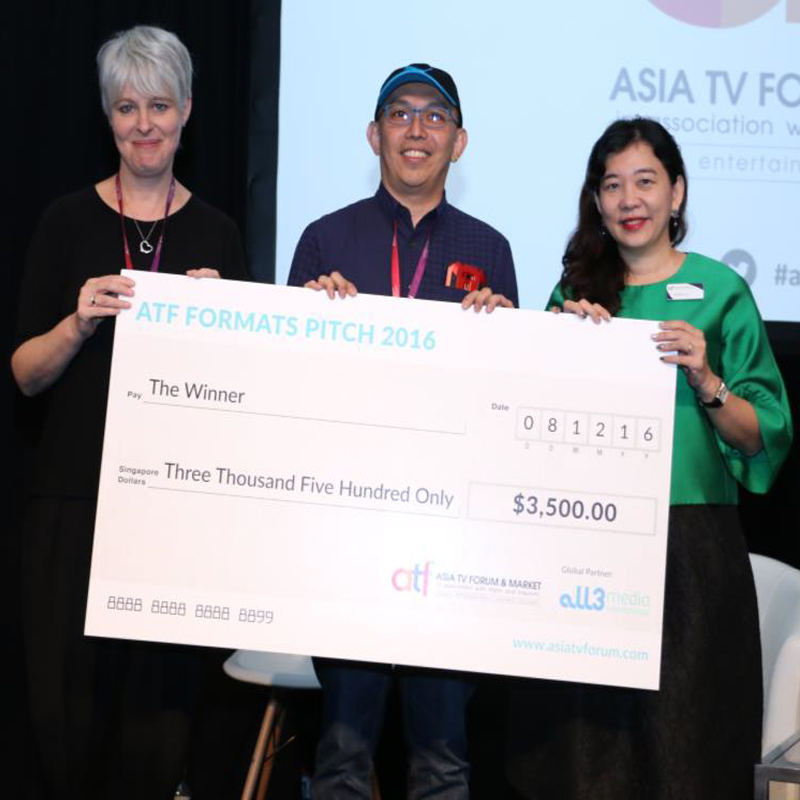
    all3media International CEO Louise Pedersen, and Reed Exhibitions managing director (Singapore, Malaysia and Indonesia) Michelle Lim, presened the cash prize for ATF Formats Pitch 2016, to Xtreme Media executive producer William Lim.

    Introduced for the first time this year, ATF Formats Pitch 2016 received entries representing nine countries – Australia, China, Hong Kong, India, Malaysia, Singapore, Taiwan, Ukraine and USA. Earlier today, five finalists from China, Malaysia, Singapore and Ukraine pitched their concepts at a live judging session, to a panel of illustrious television format experts.

    The winning format, “HIT IT”, stood out amongst competitors for its originality, creativity, innovation and ability to be adapted across the world. Planned as a weekly series, each episode will feature two teams. Produced by competing against each other in a series of comedic challenges that put a spin on sports. With many hilarious high-pressure moments, the game show hopes to entertain viewers with non-stop action of amusing, yet astonishing feats.

    William Lim said, “Participating in the inaugural ATF Formats Pitch has been an eye-opener, with many participants sharing new format ideas that we have never explored before. We are honoured to have won the first-ever ATF Formats Pitch as we now have the opportunity to work with a well-established format distributor, all3media International, to further develop our concept.”

    With the S$20,000 prize – comprising a $3,500 cash award and $16,500 customised consultancy package – Xtreme Media will be working with all3media in the coming months to develop “HIT IT”, readying it for pitching to broadcasters.

  • ATF ’16: Singapore company Xtreme Media wins $20,000 prize

    ATF ’16: Singapore company Xtreme Media wins $20,000 prize

    SINGAPORE/MUMBAI: Asia TV Forum & Market (ATF) and all3media International, the distribution arm of the UK’s leading TV production group, yesterday announced that Singapore-based production company, Xtreme Media, has won the inaugural ATF Formats Pitch competition, walking away with a prize worth S$20,000 from all3media International. ATF is the region’s leading entertainment content event, is the platform of calibre to acquire knowledge, network, buy, sell, finance, distribute and co-produce across all platforms.

    With the tagline “New Ideas. New Talent. New Formats.”, ATF Formats Pitch is the premier Asian pitching competition for creators and producers of innovative concepts for new and original, non-scripted entertainment formats. This platform showcases the best of Asia, and exposes ideas for export and development within and even outside of the region.

    all3media International CEO Louise Pedersen, and Reed Exhibitions managing director (Singapore, Malaysia and Indonesia) Michelle Lim, presened the cash prize for ATF Formats Pitch 2016, to Xtreme Media executive producer William Lim.

    Introduced for the first time this year, ATF Formats Pitch 2016 received entries representing nine countries – Australia, China, Hong Kong, India, Malaysia, Singapore, Taiwan, Ukraine and USA. Earlier today, five finalists from China, Malaysia, Singapore and Ukraine pitched their concepts at a live judging session, to a panel of illustrious television format experts.

    The winning format, “HIT IT”, stood out amongst competitors for its originality, creativity, innovation and ability to be adapted across the world. Planned as a weekly series, each episode will feature two teams. Produced by competing against each other in a series of comedic challenges that put a spin on sports. With many hilarious high-pressure moments, the game show hopes to entertain viewers with non-stop action of amusing, yet astonishing feats.

    William Lim said, “Participating in the inaugural ATF Formats Pitch has been an eye-opener, with many participants sharing new format ideas that we have never explored before. We are honoured to have won the first-ever ATF Formats Pitch as we now have the opportunity to work with a well-established format distributor, all3media International, to further develop our concept.”

    With the S$20,000 prize – comprising a $3,500 cash award and $16,500 customised consultancy package – Xtreme Media will be working with all3media in the coming months to develop “HIT IT”, readying it for pitching to broadcasters.

  • ATF 2016 discusses secret sauce for Asian OTT’s successes

    ATF 2016 discusses secret sauce for Asian OTT’s successes

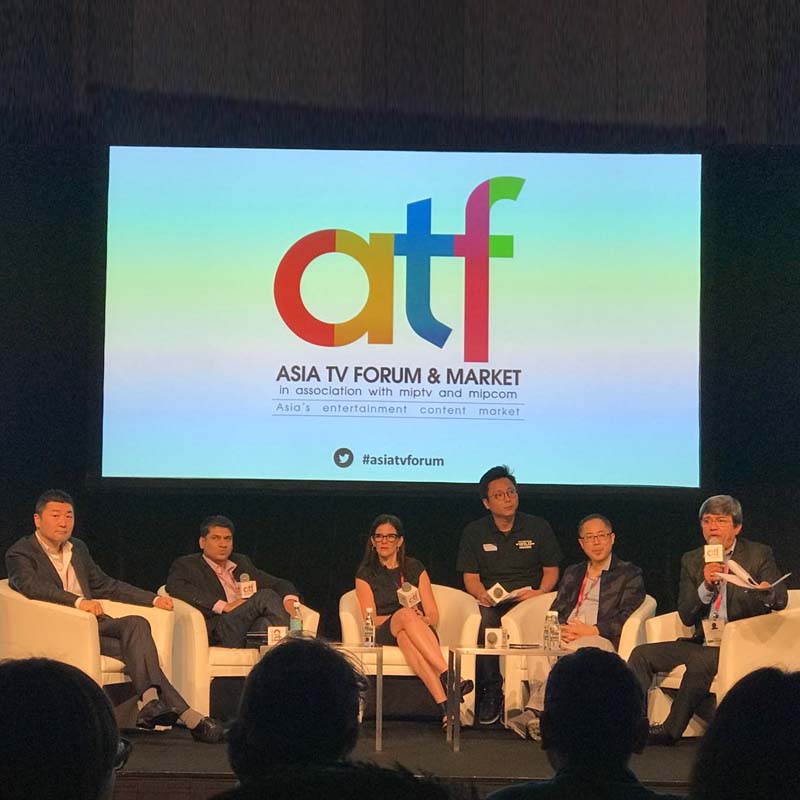
    SINGAPORE: The media and entertainment industry is known for its dynamic and unpredictable nature. With digital media taking an upward turn, over the top services are slowly making a mark and challenging traditional viewing methods. To address how effective are the various OTT models, the pre-ATF market conference on 6 December witnessed the session ‘View From Over The Top.’

    The discussion was led by IndianTelevision.com group founder, CEO and editor-in-chief Anil Wanvari, and covered the scope of the new content buyers in the online evolution and the success in re-aligning company strategies to meet new demands.

    The panelists consisted of an interesting bunch of execs whose services are as different as chalk and cheese: Hulu Japan (Japan), chief content officer, Kazufumi Nagasawa; Singapore-based Hooq co-founder and chief content officer, Krishnan Rajagopalan; LeTV (China), chief executive producer, Hao Fang; and US-based AwesomnessTV head of worldwide distribution, Rebecca Glashow.

    Wanvari set the ball rolling by questioning whether OTT as a business concept is a pipe dream or a reality. “OTT services have not really made a dent on viewing habits for a large part in Asian markets where television viewing is still rating high with consumers,” he stated. “Yet close to 100 or so OTT/VOD services have launched in various Asian nations. No one knows what the right business model is — Is it AVOD? Is it TVOD? Or, is it SVOD? Or is it a freemium model? Or is it a telco-bundled/TV set-bundled service? What is the pricing sweet spot? How much time will it take to build them into viable businesses? It looks like the OTT industry looks like what the cable and satellite TV industry did in the early nineties across Asia. The broadcasters were making losses and kept on bleeding for a decade or so. Will the same happen to OTT? And, what could help accelerate its fortunes better? Is it data costs? Or consumer education?”

    The panelists then went to on to talk about how they were each dealing with the market’s challenges. With China being the largest market in terms of mobile subscribers, LeTV took a strategic decision to bundle its streaming service platform with ‘Le’ mobile phones and in Hong Kong with its TVs. Consumers got LeTV free for varying periods as it was built into the price of the hardware.

    On the other hand, Hooq, being a comparatively young player in the market, Rajagopalan mentioned that the Asian audience is slowly getting used to the idea of paid services. Hooq has strong partnerships with telcos such as Singtel, Airtel, Vodafone, Globe Telecom, Telkomsel in different regions as it rolls out. Partnering with other companies has enabled Hooq to reach out to consumers who might be unaware of Hooq or don’t want to shell out money as it’s a SVOD service. Hooq launched in Singapore in end-November adding to Indonesia, Philippines, India and Thailand – countries in which it has been investing.

    AwesomnessTV follows a completely different approach; it perceives itself as a content creator for all the screens – TV, theatre, mobile, tablet – and its MCN strategy is totally a separate kettle of fish. Its advantage is that it has a strong millennial content focus on account of it strong digital talent. This has landed it deals with various platforms: Verizon for its Go90 mobile service; with ITV2 in the UK for which it is developing a millennial targeted commissioned programme block. A slate of feature films is also in the offing.

    And because its productions have a slew of digital stars it uses their online social media following to tease their fans and lure them to watch the content it creates for the other screens. Glashow said that she was in Asia to explore and evaluate opportunities and build partnerships to help it with its Asian foray. With enough money from its varied parents right from Verizon to Dreamworks Animation and Hearst Entertainment, it can afford to be ambitious for the continent as well.

    Hulu Japan – which is owned wholly by the broadcaster Nippon TV after Hulu exited a few years ago — follows the SVOD model, and has partnered with the Japanese major telco DoCoMo. As far as content is concerned, Nagasawa said that the OTT service has an international to domestic content ratio of 50:50. The service offers its users a smorgasbord of international top series as well as domestically produced content. Production budgets vary from 10,000 dollars to as much as a million dollars.

    Nagasawa said he has plans to make Hulu a one-stop-destination for consumers as the company plans to expand its linear streaming service to include transactional video on demand (TVoD) and electronic sell-through.

    Speaking about original content production, Hooq which recently released the trailer of its first original co-produced show ‘On The Job’ at ATF, Rajagopalan commented: “We have converted a movie into a TV series and are paying more than what goes into the production of a TV show as with multiple business models existing, content differentiation is the key to success. And that’s where the focus should be.”

    Stressing the same fact, Fang added, “While creating our content, we almost feel as if we are buying a building as it costs us around RMB four to five billion! We want to produce more original content but it is difficult.”

    When asked by Wanvari what kind of content and partners are the panelists looking for, Ramagopalan said that it all depends on how differentiated the content is. Glashow advised, “Before producing anything, know your audience and then reach out to them. For us, our client is the audience and so we take feedback from them and listen to what they want.” And, Fang revealed that LeTV is keeping an open mindset and is willing to participate with everyone.

  • ATF 2016 discusses secret sauce for Asian OTT’s successes

    ATF 2016 discusses secret sauce for Asian OTT’s successes

    SINGAPORE: The media and entertainment industry is known for its dynamic and unpredictable nature. With digital media taking an upward turn, over the top services are slowly making a mark and challenging traditional viewing methods. To address how effective are the various OTT models, the pre-ATF market conference on 6 December witnessed the session ‘View From Over The Top.’

    The discussion was led by IndianTelevision.com group founder, CEO and editor-in-chief Anil Wanvari, and covered the scope of the new content buyers in the online evolution and the success in re-aligning company strategies to meet new demands.

    The panelists consisted of an interesting bunch of execs whose services are as different as chalk and cheese: Hulu Japan (Japan), chief content officer, Kazufumi Nagasawa; Singapore-based Hooq co-founder and chief content officer, Krishnan Rajagopalan; LeTV (China), chief executive producer, Hao Fang; and US-based AwesomnessTV head of worldwide distribution, Rebecca Glashow.

    Wanvari set the ball rolling by questioning whether OTT as a business concept is a pipe dream or a reality. “OTT services have not really made a dent on viewing habits for a large part in Asian markets where television viewing is still rating high with consumers,” he stated. “Yet close to 100 or so OTT/VOD services have launched in various Asian nations. No one knows what the right business model is — Is it AVOD? Is it TVOD? Or, is it SVOD? Or is it a freemium model? Or is it a telco-bundled/TV set-bundled service? What is the pricing sweet spot? How much time will it take to build them into viable businesses? It looks like the OTT industry looks like what the cable and satellite TV industry did in the early nineties across Asia. The broadcasters were making losses and kept on bleeding for a decade or so. Will the same happen to OTT? And, what could help accelerate its fortunes better? Is it data costs? Or consumer education?”

    The panelists then went to on to talk about how they were each dealing with the market’s challenges. With China being the largest market in terms of mobile subscribers, LeTV took a strategic decision to bundle its streaming service platform with ‘Le’ mobile phones and in Hong Kong with its TVs. Consumers got LeTV free for varying periods as it was built into the price of the hardware.

    On the other hand, Hooq, being a comparatively young player in the market, Rajagopalan mentioned that the Asian audience is slowly getting used to the idea of paid services. Hooq has strong partnerships with telcos such as Singtel, Airtel, Vodafone, Globe Telecom, Telkomsel in different regions as it rolls out. Partnering with other companies has enabled Hooq to reach out to consumers who might be unaware of Hooq or don’t want to shell out money as it’s a SVOD service. Hooq launched in Singapore in end-November adding to Indonesia, Philippines, India and Thailand – countries in which it has been investing.

    AwesomnessTV follows a completely different approach; it perceives itself as a content creator for all the screens – TV, theatre, mobile, tablet – and its MCN strategy is totally a separate kettle of fish. Its advantage is that it has a strong millennial content focus on account of it strong digital talent. This has landed it deals with various platforms: Verizon for its Go90 mobile service; with ITV2 in the UK for which it is developing a millennial targeted commissioned programme block. A slate of feature films is also in the offing.

    And because its productions have a slew of digital stars it uses their online social media following to tease their fans and lure them to watch the content it creates for the other screens. Glashow said that she was in Asia to explore and evaluate opportunities and build partnerships to help it with its Asian foray. With enough money from its varied parents right from Verizon to Dreamworks Animation and Hearst Entertainment, it can afford to be ambitious for the continent as well.

    Hulu Japan – which is owned wholly by the broadcaster Nippon TV after Hulu exited a few years ago — follows the SVOD model, and has partnered with the Japanese major telco DoCoMo. As far as content is concerned, Nagasawa said that the OTT service has an international to domestic content ratio of 50:50. The service offers its users a smorgasbord of international top series as well as domestically produced content. Production budgets vary from 10,000 dollars to as much as a million dollars.

    Nagasawa said he has plans to make Hulu a one-stop-destination for consumers as the company plans to expand its linear streaming service to include transactional video on demand (TVoD) and electronic sell-through.

    Speaking about original content production, Hooq which recently released the trailer of its first original co-produced show ‘On The Job’ at ATF, Rajagopalan commented: “We have converted a movie into a TV series and are paying more than what goes into the production of a TV show as with multiple business models existing, content differentiation is the key to success. And that’s where the focus should be.”

    Stressing the same fact, Fang added, “While creating our content, we almost feel as if we are buying a building as it costs us around RMB four to five billion! We want to produce more original content but it is difficult.”

    When asked by Wanvari what kind of content and partners are the panelists looking for, Ramagopalan said that it all depends on how differentiated the content is. Glashow advised, “Before producing anything, know your audience and then reach out to them. For us, our client is the audience and so we take feedback from them and listen to what they want.” And, Fang revealed that LeTV is keeping an open mindset and is willing to participate with everyone.

  • ATF to showcase over 700 hours of compelling Asian stories for global market

    ATF to showcase over 700 hours of compelling Asian stories for global market

    SINGAPORE: Singapore makes a strong showing at this year’s Asia Television Forum and Market (ATF) 2016, with the participation of 65 local media companies showcasing over 700 hours of compelling Asian stories for the global market.

    The ATF, part of the on-going Singapore Media Festival (SMF), officially opens today and runs until 9 December. Over the next three days, the Singapore Pavilion will play host to an exciting line-up of partnership and investment announcements by Singapore content creators, as well as Sneak Peeks of fresh film, television and digital content expected to be released in the coming year. This includes a multi-financing deal with Kathy Morgan International, cross-border partnerships for the launch of a new Food Channel, as well as the world’s first VR lifestyle web-series!

    Key Announcements from Singapore


    Link to media materials, visuals, bios, etc.


    Tech Storm, the entrepreneur TV, arrives at ATF 2016


    Tech Storm, a next-generation media delivering inspiring video and editorial content to a global community of tech-loving fans across Asia-Pacific markets, will be exhibiting at Asia TV Forum 2016 at the Singapore Pavilion from 7 – 9 Dec.


    https://goo.gl/5YqVUx

    BeVRR announces world’s first VR lifestyle web-series – the inaugural investment of the BeVRR VR Fund 


    BeVRR, Asia’s premier Virtual Reality VR Company, will be releasing Dining Stars, the world’s first 8-episode lifestyle series on 14 Dec 216. Dining Starts was filmed entirely in 360 degree Virtual Reality format, and will invite viewers to dine with supermodel Rebecca Tan and celebrity guests in the heart of award-winning restaurants. The series is the inaugural investment of the BeVRR VR Fund.


    https://goo.gl/qFSnvo

    Singapore-based Hiverlab debuts its new independent 360-degree VR documentary, Against Blue Currents, at ATF 2016


    Hiverlab, a Singapore-based Virtual Reality Storytelling company, debuts its 360-degree documentary, Against Blue Currents, telling of a group of handicapped divers’ diving experiences in Redang Island, Malaysia. Both aerial and underwater 360-degree filming tech solutions developed by the production team were applied in this production.


    https://goo.gl/lRDW9e

    Singapore-based Ying Group’s BIG FOOD was named Best Infotainment Show at the 3rd Asia Rainbow TV Awards


    Ying Group’s Big Food sees host Greta Georges discovering what it takes to make, manage and move massive amounts of food.


    https://goo.gl/WUFgw0

  • ATF to showcase over 700 hours of compelling Asian stories for global market

    ATF to showcase over 700 hours of compelling Asian stories for global market

    SINGAPORE: Singapore makes a strong showing at this year’s Asia Television Forum and Market (ATF) 2016, with the participation of 65 local media companies showcasing over 700 hours of compelling Asian stories for the global market.

    The ATF, part of the on-going Singapore Media Festival (SMF), officially opens today and runs until 9 December. Over the next three days, the Singapore Pavilion will play host to an exciting line-up of partnership and investment announcements by Singapore content creators, as well as Sneak Peeks of fresh film, television and digital content expected to be released in the coming year. This includes a multi-financing deal with Kathy Morgan International, cross-border partnerships for the launch of a new Food Channel, as well as the world’s first VR lifestyle web-series!

    Key Announcements from Singapore


    Link to media materials, visuals, bios, etc.


    Tech Storm, the entrepreneur TV, arrives at ATF 2016


    Tech Storm, a next-generation media delivering inspiring video and editorial content to a global community of tech-loving fans across Asia-Pacific markets, will be exhibiting at Asia TV Forum 2016 at the Singapore Pavilion from 7 – 9 Dec.


    https://goo.gl/5YqVUx

    BeVRR announces world’s first VR lifestyle web-series – the inaugural investment of the BeVRR VR Fund 


    BeVRR, Asia’s premier Virtual Reality VR Company, will be releasing Dining Stars, the world’s first 8-episode lifestyle series on 14 Dec 216. Dining Starts was filmed entirely in 360 degree Virtual Reality format, and will invite viewers to dine with supermodel Rebecca Tan and celebrity guests in the heart of award-winning restaurants. The series is the inaugural investment of the BeVRR VR Fund.


    https://goo.gl/qFSnvo

    Singapore-based Hiverlab debuts its new independent 360-degree VR documentary, Against Blue Currents, at ATF 2016


    Hiverlab, a Singapore-based Virtual Reality Storytelling company, debuts its 360-degree documentary, Against Blue Currents, telling of a group of handicapped divers’ diving experiences in Redang Island, Malaysia. Both aerial and underwater 360-degree filming tech solutions developed by the production team were applied in this production.


    https://goo.gl/lRDW9e

    Singapore-based Ying Group’s BIG FOOD was named Best Infotainment Show at the 3rd Asia Rainbow TV Awards


    Ying Group’s Big Food sees host Greta Georges discovering what it takes to make, manage and move massive amounts of food.


    https://goo.gl/WUFgw0

  • FICCI keen on IPR awareness & enforcement to encourage innovation

    FICCI keen on IPR awareness & enforcement to encourage innovation

    NEW DELHI: Department of Industrial Policy & Promotion joint secretary Rajiv Aggarwal has said India’s IP framework was in the midst of a paradigm shift following the announcement of the National IPR Policy.

    Chairing a session on India’s IPR Policy: A Roadmap to Robust IP Ecosystem in India in a meet organized by FICCI, he said while the Department was spearheading the overall policy, specific recommendations listed in the policy were being taken up for action by concerned ministries and departments.

    He elaborated on the initiatives undertaken by DIPP and the Cell for IPR Promotion and Commercialisation (CIPAM) set up by the Government to implement the seven objectives which formed the basis of the National IPR Policy, besides bringing forth the industry’s role in ensuring the effective roll-out of these initiatives.

    FICCI, in its drive to spur growth in the Indian industry, specially manufacturing, organised in association with the International Chamber of Commerce (ICC) India, the International Conference on ‘IP: Key Enabler to Growth & Innovation’ here.

    FICCI IPR Committee chairman Narendra Sabharwal who is the former convener of Think Tank on IPR Policy and former deputy director-gneral in World Intellectual Property Organisation (WIPO) said that FICCI had a particular interest in supporting and encouraging innovation for the benefit of industry and economic growth. Consequently, FICCI was working with all stakeholders towards creating awareness about IP, its adequate enforcement, besides ensuring the effective implementation of India’s National IPR Policy recommendations.

    He said India’s IP policy gives IP the prominence it deserves as it is for the first time that IP has been brought into the mainstream of the growth process. He underlined the need to raise awareness amongst businesses on how to use IP as a tool to raise competitiveness and foster growth. While the IP policy provides the overall direction, the rest of the economic and social policies need to be tweaked to bring them in sync with the IP policy.

    Sabharwal enumerated the objectives of the IP policy as promotion and awareness of IP issue, generation of IP, legal and legislative framework, administration and management, commercialisation of IP, enforcement and adjudication and creation of human capital.

    He recommended that all industries and businesses should undertake a baseline IP survey to assess where we are and how do we move forward. He also suggested that there was need for a study on the economic contribution of IP such as a copyright-related industries survey on contribution of GDP.

    ICC Commission on Intellectual Property chairman David J Koris underlined the need of creating an ecosystem that nurtured and promoted intellectual property to fulfill its potential as a tool to spur innovation and creativity, and economic growth.

    Through its awareness-raising and advocacy initiatives, the Commission on Intellectual Property promotes the positive role of the IP system, gives guidance on how the system can be made more efficient and cost effective, helps policy makers adapt the system to new challenges, and promotes the use of IP as a business tool. It also actively contributes on issues arising from the areas of interface between intellectual property and other areas, such as the digital environment and the Internet, the environment, health, development, and competition policy.

    Koris said that for meaningful support to countries in the markets where they operate, the key imperatives were: uniform belief in the rule of law, good regulations and laws and focus on infrastructure.

    He said IP is a key driving force for growth in many companies and economies today, as the different types of intangible assets of a business are becoming increasingly important and valuable in relation to its tangible assets. The IP Commission produces publications and organizes events to support the ICC network of business organizations and chambers of commerce in their efforts to help companies use the IP system to increase their competitiveness.

    ICC India president Prashant Modi highlighted the important role of intellectual property in promoting innovation and technology diffusion, and the way technologies were disseminated in different sectors and countries globally. He observed that IP was a dynamic and constantly evolving field, which was closely tied to technological, economic, political and social changes, and the vital role that intellectual property rights (IPRs) – copyrights, patents, trademarks and similar rights upon which the lion’s share of creative and innovative products and services relied – had in helping the economies of developed and developing countries all over the world grow.

    Dr. K. S. Kardam, senior joint controller of patents and designs at Indian Patent Office, observed that, in the recent years, India was paying increasing attention to facilitate the ease of doing business in the country. With the significance of IPR as a foremost enabler now being increasingly recognized, the government was making efforts to address the concerns that the industry had in conducting business in India, and to work with the industry and other stakeholders to identify solutions towards further enhancing India’s business landscape.

    ICC India vice president Subhrakant Panda said protection of IP rights had become more important than ever following the new economic reforms initiatives introduced by the government. Innovation, he said, was the cornerstone of economic development and emphasised that India had a robust IP regime and a strong judicial system for recourse for settlement of disputes.

    The delegates at the conference deliberated on important developments in intellectual property like India’s recently announced National IPR Policy and the subsequent initiatives undertaken by the government e.g. setting up the Cell for IPR Promotion and Commercialisation (CIPAM) to oversee the implement the policy recommendations, besides bringing froth Industry’s views and perspective on these initiatives.

    Discussions also focussed on other IP-specific issues including constraints that India was facing on account of Counterfeiting and Piracy and the sustained actions needed among the stakeholders to effectively combat this global threat; the concerns of industry in areas such as CRI Guidelines, TRAI Regulations for broadcasting sector, issues with regard to SEP & FRAND terms – among other.

    One of the conference sessions was dedicated to a comparative outlook of India’s IP ecosystem vis-a-vis other jurisdictions, where the panelists undertook an assessment of where India stood on IP matters in comparison to the global standards and practices, whether India could incorporate certain relevant international IP best practices and where the country should be positioning to figure in the emerging global IP framework.

    The Conference brought together a number of leading policy makers, professionals, government officials and IP expert from India and from across the globe. A number of members of the International Chamber of Commerce (ICC) attending the ICC IP Commission meeting in India also participated in the conference, both as speakers and delegates.

  • FICCI keen on IPR awareness & enforcement to encourage innovation

    FICCI keen on IPR awareness & enforcement to encourage innovation

    NEW DELHI: Department of Industrial Policy & Promotion joint secretary Rajiv Aggarwal has said India’s IP framework was in the midst of a paradigm shift following the announcement of the National IPR Policy.

    Chairing a session on India’s IPR Policy: A Roadmap to Robust IP Ecosystem in India in a meet organized by FICCI, he said while the Department was spearheading the overall policy, specific recommendations listed in the policy were being taken up for action by concerned ministries and departments.

    He elaborated on the initiatives undertaken by DIPP and the Cell for IPR Promotion and Commercialisation (CIPAM) set up by the Government to implement the seven objectives which formed the basis of the National IPR Policy, besides bringing forth the industry’s role in ensuring the effective roll-out of these initiatives.

    FICCI, in its drive to spur growth in the Indian industry, specially manufacturing, organised in association with the International Chamber of Commerce (ICC) India, the International Conference on ‘IP: Key Enabler to Growth & Innovation’ here.

    FICCI IPR Committee chairman Narendra Sabharwal who is the former convener of Think Tank on IPR Policy and former deputy director-gneral in World Intellectual Property Organisation (WIPO) said that FICCI had a particular interest in supporting and encouraging innovation for the benefit of industry and economic growth. Consequently, FICCI was working with all stakeholders towards creating awareness about IP, its adequate enforcement, besides ensuring the effective implementation of India’s National IPR Policy recommendations.

    He said India’s IP policy gives IP the prominence it deserves as it is for the first time that IP has been brought into the mainstream of the growth process. He underlined the need to raise awareness amongst businesses on how to use IP as a tool to raise competitiveness and foster growth. While the IP policy provides the overall direction, the rest of the economic and social policies need to be tweaked to bring them in sync with the IP policy.

    Sabharwal enumerated the objectives of the IP policy as promotion and awareness of IP issue, generation of IP, legal and legislative framework, administration and management, commercialisation of IP, enforcement and adjudication and creation of human capital.

    He recommended that all industries and businesses should undertake a baseline IP survey to assess where we are and how do we move forward. He also suggested that there was need for a study on the economic contribution of IP such as a copyright-related industries survey on contribution of GDP.

    ICC Commission on Intellectual Property chairman David J Koris underlined the need of creating an ecosystem that nurtured and promoted intellectual property to fulfill its potential as a tool to spur innovation and creativity, and economic growth.

    Through its awareness-raising and advocacy initiatives, the Commission on Intellectual Property promotes the positive role of the IP system, gives guidance on how the system can be made more efficient and cost effective, helps policy makers adapt the system to new challenges, and promotes the use of IP as a business tool. It also actively contributes on issues arising from the areas of interface between intellectual property and other areas, such as the digital environment and the Internet, the environment, health, development, and competition policy.

    Koris said that for meaningful support to countries in the markets where they operate, the key imperatives were: uniform belief in the rule of law, good regulations and laws and focus on infrastructure.

    He said IP is a key driving force for growth in many companies and economies today, as the different types of intangible assets of a business are becoming increasingly important and valuable in relation to its tangible assets. The IP Commission produces publications and organizes events to support the ICC network of business organizations and chambers of commerce in their efforts to help companies use the IP system to increase their competitiveness.

    ICC India president Prashant Modi highlighted the important role of intellectual property in promoting innovation and technology diffusion, and the way technologies were disseminated in different sectors and countries globally. He observed that IP was a dynamic and constantly evolving field, which was closely tied to technological, economic, political and social changes, and the vital role that intellectual property rights (IPRs) – copyrights, patents, trademarks and similar rights upon which the lion’s share of creative and innovative products and services relied – had in helping the economies of developed and developing countries all over the world grow.

    Dr. K. S. Kardam, senior joint controller of patents and designs at Indian Patent Office, observed that, in the recent years, India was paying increasing attention to facilitate the ease of doing business in the country. With the significance of IPR as a foremost enabler now being increasingly recognized, the government was making efforts to address the concerns that the industry had in conducting business in India, and to work with the industry and other stakeholders to identify solutions towards further enhancing India’s business landscape.

    ICC India vice president Subhrakant Panda said protection of IP rights had become more important than ever following the new economic reforms initiatives introduced by the government. Innovation, he said, was the cornerstone of economic development and emphasised that India had a robust IP regime and a strong judicial system for recourse for settlement of disputes.

    The delegates at the conference deliberated on important developments in intellectual property like India’s recently announced National IPR Policy and the subsequent initiatives undertaken by the government e.g. setting up the Cell for IPR Promotion and Commercialisation (CIPAM) to oversee the implement the policy recommendations, besides bringing froth Industry’s views and perspective on these initiatives.

    Discussions also focussed on other IP-specific issues including constraints that India was facing on account of Counterfeiting and Piracy and the sustained actions needed among the stakeholders to effectively combat this global threat; the concerns of industry in areas such as CRI Guidelines, TRAI Regulations for broadcasting sector, issues with regard to SEP & FRAND terms – among other.

    One of the conference sessions was dedicated to a comparative outlook of India’s IP ecosystem vis-a-vis other jurisdictions, where the panelists undertook an assessment of where India stood on IP matters in comparison to the global standards and practices, whether India could incorporate certain relevant international IP best practices and where the country should be positioning to figure in the emerging global IP framework.

    The Conference brought together a number of leading policy makers, professionals, government officials and IP expert from India and from across the globe. A number of members of the International Chamber of Commerce (ICC) attending the ICC IP Commission meeting in India also participated in the conference, both as speakers and delegates.

  • MIPCOM 2016 sets new records

    MIPCOM 2016 sets new records

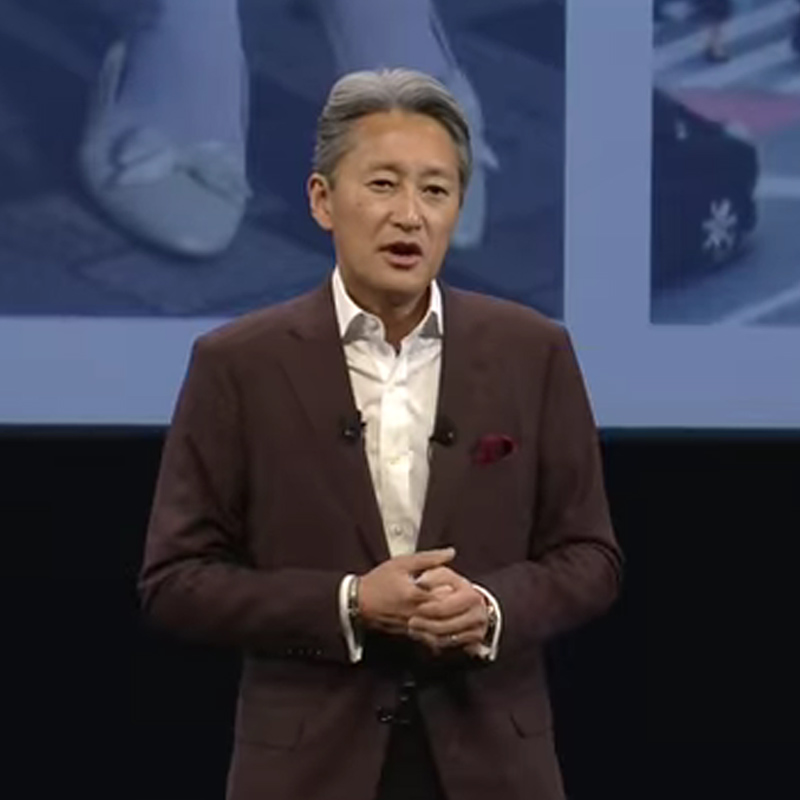
    CANNES: Record attendances at MIPJunior and MIPCOM, more World Premiere TV and International Screenings than ever, a remarkable Japan Country of Honour programme, a Personality of the Year, Shonda Rhimes, who packed delegates into her keynote interview and a tour de force opening keynote from Sony Corporation’s president and CEO Kazuo Hirai, combined to make for a highly successful and memorable MIPCOM 2016.

    MIPJunior (October 15-16) set the tone for the week with a record 1,600 participants including more than 630 buyers (+10%), 1,200 programmes in the screening library and 260 new development projects presented to potential partners. Delegates were treated to a double helping of World Premiere TV Screenings with “Splash and Bubbles” (produced by the Jim Henson Company and Herschend Enterprises) and “Grizzy and the Lemmings” from Studio Hari Production.

    Illustrating the wide international appeal of programming for kids, MIPJunior hosted presentations covering new animation from Finland, animation coproduction opportunities with India, hot kids shows in Norway, how to work in China and how to coproduce with MIPCOM Country of Honour Japan – where animation accounts for 62% of the country’s television exports.

    At the main MIPCOM event, which drew delegations from 108 countries, attendance reached some 14,000 with 4,900 buyers registered including 1,500 acquisition executives working for digital platforms and SVOD.

    In all, 2,000 exhibiting companies packed the Palais des Festivals with new national pavilions bringing together companies from Chile, New Zealand, Morocco, the Philippines, Russia and Japan. Outside the Palais des Festivals exhibition hall, ITV Studios’ revolutionary two-storey stand, made of massive containers, drew plenty of attention.

    Following the successful launch of the MIPDrama Screenings in April 2016, MIPCOM hosted a record number of major drama launches in the World Premiere TV Screenings and International Drama Screenings.

    Among the mega-productions on view, the World Premiere TV Screenings showcased ‘Mata Hari’ (presented by Red Arrow International), ‘The Halcyon’ (presented by Sony Pictures Television), ‘The Same Sky’ (presented by Beta Film), ‘The Rocky Horror Picture Show: Let’s do the Time Warp Again’ (presented by 20th Century Fox Television Distribution’) and an exclusive episode of ‘The Catch, Season 2’ (presented by Disney Media Distribution). For the first time, two of the Screenings, ‘Mata Hari’ and ‘The Rocky Horror Picture Show,’ were open to the Cannes public who reacted enthusiastically to both shows.

    “The interest in the World Premiere TV Screenings and the International Drama Screenings continues to grow and it was great to be able to invite the Cannes public to ‘Mata Hari’ and ‘The Rocky Horror Picture Show: Let’s do the Time Warp Again.’ This bodes well for our plans to expand the 2017 MIPDrama Screenings next April and helps us as we continue to look at bringing a high-end drama festival element to our future events,” noted Laurine Garaude, Director of Reed MIDEM’s Television Division.

    With Japan as MIPCOM’s Country of Honour, 500 Japanese executives from 104 companies attended MIPCOM. Japan’s Prime Minister, Shinzo Abe, sent a special video message to the international television community in Cannes welcoming the MIPCOM Country of Honour programme and the possibility to promote the best in Japanese tech skills and content.

    Delegates enthused that the Japan-themed Opening Party, complete with a host of Japanese chefs, specially-imported Japanese food and beverage and Japanese live music, was one of the most memorable MIPCOM openers in recent years. On the conference front, Sony Corporation President and CEO Kazuo Hirai, opened proceedings with his keynote during a MIPCOM which saw the spotlight turned on Japan’s tech prowess with the latest developments of HD, 4K, 8K and Virtual Reality showcased alongside the newest animation programmes coming to the international market from Japan.

    Undoubted star of MIPCOM 2016 was Personality of the Year Shonda Rhimes. In her various (and often combined) roles as Creator, Writer, Showrunner or Executive Producer, Shonda Rhimes is the driving force behind ‘Grey’s Anatomy,’ ‘Scandal,’ ‘How to Get Away With Murder’ and ‘The Catch.’

    Rhimes was honoured at the annual MIPCOM Personality of the Year gala dinner October 19, which included live and moving tributes to her from ‘The Catch’s’ Mireille Enos, Tony Goldwyn from ‘Scandal’ and fellow ‘Grey’s Anatomy’ Executive Producer Betsy Beers.

    With so much high-end drama at MIPCOM, international talent was in abundance as stars accompanied their respective shows to the market.

    Household names in Cannes included keynote speaker and actor Kiefer Sutherland with ‘Designated Survivor,’ Kyle MacLachlan promoting the new ‘Twin Peaks,’ Dennis Quaid for season 2 of ‘Fortitude,’ ‘Unreal’s’ Constance Zimmer and Shiri Appleby, ‘Conviction’s’ Hayley Atwell, ‘Victoria’ star Jenna Coleman and representing ‘Mata Hari’ Christopher Lambert and Vahina Giocante.

    As part of the Country of Honour programme, Japanese star Kento Hayashi flew in for a special screening of ‘Moribito 2: Guardian of the Spirit.’

    French thespians in town were also numerous with Leila Bekhti, Tcheky Karyo, Emma de Caunes, and Clementine Poidatz all attending MIPCOM.

    “This has been an excellent edition of MIPCOM. Through the central theme of New Television we have showcased technical innovation, discussed how to reach out to younger audiences who consume entertainment when, where and how they want and brought together traditional television leaders with newer online companies. This year has seen a combination of plentiful deal-making, celebration, exchange of knowledge and keynotes from major industry leaders,” concluded Reed MIDEM’s Laurine Garaude.

    At MIPCOM every October, industry’s major players converge in Cannes to turn every moment into an opportunity, transforming four days of meetings, screenings and conferences into deals, from blockbuster programming to ground-breaking partnerships. And MIPJunior is the leading showcase for kids programming, uniting the world’s most influential buyers, sellers and producers the weekend before MIPCOM.

    Reed MIDEM is an organiser of professional, international markets that are essential business platforms for key players in the sectors concerned. Reed MIDEM is a division of Reed Exhibitions, the world’s leading event organiser, with over 500 events in 43 countries.