Category: Specials

  • Guest Column: The new gods of digital newsrooms

    Guest Column: The new gods of digital newsrooms

    Modern journalism began in the early 1600s, triggered, as any new vocation or market usually is, by technology, ie, the invention of the printing press. At first, a very crude community narrow-sheet was born, which was circulated to a few households in the vicinity. It took almost a hundred years of slow evolution for today’s broadsheet daily to acquire shape, with a large distribution footprint, photographs and advertising. It took another century for the next innovation in news journalism, the birth of radio broadcasting. But evolution was quicker after that, with television news appearing just a few decades after radio.

    Nearly 400 years later, around 1990, internet news disrupted the whole landscape. And that was a seminal turning point for mainstream journalism.

    Technology only changes the practices, never the principles of any established vocation – this was the irrefutable wisdom until the Internet turned a million axioms on their heads. Simply put, the principles of journalism – who, what, why, where, when, how, integrity of facts, stringent adherence to the truth, always giving the right of response to the accused/aggrieved – remained inviolable, even as the dissemination medium changed from ink on paper to sound on analogue waves to sound with moving pictures on electronic satellite signals. Technology could never change the principles, only the methods and practices, of telling a news story.

    But the Internet did the unthinkable, forcing mainstream journalism to modify its principles. I like to describe the pre-digital era of news as “the voice of God journalism” – the Gods, of course, were the all powerful editors. Since I won my editorial spurs in that bygone era, I too belong to that Tribe of Gods, where every morning, a bunch of stiff guys would troop into the conference room, with pencils and notepads, and decide the order of news stories for the day. It was such a unilateral exercise! “Let’s lead with Gandhi, then do that parliament debate … and just stuff a bit of sports and movies towards the end”. Done. The viewer was a complete “outsider”, her interests were peripheral, because “Gods” had the divine right to mandate the run order of news stories.    

    I grope for the correct adjective here. Archaic? Anathema? Anachronistic? Absurd? Perhaps all four of these, and a billion more, could be justifiably used if “the voice of God journalism” were to invade and dominate a digital newsroom today. Why? Because a digital newsroom is not a unilateral, linear, one way transmission of stories. In the nanosecond after you publish anything, readers and viewers pounce at it with their likes, hates, shares, comments, denials, corrections, updates, meme tweaks on WhatsApp, cartoon caricatures on Instagram, vociferous protests, loud applause etc etc etc … an intelligent or distasteful cacophony gets lit, and you have to respond to it, agree with it, deny it, debunk it, decorate it, ie do something, anything with it or to it, but you simply can’t ignore it. Because if you choose to be the unmoved, stoic, non-responsive “Godly” editor of the early 90s, you will be out of a job. Pronto.

    Let me illustrate with a simple choice that we had to make the other day. We were dealing with two big “demonetization stories” – one was a rather complex unraveling of the tax rules enshrined in the new Income Disclosure Scheme, wherein you would have to pay X% tax/penalty if illegal cash was deposited by Y date; and if you failed to do that, you would be liable for Z additional penalties. The other was a heart rending story of a 75-year old woman, the youngest sister of five brothers.

    For the last 50 years, she had kept 250 precious envelopes in her safe, containing cash given to her on bhai dooj. In her world view, that cash was a sacred gift from her brothers, not to be ever spent. Her heart was broken when her son forced her to open each envelope, take out nearly Rs 1.50 lac in notes of various denominations, and deposit them in banks. Her faith was rattled, shaken. What an astonishing human story, capturing the unusual pathos that demonetization has inflicted on ordinary people. In the unilateral, Godly days of yore, the tax rules would have played upfront, while the human interest story would be tucked towards the end, to be soon forgotten. But in today’s digital newsrooms, the story of this rudely disenfranchised 75-year-old woman would gain unrelenting velocity on social media, would whiz around cyber space, getting Facebooked, WhatsApped and Instagrammed, touching the hearts of a million people, instigating thousands of comments/shares/likes.

    No God could stem the viral force of this venerable lady’s touching story, which would simply obliterate the dry prose of tax rules, and reign supreme in the world of digital news.   

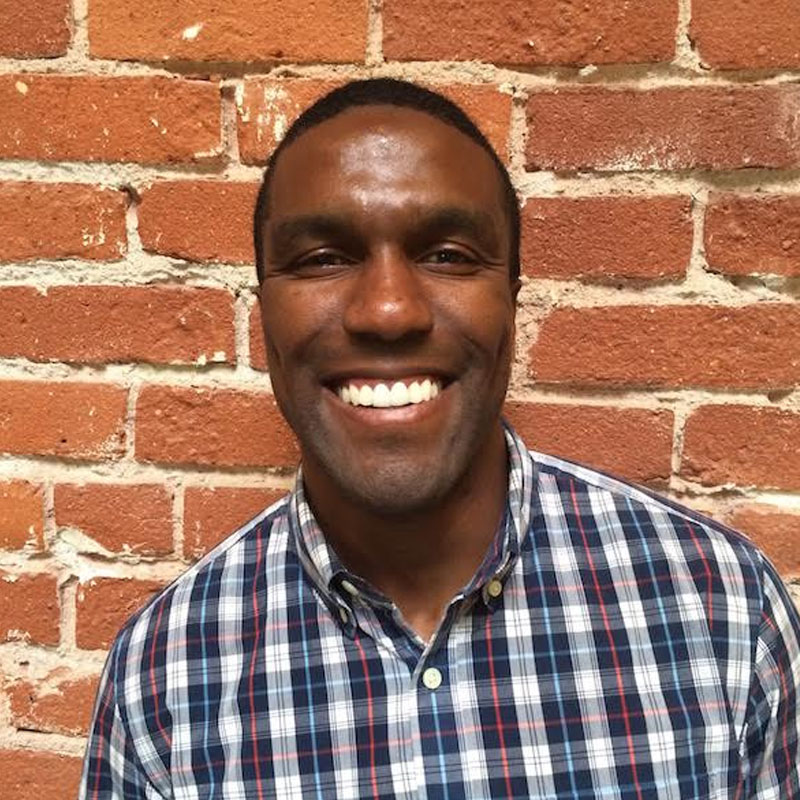
    public://unnamed_2.jpg The author is the co-founder and chairman of Quintillion Media, including BloombergQuint. He is the author of two books, viz ‘Superpower?: The Amazing Race Between China’s Hare and India’s Tortoise’, and ‘Super Economies: America, India, China & The Future Of The World’. The views expressed are personal and Indiantelevision.com need not necessarily subscribe to them


  • “There would be  a lot on TRAI’s plate in 2017” – RS Sharma

    “There would be a lot on TRAI’s plate in 2017” – RS Sharma

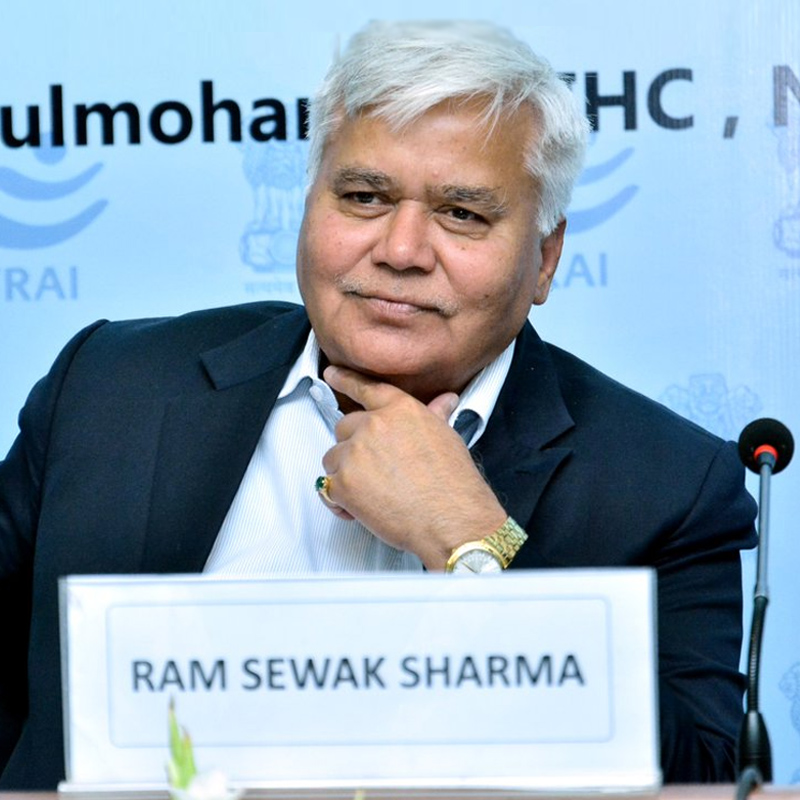
    RS Sharma, chief regulator of India’s telecoms and broadcast carriage services, is a plain-speaking person who doesn’t mince words. He is forthright inhis thoughts on the Telecom Regulatory Authority of India (TRAI)’s role, which, according to several reiterations, is work towards creating a regulatory environment to remove ambiguities and litigations. While doing so, if the regulator has over-reached, Sharma says, he and his colleagues are willing to correct themselves if stakeholders convince them of their viewpoints as part of a healthy and democratic process of debateand discussions.

    A senior-level bureaucrat, whose last assignment in the government was Secretary, Department of Electronics and Information Technology, Sharma as the Chairman of TRAI is convinced that pressures notwithstanding, it’s the job of a regulator to be not only technology agnostic, but also stakeholder-neutral in its efforts to create a level-playing field for all for the growth of telecoms and broadcast sectors. Being tech-savvy (he is one of those in the government who was active on Twitter much before it became a buzzword as a communication tool within government setups) helps in a highly technological world.

    Indiantelevision.com’s Consulting Editor Anjan Mitra engages Sharma on various issues and Sharma, true to his self, doesn’t flinch away from answering the queries, even those critical of TRAI’s role.

    Edited excerpts from the interview:

    As the chief regulator what would be your overview of the telecom and the broadcast sectors?

    Both the sectors are very vibrant in our country.  In the telecoms sector, we have almost a billion plus people connected through mobile phones and other devices. However, we need to essentially now focus on the issue of data speed and availability. In this regard we have already given various recommendations to the government, both in the wireless as also in the fixed line segments.

    The focus is on implementation of Bharat Net (taking broadband to all parts of India, including rural areas, via fibre optics), promotion of digital cable TV for supply of broadband, facilitating an environment for creating Wi-Fi hotspots and liberalizing the satellite bandwidthregime so satellites can also be used to provide broadband services, which also means an Open Sky policy. All these initiatives,if implemented, are expected to increase availability and improvement of internet infrastructure for the people of this country, which is the first most important prerequisite of Digital India — broadband as a utility to the citizens. We see telecom space developin that direction.

    The broadcasting sector too is vibrant where we now have about 900 plus TV channels, which have a wide range of programming catering to a wide section of the people through various delivery platforms. Fortunately, by the end of this calendar year, the fourth phase of digitization (of TV services) could be completedwhere all stakeholders have contributed and participated equally. We should also not forget the Indian TV network is one of the largest networks in the world and when it gets fully digitized, it would be a real achievement.

    So, to facilitate further smoothening of the digitization path, we would be bringing out three important guidelines on issues relating to tariff, interconnection and quality of service. After having worked almost through the year (2016) and examining the broadcast and cable sector comprehensively, the final guidelines on the three issues would be issued that will herald a new, but common framework for all platforms.

    When are these final guidelines likely to be issued by TRAI now that legal hurdles to implementation of digitization or DAS have been cleared by courts?

    The final recommendations will be issued at the end of this month, which will also coincide with end of this year and the guidelines, hopefully, will bring about more harmony in the TV sector and various delivery platforms prevalent in the country.

    At TRAI, we can only create an environment for TV (carriage) services, while it’s the Ministry of Information and Broadcasting (MIB)’s role to actually push networks and stakeholders to adhere to the digital deadlines and enforce the schedule. But we are ready to provide any assistance to MIB if asked for.

    (This interview was taken earlier in December after the Delhi High Court had dismissed all cases relating to extension of  deadline of Phase III of digitization. Subsequently on December 23, 2016, MIB extended the deadline for Phase IV of DASto 31 March, 2017 owing to uncertainties in the market.  The last and fourth phase was to have been completed on 31 December, 2016. Same day, Madras High Court passed an interim order, valid till next hearing mid-January 2017, directing TRAI to maintain status quo and refrain from issuing any further guidelines relating to the broadcast sector, especially if those guidelineshad any bearing on copyright issues raised by petitioner Star India and Vijay TV, amongst other things.)

    A regulator’s job is to be a facilitator and help create a business environment that’s win-win for all stakeholders. But why is it that many directives and guidelinesare legally challenged by the industry?

    Everybody in this country has a right to take recourse to legal help and I would not like to comment at all on the issue as to why our directives are challenged by the industry. However, all that I would say is that there is a due process of law and which takes care of many such issues. While many of our directives are upheld by the courts and TDSAT(the Telecoms Disputes Settlement & Appellate Tribunal), some of them are struck down too. It’s a process available to Indians under the Constitution.

    What were the underlying objectives of TRAI when it started drafting a new set of guidelines for the broadcast and cable sector?

    Our main objective — and purpose for all guidelines for both the broadcast and telecoms sectors — is to reduce ambiguity in regulations. The broadcast segment is no exception.The aim is to create a kind of regulatory environment where there is less ambiguity and lesser scope for litigations. Litigations take place because of ambiguity (in rules and regulations).Especially in the broadcasting sector there are no or few contracts (amongst stakeholders), which result in people going to courts of law. So, TRAI is trying to streamlinethe sector. It is not only the TRAI regulations that are (legally) challenged, but stakeholdersalso litigate amongst themselves. We want to create a much more rational level playing field for all stakeholders, including the consumer.

    However critics, including domestic and foreign industry bodies, say TRAI ends up over regulating. What do you have to say about this criticism?

    In sectors where there are multiple stakeholders litigating amongst themselves, somebody will have to establish basic rules. If stakeholders interact among themselves without any rules, that is fine with us. However, we also have to understand that the most important stakeholder in all this is the consumer and it should not happen that the consumer ultimately is the sufferer. Though TRAI doesn’t believe in unnecessary regulations, at the same time some regulation defining the playing area isnecessary for an orderly growth of the industry.

    When industry bodies do benchmarking of Indian regulations versus FCC or Ofcom or some other Asian markets, India and China emerge as highly regulated markets. Comment.

    I don’t want to comment on those benchmarks as I am not really aware of them or the methodology used. But I certainly don’t agree that we are regulating when regulation is not necessary. We also believe in minimal regulation. Because of high level of litigation-related activities happening in the Indian broadcast sector, we feel there is a need to clarify issues. It is better to have some basic rules of the game rather than having ambiguous situations, which results into too many litigations and waste of time.

    So, you feel the draft broadcast regulations are aimed at streamlining the sector and bring about more transparency?

    Certainly yes and that’s what we hope will be achieved ultimately. Recent courtjudgments have also clearly held that the processes in this kind of interconnection environment should be transparent. So, less ambiguity and more transparency are two guiding principles that have helped us in draftingthose regulations, though we are still open to amendments.

    Why is the Indian Broadcasting Foundation (IBF)critical of many TRAI stands if the regulatory bodyis working towards transparency?

    We have had very intense and vibrant engagement with the industry on all the consultation papers.Stakeholders’ comments have been very precise and in a way it has been an enriching experience for TRAI. So, as and when we do come out with final recommendations, we hope to have plugged any loopholes in the drafts.Every stakeholder has a right to be critical and IBF too is expressing its views. I think it is all part of a healthy democratic and transparent process of interaction.

    What is TRAI’s stand on new technologies being introduced in the telecom and broadcast sectors?

    Our view on technology is that we must promote innovation and technology in these sectors. We should not try to throttle them (new techs) just because there are legacy business models. Business models must adapt to technology, rather than technology being stifled in order to protect business models. That essentially has been our approach to technology.

    There’s lot of fusion taking place in the technological world and India must not shy away from embracing them. For example, in certain countries 4G is passé and they are talking about 5G, which too would ultimately arrive in India. As both our telecom and broadcast and cable networks would be one of the largest in the world soon, if infrastructure development is robust, why should India or its consumers be five years behind in technology and be deprived of latest marvels of technology? As a developing country we need technology more. Reason is simple: a better technology is not only cost-effective, but also helps in more productive use of resources. Technology will help the country in more efficient use of bandwidth, for example, which is not a commodity that’s in unlimited supply.

    Why then a new content delivery tech like OTT, for example,is being attempted to be regulated with a legacy mindset?

    TRAI is not looking at any extra regulation as we feel regulations, in general, should be technology agnostic. However, if there are any barriers to adoption of a technology, TRAI would try to either remove those or work towards relaxing those barriers. For example, there is a consultation paper on sharing of infrastructure in the broadcasting sector. At present,sharing of infrastructure is not permitted essentially because of certain licence conditions. On this issue,we feel — though final recommendations are awaited— a broadcast carriage company need not necessarily share infrastructure even after TRAI comes out with guidelines.But if there is a condition in thelicence that prohibits sharing, we may, probably, have to relax those conditions. Our broader approach is if some licence conditions stop a business from optimal utilization of resources, we should try to remove such regulatory barriers.

    We should facilitate adoption of new technologies, not really regulate or mandate them. If there are regulatory barriers, then appropriate action for introduction of newer technologies should be taken.

    Though TRAI has dealt with it in a piecemeal fashion earlier, what is the regulator’s overall stand on the contentious issue of Net Neutrality?

    We have already dealt with the issue of Net Neutrality from the zero tariff perspective sometime in February. Now the government has asked us to provide it with comprehensive recommendations on the issue. We are in the process of further studying the feedback from people and stakeholders on the issue after which some additional consolations would take place. As the drafting of our final position may take a couple of months more, I am unable to spell out TRAI’s stand on Net Neutrality at this point of time. But I hope it should suffice when I say TRAI is not against any new technology whether it is OTT or 5G or anything else.

    Q: Earlier, you referred to an issue relating to Open Sky policy aimed at making leasing of capacity on Indian and foreign satellites liberal. That matter is not moving within the government. Any comment?

    I don’t want to comment on that as ultimately it is for the government to act on TRAI’s recommendations. We have recommended a number of times (in favour of a more liberalized satellite policy).On such policy matters, it’s the government’s prerogative to take some action. However, TRAI will keep tracking the issue. But there’s no denying for the success of Digital India, providing broadband via satellites in difficult geographical terrains like India’s North-Eastern states is a crucial aspect. But on such matters the government’s decision is final.

    Don’t you think that the time has come for India to have a comprehensive convergence law and a fully converged regulator?

    I certainly agree we need to, probably, have alaw on convergence. But I am not the competent authority to comment on such a regulatory regime’s structure and mandate as it is the government’s job and prerogative to do so. However, I do feel because of technological developments, a lot of convergence is happening in various sectors, including telecom and broadcast segments. Probably, we need to revisit our regulatory structures. But, as I said earlier, it is the government’s prerogative.

    As the chief regulator you must be coming in for pressure from many sides, including political. How do you keep yourself neutral?

    For the last 15-16 months that I have been at TRAI, I have not been subject to any pressure. I am very happy that we at TRAI are doingour job of being a facilitator and see that both the segments grow in an unhindered fashion.

    What would are the achievements of TRAI in 2016 and what is the agenda for 2017?

    As we are not an operation agency, we don’t have quantifiable targets,unlike the Aadhaar (unique identity for Indians) project, of which I was a crucial part, where we had a measurable target of for a particular period of time.TRAI primarily has three functions. Function No. 1 is to advise government on issues referred to us. Function No. 2 is that TRAI can also take up issues suo moto and advise the government accordingly. Function No. 3 is to issue regulations related to tariff. I think, we have discharged our duty in a satisfactory manner during 2016.

    What we plan to do in 2017 is something interesting. While there will be always issues that willneed TRAI’s urgent attention — for example, the government may ask foradvice on spectrum prices — we are trying to create a calendar for the next year. So we hope by the end of this year we will come up with calendar highlighting the works that need to be taken up in 2017 and which will act as a roadmap.

    What are the issues likely to figure in that roadmap?

    There are many issues. For example, various issues relating to data and bandwidth are important and TRAI would like to examine those, including data and  consumer protection. Then there are matters like Internet of Things (IoT) and other new areas where our approach will always remain to regulate minimally. I would also like TRAI to take up the implementation of the framework that we are putting in place for the broadcast sector. Then there are issues like audience measurement and digital terrestrial broadcasting. There would be lots on the plate in 2017 for TRAI.

  • “There would be  a lot on TRAI’s plate in 2017” – RS Sharma

    “There would be a lot on TRAI’s plate in 2017” – RS Sharma

    RS Sharma, chief regulator of India’s telecoms and broadcast carriage services, is a plain-speaking person who doesn’t mince words. He is forthright inhis thoughts on the Telecom Regulatory Authority of India (TRAI)’s role, which, according to several reiterations, is work towards creating a regulatory environment to remove ambiguities and litigations. While doing so, if the regulator has over-reached, Sharma says, he and his colleagues are willing to correct themselves if stakeholders convince them of their viewpoints as part of a healthy and democratic process of debateand discussions.

    A senior-level bureaucrat, whose last assignment in the government was Secretary, Department of Electronics and Information Technology, Sharma as the Chairman of TRAI is convinced that pressures notwithstanding, it’s the job of a regulator to be not only technology agnostic, but also stakeholder-neutral in its efforts to create a level-playing field for all for the growth of telecoms and broadcast sectors. Being tech-savvy (he is one of those in the government who was active on Twitter much before it became a buzzword as a communication tool within government setups) helps in a highly technological world.

    Indiantelevision.com’s Consulting Editor Anjan Mitra engages Sharma on various issues and Sharma, true to his self, doesn’t flinch away from answering the queries, even those critical of TRAI’s role.

    Edited excerpts from the interview:

    As the chief regulator what would be your overview of the telecom and the broadcast sectors?

    Both the sectors are very vibrant in our country.  In the telecoms sector, we have almost a billion plus people connected through mobile phones and other devices. However, we need to essentially now focus on the issue of data speed and availability. In this regard we have already given various recommendations to the government, both in the wireless as also in the fixed line segments.

    The focus is on implementation of Bharat Net (taking broadband to all parts of India, including rural areas, via fibre optics), promotion of digital cable TV for supply of broadband, facilitating an environment for creating Wi-Fi hotspots and liberalizing the satellite bandwidthregime so satellites can also be used to provide broadband services, which also means an Open Sky policy. All these initiatives,if implemented, are expected to increase availability and improvement of internet infrastructure for the people of this country, which is the first most important prerequisite of Digital India — broadband as a utility to the citizens. We see telecom space developin that direction.

    The broadcasting sector too is vibrant where we now have about 900 plus TV channels, which have a wide range of programming catering to a wide section of the people through various delivery platforms. Fortunately, by the end of this calendar year, the fourth phase of digitization (of TV services) could be completedwhere all stakeholders have contributed and participated equally. We should also not forget the Indian TV network is one of the largest networks in the world and when it gets fully digitized, it would be a real achievement.

    So, to facilitate further smoothening of the digitization path, we would be bringing out three important guidelines on issues relating to tariff, interconnection and quality of service. After having worked almost through the year (2016) and examining the broadcast and cable sector comprehensively, the final guidelines on the three issues would be issued that will herald a new, but common framework for all platforms.

    When are these final guidelines likely to be issued by TRAI now that legal hurdles to implementation of digitization or DAS have been cleared by courts?

    The final recommendations will be issued at the end of this month, which will also coincide with end of this year and the guidelines, hopefully, will bring about more harmony in the TV sector and various delivery platforms prevalent in the country.

    At TRAI, we can only create an environment for TV (carriage) services, while it’s the Ministry of Information and Broadcasting (MIB)’s role to actually push networks and stakeholders to adhere to the digital deadlines and enforce the schedule. But we are ready to provide any assistance to MIB if asked for.

    (This interview was taken earlier in December after the Delhi High Court had dismissed all cases relating to extension of  deadline of Phase III of digitization. Subsequently on December 23, 2016, MIB extended the deadline for Phase IV of DASto 31 March, 2017 owing to uncertainties in the market.  The last and fourth phase was to have been completed on 31 December, 2016. Same day, Madras High Court passed an interim order, valid till next hearing mid-January 2017, directing TRAI to maintain status quo and refrain from issuing any further guidelines relating to the broadcast sector, especially if those guidelineshad any bearing on copyright issues raised by petitioner Star India and Vijay TV, amongst other things.)

    A regulator’s job is to be a facilitator and help create a business environment that’s win-win for all stakeholders. But why is it that many directives and guidelinesare legally challenged by the industry?

    Everybody in this country has a right to take recourse to legal help and I would not like to comment at all on the issue as to why our directives are challenged by the industry. However, all that I would say is that there is a due process of law and which takes care of many such issues. While many of our directives are upheld by the courts and TDSAT(the Telecoms Disputes Settlement & Appellate Tribunal), some of them are struck down too. It’s a process available to Indians under the Constitution.

    What were the underlying objectives of TRAI when it started drafting a new set of guidelines for the broadcast and cable sector?

    Our main objective — and purpose for all guidelines for both the broadcast and telecoms sectors — is to reduce ambiguity in regulations. The broadcast segment is no exception.The aim is to create a kind of regulatory environment where there is less ambiguity and lesser scope for litigations. Litigations take place because of ambiguity (in rules and regulations).Especially in the broadcasting sector there are no or few contracts (amongst stakeholders), which result in people going to courts of law. So, TRAI is trying to streamlinethe sector. It is not only the TRAI regulations that are (legally) challenged, but stakeholdersalso litigate amongst themselves. We want to create a much more rational level playing field for all stakeholders, including the consumer.

    However critics, including domestic and foreign industry bodies, say TRAI ends up over regulating. What do you have to say about this criticism?

    In sectors where there are multiple stakeholders litigating amongst themselves, somebody will have to establish basic rules. If stakeholders interact among themselves without any rules, that is fine with us. However, we also have to understand that the most important stakeholder in all this is the consumer and it should not happen that the consumer ultimately is the sufferer. Though TRAI doesn’t believe in unnecessary regulations, at the same time some regulation defining the playing area isnecessary for an orderly growth of the industry.

    When industry bodies do benchmarking of Indian regulations versus FCC or Ofcom or some other Asian markets, India and China emerge as highly regulated markets. Comment.

    I don’t want to comment on those benchmarks as I am not really aware of them or the methodology used. But I certainly don’t agree that we are regulating when regulation is not necessary. We also believe in minimal regulation. Because of high level of litigation-related activities happening in the Indian broadcast sector, we feel there is a need to clarify issues. It is better to have some basic rules of the game rather than having ambiguous situations, which results into too many litigations and waste of time.

    So, you feel the draft broadcast regulations are aimed at streamlining the sector and bring about more transparency?

    Certainly yes and that’s what we hope will be achieved ultimately. Recent courtjudgments have also clearly held that the processes in this kind of interconnection environment should be transparent. So, less ambiguity and more transparency are two guiding principles that have helped us in draftingthose regulations, though we are still open to amendments.

    Why is the Indian Broadcasting Foundation (IBF)critical of many TRAI stands if the regulatory bodyis working towards transparency?

    We have had very intense and vibrant engagement with the industry on all the consultation papers.Stakeholders’ comments have been very precise and in a way it has been an enriching experience for TRAI. So, as and when we do come out with final recommendations, we hope to have plugged any loopholes in the drafts.Every stakeholder has a right to be critical and IBF too is expressing its views. I think it is all part of a healthy democratic and transparent process of interaction.

    What is TRAI’s stand on new technologies being introduced in the telecom and broadcast sectors?

    Our view on technology is that we must promote innovation and technology in these sectors. We should not try to throttle them (new techs) just because there are legacy business models. Business models must adapt to technology, rather than technology being stifled in order to protect business models. That essentially has been our approach to technology.

    There’s lot of fusion taking place in the technological world and India must not shy away from embracing them. For example, in certain countries 4G is passé and they are talking about 5G, which too would ultimately arrive in India. As both our telecom and broadcast and cable networks would be one of the largest in the world soon, if infrastructure development is robust, why should India or its consumers be five years behind in technology and be deprived of latest marvels of technology? As a developing country we need technology more. Reason is simple: a better technology is not only cost-effective, but also helps in more productive use of resources. Technology will help the country in more efficient use of bandwidth, for example, which is not a commodity that’s in unlimited supply.

    Why then a new content delivery tech like OTT, for example,is being attempted to be regulated with a legacy mindset?

    TRAI is not looking at any extra regulation as we feel regulations, in general, should be technology agnostic. However, if there are any barriers to adoption of a technology, TRAI would try to either remove those or work towards relaxing those barriers. For example, there is a consultation paper on sharing of infrastructure in the broadcasting sector. At present,sharing of infrastructure is not permitted essentially because of certain licence conditions. On this issue,we feel — though final recommendations are awaited— a broadcast carriage company need not necessarily share infrastructure even after TRAI comes out with guidelines.But if there is a condition in thelicence that prohibits sharing, we may, probably, have to relax those conditions. Our broader approach is if some licence conditions stop a business from optimal utilization of resources, we should try to remove such regulatory barriers.

    We should facilitate adoption of new technologies, not really regulate or mandate them. If there are regulatory barriers, then appropriate action for introduction of newer technologies should be taken.

    Though TRAI has dealt with it in a piecemeal fashion earlier, what is the regulator’s overall stand on the contentious issue of Net Neutrality?

    We have already dealt with the issue of Net Neutrality from the zero tariff perspective sometime in February. Now the government has asked us to provide it with comprehensive recommendations on the issue. We are in the process of further studying the feedback from people and stakeholders on the issue after which some additional consolations would take place. As the drafting of our final position may take a couple of months more, I am unable to spell out TRAI’s stand on Net Neutrality at this point of time. But I hope it should suffice when I say TRAI is not against any new technology whether it is OTT or 5G or anything else.

    Q: Earlier, you referred to an issue relating to Open Sky policy aimed at making leasing of capacity on Indian and foreign satellites liberal. That matter is not moving within the government. Any comment?

    I don’t want to comment on that as ultimately it is for the government to act on TRAI’s recommendations. We have recommended a number of times (in favour of a more liberalized satellite policy).On such policy matters, it’s the government’s prerogative to take some action. However, TRAI will keep tracking the issue. But there’s no denying for the success of Digital India, providing broadband via satellites in difficult geographical terrains like India’s North-Eastern states is a crucial aspect. But on such matters the government’s decision is final.

    Don’t you think that the time has come for India to have a comprehensive convergence law and a fully converged regulator?

    I certainly agree we need to, probably, have alaw on convergence. But I am not the competent authority to comment on such a regulatory regime’s structure and mandate as it is the government’s job and prerogative to do so. However, I do feel because of technological developments, a lot of convergence is happening in various sectors, including telecom and broadcast segments. Probably, we need to revisit our regulatory structures. But, as I said earlier, it is the government’s prerogative.

    As the chief regulator you must be coming in for pressure from many sides, including political. How do you keep yourself neutral?

    For the last 15-16 months that I have been at TRAI, I have not been subject to any pressure. I am very happy that we at TRAI are doingour job of being a facilitator and see that both the segments grow in an unhindered fashion.

    What would are the achievements of TRAI in 2016 and what is the agenda for 2017?

    As we are not an operation agency, we don’t have quantifiable targets,unlike the Aadhaar (unique identity for Indians) project, of which I was a crucial part, where we had a measurable target of for a particular period of time.TRAI primarily has three functions. Function No. 1 is to advise government on issues referred to us. Function No. 2 is that TRAI can also take up issues suo moto and advise the government accordingly. Function No. 3 is to issue regulations related to tariff. I think, we have discharged our duty in a satisfactory manner during 2016.

    What we plan to do in 2017 is something interesting. While there will be always issues that willneed TRAI’s urgent attention — for example, the government may ask foradvice on spectrum prices — we are trying to create a calendar for the next year. So we hope by the end of this year we will come up with calendar highlighting the works that need to be taken up in 2017 and which will act as a roadmap.

    What are the issues likely to figure in that roadmap?

    There are many issues. For example, various issues relating to data and bandwidth are important and TRAI would like to examine those, including data and  consumer protection. Then there are matters like Internet of Things (IoT) and other new areas where our approach will always remain to regulate minimally. I would also like TRAI to take up the implementation of the framework that we are putting in place for the broadcast sector. Then there are issues like audience measurement and digital terrestrial broadcasting. There would be lots on the plate in 2017 for TRAI.

  • High profile executive departures in 2016

    High profile executive departures in 2016

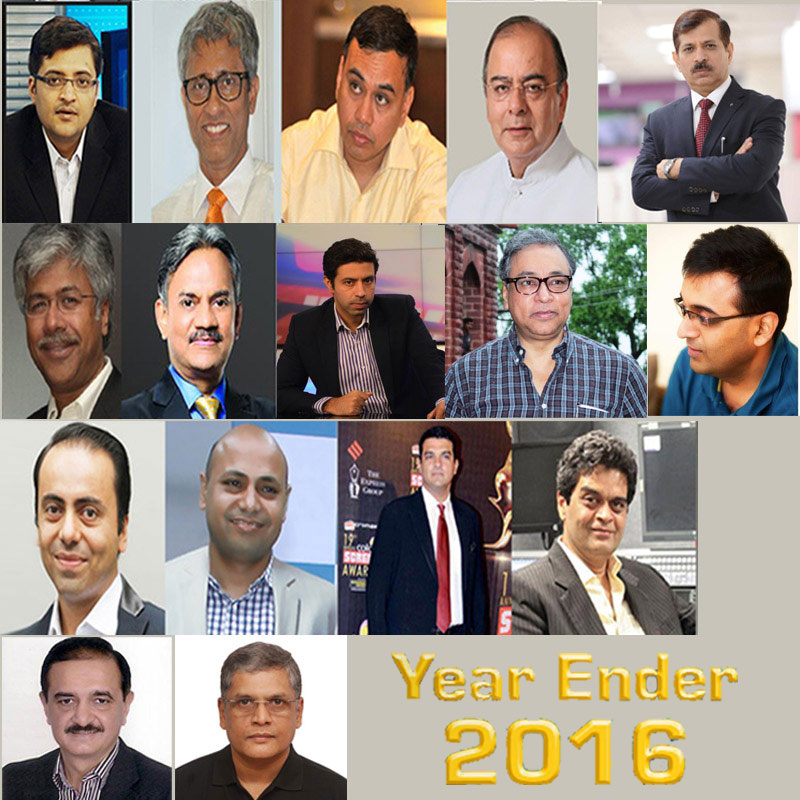
    MUMBAI/NEW DELHI: As the year comes to a close, let’s take a dekko at the major parting of ways between individuals and companies and also in companies themselves that hit the Indian broadcast, cable, satellite TV sectors. The list is definitely not comprehensive but the effort has been to try and cover what we at indiantelevision.com consider major split ups, including in the government.

    Arun Jaitley: One of the most powerful politicians in the country was entrusted by PM Modi some very important portfolios when the BJP-led government came to power mid-2014.

    In a cabinet reshuffle in November 2014, Jaitley was also handed the important ministry of information & broadcasting (MIB) and he headed three ministries at one time, including the all-powerful Ministry of Finance.

    However mid-2016, MIB was handed to M. Venkaiah Naidu. Critics said it was PM’s way of sending a message to Jaitley, but with three ministries under him, it was asking too much from the man even as brilliant as he is. Jaitley retains the portfolios of  Corporate Affairs and Finance — and, probably, could turn out to be PM Modi’s best lieutenant in the all-out war on black economy declared via  demonetisation of high-value currency notes and other proposed measures .  

    Jawhar Sircar: A senior bureaucrat-academecian, he quit the government to take up in 2012 the challenging post of CEO of India’s pubcaster Prasar Bharati, overseeing the monolithic Doordarshan and the widely-reached All India Radio.

    An outspoken person and a hard taskmaster, Sircar attempted to bring about a revolution in Prasar Bharati’s way of functioning and improve its revenue and reach.

    Partially successful, he met with lot of resistance trying to change a slothful giant. In private, he admitted that what frustrated him was that the pubcaster is manned by a bunch corrupt, no-good, job-for-life-security-seeking blokes, who wanted to retain the status quo.

    With his tenure scheduled to end in first quarter of 2017, a “tired” Sircar (as per his own admissions on social media) finally threw in the towel and sought early retirement in October 2016, which was granted by the government. Sircar returned to his home base in Kolkata to lead a  retired life and giving talks on issues related to primarily arts. 

    Arnab Goswami: The popular anchor had made shouting out his guests as the trademark of his prime time show – News Hour on Times Now. So one only expected his departure to be as noisy – though it was unfathomable by many who thought he and the channel were one – conjoined at the hip.

    And Arnab did not disappoint. The media went berserk: mainline and trade portals, social media, could not stop talking about his departure for weeks, months, and they have not stopped even as the year is coming to a close.

    Goswami’s new venture, believed to be on the cutting edge of technology — and news – is christened Republic.

    Ashok Venkatramani: The CEO of ABP News saw the news network being reinvented, rebranded and recreated from Star News to ABP News a few years ago without losing viewership and business. Venkatramani strengthened the companys financials, brough in systems and rigour making ABP News a viable business operation. He improved the company’s margins, keeping costs under control, even as he expanded ABP News Network’s portfolio to five TV channels, six mobile products, six websites and three additional revenue verticals. Venkatramani quietly resigned without any hullabaloo in November after serving out his notice period. He was replaced by Atideb Sarkar, the son of ABP editor in chief Arup Sarkar.

    Rahul Shivshankar: He left News X in November 2016 to fill the the big shoes left behind by Arnab Goswami. The Kartikeya Sharma owned NewsX flourished under his ediorial leadershup of three years during the TAM era. The journey after BARC’s evolution was not  as good, but the former Headlines Today journalist has his own following.

    Known to be an insightful, incisive journalist, Shivshankar joined Times Now on 15 December as Chief Editor, returning to the company after six years.

    Shivshankar was Senior Editor in his previous stint at the Times Now. And he seems to have done well as Arnab’s replacement. Times Television Network CEO MK Anand has come on record to state that the news network’s viewership share has stayed intact, unaffected by the larger than life news anchor’s departure.

    Sameer Ahluwalia: In one of the more controversial moves, Zee Business head Sameer Ahluwalia parted ways with Zee Media Corp Ltd (ZMCL)  Ahluwalia was associated with the Zee Network for 19 years  and was known to be a close confidante of ZMCL chairman Subhash Chandra.

    Samir’s name was embroiled in the case of the alleged extortion of Rs 100 crore along with Zee News Editor-in-chief Sudheer Chaudhary. To make matters clear, the management had immediately accepted his resignation.

    RK Arora: Zee Media has seen a lot of changes in 2016, with RK Arora being one of those who made an entry and then an exit. Known for his industry acumen and powerful contacts, RK Arora quit Zee Media as executive director and chief cxecutive officer after a stint of around 15 months.

    Arora had joined Zee in May 2015 and parted ways in August 2016. The former News Nation strategic and operational head and ITV Network senior executive has moved onto a new venture JK Media and got into the business of running television news once again.

    Zee Media Group CEO News cluster Bhaskar Das: Leadership to him means delivering outcomes and not outputs. Identifying and mitigating pain-points come naturally to him. With a career spanning over three years, he was responsible for driving up the revenue of all news channels from the cluster that includes channels such as Zee News, Zee Business, Zee 24 Taas (Marathi) and 24 Ghanta (Bengali).

    Earlier this year, he was moved to Zee Entertainment’s media sales arm, Zee Unimedia. As the president and chief growth and innovation officer, he heads the group’s news business operations, including the digital properties.

    CNBC TV18 CEO Anil Uniyal: After working with the TV18 Broadcast for more than 15 years, Uniyal decided to hop on to the Raghav Bahl-Bloomberg venture. An insight provocateur, catalyst, a leader, he  served the network in various positions such as business director for Forbes, head of TV 18 Media operations, COO for Network 18 and lastly CEO for CNBC TV 18 and CNBC Awaaz. Uniyal joined as the CEO to lead Bahl’s joint venture with  Bloomberg.

    CNBC Awaaz and CNBC Bazaar editor Sanjay Pugalia: Right after the exit of Uniyal, Pugalia called it a day at Network18. He moved on after 12 years as editor of CNBC Awaaz and CNBC Bajar. Further, under his leadership CNBC Awaaz went to the number 1 position in its segment. Pugalia played an important role in the launch of Star News in India. He went on to join as president and editorial director of both, Raghav Bahl’s The Quint and Bloomberg Quint.

    India TV  CEO Paritosh Joshi: It’s all about respect and relationships for him. Acting as a strategist at India TV since 2012, he was brought on board as CEO in November 2015. While everyone hoped that this would be a long association, it was clearly taxing for him as he continued to commute between two metros. He has completed the circle and is back to being a strategist. The primary reason behind his exit was to return to his family in Mumbai. After quitting as the CEO of Star CJ Network in 2012, Joshi planned on starting his own venture in the media and entertainment space. He founded Principal, an advisory to advise clients on corporate strategy, marketing, revenue enhancement and other issues.

    Zee Digital Debashish Ghosh: With the explosion in the OTT and VOD ecosystem, opportunities are coming a-plenty for professionals. Zee Digital Convergence CEO Debashish Ghosh put in his papers at Zee Digital and hopped on board the Chinese tech and consumer electronics major LeEco. The salt and pepper coloured hair head took over as the new COO at LeEco’s India outfit in June 2016. While at Zee, he had taken charge of all the digital businesses of the Essel Group in India as CEO and whole time board director of India.com network in February 2013. He started his career with the Times of India Group in 1990 and worked as head of technology and advertising operations to becoming Times Business Solutions CEO in 2012.

    Zee TV Business Head Pradeep Hejmadi: From a broadcasting company to an audience measurement system and back to broadcasting, Hejmadi has seen it all. With multi-dimensional understanding of the media businesses, he moved from Nickelodeon India as director for business and operations to spearhead TAM media research as senior VP. He was responsible for revenue generation, client management, new business development and new product development. In July 2014, Zee Entertainment Enterprises Ltd (Zeel) appointed him as the business head of its flagship Hindi entertainment channel Zee TV.  Hejmadi called his last at Zee in May  2016 after spending two years with the company.

    Disney India CEO Siddharth Roy Kapur:  Kapur was one of the newsmakers  of the year 2016. He is married to the beuatiful Vidya Balan and his brothrs Aditya and Kunal have made a mark for themselves in Bollywood as on-screen talent.

    Siddharth quit Disney India as managing director in October to explore his own business interests. He was replaced by Mahesh Samat, the former CEO, who returned to the position that he held between 2008 and 2012, and officially took charge on November 28.

    While working for the company, Kapur introduced the Indian Broadway version of the timeless classic ‘Beauty and the Beast’, which was a huge success, apart from launching a slate of Bollywood projects for the studio and fine tuning the network’s channel bouquet.

    He joined UTV in 2005, took over as chief executive officer of UTV Motion Pictures in 2008 and after the integration of UTV with The Walt Disney Co. (India) in 2012, held the role of managing director-studios.

    He was promoted as managing director of Disney India in 2014.


    S.N. Sharma: He left a company he helped cofound to assist Reliance Industries boss Mukesh Ambani’s Jio to roll out a national cable TV and broadband network. But earlier this year, cable vet SN Sharma quit Jio to go back to his  original home DEN Networks.

    His former boss  Sameer Manchanda gave him a call and told him he needed his help to whip the floundering national MSO into shape. SN – not one to ignore a challenge – took up the assignment. Pradeep Parmeswaran the DEN CEO stepped down,  paving  the way for Sharma to come back, and continued  as an advisor to the company.

    Sharma has his task cut out but he has been taking strong but effective  steps with the company’s national jont ventures and he is steering it strongly into broadband. He  has confessed his stint at Reliance Jio has imbibed in him a telecom rigour which should go a long way in helping steer  DEN Networks into the fast lane.


    Jagdish Kumar Pillai: The buzz was anyway gaining in strength; that Jagdish Kumar was counting his days at the national MSO – probably the most respected nationally. And that he had got the go-ahead to depart from both the Hathway Cable & Datacom management and director Viren Raheja who has been spearheading his father Rajan  Rahejas’s  cable TV venture.

    With cable TV ARPUs being restrained the company is being restructured with Jagidish quitting and being replaced by Hathway broadband president  Rajan Gupta who was named the managing director. President – video business T. Panesar was also elevated as CEO-video business.

    Jagdish who was with the MSO for around half a decade said he was taking a sabbatical before making his  next move.


  • High profile executive departures in 2016

    High profile executive departures in 2016

    MUMBAI/NEW DELHI: As the year comes to a close, let’s take a dekko at the major parting of ways between individuals and companies and also in companies themselves that hit the Indian broadcast, cable, satellite TV sectors. The list is definitely not comprehensive but the effort has been to try and cover what we at indiantelevision.com consider major split ups, including in the government.

    Arun Jaitley: One of the most powerful politicians in the country was entrusted by PM Modi some very important portfolios when the BJP-led government came to power mid-2014.

    In a cabinet reshuffle in November 2014, Jaitley was also handed the important ministry of information & broadcasting (MIB) and he headed three ministries at one time, including the all-powerful Ministry of Finance.

    However mid-2016, MIB was handed to M. Venkaiah Naidu. Critics said it was PM’s way of sending a message to Jaitley, but with three ministries under him, it was asking too much from the man even as brilliant as he is. Jaitley retains the portfolios of  Corporate Affairs and Finance — and, probably, could turn out to be PM Modi’s best lieutenant in the all-out war on black economy declared via  demonetisation of high-value currency notes and other proposed measures .  

    Jawhar Sircar: A senior bureaucrat-academecian, he quit the government to take up in 2012 the challenging post of CEO of India’s pubcaster Prasar Bharati, overseeing the monolithic Doordarshan and the widely-reached All India Radio.

    An outspoken person and a hard taskmaster, Sircar attempted to bring about a revolution in Prasar Bharati’s way of functioning and improve its revenue and reach.

    Partially successful, he met with lot of resistance trying to change a slothful giant. In private, he admitted that what frustrated him was that the pubcaster is manned by a bunch corrupt, no-good, job-for-life-security-seeking blokes, who wanted to retain the status quo.

    With his tenure scheduled to end in first quarter of 2017, a “tired” Sircar (as per his own admissions on social media) finally threw in the towel and sought early retirement in October 2016, which was granted by the government. Sircar returned to his home base in Kolkata to lead a  retired life and giving talks on issues related to primarily arts. 

    Arnab Goswami: The popular anchor had made shouting out his guests as the trademark of his prime time show – News Hour on Times Now. So one only expected his departure to be as noisy – though it was unfathomable by many who thought he and the channel were one – conjoined at the hip.

    And Arnab did not disappoint. The media went berserk: mainline and trade portals, social media, could not stop talking about his departure for weeks, months, and they have not stopped even as the year is coming to a close.

    Goswami’s new venture, believed to be on the cutting edge of technology — and news – is christened Republic.

    Ashok Venkatramani: The CEO of ABP News saw the news network being reinvented, rebranded and recreated from Star News to ABP News a few years ago without losing viewership and business. Venkatramani strengthened the companys financials, brough in systems and rigour making ABP News a viable business operation. He improved the company’s margins, keeping costs under control, even as he expanded ABP News Network’s portfolio to five TV channels, six mobile products, six websites and three additional revenue verticals. Venkatramani quietly resigned without any hullabaloo in November after serving out his notice period. He was replaced by Atideb Sarkar, the son of ABP editor in chief Arup Sarkar.

    Rahul Shivshankar: He left News X in November 2016 to fill the the big shoes left behind by Arnab Goswami. The Kartikeya Sharma owned NewsX flourished under his ediorial leadershup of three years during the TAM era. The journey after BARC’s evolution was not  as good, but the former Headlines Today journalist has his own following.

    Known to be an insightful, incisive journalist, Shivshankar joined Times Now on 15 December as Chief Editor, returning to the company after six years.

    Shivshankar was Senior Editor in his previous stint at the Times Now. And he seems to have done well as Arnab’s replacement. Times Television Network CEO MK Anand has come on record to state that the news network’s viewership share has stayed intact, unaffected by the larger than life news anchor’s departure.

    Sameer Ahluwalia: In one of the more controversial moves, Zee Business head Sameer Ahluwalia parted ways with Zee Media Corp Ltd (ZMCL)  Ahluwalia was associated with the Zee Network for 19 years  and was known to be a close confidante of ZMCL chairman Subhash Chandra.

    Samir’s name was embroiled in the case of the alleged extortion of Rs 100 crore along with Zee News Editor-in-chief Sudheer Chaudhary. To make matters clear, the management had immediately accepted his resignation.

    RK Arora: Zee Media has seen a lot of changes in 2016, with RK Arora being one of those who made an entry and then an exit. Known for his industry acumen and powerful contacts, RK Arora quit Zee Media as executive director and chief cxecutive officer after a stint of around 15 months.

    Arora had joined Zee in May 2015 and parted ways in August 2016. The former News Nation strategic and operational head and ITV Network senior executive has moved onto a new venture JK Media and got into the business of running television news once again.

    Zee Media Group CEO News cluster Bhaskar Das: Leadership to him means delivering outcomes and not outputs. Identifying and mitigating pain-points come naturally to him. With a career spanning over three years, he was responsible for driving up the revenue of all news channels from the cluster that includes channels such as Zee News, Zee Business, Zee 24 Taas (Marathi) and 24 Ghanta (Bengali).

    Earlier this year, he was moved to Zee Entertainment’s media sales arm, Zee Unimedia. As the president and chief growth and innovation officer, he heads the group’s news business operations, including the digital properties.

    CNBC TV18 CEO Anil Uniyal: After working with the TV18 Broadcast for more than 15 years, Uniyal decided to hop on to the Raghav Bahl-Bloomberg venture. An insight provocateur, catalyst, a leader, he  served the network in various positions such as business director for Forbes, head of TV 18 Media operations, COO for Network 18 and lastly CEO for CNBC TV 18 and CNBC Awaaz. Uniyal joined as the CEO to lead Bahl’s joint venture with  Bloomberg.

    CNBC Awaaz and CNBC Bazaar editor Sanjay Pugalia: Right after the exit of Uniyal, Pugalia called it a day at Network18. He moved on after 12 years as editor of CNBC Awaaz and CNBC Bajar. Further, under his leadership CNBC Awaaz went to the number 1 position in its segment. Pugalia played an important role in the launch of Star News in India. He went on to join as president and editorial director of both, Raghav Bahl’s The Quint and Bloomberg Quint.

    India TV  CEO Paritosh Joshi: It’s all about respect and relationships for him. Acting as a strategist at India TV since 2012, he was brought on board as CEO in November 2015. While everyone hoped that this would be a long association, it was clearly taxing for him as he continued to commute between two metros. He has completed the circle and is back to being a strategist. The primary reason behind his exit was to return to his family in Mumbai. After quitting as the CEO of Star CJ Network in 2012, Joshi planned on starting his own venture in the media and entertainment space. He founded Principal, an advisory to advise clients on corporate strategy, marketing, revenue enhancement and other issues.

    Zee Digital Debashish Ghosh: With the explosion in the OTT and VOD ecosystem, opportunities are coming a-plenty for professionals. Zee Digital Convergence CEO Debashish Ghosh put in his papers at Zee Digital and hopped on board the Chinese tech and consumer electronics major LeEco. The salt and pepper coloured hair head took over as the new COO at LeEco’s India outfit in June 2016. While at Zee, he had taken charge of all the digital businesses of the Essel Group in India as CEO and whole time board director of India.com network in February 2013. He started his career with the Times of India Group in 1990 and worked as head of technology and advertising operations to becoming Times Business Solutions CEO in 2012.

    Zee TV Business Head Pradeep Hejmadi: From a broadcasting company to an audience measurement system and back to broadcasting, Hejmadi has seen it all. With multi-dimensional understanding of the media businesses, he moved from Nickelodeon India as director for business and operations to spearhead TAM media research as senior VP. He was responsible for revenue generation, client management, new business development and new product development. In July 2014, Zee Entertainment Enterprises Ltd (Zeel) appointed him as the business head of its flagship Hindi entertainment channel Zee TV.  Hejmadi called his last at Zee in May  2016 after spending two years with the company.

    Disney India CEO Siddharth Roy Kapur:  Kapur was one of the newsmakers  of the year 2016. He is married to the beuatiful Vidya Balan and his brothrs Aditya and Kunal have made a mark for themselves in Bollywood as on-screen talent.

    Siddharth quit Disney India as managing director in October to explore his own business interests. He was replaced by Mahesh Samat, the former CEO, who returned to the position that he held between 2008 and 2012, and officially took charge on November 28.

    While working for the company, Kapur introduced the Indian Broadway version of the timeless classic ‘Beauty and the Beast’, which was a huge success, apart from launching a slate of Bollywood projects for the studio and fine tuning the network’s channel bouquet.

    He joined UTV in 2005, took over as chief executive officer of UTV Motion Pictures in 2008 and after the integration of UTV with The Walt Disney Co. (India) in 2012, held the role of managing director-studios.

    He was promoted as managing director of Disney India in 2014.


    S.N. Sharma: He left a company he helped cofound to assist Reliance Industries boss Mukesh Ambani’s Jio to roll out a national cable TV and broadband network. But earlier this year, cable vet SN Sharma quit Jio to go back to his  original home DEN Networks.

    His former boss  Sameer Manchanda gave him a call and told him he needed his help to whip the floundering national MSO into shape. SN – not one to ignore a challenge – took up the assignment. Pradeep Parmeswaran the DEN CEO stepped down,  paving  the way for Sharma to come back, and continued  as an advisor to the company.

    Sharma has his task cut out but he has been taking strong but effective  steps with the company’s national jont ventures and he is steering it strongly into broadband. He  has confessed his stint at Reliance Jio has imbibed in him a telecom rigour which should go a long way in helping steer  DEN Networks into the fast lane.


    Jagdish Kumar Pillai: The buzz was anyway gaining in strength; that Jagdish Kumar was counting his days at the national MSO – probably the most respected nationally. And that he had got the go-ahead to depart from both the Hathway Cable & Datacom management and director Viren Raheja who has been spearheading his father Rajan  Rahejas’s  cable TV venture.

    With cable TV ARPUs being restrained the company is being restructured with Jagidish quitting and being replaced by Hathway broadband president  Rajan Gupta who was named the managing director. President – video business T. Panesar was also elevated as CEO-video business.

    Jagdish who was with the MSO for around half a decade said he was taking a sabbatical before making his  next move.


  • 2016: The Year of Disruption: Growth, revenues, M&As, new techs, flip-flops in times of demonetisation

    2016: The Year of Disruption: Growth, revenues, M&As, new techs, flip-flops in times of demonetisation

    Year 2016 was a rare instance when the Indian government and a global company’s projections for the Indian media and entertainment industry seemed to be matching for a large part of the year. Almost. Considering the differences in parameters that the government adopts for economic outlook calculations, convergence on data (give and take a few billions here and there) was startling — and pleasant too.

    PwC’s mid-year Global Entertainment & Media Outlook 2016-20 said India’s entertainment and media sector was expected to grow steadily over the next four years and exceed US$40,000million (or US$ 40 billion) by 2020.

    Ditto for the government’s predictions, which were looking as pretty, but then came demonetisation and the figures have since been revised.

    The website of India Brand Equity Foundation (IBEF), a think-tank established by India’s Ministry of Commerce, states that the media & entertainment sector is expected to grow at a CAGR of 14.3 per cent to touch Rs 2.26 trillion (US$ 33.7 billion) by 2020; revenues from advertising are expected to grow at 15.9 per cent to Rs 99,400 crore (US$ 14.82 billion).

    Even though these numbers may seem fabulous for many in snail like growth economies, the fact is that the government seems to have moderated its outlook as the website was updated in December 2016.

    These projections, coupled with some bold regulatory and policy initiatives in 2016, stll indicate a fairly good pace of growth this year and continuing momentum over the next few years.

    The goals seemed achievable and an easy cruise till Prime Minister Modi’s currency demonetisation bomb exploded on 8 November and resulted in the shifting of various goalposts.

    Despite lofty ideals of fighting the menace of black economy, of enabling a digital cashless society, and enriching the poor via the demonetisation move, uncertainties over policy decisions, are gradually sinking in and slowing down various segments of the economy, including the media and entertainment sector.

    public://dishtv-videocon_1.jpgAs India grapples with challenging times, we at indiantelevision.com bring to you the first episode in our year-ender 2016 series, which will look at various segments of the M&E industry; especially the broadcast and cable segments. Presenting to you the 2016 Big Picture.

    Mergers & Acquisitions and Consolidations

    The year saw some big mergers and acquisitions (M&A) moves, subject to regulatory approvals, of course, but also signalling that the highly fragmented Indian broadcast and cable sector was witnessing some consolidation, which has been talked about for over five years now.

    For example, an oft repeated question of overseas media observers tracking Indian media sector was: even if  India is a huge market, how long can it sustain six private sector DTH services and pubcaster Doordarshan’s free DTH service FreeDish in terms of  burgeoning subscriber numbers and also rising expenditure on servicing them?

    The question got answered when Zee/Essel Group’s Dish TV and Videocon D2h announced that the latter would merge with the former under a complex share swap with the merged entity — to be called Dish TV Videocon Ltd — becoming a cable and satellite behemoth serving 27.6 million net subscribers (based on September 30, 2016 numbers) out of a total of 175 million TV households in India.

    In the combined satellite platform, to be led by India’s DTH pioneer Jawahar Goel, Dish TV would be holding a 36 per cent stake with Videocon D2h promoters owning a 28 per cent equity stake. Later, the two announced that the former has agreed  to buy an additional 9.90 per cent equity in the company in two tranches from the promoters of Videocon d2h going forward within the next two years.

    Not content with grabbing access to additional DTH homes, the Subhash Chandra-led Essel group went on an on an acquisition spree. In two separate developments in November, through two different corporate entities — Zee Entertainment and Zee Media — Zee took  full control of the general entertainment TV business and a 49 per cent stake in the radio business of the Anil Ambani-led Reliance ADA group, respectively. Both these acquisitions have not only given the Zee group access to a few Indian language GECs and 59 FM radio channels, but also scope for monetising additional eyeballs, ears and reach.  

     Zee Entertainment shed some weight and agreed to sell its sports TV channels, marketed under the Ten Sports brand name, to Sony Pictures Network leaving the 21 st Century Fox owned Star (which was earlier this year valued at $14 billion by financial services firm Edelweiss Capital) and Sony-ESPN combine to slug it out in the sports broadcasting ring. Of course, Nimbus Sports continues to hover around as a comparatively small player.

    Cable TV’s tough road; the struggle continues

    It was a year of deja-vu for cable TV firms and broadcasters as the effort to eke out more subscription revenues from the ground met with limited and marginal success. That meant those in distribution continued to struggle to get their acts together even as those companies which were listed had their stocks being hammered as cable TV digitisation in Phase III areas stalled because of a legal stalemate and a court decision which took a long time a-coming.

    With limited leeway in bringing about change in things cable TV, the MSOs  upped their investments in the higher ARPU delivering broadband and focused on signing on subscribers for the same. With much succees.

    In times like this, companies such as DEN  Networks  brought back veteran cable TV executive SN Sharma as CEO and even raised $21 million through a private placement with Goldman Sachs.

     On the other hand, leading MSO Hathway Cable worked on a management restructuring with old hand CEO Jagdish Kumar parting ways and Rajan Gupta being appointed in his place.

    Speculations in media circles regarding Zee’s sister MSO company Siti Networks acquiring fully or partially DEN continued for the first half of the year, but they were  officially scotched. However, the national MSO swallowed a few smaller cable TV operations across India.

    There could have also  been a few other small M&As in the cable sector with big regional MSOs gobbling up smaller LCOs, but they failed to make much of a blip.

    Hopes were high that the digital rollout would commence with great gusto followed the court dismissing petitions favoring  the Phase III DAS stay and the sunset date of 31 December 2016 approaching for Phase IV. But, much to media observers and industry’s consternation the ministry of information and broadcasting (MIB) announced that the Phase III sunset was being pushed forward to 31 January 2017 and Phase IV to 31 March 2017 two days before Christmas. 

    Hopefully, the government will not once again backpedal and go for another postponment when these dates near. India’s cable TV sector needs some desperate measures and they need to be taken.

    Demonetisation

    On 8 November 2016, Prime Minister Narendra Modi announced the biggest-ever demonetisation exercise India has ever seen by abruptly withdrawing Rs 500 and Rs1,000 notes from public use in a bid to clamp down on black money, fake currency menace, terror funding and corruption. Clap, clap. Only the brave dare to tread the path even angels fear and for that PM Modi should be applauded.

    public://1K6A2295_1.jpgBut the policy flip-flops that has been following that announcement, coupled with inadequacies in implementing a good-intentioned scheme and large-scale insensitivity of the ruling class to inconveniences caused to the general public, has started claiming collateral damage — including that on the economy, which seems to be slowing down sending out cascading effects on various other industries.

    The media industry was no exception. With cash hard to come by courtesy the shortage of currency notes, consumers went easy, spending only on essential items. Additionally, cash has been the lifeblood of the entire product distribution chain right from wholesalers to retailiers for most product manufacturers.

     Advertisers and brands – fearing that with cash drying up and consumers wary of spulrging  – believed there was not much purpose in promoting on television or other media.  Hence, they immediately tied the knot on their ad spend budgets. Net result: almost everyone in the media ecosystem was yelping in pain right from broadcasters to TV producers.

    From initial estimates made by media stakeholders that demonetisation of high currency notes would lead to a loss of Rs. 8,000 million, including advertising segment, the number has soared. Recent ad industry estimates fear the loss could be as high Rs. 25,000 million — unless the government gets it act together like Usain Bolt running in the last Olympics.

    The changes in buying and consumption patterns of people have resulted in lesser revenues, compelling companies to slash their promotional and marketing budgets.

    The news channels seem to have taken a big hit. Ditto with the GECs. Small regional TV channels, depending a lot on local advertising, too are getting hit as those advertisers are drying up.

    TRAI’s Push for Ambiguity-free Regulatory Regime

     Widely criticised for over regulating the telecoms and broadcast & cable sectors, Telecom Regulatory Authority of India (TRAI) stuck to its avowed and stated aim of attempting to create a regulatory regime that would reduce ambiguities and create a level playing field for all stakeholders.

    From trying to deal with issues in a piecemeal fashion to smoothening the road ahead for the players via its various guidelines and recommendations, TRAI, under chairman RS Sharma, has not shied away from confronting any bull (like Facebook) — some players, however, say it acted like a bull in a China shop.

    Whether it was the issue of Net Neutrality or zero tariffs offered by telcos for certain services or tariffs, interconnect and quality of services in the broadcast carriage sector or pushing MSOs on digital rollout or suggesting free limited data to rural India to give a fillip to digital economy or cracking the whip on mobile phone call drops, or on interoperability of DTH and cable TV, TRAI has quite ably been walking the tight rope between regulations and industry and political lobbying.

    A Government In Search of Investor-Friendly Policies

    When the ministry of commerce mid-year announced a slew of steps aimed at liberalising foreign investments in broadcast carriage businesses, amongst other business segments, it was hoped FDI would flow in quickly. But that did not happen as envisaged.

    The MIB did manage to shave to an extent the time period taken to obtain a licence for uplink or downlink for TV channels and teleports, but failed on many counts to be proactive on developing issues (like controversial appointments in several MIB-controlled media institutions and attempted content regulation by non-authorised organisations, for example) and its reactionary approach complicated matters further.

    But now it’s incumbent on the MIB to push through some big ongoing reforms like  rollout of  digital TV services in India. With the judiciary having cleared the cobwebs around digitisation by dismissing cases on implementation processes and TRAI aiming to remove remaining potholes, it’s to be seen whether MIB can withstand pressures arising out of demonetisation and from political allies going forward in 2017.

    Government Attempts On Content Regulation, Censorship & Flip-flops

    In a year when media, in general, went hyper on nationalism — Arnab Goswami, notwithstanding — and floated a narrative that it was questionable to question government directives and actions, developments highlighted that the MIB and its allied organisations could oscillate between being a facilitator (after all PM Modi and his Finance Minister were working towards the ease of doing business) and playing Big Brother.

    From the film certification board (helmed by a self-confessed Modi fan) trying to censor what Indians should see or shouldn’t in films ( for instance, clipping of kissing scenes between James Bond and his girlfriends in the last 007 flick) to suggestions that even TV content should obtain certification to paid news to cracking the whip on a news channel for allegedly  flouting content norms related to national security, it has been an eventful year when the need for stricter self-regulation by TV industry couldn’t be more visible.

    That the MIB had to keep aside a one-day blackout order handed to NDTV India for allegedly airing security details relating to terrorism activities and anti-terror ops is a story in itself. But the message that the government could attempt a back-door entry intocontent regulation was driven home effectively.

    The year also saw the Indo-Pak faceoff leading to a ban on Indian DTH dishes and on content  in Pakistan. India too retaliated but with a hesitant ban on Pakistani artistes working in India.

    BARC India Measures Up To Transparency, Credibility

    The two-year old new age TV audience measurement regime of India, complete with water-marked channels, hack-proof gadgets and alert number-crunchers keeping tabs on unusual spikes and blips in viewing habits, has not only managed to open up new monetisation avenues for its subscribers, but also ruffle some feathers in the process.

    The rural India audience data being now supplied by BARC for a year continued to throw up surprises in ratings and it also highlight India’s viewing patterns.

    However, towards the end of the year, BARC’s search for truth, transparency and data credibility created a few headlines, but in a still highly-fragmented and complicated market like India, it, probably, was expected.

    Mushrooming OTT Players, Arrival of 4G and Disruptive Tactics

    Interestingly in a country where bandwidth is still patchy, data cost high and ambiguous norms relating to online content make things interesting, OTT players seem to be mushrooming all over hoping to get a slice of the El Dorado someday, if not today.


    public://AAA_0.jpgWith Amazon Prime too launching in India in December, along with many other parts on Planet Earth, India continued to be a playground where global and home-grown players are rubbing shoulders attempting to differentiate themselves and carve out a subscriber base and some revenue.

    The list seems interesting. Indian players (some of them extensions of established broadcasting companies) like Hotstar, Voot, dittoTV, Savvn, Box TV, Alt, Eros Now, etc are all there in the Indian ballroom tangoing with the likes of Netflix, Amazon Prime, Hooq, YouTube and Viu.

    Is there money to be made? Certainly, yes. Are the ARPUs worth speaking about now? Oh, shut up as these are early days. Is the consumer biting? Yes, but mostly urban-centric. What are the differentiators in services? Let me think. What about (impending) regulations? We’ll cross the bridge when it comes, but hush; don’t give ideas to the regulator. What’s so interesting about India despite various challenges? Oh boy, don’t be dumb, it’s a huge market and the pace of penetration of mobile devices is phenomenal. Final outcome? Hmmmmmmmm!

    Many of these hems and haws, probably, saw a ray of light when 4G services rolled out this year. It meant less buffering and a more enjoyable consumer experience (read more subscription money). But true to a style, honed to the level of being a talent, Reliance came with its Jio 4G service, announced free unlimited data (subsequently toned down for fair usage by all consumers) and a host of other freebies that wiped out billions of dollars in market capitalisation of existing telcos, all of whom have fat budgets, indifferent services. Each one of them scurried to roll out their own 4G services and freebies.

    If a marketing guru said Reliance managed to disrupt the market good and proper, it wouldn’t be an observation much off the mark.

    But then 2016 has been a year of disruptions and disruptive tactics all around. But we at indiantelevision.com wish you Christmas cheer and  a disruption-free Happy 2017!
  • 2016: The Year of Disruption: Growth, revenues, M&As, new techs, flip-flops in times of demonetisation

    2016: The Year of Disruption: Growth, revenues, M&As, new techs, flip-flops in times of demonetisation

    Year 2016 was a rare instance when the Indian government and a global company’s projections for the Indian media and entertainment industry seemed to be matching for a large part of the year. Almost. Considering the differences in parameters that the government adopts for economic outlook calculations, convergence on data (give and take a few billions here and there) was startling — and pleasant too.

    PwC’s mid-year Global Entertainment & Media Outlook 2016-20 said India’s entertainment and media sector was expected to grow steadily over the next four years and exceed US$40,000million (or US$ 40 billion) by 2020.

    Ditto for the government’s predictions, which were looking as pretty, but then came demonetisation and the figures have since been revised.

    The website of India Brand Equity Foundation (IBEF), a think-tank established by India’s Ministry of Commerce, states that the media & entertainment sector is expected to grow at a CAGR of 14.3 per cent to touch Rs 2.26 trillion (US$ 33.7 billion) by 2020; revenues from advertising are expected to grow at 15.9 per cent to Rs 99,400 crore (US$ 14.82 billion).

    Even though these numbers may seem fabulous for many in snail like growth economies, the fact is that the government seems to have moderated its outlook as the website was updated in December 2016.

    These projections, coupled with some bold regulatory and policy initiatives in 2016, stll indicate a fairly good pace of growth this year and continuing momentum over the next few years.

    The goals seemed achievable and an easy cruise till Prime Minister Modi’s currency demonetisation bomb exploded on 8 November and resulted in the shifting of various goalposts.

    Despite lofty ideals of fighting the menace of black economy, of enabling a digital cashless society, and enriching the poor via the demonetisation move, uncertainties over policy decisions, are gradually sinking in and slowing down various segments of the economy, including the media and entertainment sector.

    public://dishtv-videocon_1.jpgAs India grapples with challenging times, we at indiantelevision.com bring to you the first episode in our year-ender 2016 series, which will look at various segments of the M&E industry; especially the broadcast and cable segments. Presenting to you the 2016 Big Picture.

    Mergers & Acquisitions and Consolidations

    The year saw some big mergers and acquisitions (M&A) moves, subject to regulatory approvals, of course, but also signalling that the highly fragmented Indian broadcast and cable sector was witnessing some consolidation, which has been talked about for over five years now.

    For example, an oft repeated question of overseas media observers tracking Indian media sector was: even if  India is a huge market, how long can it sustain six private sector DTH services and pubcaster Doordarshan’s free DTH service FreeDish in terms of  burgeoning subscriber numbers and also rising expenditure on servicing them?

    The question got answered when Zee/Essel Group’s Dish TV and Videocon D2h announced that the latter would merge with the former under a complex share swap with the merged entity — to be called Dish TV Videocon Ltd — becoming a cable and satellite behemoth serving 27.6 million net subscribers (based on September 30, 2016 numbers) out of a total of 175 million TV households in India.

    In the combined satellite platform, to be led by India’s DTH pioneer Jawahar Goel, Dish TV would be holding a 36 per cent stake with Videocon D2h promoters owning a 28 per cent equity stake. Later, the two announced that the former has agreed  to buy an additional 9.90 per cent equity in the company in two tranches from the promoters of Videocon d2h going forward within the next two years.

    Not content with grabbing access to additional DTH homes, the Subhash Chandra-led Essel group went on an on an acquisition spree. In two separate developments in November, through two different corporate entities — Zee Entertainment and Zee Media — Zee took  full control of the general entertainment TV business and a 49 per cent stake in the radio business of the Anil Ambani-led Reliance ADA group, respectively. Both these acquisitions have not only given the Zee group access to a few Indian language GECs and 59 FM radio channels, but also scope for monetising additional eyeballs, ears and reach.  

     Zee Entertainment shed some weight and agreed to sell its sports TV channels, marketed under the Ten Sports brand name, to Sony Pictures Network leaving the 21 st Century Fox owned Star (which was earlier this year valued at $14 billion by financial services firm Edelweiss Capital) and Sony-ESPN combine to slug it out in the sports broadcasting ring. Of course, Nimbus Sports continues to hover around as a comparatively small player.

    Cable TV’s tough road; the struggle continues

    It was a year of deja-vu for cable TV firms and broadcasters as the effort to eke out more subscription revenues from the ground met with limited and marginal success. That meant those in distribution continued to struggle to get their acts together even as those companies which were listed had their stocks being hammered as cable TV digitisation in Phase III areas stalled because of a legal stalemate and a court decision which took a long time a-coming.

    With limited leeway in bringing about change in things cable TV, the MSOs  upped their investments in the higher ARPU delivering broadband and focused on signing on subscribers for the same. With much succees.

    In times like this, companies such as DEN  Networks  brought back veteran cable TV executive SN Sharma as CEO and even raised $21 million through a private placement with Goldman Sachs.

     On the other hand, leading MSO Hathway Cable worked on a management restructuring with old hand CEO Jagdish Kumar parting ways and Rajan Gupta being appointed in his place.

    Speculations in media circles regarding Zee’s sister MSO company Siti Networks acquiring fully or partially DEN continued for the first half of the year, but they were  officially scotched. However, the national MSO swallowed a few smaller cable TV operations across India.

    There could have also  been a few other small M&As in the cable sector with big regional MSOs gobbling up smaller LCOs, but they failed to make much of a blip.

    Hopes were high that the digital rollout would commence with great gusto followed the court dismissing petitions favoring  the Phase III DAS stay and the sunset date of 31 December 2016 approaching for Phase IV. But, much to media observers and industry’s consternation the ministry of information and broadcasting (MIB) announced that the Phase III sunset was being pushed forward to 31 January 2017 and Phase IV to 31 March 2017 two days before Christmas. 

    Hopefully, the government will not once again backpedal and go for another postponment when these dates near. India’s cable TV sector needs some desperate measures and they need to be taken.

    Demonetisation

    On 8 November 2016, Prime Minister Narendra Modi announced the biggest-ever demonetisation exercise India has ever seen by abruptly withdrawing Rs 500 and Rs1,000 notes from public use in a bid to clamp down on black money, fake currency menace, terror funding and corruption. Clap, clap. Only the brave dare to tread the path even angels fear and for that PM Modi should be applauded.

    public://1K6A2295_1.jpgBut the policy flip-flops that has been following that announcement, coupled with inadequacies in implementing a good-intentioned scheme and large-scale insensitivity of the ruling class to inconveniences caused to the general public, has started claiming collateral damage — including that on the economy, which seems to be slowing down sending out cascading effects on various other industries.

    The media industry was no exception. With cash hard to come by courtesy the shortage of currency notes, consumers went easy, spending only on essential items. Additionally, cash has been the lifeblood of the entire product distribution chain right from wholesalers to retailiers for most product manufacturers.

     Advertisers and brands – fearing that with cash drying up and consumers wary of spulrging  – believed there was not much purpose in promoting on television or other media.  Hence, they immediately tied the knot on their ad spend budgets. Net result: almost everyone in the media ecosystem was yelping in pain right from broadcasters to TV producers.

    From initial estimates made by media stakeholders that demonetisation of high currency notes would lead to a loss of Rs. 8,000 million, including advertising segment, the number has soared. Recent ad industry estimates fear the loss could be as high Rs. 25,000 million — unless the government gets it act together like Usain Bolt running in the last Olympics.

    The changes in buying and consumption patterns of people have resulted in lesser revenues, compelling companies to slash their promotional and marketing budgets.

    The news channels seem to have taken a big hit. Ditto with the GECs. Small regional TV channels, depending a lot on local advertising, too are getting hit as those advertisers are drying up.

    TRAI’s Push for Ambiguity-free Regulatory Regime

     Widely criticised for over regulating the telecoms and broadcast & cable sectors, Telecom Regulatory Authority of India (TRAI) stuck to its avowed and stated aim of attempting to create a regulatory regime that would reduce ambiguities and create a level playing field for all stakeholders.

    From trying to deal with issues in a piecemeal fashion to smoothening the road ahead for the players via its various guidelines and recommendations, TRAI, under chairman RS Sharma, has not shied away from confronting any bull (like Facebook) — some players, however, say it acted like a bull in a China shop.

    Whether it was the issue of Net Neutrality or zero tariffs offered by telcos for certain services or tariffs, interconnect and quality of services in the broadcast carriage sector or pushing MSOs on digital rollout or suggesting free limited data to rural India to give a fillip to digital economy or cracking the whip on mobile phone call drops, or on interoperability of DTH and cable TV, TRAI has quite ably been walking the tight rope between regulations and industry and political lobbying.

    A Government In Search of Investor-Friendly Policies

    When the ministry of commerce mid-year announced a slew of steps aimed at liberalising foreign investments in broadcast carriage businesses, amongst other business segments, it was hoped FDI would flow in quickly. But that did not happen as envisaged.

    The MIB did manage to shave to an extent the time period taken to obtain a licence for uplink or downlink for TV channels and teleports, but failed on many counts to be proactive on developing issues (like controversial appointments in several MIB-controlled media institutions and attempted content regulation by non-authorised organisations, for example) and its reactionary approach complicated matters further.

    But now it’s incumbent on the MIB to push through some big ongoing reforms like  rollout of  digital TV services in India. With the judiciary having cleared the cobwebs around digitisation by dismissing cases on implementation processes and TRAI aiming to remove remaining potholes, it’s to be seen whether MIB can withstand pressures arising out of demonetisation and from political allies going forward in 2017.

    Government Attempts On Content Regulation, Censorship & Flip-flops

    In a year when media, in general, went hyper on nationalism — Arnab Goswami, notwithstanding — and floated a narrative that it was questionable to question government directives and actions, developments highlighted that the MIB and its allied organisations could oscillate between being a facilitator (after all PM Modi and his Finance Minister were working towards the ease of doing business) and playing Big Brother.

    From the film certification board (helmed by a self-confessed Modi fan) trying to censor what Indians should see or shouldn’t in films ( for instance, clipping of kissing scenes between James Bond and his girlfriends in the last 007 flick) to suggestions that even TV content should obtain certification to paid news to cracking the whip on a news channel for allegedly  flouting content norms related to national security, it has been an eventful year when the need for stricter self-regulation by TV industry couldn’t be more visible.

    That the MIB had to keep aside a one-day blackout order handed to NDTV India for allegedly airing security details relating to terrorism activities and anti-terror ops is a story in itself. But the message that the government could attempt a back-door entry intocontent regulation was driven home effectively.

    The year also saw the Indo-Pak faceoff leading to a ban on Indian DTH dishes and on content  in Pakistan. India too retaliated but with a hesitant ban on Pakistani artistes working in India.

    BARC India Measures Up To Transparency, Credibility

    The two-year old new age TV audience measurement regime of India, complete with water-marked channels, hack-proof gadgets and alert number-crunchers keeping tabs on unusual spikes and blips in viewing habits, has not only managed to open up new monetisation avenues for its subscribers, but also ruffle some feathers in the process.

    The rural India audience data being now supplied by BARC for a year continued to throw up surprises in ratings and it also highlight India’s viewing patterns.

    However, towards the end of the year, BARC’s search for truth, transparency and data credibility created a few headlines, but in a still highly-fragmented and complicated market like India, it, probably, was expected.

    Mushrooming OTT Players, Arrival of 4G and Disruptive Tactics

    Interestingly in a country where bandwidth is still patchy, data cost high and ambiguous norms relating to online content make things interesting, OTT players seem to be mushrooming all over hoping to get a slice of the El Dorado someday, if not today.


    public://AAA_0.jpgWith Amazon Prime too launching in India in December, along with many other parts on Planet Earth, India continued to be a playground where global and home-grown players are rubbing shoulders attempting to differentiate themselves and carve out a subscriber base and some revenue.

    The list seems interesting. Indian players (some of them extensions of established broadcasting companies) like Hotstar, Voot, dittoTV, Savvn, Box TV, Alt, Eros Now, etc are all there in the Indian ballroom tangoing with the likes of Netflix, Amazon Prime, Hooq, YouTube and Viu.

    Is there money to be made? Certainly, yes. Are the ARPUs worth speaking about now? Oh, shut up as these are early days. Is the consumer biting? Yes, but mostly urban-centric. What are the differentiators in services? Let me think. What about (impending) regulations? We’ll cross the bridge when it comes, but hush; don’t give ideas to the regulator. What’s so interesting about India despite various challenges? Oh boy, don’t be dumb, it’s a huge market and the pace of penetration of mobile devices is phenomenal. Final outcome? Hmmmmmmmm!

    Many of these hems and haws, probably, saw a ray of light when 4G services rolled out this year. It meant less buffering and a more enjoyable consumer experience (read more subscription money). But true to a style, honed to the level of being a talent, Reliance came with its Jio 4G service, announced free unlimited data (subsequently toned down for fair usage by all consumers) and a host of other freebies that wiped out billions of dollars in market capitalisation of existing telcos, all of whom have fat budgets, indifferent services. Each one of them scurried to roll out their own 4G services and freebies.

    If a marketing guru said Reliance managed to disrupt the market good and proper, it wouldn’t be an observation much off the mark.

    But then 2016 has been a year of disruptions and disruptive tactics all around. But we at indiantelevision.com wish you Christmas cheer and  a disruption-free Happy 2017!

  • Digitisation vital for transparent governance, says Prasad

    Digitisation vital for transparent governance, says Prasad

    NEW DELHI: Electronics & information technology minister Ravi Shankar Prasad feels “Digital governance is good governance, digital governance is transparent governance and digital governance is honest governance.”

    Speaking at a Special Session at FICCI’s 89th Annual General Meeting, he said with a population more than 1.25 billion, India has 1.04 billion mobile phone users, of which 350 million are smart phone users with 500 billion internet users.

    Backed up by initiatives like Make in India, Digital India and Startup India, the nation is at the cusp of a big transformation.

    With government emphasizing on electronics manufacturing sector, India has established 40 mobile phone manufacturing centres in the last one year and with conducive policy initiatives and framework India aims to become global manufacturing hub.

    Prasad also gave examples of how citizens from remote parts of India are utilising the digital tools as epicentre of socio-economic development.

  • Digitisation vital for transparent governance, says Prasad

    Digitisation vital for transparent governance, says Prasad

    NEW DELHI: Electronics & information technology minister Ravi Shankar Prasad feels “Digital governance is good governance, digital governance is transparent governance and digital governance is honest governance.”

    Speaking at a Special Session at FICCI’s 89th Annual General Meeting, he said with a population more than 1.25 billion, India has 1.04 billion mobile phone users, of which 350 million are smart phone users with 500 billion internet users.

    Backed up by initiatives like Make in India, Digital India and Startup India, the nation is at the cusp of a big transformation.

    With government emphasizing on electronics manufacturing sector, India has established 40 mobile phone manufacturing centres in the last one year and with conducive policy initiatives and framework India aims to become global manufacturing hub.

    Prasad also gave examples of how citizens from remote parts of India are utilising the digital tools as epicentre of socio-economic development.

  • ’17 to be year of survival for VR market

    ’17 to be year of survival for VR market

    SINGAPORE: Though forecasts on Virtual Reality or VR are optimistic — a study said it would be a $30 billion market by end of this decade — these statistics do seem a bit unrealistic as many area of concerns are yet to be addressed.

    When will we get to see 10 million VR units? When will an inflection point be witnessed? When will VR or related technology start monetising data flowing from VR usage? These are some of the many questions that come to mind. With not many analyst teams focused on VR, Clifton Dawson decided to venture into this area two years ago with his company Greenlight VR.

    “Due to the fragmented nature of the industry, people are still trying to crack the market and are not yet aware of the various business models. Having said that, I believe that 2017 would be the year of survival for the industry because the time horizon for this robust industry to place its foot firmly is much longer due to the few missing pieces that will eventually unfold with time,” Greenlight VR founder and CEO Clifton Dawson says.

    With a comprehensive research on the virtual and augmented reality industry, Greenlight Insights provides market intelligence to innovative companies through syndicated research, services and events. Having headquarters in San Francisco and a small set-up in Beijing, Greenlight VR has an employee strength of 20.

    Will 2020 be the year of inflection? Dawson clearly rubbishes this thought as he mentions that the focus on 2020 is short-sighted. “2025 is strategically a better year,” he explains, adding that so far there have been launches or expected launches like Oculus Rift, HTC Vive, PlayStation VR and Samsung Gear VR.

    Dawson points out that presently the VR headsets are of first generation quality and it would improve when the fourth generations sets come in wherein issues relating to audio or (video) display would get resolved. “I truly believe that these headsets would look nothing like the current ones, he adds.”

    It is expected that as the industry and technology progress, VR would not just be restricted to the gaming world, but increasingly used by brands for promoting their products, medical college students being taught with the help of VR and property agents using it to sell properties. So, a question arises: which all markets this technology likely to flourish more?

    “It’s all about timing as it’s the only thing in question. For now, certain genres of gaming (not casual) would work. As for brand advertisement, it is not there yet. VR mechanism leads to behavioral changes and one needs to crack the code on how to monetise it,” Dawson says.

    Will the blend of augmented reality and virtual reality, that is mixed reality (MR), be future? Dismissing this idea outright, Dawson explains, “MR is totally a different ball game. It’s an entirely different technology and requires separate business model and ecosystem.”

    Dawson advises people that to succeed in the virtual reality field, one needs to have a 10-year view and not be short-sighted as the returns won’t come so easily. Be patient: is his final suggestion to players and the industry in general.