Category: Specials

  • 70 companies, 1200 traders attend Global Content Bazar

    70 companies, 1200 traders attend Global Content Bazar

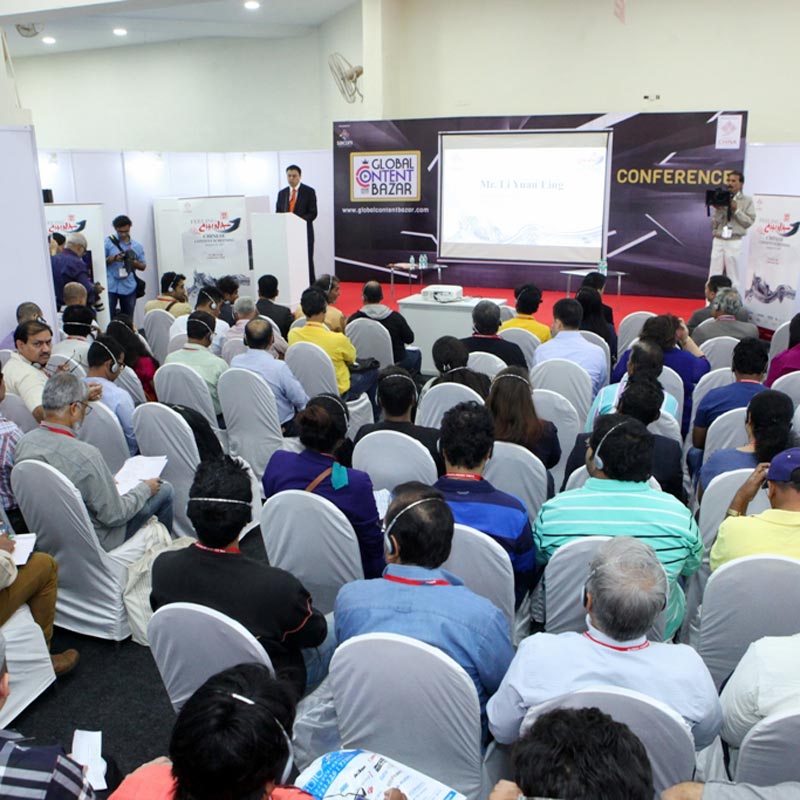
    MUMBAI: Around 70 companies and 1200 trade visitors from Asia, Europe and the Middle-East participated in Global Content Bazar 2018 which concluded here recently.

    High-quality trade and other visitors witnessed echoed a sentiment of highly beneficial exchanges with exhibitors and buyers at the bazaar which delivered on its assurance of showcasing the latest in content. India’s first-ever content market — Global Content Bazar 2017 — concluded in Mumbai recently. The show witnessed many eager visitors who echoed a sentiment of highly beneficial interactions with exhibitors, buyers, sellers and participants.

    As a professional trade show focused on content that powers India’s vast entertainment and infotainment industry, the content bazaar delivered on its promise of showcasing newest happenings in content for film, television, animation, docs & shorts, virtual reality, OTT-IPTV-VOD, 3D, music, radio, interactive gaming, mobile and more.

    The ‘Content Monetising Avenues Conference’ held on the show’s first day proved to be the highlight of the three-day event; with over 20 speakers presenting papers on the latest trends in the content industry and related subjects.

    Leading content providers, buyers and sellers such as Shanghai WingsMedia from China (with 10 prominent Chinese companies), Zee TV, Viacom 18, Sony Pictures Network, Doordarshan, DTV Turkey, ATV Turkey, Fight Globe, NH Studioz, Ultra Media & Entertainment, Creative Eye Ltd., WebTVAsia, Pocket Films, Green Gold Animation, Global One Enterprise, Qube Cinema and Fashion TV among others made their presence felt at the show and in the Indian content industry.

    Apart from India, companies from China, Malaysia, Thailand, Singapore, the Netherlands, the UAE, Turkey, France, Austria and Russia participated in the show this year.

    The Global Content Bazar 2018 is scheduled to be held at the World Trade Centre in mid-January.

  • CNN-News18’s ‘Axe The Tax’ to present wishlist to FM

    CNN-News18’s ‘Axe The Tax’ to present wishlist to FM

    MUMBAI: CNN-News18 through its budget programming #BudgetAfterDeMo will endeavour to look at expectations from different sections of society from Budget 2017 with special emphasis on decoding and analysing the impact of demonetisation.

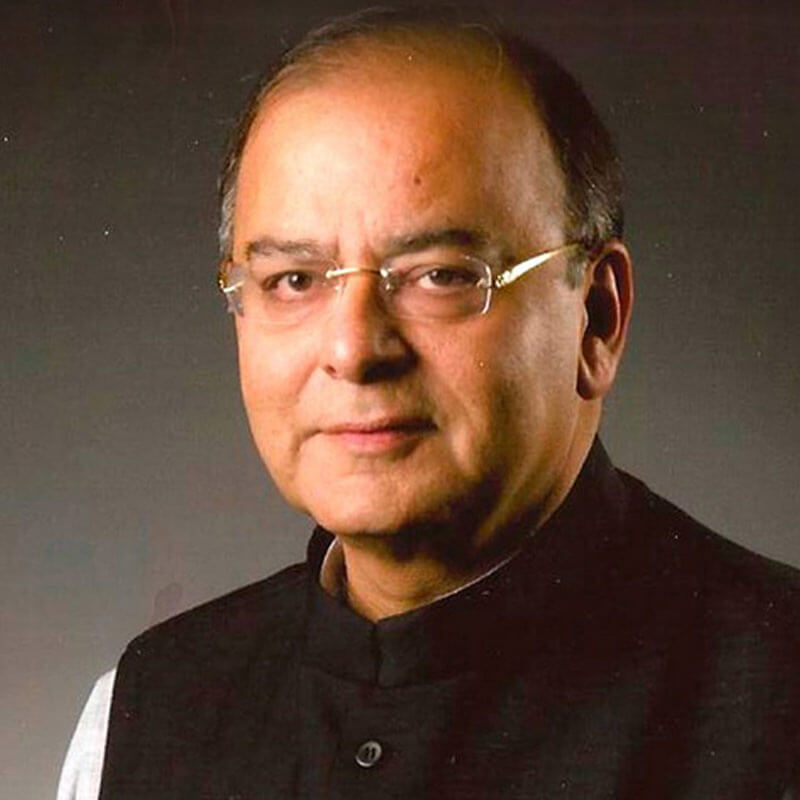
    Post demonetisation, people, in general, are expecting major tax sops from finance minister Arun Jaitley. CNN-News18 provides a platform to the viewers to voice their expectations on various taxation policies from the Union Budget through its award-winning show, Axe The Tax.

    The show will air on 28 January at 7:30 pm and on 29 January at 1:30 pm.

    This special campaign of the channel, which as completed 10 years, will present six key suggestions to the finance minister this year for changes to the country’s taxation rules. The suggestions will be based on viewer’s feedback and from consultations with top tax analysts.

    In the past, many of the suggestions have found mention in the Union Budget thus making it a truly impactful and effective initiative.

  • CNN-News18’s ‘Axe The Tax’ to present wishlist to FM

    CNN-News18’s ‘Axe The Tax’ to present wishlist to FM

    MUMBAI: CNN-News18 through its budget programming #BudgetAfterDeMo will endeavour to look at expectations from different sections of society from Budget 2017 with special emphasis on decoding and analysing the impact of demonetisation.

    Post demonetisation, people, in general, are expecting major tax sops from finance minister Arun Jaitley. CNN-News18 provides a platform to the viewers to voice their expectations on various taxation policies from the Union Budget through its award-winning show, Axe The Tax.

    The show will air on 28 January at 7:30 pm and on 29 January at 1:30 pm.

    This special campaign of the channel, which as completed 10 years, will present six key suggestions to the finance minister this year for changes to the country’s taxation rules. The suggestions will be based on viewer’s feedback and from consultations with top tax analysts.

    In the past, many of the suggestions have found mention in the Union Budget thus making it a truly impactful and effective initiative.

  • Budget 2017 Wish-list: MSOs demand industry status, rationalisation of entertainment & services taxes

    Budget 2017 Wish-list: MSOs demand industry status, rationalisation of entertainment & services taxes

    NEW DELHI: Annually various sectors of the Indian industry draw wish-list and hope that the government will grant them some relief during the presentation of the annual Budget of the country. MSOs are no exception and the All India Digital Cable Federation (AIDCF) has not only demanded an industry status, which will give it related financial incentives, but also rationalisation of various other taxes, including service and entertainment taxes.

    “Grant us infrastructure status for the (distribution) industry and remove the 8 per cent AGR applicable for MSOs offering broadband via cable,” said AIDCF Secretary-general Saharsh Damani when asked by indiantelevision.com about what the organisation would like Finance Minister Arun Jaitley to announce during his Budget presentation on February 1, 2017.

    AIDCF has also exhorted the government to grant them parity with manufacturing sector vis-a-vis u/s 2A as a disparity between the service and the manufacturing sectors is “adversely affecting” the growth and consolidation of service sector of which the MSOs are part of.

    “The tax benefits under Section 72A of the Income-tax Act, 1961 in respect of amalgamation or demerger (carry forward and set off of accumulated loss and unabsorbed depreciation allowances) are currently limited to industrial undertakings or a ship, hotel, aircraft or banking. The definition of industrial undertaking should be widened to include service industry, broadcasters and content production companies,” Damani said.

    The AIDCF, which is said to be a new and digital avatar of MSO Alliance, would also like removal of dual applicability of service and entertainment taxes on the cable TV.

    According to the apex body of MSOs, till the time GST (Goods and Services Tax) comes in place, entertainment tax paid to a state government may also be made creditable against the service tax liability of the cable TV sector. What does it mean? When a cable TV network, for example, pays an entertainment tax of Rs 100, then it should be able to adjust the same against the service tax payable and get a credit there on, AIDCF said.

    “This will be a short term measure, but will give higher declaration of entertainment tax and will bring in sufficient numbers to ensure that (overall revenue) collection of the government on service tax does not drop,” AIDCF’s Damani explained.

    Originally GST was supposed to have rolled out from April 1, 2017, but because of political wrangling and some states raising doubts on their share of the tax collected under a GST regime, Finance Minister Jaitley, according to media reports, has opined the new tax regime could be rolled out some time middle of 2017.

    Apart from that, AIDCF has also urged the government to rationalise indirect taxes like import duties on network equipment. Further, the organisation has suggested allowing use of USO (Universal Service Obligation) Funds for broadband infrastructure expansion would greatly benefit the industry.

    Also Read:

    Broadcasters bat for parity with print medium under GST

    India, US should resolve IPR issues at earliest: IACC

  • Budget 2017 Wish-list: MSOs demand industry status, rationalisation of entertainment & services taxes

    Budget 2017 Wish-list: MSOs demand industry status, rationalisation of entertainment & services taxes

    NEW DELHI: Annually various sectors of the Indian industry draw wish-list and hope that the government will grant them some relief during the presentation of the annual Budget of the country. MSOs are no exception and the All India Digital Cable Federation (AIDCF) has not only demanded an industry status, which will give it related financial incentives, but also rationalisation of various other taxes, including service and entertainment taxes.

    “Grant us infrastructure status for the (distribution) industry and remove the 8 per cent AGR applicable for MSOs offering broadband via cable,” said AIDCF Secretary-general Saharsh Damani when asked by indiantelevision.com about what the organisation would like Finance Minister Arun Jaitley to announce during his Budget presentation on February 1, 2017.

    AIDCF has also exhorted the government to grant them parity with manufacturing sector vis-a-vis u/s 2A as a disparity between the service and the manufacturing sectors is “adversely affecting” the growth and consolidation of service sector of which the MSOs are part of.

    “The tax benefits under Section 72A of the Income-tax Act, 1961 in respect of amalgamation or demerger (carry forward and set off of accumulated loss and unabsorbed depreciation allowances) are currently limited to industrial undertakings or a ship, hotel, aircraft or banking. The definition of industrial undertaking should be widened to include service industry, broadcasters and content production companies,” Damani said.

    The AIDCF, which is said to be a new and digital avatar of MSO Alliance, would also like removal of dual applicability of service and entertainment taxes on the cable TV.

    According to the apex body of MSOs, till the time GST (Goods and Services Tax) comes in place, entertainment tax paid to a state government may also be made creditable against the service tax liability of the cable TV sector. What does it mean? When a cable TV network, for example, pays an entertainment tax of Rs 100, then it should be able to adjust the same against the service tax payable and get a credit there on, AIDCF said.

    “This will be a short term measure, but will give higher declaration of entertainment tax and will bring in sufficient numbers to ensure that (overall revenue) collection of the government on service tax does not drop,” AIDCF’s Damani explained.

    Originally GST was supposed to have rolled out from April 1, 2017, but because of political wrangling and some states raising doubts on their share of the tax collected under a GST regime, Finance Minister Jaitley, according to media reports, has opined the new tax regime could be rolled out some time middle of 2017.

    Apart from that, AIDCF has also urged the government to rationalise indirect taxes like import duties on network equipment. Further, the organisation has suggested allowing use of USO (Universal Service Obligation) Funds for broadband infrastructure expansion would greatly benefit the industry.

    Also Read:

    Broadcasters bat for parity with print medium under GST

    India, US should resolve IPR issues at earliest: IACC

  • Broadcasters bat for parity with print medium under GST

    Broadcasters bat for parity with print medium under GST

    NEW DELHI: The Indian Broadcasting Foundation (IBF) today urged the government to level the playing field under the proposed GST regime for “all mediums”, including electronic, radio and print, as businesses across sectors had taken a hit due to demonetisation of high value currency notes November last.

    In a statement put out on Friday, the IBF, which is dedicated to the promotion of television broadcasting in and from India as an organisation, exhorted the government to treat broadcasting community at par with the print medium.

    “Just like the print media that has been clamouring for a zero rating of newspapers under the new GST regime, fuming under mass retrenchment and closing down of various editions, the electronic and the radio media, though bleeding under cancellations of advertisements (of) over Rs. 2000 crore (Rs. 20 billion) have requested the government to treat them at par with the print counterpart as they cater to imparting of not only news, entertainment, but also help educate the masses,” the statement said.

    The IBF statement comes a day after Minister of Information and Broadcasting M. Venkaiah Naidu directed his ministry’s top official, Secretary Ajay Mittal, to examine various concerns raised by the print media players, including the tax regime that would be ushered in under the proposed Goods & Services Tax (GST), wages in the sector and the way government hands out advertising business to newspapers and magazines.

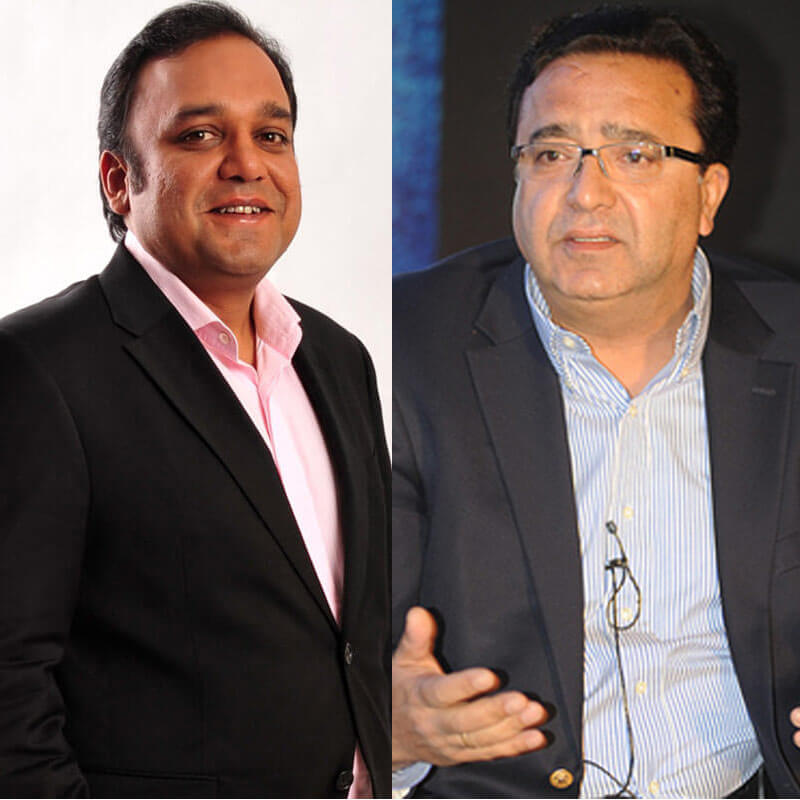
    President of IBF, representing broadcasters in the country with more than 400 channels and 90 per cent of viewership in the country, Punit Goenka said, “It is important that the government recognises TV services, which has evolved over the years as a product/service of mass consumption, to be classified and categorized under the item of mass consumption having a GST rate of 5 per cent so that it becomes affordable to masses.”

    Goenka further added: “Going by the number of TV households, which stands at 120 million, we submit to the government that broadcast services, that is, TV and radio, must be treated at par with the print (medium) in the new GST regime. This submission is based entirely on the fact that TV services have become integral part of everyday life of the vast majority in the country and the general economic downturn globally has impacted the sector extensively.”

    According to MIB data as on 31 December 2016, there are 899 licensed TV channels in the country of which 399 are news and current affairs channels, while 500 fall under the non-news and current affairs category. Building on this data, IBF highlighted that while many news channels had shuttered or are doing so, some others were downsizing to cope with falling revenues — a fall out of shrinking advertising revenue following demonetisation — and rising infrastructure and contest costs. “It seems that many (TV channel) licenses would get either get cancelled or submitted (back) voluntarily by the stakeholders,” IBF warned.

    Pointing out that the rates of DAVP advertisements (the government body that hands out government ads to media), which all broadcasters have to mandatorily carry on their networks, have remain unchanged since 2010, Sony Pictures Networks India president, network sales and international business Rohit Gupta said, “The rock-bottom rates are not at all in keeping with the existing market rates and allows little flexibility to carry out businesses.”

    Dwelling on the impact that rising costs can have on smaller TV channels’ investments in content, which can have “cascading” effects on viewer choice, Zee Entertainment president, legal & regulatory, A Mohan said, “We urge the government to free the media, print, television and radio (mediums) from obsolete taxation squeezes and attacks on revenue streams, as the vitality of this industry is essential to protect the fibre of the country, both socially and economically.”

    The IBF statement, which cautioned government against job losses and disruptions in the vibrant Indian media industry, advocated non-stifling tax regime that can reflect in the upcoming Budget 2017.

  • Broadcasters bat for parity with print medium under GST

    Broadcasters bat for parity with print medium under GST

    NEW DELHI: The Indian Broadcasting Foundation (IBF) today urged the government to level the playing field under the proposed GST regime for “all mediums”, including electronic, radio and print, as businesses across sectors had taken a hit due to demonetisation of high value currency notes November last.

    In a statement put out on Friday, the IBF, which is dedicated to the promotion of television broadcasting in and from India as an organisation, exhorted the government to treat broadcasting community at par with the print medium.

    “Just like the print media that has been clamouring for a zero rating of newspapers under the new GST regime, fuming under mass retrenchment and closing down of various editions, the electronic and the radio media, though bleeding under cancellations of advertisements (of) over Rs. 2000 crore (Rs. 20 billion) have requested the government to treat them at par with the print counterpart as they cater to imparting of not only news, entertainment, but also help educate the masses,” the statement said.

    The IBF statement comes a day after Minister of Information and Broadcasting M. Venkaiah Naidu directed his ministry’s top official, Secretary Ajay Mittal, to examine various concerns raised by the print media players, including the tax regime that would be ushered in under the proposed Goods & Services Tax (GST), wages in the sector and the way government hands out advertising business to newspapers and magazines.

    President of IBF, representing broadcasters in the country with more than 400 channels and 90 per cent of viewership in the country, Punit Goenka said, “It is important that the government recognises TV services, which has evolved over the years as a product/service of mass consumption, to be classified and categorized under the item of mass consumption having a GST rate of 5 per cent so that it becomes affordable to masses.”

    Goenka further added: “Going by the number of TV households, which stands at 120 million, we submit to the government that broadcast services, that is, TV and radio, must be treated at par with the print (medium) in the new GST regime. This submission is based entirely on the fact that TV services have become integral part of everyday life of the vast majority in the country and the general economic downturn globally has impacted the sector extensively.”

    According to MIB data as on 31 December 2016, there are 899 licensed TV channels in the country of which 399 are news and current affairs channels, while 500 fall under the non-news and current affairs category. Building on this data, IBF highlighted that while many news channels had shuttered or are doing so, some others were downsizing to cope with falling revenues — a fall out of shrinking advertising revenue following demonetisation — and rising infrastructure and contest costs. “It seems that many (TV channel) licenses would get either get cancelled or submitted (back) voluntarily by the stakeholders,” IBF warned.

    Pointing out that the rates of DAVP advertisements (the government body that hands out government ads to media), which all broadcasters have to mandatorily carry on their networks, have remain unchanged since 2010, Sony Pictures Networks India president, network sales and international business Rohit Gupta said, “The rock-bottom rates are not at all in keeping with the existing market rates and allows little flexibility to carry out businesses.”

    Dwelling on the impact that rising costs can have on smaller TV channels’ investments in content, which can have “cascading” effects on viewer choice, Zee Entertainment president, legal & regulatory, A Mohan said, “We urge the government to free the media, print, television and radio (mediums) from obsolete taxation squeezes and attacks on revenue streams, as the vitality of this industry is essential to protect the fibre of the country, both socially and economically.”

    The IBF statement, which cautioned government against job losses and disruptions in the vibrant Indian media industry, advocated non-stifling tax regime that can reflect in the upcoming Budget 2017.

  • The growth of DTH in India

    The growth of DTH in India

    MUMBAI: Dish TV, Videocon d2h and FreeDish. These were the three names that dominated India’s DTH sector headlines in 2016. The Essel Group’s Dish TV India is likely to forge the mother of a merger, (if permitted by shareholders and government departments) with another fast-growing rival — the Dhoot family led Videocon d2h even after denying it throughout the year.

    Further Vidoecon d2h was the second player in the Indian television carriage ecosystem that reported a net profit after tax or PAT– this was for the quarter ended 30 September 2016 or Q2-17.  The other player that had started reporting PAT much earlier was Dish TV.

    And, the public broadcaster Prasar Bharti-owned FreeDish increased its capacity allowing the number of channels to grow from 80 to 120 to reach India’s hinterlands and hence generate larger subscription numbers.

    As per the last available exact data from a government website, the total number of active DTH subscribers in India was 55,981,376 as on 31 December 2015. The number of active DTH subscribers of Airtel was 11,343,424 with a market share of 20.26 per cent of the total number of active DTH subscribers in the entire country;  the number of active DTH subscribers of Dish TV was 13,952,866 with a market share of 24.92 per cent of the total number of active DTH subscribers in the entire country. Among all the pay DTH Operators in India, Dish TV had the largest number of DTH subscribers as on 31 December 2015 and was the market leader.

    The number of active DTH subscribers of Reliance was 1,786,705 as on 31 December 2015 and its market share was 3.19 per cent of the total number of active DTH subscribers in the country. Among all the DTH Operators in India, Reliance had the smallest number of DTH subscribers.

    The number of active DTH subscribers of Sun Direct was 5,698,544 as on 31 December 2015 and Sun direct had a market share of 10.18 per cent; the number of active DTH subscribers of Tata Sky was 12,045,410 which had a market share of Tat Sky was 21.52 per cent; the number of active DTH subscribers of Videocon D2H was 11,154,427 and its market share was 19.93 per cent of the total number of active DTH subscribers in India

    With rise in disposable income and increasing number of digital pay-TV households, India is the most compelling market for DTH services. With around 28 lakh or 2.8 million subscribers added in the first quarter of fiscal 2017 (Q1-17), DTH households at a gross level crossed over 9 crore or 90 million by 30 June 2016 as per TRAI data.

    The DTH industry in India has added about 14 lakh (1.4 million) active subscribers in the quarter ended 30 September 2016 (Q2-17, current quarter) as compared to the immediate trailing quarter (Q1-17). The number of active DTH subscribers in the country increased to 6.19 crore (61.9 million) as compared to 6.05 crore (60.5 million) in Q1-7. TRAI had reported 4.05 crore (40.5 million) active subscribers for the corresponding year ago quarter Q2-16.

    The highly fragmented Indian television carriage industry witnessed a consolidation of sorts. The proposed Dish TV and Videocon d2h merger seems to indicate the way ahead in the DTH space. The merged entity would have some 2.64 crore or 26.4 million subscribers, which is approximately 45 per cent of active Indian DTH subscribers. Long-term benefits of the merger synergies could negate potential short-term apprehensions, analysts felt.

    The growth of OTT and VOD services on the other hand has been modifying the dynamics at the higher end of the home entertainment segment. Of the 16.8 crore or 168 million TV households, only around 9 lakh or nine million Indians are HD subscribers. Services such as Amazon Prime, Netflix, Hotstar, Voot and Eros Now, etc may attract DTH subscribers owing to competitive prices for wider and better content including international dramas and shows.

    On the whole, however, the DTH sector slackened in subscriber numbers with the government’s mandate to push ahead with digitisation of television not being adhered to by cable TV operators who stalled its progress with legal challenges.  Looking at the status quo, the powers that be were left with no option but to push back the sunset for the final phase of digitisation (DAS IV) by three months from 31 December 2016 to 31 March 2017. A few industry experts feel that this could be pushed back further to 30 June 2017 and maybe even to the end of calendar year 2017. Delays will only result in retardation of growth of the carriage industry and hence affect the rate of implementation of improved services for the viewers.

    The I&B ministry had broadly accepted TRAI recommendations to increase DTH licence duration to 20 years and for paring the annual fee to eight per cent of adjusted gross revenue (AGR). Some of the regulator’s ideas however lead to consternation. DTH and Cable TV operators had opposed a very appropriate TRAI move to introduce interoperable set-top boxes allowing users to change their service providers without having to change their dishes or STBs. Despite the expected churn that such recommendations are sure to usher in, over the long run, customer satisfaction is likely to be the only yardstick that will determine growth or fall of a service provider.

    But is inter-operability possible? Here is the DTH players take on this: DTH players, six of whom pay government Rs 800 crore as licence fee per year in addition to non-refundable entry fee of Rs.10 crore, said that it was not feasible DTH players have invested around Rs 20,000 crore in STBs. Asia’s industry body CASBAA said that even full STB interoperability cannot ensure technical interoperability of services. It also believes that regulator-imposed technical interoperability requirements will impose large burden on Indian consumers and industry players and risk stifling innovation in development of new features.

    Let us see how these players are placed in the ecosystem, how they have performed, while bearing in mind that TRAI has released numbers only up to 30 June 2016. Publically available information is limited to three entities that have reported their numbers until 30 September 2016 at the time of filing this report. In alphabetical order, they are: Airtel Digital TV services or Airtel DTH, a segment of the Indian Telecom major Bharti Airtel Limited, Dish TV India Limited (Dish TV) and Videocon d2h Limited or Videocon d2h.

    As mentioned above, the market share in terms of subscribers of the DTH leader Dish TV as 2016 dawned was 24.92 per cent, whereas that of Airtel was 20.26 per cent of the total active DTH subscribers in India, followed by Videocon d2h’s 19.93 per cent.  The three operators’ combined subscriber additions for the annual period ended 31 March 2016 as compared to the previous year increased by 12.3 per cent. Though Videocon d2h and Airtel Digital TV had both shown a little spike in subscriber addition between Q2-2016 and Q3-2016, the combined addition by the three showed a change of just 3.59 per cent.

    In the first half year period of the current fiscal (H1-17) all the three players showed about 17 per cent increase in subscriber numbers. Airtel DTH, Dish TV and Videocon d2h added 6.8 lakh, 6 lakh and 6.6 lakh subscribers respectively, or total of 19,2 lakh, a shade lower than the 19.63 subscribers added in the first half year of the previous year (H1-16).

    As per the latest TRAI data publically available, the country’s total DTH homes are around 9.15 crore or 91.5 million.  However, the growth in active as well as inactive subscribers remained similar over the past three quarter-year periods in 2016.  TRAI data shows that over a third of these subscribers were inactive. However, the regulator observed that active subscribers grew 3.36 per cent in the quarter-year to 31 March (to a total of 6.05 crore or 60.5 million). But at the same time inactive subscribers also increased at 3.05 per cent to 3.01 crore or 30.1 million, the conclusion being tardy growth.

    Of late, TRAI has modified its calculation method for inactive subscribers. It now considers even subscribers that have been disconnected for less than 120 days as ‘active’.

    Regulatory processes in the broadcast and distribution business saw acceleration around mid-year. The draft Interconnection Regulations, 2016 and the draft Quality of Service and Consumer Protection Regulations, 2016, were released by TRAI seeking comments from stakeholders.

    DTH operators however felt there were some omissions, optimistic presumptions as well as unanswered questions in the drafts, but they largely appreciated TRAI’s spirit of transparency and non-discrimination leading to DTH getting the level playing field it sought. Restrictions on the carriage fee could correct the industry’s macro environment, they felt.

    DTH companies brought in various schemes to prod up their sagging fortunes. Dish TV unveiled an all new High Definition (HD) campaign. It also aligned its efforts to train an efficient workforce of DTH technicians with the PM scheme. Dish TV also added 32 new educational channels launched by the HRD Ministry on its platform.

    During this time Prasar Bharti was actively moving towards business. As pay channels Aajtak and Big Magic came on DD FreeDish, possibilities opened up for more as DD prepared migration to MPEG-4, taking its capacity to 112. Now, as mentioned above, FreeDish capacity has reached 120 channels. As BARC indicated the importance of FreeDish in reaching out to rural India, channels started making a beeline to be on DD’s FTA platform. Further, 100 per cent FDI has been allowed for broadcast carriage services like cable services, teleport, and head-end-in-the-sky (HITS).

    Airtel DTH revenues have been on the rise and despite its lower subscriber base. It has now overtaken Dish TV in terms of revenue. In H1-17, Airtel DTH reported revenue of Rs 1,691.40 crore, 21.5 per cent higher than the Rs 1,391.6 crore in H1-16. Operating profit (EBIDTA) in H-17 was 27.2 per cent higher at Rs 626.1 crore as compared to Rs 514 crore in H1-16. Airtel DTH’s capex in H1-17 was almost flat (0.9 per cent lower) at Rs 457.1 crore as compared to Rs 461.40 crore in H1-16.

    Dish TV, as Asia Pacific’s largest DTH company in terms of subscriber numbers, has on its platform more than 545 channels and services including 22 audio channels and over 50 HD channels. It has a vast distribution network of over 2,297 distributors in 9,350 towns.

    Dish TV managing director Jawahar Goel said, “Buoyed by digitisation, notwithstanding the relative seasonal weakness in 1Q, the industry collectively added around 15 per cent higher subscribers compared to the same quarter last fiscal. Dish TV maintained its lead in incremental subscriber additions during the quarter.  About the regulatory overhangs, Goel said that the resolution of the DTH license fee matter should go a long way in ensuring non-discrimination amongst various distribution platforms.  Goel is hoping for a logical outcome of the TRAI paper on Interconnection Framework for Broadcasting TV Services Distributed through Addressable Systems.

    Videocon d2h subscribers have access to over 550 national and international channels and services, including approximately 45 high definition (HD) channels and services, and over 42 audio and video services through its Music Channel Services through several subscription packages, as well as the option of choosing add-ons and a la carte channels.

    In H1-17, Videocon d2h revenue increased 13.8 per cent to Rs 1,539.4 crore from Rs 1,352.9 crore in H1-16. Adjusted EBIDTA in H1-17 increased 34.8 per cent to Rs 510.2 crore from Rs 378.6 crore in H1-16. Capex in H1-17 was 16 per cent lower at Rs 335 crore as compared to Rs 399 crore in H1-16.

    ARPU’s have been increasing over time, slowly but steadily. Airtel DTH has the highest reported ARPU among the three. Its ARPU in Q2-17 was Rs 232, Rs 8 higher than the Rs 224 in Q2-16, and Re 1 lower than the Rs 233 in the immediate trailing quarter. Dish TV APRU (net of taxes) was Rs 162 in Q2-17 as compared to Rs 161 in Q2-16. Videocon d2h ARPU in Q2-17 was Rs 219 as compared to Rs 205 in Q2-16 and Rs 214 in Q1-17. It may be noted that Dish TV ARPU numbers according to IND AS don’t include service tax hence comparing the ARPU between players will not be an apples to apples comparison.

    End points

    The merger between Dish TV and Videocon d2h will turn the game into a three corner fight from four corner one – the other major protagonist in the game being TataSky. Reliance DTH and Sun Direct are marginal players and DTH seems for now a small forgotten part of the overall business of their leaders. It is quite likely that they may be sold off or merged with bigger players in the carriage eco-system.

    The Dish TV-Videocon d2h merger will make the Essel group that controls Dish TV, as the largest player in the world in terms of subscriber numbers once its cable TV company Siti Networks Limited are reckoned.

    The carriage industry in India is evolving. It has travelled some distance, but has a long way ahead. The players are more focused towards investors and not consumer oriented. Some players such as Dish TV have realised the importance of consumers and have started offering packages across price ranges. This can happen only at the cost of ARPUs’, that fact is amply demonstrated by the fact that despite a lower consumer base, Airtel DTH (and probably Tata Sky) has higher revenues than Dish TV. By the time the Dish TV – Videocon d2h merger is complete, it is quite likely that the latter’s revenues will exceed the formers. But over a long period of time, once subscriber bases are stable to an extent, it is also quite likely that Dish TV will be numero uno on that count too.
  • The growth of DTH in India

    The growth of DTH in India

    MUMBAI: Dish TV, Videocon d2h and FreeDish. These were the three names that dominated India’s DTH sector headlines in 2016. The Essel Group’s Dish TV India is likely to forge the mother of a merger, (if permitted by shareholders and government departments) with another fast-growing rival — the Dhoot family led Videocon d2h even after denying it throughout the year.

    Further Vidoecon d2h was the second player in the Indian television carriage ecosystem that reported a net profit after tax or PAT– this was for the quarter ended 30 September 2016 or Q2-17.  The other player that had started reporting PAT much earlier was Dish TV.

    And, the public broadcaster Prasar Bharti-owned FreeDish increased its capacity allowing the number of channels to grow from 80 to 120 to reach India’s hinterlands and hence generate larger subscription numbers.

    As per the last available exact data from a government website, the total number of active DTH subscribers in India was 55,981,376 as on 31 December 2015. The number of active DTH subscribers of Airtel was 11,343,424 with a market share of 20.26 per cent of the total number of active DTH subscribers in the entire country;  the number of active DTH subscribers of Dish TV was 13,952,866 with a market share of 24.92 per cent of the total number of active DTH subscribers in the entire country. Among all the pay DTH Operators in India, Dish TV had the largest number of DTH subscribers as on 31 December 2015 and was the market leader.

    The number of active DTH subscribers of Reliance was 1,786,705 as on 31 December 2015 and its market share was 3.19 per cent of the total number of active DTH subscribers in the country. Among all the DTH Operators in India, Reliance had the smallest number of DTH subscribers.

    The number of active DTH subscribers of Sun Direct was 5,698,544 as on 31 December 2015 and Sun direct had a market share of 10.18 per cent; the number of active DTH subscribers of Tata Sky was 12,045,410 which had a market share of Tat Sky was 21.52 per cent; the number of active DTH subscribers of Videocon D2H was 11,154,427 and its market share was 19.93 per cent of the total number of active DTH subscribers in India

    With rise in disposable income and increasing number of digital pay-TV households, India is the most compelling market for DTH services. With around 28 lakh or 2.8 million subscribers added in the first quarter of fiscal 2017 (Q1-17), DTH households at a gross level crossed over 9 crore or 90 million by 30 June 2016 as per TRAI data.

    The DTH industry in India has added about 14 lakh (1.4 million) active subscribers in the quarter ended 30 September 2016 (Q2-17, current quarter) as compared to the immediate trailing quarter (Q1-17). The number of active DTH subscribers in the country increased to 6.19 crore (61.9 million) as compared to 6.05 crore (60.5 million) in Q1-7. TRAI had reported 4.05 crore (40.5 million) active subscribers for the corresponding year ago quarter Q2-16.

    The highly fragmented Indian television carriage industry witnessed a consolidation of sorts. The proposed Dish TV and Videocon d2h merger seems to indicate the way ahead in the DTH space. The merged entity would have some 2.64 crore or 26.4 million subscribers, which is approximately 45 per cent of active Indian DTH subscribers. Long-term benefits of the merger synergies could negate potential short-term apprehensions, analysts felt.

    The growth of OTT and VOD services on the other hand has been modifying the dynamics at the higher end of the home entertainment segment. Of the 16.8 crore or 168 million TV households, only around 9 lakh or nine million Indians are HD subscribers. Services such as Amazon Prime, Netflix, Hotstar, Voot and Eros Now, etc may attract DTH subscribers owing to competitive prices for wider and better content including international dramas and shows.

    On the whole, however, the DTH sector slackened in subscriber numbers with the government’s mandate to push ahead with digitisation of television not being adhered to by cable TV operators who stalled its progress with legal challenges.  Looking at the status quo, the powers that be were left with no option but to push back the sunset for the final phase of digitisation (DAS IV) by three months from 31 December 2016 to 31 March 2017. A few industry experts feel that this could be pushed back further to 30 June 2017 and maybe even to the end of calendar year 2017. Delays will only result in retardation of growth of the carriage industry and hence affect the rate of implementation of improved services for the viewers.

    The I&B ministry had broadly accepted TRAI recommendations to increase DTH licence duration to 20 years and for paring the annual fee to eight per cent of adjusted gross revenue (AGR). Some of the regulator’s ideas however lead to consternation. DTH and Cable TV operators had opposed a very appropriate TRAI move to introduce interoperable set-top boxes allowing users to change their service providers without having to change their dishes or STBs. Despite the expected churn that such recommendations are sure to usher in, over the long run, customer satisfaction is likely to be the only yardstick that will determine growth or fall of a service provider.

    But is inter-operability possible? Here is the DTH players take on this: DTH players, six of whom pay government Rs 800 crore as licence fee per year in addition to non-refundable entry fee of Rs.10 crore, said that it was not feasible DTH players have invested around Rs 20,000 crore in STBs. Asia’s industry body CASBAA said that even full STB interoperability cannot ensure technical interoperability of services. It also believes that regulator-imposed technical interoperability requirements will impose large burden on Indian consumers and industry players and risk stifling innovation in development of new features.

    Let us see how these players are placed in the ecosystem, how they have performed, while bearing in mind that TRAI has released numbers only up to 30 June 2016. Publically available information is limited to three entities that have reported their numbers until 30 September 2016 at the time of filing this report. In alphabetical order, they are: Airtel Digital TV services or Airtel DTH, a segment of the Indian Telecom major Bharti Airtel Limited, Dish TV India Limited (Dish TV) and Videocon d2h Limited or Videocon d2h.

    As mentioned above, the market share in terms of subscribers of the DTH leader Dish TV as 2016 dawned was 24.92 per cent, whereas that of Airtel was 20.26 per cent of the total active DTH subscribers in India, followed by Videocon d2h’s 19.93 per cent.  The three operators’ combined subscriber additions for the annual period ended 31 March 2016 as compared to the previous year increased by 12.3 per cent. Though Videocon d2h and Airtel Digital TV had both shown a little spike in subscriber addition between Q2-2016 and Q3-2016, the combined addition by the three showed a change of just 3.59 per cent.

    In the first half year period of the current fiscal (H1-17) all the three players showed about 17 per cent increase in subscriber numbers. Airtel DTH, Dish TV and Videocon d2h added 6.8 lakh, 6 lakh and 6.6 lakh subscribers respectively, or total of 19,2 lakh, a shade lower than the 19.63 subscribers added in the first half year of the previous year (H1-16).

    As per the latest TRAI data publically available, the country’s total DTH homes are around 9.15 crore or 91.5 million.  However, the growth in active as well as inactive subscribers remained similar over the past three quarter-year periods in 2016.  TRAI data shows that over a third of these subscribers were inactive. However, the regulator observed that active subscribers grew 3.36 per cent in the quarter-year to 31 March (to a total of 6.05 crore or 60.5 million). But at the same time inactive subscribers also increased at 3.05 per cent to 3.01 crore or 30.1 million, the conclusion being tardy growth.

    Of late, TRAI has modified its calculation method for inactive subscribers. It now considers even subscribers that have been disconnected for less than 120 days as ‘active’.

    Regulatory processes in the broadcast and distribution business saw acceleration around mid-year. The draft Interconnection Regulations, 2016 and the draft Quality of Service and Consumer Protection Regulations, 2016, were released by TRAI seeking comments from stakeholders.

    DTH operators however felt there were some omissions, optimistic presumptions as well as unanswered questions in the drafts, but they largely appreciated TRAI’s spirit of transparency and non-discrimination leading to DTH getting the level playing field it sought. Restrictions on the carriage fee could correct the industry’s macro environment, they felt.

    DTH companies brought in various schemes to prod up their sagging fortunes. Dish TV unveiled an all new High Definition (HD) campaign. It also aligned its efforts to train an efficient workforce of DTH technicians with the PM scheme. Dish TV also added 32 new educational channels launched by the HRD Ministry on its platform.

    During this time Prasar Bharti was actively moving towards business. As pay channels Aajtak and Big Magic came on DD FreeDish, possibilities opened up for more as DD prepared migration to MPEG-4, taking its capacity to 112. Now, as mentioned above, FreeDish capacity has reached 120 channels. As BARC indicated the importance of FreeDish in reaching out to rural India, channels started making a beeline to be on DD’s FTA platform. Further, 100 per cent FDI has been allowed for broadcast carriage services like cable services, teleport, and head-end-in-the-sky (HITS).

    Airtel DTH revenues have been on the rise and despite its lower subscriber base. It has now overtaken Dish TV in terms of revenue. In H1-17, Airtel DTH reported revenue of Rs 1,691.40 crore, 21.5 per cent higher than the Rs 1,391.6 crore in H1-16. Operating profit (EBIDTA) in H-17 was 27.2 per cent higher at Rs 626.1 crore as compared to Rs 514 crore in H1-16. Airtel DTH’s capex in H1-17 was almost flat (0.9 per cent lower) at Rs 457.1 crore as compared to Rs 461.40 crore in H1-16.

    Dish TV, as Asia Pacific’s largest DTH company in terms of subscriber numbers, has on its platform more than 545 channels and services including 22 audio channels and over 50 HD channels. It has a vast distribution network of over 2,297 distributors in 9,350 towns.

    Dish TV managing director Jawahar Goel said, “Buoyed by digitisation, notwithstanding the relative seasonal weakness in 1Q, the industry collectively added around 15 per cent higher subscribers compared to the same quarter last fiscal. Dish TV maintained its lead in incremental subscriber additions during the quarter.  About the regulatory overhangs, Goel said that the resolution of the DTH license fee matter should go a long way in ensuring non-discrimination amongst various distribution platforms.  Goel is hoping for a logical outcome of the TRAI paper on Interconnection Framework for Broadcasting TV Services Distributed through Addressable Systems.

    Videocon d2h subscribers have access to over 550 national and international channels and services, including approximately 45 high definition (HD) channels and services, and over 42 audio and video services through its Music Channel Services through several subscription packages, as well as the option of choosing add-ons and a la carte channels.

    In H1-17, Videocon d2h revenue increased 13.8 per cent to Rs 1,539.4 crore from Rs 1,352.9 crore in H1-16. Adjusted EBIDTA in H1-17 increased 34.8 per cent to Rs 510.2 crore from Rs 378.6 crore in H1-16. Capex in H1-17 was 16 per cent lower at Rs 335 crore as compared to Rs 399 crore in H1-16.

    ARPU’s have been increasing over time, slowly but steadily. Airtel DTH has the highest reported ARPU among the three. Its ARPU in Q2-17 was Rs 232, Rs 8 higher than the Rs 224 in Q2-16, and Re 1 lower than the Rs 233 in the immediate trailing quarter. Dish TV APRU (net of taxes) was Rs 162 in Q2-17 as compared to Rs 161 in Q2-16. Videocon d2h ARPU in Q2-17 was Rs 219 as compared to Rs 205 in Q2-16 and Rs 214 in Q1-17. It may be noted that Dish TV ARPU numbers according to IND AS don’t include service tax hence comparing the ARPU between players will not be an apples to apples comparison.

    End points

    The merger between Dish TV and Videocon d2h will turn the game into a three corner fight from four corner one – the other major protagonist in the game being TataSky. Reliance DTH and Sun Direct are marginal players and DTH seems for now a small forgotten part of the overall business of their leaders. It is quite likely that they may be sold off or merged with bigger players in the carriage eco-system.

    The Dish TV-Videocon d2h merger will make the Essel group that controls Dish TV, as the largest player in the world in terms of subscriber numbers once its cable TV company Siti Networks Limited are reckoned.

    The carriage industry in India is evolving. It has travelled some distance, but has a long way ahead. The players are more focused towards investors and not consumer oriented. Some players such as Dish TV have realised the importance of consumers and have started offering packages across price ranges. This can happen only at the cost of ARPUs’, that fact is amply demonstrated by the fact that despite a lower consumer base, Airtel DTH (and probably Tata Sky) has higher revenues than Dish TV. By the time the Dish TV – Videocon d2h merger is complete, it is quite likely that the latter’s revenues will exceed the formers. But over a long period of time, once subscriber bases are stable to an extent, it is also quite likely that Dish TV will be numero uno on that count too.

  • Star’s five marketing strategies that helped sports grow in 2016

    Star’s five marketing strategies that helped sports grow in 2016

    “Business has only two functions: marketing and innovation,” is a lesser known observation of Milan Kundera, the Czech-born French writer who’s more famous for Unbearable Lightness of Being and more such thought-provoking novels.

    Why are we cross referencing Kundera in a write-up for sports marketing campaigns? Simply because Star India and its bouquet of sports channels, marketed under brand Star Sports, are following Kundera’s words to a T— and successfully too.

    In a dynamic world of sports broadcasting where events are now held and telecast almost round the year — at times various big ticket events held and aired live the same day in different part of the globe in different time zones — it is difficult to ensure the success of every league or tournament in terms of advertising revenue. Behind the numbers’ game, lot of research is done to finalise marketing strategies, which are aimed to ensure that audiences are given exactly what they want, where they want and how they want.

    With some smart packaging, marketing and advertising, Star India has managed not only to acquire broadcast rights for the region for some of the big sporting events, but also get the eyeballs — and advertising revenue — to justify the millions of dollars it is sinking into Indian sports. A business newspaper reported last year that Star India has bet Rs. 200 billion (Rs. 20,000 crore) on sports. This money has been ploughed into not only getting the rights for Indian cricket, Summer Olympics and sundry other games, but also into building lesser sports like kabaddi and cash in on football’s popularity by creating an Indian football league with participation of retired international stars.

    We look at five marketing strategies of Star India, helmed by Chairman and CEO Uday Shankar and his deputy Sanjay Gupta, which helped the respective sports aired on Star Sports grow in terms of viewership in India.

    1. India vs. England Test Series

    In an age where T20 and slam-bang form of cricket is being aggressively promoted and vastly followed, it has been a refreshing change to see Test cricket getting good viewership. India had been itching to take revenge over England, a side which had defeated the Indian cricket gladiators in three consecutive Test series prior to this.

    Building up the tension with #scoretosettle, Star Sports network used the Virat Kohli factor very effectively and the response was satisfying. The five-match Test series had a reach of 159 million viewers. BARC recorded a total of 728 million impressions in the India urban market and a total of 1,217 impressions in the all-India market. The fourth Test had the highest rating with 4.9, proving the series was the biggest of the year.

    Virat Kohli scored a brilliant 235 in the fourth Test and the rise of Karun Nair and Jayant Yadav had Indian viewers glued to their TV screens. There would have been additional viewers reached via Star’s digital platform Hotstar that too streamed the matches. The series was won 4-0. It was not only Team Virat that put on a sterling performance in recent times, but also Star Sports in terms of viewership.

    2. ICC Cricket T20 World Cup

    In a heavily marketed campaign of the year, the T20 World Cup was being played on the Indian soil for the first time in its history. Quirky, gripping and nationally-emotional TVCs were made and beamed on national television starting early 2016. With #T20WC as easy and relatable as ever, the match between India vs. Pakistan trended with #maukamauka, setting the tone for brilliant support for the Men in Blue. India defeated Pakistan comfortably, riding on Virat Kohli’s brilliant half century after the team, at one time, was tottering at 23/3 due to a fearful Mohammed Amir spell. India reached the semi-finals, only to be defeated by eventual winners West Indies.

    The tournament reached 393 million people in India, one of the highest viewed tournaments in 2016. The India vs. Pakistan game got a rating of 17.3 across the Star Sports network, becoming the most watched T20 game ever since the 2007 WC final played between the arch-rivals.

    While the cricket on display was high quality, credit must be given to the marketers who too did their job magnificently. Video snippets and memes capturing Mauka-man’s reactions were also pushed in real-time during the match and after it, which contributed to #IndvsPak overtaking the tournament’s official hash tag during the game.

    The Mauka Mauka campaign, originally devised in 2015 by Ranchi-born Suresh Triveni for Star Sports, not only connected with cricket fans instantly, but also got featured in a Forbes’ list of five best sports marketing campaigns that went viral in 2015. Even as the campaign’s character still connects with viewers when used by Star Sports, writing about it in 2015 Forbes said, “Occasionally, a campaign hits a nerve and it catches the attention of a whole country. For India, this is that campaign.”

    3. Rio Summer Olympics 

    It doesn’t get bigger than the Olympics, does it? In one of the most apt hash tags in Indian markets last year, Star Sports used #issebadakuchnahi in the build up to the Rio Olympics 2016. Rest as they say, is history. Female badminton player PV Sindhu reached the finals and was part of an extensive marketing programme by the Star network.

     The tall and powerful Indian, who catapulted overnight as a superwoman in an overtly patriarchal country, lost to Spain’s Caroline Marin in a well-fought three-set final 21-19, 21-12 and 21-15. The match recorded 17.2 million impressions, the most viewed programme on that day across all genres in India. In total, 202 million viewers tuned in to watch the Rio Games on television and 10 million (Star’s internal figures) watched the live streaming on Star’s digital sibling, Hotstar.

    The whole scenario of Indian alternative sports or non-cricket games has changed after the Rio Olympics. Fans found new heroes in gymnast Dipa Karmakar, Sindhu, wrestler and bronze medallist Sakshi Malik, Aditi Ashok and various other sports personalities. As part of the story-telling, Star Sports brought their stories to fans via videos, images and content and ensured continuous engagement with fans throughout the tournament with conversations peaking when India clinched two medals (badminton and wrestling). So thought out was the marketing engagement unleashed by Star Sports that it even dug out the noodle-haired Indo-Canadian Kamal Sidhu, one of India’s fav music veejays and TV anchors during the mid 1990s and early 2000s, as the host for pre-live Olympics programmes.

    #BillionCheers, a 360-degree campaign that happened before, during and after the Olympics helped #Rio2016 become one of the top trending hash tags in India in 2016.

     4. India Super League

    The Indian football extravaganza was one of the hottest tournaments in 2016 in terms of viewership. The league saw the arrival of 2010 World Cup Golden Ball winner Diego Forlan join hands with Mumbai City FC, taking the side to the semi-finals for the first time in three editions. The league was won by Atletico de Kolkata, which defeated fellow first season finalists Kerala Blasters at a wildly-cheering houseful Kochi Stadium in Kerala.

    Using the Diwali fervour as a peg to enhance viewership, Star Sports network used a tagline of ‘Ye Diwali Football wali’ to connect the game to the audiences and the soccer culture of the nation. While 41 million fans tuned in to television to watch the final, it was a rise of 41 per cent viewership compared to the final of ISL 2015. In Kerala, the ISL matches were viewed more than the 2016 T20 cricket WC semi-final between India and West Indies and the Euro 2016 final.

    In West Bengal, the match had a higher viewership than the IPL 9 final. The league saw a total viewership of 216 million and a steep growth in rural viewership, cumulatively reaching 101 million viewers in a new high for the sport. This edition of the league also registered double view-time as compared to 2015 on the digital platform Hotstar.

    5. Kabaddi World Cup

    Arguably the alternative sport of 2016, kabaddi grew manifold with two editions of Pro Kabaddi League (PKL) and the men’s World Cup in the same year. The viewership of every event grew as time progressed and the game can now boast of having a dedicated audience, both on ground and on TV and digital platforms. The fourth edition of the PKL posted 10 million average BARC impressions and is the only league in the country to have registered a growth trend in four editions. The league has shown a growth of 51 per cent in the last four seasons and has been one of the key reasons for India’s good performance in the World Cup.

    As India snapped up the World Cup, the men’s edition clocked a whopping 114 million impressions spread across 33 matches over 16 days. Star helped building its audience with #readytoraid and a TVC that captured well rural India, the topography the game is primarily associated with.

    The women’s kabbadi challenge was even better. In the marketing strategy, Star Sports highlighted that women regularly challenge gender stereotypes in the society and can cross the line in kabaddi as well – the hash tag being an apt #crosstheline. After women’s kabaddi in PKL IV, the first two matches got a viewership of 38 million, the highest any women’s sport has got in India ever. The tournament had a total viewership of 90.4 million, with an average of 6.7 million impressions as per BARC data. This number is 2.3 times higher than the second semi-final between New Zealand and West Indies, the highest rated women’s game till date. Thus, women’s kabaddi Challenge features amongst the top 10 sporting events watched on Indian television over the last one year.