Category: Specials

  • Guest column: Taking Indian content to the global market

    Guest column: Taking Indian content to the global market

    The year 2017 has been a year of paradigm shifts in the wake of Digital India. Over the last couple of years, international OTT and VOD players such as Netflix, Amazon Prime Video, etc, have been making inroads in the Indian market to unlock the true potential that our increasing digital-first audience provide. Telecom, print, broadcasting, FMCG, and virtually every industry has ventured into the digital space. India’s journey on the digital path saw a rise in the number of homegrown content streaming platforms, with some creating original content and some taking and distributing content from external creators. While it came as a boon to India’s digitally driven audience, there was still a paucity of locally relevant content creators and platforms. On the other hand, short length format shows/series soon began to launch in regional markets as well. Additionally, region specific OTT platforms took shape. These developments assured that not just millennials, but family audiences as well were fed entertaining content on digital that matched their tastes and preferences.

    Internet penetration and adoption in India has been at an all-time high. As per the KPMG India – Indian M&E report 2017, currently there are 462 million internet users in the country out of which 82 per cent of them access the web through mobile devices. Competitive mobile data pricing and the overwhelming mass adoption of 4G led to a revolution of gigantic proportions for content creators in the digital space. It positively aided the growth of OTT/VOD platforms and thereby, short format content. However, while we continue to open windows for international players and brands to get more and more access to Indian audiences, either by placing our shows on their platforms or striking partnerships to deliver their content here, the most significant question for me is how far are we actually taking ourselves beyond India and Hollywood?

    While India’s vision of digital continues to get served, how is that making a difference to the country’s economy? How far are we expanding our digital footprints beyond existing geographies by leveraging both homegrown and international OTT platforms? The year 2018 might well be a step in this direction which in turn would begin to provide the answers to us. A SWOT analysis for the possibility of this happening in the near future would give some key insights on the plan of action.

    Focus on the strength – Content, the driving force

    While we speak about the generalisation of Indian content across territories through OTT platforms, a similar example was already set this year. Dangal’s staggering success numbers in other countries and approx Rs 200 crore (fifth-highest earning non-English film in global box office history) in China speaks for itself. A similar fate followed for Secret Superstar. These examples prove the potential that lies for Indian content creators to venture into untapped regions beyond India. These mega movies clearly state that strategy plays a vital role in accomplishing the desired results. India is another key selling factor is the original content curated by every media and entertainment entity which brings a fresh perspective. With such great pool of data that lies with us, only selling it won’t serve the purpose. Where do you sell it and how is what will decide its best outcome.

    Understand weaknesses

    The major roadblock in venturing into other regions is the language barrier. Upon deciding the target regions, next thing to consider is the national language of the country and whether its audience prefers the global language. Analysing this would mean additions or modifications for dubbing or sub-titles in the content, such that it match the sensibilities of the audience across different languages and sensibilities.

    Tap into the right opportunities

    India’s rich content resonates well with the masses. We are fed with entertainment from across the world, likewise, there also exists a majority of Indian diaspora in regions where we haven’t made in-roads yet. Evaluating such regions helps tapping onto a ready audience base. In order to expand the reach further, it is very crucial to research about the consumption pattern of the region, the inclination towards short-format content, internet usage statistics, number of mobile device users in that region. The digitally savvy audience looks for great content, be it from any source. A populous region having an audience base with varied tastes automatically ensures effective penetration of content into a newer market.

    Evaluate the threats –  adapt a differentiated approach and have an evolving nature

    The digital world in itself is quite vast with various existing and upcoming mediums that provide access to entertaining content making it widely available. A stark comparison would be between Asia’s first premium VOD service Hooq and the homegrown platform Voot. Hooq’s strong strategy reflects in its distinguished offering. It serves its customer with varied options to choose from Hollywood, local and regional shows across multiple platforms. On the other hand, Voot has tactfully planned its expansion across geographies in a short span of time. There is this agnostic nature of the players from other territories looking at a similar expansion plan that would increase the competition for Indian content creators to gain visibility overseas. Building a differentiated plan of action and being flexible is the key in such a scenario.

    While we analyse the various means by which we can best cater to the potential markets across territories, the digital platforms and content creators should continue to maintain a strong foothold within India itself. Having a catalogue of rich content and effective reach pan-India will attract more international brands that look at reaching out to their TG in the country. This in turn will bring in more international buyers which will eventually pave way for homegrown content to have a global presence few years down the line without having to actually root for the expansion, the other way round. This indeed will be a game changer in taking Indian content to global markets.

    The author is the CEO of Worldwide Media.The views expressed are personal and Indiatelevision.com may not subscribe to them.

  • The year of sex scandals

    The year of sex scandals

    MUMBAI: The year 2017 will be known for the open-to-the-public-eye exposure of the dark underbelly of the media and entertainment industry. And it did not happen just in Hollywood or in American prime-time news — the Indian entertainment ecosystem was not sequestered from it.

    No, no not all. Skeletons spilled out of the closet as allegations were hurled at TV hosts, journalists, on-screen talent, creative and business icons that they could not keep a check on their excessive libido and lust and keep their pants and zippers up. Accusations of sexual molestation and abuse saw them fall from grace.

    Several of them faced the axe. Some issued denials and protested their innocence. Some of them admitted to the excesses and misuse of their positions and apologised — their organisations stated that they were bringing in place processes to prevent recurrences.

    Amongst the major scandals that hit media-dom and entertainment-dom include:

    The Viral Fever gets a virus

    The Viral Fever’s (TVF) Arunabh Kumar had become a darling of the new-age digital content generation. Almost everything he touched on behalf of brand partners was lapped up by millions who had been starved for content for too long.

    And then an anonymous post was made by a woman online. In it, she alleged that Kumar had preyed on her. His company pooh-poohed the post, saying it was put up to discredit TVF. More women surfaced to complain. The denials continued and the same digital generation that swore by him came out in hordes and trolled and slammed his behaviour on various social outlets.

    A video production executive filed a first information report (FIR). Another FIR followed. The police swooped in, Kumar was questioned several times, and he was arrested and released on bail immediately. Under pressure from investors, the company decided to let go of Kumar, who, in his parting post, said that TVF was bigger than any individual.

    Shilpa Shinde’s long running feud

    Actor Shilpa Shinde—who is stealing the limelight on Colors’ happening show Bigg Boss—had been feuding with her Bhabhiji Ghar Par Hai producer Sanjay and Benaifer Kohli about an exclusivity clause for over a year that prevented her from taking up other assignments and the mental harassment it caused her. Benaifer Kohli, on her part, had highlighted Shinde’s unprofessional behaviour, which included throwing tantrums, leaving the show mid-way and also demanding a higher per-day fee. The channel supported Kohli and Shinde was let go. Both filed suits against each other; the Kohlis wanted Shinde to cough up Rs 12.5 crore for losses caused to them on account of her walking out; Shinde wanted Rs 32 lakh for alleged back payments not made.

    Shilpa approached the actors’ union, which did not support her. All was quiet while the two fought a legal battle behind the scenes.

    And then in March Shinde shocked the world by alleging that Sanjay Kohli had touched her inappropriately and even made suggestive statements to her. She filed an FIR while the couple filed a defamation suit. The husband-wife duo denied the allegations outright and questioned her motives having taken so long to hurl such accusations.

    Somehow, Shinde stopped mouthing the charges, the controversy seemed to have lost steam—probably, it did not have too much of it in the first place—and she then moved on to reality show Bigg Boss.

    Were her charges real? Or was she just gathering enough of a bad girl and controversial reputation to push her candidature and be considered for selection to the Bigg Boss house?

    These are questions to which answers will emerge when she emerges from the Big Boss house. But, for the Kohlis, it left an extremely bad taste in the mouth.

    Harvey Weinstein: A giant collapses

    Harvey Weinstein probably did not know what hit him. One morning, he was the toast of Hollywood–an Oscar-winning producer of the Weinstein Co and the next he was consigned to being a bad memory everyone wanted to forget. Almost 50 actors, and some of them top-notch A graders — right from Rose McGowan Gwyneth Paltrow to Angelina Jolie to Selma Hayek to Ashley Judd to Kate Beckinsale to Annabella Sciorra to Darryl Hannah — came out and alleged that Weinstein had made passes or propositioned them for sex or groped them or even raped them. He denied all allegations and initially announced he would sue The New York Times, which first broke the story.

    The furore against him grew. The greater his denials, the more Hollywood women stepped forward to reveal the violations that were made into their personal spaces by somebody they once revered like the almighty.

    As the scandal continued to grow, he was evicted from the board of the company he cofounded with his brother, from the Producers’ Guild of America, he was stripped of his membership to the BAFTAs, the Academy of Television Arts & Sciences, and the Academy of Motion Pictures Arts & Sciences, and then his lawyer and later his wife left him.

    What next, only time will tell. But his image has been tarnished forever.

    Weinstein continues to insist that most of the acts he was accused to have been involved in were consensual and that he unequivocally denies any allegation of rape.

    The amazing downfall of Amazon’s Roy Price

    He had close to $4.5 billion dollars to spend every year on content for Amazon’s video play. But Roy Price paid the price for allegedly giving in to his lusty nature and repeatedly propositioning Isa Dick Hackett, an executive producer of the popular Amazon show The Man in the High Castle in 2015. Within hours of her disclosures to The Hollywood Reporter, Price was told to carry his personal belongings and leave Amazon Studios forever. He had joined Amazon in 2004 and oversaw the launch of its digital video store and then its video streaming unit, Amazon Prime.

    Price was also allegedly linked to the Weinstein scandal when Rose McGowan, who first blew the whistle on Harvey, reached out to Jeff Bezos on Twitter telling him that she had told the head of Amazon Studios that the former had raped her. And before that she had also directed a message on Twitter at Price stating: “Remember when I told you not to do a deal with him and why?”

    Post his departure, Amazon also undid a few deals that the streaming site had signed with the Weinstein Co. They ran into tens of millions of dollars. Many say that the price both paid was not enough.

    Pixar’s Lasseter: Animation’s poster boy goes down

    Pixar’s John Lasseter was not kidding around when he announced that he was taking a leave of absence after confessing to certain missteps when building the company that is a part of Disney and has produced classics such as Toy Story.

    He was the poster boy of the animation industry, renowned as a creative genius who entertained hundreds of millions of kids the world over with Pixar’s 3D CGI movies.

    Then news began to trickle out about his alleged hugging and kissing and passing lewd remarks at women at Disney and Pixar and placing his hands on their knees and legs.

    In response, Lasseter sincerely apologised in his sabbatical announcement memo. “I especially want to apologise to anyone who has ever been on the receiving end of an unwanted hug or any other gesture they felt crossed the line in any way, shape, or form. No matter how benign my intent, everyone has the right to set their own boundaries and have them respected. My hope is that a six-month sabbatical will give me the opportunity to start taking better care of myself, to recharge and be inspired, and ultimately return with the insight and perspective I need to be the leader you deserve,” he said.

    With the Lasseter myth busted, his six-month leave might extend beyond that period considering the growing number of sexual harassment scandals that are hitting the limelight and the growing public outcry against them.

    Den of Vice

    The Shane Smith-headed firm has been living up to its name. It apparently is a den of vices with charges being filed against senior male executives who preyed on women employees and even bought off their silence in a few cases.

    This was revealed following an investigation by The New York Times, which stated in its report that more than two dozen women–mostly in their twenties and thirties–had been groped, kissed, and had advances made on them by males ranging in the ages of twenties to forties.

    Vice Media settled four cases of sexual transgressions or defamation against employees, including the current president Andrew Creighton, by making hefty payments. The latter had been accused by a woman executive of propositioning her for sex; he apparently bought her silence for $135,000. Vice, however, stated that the woman had initiated and pursued a sexual relationship with Creighton.

    Jason Mojica–an executive who led Vice’s documentary film units–was accused by two women of sexual abuse. Former Vice journo Abby Ellis disclosed that in 2013 he tried to kiss her against her will and she beat him off with an umbrella several times. Then Helen Donahue, a former employee, said that he groped her breasts and buttocks at a holiday party in 2015.

    Vice has since fired Mojica and another two employees, has brought in a new HR head, created a diversity and inclusion board, which includes social activist Gloria Steinem, and issued a ban on supervisors dating juniors.

    Both Vice founders, Smith and Suroosh Alvi, have admitted that there were problems at the $6 billion valued media firm. “From the top down, we have failed as a company to create a safe and inclusive workplace where everyone, especially women, can feel respected and thrive,” they said in a statement.

    There are many other media executives who have been blamed or implicated in scandals throughout 2017. Amongst these include:  Netflix House of Cards star Kevin Spacey and comic Louis CK, NBC TV journalist Matt Lauer, ABC TV journo Mark Halperin, Def Jam founder Russel Simmons, television host Charlie Rose, and director Brett Ratner. Even documentary maker Morgan Spurlock vlountarily disclosed that he had two questionable encounters with women and resigned from his firm. Probably to preempt any shaming that may have hit him had he not. According to a Time magazine report, the figure runs into hundreds.

    According to a Time magazine report, the allegations of sexual misconduct by people in positions of power in the media and entertainment ecosystem run into hundreds in the US. India, however, had just two pretty prominent ones in 2017. Hopefully, their tribe will not increase in 2018 and thereafter.

    Also Read:

    The year the telecom sector quaked

    The year of big switch in sports broadcasting

    Kids genre grows on TV despite digital onslaught

    Guest column: Taking Indian content to the global market

    Guest Column: How 2018 could become a landmark year for OTT entertainment in India

  • Kids genre grows on TV despite digital onslaught

    Kids genre grows on TV despite digital onslaught

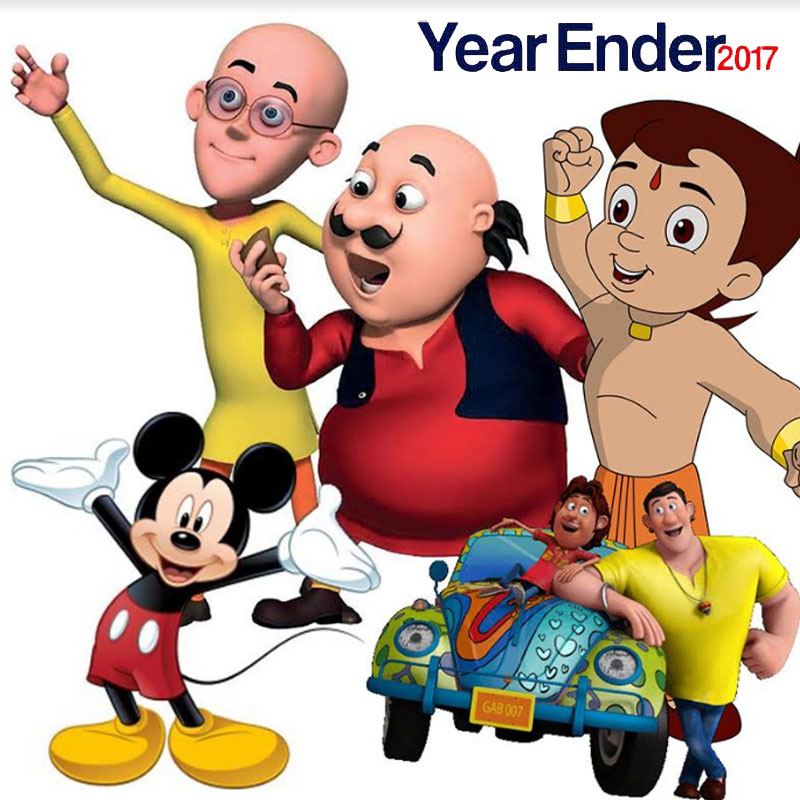
    MUMBAI: There was no dearth of excitement in the kids’ entertainment space in 2017. Despite the digital onslaught, original content producers grew from strength to strength, keeping children enthralled on television. TV viewership grew during the year even as doomsayers predicted that the end of the good old box was nigh.

    Among the major events of the year, Toonz India Media Group struck a deal with ReachMe.TV in the US to enable streaming of Toonz TV through the latter’s mobile web platform. Green Gold Animation signed a deal with Netflix for creating a spinoff of popular character Chhota Bheem for snippets of Mighty Little Bheem.

    Here’s a look at what each channel did this year.

    Disney

    A favourite among young adults, the Disney channel is known for television programming for children through original series, movies and third-party programming. This year witnessed top-level corporate reshuffling. The company promoted Amit Malhotra as the country head for Singapore and Malaysia. Earlier, Malhotra was the general manager for media networks, responsible for businesses across all functions in the media networks in Southeast Asia (SEA). Abhishek Maheshwari was elevated to country head (India).

    There were reports that Doordarshan was in talks with Disney for kiddy content in evening slots. Disney also launched a three-week campaign for merchandise, celebrating the spirit of sisterhood, featuring two young daughters and how the Frozen sisters inspired them in their day-to-day lives.

    Furthermore, Disney’s sister channel—Hungama—came up with Chacha Bhatija who go on a new adventure in the second movie.

    Turner

    Turner India creates and manages the sales, distribution and marketing of entertainment brands in India and South Asia, including CNN International, Cartoon Network, Pogo, Toonami, HBO and WB.

    It turned out to be a fruitful year with great deals and partnerships. Turner India was successful in imparting a larger-than-life feel to its characters through a tie-up with Amaazia, an upcoming amusement park in Surat. The park is owned and operated by Gujarat-based Rajgreen group. Scheduled to open in 2019, the park will serve as a medium for Turner’s kids channel Cartoon Network (CN) to launch new products and conduct ‘meet and greets’ with its animated characters. Out of the four sections in Amaazia, only the theme park is branded by CN. The rest are a water park, family recreational hub, and serviced apartments and retail shopping area.

    Apart from having a chase comedy in the bouquet, Pogo came up with another indigenous slapstick comedy show for its fans. Focussing more on home-grown content, Tik Tak Tail was the chase comedy that it experimented with in September and then came the slapstick show Andy Pirki. It also announced the launch of a brand-new show, Grizzy and the Lemmings. Moreover, Cartoon Network came up with the fifth and sixth parts of Oggy and the Cockroaches.

    Discovery Kids

    The channel announced a deal with IM Incorporated, a London-based content distribution company, to premiere Sunny Bunnies in India. Angry Birds Sing the Blues came up for the first time in Indian television in a series format.

    Nickelodeon

    This year, Nickelodeon came up with the Halo Movement—a new year-round pro-social initiative celebrating kids who are helping and leading others. In terms of viewership, too, the channel has done pretty well for itself. In week 50 of Barc data, the channel was ranked number one with 127600 impressions (000s) sum. Another important event was the Nickelodeon Kids’ Choice Awards 2017, which honoured the best in the world of entertainment across film and television.

    Sony Yay

    On 18 April 2017, Animax Asia was replaced by Sony Yay. While the former focussed on serving young adults, Yay concentrated on children of all ages. Animax was handed over to SonyLiv.

    The channel is building local characters to monetise and launched four original shows Guru AurBhole, Sab Jholmaal Hai, Prince Jai aur DumdaarViru, and Paap-o-Meter and it holds the IP rights for all of them. The channel also associated with ‘animals matter to me’ to make Diwali ‘pawsome.’

    Although 2017 wasn’t an eventful year, there were plenty of nuggets of action with the latest entrant, Sony Yay, throwing its hat into the ring and fighting it out with the existing players in the kids genre. We will have to wait and see how channels gear up to take on the growing trend of digital in 2018 and whether OTT adds significant value for kids.

  • Guest Column: How 2018 could become a landmark year for OTT entertainment in India

    Guest Column: How 2018 could become a landmark year for OTT entertainment in India

    Art imitates life–this oft-repeated saying is particularly suited for the global entertainment landscape at present. The growing penetration of technology in our lives has led to widespread transformation in the way that we consume entertainment and has led to the establishment of over-the-top or OTT entertainment as a distinctive segment in its own right. The last couple of years, in particular, have seen rapid development in both OTT technologies as well as their end-user adoption.

    India, as the fastest growing large economy in the world, has been at the forefront of this tech-led renaissance. A recent KPMG report highlighted how OTT video content consumption in India has exploded, accounting for nearly half of the overall data usage within the country. This dominance is expected to grow to 75 per cent by the year 2020, as data tariffs fall and smartphones become more affordable. With the OTT entertainment landscape registering massive growth in 2017, could 2018 become a landmark year for this high-potential space? The following trends indicate that this could indeed be the case:

    The rise of regional content

    With Indian viewers consuming more online content, OTT has moved beyond metropolitan and tier-1 cities. The increased internet penetration across the country means that more and more consumers from rural and semi-urban geographies are consuming online content. This is driving the demand for entertainment that these users can relate to, that speaks to them in a language that they are familiar with.

    Regional content, as a result, is on the rise; studies indicate that 45 per cent of OTT users in India access content in regional languages. Hindi-based content remains popular, but with leading OTT players actively looking to tap into nascent regional markets across the country, regional content is expected to assume an important role in the overall OTT landscape.

    Cross-platform OTT viewing will grow

    The linear and scheduled content delivery model that traditional TV follows does not suit the evolved entertainment sensibilities and preferences of the new-age, digital-first consumers. They want their choice of entertainment delivered to them at the touch of the button, to be consumed on a device of their choice, at the time that they want to. This is driving the growing adoption of OTT entertainment in India.

    But 5-inch smartphone screens can hardly deliver the immersive experience that television enables, which is why some leading OTT platforms are also focussing on enabling a seamless, holistic, and completely native viewing experience across multiple platforms. The increased penetration of smart TVs is marrying the flexibility of OTT content with the richness of wide-screen entertainment. This will allow viewers across the county to get the best of both worlds, and will further entrench OTT’s proposition as the dominant entertainment paradigm in India.

    More AR/VR-based content to drive immersive entertainment

    There is perhaps no other medium which can deliver the immersion and engagement that virtual reality and augmented reality do. But despite the proliferation of cutting-edge VR-based devices such as Oculus Rift, Microsoft HoloLens, Vive, and PlayStation VR in the market, there is a significant lack of content that can be delivered through it. Most VR/AR solutions are, as a result, restricted to gaming at present. This is set to change in the near future; as more and more content developers and OTT platforms develop the capabilities to deliver content that is tailored for enabling an immersive, engaging, and highly interactive video entertainment experience. This will lead to the evolution in the way the entertainment is delivered and consumed and could end up transforming the global OTT landscape.

    l High demand of OTT video advertising

    Cutting-edge tech such as precision segmentation, interactivity, data, and analytics enable OTT video platforms to deliver superior ad performances in an immersive and engaging environment. This technological differentiation will drive the popularity of OTT video ads amongst digital marketers in 2018. Recent industry reports corroborate this sentiment. It is expected that OTT video advertisements will continue to play a major role in driving the overall digital advertising landscape, helping it reach revenues to the tune of Rs 15,000 crore by 2020.

    Live events streaming

    Recent technological advancements have redefined the live entertainment landscape by making it possible to deliver immersive, seamless, and glitch-free online streaming experiences in real-time. Popular sports tournaments are now being streamed live across the world by leading OTT platforms, while other prominent live events such as music concerts are also finding enhanced viewership through the OTT medium. With more and more users looking to catch their preferred live entertainment on the move, we can expect collaborations between IP owners, OTT players, and traditional broadcasters to enable live streaming of major events in 2018.

    public://ABHESH_1.jpgThe author is the chief operating officer at nexGTV. The views expressed are personal and Indiantelevision.com need not necessarily subscribe to them.
  • The year the telecom sector quaked

    The year the telecom sector quaked

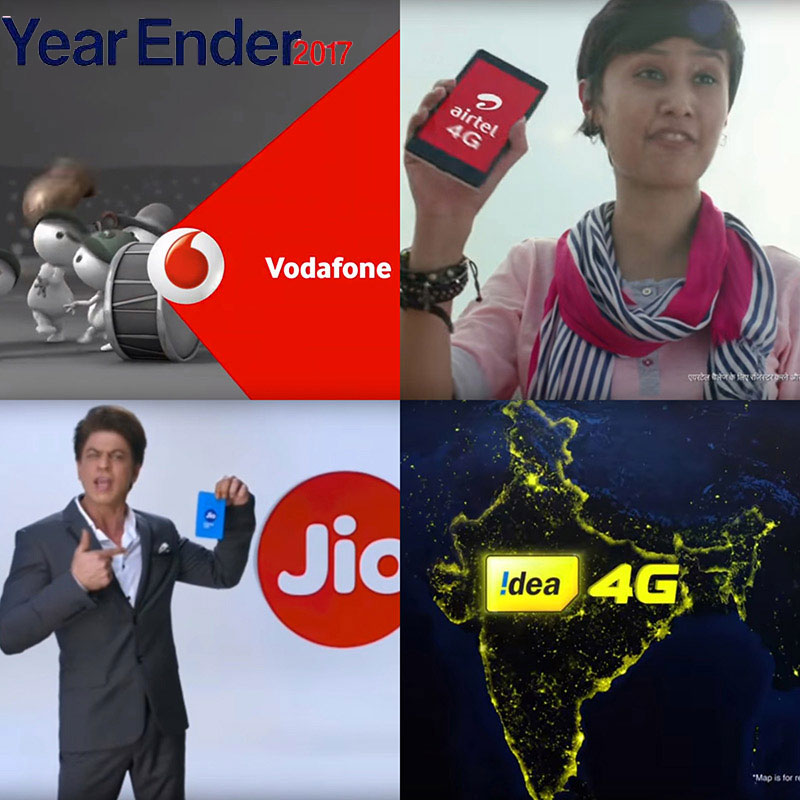
    An interplay of myriad factors contributed to India’s telecom industry witnessing both turmoil and revolution in 2017. Consolidation was the buzzword as some of the largest telecom operators merged even as Reliance Jio Infocomm Ltd (RJio) emerged as a frontrunner for Reliance Communications’ (RCom) assets according to reports. RJio can also take credit for ushering in a data revolution in the country.

    Moreover, smartphone penetration during the year increased three-fold with the aggregate number of users at more than 300 million. With smartphones still accounting for less than 50 per cent of handset users (650 million) in the country, another surge in data consumption is on the anvil.

    The price war

    Indian tycoon Mukesh Ambani sparked a price war in 2016 with the launch of Reliance Jio. As a consequence, the country’s large telcos have been burning through cash this year to hold on to their market share. Vodafone and Airtel tried luring customers through cheap data and unlimited calling offers. Reliance Jio, however, clearly won that battle. Within the first month of commercial operations, Jio announced that it had acquired 16 million subscribers. This was the fastest scaling up by any mobile network operator anywhere in the world. The operator crossed the 50 million subscriber mark 83 days from its launch, crossing 100 million subscribers on 22 February 2017. By October 2017, it had around 130 million subscribers. 

    With telcos looking to push for higher data pack purchases, 4G became cheaper than 3G. Today, 4G data costs are as low as 1 paisa per MB.

    Sectoral consolidation 

    From as many as 13 players at one point in time, we are now left with just five major contenders even as RCom sits on the brink of leaving the fray. Earlier this year, Vodafone India and Idea Cellular decided to merge operations to create India’s largest telecom operator worth more than $23 billion beating Sunil Bharti Mittal-led Airtel. With this deal, Vodafone India’s valuation stood at Rs 82,800 crore and Idea’s at Rs 72,200 crore. 

    RCom, reeling under a debt of around Rs 46,000 crore, shut down its voice services from 1 December 2017 after it failed to close its wireless business merger deal with Aircel. The Telecom Regulatory Authority of India (TRAI) has issued a directive to RCom’s customers to move to other networks by the end of this year. Vodafone, Airtel, and Jio created special packs for RCom customers to lure them to their networks. 

    Telcos and handsets 

    In July 2017, Jio introduced JioPhone–the company’s first affordable 4G feature phone powered by KaiOS. The phone was made available for a security deposit of Rs 1500, which could be reimbursed on returning the phone after three years. This phone was released for beta users on 15 August 2017 and pre-booking for regular users started on 24 August 2017. 

    To strengthen its presence amidst the battle for market share, Airtel launched Android-powered 4G smartphones in partnership with Indian cellphone manufacturer Karbonn Mobiles. Airtel also partnered various other mobile handset manufacturers, including Intex, to create an ‘open ecosystem’ of affordable 4G smartphones.

    Not one to be left out of the party, Vodafone and domestic handset maker Micromax came together to offer a smartphone priced a shade under Rs 1000 with a three-year rider.

    Internet of Things

    Despite posing privacy risks, Internet of Things, or IoT, remained one of the buzzwords in tech circles this year. According to Vodafone Plc’s annual IoT barometer report 2017-18, the percentage of companies with more than 50,000 connected devices active has doubled in the last 12 months with over 84 per cent of IoT adopters saying that their use of IoT has grown in the last year. From the Indian organisations that were a part of the study, 81% felt that IoT was key to digital transformation.

    In India, Vodafone marked itself as the first brand to undergo this evolution. The telco repositioned itself as a contemporary and future-fit brand. It is a significant metamorphosis for one of India’s most iconic and loved brands since the ‘Power to you’ tagline was introduced in 2009. This new positioning, a part of Vodafone’s rebranding exercise across 36 countries, is designed to underpin its belief in new technologies and digital services playing a positive role in transforming society.

    Net neutrality  

    In what was seen as a sign of things to come, the US Federal Communications Commission voted in December to scrap net neutrality, which requires internet service providers to treat all internet traffic equally. The TRAI, not too long after, came out in strong support of net neutrality in a series of recommendations following a long process of consultations on the issue. The regulator believes that the licensing terms should be amplified to provide explicit restrictions on any sort of discrimination in internet access based on the content being accessed, the protocols being used or the user equipment being deployed. 

    With IoT being the talk of the town, networks fighting to grab RCom’s assets and customers, and an ongoing telco war between Airtel, Vodafone, and Jio to become the country’s numero uno operator, it will be interesting to watch how the industry shapes up in 2018.

  • The year of big switch in sports broadcasting

    The year of big switch in sports broadcasting

    MUMBAI: This year has been nothing short of a roller-coaster ride for sports broadcasters. The industry saw it all–channel launches (pay as well as free to air [FTA]), rebranding, and battles for rights  for numerous domestic and international properties. Renowned properties changed hands while new ones also found a home in the country. It was a year that witnessed the less-fancied sports going from strength to strength in a market that has been dominated by cricket for far, too, long.

    Among the marque developments during the year was how the aggressive Uday Shankar and team stole the rights for the IPL by bidding for the entire package, rather than individual rights for digital and TV, like the rest of the bidders. What was also uncanny was the slender margin that it pocketed the property as compared to everyone else’s cumulative bid. Yes, it bid high, but has not Uday shown that he is the risk taker bar none on several occassions in the past by betting on sports like kabaddi, football, tennis,hockey, table tennis, badminton and encouraged the setting up of leagues for the poorer sports? And his efforts have borne fruit as these  have managed to rope in the viewers, advertisers and revenues. But his challenge will be to able to steer Star Sports in India in the aggressive manner he is known to do now that the India operations of Star India are in the process of coming under the Disney fold following their sale – along with other properties by the Murdochs  – to the mouse house. Star Sports meanwhile lost its leader Nitin Kukreja earlier this year when he departed to head one of the team owner’s franchise operations.

    Of course, streaming service Hotstar set its landmarks in terms of viewers that it managed to rope in for almost every tournment it rolled out.  Star Sports nearest rival now is the NP Singh headed Sony Pictures Networks India which let go of the IPL rights by bidding only for the television piece of the rights. Though its bid was higher than Star Sports’ it still did not manage to retain the rights.

    2017  was remarkable for the fact that digital players – among which figure Amazon, Facebook – are open to come head on with traditional television to snap up sports telecast rights. They of course lost to Star but who knows if they will become key game changers in terms of sports rights pricing going forward.

    The year was also remarkable for the fact that Chinese brands of mobile phones have put their might behind building sports in India by becoming sponsors for almost every major property. Either  OPPO or Vivo or some other brand has paid top dollar to be associated with Indian sport. Whether this bodes well or not only time will tell, but it would be good if Indian brands too get their foot into play.

    Launched in 2016, Veqta, India’s OTT subscription service dedicated to sports, got great traction for the first live property after the launch of the subscription package on Veqta. The boxing bout between Floyd Mayweather and Conor McGregor and the digital campaign was a huge success, garnering around 1.4 billion digital impressions across various media. Within a month of activation of a subscription package, the platform crossed over 150,000 downloads. This made it clear that in India there is a big demand for alternative sports, apart from mainline sports like cricket, and there are people willing to pay for premium sports content.

    Let’s see how each broadcaster fared this year:

    Star India

    While it restructured its bouquet, Star Sports 3 SD and Star Sports 4 SD and their HD feeds went off air. The broadcaster bet big on a regional channel as well as going Hindi with Star Sports 1 Tamil and Star Sports 1 Hindi. Moreover, it also launched Star Sports Select 1 and Star Sports Select 2, taking the broadcaster’s sports bouquet to a total of 11 channels.

    Star Sports telecast Ultimate Table Tennis’ (UTT) inaugural season in 2017 to promote table tennis as a sport in India. The league played a pivotal role in achieving this objective by working in cohesion with the stakeholders: the Table Tennis Federation of India, the franchises, and the broadcaster. Unlike other major sporting leagues being run in the country like IPL and ISL, UTT had club-based franchises instead of the usual city-based franchises. 

    The broadcaster then took a dive into going FTA route with Star Sports First. The country’s first private FTA channel hopped on board FreeDish and got off to a roaring start in cricket-crazy India. This enabled sports fans and enthusiasts to watch their favourite sports in Hindi without paying any subscription fee. Rather surprisingly, Star Sports First contributed to 31 per cent of the overall viewership for Pro Kabaddi League (PKL) season 5. With the launch of Star Sports First, it increased its channel count to 12, thereby becoming the broadcaster with the most number of sports channels in the country.

    The broadcaster took the lead on cricket in the country by acquiring the rights for the Indian Premier League (IPL) by comfortably winning it for $2.55billion for its global rights. Both the TV and digital rights for the next five years from 2018 are with Star. It will also be introducing virtual reality as a game changer.

    The digital ad revenue for the tenth season more than doubled as compared to previous season which was Rs 1.2 billion.

    Recent reports suggest that a caveat is being created to ensure broadcasters share their telecast with pubcaster DD for its terrestrial network and FreeDish. This would be made possible as and when the government formally issues a directive as both the law and information & broadcasting ministries were being consulted, under a regulation called the Sports Broadcasting Signals (Mandatory Sharing with Prasar Bharati) Act 2007.

    Sony Pictures Network (SPN) India

    SPN India started this year with the completion of the first phase of the acquisitions of Ten Sports from Subhash Chandra-led Zee Entertainment Enterprises Limited (Zeel). This involved a monetary transaction of $30 million out of the total $385 million in consideration. The second phase of the deal was mutually concluded by both the parties because of certain condition with Zeel’s receipt of the remittance of $ 36.32 million from SPN.

    SPN India roped Sachin Tendulkar as its brand ambassador for the sports bouquet. On the same day, Sony rebranded its sports portfolio by adding two HD channels Sony Ten 2 & 3 HD which took its total count to 11 channels in the sports cluster. Each channel picked its favourite sport with Sony Six and Six HD dedicating itself entirely to cricket while Sony Ten 1 and Ten 1 HD took to wrestling. Football was handed over to Sony Ten 2 and Ten 2 HD. Sony Ten 3 and its HD counterpart was given to all Hindi feed for any sport. International sports can be viewed on Sony ESPN/HD. Sony is also focusing on golf with Sony Ten Golf HD, which is a very niche market in India.

    SPN India, the official broadcaster (till 2017) of IPL, crossed the Rs 13,000 million mark in terms of ad revenue. After a decade of holding strong, it lost out to Murdoch’s Star India with its aggressive biding price which paled Sony’s proposition of Rs 11,500 crore for just India’s rights.

    The broadcaster also won the exclusive rights for the shortest format of cricket – the T10 Cricket League which is also its inaugural season. Sony has both the TV and digital rights for the league, hosted by the Emirates cricket broad.

    DSport

    DSport is a sports TV channel launched by Discovery Communications India specifically for the Indian subcontinent in February this year. The channel is focused on bringing the most live sports content, over 4000 hours, from around the world to audiences in India. Its wide portfolio of live sports content includes the exclusive rights for many of the leagues of wrestling, football, cycling, horse-racing, golf, tennis, motorsports, and many more.

    To name a few of the exclusive leagues in DSport portfolio are, wrestling properties including American Ring of Honor and Lucha Underground. The third edition of the HBL Pakistan Super League will be aired exclusively on Dsport.  Dsport also acquired the exclusive India broadcast rights of the inaugural edition of the Laver Cup as well as the ICC World XI Tour of Pakistan.

    TS Panesar was appointed as the business head in the second half of 2017.

    Nimbus Communication

    Launched in 2006, Neo Sports and Neo Prime have lost their sheen over the years. Their current portfolio includes leagues like FIFA Club World Cup, The Coppa Italia and Coupe de France in football. In tennis,Davis Cup and Fed Cup are the only two leagues the broadcaster owns. The broadcaster also owns some of the leagues from other sports like basketball, table tennis, motor racing, horse racing and many more.

    Conclusion

    The year 2017 was made memorable because of the shift in the ownership of IPL rights from Sony to Star, the country’s first private FTA sports channel, and the consolidation of other sports in the country. While plans are afoot by broadcasters for the upcoming year, here are some events to look out for in 2018.

    SPN India is likely to make an aggressive bid for the Indian cricket team home rights in a bid to shore up the rights for the few cricketing events with it. Star India is also expected to leave no stone unturned to acquire the rights with the vision of having a monopoly in the Indian sports and cricket industries. We know that Sony already has the Rs 11,000 crore that it was ready to splurge on the IPL rights. The BCCI is expected to open the bid early next year for a period of five years. Furthermore, to enhance the fan experience, Star India wants to make a mark with its first IPL edition and will introduce virtual reality for the 2018 season.

    The stage is set for a dogfight between the two big players in the sector–Star and Sony. Just the prospect of this off-field battle is mouth-watering. 

    Also read: 

    Comment: Does Star stand to gain or lose by sharing IPL with DD?

    Star’s Uday Shankar on distribution challenges, IPL, FTA vs. pay TV, innovations, Made in India content…and much more

    Star India to introduce VR for IPL 2018

    ISL piggybacks on EPL’s popularity to gain viewership

  • Govt extends support to M&E sector in fighting digital piracy

    Govt extends support to M&E sector in fighting digital piracy

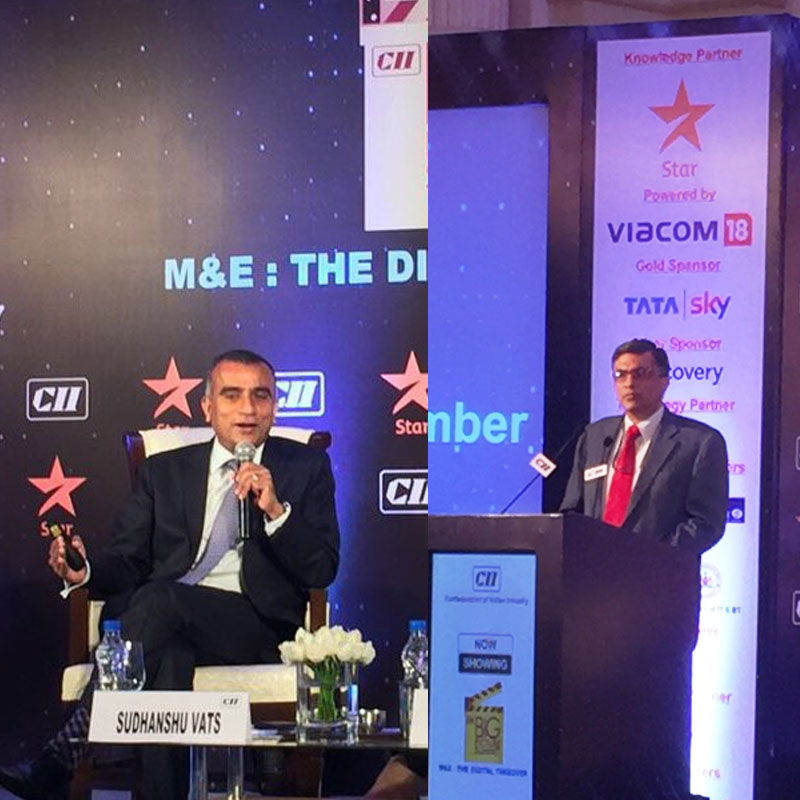
    NEW DELHI: The government of India yesterday stressed that it stood alongside the media and entertainment (M&E) industry in fighting digital piracy to safeguard loss of revenue and ease norms for doing business, while CII entertainment committee head and Viacom18 group CEO Sudhanshu Vats, on behalf of the industry, admitted that automation could result in loss of jobs leading to challenging times, but said the core of the industry will be ‘automation-proof’.

    “The government will stand with you on the issue of digital piracy,” department of industrial policy & promotion (DIPP) joint secretary Rajiv Aggarwal told the audience on Tuesday at the CII-organised Big Picture Summit here, adding that they were exploring a national anti-piracy regulation or regime and there was no need to get further into enacting complicated laws but finding solutions based on global experiences.

    Digital or online piracy is not only a big global challenge for the M&E industry, but has awakened stakeholders in India too who are feeling the heat of heavy loss of revenue due to rampant piracy of Indian content worldwide.

    Pointing out that the Indian government is alive to the issue of digital piracy and the potential of the M&E industry in being able to generate revenues and employment in the country, Aggarwal said that they were looking at how global and some local bodies (like PIPCU of the UK, TIPCU in Telangana and Maharashtra’s online anti-piracy unit) were addressing this challenge.

    Dwelling further on this issue, he exhorted the industry stakeholders to give feedback that will help India in forming a strong case and point of view for submission at WIPO where discussions are on to formulate standards for a global broadcast treaty.

    This year’s Big Picture Summit, an annual two-day conference on issues related to M&E industry, has been themed `The Digital Takeover’, which lays emphasis on the creeping digitisation in general and of delivery services like cable, HITS and OTT, and an impending automation (egged on by the likes of AI) of the various industry sectors.

    TRAI non-committal on exploring auctioning of TV licences

    SK Gupta, telecom regulatory authority of India (TRAI) secretary, which is the telecoms and broadcast regulator, while dwelling on various issues of the recently issued recommendations on net neutrality said the organisation’s efforts have always laid emphasis on consumer interest, while creating a level playing field for all players.

    Incidentally, at a time when the FCC has dismantled net neutrality norms in the US, put in place by the Obama regime earlier, favouring walled gardens of content and premium tiered pricing of various services, India’s TRAI has upheld net neutrality stating that all content should be made available to all distribution platforms on a non-discriminatory basis, apart from other level playing initiatives.

    Later, asked by journalists on the sidelines whether TRAI was exploring a consultation paper on auctioning of TV licences or permissions on the advice of the ministry of information and broadcasting (MIB), Gupta said he at least was not aware of any such move. He was non-committal when pressed on the issue.

    Asian Age newspaper a week back had reported that the government was exploring auctioning of television channel frequencies on the lines of telecoms spectrum, coal blocks and FM radio licences. Reason: bid to increase government revenues as presently permission to uplink and/or downlink TV channels cost a fixed amount with the applicant fulfilling certain set out financial norms, apart from getting clearances for satellite space and internal security. The newspaper report had added that MIB had sought advice from TRAI in this regard. What the report did not clarify was whether the auctioning was of TV licences pertained to DTT (digital terrestrial transmission) or satellite-delivered TV channels later distributed by cable and online.

    M&E industry holds key to creating future-proof, dynamic workforce: Vats

    Earlier in the morning, setting the agenda for the two-day conference, CII entertainment committee head and Viacom18 group CEO Sudhanshu Vats in his opening address said that the theme of ‘Digital Takeover’ was a topic that had “loads of nuances” that needed to be addressed in a proper perspective.

    “In my honest assessment, this is an extremely provocative theme – and one that can mean different things to different people. I can imagine some of my colleagues from the broadcast sector feeling upset. I can also imagine what some of my younger colleagues, who are already social media influencers thinking – this theme is passé, the takeover was complete a few years ago. I don’t want to pick a side at this stage and I’m certain that no definitive side can be picked,” Vats said, adding that he hoped the theme would help delegates form their own distinctive understanding of the future of the Indian industry in general.

    Pointing out that digital takeover could mean greater automation and fewer human jobs, a trend that could is likely to play out slowly in India because of availability of cheap labour, Vats said the Indian M&E sector directly employs between 1.1-1.2 million Indians and in the next five years one million more jobs would be added, thereby playing a role in “assuaging the challenge”. He added: “If we achieve breakout growth, that number can also touch five million. However, I would like to draw your attention not to the number of jobs but to their quality.”

    Explaining that skills, like creativity, story-telling, emotional intelligence and cognitive ability, in M&E sector were most ‘non-routine’ jobs, Vats said, “These are also the skills that can be transferred to other sectors, making us a part of the solution. Of course, we too will face our share of the burden. Some roles will be automated, and the media organisation might look very different in 2027, but our core will still be automation-proof.”

    Vats also pointed out that the private sector needed to be more ‘creator-friendly’ or ‘freelancer-friendly’, which also meant that the M&E sector could hold the key to “creating a future-proof, agile, dynamic workforce” that can take its skills and drive impact across industries even as the government continued to create a better business environment.

     ALSO READ:

    M&E industry to hit Rs8 trillion revenue by 2022: report


  • M&E industry to hit Rs8 trillion revenue by 2022: report

    M&E industry to hit Rs8 trillion revenue by 2022: report

    According to a report published by Boston Consulting Group (BCG) and Confederation of Indian Industry (CII), India’s media and entertainment (M&E) industry is expected to reach revenue of Rs7.5-8 trillion by 2022 from an estimated Rs4.5 trillion in 2017. Over the next five years, the industry is poised to grow at an annual growth rate of 11-12 per cent.

    The report highlighted that the M&E industry has the potential to generate four million jobs (direct and indirect) over the next four-five years, on the back of technology adoption, big data and analytics.

    By 2022, total employment across the industry is expected to be 6-6.5 million from the estimated 3.5-4 million in 2017. The report said that the structural changes across the industry and major shifts around adoption of technology, big data and analytics will lead to several new job roles and a massive reskilling of the current workforce.

    “The Indian M&E sector has huge room for growth and can create four-five million jobs without much spending from public infrastructure. Digital platforms are proliferating and there are tremendous opportunities that never existed before, especially for creators, storytellers and technology providers,’’ CII director general Chandrajit Banerjee said in the report.

    The report highlighted that M&E organisations need to rebuild their strategies to fit in the shifting digitally oriented landscape. “It’s the need of the hour for the industry to identify the creative, technological and analytical skills that will be required over the next five-seven years to restructure its business model for the upskilling exercise,” said Kanchan Samtani, partner and director at BCG, in the report.

    The report said that the M&E industry will require 140,000-160,000 trained/employable individuals entering the workforce every year for the next five years.

  • ATF’s first Animation Pitch announces winners

    ATF’s first Animation Pitch announces winners

    MUMBAI: The Asia TV Forum (ATF) is drawing to a close amid much fanfare. The event saw several activities such as an exciting round of on-stage pitches wherein producers from all over Asia presented their ideas. The winners of the inaugural Asia TV Forum & Market (ATF) Animation Pitch were also anounced and the unveiling of the second ATF Formats Pitch took place on 30 November 2017.

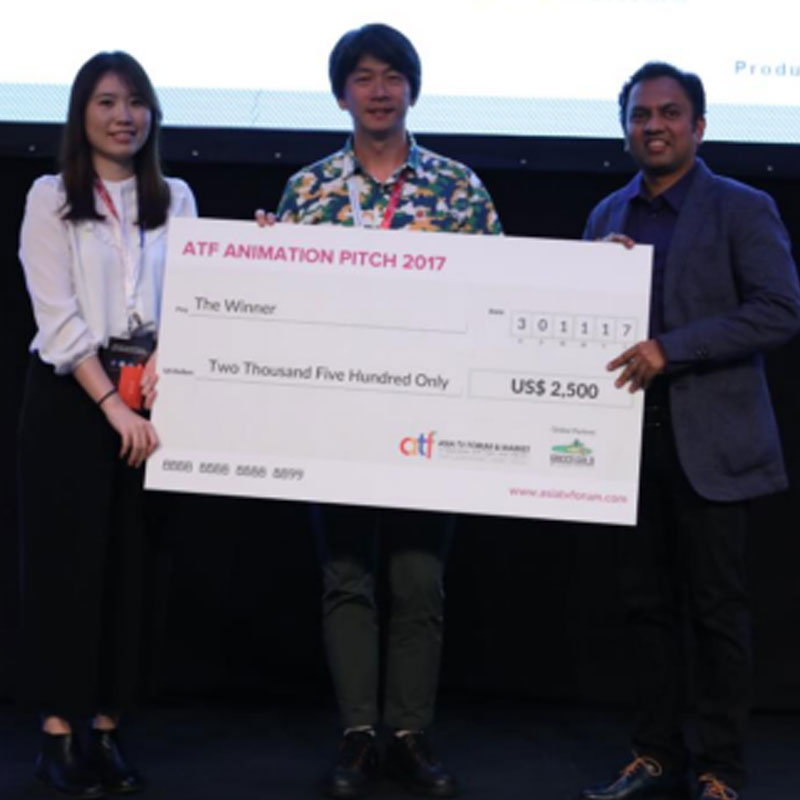
    Reed Exhibitions and global partner Green Gold Animation announced studio2 Animation Lab as the winner of the first-ever ATF Animation Pitch. The animation concept, titled “The Western Journey of Pigsy”, wowed the on-stage jury for its creativity and strong appeal to children. The line-up of judges, which comprises some of the biggest names in kids’ animation and entertainment, also saw strong potential for the concept to be exported and extended to a series.

    Targeted at creators and producers of innovative concepts for new and original kids’ animation, ATF Animation Pitch is aimed at facilitating the exchange of ideas and talent between leading international television, distribution and Asian-based producers. In total, 61 entries were received from all over Asia.

    “I am thrilled and excited to be named the winner of the inaugural ATF Animation Pitch. We had a unique concept and we felt that it allows viewers to experience the journey in the west story in a contemporary way. Moving forward, we will work towards developing the script for the concept,” said studio2 Animation Lab director Chiu Li Wei.

    Chiu Li Wei and Grace Chuang from studio2 Animation Lab received a $19,000 prize from GreenGold Animation. This includes a $2,500 cash award, and a consultancy package worth $16,500 that is tailor-made for them to further develop the winning animation, making it ready to pitch to broadcasters.

    After a closely contested fight between five finalists, leading independent distributor all3media International and ATF announced that Gamaliel Paulus (Gammy) from Indonesia, came out on top, winning $3,500 in cash and a $16,500 (both Singapore dollars) consultancy package tailor-made to develop the format, making it pitch-ready for broadcasters.

    ATF Formats Pitch is the premier Asian pitching competition designed to discover innovative concepts for new and original non-scripted entertainment formats from the pan-Asian region. This platform showcases the best of Asia, and exposes ideas for export and development within and even outside of the region.

    In its second year, the competition received more than 50 entries from 13 countries and only five finalists were selected to pitch their concept during the live on-stage judging session which concluded earlier today. Formats were evaluated based on creativity, originality and capacity to return for multiple series. The winning concept must also have the capability to resonate with audiences globally.

    Portraying all these qualities was the winning format, Ranking. It is a game show where participants have to guess the correct order of a ranking in return for prizes. Besides the excitement value that comes with game shows, it also serves to dish fun facts and information to viewers. The judges loved the simplicity of the idea and felt that it had great potential for further development.

    “As many people are familiar with rankings, I believe my format will appeal to any country. Also, I have not seen it in the form of a game show concept. As a producer myself, I understood that for a format to do well, it has to be simple. I am very thankful for the win, I didn’t expect it at all,” said Gamaliel Paulus (Gammy).

    To further develop the format and make it ready for pitching to broadcasters, Gamaliel Paulus (Gammy) will work closely with all3media International. This follows the success of “Hit It” from XTREME Media, which won at the inaugural ATF Formats Pitch last year, and has received its first local commission for a debut in February 2018.

    Aside from the ATF Animation Pitch and ATF Formats Pitch, ATF and ScreenSingapore is also home to another pitching competition, the Southeast Asian Film Financing Project Market.

  • Indian OTTs to be in focus on day 2 of ATF

    Indian OTTs to be in focus on day 2 of ATF

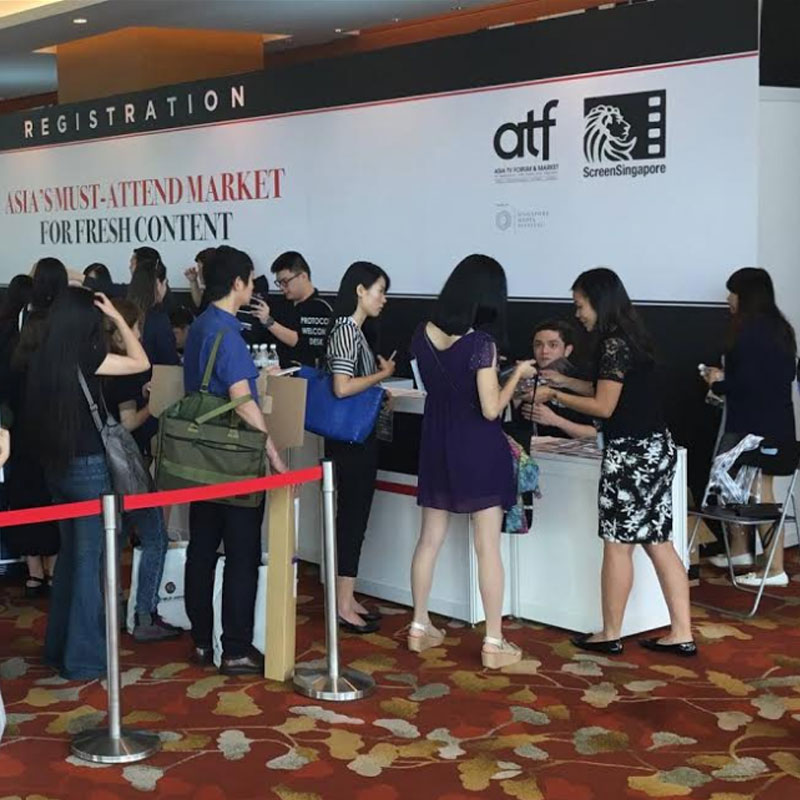
    MUMBAI: Singapore-based Reed Exhibitions’ Asia TV Forum (ATF) will commence today with 60 countries taking part. The first day will see sessions based on content, advertising and the evolution of storytelling and digital traditions and innovation Ninety thought leaders will deliver fresh insights in over 24 sessions from 28 November to 1 December 2017, discussing present-day issues such as big data, movement in the over-the-top (OTT) scene, new monetisation strategies, unscripted entertainment formats and kids’ content.

    The Indian sessions will start from the second day. The first one will be ‘Bollywood & Beyond: Fresh content from India’. The speakers present for the session will be Epic TV network head content syndication Adita Jain, Greengold Animation VP content sales Bharath Laxmipati, One Life Studios founder Siddharth Kumar Tewary, Rajshri Entertainment MD Neha Barjatya, and Toonz Animation India senior manager- content syndication and distribution Viju Thomas. The session will be moderated by Indiantelevision.com group founder, CEO and editor-in-chief Anil Wanvari.

    Wanvari has been working on developing opportunities for India’s animation and live action sector – whether for TV or OTT – over the past three years at ATF as its representative for India, Pakistan, Sri Lanka and Bangladesh.

    India’s OTT ecosystem has been exploding with newer apps popping up ever so quickly. At last count, close to 42 OTT services were operational in India. The second Indian session will be about the needs and wants of Indian OTT buyers. The panellists for the discussion will be Pittie Group/Epic TV CEO and MD Aditya Pittie, Viacom18 Digital ventures COO Gaurav Gandhi, producer, entrepreneur and storyteller Sidharth Jain, Spuul founder and global CEO Subin Subaiah, and GoQuest Media Ventures MD Vivek Lath. This panel discussion will also be moderated by Wanvari.

    ATF will also focus on virtual reality (VR) sessions, which will delve into the discourse that takes place among ecosystem partners, from content concept, creation and circulation. Real Vision VR filmmaker, speaker and published author Clyde Desouza will moderate the panel. Desouza is working with Times Now for its VR immersive journalism.

    On day three, listen to GreenGold Animation founder and CEO Rajiv Chilaka talk about how to provide 360-degree experience to kids. Chilaka has created and built one of the India’s largest animation brands Chhota Bheem, which currently has a viewership of over 40 million across platforms. He will also talk about nurturing localised IPs and stories and priming them to go global.

    The major Indian satellite TV networks Sony Pictures Networks India, Star India, Indiacast-Viacom18, and Zee Telefilms have their syndication and licensing teams exhibiting at the Marina Bay Sands venue. Other noteworthy exhibitors include: format and content syndication company GoQuest, Swastik Productions’ One Life Studios that is hawking its mega-budget Porus and homegrown formats, One Take Media, which is selling its kids animation and cookery shows, film and digital content creator and distributor Rajshri Entertainment, infotainment channel Epic TV, and kids’ content pioneer GreenGold.