Category: Specials

  • 2017 for infotainment and lifestyle channels

    2017 for infotainment and lifestyle channels

    MUMBAI: The infotainment and lifestyle genres can’t compete with GECs when it comes to ratings but that doesn’t dampen the spirits of channel heads. New shows are constantly launched to engage the tight community of viewers that channels in the category command.

    According to Broadcast Audience Research Council (BARC) data, the lifestyle genre managed to grab more attention than the infotainment genre in 2017. There was a 15 per cent growth in the year 2017 as compared to the previous year. Infotainment genre had garnered 17.6 million impressions in the year 2016, whereas in 2017 the ratings increased to 20.2 million impressions. In 2016, the lifestyle genre had 4.2 million impressions and in 2017 it had 5.2 million impressions. Lifestyle segment grew by 24 per cent, which is more than the infotainment segment’s 15 per cent growth.

    Discovery managed to hold on to its strong position with an effective programming line-up. Sony, in partnership with BBC, launched Sony BBC Earth. The latest entrant in the market fared quite well whereas the other infotainment channels fought steadfastly, refusing to give an inch away.

    In the lifestyle category, food is what got Indian audiences drooling with Living Foodz giving others a hard time in displacing it from the throne. 

    Let’s delve into what infotainment and lifestyle channels did last year and see how they entertained audiences.

    INFOTAINMEN

    Discovery

    Discovery Channel India had enough shows lined-up for the whole year. The channel premiered Christiano Ronaldo– The world at his feet and Sleeping Giant– An Indian football story, as well as Taking Fire- live from Afghanistan-a story of a band of brothers deployed to defend one of the US’ farthest fling outposts at the gateway to one of the deadliest places on earth: the mouth of the Taliban-held Korengal Valley in Northeast Afghanistan.

    The channel aired a special short capsule feature series highlighting the work done under Namami Gange programme during Independence Day. A four-episode series Breaking Point: Commando School Belgaum gave viewers a glimpse of the thirty-five days gruelling course that the officers must undergo to be a part of India’s elite commando force. The series has been produced by Sparkle Works Films.

    HistoryTV18

    History TV18, a JV between TV18 and A+E Networks, came up with OMG! Yeh Mera India by Krushna Abhishek again-the third season showcasing another set of unique stories from across India such as an orphanage for animals like leopards, jackals, crocodile and porcupines, a barber who cuts and styles hair by igniting it with a gas lighter and a physically challenged ace-cyclist.

    The network also launched Serial Killer Earth was a 10-part series that explored mother nature while Barbarians Rising was an epic saga of the fall of the Roman Empire. History TV18 also launched a weekly video series– BossWomen to tell stories of Indian women, with an aim to collaborate, create and celebrate positive, inspirational, lesser-known, role model worthy women of India.

    Sony BBC Earth

    Launched in March 2017, Sony BBC Earth came up with many shows—Taj Mahal, Eiffel Tower, Big Ben, Sydney Harbour Bridge, Monumental Challenge etc. Also premiered were Spy in the Wild and three other shows—Extreme Mountain challenge, Extreme River challenge and-Deadly 60- Pole to Pole featuring Steve Backshall.

    LIFESTYLE

    Living Foodz

    The channel partnered All Things Nice, a wine and spirits consultancy, for the fifth edition of celebrating India’s finest to recognise the winners of the Indian Wine Consumer’s Choice Awards 2017 in association with lifestyle partner Living Foodz.

    Utsav-Thalis of India takes viewers on a journey across 18 cities and offers a peek into India’s rich culinary heritage. The show explores each region and unravels fascinating anecdotes about its people, the regional delicacies, local ingredients. 

    Another show that grabbed eyeballs during the year for the channel was Femme Foodies. Conceptualised in-house by Living Foodz, the show is based on the unique concept of ‘gourmet on wheels’.  

    FYI TV18

    This year, FYI TV18 launched a wedding-based show My Big Bollywood Wedding, exploring behind the scenes settings of the traditional and modern in today’s ‘Bollywood’ wedding culture amongst Indian – Americans. Small Budget Big Makeover featured the stories of different families across India and each makeover unravelled the story behind the change.

    TLC

    The network owned by Discovery Communications, focussing on educational and learning content, premiered a bold new short-format series The Poetist,— aiming to give a platform to leading female artists from across sections of society to use their art to express and stand up for what they believe in.

    Travelxp

    The network opened a window in 2017 for the viewers of Slovakia Czech Republic and Germany, through its fully localised launch on Slovak Telekom. Travelxp is already fully localised in Serbian and Croatian apart from the primary English feed.

    Viewers weren’t short of new shows to pick from this year. Let the appetite keep growing in 2018 as well.

  • 2017 was a regulatory roller coaster and the ride continues

    2017 was a regulatory roller coaster and the ride continues

    NEW DELHI: The year 2017 for the media industry certainly couldn’t be called easy from the point of doing business despite efforts and claims by the federal government that significant progress had been made in the regard.

    The downside of demonetisation of high-value currency notes not only continued to be felt well into 2017, but the introduction of the GST (goods and services tax) in July and its compliance added to the woes as it increased paperwork and investment in human resources for the entire media sector. The cascading effect of the tax and monetary policies on the general economy of the country had a telling effect on the media and entertainment industry as companies, big and small, struggled to keep up with compliance (and sliding revenue) and changing guidelines owing to teething problems.

    2017 began with broadcast and telecoms regulator TRAI’s new set of guidelines relating to tariff, QoS and inter-connection, issued in the second half of 2016, being challenged by one of the biggest broadcasting companies (in terms of reach and revenue), Star India, and its ally Vijay TV in a Chennai court. Separately, two other DTH companies filed a similar challenge in a Delhi court.

    Over a year later, the regulator’s guidelines-touted to be an effort in creating fair ground rules for all stakeholders leaving them free to take commercial decisions-remain in suspended animation as the Chennai court is yet to deliver its final verdict till the time of writing this piece though the arguments and other legal processes have been completed.

    And, then Ministry of Information and Broadcasting (MIB) got in Smriti Irani as minister, a person with a background in the media and TV industry and as someone with strong views on issues. The sudden cancellation of a programming contract to Balaji Telefilms, awarded by pubcaster Doordarshan after a tendering process, could be cited as Irani’s aggressive stand on matters relating to her ministry and the media sector. Ditto for Doordarshan’s parent company Prasar Bharati deciding suddenly during the year not to renew contracts of some private sector TV channels that rode piggyback on DD’s free-to-air DTH platform Free Dish. The latter case is now being debated at the disputes tribunal.

    Over the 12 months in 2017, the MIB came out with a series of regulations, ranging from advisories on condom ads (the flip-flop was surprising) to a sharp hike in processing fees for clearances without clear definitions on some matters to the dos and don’ts of covering sensitive developments, all of which have left most industry players uneasy.

    A section of the industry also feels that the government has cleverly fired the gun, at times, keeping it on the shoulder of TRAI. Even while the regulator is in the process of wrapping up a consultation on various points of ease of doing business in the broadcast and cable sector, towards the fag end of the year, the MIB requested the regulator to examine whether TV channel permissions to beam into the 183-odd million TV homes in the country could be auctioned and the entry-level threshold increased-all aimed at arresting the spiralling number of applications seeking permissions to start a new channel. If legislated, it would be a sort of first where TV channel permissions, and not spectrum, would be auctioned.

    Another directive causing concerns for broadcasters is an MIB order making provision for processing fees on account of change of satellite, channel name/logo, language of channel, category of channel, mode of transmission, teleport, teleport location and change in the category of a channel from a GEC to a news channel for temporary uplink of a live event. The regulation stipulates that a processing fee of Rs 100,000 would have to be paid by a TV channel if seeking temporary uplink permission for, say, a cricket match. Nothing wrong in putting an amount to undertake processing.

    But what is troubling the TV channels is that the fee of Rs 100,000 is for each channel. So, for example, if a broadcaster having four sports channels proposes to telecast live a test cricket match for five days, then the amount for processing of temporary uplink permission by MIB would be Rs 100,000 each for five days for each of the four sports channels (100,000x5x4). That, stakeholders point out, is quite a large sum of money for a five-day match telecast in different languages over several TV channels.

    The MIB also, for the first time, introduced new categories of channels, namely regional and national. As per the extant uplinking and downlinking guidelines of 2011, however, all the licences, whether it is an Assamese or a Tamil language channel, are for pan-India channels and can be distributed throughout India. In fact, many broadcasters obtain multi-language permission for their channels to be able to run in multiple language feeds. The ministry later had to come out with clarifications defining what constitutes a national channel and what is a regional channel, which makes things a bit more complicated in sharp contrast to the federal government’s claim of having created a more conducive business environment in India, a senior executive of a broadcast company opined. What’s more, some experts pointed out, it was surprising that the MIB took the decision on re-classification of TV channels because such policy decisions would ideally need to be ratified by the federal cabinet of ministers.

    The TRAI, however, was banking on its ground rules for the broadcast and cable sectors to herald a new era that is not to be–not at least in 2017. But the regulator’s earnestness to hold a dialogue with stakeholders cannot be faulted despite questions being raised on some of its consultation papers; the one on STB inter-operability, for example. The TRAI should be lauded for upholding principles of net neutrality, in general, and giving thumbs down to content availability in a walled-garden environment, while in the US the FCC is preparing ground to dismantle net neutrality regulations that claimed to be protecting consumer interest.

    What comes out quite clearly in the year of disruptions and a clear change in the ways media, especially TV news, functions is that the thin line blurred between ethics and the dance-on-the-unethical-side-while-remaining- technically-correct.

    The all’s-fair-in-love-and-war thinking was written all over the audience measurement controversy that broke out involving a new news channel that debuted with a bang and the incumbents of the news genre in 2017. Accused by a section of news channels of using dual LCN or frequency strategy to increase sampling and snacking to up audience ratings, the new news channel hit back saying all other players too had sometime used the same strategy. Subesequently, the regulator had to step in directing stakeholders to desist from using practices that were not allowed in the TRAI’s books.

    Such instances-apart from the now-contested TRAI directive barring use of the `landing page’ by TV channels-highlight one thing: if the industry craves for a light-touch regulatory regime, restraint and maturity is needed from the industry, too. For example, despite the TRAI cracking the whip on dual LCNs, many TV channels, including the not-so-new-news-channel-on-the-block, were repeatedly accused by competition of continuing to use the dual LCN strategy throughout 2017.

    If the TRAI-and the government-hoped its guidelines and advisories would reduce litigation in the broadcast and cable sectors, the dream is yet to be fulfilled. The website of broadcast and telecoms disputes tribunal TDSAT states there are approximately 800 cases (in both sectors) still pending till 22 December 2017 if statistics from January 2017 were considered. The high pendency was despite the fact that TDSAT disposed of hundreds of other cases in 2017.

    The broadcast and cable industry would hope that 2018 would be less challenging, at least from the point of view of regulations. Some issues (like the consultation paper on uplink/downlink of TV channels, online video piracy and lack of any guideline for M&As for the media sector), however, continue to rankle even as we all enter 2018, not to mention that a proposal to review DTH guidelines, involving issues like rationalising revenue sharing with the government and renewing of licenses have been seemingly put in the cold storage by the government.

  • Guest column: Digital outlook for 2018

    Guest column: Digital outlook for 2018

    MUMBAI: The year 2017 is behind us and, as we peek into 2018, there is so much to look forward to. The digital landscape is so dynamic and ever-evolving that an annual trend-spotting article would be unfair. But still there are key areas where digital is heading and I can safely say that 2018 is going to be a year of technology and innovation. 2018 is also the year of the dog, according to the Chinese calendar, and brands and agencies who remain loyal to their technological prowess and who are open to newer territories will emerge as differentiators in the cluttered space. 

    Consolidated big data

    Data is going to the king going forward. Empirical evidence suggests that with exhaustive consumer behaviour and spending patterns, marketers can position their brands accordingly. This, coupled with improved data analysis and research, can improve customer experiences and journeys, personalise marketing initiatives and make the whole experience meaningful and convenient.

    AI will lead the way

    If AI were added to the mix, it becomes a formidable weapon in interpreting data. The data is useless unless there is an intelligent way of analysing it. And AI does that precisely. 2018 will be the year we will see this going mainstream. AI will help to not just optimise customer experiences but also reduce marketing investments by finally removing the subjective nature around the question of what worked and what didn’t.

    Focus on visual search  

    The latest mobile phone from Google has a feature called Google Lens. This was used by Nokia also few years ago but Google is now backing it with their redoubtable AI technology. For instance, Google Lens will help users learn all about a retail outlet by simply pointing their phone camera at it.  The search could throw up discount coupons, too, leading to direct footfalls. Visual search can be leveraged by retail and travel brands. As the feature matures, we will see use cases across the spectrum. 

    Algorithms will keep evolving

    Machine learning will make algorithms much smarter and we will see marketing models changing. 2018 may just be the year that will define the direction marketing automation will take in years to come.

    Blockchain and IndiaChain

    Blockchain was the buzzword of 2017. Blockchain was used by Bitcoin but the scope is not limited to cryptocurrencies only. In lay man’s terms, blockchains are encrypted and secured distributed ledgers of economic transactions. On the same lines, NITI Aayog has an ambitious plan to develop its own blockchain called IndiaChain. The idea is to build a distributed ledger system that makes data manipulation virtually impossible through verification by other stakeholders in the network. Not just across the nation, once operational, IndiaChain will also be the largest blockchain in the world. What’s in it for marketers? Well to start with, Indian fintech companies will benefit a lot from IndiaChain. It will allow them to leverage this network to their advantage. This will speed up contract enforcements, minimise fraudulent transactions, increase transparency and precision in operations.

    Talk and search

    Back in 2016, when Google introduced its new assistant and messaging platform, there were quite a few eyebrows raised. The question was, in the cluttered messaging environment, was this any different? Well to be fair, Google has answered its detractors. The Google Assistant can engage in a two-way conversation with the user and this has been possible because of Google’s language-processing algorithm. With the rise of voice-driven search assistants from Amazon and Apple, spoken search-terms will be the norm.

    The author is founder and CEO of Tonic Worldwide. The views expressed are personal and Indiantelevision.com may not subscribe to them.

    Also Read :

    India ad spend to grow by 12.5% in 2018: DAN report

    Industry applauds Sam Balsara as he turns 67

  • Content segmentation defines English entertainment, movies in 2017

    Content segmentation defines English entertainment, movies in 2017

    MUMBAI: It was the year of HD for English entertainment in India. Add to it, the bump up in the number of movie premieres and series that you could now see in better quality. Increased adoption of HD set top boxes encouraged broadcasters to go for HD.

    Content segmentation has emerged as a big success for English entertainment and movies channels. Consumers today are evolved in their choices, they are abreast of the latest titles and keep track of their favourite stars and directors.

    Times Network, with seven movies channels, garners one-third of the English viewership in India. It launched a channel named Movies Now 2 in 2016 and in July 2017 it was rebranded to MNX. In its inaugural week, MNX topped the chart with 2814 impressions (000s) sum. MNX was unveiled with the telecast of its first big bang movie- Mad Max Fury Road on 15 July 2017. 

    Times Network EVP & head- entertainment cluster Vivek Srivastava said, “2017 has been a busy and exciting year for Times Network’s English entertainment channels. We have maintained leadership of existing brands and successfully launched new brands and created lively consumer proposition. Movies Now has maintained leadership in the category. MNX has been the most successful launch from the cluster, maintaining a very healthy lead above HBO. MN+ and Romedy Now continue to maintain a high share of mind in their respective categories.”

    Zee Entertainment Enterprises Limited (Zeel) and Sony Pictures Television (SPT), in October 2017 announced that they have entered into a first pay features deal bringing a range of premium films to Indian audiences.

    As part of this, Zee will have the first access to Sony Pictures releases over the next few years. The new pay one deal marks the first between SPT and Zee Entertainment Enterprises in India and includes blockbusters as Spider-Man: Homecoming, Blade Runner 2049, Baby Driver, The Emoji Movie and Life, among others.

    In September, Zeel launched a new English channel named &Privé HD with the tagline ‘Feel the Other side’. &Privé HD also introduced a unique technology on its social platforms – the world’s first twin screen trailer. This distinctive technology enabled viewers to experience the other side of cinema with the help of a second device in a fun and engaging manner.

    For the premiere of Moonlight, the channel created a larger-than-life installation of a gun on a rainbow coloured platform, and for the premiere of Pelé, &Privé HD paid an ode to the legendary footballer with a magnificent installation of a life-size goal post with the numbers 1281 made out of multiple footballs depicting the total number goals Pelé scored. In December 2017, the channel celebrated the master storyteller, Steven Spielberg’s 71st birthday with a festival of some of his most notable films – Bridge of Spies, Amistad, Catch me if You Can, The Terminal, Super 8, etc.

    Branded content is being added to channels to increase the viewership pie. The addition of subtitles has enabled Indian viewers to follow the flow of American, British and other unfamiliar English accents. Thus, viewership is impacted positively, and hence, English SLS (same language subtitling) became the norm on all English language TV networks.

    Star World has an interesting line-up of new shows for 2018, including season two of the American Crime Story which features prominent international stars such as Penelope Cruz and Ricky Martin, and season one of the American supernatural sitcom Ghosted.

    Sony Pix will bring an assortment of movies like the 2017 American erotic romantic drama Fifty Shades Darker, The Fate Of The Furious, which is the eighth instalment of the car-based action franchise, Despicable Me 3, a 3D computer-animated action comedy about mischievous minions and Gru, and the musical comedy Pitch Perfect 3.

    In October, Disney launched a GEC Disney International HD Disney. The English GEC has 100 per cent exclusive and original content and caters to the age group of 14-25 years. According to Disney India country head Abhishek Maheshwari, kids grow out of animation after 14 years.

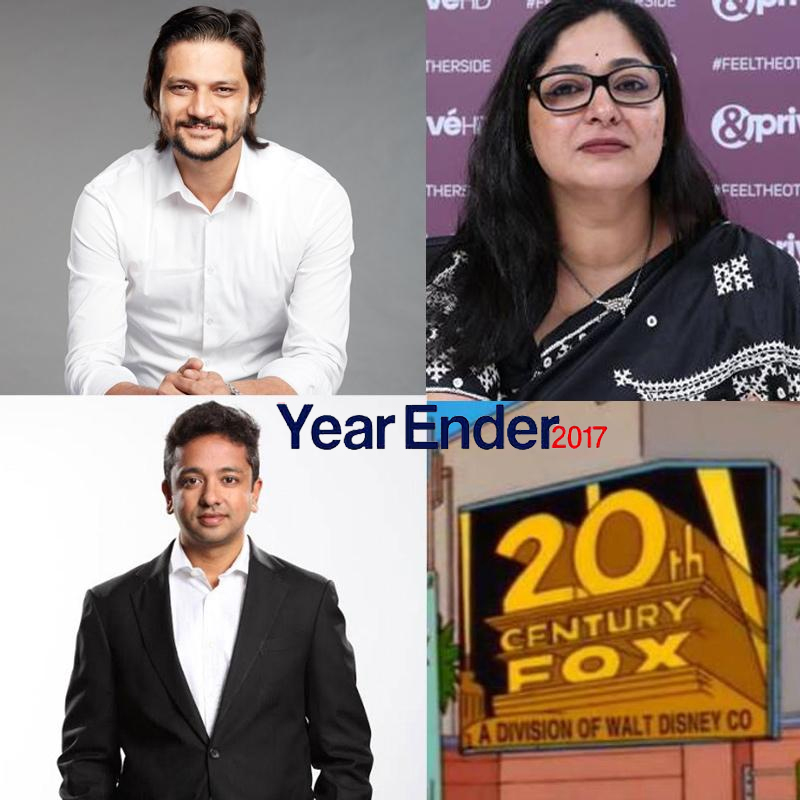
    The year ended with a blockbuster deal where the Walt Disney Company acquired 21st Century Fox’s film and television studios for $52.4 billion. After the acquisition, 21st Century Fox will separate the Fox broadcasting network and stations, Fox News channels, Fox Business Network, FS1, FS2 and Big Ten Network into a newly listed company ‘Fox’.

    With one merger out of the way, the big studios remaining are Warner Bros, Universal, Viacom’s Paramount, Sony Pictures and The Weinstein Company.

    The English movies TV channel market in India is worth Rs 4.5-6 billion and the viewership of English content on HD channels is on the rise. In 2015, India had five million HD STBs, which saw a 160 per cent increase over the past three years. Today, India has around 10.8 million HD STBs.

    “English movies have always been about smart acquisition and smart scheduling. Consumer segmentation will dial up the next level of growth for the cluster in 2018. Social media has played an important role, getting consumers closer to their content. As long as the platforms have a distinct offering and stay true to their content, viewers will be there”, Srivastava added.

  • DTH’s year of consolidation

    DTH’s year of consolidation

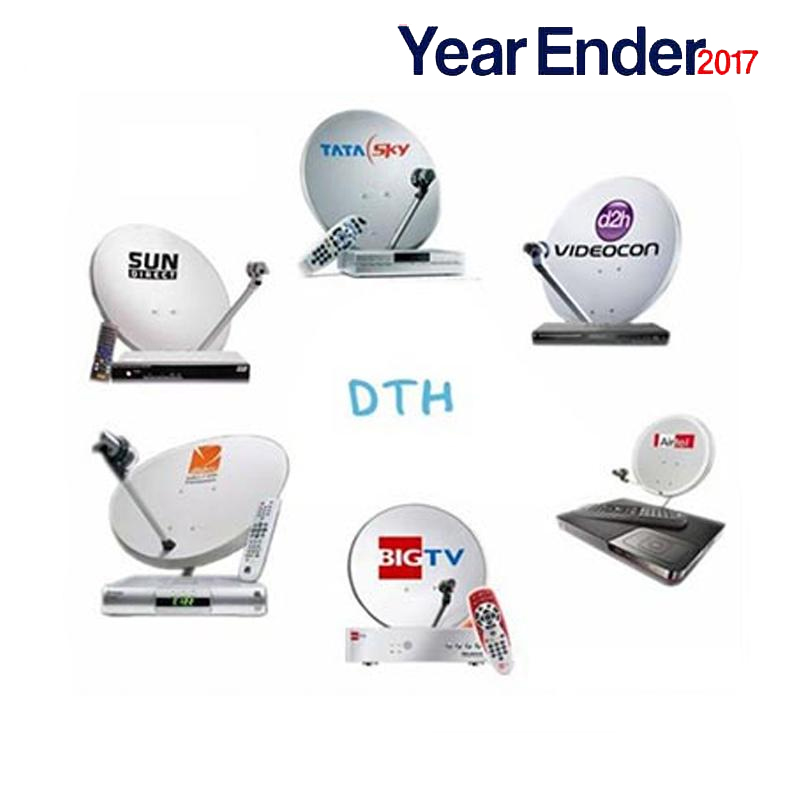
    MUMBAI: It would be safe to say that this was the year of the big DTH challenge. India’s cable TV multi system operators (MSOs) could not go into many phase IV areas and DTH stepped in wherever analogue broadcast signals were switched off following the crossing of the digital addressable system (DAS) deadline. Whether it was Tata Sky, FreeDish, Videocon d2h, Airtel Digital TV, Sun Direct or Dish TV, they all played a part.

    The going, however, was not as smooth as it could have been. High capex and opex and low ARPUs continued to dog the video distribution vertical making it an extremely low or no-margin business. While in the early days customer acquisition was the driver for most distribution platform operators, currently their eye has been on cost-efficiencies. This was evident from the ongoing overtures three of the players were making to others. Dish TV and Videocon d2h were already going through the throes of merging, the Anil Ambani-owned Reliance Big DTH was shopping around having conversations with almost every player, and there were talks of Airtel and Tata Sky possibly getting into bed with each other.

    The first nearly came to pass in 2017 with the two companies getting clearances from all quarters—government, courts and company law board—but getting stuck over the year end because of a technical difficulty. Reliance Big TV was sold to an IT and electronics company Veecon that sells security scanners and tablets–the wealth of its promoters is rumoured to be from selling religious lockets. Veecon said it would renew the Big TV licence by giving the requisite bank guarantees and ensure TV continuity for its approximately 1.2 million customers and jobs for nearly 500 people. It also announced that it would take Reliance Big DTH free to air (FTA) and announced a partnership with Sri Adhikari Brothers to launch a clutch of channels that would prove to be drivers of the platform. How Veecon will pay off Big TV’s payments to broadcasters was not clear at the time of writing and will decide whether the platform will ever take off.

    However, its announcement came at a time when the government had shut the door for private broadcasters and DD FreeDish, which had shown gee whiz growth rates, had come up as a powerful DTH player. New Ministry of Information and Broadcasting (MIB) minister Smriti Irani refused to make channel renewals for which several broadcasters took it to the Telecom Disputes Settlement Appellate Tribunal (TDSAT). An interim order gave the channels, whose licence was soon to expire, relief that they could continue by paying similar prices till Prasar Bharat came up with an alternative proposal and a convincing explanation to throw out private TV channels off DD Free Dish. It is expected that Prasar Bharati will formulate its new policy akin to the FM radio auction wherein 50 per cent of revenue is shared, apart from the bid amount, in e-auctions. Talk internally is that none of this would happen and DD Free Dish is most likely going to be used solely to relay government channels.

    Media reports also said sometime in the second half of the year that there could be more synergies between the Tatas and News Corp-promoted Tata Sky and Airtel Digital TV with possible merger talks taking place. That hasn’t happened as of now but the Airtel group did end up buying out certain telecoms asset of the Tatas.

    Also, private equity firm Warburg Pincus announced its decision to own 20 per cent stake in Airtel Digital TV for $350 million, leaving 80 per cent with Airtel’s promoters. That valued the Mittal-owned DTH service at a whopping $1.7 billion, which was mouthwatering news for the DTH pioneers. By September, Airtel claimed ownership to 14 million subscribers with revenue of $550 million.

    The year was significant for the fact that the DTH operators led by Tata Sky and Airtel Digital decided they had to take a tour of the court. The Harit Nagpal-led operator challenged the Telecom Regulatory Authority of India’s (TRAI) order on tariff and the reference interconnect regulations. The order stated that all stakeholders must abide by rates fixed by broadcasters. Joining Tata Sky in court was Airtel.

    Dish TV, the oldest DTH player in the country, appointed Anil Dua as its new CEO even as the company’s integration with Videocon d2h was on the anvil. Dish TV’s CMD Jawahar Goel raised an alarm over Star India’s monopoly in cricket events that, after its acquisition of the rights for the Indian Premier League (IPL), would force DTH players to include Star Sports channels and result in the broadcaster pricing the sports channels exorbitantly. No government reaction was forthcoming on this issue. Dish TV also took Star channel Life Ok to the TDSAT claiming that it could not rebrand itself as an FTA from a pay channel without sufficient intimation. Life Ok is today Star Bharat and a leading channel in BARC viewership ratings, riding on the expanded viewership courtesy Doordarshan’s FTA KU-band platform called DD FreeDish.

    For the quarter ended 31 March 2017, not only did subscriber additions dip drastically, but were also the lowest for a quarter in the financial year 2016-17. Airtel, Dish TV and Videocon saw total addition of just 8.33 per cent to 41.13 million for the concerned financial year. By 30 September 2017, there were just 2.47 million additions to the DTH industry as per TRAI, which was way below the 3.37 million it gained in the same six months in 2016. Moreover, active subscribers added in the July-September quarter were just 0.78 million, half of the figure from the corresponding quarter a year ago. Dish TV, Airtel DTH and Videocon d2h make up 63-65 per cent of the total active subscribers while Tata Sky holds about 21 per cent and Sun Direct 11 per cent. DD Free Dish is estimated to have 22 million subscribers and is expected to touch 40 million in two to three years.

    The second half of the year saw the introduction of the goods and services tax (GST) that gave a breather to those consuming cable and DTH services. Whereas customers once paid anything between 10-30 per cent as entertainment tax as well as a 15 per cent service tax, it was now fixed at 18 per cent. The Punjab government also announced that it would be adding a new entertainment tax to cable and DTH connections with the latter having to bear Rs 5 a month.

    Sun Direct is a major DTH player in the south holding about 40 per cent of the area. It also makes up 97 per cent of its total subscribers. Sun Direct took up an HEVC media solution from Harmonic to increase its HD channel number to 80.

    Profit after tax (PAT) for Videocon stood at Rs 168 million for the quarter ended 30 September 2017, which was just Rs 12 million for the previous quarter and Rs 148 million for the corresponding quarter a year ago. Dish TV, however, was in the red with net loss of Rs 178.7 million for the quarter as against PAT of Rs 689.6 million for the same quarter a year ago. During the quarter ended 30 September 2017, Airtel reported PAT of Rs 12,990 million down from Rs 27,350 million from a year ago.

    Videocon d2h and Airtel showed good average revenue per user (ARPU) numbers in 2017. The former raked in Rs 212 for the quarter ended 30 September 2017 from 13.25 million subscribers (a 0.21 million increase from the previous quarter). The ARPU for the previous quarter was Rs 198 while a year ago quarter was Rs 209. Dish TV’s ARPU for the same quarter was Rs 149, a rupee higher than the trailing quarter. It had a total of 15.1 million subscribers. ARPU for Airtel Digital TV stood at Rs 233 in the respective quarter, up from Rs 228 in the previous quarter and Rs 232 in the year ago quarter. Tata Sky does not release its financial numbers but analysts pinpoint its ARPU to be close to Rs 300.

    Dish TV introduced numerous value-added services (VAS) to encourage more viewers such as the Dance Active and Disney Active series, cardless STBs, 32 educational channels under Swayam Prabha. Early on in the year, it cut the rate of its base pack to Rs 33 a month to counter the free services by DD Free Dish. It even went to the extent of allowing people to curate their own packs by picking individual channels. Dish TV added 23 channels, which included nine HD ones.

    Tata Sky came up with a Make My HD pack for as low as Rs 30 per month and a regional HD Access pack at Rs 50 per month for users subscribed to regional SD channels. The channel targeted the south market with a South special pack at Rs 290. Dish TV campaigned for HD in all homes by removing the access fee on it and advertising a cost as low as Rs 169 per month (excluding taxes). Countering DD Free Dish, the oldest DTH player also introduced an FTA pack with a price translating to Rs 32 a month.

    On the technology front, Airtel’s hybrid STB was officially the first to launch in the market, bringing to consumers the best of both worlds–satellite channels and content available on the internet. The STB also came preloaded with Netflix and YouTube allowing even a regular TV to turn ‘smart’ courtesy an inbuilt wi-fi feature and Google voice search. Dish TV launched its new card-less security feature with Verimatrix as well as an artificial intelligence-enabled chatbot called ADI.

    For the coming year, the industry will likely see the outcome and growth of the first merger between Dish TV and Videocon and the synergies they bring to the industry. FreeDish is expected to be a big player in the remote parts of the country, especially with FTA broadcasters dancing to their tune. DTH operators have to still work hard to increase ARPU and maintain profitability.


  • 2017 a year of rebranding and extending time slots for Hindi GECs

    2017 a year of rebranding and extending time slots for Hindi GECs

    MUMBAI: The year 2017 was a roller-coaster ride for Hindi general entertainment channels (GEC) in the truest spirit of the term. The tussle for the top slot in the Broadcast Audience Research Council (BARC) ratings has seen pay TV and free-to-air (FTA) channels hold on tight to the rope.

    Be it upping the ante on content experimentation, bigger budgets, launching new time slots, shutting down time slots, rebranding channels or introducing innovations in the traditional working style, broadcasters have gone beyond their limits to make their audiences drool. We at Indiantelevision.com bring to you the highlights of the year that was across Hindi GECs.  

    Star Plus

    Known for experimenting, Star Plus continued to innovate in 2017. It reintroduced Star Dopahar, after a gap of eight years, earlier this year with fresh shows. The success of the early prime time encouraged the channel to go ahead with bringing back the Dopahar (Hindi for afternoon) slot. 10-second ad rate for the afternoon band was approximately Rs 40,000-50,000.

    Four new shows were introduced – Tu Sooraj Mein Saanjh, Piyaji, Kya Kasoor Amla Ka?, Dhai Kilo Prem and Ek Aastha Aise Bhi. But after winning the rights of the Indian Premier League this year, it decided to pull the plug on the afternoon band. Apart from the time slot, Star Plus experimented with the content as well. The channel launched a historical show Aarambh on 24 June 2017. Before the launch of the show, it was supposed to be a 32-episode series but due to low ratings, it went off air at 24 episodes. The show had brought together the best of talent from across genres in India ranging from veteran actress Tanuja Mukerji to writer Vijayendra Prasad from Baahubali and director Goldie Behl under one banner.

    On the fiction front, Star Plus launched Iss Pyar ko Kya Naam Doon season 3, Dil Sambhal Jaa Zara, Rishton Ka Chakravyuh, Pardesh and Koi Laut Ke Aya Hai and others. On the non-fiction side, the channel launched Dance Plus season 3 along with a new dance reality show Dance Champions. This year, Hindi GEC also witnessed a comeback of The Great Indian Laughter Challenge after nine years. The first four seasons were aired on Star One and the fifth season was launched on Star plus. The broadcaster also bought an American music reality show to India, Lip Sing Battle based on Lip Sync Battle with Farah Khan.

    Towards the end of 2017, the channel is all set to launch yet another unique show TED Talks India: Nayi Soch, a global first Hindi TV talk show created in partnership with TED, the non-profit devoted to ‘ideas worth spreading,’ and hosted by Bollywood superstar Shah Rukh Khan. The show was launched on 10 December.

    Colors

    Maintaining the trend, Viacom 18’s Hindi GEC channels Colors, extended its programming to an early evening band starting 5 pm onwards and also introduced a new time slot on weekends. This year, Colors drew back its prime time to begin at 5.30 pm on weekdays. The channel launched two new shows Bhaag Bakul Bhaag and Savitri Devi College and Hospital at 5.30 pm and 6 pm. The channel shifted its fiction show Thapki Pyaar Ki to 5 pm.

    Back in 2015, the channel had opened a new slot at 8 pm on weekends for Balaji Telefilms’s Naagin. The experiment really worked for the channel as the show topped the ratings charts. In 2017, the channel again experimented and extended the weekend slot to 7 pm with Swastik Production’s Mahakaali in July. Innovating more with the weekend programming lineup, the channel launched an afternoon band on weekends with Aunty Boli Lagao Boli at 12pm on Sunday.  It’s a new Live interactive game show, developed and conceptualised by Viaan Industries – promoted by entrepreneur Raj Kundra and Shilpa Shetty Kundra. After launching a 12 pm slot on Sunday, the channel launched another show at 1pm, Rasoi Ki JungMummyon Ke Sang.

    Colors has always been strong on the mythological and fantasy drama side and is currently airing three shows including, Mahakaali, Shaani and Chandrakanta.

    Zee TV

    2017, has been an exciting year for Zee TV. The network gobbled up RBNL’s TV broadcast business which includes Big Magic and Big Ganga. After acquisition, the network revamped Big Magic into Zee Magic. The channel launched four shows including Shaktipeeth Ke Bhairav that will depict the mythical story of 52 shaktipeeths from the perspective of one of the most powerful and raging forms of Lord Shiva – Bhairav. Kunwara Hai Par Humara Hai, Tera Baap Mera Baap and Deewane Anjane are amongst them.

    The other acquisition was 9X Media’s music channels for Rs 160 crore. 9X Media, along with its subsidiaries, operates a bouquet of six music channels – 9XM (Latest Bollywood), 9X Jalwa (Evergreen Hindi), 9X Jhakaas (Marathi), 9X Tashan (Punjabi), 9XO (English), 9X Bajao (Hindi Classics).

    The Subhash Chandra-led company also made its mark by completing 25 years in the TV industry. To celebrate the monumental achievement, it rebranded Zee TV with a new logo and tagline ‘Aaj Likhenge Kal’.

    The network launched a kids drama Bhootu at the 6.30 pm time slot. Two fiction dramas and a homegrown reality show have been, time and again, propping up Zee TV’s ratings in 2017– Kumkum Bhagya (which did it for the channel in the previous calendar year also) and Kumkum Bhagya – Kundali Bhagya. And Zee TV’s home grown reality show is the music talent hunt Amul Sa Re Ga Ma Pa Little Champs. Zee TV topped the ratings amongst the Hindi GEC in BARC weekly data for top 10 channels across genre: (All India (U+R) : 2+ Individuals). Zee TV was ranked second after the Sun Network’s flagship Tamil GEC Sun TV in week 44 of 2017. This time around for Zee TV, it was the spinoff that had a larger viewership in the Hindi GEC HSM (U+R) and Hindi GEC HSM (U) market than the original.

    Sony Entertainment Television

    Sony started off the year by extending its primetime to start from 7 pm. This year, SET has introduced variety. On the fiction front, SET is one of the few Hindi GECs which has focused on mythological and historical shows this year apart from daily dramas. The channel launched Peshwa Bajirao, Vighanharta Ganesh, Mere Sai- Shardha & Subri, Porus and Prithvi Vallabh. Swastik Production’s Porus is rumoured as one of the most expensive TV shows at a production value of nearly Rs 400-500 crore and the ad rates for a 10-second slot is pegged between Rs 1.5-2 lac per episode.

    The channel found itself in a fix when the Broadcasting Content Complaints Council asked it to remove the controversial show Pehredaar Piya Ki. The soap opera, with a story-line where a minor boy is shown married to a young adult woman, who also doubles up as his security guard, had come under criticism for allegedly promoting regressive ideas like child marriage, which is an offence under Indian laws.

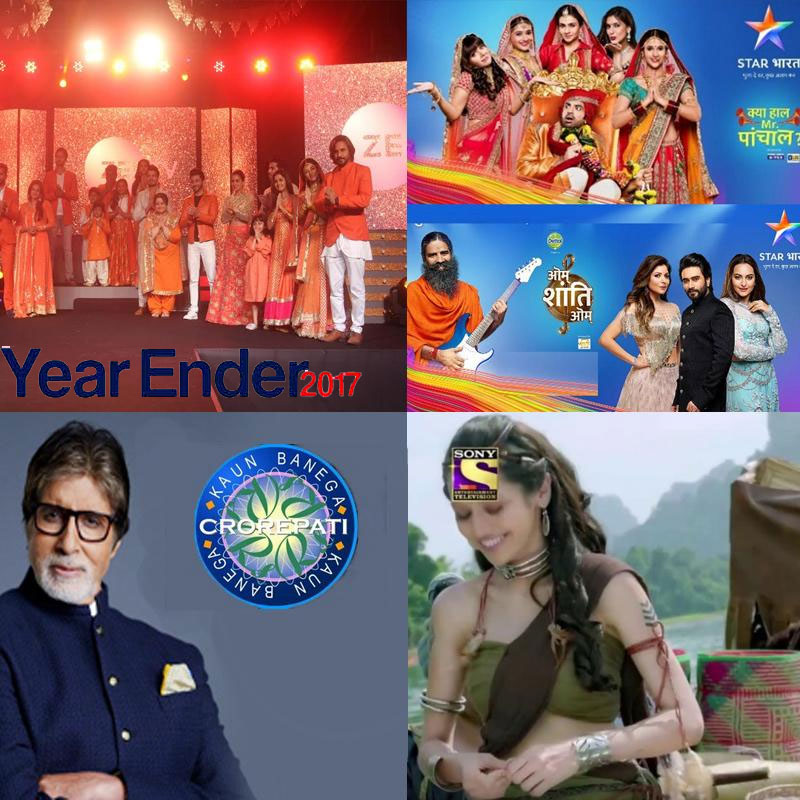
    On the non-fiction front, the channel launched a slew of new shows like Indian Idol, Super Dancer season2 and many more. Apart from this, the channel launched Sony’s iconic property Kaun Banega Crorepati (KBC season 9 ). This time, the show has seen many changes in the format with one being that the show had shortened to just 35 episodes with each one having a duration of 50-60 minutes. The entire inventory was sold out prior to launch with brands such as Jio, Vivo, Axis Bank, Datsun, etc on board.

    The Kapil Sharma Show, which it had snagged from Colors, went off air since the lead Kapil Sharma was busy with his own film promotions. It is expected to re-launch soon.

    Star Bharat

    On 28 August 2017, Life OK was revamped with a new name, logo, tagline and a lineup of fresh original shows. It debuted on the free-to-air DTH platform DD FreeDish with its parent having successfully bid for a place after coughing up a shade over Rs 160 million. That Star Bharat continues to be available on other cable and DTH platforms could be another masterstroke.

    Earlier reported by Indiantelevision.com, in week 36, Star Bharat took the second position in the GEC category garnering 669588 (000s) Impressions and 378234 (000s) Impressions, respectively, in the urban+rural and rural markets. The two-week-old channel’s reach too had gone up by 15 per cent from week 35-36, while the ratings or impressions grew by 29 per cent. In contrast, in week 34 of BARC India ratings, Life OK (the earlier avatar of Star Bharat) was placed at 10th  spot in the urban + rural market with 328571 (000s) Impressions, while in the urban market it did slightly better at sixth position with 213162 (000s) Impressions.

    Sab TV

    The year 2017, has been the year of re-branding for Sab TV. In July 2017, the channel went under re-construction and got a new logo, tagline and a brand ambassador.  Bollywood actor, the ever so popular and young, Varun Dhawan was signed on as the channel’s brand ambassador to help attract this untargeted demographic. After the revamp, the average ratings of the channel before rebranding was 193 million impressions, which has increased to 212 million impressions, post rebranding.

    Another year has come to an end but the creativity and innovation don’t stop. With full digitisation expected take place soon and with the growth of the country’s internet connectivity, GECs are expected to utilise digital mediums to reach out to masses wherever they might be. TV isn’t just going to be about the living room box anymore.

  • The year of hiccups for marketers

    The year of hiccups for marketers

    MUMBAI: The year 2017 was when brands were unwillingly thrown into a roller-coaster ride only to emerge dizzy and faint. The highs weren’t enough to ride out the lows.

    2017 will be seen as a year of turmoil for brands. Just when the effects of last year’s demonetisation were ebbing away, the government threw another spanner in the works in the form of the goods and services tax (GST).

    Much before its implementation, marketers and consumers cheered on the GST to be a saviour for the industry, touted to solve multiple tax complications. But its launch timing, months after demonetisation, crippled the Indian economy even further primarily due to faulty implementation.

    The year began with the economy regaining its composure after the ban on bills of Rs 500 and Rs 1000, which led to troubled times for businesses across the country, especially in the cash-dependent sectors. No one was spared from the effects, be it kirana stores, big FMCG players or media and advertising agencies. As physical money became dear, online payment apps were the saving grace. Paytm, Mobikwik, Zappr and the likes became a must-have app for a majority of Indians and their profits grew four fold by March 2017. 

    In the months after GST was passed, sales crashed, margins dropped and marketers became extra cautious before investing in new products and advertisements. Brands steered away from marketing and advertising post August, which otherwise is considered as the ideal period for creating new campaigns as the festive season in India commences from September and goes up all the way till the new year.  

    The crashing economy brought down infrastructure, including real estate, to its knees and crushed consumer demand with the implementation of the new Real Estate Regulation and Development Act (RERA) in May. Slow implementation of the new real estate regulation across the country as well as uncertainty over the impact of GST on home prices pulled down consumer sentiment this year. According to a report by the Centre for Monitoring Indian Economy (CMIE), home loan growth in April-October fell by 32.7 per cent from a year ago, one of the biggest declines in the last five years.

    It was not only the FMCG and real estate sectors that had a nightmarish 2017. The USD35 billion liquor industry was subjected to one of the worst hangovers not only because of GST but also because of a Supreme Court ban on all alcohol sales within 500 meters of highways across India from 1 April 2017. Although the ban was implemented to curb drunken driving on highways, it dried up the hospitality industry, state government and liquor companies who ended up losing Rs 50,000 – Rs 70,000 crore. The market fell nearly 30 per cent in the immediate quarter after the highway ban and at least 1,500 retail outlets closed down.

    After all the bad news, 2017 also saw some strong revenue figures and new entrants in the market. Patanjali recently became India’s most trusted FMCG brand as per The Brand Trust Report India Study 2017. Valued at over Rs 30 billion, Patanjali estimated its annual turnover of the year 2016-17 to be Rs 10,216 crore. In November this year, the company also signed a memorandum of understanding (MoU) of Rs 10,000 crore with the Government of India at the World Food India 2017. To buck up against the Baba Ramdev-led ayurvedic company, top FMCG players went the whole nine yards in their bids to recapture the markets they lost. While Hindustan Unilever Limited (HUL) launched its version of ayurvedic products under brand Ayush, homegrown FMCG major Dabur is in the process of modernising its ayurveda portfolio and introducing new products. The multimillion-dollar company also launched a traditional ayurvedic product Dashmularishta and menstrual pain relief tonic Ashokarishta. 

    Lever Ayush, in its first campaign, took a potshot at Patanjali by pointing out the naive ways in which we categorise ayurvedic products like skincare creams, soaps and toothpaste. It went on to say that not every product with green packaging or leaves on the cover essentially fit ayurvedic ingredients. The company has managed to create its dominance in the southern market by aggressive marketing and advertising. 

    According to a Nielsen Report, herbal segment in India accounts for 41 per cent of the Rs 45,000 crore personal care market. Hence, sectoral leader HUL has come out all guns blazing in a field so far ruled by Patanjali, while Colgate-Palmolive has placed its own natural products to take back its market in the toothpaste segment and Dabur India now has a major share in the honey segment as opposed to Patanjali. 

    Television remained the strongest sector for advertisers this year despite depressed economic conditions while digital continued to ride on a high growth trajectory. Advancement in infrastructure, evolving audience measurement technology leading to better content and lowering data costs induced viewers to greater digital consumption. Television advertising is expected to grow at over 10.3 per cent with free to air channels gaining significance, localised content and high-definition experience boosting regional channels’ viewership and sporting leagues outside of cricket becoming increasingly popular.

    public://Untitled-2_18_0.jpg

    public://Untitled-3_22_0.jpg
    Source: Group M

    Print media continued to witness a slowdown in 2017 where while English newspapers remained under pressure, regional language papers demonstrated strong growth.

    The out of home (OOH) industry registered a slowdown in growth rate at seven per cent majorly due to adverse impact of demonetisation and GST but is projected to grow at a CAGR of 11.8 per cent primarily driven by development of regional airports, privatisation of railway stations, growth in smart cities, setting up of business and industrial centres, and growing focus on digital OOH.

    The year also saw a rise in influencer marketing and brands sent out messaging by using ‘internet celebrities’ to put in a good word for the product on social media. According to Business Insider Affiliate Marketing Report, approximately 15 per cent of the digital media industry’s revenue is achieved through affiliate (influencer) marketing. A recent report suggested that 40 per cent consumers are sold on a product or idea if an influencer they followed were to recommend it. 

    The turmoil in the Indian telecom industry can be attributed to several things. Smartphone penetration in the country increased this year by three folds and today India has over 300 million smartphone users which is projected to grow by more than 50 per cent in the next few years. According to Counterpoint research, 300 million people out of 650 million phone users own a smartphone, making India a big market for brands and telcos. Indian tycoon Mukesh Ambani sparked a price war in 2016 with the launch of Reliance Jio with other telecom giants scattering to acquire market share. Vodafone and Airtel lured customers with data at cheap prices and unlimited calls. But Reliance Jio clearly won that war. Within the first month of commercial operations, Jio announced that it had acquired 16 million subscribers. This was the fastest ramp-up by any mobile network operator anywhere in the world. Jio crossed the 50 million subscriber mark in 83 days since its launch subsequently crossing 100 million subscribers on 22 February 2017. By October 2017 it had about 130 million subscribers. 

    On 21 July 2017, Jio introduced its first affordable 4G feature phone, powered by KaiOS, named as JioPhone. The price announced for it was Rs 0 with a security deposit of Rs 1500 which could be withdrawn back by the user by returning the JioPhone only after 3 years. This phone was released for beta users on 15 August 2017 and pre-booking for regular users started on 24 August 2017. 

    In order to strengthen its presence in the ongoing battle of the telecom sector, Sunil Bharti Mittal-led Bharti Airtel launched Android powered 4G smartphones in partnership with Indian mobile company, Karbonn Mobiles. Airtel will partner with multiple mobile handset manufacturers to create an ‘open ecosystem’ of affordable 4G smartphones and bring them to market for virtually the price of a feature phone. It is also in talks with Intex mobiles for similar offerings. Domestic handset maker Micromax and Vodafone came together to offer a smartphone, effectively at a price of Rs 999 if the buyer retains the device for three years.

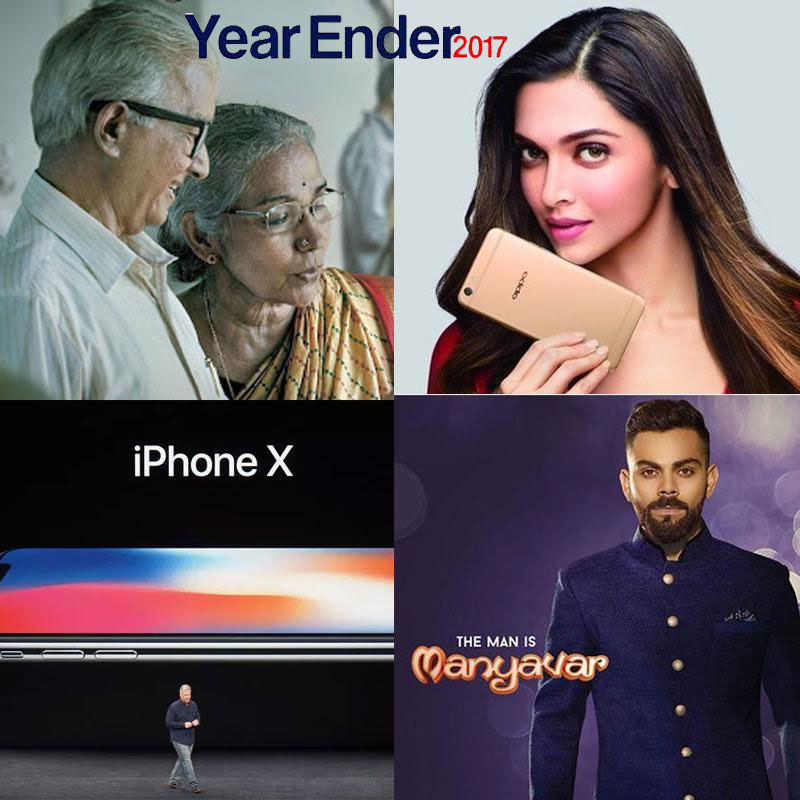
    With data becoming much cheaper this year and mobile manufacturers selling handsets at throwaway prices, mobile handsets became much affordable and smartphone penetration increased three folds. A lot of this has to be credited to Chinese players who took the Indian smartphone market by storm. While Vivo and Oppo were aggressive in marketing their products, both invested heavily in OOH advertising in 2017. We saw a lot of hoardings and static banners with Deepika Padukone (Oppo), Ranveer Singh (Vivo) and Virat Kohli (Gionee) promoting their respective brands (as brand ambassadors). While Vivo came on board as the title sponsor for India’s premier cricketing league IPL, rival Oppo became team India’s official jersey sponsor for all its matches for five years. 

    According to various reports, today Chinese brands such as Lenovo, Oppo, Vivo, Gionee and Xiaomi have captured over 50 per cent share of India’s smartphone market even as Apple and Samsung fought a tough battle to hold on to their reigns.

    Amidst all this, the biggest highlight of the year in the space was the launch of Apple 8 and Apple X. The company launched its flagship phones in much fanfare in September this year on its 10th anniversary.

    Still recouping from the setbacks of 2017, marketers are pinning hopes on 2018 that improved market sentiment will bring them back to a steady growth path. The prospects of good economic growth, coupled with a revival in demand and consumption, will help them overcome the hit they took in volumes and profits in 2017.

  • 2017: The year OTTs went regional in India

    2017: The year OTTs went regional in India

    MUMBAI: Over-the-top (OTT) services were undoubtedly the centre of attraction in 2017. The boom in India’s internet users, mainly aided by the growth of Reliance Jio, ensured that OTT players got the right reception and target audience. Not just  mainstream TV broadcasters but even smaller players exponentially increased their consumer engagement on digital.

    Viewership increased as data cost decreased. Consumers were entertained and content makers got a boost to create fresh stories. The online content library was flooded with genres like comedy, thriller, drama, romance, rom-com, suspense, action, humour, reality, etc.

    Regional India was the focal point for 2017 and will continue to be in 2018. It also enabled new companies to take a risk in the OTT space. Tamil, Telugu, Malayalam, Kannada, Bengali, Marathi, Punjabi and Gujarati languages have been pampered the most by the creators.

    Comedy emerged as the ultimate king in 2017 along with the rise of stand-up comedy. Ideas increased and so did production cost due to competition. Movies jumped over TV to directly go for digital movie premieres. However, this turned out to be a costly affair for OTT players but a good bargain for producers.

    Another trend was of creators holding IP rights for content instead of the platform.

    There’s no shortage of OTT platforms now, just like the rising number of TV channels. Let’s take a look at how some of the main players performed last year.

    Amazon Prime

    Amazon Prime, which recently completed one year in India, hiked its annual subscription fee to Rs 999 from the initial annual subscription of Rs 499 in India. In its first month, Amazon had 5.82 million active users, according to data from app tracker App Annie. That number almost doubled by May to 9.57 million. Total engagement time tripled from 622 million minutes to 1,815 million minutes in the same period. In the month of August, Amazon India had a big fall when its director and country head, Nitesh Kripalani resigned, but then Vijay Subramaniam, who has been in the entertainment industry for 25 years, joined Amazon for the interim as content head in June 2017.

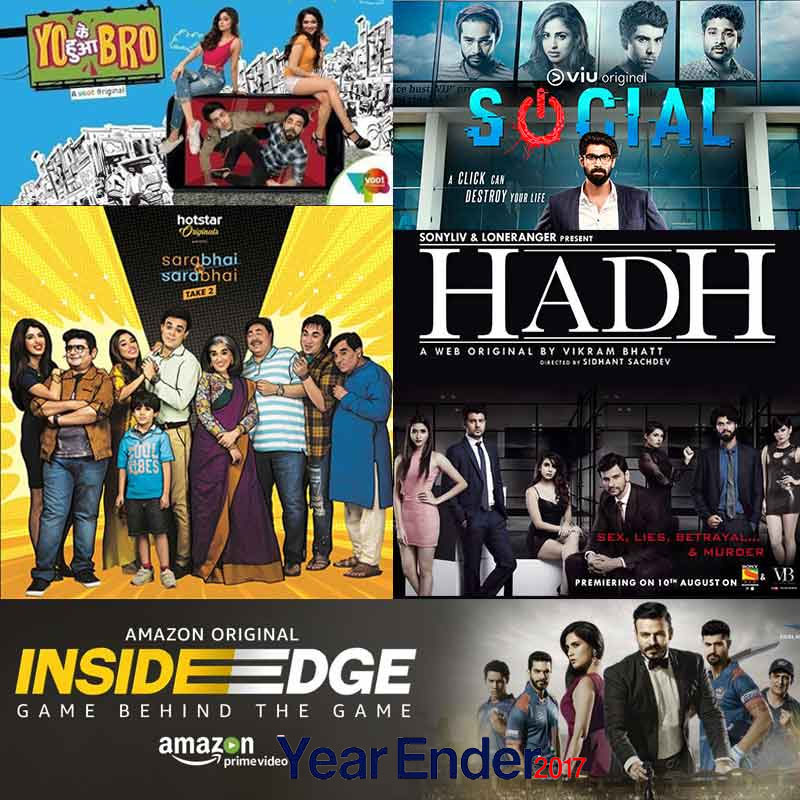
    It launched the first original series Inside Edge in collaboration with Excel Media & Entertainment in July 2017, which is now available on Apple TV, Sony PlayStation and Vodafone along with the library of Amazon Prime. The OTT platform is expected to come up with four Indian originals series, i.e., Breathe, The Remix, Comicstaan and Mirzapur in 2018.

    Amazon realised that kids content will play an important role. It tied up with Green Gold Animation for Chhota Bheem and its new series Kalari Kids. It also commissioned an animated version of mega-blockbuster Baahubali.

    Amazon Prime Video has bet big on Indian movies by releasing them on the platform before they leave theatres. It has signed a digital rights deal for five movies of Bollywood actor Salman Khan before it goes on to television for $10 million. Tubelight was the first and Salman’s next four movies, including Tiger Zinda Hai, will come to Prime first, television next. It has also bagged the streaming rights for the movies like Lipstick Under My Burkha, 2.0, Arjun Reddy and much more along with the streaming rights for the year’s most controversial movie – Padmavat.

    Comedy is a big market in India, so Amazon went after it by associating with OML for 14 exclusive stand-up comedy specials and six new series created by stand-up comedians like Anuvab Pal, Biswa Kalyan Rath, Kenny Sebastian, Zakir Khan, Sumukhi Suresh and Varun Thakur. 

    Viu

    Viu, the OTT video service by PCCW, focused on regional content in the year 2k17 and extended the library with over 3000 hours of compelling original content in Asia. As of October 2017, the global number of downloads was 26 million to which India contributes 9.5 million. Viu rolled out its first ad campaign titled ‘Kaaf feels Bro’ from 28 August. The company has appointed Times Network’s Shantanu Gangane as the head of marketing of Viu in January. It has also enrolled Eros International Media’s Sameer Gogate as distribution and monetisation head of Vuclip for converting certain costs in revenues through non-ad revenues.

    In the beginning of the year, the platform promised to create long and short form regional original shows and started with Telugu as a region with shows such as Cinema Pichollu, Pelli Gola and PillA as well as Gehraiyaan, Spotlight, No. 1 Yaari, Munching with Mahathalli and Social. It also experimented with cricket comedy chat shows like What the Duck and Virender Sehwag’s micro-original Viru ke Funde. Viu also partnered with Nicotex for an adventure journey series I Can You Can. Apart from Indian languages, it has a big original content library of Korean language shows, which is now available for Indian audience. It inked a licensing deal with content house Shemaroo Entertainment to access a handpicked catalogue of Hindi movies.

    Viu created a new trend of bilingual content in Telugu and Hindi like Social, which is the first such show. There will be more bilingual shows next year.

    As a part of the global strategy, Viu has formed strong partnerships with Samsung, Micromax, Vikram Bhatt’s Loneranger Productions and Annapurna Studios for creating refreshing original localised content that keeps the viewers glued.

    Amazon’s Fire TV streaming stick, which launched last month in India, has added Vuclip’s streaming service Viu as an app on its platform.

    Hotstar

    As an early entrant in the OTT space, Hotstar has been building a differentiated proposition for its free and premium users comprising local and international TV shows, movies and live sports, helping it cross 175 million downloads and 60 million users in January 2017. Hotstar continues to have the largest number of active users about 69 million in May, according to AppAnnie. Based on the November report, Hotstar topples the chart across all platforms with 15 billion minutes total time spent in the month.

    Hotstar has appointed Punitha Arumugam as platform evangelist, with the mandate to showcase the power of the platform to India’s leading brands. 

    This year, Hotstar launched an original series in Tamil, in association with celebrated film director, Balaji Mohan, titled As I’m Suffering from Kadhal on 6 June. Apart from Tamil, the series was dubbed in Telugu,with English subtitles available for both languages. Hotstar brings back comedy show Sarabhai vs Sarabhai this year. It streamed Kabaddi World Cup in Ahmedabad in stereoscopic 3D virtual reality. News platforms like Republic TV and ABP News were added to its live feed.

    Disney acquired 21st Century Fox in December but before the acquisition could take place, Hotstar inked a multi-year SVOD deal with Disney India to showcase the studio’s hits exclusively on its premium offering in India which includes movies like Lucasfilm Star Wars: The Force Awakens, Disney’s The Jungle Book and Moana, Marvel’s Captain America: Civil War and Doctor Strange, Disney.Pixar’s Finding Dory amongst others.

    The highly anticipated premiere of Game of Thrones Season 7 launched on the platform on 17 July, with the first episode available for viewing within minutes of its American telecast.

    A new storytelling format, CinePlay, was launched under its originals banner that showcased classics and contemporary stories from the theatre world presented in a cinematic fashion. In April, Hotstar became the first ‘Made in India platform’ to cross 100 million downloads on Google Play Store and crossed more than 200 million downloads across Play Store, App store and other Android app stores.

    Jio TV

    The game changer of telecom and digital industry, Jio TV, has recently launched a web version of JioTV app which allows Jio users to access over 500 TV channels. This service was previously exclusive to mobile users via the app. Now with the support for web platform, users will be able to access TV channels through their web browser as well.

    Reliance Jio offers a suite of apps which includes JioTV, JioCinema, JioMusic, and more. Jio’s suite of apps is free along with the Jio Prime membership and users can enjoy all the content on these apps for free. On the other hand, JioTV, an online version of cable TV, that’s free as of now, has partnerships with almost all national and regional channels, and allows users to stream content up to seven days old. It also has JioCinema, which is a free movie streaming service.

    Jio had 42 million users in May and gained momentum in a short while with free data and free content service. Based on the November report by App Annie, Jio TV grabs the second position leaving behind all the OTT players with 8.8 billion minutes total time spent on the platform in the month.

    Netflix

    Netflix’s focus this year was entirely content, partnerships and technology to build a great experience in India. IT has announced six original productions in the country, namely Sacred Games, Selection Day, Again, Bard of Blood in association with Red Chillies Entertainment, our first kids original series from India, Mighty Little Bheem and Love Per Square Foot, the first mainstream film from India to be exclusively available on Netflix. Over 2017, Netflix tied up with Airtel Digital TV, Videocon and Vodafone to make it easier for Indian consumers to watch Netflix, whether on a set-top box or on a mobile.

    Simran Sethi joined Netflix International Originals Production Group in August after leaving the position of SVP of scripted development at Disney’s Freeform to lead the creative Indian content. Netflix executive Nick Nelson moved to Ownzones Media Network as the new head of product innovation.

    According to a Netflix survey, Indians are the second-highest public bingers in the world (88 per cent), just behind Mexico (89 per cent).

    SonyLiv

    SonyLiv played safe this year. It launched the first regional original series, in the Marathi language titled YOLO – You Only Live Once, conceptualised and developed by Indian Magic Eye. Later, it launched the first ever Gujarati rom-com web series titled Kacho Papad Pako Papad in May. SonyLIV and Jossbox have co-produced a web-series called House Proud. In the month of October, the platform came up with the second season of the home-grown originalLoveBytes 2 focussed primarily on youth issues. In association with Beyond Originals, SonyLiv served the last original of 2017 titled Black Coffee. Along with that, to see India fit-n-fine, in the beginning of the year, it launched health and wellness segment LIV Fit.

    SonyLiv partnered with Web Talkies, Pocket Aces (for Filter Copy and Gobble) and Fanform Mediaworks for originals content. It bet long on short films from the catalogue of Pocket Films by including 50 award-winning shorts in its bouquet. It joined hands with super chef Sanjeev Kapoor and food YouTubers like Rajshri Foods, Varun Inamdar and Ruchi Bharani to expand its unique food content library. 

    SonyLiv has appointed Times Internet’s regional head Maruti Indoria as national sales head for its sports division in February.

    To expand the reach, it has signed deals with Videocon d2h, Amazon Fire TV and Apple TV to enable customers to access a seamless broad selection of content available on SonyLIV app.

    Voot

    Viacom18’s digital venture Voot was a complete package of fun without pay. However, they unlike others, it planned a significant regional line-up for the next year. It launched several web series back to back this year which includes Time Out, Yo Ke Hua Bro, Stupid Man Smart Phone and Untag.

    Voot has also put the spotlight on the kids section and rolled out a hi-decibel TVC campaign to promote it Voot Kids in Hindi, Kannada and Marathi. It has included various internationally acclaimed characters in its kitty and aims to expand their kids library with 30 plus shows in the year 2018. In association with HDFC, Voot has launched digital talent hunt show for kids in the mid of the year.

    In its partnership with Google, Voot has turned its mobile website into a Progressive Web App (PWA) and won the coveted International Broadcasting Convention 2017 (IBC2017) Innovation Award for Content Distribution for its Progressive Web App (PWA) product – Voot Lite, in Amsterdam on 17 September. Next year, it is experimenting with making video available offline on its PWA.

    The key strategy of streaming Bigg Boss has awarded the platform with 550 million views till date and 60 minutes average time spent per viewer per day. However, shows like Splitsvilla, which is watched 52 per cent by males, has also added 150 million views.

    In 2017, Voot has gained 32 million monthly active users, six million plus daily active users and 50 minutes time spent per viewer per day. Their daily time spent has taken it to the second position after Netflix, according to App Annie November report. Also, it has secured third position with 7.5 billion minutes total time spent on the platform across all OTT platforms, followed by Hotstar and Jio TV, reported by App Annie.

    ALTBalaji

    ALTBalaji, the ad-free subscription-based platform that launched this year on 16 April with seven originals, today has 12+ original shows available on the platform apart from original regional stand-up comedy in languages like Marathi, Punjabi and Gujarati and content for kids. ALTBalaji recently launched the first Bengali original show Dhimaner Dinkaal and also has a Tamil original Maya Thirrai on the app and the website. It launched a big bunch of Hindi web series including Romil & Jugal, Bewafaa sii Wafaa, Boygiri, Class of 2017, CyberSquad, Pammi Aunty, Karrle Tu Bhi Mohabbat Season 1, Dev DD, Ragini MMS Returns and BOSE: Dead/Alive.

    ALT’s kid’s kitty is full with twelve shows including Get Crafty With Rob, Ding Dong Bell L-O-L, Moe Doe, Happy Lucky ki Katti Batti, Mademoiselle Zazie, Ratz, Nursery Rhymes and many more.

    Last year, Nachiket Pantvaidya was promoted to Group COO of Balaji Telefilms. In his current role as the Group COO and CEO ALTBalaji, Nachiket has additional responsibilities at Balaji Telefilms across the television and movie business.

    Within six months of its launch, ALTBalaji has been ranked amongst the top three revenue-grossing video streaming apps in the country, as per ‘State of Video Streaming Apps in India’ report compiled by App Annie Intelligence.

    ALT will begin 2018 with its Urdu language original series title Haq Se along with three Hindi originals The Test Case, Karrle Tu Bhi Mohabbat Season 2 and Mangalyaan.

    ZEE5, Ozee & Ditto TV

    The year was quite low key for Zee Entertainment Enterprises Limited’s (Zeel) already existing digital platforms Ozee and DittoTV. In the mid of the year, Zeel announced the launch of its new digital entertainment platform ZEE5. Existing platforms Ozee and DittoTV will be defunct and merge into the new platform Zee5, and the subscribers of both the existing platforms will be auto-upgraded. On Zeel’s 25th anniversary celebration, it launched the new logo of ZEE5.

    Yupp TV

    YuppTV, this year, added a new category of original series to its bouquet of offerings. It partnered various directors and production houses to provide original video content. Mid-year, it launched its first series, Endukila, written and directed by Laxman Karya. Later in November, YuppTV along with prominent producer Swapna Dutt, Vijayanthi Movies has launched another new web original Mana Mugguri Love story.

    YuppTV partners with leading production house, Yash Raj Films, to offer premium Hindi cinema to its subscribers on YuppFlix. Vodafone has also joined hands with YuppTV to expand its Vodafone Play service. It collaborated with cab aggregator Ola for its connected car platform for ridesharing, Ola Play.

    YuppTV, recently received funding from Emerald Media, a Pan-Asian platform established by leading global investment firm KKR for investing in the media and entertainment sector, wherein Emerald Media acquired a significant minority stake in the company for US$50mn.  YuppTV had earlier raised its Series A round of funding from Poarch Creek Indian Tribe of Alabama.

    Sun NXT

    Sun TV Network launched its digital content app compatible with every screen format, ranging from smartphones to living room TV called Sun NXT. The platform has a movie library of over 4000 titles, over 40 channels streaming live and catch-up TV programmes in Tamil, Telugu, Malayalam and Kannada. The company claimed that the app had already crossed more than 1.1 million downloads, within four days from its launch.

    Hoichoi

    Shree Venkatesh Films (SVF), a media and entertainment company of West Bengal, launched the first ever Bengali digital platform Hoichoi in September. In the last few months, the platform has released ten originals – Hello, Cartoon, Holy Faak, Dupur Thakurpo, Byomkesh, Bouma Detective, Paranoia Series, Bhootoorey and Stand Up across multiple genres like drama, detective, adult comedy, rom-com, thriller and non-fiction. The platform is aiming to expand the reach by launching on Amazon Fire TV, Roku TV and Apple TV in January 2018.

  • Making the news: A look at what news broadcasters did in 2017

    Making the news: A look at what news broadcasters did in 2017

    MUMBAI: News channels were thrown into a storm of activity in 2017 with each player keeping up its oars to wade out of challenges that hit at them like ten-foot waves. With elections and sensational news driving up viewership at various points throughout the year, English news channels had to fight back to the onslaught that was Republic TV.

    The entry of Arnab Goswami-led channel Republic TV increased the overall news viewing pie at the time of its launch but the hype did not last long and the genre went back to its minuscule share.

    To add to the theatrics, there were several top-level executive shifts in 2017. Let’s take a look at the various channels and their performance during the year.

    English News

    Republic TV stole the limelight with the news channel becoming the news itself. After its launch in May, the genre witnessed tough competition between Goswami’s former employer Times Now and his newly launched baby. According to BARC India, Republic TV hasn’t budged from the top from its inaugural week till week 50. It claimed to have 52 per cent market share in its very first week of operations, which started on 6 May 2017.

    Times Network had two big events to boast of-the rebranding of ET Now from a full-time business news channel to a general news channel and the launch of Mirror Now. Mirror Now’s launch got good response, especially from Bangalore and Chennai, with Faye D’Souza as the executive editor.

    For Times Television staffers who were working the late-night shift at the Kamala Mills Compound in Mumbai, the night of 28 December 2017 was a nightmare. The conflagration that swept through restaurant 1Above and claimed 14 lives could have gutted the Times TV Network premises, too, which was on the first floor of the same building.

    The net result: Times channels including Times Now, ET Now and Mirror Now went off air. And most distribution platforms carried an apology notice, in place of the live feed, which stated that the channel signals could not be received because of technical difficulties. In a recent interaction with Indiantelevision.com, Times Network MD and CEO MK Anand said that the channels’ success was the result of a combination of brand, process and team.

    Anand expects news to be more active and exciting in 2018. “And with better market conditions, now that GST and demonetisation are behind us, the overall English and news space is poised for a truly great ride through the new year,” he said. 

    The disruption that Republic TV brought about in the TV news genre was momentous and chaotic. Arnab’s new avatar unleashed not only a slew of litigations (the fight for copyright over phrases like ‘the nation wants to know’, for example) but also a flurry of allegations of malpractice and biased reporting. The News Broadcasters Association (NBA) wrote to the Telecom Regulatory Authority of India (TRAI) and to the Broadcast Audience Research Council (BARC) to hold up Republic TV’s ratings and get them checked, accusing it of broadcasting the channel on two LCNs on cable TV. When BARC refused to do so, NBA channels pulled out of the ratings for a week. Months later, Republic TV became a part of the NBA.

    NDTV group saw many ups and downs in 2017, which began with the raid at the NDTV office and home of cofounders Prannoy Roy and his wife Radhika Roy. In June, the CBI raided the residence of the Roy family alleging that the promoters and a private company linked to them, RRPR Holding, were involved in defrauding ICICI Bank and allegedly causing it losses involving loans extended in 2008.

    In the same month, NDTV Profit was shut down and the group decided to transfer its business programming from Profit to regular business and finance segments of NDTV 24X7. In September, there was a rumour that Spice Jet’s Ajay Singh was set to take a controlling stake in the company which was vehemently denied. Singh was apparently unimpressed with the channel’s litigations and bad finances.

    The saddest for it was the demise of KVL Narayan Rao, CEO and executive vice chairperson of the NDTV group at the age of 63. Later, Suparna Singh was appointed as the CEO of NDTV.

    In the month of December, NDTV group came up with a turnaround plan to improve profitability, which involved reducing the workforce by up to 25 per cent. A part of this plan was implemented in the last quarter and included the much-noted move to new technologies, including mobile journalism.

    Zee Group’s Sudhir Chaudhary was elevated as editor-in-chief of Zee News, Zee Business and WION (World in One News). The network launched several regional channels including Zee Hindustan, Zee Uttar Pradesh/Uttarakhand and it reworked Zee Salaam from a GEC to a news channel.

    In October, India Today Group elevated Kalli Purie as the vice chairperson from the editorial director (broadcast and new media). The group CEO Ashish Bagga, resigned in the month of July and in his replacement Vivek Khanna was appointed. Rajeev Dubey was elevated to managing editor business (TV and digital).

    Hindi News 

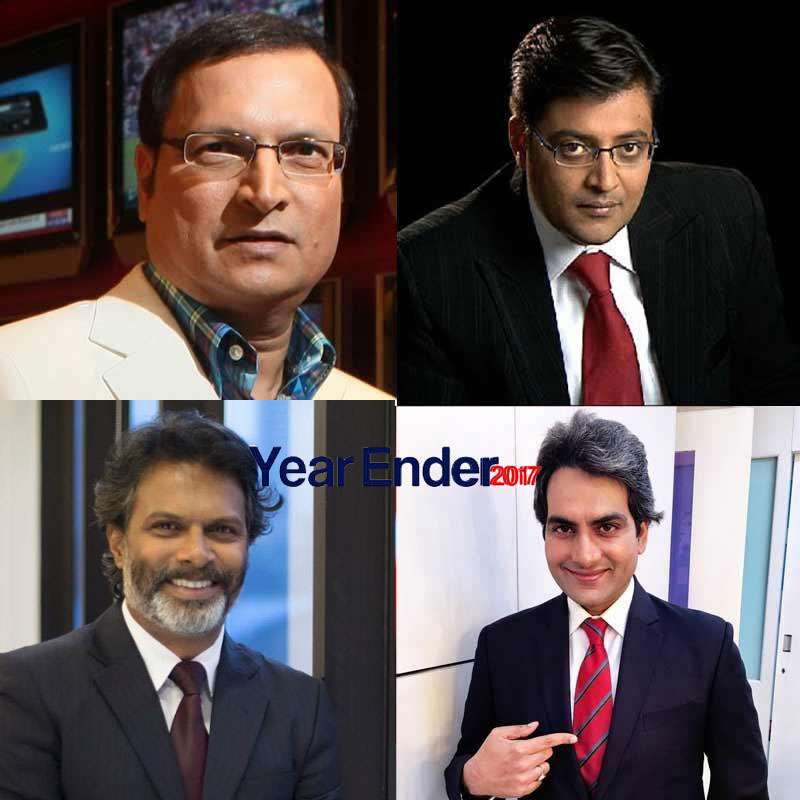
    India TV chairman and editor-in-chief Rajat Sharma was elected as president of NBA. Ashok Venkatramani left ABP News as the CEO in 2016 and joined Chrome Data Analytics and Media as a consulting director in July 2017. 

    A news director or an editor leaving a media house isn’t exactly headline material. But in this case, it is noteworthy because of the circumstances leading up to his departure and 16-year-long association with the channel. India TV news director Hemant Sharma was under the scanner for his role in an alleged case of corruption involving certain officials in the Union Health Ministry and owners of a medical college. Sharma left India TV to pursue his first love – writing.

    TV18 Broadcast president- revenue Joy Chakraborthy said, “2017 started off on a weak note with the effects of demonetisation very clearly there. However, budget onwards, things started to pick up and we had a great first quarter. July saw the rollout of GST, the effects of which are gradually waning and business is picking up. 2017 also saw the re-alignment of media spends from Hindi, regional and English across genres, with monies moving out of English to Hindi and regional.”

    Regional News 

    Zee Media has increased its regional reach by launch Zee Salaam (Urdu) and Zee Uttar Pradesh/Uttarakhand last year.

    Jagdish Chandra, after spending eight years at ETV network, joined Zee Media Corporation Limited (ZMCL) as the CEO for the regional channels in January. In his new profile at Zee Media Corporation Limited, he handled a large bouquet of channels, including 24 Ghanta (Bengali), Zee Madhya Pradesh-Chhattisgarh, Zee Punjab Haryana Himachal (Punjabi and Hindi), Zee Sangam (Hindi), Zee 24 Taas (Marathi), Zee Purvaiya (Hindi), Zee Kalinga (Oriya), Zee Marudhara (Hindi), Zee 24 Gantalu (Telugu), and Zee Kashmir.

    In the month of March, Chandra got additional responsibility as CEO of DNA and in next couple of months, Zee Media Corp restructured the top deck for its regional news network, reducing the role of Chandra to just three channels – Zee Rajasthan, Zee Hindustan and Zee Salam (Urdu) and DNA Jaipur. Chandra continued to be on the board of ZMCL and DNA while stepping down as CEO of DNA in the same month.

    iTV Network expanded its regional news space with the launch of India News Gujarat on 4 December 2017, just before the Gujarat elections. Uday Nirgudkar joined News18 Lokmat as group editor by quitting from the post of channel head of Zee24 Taas and CEO and editor-in-chief of DNA newspaper. Senior journalist Vijay Kuvalekar took over as the editor of the news channel.

    Umesh Kumawat, who was the senior editor at ABP news, started his new innings at TV9 Marathi in 2017, but within a month resigned from the post of managing editor of the channel.

    Focus Group, which already has footprints in the regional news market including Focus Haryana, Bangla, Odisha and NE, intends to launch a Kannada news channel by the end of 2017.

    For news channels, next year holds much promise. As general elections are due in 2019, a lot of positive news can be expected, with supporting developments during the year. Branded content is likely to continue its upward trend. With advertisers beginning to realise the value of regional channels, we are in for some exciting times in 2018.

  • Guest Column: The comeback of full-service agencies in India

    Guest Column: The comeback of full-service agencies in India

    By 2020, we will be close to a billion digitised screens. With the advent of cheaper data and smartphones and by virtue of tech giants such as Google, Facebook and Amazon entering the grassroots of India, digitisation has become inevitable. And it’s going to be mobile plus digitised television (OTT) that’s going to drive most of the scale.

    If digital is where maximum content is going to be consumed, surpassing Dish/Cable TV in most geographies, then brands will slowly and steadily move towards exploring digital in a much-evolved fashion and at a large scale. This means media and creative agencies will have to rethink their game plan, which has not changed much in the past two to three decades. Many questions arise, such as will mainline agencies reverse integrate their creative and media thinking to digital? Will digital agencies be able to manage the scale and responsibilities of managing multi-million-dollar campaigns? Will there be a need of creative and media standardisation? How many agencies will a client want to deal with to achieve the end objective? Who will win the rat race? And the list goes on, as we start thinking about how agency life will be when digitisation takes over completely.

    In my view, consolidation to make a full-service agency that gives solutions across screens plus creative and media is going to be the future. To date, most agencies are not fully prepared to manage this new world of ‘non-line,’ that is not just online or only offline but both together, as the lines are starting to fade. Mainline and digital agencies are poles apart in creative as well as media thinking but both are eventually chasing one goal. And that’s where the need of a full-service agency is, which creates and advertises one campaign with one objective across multiple platforms and formats. Not to ignore the fact that advertising bodies will also play an equal role in the entire standardisation process. And, sooner or later, it’s a self-evolving cycle that we will all get into, like the one mentioned below-

    1)  Consumers will become more and more digitised; thus, brands will want to get them through digital mediums across mobiles, TVs, PCs, tablets, and even hoardings

    2)   One master creative created in various sizes and formats will start to be the new norm with a fair bit of shoulder content for digital

    3)   And then planning will get more standardised across various mediums and consolidate into one form

    4)   KPIs will become more standardised as well to judge campaign effectiveness against various brand objectives

    5)   Possibly, there will be one tool that agency networks will create and connect to plan and buy across in a truly ‘non-line’ fashion

    This model of a full-service agency exists in mature markets such as the US, Japan, Singapore and will soon be a reality in India as well. Such a model increases planning and operational efficiencies and also ensures standardisation, right from planning to execution to industry benchmarking.

    It’s about time large agency networks wake up to the reality of a full-service model or soon a challenger start-up that is nimble to take such decisions will start changing the name of the game!

    The author is VP operations & media – West & South, WATConsult. The views expressed are personal and Indiantelevision.com may not subscribe to them.