Category: Specials

  • Houseful at Bengaluru leg of MIP India roadshow

    Houseful at Bengaluru leg of MIP India roadshow

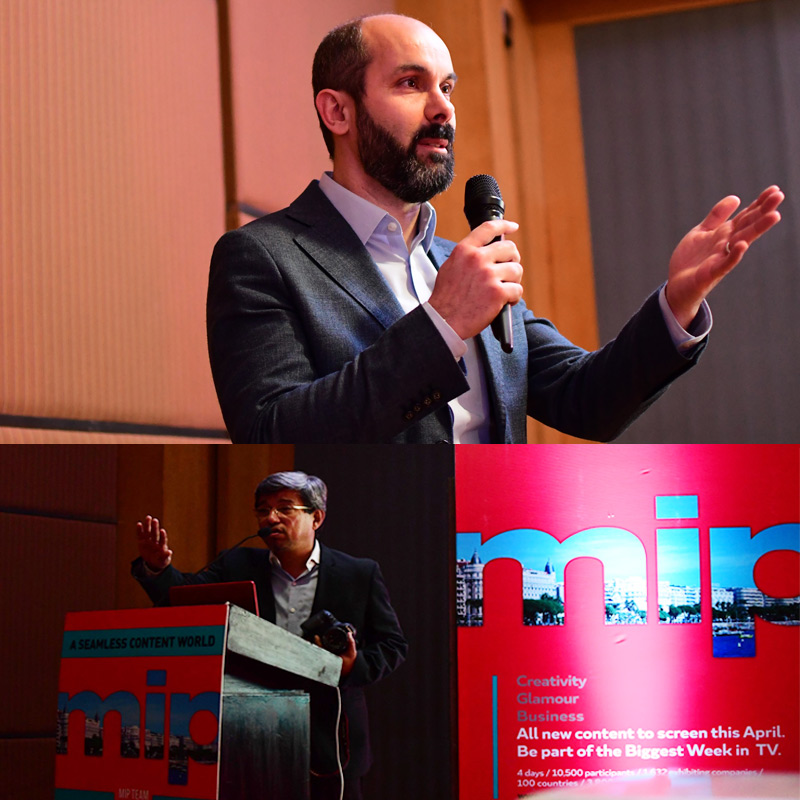
    BENGALURU: All the seats were taken and more had to be brought in as the Bengaluru leg of the MIP TV India roadshow ended last evening at the Lalit Ashok. With the theme ‘A Seamless Content World’, the Bengaluru MIP was addressed by Reed Midem (Paris) Asia Head Paul Barbaro and India representative for Asia Markets and Indiantelevision.com managing director and CEO Anil Wanvari. The duo addressed the rapt audience in tandem.

    Beginning with the theme of the roadshow, Wanvari quoted Netflix chief content officer Ted Sarandos’ words that he had spoken during an interview – “A good story told well is a global product.” In today’s connected world, which is increasingly becoming seamless, content is king, queen and prince irrespective of geography. This was evident by the success of creations such as the Louis Fonse-Daddy Yankee’s Spanish number Despacito, which had 5 billion views on YouTube, even more than those that Gangnam Style had, explained Wanvari.

    “Increasingly, scripted and non-scripted local shows made in a local language and aimed at domestic viewers are finding a global audience. And building a fan base overseas can only boost the revenue potential,” said Barbaro. Exhorting Indian creators, animators, Indian content aggregators and buyers and people from the Indian media and entertainment industry to participate at the India Pavilion at MIP TV 2018 at Cannes from 9 April to 12 April 2018, Barbaro and Wanvari spoke of the advantages, the gains, the benefits of doing so.

    Citing examples of some successes of local content, Barbaro said, “Historically, dramas and comedies have not travelled well because they are steeped in local customs, conventions and cultures. Yet, Keshet’s Loaded, Star India’s Iss Pyaar Ko Kya Naam Doon, and Broken Pieces from Turkey’s Global Agency made compelling scripted entertainment centred on universal truths. And these stories have enthralled audiences in a number of diverse geographies.”

    Reed Midem’s statistics and data about buyers and sellers and the kind of content that was required, details about the money that could be earned from different countries were shared. Case studies were presented and AVIs of some success stories of some of the people who participated at MIP TV were played.

    “Don’t come and register if you plan to come to MIP TV just once. You have to be there for the long haul if you want to truly succeed, to network with the buyers and sellers and leverage the associations that you built there,” concluded Wanvari very bluntly.

    For details contact: Priyanka Sharma +91-8017562056/+91-22-6642 4062

    Email: priyankas@indiantelevision.co.in or devikak@indiantelevision.co.in

  • Industry hails doubling of digital allocation

    Industry hails doubling of digital allocation

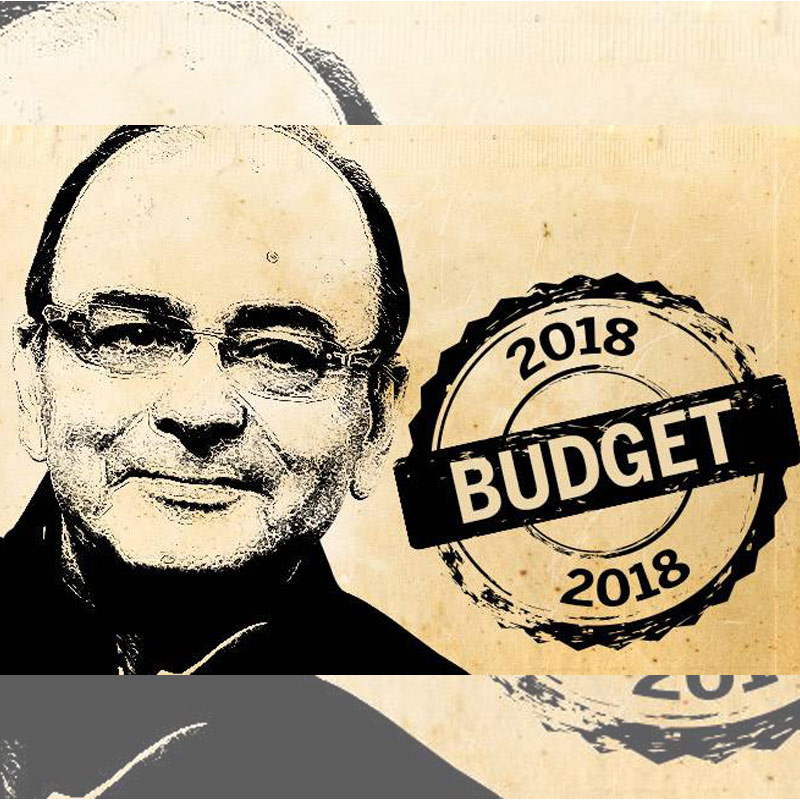
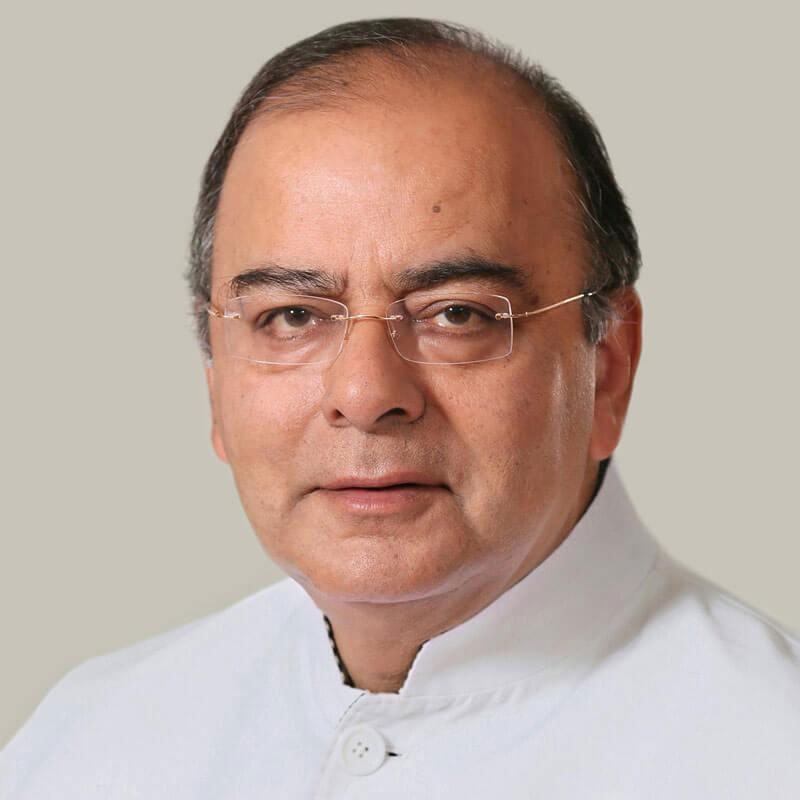
    MUMBAI: One of the key points that came out of Finance Minister Arun Jaitley’s Union Budget 2018-19 was the focus on Digital India. The allocation was doubled to Rs 3073 crore and the budget was clearly beyond wooing voters.

    The government has decided to increase digital intensity in education and technology will be the biggest driver in improving quality of education. Jaitley aims to move from blackboard to digital board schools by 2022.

    About Rs 14.34 lakh crore is to be spent on rural infrastructure. According to the budget, five lakh Wi-Fi hotspots will be setup to provide broadband access to five crore rural citizens, at the cost of Rs 10,000 crore.

    ALTBalaji CMO Manav Sethi said, “It’s a great effort from the government if it’s executed well for connectivity. It is easier but more relevant to connect small villages and towns in India on Internet rather than roads. This connectivity has the potential to impact not only India’s entertainment options but their means of livelihood, healthcare and education.”

    HAL Robotics MD Prabhakar Chaudhary says that the government has understood the need and capability of technology. “It’s great to see that the government is recognising future technology for building the nation’s future. Not only does this help in job creation but also advances the nation in competitive global space.”

    Instappy founder & MD Ambika Sharma believes the move with empower society in areas like broadband and mobile connectivity. “Furthermore, the allocation of Rs 10,000 crore for the five lakh WiFi hotspots to provide broadband access to five crore rural citizens is also promising. With nearly 70 per cent of the country’s population living in rural and semi-urban geographies, the move will give the vision of a digital India a big boost and provide businesses an opportunity to upscale.”

    Staqu CEO and co-founder Atul Rai believes that this year’s budget has not only taken significant steps towards the digital India vision but also towards inculcating the latest technologies like artificial intelligence for the national development. He said, “With NITI Aayog to establish a national programme for artificial intelligence, we look forward to supporting the nation with R&D support and more programmes like ABHED which is already assisting the polices forces with AI capabilities. With the advent of new technologies and the Indian government being equally eager to adopt them, we strongly foresee the nation to be on the road to transformation and emerge as one of the leading digital nations on the world map.”

    Said BARC India CEO Partho Dasgupta: “Budget 2018 is clearly focussed on driving rural sector growth. This should result in higher rural incomes and therefore higher standards of living in rural India. Our baseline study indicated that economic prosperity and higher living standards go hand in hand with TV penetration and higher TV consumption. With only 2/3rd of Indian homes having access to TV, there is huge headroom for growth here, and this year’s budget should help drive up TV ownership and consumption in rural India. As head of a tech-driven research company, I am also excited to see government’s focus on machine learning, artificial intelligence and other such technologies of the future. One dampener for industry is the hike in basic customs duty on certain electronic equipment including LCD/LED/OLED screens, which would make TVs more expensive. Our barometers too are likely to get more expensive, and this will raise burden on industry for our planned panel expansion.” 

    Contradictory to that, nexGTv COO Abhesh Verma opines thinks that doubling the budget for the digital India scheme will be emerging as a major move towards assisting the nation to progress further. He commented, “The second development of investment of Rs 10,000 crore for rural Wi-Fi hotspots, giving five crore citizens access to broadband speed internet by the deployment of five lakh Wi-Fi hotspots should help bring more consumers online, increasing digital consumption of services like OTT, entertainment, banking, and e-commerce. We at nexGTv feel that all these steps are a definite plus for the significant growth of the digital businesses in the country.”

    In the same track, News18.com editor language Nidheesh Tyagi feels that Arun Jaitley has really shown this government’s serious emphasis for digital India. He said, “An extra Rs 10,000 crore is provided to bring 50 million people through five lakh wifi hotspots in rural areas to this side of the digital divide. I am sure much of this action is going to happen in languages. We hope to see more use of digital payment through mobile spreading in the tier 3 / 4 towns and villages besides more connectivity on mobile, broadband and access to government services. Digitisation of agricultural markets will also benefit some 300 million farmers.” But he feels that more could have been achieved by reforms in telecom sector.

    Haptik founder & CEO Aakrit Vaish has a similar opinion as Rai. He commented, “With NITI Aayog to establish a national programme for AI, this will not only significantly aid job creation but will also assist the government to move towards its vision.”

    Government will take measures to stop cryptocurrency circulation, as it is not considered legal tender. Jaitley proposes use of blockchain technology to encourage digital payments and curb the use of cryptocurrencies, setting up of a national programme to encourage AI and providing easy internet access to villages.

    Also Read:

    Industry holds bright outlook for budget 2018

    Union Budget 2018:  Populist budget fails to excite industry at large

    Guest Column: M&E sector pins hopes on a developmental budget

  • Adlabs entertainment ltd. bags ‘Best Customer Experience in Services Sector’

    Adlabs entertainment ltd. bags ‘Best Customer Experience in Services Sector’

    Adlabs Entertainment Ltd. has been announced winners of the “Best Customer Experience in the Services Sector” category under the Customer Experience Awards amongst some very prominent brands. The award presented by Zendesk was a part of the 11th edition of The Customer FEST Show 2018 conducted by KAMIKAZE B2B MEDIA, held on 1st February 2018 at Taj Lands End, Mumbai.

    Speaking on this occasion, Imagica, Jt. CEO, Mr. Ashutosh Kale said, “Across industries, sectors, and regions, organizations are findings ways to improve customer experience in a more sustainable manner. We at Adlabs Entertainment Ltd., have taken a guest oriented approach where we integrate customer feedback and insight throughout the organization ensuring more enriching and exceptional experience year after year. Another important aspect has been the investment in our employees, as this directly translates into them working towards the goals of the organization.”

    Imagica, India’s first family holiday destination of international standards indeed stands true to its tagline of ‘Badi Interesting Jagah Hai!’. Consequently, providing a truly innovative experience to one and all is Imagica’s primary objective. Being at the confluence of 3 industries i.e. service & hospitality, tourism and entertainment – Imagica looks at creating moments of magic at the park, during a guest’s booking and decision journey and even after their visit.

    Adopting a guest oriented approach has made the organization constantly compete internally to raise the bar vis-à-vis the previous years.

    · Ensuring to settle for nothing but the best by ‘exceeding guest expectations’ at every turn, Imagica became the pioneer in web booking and holistic information provision by creating a user-friendly website.

    · An on-ground guest centric initiative, called Smile Campaign was also introduced to imbibe in employees the culture of welcoming the guests with a smile. Further, guests were entertained while they awaited their turn for rides/attractions. Imagica’ character interactions were initiated at the Imagica Novotel hotel through flash mobs to delight and surprise the guests.

    · Birthday experiences were enhanced by giving an Imagica birthday badge to guests celebrating their birthdays at the park to cue all in-park employees to wish them. The most important initiative was sending gift cards out to every guest who helped Imagica achieve the 5 million milestone.

    To measure the success of the initiatives undertaken, Imagica constantly collected feedback from its guests through TripAdvisor, in-park surveys and even 3rd party research on their likelihood to recommend. 

    Imagica successfully scored a minimum Net Promoter Score of 75+ (classified as World Class) across mediums, thus strongly substantiating the successful bond forged between Imagica and its guests.

  • Digital industry celebrates Union Budget 2018

    Digital industry celebrates Union Budget 2018

    MUMBAI: The Union Budget for 2018 that was finally unveiled yesterday turned out to be a rather disappointing one for the industry at large but Digital India and digitisation got prime time attention. The budget focused on the middle class and rural population, guided by the mission to strengthen India’s agriculture, rural development, health, education, employment, MSME and infrastructure sectors.

    With a view to promote digitisation, the government is set to make the necessary investment in robotics, internet of things (IoT), artificial intelligence (AI), digital manufacturing and big data analysis with the NITI Aayog to establish a national programme to direct efforts in artificial intelligence. The government has committed itself to the development of technology along with concentrating on AI and its applications, a revolutionary move for the digital industry. The ministry has decided to double its Digital India budget to around Rs 3073 crore. 

    The Indian media industry seemed to have mix reactions about this year’s budget and while some were disappointed, many seemed cheerful about it and considered it to be a welcome budget. 

    public://apporva.jpg

    Like the last few years, 2018 Union Budget too saw a dry spell for the entertainment industry with no big announcements. However, the government’s Digital India push by proposing to set up 5 lakh WiFi hotspots in the rural areas will pave the way for greater consumption of entertainment and news related content. It will also provide a boost to regional content, which is already expected to grow multifold in the coming years. Overall I would say the biggest positive highlight of this year’s budget was focused on agriculture and healthcare. This initiative will definitely help the marginalised part of our country in the long run.

    Dharma Productions CEO Apoorva Mehta

    public://rahul puri.jpg

    It was an expected budget. I think that it was widely believed the government would focus on the rural economy and so it came to pass. There was not much expected for the media and entertainment industry and there was nothing specific announced. Corporate India would be slightly disappointed though as corporate taxation was not reduced except for small enterprises. Aviation and farming were the big winners.

    Mukta Arts managing director Rahul Puri

    public://Megha-TataCOO-BTVI-3.jpg

    Budget announcements signal a stronger ecosystem for media and broadcast industry. In continuation with my pre-budget expectations, I am happy that FM has kept his promise by reducing corporate tax rate to 25 per cent.

    BTVI COO Megha Tata

    public://anita.jpg

    While the budget largely focuses on the upliftment of agricultural sector, there is an equal focus on technology by introducing national programme in the area of AI & exploring ways for using the blockchain technology for digital transactions. The emphasis on sectors like healthcare, education & skill development is a good step by the govt. Reforms in the education sector encourage more & more private institutions to expand or modernise to give students a more global perspective as part of their learning process, which also helps in tackling brain drain. Overall, the budget seems like a typical socialist one, without much to take-away for the common-man.

    Havas Media Group CEO India and South Asia Anita Nayyar

    public://rajiv.jpg

    I’m glad to see that the budget for digital India has doubled and also the fact that AI and Blockchain technologies will be used by the government. But I’m disappointed that government is looking to put an end to cryptocurrencies. Globally cryptocurrencies is a phenomenon which points towards the future of currencies and maybe a more inclusive view was needed.

    WATConsult founder and CEO Rajiv Dingra 

    public://Ashish-Bhasin.jpg

    The budget has focused on the right areas, particularly the rural and agricultural sector, which is definitely going to spur rural demand in the coming months and years. The rural economy needed a boost. I also like the fact that the Finance Minister has focused on ease of living rather than just ease of doing business and has introduced healthcare benefits which will benefit nearly 50 crore Indians. It is a landmark step. The emphasis on digital, particularly higher-end digital areas like artificial intelligence and usage of blockchain shows that the government is committed to providing a further digital thrust. The steps being taken, like provision of free WiFi and other forms of internet to all parts of the country will be extremely beneficial in the long run for the digital sector. It will help agencies like ours who are partnering clients for digital transformation.

    The introduction of the long term capital gains tax on equities will soon be digested by the industry I’m sure, but in some ways, I see a missed opportunity because the simplification of GST processes for the services sector would have gone a long way to help the advertising industry. The advertising industry doesn’t mind paying the taxes but abhors non-productive, complex procedures including filing of hundreds of returns every year. Overall I think the right sectors have got the incentives and therefore it should be good for the country.  If it is good for the country, it will be good for the economy and once the economy grows, the advertising sector will benefit from it.

    Dentsu Aegis Network chairman and CEO South Asia Ashish Bhasin

    public://deepak lamba.jpg

    The ‘Digital India’ program has received a major boost with double the allocation of  Rs. 3073 Crore for the coming year. Budget 2018 has proposed the set-up of 5 lakh Wi-Fi hotspots in rural areas thereby providing broadband access to 5 crore rural citizens. Much to the delight of digital media players, this move will open extended avenues for them and give a strong push to regional and mainstream digital content in these markets. With extensive broadband penetration, affordable data prices and smartphones, the vision for digital India could well come to fruition in the coming years. Lastly, the estimated over 7% growth for the next fiscal creates a positive sentiment for India’s economic and financial ecosystem.

    Worldwide Media CEO Deepak Lamba  

    public://joy_0.jpg

    In the Union Budget 2018, there has been a significant allocation towards rural development. The proposal of setting up 5 lakh Wi-Fi hotspots in rural areas will give impetus to media penetration in Tier 3 and Tier 4 markets. Media players are increasingly looking at Tier 2, Tier 3 and Tier 4 markets since regional content has begun to drive media growth. So, the infrastructure push in these regions will accelerate media consumption and inadvertently help the advertisers and the advertising business on the whole. I would certainly say it is a good budget, and we will gradually witness the positive results unfold in the future.

    TV18 president- revenue & Forbes India CEO Joy Chakraborthy

    public://ashsisg shah.jpg

    Government’s focus on rural and agriculture development, digitisation and digital education is going be a big demand booster for our sector. The rural demand for FMCG, beverages, automobiles, education and financial products are going to increase, this would increase advertising budgets of our clients from FMCG, education, financial services sectors. Government’s focus on digitisation brings in lots of rich data for us to better targeting for our customers. This focus would make India data rich country and the targeting and conversions on digital marketing front would be much easier and more accurate.

    Vertoz fand CEO Ashish Shah

    public://vivek_1.jpg

    FM Jaitley’s budget this year focuses on investments to be placed in artificial intelligence, machine learning and the Internet of Things with the NITI Aayog establishing a national program to direct efforts in artificial intelligence. The government has committed itself to the development of technology along with concentrating on AI and its applications which is a revolutionary move for the digital industry. Initiatives on infrastructure growth and education expansion have been looked at from a digital perspective, which reflects the significance of the ‘Blackboard to digital board’ movement. Decisions benefiting rural citizens–such as 5 lakh WiFi spots, give it a further impetus. Another game changer mentioned in this budget was the government’s will to proactively explore the use of blockchain technology. The allocation of digital India has been doubled which indicates the government’s emphasis on digital, heralding a stronger digital economy. I believe this was a great budget for the digital ecosystem.

    DAN Performance Group CEO Vivek Bhargava

    public://sahil chopra.jpg

    The much-awaited announcement of Union Budget prompted a gust of anticipation & higher expectations. While the Finance Minister touts the Union Budget as primarily focused on the agricultural sector, it sure reeks of reforms beneficial for numerous other sectors as well.

    The government has always encouraged the digital sector to flourish & the budget rightfully justifies their farsighted approach. This year the allocation to Digital India Scheme has been doubled to Rs 3073 crore which is a worthwhile move for the industry as a whole. Not only that, with the onset of fast-paced technology and AI shaping the new segment of digital World, NITI Aayog will establish a national programme for it. This is a clap-worthy reform which will help organisations diversifying with AI to have a wider scope with vast awareness among everyone.  For a higher internet penetration, 5 Lakh Wi-Fi hotspots will be set up in rural areas, which again is beneficial for the rural dwellers. The need to eliminate cryptocurrencies which are funding illegitimate transactions was also mentioned. The government has proposed to revamp the system of sanctioning loans to SMEs. As per the budget reforms now the information will be linked with GSTN & will be fetched from the same. This comes across as a welcome move as not only will it streamline the process but will enable people to get accustomed to the digital ingress. Corporate companies with a turnover of up to Rs 250 crore will also be highly benefitted from the budget as the corporate tax has been further reduced to 25 per cent.

    As per my opinion, the Union Budget has surely set a benchmark & the year looks promising with excellent reforms leading to growth & development of the economy.”

    iCubesWire CEO and founder Sahil Chopra

    public://chetan.jpg

    This is an excellent budget from the digital perspective. As expected, the government has doubled its allocation to digital India initiative at Rs 3073 crore. This will grow the entire digital economy and the government has shown that this is going to be focus area. Its commitment to exploring blockchain and AI only ratifies its vision for digital India. The other game changer is enhancing rural regions with 5 lakh Wifi hotspots. This would lead to higher adoption, skills upgrade and rural citizens embracing digital quickly. This budget gives me hope that we are on our way to becoming a digital-led economy.

    Tonic Worldwide founder and CEO Chetan Asher

    Also Read :

    Industry holds bright outlook for budget 2018

    Union Budget 2018: Industry expects govt to favour consumption

    Is India ready for the impact of AI on marketing?

    A year after demonetisation: E-payment services emerged winners 

  • 2017’s Top India TV industry leaders – Part I

    2017’s Top India TV industry leaders – Part I

    MUMBAI: The year 2017 threw up myriad conundrums and dilemmas for the men and women who are the showrunners of India’s media and entertainment (M&E) sector, which is expected to grow at a compound annual growth rate (CAGR) of 13.9 per cent, to reach USD 37.55 billion by 2021 from USD 19.59 billion in 2016, outshining the global average of 4.2 per cent.

    It was a rocky year, one during which everyone’s mettle was tested. First, there were the aftereffects of demonetisation. If that wasn’t enough, the Goods and Services Tax was unleashed in the second half of 2017. This sent everyone into a tizzy. Business targets went awry as executives grappled with the changes they had to deal with. Net results: industry growth numbers dipped. Despite this, the resilience of the industry and media leaders was never in question.

    Like in the past, we decided to list down—not in any particular order—the top 20 senior leaders from the television industry who, we believe, made noteworthy moves in 2017.  Of course almost every professional in the business deserves to be lauded in these rapidly mind-numbing-confusing-as-hell changing times—for even just hanging in there.  Forget about doing well. However, a list has to be selective and we took upon ourselves to do so. We hope you will appreciate our initiative. Read on for the first installment in our year-ender series featuring six of India’s top TV industry leaders and their achievements in 2017.

    public://Mukesh-Ambani1.jpg

    Mukesh D Ambani

    Disruption. That’s what the D in his full name stands for, apart from his entrepreneurial father’s name Dhirubhai. And clearly that’s what the chairman of Reliance Industries did in 2017. He shook old established players in the telecom sector by giving away wireless data access for free through Reliance Jio–a process he started just as 2016 was ending–quickly adding more than 100 million subscribers.

    The old guard yelped, blocked calls to their networks, but he plodded on through the year, fought them out in courts, and had his way. In the process, he forced them to rework their business plans and models.

    The entry of Jio has forever changed the way the telecom industry prices services for customers. The cheap data has also changed the way Indian viewers are consuming their video content.  Probably, forever.

    Since the launch of Jio more than 200 crore hours of video and around 10 GB data per capita per user per month are being consumed every month by just Jio subscribers. The number for the 375 odd million internet users will be much higher than that. Apart from wireless delivery of video, Ambani also has plans for distribution by fibre to the home (FTTH). If leaked pricing plans are to be believed, he is likely to totally upset the economics of the cable TV ecosystem, too.

     Jio has also invested in content companies such as Alt Balaji, partnered with Hotstar, and appointed Siddharth Roy Kapur Films to curate content for its VOD services. And Ambani already owns close to 38 TV channels under the Network18 group, and has a joint venture with Viacom that gives it a clutch of channels amongst which figures the leading Hindi GEC Colors and other entertainment channels in many languages. Ambani has more disruption plans up his sleeves. At the Viacom18 tenth anniversary celebrations in Mumbai he said he has not paid attention to the video content business under that group company. But he added that the teams there were going to see a greater involvement from his side. That should give a lot many in the TV business sleepless nights.

    public://Uday_Shankar.jpg

    Uday Shankar

    This journo turned media CEO clearly stands head and shoulders above almost every TV and media industry executive in the country. Over the years, his bold, brazen and, at times, out of the box moves have seen what was once a smallish TV network expand into the leader in the media and entertainment landscape—of course, the foundation had been laid some his predecessors and the promoters, the Murdoch family, gave ample support to this ‘jewel’ in the crown of the parent company that’s now known as 21st Century Fox and is seeking regulatory approvals in the US to merge with Disney. 2017 was no different for Uday.

    The year saw Uday getting appointed as the Asia head of Fox – of which Star India is an offshoot. But before that he betted big by coughing up USD 2.55 billion on sewing up the all-media rights for the world’s top cricket property – the Indian Premier League. Many have scoffed at the audacious price he has been willing to pay for that property; something which they did when Paul Aileo and Peter Chernin picked him to run Star India around a decade ago after Peter Mukerjea’s departure.

    But Uday proved the nay-sayers wrong in every way.  He is likely to do it again. And again. Under Uday’s leadership, the India business has firmly established itself as a world-class asset with durable businesses across entertainment, sports, satellite distribution and OTT. Now he has set his eyes to do the same with Fox Asia.

    public://Jawahar_Goel.jpg

     Jawahar Goel

    The third of the four Goel brothers who nourished Essel Group (Zee and Dish TV’s parent), along with the eldest sibling Subhash Chandra, Jawahar Goel, or JG as he’s popularly known as in the industry, has always been a street fighter—and a smart one at that. Historic boardroom battles in New Delhi’s Lawrence Road-based Essel House in the 1990s, notwithstanding (Zee had three JVs with Rupert Murdoch’s Star TV then), JG is regarded as a go-to-man in the industry by most people because of his understanding of the complexities and nuances of the various segments of the media industry. A tech-savvy person, his tablet is the holder of many secrets and strategies.

    2017 saw him getting into the limelight if, for a bit, in stops and starts. In late 2016, he announced what seemed like a mother of a merger with rival Videocon d2h–the process of regulatory clearances for the same took up most of 2017. Everyone expected the going to be smooth and the final clearance came from the ministry of information and broadcasting at close to the end of the year. And then came the announcement in the last week of December 2017 that the merger was being delayed because of technical glitches. And those glitches became clear in early 2018: JG had instructed his investment bankers and lawyers to relook the deal in the light of the fact that the Videocon group was defaulting on loans and whether any action by the government or financial institutions would have an impact on the valuation of Videocon d2h. The market has interpreted this to mean that JG is back at his best: he is striking a further hard bargain or that he has decided to not do it all.

    JG also set the cat among the pigeons in the year by alleging in letters to the TRAI, IBF and the MIB that if the rights of the IPL were awarded to Star India by the BCCI it would tantamount to a monopoly. Nobody heeded him and the rights still went to Star India. That still did not stop JG: he then appealed to the courts that Star’s pay TV service Life OK should not be allowed to go FTA as Star Bharat. Once again, the courts did not agree with him.

    2018 will be an interesting period for him. He will have to come clean on whether Dish TV is going ahead with its merger with Videocon d2h or not.  And if not then what is the course, he and his CEO—a top notch professional who ran Hero Honda—Anil Dua are going to do with the firm going forward. It’s over to the man.

    public://Arnab-goswami2.jpg

    Arnab Goswami

    You can hate him, you can love him, but you just can’t ignore him—no matter how one tries doing the last. Republic TV—Arnab’s new baby—before its debut whipped up a political storm with BJP politician Subramaniam Swamy questioning use of the word `republic’ for a commercial venture and his former employers Times TV Network dragging him to court over who owned the copyright over the phrase ‘the nation wants to know.’

    But Arnab loves a slugfest; he got into a public brawl with Times TV on ratings, distribution practices with the latter taking him to court. For a moment it looked like the News Broadcasters Association and even the ratings body had got polarized with those for and against Republic or those for Times TV. So much so that Arnab called it names. But finally sense prevailed as the dust settled and Republic took up membership of the association.

    Republic TV continued to be a hot topic of discussion throughout 2017 with its line of editorial stand and shows, which some critics dubbed as absolutely partisan and non-journalistic. However, despite widespread criticisms Republic TV not only managed to lead the ratings game amongst the TV news channels, but also succeeded in dividing the news fraternity at one time over audience measurement numbers.

    That it continues to lead a life on the edge of ethics and non-ethics — and thrive — speaks volume of the Arnab charm and his brand of opinionated journalism. With Republic TV expanding into VR programming and also spreading wings outside Indian shores ( it debuted in the Middle East last year), 2018 would be an interesting period of evolution of this news venture backed by some of the staunchest supporters of  PM Modi and his government.

    public://Smriti_Irani.jpg

    Smriti Irani

    For many years, Smriti Irani along with Ekta Kapoor and Star India contributed to the rise and rise of Indian television thanks to the hugely popular Kyuunki Saas Ki Kabhi Bahu Thi, a series in which Smriti played the role of a dutiful Indian daughter in law, who had sanskaar yet was willing to stand up for herself when she was wronged. 

    Now, 17 years later, Smriti sits over the entire broadcast sector as India’s TV content regulator as  the minister of information and broadcasting, a position none of the executives or professionals in Indian television even envisaged she would one day hold.

    Smriti acted quickly following her appointment: she put a halt to the process of e-auctions of DD’s free-to-air direct-to-home platform DD FreeDish.  She even stopped the privatisation of time slots on national broadcaster DD National and even said not yet to two productions (one by Gajendra Singh and the other by Balaji Telefilms), which had got the go ahead. That did not augur well for at least Singh as it allegedly caused him grievous losses.

    Then, under her watch, her ministry has been demanding that the world’s most valued cricket league the IPL is of national import and that Star India needs to share its feed with pubcaster DD, something which the Fox group company sees as not fair. Additionally, the ministry has also raised the fees for live uplinking—a move which many see as targeted at making things dearer for Star India as it cover test cricket in six languages in 2018.

    Smriti also left her stamp on this year’s IFFI, which was probably the most glamorous in its history with A-list Bollywood stars winging it to Goa. Her ministry lifted the bar for the festival in terms of scale and quality.

    She also clamped down on steamy condom commercials, which were flooding channels on TV channels during the day. Broadcasters were ordered to telecast such ads only between 10 pm and 6 am.

    public://Shashi Shekhar Vempati.jpg

    Shashi Shekhar Vempati

    Shashi Shekhar Vempati has quite a few creds to his name. One of them being that he is youngest executive to be the CEO of pubcaster Prasar Bharati and the other being that he is the first private sector manager called on to run the behemoth. And 2017 put all his managerial skill sets to the test.

    When he joined, there were plans already in place to grow DD Free Dish, to study if there was opportunity in the kids’ space for it and check out if a gasping DD National could be given fresh oxygen and survive the hectic competition in general entertainment television.

    Shashi slammed the brakes on all growth plans, heeding to the orders of the powers that be (read his new I&B boss Smriti Irani). Under his watch, the e-auctions of DD Free Dish, the selling of slots to private producers were called off. He also told DD director general Supriya Sahu to dive deeper into DD Kids and not rush into it. And he spent a large part of the year studying what DD was all about and what he could do and not do at the organisation. 

    This apart, Shashi has been focusing his energy on two fronts: one on sports and the second on DD’s News outreach and ensuring that the pubcaster relays the right messaging of a nation, which is being watched by the world.  India is predicted to become a global power— one of the most important consuming countries globally in the not, too, distant future.

    Most people saw the Supreme Court’s endorsement of the Delhi High Court verdict, which disallowed Doordarshan or DD from sharing the live feed of cricket matches of ESPN and Star India with cable operators as a setback. But not the new kid on the block; Shashi saw it as an opportunity.

    During an interview with www.indiantelevision.com, Vempati said that the decision forced away complacency at the pubcaster where earlier many changes and additions were either being implemented either too slowly or not at all. Prasar Bharati now had a reason to make DD Sports a go to destination for viewers and would help in promoting DD Free Dish and DD terrestrial to larger audiences across many more cities than the 19 in which DD’s terrestrial signals are available, and to switch DD Free Dish to MPEG-4.

    Shashi said that the verdict has created an avenue for making DD Sports the place for cricket. Earlier, cricket and other sports were being aired on DD National. Now they would be aired on DD Sports. The court’s verdicts’ would prevent cable operators from pushing their own ads while blanking out DD National signals during matches. In future, through DD Sports, there would be a separate feed for cricket and there would be no need to blank out an important channel like DD National.

     Shashi will be watched through the year in 2018. He has plans to harness new technologies such as in-built digital tuners in some television models, DVB through dongles and mobiles and plugging into hotspots that are DVB ready. He feels that DTT is a new viewership base and is a new way for advertisers to connect with viewers.

  • Union Budget 2018:  Populist budget fails to excite industry at large

    Union Budget 2018: Populist budget fails to excite industry at large

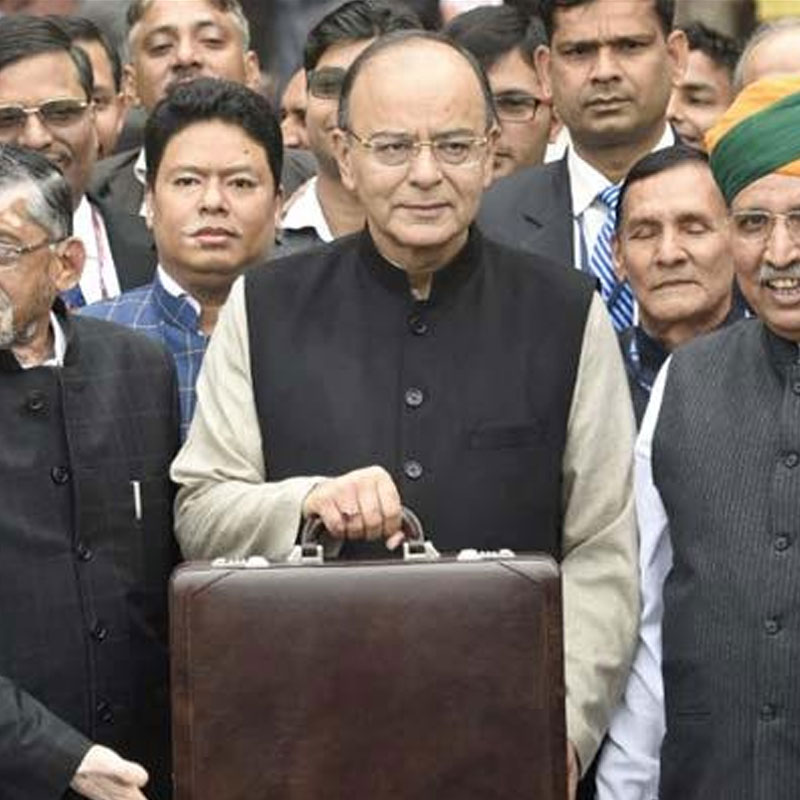
    MUMBAI: The Union Budget finally arrived today with all eyes fixated on Finance Minister Arun Jaitley. He presented his fifth Union Budget, which was also the last one for the Modi government before India sets out to choose its new prime minister next year. Riding on optimism, different research firms, news broadcasters and media companies kept speculating for about a month on what exactly should this year’s budget hold for India.

    While the Union Budget 2018 was essentially a populist budget as Lok Sabha elections are due next year, it turned out to be a rather disappointing one for the advertising and media industry but it was a big thumbs up for Digital India and digitisation. The budget focused on the middle class and rural population, guided by the mission to strengthen India’s agriculture, rural development, health, education, employment, MSME and infrastructure sectors.

    With a view to promote digitisation, the government is set to make the necessary investment in robotics, internet of things (IoT), artificial intelligence (AI), digital manufacturing and big data analysis with the NITI Aayog to establish a national programme to direct efforts in artificial intelligence. The government has committed itself to the development of technology along with concentrating on AI and its applications, a revolutionary move for the digital industry. The ministry has decided to double its Digital India budget to around Rs 3000 crore.

    The ministry has also proposed to set up 5 lakh Wi-Fi hotspots to give access to 5 crore rural citizens, which means digital and internet penetration into smaller pockets of the country will result in increased data consumption across India. The move will help brands, agencies and OTT players to create target content for such markets.

    In a move to regulate the cryptocurrency market in India, Jaitley said that the government would take essential measures to eliminate the use of crypto assets in financing illegitimate activities. He, however, maintained that the Indian government will explore the use of block chain technology proactively to usher in the digital ecosystem.

    Jaitley also announced the allocation of Rs 10,000 crore for creation and augmentation of telecom infrastructure. He also noted that micro, small and medium enterprises (MSME) are a major element for growth and mass formalisation of the MSME sector is slated to happen after demonetisation and GST, which took place in 2016-17.

    In what turned out to be the world’s largest government-funded healthcare programme, Indian ministry will launch health scheme to cover 10 crore poor families. The flagship national healthcare protection scheme of the government will provide upto Rs 5 lakh per family per year for secondary and tertiary care hospitalisation of members.

    The television and handset companies did receive a blow as mobile phones are now set to become costlier as the custom duty on them has been increased to 20 per cent. The move comes with an aim to promote the government’s ‘Make in India’ initiative.

    Customs duty on crude edible vegetable oils such as groundnut oil, safflower seed oil has been hiked from 12.5 per cent to 30 per cent while on refined edible vegetable oil it has been hiked from 20 per cent to 35 per cent. Customs duty on imitation jewellery’s been increased from 5 per cent to 15 per cent in 2016 to 20 per cent now with duty on sunglasses, cigarette lighter, toys, bus and truck tyres, select furniture also seeing a similar hike. The import duty on smart watches, wearable devices, footwear has now been doubled to 20 per cent whereas the duty on LCD/LED/OLED panels has been hiked to 15 per cent. The import of solar-tempered glass for manufacture of solar cells will be exempted from customs duty.

    While the health and education cess has been increased to 4 per cent, the aam aadmi who was positive about having to pay less tax will be disappointed as the government did not propose any change in the tax slabs for the salaried class this year.

    Also Read:

    Industry holds bright outlook for budget 2018

    Union Budget 2018: Industry expects govt to favour consumption

    Is India ready for the impact of AI on marketing?

    A year after demonetisation: E-payment services emerged winners 

  • Industry holds bright outlook for budget 2018

    Industry holds bright outlook for budget 2018

    MUMBAI: With the D-Day already here, the media and entertainment industry is keeping its fingers crossed after a difficult year that bore the full brunt of the introduction of GST. With things settling and the general elections not too far away, a more populist budget is expected from FM Arun Jaitley and his ministry this year. While all eyes will be on the fiscal consolidation roadmap and borrowing plans, the government’s action plan for ease of doing business will be in sharp focus.

    Indiantelevision.com asked industry veterans for their views on what’s likely to transpire during the mega event today. This is what they had to say:

    public://Joy Chakraborthy.gif

    “This is the last budget before the general elections, I think it will be a populist and a good budget. It should help the spending and the overall industry which will directly help advertising.

    Broadcast industry went through a major cyclic process when demonetisation and GST happened. With helping the advertising industry this budget will bring good growth to the media industry as well. It will also help in increasing the consumption, expenditure.

    Over the sentiment will get better, India as a country is very sentiment driven. If the budget is good, the general public will also be happy and half the things are taken care.”

    — TV18 president-revenue & CEO Forbes India Joy Chakraborthy

    public://frank dsouza.jpg

    “Entertainment and media industry is not just a participant but also carrier of digital revolution in the country.  Therefore, policy makers should step up to rationalise the taxation aspects impacting digital ecosystem.  Towards this end, clarification may be provided on applicability of Rule 9A of the Income Tax Rules to income from sale of digital rights of feature films certified for theatrical exhibition.  Also, with the growth in production, distribution and consumption of ‘web only’ content, provisions similar to those for feature films may be applied or at least clarity may be provided on its deductibility as revenue expenditure.  

    Though India is one of the large cinema markets around the world when it comes to admissions, the market in tier II and tier III cities still remains underserved given the limited number of screens.  A weighted deduction may be provided for developing, maintaining and operating single screen theatres or multiplexes in such tier II and tier III cities.

    GST was introduced with an intention to subsume multiple taxes levied by the State and the Union.  This had come as a major relief to all the industries including the media and entertainment industry, with of course, industry discomfort on the rate of GST is undeniable.  However, many states (like Tamil Nadu and Gujarat) have started imposing local body entertainment tax on movies. Levy of local body entertainment tax on movies exhibited defeats the whole purpose of GST.  Therefore, the government should either remove the levy in itself or at least put a minimum cap on exhibition of movies.”

    – PWC partner-India entertainment and media sector leader Frank Dsouza

    public://Megha Tata.jpg

    “Now that the GST jitters are receding and GDP growth rebounding to 6.3 per cent in Q2 of FY 2017-18, I am confident about growth of broadcast industry in FY 2018-19. Having said that, I wish to see average GST rate for media and entertainment sector be brought down from existing 18 per cent to pre-GST levels of 15 per cent. I am hopeful about Finance minister keeping his words by reducing the corporate tax rate from 30 per cent to 25 per cent as promised by him in the union budget 2015-16 speech.”

    — BTVI COO Megha Tata

    public://Vikas Khanchandani.jpg“The M&E industry will continue on its exponential growth path as we get high speed data connectivity and the corresponding data costs continue to decline. Data growth has risen on the back of high video consumption on the go and will continue to play a pivotal role for growth in both M& E and Telecom sectors. Keeping in mind the expected growth, one long -pending wish I have from the Budget is the recognition of the M&E industry as an integral part of the Infrastructure sector so that it can avail of the various benefits and incentives that are given to the Infrastructure sector. This includes better financing options, to help boost the capital investments needed in digitisation and digitalisation, technology upgradation and new technology development and deployment. The net benefit of all of the above will always flow back to the consumer.”

    — Republic TV CEO Vikas Khanchandani

    public://piyush pankaj.jpg

    “To realise the Digital India dream, it is important to promote broadband. MSO are the best to roll out faster Broadband being already have fibre reaching homes, building, society etc. Being high capex requirement of business, the industry expect that Budget will give relief to Industry by removing the AGR.”

    — GTPL Hathway Ltd head-investor relations Piyush Pankaj


    public://Rahul Puri.jpg“The budget for 2018 will be a greatly important budget as the elections for 2019 are only a year away. I think there will be some changes to the direct tax structure this year as indirect taxes were given the biggest ever overhaul last year in terms of the introduction of GST. I also feel that there will be increased spending on infrastructure likely to be announced this budget as the government looks to employ some populist measures with one eye on elections.
    As for the entertainment industry, I hope some clarity comes through on GST with relation to multiplexes as it’s important that the industry sees consistency. I also am hopeful that as the government looks to help increase infrastructure capacity, the multiplex and retail segments get a much-needed boost.”

    — Mukta Arts & Mukta A2 Cinema MD Rahul Puri

    public://shaji.jpg

    “Transparency was one of the declared objectives of digitisation and this has been achieved with the efforts and investments by MSOs and operators. Today, majority of the benefits of transparency flows to the government and broadcasters. It’s time that the government recognised the contribution of small entrepreneurs in establishing this industry, the reality that television is much more than entertainment, and the need to share the benefits of transparency with MSOs, operators and consumers by way of overall reduction in taxes to the sector.”

    — KCCL CEO Shaji Mathews

    public://Varun.jpg

    “From a personal standpoint this will be an interesting budget to see how economic reforms and political compulsions are balanced. But from an industry stand point I’m hoping that digital transactions and e commerce get a positive deal and in effect making them further appealing to consumers. If done it will be a game changer for Digital India.”

    — The Glitch co-founder and content chief Varun Duggirala


  • Union Budget 2018: Industry expects govt to favour consumption

    Union Budget 2018: Industry expects govt to favour consumption

    MUMBAI: Union Budget 2018 has snuck up on us. This Thursday, the government will unveil its budget for fiscal year 2018-19 and many market watchers are expecting a slew of incentives for businesses. After a difficult year, some course correction is certainly on the anvil. Here’s what some of the leaders in the industry had to say:

    public://puneet-goenka_1.jpg

    “In the rapidly changing landscape, we believe that the distinction between telecom, IT and broadcasting technology has disappeared and that a convergence of these sectors is required. A positive consideration of this demand in the 2018 budget will certainly help in the rapid growth and generation of substantial employment in our country. Also, similar to the telecommunications sector, television broadcasting organisations including direct-to-home (DTH), cable services and headend in the sky (HITS) require huge investments in setting up technology and distribution networks and, as such, are ‘asset-rich’ organisations. Hence, just like in the software and telecom sectors, it is necessary to allow for the carry-forward of losses in the case of amalgamation or merger of companies in the broadcasting sector.

    For the budget 2018, we are also hopeful that the government will issue a clarification stating that transponder hire charges are not ‘royalty’ in order to avoid protracted litigation.” 

    Indian Broadcasting Foundation president Punit Goenka 

    public://ashish_0.jpg

    “I anticipate that the Union Budget of 2018 will drive growth and whenever the economy grows, the advertising industry benefits. I see a particular thrust from the government in the areas of infrastructure development as well as for rural development. We have had a reasonably good monsoon, rural economy is starting to look up and another push in the same direction  will significantly benefit all consumption-led sectors, including FMCG, which are heavily advertised.

    I think the government will make efforts  to ensure that there is more money in the pockets of the common man, hopefully by giving some relief on the income tax front and will use technology for better tax compliance, thereby keeping the fiscal deficit under control. The fiscal deficit is very important from the point of view of controlling inflation.

    Specifically for the advertising industry I hope that there are some simplifications around the services part of GST that are announced. While GST has been a progressive step for the country, my feeling is that the services sectors  were relatively less focused upon and hence the step that was supposed to simplify indirect taxation has actually ended up complicating it significantly, particularly for advertising agencies that operate out of different cities and states and service clients who may be based all over the country. Under the thrust of the government for ease of doing business, I hope this issue gets addressed. The advertising industry doesn’t mind paying the taxes but needs simplification of processes, which are taking away too much of unproductive manpower and blocking working capital.

    Over all I feel that India is poised to see  good economic growth over the next 10 years and a little bit of help from the government policies, through the Union Budget of 2018 will further help the economy outperform the rest of the world.”

    —     Dentsu Aegis Network chairman and CEO (South Asia) Ashish Bhasin

    public://sahil-chopra_0.jpg

    “The announcement of Union budget is just around the corner with discussions & debates being conducted around it. There is hush-hush regarding the assumptions when everyone is expecting a positive release. As far as digital is concerned, besides the allocation of budgets on Digital Infra Development, there is a need to initiate a few reforms. Digital is the fastest growing sector of India and should be highly benefitted from the Union Budget.

    As per my understanding, budgets should be allocated to PSUs for investing in digital marketing. This will lead to a win-win situation as for the organisation the digital mediums will help gain recognition and support. While the digital agencies will spread awareness and educate the audience about the benefits of the organisation. Even the digital organisations paying taxes dutifully should be recognised well and given the right opportunities to flourish.

    Even on a personal level, the entrepreneurs who are platinum taxpayers should be given certain advantages as a reward for their contribution towards the nation. Any individual paying heavy taxes on time should be entitled to such benefits which could be in the form of a card similar to the other identity cards we have. This will not only be a welcomed move, but it will also ignite the zeal among the others to be a part of that category thereby benefitting the country.

    However, what the budget is going to be will be interesting to witness and I hope for some reforms that help the digital sector in various ways.”

    — iCubesWire CEO and founder Sahil Chopra

    public://mitesh-shah_0.jpg

    “Given the NDA Government’s strong intent to drive reforms, we definitely anticipate some rationalisation in tax structures and strengthening of related  infrastructure. While the GST council has already taken some proactive measures, we hope the Government will reemphasize on a roadmap for simple and business friendly GST compliance and administration systems. More importantly, over the course of next few months, initiate all necessary constitutional amendments to ensure that there are no other State or Local Body Taxes, as they defeat the very purpose of bringing uniformity in tax structure, while ensuring proper input credit for taxes. 

    For the accelerated growth of the start-up sector and economy at large, it’s important that the push for digitisation should continue with more vigour. Initiatives by the Government including waving MDR on debit cards on transactions upto Rs 2,000 really go a long way in attaining this objective and we hope, on similar lines in post-budget period, rationalisation mechanisms are introduced around credit cards rates as well–which will continue to be a major mode of payments. UPI should be made more cost effective and should be given a much larger push to increase its adoption in India. 

    We do expect the Government to take up and address IT infrastructure and allied issues this year, taking into account some serious issues that are being faced by the entertainment/media sector such as Piracy. The IT laws must be strengthened to address the root cause for these issues that are constantly causing a substantial hit to the overall revenues for the sector.” 

    — BookMyShow head of finance Mitesh Shah  

    public://Rubeena-Singh_0.jpg

    “In this budget, we look forward to the government focusing on the upliftment of the rural economy and job creation. 49 per cent of the Indian population is engaged in the rural economy. More money in their hands will lead to rebalancing of media spends by corporates that provide goods and services to the rural market. This will be a positive for the advertising industry.”

    —     iProspect India CEO Rubeena Singh

    public://amit-shukla_0.jpg

    “India’s hospitality industry is one of the key drivers of growth of its service sector. With a turnover of USD 71.53 billion in 2016, it accounted for 9.6 per cent of GDP and was the third largest foreign exchange earner for the country. The sheer volume of business it is generating makes streamlining GST on hospitality imperative for Budget 2018.

    Government has somewhat eased its taxation policy by downward revision of rates or rationalization of tax slabs, however, a more detailed approach for resolving issues that still plague GST is required. For instance, IGST in not available to Hotels, tax is calculated on declared rather than actual tariffs, luxury travel and stay are taxed at considerably higher rates, food and beverages sector suffers from the loss of input tax credit, all of which increase costs for end-users and subliminally disincentivises consumption. With experts predicting overall industrial growth between 100 and 200 per cent in next couple of years, 2018 should see a significant expansion in HORECA industry; hence it would be highly beneficial if government would fuel this growth with some planned tax benefits.

    Hotel industry is highly capital intensive. Granting infrastructure status to this sector would enable hotels secure long term loans at competitive rates, which would help reduce room tariffs. Facilitating loan availability to small and medium enterprises under Mudra scheme with easier accessibility and larger outlays and granting tax benefits to remote businesses can further help the industry.

    In addition, leading hospitality industries around the world revolve around a core group of highly skilled individuals – an area where India still lacks. Benefits of creating and maintaining a talent pool of skilled manpower would be significant. Were government to allocate some portion of the budget to this area, it would go a long way in making India the global leader in the hospitality sector.”

    —Pursuite.com CEO Amit Shukla

  • Guest Column: M&E sector pins hopes on a developmental budget

    Guest Column: M&E sector pins hopes on a developmental budget

    The market size of the Indian media and entertainment (M&E) sector is estimated to be in excess of USD 20 billion. India has more than 180 million television households and approximately 900 television channels (including news and current affairs). The country also produces the highest number of films–around 2,000 films every year in more than 20 languages.

    The key sub-sectors under M&E include (1) broadcasting, (2) print, (3) films, (4) sports, (5) radio, (6) music, (7) digital advertising, (8) out-of-home advertising, (9) animation and VFX, (10) gaming, (11) live events. The M&E sector is expected to outpace GDP growth in 2018. Now, with everyone’s eyes on Budget 2018 proposals, the key expectations of the sector are outlined below:

    Mergers and amalgamations

    Industrial undertakings are allowed to carry forward tax losses in case of merger or amalgamation. The definition of industrial undertaking, includes manufacture of computer software, providing telecommunication services. However, the sector (including broadcasting, radio) has not been included in this definition. Accordingly, the benefit of tax losses is currently not available for M&E players in cases of consolidation.

    On account of evolving business models (including moving to a B2C model), there is a thrust on consolidations within the M&E sector. Considering this and the convergence of the broadcasting and radio sectors with telecommunications, the government should consider including broadcasting and radio under the definition of industrial undertaking for carrying forward tax losses. This would facilitate consolidations in broadcasting and radio.

    Infrastructure status

    Broadcasting is capital intensive and requires huge investment of funds on account of digitisation, upgrade of technology and infrastructure architecture. Currently, broadcasting is not granted infrastructure status and the government should consider granting such status to the sector. This, amongst others, would aid financing for future growth and help the sector achieve its potential.

    Foreign direct investment (FDI) in print

    Currently, FDI in print (news and current affairs) is capped at 26 per cent. This sector is trying to deal with the impact of digitalisation. Considering the trend of liberalising the FDI policy and sector’s needs for investment in digital assets, the government should consider increasing the FDI cap for print to 49 per cent. This would help in attracting foreign funds into the sector.

    Transfer pricing

    Safe harbour is a mechanism under which tax authorities accept the transfer price (under certain circumstances) declared by the taxpayers, without undertaking a detailed audit/scrutiny. The scope of safe harbour transactions has been enlarged in 2017 to provide certainty to taxpayers and transactions such as provision of software development services for IT/ITeS sector are part of the safe-harbour regime. However, transactions specific to the M&E sector are currently not a part of the regime.

    The government should consider including the transaction of distribution of content by an Indian company to its overseas group company under the safe-harbour regime. This would provide relief to M&E players in terms of obtaining certainty from a transfer pricing perspective.

    Withholding tax

    Over the last couple of years, the government has been forthcoming in terms of clarifying tax positions (for instance expense deduction for abandoned films, withholding tax in respect of advertising contracts and content transactions) by way of circulars to avoid litigation. Outlined below are a few issues that the government should consider clarifying the withholding tax position to reduce litigation:

    ·  Channel placement fees: The government should consider clarifying that such payments do not amount to royalty/fees for technical services considering the Bombay high court decision on this issue.

    ·  Live broadcast rights: Clarifying that such payments do not amount to royalty/fees for technical services should be considered based on the Delhi high court and Mumbai tribunal decisions on this issue.

    ·  Transponder fees: The government should also consider clarifying that a non-resident taxpayer can claim the benefit under a tax treaty for transponder fees and domestic tax law explanation of the process should not be       imputed to the tax treaty definition of royalty.

    Goods and services tax (GST)

    Services by way of admission to exhibition of cinematograph films is subject to GST at 18 per cent or 28 per cent, depending on the price of the ticket. In addition to GST levied by state and central governments, the right to levy and collect tax has also been given to local authorities and this right continues even after implementation of GST. It should be ensured by the government that such local bodies do not levy additional tax on exhibition of films. If levied, a corresponding reduction in GST rate should be granted.

    The M&E sector is at the cusp of exponential growth opportunities but to achieve such growth trajectory, the support of the government reforms is of utmost importance. Hopefully, on 1 February 2018, when the Budget proposals are presented, we would take a significant step in that direction.  

    Thakkar is Partner and Bhojwani is Director with Deloitte India. The views expressed are personal and Indiantelevision.com may not

  • Guest Column: Tech trends & their ability to change the game in 2018

    Guest Column: Tech trends & their ability to change the game in 2018

    Whether you’re a fan of technology or merely sifting through the massive puddle of everyday innovations, you can’t help but wonder at the developments that lie in the future. The world we live in has changed from “is it possible” to “how better can it get” with smartphones and technology changing the way consumers purchase and utilise services.

    Although several e-commerce companies were successful in coping up with the changes in tech trends in 2017, it’s now time to look ahead and strategise to tackle the upcoming challenges of 2018.

    Here are some of the key trends in the e-commerce and technology space that might be a game changer in 2018:

    Cryptocurrencies and blockchain

    The use of cryptography in currencies to create alternative digital assets is the latest trend everyone is talking about and it would be interesting to see how it changes the scenario of asset development in 2018. Bitcoin, being the most notable crypto currency, has become a global phenomenon but at the same time a lot of people are still trying to understand its impact better. 2018 could focus on the creation of the next level of software and products based on the concept of blockchain across various industries, including cybersecurity, healthcare, financial services and more for a larger impact across the globe.

    Interactive content

    In 2018, too, brands need to continue to dive into creative storytelling to drive conversions and differentiate. With Facebook’s recent announcement of prioritising friends over publishers, brands are more likely to adopt interesting content strategies that drive shareability to stay competitive. While original content is the key, curated content in the forms of recommendations, reviews and expert opinions along with outstanding video content will make the audience come back.

    Improved and better use of artificial intelligence (AI)

    In 2018, use of machine learning and artificial intelligence is expected to broaden horizons and move ahead of just automating our daily activities. The use of AI for personal interaction, self-perception and brain simulation and understanding and predicting consumer behaviour better could be one of the biggest trends of 2018. It would be interesting to see how many leading digital brands leverage the power of machine learning to unlock its potential.

    Voice search and personalisation

    It has been reported that approximately 40 per cent of millennials have used a voice assistant prior to making a purchase. Furthermore, with precise utilisation of the voice search feature with developed preference for local languages and accents, consumers and ecommerce retailers both are bound to reap its benefits this year. The well-informed user of 2018 need not be taught about what is right and what is wrong. The changing trends rather induce the brands to focus on personalised experiences instead. Helping the users to do the same things in a better manner and easing the reach of what users want is what would define the trend of customisation in 2018.

    The author is the CEO of Gadgets 360. The views expressed are personal and Indiantelevision.com may not subscribe to them.