Category: Specials

  • ABBY Awards 2018 shortlists announced

    ABBY Awards 2018 shortlists announced

    MUMBAI: The coveted ABBY Awards that recognizes and rewards excellence across Advertising, Marketing and Media has now announced that the shortlists for the 2018 edition have started being posted, by category. The Abby Awards 2018 have been adjudged by eminent industry leaders and category stalwarts, making winning the ABBY’s a momentous occasion and a category benchmark. The shortlists for the 2018 edition are now live on www.abbyshortlists.com. As part of the inclusive process of ABBY’s the category shortlists are available for review on the website  for a period of 7 days, ensuring complete transparency in the judging process, during which time specific feedback and comments are welcome.

    Speaking about the shortlists for the iconic ABBY Awards 2018, Ajay Kakar, Chairman of the Awards Governing Council said “This year the ABBYs boasts of a Jury of Masters, each of who has been a game changer and innovator. The jury has deliberated and identified the short lists. And these are now being put up in the public domain, by category. May the best of best win.”

    ABBY Award 2018  is the the gold standard in advertising awards. Presented by the Advertising Club and AAAI the  awards will once again see the entire advertising and marketing fraternity come together in Goa from 5th April, 2018 to  8th April 2018  at the The Grand Hyatt, Bambolim, North Goa.  

  • Ficci Frames and market concludes on grand note

    Ficci Frames and market concludes on grand note

    MUMBAI: The FICCI Frames and the newly launched content market as part of FICCI Frames 2018 concluded on a grand note.

    The three-day conference and adjoining market saw the who’s who in the entertainment business attend and part take in the conference, in addition to buyers and sellers from across the globe and country engage in active meetings regarding a diver range of content.

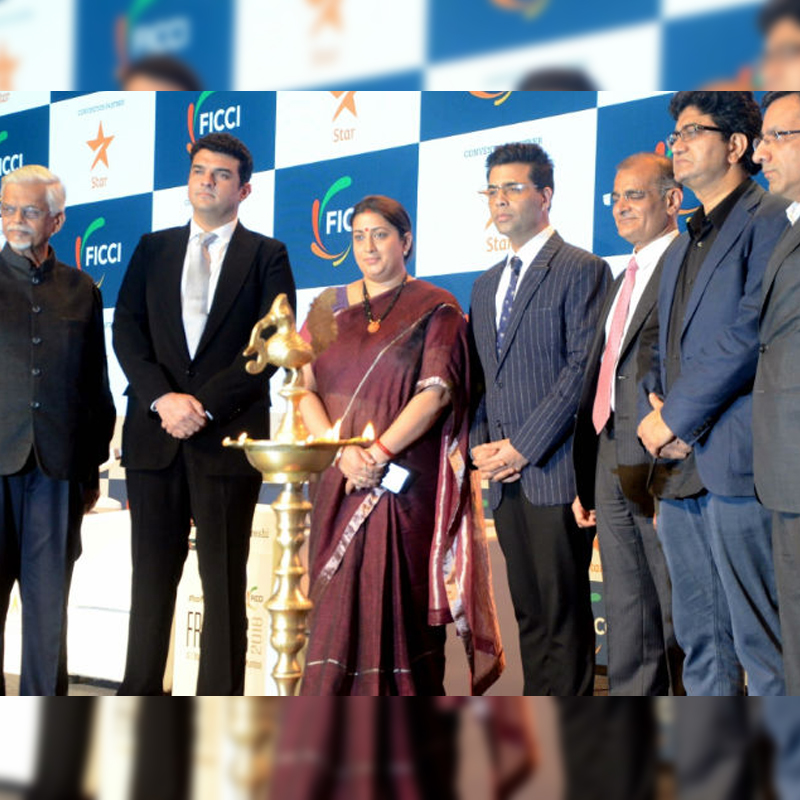
    The conference  saw I & B and Textiles minister Smriti Zubin Irani launch the three-day conference and market and engage in a riveting discussion with noted Filmmaker Karan Johar. This was followed by a range of conference panel discussions that saw the likes of Siddharth Roy Kapur, Nandita Das, Madhu Chopra, Rima Das, Sanjay Gupta (MD, Star India), Ajit Andhare, Vani Tripathi Tikoo, Megha Tata among many others take part.

    The first year of the content market was also a grand success, with the participation of over 100 buyers and festival programmers of Indian content and content sellers from across many countries..  With active meetings held across the three days, the international companies such as 102 distribution, Alpha Violet, Karma Films, Wild Bunch were also present.

    “In two days I had about 35 meetings with investors from all around the world. I was successful in raising interest of a total of 5 million dollars which we will now move forward to close with the help of my producers George Merkert and Academy Award winning Tim McGovern from LA Based Whisper Pictures…The Market was so well organized…”  said Reena NeGandhi an attendee of the market.

    “…This content market will help to unite the production houses with best content creators and will change the phase of Indian entertainment ecosystem.” said Satish Narayanan, Founder, Design Media and Edutainment Solutions.

    Furthermore 9 films including new Indian films such as Mudita by Swaroop Kanchi, Once again by Kanwal Sethi, Oh Shit! by Kamakhya Narayan Singh, Hamid by Aiijaz Khan, Ee Ma yau by Lijo Jose Pellissary and Rana Dugabbati presented C/O Kancharapalem among others were showcased to leading festival programmers from Venice, London, Edinburgh and Italy among others as a first of it’s kind initiative to fuel the discovery of Indian films internationally.

    The three-day event also saw a special installation of the mobile theatres by Picturetime digiplex where the films were screened. 

  • Screen Density: Lessons from the world & Exploring new business models

    Screen Density: Lessons from the world & Exploring new business models

    MUMBAI: On Day 2 of FICCI FRAMES happening in Mumbai, there was a session on Screen Density in India attended by some eminent panelists consisting of Mr. William Feng, VP, Greater China, MPA, Kurt Rieder, Head-Theatrical Asia, 20th Century Fox, Kapil Agarwal, Joint MD, UFO, Kamal Gianchandani, Chief of Stratergy, PVR Ltd,  Rajkumar Akella, Managing Director – Theatrical, India, ComScore and Mr. Kulmeet Makkar, Chief Executive Officer, The Film & Television Producers Guild of India Ltd. and Sushil Chaudhary, Founder and CEO, Picturetime Digiplex moderated by Uday Singh, Managing Director, MPDA.

    The Panelists discussed the existing scenario of screen density in India and how lessons from other countries can help India explore new business models to improve the screen count.

    Addressing the problem of screen density faced in India, Mr. Kurt Rieder, Head – Theatrical, Asia, 20th Century Fox Said “We would like to see more number of screens in tier 2 and tier 3. There are not enough screens per multiplex in tier 1 and 2 because once they build these things, nobody realizes that regional films are going to explode and suddenly the average multiplex probably requires twelve screens.”

    William Feng, VP- Greater China, MPA gave a presentation on screen density: China Market Development while 

    Sushil Chaudhary, Founder and CEO, Picturetime spoke about the new business module on screen density that aims at targeting audiences of rural areas.

    The DigiPlex mobile theatre vans, run by Picturetime, offer their audiences high-quality movie-viewing experience in the rural areas and is an economical option for the audiences in remote areas to catch up with newly released films.  

    Charging between Rs 30 from to Rs. 70 each viewer, the DigiPlex first pitches a collapsible all-weather canopy that can accommodate at least 120 viewers.  

    This can help put up more screens at very low cost as compared to building multiplexes in remote and even urban areas.

    “With this module, we are also looking at helping regional cinema and campaigns issued in pubic interest.” concluded Chaudhary.

  • Broadcasters see positive future for TV in India

    Broadcasters see positive future for TV in India

    MUMBAI: The threat of OTT and integrated platform ecosystems like Android TV is at the peak. Its increasing penetration across all age groups may be a threat to the broadcasters in the coming time. But, it isn’t the case yet in India with 64 per cent TV home penetration and much room for growth. Data also shows that 86 per cent of Indian homes still watch TV on CRT sets and only 3 per cent are multi-TV homes. TV viewing in India has grown from 3 hr 14 min (2015) to 3 hr 36 min (2017) but it is still lower than US, which boasts of an ATS of 3 hr 54 min. This gives a clear indication that there is immense scope for TV and it will further rise.

    The FICCI Frames 2018 saw a session on ‘The future of TV in India’ with panellists Novi Digital CEO Ajit Mohan, Viacom18 COO Raj Nayak, Times Network MD & CEO MK Anand, Indiacast CEO Anuj Gandhi, EY Partner Ashish Pherwani, BARC CEO Partho Dasgupta and industry veteran Amit Khanna. The panel was moderated by Provocateur Advisory principal Paritosh Joshi.

    Gandhi highlighted that we have the pulse of what audience wants which today is reality. Whether it’s a long form or short form content, people watch it, regardless of screen size or type. He said that people will consume TV content anywhere they can.

    Nayak believes that the future of TV is bright. He said that if distribution is king, content is queen. “The myth has been broken that the youth don’t watch TV and people watch short formats. Even in the US, people above 90 years of age watch TV content,” he said. He further added that linear watching on Jio TV is exploding with 3 crore viewers per month.

    According to Khanna, the average time spent on digital has grown with an hour and twenty minutes on phone especially in urban cities. When it comes to television, more that 70 per cent of viewership comes from movies and general entertainment. Pherwani said that 40 per cent of the time spent is on the mobile phone.

    Anand said that better technology, bandwidth and campaigning had eased the worry of broadcasters. He added that it was much easier to start a video stream but monetisation had not been easy.

    Broadcasters seem optimistic about the future of television, despite the onslaught posed by digital media. At least in India, the television will reign houses and minds of people for some time to come.

    Also Read:

    Ficci Frames 2018: Smriti Irani for highlighting M&E’s economic importance

    New initiatives at FICCI Frames 2018

  • M&E stakeholders need to collaborate for growth: Sudhanshu Vats

    M&E stakeholders need to collaborate for growth: Sudhanshu Vats

    MUMBAI: If the Indian media and entertainment (M&E) sector, poised to be Rs 2 trillion industry by 2020, is to be a force multiplier and up the present growth trajectory, then all the stakeholders, including the government, need to collaborate sinking differences, according to Viacom18 Group CEO Sudhanshu Vats

    “We need to learn to collaborate as an industry. We need to collaborate with competitors at times so collaboration and competition can coexist. The scale of industry is such that innovation and disruption is bigger than what any single one of us can achieve. It is only when we form partnerships [and] collaborate that we can achieve greater heights,” Vats on Monday said delivering a keynote address, themed ‘Media and Entertainment: The Force Multiplier At The Heart Of Society’, at the ongoing FICCI-Frames 2018 here.

    Pointing out that the M&E sector has deep links with other sectors of the economy, Vats asked and answered, “Where is it that you first heard about the mobile phone in your hands? Why do you even use it? How did you come across the shampoo you used this morning? What did you do in the car while driving to this conference? Well for most of you, the answer will be some form of media, be it print, or digital or electronic.”

    Deconstructing his observations in terms of numbers, Vats explained that the M&E sector has added over Rs 50,000 crore in output in the last five years, has a revenue size of Rs 130,000-135,000 crore and the direct or indirect induced benefits to the economy of the total industry size is Rs 450,000 crore with a contribution of 2.8 per cent to the country’s GDP. This apart, the industry also employed, across both formal and informal sectors, 1-1.2 million people, contributing significantly to India’s job creation.

    Having excited the audience with some hard data, Vats added, “Did you know that by several estimates, video streaming accounts for over 50 per cent of total mobile internet usage in India? This is expected to touch 75 per cent over the next three years. Today itself, the contribution of data to telco revenue stands at 20-25 per cent. Imagine what will happen when virtual reality (VR) becomes a commonplace phenomenon?”

    According to Vats, while presently the media sector employed around 1.5 million people directly and indirectly, it has the potential to add another million over the next five years, which might seem a small number —  given the total workforce of 460 million — but these are jobs that were non-routine, least likely to be automated and, more importantly, most of these jobs will need ‘on-the-job training’ — meaning that these jobs don’t need to wait for the country’s education infrastructure to catch up.

    But, given the M&E industry’s role as a force multiplier, how much steam is left? Because if the engine starts to weaken, it is obvious that its role as a force too will reduce. Vats thinks the answer to the question need not be a pessimistic one. Why?

    Vats listed the reasons for growth opportunities: (i) M&E industry’s ad-spend to GDP ratio was still 0.4 per cent compared to 1 per cent in developed economies (ii) the total sector is one per cent of GDP compared to 2.5 per cent or so in developed economies and (iii) while Indian TV audience (780 million) is bigger than that of the total population of Europe (745 million), India has only 64 per cent penetration with 183 million TV households. “With electrification progressing at a blistering pace, imagine future growth,” he reasoned.

    Though the opportunities are there, can the M&E industry pull it off? Certainly yes, if all the stakeholders sunk their differences and learnt to collaborate without being skeptical of newer techs and data-driven findings instead of always asking the government and regulator for help, which they must provide being facilitators and further adding to ease of doing business, Vats said exhorting the industry to rise to the challenges as one.

    “We need to become comfortable with data because we need to bring in more transparency, authenticity and objectivity to our data. If a new-age entrepreneur comes to us, we are skeptical of his idea or technology. If someone approaches us with a new way of measuring, say, our audiences, we are dismissive. We need to change this attitude. We need to change this mindset,” Vats reasoned, adding that Viacom18 was doing its own little bits, including starting a pan-network engagement programme with startups where the company partners with validation. The initiative is called Vstep or the Viacom18 Startup Engagement Programme.

    Urging the Indian society to loosen up a bit — learning to “laugh at ourselves” — Vats signed off saying: “Let us, the media and entertainment industry, be the force multiplier for growth, the force multiplier for change, the force multiplier for jobs and, above all, the force multiplier for the good of society.”

    Also Read :

    M&E to cross Rs 2 trillion by 2020: FICCI-EY reportFicci

    Frames 2018: Smriti Irani for highlighting M&E’s economic importance 

  • M&E to cross Rs 2 trillion by 2020: FICCI-EY report

    M&E to cross Rs 2 trillion by 2020: FICCI-EY report

    MUMBAI: FICCI Frames 2018 saw the launch of its annual media and entertainment (M&E) report, this year by Ernst & Young (E&Y) titled ‘Re-imagining India’s M&E sector’ which captures key insights from the exciting and fast growing Indian M&E sector.

    Launched on Sunday in the presence of the Information & Broadcasting minister Smriti Irani and other industry stalwarts like Star India MD Sanjay Gupta, Siddharth Roy Kapoor, filmmaker Karan Johar and others, the FICCI-EY report highlights that the M&E sector continues to grow at a rate faster than the GDP growth rate, reflecting the growing disposable income led by stable economic growth and changing demographics.

    The report suggests that the Indian M&E sector reached Rs 1.5 trillion in 2017, a growth of around 13 per cent over 2016 and is expected to cross Rs 2 trillion by 2020, growing at a compounded annual growth rate (CAGR) of 11.6 per cent. The digital segment led growth, demonstrating that advertising budgets are in line with the changing content consumption patterns.

    The report states that subscription growth outpaced advertising growth in 2017 but advertising will continue to grow till 2020 led by digital advertising. The report estimates that approximately 1.5 million consumers in India today are digital only and would not normally use traditional media. It is expected that this customer base will grow to 4 million by 2020 generating significant digital subscription revenues of approximately Rs 20 billion. Going forward, micropayment, enabled through the Unified Payment Interface (UPI) and Bharat Interface for Money (BHIM) platforms developed by the National Payments Corporation of India (NPCI) will further accelerate subscription revenues for entertainment content.

    EY India partner and M&E leader Ashish Pherwani expects digital and gaming sectors to grow between 2 to 3 times by 2020.

    Television
    While advertising is 41 per cent of the total revenues today, the report expects it to grow to 43 per cent by 2020. There are over 30 per cent households in India which are yet to get television screens, but being at the bottom of the pyramid, these households will tend to move first towards free and sachet products. 

    EY report states that the TV industry grew from Rs 594 billion to Rs 660 billion in 2017 and advertising grew to Rs 267 billion while distribution grew to Rs 393 billion. At a broadcaster level, however, subscription revenues including international subscription made up approximately 28 per cent of revenues. 

    Digital media

    250 million people viewed videos online in 2017 and the figure is expected to double to 500 million by 2020. 93 per cent of time spent on digital videos is in Hindi and other regional languages and OTT subscription in India is expected to touch Rs 20 billion by 2020.

    Digital media has grown significantly over the past few years and continues to lead the growth charts on advertising. Subscription revenues are emerging and are expected to make their presence felt by 2020. In 2017, digital media grew at 29.4 per cent on the back of a 28.8 per cent growth in advertising and a 50 per cent growth in subscription. Subscription, which was just 3.3 per cent of total digital revenues in 2016, is expected to grow to 9 per cent by 2020.

    Print

    Today, 98 per cent of readers read dailies and 20 per cent read magazines. Reader base is 395 million, or 38 per cent of the population. Readership has grown by 110 million over the last 3 years. Rural (52 per cent) reader base is larger than urban (48 per cent). 44 per cent of children aged between12-17 years read a newspaper or magazine. Magazines have a higher readership in urban area (57 per cent) as compared to rural areas (43 per cent).

    Print accounted for the second largest share of the Indian M&E sector, growing at 3 per cent to reach Rs 303 billion in 2017 and is estimated to grow at an overall CAGR of approximately 7 per cent till 2020. 

    This growth is expected despite the FDI limit remaining unchanged at 26 per cent and therefore, restricting access to foreign print players and the imposition of GST at 5 per cent on the advertising revenues of the print industry for the first time in history.

    Films

    Regional movies drove the growth in number of releases in 2017. Screen count increased from 9481 in 2016 to 9530 in 2017. Number of Hindi movies crossing the Rs 1 billion mark was highest in 2017 in the past five years. From 31 movies in 2016, Hindi dubbed movies increased more than three times to 96 in 2017.

    The Indian film segment grew 27 per cent in 2017 on the back of box office growth – both domestic and international, coupled with increased revenues from sale of satellite and digital rights. All sub-segments, with the exception of home video grew and the film segment reached Rs 156 billion in 2017. 

    The Hindi films comprise the majority component of the Indian film segment. They contribute almost 40 per cent of the net domestic box office collections annually, despite comprising only 17 per cent of the films made. Films in 29 other Indian languages account for approximately 75 per cent of the films released but they contribute approximately 50 per cent to the annual domestic box office collections. Hollywood and international films comprise the balance.


    M&A in M&E

    The Indian M&E sector witnessed a relatively new trend in deal activity with emerging segments such as gaming and digital gaining momentum, while the deal activity in the traditional media segments was slower. The slowdown can be partially attributed to challenges faced by the advertising segments of the industry due to demonetisation and GST. Overall, the number of transactions in the M&E sector decreased from 56 deals in 2016 to 40 deals in 2017.

  • Ficci Frames 2018: Smriti Irani for highlighting M&E’s economic importance
    Ficci Frames 2018: Smriti Irani for highlighting M&E’s economic importance
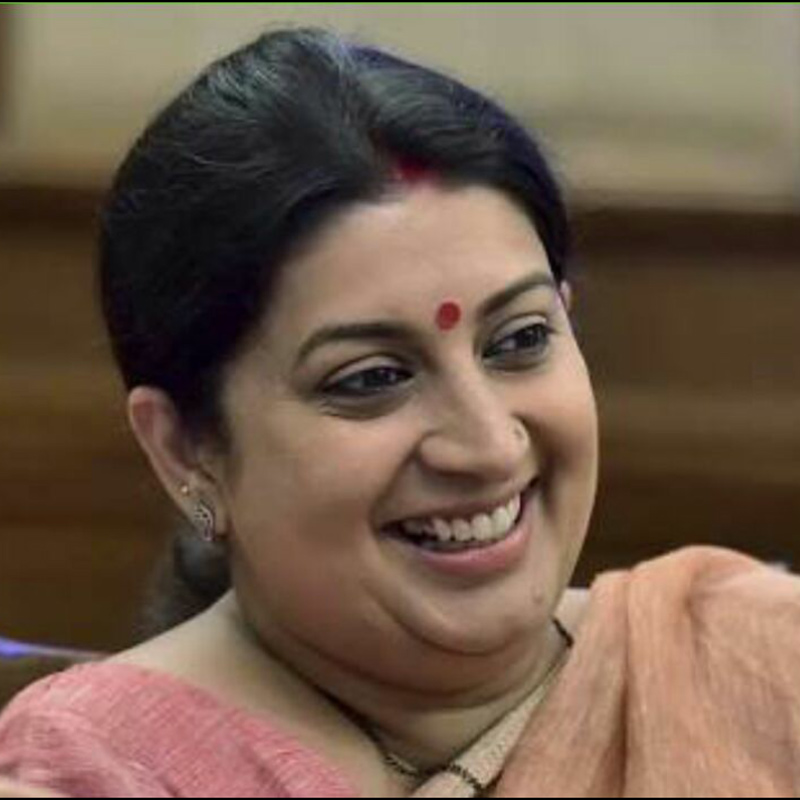
    MUMBAI: Even as the Indian media and entertainment (M&E) sector is projected to cross $31 billion by 2020, Minister for Information and Broadcasting (MIB) Smriti Irani said yesterday it is imperative that the country as a whole projected the economic value that the industry lends to the country’s economy.

    Speaking at the FICCI-Frames 2018 inaugural ceremony here, Irani said the Indian M&E industry is much more than just naach-gana (song and dance) and it was high time that the industry came forward to articulate the economic value and contribution that it gave to the Indian economy and exhorted the industry to use modern data analytics and technology to arrive at conclusions at the type of content the consumer desired.

    Referring to artificial intelligence or AI and other technologies, she said, “Technology is looked upon as a disruptor, but have we looked at technology from a creative point of view?”

    The Indian M&E sector hit nearly Rs 1.5 trillion ($22.7 billion) in 2017, growth of around 13 per cent over 2016. With its current trajectory, it is expected to cross Rs 2 trillion ($31 billion) by 2020, at a CAGR of 11.6 per cent. The digital segment-led growth demonstrates that advertising budgets are in line with the changing content consumption patterns, according to the FICCI-EY report ‘Re-imagining India’s M&E sector.’

    Launched on Sunday in the presence of the minister and other industry stalwarts such as Star India MD Sanjay Gupta, Siddharth Roy Kapoor and filmmaker Karna Johar, the FICCI-EY report highlighted that the M&E sector continues to grow at a rate faster than the GDP growth rate, reflecting the growing disposable income led by stable economic growth and changing demographics.

    The report states that the subscription growth outpaced advertising growth in 2017, but advertising would continue to grow till 2020 led by digital advertising.

    The report estimates that 1.5 million consumers in India today are digital-only and would not normally use traditional media. It is expected that this customer base will to grow to 4 million by 2020, generating significant digital subscription revenue of approximately Rs 20 billion. Going forward, micropayments, enabled through the Unified Payment Interface (UPI) and Bharat Interface for Money (BHIM) platforms, developed by the National Payments Corporation of India (NPCI), will further accelerate subscription revenue for entertainment content.

    EY partner and M&E leader Farokh Balsara stated, “The Indian M&E sector reached INR1.5 trillion in 2017 led by digital. With digital subscribers expected to reach 20 million by 2020, has Indian M&E reached its digital tipping point? We now need to reimagine the future of Indian M&E sector.”

    Said Gupta, “These are truly exciting times for our industry. It is amongst the fastest growing sectors in the country and has crossed the Rs 147 thousand crore mark. There is a revolution happening all around us, one that promises to, and in fact, has already started to redefine the future of media and entertainment.”

    “To compete well with the world, we need to set new standards of storytelling, we need to reimagine our stories. We cannot allow our legacy to shape our creativity. With digital, we have the license to break away from all the trappings of traditional media. We need to challenge where we release our films first, in a theatre or on a mobile screen. We need to challenge the constraints of 8 pm prime time, daily and hourly news formats and 22-minute episode lengths,” he added.

  • New initiatives at FICCI Frames 2018

    New initiatives at FICCI Frames 2018

    MUMBAI: The 19th edition of FICCI Frames to be inaugurated by the I&B and Textiles minister Smriti Irani on March 4 is all set to be a grand event.

    There are a lot of interesting sessions lined up with few new initiatives this year.

    The annual media and entertainment global convention will kick-start on the 4th evening with the launch event, which will be followed by the CEOs round-table addressed by Maharashtra Chief Minister Devendra Fadnavis.

    The 4-day event that will commence from the 4th and conclude on the 7th will see the who’s who from the media and entertainment industry attend, including the likes of Karan Johar, Shabana Azmi, Siddharth Roy Kapur, Nandita Das among many others.

    One of the major attractions will be the launch of a content market, which is expected to bring over 70 buyers and sellers of content from across the world to this platform.

    FICCI FRAMES CONTENT MARKET – A CONTENT BUYER AND SELLER PARADISE

    The 1st edition of the Content Market is aimed at facilitating the business of Content. Over 70 buyers from across the globe have been invited for the bazaar, including the likes of 102 Distribution, Edko Films, Shoreline Entertainment, Spuul, Top Entertainment, Aurora Global Media Capital, Front Row entertainment, Alpha Violet Sarl and Indian companies like Zee enterprises, Star, Eros Now, Reliance entertainment among others.

    In the first edition of the market, a special screening facility has also been set up to introduce festival programmers and key buyers to a highly curated slate of new Indian films. Festival programmers from International film festivals such as London, Venice, Edinburgh among others will also be in attendance.

    With over 100 sellers and over 70 buyers of content expected to be part of the 1st content market organized by FICCI, this sets the ball rolling for greater content exchange.

    Speaking about the 1st content market Leena Jaisani, FICCI said “This is being organized with the support and advise from the media and entertainment industry professionals. There was a dearth for such a market and with this first step, we hope to move ahead towards filling this void and facilitating more business for content.”

    International Women’s Day Celebrations with Women Leaders at FICCI FRAMES

    On 5th March, few women leader will get together to discuss women empowerment in the digital era, the rise of women movements, and how the community can support the development of more women leaders in the future.

    Led by Maya Hari, Managing Director of Asia Pacific at Twitter, who will be moderating the session, the panel will feature Director of Lipstick under my burkha Alankrita Shrivastava Actor Gul Panag, Author of Face at the window Kiran Manral; Deputy Editor of Rolling Stones India, Nirmika Singh and film producer and founder of IconicBot, Vishakha Singh

    Other Important sessions
    Few of the other important sessions would include discussions on Film Tourism, The future of TV in India, Box Office Collections of films, Biopics made in India, Women Power in Films, Screen density in India, Digital Revolution, Investments in Sports, Fake News, Low budget content heavy films, Regional Films going beyond regions, Films making money internationally, GST in Entertainment sector and Cyber security.

    There will also be a masterclass with Director Anand L Rai, a case study on web series Breathe along with a workshop on Facebook.

    Annual Media and Entertainment reports to be launched

    The annual media and entertainment report on figures related to entertainment industry and an Economic Contribution Report (ECR) for 2018 will also be launched.

  • All India Radio, Radio Mirchi, INOX & State Governments join forces with The Festival of Bharat

    All India Radio, Radio Mirchi, INOX & State Governments join forces with The Festival of Bharat

    MUMBAI: The Festival of Bharat, a one-stop experiential window into the best of India, partners with India’s national broadcaster, All India Radio, and India’s favourite Hindi music radio station, Radio Mirchi to promote arguably the largest PPP (privately funded and organised, government backed) cultural event of the country, and an unmissable one for Indians and India lovers across the globe. India’s two biggest radio stations, from both public and private sectors respectively, have come together in a rare instance of multiple major radio partners for one event, to cover this much anticipated festival. The festival has also tied-up with India’s premium chain of cinemas, INOX, who will play promotional videos of the festival at all their screens throughout the country, to further target the large numbers of HNI visitors expected to visit the festival.

    The Festival of Bharat will showcase an array of exciting events ranging from a day time lit fest with debates and talks, an evening music fest with beautiful Indian music from stars and legends alike, a morning yoga retreat by The Art of Living, a carefully curated multi-state flea market and exhibition, a spectacular outdoor fashion show, a ‘desi’ after-party, and an unmissable organic food festival. Speakers at the 5-day mega festival include Subramanian Swamy, Padma Vibushan Archarya David Frawley, Major Gaurav Arya of Republic TV fame, Suhel Seth, Ira Trivedi, Karolina Goswami, Nupur Sharma, and Vivek Agnihotri among others. 

    Commenting on the association, Cory Bixler, Founder of The Festival of Bharat said “I am pleased that India’s finest media platforms continue to join hands with The Festival of Bharat, and see their central role in celebrating the culture and traditions of India. Associating with these firms and other big brands is only natural and to be expected, as we all desire the same outcomes – a revival, exemplification and promotion of the best of India’.

    Supported by The Ministry of Tourism, Government of India, state governments, The Indian Debating Union, and The Art of Living, The Festival of Bharat has been painstakingly curated as a 21st century tribute to the majesty and depth of India’s unique history and culture.

    This most-awaited event is slated to attract tens of thousands of upwardly mobile visitors from April 4th – 8th at IGNCA, right next to Rajpath in the heart of New Delhi. 

  • FICCI BAF Awards 2018 entries now open

    FICCI BAF Awards 2018 entries now open

    FICCI Frames–the three-day global convention covering the entire gamut of India’s media and entertainment industry–is close, bringing with it the Best Animated Frames (BAF) Awards, one of the most coveted animation, visual effects and gaming (AVG) awards. The last date to submit entries for the awards is 15 February 2018.

    The fifteenth edition of the BAF Awards will take place on 5 March 2018 at Hotel Grand Hyatt, Mumbai, for which entries are invited for the animation, visual effects and gaming categories.The BAF Awards at FICCI Frames are an affair of extreme excitement as the entire AVG industry gathers under one roof after a year of arduous work.

    The BAF awards were started in 2004 by the Federation of Indian Chambers of Commerce and Industry (FICCI) to recognise and honour students and professionals in the field of animation. This first-ever animation awards in India have grown over the years to encompass awards not only in animation but also in the VFX and gaming fields.

    The contest now receives top-notch entries from across the globe; the last BAF Awards held on 22 March 2017 received 400 entries from across 12 countries.

    Entries can be sent online.

    For more details and registration, click here.

    public://FICCI-BAF-2018_Poster.jpg