Category: Specials

  • Ten events that shook television in 2018

    Ten events that shook television in 2018

    TV18 seized operational control of Viacom18

    India’s richest man Mukesh Ambani’s RIL rode the telecom, media and technology convergence wave better than most. The billionaire kick-started the year with a bang as he intensified TV18’s stake to 51 per cent by acquiring 1 per cent of Viacom18’s equity from Viacom Inc. for a cash consideration of $20 million. Viacom and Viacom18 also extended their brand and content license agreement by 10 years. That’s not all, RIL also pocketed a small but significant five per cent stake in content powerhouse Eros International.

    Consolidation in TV distribution

    The Indian market wasn’t exempted from the global merger frenzy. The coming together of two large DTH operators – Dish TV India and Videocon d2h – was finally concluded in 2018, creating the largest DTH service provider in the country with a subscriber base of about 29 million. One of the biggest attractions for Dish TV as the acquirer was Videocon’s significantly higher average revenue per user (ARPU). Significantly, the combined entity’s ARPU was Rs 207 in the second quarter as opposed to Dish TV’s standalone ARPU of Rs 144 pre-merger. The deal also helped Dish TV position itself better when it came to negotiating with broadcasters.

    Uday Shankar named Disney APAC boss

    A blockbuster deal that came through this year was the $71 billion acquisition of 21st Century Fox assets, including Star India, by Disney. After a long and sustained bidding war with Comcast, the Mouse House got its hands on much of the Murdoch empire. Late in the evening of 13 December came the announcement that Uday Shankar would be taking over as chairman of Star and Disney India and president of the Walt Disney Company Asia Pacific. Under the new structure, has multiple Disney executives reporting into him. Having run circles around Disney in India, Uday now shoulders the responsibility of entertaining more than half the world’s population. More TV disruption guaranteed.

    Jio unveiled ominous FTTH plans

    From formally launching FTTH service Jio GigaFiber to acquiring majority stakes in two large MSOs to speed up the rollout, the Mukesh Ambani-led Reliance Jio was definitely the centre of attention in 2018. Reliance Industries Ltd (RIL) made an investment of Rs 2,290 crore for 66 per cent stake in Den and Rs 2,940 crore for 51.3 per cent stake in Hathway. It will save RIL the cost of reaching out to customers as well as making the last mile connectivity easier in its ambitious bid of seizing control over India’s wired broadband business. As the Jio juggernaut marked its entry into India’s multi-billion-dollar cable TV and DTH businesses, traditional players eyed the development with a healthy mix of skepticism and optimism.

    OTT streaming gathered momentum

    When it came to content, OTT platforms captured the zeitgeist of 2018. Premium digital video content was relentlessly rolled out by the likes of Amazon Prime, Netflix, ALT Balaji, Hotstar, Voot and Zee5, keeping the audiences hooked at all times. Naturally, the band of programmers at some of India’s biggest broadcast networks felt the heat as a new wave of content competition hit India. Heads of Hindi GECs pulled out all stops in order to stay ahead of the game and keep their viewers happy. Thankfully for them, the cord-cutting trend, prevalent in several countries, didn’t grab India’s undivided attention. However, the sheer scale and quality of OTT content audiences were exposed to this year should be a cause for worry entertainment channels.

    Stalwarts made intriguing moves

    It was also a year of full surprises for the Hindi GECs, especially on the leadership front. Top-notch industry executives decided to call it quits including veteran Colors CEO Raj Nayak who dropped the bombshell of his Viacom18 exit after a distinguished seven-year stint with the media and entertainment conglomerate. Another prominent personality Discovery India and South Asia head Karan Bajaj also called it a day. Industry insiders believe the bespectacled Bajaj timed his exit to perfection, stepping aside when it mattered most. Both of them haven’t hinted at what gigs they are likely to take up next. Another heavyweight – Deepak Rajadhyaksha – who was heading Zee TV, turned to Viacom18 with his mantle being handed over to the broadcaster’s English cluster head Aparna Bhosle.

    Regional forces staged forward

    As far as content consumption was concerned, regional content too made its mark this year. While Hindi language consumption remains the country’s preferred choice, growth was fastidiously led by regional content. Backing this up with some facts, it was reported that the daily tune-ins on TV by the HSM led to 68.4 per cent, whereas in the South market it led to 78.3 per cent. Simultaneously, the advertisement expenditure in FY18, Hindi GECs declined by nine per cent as compared to an increase of 5.4 per cent in on regional channels. This was in line with growing investments made by broadcasting majors in the expansion of their regional offerings.

    Television business retained rhythm

    Channels continued to be launched in 2018 with almost all networks rolling out new offerings in regional languages – a trend which began over 2016 and 2017. Colors Tamil, Sony Marathi, Star Sports 3, Zee Keralam among others were unfurled for viewers by the major players. What's keeping broadcasters buoyant is the annual expansion in advertising continues unabated at about nine to 10 per cent annually. So, though traditional pay TV is not dead yet and will continue to grow in India as the saturation point is still far from over (BARC India estimates there are about 197 million TV homes in India over 100 million still to be covered), traditional media players have realised OTT and other forms of digital delivery of video — professional or user-generated — will continue to grow and put pressures on ARPUs and other numbers as more Indians take to smartphones and devises with broadband infrastructure slowly improving and cost of data plummeting in the short term.

    Tariff order turbulence

    TRAI’s new tariff regime, proposed first quarter 2017, continued to cast a shadow in 2018 with confusion relating to some aspects (like a 15 per cent cap on discounts to consumers for TV channels) lingering on like an unfinished record playing out discordant notes. While TRAI has sought clarification from the Supreme Court on the discount issue (the next hearing is sometime in January 2019), it has simultaneously cracked the whip on broadcasters and distribution platforms to fall in line with its new tariff regime by end of the present year.

    Major overhaul in the offing at ZEEL

    Subhash Chandra and family along with its advisors met in Mumbai over the Diwali weekend to undertake a strategic review of its businesses in view of the changing global media landscape. It was decided to undertake a strategic review of Essel's shareholding in ZEEL with a view to maximize value for the business. The proposed transaction to divest up to 50% of Essel's holding to such a strategic partner. Essel appointed Goldman Sachs Securities (India) Ltd. as their investment banker and US and European based LionTree as an international strategic advisor for this exercise. Essel expects the outcome of the strategic review to be concluded by March/April 2019.
  • Trends that will shape the trajectory of content space and its marketing

    Trends that will shape the trajectory of content space and its marketing

    MUMBAI: Content and brands have coherently managed to revolutionise how the audience consumes daily content across all platforms. Engaging trends have been discovered in recent years like the advent of digital content. But as new platforms gain massive popularity, they demand a subtle shift in the substance of their content, be it TV series, television ads, short stories or full-fledged films. The way this content is measured needs to be altered.

    Here are the trends we believe have, and will shape the future trajectory of the content space and its marketing and discovery activities.

    Changing dynamics between Bollywood and brands/falling associations

    The association between Bollywood actors and brands has led to some legendary advertisements in the past. With our favourite romance actors using fragrant perfumes or our action heroes getting their adrenaline rush from flavourful sodas, our minds were enticed with aspirational imagery. In the recent years the heros and heroines are no longer the quintessential epitomes of beauty and machismo and are now more real and approachable. Similarly, the content in films has undergone a major transformation from fantasy to reality as well; with real films like Raazi, Thugs of Hindostan, Padman, Parmanu, Raid and more, which are no longer utopian but pragmatic and vulnerable. On account of this, the synergies and content in branding and films are being redefined. On the other hand  in lieu of the changing psychographics and mindsets, brands are also redefining the space and tonality. It will be sometime till this space goes back to multiple associations, till then we will see a decline from what was the case 5 years back.

    Discovering digital content

    The hurdled journey from creating content to posting it has become nullified with digital media. Short films can now become huge blockbusters at the click of a button. But those very films can also get lost amongst the crowd of a million videos that are uploaded online each day. The challenges of marketing and discovery remain. Marketing and distribution are the key pillars to content discovery and both are now being redefined as content of your preference is suggested on your screens by various influencers.

    Authority figures like ‘Critics Choice Short Film Awards’ (which celebrates best short form content in an unbiased way) help promote worthy films that may otherwise go unnoticed. They can assist in introducing new genres and gaining recognition in the digital space.

    In future the recommendation search engine will be redefined by using consumer psychographics to predict future choices based on those made in the present, without the restriction of a single platform.

    Going beyond the unrealistic assumption of a single genre preference towards mapping consumer’s complex choices they could track content preferences across multiple genres (Multi digital platforms (audio/video/text), print, television).Thereafter, creating sub-genres for curated consumption by looking at movies, Ted talks, books, magazines and more.

    Social media and its expanding reach towards content consumption

    Social media giants like Facebook continue to reign as network favourites across the globe. And now this expansive reach is moving towards High badge value shows i.e. those that attract more shares, by having content that is socially progressive. Touching an emotional nerve and focusing on affiliate communities, it is attracting a large viewer base. But as this shift occurs, the rules of the consumption game must change. Platforms must adapt to the varying attention span of consumers, as the first three seconds define the popularity of the videos. Visually impactful imagery is a mandate for all content as shooting goes beyond handheld devices towards High Definition. Every social media channel now holds an untapped viewership potential which must be shown to promote valuable content.

    Music transcends digital boundaries and makes it way to traditional means

    Television is no more concerned solely with traditional shows but is an equally attractive medium for digital first properties as they become rating drivers for channels. New initiatives are being undertaken to release content across different mediums by tapping into relatable pop culture. The success of ‘Jammin’ a music property (simulcast on TV, digital and radio) where YouTube stars meet top Bollywood composers, which opened to great numbers on Sony TV in addition to it’s success on and VIU and BigFMreinforces that appealing content can transcend boundaries.

    The growth of vernacular content

    The next 100 million Indian viewers that are going to be binging on digital content will be users alien to the English language and their consumption of content would be in regional languages, ushering an unprecendented demand for vernacular content as has been demonstrated by the OTTs. A scalable and sustainable example here is The Yaari franchise on Viu is broadcasted in multiple languages like Telugu, Kannada and Marathi and it continues to be an engaging show across multiple states and the diaspora abroad.

    Time to change the measure of digital content

    The OTTs and digital platforms are  split between free and doing originals (e.g. YT originals, Sony Liv), to freemiums (Hotstar, Viu, Zee5), to 100 per cent subscription platforms (Netflix,Amazon prime etc). Hence it’s essential to compare them on parity and not just on a single metric.

    Originals are defining the content approach in the Indian context and if the aim is to increase downloads and viewer engagement then the metric needs to change from downloads or MAU (monthly active users) to DAU (daily active users). The quality of the content and platform desirability cannot  be measured on the basis of a new monthly release, but it must be evaluated through the DAU/MAU metric to factor in returning users. This should be the true measure for content engagement as it will streamline comparisons between subscription OTTs vs free OTT vs freemiums.

    Rise of gaming as a marketing platform

    Costs of launching a car with AR/VR experience may be too high and unreasonable, but for gamers who already spend profusely on gaming zones and digital games, a small premium will not deter them from availing an enhanced gaming experience. Already a high engagement platform, gaming is eating into time spent by Indians on prime-time television as maximum gamers were found to play the most between 7 pm to midnight. The average daily time spent by Indians on mobile games has crossed the one-hour mark, which is more than the 45 minutes that they spend on streaming platforms.

    In 2018, over 380 million people are now watching other people playing games online making it a gaming revolution in the digital content space.

    Brand embracing and creating sustainable platforms

    As the race for eyeballs & viewer stickiness hots up, so does the pressue on creating new and appealing content leading to heavy investements for the platforms and networks. The old space of branded content has taken a new shape now with platforms and networks looking at this as content first. Annual brand funded or sponsorships have matured into prospective longer term partnerships like LUX Golden Rose Awards, Mc Dowell’s No.1 Yaari and  Yaari  JAM , Red Label 6-Pack Band 2.0.

    A strategic transformation has led to content becoming larger and (though marginally), joint initiatives becoming longer and content becoming synonymous with the brand. Brands are embracing platforms to leverage content strategically (long term and scalable year on year) and as broadcasters reward and demand for content, the number of these partnerships is sure to grow as it transforms into a sustainable model.

    (The author is head, content+, Mindshare. The views expressed here are his own and Indiantelevision.com may not subscribe to them)

  • Events – the ultimate tool for marketers to reach their audience

    Events – the ultimate tool for marketers to reach their audience

    MUMBAI: Events are an effective and economical way for companies to interact directly with their target audience. It is the interactive and personal nature of this medium that exerts a much more noticeable effect on target audiences at an individual level. As an example, a person is far more likely to remember a cricket game he went for where McDonald's happened to be a title sponsor, as opposed to a ten-second advertisement for McDonald's that he saw on YouTube; which he’d probably try and skip anyway. Noticing the raw power of events as a platform to engage with one’s audience, marketers have wisely opted to seriously consider them as the viable tool they are.

    Perhaps two of the biggest reasons for the current interest in events as a marketing tool are the decline in traditional media viewership and the oversaturation of social media platforms with brand messaging. Events in a sense, serve as an easy way for brand managers to enable their communication to break free of the clutter that plagues most other forms of marketing. Here are some of the reasons why marketers choose events as a central component of their integrated marketing strategy:

    Memorability

    Large-scale events are inherently interesting. As a result, they act as magnets for (free) mainstream press coverage and public interest, especially when compared to social media or advertising campaigns, in which excitement is generally restricted to the industry itself. For example, the recent Bryan Adams concert in Mumbai will be remembered and talked about by attendees for years, if not decades to come, but few if any could recall the latest ad campaign by OLX. When a company attaches itself to an event, be it as grand as the IPL, majestic as Beauty and the Beast, or out-of-the-box as the Pro Kabaddi League, it essentially rides on the goodwill and connection that people have to those individual properties.

    Customisability

    Events, just like any other platform of communication, can be customised to match the exact requirements, expectations, and desires of the target audience while simultaneously accommodating the brand’s messaging. For example, MSI, Alienware, and Intel, all regularly organise or associate with gaming tournaments because these types of events attract their target audience; young men who enjoy video games. This rationale holds true for brands across various sectors for as long as a brand is able to craft an experience (or at least tie-up with a property that can that is irresistible to their specific audience.

    Return on investment

    While events do have a comparatively higher cost per view (CPV) from the perspective of a brand when compared to an advertising campaign, the return on investment remains exceptionally competitive given their high recall value. One of the core objectives of marketing is customer engagement, and few if any channels of communication have the ability to generate a profound response from the audience quite like an event. For example, if DC were to set up a kiosk at Comicon, the response they would receive from attendees would be far more interactive than it would be if they spent the very same portion of the marketing budget on a billboard. For this reason, the ROI on event sponsorships should not be discounted.

    Distribution of risks

    Unlike advertisements which can only have a single sponsor, events, typically large ones like sports leagues, film award ceremonies, and music concerts, can have multiple stakeholders. This distributes the costs and allows all parties to benefit from their association with the aforementioned properties. As an example, in the case of an event like the IPL, no single company could ever hope to afford to sponsor the entire tournament. This is why each team has their own set of sponsors, as does the event itself.

    The marketing landscape in India is evolving continuously as brands escape the clutches of conservatism and explore new avenues of reaching consumers. This renaissance has resulted in an equally massive evolution in the quality, quantity, and types of events that are now emerging across India. It would be safe to say that synergy of both industries is guaranteed to produces some absolute masterpieces in the near future.    

    The author is managing director, Dome Entertainment Pvt Ltd. The views expressed here are his own and Indiantelevision.com may not subscribe to them.

  • Movie premieres, HD adoption, OTT challenge for English entertainment, movies in 2018

    Movie premieres, HD adoption, OTT challenge for English entertainment, movies in 2018

    MUMBAI:  It was a good year for English entertainment and movies channels. 2018 saw some big Hollywood premieres even as channels went the route of content segmentation and HD adoption.

    Leaving behind the concerns of GST and demonetisation, the industry did much better this year. Industry experts suggest that a small correction expected in the content acquisition cost in 2019. This will come on account of two things – revenue growth across years in the genre and the evolution of business models as some broadcasters are sharing their first output windows with SVOD players.

    Times Network EVP & head-entertainment cluster Vivek Srivastava said, “We had a strong festive season and are now set for an aggressive Q4 to end the year. We have driven premiums, sponsorships and managed to deliver great value to our advertisers. The highlight for us would be the success of MNX. With it, we now have two brands in top 4 (Movies Now and MNX) and that’s a healthy space to be in. We command more than one third of the total English entertainment viewership and are poised to drive our fair share from the market.”

    Two of its channels out of the four are in the top 5 list of BARC ratings week 49. Movies Now led the chart with 2769 impressions ‘000 and MNX was at the third position with 2213 impressions ‘000.

    Times Network’s newest brand MNX has been dangling above HBO in six metro markets. The group has close to 1500 titles and 25-30 shows for its movie channels. The content comes from four major production houses Disney, MGM, NBC and Warner Bros which are long term deals. The network holds the second output of NBC after SPN India.

    Sony Pictures Network India’s (SPNI) English cluster grew by 34 per cent in FY19 (17 per cent till date) as compared to FY18 (13 per cent). The legacy brand AXN, in 2018, emerged as the leader in all India 15+ market with 25 per cent market share according to the broadcaster. The channel introduced two new properties in 2018- AXN Premiere Club and AXN Bestsellers.

    In 2018, Sony Pix witnessed some big Indian television premieres like Jurassic World Fallen Kingdom, Mortal Engines, First Man, Skyscraper. SPNI business head English cluster Tushar Shah said, “We believe that content will continue to be the driving force. We at SPN offer best-in-class entertainment to viewers across all our platforms. Our programming and marketing initiatives are driven by clear consumer insight and deep market research. We are extremely happy with our content performance and are bullish about a bright future.” The English cluster of SPN picks up content from Disney, Warner Bros, NBC Universal, Lionsgate and PVR Pictures.

    The English movies genre is a tough nut to crack with many players vying for a small viewership pie. But that didn’t deter Zee Entertainment Enterprises Ltd (Zeel) from launching a new channel to wow viewers. On 3 June, &flix was launched under its separate ‘&’ brand identity. The channel claimed that it was meant for those who are in search of new experiences and wanting to take quantum leaps. This also saw the shutdown of Zee Studio, an 18-year-old brand.

    Zeel’s English cluster brings content from a large library of exclusive titles sourced from many independent Hollywood players and studios such as Paramount, PVR, Sony and Disney.

    This year also saw &Prive HD cement its base in the market. The channel had upped its list of top rated movies to show during primetime. In early 2018, it had 450 titles to boast of, just a few months after launch, from names like Paramount, Reliance, Tanvir and PVR. &Prive HD is taking the non-conformist route, just like its target audience of 22-50, by even picking up films from independent producers in Europe.

    Launching an exclusively HD channel and that too for the crème-de-la-crème of Indian viewers was a risk. High net worth homes are the target of &Prive HD but this is also the segment that can afford many other quicker options like OTT.

    Turner India, which holds two channels HBO and WB also had a list of premieres to enthral viewers including Dunkirk, Wonder Woman, The Lego Batman movie, Annabelle 2, Transformers: The Last Knight, Baywatch, Justice League, Kong: Skull Island etc. In the start of the year, the network had its aim as engaging its fans deeper with personal communication through mediums that they are comfortable with such as WhatsApp.

    According to the KPMG in India’s M&E report 2018, the English GEC genre saw an 8.5 per cent growth in advertising expenditure from 1.7 per cent in FY17 to 1.8 per cent in FY18, despite pressure on relative positioning in English viewership on account of the change in the measurement methodology. English Movies genre also witnessed an increase of 3.33 per cent in FY18 compared to FY17.

    “2019 is expected to start on a good note with Q4 carrying forward the positivity and excitement of the festive season. The fact that we have some of our biggest properties – ‘100 Mania’ on Movies Now and ‘Kings of Hollywood’ on MNX only strengthens the proposition. Also with the elections coming up in 2019 and the economy going strong, we are likely to have a strong exit to this financial year,” Srivastava added.

    Times Network estimated that the genre grew by 15-20 per cent more than the previous year’s figure which was Rs 700 crore.

    There was an increase in the uptake of HD channels with 10-12 million subscribers availing HD services at the end of FY18. This number is likely to have gone up by the end of the calendar year 2018. The DTH players have been the front-runners in up-selling HD services to their customers with MSOs only managing to garner about 1-1.5 million HD subscribers. On an average, an HD subscriber results in a 1.5-1.7x ARPU as compared to SD subscribers.

    Another challenge that these genres will have to face in the coming years will be that of the growing presence of OTT. With data cost coming down and access to content widening (over 30 OTT players already), viewers could be tempted to skip the remote in favour of their cell phones whenever they wish to watch an English show or movie. What still works in favour of TV is its picture consistency, which gets hampered on OTT due to unstable data, and the screen size. For now, it also looks like OTT players, including ones from SPNI and ZEEL, are more focused on creating new content rather than depend on seen ones to grow viewership.

  • Hindi GECs flirted with formats, sensed OTT challenge

    Hindi GECs flirted with formats, sensed OTT challenge

    MUMBAI: When it came to content, OTT platforms captured the zeitgeist of 2018. Premium digital video content was relentlessly rolled out by the likes of Amazon Prime, Netflix, ALT Balaji, Hotstar, Voot and Zee5, keeping the audiences hooked at all times. Naturally, the band of programmers at some of India’s biggest broadcast networks felt the heat as a new wave of content competition hit India. Heads of Hindi GECs pulled out all stops in order to stay ahead of the game and keep their viewers happy. Thankfully for them, the cord-cutting trend, prevalent in several countries, didn’t turn to India. However, the sheer scale and quality of OTT content audiences were exposed to this year should be a cause for worry entertainment channels.

    ‘TV isn’t dying, in fact, both TV and OTT is growing simultaneously,’ was a line often heard this year. That’s perhaps the reason broadcasters remained confident that daily soaps, fiction and non-fiction shows on TV would continue to command viewership numbers.

    The advent OTT players increased the overall demand for content. While Indian broadcasters put out over 100,000 hours of content annually across formats and languages, newer entrants continued to pump in more cash per episode (though for much smaller quantities of content) and tried to snap up the best available talent. 

    The overall cost of content rose by almost two to three per cent of the broadcasters’ top line. With OTT companies refusing to take their foot off the pedal, broadcasters have no choice but to pay up. However, if their bid for quality programming fails to generate higher viewership which can be monetized better, broadcasters may not pursue quality, and stick to current cost metrics.

    As far as content consumption was concerned, regional content too made its mark this year. While Hindi language consumption remains the country’s preferred choice, growth was fastidiously led by regional content. Backing this up with some facts, it was reported that the daily tune-ins on TV by the HSM led to 68.4 per cent, whereas in the South market it led to 78.3 per cent. Simultaneously, the advertisement expenditure in FY18, Hindi GECs declined by nine per cent as compared to an increase of 5.4 per cent in on regional channels. 

    It was also a year of full surprises for the Hindi GECs, especially on the leadership front. Top-notch industry executives decided to call it quits including veteran Colors CEO Raj Nayak who dropped the bombshell of his Viacom18 exit after a distinguished seven-year stint with the media and entertainment conglomerate. Another prominent personality Discovery India and South Asia head Karan Bajaj also called it a day. Industry insiders believe the bespectacled Bajaj timed his exit to perfection, stepping aside when it mattered most. Both of them haven’t hinted at what gigs they are likely to take up next. Another heavyweight – Deepak Rajadhyaksha – who was heading Zee TV, turned to Viacom18 with his mantle being handed over to the broadcaster’s English cluster head Aparna Bhosle.

    The GECs also flirted with formats and played around with show timings in an attempt to infuse life into programming. Here's a quick recap of how some of India's most-loved Hindi GECs tried to stay ahead in a cluttered segment.

    Colors

    Having a stronghold in the mythological and fantasy drama genre, it revived Naagin for season three giving it an 8 pm slot on the weekend. Another supernatural drama Tantra by Swastik Productions was aired on weekdays at 11 pm. Rashmi Sharma Telefilms’ Vish Ya Amrit: Sitaara, a supernatural thriller, was given the weekday 10.30 pm slot.

    Two leading ladies of not just Viacom18, but the entire industry, added more feathers to their caps. Manisha Sharma, who was in charge of Colors, was elevated as the chief content officer – Hindi mass entertainment. She heads both Colors and Rishtey. Kids’ cluster head Nina Jaipuria’s portfolio further expanded to include both kids TV network and Hindi.

    The channel reshuffled its programming line-up post the launch of historical saga Dastaan-E-Mohabbat Salim Anarkali, Monday-Saturday at 8.30 pm, by replacing the drama series Udaan which was shifted to 7 pm slot. Internet Wala Love, which aired at 7 pm was moved to 6.30 pm time band while Savitri Devi College and Hospital, which aired at the 6.30 pm slot was called off.

    After a two year hiatus, Colors came back with the launch of season 8 of reality show India’s Got Talent, to be shown on weekends at 10 pm. The show was planned to replace horror anthology television series, Kaun Hai? That was produced by Contiloe Pictures and was scheduled to air every Friday to Saturday at 10.30 pm. Also, another home-grown reality show Entertainment Ki Raat season 2 was given the weekend 9 pm slot, promoted from its debut season slot of 10.30 pm. The show was replaced with the reality show Rising Star produced by Optimystix Entertainment. Bigg Boss 12 was also launched but with a new time-slot at 9 pm.

    Sony

    Hindi GEC Sony Sab started a new weekend slot titled ‘Sab Ka Weekend Plan’ with two new shows India Ke Mast Kalandar – Atrangi Hain Ye!and Namune. The channel aired the former show every Saturday and Sunday at 8 pm whereas the latter was at 9 pm. The Kapil Sharma Show is all set to make a comeback after a hiatus of more than a year. The channel had stopped airing fresh episodes of the show from September 2017.

    Taking Colors’ Bigg Boss 12 head-on was Sony’s tentpole show Kaun Banega Crorepati (KBC) season 10 at 9 pm. Following that, the channel launched two fictional drama Patiala Babes and Ladies Special post-KBC. The channel pulled the plug on Yeh Pyaar Nahi Toh Kya Hai, which was aired at 9.30 pm, following poor ratings.

    The network also announced that Sony Pictures Network India’s (SPNI) newly launched content production arm Studio NXT will focus on creating premium, high investment content that can also travel outside India. Headed by Sony Entertainment Television (SET) EVP and business head Danish Khan, the content studio began its journey with Kaun Banega Crorepati (KBC) season 10 which was co-produced with Big Synergy.

    The channel is experimenting with new shows and formats in the time slot starting 8.30 pm. The channel aired comedy-drama Main Maike Chali Jaungi, replacing Dus Ka Dum and Zindagi Ke Crossroads. Dus Ka Dum aired on Monday and Tuesday while Zindagi Ke Crossroads aired from Wednesday to Friday.

    Zee

    Zee TV’s primetime offering included Manmohini, produced by LSD Films, every Monday to Friday at 7.30 pm. &TV launched a live singing reality show for kids Love Me India and fantasy show Vikram Betaal ki Rahasya Gaatha. Zee TV launched a new fiction show named Tujse hai Raabta on 3 September, weekdays at 8.30 pm, produced by Full House Media.

    ZEEL elevated Aparna Bhosle as the business head of its flagship Hindi GEC Zee TV. Bhosle headed the premium and FTA GEC cluster. The move comes in the wake of Deepak Rajadhyaksha’s exit from the company. He was the deputy business head at Zee TV. Rajadhyaksha joined Viacom18 as business head of Colors Marathi and Colors Gujarati.

    Zee also took three of its shows abroad for a remake, in collaboration with African countries – Punar Vivah, Dance India Dance and Pavitra Rishta.

    Ending the year 2018 on a high note, &TV opened doors of endless opportunities for makers to experiment with content. Supernatural ruled the roost this year for the channel, progressive concepts and live reality remained at the top of the list. From launching its first live reality show for kids to introducing supernatural in a new style, &TV presented its khaas andaaz with not one but many pieces of content that were rolled out. The channel launched shows like ‘The Unconventional Saas (Perfect Pati)’, ‘Love with supernatural twist (Laal Ishq)’,’ Reliving childhood stories (Vikram Betaal Ki Rahasya Gatha)’, ‘ The mysterious Daayan (Daayan)’, Kids Live singing with ‘Love Me India’ and ‘High Fever… Dance Ka Naya Tevar’.

    Star

    Star India signed a multi-season, multi-year deal with Talpa Media for The Voice franchise, comprising The Voice and The Voice Kids. The new series will be produced by Banijay Asia, a Banijay Group company.

    Star Bharat’s socio-thriller Kaal Bhairav Rahasya returned for a second season featuring new mystery and folklore. Star Bharat launched a mythological show Radha Krishn airing Monday to Friday at 9 pm, replacing political drama Saam Daam Dand Bhed. The show was produced by Swastik Productions who have had several successes in the genre including Shani, Mahakali, and Porus. It also announced the launch of a new finite fiction show that narrated the story of firebrand freedom fighter Chandrashekar Azad in about 110 episodes, produced by Anirudh Pathak.

    The main GEC Star Plus launched a new show Karn Sangini at 7 pm. The show replaced channel’s reality show Sabse Smart Kaun. With Karn Sangini, the channel is dealing with the new genre of mytho-romance. Produced by Shashi and Sumeet Mittal, the show narrated the never-seen-before tale of a royal princess Uruvi who chose her love and stood by it against all odds.

    Discovery Jeet

    Despite heavy promotions in its launch stage, Discovery Jeet didn’t quite manage to grasp the pulse of the audience.

    Jeet entered the Hindi GEC sweepstakes on 12 February with five hours of daily programmes, out of which three hours were original programming, with content available in Hindi, Tamil, and Telugu. The channel launched with a distribution blitzkrieg to more than 100 million households and signed up Netflix as the exclusive global OTT partner.

    Despite the network’s best effort, the channel failed to rate. Initially thought of a challenger to the existing GEC order, Jeet fizzled out without much of a fight.

    According to Broadcast Audience Research Council data week 9, the channel garnered 6096 impressions (000s) in the 7 pm to 11 pm time slot, while it secured 15908 impressions (000s) for the whole day’s viewership. Currently, the channel airs syndicates content dubbed in Hindi.

    Overall, almost all channels heavily swapped shows for one another in order to keep audiences steady and growing. Unlike earlier years, when channels relied on primetime shows for years, times are changing and audiences are picky and broadcasters realise that.

  • A year when OTT onward march & TRAI tariff issue hogged limelight

    A year when OTT onward march & TRAI tariff issue hogged limelight

    MUMBAI: 2018 could have been easily dubbed as the Indian year digital or OTT, with its chaotic growth continuing and multi-million dollars being poured into programming by global and local players, however, the new tariff and regulatory regime for the broadcast and cable sector occupied as much mind space.

    Though these are early days for a sure shot business model for digital space emerging as players continue to experiment with AVOD, SVOD and combination of several other models, there’s no denying OTT has more than a foot inside the door in India.  

    According to a report by market research firm Media Partners Asia, online video revenue, comprising net ad spend and subscription fees, will grow at an 18 per cent CAGR across Asia Pacific between 2018 and 2023, climbing from $21 billion 2018 to $48 billion by 2023. While China will account for the lion’s share of industry value, with more than 60 per cent of Asia Pacific online video revenue and more than 75 per cent of direct-to-consumer SVOD subs by 2023, other big markets by revenue would include India, Japan, Australia, Korea and Taiwan.

    So, though traditional pay TV is not dead yet and will continue to grow in India as the saturation point is still far from over (BARC India estimates there are about 197 million TV homes in India over 100 million still to be covered), traditional media players have realised OTT and other forms of digital delivery of video — professional or user generated — will continue to grow and put pressures on ARPUs and other numbers as more Indians take to smartphones and devises with broadband infrastructure slowly improving and cost of data plummeting in the short term.

    The inroads into India in 2018 made by Chinese mobile companies have been impressive while raising fears of tracking and data misuse too.

    “With 160 million shipments of smartphones in 2019, apart from being the only market to grow in this sector, India will also be the most potential market for global content creators,” Zeel MD Punit Goenka tweeted last week. This observation is testimony to traditional media players waking up to the competition from OTT platforms for eyeballs.

    The growth of online platforms also means the continued search for both original and library content too will grow as it did in 2018. Not only global players like Netflix and Amazon announced big-budget investment in original content starring leading Hindi film stars like Shah Rukh Khan and Saif Ali Khan, local companies too have upped the ante realising the potential of the digital space. Star India’s digital arm Hotstar claimed 100 million viewers for the IPL cricket and ZEE5 has come out with some refreshing non-fictional programming.

    If online video distribution is growing in India, so has the demand for content regulation. Even as Indian policy-makers struggle to understand the business model(s) for digital players, the cry for regulation to suit Indian sensibilities (or lack of it) too has increased. Netflix Indian original Sacred Games is still fighting out a legal case, while informal warnings have gone to other Indian OTT platform too to tone down edgy programming being streamed.

    Bouncing amongst several government organisations (MIB, TRAI and Meity), the issue of online content regulation was a hotly debated topic in India with a large section of the industry pushing for self-regulation like those prevailing for TV content.

    If not in 2018, some sort of content regulation for online video will definitely come. The only thing that matters is whether in 2018 or it will be post general election in 2019.

    The action in the online video segment and its delivery mode was catalysed by the arrival of Reliance Jio that has expanded from just being a player to becoming a behemoth in a short period of time, handing out services at comparatively low prices. The rollout of Jio Giga fibre network in 2018 has sharply woken up legacy distribution players, including telcos who went on a partnership spree to source content.   

    And, if the regulators in India struggled with the issue of online  content, TRAI’s new tariff regime, proposed first quarter 2017, continued to cast a shadow in 2018 with confusion relating to some aspects (like a 15 per cent cap on discounts to consumers for TV channels) lingering on like a unfinished record playing out discordant notes. While TRAI has sought clarification from the Supreme Court on the discount issue (the next hearing is sometimes in January 2019), it has simultaneously cracked the whip on broadcasters and distribution platforms to fall in line with its new tariff regime by end of the present year.

    The formulation of a new telecom policy or the National Digital Communication Policy 2018 could also be said to be a milestone as India stopped just short of creating a mega communications regulator overseeing the realms of TV broadcast, online and telecoms, depending on having increased synergies amongst these segments and their regulatory regimes.

    Increased mergers & acquisitions seen in 2018 would continue consolidating the market and players. But such activities also raised doubts on possible creation of monopolies. Disney takeover of most of the media businesses of Rupert Murdoch’s 21st Century Fox, including Asia biggie Star, played out in India too even as Mukesh Ambani’s Reliance Industries and its various arms went on a shopping spree buying sizable stakes in content makers (Balaji Telefilms, Eros, for example), distribution platforms (Hathway, DEN Networks) and other media assets. That Subhash Chandra-founded Zee too is looking for an investor spiced up the mergers and acquisitions space.

    Channels continued to be launched in 2018 with almost all networks rolling out new offerings in regional languages – a trend which began over 2016 and 2017. Colors Tamil, Sony Marathi, Star Sports 3, Zee Keralam were unfurled for viewers by the major players. What's keeping broadcasters buoyant is the annual expansion in advertising continues unabated at about nine to 10 per cent annually. 

    While legacy media players (like cable TV, MSOs/LCOs, DTH) in India have started a fight for survival and improved bottomlines in the aftermath of online’s growth, the #MeToo effect in 2018 did not leave the media and entertainment untouched.

    Though #MeToo in 2018 more impacted the advertising and film segments with some big names becoming casualties, the ripple effect in the broadcast sector was low. But the movement has opened up a can of worms in the Indian media, entertainment and advertising segments.

    The industry is on tenterhooks in an election year, wondering whether the BJP or NDA will make a comeback in April-May 2019 or yield to the Congress. Will the policy regime continue or will there be changes? These are questions that seem to be creasing many a brow. 

    But on the whole, will the trends continue in 2019? Of course, yes as it too promises to be quite a roller-coaster.

  • The year M&A changed the face of the media and entertainment industry

    The year M&A changed the face of the media and entertainment industry

    MUMBAI: The emergence of numerous streaming platforms and convergence between technology, media, and telecom companies shook the core of the media and entertainment business globally. Giant tech and telco players, on the back of their direct customer reach, started taking content creation and distribution a lot more seriously. Rapid change in content consumption pressurised traditional players to invest more in technology and focus more on the B2C model. The ongoing flux brought the industry on the brink of instability, leading to consolidation in the form of mergers and acquisitions.

    In the last couple of years, the nature of competition in the global ecosystem has witnessed a gradual swing. Organisations like Netflix, Amazon Prime and Google have brought a structural shift forcing traditional players to rethink their approach to content and distribution. Legacy brands upped the ante to attract and retain more consumers even through cross-border deals. PwC India partner Raman Kalra points that everybody in this world of media disruption is trying to be relevant in reach and scale, the two critical factors that are driving deals. To corroborate his thesis, he highlights the AT&T-Time Warner deal where the former, with a huge reach, wanted to scale up its content play with the collaboration.

    Closer to home, billionaire Mukesh Ambani’s RIL rode the TMT convergence wave better than most. India’s richest man started the year with a bang, intensifying TV18’s stake to 51 per cent by acquiring 1 per cent of Viacom18’s equity from Viacom Inc. for a cash consideration of $20 million. The RIL-owned Jio Infocomm also acquired a controlling stake in two large MSOs – DEN and Hathway – building ammunition for its FTTH’s foray. That’s not all, RIL also pocketed a small but significant five per cent stake in Eros International.

    E&Y media and entertainment advisory services partner Ashish Pherwani expects more deals to materialise in 2019.

    “Especially technology-driven deals because so many changes are happening in that space, and consolidation, led by inbound investments. There are three types of deal. One type of deal is happening in order to build efficiency and scale in the business, led by cost pressures. Another type of deal is around relevance and market share – to get a bigger slice of the market to monetise a larger base of consumers.  The third type of deal which is happening is basically technology driven – for access to technology that could drive competitive advantage in the digital future. Hence, the three reasons market share, efficiency, technology are driving the deals,” he adds.

    There were other interesting deals struck through the year that are likely to reshape the media and entertainment business going forward.

    Birth of the world’s second largest DTH company

    The Indian market wasn’t exempted from the global merger frenzy. The coming together of two large DTH operators – Dish TV India and Videocon d2h – was finally concluded this year, creating the largest DTH service provider in the country with a subscriber base of about 29 million. Apart from leveraging their individual strengths, it was expected that the combined entity would benefit from economies of scale. One of the biggest attractions for Dish TV as the acquirer was Videocon’s significantly higher average revenue per user (ARPU). Significantly, the combined entity’s ARPU was Rs 207 in the second quarter as opposed to Dish TV’s standalone ARPU of Rs 144 pre-merger. The deal also helped Dish TV position itself better when it came to negotiating with broadcasters.

    Decks cleared for FTTH warfare

    From formally launching FTTH service Jio GigaFiber to acquiring majority stakes in two large MSOs to speed up the rollout, the Mukesh Ambani-led Reliance Jio was definitely the centre of attention in 2018. Reliance Industries Ltd (RIL) made an investment of Rs 2,290 crore for 66 per cent stake in Den and Rs 2,940 crore for 51.3 per cent stake in Hathway. It will save RIL the cost of reaching out to customers as well as making the last mile connectivity easier in its ambitious bid of seizing control over India’s wired broadband business. With the launch of its telecom service, RIL gave rise to what many call ‘digital democratisation’. As the Jio juggernaut marked its entry into India’s multi-billion-dollar cable TV and DTH businesses, traditional players eyed the development with a healthy mix of scepticism and optimism.

    Rivals joined hands

    The Indian telecom sector this year saw the marriage of two giant companies, creating the country’s largest telecom company. In the month of August, Vodafone India and Idea Cellular completed the merger after getting approval from National Company Law Tribunal (NCLT). The consolidation of India’s telecom sector was a direct result of Jio’s relentless pricing war. Post the Idea-Vodafone deal, India’s telco business now comprises of just three players. Analysts expect the combined entity to yield better coverage than before as it would have access to a more robust ecosystem of cellular towers. COAI also believes that as competitive pressures drive consolidation, customers and the industry stand to benefit from the greater stability and better networks which will emerge. Surprisingly, a few years ago, the Indian telco sector had 13 operators.

    Bansals became billionaires

    Walmart gained a strong foothold in India’s this year as it completed its much-talked-about $16 billion acquisition of the country’s largest e-commerce company Flipkart. Poster boys of India’s start-up community Sachin and Binny Bansal became billionaires in a big win for Indian talent and home-grown businesses. Despite protests from traders across the country, as the deal could potentially harm their business, the Competition Commission of India (CCI)’s green signal came earlier this year. The biggest e-commerce deal globally bolstered Walmart’s repertoire in its war with Amazon internationally. With India being one of the most attractive retail markets in the world, a strong play here is bound to further boost the American behemoth in a rapidly changing environment.

    Times Group joined the streaming sweepstakes

    With almost major broadcasters and media companies trying to grab a slice of the hottest piece of the M&E business – OTT, the Times Group too jumped on the bandwagon. To get a stronger foothold in the space, Times Internet invested over Rs 1,000 crore to acquire a majority stake in video playback app MX Player. According to media reports, the company will introduce a streaming service within the app. The large cross-border deal which surprised the industry will definitely help Times Internet in the OTT race thanks to the huge base and popularity of MX Player in south Asian countries. With over 30 OTT players vying for consumers’ attention in India, the game has just begun with enough opportunities for new platforms. Earlier in the year, MX Player content head Gautam Talwar had told Indiantelevision.com that like many other OTT platforms, MX Player too wants to tap into the millennial audience. It wants to cater to users with 50,000 to 100,000 hours of premium curated licensed content along with a high focus on originals, he further added. 

    The telco takeover

    Giant wireless carrier and telco AT&T’s acquisition of content powerhouse Time Warner is just one example of how the lines between distribution companies and content creators are blurring. With the $85 billion deal, the telco gained ready access to the content pool of CNN, HBO, and Warner Bros.

    “Under the terms of the merger, Time Warner Inc shareholders received 1.437 shares of AT&T common stock, in addition to $53.75 in cash, per share of Time Warner Inc.1 As a result, AT&T issued 1,185M shares of common stock and paid $42.5B in cash,” said AT&T providing the financial details of the deal.

    Though the deal was first announced in 2016, it had to negotiate past several subsequent legal hurdles. The Donald Trump-led US Department of Justice (DOJ) even filed a lawsuit against AT&T and Time Warner to block the proposed merger. Following a six week trial, a US district court approved the deal without any conditions on 12 June and also urged the government to not seek any stay. The main argument of the US administration was that the merger would hand over too much power to AT&T, making the market less competitive.

    A once-in-a-lifetime deal

    Another blockbuster deal that came through this year was the $71 billion acquisition of 21st Century Fox assets by Disney. After a long and sustained bidding war with Comcast, the Mouse House got its hands on much of the Murdoch empire. “Combining the 21CF businesses with Disney and establishing new ‘Fox’ will unlock significant value for our shareholders,” 21st Century Fox executive chairman Rupert Murdoch said. The shareholders of both the companies approved the deal immediately, with foreign approvals and regulatory reviews now the final procedural hurdle.

    Disney is now in pole position to take on streaming giants like Amazon and Netflix with its OTT Disney+. The company has also already indicated its desire to stop licensing content to Netflix by ending the deal in favour of its own B2C service. Moreover, Disney now has majority control of Hulu, Endemol Shine Group and Star India, making it the most powerful content owner in the world. The reaction to the growth of OTT services has clearly shown that joining forces with rivals and competitors is not unacceptable anymore to survive in the market.

    Second time lucky

    After a failed attempt to buy 21st Century Fox, US cable giant Comcast won the bid for European entertainment biggie Sky. The former sealed the deal for a controlling stake in the British broadcaster with a winning bid of $40 billion. Analysts said that Comcast and Sky would become the biggest private sector provider of pay TV in the world with 52 million customers. Given the vast reach and growing customer base of Sky in Europe, Comcast took the step to expand its international business with it losing ground in the domestic market. This deal was a direct effect of cord-cutting as Netflix’s growth in the US has posed a major threat to the likes of Comcast. According to an analysis from Ampere, post the media mega-mergers of Comcast/Sky and Disney/Fox, two in every 10 dollars spent on content worldwide will now be spent by these two entities.

    The merger madness from 2018 is likely to continue in 2019, as corroborated by experts we spoke to. Not only would it be interesting to track which companies opt for consolidation, but 2019 will also give us a sense of how the deals from 2018 take shape and play out.

  • Media and entertainment industry: hindsight 2018, foresight 2019

    Media and entertainment industry: hindsight 2018, foresight 2019

    MUMBAI: The Indian media and entertainment industry continued to be robust in 2018, aided by the domestic consumption story remaining strong, as well as the impact of one-time events such as demonetisation and GST progressively fading away. The sharp increase in digital access and consumption, with continued investments by telecom operators on 4G and content, was a major growth driver in the sector. Digital video has seen an explosion in terms of consumption, with 250 million online video viewers out of 450 million broadband users in FY18, and platforms already looking at adding the next 250-300 million online video viewers in the next three to four years. However, despite the rapid growth of digital media, India remains one of the unique markets in the world where traditional media continues to grow.

    TMT Convergence – the rise of ecosystems

    The media and entertainment industry in India started witnessing a structural shift in FY18 with convergence across telecom, media and technology (TMT) companies beginning to take shape. While the telecom and technology companies are building competencies to offer content directly to consumers through acquisitions and partnerships, traditional broadcasters and media companies have started building platforms to reach the end consumers directly. One of the recent examples in this space includes the acquisition of two traditional cable companies by a major telecom player. 

    In addition the competition, the industry has also been witnessing collaboration within the TMT ecosystem. Effective bundling of content by telecom players has ensured that the distribution ceases to be a challenge, allowing standalone content players to focus heavily on original content. 

    The advent of 4G and the rise of TMT ecosystems has resulted in the surge in online video consumption with the number of video and entertainment app downloads witnessing a 5x increase from September 2016 to June 2018 and the data usage on these apps increasing by 25x during the same period.

    Despite the industry seeing rapid growth in the consumption of digital media, monetization has lagged behind till now, with AVOD models still dominant and SVOD not seeing significant traction. Introduction of third-party digital measurement, compelling content across languages and an effective micropayments infrastructure are factors which could help monetization in the near future.

    The growing emphasis on rural and regional markets

    With the viewership of regional language (non-Hindi and non-English) content on television close to 40-45 per cent of the overall consumption, the industry is increasingly looking at rural and regional language markets as the key to success. Additionally, while the rural internet penetration stands at less than 20 per cent (as of June 2018), it presents a considerable upside to organizations who have already started developing local language digital content. 

    Key focus areas for the regional and rural markets in the past year have included – continued digitization across phase 3 and 4, increased focus of broadcasters through the launch of language sports channels and adaption of popular reality shows into local languages, inclusion of rural into measurement metrics through BARC and a focus on digital regional content. 

    Data Analytics – moving from ‘good to have’ to ‘must have’

    Increasing digital consumption is resulting in the availability of large consumer data sets which the industry is trying to collect, integrate, analyze and derive value from. Organizations across the value chain are investing heavily in data analytics around areas such as content creation, customer acquisition, pricing, distribution, and content management.

    Implementation of the TRAI tariff order – a game changer

    With TRAI’s tariff order getting the green light from the Hon’ble Supreme Court (effective 29 December 2018), broadcasters have started to publish Reference Interconnect Offers (RIO) and MRPs of their individual channels. The tariff order is expected to bring in the much-needed transparency ensuring equitable distribution of revenue across the players in the value chain. 

    However, the pricing strategies are at an early stage with some leading broadcasters having priced their flagship channels closer to the cap of INR 19 while some of the niche channel broadcasters are seeing a reduction in MRPs and bouquet prices. Further, the outcome of the ongoing litigation over the 15 per cent discount condition on bouquets may also fundamentally impact the strategies of the stakeholders. With only a few days to go for the implementation deadline, consumer education is expected to be a major challenge for distributors. 

    Looking ahead, the media and entertainment sector is expected to continue seeing growth on the back of growing digital access and consumption, strong domestic (particularly rural) demand supported by GDP growth and growing penetration into non-urban and regional user base across media sectors.

    The author is partner and head (media and entertainment) for KPMG in India

  • VBS 2018: New tariff regime dominates discussion on Day 2

    VBS 2018: New tariff regime dominates discussion on Day 2

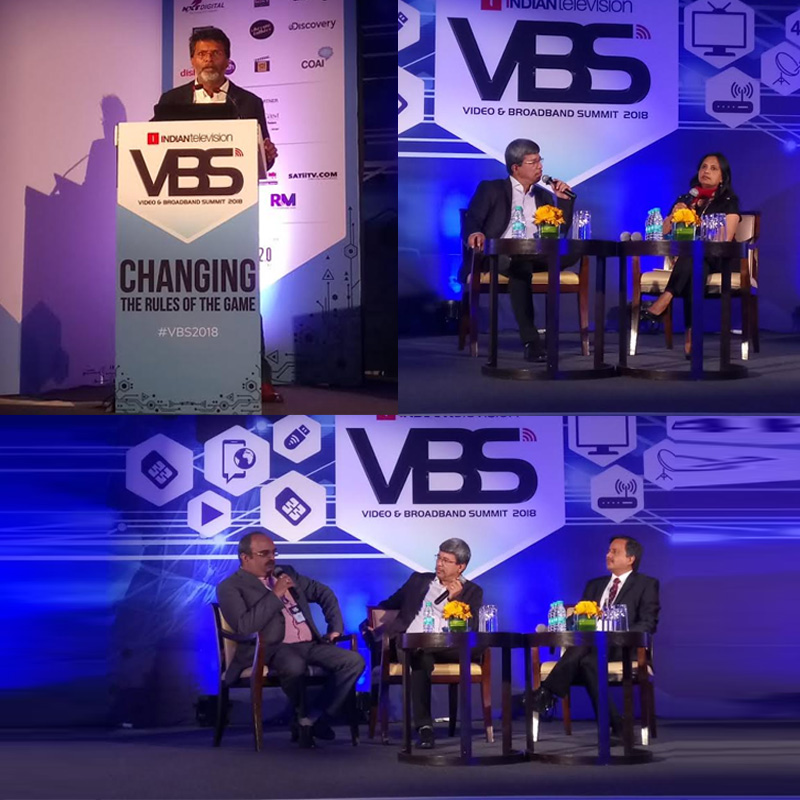
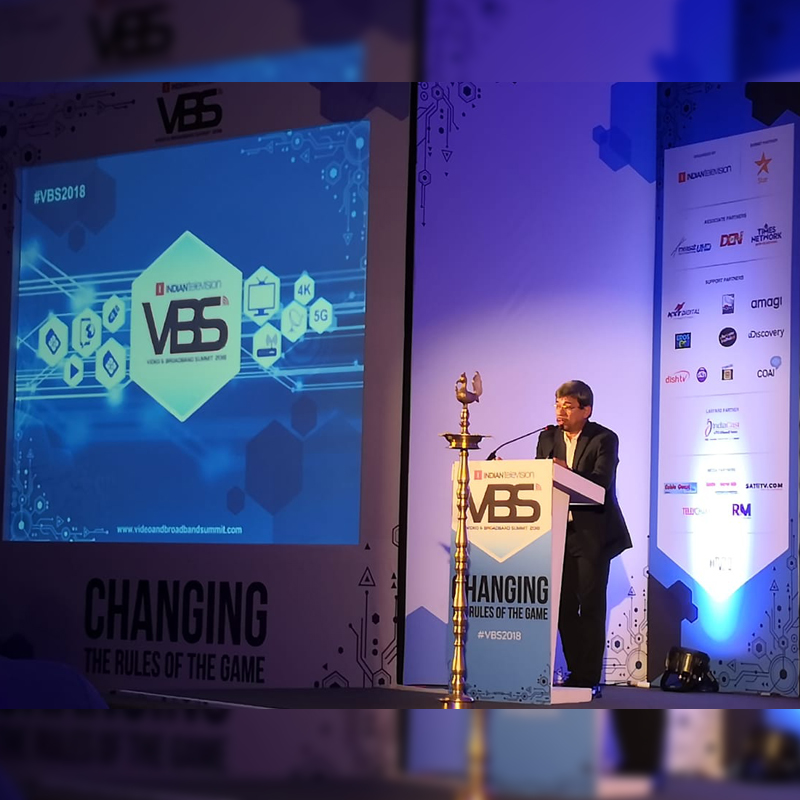
    GOA: The second day of the Video and Broadband Summit started with a keynote speech from Times Network MD and CEO MK Anand where the media veteran shared his insights on how to keep playing when the game itself changes.

    “Media Business is primarily about distribution of content to serve consumers needs profitability. If that remains the core purpose, the why to keep playing becomes clear,” Anand said in the beginning. While everyone is talking about disruptive forces, he said coping in the media business is highly dependent on keeping up with changes in distribution technology. He also spoke about how Times Network dealt with such issues.

    Anand’s visionary speech was followed by a fireside chat between Indiantelevision.com founder and CEO Anil Wanvari and Sony Pictures Networks monetization strategy and consumer insights head Saurabh Yagnik. Analytics, big data and content were the focus of the session.

    Doordarshan additional director general Mr.Sunil talked about DD Free Dish, the major force in distribution of satellite television in a presentation. While a huge number of consumers across India use Free Dish, he said its user base is expected to grow by 40 million by 2020. He was also part of a fruitful discussion on the future of pay-TV with Travelxp CEO Prashant Chothani in a session moderated by Anil Wanvari.

    Following that engaging session, Doordarshan director general Supriya Sahu highlighted the evolving role of the public service broadcaster in a fireside chat with Anil Wanvari. She said there should not be comparison between a private broadcaster and pubcaster as the latter’s mandate is totally different.

    While the first evening witnessed a lively discussion on monetization of TV, the second day dealt with the ‘big advertising hangover’. Viacom18 Hindi mass Entertainment Ad Sales head Simran Hoon, TAM India CEO LV Krishnan, Prashant Chothani were part in the panel.

    The second half of the day focused on the new tariff order, the next biggest disruptor in the complex industry, and evolving models in the cable industry. Talking about the disruptors in the distribution industry, KCCL CEO Shaji Mathews said technology has been the enabler, not the driver. In another session, IMCL CEO Vynsley Fernandes said on a positive note that if LCOs, MSOs come together magic can be made.

    More interestingly, TRAI secretary Sunil K Gupta interacted with audience via Skype. Gupta answered questions of local cable operators who seemed to be really concerned about the new regime. He informed the audience of how TRAI is taking initiatives to make consumers aware of the upcoming change.

    BARC India CEO Partho Dasgupta, another media veteran who has witnessed the ups and downs of the industry spoke about the digital matrix measurement in India. “Data protection is of utmost importance in the age of GDPR policy compliance and Srikrishna (SPDI) committee regulations. BARC is keen to ensure the consumer data is protected in our suite of products,” said Dasgupta.

    The last session of the day focused on the e-gaming scene in the country as Nodwin Gaming content head Gautam Virk explored the possibilities about how e-gaming could usher in the next wave of content consumption. Talking about possible potential partners he said, “It is easier to work with OTT platforms because they are more updated with the technology.” He also reaffirmed e-gaming is to stay here and is not a short term trend.
     

  • VBS 2018: Media & entertainment industry leaders address pressing issues on Day 1

    VBS 2018: Media & entertainment industry leaders address pressing issues on Day 1

    GOA: Rapid advance in technology and infrastructure, entry of disruptive forces and changes in consumption habits have led the Indian media and entertainment industry to major conversion. The interesting developments are attracting international players to invest in the market, with traditional domestic players adopting new strategies for growth. Where the industry is heading in the next few years is something everyone wants to know.

    To seek answers for several concerning questions, Indiantelevision.com brought together industry doyens on the first day of the Video and Broadband Summit. The conference dedicated to industry issues has been supported by esteemed broadcasters, technology companies as well industry bodies. All the speakers agreed that the VBS platform is the perfect stage to discuss relevant issues as well as to gain new insights while sharing their experience.

    Indiantelevision.com founder and CEO Anil Wanvari set the tone for the day with his welcome speech. He spoke about how demonetisation and GST put pressure on business in last couple of years. He also highlighted how the burgeoning OTT industry is throwing new challenges to traditional TV, cable and DTH operators along with the new tariff order that is likely to reshape the trajectory of the sector. He also added how a disruptive force like Jio FTTH is fueling the transformation.

    The first session moderated by Anil Wanvari was about the future of digital delivery platforms where Tata Sky chief content officer Arun Unni, PwC India partner Raman Kalra and One Take Media founder and CEO Anil Khera participated. As the influence of video and broadband has become unmistakable now, Tata Sky recently rolled out a broadband service. While he was asked about how it stands out, Unni said customer centric nature of the business makes their service different. While broadband and telco players are throwing a challenge for distribution, Khera thinks India still has potential for DTH and cable growth owing to almost  90 mn households still unpenetrated by TV. Kalra said while pay-TV and OTT platforms will stay together, there will be a constant battle among players to stay relevant to consumers with proper content.

    In a fireside chat with Anil Wanvari, COAI director general Rajan Mathews spoke about various issues in the telecom industry. He said consumer choices are changing rapidly today, hence the model which is working at present, may get disrupted in future. He also spoke about the high cost of utilizing satellites in the country despite them being produced and launched at very low cost. Talking about 5G, he said it will take a while to be rolled out and added that it would be focusing on education, health, traffic management, smart cities and agriculture.

    Anil Khera who has now ventured into the value-added service space after spending considerable time in the DTH industry, explained the importance of this vertical and how DTH players are utilizing it.

    Another engaging session where audience also took an active part in the discussion, was about monetising TV in times of transition. ZEEL chief growth officer Ashish Sehgal, KMPG India media and entertainment partner and head  Girish Menon and TAM India CEO LV Krishnan spoke on the issue. “Only thing TV can't do is engagement which digital platforms allow but you cannot build your brand without TV,” Sehgal made a very important comment.

    The eventful day ended with a fireside chat between Viacom18 COO Raj Nayak and Anil Wanvari. Nayak shared glimpses of his inspirational journey in the industry and Viacom18 where he was the brainchild of several successful endeavors. Talking about the future, he said it will belong to those who can create content which is compelling. Moreover, he also said content cost is not going down but it's going up across broadcasters. Giving the example of Netflix’s change of fortune with House of Cards, he added that for changing the trajectory of the business, delivering two-three golden nuggets every year are enough.

    For more insights stay tuned for the updates from the second day of video and broadband summit 2018!