Category: Specials

  • Sameer Nair on Applause Entertainment’s shows, content creation and trends [Part 1]

    Sameer Nair on Applause Entertainment’s shows, content creation and trends [Part 1]

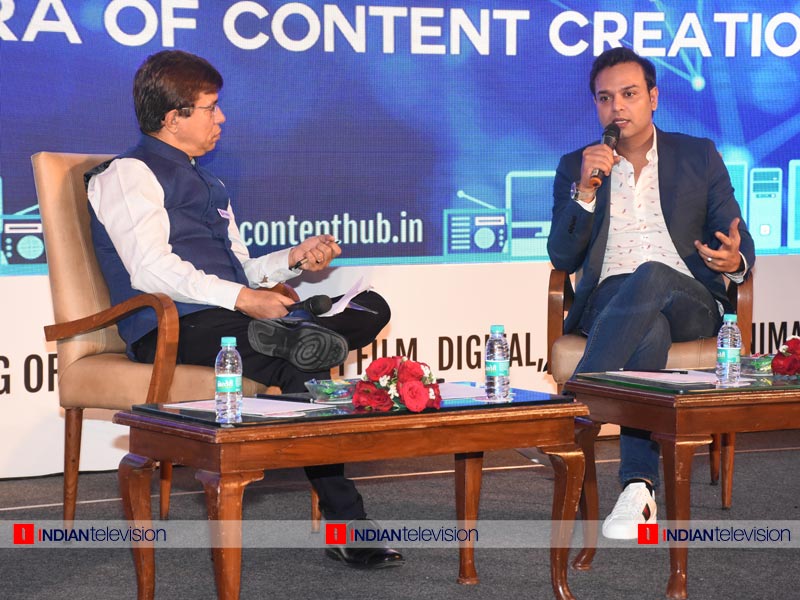
    MUMBAI: Sameer Nair isn’t a man in a hurry. The seasoned media and entertainment industry executive describes the content creation business as a real get rich slow scheme and not a get rich quick scheme. He’s in it for the long haul and he’s here to stay. The Applause Entertainment CEO, who has been witness to many seismic shifts in showbiz, is among the most important and influential figures in the OTT ecosystem as India and the word scrambles to deliver consistent and credible content to consumers. During the third edition of Indiantelevision.com’s The Content Hub 2019, Nair gave the audience a tour d’horizon of the Indian and global content landscape. In conversation with founder, CEO and editor-in-chief of the Indiantelevision.com Group Anil Wanvari, the 53-year-old offered key insights into his company’s plans, creating content in today's age and making shows that grip the audience.

    You're collaborating with a diverse range of producers, there’s Deepak [Dhar], you’ve got BBC and you’ve got Nagesh [Kukunoor], so how did you go about selecting these guys to produce for your studio model?

    Actually, I’ve been working with all of them for all these years so we’ve done a lot of work before. When we set up Applause, the thought was to invest in content. I didn’t want to set up a company and be a production house because that’s not what we are, what we are is a studio which is investing in the production of content and we’re working with the best talent, best production houses, best writers, international formats, books, all sorts of things and we are investing money in content and then once its ready then we show it to platforms and hopefully they like it.

    So the thing was that you knew these guys and you knew that they could deliver, what if there’s someone absolutely new but has great ideas?

    No, actually it’s a mix. For example, Rasbhari is made with a producer called Tanveer Bookwala of Ding. I’ve known him from Balaji, but his is a relatively new company. Rasbhari has been selected for the Series Mania Festival in France as the only show from India, so it’s a big deal. It’s not necessarily about the big names, it’s really about storytelling and there’s a lot of creative talent out there and I think this premium drama series opens a whole new world because there is daily soap television for the fiction space and then there are the movies and that's a totally different beast. This is opening up a whole new world for writers, for directors, for creators and for actors. It’s not star-dependent, we work on great stories.

    So how far down are you on the road that you want to take? You’ve got about six series on board?

    Now we’ve produced 10, we’ve also done something in Tamil, we’ve also done a show in Bhojpuri, and we’ve of course done Hindi. We’ve got another 10 in production, we’ve got another 15-20 in development, so it’s actually quite a lot.

    Are you getting a good price on these or are they licensing deals?

    It’s both, it can be licencing, it can be outright, as in it depends and different platforms have different strategies and not necessarily every show works for everyone. Different people have different ways of doing it, but either way, I am here to help the platforms and work with them. They’ve got the harder job because they are the B2C business, they are the ones who’ve got to acquire customers, they’ve got to retain customers, and they’ve got to spend millions of dollars in doing all of that. What the biggest driving factor in customer retention is the quality of the content and the price you’re giving it at. 

    Are you getting the prices you want or is there a gap? My understanding is there is a gap.

    There’s no such thing as prices you want. We are not in any sort of 'get rich quick scheme'. This is a real 'get rich slow scheme'. I’m in no hurry. We’d like these shows to be liked by the audience, which should then allow us to do multiple seasons. That would be the thing. The platform should be happy and it should get a lot of traction.

    So that’s going to be the first outlet of sale. What happens after that? Do you go out globally with this or do you retain it for a while?

    It depends. On some shows our platforms are international platforms, they tend to be everywhere. In some cases, we have domestic platforms so there’s something left on the table for us to continue to sell. We are talking about language dubs, both domestic and international. We are talking about making the same show in another language when we get a chance. It’s brand new, we are a year and a half old, now we are doing our first round of deals, the shows will come out, and we’ll do a lot more.

    I think this is a great time, so we are investing in content and I think this is the time for all content creators to genuinely put their money where their mouth is because you keep hearing this debate about IP and ownership and is there anything left for us and all of that. This is the moment in time where it is possible for all the creators to get out there.

    Let’s talk about creativity in India. I’m seeing a bit of unfurling of creativity, a lot of creativity is being unleashed. Do you think that it has or there still needs to be a lot more unleashing of creativity?

    I don’t agree with this that we are somehow unleashing creativity now. If you take Indian cinema as an example, every year, and you can pick any year at random, has always produced a mainstream blockbuster that has gone out to become a hit, it’s also produced a big mainstream blockbuster that has bombed. In the same year, there have been sleeper hits and there have been art house movies.

    But now what appeared to be art house movies are becoming big hits.

    No, I’m saying even if you take the year for example when the movie Naseeb released, it was the big AB (Amitabh Bachchan) movie of the time. That was also the year Jaane Bhi Do Yaaro came. It was not an art house, but it went on to become a very successful movie. So this has been happening always, so what happens this year, happened last year, happens every year. I don’t think we have a problem with creativity. India is a very creative country. We are creative with accounting, we are creative with politics, and we are a creative country.

    But that being said, I think what is happening now is that the market has grown so we are spending more money on it. But the focus should be on content because that is the soul of the business. Finally, the consumers don’t know what’s behind the screen, they only know what’s on the screen and in this new digital world they just push play and if it captivates them and it holds them, they’re watching or they go away. So while all the tech is important and everything else is important, finally the consumer interface is the content.

    Haven’t you got stories being told that could not be told before?

    Of course.

    So in that sense, it’s unleashing the writing.

    It’s a good thing. Actually when you think about it, before satellite TV came Doordarshan used to do this. Doordarshan has done Tamas and Khandaan. Doordarshan has done a partition story. So there has been great work that has already happened on Doordarshan. Then satellite TV came along and it took the market in a direction and then the daily soap operas came along and took the market in an even more skewed direction. But that doesn’t mean India has not done that. So this is a good opportunity.

    But the filmmakers are looking at this as an opportunity too..

    This actually happened in the US in the late 90s. In the late 90s, TV had got to a point and Hollywood had become really big and that’s when premium drama broke out in the US, starting with HBO and Sopranos and then Showtime and everything else. In fact, a lot of Hollywood, all the film guys moved to TV. That was the golden age of American television and radio and it continues today. This, I hope, is going to be for India.

    Have we developed a Chuck Lorre in India? Will you do that?

    We will do that. It will happen. It’s just started. We are trying to work on an animated series, we are doing a lot of development on all sorts of new genres, all sorts of crazy shows. Rasbhari is that kind of show. We are doing a show called Salt City. It’s just about relationships, there’s nothing else to it. So there are so many things that are happening.

    I want you to commit that you’ll get a Chuck Lorre kind of a guy who can do the shows that he does in America in India.

    It depends. Chuck Lorre does a lot of shows, so it’s not just one type. So in that sense, many of these shows have been made and they have been made in India, some have worked very well, some have not. I don’t think Asit Modi is anywhere lesser than being Chuck Lorre. He is our version of it. We shouldn’t be bedazzled by that, but on the other hand, of course, there’s so much to learn, there’s so much creativity and so much stuff that they’ve done which we can adapt, which we can learn from. I don’t like to rip off anything, so I prefer to adapt.

    (Part 2 of this interview will be released tomorrow) 

  • Programmatic advertising and political campaigns: The Mahagathbandhan for general elections 2019

    Programmatic advertising and political campaigns: The Mahagathbandhan for general elections 2019

    MUMBAI: Programmatic advertising is revolutionising the advertising industry. Programmatic ad spends accounted for a whopping 90 per cent of total spends by Fortune 500 brands worldwide in 2017 and has evidently taken centre stage of the digital advertising industry today. The ecosystem is on a steady rise in India as well and a number of brands are leveraging the reach it provides them within the consumer heartland based on efficient integration of their products via automated processes using codes and algorithms.

    With the general elections just a few months away, the political parties are also using this trend to attract the voters to their vote banks. Indiantelevision.com interacted with a few industry insiders to understand what programmatic advertising means to the political parties and what impact it may or may not have on the upcoming polls.

    Why programmatic?

    “Through the use of its unique targeting capabilities and advanced data crunching techniques, programmatic advertising is the perfect solution for politicians to reach the right voters. Voters can be targeted as per different criteria like – gender, age, location, party affiliation, political ideals, financial status, ownership, business, education and so on. Programmatic advertising facilitates crafting a data-driven campaign strategy. This helps to reach only those voters that have a possibility to vote in favour. This helps to reduce inefficiencies and bloated campaign budgets,” says Vertoz founder and CEO Ashish Shah

    He further adds, “Geo-targeting can be used to reach out to the voters of a particular region with a highly relevant and effective message. Dynamic Creative Optimisation (DCO) can enable adjusting the campaign creatives on the go in real-time, dynamically changing the copy as per their interests and affinities or for retargeting them.”

    iCubesWire founder and CEO Sahil Chopra gives the example of the previous general elections in India where current Prime Minister Narendra Modi made exceptional use of Twitter and other digital mediums to connect with his supporters. He said, “During the previous Lok Sabha elections in 2014, the digital medium was touted as an efficient and effective way by most of the political parties of India. In fact, when the election results were out, Mr. Modi didn’t declare his victory over the television, or even before his supporters. He chose to tweet about it. This message became one of the most retweeted messages in India, receiving more than 70,000 retweets. Such is the potential power of digital.”

    Similar thoughts are reflected by Ashish Shah as he notes, “Reaching out to the voters on digital platforms assumes supreme importance and has become a major aspect of political campaigns. Trump’s victory in the 2016 US presidential election was largely attributed to its digital campaigns. Closer home, digital media played a significant role in BJP’s landslide victory in the 2014 Lok Sabha elections.”

    He further adds, “With rising technological advancements, Indians are spending more and more time on digital media surfing the internet. As of 2018, India had about 500 million internet users, as per a report by the Internet and Mobile Association of India (IAMAI) and Kantar IMRB. The number of urban users accessing the internet daily stands at 295 million, while in rural areas the number stands at 186 million. Further, with affordable handset prices and low-cost data penetration, they are spending more and more time on mobile. Thus, reaching out to these voters on digital platforms assumes supreme importance and has become a major aspect of the political campaigns.”

    Highlighting the core benefits of incorporating a programmatic approach to political advertising, Logicserve Digital co-founder and CEO Prasad Shejale notes, “Since programmatic advertising offers hardcore and precise consumer behavioural insights, even politicians have realised the distinctive importance of this and have started implementing the same for their election strategy to target voters based on the analysis done. Political parties target and plan their election campaigns by specifically addressing their issues and pain points analysed through this form of advertising, and increase awareness and influence potential voters. This automates the bidding process and delivers ads to match their voters’ criteria.”

    What role can programmatic play in the upcoming Lok Sabha polls?

    The biggest democracy of the world, India is all set for its Prime Ministerial polls, which are scheduled to happen in April-May. All the political parties will be putting their best feet forward in alluring the voters to their camps.

    According to the contribution report that BJP filed with the election commission post the 2014 polls, the BJP spent Rs 714.28 crore on election campaigning, the major chunk of which went on to media promotions. Digital accounted for a massive chunk of this expenditure and certainly the results reflected the power of effective poll advertising. This year, the expenditures are only expected to grow and with its manifold benefits, programmatic will surely play an important role in the process.

    Speaking about what could be the trend in the upcoming elections, Chopra contends, “It is certain that the digital medium will be used again in a big way during this election period. Industry estimates suggest that there will be a rise of 15-18 per cent of spends in 2019 during elections and cricket period; wherein programmatic will also be a beneficiary amongst other mediums. Precise targeting, wider reach options, and transparency will be one of the reasons advertisers will embrace programmatic as one of the mediums to create awareness and reach out to people.”

    While it definitely is a powerful tool to woo the voters, the trend of programmatic might have some repercussions in maintaining the sanctity of the voting process in a democracy. Fake ads, delusional narratives, and targeted approach might potentially impact the election results. While the industry doesn’t comment much on the greater impact, it contends for the need for transparency and cautiousness while executing such campaigns.

    Shejale says, “Well, it’s difficult to make an exact statement about this. I wouldn't be able to comment on whether programmatic will play a decisive role since multiple factors contribute to the decision when it comes to political campaigns. But yes, programmatic can help enhance the efficiency and efficacy of the campaigns. It's the responsibility of advertisers and agencies to have responsible marketing in mind since the consumers, over time, read through if there is any wrongdoing.”

    Shah continues the same trail of thought as he states, “One needs to be cautious of issues concerning brand-safety and wrong ad placements. If one is not careful, this can wreak havoc on the campaign. Also, problems like transparency and ad frauds have to be considered. These can leech off the campaign budgets and have a detrimental effect on all the efforts. Campaign managers should ensure that they partner with a programmatic platform which has the right mechanisms to protect the campaigns form such problems. It is advisable to on-board a platform that has brand safety, ad fraud detection, and ad fraud protection mechanisms and provides a good level of transparency.”

    “Many parts of our country especially the tier 2 and 3 cities are experiencing digital transformation. Thanks to low data rates and widespread availability, more and more people from smaller parts of our country are getting acquainted with the vast plethora of possibilities of the digital realm. A recent study by Google stated that the consumption of YouTube on mobile devices has increased by almost 400 per cent and 60 per cent of the total watch time is outside the top 6 metropolitan cities. 70 per cent of internet users from these cities are bypassing desktop and are using mobile for accessing the internet. Any strategy which is made in mind keeping a mobile-first approach will definitely be beneficial for the brands (political parties). Like any other medium within the digital portfolio, programmatic needs to be used in a constructive way,” mentions Chopra.

    While political parties and agencies are advised to be watchful in their conduct while creating political ads, platforms like Google and Facebook are taking their own steps to ensure that the election process remains fair. Ashish Shah shares, “Facebook – the social media giant – has taken notice of it and has recently announced a special offline verification policy for the 2019 General Elections. Google also said that it will introduce an India-specific Political Advertising Transparency Report and a searchable Political Ads Library to provide information like who is purchasing election ads on its platforms and the amount of money being spent.”

    Thus, while programmatic is going to be one effective and sought-after tool in poll promotions, the parties, as well as the advertisers will have to be sensitive about what they put online. At the end of it, the voters are smart and can read through the campaigns that might be malicious or false.

  • OTT has been favourable for animated content

    OTT has been favourable for animated content

    MUMBAI: Much of the Indian TV market is ruled in one way – the broadcasters keep IP rights for the shows and not the production houses. The scenario is the same whether it’s Hindi GEC or kids or lifestyle. Indiantelevision.com’s The Content Hub hosted a panel discussion ‘Animation Producers: Getting Animated’ with panellists Discovery Kids head Uttam Pal Singh, Golden Robot Animation head of business development RK Chand, Paper Boat Animation chairman, creative director Soumitra Ranade and Biscopewala managing partner Nishith Takia. The session was moderated by Kinsane Entertainment CMO Pranab Punj.

    Emphasising the retention of IP rights, Ranade said, “IP creation is a big thing and for this socio-political aspects are to be kept in mind as to what kids are watching now and five years later. But for this, we need to create relevant stories. It’s not going to work if we make B grade version of Disney or Pixar.”

    Singh said that Discovery Kids is making relatable shows for the Indian market and targeting global reach with OTTs. The idea behind making Little Singham was to create an IP and make it a brand.

    While speaking of the emergence of OTT platforms, Singh was of the opinion that he has not seen significant investment from the OTT players to create IPs which come to the OTT platform first and then on linear television. He added, “While OTT is growing and most of the English TV genres have been affected immensely in terms of audiences, the kids' genre, on the other hand, has grown on Indian television. It has grown to 8 per cent as per BARC report and we still see that a broadcaster has maximum reach as opposed to OTT platforms.”

    Moreover, Chand said that OTT platforms have given them the scope to explore new ideas and stories. He said, “The entire catalogue of Chhota Bheem was the first kids content on Amazon. OTT gives us a range of audience that isn’t restricted to TV. Netflix and Amazon have enabled us to innovate stories and characters.”

    Takia revealed that his company is talking to OTT platforms in a bid to make content for them. He added that budgets restrict the quality of animation. “We feel that very few people understand the aesthetic behind the project. Budgets also restrict the quality of animation. If you want to create high-quality content, you need high budgets,” he said.

  • Indian content owners, creators don’t value own content

    Indian content owners, creators don’t value own content

    MUMBAI: The third edition of Indiatelevision.com’s The Content Hub had an insightful panel on the global syndication market. The panel consisted of Go Quest Media ventures MD Vivek Lath, Swastik Productions and One Life Studios MD Rahul Kumar Tewary, MX Player head-content acquisition Mansi Shrivastav, Sony head networks – licencing Malvika Prabhu and ANM Global co-founder partner Nidhish Mehrotra and moderated by Indiantelevision.com founder, CEO and editor-in-chief Anil Wanvari.

    Go Quest Media ventures MD Vivek Lath said that a lot of countries are now doing indigenous production. “But what they lack is the kind of creative maturity and evolution India has gone through. That’s where we see much larger opportunity going forward.”

    Swastik Productions and One Life Studios MD Rahul Kumar Tewary said that the demand for Indian content has reduced over time. “But what we need to understand is what kind of content we are creating. Does it resonate with the international audience or are we only catering to the Indian market? In the end, it is a business and we only cater to the Indian market. But if we really want our content to travel the world, I guess we need to re-look at what kind of content we are creating,” he said.

    Another issue syndication faces is that, according to Lath, Indian content creators don’t value their content as people from Korea, Turkey and China do because of which it is underpriced. Tewary agreed with Lath and said, “Turkish, Chinese and Korean dramas have got a standard market price. No one brings the market price down. So they value their content. Unfortunately, we are the cheapest. You can sell it for $50-70.”

    Much of Indian content travels to Southeast Asia because it has a similar market. In India, shows are telecast for 5-6 days a week which is 260-312 episodes a year. It becomes difficult to sell so many episodes across the world because the appetite for such viewing is lacking. With Thailand emerging as a new market in the last two years, it helped cushion the impact from the other markets. Latin America is also a promising area but tough to crack which Tewary feels will open up soon.

    The genres that are doing well currently are animation, fantasy, mythology and the modern drama series. Experts also foresee a future demand for Indian horror thrillers on OTT platforms, because of their high production quality. Lath believes that GEC dramas are the fastest moving in the international markets across 60-odd countries.

    The deciding factor for content buying is the platform. MX Player head-content acquisition Mansi Shrivastav said, “I think for OTT there is more flexibility because there is an ability to programme for an individual customised experience. When you are buying for linear TV, you have to keep the overall target audience in mind and there is only one kind of programming."

    For OTT, there is still limited data available on usage and behaviour patterns. But sometimes, you follow your gut and take a risk. MX Player has just bought 100,000 hours of content which varies from two-minute videos to long-form series. “Movies in each language are important to us because there is a lot of traction for that. But we are buying across top ten languages; we are giving a lot of importance to regional markets including Tamil, Telugu, Kannada, etc. and Hindi, of course, is a key language,” Shrivastav added.

    According to experts, the Indian content export business excluding movies is around Rs 400 crore as the syndication of Indian content started only from 2007 onwards. “I think in the future, animation is something which is going to add on a lot of export to India in the next 5-10 years,” Tewary concluded.   

  • Top TV producers weigh in on OTT challenge, formats & IP rights

    Top TV producers weigh in on OTT challenge, formats & IP rights

    MUMBAI: Content creators today cannot rely on daily soaps to attract viewers. With OTT looming large, production houses have to broaden their content nexus. Indiantelevision.com’s The Content Hub hosted a session – ‘The TV production Story: Reality, Non-fiction’, with the panellists Contiloe Pictures producer and founder Abhimanyu Singh, Endemol Shine CEO Abhishek Rege, SOL India – Banijay Group founder and MD Fazila Allana. The session was moderated by Bodhitree Multimedia co-founder and director Mautik Tolia

    The panel discussed the hot topic of IP rights, whether it should be given to the broadcaster or kept with the creator. To this, Singh said that it is valuable for every production house to hold its IP rights, where one can syndicate and get certain revenues on a recurring basis. "If the ecosystem thinks of it then I think the law needs to protect creators just as the musicians are protected," he said and Allana agreed with him.

    Rege said that retaining IPs means financial risks for the producer. He further explained, "If we have commissioned a show in Hindi, why would you have the IP of all the languages go with the network? But while we think all this to happen, are we ready to take all the risk?”

    Discussion on the potential of content, Rege said that scripted shows are platform-agnostic. He said that the challenge here is making attractive content for the viewers and targeting the right TG. "With OTT, I don’t think it’s easy to do as many talents shows that we do on linear," he added.

    The new tariff order will bring about a change in content creation, according to Rege. With customers choosing individual channels, broadcasters need unique content to attract people. “This fight is based on non-scripted or premium scripted property," he said.  

    Allana said that non-fiction producers have a bigger challenge as opposed to fiction producers because there has been a saturation of ideas. But she added that non-fiction content is going to evolve in the OTT platform but the future belongs to scripted shows. “On OTT there will be a lot of social experimentation as well as lifestyle programming.  Earlier we all used to chase formats now we chase stories,” she said.

    The deluge of daily content has thwarted premium content from growing. Rege said, "In creating premium content, you will have to spend time in writing. Apart from that, as far as production is concerned, you will have to have the discipline of pre-producing the series and this doesn’t exist on our television. The whole ecosystem needs to move in this direction." 

  • The Content Hub 2019: Creators discuss digital adaptation, creativity and originality

    The Content Hub 2019: Creators discuss digital adaptation, creativity and originality

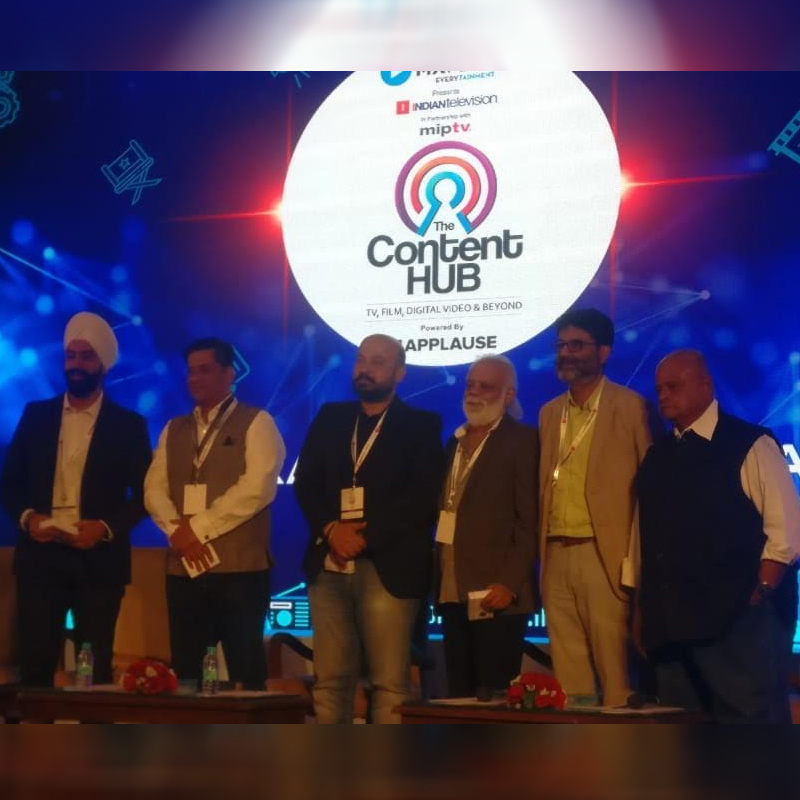
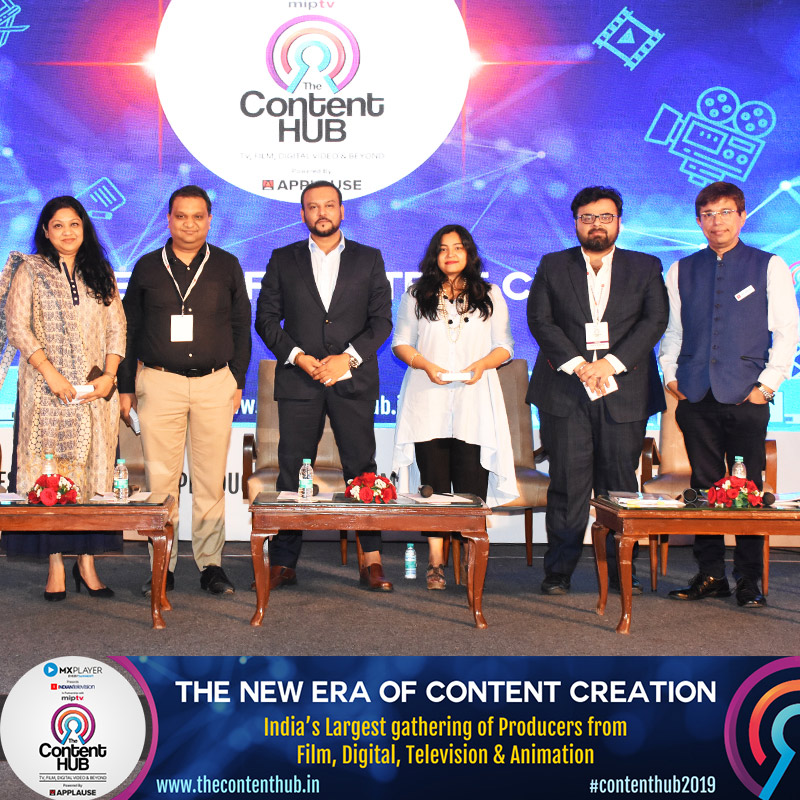
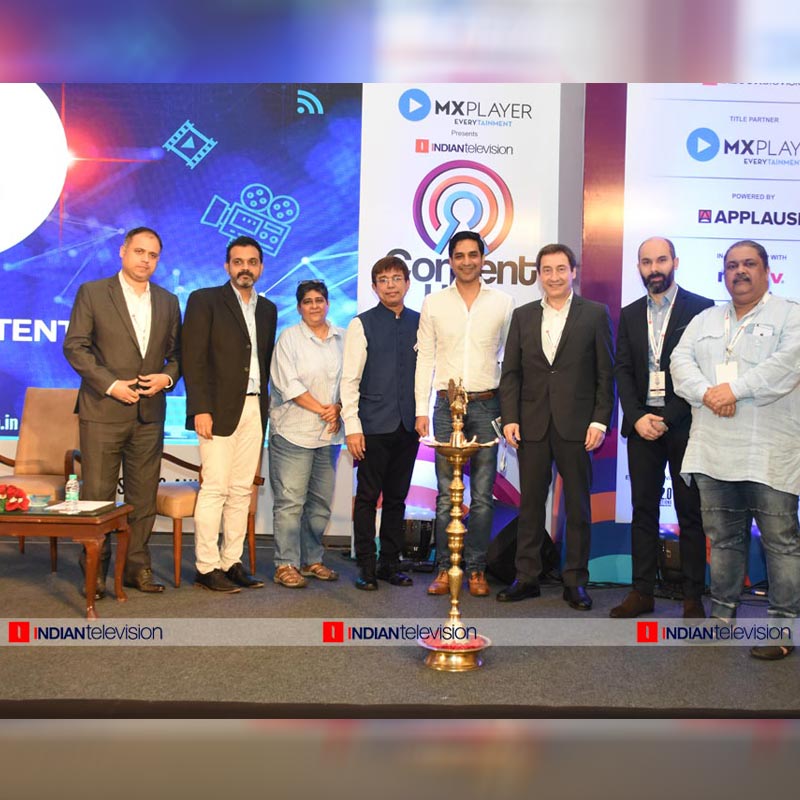
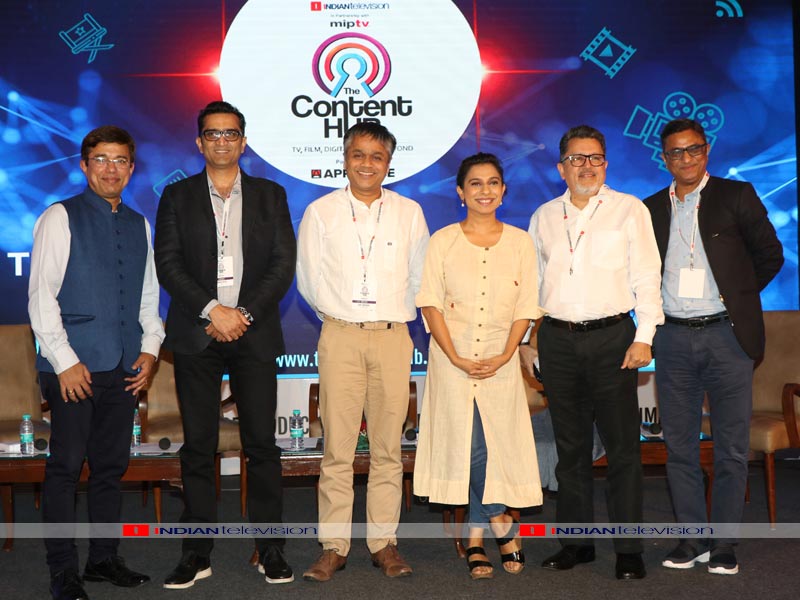
    MUMBAI: Indiantelevision.com on Wednesday wrapped the third edition of its popular event The Content Hub in presence of some of the biggest names from the TV, digital, and the movies industry. Spanned across several panel discussions and fireside chats, this edition of The Content Hub discussed ‘the new era of content creation’ with a focus on the digital boom, need of good content creators, the synergy between creators and producers, and creating properties that can travel globally.

    Starting the day was a panel discussion on ‘The TV Production Story: Reality, Not Fiction’, moderated by Bodhi Tree Multimedia co-founder and director Mautik Tolia. In discussion were some of the most successful and prominent names in the TV industry – Contiloe Pictures Pvt Ltd founder and producer Abhimanyu Singh, Endemol Shine India CEO Abhishek Rege and SOL India – Banijay Group founder and MD Fazila Allana.

    The distinguished panel discussed the opportunities and challenges fiction and non-fiction formats today face in the TV and digital world. They also shed some light on the prospects premium content has in the Indian industry.

    The panel agreed that non-fiction producers face bigger challenges in creating content as compared to those investing in fiction and dramas. Allana noted that while earlier people were chasing formats, now they are chasing stories. However, she quipped that there is a vast opportunity for non-fiction shows on OTT platforms citing examples of TV shows like MTV Troll Police.

    Singh reflected the same sentiments as he noted that this is a very good time for the content creators. He said, “I feel it is a great time to tell stories. I think we as an industry haven’t delivered premium content because the nature of delivery has always been daily content. So, this is an opportunity to deliver premium content.”

    Rege mentioned, “Scripted becomes a little easier to tell stories more across TV, OTT or across multiple platforms. The challenge here is making attractive content for the viewers and targeting the right people. With OTT I don’t think it’s easy to do as many talent shows that we do on linear.”

    The second session was a fireside chat between Indiantelevision.com founder, CEO and editor-in-chief Anil Wanvari and Swastik Productions  & One Life Studios founder and chief creative officer Siddharth Kumar Tewary.

    Tewary, based on his extensive experience of industry work, reflected upon many aspects of content creation and production including formats, IP rights, and disruptors in the industry. He noted while most of the people believe that longer formats don’t work internationally, the reality is not the same.

    Speaking about IP rights of content, Tewary made some relevant points saying, “IP creation is a scientific thing related to the socio-political situation in the country and the world. We need to know where the world is heading. If you are going to add value and bring something unique for the TV, then you will get the IP.” He also announced the foray of his group in the animation category at the platform.

    The next session was a discussion on the animation industry with an esteemed panel of Discovery Kids head Uttam Pal Singh, Golden Robot Animation head of business development RK Chand, Paperboat Animation co-founder and chairman Soumitra Ranade and Bioscopewala Pictures managing partner Nishith Takia. The session was moderated by Kinsane Entertainment Inc chief marketing officer Pranab Punj.

    The panel highlighted the vast opportunities OTT platforms are offering them right now. Takia shared that his company is in talks with several big digital players to create content for them. Another point that the panel highlighted was that Indian audience is not very keen to visit theatres to consume animated content and that closed their avenues of creating content for a wider audience and not just the kids.

    Answering a question on why there aren’t more female-led animated shows in India, the panel shared a similar tone as they mentioned that in most of their shows, the female characters have an equal prominence as the mail lead, they are inclusive to the storyline. They added that male-led shows are doing well in the market and from a business perspective they are focusing on that aspect as well.

    The next session was an interesting and insightful chat on ‘The Syndication Opportunity’ between Sony head networks—licencing Malvika Prabhu, Go Quest Media Ventures MD Vivek Lath, Swastik Productions and One life studio producer and managing director Rahul Kumar Tewary, MX Player head of content acquisition Mansi Shrivastav and ANM Global co-founder partner Nidhish Mehrotra. Moderating the panel was Wanvari.

    Wanvari started the discussion by asking the panellists whether the demand for Indian content in the global market is going up or declining. To this, the panel stated that it has probably reduced over time. However, the Indian creations are performing well at markets like Thailand and Sri Lanka.

    The panel mentioned that genres like romance, drama, horror, and good animation has a lot of markets overseas. They also added that premium content will also attract a lot of traction towards Indian creations. Kumar stated that we need to relook at the type of content we are creating and invest more in subjects that have the potential to travel. He also said that Indians do not value their content enough.

    Lath said, “We have to think like a programmer and not from a sales perspective,” as he elaborated on the right approach to sell content overseas. He predicted that India has the potential to make around Rs 400-500 crore with content syndication (minus the movies) because it is still young in the market and has a lot of potential to improve in the coming times. Kumar added that in the next few years Indian premium content will find a lot of audiences globally.

    Taking the insightful day ahead was the next panel of digital producers including Addatimes Pvt Ltd managing director Rajiv Mehra, The Viral Fever (TVF) global head of business and content Rahul Sarangi, Viacom18 EVP and head content Monika Shergill, MX Player chief content officer Gautam Talwar and One Digital Entertainment COO and co-founder Gurpreet Singh. The panel was moderated by industry veteran and Hungama Digital Media Entertainment executive producer Sanjeev Lamba.

    While the panel agreed that there is a great influx of male-oriented and sexually-oriented content performing on OTT platform, they all are looking beyond that. They all mentioned that the industry is currently focusing on good writing talent and meaningful stories. Sarangi said that TVF is not looking towards creating violent or sexual content at all, at least for the next four to five years. Its focus is on stories like Pitchers and Yeh Meri Family that touch the hearts of the people.

    Shergill shared that Voot is looking at ideas that bring new and original voices to the stories. Unless platforms experiment, she believes they will lose their audience.

    Talwar shared that the focus of recently launched MX Player is on creating content that can be watched on a 5-inch phone screen rather on a 50-inch TV. The TG for the player is 18-30-year-old male and it wants the platform to be genre-agnostic.

    The next event was a fireside chat between Wanvari and Applause Entertainment CEO Sameer Nair. The duo discussed ‘The New Studio Model’.

    Nair started with launching an amazing showreel of upcoming programmes from the Applause banner. They included a wide variety of content ranging from humour to political to drama. It also included the Indian version of the very popular The Office series.

    Nair stated that he did not want to start a company which goes on to become just a production house but he rather wanted to invest in good content. He thus worked with some amazing directors, writers, and actors like Ronit Roy, Pankaj Tripathi and Swara Bhaskar to create the first instalment of the Applause shows. One of the flagship series, Rasbhari-starring Swara Bhaskar and written by Shantanu Shrivastava—has in fact already been selected for ‘Series Mania’ festival in France. Warning them of slacking in content, he said, “If the content industry is not careful right now, it will end up becoming a replica of TV.”

    The day continued with a panel discussion on how new Hindi film producers are making their mark and what business models they are drawing up. Part of the discussion were Essel Vision (Zee Studios) CEO Shariq Patel, Viacom18 Studios chief operating officer Ajit Andhare, Alliance Media and Entertainment owner Sunil Doshi and Fox Star Studios India CEO Vijay Singh. Moderating the panel was film reviewer at Film Companion Suchitra Tyagi.

    The panel was a light-hearted but with insightful discussions on the current trends of the Indian movie industry, the need for well-written scripts and content that performs. The panel agreed that today is an amazing time for good storytellers and content creators. They forced upon the fact that literature is the sibling of cinema. The panel also discussed on creating avenues to make the system more approachable to the budding writers who want to reach out to the studios.

    The evening was concluded by an overview of the MIP platform by MIP China Hangzhou director of market development Ted Baracos, who in an interactive session apprised the gathering of various opportunities this global content-sharing platform brings and how they can leverage on that.

  • News18 India and CNN-News18 Gear Up for General Elections 2019

    News18 India and CNN-News18 Gear Up for General Elections 2019

    MUMBAI: Fierce regional battles and a re-energised opposition in last few months have paved the way for a blazing battle – the upcoming General Elections 2019. As the country prepares to elect the next government of the world’s largest democracy, News18 India and CNN-News18 have lined-up an extensive programming giving viewers an unparalleled access and insight into the elections.

    Continuing the legacy of bringing the most incisive reportage on the elections, News18 India will present its General Election programming under the umbrella branding ‘Sabse Bada Dangal’. From covering high-decibel campaigns and rallies of political parties to questioning the politicians on substantive policy issues that affect the common man, the channel will telecast multitude of special shows. Starting 15 February, the channel has lined-up a comprehensive bulletin capturing major highlights and key stories from across the nation, related to the elections. The programming will also witness special edition of channel’s renowned shows – Bhaiyaji Kahin and Lapete Mein Netaji. While the former has a chaupal-cum-travelogue format providing an interactive platform to connect the voters and local leaders, the latter is a weekly ‘hasya kavi sammelan’ with prominent Hindi poets and satirists who will bring sharp sarcasm and a sense of humor to the political discourse. In the lead-up to the polls, News18 India has also planned live on-ground and in-studio debates from key constituencies featuring senior politicians to discuss about pertinent election issues through shows such as ‘Ye Desh Hai Humara’ and ‘Desh ko Jawaab Do’.  Along with the special editions, the programming will also include profiling of the political leaders, exclusive interviews and wide ranging coverage on polling days and counting day.

    CNN-News18 will delve into all aspects of the Lok Sabha elections with its special programming ‘A Billion Votes’. With its diverse formats and data-driven programming, the channel will bring up-to-the-minute updates throughout the election, keeping viewers apprised of the big moments as they unfold and scrutinise key policies and issues ahead of polling day. From daily shows like ‘Election Epicentre’ and ‘Setting the Election Agenda’ which will cover latest developments related to the elections to special on-ground shows such as ‘Reporter’s Project’ and ‘The Real Bharat’ that will witness seasoned reporters traversing across the length and breadth of the country, the channel will present its viewers with realities and voter sentiments from ground zero. From shows such as ‘Youngistan’ and ‘The Women Vote’ which will put a special focus on the youth and women voters of the country in order to ensure that their voice is captured and showcased to special programming like ‘Kings & Queens’ and ‘Election Yatra’ which will showcase the top leaders who will determine the outcome of Elections 2019, the channel is all set to provide its viewers power-packed programming. Offering a satirical round-up of the elections, ‘The Election That Wasn’t’, will feature Cyrus Broacha and Kunal Vijaykar who will look across the political spectrum, giving their own unique take on the election news and shenanigans. Known for its legacy of the most accurate and fastest results, CNN-News18 will provide an unmatched coverage on polling and counting day.

    News18 India and CNN-News18 will deep dive into data with India’s only AI-driven election analytic tool called the ‘Magic Wall’. Powered by research done at the constituency level that can breakdown into LIVE results based on parameters such as industrial growth, farmer distress, millennial influence, government schemes impact, etc, the Magic Wall will provide an unparalleled experience to the viewers.

    The programming will be led by the formidable editorial team of the channels. On News18 India, Kishore Ajwani, Deputy Managing Editor, Amish Devgan, Executive Editor and Prateek Trivedi, Senior Editor, will be joined by prominent experts like Ram Kripal Singh and Shesh Narain Singh. CNN-News18 will feature top anchors – Bhupendra Chaubey, Executive Editor, Zakka Jacob, Editor – Output, Anand Narasimhan, Deputy Executive Editor, Marya Shakil, Political Editor. Complementing them will be a panel of eminent journalists and political analysts like Swapan Dasgupta, Vir Sanghvi and Ajoy Bose to name a few.

    The General Election coverage on both the channels will be further augmented by the extensive reach of the entire News18 Network. It will feature a range of interviews and debates with the biggest newsmakers, insightful conversations with experts and voters, alike as well as the wittiest and timeliest satire.

  • Amazon Prime Video India’s Vijay Subramaniam on content strategy, audience response, product proposition

    Amazon Prime Video India’s Vijay Subramaniam on content strategy, audience response, product proposition

    MUMBAI: India’s burgeoning over-the-top (OTT) space is witnessing an explosion what with aggressive competition brewing between home-grown and international players fighting for eyeballs and time spent. Amazon Prime Video, one of the leading global contenders, is aggressively expanding its Indian original library since its launch in 2016. Starting with critically acclaimed Inside Edge, the OTT platform has upped its game significantly with shows in different genres. After its recent blockbuster Mirzapur, Amazon Prime Video has started streaming its sixth original show Four More Shots Please.

    Amazon Prime Video India content director and head Vijay Subramaniam, the media veteran whose experience pans across brands like Walt Disney and Star India, heads the content segment of the platform. Indiantelevision.com’s Gargi Sarkar caught up with Subramaniam for an understanding of Amazon Prime Video India’s strategy. In a short freewheeling chat, he spoke about the content plan this year, response to its flagship show Mirzapur, regional originals and more.

    Edited excerpts:

    What will be your content strategy in 2019?

    We will try to focus on more variety, more authentic stories and open up more genres because we are just getting started. We have expanded our library from one in 2017 to five in 2018 which will reach to eight, hopefully, this year. You are going to see us crack open many new genres like we have Four More Shots Please. You can expect returning seasons of successful shows like Comicstaan and Inside Edge as well.

    How has been the response to Amazon Prime Video in India compared to other international markets?

    We are very happy with the growth and India is a very important market for us in the long term. Frankly, we are just getting started. As the service has been there for around two years, I think it is just dawn of day one for Prime Video. Customers seem to really like the variety we are providing and so we are seeing impressive growth and we remain committed to providing diversity of content. We added Kannada in November. We are going to add three more languages in the first six months of this year. So, we just want to make sure that something is there for every one of our customers; current as well as future customers. Within that, we are seeing how to balance gender diversity, age, right kind of content for kids, right kind of content for young adults, etc. It’s a blend of all of that. I think all these factors have been instrumental in helping us.

    Which factors help Amazon Prime Video to differentiate itself?

    Great content, being able to reflect the taste and preferences of customers and being able to serve them consistently help us to differentiate our service. We are providing a great product, user experience and value. The kind of content selection we have, if you look at our movies, is big Hollywood blockbusters and great US TV shows. Our US originals have been breakout hits like Jack Ryan, Homecoming, The Marvelous Mrs. Maisel and then Indian originals. If you look at our regional selection, we have latest and great films. I think this blend of content, great user experience and proprietary technology that allows you to choose your own data streaming limits and choose the quality you want to see, giving you the control of the amount of data you use. Prime benefit programs include shipping, shopping, music, video, and now reading. Moreover, all that is available in Rs 129 per month and Rs 999 per year.

    Which type of content is getting more traction?

    All of it. There are a couple of reasons. For the first time customers are becoming their own programmers; you can decide what to watch and when to watch. You have truly flexible opportunity to surf in and out of content, come back to our shows or finish watching movies, depending on the kind of story you want to watch. So, our customers are enjoying all of these.

    In addition to that, movies are always popular. We are Indians, we love movies. Our originals are fantastic drivers.  So, I think at this stage, customers are coming in for two things. One is for the things they are familiar with like Thugs of Hindostan. Then they are discovering all the great content. They are navigating through all sorts of content. At this stage, people love everything equally.

    How has been the response to Mirzapur in international markets?

    Well, it’s been a very successful show for us. We are both honoured and humbled by the love we got from customers for this. It has become a buzz-worthy show now. I think the love that has come from customers in India and outside is because of the authenticity. It is truly authentic to its roots and speaks the language of that land. It is set in that milieu. What we have learnt from this show is making our stories authentic. Four More Shots Please is a very authentic story. It’s unapologetic and looks at the friendship between four women without any pretends.

    What is the biggest challenge when it comes to business expansion in India?

    I am really excited about the opportunities that we have in front of us. As I said it’s a mobile-first country, data charges have decreased making it easy for folks to access. Mobile infrastructure has grown and phone has become primary screen for young adults. There is no dearth of great stories in this country, which has a rich culture of storytelling. We are super excited about all the opportunities we have to expand. If you look at our catalogue when we started versus today, you will see how we have ramped up, especially in additional languages.

    What’s your plan of launching original in regional languages?

    We constantly evaluate what customers want in every language and learn from that. If you recall we launched our first Telugu show to test and learn what exactly customers prefer. Recently we launched one in Tamil; it’s definitely part of our content strategy to expand into regional language original in the near future.

  • Sony Pictures Networks’ sports cluster’s year in review, road ahead

    Sony Pictures Networks’ sports cluster’s year in review, road ahead

    MUMBAI: In the tough two-horse race of Indian sports broadcasting, Sony Pictures Networks has had a slight edge over Star India when it comes to football events, while the latter holds the sway in Indian cricket. Currently, the NP Singh-led network is in charge of premier football properties like La Liga, Serie A, UEFA Champions League, UEFA Europa League, FA Cup and UEFA Super Cup. 

    SPN India has also invested in domestic leagues, firmly believing that such products are not only gaining prominence but are bound to witness a formidable growth in the future. One such success story is the Pro Wrestling League (PWL), which will return to SPN for its fourth edition. Besides this, the network will also broadcast the inaugural edition of the Pro Volleyball League that has gained considerable steam of late.

    Multi-sporting destination

    2018 was a successful year for the broadcaster in terms of multi-sporting properties, with big-ticket events like Commonwealth Games, FIFA World Cup, NBA and Asian Games helping it differentiate itself from others.

    “Multi-sports viewing is on the uptake and we will continue to provide our viewers diverse content across different sports categories along with innovative programming initiatives to increase our penetration in both urban and rural markets,” SPN India chief revenue officer and head – sports business Rajesh Kaul said.

    SPN has been the home of La Liga for the past four seasons in India. However, last year Facebook won the media rights for the top tier of Spanish football for the Indian subcontinent for three seasons starting 2018-19. The deal with the social media giant was the first of its kind for La Liga.

    While the 380 matches were to be available for free to people on Facebook in eight countries: Afghanistan, Bangladesh, Bhutan, India, Nepal, Maldives, Sri Lanka and Pakistan, Facebook and SPN reached an agreement wherein the broadcaster earned the right to air over 100 games via its sports cluster.

    The deal will allow SPN to broadcast key clashes including the El Clasico and Madrid Derby across its sports channels as well as SonyLIV.

    Record-breaking show

    The headline act for SPN in 2018 was the FIFA World Cup. There was a humungous buzz around the tournament this time as it aired during primetime in India after almost two editions. The broadcaster had four language feeds for the showpiece event, which was telecast on Sony Ten 2 in English, Sony Ten 3 in Hindi and Bengali and Malayalam audio feeds on Sony ESPN.

    A total of 110.5 million viewers in India watched the quadrennial event, according to the broadcaster. The tournament had 64 live matches aired across Sony TEN 2, Sony TEN 3, Sony ESPN channels and their HD versions.

    The broadcaster, which had managed to attract more than 40 advertisers on television, is estimated to have pocketed close to Rs 200 crore in advertising revenue. The 2014 edition had fetched the network Rs 100 crore in ad revenue.

    70 million viewers across India tuned in to watch the World Cup on SPN’s OTT SonyLIV. The average time spent per viewer was 15-16 minutes per match.

    “Sports’ viewing as a trend is becoming participative and we saw an opportunity to launch interactive engagement for our viewers in both entertainment and sports. Second screen engagement and interactivity is moving to the forefront and we will continue with his trend as it gives viewers deeper insights and a more immersive experience. While TV is still the preferred choice for sports viewing, we have observed trends of a growing user base on digital platforms for sports viewing in 2018 and we see it strengthening its position further in 2019,” Kaul added.

    Cricket rights play

    When it comes to cricket, SPN currently holds the broadcast rights for eight boards – Cricket Australia, England and Wales Cricket Board, Pakistan Cricket Board, Sri Lanka Cricket, Cricket South Africa, Cricket West Indies, Cricket Ireland and Zimbabwe Cricket Board. 

    It had acquired exclusive media rights from the England and Wales Cricket Board (ECB) for the Indian subcontinent for a period of five years from 2018 through 2022. This agreement with ECB gives SPN the rights to both televise and digitally broadcast within the Indian subcontinent, men’s and women’s international matches, including Test matches, T20 Internationals and ODIs, played in England.

    SPNI also acquired the media rights for T10 Cricket League for three years (2018-20) for the Indian sub-continent and Middle East and North Africa (MENA). The broadcaster also had the rights for T10 Cricket League in 2017.

    The broadcaster currently has 10 channels in its sports bouquet after the network pulled the plug on Sony Ten Golf HD in the wake of TRAI’s new tariff order.

    The Prasar Bharati problem

    In October, MIB proposed to amend the Sports Act 2007 to offer ‘sports events of national importance’ on Prasar Bharati-owned free-to-air Doordarshan Network, an extended reach via private direct to home and cable TV Networks.

    The move to amend the Sports Act 2007 has been necessitated due to a Supreme Court verdict which held that the public broadcaster Doordarshan cannot air events of national importance on private distribution platforms.

    In the same month, MIB issued a notice for receiving feedback/comments from general public/stakeholders on the draft bill, 2018. The deadline for submitting the feedback was 15 January 2019, but there is no update on the date extension. The earlier deadline was 31 December 2018.

    This may result in a preference change of the consumer, thereby pushing them to unsubscribe private sports network channels. This will also give the distribution platforms an opportunity to negotiate harder with the sports broadcasters.

    A move of this nature could adversely impact the revenues of sports broadcasters, throwing the entire ecosystem into a tizzy.

    Challenges in 2019

    India’s historic win over Australia ensured that SPN kicked off 2019 to a rather glorious start. With the immensely popular Virat Kohli and MS Dhoni delivering match-winning knocks, SPN is likely to have posted big viewership numbers on its channels as well as OTT. However, the remainder of the year isn’t going to produce a lot of fireworks for the broadcaster especially when it comes to Indian cricket. Barring India’s tour to the West Indies, SPN does not have a lot to offer to Indian fans. Rival Star India, with the rights to the IPL and the World Cup, is bound to be the home of India’s cricket-crazy public in 2019.

  • Inside ZEEL’s ambitious new bet on Zee Studios Originals

    Inside ZEEL’s ambitious new bet on Zee Studios Originals

    MUMBAI: 20 years of traversing across television networks and production houses, Ashima Avasthi now finds herself saddled in the hot seat at Zee Studios as head of its digital content arm. She's been quick off the blocks, equipping herself to be battle-ready within two months of her arrival at the company's office in Andheri, Mumbai's entertainment hub. In her last gig, Avasthi crafted award-winning content for BBC Studios as its senior creative director and head of branded content.

    “This was actually the perfect time to move into digital. The year will mark the start of the transformation for OTT and digital content,” she says rationalising the reason behind the switch. 

    In 2018, two words 'digital' and 'content' reverberated more powerfully than ever before. In all likelihood, we'd probably be saying the same in 2028 as well. Avasthi likens the current content creation craze to running a marathon. 

    "There's an excitement when you see loads of other people running. Everybody wants to reach the finish line. So, everyone is driving and inspiring the other one. It's the same for this market," she points out.

    With ZEEL now ready to produce content in a new avatar, Indiantelevision.com caught up with Avasthi in the first instalment of The Content Hub 2019 for an insight into how she intends to drive the media conglomerate’s ambitious plans.

    As head of Zee Studio Originals, what’s your mandate?

    We would work like a studio that produces content, which gets commissioned by various platforms and not just ZEE5. We’ll be working with everybody. We'll also be investing a lot in IPs and make the content we believe in. It’s going to be a two-pronged approach. IP is going to be a huge thing for us.

    All the platforms, international or domestic, are seeing the real potential of this market and have committed so much of investment. They are all spending Rs 500-600 crore a year. That’s a huge, huge amount for originals. For content makers and content producers it’s the best time.

    How is your content creation philosophy different from that of ZEE5 Originals?

    ZEE5 will be basing everything, I’m assuming, on what their audience wants. We are not going to be creating anything for a particular audience. We are going to see the digital audience in a larger perspective. We are going to keep creating content by anticipating who the audience is going to be in the next few months.

    OTTs are going to have a much higher subscription in tier 2 and 3 cities. It’s no more just a tier 1 town syndrome.  If you see, the demographics of the audience is changing. So, we are going to cater to the world at a large as opposed to a particular audience. Each platform is probably going to have its own strategy on what they want to produce. So, we’ll be creating content that suffices the need of a consumer wherever he or she’s watching.

    Shouldn’t OTTs adopt a content creation mindset similar to yours instead of focusing on a particular audience?

    With digital, content makers are not within the shackles of audience and ratings. So, you go and make content that’s going to be a benchmark, break clutter, cut across various people, and travel outside India. Sacred Games is actually something that was viewed more outside of India. You make content that is going to be considered world class by any consumer sitting across the world. While OTTs too shouldn’t restrict their offerings to a particular audience, there is bound to filtering and a direction taking that will happen. Everyone’s experimenting.

    At some point, every platform will figure out who they want to narrow it for. There are platforms that are already doing it, for instance, Viu is focussing on regional. Some are looking at sports content, some are only looking at tier 2. So, they will take their own direction and there will be some larger players who will say ‘we’ve got it all’.

    In the next five years, this [OTT] is going to penetrate a lot into tier 2 and tier 3, and in villages. It’s going to get big in rural at some point. All of us are television converts to digital. The new kids on the block are not, as they’ve grown up in a digital world. In the next two or three years, that’s going to happen to rural. Some platforms could take a direction wherein they focus on rural. Eventually, there’s going to be three apps on every user’s phone. But for content producers, you cannot have that filter.

    You used the world 'benchmark'. Do you think Netflix is the benchmark in terms of content creation?

    I think what Netflix has done, particularly for India, is show that digital content doesn’t have to be mediocre and cheap in terms of production quality. The benchmarks they have set are more on the quality of production. And to be fair, everyone’s followed. We just needed someone to come in and say that 'it’s okay to spend that kind of money on digital'. Netflix has redefined ‘premiumness’.

    In terms of vision, what are the pillars on which your content strategy will hinge on?

    Two adjectives we want associating with our content are world class and unexpected. 'Good' doesn’t cut it for us. We want audiences across the world to think of us as great content producers.

    What are the challenges for a digital content studio in today’s environment?

    I think right now content studios are in a good place. All the problems they have are good problem to have. For us, I think the advantage is that we are not a pure producer. We are also IP creators. So we are investing in our IPs and content. So we are not in the race vying only vying for commissions. Our main game is going to own our content. When I say own, I mean purely Zee Studio Originals.

    Netflix, ZEE5 among others have signed a self-censorship code. Amazon hasn't. Where do you stand on the censorship debate?

    Censorship is not a hindrance for me. I think it’s the responsibility of content creators to use that freedom intelligently. I don’t think there should be censorship. Creativity should never have censorship. However, we have to be responsible creators.

    Can you delve deeper into your plans for 2019?

    We are definitely looking at getting a good number of series. We are looking at direct-to-digital films and I know that OTT platforms are very open to it. They are looking for digital films. We are also doing some regional work. Right now we are in the process of signing up some really good directors to kick-start our slate which we should be ready to announce soon. We should be ready with some of our content by the third or fourth quarter.

    How do you intend to leverage the synergies of Zee Studios and ZEE5?

    We are a part of ZEE Studios. ZEE5 is a platform like any other independent platform. There is always an advantage of a being part of a larger family because there’s going to be synergies there. But we walk our own paths and focus on our respective targets.

    Have you identified any digital content consumption trends?

    I don’t think there’s a trend. The trend changes before you can call it a trend. What’s happening is we are creating content left, right and centre. It’s a windfall for consumers. They themselves haven’t figured out what they want. We’ve got loads of people who are subscribing. We have OTTs that have committed really high spends to create content and now we are ready to make things for all audiences. So, now will be the time that you’ll start seeing audience trends.

    As someone who has the final say, how do you greenlight projects?

    Gut. It’s pure gut. In a very creative world, you have to go with your gut. You have to observe and not live in a box. You have to understand the market and consumer, but finally, you go with your gut.

    How do you keep evolving as a creative professional?

    To be very honest, I keep trying to learn. This [digital content] is such a new thing for everybody. Consuming global content is an obvious way to keep oneself updated. I also keep learning from different age groups. It’s such a great time to listen.

    What’s a typical day at the office for you?

    My entire day is spent listening – to scripts, ideas, and people – which is brilliant. Listening is the best way to trigger ideas.

    What are you currently watching?

    I’m actually enjoying Rangbaaz right now. I'm mostly very critical of content but I think it’s well made. Funnily, I’m enjoying Narcos Mexico a lot more than Narcos.

    Any particular series or show that you watched recently and wished you'd made it?

    There’s a lot. I have to say I’m waiting for the time when Indian platforms starting buying really high-end documentaries. I’d love to make aWild Wild Country. I’d like to make an absolutely world class, cutting edge documentary.

    Interesting. Are Indian audiences lapping up documentaries as much as other content?

    No, not really. Even globally, the skew is too wide. Even the greatest of docu makers like Errol Morris have a fixed audience set. But the fact that a Wild Wild Country made an impact in India is a good sign to suggest that the consumers are open to anything. This audience is discerning yet open-minded unlike the television audience, which is set in its ways. 

    Do you see Indian content traveling anytime soon?

    I think it will. A lot will definitely depend on the OTT platform and the importance that it gives. Television series were made at some other level internationally versus what we were making here. However, in digital that’s all changed. We are making content at the same level. Is Mirzapur or Rangbaaz any lesser than Narcos Mexico? No it's not. So, I think it's a question of time and a bit of marketing for sure. It’s going to get there. This is going to be the defining year. Netflix wants all Indian Originals now commissioned out of India as opposed to Los Angeles. So, everyone’s seeing the merit in what we’re creating and the level that it’s being created at.