Category: Specials

  • Mr. Sunil Gavaskar launches the So Sorry Gully Cricket app by India Today

    Mr. Sunil Gavaskar launches the So Sorry Gully Cricket app by India Today

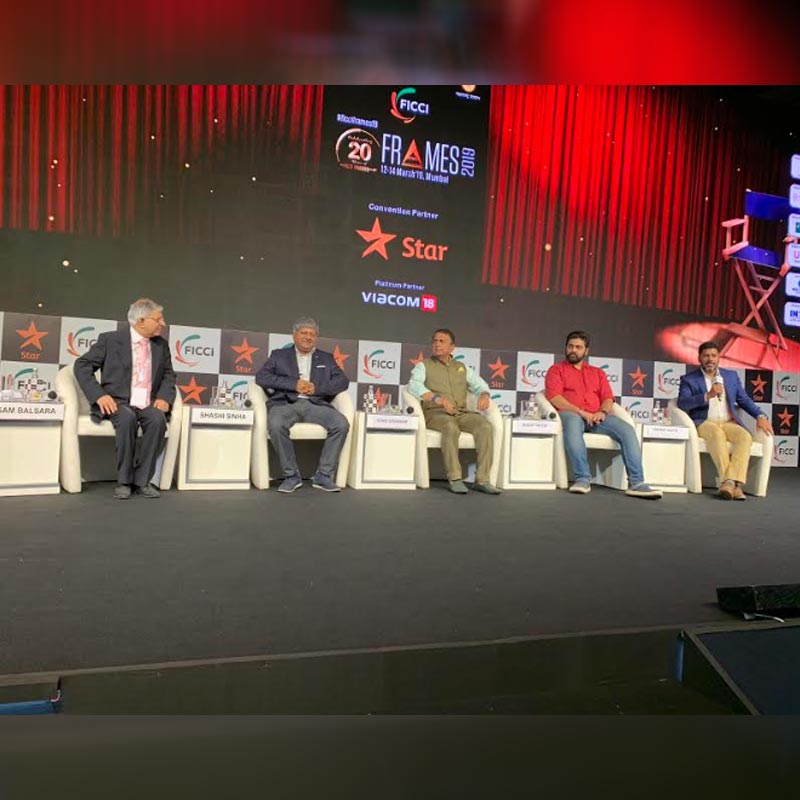
    MUMBAI: A cricket app of India Today called So Sorry Gully Cricket was formally launched in the presence of legendary cricketer Sunil Gavaskar on day 3 of FICCI FRAMES 2019 in a session moderated by Vikrant Gupta. Apart from the Mr. Sunil Gavaskar, Present were Mr. Sam Balsara, Mr. Shashi Sinha and Mr. Jaideep Trivedi.

    Sunil Gavaskar spoke about the memories associated with Gully Cricket, “There used to be very narrow space between the two buildings and if you hit over the top of the 1st floor, you were out. We learnt only to play straight. You sort of leant to adjust your bat speed and you learnt to either play forward or back. The best part or the worst part according to the way you saw it was that the umpires were all from the building so if they liked you, they would say not out they didn’t like you, you were given out.” He said laughingly.

    Mr. Sam Balsara said, “There is nothing big in the country right now that cricket and politics. You are giving both these things to Indians in form of a game, you should hit jackpot with this.”

  • Industry experts discuss OTT growth, need for measurement system

    Industry experts discuss OTT growth, need for measurement system

    MUMBAI: To measure or not to measure? Despite the humongous growth of OTT in the country, experts still can’t seem to agree on this question. While some of the experts believe a TV like measurement system will bring more transparency in the ecosystem, other players think third-party tools are already serving the purpose.

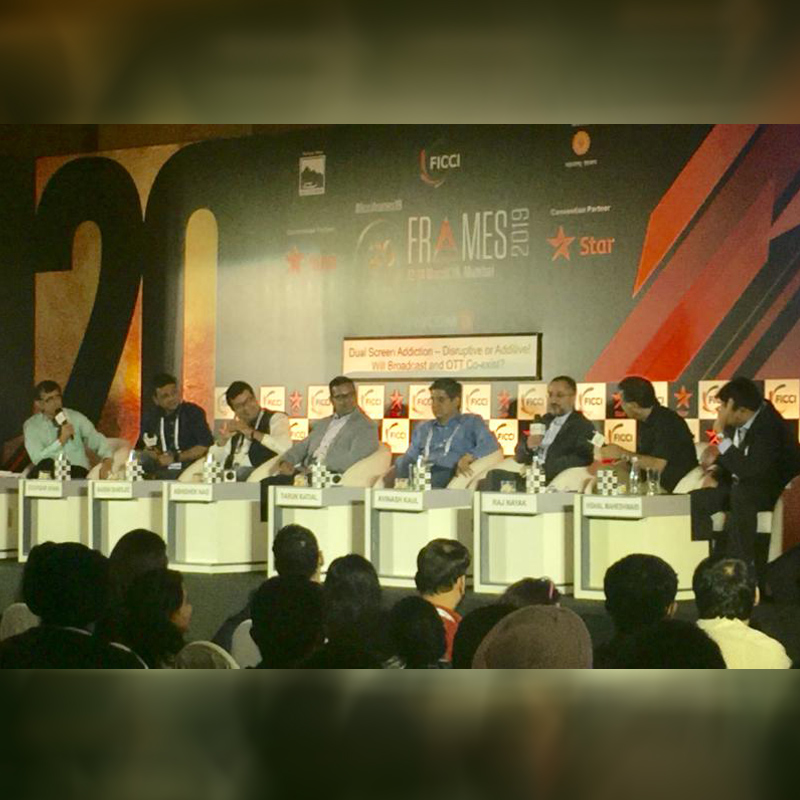
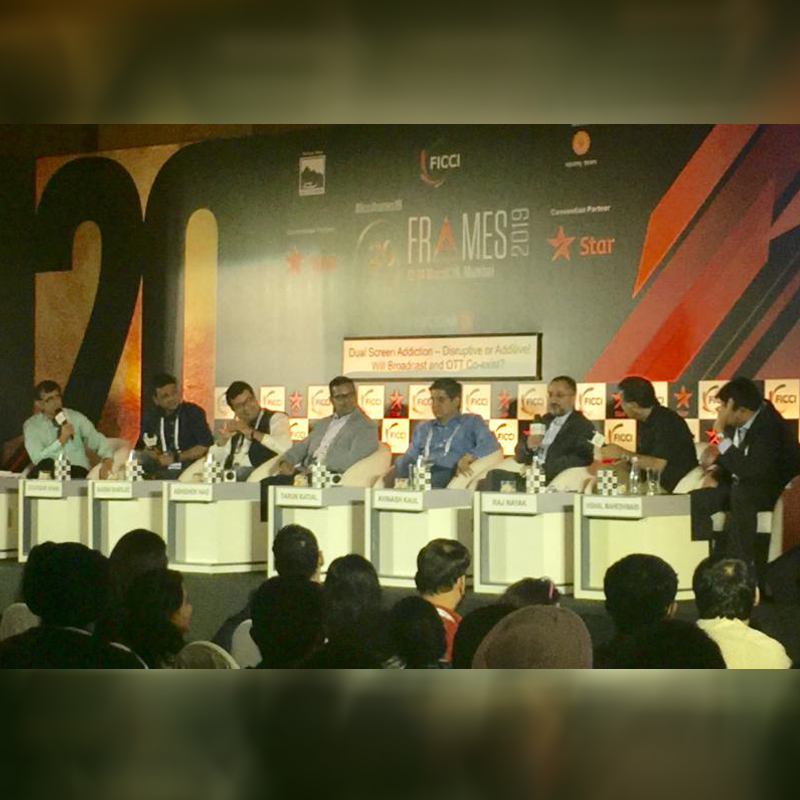
    A session on Dual Screen Addiction saw panellists Star India Hindi GEC president and head Gaurav Banerjee, ZEE5 CEO Tarun Katial, Network 18 COO, A+E Networks MD Avinash Kaul, media veteran Raj Nayak, Netflix partnerships director Abhishek Nag, Hooq India MD Zulfiqar Khan, Vuclip country head Vishal Maheshwari and moderated by Balaji Telefilms group CEO Sunil Lulla.

    Speaking at a session in FICCI FRAMES 2019 Banerjee emphasised on the need of a unified measurement system. “As we have entered into digital, we have not thought of putting in place a measurement system which is extremely robust,” he said. Banerjee thinks it will make assessments of watch-time easier for the advertisers.

    Katial strongly disagreed and argued that there are robust third-party tools in the market. He also cited the example of YouTube and Facebook’s strength in digital advertising. According to him, if there was no credibility in measurement, advertisers would not have put so much money.

    “In the case of TV, when consumers now exercise their choice some channel may lose its base of 198 million and drop to 20 million but that also shows the affluence of the customer who can pay Rs 20 a month. Otherwise, channels on DD Free Dish would have retained revenue three times greater than Star Plus,” Kaul commented.

    Nayak said that advertising money is going to get fragmented and it’s going to get worse with more players coming in. “In the OTT space, the number of players will shrink. I predict that in the next 3-5 years there won’t be more than 10 players in this space. I think then the realisation of value will happen both in terms of subscription and advertising,” he added.

    Talking about monetising on OTT through advertising, Katial said the volume of content on the platform is a necessity. He added that when ZEE5 was launched it kept the faith on three ‘v’s – voice, vernacular and video which worked. According to him, CPM is also rising on the contrary to popular belief in the industry.

    However, the experts agreed to the growing subscription model in the country. Netflix partnerships director Abhishek Nag said this is a great time for subscription business in India. The use of credit cards for online payment without fear of fraud and mobile wallets especially the ones with low bandwidth has opened up revenue channels for the platforms. Nag also thinks bundling of telco or broadband plans with live TV and OTTs can make it stronger.

    ZEE5 CEO said along with B2B2C, the B2C model is growing. According to him, proper bundling and pricing play a major role in B2C revenue. In the case of B2B2C, he said partnerships with e-commerce platforms like MakeMyTrip will add value to the model in future.

  • Broadcasters need to relook at content to cope with OTT platforms

    Broadcasters need to relook at content to cope with OTT platforms

    MUMBAI: With the upsurge in demand for OTT platforms in India, the future of broadcasters has been debated much. TV still has enough headroom to grow thanks to underpenetrated households. While the players in the ecosystem firmly believe that TV is not going to die soon, they also think broadcasters need to rethink their content.

    On the second day of FICCI Frames 2019, experts from the television and OTT industry discussed on ‘Dual Screen Addiction –Disruptive or Addictive! Will Broadcast and VoD Co-exist?’ It had panellists Star India Hindi GEC president and head Gaurav Banerjee, ZEE5 CEO Tarun Katial, Network 18 COO, A+E Networks MD Avinash Kaul, media veteran Raj Nayak, Netflix partnerships director Abhishek Nag, Hooq India MD Zulfiqar Khan, Vuclip country head Vishal Maheshwari and moderated by Balaji Telefilms group CEO Sunil Lulla.

    Banerjee said they are in the business of curating stories where making purposeful stories is important. He thinks it should be left to consumers what stories they want to watch together and on which personal device.

    Agreeing with Banerjee, Katial said, “It’s good to tell stories, eventually you have to make money and yes, we are all trying to monetise content in different formats. What OTT brings to the table is totally different from TV which is a high degree of personalisation and segmentation, and the ability to discover content at your own convenience. That’s not going away. Consumers are going to want more and more of that. I think we all say linear TV should stay, the convenience aspect of digital is huge.”

    Lulla raised the question of how broadcasters should defend their turf with all these changes. Media veteran Raj Nayak said that he is a big believer that television is here to stay. He added that families in small towns, even today, sit together to watch TV in the evening. According to him, OTT and TV will co-exist in India at least for another ten years.

    Banerjee also echoed Nayak’s view that OTT is not going to kill linear TV. According to him, three generations watching TV together and having a conversation is very important in Indian society. He added that TV consumption is only on the upward side in the country.

    But Nayak also reminded the fact that amid ongoing changes in the ecosystem, consumers now compare the quality of TV and OTT content. Hence, Nayak thinks TV channels will have to course correct to give content on linear TV which is as compelling as OTT.

    Hooq India MD Zulfiqar Khan added that streaming services have a direct connection with consumers which helps them to have great knowledge of consumer choice. On the other hand, linear TV has been a consumer facing brand but not consumer facing business. Hence, he said that at a content level as well as business level there has to be a rethink.

    “The households not yet penetrated by TV will continue to be the main stake of linear TV. Most of it is coming from the northern and eastern parts of India. OTT and TV will obviously co-exist. The question is how they will compete with each other and take best practices from each other,” Kaul said while adding that OTT ‘s biggest advantage is its one-on-one relation.

    Vuclip country head Vishal Maheshwari said India is the only country where broadcasters are so well organised on their OTT businesses. According to Katial, broadcasters created a catch-up content environment in the early days and went slow on premium content compared to platforms like Netflix.

    The industry experts agreed that rather than having a debate about TV content and OTT content, the debate should be on linear and non-linear consumption and the need for compelling content.

  • Need to focus on self-regulation and less regulation: Amit Khare, Secretary, I&B at FICCI FRAMES 2019

    Need to focus on self-regulation and less regulation: Amit Khare, Secretary, I&B at FICCI FRAMES 2019

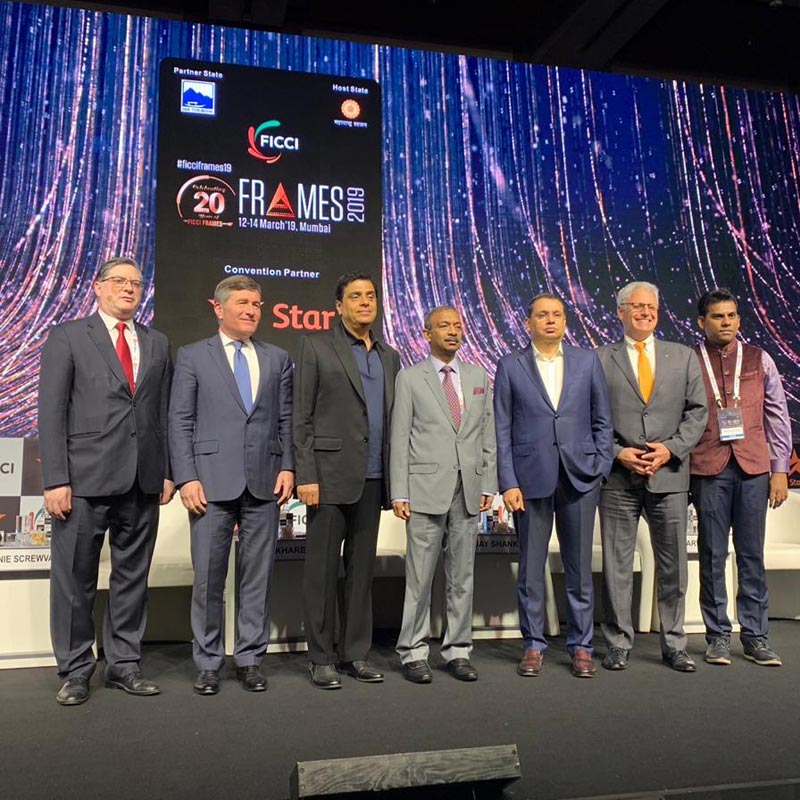
    MUMBAI: The 20th edition of three-day global convention covering the entire gamut of media and entertainment industry, FICCI Frames 2019, saw its inauguration today at Grand Hyatt in Mumbai.

    Mr. Amit Khare, Secretary, Ministry of Information & Broadcasting, delivered the keynote address.

    “One should encourage co-production so that content could be greatly enhanced, joining more countries, that will lead to better viewership.” Said Amit Khare.

    “We have taken an initiative of having a national broadcast policy. One should consider self-regulation and less regulation if we want the system to grow.” He added talking about the regulations in Media and Entertainment industry.

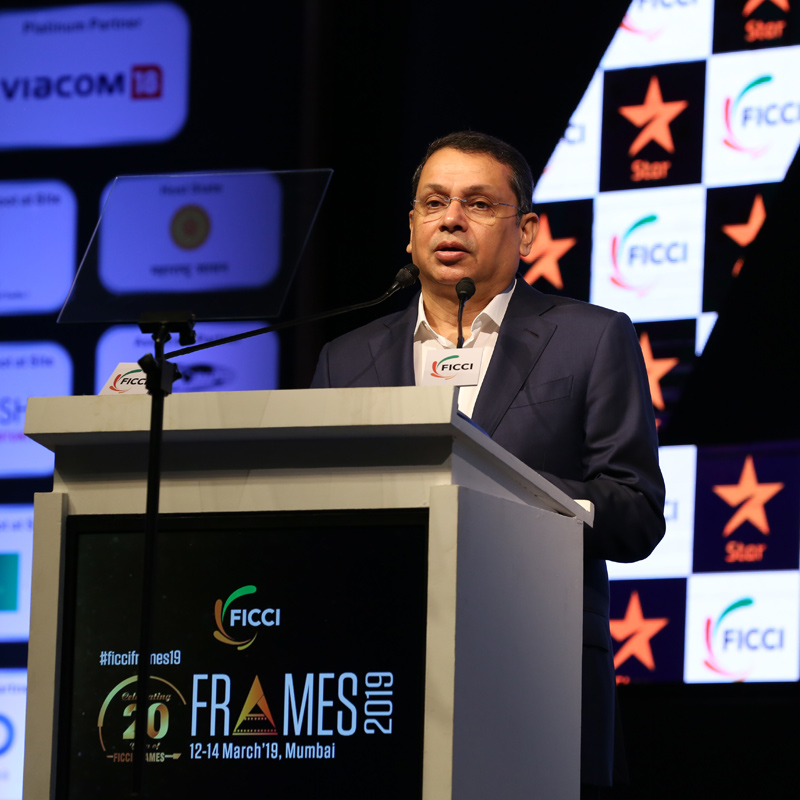
    While Mr. Uday Shankar, Vice President, FICCI took to stage for opening remarks, where he mentioned how the media and entertainment industry and FICCI FRAMES is growing by leaps and bounds. “India is one of the most exciting markets for the Media & Entertainment industry. The great Indian media story has just begun,” he said.

    Mr. Ronnie Screwvala in his ‘Media Mastermind Keynote: An Indian Entrepreneur’s Journey’ said he had seen the industry and FICCI FRAMES for so many years and was happy to note that business people were at the centre stage of the conclave.

    “The companies of tomorrow need to be more consumer companies and not just media companies. The Media and Entertainment sector cannot just function with passion, we also need leaders, founders and entrepreneurship,” said Mr. Screwvala talking about how the media and entertainment industry needs to focus on consumers.

    “Learning is story-telling,” Mr. Screwvala concluded.

    The other speakers in the opening session were Mr. Charles H. Rivkin, Chairman & Chief Executive Officer, Motion Picture Association of America and Mr. Gary Knell, Chief Executive Officer, National Geographic Partners. 

    FICCI-EY 2019 report on Media and Entertainment was also unveiled along with the law book of Cyril Amarchand Mangalda,s and Odisha Film Policy by Dr. Nitin Bhanudas Jawale, Managing Director Odisha Film Development Corporation.

    Apart from the 2nd edition of content market, an initiative to bring together content creators and content buyers from across the globe, another new initiative call 'Frame Your Idea' has been set up this year to help promote script writers in the industry. While the fraternity has been talking about the importance of stories and scripts writers within the industry, FICCI FRAMES will provide a platform as an opportunity for writers to pitch their content to various renowned production houses like Aamir Khan Productions, Balaji Telefilms, Dharma Productions, Disney Studios, Eros Now, RSVP, Kabir Khan Films, SPE Films India Pvt Ltd., Viacom18 Motion Pictures and Fox Star Studios to name a few.

    The pitching sections will be divided into Films, Television, Web shows and short films to make it smoother for the writers to book appointments and to pitch their stories to interested production houses for fruitful associations.

  • India’s paid VoD users spend 53 per cent watch time on local content

    India’s paid VoD users spend 53 per cent watch time on local content

    MUMBAI: Despite a deluge of global content coming to India thanks to a multitude of streaming platforms, the Indian audience continues to retain a strong appetite for local content. According to a report from Alphabeta Strategy and economics, the paid video-on-demand (VoD) audience in the country spends 53 per cent watch time on local content. Along with India, other Asian countries also show the same fondness for local content.

    AlphaBeta commissioned a survey of internet users watching paid online VOD once a month or more in India, Indonesia, Malaysia, Taiwan and Thailand. The survey has also found that the demand for local content remains same across all the age groups. During a session in FICCI FRAMES 2019, Alphabeta Strategy and Economics engagement manager Dr. Konstantin Mathhies revealed the findings.

    “With strong consumer demand for local content, VOD players will have to increasingly provide high-quality local content to align with these preferences. Already, many VOD players in Asia have developed “hyper-local” strategies in content investment – with a focus on producing high-quality shows that also differentiate their offerings in a competitive market,” the report read. It also cited the example of global players like Amazon, Netflix going local in Asia.

    While all the large international players are investing in the Asian countries, local players are also ramping up the investment in content. The study estimates that the content spending in Asia could go up to US$10.1 billion in 2022 from US$2.7 billion in 2017.

    Moreover, foreign direct investment in local content in Asia is also expected to get a boost given the fact that VoD spending is largely driven by global players . The report added that the potential FDI could reach US$4 billion by 2022.

    The key findings of the report depict that over 80 per cent of VoD executives cite a welcoming investment environment, supportive regulations, and high-quality content production infrastructure as key to driving content investment. It also adds that VoD makes it easier for Asian entertainment to reach at least 450 mn people globally today.

  • Netflix to keep both dubbing and subtitling options available

    Netflix to keep both dubbing and subtitling options available

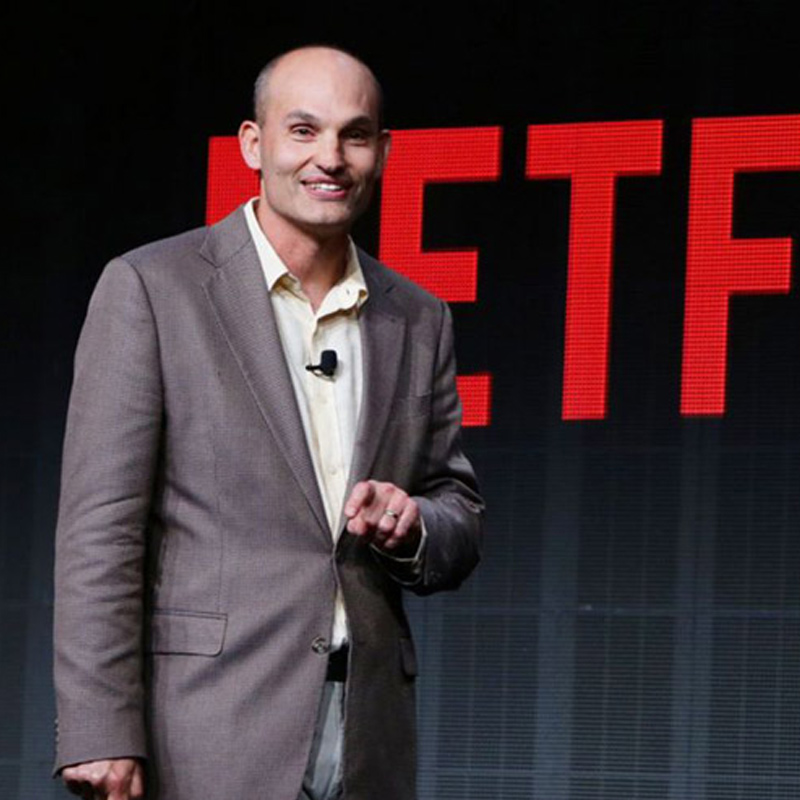
    MUMBAI: The fact that India has a higher per cent of mobile streaming compared to the US has caught Netflix’s eye. Speaking at a session moderated by CNN News 18 Editor Anuradha Sengupta on the stage of FICCI Frames 2019, Netflix VP Product Todd Yellin said that despite the liking for the small screens, India’s fondness for the big screen will not fade away.

    While Netflix has already delivered hits like Sacred Games in India, the OTT platform will double its investment in the country. He also added in a presentation that the series was a global hit for the service, with two out of three viewers of the show live outside India. On the other hand, Indians are also loving international shows as Bandersnatch was a huge hit here also.

    “We don’t care about someone’s gender so we don’t collect it. We don’t care about the age so we don’t collect it. The only data we really care about is taste and we don’t want to stereotype. Internet TV is for everyone to liberate and make the experience greater so they can enjoy entertainment on their control and that’s what we care about,” Yellin commented while asked about the demographic and psychographic profile of Netflix users in the country.

    To reach to more people, Netflix is also planning to extend the number of languages in which the content is available. While Orange is the new Black was released in seven languages back in 2013, The Umbrella Academy was released in more than 25 languages six weeks ago.

    Along with subtitling, Netflix also wants to keep the dubbing option always available for users given the past data. “45 per cent of people watched Ghoul in English speaking countries with dubbing, 37 per cent with subtitles and 18 per cent with both,” he highlighted.

    Although Netflix is becoming unbeatable among OTT platforms, Disney’s entry in the space is likely to pose a challenge. However, the company seems to look at it positively as Yellin said competition motivates the team venturing into more interesting things.

    The OTT platform will be doubling down on interactive series also but it won’t necessarily be science fiction or dark. According to Yellin, it could be a wacky comedy or a romance even. With all the plans in store, the next couple of years will be interesting to see how the OTT platform handles its leading position as other big pocket players are stepping in.

  • Sudhanshu Vats says content, platform and technology key to good storytelling

    Sudhanshu Vats says content, platform and technology key to good storytelling

    MUMBAI: On day 1 of FICCI Frames 2019 in a session titled ‘Looking back as we move ahead’, Viacom18 group CEO and MD Sudhanshu Vats was in conversation with Indian Express executive director Anant Goenka. The burning question that came out to dominate this conversation was ‘does the industry even realise how to and what to evolve to?’

    Vats began by stating that a lot has changed in the industry for the better. He went on to state, from the content space, the first thing that has changed, irrespective of the platforms, is that the industry has moved away from broadcast to micro-cast online. The industry has moved from beaming things to having more conversations making things more interactive.

    According to him, the second most important change led by technology is that it isn’t necessary to tell stories to everyone, rather tell it to a limited number of people and tell it successfully. 2018 has seen films target certain audience and these films performed exceedingly well in spite of not being blockbusters such as Andhadhun, Badhai Ho, etc. 

    The third and most interesting thing he pointed out to is the changes and differences between curator, creator and consumer. It used to be much simpler to differentiate between these three in the past but today the lines have completely blurred. And this is also followed by audiences across, where audiences have also become content curators.

    While reiterating the fact that the industry is experiencing many important changes, he states a welcoming change is the narration of diverse stories in a classical content sense.

    He stated that because the TV model is an ad-driven model, telling stories in an authentic manner has become a little difficult as compared to the past as it's driven by ratings. He noted that while playing with the original story, many times the industry is taking away from the story. He stressed that importance must be given here and that the focus must be on the ability to tell stories which will eventually sell rather than looking at only selling the stories.

    Speaking about ‘Formula’ as a safety net, Vats believes that formula works as a safety net at some level. With minds being patterned in a particular format, and sometimes from the commercial point of view, one must believe in intuition. With reference to the western world, he added that the media industry in the West follows a pattern format leading to success.

    Sudhanshu Vats believes that there will be a lot of custom use in the story and segmentation in the audience. According to him, there will be a set of audience that will love, and there will be one that doesn’t. But in the future, it won’t matter as every story can reach its audience and every audience their story.

    The session ended on the note that the future can be rafted only from lessons learnt in the past. The media industry is in interesting times today, as it witnesses a disruptive process of embracing change to redefine itself for the future.

  • Uday Shankar, citing TRAI tariff order, suggests govt should unshackle instruments of monetisation

    Uday Shankar, citing TRAI tariff order, suggests govt should unshackle instruments of monetisation

    MUMBAI: Uday Shankar believes one of the most ‘powerful’ means of fuelling the next decade of growth for India’s media and entertainment industry is for the government to ‘unshackle the instruments of monetisation’. Driving home his point, the veteran executive cited the Telecom Regulatory Authority of India’s (TRAI) as an example.

    “Distribution regulation of television content, where what you can charge from the consumer regardless of how much you invest in the content, is determined by the regulator and not the market,” Shankar said on the opening day of FICCI FRAMES 2019, where he moderated a session titled ‘Global Goes Indian’ featuring MIB secretary Amit Khare and Prime Minister Narendra Modi’s Economic Advisory Council chairman Bibek Debroy as panellists.

    Shankar wondered whether there was a need for India to revise its ecosystem in order to compete in the global content market place.

    “When a Hollywood film is made, or when Netflix or Amazon produce a series, they are able to monetise it across the world and hence their ability to invest in that content is a great deal more. In India, especially for TV, because of restrictions on how and how much can you monetise, there is a cap on investment. There are regulations on the affiliate monetisation front. So, your ability to monetise is limited,” he argued.

    Shankar channelled his inner newsman as he highlighted some of the most pressing issues facing India’s media and entertainment industry. The recently appointed Disney APAC boss referred to a series of stumbling blocks across film, TV and digital content creation that could delay the sector from realising its true and full potential.

    The 56-year-old focused on three key areas that needed addressing for the Indian M&E to grow at a faster pace. The FICCI vice president drew the attention of the panellists and the audience to issues plaguing content creation, monetisation and the need for government policies and regulations to be consistent.

    Shankar rued the fact that India wasn’t adding more theatres in tune with the times. He pointed out that the increase in number of screens was a result of single screen theatres being converted to multiplexes.

    “New theatres are not coming and while more films are being released in Hindi and regional languages, it becomes a challenge for them to get exhibited because there are not enough screens. While the big budget films are still accepted by theatres, the smaller and regional films are struggling. This problem looks like it’s going to get more and more complex,” he said.

    Shankar then shifted his focus to the lack of adequate infrastructure, adding how this was preventing creators from scaling up their focus on local and city-specific content across the country. To further build on his perspective, Shankar offered the example of Mumbai’s film city.

    “We had one film city which used to cater to the needs of the film industry and a few TV channels. Now, we still have the same film city which has to cater to the needs of the much diversified industry,” he stated.

    Shankar asked whether policy development by the government, given that M&E is a major employer, would be a potential problem solver. However, he made it clear that the industry isn’t seeking any special favours from the government.

    “The entire content for whole Hindi heartland from Bihar all the way to MP, Rajasthan, Gujarat and Haryana is created out of Mumbai because it is the only city where basic infrastructure still exists. A decade ago, there were initiatives to launch Bhojpuri channels designed to cater only to the population of Bihar and some parts of UP. But all those channels turned out to be unviable because there was no facility to create content locally and all of them had to come and rent expensive facilities in Mumbai and create content here. There are no facilities available outside Mumbai. Is this a subject needs that needs to be addressed via policy intervention?” he asked the panel.

    Shankar then drew a parallel to how a complex process at every level had been a hindrance to investment in theatre infrastructure.

    “For instance, the reason malls are coming up everywhere and no theatre is being made is simply because the entire policy around building a new theatre, in terms of all requirements, is too complicated,” he said.

    Shankar made another critical point as he highlighted the need for government policies to be consistent.

    “There has to be certainty of regulation. You should know what is expected of you and what you need to deliver. There should be no surprises, because surprises create a shock in the system and everyone takes time to recover from that,” he stated.

    Earlier in the day, during his opening remarks, Shankar described India as one of the major media markets in the world. According to him, Indian M&E is at an inflexion point.

    “We are already seeing the innovations that are taking place in this country in the domain of sports or in digital, where Indian creativity is being talked about globally and attracting the interest of one and all. However, we need to make sure that our policies are aligned to accelerate creativity and growth,” he said.

  • Sameer Nair on Applause Entertainment’s shows, content creation and trends [Part 2]

    Sameer Nair on Applause Entertainment’s shows, content creation and trends [Part 2]

    MUMBAI: This is the second part of Indiantelevision.com’s conversation with Applause Entertainment CEO Sameer Nair. You can read the first part here.

    So within your company, is a format kind of a lab being developed going forward? Because I see opportunity in format, paper formats too while you’re creating content and you’re going to start licencing it in stage two I presume. That will be next year after the first wave is sold out.

    We hope the first of our shows streams at the end of March, so let’s see.

    So when will your agreements allow you to sell those globally?

    It depends. Some will be after a year.

    In the meanwhile are you looking at setting up a format lab? Like Zee has set up a format lab which is working on creating formats, Star is working on formats in house.

    No, I don’t think we are doing that. Currently, we are focusing on drama and fiction, not so much on the non-fiction part of business. And within that, if we find something that we really like, we proceed to make it. We are not really making a paper pilot or a pilot.

    We are not really making globally relevant content whereas the Turks make it, the Koreans are more advanced as a culture so their shows travel, but Indian shows are not really travelling, we’re getting $200, $250, maybe a Porus might get $3000 or $2000 per hour but not all shows are getting the money that they should.

    Actually, apart from US content which is the English content and which is what makes it a globally dominant soft power, I don’t think any other content is genuinely travelling.

    Today Turkish content is going at $150,000 an episode in west Asia.

    What I’m saying is that we’ve got a very large market, we’re a billion Indians. In any case, you’ve got to decide who you’re making this content for. There’s something known as primary audience and secondary audience. Narcos was not made for us, it was made for Latin American and North American audiences. We happened to like it, it went on to become a global hit and well, good luck. Like that, I’m sure a 100 other shows are made which we haven’t heard of. So what I’m saying is that as far as we are concerned, we are focused on telling great stories and we are catering to an extremely large Indian audience.

    Some shows do travel but you can’t set out to make something thinking it will straddle a global audience, even the Americans didn’t do that. When the Americans made Seinfeld, they didn’t make it to make Indians or Koreans or Japanese laugh, they made it to make Americans laugh. That the rest of the world laughs with The Big Bang Theory or FRIENDS or House of Cards or whatever is a happy outcome. So I think from a content creation point of view, we’ve got to focus on how we can tell great stories, how we can monetise those great stories and how can we make this business profitable.

    So you’re investing in production value, you’re investing in writing and I see that you’re investing in the cast.

    You’re investing in good actors, you’re investing in good writing, you’re investing in production values, good directors, you’re making these like essentially extended films, it’s all produced at one go, it’s post-produced at one go, so we are doing that and we should invest.

    Will all of these travel or will some of these travel?

    Some of these will travel, all may not. For example, The Office comes from abroad and I believe that a show like that should be made in every country because every country would have this dull sleepy office with the horrible boss from hell and the other terrible people we work with. But some will travel, I think something like City of Dreams will travel, that’s a nice political story. I find too many of my colleagues in this business stand on the shore and look towards the sea. I think we are a large enough country to stand on the shore and look inwards.

    That’s why Hollywood is a soft power.

    Hollywood is a soft power not for what they’re doing, it’s because it’s driven by the language.

    Roma is a Mexican film that went on to win so many Oscars.

    You know what, it is a cool fashionable thing to say that we should be all making stuff that the world applauds.

    But if you put sub-titles, everybody watches.

    I’m not disputing it, I’m saying that you’ve got to run a business, it is called showbiz. There’s show and there’s biz and they go together. So when you’re running a business you must be clear as to why you’re doing it. It cannot be for an amorphous global audience. If it’s a good story, the world will watch.

    There’s a science to get the world to watch, getting recommended, the social bars, etc.

    That comes after you’ve made a good story.

    Do you have a strategy to build this globally? Would you be investing as much to push these globally?

    It’s a process. You don’t plan for all these things, you’ve got to make it, you’ve got to put it out there, it gets some traction, it builds an audience, the word of mouth spreads, when things are going well you keep adding to it, it’s a process. I don’t think Ramesh Sippy set out to make Sholay, he set out to make a movie that proceeded to become Sholay. That’s how it goes. Everything happens like that.

    I believe that you’re more evolved than Ramesh Sippy in terms of understanding the ecosystem.

    No, not like that. I’m saying that even when you take a movie like Dangal, it went on to become a big success in China. In hindsight, we can all be geniuses and have 100 million reasons why that happened. But in the process of making it, it was not being made for that audience, it was being made for an Indian audience is what I’m saying.

    So around IP sharing, you’ve always told me that put your skin in the game then I’ll give you a piece of the action. The industry has started putting money where their mouth is. Producers like Siddharth Tewary, Abhimanyu Singh, Asit Modi have been putting their skin in the game and they’ve been retaining IP. How’s that going for you now that you’re on the other side?

    I remain exactly where I was. I think there should be a share of the spoils definitely because there’s a certain degree of a creative investment, there’s a certain degree of financial investment. I think it’s fair enough for people to want to have a share of it. So we are continuing with a similar model, we’re happy to do that. When I talk about putting skin in the game, I mean that. Not everyone has money, but there are different ways to do that. But again there’s so much debate that keeps happening about IP, that where are the shares of IP? I think the first important thing is to create IP. If you create intellectual property then you can derive value from them.

    I find too many people talking about IP without ever having created IP. So I think that focus is important. Beyond that, different models will emerge, we are already doing that. A lot of the international shows that we buy are represented by format owners who then proceed to give a share of what we have sold it for back to the original creator. It’s a process, internationally it’s been done forever. So I think it will happen in India as well. If the content community is not careful at this point in time, then it will just be a replica of TV.

    Do you fear that it could end up being a replica of what happened in TV?

    Currently, it seems to be approaching it in that manner, as in you get commissioned and that’s it, you have nothing left. If you indeed want to have a play beyond that, you must be willing to give up something, you must be willing to put something and you have to figure a way around it.

    So what are the different models that are available? Do you give the story rights, dubbing rights, sub-titling rights, Indian language rights, film rights or animation rights?

    No, this is an evolving market. Currently, the position is that we give nothing or we get nothing. But I think as it gets along it will sort of play out.

    Which of these will play along in the market or be more relevant to India?

    There are at least 10-15 streaming platforms. These are the early days, everyone is well funded, obviously serious competitors, nobody’s going away in a hurry, so I think the next 2-3 years will help define that as to who pulls ahead, who falls back, what kind of content works, how India responds to it and all of that. Currently, the default position of all the broadcast players is, well we want everything, even if it never goes on TV.

    So in terms of exports, we haven’t really grown.

    Again, now what will happen is you’ve created this great show, and it’s going to go onto a global platform, but now the platform itself wants to dub it into all international languages.

    If they give you a piece of it?

    So you’ve got to work all that out, it’s got to be figured out but the thing is that everyone is pushing in that direction. So your dream of having an Indian show that the whole world watches is around the corner now.

    Do we need legislation in place?

    I think that ship has sailed. Legislation and the opportunity of making a law out of this is long gone. This happened in the US in the 60s. Now I think if we indeed want to resolve this problem, we’ve got to be more creative about this. They’re not going to get a law passed.

    Javed Akhtar did that for the music industry.

    It’s a royalty thing. And the control of monetisation still rest with the music companies, it’s not with the composer.

    So at least, could we move in that direction?

    No, so the way to do that is for all the content creators to sort of galvanise and unite and work together and try and attract more money to the content creation business and have people believe in the process, believe in the thing that you can create content and that content can then be sold. Currently, the thing is that it sounds very risky, you’ve got to get commissioned from someone. If somebody is going to give you the money then I’ll move and make something. As long as it exists in that manner, it’s always going to be a hard sell and especially for something as large as a content business. A piece of music, a song, these are smaller pieces of content

    So you don’t see a solution?

    Not legislation, not at all.    
  • OTT platforms need more passion projects, experimental content, original voices

    OTT platforms need more passion projects, experimental content, original voices

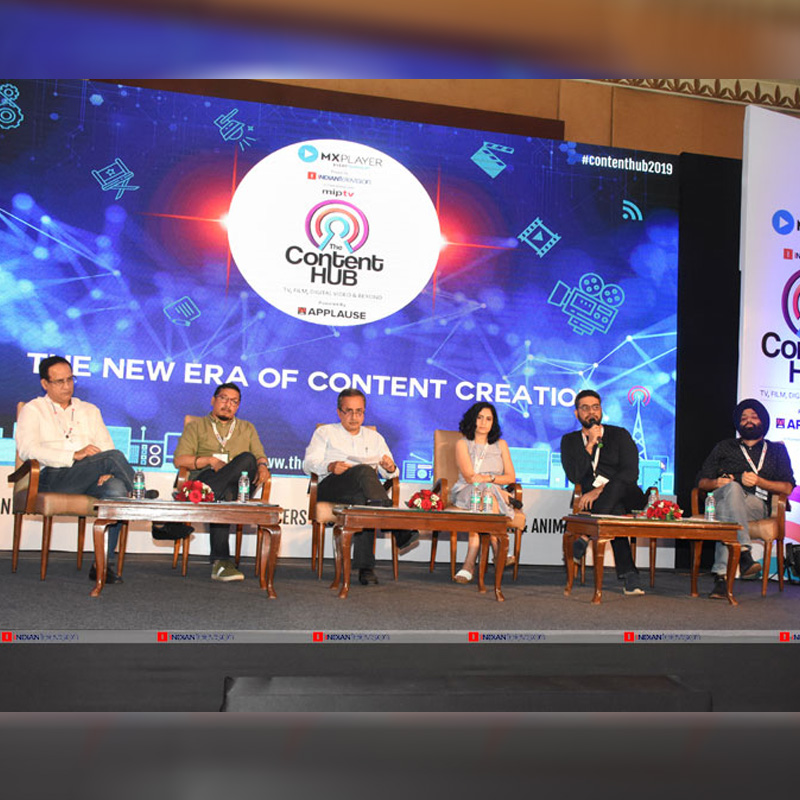
    MUMBAI: 2018 saw various OTT players in India gain massive popularity. There are more than 30 sites serving hours and hours of original as well as syndicated content, in various languages, genres, and tastes. During the third edition of Indiantelevision.com’s The Content Hub, sponsored by MX Player, representatives from some of the top OTT platforms in the country the need of good and meaningful content and the kind of programs that can work in this dynamic world.

    Part of the panel were Addatimes Pvt Ltd managing director Rajiv Mehra, The Viral Fever (TVF) global head of business and content Rahul Sarangi, Viacom 18 EVP and head content Monika Shergill, MX Player chief content officer Gautam Talwar and One Digital Entertainment COO and co-founder Gurpreet Singh. The panel was moderated by industry veteran and Hungama Digital Media Entertainment executive producer Sanjeev Lamba.

    The panel unanimously agreed on the fact that the greatest need of time is to procure and create high-quality original content that resonates with the audience. They stated that all the logistics; be it production or budgets, come only after people who can create and write quality content.

    Shergill said, “The competition to find good creators and partners to tell great stories is actually, by far, the single biggest challenge that we face because I feel that as a market, we kind of missed out on the golden age of content creation. While the world was producing a lot of mature content, we were leaning towards only soap opera kind of stories.”

    Sarangi chipped in with some fine examples of the work that TVF has created, “To see what kind of content people watch, we pulled out a few episodes of ‘Yeh Meri Family’ from YouTube and then put it on Netflix. The show became the second-most trending content in India and has a completion rate of 70 per cent. Because the writing was so strong, people came and watched it again and again. Similarly, with ‘Pitchers’, it wasn’t a grand show shot on high production budgets like ‘Sacred Games’. But it became the highest rated show on IMDB, just because of good writing.”

    He added, “I think the biggest thing we need to do right now is to invest in good writers. Also, we need to give them the time and pay them well. Groom the talent! Writers are going to be the prime thing that we need.”

    Moderating the panel, Lamba put another pertinent question forward asking what sort of content OTT platforms are willing to back. To this, the panel hailed the need of bringing original voices to the paradigm that are not just fresh but can also add on to the type of content that is already working on the web.

    Talwar mentioned that being the newest kid on the block, MX Player is currently trying to understand what the viewing pattern of the audience is. He said, “We have licenced quite a lot of content from people who have a high experience in actually creating successful web series, including TVF, Pocket Aces, and ALTBalaji. We have put this content online and now we are using a lot of data to understand what actually works in the space.”

    He continued, “Essentially, we are looking for content that is going to appeal to 18-30-old males, largely from North India. But it is genre-agnostic because I believe, people today watch everything. We are looking out for authentic stories from heartland India as they work well with the metro audience as well.”

    Mehra also agreed that the audience today loves watching all sort of content, be it long form or short form. He mentioned the need to experiment with the duration of the content and tell stories that the audience can connect to.

    While Shergill vouched for the need for passion projects and experimental content, Sarangi shared that they are looking for stories that touch the hearts of people. He stated that TVF will not indulge in violence or sexually explicit content, at least for a few more years.

    The panel also discussed the much-debated topic of IP rights. Shergill noted, “IP is something that is very important because this content is meant for posterity. You are believing in someone’s idea and paying to the last stream. So, the skin of the game for any platform is to have IP rights with them. But having said that, I also feel that when we know what kind of content creators we are speaking about, then there may be certain different models to work. But when you are working with teams of creators, and backing their idea, IP is the only asset you are creating and you should have the right to it.”

    Sarangi mentioned that as a company they do not sell their IP rights despite having worked with several OTT platforms. He said, “The reason behind this is that it is not only about production cost. It is also because of the time and effort put in by the creative team. We thereby do mostly an output kind of a deal or a licencing avenue. Also, we can do this at this point in time because we can guarantee a hit rate.”

    However, Singh shared a different angle and said, “IP has become a very crude word. Most people don’t even know what the value of an IP is. People are just fighting for it right now but they don’t even know what they are going to do of it after two or three years. So, I think if you are being compensated for the value, you must sell the rights to the platform.”