Category: Specials

  • Nivedita Basu’s journey from Balaji Telefilms to her own production house

    Nivedita Basu’s journey from Balaji Telefilms to her own production house

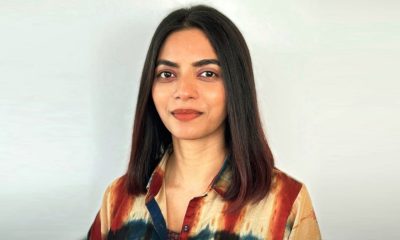
    MUMBAI: The Day 2 of The Content Hub 2020 had an interesting session on producing for television by Nivedita Basu.  The audiences witnessed the independent producer and creative director speak on her journey in Balaji Telefilms to becoming an independent producer and creative director. 

    Basu joined Balaji Telefilms in 2000 as a deputy creative director and worked on many TV serials with Ekta Kapoor and worn many hats under her mentorship. Basu quit Balaji Telefilms in 2009 and she started her own production house 'House of Originals'. 

    Basu says, "After 15 years, it's natural to go independent. I was very excited about making Meri Awaaz Hi Pehchaan Hai and we wanted to make a show that stands out."

    She further adds, "There are lots of obstacles in becoming an independent producer and creator. I always wear a creative hat more than the producer's. Even though I didn't make profit out of my first show but I am still proud of it. Luckily, after Meri Awaaz… I got the second show and that did commercially well and gave me the confidence as a producer."

    Basu also shared her experience of working with Balaji Telefilms. She says, “The advantage of Balaji Telefilms is that we have Ektaa Kapoor and Shobha Kapoor there. In Balaji I was handling nine shows at a time and it was not that difficult as I had Ekta as guru.”

    Basu believes today's writers are struggling between writing and producing. She says, “Right now, television is not the only thing for writers or creative people. Thanks to digital and OTT, people are making what they want to make. Going ahead, I will be producing content for OTT platform.”

  • Industry leaders provide valuable insights on content creation at The Content Hub 2020

    Industry leaders provide valuable insights on content creation at The Content Hub 2020

    MUMBAI: The fourth edition of The Content Hub 2020, presented by Indiantelevision.com, saw a gala turnout with scores of people eager to hear industry leaders speak about content and the way forward. While the first part of the day saw discussions on digital content and the second half went into understanding storytelling, research and OTT format, the last part saw a mix of audio content, movies and digital transformation.

    Before we venture into day two, here’s a wrap of what happened yesterday.

    The audio content business

    Rainshine Entertainment co-founder and COO Anuraag Srivastava in a fireside chat with Monisha Singh Katial explored the opportunity of the podcast business. The audio and podcast side is a new venture for the company where it dedicatedly has two verticals looking after AVOD and SVOD services.

    Srivastava believes the potential gap between the audience belonging to rural and urban space is increasing because the content on television is not heard on the radio anymore. So, podcast is a way by which small towns can plug in through radios. "One of the things that we see here, unlike the US, is that India entirely skipped the satellite radio market where we went from short wave to FM. There was never a serious radio or anything equivalent of radio where you paid to hear good content" he mentioned.

    A new wave is taking over big screens

    Rather than relying on big B-Town stars, new-age directors, writers, scriptwriters are focusing on delivering messages through stories. At the panel ‘The role of writers and directors in developing the magic script’ at The Content Hub 2020, the panellists agreed that the audience wants new stories in a familiar way.

    Screenwriter, script consultant and advisor Anjum Rajabalia, film director, writer and producer Hansal Mehta, screenwriter and director Hitesh Kewalya, film director, writer and producer Om Raut, dialogue writer and director Sumit Arora participated in the panel.

    The panellists opined that not only we have opened up to social issues but the crucial thing is that it is being led by good writing. He also added that people have begun realising the importance of a good script. The panellists also agreed that storytelling needs to be relooked at and constantly evolve. According to them, if the most politically, socially relevant and taboo topics can be told in a manner that can touch hearts, then stories will travel far. 

    Decoding new-age content

    The last couple of years have seen a huge evolution of content with the shifting paradigm. At The Content Hub 2020, the creators who are at the forefront of the change discussed the way forward and what are the new initiatives they are taking.

    Actor and creator Mallika Dua said she is looking at long-format content as well. She has been more into short format content. She also added that spending quality time online should be the focus rather than random scrolling. Pocket Aces founder Anirudh Pandita, who in a lighter note said that their mission is to solve boredom in India, mentioned that he is looking at two new segments.

    OML Entertainment chief executive officer Gunjan Arya said that working with creators and growing platforms have opened up more opportunities. OML is looking at making Comicstaan in Tamil. It is also working with OTT platforms to get content outside India.

    YouTube partnerships director Satya Raghavan said that while there is the platform’s traditional advertising-driven business, now it is also looking at subscription business including YouTube Premium, YouTube Music, etc. He also added that some partners can sell their own inventory on the platform which is another revenue stream. TVF content and business global head Rahul Sarangi spoke about the creator’s new focus in vernacular languages and output deals with major OTT platforms.

    Fireworks India CEO Sunil Nair said that it would not depend on influencers-based content. He also added that it’s not necessary for short-format apps to do cringy content.

    Digital content, self-censorship and more 

    Applause Entertainment CEO Sameer Nair took the stage with House of Cheer founder Raj Nayak to discuss the realm of TV and OTT content. Nair said that this trend of pushing everything to digital-first will not allow enough revenue to come through. Instead, we must follow the US approach of first releasing movies in the theatre and then giving them out on DVD or digital.

    When it comes to series-based content, Nair said that digital benefits in giving the user the power to decide rather than the broadcaster deciding for them. That's why international content is being consumed with subtitles. TV, though it was successful, it was a one-way street.

    Nayak posed a question on the need for self-censorship and whether it will kill creativity. To that Nair responded that self-regulation is a tricky area and people are finding innovative ways to tackle that. He also added that people realise that if they don't self-censor, they will face repercussions.

    Movies and their success

    The success of a film is never planned, it happens. This was the unanimous response of the panel moderated by Talkietive Content Creators co-founder Priyanka Sinha Jha, with panellists Reliance Entertainment group chief executive officer Shibasish Sarkar, Azure Entertainment chief executive officer Sunir Kheterpal and Zee Studios chief executive officer Shariq Patel.

    The panellists were of the view that the emotions embodied in the story of the film resonate with the audience then it definitely creates a market for itself. And, this is the biggest reason why Dangal and Bahubali both part one and two received huge success in the foreign markets like China.

    Moreover, the panellists also echoed the same view that the cost of talent is never sustainable. However, there is also value related to the face and that eventually ends up generating more revenue.

    There’s a market for everything and the business of films and content is here to stay no matter what platform it is released on.

    Stay tuned with us for more updates from day 2 of The Content Hub 2020.

    Day 1 Highlights

    The Content Hub 2020: An enriching and engaging first day

    The Content Hub 2020: Creators emphasise on importance of content quality over formats

    Check out the gallery from Day 1 of The Content Hub 2020

  • Short video content ecosystem grew by 100x in last two years: TikTok’s Nikhil Gandhi

    Short video content ecosystem grew by 100x in last two years: TikTok’s Nikhil Gandhi

    MUMBAI: Streaming services started democratising content creation a couple of years ago but TikTok has made easier for the mass also to express and create. Bytedance’s most popular app has taken young Indians by a storm along with boosting vertical video growth. TikTok India head Nikhil Gandhi said that they have been now on the forefront of creating a new economy.

    Gandhi got the mandate to lead  ByteDance’s most aspiring product in India last year. In a fireside chat with Indiantelevision.com founder, CEO and editor-in-chief Anil Wanvari at the Content Hub 2020, the TikTok India head shared the growth of short-format video, how TikTok is helping a new breed of creators, how they maintain a self-moderated standard of content. He said that the app actually promotes and inspires creativity. Moreover, it has given wings to young creators to fly , to showcase their creativity and bring out their art form.

    As he comes from a rich broadcasting background, it’s a new learning phase for Gandhi as well. He mentions the suit of four products from ByteDance that operate in India. Along with TikTok, helo, and Vigo Video, the latest addition is a music streaming app Resso. Hence, he pointed out that the suite of apps that they have reach out to all ends of the spectrum. He added that it has been a fascinating journey for TikTok. “We've taken off on a great start. And in the last two years, we've seen massive, massive growth as far as the user base is concerned in India,” Gandhi said. Although he did not reveal the exact number, reports say it boasts of 200 million users in India.

    “The average consumer in India spends a little less than three hours a day on TV. But he spends about three and a half hours a day being online. And out of that, he spends about two hours plus just watching video content. So I think it's a very, very encouraging trend for content creators who are in the digital space. And I think this is going to continue,” he commented.

    Not only video viewing is growing, the bite size, short video content ecosystem also grew by 100 X in the last two years. Gandhi shared the total consumption of short video was about 530 million per month in January 2018. Exactly after two years, about 5.3 billion minutes of short video is being consumed.

    “From our analysis, about 70 odd percent of people tend to continue to watch the entire short video which is a full length of one to three minutes. However, the moment you have a video, which is about 20 minutes, almost 24 per cent only consumed the entire content,” he said.

    While content creation has already become a career for many youngsters, Gandhi added that if a creator’s video is good, brands will also follow them. According to him, as long as the creator has the ability to promote themselves and bring out the art form, the app lends a lot of support. Many TikTok influencers are now working with brands, getting featured on TV shows, collaborating with B-Town faces. Even established creators are gradually coming on the platform. He said that the platform hosts right from popular creators to unique talent, which is unlikely on other platforms. He added that the discoverability is huge.

    But along with more native creators, the risk of unsolicited content also increases. Gandhi noted that TikTok has got a very comprehensive set of community guidelines to create awareness about trust and safety. They keep updating community guidelines every year.

    “We do a lot of social awareness campaigns for creators to make them conscious to promote the fact that they should be posting responsibly and sensitive issues that are related to India and overall trust and safety. And anybody who violates our community guidelines is not welcome on the app. So we take those content off the app,” he pointed out.

    “We have a very strong tested safety moderation system, which is a huge factory of about a huge number of people who are just constantly moderating content and the numbers of the total uploads as is huge on a daily basis is in India. So it's a very, very big push for us,” he added. 

  • The Content Hub 2020: An enriching and engaging first day

    The Content Hub 2020: An enriching and engaging first day

    MUMBAI: Indiantelevision.com’s The Content Hub 2020 progressed into more insightful afternoon sessions after an enriching morning session. The discussion centred around the need for focussing on quality content and right storytelling. Top industry executives spoke about trending topics in the industry as well as the need to focus on creating relevant content.

    The power of regional storytelling

    The panel on the power of regional storytelling was moderated by Bodhitree Multimedia co-founder-director Mautik Tolia with the panelists Endemol Shine India CEO Abhishek Rege, Vaishnave Mediaa Works managing director Kutty Padmini, Star Maa & Star Vijay creative consultant and Zee Network Programming Trainer Vivek Bahl, Fakt Marathi co-promoter Shirish Pattanshetty and Prime Focus Technologies SVP-global localisation Jyoti Nayak. 

    The panelists elaborated on the need for exploring regional stories, challenges faced by the broadcasters and creators, dubbed content and remaking of regional content and the way forward. The panelists mentioned that more localised stories are the way forward to connect with larger audiences.

    Originals created on OTT bring more stickiness

    The second panel discussed the need for generating audiences and building stickiness around the content that has been created. The panel was moderated by ISOBAR India chief growth officer Shekhar Mhaskar with panelists Red Chillies Entertainment head marketing Binda Dey, MX Player head of marketing and business partnerships Abhishek Joshi, Juggernaut Productions chief operating officer (OTT) Samar Khan, Filme founder Abhishek Shukla, EVP Lionsgate India executive vice president Amit Dhanuka, and Shemaroo Entertainment digital new media COO Zubin Dubash.

    The panel discussed why reaching the target audience is important and how traditional broadcasters would retain their core audiences in view of increasing affinity towards on-demand OTT platforms.  

    The panelists said that OTT works in two ways: one is the technology which is giving someone, who used to watch television earlier at 9 pm, an opportunity to watch the same show at any time. OTT has supplemented television audiences in many ways and also brought in audiences who are not getting that content on television. The originals created on OTT are bringing in more stickiness which consumers were not getting to watch earlier.

    Research important while creating content: Nepa India

    Creating content is nothing without appropriate research about the audience and their choices, said Nepa India’s managing director Esha Nagar.

    Dwelling at length on the nitty-gritty of research, Nagar pointed out that it's important to understand how the content resonates with the audience.

    Due to the proliferation of over-the-top platforms, content has been consumed across genres, genders and boundaries, says Nagar. She said at least 60 per cent of the South Indian viewers watch Hindi content. Similarly, 50 per cent of the audience watch shows due to the ‘fear of missing out’ and peer pressure.

    The way forward with movies

    Viacom18 Studios COO Ajit Andhare in a fireside chat with Film Companion founder-editor Anupama Chopra spoke about discovering new stories and new talent. They also touched upon the need for studios to be open for stories coming from everywhere. 

    Andhare says regional cinema is an exciting space. It is far ahead in experimentation compared to the Hindi cinema since directors down South are willing to take creative risks.

    Asked about the secret behind choosing a movie, Andhare said: “It is actually reacting to what is happening around you. You only go with stories that make sense to you that broadly have been the approached. The content conceived a year ago may not be relevant now.”

    According to Andhare, Bollywood actors are at the heart of the universe of films and you cannot take that away from them. But today you cannot also just go with a star-led project; it is also important to look at the content. Even the star needs a story.

  • The Content Hub 2020: Creators emphasise on importance of content quality over formats

    The Content Hub 2020: Creators emphasise on importance of content quality over formats

    MUMBAI: It was an exciting morning session on the first day of the Indiantelevision.com’s fourth edition of The Content Hub 2020, hosting discussions across a wide array of content-creation topics. Some of the most successful and powerful names from the content industry shared secret recipes and insightful and incisive analyses of churning out engaging stories.  The conversations revolved around every genre of content like long-form episodic, short-format videos and digital-original movies.

    The Korean connection!

    The session started with an investment banker-turned-film maker from South Korea who has now expanded his creative horizon to India. In conversation with Indiantelevision.com founder, CEO and Editor-in-Chief Anil Wanvari, Kross Pictures co-founder Thomas Kim stated how he started his career as an investment banker and then working in Walt Disney and Pirates of the Caribbean inspired him to become a filmmaker.

    ”I was working on a project where I realised that movies can be made with any kind of story. This thought stuck with me and I decided to become a filmmaker. So, I quit Disney and started my company in 2003. I am mostly active in Korea and China in making films and TV series based on famous IPs, mostly in comics and novels. In 2015 I had the pleasure to come out to India and worked on a film project called ‘Teen’ with Amitabh Bachchan. This was my first experience in Bollywood. Today I have offices in Seoul, Los Angeles, Mumbai and Hyderabad," Kim stated.

    Kim believes that not all stories are able to resonate in foreign countries, except some. He is currently working on the adaptation of the Bollywood film Kahaani and finds Indian films exciting and emotional. However, he feels there is a lack of disciplined storytelling in India. That's what Kross Pictures can bring to India.

    ZEE5’s content strategy relies on consumer understanding

    ZEE5 programming head Aparna Acharekar said that the core values of ZEE5 are based on three Cs – compelling content, convenience and the consumer-viewing experience.

    Acharekar said that the content must eventually give value for their money while increasing the viewing experience.

    “Relatable content that is real and resonates with the audience is going to work,” Acharekar says. She believes that convenience is the basic reason we see the shift of audience towards over-the-top platforms.

    The golden age of content

    Sooni Taraporevala, an Indian screenwriter, photographer and filmmaker best known for her work in Mississippi Masala, spoke on The Golden Age of Content at the Content Hub 2020. Taraporevala also shared her experience on the making of Salam Bombay and how a rejection from National Geographic changed her fate.

    Sooni Taraporevala believes it’s a golden age of content for writers and others as suddenly they are in demand. Yeh Ballet, currently on Netflix, proved to be a game-changer for her. A Harvard University student, Taraporevala came to movies both by chance and destiny. Her biggest lesson, ‘never hate the naysayers and never give up,’ made her successful and relevant in the industry.

    Uncovering opportunities to create great content

    The first panel discussion discussed uncovering opportunities to create great content. The panel was moderated by Bulldog Media and Entertainment co-founder and producer Akash Sharma. The panelists included: Zee Studios VP & head Ashima Avasthi, SonyLiv original content head Saugata Mukherjee, and Contiloe Pictures CEO Abhimanyu Singh.

    The panel discussed the drivers of content boom, how creating great content differs between TV and digital and content strategies adopted by production houses.

    Avasthi said:  "As technology grows and boundaries demolish, content boom has to happen. In our country it's fabulous to see how we have gone from television to every person watching content on mobile."

    According to Singh, the number of screens has increased as well as the number of audiences, and therefore, there is more requirement for content today.

    The panelists also said that there are opportunities in creating any kind of content as audiences are open to experience different genres. They also believe that the focus should be on telling the story and not on what the audience wants.

    We are hungry for people who have not been discovered yet: Netflix Aashish Singh

    Netflix, the streaming colossal that revolutionised the way of consuming content, is now trying to make inroads in India, said Netflix India original film director Aashish Singh, during an interaction with Indiantelevision.com founder, CEO and Editor-in-Chief Anil Wanvari. Along with long-format episodic content, the streaming giant promises a slate of 15 new original films by the end of 2020.

    Singh revealed the platform’s intent to work with new talent while not overlooking content quality.

    Singh reemphasised that good stories can come from anywhere and can be watched everywhere.

    Talking about new talents, he said the platform is working with ten new directors, nine writers, eight women directors and writers this year. “We are hungry for people who have not been discovered yet," he said. He made it clear that Netflix does not want to keep working with the same faces repeatedly.

    Once a film gets the nod, Netflix will have a positive involvement, helping the filmmakers throughout the project across segments including pre-production, post-production, VFX and finance, he said.

    TikTok has a comprehensive set of community guidelines: Nikhil Gandhi

    TikTok has taken the Indian social media universe by storm. Although TikTok India head Nikhil Gandhi did not reveal the exact numbers, he said that the platform has witnessed massive growth in the last two years in terms of the user base in India.

    He mentioned that the platform lends a lot of support for anyone with talent, which is unlikely on other platforms and provides huge discoverability too.

    He also added that short-form content is being enabled with the growth in vertical video format, which, according to him, was pioneered by TikTok.

    While there are a number of controversies around TikTok videos, Gandhi noted that it has a comprehensive set of community guidelines which it keeps updating every year. “We do a lot of social campaigns for creators to make them conscious about posting responsibly and be sensitive to issues relating to India,” he said.

  • India’s leading content creators to come together at The Content Hub 2020

    India’s leading content creators to come together at The Content Hub 2020

    MUMBAI: India’s content creation community will head to The Content Hub 2020, India’s largest content creators’ gathering organised by Indiantelevision.com, today and tomorrow (4-5 March 2020) in Mumbai’s Sahara Star Hotel.

    The Content Hub has been designed as a coming together of thought leaders in the creation and production of films, TV shows, OTT digital series, short-form digital videos, and podcasts. The conference will also have masterclasses and workshops by writers, directors and creators of some the biggest box office and viewing hits.

    “There’s a tremendous demand for content – video and audio – and there is not enough quality supply to meet it,” said Indiantelevision.com Group founder, CEO and editor-in-chief Anil Wanvari. “The Content Hub is bringing together leaders from both the business and creative spaces of film, TV, OTT and short form content to catalyse new ideas, conversations, relationships, opportunities for those involved in the content ecosystem.”

    Close to 80 professionals will discuss and share the experiences of their journeys and giving insights on how success can be attained in the content creation ecosystem through fireside chats, presentations, and panel discussions. 

  • ‘Shubh Mangal Zyada Saavdhan’ director Hitesh Kewalya to speak at The Content Hub 2020

    ‘Shubh Mangal Zyada Saavdhan’ director Hitesh Kewalya to speak at The Content Hub 2020

    MUMBAI: Shubh Mangal Zyada Saavdhan has been hogging B-Town limelight for the last two days. One of the major attraction points seems to be the recreated version of the 80s hit track Yaar Bina Chain Kaha Re, which has already taken social media platforms by storm. It seems director Hitesh Kewalya’s debut feature is treating him well.

    Kewalya will share inputs on content creation and its business at Indiantelevision.com’s two-day-long event, The Content Hub 2020. The fourth edition of the summit will be graced by the biggest producers, studios, content creators, and platforms involved in the feature film, television and digital, along with the makers of international content that has worked in India.

    He is an alumnus of the National Institute of Design, Film Department, started his career as a writer on the radio in 1998. Jumping through various fields like theatre, advertising, cartoons/illustrations for a magazine, he finally found his calling in Mumbai in 2005. Over the years, he has worked across genres like feature films, advertising, television dramas and short films as a screenwriter and director.

    Is Modh Pe Kuch Nahin Hota, Rhythmatics, Man Of The Match are among some of his award-winning short films. He has also written for popular shows such as Miley Jab Hum Tum, Is Pyaar Ko Kya Naam Doon, Nisha Aur Uske Cousins.

  • 2019: A year that was for English GECs

    2019: A year that was for English GECs

    MUMBAI: 2019 was all about implementation and the impact of new tariff order (NTO). It has been a year of disruption and innovation for the industry. Overall it was a challenging year for niche channels but throughout the year, channels made various efforts to overcome them and retain its consumer base. Going forward in 2020, leading English GECs, Zee Café and Colors Infinity, plan to offer innovative and engaging content to strengthen their subscriber base. The sector hopes for stability and positive growth in the broadcast industry. 

    “NTO implemented in Feb 2019 impacted reach and ad sales and broadcasters have been managing this change to get to a new equilibrium. We hope proposed tweaks to the regulation will further help stability,” says Times Network MD and CEO MK Anand. “Consolidation in the M&E sector will continue in FY'20. This will have a positive impact on cost efficiencies and the overall competitiveness of the broadcast industry.”

    “After months of tepid and negative performance across the board, some ad categories are expected to see a resurgence in FY'20, which will be a welcome respite to broadcasters,” he adds. 

    Zee Café’s big focus for the year ahead is to drive subscriber value. “Consumer experience alongside engaging content will be key to driving growth. Businesses that quickly adapt to the new tariff regime and align growth levers to solve for relevant consumer needs will ultimately benefit,” says ZEE Entertainment premium cluster business head Kartik Mahadev. 

    Similarly, Viacom18’s English cluster will bring unique international content and continue to explore more concepts that attract viewers, partner brands and sponsors. It will continue to consolidate and bolster by engaging with consumers and offer the best of international content, awards, music events and homegrown content. Adding new shows to the existing line-up as well as broadcasting the biggest entertainment events and music awards including the Golden Globe Awards, Billboards, American & Europe Music Awards, Brit Awards, and the Grammy Awards amongst others.

    Viacom18 Youth, Music & English Entertainment head Ferzad Palia says: “2019 has been a year of disruption for the entire entertainment industry and we’ve embraced it to the fullest. These changes challenged broadcasters to retain and expand their consumer base, while making consumers more aware of their entertainment habits and the value that comes with individual choices.”

    “Despite the many industry-wide challenges, we have maintained our leadership position with consistent performance across all our channels thus our ratings continue to surge in an upward trend. In terms of market share, we continue to hold a lion’s share of the pie, currently being around 71 per cent in the month of Nov’19 (GEC + Music), even more than 2017.

    While the expectation has always been for light or infrequent viewers to drop off, the heartening part is that we have managed to increase consumption from our loyal base and also acquire fresh subscribers through a solid content offering and innovative outreach programmes,” he further adds. 

    Strategies adopted by the channels to overcome the challenges in 2019

    Maintaining a balance of quality and variety has been pivotal in adapting rapidly in terms of retaining and attracting new viewers. In a conscious effort to reach newer, younger audiences the channels went beyond conventional promotional methods and practices through innovative and clutter-breaking marketing campaigns.

    “2019 has been a year of significant disruption and innovation for Zee English Cluster. By far, one of our biggest achievements has been to be able to offer World Television Premieres to our viewers, reducing the wait time for Hollywood blockbuster movies’ television release by half. Hollywood movie fans can now watch their favourite movies within months of release. Zee English cluster also gave consumers the choice to watch their favourite movies and World Television Premieres in their native language – Hindi, Tamil or Telugu, alongside English. This has successfully enabled us to widen our audience base delivering a better channel experience to the Zee Prime English pack subscribers,” says Mahadev

    On Zee Café, the third season of BBC First, our flagship programming block, was extremely

    successful and well-received by our discerning audience. The channel has also upheld its legacy by bringing multiple award-winning dramas and mini-series such as the Golden Globe nominee ‘The Loudest Voice’, Season 16 of the Golden Globe winner ‘Grey’s Anatomy’, the Emmy Award winners ‘Counterpart Season 2’ and ‘McMafia’, as part of ‘Along With The US’ and ‘Hollywood On Café.’ Shows that were “TV First” and mini-series as a strategy worked well for Zee Café in strengthening engagement with its audience.

    Examples of Viacom18 English cluster’s innovative campaigns in 2019:

    1) Colors Infinity – BFFs With Vogue – For its 3rd successive season, television’s most riotous Bollywood chat show BFFs With Vogue hosted by the sassy Neha Dhupia, received an overwhelming response from audience, as well as clients. Complementing the extensive ATL campaign that included multi-city Outdoor and Radio promotions, COLORS INFINITY launched ‘The BFF Quiz’ – a pioneering Amazon Alexa voice skill for the show, voiced by the show’s host Neha Dhupia. It further recreated an ARVR-version of Neha’s cosy and exclusive loft for BFFs With Vogue, that gave viewers a life-sized virtual step-in tour to the loft.

    2) Comedy Central – FRIENDS – Marking the milestone 25th anniversary of Friends, Comedy Central India and Warner Bros. Television Group brought a specially created replica of the iconic Central Perk orange couch to India. This unique experience gave loyal fans an opportunity to re-enact and re-live the countless indelible moments from the show. Taking the anniversary celebration a few notches higher it also rewarded the winner of the ‘Wackiest Friends Fan’ contest with a paid trip to New York and a visit to the sold-out Friends 25 Pop-Up Experience along with a friend.

    3) Vh1 – World Music Day – For the first time ever, two music powerhouses – MTV Beats and Vh1 India curate a 24-hour LIVE music festival on World Music Day on Facebook and Instagram. In this 24-hour long musical gig, that transcended beyond genres, over 40+ India’s most popular musicians, including a string of B-town artists like Darshan Raval, Aparshakti Khurana, Aastha Gill alongside Indie musicians like Zaeden, Sickflip, Su Real and many more, collaborated to perform their best songs live. Giving fans an experience of a lifetime. The campaign reached 60Mn+, 25Mn+ impressions, 5Mn+ engagement and overall, 10Mn+ people viewed the live across 24 hours.

    Plans for 2020

    “We’re also the first-choice for brands when it comes to AFPs (Advertiser Funded Programming). In 2019, Comedy Central partnered with Sterling Reserve to create a talent hunt for the next comedy sensation with Sterling Reserve Comedy Project hosted by the witty Varun Thakur. And we’ll continue to explore more concepts that attract viewers, partner brands and sponsors. Additionally, our unique on-ground and digital marketing initiatives that engage the massive new-age audience, continues to deliver higher visibility in the market,” said Palia.

    The year ahead promises to be very exciting for the Zee English cluster. It is a milestone year for Zee Café, the pioneering English entertainment channel, as it turns 20! To commemorate the occasion, the channel has special plans to engage with its discerning consumers. Drama being the biggest strength of the channel, it will continue showcasing award-winning and compelling shows. 

    “With our upcoming property ‘Greatest Of All Time’ we are very excited to showcase the most iconic and anticipated dramas such as Star Trek: ‘Discovery’, ‘Dynasty’ and ‘Penny Dreadful’. Continuing to feature diverse genres, the channel will also curate light-hearted conversational content with shows that are locally nuanced such as ‘Not Just Supper Stars’ and ‘Starry Nights – Gen Y’ which will go on- air early next year. The upcoming season of Starry Nights features the next generation of Bollywood stars who are hyper-connected and have a following, in an unfiltered conversation that is real and relatable,” informed Mahadev.

  • Industry hopes pinned on a better 2020 for mainline advertising

    Industry hopes pinned on a better 2020 for mainline advertising

    DELHI: 2019 was a mixed bag of opportunities and challenges for the advertising industry. Television primarily witnessed a great drop in its growth with an ambiguous first quarter because of the new tariff order and a slow final quarter because of the economic slowdown. While the second quarter gave some hope with IPL, cricket world cup and general elections holding the trends up, the overall performance of the industry was disappointing. The growth, as shared by GroupM in its report, was in single digit numbers, at 9.4 per cent, less than half of what it recorded in 2018 and much lesser than the estimates of 12-14 per cent predicted during the beginning of the year.

    Madison Media Ultra CEO and head investments Amol Dighe shared, “As we all know, categories like FMCG, Telecom, Ecommerce, BFSI, Auto, etc. have a significant share in all Mainline Mediums. Most of these categories were affected by the economic slowdown resulting in the slowdown of advertising spends as well. We had to revise the Madison Pitch estimates in terms of growth across mediums. The growth forecast for leading mediums like TV was revised downward.”

    However, mainline agencies are positive that the growth trends will change for positive in 2020, as they are pinning their hopes towards seeing a revival in the economy.

    Havas Media Group managing director Mohit Joshi said that the wrapping year was a bit challenging for the industry and firm and he is expecting it to improve in 2020. “2019 was a tough year but we managed to reach our aggressive targets. Economic slowdown did have an impact on the advertising spends especially on our auto and white good clients. For 2020, I see a slow Q1, however, I am hopeful that it will balance out in the next three quarters,” he shared with his fingers crossed.

    Dighe is expecting more product launches with a revival in the economy in 2020. He said, “We are all hoping for a better 2020. We expect that consumer demand will pick up in 2020 as the government is taking steps to revive the economy, which will lead to higher spends on advertising. 2020 might see more product launches which were postponed due to the weak consumer demand in 2019.”

    GroupM has predicted the growth for television to be 11.1 per cent in 2020, stating that the global economy will remain soft during the year. It has predicted that India will remain the world leader in advertising across media and ad spends will continue to grow at 12-13 per cent each year from 2020 to 2024.

    The industry seems quite positive about the growth in the sector however economic uncertainty within the country and the ongoing situation of unrest will surely impact the overall performance, which will be interesting to see through the year. 

  • TV & video people who made an impact in 2019

    TV & video people who made an impact in 2019

    MUMBAI: Even as the curtains have gone down on 2019, Indiantelevision.com is happy to reveal its list of senior executives from the business of TV and video, who were constantly under the arc light throughout the year or made waves on account of something they did. We have put in our best efforts to cover as many of the noteworthy professionals of 2019 as we could, taking into consideration the importance of their roles in the organisation and industry as well as the significant contributions they made in the year. We do not say the list is comprehensive, and any omissions are unintended.  We hope you will find the first part of this list interesting read. More will follow in the coming days.

    Sanjay Gupta

    His departure from Star India – a company which he helped steer along with Uday Shankar for around a decade- came as a shocker for many in industry. But he was leaving for the digital world – that of Alphabet or Google – and he would be heading the India operations for the global juggernaut.

    From close friends and associates, Shankar and Gupta will be on two different sides of the spectrum. There will be many areas that Star Disney-Google will be able to work on together; in some maybe not.  Clearly, the digital and entertainment world is going to be an exciting one with them at the top of their respective companies.

    Uday Shankar

    For long, the boss of Star India has been seen as the mover and shaker of the broadcast industry. But for the last two years, he’s had an additional responsibility: overseeing the merger across Asia-Pacific of Twenty First Century Fox with Disney, including its biggest and most prized territory, India. And he came out with flying colors: the transition was relatively smooth, not too much bad press emerged, and overall the merged company, now looks forward to bearing the fruits of the union.  Morale at the two companies – or should we say the merged company – is high as Shankar continues to organise, shuffle reshuffle, hire, rejig executive portfolios to build an organisation for the future.

    Star India notched up losses, but those were for costs of prized but expensive cricket rights and these were planned. Hotstar continued to set record after viewing record, Star India retained its position as a top Indian TV network and he even managed the departure of his deputy Sanjay Gupta by looking for talent in-house and appointing the successful regional TV boss K Madhavan as his head of all television, while he took on the responsibility for the network’s streaming service. He along with Bob Iger and the Disney Plus team will have to take calls on how they will launch Disney Plus in India in 2020

    K Madhavan

    He is the shy and not-so-used-to-the-public-eye professional with the midas touch who ran and helped built the southern business for the Star India network from nothing over the years. Of course, under the direct steerage of Uday Shankar.

    It began with the acquisition of the Tamil channel Vijay from UTV’s Ronnie Screwvala nearly all of 19 years ago. Madhavan came on board Star India in 2008 when Star India purchased a majority stake in Asianet. He had the credentials – he had helped turn around the struggling Malayalam network after he took over in 1999, and giving it an indomitable position in Kerala very soon thereafter. With it came three Malayalam channels and two Kannada ones. Star completed its southern footprint by acquiring the Telugu service, MAA Television Network in 2015. As head of the southern business of Star India, he grew it further until it contributed a significant sum to its topline business.

    And for that, he has been rewarded now with oversight of the overall TV business of the now Disney owned network. Madhavan’s immediate focus will be on the Hindi GEC business of Star India, which is perceptibly under threat from streamers who are dishing out edgy content, which is appealing to younger mobile audiences.  Additionally, he will have to find ways of monetising the network’s TV cricket rights better. He has the pedigree and 2020 will see his imprint being left on what is now his charge. 

    Punit Goenka & Subhash Chandra

    What do we say about Punit Goenka but that 2019 was the year when he showed what stuff excellent CEOs can be made of. No other executive comes even close to the plaudits that Punit has got for managing the tough situation that the promoter family of Zee Entertainment got itself into. Along with his father, they convinced existing investors to buy equity in the company to pay off lenders. Yes, it meant lowering the promoter family holding to around five per cent. But even that was acceptable to both Goenka and Chandra. The company was above family holding. Zeel for its part is a very well run media outfit with a bunch of excellent senior professionals that Goenka has brought in place and whose respect he has earned courtesy of the fact that he is so approachable. The company is now en route to monetise more than any other broadcaster in the regional language space by launching channels in Kannada, Punjabi etc.

    That aside, along with his brother Amit, and Zee5 CEO Tarun Katiyal, he helped hyper-activate the group’s streaming service Zee5 – launching originals like there was no tomorrow. Today, Zee5 looks like one of the more promising OTT platforms with SVOD, AVOD, and adtech plays.

    Hiren Gada

    When Hiren Gada was nominated as CEO of Shemaroo, he was relatively unknown to most in industry. From being a content rights owner, which licensed its library to everybody, Shemaroo has now become a platform owner in streaming service ShemarooMe, which has an interesting offering. A wide array of content, gamification, special offerings, licensing and merchandising, Gada has transformed Shemaroo by bringing in young professionals and giving them wings to fly. In fact, his singular focus has been to transform the once family-run but now publicly listed Shemaroo into a professional organisation. To that accord, he has hired from mainline entertainment and media firms and upped the ante on distributing his OTT service in as many countries as possible. He has been attentive to monetise the content library as well, by continuing to provide value-added services to other platforms as well.

    NP Singh

    NP Singh was at his customary best: staying out of the limelight. But even behind the scenes, he was hard at work. First, along with his Culver city management, he got into deep conversation with the Zeel promoter family for a buyout. The price Sony Pictures put on the table was chunky, but Chandra and Goenka wanted to retain control, they were okay with investment bankers and institutions reducing their stake to a minority, but not a rival media and entertainment firm. Hence, a deal which was looking hot suddenly became cold.

    Singh played a big role in the parleys with Mukesh Ambani to merge his media assets TV18 with Sony for a large period of the second half of the year. The deal had not materialised at the time of writing, but it well could in the new year.

    The quiet-and-polite-to-a-T  executive had a good year on the TV front with his Sony Entertainment Network, SAB, Max group of channels and kids channel Sony Yay all doing well. Sony Entertainment Network, which was lagging for long, finally got its act right under Danish Khan with a mix of good reality, talent, talk and celebrity stand up offerings in 2019.

    Harit Nagpal

    If there’s one platform that has come out with shining colours in 2019, it is the Harit Nagpal-run Tata Sky. The professional who keeps a razor-sharp eye on consumer experience was quick off the blocks in stitching equitable win-win deals with broadcasters, and then followed that quickly with a campaign educating Tata Sky subscribers on the TRAI mandated New Tariff Order. The DTH platform offered packages and also had its call centre employees well equipped to answer queries. Net result: Tata Sky signed up 3 million active subscribers at a time when other platforms added less than one-third its adds, giving it a 32 per cent market share.   

    Nagpal also came up with new packages serving HD channels then introduced Binge – an Amazon firestick service innovation – delivering OTT apps and special programming to its consumers on one device. It pushed its broadband offering as well, offering competitively priced plans.

    Reed Hastings

    He is not Indian but has big ambitions on Indians. And it’s his pronouncements and actions which have been excited the creative and production community in India, like elsewhere in the world. For long Netflix big boss Reed Hastings has avowed that the next 100 million customers for the streamer are going to come from India. And he has been putting his money where his mouth is, promising to invest Rs 3,000 crore in India in his latest announcement as the year was ending. Continuing with the localisation drive he lured local creative professionals like Monika Shergill and Aashish Singh in early 2019 to lead digital and film originals respectively. And since then Netflix has commissioned filmmakers of the calibre of Karan Johar and Shah Rukh Khan to produce digital series for the streaming service. A host of filmmakers too are being signed on as it battles competition from the likes of Amazon Prime, and a string of local players. Concerned by the sluggish uptake of subscriptions since it launched three years ago in India, Hastings and team Netflix put in place a mobile-only plan priced at Rs 199 a month. Deals have also been struck with almost every platform to make sure Netflix is easily accessible to those interested in it. 

    Attractive pricing and cutting edge content are the two planks Hastings has put in place. 2020 will decide how much that translates into results and his envisioned goal for India.