Category: Specials

  • #Forecast2021: E-commerce industry set for a massive uptick

    #Forecast2021: E-commerce industry set for a massive uptick

    NEW DELHI: Remember the good ol’ days when we could go to the corner store and buy essentials without fear of catching some newly fangled disease? All that changed with the outbreak of the novel Coronavirus. Lockdown was imposed, and only a minimal number of mom and pop stores and modern trade outlets were allowed to open with a specified in-store limit. This led to the quick adaptation of digital medium by people for fulfilling their daily needs. The adaptation was so fast and in such huge numbers that many of the companies did not have the infrastructure ready to cater to such a high need. For instance, online grocery players were working overtime to deliver orders, yet in the early days of the lockdown, there was a delay of nearly three to five before one’s order reached their doorstep. Local kirana that always dealt in ‘cash only’ quickly adopted e-wallets to ensure that business works as per routine.

    It seemed like the Covid2019 pandemic poked a hole in time and the global e-commerce industry just sped through it, landing in an era that was yet to arrive. Several industry leaders, observers and think tanks pointed out that the digital adoption which would have otherwise taken five years was achieved in a matter of months. While the Indian side of it struggled to find its foothold in the initial few months, it managed to attract a swarm of takers, both in terms of investors and consumers, throughout 2020. According to a Goldman Sachs report released in July last year, the e-commerce growth rate for 2020 is expected to be 18 per cent. It also estimated growth rates of over 33 per cent and 28 per cent in 2021 and 2022, respectively. 

    The report further suggested that online grocery is going to be the biggest driver for e-commerce in India, accelerating with an 81 per cent annual growth rate. This was proven throughout the lockdown when people developed the habit of ordering groceries online. Coming close on the heels will be fashion, mobile & electronics, general merchandise, personal care and home furnishings, as indicated by the marketing industry. 

    This has given a huge boost to the e-comm players who are now thriving with a bigger and active community than before. Their bellies are filled with investments from global giants and investor presentations are shining with the bright future of this domain in the Indian market.

    The silver lining is that e-commerce has also spread vertically and horizontally in the non-metro regions. The number of pin codes has increased and these players are covering more ground than ever.

    As part of their omnichannel strategy to cover more ground, e-commerce players are adding and will continue to add kirana stores and local shops to their network. Amazon and Flipkart have been the torchbearers of this rapid expansion.

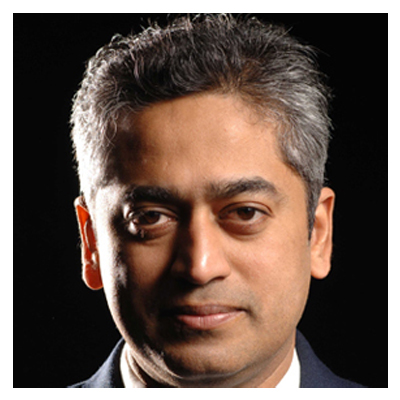
    “E-commerce players are also looking to increase the number of consumer touchpoints to gain higher customer mindshare. In the next five years, over 60 per cent of e-commerce volumes are likely to come from tier-2 and tier-3 cities, making it imperative for e-commerce businesses to build their seller base and delivery reach in smaller towns,” Starcom CCO Rajiv Gopinath interjected[L1]  added.

    Headless commerce

    Many experts have mentioned that people are moving towards headless commerce. This would mean a lot of investment in technology and the integration of different functions to create a seamless experience. A result of this would be the reshaping of retail stores, a drive-through model of shopping and experiential showrooms for the sake of enhancing user experience.

    Logicserve digital founder and CEO Prasad Shejale highlighted, “Headless commerce is evolving, and we will surely see more of that soon. We will also see more and more adoption of virtual or e-trial rooms and cashless payments. Buying online and picking up in-store (BOPIS) is also a phenomenon that might soon become popular.”

    “While the infrastructure for it is in its infancy, we can expect auto-checkout, curb-side pickup, order-online-pickup-offline and tap-and-pay experiences to become the norm in the coming months,” 22feet Tribal Worldwide president Preetham Venkky suggested.

    This will also result in 2021 laying the foundations of a touch-free world. 

    Digital  transformation for the retail industry means automating and digitalising their existing systems, adopting DevOps (a set of practices that aims to shorten the systems development life cycle) for modernisation and sustenance, and using cloud and everything as a service added Gopinath. “Digital ecosystems that combine their core e-retail business with sticky customer services, such as video streaming, gaming, booking and payments, in a single platform, will grow.” 

    While the integration of technology in e-commerce has been going on for a few years but the pandemic has given a huge fillip to its adoption. Try-n-buy, cashless payments, personalisation and applications have all become a part of online shopping.

    The platforms are investing to ensure one-on-one communication with customers and offer personalised offerings.

    For years, the allied beneficiary of e-commerce growth is the logistics and warehouse category. However, the next step in their evolution is the digital transformation of these two categories.

    dentsu Asia Pacific (APAC) chief data & product officer and dentsu Programmatic – south Asia CEO Gautam Mehra opined that warehouses will be centralised and home deliveries will pick up sharply. “In the automotive segments, real estate is a huge cost for dealerships, this will definitely come down. With VR headsets and a car in the parking, one can turn a mall activation into a dealership with a test drive option.” 

    The rise of online shopping has led to greater digital spends over the last couple of years, a trend which will only gain further traction. If e-commerce volumes rise, it is conceivable that investment is focused on digital advertising to facilitate the path to purchase, particularly in the channels that are closest to consumer decision-making.

    Brands will advertise heavily on e-commerce platforms. “Brands are responding by investing more in e-commerce advertising. Marketers are looking to create an optimised combination of media used for advertising in order to maximise ROI,” shared Gopinath.

    The industry will continue to advertise heavily in 2021 as well; digital and TV being the preferred channels. TV advertisements are ideal to raise awareness among the masses and build brands, which e-commerce embraces. In Shejale’s view, television will remain a popular medium among the masses and TV ads will continue to generate higher advertising demands in the immediate future as well.

    In order to tap into this massively viable growth environment, brands will have to focus primarily in four areas: smooth, expected and fast user experience; value addition over marketplace offerings; digital experience befitting the brand; and last but not the least – better customer service (than marketplace), suggested Venkky. 

    Clearly, e-commerce players and its various stakeholders will have a lot to contend with this year. As consumers’ buying behaviour undergoes a sea change, with preferences tending to simpler, more interactive, and quicker ways to shop, the forward-thinking e-tailer will be wise to keep the aforementioned pointers in mind.

  • #Throwback2020: Cable operators start adapting to stay relevant

    #Throwback2020: Cable operators start adapting to stay relevant

    KOLKATA: Charles Darwin coined the phrase ‘survival of the fittest’ while studying the phenomenon of natural selection in the evolution of life. This concept applies to the inanimate world, too – as exhibited by the Indian cable industry. With changing consumption patterns, advancements in technologies, there are few consistently profit-making cable TV service providers left in the market.

    Then came Covid2019, affecting the supply chain and normal operations. More people turned to online platforms for entertainment, further imperiling the industry. In order to survive, it became vital to adapt – and many large and mid-level cable operators did just that, by innovating business models for sustainability.

    As the countrywide lockdown was implemented, cable TV operators encountered multiple roadblocks. For instance, a part of the workforce in big cities, and students who went back to their hometowns or native villages did not renew their subscriptions. The closure of commercial establishments like hotels and offices also impacted the subscriber base along with financial stress among lower income groups. Due to lack of fresh content on major entertainment channels, live sports content, a number of subscribers downgraded their subscription packs. All of these factors caused a difficult first half of FY21 for consumers.

    The sales of new set top boxes dropped for 75 per cent of cable TV operators during Covid2019, while nearly 84 per cent operators reported a drop in collection, a survey study by INTIN said. And it’s not just for a brief period – 77 per cent multiple system operators (MSOs) expected a decline in revenue in FY21 and some of them even estimated the drop to be greater than 25 per cent.

    Along with subscriber loss, local cable operators faced the issue of payment collection due to restrictions during the stringent lockdown. While it initially led to a drop in revenue, it compelled most MSOs as well as LCOs to adopt digital payment practices. Major MSOs like GTPL Hathway, Siti Networks, IMCL acknowledged that more consumers and local cable operators embraced digital payment options post-Covid2019. However, some of the LCOs who are working on ground also cautioned that the number of consumers paying digitally is still not substantial, albeit the noticeable improvement during lockdown.

    The pandemic has further solidified the need to adopt hybrid boxes among MSOs. Hathway Digital, Den Networks, Siti Networks, IMCL, GTPL Hathway have already launched or are working on rolling out hybrid boxes. Although the roll out has been delayed due to the Covid crisis for some companies, they have set the target of finishing the task within this fiscal itself.

    In addition to providing OTT platforms like Netflix, Amazon, Hotstar on their boxes, foraying into the OTT space could be a big gamechanger for the industry, Intin recommended. Large MSOs often have upwards of 80 local cable channels, which can be readily primed to their own OTT platforms. Currently, only 24 per cent of cable TV players have their own OTT platforms offering pure-play cable content.

    Moreover, the operators who will be able to skinny bundles with an internet connection will thrive in this changing ecosystem. As more people worked from home, attended e-classes, consumed more online content, the demand for high-speed wired broadband has gone up rapidly. The wired broadband sector has continued to grow throughout the year, standing at 21.51 million subscribers as of October. The cable operators have gained from this growth substantially, as all listed MSOs have reported an increase in broadband subscribers.

    But while it is easier for larger players to invest in new technologies, it could be a challenge for the minnows to survive. According to a report from Omid, the number of local cable operators has gone down by 30 per cent between 2015 and 2020. Number of local cable operators is predicted to fall to around 20,000 by 2025, down from about 40,000 in 2019. It also mentioned that consolidation between larger pay TV players like Airtel TV, Dish and TataSky is also possible following the merger of Dish TV with D2H and the acquisition of cable operators Hathway and DEN by Reliance Jio.

    Like other sectors in the media and entertainment industry, cable operators also witnessed some significant changes in regulations. As part of the government’s move to decriminalise smaller offences, the ministry of information and broadcasting (MIB) proposed to remove jail terms for violating Cable TV Networks Regulation Act. Punishments for offences committed under the act would be limited to seizing the equipment of the operator, cancellation of the license, a ban of up to 30 days on the broadcasting of the channel, forcible running of apology scrolls and so on.

    The operators started off 2020 with the amended new tariff order (NTO 2.0) wherein they had to adjust network capacity fee and multi-TV connection charge. In the middle of the Covid crisis, TRAI recommended that all STBs provided to customers must support interoperability and urged the MIB to make it mandatory by introducing the requisite provisions. The viability of the move was questioned and stakeholders warned that it would be a very high-cost operation.

    On the bright side, MIB permitted infrastructure sharing between HITS operators and MSOs, meeting the long-pending demand of the TV distribution sector. The amended guidelines also allow sharing of transport stream transmitted by HITS platforms, between HITS operators and MSOs. As many MSOs across the country are facing a cash crunch, the infrastructure sharing could help them reduce operating expenses.

  • Guest column: What not to do – A revelation in the times of Covid2019

    Guest column: What not to do – A revelation in the times of Covid2019

    MUMBAI: As we now stand in 2021, I remember a strategy quote by Sissy Gavrilaki which reads, “Failure is nothing more than a chance to revise your strategy.” When the bullet of Covid2019 pierced through our uneventful and routine lives, we didn’t know what hit us. There was pandemonium, anxiety, struggle, outbursts all around us – in every household of every city belonging to every country. All we saw, heard, spoke of was Covid2019 which had become the centre of all our lives and livelihoods.

    Uncertainty became a constant in our lives. As we realised that the path ahead would be undefined, all we could now do was reflect, reassess, redetermine, revalue, re-strategise, realign and run forward with a redefined strategy for our respective businesses.

    Strategy, to think of it, is a word with a simple meaning – a detailed plan for achieving a goal. But execution of a plan has its layer of complexity coupled with strategic vision. As we faced the pandemic, the first question which arose in front of our eyes was, ‘What happens to the business strategy which affects the outcome of goals, that in turn impacts revenue, which ultimately defines the future of our respective businesses’?

    This simple yet alarming question was to be addressed and thus began the path to re-strategise in the Covid2019-dominated world. Each sector carved out its own innovative ways to re-strategise its business plans. Somewhere the strategy was to pause, somewhere it was to slow down, at some places it was to dismantle and while at others, to move forward. Each of these strategic steps redefined the business model, which redefined each human being’s life cycle which now consisted of new patterns, behaviours, lifestyles, cultures and most important habits.

    As a start-up media network fuelled by the fire of ambition, we decided to stand together with the vision ‘united we stand, divided we fall’ to combat the avalanche of issues created due to Covid2019. Reassessing plans to ensure we achieve our goals in an uncompromised fashion became the need of every second and every hour at IN10. Grit, hard work, focus, teamwork became the artillery in our mission to stay on the targeted track of our business goals.

    The pandemic taught me a very simple lesson – ‘What not to do.’ Yes, since the time we make a dramatic entry into this vast universe as human beings, we are taught ‘what to do’ at each level of our life. But as we grow out of the cocoon and take our steps on the road to adulthood, no one tells us, ‘What not to do.’ Now, as one of the most gruelling years of the decade comes to an end, I sit back and reflect on what I learnt ‘not to do!’

    (The author is VP – corporate strategy and development network, In10 Media. Indiantelevision.com may not subscribe to her views.)

  • 2020: An eventful year for DTH

    2020: An eventful year for DTH

    KOLKATA: Over the past year all the direct-to-home (DTH) operators in India have embraced the change in the ecosystem. The industry has started reinventing its offerings in a big way to combat the threat posed by OTT players. Throughout 2020, leading DTH operators struck partnerships with OTTs big and small, expanded value-added service portfolio, rolled out several offers to keep consumers hooked.

    The sector currently has 70.58 million subscribers as of 30 June 2020, according to the latest data shared by the Telecom Regulatory Authority of India (TRAI). While the industry lost two million subscribers in 2019, it has added around six lakh subscribers in the first half of the year. In addition to that, a Crisil report has projected four-six per cent revenue growth for FY21 reaching Rs 22,000 crore.

    After the first quarter, the progress of the industry has been murkier. Although traditional TV consumption surged due to Covid2019, with some benefit for distribution platforms, lack of fresh content, migration post-lockdown, closure of commercial establishments led to churn later. Many consumers also degraded their subscription packages due to the absence of new episodes of daily soaps and live sports.  

    “DTH subscribers surged initially in lockdown but over time consumers started optimising channel subscriptions due to limited fresh content. Subscribers expected to increase by six to seven per cent as fresh content has returned to TV and cable TV subscribers move to DTH,” a CII-BCG report said. According to industry estimates, the operators’ consumer acquisition started coming back to normal since late July.

    Expanding content portfolio to retain, acquire subscribers:

    As a response to the unprecedented crisis, the DTH companies not only took steps like incentive bundles, new free platform services, but kept innovating. Hybrid set top boxes turned out to the buzzword for DTH sector this year as all the players have upped their efforts in this segment. Then the pandemic gave a pronounced nudge to the demand for hybrid boxes. Market leader Tata Sky aggressively promoted its new box Tata Sky Binge+ throughout the year. The company has even brought down the price to Rs 2,999 from Rs 5,999 – at a time when fixed broadband and smart TV segment are seeing rapid growth in India.

    Its rival Airtel has also been pushing cross-platform content strategy since the launch of Airtel Xstream in late 2019. The surge in video consumption has boosted its uptake massively, leading to 50 per cent viewership increase in the early part of lockdown. On the other hand, Dish TV is going big not only on Android box connected devices Dish SMRT Hub and d2h Stream, but also its OTT platform Watcho for Dish TV and d2h users. Watcho crossed five million subscribers during the lockdown. However, the player causing major disruption is Reliance’s Jio TV+ for JioFiber set-top box users. Along with aggregating content from 12 leading OTT players, it offers a single sign-in support.

    Hybrid set-top boxes were introduced a few years ago but did not get much traction. With consumption going up both on linear TV and OTT, the demand for these devices has been on the upswing. But the demand is till now limited to the top 15 cities, the top tier of the market.

    In 2020, DTH operators focused on further bolstering their value added services. One of the major areas has been educational content, perhaps in reaction to classes being conducted online in India. Apart from that, fitness services and cinematic experiences were also expanded by these players, especially Dish TV and Tata Sky.

    Manufacturing moves to India:

    To streamline set top box manufacturing and delivery, DTH players have decided to shift a significant portion to the country. Tata Sky partnered with Technicolor to develop STBs for the Indian market that will be manufactured and distributed locally. Dish TV, too, intends to shift its production to India by the first quarter of 2021. Additionally, it plans to start manufacturing major components of the STB as well as its accessories in India. Both players claimed that it would push the government’s Make in India vision. For long, local STB manufacturers have complained that Chinese companies have taken away their business. The move has shone a ray of optimism for them.

    Regulations impacting the sector:

    As the industry woke up to the amended new tariff order (NTO 2.0) at the beginning of 2020, the DTH players had to adjust network capacity fee, multi-TV connection charges. During the Covid2019 crisis, TRAI recommended that all DTH and cable STBs provided to customers must support interoperability and urged the ministry of information and broadcasting (MIB) to make it mandatory by introducing the requisite provisions. In response to TRAI’s consultation paper, industry leaders such as TataSky, Dish and Reliance Jio opposed it. The viability of the move was questioned and stakeholders warned that it would be a very high-cost operation.

    The cloud over license fee lifts:

    But the year has ended on a positive note, with the MIB issuing a much-awaited clarification on the matter of licence fee. DTH license will be issued for 20 years and license fee will be collected quarterly. Further, the period of license may be renewed by 10 years at a time. The annual fee has been revised from 10 per cent of GR to eight per cent of AGR. Sharing of infrastructure between DTH operators and 100 per cent FDI have also been approved by the cabinet, among other amendments. 

    The industry believes clarity over license fee will bring certainty in terms of planning and investment. In a very recent communication, the MIB has stated that the existing licensees are required to clear pending dues before applying afresh for a license to provide DTH services,.

    DD Free Dish’s revival:

    Prasar Barati-run free-to-air DTH platform DD Free Dish also had its moments this past year. All the four major broadcasters that had pulled out of DD Free Dish in 2019 after the new tariff order was implemented returned to the platform in 2020. Star Utsav, Sony Pal, Zee Anmol, Colors Rishtey and Zee Anmol Cinema had successfully bid on the 45th e-auction for placement. Many new channels have come on board, including three movie channels in the recent auction.

  • #Throwback2020: How the pandemic reshaped agency culture

    #Throwback2020: How the pandemic reshaped agency culture

    NEW DELHI: There were a lot many seemingly impossible things that 2020 managed to turn into reality. One such thing was advertising and marketing agencies locking their gates and their employees working remotely for a good chunk of the year. For a business that thrives on human contact and face-to-face interactions, where beer pe charcha has been a trend for the longest time, and where teamwork defines the core strength of the company, it seemed like a herculean task to undertake. However, the year made everyone used to it. In fact, for the industry, it has paved the way for a more relaxed, geo-agnostic, hybrid working model, which will possibly be its future. And not just the technology, but the human connections that have developed this year will help sustain this model. 

    Relationships across the screen 

    The first task for the agencies in the lockdown was to create a system for its teams while working from home to ensure that the output does not drops and their commitment to the clients continues in the same way as before. This was a humungous task as none was prepared for it. They adapted the new techniques of sharing the status of work, deliberating ideas, seeking feedback, team meetings and briefing sessions. Agency folks across the hierarchies took time to adapt but they did and the work went back at the same pace. 

    Earlier in the year, Indiantelevision.com had also reported that the Covid2019 crisis made agencies and clients bond well than ever before. 

    Publicis Worldwide MD Srija Chatterjee had this to say about improved client-agency relationships during one of our virtual roundtables: “We have started understanding each other more. There is much more transparency now. As an agency, we know what the issues are that they face with cash flows and we are trying our best to help them out.”

    Also, Kinnect CEO Rohan Rohan Mehta and COO Chandni Shah in a live virtual chat corroborated that clients, in fact, became very comfortable with presentations and pitches over video calls. And it might be a trend that will continue to stay in the industry for a good long while, though they personally would prefer it to be otherwise. 

    Be it crunching numbers or deliberating on that one great creative idea, all the teams adopted the new normal and started bonding on the screens. They collaborated more and engaged with each other beyond work making work-from-home feel like not a very tough task. 

    Wavemaker South Asia CEO Ajay Gupte told us in a previous interaction, “On the team-level, we have gotten much more closer and understanding of each other. Earlier, our teams in various states could manage to meet once or twice a year, but now we are having at least two meetings every week.” 

    During the lockdown, the agency execs took up participated in team games and sessions like learning cooking, singing. They celebrated festivals online, shared new learnings and developments to create a light atmosphere.

    Embracing a hybrid model

    Advertising is a people's business and at the end of the day, one needs to have boots on the ground to ensure the execution of the ideas at the last mile. This includes production, post-production, art-work, shoots and several other things.  

    While the lockdown restrictions eased, it was not possible for everyone to immediately go back to the office. Havas Media Group MD India Mohit Joshi mentioned in a tete-a-tete with Indiantelevesion.com founder, CEO and editor-in-chief Anil Wanvari a few months back, “Yes, the offices are open but we are not forcing anyone to join. Additionally, we have done extensive joining assessments for the people on grounds like who all are living alone versus who all are living with old parents or young children, who have morbidities associated, etc. So, only those people are being called to the office for whom it is absolutely safe. We are not allowing anyone who travels via public transport to come to the office.” 

    Wunderman Thompson South Asia group CEO and chairman Tarun Rai, while speaking at a Bangalore Advertising Club webinar, insisted that it is high time that agencies embrace the hybrid working model. 

    “I have been passionate about the fact that people should be allowed flexibility at workplaces. We need to be more output-focussed and not input. We can work remotely and deliver the same results,” he said. Rai added that this will help in vapourising the gender bias at the workplace. 

    But more than everything, it will allow agencies to rope in skilled people with hyper-local and targeted capabilities to deliver better solutions to clients. Several industry leaders pointed out that having great talent on-board will not be a function of geography anymore. 

    Several big agencies have reopened the offices. Leadership teams are meeting once or twice every week. Mid-level execs are allowed to come office but are needed to inform in advance. Its HR teams are ensuring that the office does not have over 30 per cent staff at once.  

    What the future looks like

    The industry is positive that hybrid is the way ahead. Freshly appointed PHD India CEO Monaz Todywalla said, “In terms of working models, hybrid working is going to stay. Agencies will collaborate with skilled professionals more. There is also going to be a big focus on in-house skill development.”

    Case in point being most of the young agencies that launched this year – like Syed Amjad Ali’s Catalysts, Saurabh Varma’s WondrLab – are going to be geo-agnostic enterprises. Although nearly all agencies are regularly working with freelance professionals across different geographies to execute projects but this trend will further grow.

    In Rai’s view, traditional agencies also will be moving towards a more free working environment where going to the office would not necessarily mean sitting in a cubicle. It could also mean meeting for a coffee or sitting at a co-working space.

    However, he added that for this to turn into a reality, legacy agencies will have to do a rejig of their entire culture, HR policies, and appraisal systems. He argued that to make all of this function in the real world, people will have to give up the control they are used to exercising on their teams and will have to turn more trusting towards people.

    “In addition to that, we also need to work on our HR policies and appraisal schemes. To this date, we have to punch in our office timings as the system remains input-based. Even with consultants, we are used to asking how many days they will be coming to the office. All this needs to change,” he remarked. 

    For Mehta and Shah, this pandemic has paved the way to a flourishing gig economy in India. Mehta noted that more agencies will be open to outsourcing specialised skills to freelancers and consultants. However, there is a long way to go for standardising the prices and work culture for those who are not on company payrolls.

    He added, “LinkedIn has been a part of the media mix for most advertisers for the past three years now and it has constantly been bringing in new formats to advertise also. The place where LinkedIn lacks a little bit is its expensive pricing. Also, the number of people on the platform is quite limited and you can’t reach a wide audience. I have been waiting for LinkedIn to become more India-centric and viable in terms of pricing. As soon as that happens, a ton of advertisers will flock the place and will be using it way more aggressively.”

  • Guest column: Brands have to re-strategise for impactful engagement with consumers

    Guest column: Brands have to re-strategise for impactful engagement with consumers

    MUMBAI: 2020 has been a year of hard lessons that will leave an impact across industries and societies for decades to come. The year of the pandemic made us change the way we conduct business, and rethink our strategies, compelling us to adapt to the changing realities of the times. We’ve already witnessed a fundamental shift in how companies approach their marketing. However, one thing is clear to all of us: the pre-Covid2019 world is gone for good and 2021 is going to be about how brands amend and adjust their strategies for the new normal. We don't know yet if schools will open anytime soon. We don't know about the functions of vaccines, however, we have to re-evaluate, gear up and think of a way forward for 2021 and beyond.

    1. Digital expansion

    When the dust from the Covid2019 crisis finally settles, it will be clear that we’ve dramatically accelerated the adoption of digital technology into our lives. The pandemic has shown us how this digital transformation has made many aspects of our home and work continue almost as normal, despite the abnormal circumstances. Agile marketing and a presence on both online and offline platforms is the need of the hour. Our online presence and digital engagement have always been high and we would also be focusing on how our brand can work on making the digital community stronger.

    2. Reconnecting with the normal world and fostering human connection

    As we’re navigating a new way, we know that many of those activities we took for granted have transformed. From going to the grocery store to children attending school, our lives have changed for good. For many of us, work has also shifted from full time work in an office to work from home. This has impacted the ways we humans interact with each other and we’re transitioning to virtual relationships. Now that we all are getting to grips with the new normal, it’s never been more important to stay connected to the people and embrace flexibility. Brands will have to re-target and re-strategise to engage with consumers in newer and more impactful ways.

    3. Ease of purchase

    As the pandemic has compelled consumers and us to adopt e-commerce/door-to-door services and dependency on digital means at a rapid pace, 2021 will see brands working further to improve product accessibility for consumers as India's digital revolution gathers pace after a subdued economic year overall.

    4. Climate change and sustainability

    Even though it might not be obviously clear, the Covid2019 pandemic has highlighted the fragility of human existence itself, and that in turn has forced consumers to prioritise sustainability and climate change issues that might have been overlooked five years ago. The rising penetration of social media in every aspect of lives has also compelled consumers to signal to their peers that they care about the planet. Caring for the planet and sustainable ecosystems along with proselytisation of veganism have become key virtue-signalling elements in our thought process. Brands across the world have responded to this change and even fossil fuel conglomerates are presenting “Green, sustainability” funds to mitigate the effects of climate change. The world is witnessing the power of mass behaviour change and everyone is remembering the importance of leading with purpose. Consumers prefer to connect with brands that display a sense of sustainability ethic.

    In 2020, Faber-Castell launched its recycled range of paper pencils, made with recycled and repurposed paper. The rainbow shavings in this product underlined the brand’s priority to promote inclusivity. Added to this, the water-soluble seeds found at the bottom of the product emphasized its eco-friendly quality. Through this one product, we are forwarding our goals of sustainability as well as inclusivity. This is not to say that we are resting on our accomplishments. Through advanced research and product development, we are constantly attempting to further improve our sustainability score through innovation in our packaging and products. The consumers have always positively responded to this and we hope that we will continue to be appreciated for it.

    (The author is marketing director of Faber-Castell India. Indiantelevision.com may not subscriber to her views.) 

  • Guest column: Lockdown learnings for TV land

    Guest column: Lockdown learnings for TV land

    MUMBAI: The Covid2019 pandemic has given us an opportunity to reflect on how we go about our daily lives, and has taught us to be leaner and greener both at work and at home. The lockdown has brought many together, a few apart, and brought out the best and the worst in us. Cocooned in our homes with the spectre of Covid2019 looming over us has led to radical changes in our consumption habits across categories. Television is no exception and the way we consume media and entertainment has changed as well. The absence of original content has seen broadcasters rummaging through their larder for content and this search has manifested itself in dusting off legacy shows, a renewed love for movies, an insatiable appetite for news, a grudging acceptance of dubbed content and the emergence of user-generated content amongst others.

    Whether these changes are transitory, quasi-permanent, or permanent, only time shall decide but a few crucial learnings during this period are highlighted below:

    Curation is as powerful as creation

    It has been an accepted norm that original content ratings are significantly higher than recycled content ratings. However, the careful curation of legacy shows, the introduction of dubbed shows and movies, and proactive FPC management have ensured that many truisms had to be revisited. There has been a blurring of prime time versus non-primetime ratings, original versus repeat ratings and discrete versus continuous content. So moving forward curation is at par with creation but both fundamentally require a deep understanding of viewers' sensibilities, need states, and cultural sensibilities and sensitivities.  

    Recycle, repeat and reuse is the new mantra

    Re-telecast of successful mythological shows delivered ratings in their original as well as dubbed avatar across markets. Channels across markets juggled their programming strategies over the past few months to give prominence to mythological shows such as Mahabharata, Ramayan, etc. The mythological shows bought in an element of hope and belonging during the time of unprecedented uncertainty. Gauging the audience’s response, reruns of erstwhile popular fiction shows also became a norm during the lockdown and were being aired alongside original shows.

    Language is no longer a barrier

    Thanks to the rising availability and popularity amongst viewers, regional language content has emerged as a key growth driver for TV viewership. Indian audiences are more than willing to consume content in their respective languages. In the past few years, rural electrification and smartphone penetration have also added to the popularity of regional language content.

    Movies have found their mojo

    Film-based content not only performed well in Hindi speaking markets but also in southern markets. According to BARC India data, the movie genre saw a 27 per cent growth in primetime viewership share in the south market as compared to the pre-Covid2019 period. Driven by the fact that movies, as a form of content, appeal to all age groups in a family and encourage co-viewing, the category emerged as the primary source of entertainment on GECs across markets.

    Families are the new TG

    Amidst the pandemic, during the time of lockdown, television cemented its role of bringing families together. Lockdown led channels to gradually move from ‘women-centric’ entertainment to ‘family-centric’ entertainment. Content consumption patterns have now changed from ‘me’ to ‘we’.

    Senior citizens can pack a powerful punch

    The population of senior citizens is projected to increase to 20 per cent by 2050. Pre-Covid2019, senior citizens were always underestimated as a target group. The lockdown phase defined them as a significant target group and led us to acknowledge them as an important audience while curating content.

    To conclude, as Socrates said, “The secret of change is to focus all of your energy, not on fighting the old, but on building the new.” While this has been a tough year for everyone across markets, we have grown in a few and may have declined in a few others, but in either case, we have maintained our position for 2020. We are constantly learning from our viewers every day. As we move along, our lockdown learnings continue to provide us with an opportunity to become significant and far more meaningful.

    (The author is business head, Viacom18 regional entertainment – Kannada and Marathi clusters. Indiantelevision.com may not subscribe to his thoughts.)

  • #Throwback2020: Heavyweights of M&E industry

    #Throwback2020: Heavyweights of M&E industry

    NEW DELHI: Finally, we are over with 2020, a year that will go down in history for perhaps all the wrong reasons. While it brought businesses and industries across the board to a standstill, the time also taught everyone to come out of their comfort zone and think differently. The media and entertainment (M&E) industry was no different.

    Apart from serving regular entertainment and keeping the content pipeline steady, the industry also saw regulatory interventions, scams, big movements, great strategies, new platforms and trends emerging that challenged its status quo. Be it the coverage of Sushant Singh Rajput’s death that triggered the debate over toxicity on news channels, the release of the highly acclaimed Scam 1992, TRP racket, arrests in the news and broadcast world, or Uday Shankar’s decision to step down from Disney Star India – all these developments and more had the industry grapevine buzzing.

    Indiantelevision.com skimmed through all these conversations of 2020 and selected top heavyweights of the M&E sector of India who steered these discussions and shaped the industry – for better or worse, only time will tell.

    Arnab Goswami, ARG Outlier Media

    The MD, editor-in-chief and co-founder of Republic Media Network became the newsmaker in the second half of the year for multiple reasons. Goswami aggressively went after the police, political leaders and several lobbies in the film industry during the investigation into Sushant Singh Rajput’s death. While several industry members and advertisers questioned his style of editorial reporting, some also blamed him for spreading toxicity in the news. Goswami, however, maintained that he will be relentless in his search for the truth for his audiences. He was soon caught up in a legal storm in two separate cases as police charged his media network for rigging TRPs, and abetment to suicide of an architect and his mother. Members of the Republic, including Goswami, were arrested during this time and multiple lawsuits were filed in both matters. Undaunted, Goswami has continued with his combative editorial style and is expanding the network’s footprint in different languages both in the online and offline space.

    Sunil Lulla, BARC

    2020 has been a very busy year for current BARC CEO Sunil Lulla. He had to make some tough calls and introduced landmark initiatives that changed the course of the industry. It began with the Telecom Regulatory Authority of India (TRAI) interfering with BARC and making recommendations on its functioning, governance, transparency, accountability, operations and robustness. Lulla took a stand on the matter and clearly established that BARC is an integrated business body and is not influenced by the government.

    Later, in a landmark move, BARC came up with algorithms to mitigate the impact of landing pages, which was welcomed by the industry. Towards the end of the year, the agency has been weathering the TRP scam, which brought ignominy to the entire news broadcast industry – so much so that BARC decided to pull back the weekly ratings for the news genre. The scam got murkier with several ex-BARC employees getting arrested. The regulatory body is now drawing a new mechanism to ensure that the methodology is more precise and the industry is able to trust those ratings once again. However, amidst this entire storm Lulla is standing tall and leaving no stone left unturned to maintain the integrity and sanctity of the organisation.

    Shashi Shekhar Vempati, Prasar Bharti

    He was the man behind the uninterrupted supply of entertainment and news to the remotest corners of the country. Vempati led Doordarshan and All India Radio carried on operations uninterrupted throughout the pandemic. During the first lockdown, when fresh content dried up on GECs, Vempati’s team brought back yesteryear shows on the channel and gave everyone some respite from the wrath of the Coronavirus. This decision was so successful that it broke all viewership records of Doordarshan. The state-run broadcaster ensured that people in the far-flung areas were able to access news and updates in their own native languages via Doordarshan and All India Radio. Vempati’s team also initiated tele-classes for students so that their year does not go waste. He is now on a government committee that will closely look into the operations of BARC to assess the existing rating system (the committee was formed after TRP scam was busted).                     

    K Madhavan, Star & Disney India

    An old hand at Star India, K Madhavan, the man who was responsible for building the network’s regional business replaced Sanjay Gupta as he took on the mantle of the TV business across verticals and markets at the end of last year. The network continued to grow in 2020 and post the big announcement of Uday Shankar’s departure, Madhavan was given the responsibility of leading Star & Disney India. Madhavan was also elected the president of the Indian Broadcasting Federation 2020-2021. He will be working closely with the I&B ministry, TRAI, and other bodies to look after the broadcaster’s interest and policy implementation. Madhavan also steered the ninth CII Big Picture Summit this year with hundreds of delegates from all over the world participating in it.

    Uday Shankar, Former The Walt Disney Company

    The biggest shocker for the M&E industry came when Uday Shankar announced his departure from Disney Star India. Shankar ended his 13-year long stint at the organization on 31 December. After taking over the reins of Star India in 2007, he transformed the company into one of the largest and most successful media conglomerates in Asia. He led Star Sports to be the largest sports broadcaster in India. In the general entertainment segment, Star India has a presence in all major regional markets along with a massive dominance in the Hindi speaking market. From launching Hotstar in India to expanding Disney+’s operation in Asia as Disney APAC boss, he has left a rich legacy in the OTT segment as well.

    Adding another feather to his cap, Shankar has been elected president-elect of Ficci for 2020-21, the first-ever media and entertainment executive in India to lead a national industry chamber. 

    Pradeep Dwivedi, Eros STX

    In 2020, Dwivedi spearheaded the global ambitions of 40-year-old production house Eros Now. He led the merger of Eros Now with US-based production house STX Filmworks and uniquely positioned the combined entity Eros STX across the US, China and India. Eros STX will be a publicly traded, independent content and distribution company with global reach. It will now be able to create and distribute both Bollywood and Hollywood content. On the domestic front, Eros Now expanded into linear business and capitalised on the growing demand for OTT with its originals and existing library. Dwivedi was also chosen as VP & area director for IAA Asia Pacific.

    Ajit Mohan, Facebook

    It has been an interesting year for the social media platform in India. It inked a partnership with Jio to establish itself as a strong content player, worked towards bringing small businesses on the platform to expand its base and increase ad spends, joined the government’s atmanirbhar initiative, launched Instagram Reels, Watch on Facebook and WhatsApp pay to further offer new products to the audiences and keep the engagement going on. On the content front, Mohan has been stressing the imminent need for new rules that guide and give clarity over some of the regulatory aspects of what should be allowed and what shouldn’t. He has urged for global cooperation between Indian authorities and others to clearly set these guidelines. The platform also faced government scrutiny as it was summoned by a parliamentary committee for letting content from a right-wing outfit go unchecked. However, Mohan has staunchly denied such violations and stated that the platform takes its safety and security protocols very seriously.

    Barun Das, TV9 Network

    At the outset of the year, Das took on the News Broadcasters Association with an iron hand as the latter questioned the meteoric rise of the network. He took on the veterans and explained to them the television business in an official release. Later, the network announced its big decision to foray into the Bangla market with the launch of a news channel. However, during a discussion with Indiantelevision.com on the ongoing TRP scam investigations, Das urged for zero tolerance towards such criminal activities. He also reminded the industry that the ones who initially flouted these ratings are the ones who are now questioning it. Today, thanks to his hard drive and innovation, what was once a southern news network, is amongst the leading news networks in the country. Additionally, Barun surprised many when he went out on a limb and announced increments for his staff in September with retrospective effect at a time when the news industry was struggling.  Some say this had a ripple effect on the industry with others too rolling back their salary cuts. 

    NP Singh, SPNI

    The ongoing Covid crisis was unprecedented and had a cascading impact on the entire ecosystem. Owing to the nationwide lockdown, there was a complete cessation of content production for TV and OTT films, sports, and events. Advertising spends declined drastically but it did not deter the plans of Sony Pictures Networks MD and CEO NP Singh. He is currently basking in the success of original series Scam 1992: The Harshad Mehta Story on SonyLIV. Despite challenges, Singh expanded offerings: in sports, the recent extension of its broadcast deal for WWE content provides SPN the rights to showcase WWE Network through SonyLIV; SPN has curated content from WWE’s extensive archives library, which includes events, iconic matches, and interviews with legends, reality shows and documentaries on its own platforms. The network also continued with its flagship shows like KBC.

    Megha Tata, Discovery Communications

    Last year, broadcasters pushed the digital agenda, realigning their content strategies, business models to cater to consumers’ interests. Under the leadership of Discovery Communications India south Asia MD Megha Tata, the network entered the Indian OTT space with the launch of Discovery Plus offering premium content at an annual subscription of Rs 299 and a monthly subscription of Rs 99.

    Post pandemic, there has been a massive surge in the OTT content consumption and no network wants to miss the bus. However, as a broadcaster, Tata clearly emphasised protecting the linear business as it is still funding the digital business. She believes there is still time for digital business to reach profitability and monetisation status and TV has to play a key role in that. Contrary to the popular opinion that TV is dying, Tata noted that all linear and digital platforms will continue to co-exist. For her, both mediums are important – one is the business of today and the other is the business of tomorrow. She was also elected as the president of the India chapter of the International Advertising Association (IAA).

    Ekta Kapoor, Balaji Telefilms

    Known as the ‘Czarina’ of the TV industry, Ekta Kapoor, over the years, has emerged as one of the most powerful women entrepreneurs. This year, Kapoor was nominated to receive the fourth highest civilian honour – Padma Shri Award. Apart from dominating the Hindi GEC space, she has clearly stated her intentions for the OTT space by targeting the nation’s low- and mid-income consumers. AltBalaji is likely to release four to five of its big-budget movies in 2021 when Kapoor expects viewers to flock back to cinemas. Balaji Telefilms is set to take over the content studio Ding Infinity to produce 100 per cent premium original cut through the cluttered content. Recently the supreme court granted her interim protection from arrest in an FIR against her for alleged objectionable content in her web series XXX season 2.

    Punit Goenka/ Amit Goenka / Rahul Johri at ZeeL

    Zee Entertainment Enterprises Ltd (ZeeL), which has been going through money circulation points for over 12 months, unveiled a massive restructuring process as part of Zee 4.0 Strategy. It includes restructuring across content, revenue, and digital arms with a renewed focus on revenue maximisation and foraying into newer territories.

    Under this strategy, the company will integrate all of its digital assets under a single umbrella, which includes Zee5 (Domestic AVOD+SVOD), Zee5 Global, SugarBox and Digital Publishing. 

    ZeeL roped in Rahul Johri as president for south Asia enterprise to spearhead the built-in revenue and content material monetisation crew. In other key shuffles in the top leadership, ZeeL elevated CEO (broadcast) Punit Misra as president – content and international markets, while Amit Goenka, the younger brother of Punit Goenka, has taken over as the president – digital businesses and platforms.

    Kevin Vaz, Star & Disney

    Star & Disney India recently elevated Kevin Vaz as CEO of infotainment & kids genre. This is in addition to his regional entertainment portfolio where he is heading Star India regional channels portfolio across Maharashtra, Bengal, Tamil Nadu, Andhra & Telangana, Kerala and Karnataka. He was given the responsibility following the departure of Anuradha Aggarwal who was head of English, infotainment and kids cluster at the company.

    Anuj Gandhi, IndiaCast

    The group CEO of IndiaCast, a joint venture between TV18 and Viacom, Anuj Gandhi is heading a team of professionals for traditional and new media platforms. With a distinct understanding of content, monetisation, and market, Gandhi is a firm believer that in the world of multi-screen obsession, linear TV will remain present. In addition to Gandhi’s responsibility at IndiaCast, he is also involved with Reliance Jio as head of content acquisition for all Jio video and audio apps. IndiaCast Media in the month of March announced an agreement with Cox Communications with the launch of Aapka Colors on Contour TV.

    Sameer Nair, Applause Entertainment

    In 2020, Applause Entertainment spearhead by Sameer Nair developed a robust and varied pipeline of shows and has successfully released 18 series spanning different genres across multiple platforms. Nair has focused on creating a combination of smart originals of international formats, book to screen adaptations, and Applause Originals. The studio has created the official Indian adaptations of popular international shows including The Office, Criminal Justice, Hostages and Your Honor. It is presently developing Indian versions of the hit series Call My Agent, Fauda and Luther. They’ve developed a rich slate of original content with shows like Rasbhari, Undekhi, Bhaukaal, Hasmukh among others, and book to screen adaptations of Avrodh, Hello Mini, and the recently released Scam 1992: The Harshad Mehta Story has been successful in wowing critics and audiences alike.

    Abhishek Rege, Endemol Shine India

    Endemol Shine India, over the last couple of years, has been actively pursuing a two-pronged strategy – preserve and grow its non-scripted portfolio with newer formats and platforms; and significantly scale up the scripted portfolio. Endemol Shine India CEO Abhishek Rege believes Banijay and Endemol will continue to compete with each other, instead of amalgamating under one umbrella. For Rege, the digital streaming space will add to its revenue from the scripted content. To this end, the studio has made series like Arya for Hotstar Originals and Bombay Begums for Netflix. It is bullish on acquiring book rights – including The Sane Psychopath, based on Salil Desai’s novel, content based on American novelist Robin Cook’s books, and an original series based on Amitav Ghosh’s Ibis Trilogy. With this, Rege hopes it will catapult Endemol Shine India onto an international pedestal.

    Sunil Rayan, Disney + Hotstar

    He is not a familiar face in the media and entertainment industry but now the ecosystem has its sharp eye on him. Early in 2020, Sunil Rayan was mandated to head India’s top OTT contender Disney+ Hotstar. The position had been vacant since Ajit Mohan left in 2018. His appointment excited the industry due to his accomplishments across global brands like Google, McKinsey & Company, IBM, Mastech, Infosys.

    Rayan joined the platform at a very crucial time – Disney+Hotstar has upped its focus on originals, has been aggressively chasing Bollywood movies with big names. The platform which already has about 26 million subscribers, is also highly focused on sports and gaming, where Rayan’s tech understanding will be instrumental. 

    Sudhanshu Vats, former Viacom18 CEO

    After a stint of eight years at Viacom18, ex- group CEO and MD Sudhanshu Vats decided to quit the organisation in April. Vats charted the growth of the broadcaster to grow from a six-channel network to 54-channel media empire in India. Along with expanding Viacom18’s base in regional markets taking on Star India, ZeeL, he also steered the group’s studio business with bold bets in unconventional storytelling. Under his leadership, Viacom18 entered the digital arena with the launch of Voot. During his tenure, he proved to be an effective leader who earned admiration across the industry. While he joined Viacom18 from FMCG leader Hindustan Unilever, he has been appointed as MD and CEO at Essel Propack Ltd post-departure.

    RS Sharma, TRAI

    Industry watchdog Telecom Regulatory Authority of India (TRAI) has also undergone a change in leadership. Ex-TRAI chairman Ram Sewak Sharma stepped down from his position in October. During his tenure, the telecom industry saw a significant shift, more so than the broadcasting industry. After his term got extended in 2018, many consultation processes were initiated by TRAI would have a long-lasting impact on new technologies.

    Sharma has left behind a mixed legacy as many major reforms were taken ahead under his leadership, like new tariff order for the cable TV and broadcasting industry, net neutrality for the telecom industry. At the beginning of this year, TRAI again brought an amendment to NTO 2.0. that has been panned by the industry and legally challenged in courts. But Sharma, firm on his position, strongly defended the move till his last day at TRAI. He also led the mandate of overhauling the TV measurement system as TRAI floated a consultation paper this year. Though he has been highly criticised for the deteriorating relations between the regulator and the industry, he spearheaded technological advancements in the sector.

    Monika Shergill, Netflix

    Netflix is scaling up its local content library in India, one of its key international markets. To understand the pulse of the market, it hired industry veteran Monika Shergill as director of series in India in 2019. Now, she is handling Indian content slate for the platform as VP content. Shergill is working on what she has been doing for years with leading entertainment brands in the country, churning out stories that audiences can connect with.

    She has aided the streaming service to capture a slice of the OTT pie in India delivering original movies and series such as Masaba Masaba, A Suitable Boy, Jamtara, and Bulbul. Like her peers in the industry, Shergill has also focused on direct-to-digital releases in 2020 as theatres were shut for a long period. Backed by strong localised content, Netflix has significantly scaled its subscriber base and market revenue, according to reports. 

    Aparana Purohit/ Gaurav Gandhi/ Vijay Subramaniam, Amazon Prime Video

    The team at Amazon Prime Video has excelled in capturing the Indian market. While Amazon boss Jeff Bezos committed to double its investment in India, these three local executives have made it possible to push his Indian dream. The streaming service has rolled out a number of original series which has struck a chord with Indian viewers. It also came outshining at the Flyx Filmfare Awards which has awarded digital originals for the first time. The top executives have also ensured that it is also a frontrunner in the race of direct-to-digital releases. 

    Tarun Katial, Former Zee5 CEO

    Katial is one of the most celebrated executives in the media and entertainment business. After building up the business at Big FM from scratch, he joined Zee5 in 2018 to take the homegrown OTT to new heights. From setting up the team and business, he turned Zee5 into a leading streaming platform in the market. Before putting down papers for one of the most coveted roles in the media world, he helped Zee5 expand its offerings during the pandemic as well.

    2020 was the first year when Zee5 has contributed to its parent organisation’s overall domestic subscription revenue. It has forayed into the short video segment with the launch of HiPi, close on the heels of the TikTok ban. Moreover, Katial has worked on a self-regulation code for the OTT industry as chairman of IAMAI.

    Danish Khan, SPNI

    Khan is one of the emerging leaders of the M&E industry. His acumen at picking up trends and content preferences of the audiences is well-proven with the success that SonyLiv has enjoyed in the last year with shows like Avrodh, Scam1992: The Harshad Mehta Story, JL 50 and others. Khan has steered the success of the platform and managed to get strong subscriptions for it as the competition in the category is growing fast with both local and global players spending heavily on content creation. A seasoned professional, Khan has a great understanding of business, content, revenue and consumer.

    Sunil Taldar, Airtel DTH

    Under Taldar’s leadership, Airtel has been able to scale up its DTH business over the years, reaching 16.6 million subscribers at the end of FY20.  As Covid2019 has led more consumers to tune into OTT, the company has increased its focus on the hybrid set-top box segment. The DTH operator is sparing no effort to stay relevant in the changing industry scenario. While it is breaking into the top tier of the market with the XStream box, it is also addressing opportunities in the lower end too.

    Harit Nagpal, Tata Sky

    In an age of great disruption, Harit Nagpal has ensured that Tata Sky stays resilient through innovations. The market leader in the DTH space has reinvented its approach to acquire and retain consumers. It introduced Tata Sky Binge+, a smart set-top box earlier this year and pushed it aggressively through various campaigns. Nagpal has always been quick to adapt and evolve with market dynamics. To push its hybrid boxes, the company has struck partnerships with all major OTT platforms.

  • #Throwback2020: Linear TV ad volumes on the mend, revenues sluggish

    #Throwback2020: Linear TV ad volumes on the mend, revenues sluggish

    NEW DELHI: For linear television, 2020 was like a ride to hell and back, owing to the Covid2019-induced lockdown. It was the first time that shoots were canned wholesale, there were no new shows running, and advertising volumes hit abysmal lows. All was not doom and gloom – the industry saw meteoric rise in viewership, initially banking on reruns of old classics like Ramayan and Mahabharat, followed by marquee properties like the IPL, KBC, and Bigg Boss making their way to our screens. While this may have resulted in an uptick in subscription revenues, advertising prospects remained stunted through the year. Here’s a quick overview of how advertising fared on linear television in 2020. 

    The maths of it 

    The first quarter of FY21 saw the industry incurring huge losses as advertisers pulled out advertising monies as production and supply chains across industries took a big hit.

    Average ad volumes per day dipped to 752 hours in April-June ‘20 quarter, as compared to 1,032 hours in January-March ’20, according to TAM data. The ad revenues for broadcasters witnessed a year-on-year decline of 59 per cent in Q1 of FY21, as shared by ICRA. Depending on genres, advertisement revenues were impacted by 25-60 per cent (vis-a-vis pre-Covid average monthly revenues) in Q1 FY21. While news and movie genres were on the lower end of the spectrum, with an average decline of 25-30 per cent in advertisement revenues, GECs and sports channels witnessed a sharp 50-60 per cent reduction in advertisement revenues. 

    This was despite a meteoric rise in TV viewership in those months. BARC data reports a nine per cent increase in TV viewership during January-June ‘20 as compared to the corresponding period last year; the growth was led by the news, kids, and movie channels. Understandably, the viewership declined by three per cent for GECs, given the lack of fresh programming. 

    The industry started getting back on its feet steadily as lockdown restrictions eased and businesses started moving forward, the IPL and festive season gave it further momentum. The ad volumes in the second half of the year showed outstanding growth. Average ad volumes per day rose by 39 per cent in the fourth quarter compared to average ad volumes of the previous three quarters, TAM data showed. 

    Caption– Source: TAM

    According to BARC estimates, advertising volumes grew by 10-11 per cent over 2019 during Dussehra and Diwali 2020. Ad volume for Ganesh Chaturthi was up seven per cent over last year. Another study, by TAM, revealed that there were 655 new advertisers who made an appearance on GECs in September-November 2020, as compared to the past two years. This new league of advertisers included names like Facebook, Airtel Payments Bank and WhiteHat Education Technology.

    As per ICRA, TV broadcasters saw a strong sequential recovery of 86 per cent in advertising revenue in Q2 FY21. However, it still remained 20 per cent lesser on a year-on-year basis. GECs too regained their popularity. 

    As expected, the biggest share of this improving pie landed in the IPL’s kitty. Despite the sponsorship rate for the league going down by 25 per cent, the industry is positive that the league would have made 10-15 per cent more in revenues (https://www.indiantelevision.com/mam/media-and-advertising/sponsorship/eventually-ipl-2020-scored-big-with-advertisers-sponsors-201111) as compared to 2019, clocking around Rs 2,000 crore on TV alone.  Comprehensively, TV broadcasters in ICRA’s sample set reported a 21 per cent year-on-year decline in revenues in H1 FY21. 

    On an overall level, the industry has indicated mixed projections for the state of ad revenues for broadcasters in 2020. While Edelweiss has pegged it to grow by 6.5 per cent, KPMG and GroupM are indicating a contraction. 

    Talking to Indiantelevision.com in April this year, the industry indicated a negative growth for 2020 (https://www.indiantelevision.com/mam/marketing/mam/covid-19-might-push-traditional-advertising-towards-negative-growth-200428). 

    Madison Media and OOH group CEO Vikram Sakhuja said the advertising growth, which was pinned by his firm at around 10 per cent at the beginning of the year, will take a big hit in this calendar year. “We were expecting around a six per cent growth for traditional and around 28-30 per cent for digital media. However, looking at the current scenario, traditional media might observe a negative growth, while digital will also shrink considerably. We will be lucky if we can see a one-two per cent growth this year.”

    The rise of new categories

    Top ranks of advertisers on television underwent some shuffling as industries dealt with the crisis. As per TAM data, personal care/personal hygiene sector had a 20 per cent share of ad volumes, followed by F&B with 18 per cent share. Education became the only new entrant in the top 10 list of sectors advertising on TV. It was possibly because of the new home education module that people were forced to live with. Ed-tech companies like Byju’s, WhiteHat Jr, and Vedantu advertised heavily on television. 

    Source: TAM 

    Additionally, Ecom-media/entertainment/social media moved up five positions to achieve the second spot in leading categories advertising on television.

    Source: TAM 

    Hand sanitisers also registered robust growth and it was reflected in the television ad volumes too. Most of the leading exclusive brands in the year belonged to the category, along with social media, ed-tech, and OTT services. 

    Source: TAM 

    On the contrary, the FMCG sector that jumped the fence to go digital in 2020 might have taken out some from the TV pie. For instance, India’s largest advertiser Hindustan Unilever spent Rs 1,936 crores in the July-September quarter, 17 per cent less than the corresponding quarter in 2019. While the ad volumes from FMCG brands clung back to pre-Covid levels, it is yet to be seen if the revenues will turn back or not. 

    The year saw the television industry in a massive flux, struggling to keep up with the rapidly changing state of affairs. While categories like news remained on a positive incline through the year, GECs suffered losses for the most part of it. In terms of ad revenues, it might be clocking much less than what was forecast at the beginning of 2020, but industry projects fair tidings from the second quarter of 2021. It will be interesting to see how the industry fares in the coming year. 
     

  • #Throwback2020: The year ed-tech platforms thrived

    #Throwback2020: The year ed-tech platforms thrived

    NEW DELHI: 2020 threw up education headlines that were previously unimaginable. Closure of schools and university campuses across the country, cancellation of exams and ensuing protests, resumption of exams and protests thereof, and learning going truly digital – it was a year of chaos and disruption for education. With the threat of the virus showing no signs of abating, educational institutes remained shut and students moved in front of the screens. The obvious beneficiaries of this unprecedented surge in e-learning were ed-tech start-ups, which lapped up the opportunity to jumpstart their growth.

    Several education technology enterprises which had been vying to establish a steady financial footing managed to secure their place in the market as the pandemic ensured people remain indoors. Riding high on the digital wave with rapid adoption of mobile phones and penetration of the internet, these platforms emerged as convenient options for students to continue learning within the four walls of their homes.

    According to the Indian Private Equity and Venture Capital Association (IVCA) and PGA Labs data, Indian ed-tech start-ups witnessed a total investment of $2.22 billion in 2020 as compared to $553 million in 2019. Byju’s raised the most capital of $1.35 billion, followed by Unacademy which raked in $264 million this year.

    Behind the boom in e-learning

    Credited as India’s first ed-tech unicorn, Byju’s emerged as a key player in the e-learning space. The start-up had already been in robust growth mode after its collaboration with Disney last year to make learning fun for young students. It gained a surge in its usage after the government enforced a 21-day lockdown in March. Students reeling under increasing academic pressure began exploring digital alternatives as they navigated new rules of online schooling.

    Another Bengaluru based start-up, Unacademy, which began its journey almost a decade ago on YouTube, also recorded as many as 30 million registered users as demand for e-learning soared. Students aspiring to qualify in various competitive examinations, turned to the platform after traditional coaching centres also faced closure.

    Data states that Indian online education platforms have raised $4 billion in the past five years (2016-2020) and Byju’s Unacademy and Vedantu have led the charts and attracted the highest funding.

    Coursera, Toppr, upGrad, meritnation, Getmyuni, Brainlyand Flintbox were other major players that held significant market share in the country in 2020. With their live online classes, course videos and personalised doubt-clearing sessions with online tutors, the platforms managed to make inroads into student groups.

    Apps like eduTinker helped teachers – used to chalkboards and notebooks – to navigate the unfamiliar space and overcome challenges posed by new digital tools. These apps are not only aids to school education but also prepare students to pick up new skills. Among these extracurricular activities, coding is currently hot property thanks to White Hat Jr, which was recently acquired by Byju’s. Vendatu, too, launched Super Coders to provide coding lessons.

    Apart from children, youngsters too migrated online to learn new skills or explore hobbies. Universities also began offering free online courses for those committed to learn digitally. Ed-tech start-up Yellow Class did just that. It offers a chance to children to get into new hobbies like drawing or dancing. Some platforms like Elearnmarkets.com and StockEdge.com also provide certified courses in the stock markets and other financial market courses for small investors.

    Long road ahead

    A recent report by IVCA pegs India’s education market at$117 billion with around 360 million learners in 2019-20.

    While 2020 may prove to be a watershed year for e-education in India, there is still a long road ahead. Online platforms have proved to be convenient options when institutions were shut, but their real test would be when schools reopen and online sessions are replaced with actual classrooms.  There are still no clearly defined benchmarks of how efficiently students learn in these virtual classrooms. But, going ahead, ed-tech start-ups could collaborate with schools and other educational institutes in a way that ultimately benefits students in the post-pandemic world.

    How well these ed-tech platforms would complement the traditional system of education in India in the time to come is a story waiting to be told. Nonetheless, the groundwork has been laid in 2020.