Category: Specials

  • ‘Cricket needs to evolve’

    ‘Cricket needs to evolve’

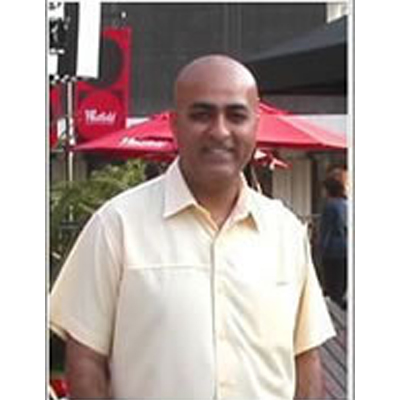
    If there was one person who brought about the biggest change in sports broadcasting in India in 2006, it was Nimbus chairman Harish Thawani. He took the big gamble by acquiring India cricket rights for a whopping $612.8 million and became a broadcaster.

    Thawani holds forth on sports broadcasting in terms of the changing landscape, Asia emerging as a major player and the importance of multiplicity of platforms and technologies.

    Traditionally the sports media industry has had 3 major segments: full service sports management/marketing agencies (such as IMG, Sport Five, Nimbus Sport) that manage/market rights, sponsorship sales, stage/manage events, provide sponsor services, advise on and/or manage L & M programs, represent athletes etc (many agencies specialize in a sub-set of these); sports television companies that focus on host broadcast production and/or sports program production and syndication (such as Sunset + Vine, TWI, HBS, Nimbus Sport) and sports broadcasters (such as ESPN, Fox Sports, Sky Sports, NEO Sports).

    Two trends seem to be emerging in the sports media sector. On one hand there appears to consolidation taking place in both the agency and broadcast sector (more of that later) and on the other hand the lines are getting blurred between the roles with agencies or their parent companies such as Nimbus entering the broadcast sector (with its recently launched NEO Sports) and broadcasters such as ESS pitching for rights on a global basis and consequently winding up acting as rights agencies in countries where they don’t broadcast.

    Consequently the future may see new role definitions, new competitive stances and strange alliances emerging; and quite possibly competitors in one region being partners in another.

    Trends close to home

    The importance of Asia is growing. In football it is now the world’s second most valuable rights territory. In cricket it is by far the most valuable. Japan, Korea, China and the ASEAN are fuelling unprecedented growth in rights values for basketball, golf, motor sport, tennis, even baseball.

    Pan Asian broadcast services are under threat and I think in 3 years will become unviable, as the regional broadcasters gain ground. The rise of the regional broadcasters and/or platform owned sports channels (from Al Jazeera in the Middle East to NEO Sports in South Asia to Astro’s Super Sports in Malaysia, to PCCW in Hong Kong and Starhub’s Super Sports in Singapore) have encouraged rights holders to stop doing pan Asian deals and opt for country wise deals. The success of the recent EPL auctions on a country wise basis was an example, where ESS lost a substantial portion of the valuable territories to regional broadcasters including China, Singapore, Hong Kong, Thailand and several others.

    Multiplicity of platforms and technologies will fetch sports broadcasters in Asia higher share of subscriber revenues. Sports and movies drive pay TV! In the Middle East we have three DTH platforms and three cable companies vying for premium sports channels. In India we have two DTH platforms with two more to come and a very large cable industry, Malaysia’s long standing monopoly of Astro will diminish with Telecom Malaysia’s massive IPTV foray. Hong Kong has two cable systems. Every major country is developing multiple platforms.

    Perhaps in 2-3 years time, we might see a consortium of regional broadcasters emerge, forming a pan Asian footprint but retaining regional autonomy, using the benefits of consortium buying of rights, collective platform negotiation ability, exchange of best practices and technology; and who knows perhaps even cross holdings into an Asian superstructure.

    Global management is now happy to work in Asia thereby giving Asian sports broadcasters the ability to merge local skills into global best practices, and compete with the global broadcasters such as ESPN and Newscorp (Fox, Sky, Star)…for e.g. NEO Sports has a Scottish COO, an Australian head of acquisitions, a Polish technology consultant and an Indian CEO!

    Cricket : The challenges and opportunities

    Cricket needs to evolve. The economic dominance of Asia powered largely by India represents both an opportunity and a threat to the globalization of the sport. Opportunity because the funds now at the disposal of cricket allow it to invest in development across the world. Threat because if the Indian economy slows down or the sports broadcast industry further consolidates, the revenues of the sport will decline. Cricket must reduce its excessive dependency on India. But that is easier said than done.

    The sport is essentially a 10 country sport with only 4-5 countries providing revenues worth the mention. The structure of the sport needs to emulate football and we need to dismantle the class system wherein only 10 countries get to play Tests and regular ODIs. In football even India plays internationals despite being ranked below 125! Cricket needs to allow all ICC member countries to play internationals. With the emergence of shorter formats (which itself are the way to the future of the game), like 20/20, it is easier for weaker teams to win against stronger teams occasionally because all that it takes is for 1-2 batsmen to fire for an hour or so!! Such results fuel fan following and the sports grows in new countries.

    Lastly cricket needs to understand that its obsessive focus only on revenues (read highest bidder wins!) is perhaps an expensive trade off as the interests of the highest bidder are not necessarily aligned to that of the sport. E.g. broadcasters that win global rights are not necessarily equipped or even wanting to encourage free TV broadcasts or multiple platform broadcasts for their interests lie in exclusivity and the subscription revenues that come with it. Fortunately many cricket boards have begun to understand that and now prefer to engage sports agencies (albeit with a revenue MG) to manage their rights with the mandate to increase revenues but also increase reach, improve branding, procure better sponsorships, develop new markets and assist in development programs through coaching videos etc.

    India : Road ahead is clear

    With economic growth beating the 8 per cent per annum mark and the next 10 years (if not much more) quite clearly a boom phase, there’s seldom been a better time to invest in India. Broadcast industry revenues are growing at 17-19 per cent per annum, spending on leisure including sport by Indians is on the rise, and the advent of addressable systems particularly DTH bodes well for premium pay TV services such as sports and movies.

    India : Cricket domination continues

    Having said that even the world’s largest markets don’t support more than 2-3 pay TV sports companies, which meant that my prediction of some months back that from a 6 player market we will see a 3 player market by 2007 has come true even before 2006 is out. DD and Sony are at least for the moment quite clearly out of the cricket rights acquisition market. Zee has taken control of Ten, so its essentially 3 companies now in sports broadcasting each with 2 channels (Neo Sports and Neo Sports Plus, ESPN and Star Sports, Zee Sports and Ten Sports); which should allow all three to operate profitably and given the amazing range of sports product available would give all three enough options to program their channels, except for one catch. The cricket catch.

    In a single sport country, this means that Neo Sports with its powerful cricket assets over the next five years, the depth of sports expertise of Nimbus behind it and powered by Star India’s distribution leadership will have a smooth side. As will ESS with its long standing experience, market franchise and reasonable cricket assets now strengthened by the ICC package. The challenge for ESS will be that in 2007 some if not all of their previous cricket assets start expiring and that means an uncertain path ahead. If renewals are hard to come by, they will have to wait for 2011 when the next World Cup is staged to make a strong come back.

    India: Domestic sport

    I had said in early 2006 that this would be the year of domestic sport in India. Hopefully the numbers bear me out. BCCI commenced 72 days a year of domestic cricket coverage and extensive re-branding and re-formatting. Even with the start-up phase distribution of NEO Sports it rocketed to the No 1 sports channel position in the TAM data in its first week itself with the broadcast of the domestic Challenger Series, with peak TVRs of 9.2 in one match! The Duleep Trophy final achieved peak TVRs of 2.7 on a weekday despite it being a 5 day match format! Zee Sports broadcast of Indian domestic football has also shown consistent results. I think by mid 2007 the ratings of domestic cricket will start rivaling Test match TVRs consistently and weekend One Day matches in the domestic Super League could be the killer app for NEO Sports!

    India: Other Sports

    Hockey is dead. It’s now official. It received a quiet and indecent burial at the recent Asian Games where India did not make it to the semis and no one shed tears.Tennis, golf and motor sport plough on their elitist path into Indian homes that would scarcely know the difference between a birdie and a break-point. I can hear howls of protest from the same elitist benches and to them I would say walk down (as I have) the streets of Jalgaon, Coimbatore, Ajmer or even Hyderabad and ask what a birdie is. The range of cute or crass answers might surprise you.

    That leaves football and to me the dark horse badminton as the 2 sports that India can and I think will develop a TV loyalty to. Football because it has a 3-4 state base, and the western and southern metros are beginning to take up to it (on TV I mean) and also quite simply because it is the true world game. Which is why at NEO Sports it already broadcasts live the Bundesliga and the Italian Serie A.

    And Badminton because it is India’s largest participation sport after cricket. It is extensively played in India and easily understood. It has never been adequately programmed on sports channels and not enough has been done to market it. NEO Sports plans to change both of that starting early 2007.

    India: Sports entertainment

    When Nimbus Sport did the Extraaa Innings production for Sony during the 2003 Cricket World Cup, only Nimbus Sport and Sony believed that merging sport with entertainment will lead to a serious opportunity to build a viewer franchise. It made the purists cringe (and rightfully so) but it raked in the TRPs and the revenues.

    Some months back I had announced that we see sports entertainment as the big hole in the market and NEO Sports Plus will launch a slew of sports entertainment shows by 1st quarter 2007. ESS was quick to follow with its own announcement and the good news is that they’ve already started 2 shows, both of which are showing very promising ratings.

    I think NEO Sports Plus will do 70+ GRPs a week by mid 2007 off the back of sports entertainment and its focus on football and badminton.

    Regulatory

    So now TV is in the PDS, controlled prices et al (sorry administered prices). Is it constitutional? Are world class premium channels to be sacrificed at the altar of populism? These and many other questions will get answered in the coming months. Personally I believe that price caps will not go for at least 6 months, but in the interim a multi tier price cap regime may emerge, with Rs 5 as cap for most channels, Rs 10 as cap for GE and movie channels and Rs 20 for sports channels.

    On anti-siphoning the Supreme Court of India has ruled in the Ten Sports case. Many believe that in India where cable is cheap and DTH is also cheap and covers all cable dark areas, there is no grounds for anti-siphoning regulations. Moreover cable reaches nearly 65 per cent of all TV homes now.

    But if anti-siphoning laws do get enacted, they need to consider some rather serious issues:

    1. Is DD a terrestrial broadcaster or cable/DTH? ODI matches can’t be shared with DD under the guise of it being a public free TV terrestrial broadcaster, and then DD merrily supplies the signal to cable and DTH killing the pay TV business!

    2. A use or lose policy with strict timelines and license fee rationale will need to be adhered to by DD as it is in many countries where antis-siphoning rules are in force.

    3. DD must encrypt its signals to their transmission towers. No where in the world does a free TV broadcaster send unencrypted signals via satellite.

    4. If the anti-siphoning rules are truly meant to for public service, DD must refrain from commercial exploitation of the feed and agree to carry the rights holders feed with commercials. And DD must not decline other sports the right to be broadcast on DD National, when events of global stature and/or Indian interest are being staged.
  • ‘Era of subscription rather than advertising supported media content is approaching us fairly quickly’

    ‘Era of subscription rather than advertising supported media content is approaching us fairly quickly’

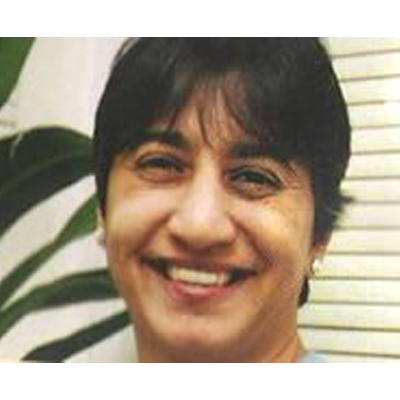
    Lintas Media Services director Lynn de Souza says the year has been good for business. But she has a word of caution: there is just too much of ads going around for viewers to stomach.

    Business wise, 2006 has been a good year for advertising with both value (up 19 per cent) and volume increases. The total number of spots aired on television has shot up by 35 per cent from 10.3 million in 2005 to 13.9 million this year. For the month of September alone there was a 51 per cent increase. Plus, there was more branded content on all media including cinema than ever before.


    However, was this also good for the lay consumer, the housewife in Amritsar, the executive in Bandra, and the schoolboy in Chhatisgarh?


    Our lives have been swept up by the media. A good one third of the average Indian’s waking hours is spent with the mass media in some form or other – all through the day. Our lifestyles, values and opinions are being shaped by what we see and hear on the mass media as never before. 2006 gave birth or renewed life to many news and children’s tv channels, global magazine titles, regional language editions of newspapers, FM radio stations. So far all of these, without exception, are advertiser supported.


    It has therefore become virtually impossible for the average consumer to find a free moment in space or time where he or she is not accosted by advertising – on the streets, in malls, in airplanes, on the cellphone, in coffee shops, hotels and health clubs, while surfing the internet – besides the expected fare on tv, radio, newspapers and magazines.


    It should come as no surprise to us therefore that he or she has begun to get rather annoyed. Our latest estimate of active ad avoidance in this country has crossed 70 per cent for every medium, among heavy upmarket media consumers. Passive ad avoidance is not far behind. Avoidance of advertising among the rural rich is even higher. I therefore doff my hat at all of us who persist with our careers in advertising. This must be the only profession in the world in which the eventual consumer does his or her best to ignore and avoid and turn away from what we have to say.


    Intellect, our research and technology unit, recently released ‘Engross’, a survey conducted last month among over 2000 upmarket Indians to measure ad avoidance, ad perception and media engagement. Since we expected to find high ad avoidance levels, even on the more personalized media like radio and internet, we further probed on the reasons, our suspicion being that perhaps consumers didn’t like advertising at all. Indeed, the feedback was exactly the opposite. An overwhelmingly high cross section of consumers enjoy and appreciate advertising, and find it informative and helpful.


    So why do they avoid something they like? Simply because there is just too much of it going around to stomach. The same ad over and over again. Too many ad breaks. Ads inside content. Ads on covers. For the smart consumer, it’s really getting to be a bad mad ad world.


    There is a lesson in this for both media owners and advertisers. The day is not far off when these consumers will pay extra for ad free content. The era of subscription rather than advertising supported media content is approaching us fairly quickly. As advertisers we have unfortunately been caught up in the whirlwind of downward spiralling media rates, and have helped compound the problem of over advertising. Every time we have insisted on a lower unit rate we have been given bonus time and space by the media owners, thus contributing to the overload. We have together written up a volume over value charter, and the consumer is now clearly saying to us, “I don’t like this. I don’t like being taken for granted.”


    I hope we will all listen to this voice in 2007. Engross gave us another important learning – for years, content has been informative and advertising has been entertaining. Now however, the consumer finds content, even on the so called information media, highly engaging and entertaining, and considers good advertising to be informative. We would therefore be quite foolish to demean the value of advertising in his or her mind through poorly judged placements.


    To 2007, may our business continue to grow, and may our customers enjoy it too.

  • ‘An outlook towards the future of Television’

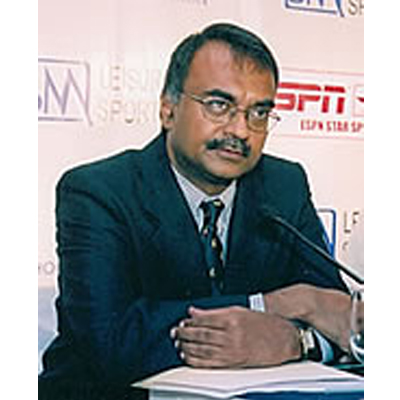
    In this article, penned for Indiantelevision.com, Media e2e chief evangelist Atul Phadnis is of the view that the media landscape is changing rapidly and new distribution technologies would alter business models.

    As 2006 comes to an end, some of us, who had embarked on a new journey of creating a new thought within our industry, feel vindicated. The key changes that we had envisaged, envisioned and expected are taking place rapidly within our media & entertainment (M&E) environment. These changes are in terms of distribution platforms, newer business models, interactivity, new content formats and experimentation. This piece looks at the change catalysts and an outlook on how things would continue to develop within our space.

    End of distribution platform insulation

    Before we look at the current and future, a quick glance at the past. The history of TVs popularity among consumers can be gauged from the amount of advertising on satellite TV chasing consumers. As veteran industry folk would recall, the early 90s was all about DD when only experimental advertising monies would come onto satellite channels. In the mid-90s substantial chunks of budgets were diverted into satellite channels. By the late 90s and early 2000s, the satellite TV environment had reached a level of stability and maturity. Here’s where the story takes an interesting u-turn. The legislation changed and allowed newer distribution technologies on the scene. These new technologies ended the technology insulation that persisted in India vis-?-vis other Asian markets like Hong Kong, Korea and Japan.

    Distribution: set to change the ground rules

    Globally, whenever distribution channels explode, it sets off a chain reaction in terms of market segmentation, newer revenue opportunities, newer pricing models. The hectic activities since early 2000 to present day on laying cables, dishes, optical fibre, upgrading cable facilities, are today creating competition among satellite TV platforms such as DTH, HITS, IPTV, CAS, and even traditional cable.


    Creating the ‘Long Tail’

    For those who have read Chris Anderson’s book The Long Tail: Why the Future of Business is Selling Less of More (2006) would immediately associate that phenomenon with what’s happening with our television today. The Long Tail phenomenon occurs when distribution platforms become very large helping the smaller products collectively gain market share rivaling that of market leaders!

    The TV business has been growing a long tail as niche content offerings are getting acceptance in small pockets. Take the example of television news. Already, the kids channels are going the same way as the news channels. Animated, non-animated, teens, tweens, pre-teens! The good news – each of the niche segments that have been launched has shown Viewership.

    If the current trend continues and if distribution platforms get more and more addressable, one can imagine channels aimed at extremely niche communities. Surgeon’s channel, lawyers channel, chartered accountants channel to weather news channel, celeb news channel to even a Mumbai traffic channel! Considering that some of these formats exist in other economies expecting that in our environment seems fairly reasonable.

    Specialization to Segmentation

    The specialization in this industry is already segmenting the market. Groups of consumers who are watching specialist programming are extending the long tail of content. The specialist content has an impact on TV programmers and the TV production houses as resistance to experimentation could lead to certain death or marginalization. This impact should mostly be felt immediately post the universe adjustments of the TV ratings panels to latest estimates.

    Applications, on-demand

    Our environment is also critically poised to propel demand for applications that satiate this new consumer thirst for content which is typically instant and on-demand. Considering that for a bulk of Indian consumers, TV-watching emerges in the Top-5 daily activities, it’s not impossible to imagine the lengths to which consumers could go to better that experience. Gadgets like Digital Video Recorders (DVRs), Video on Demand (VoD), Personal Video Recorders (PVRs) can do exactly this if the pricing gets it right.

    Content mobility, malleability

    The consumer need for on-demand content in other Asian markets has made content both mobile and malleable. Content mobility is to do with being able to record and transfer content off television onto your phone, laptop or desktop. The last few months I have been an amazed, animated user of Bluetooth and the possibilities that emerge from being able to transfer data, music, and video from one device to another. Content malleability is something that TV, music and film companies would have to learn else the consumer is going to teach them a thing or two!

    Newer contact points via localization

    The newspaper business in the last 3 years has been growing faster on ad revenues than television. It’s done so on the back of distribution changes and reform that has resulted into micro editions. That has in turn propelled localized advertising through a slew of first time advertisers on print. The same is bound to happen to television. The only question is the timeframe. Local pizza stores, restaurants, banks, grocery and electronic retail, multiplexes would all jump in if micro-reach was possible via TV. It’s not as if all that is not possible today via local cable and regional stations. It’s possible and it’s happening. But while regional channels still score, there are questions on quality and popularity of local cable advertising.

    Branded Entertainment : winds blow stronger

    The Branded Entertainment Awards 2006 held in Mumbai have demonstrated a new industry-wide vision in this space. The promise that this specialist stream holds is that in a perpetually fragmenting media scene, TV could be used via innovation, integration and multimedia support. Activation is the powerful new word in this area and it’s expected to be initiated by regional channels. Activation would derive tremendous strength either from channels promising micro-reach or distribution platforms undertaking sampling/ contact programs. One of my recent favorites is a DTH company distributing sample set-top boxes to school children preloaded with education channels!

    Distant possibilities

    What seems to be now distant in our market but is very prevalent in the West and some parts of Asia is CGM or Consumer Generated Media (such as Blogs, and home or personal videos). This is a current rage even in the US if one is to see the popularity of sites such as YouTube. Low penetration of capture devices in India would typically see this as fairly futuristic. Having said that we are seeing news channels in India currently test this through Viewer reported stories.


    Finally in conclusion – expect key changes in television that’s bound to affect all stakeholders. These changes are expected to alter business models, revenue models as well as content formats.

    And the creatures aren’t too far away from us now. Stop! I hear the door creaking open. Wait! I can hear them growl…

  • ‘Consolidation good for the sports broadcasting business’

    ‘Consolidation good for the sports broadcasting business’

    2006 has been a rocky year for sports broadcasters. Cricket properties were acquired at humungous prices, SET India decided to walk out of bidding wars, Harish Thawani made his entry into the broadcasting arena and Zee bought 50 per cent in Ten Sports.


    ESPN Software India MD RC Venkateish offers his views on the consolidation in sports broadcasting, the challenges broadcasters face in pushing sports other than cricket, the need to come out with sports entertainment programming, and the Cas issue.


    Over the past few years we have seen a proliferation of sports channels but 2006 was a year when we saw consolidation. You had Zee buying a stake in Ten Sports while Sony opted out of sports. Nimbus is also in the process of aligning itself. This happened because earlier you had an unsustainable situation where a lot of people jumped onto the sports bandwagon thinking that it was an easy play.


    People have realised that it is not that easy to run a sports channel. This is because of the kind of skill sets that are required, the capabilities that are required and also the kind of investments that need to be sustained.


    Going forward you will see moderation in the sports business. You will see the crazy escalation in rights prices starting to cool down a bit. People are starting to get more realistic. In terms of overall developments of the business, consolidation is good.


    You earlier had smaller players jumping in and bidding the rights prices to crazy levels. There was a destabilising factor in terms of asset valuations. When asset valuations reach a ridiculous level you are bound to have a correction. This sort of a boom-bust cycle is not good for anybody’s business. People who tried to take acquisition prices up, have realised that it is not an easy game to play. Now the players who are standing are serious and committed. The environment is stable with players who are in it for the long haul and looking to increase their brand equity rather than a quick fire in and out situation.


    Consolidation means that the model of let me set up something sell it and get out is gone. A stable environment will allow the players to invest in broadcast quality, programme content. We can focus on better quality of coverage for the viewer rather than saying,”Hi I am blowing your brains out on the rights acquisition costs.” From a five-player field it has been reduced to three and possible eventually to two.


    Sports Entertainment


    Sports is entertainment. There are wrap around shows around content. What we have sought to bring to the viewers is 360 degree spectrum of sports. We have always had magazine programmes, informative shows. We recently launched a lighthearted programme revolving around sports. The main theme, though, will always be live sports. Around that we try to build properties and shows. Anything that seeks to enhance the understanding of sports and inform the viewer provides a different angle.


    This space needs to surround the live programming. It cannot act as a substitute. As an exclusive standalone as a channel or as a genre I do not think that sports entertainment will have any legs. Recently, one of the players launched a live sports channel and another channel on sports entertainment. Yet if you see the second channel it too has live sports. They probably couldn’t find enough software. That is not to say they will not create software but it is important to find a proper balance. At ESPN we have added concepts like dream job, Full Toss to the live experience.


    Sports federations need to get their act together


    International football is doing well with the soccer World Cup and English Premier League. The World Cup gave ratings that have not been seen for a non cricket sport. We had all India ratings of 2.6 and 3.1 for some of the league games. Unfortunately, the ratings for the rest of the stuff has been middling. That has to do with the lack of performance at the international level by sportspeople. I remember that two years ago when Sania Mirza came to the third round of the Australian Open the ratings shot up to 1.1.


    Unfortunately she has not been able to maintain that sort of form and the ratings have dipped. Premier Hockey League has given us ratings but because the national side has not been performing their matches have not fared well. Unless you perform at an international level it is hard to capture the imagination of the public.


    People want to emulate winners not losers. If you do not do well then there is no new pipeline of young talent who wants to play the sport. Eventually the sport dies out. We are doing our bit to push hockey and soccer. Having said that, sports federations need to have a deep, hard look at themselves. People need to fundamentally overhaul the system. Otherwise it is not going to go anywhere. It has been like this for the last 40 years. It will be like this for the next 40 years. Cricket at the moment does not face challenges. You have a good set of players as well as youngsters who want to take it up. So the pipeline is active.


    Certainly in other sports when it comes to marketing it is a challenge. With hockey we have to fight the dice a little bit as the national team’s performance has been bad. If India had won the Asian Games or even finished as runners up, there would have been a positive groundswell of support for the game. Marketing is a lot easier if the national team is doing well. Hopefully, people will put the bad performance of the Indian hockey team behind them and watch PHL for the love of the game itself and not for the satisfaction of one team beating another. In the UK local soccer league games have more viewership than some international matches.


    2007 A big revenue boost for sports


    Sports is event driven. You have the cricket World Cup coming up. So there will be a boost. Then there is the 20/20 World Cup in September. India goes to England and to Australia. We also tour Pakistan. So there is a fair amount of cricket. It compares favourably to this year when there was the soccer World Cup and the Champions Trophy.


    Distribution


    DTH has been around for quite a while and is a good development. It offers an alternative to the consumer and it is digital telecast. It is good that sports are airing in a format that is clearer to see. We welcome Cas from a technology perspective. The only thing that we are unhappy about is the kind of price regulation that has been forced down our throat. We will get 45 per cent of Rs 5 per subscriber, which is two rupees and forty-five paisa. This is absurdity that defies even basic, cursory logic. It is extremely unfair and we have already appealed to TDSAT. It has always been seen that free market forces are the best even for the consumers eventually.

    To interfere with that is always going to be a recipe for disaster. DTH and Cas address single subscribers and provide content for that subscriber. We are already providing interactive services to both Dish TV
    and Tata Sky. This allows viewers to check out rolling highlights, players statistics, different camera angles. As the transponder capacity goes up, it will afford the opportunity for more data. We have the rights for Euro 2008 and so the DTH service providers will probably come to us to see if we could do something with them.

  • Paramount Motion Pictures tops Golden Globe Awards with 15 nominations

    Paramount Motion Pictures tops Golden Globe Awards with 15 nominations

    MUMBAI: Paramount Motion Pictures Group has received 15 nominations from the Hollywood Foreign Press Association for the 64th Annual Golden Globe Awards beating all other studios. This also marks a record for Paramount.

    Babel, the first film to be green-lighted by Paramount Vantage, topped all films with seven nominations; Dreamgirls, produced by DreamWorks Pictures and Paramount Pictures, followed with five nominations; and the co-productions (with Warner Bros.) Flags of Our Fathers and Letters From Iwo Jima received one and two nominations respectively, states an official release.

    Paramount Pictures Corporation (PPC), a unit of Viacom, produces and distributes filmed entertainment through the Paramount Motion Picture Group which includes Paramount Pictures, Paramount Vantage, Paramount Classics, MTV Films and Nickelodeon Movies.

    PPC operations also include Paramount Pictures International, Paramount Home Entertainment, Paramount Digital Entertainment, Paramount Studios and Worldwide Television Distribution.

  • ‘Lost’, ‘Grey’s Anatomy, ‘Weeds’ competing at Golden Globe Awards

    ‘Lost’, ‘Grey’s Anatomy, ‘Weeds’ competing at Golden Globe Awards

    MUMBAI: Nominations for the 64th edition of the Golden Globes have been announced.

    ABC’s hospital soap Grey’s Anatomy and Showtime’s Weeds got four Golden Globe nominations, including best drama and best comedy, respectively.

    Keeping Grey’s Anatomy company for best drama are Lost, 24, Heroes, and Big Love. For comedy the nominees are Desperate Housewives, Weeds, Entourage, The Office and Ugly Betty. In India the Golden Globe Awards will air on Star World next month.

    HBO led the television categories with 14 nominations, followed by ABC with 11, NBC with nine and Showtime with six. HBO’s Elizabeth I and Mrs. Harris got nominated for best mini series or TV movie. Tsunami The Aftermath which will air in India on HBO on 26 December picked up acting nominations for Chiwetel Ejiofor, Sophie Okonedo and Toni Collette.

    On the film side Babel with its multiple narrative threads picked up six nominations along with Martin Scorcese’s gangster epic The Departed. Director Clint Eastwood got two nominations for directing the war films Flags Of Our Fathers and Letters From Iwo Jima. So it is a Clint vs Marty showdown again. Leonardo Dicaprio got two nominations for acting in The Departed and Blood Diamond. On the actress side Helen Mirren is the favourite for the playing Queen Elizabeth II in The Queen.

  • ATF kicks off; participation up 25 %

    ATF kicks off; participation up 25 %

    SINGAPORE: The Asia Television Forum, Asia Film Market & Conference and the Asia Animation Conference got off to a flying start this morning in Singapore with the Singapore information, communication and arts minister Dr Lee Boon Yang announcing that participation had grown 25 per cent this year.

    Dr Lee stated that the markets had attracted 80 new seller companies, and 50 new buyer companies. The total number of sellers at the market has grown to 250 and buyer countries represented from 25 to 29 countries, revealed Dr Lee.

    Among the countries which have shown sharp increases include: Greece, Jordan, Kazakhstan, Lithuania, Qatar and Ukraine. The companies attending the market for the first time include: Mosfilm Cinema Concern, Kazakh Cinema Distribution, and Russico. All the major four Korean broadcasters including Educational Broadcasting System, Korea Broadcasting System, Munhwa Broadcasting Corp, and Seoul Broadcasting System have made it a point to attend for the first time.

    The minister added that Singapore was working hard to emerge as a post production service providing hub to Hollywood and other countries wanting to dub or subtitle and distribute to Asia. He pointed out that a beginning had been made and that Singapore has a long way to go but the effort will continue in the form of financing funds from the Media Development Authority, and other government institutions. “Media is one of our core focus areas,” he said.

    He also announced that Oak3 Films will be coproducing a telemovie for German broadcaster ARD which will be distributed by Beta Films globally. Another Singapore company Sitting in Pictures is developing a nine part series with Fremantle International Distribution. Dr Boon Yang also said that the MDA has collaborated with Singapore talent management and executive production company RGM Holdings to set up a loan guarantee facility. The loan facility will be used to partially finance at least six international films worth Singapore $80 million over the next two years.

    His most important announcement was that Singapore’s media industry secured coproduction deals worth $50 million at Mipcom 2006

    Additionally, he said that the his ministry had identified interactive and digital media sector as a key engine of growth and that a fund of upto S$ 500 million had been kept aside to catalyse the same.

    Among the companies which are exhibiting at ATF and the AFM include: Sony Entertainment Television, Sahara One, Zee TV, Eros Multimedia, UFO Movies, Indian Television Dot Com, to name a few.

    The highlight from the Indian perspective is the Indian animation conference which is to be chaired by Ashish Kulkarni with participation from Munjal Shroff, P Jayakumar, Rajesh Turakhia, Sudhish Rambothia. SET CEO Kunal Dasgupta is slated to give the welcome address and function as the co-chair.

  • The Intrepid Indian

    The weather report has been accurate about Cannes – clear weather, cool to warm temperatures and loads of golden sunshine. Whoever can, makes sure to step outside the massive Palais Des Festivals, venue for Mipcom 2006, to soak in the bright sun bouncing off the clear blue sea.

    Colourful canopies dot the beach and it seems so right to conduct business there instead of indoors underneath all that artificial lighting. Fremantle Media has large white tents hooked up right on the beach and some others are working from their sparkling yachts; but the majority have interestingly done up booths inside the large cavernous Palais.

    Its Day three of Mipcom and my pace has not slackened; I was hoping to be able to catch my breath after two hectic days but being a buyer makes one liable to more meetings – everyone wants to meet you!

    Mipcom 2006 – Main Entrance

    The market is busy, vibrant and exciting. Some of my meetings have been so much fun, like the one with JJ from Paramount. JJ is witty and sharp and her tongue in cheek comments had me laughing through the meeting. I enjoy such informal meetings that are not strictly business!

    Most companies are not reacting very well to the fact that I come from India. One of my meetings with such a company opened with the comment, “I hate being rude; I don‘t like myself when I am like that but Indians tend to bring out the worst out of me.” Taken aback, I responded that this sounded suspiciously like a threat and I was expecting him to pull out a gun on me next. He apologized profusely but went on to relate horrifying tales of his experience with Indian buyers – the screeners he sent, turned up as pirated VCD‘s in the Indian market!

    At that, I held up my Mipcom badge that stated my company name in bold – Sony Entertainment Television India. And I was flooded with apologies again! But such stories abound and it‘s a shame that this is the reputation we carry abroad. As an industry (and proud Indian businessmen and women, we will have to do something about that!)

    Day 1 culminated in a grand opening party at the beautiful Majestic Barriere, situated on the Croisette. All of Mipcom seemed to have descended there and the place buzzed with hundreds of people unwinding after a packed first day. Different rooms had been decorated according to different themes. There was one with a “Bollywood” theme too, dressed with Hindi film posters and bathed ( strangely ) in red lighting. The food served up was passable Indian fare and we decided to give it a miss.

    In the next room, the Prisonbreak party was being conducted noisily. And with our glasses of champagne in hand, we gravitated towards the loud cheers. We were just in time to catch the good looking cast of the show, who made a hasty appearance before they disappeared as quickly. Someone should buy this hot show for Indian viewers! Hmmm wouldn‘t be surprised to catch it on AXN or Star World one of these days!

    Day 2 ended in a pleasant cocktail aboard the Buena Vista yacht. It was beautiful to be out under the stars, sipping wine after a long hard day, looked after by our generous and charming hosts. The Buena Vista and Disney folks from abroad are only saying good things about India at the market. Clearly, they‘ve based a lot of their growth expectations on Rajat Jain and his team. The FTV boat along side, attracted much attention with scantily clad models and loud music. Good to see that their promotions at the trade show are consistent with what their channel offers us!

    As I rest my tired feet for a moment, I ponder on how hard it is being a buyer. You get run off your feet in the huge venue and sometimes the meetings are so close, that you skip meals as well! Next time, I promise myself, its only running shoes for me.

    Sony PIX programming head Gitanjali Murari on her experiences at Mipcom 2006.

    (The views expressed here are those of the author and Indiantelevision.com need not necessarily subscribe to the same)

  • Mipcom announces nominations for annual Mobile TV Screenings and Awards

    Mipcom announces nominations for annual Mobile TV Screenings and Awards

    MUMBAI: The global television trade event Mipcom has announced the nominations for the second annual Mobile TV Screenings & Awards. 23 nominations and 10 special mentions will be presented during MIPCOM and the winners will be announced in a special screenings and awards Ceremony to be held in the Palais des Festivals, Cannes on 11 October, 2006.

    Sponsored by Orange, Ericsson and the Korean Broadcasting Commission, the Mobile Screenings & Awards 2006 brought in a record number of 290 entries from 34 countries. This marks a 30 per cent increase in submissions from 2005.

    For the second year running the competition recognises innovation and creativity in new mobile entertainment concepts and formats especially related to audiovisual TV and Film content.

    Reed Midem’s Television Division director Paul Johnson says, “Mobile TV represents a growing opportunity for the audiovisual content industry. Mipcom is proud to take an active role in promoting the development of made-for-mobile content and facilitating commercial transactions on a global level for both TV and film.”

    The Pre-selection Jury head and president of London based Any Screen Productions Ferhan Cook says, “The competition has attracted an even wider variety of genres, and new approaches from both existing well known entertainment companies as well as new ones.

    “It is clear that the world’s creative community is hard at work, innovating new formats for the mobile medium.”

    The 23 nominated entries are to be screened and judged by the Mobile TV Awards Jury at Mipcom from each of the following five categories: Best Original Made-for-Mobile Film or Video Content; Best Repurposed Content from Existing Film or TV Property; Best Made-for-Mobile TV Channel; Best Format for Interactive Mobile TV and Best Mobile format for User-Generated Content.

    In addition to these five categories, there will also be The Orange Grand Prize for Innovation and a special recognition mention for the Best Digital Multimedia Broadcasting (DMB) projects.

    The Mobile TV Screenings & Awards are a part of the Mobile TV focus on 11 October 2006. Included in the programme are a number of conferences focusing on the distribution, marketing and creation of audiovisual mobile content; including keynote addresses by Orange CEO Sanjiv Ahuja and ESPN president, and ABC Sports co-Chairman George Bodenheimer.

    The nominees in various categories are:

  • Sweeney, Bodenheimer to deliver keynotes at Mipcom

    Sweeney, Bodenheimer to deliver keynotes at Mipcom

    MUMBAI: The upcoming television trade event Mipcom 2006 which takes place in Cannes from 9-13 October has announced four keynote speakers.

    This year’s conference programme is called Reshaping Media. The speakers include ESPN US president George Bodenheimer, Disney-ABC Television Group president Anne Sweeney, NBC Universal president, digital media and market development Beth Comstock and MGM chairman and CEO Harry Sloan.

    This year’s programme will focus on the changing landscape for traditional TV programming and the advertising business, film financing and distribution, as well as exploring the new opportunities offered by internet TV and mobile TV.

    Named the Most Powerful Woman in Entertainment by The Hollywood Reporter, one of the 50 Most Powerful Women in Business by Fortune and one of The World’s 100 Most Powerful Women by Forbes, Sweeney is responsible for Disney’s entertainment and news television properties globally. Under her guidance ABC went from strength to strength with shows like Desperate Housewives and Lost.

    At Mipcom Sweeney will share her vision of the future and the impact of digital on all forms of media. She will offer an insight on the changing landscape of television and evolving consumer demands.

    As part of a new conference focus at Mipcom 2006 highlighting new financing and distribution opportunities for film Sloan, will present the new invigorated MGM business strategy to hundreds of Mipcom delegates. A core business for MGM, Sloan will be addressing the new opportunities for cinema in television distribution, channel operations, home entertainment and new media. Sloan headed three media companies before joining MGM in October 2005. They were SBS Broadcasting, Lions Gate Entertainment and New World Entertainment.

    Comstock drives NBC Universal’s digital strategy and leads the company’s content and distribution efforts across new and emerging digital platforms. In her keynote speech, she will discuss NBC Universal’s 360 degree content approach to capitalise on opportunities in the digital age and strategy for success in this era of the pull consumer.

    Bodenheimer will be looking into the reasons and strategy behind the growth of the ESPN brand as part of the day’s spotlight on cross-platform and mobile content. Bodenheimer was named president of ESPN in 1998 and his focus on creativity and cutting-edge innovation has led the company to expand its brand to over 50 business entities.