Category: Specials

  • ‘How do you wake up?’

    ‘How do you wake up?’

    We all sleep differently. Some sleep tight, like a baby. Some sleep light, like the mother of a newborn. No matter how we sleep, most of us wake up with a start – some so mild in fact that we don’t recognize them, while some hard enough to bring our whole body and mind to sudden consciousness in a milli second.

    Sometimes we are either too tired or too lazy to give up our sleep, and that’s when someone has to shake us up and give us a wake up call. It happened the night before the examination, during a rather chilly night, when the quilt seemed like a long lost friend, it happens many times now in hotel rooms in some distant city.

    The wake up call is rarely likeable, but it’s meaningful and important nevertheless, because something really significant often waits for us on the other side.

    As I look back at 2007, it appears to me to be a year of wake up calls. There were many major events than happened this year, that shook us out of our slumber, or they should have. There are other things that appeared to be minor sleep breakers, but meaningful nevertheless, perhaps because of their regularity of occurrence. Major or minor, these were not just events, for they will have an impact on our thought and action in 2008 and beyond.

    I recount seven of my favorites here, in random order.

    Wake Up Call 1: T20

    T20 was not about India getting World Cup glory back. It was not about defeating an arch rival. In a way, it wasn’t even about cricket. From a marketing viewpoint, it finally brought to life what we at Starcom have been forcefully claiming for a while – that today’s consumers are time starved, choice flattered and attention challenged. For the same reason the one day cricket got popular decades ago, T20 became an overnight rage in 2007. The message is clear: in marketing anything, do not try the consumer’s patience, do not assume she is sitting there waiting for your message. Respect her time, respect the complexity of her life, and talk to her not just talk at her. The spirit of T20, applied to marketing is this: don’t just count your consumers, connect with them.

    Wake Up Call 2: Input Cost Surcharge & the October stand off

    The memory of the passionate October is too fresh for all of us, for me to revive it, but as with many things, there were two sides to the backdrop to the impasse. The October debate was not really about who is right and who is not. It was about perspectives and a willingness to achieve common goals. I believe that for a month we all forgot that the fundamental relationship between media owners and marketers has always been collaborative, even if at the negotiation table, it often looked to be adversarial. I have said this before and I will say this again. If we do not find ways to collaborate, today’s hypercompetitive world will find ways of decimating us.

    Wake Up Call 3: Digital Signage

    Place based media, point of purchase media, in-store media – whatever name you call it by, this is a medium whose birth 2007 will be remembered by. I was fortunate to attend a conference in November in Mumbai, where a lot of stake holders spoke very passionately about digital signage networks, why and how they work and about highly advanced technology driving it. Unfortunately, there were not many creative or media agency folks attending that conference, to receive the wake up call, although I remember meeting some people from ICICI, Levers and ITC. I understand that there are close to five thousand LCD screens that have been installed in stores, at workplaces and in lift lobbies across the country and hundreds more are going live every month. Mark my words, very few media will generate as much curiosity and excitement in the next two to three years as this one.

    Wake Up Call 4: The Vanishing Line

    As many of us started putting the tag Experience Society on ourselves, the already thin line between above-the-line and below-the-line became even thinner in 2007. Call it IMC, 360 degree marketing, through-the-line marketing or holistic marketing, no marketing practitioner worth her Kotler and Levitt can today ignore the necessity to connect with the consumers using all the cards in our box. This was particularly heartwarming for us at Starcom MediaVest Group, as we have invested significant managerial energy and other resources building new competencies over the last four years and today quite proudly claim to be the media network with the biggest competency portfolio in India. Today, many of us are learning to activate one idea through multiple media and platforms, rather than plan one medium ate a time. It is my strong belief that anyone, marketer or communication practitioner, who does not upskill herself rapidly in how to think and activate in a holistic way, runs the risk of being left behind.

    Wake Up Call 5: Digitisation of Life

    After years of wondering and imagining, more marketers than ever embraced the digital way in 2007, recognising that you cannot forever hide behind meek arguments of ‘too few internet connections’ and other such. Unfortunately, many are still stuck in the early 2000’s model of generating leads by burning a billion banners. This will change, with or without another wake up call. In 2008, I believe, we will see many genuine attempts by marketers to use digital as a platform, rather than medium, to deliver an enriching experience to their consumers.

    Wake Up Call 6: Using a New Body Part

    To call the mobile phone a technological device would today be an error. It’s something we sleep with, take to the bathroom with and cannot truly imagine our life without. The irony is the contrast between consumers’ alacrity to adopt everything mobile and the marketers’ hesitation in using the platform as a communication and enablement platform. Companies like Affle, One-to-One Technologies, Sixty Nine mm are creating highly interesting mobile marketing platforms that can allow marketers to connect well with consumers, particularly young consumers. Many of our clients are more curious than ever and we have to move to the next level of converting the excitement into application.

    Wake Up Call 7: TV isn’t dying anytime soon

    In the last few years, particularly with the growth of non-classical media and experiential marketing disciplines, it became fashionable to talk about the reducing effectiveness of TV and many of us were challenged to divert budgets to other media. At Starcom, we have a contrarian’s view. We believe that if anything, TV will become even more important in future. We call that future an era of visual engagement. The way consumers watch TV will change, and the way we will use TV both in its traditional box format as well as through other screens, will change.

    The fight in the traditional TV front is getting interesting, with Zee TV slowly but certainly narrowing the gap with Star Plus, but the debate on TV is more than just a Star Plus versus Zee TV debate. It’s not even about dozens of new stations springing up. It’s about innovativeness of programming, about audience engagement and freshness of thought. The broadcast industry needs to stop for a breather and take a long hard look at what it has been doing and how it wants to do that in future. It won’t be easy. Waking up rarely is.

    Have an exciting 2008. I will!
  • TV hosts….a new breed enmerges

    TV hosts….a new breed enmerges

    Let’s go back a little in time. Hosting was all about propah quiz masters and news readers. A Siddarth Basu or a Luku Sanyal is still remembered very fondly by TV buffs. The closest one got to a host then was Tabassum on DD’s Phool Khile Hai Gulshan Gulshan. Tabassum gate crashed into a predominant male bastion and probably remained the lone female host for a long time on TV.
    Then and now

    Then it was more about the serious, intelligent, well-mannered and dressed in the mandatory suit kind of TV host. It was much later that hosting was redefined and got its current avatar. Now it is all about the Hinglish speaking, hip, yo, irreverent young guy. Being able to think on your feet and adding your own brand of cerebral content to a show is co-incidental.

    Hosting as a profession is still in its nascent stage in India. Celeb shows, reality shows, cookery shows, talk shows. The need for hosts is on an all-time high. So what is hosting all about? A pretty face, designer threads, a good bod, spiked hair? Or is it all this and dollops of talent and intelligence? What is the art of good hosting?

    As no corporate house or institution has yet thought of launching a course in hosting all our hosts are self-taught. “One should have a good education and be well-read. This should be a pre-requisite,” believes Mini Mathur one of the most popular hosts on TV today.

    Cyrus Broacha, Sajid Khan, Mini Mathur, Cyrus Sahukar, Mona Singh, Karan Johar, Roshan Abbas are also in the current top bracket. Not to mention the veejays on different music channels who sport fake accents, crack juvenile jokes and the female veejays dressed in almost nothing. And not to mention that all read from a script written by an equally amateur writer.


    When actors came calling
     

    Hosting came of age when Shekhar Suman charted a different route for himself as a talk show host. He began to host hard hitting satirical TV Talk shows on entertainment and news channels. He introduced his particular brand of humour which was a heady mix of obnoxiousness, irreverence, and simple observations.

    Movers and Shakers on the Sony Entertainment Network and Simply Shekhar on Zee Television were two of his much-watched shows. Modelled along the lines of The Tonight Show with Jay Leno, Suman did manage to carve a niche for himself via this show.


    When Amitabh Bachchan crossed over to the small screen with the game show, Kaun Banega Crorepati he not only helped the channel’s dipping fortunes but also helped himself get a new lease to life. The hugely popular show, characterised by Bachchan’s baritone and personality is remembered today for the host rather than the crores earned by the contestants.

    Though of course Bachchan was a household name, the show helped him widen his fan base and also helped him clean up the financial mess he was in.


    But when superstar Shah Rukh Khan replaced Amitabh Bachchan as host on KBC Shah Rukh Khan said, “I was pleasantly surprised when the channel offered me the show. I was a participant in season one of KBC… and little did I know one day I would be hosting it. It is a huge act to follow, that of Mr Bachchan…but it also excites me that I am getting an opportunity to reach out (and) talk and interact with my audience through a medium where I began my career as an actor years ago.”

    And full marks to Khan for having taken hosting to new heights. Having come from the world of theatre Khan knew all the trade secrets and perfected the art so well that he had viewers swooning. It was rumoured then that audiences watched the show only to get entertained by SRK. He chatted, he danced, he sang and he joked. Damn the GK questions. He did all that was required of a successful host. His style, his wit, his intelligence was unmatched. Though one must add that SRK is a better host on live shows than on the small screen. Nonetheless, his TV hosting did set a benchmark.


    Very recently actor Sunil Shetty crossed over to the small screen to host the Biggest loser jeetega on Sahara One. Unfortunately, the actor flopped in his new role. Veterans know that this is not an easy role to play.
     

    Money talk

    And that brings us to the most important takeaway of this profession- financial returns. Unlike in the earlier times when a host did TV shows for only a day or two in the month and supplemented his income with other jobs now for most of them it is their only job. Today it is a very lucrative career and hosts of all kinds are laughing all the way to the bank. And it is this moolah coupled with the thrill of becoming stars in their own right that more and more PYTs are attracted to this new job.

    So how much does a TV host earn? Inside sources inform that much depends on the length of a show and the status of the host. But on an average a start- up anchor takes home atleast Rs 5000 per episode and an A – list host makes anything between Rs 1 lakh to Rs 3 lakh per episode.

    “The business is good and so is the money,” Sajid informs. “I have never been out of work. Your demand is because of your popularity. Moreover I never discriminate between work.”
    Mini too has taken a conscious decision not to take up any acting assignments as she has good work on her plate. This also helps her focus on her job.

    Whether hosting is a well paying job, Abbas says, “It depends. It pays me very well but I can’t be sure of all other anchors. Actually, a lot depends on your popularity.”


    Pre-requisites

    “You don’t have to look like Brad Pitt to be a good host. In fact 90% of the hosts worldwide are not exceptionally good looking,” says Sajid Khan. “You need to talk well and this can’t be learnt.”

    Saiid who began hosting shows way back in 1994 (Main Bhi Detective) is still going strong. Ikke Pe Ikka his countdown show on Zee Cinema has done over 400 episodes and put him in the big league. Of the belief that hosting is an inborn art and that very few people are born with it, Sajid says, “Shah Rukh Khan, Shatrughan Sinha, Karan Johar are those blessed with it. As for Amitabh Bachchan he is a superstar and hence it is easier for him to host a show. He is being himself.”

    Karan Johar normally wears the director’s hat. And when he is not making films he hosts a talk show, Koffee with Karan. The show brings together celebrities who are interviewed in the show’s trademark informal style. The first season was a huge success, and the programme became the first English entertainment show to ever get a huge rating in India. Karan is himself on the show, chorus all those who know him. A veteran Karan very cleverly juxtaposes his teleprompter lines with his real lines. Having said that he is a delight to watch. In fact another super host Sajid Khan says, “I like Karan on the show. It comes naturally to him. I have known him since years and he has always held a captive audience be it when talking informally with friends or as a host. He doesn’t pretend and that is his USP.”
     

    And then there was Simi Garewal in her impeccable English accent hosting Rendezvous with Simi Garewal. A picture perfect in her designer outfits and chic appearance Simi hosted this very class-centric talk show. Simi who had been an actress but not a successful one had finally found her calling. The show spilled over into many seasons and Simi did her la- di- dah act to perfection.

    From small-time housie shows to countdown shows on TV, to prestigious award functions he has done them all. Armed with an abrasive sense of humour, Sajid Khan has done many a celeb in with the Sajid brand of wit and all this with his tongue firmly in the cheek.
     

    “Right since my childhood I was always standing with a mike and taking a show on the floor,” informs Sajid. “My USP is being able to connect with people. I’ve hosted shows for as varied an audience as the House of Commons, to the Maharashtra Shetkari Sangh. My strength lies in the fact that I don’t work on a script. I never use teleprompters and I don’t need writers. What people see is what they get. I think a successful host is one is who conducts a show without giving himself too much importance.”
     

    Mini Mathur who was a MTV host for 4 years has also hosted both the seasons of Indian Idol and is gearing up for the third is an MBA in Marketing and her stint with hosting goes way back to hosting India’s first game show, Tol Mol Ke Bol. She is of the firm belief that it is a very specialised field. Mini says, “Today everybody is a me-too. Unfortunately most over do it. I am in the business since 10 years. I haven’t burned out as I do less work. I have a family and am a happy person. And because of my life experiences I can put it better before the camera.”
     

    “An effective anchor needs to be quick witted, observant and adaptable to unforeseen situations,” says Roshan Abbas popularTV host. But when he took over from the oh-so natural Faroukh Shaikh to host the second season of Jeena Isika Naam Hain it was a tough act to follow. Shaikh had charmed viewers with his dignity, subtle wit and grace. Despite his experience, Abbas was unable to match Shaikh.
     

    As there are so many new shows mushrooming now on the small screen the hosts can cast a wide net. But what is important is the fact that the subject should not matter to a host. And hence it is only a well-read/intelligent host who can do justice to the work. Mini says that reality shows do not have a script. “It is made up of good moments. I like to work on a basic framework and then improvise. It is very reactive. Spontaneity and wit are the two essentials that make a successful host.”
     

    So does that mean that a Sanjeev Kapoor who has been hosting cookery shows should try his hand at a reality show? Talking of spontaneity, Ranvir Shorey and Vinay Pathak are the latest two entrants in the hosting arena and they are a delight to watch on their late night talk show, Ranvir -Vinay aur Kaun?


    Downside

    Well-written scripts are difficult to come by rue most hosts. Sajid therefore says he works without a script. “People hire me because they save on teleprompters,” Sajid ribs. “I can host the Oscars better than any of the hosts. I was the first to wear a tuxedo, sing a song, walk down from the stage and talk to the audience. I work for the viewer.”
     

    The genial Mini storms, “My angst is against the perception of TV presenters. They are not given due respect. They must be accorded the space of a TV serial. Sometimes people don’t even know our real names. “
     
    Abbas says, “It is unfortunate that good avenues for formal training in TV anchoring do not exist in our country. I’m trying to do my bit on this front through a series of workshops. Besides, nobody can deny that luck plays a crucial part in your success or failure over here.”
     

    The bottomline
     

    The good ones survive despite the onslaught of a hundred others who come to try their hand at the job. A Cyrus Broacha is saluted by not just his listeners but by his contemporaries. And he is no threat to any of them…as he is head and shoulders above the rest. And they know that. As VJ Ranvijay has said of him, “Thanks to him, all of us have careers today. VJing wouldn’t be a career if Cyrus Broacha wasn’t there.”
     

    One thinks it’s about time the Cyruses, the Minis, the Shaikhs, the Sajids opened a school for wannabe hosts. Its pay back time folks!

  • ‘Working on an umbrella brand strategy is a good way to build a presence in the entertainment space’

    ‘Working on an umbrella brand strategy is a good way to build a presence in the entertainment space’

    As 2007 comes to a close, Reliance Entertainment president Rajesh Sawhney is an apt choice for our year-ending interview, not necessarily in the context of what Anil Ambani’s company has done in the broadcast space this year, but because of the expectations from industry, going forward.

    On the television front, the journey of being a broadcaster starts next year with the launch of two movie channels (first Hindi and later English), a logical extension from Reliance ADAG’s existing film production and distribution business. The broadcast piece will add to a list that ranges from multiplexes to movies, home video, FM radio, direct-to-home (DTH) and IPTV.

    On radio, the aim is to consolidate its position. It will also be active in distribution with its DTH platform coming up. Thomas Abraham and Ashwin Pinto caught up with Sawhney to find out about the plans and the kind of impact that Reliance is looking to have on the entertainment space.

    Excerpts:

    Firstly, 2007 was the year when Reliance Entertainment sowed the seeds for what is to come. What were the landmarks for this year?
    We are a young player only two years old. Our journey into entertainment kicked off with the Adlabs acquisition. Then we moved into radio in 2006. We started rolling it out by the end of last year. Then we moved into other ventures like Zapak, our gaming portal. From my perspective, we are still in the incubation phase and the larger consideration is that the entertainment and media industry is where telecom was five years back. The media industry will be worth $25 billion in five years time. A lot of value creation will happen in the coming five years similar to what was seen in telecom.

    The second big thing will be the emergence of digital entertainment. Platforms are now set. This will be a large driver.

    The third thing is that with the economy growing at 10 per cent, the Indian consumer is spending more and more on entertainment. The first indication of this is the multiplex boom. Now even monies spent on entertainment at home like DVD rentals, pay per view are growing.

    The entertainment industry is worth $ 11-12 billion out of a trillion dollar economy, which means 1 per cent of the economy. Globally it is 3 per cent. In the US, it is 5 per cent. If we take the telecom parallel, revenue is 3-4 per cent. In India it is 2.5 per cent. India has a convergence deficit in this sense. This is where the real opportunity is going forward.

    I see Indian players having strengths in certain verticals. Some are strong in print, others in movies while others focus on radio. Nobody is building a comprehensive brand presence across media. This strategy would allow you to capture the three per cent deficit. This is what we are chasing.

    What is the kind of impact that Reliance is hoping to have on the entertainment space across the different verticals?
    Let us take the movie industry. It is on a huge cusp of change. If you go back 10 years there were no multiplexes, no DVD formats. Home entertainment will be the next value driver for the movie industry in the coming decade. DVD and home entertainment revenues are the biggest source of revenue for Hollywood. Here it is less than 10 per cent. We are going through the first phase which is theatrical revenues. Home entertainment will be the next phase.

    For this you need concepts like Big Flicks which will make organised retailing possible. It will make home entertainment delivery through broadband, DTH, IPTV possible. Pay per view revenues will be created for the Indian movie industry. Content in the long tail form across different platforms will offer more choice. The companies who are preparing for this will gain big time as far as the movie industry is concerned.

    The second revolution happening in the Indian movie industry is on the content side. So production values have risen. Talent is getting a huge amount of value which is getting aligned to global values. Content will get value from overseas markets, home entertainment, satellite markets. A $10 million movie has become the norm. I can see a situation where $100 million movie is viable but this will take time to happen. You will see Hollywood and Bollywood collaborating more.

    The government should allow news and current affairs. This is why you do not have talk radio
    _____****_____

    How will Reliance benefit from the synergy between Reliance Communication and Reliance Entertainment?
    Reliance Communication is building distribution capabilities on mobile, DTH, IPTV and broadband platform. Reliance Entertainment is building a presence and capabilities on the content side across different verticals – content, broadcasting, themed entertainment and new media.

    A large part of your plan involves targeting the youth across different verticals. How are you going about this?
    We are a youth focussed company. This has a commercial reason. We believe that youth drives entertainment. Youth is driving the movie consumption business. India has the best youth demographic platform in the world. We are the youngest country in the world. We keep youth in mind in whatever we do whether it is radio with Big FM or making movies or Zapak.

    You have taken the brand name Big for your businesses like Big FM, Big Flicks. Is the aim here to convey to the consumer an idea about the size and scale of the brand?
    Unlike many companies that work with a house of brands strategy we believe that working on an umbrella brand strategy is a good way to build a presence in the entertainment space. The choice of the name is predicated on three reasons. Firstly it is simple to understand. Everyone, regardless of language, understands Big. The second reason is it is simple to communicate. A mass brand needs to be understood by everyone. And third, the brand name must give people an understanding of the scale at which we want to bring entertainment to consumers.

    How important is the broadcasting space for Reliance?
    It is very important for us. Our first investment has been in radio with Big FM. We won 145 licenses in 2006. We will take part in the next round of bidding when the government goes ahead. We are the largest radio station in the country with 40 stations. With the execution of radio we have shown a clear commitment by executing the fastest. In Delhi, Bangalore and Mumbai we have emerged as a top player. We have created a leadership position not just by the number of stations but also in the markets where they operate, including those that are entrenched. We want to consolidate our position next year.

    Radio needs to differentiate itself instead of just going after the widest lane with popular Hindi songs. Why isn’t this happening?
    I do not blame the private players for this. I blame government policy. The government should allow news and current affairs. This is why you do not have talk radio. Multiple stations should be allowed. At the moment only five to six stations are available in the Metros. The government should ensure that 30-40 stations are available. One company can run five channels in a state. The government should introduce policies to facilitate the next growth phase. Niche formats become viable if frequencies are made available at lower rates. Running a Gujarati channel at a license fee of Rs 30 crores (Rs 300 million) does not make sense in Mumbai.

    Are you also looking at online radio?
    Yes! In the West, radio is a mature industry. Online is a growth industry there. In India FM and online are coming at the same time. The biggest opportunity is in FM. It is hugely underserved India should have 10,000 FM stations. Now there are less than 300 stations. I can run stations in different languages in Mumbai with viability as long as I am allowed to do so. There is also an opportunity to serve the non resident markets.

  • ‘Working on an umbrella brand strategy is a good way to build a presence in the entertainment space’

    ‘Working on an umbrella brand strategy is a good way to build a presence in the entertainment space’

    You will start your television business with film channels. With more movie channels coming in what affect will this have on rights prices?
    We are working on our plans. We are building our teams. We will launch two channels next year. What the genres are I cannot comment on. You however have to run channels across all genres to be taken seriously in the broadcasting space.

    In terms of more film channels coming in the price of content will rise. We are also seeing the evolution of different business models where content is not sold outright. It is syndicated to multiple players. I believe that movie channels will have to differentiate themselves and become genre specific. New models of presentation will have to emerge. The challenge for the players is that to achieve this, a library is needed.

    Do you see a shakeout in the Hindi GEC space?
    Three years back when there were 100 channels people said the same thing. Today there are 300 channels. Tomorrow there will be 1000 channels. We are moving to a situation where you will have thousands of channels when IPTV, DTH come into their own. When we move to a digital world niche channels become more viable. The long tail becomes viable. Today it is difficult to have more than 30 channels in an analogue model.

    The other area is your TV content production business. How is activity at Synergy Communications being scaled up?
    As the TV space explodes the demand for quality content is growing,. Synergy will be one of the beneficiaries of this change. They face choices in terms of how they grow the business. We have an arms length relationship with them. It is not a captive production house.
     

    ‘We are moving to a situation where you will have thousands of channels when IPTV, DTH come into their own’

    _____****_____

    In terms of the push towards complete digitisation the belief is that when companies like Reliance, Bharti enter DTH it will be the next inflection point for DTH growth as well as for the cable industry to push for complete digitisation. Your views?
    I hope that this happens. DTH is a huge opportunity as there is a need for addressability. Corporatisation will help improve the quality of service. While the penetration of existing players might not be great the industry is poised for a rapid change. You have to provide a differentiated service level to the consumer. You also have to provide services in the smaller towns which are neglected. Content offerings need to be differentiated which is not happening. There is scope to create exclusive, niche channels and service like e-commerce. We will push quality of service.

    At this point in time shoddy service is being provided in most parts of the country. The DTH industry has grown but if you expect it to touch 10 million in a day that will not happen. There are issues to be dealt with. But the consumer wants a change. We will differentiate as far as the last mile is concerned.

    What are the key changes that you expect to see happen in terms of how films are being made and consumed? Is the solo, independent producer a thing of the past?
    India makes 1,000 movies a year. The studio model has emerged but there will be scope for the solo producers to also work. In the US film corporates have helped grown the independent studios. The value of the content is being discovered now. But quality consciousness is important. If you are a small player niches need to be created. The issue is to find talent. This will be the biggest challenge in 2008. Talent needs to be broad based.

    On the social networking front how did the concept of Bigadda come about? What is its USP vis-a-vis sites like Orkut and Facebook?
    I believe that social networking platforms are for real. A new set of technologies have merged to connect people. It is becoming the centre of their social graph. We are in the very early stages of this phenomenon. It will take off with the evolution of broadband. When we talk of social networking sites there are two aspects. One is social networks while the other is social media. Social networking sites focus on connectivity and communication. Social media sites look at user generated, user rated content.

    The user becomes a creator or a filter or a participant of content. Bigadda looks at both aspects. We believe that there is a huge space for an Indian platform. We launched it three months back and are satisfied with the response. We already have a million users. We get a million page views a day. We add 12-15,000 users a day. In 2008 competition will emerge but we are confident of the innovations that we will be doing. Social networking will also depend on what is done in the mobile space.

    As per research, what extent is gaming competing with film and television for the Indian youth’s time?
    Zapak is not competing with traditional forms of entertainment. It is creating a new form of entertainment. Like any iconic brand, it is creating its own language, vocabulary and loyal set of consumers. Zapak has four million registered users. On Comscore it is the number one gaming site. Next year we will bring in MMOGs. We believe that India is ready and as broadband takes off value creation will happen. It is not that Indians are watching less films. It is just that Zapak is creating its own set of loyal consumers.

    When you talk about entertainment you can’t get away from cricket which is why Reliance is bidding for an IPL team. How useful do you see this as a brand building excercise?
    I cannot comment on IPL.

  • Divine predictions ’08

    Divine predictions ’08

    As they bid goodbye to 2007, our telly stars look forward to the New Year with great hope and expectation.

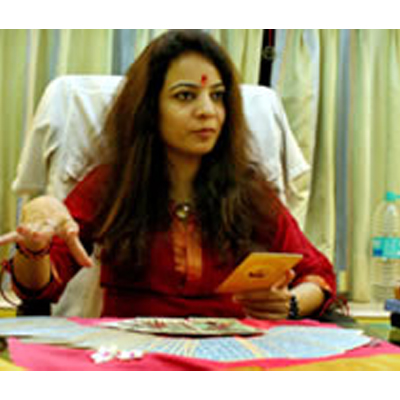
    But what’s in store for them in 2008? Neha Maheshwari got into intuitive mode trying to foresee whether the constellations will keep shining for our telly stars. For this purpose, we consulted noted Tarot card reader Dr Soniyaa P Bhaagiyaa.

    Here Dr Bhaagiyaa offers predictions for 2008 of different stars and channels through Tarot card reading and she also comes up with advice for the stars through her Goddess Guidance Cards.

    The results are as interesting as expected. So have fun reading them.


    Ekta Kapoor

    Year 2008 for her: It is going to be a good year professionally. There are bright chances of her getting married this coming year.

    As a producer: She will do well as a producer in 2008. She will hit the mark again. She might have to travel abroad for shoots.

    Bollywood: Tarot card suggests she leave everything in the hands of destiny. She may not receive the needful help from the people as expected. She is going to learn many lessons. For 2008, Bollywood is not going to be fruitful.

    The K-factor: There is a possibility that she will get rid of her favourite K-letter. She will resort to some other alphabet but will always take support of the letter K.

    Guidance card for 2008: Universe suggests Ekta create a connection with the divine different from what she has followed thus far. We advice her to visit some prayer place and make changes in her altar. She needs to check out what she needs to add to and minus from her altar. She needs to focus on the spirituality also, along with her professional life.


    Rajiv Khandelwal

    Bollywood: His movies will do good business overall. He will be getting some more opportunities. There is an advice card for him that reveals that if he takes risks he will be successful. He is in to manage lots of things this year.

    Television: His television career will be good and it is going to be a new beginning for him. But he needs to manage many things.

    Patch up with Ekta Kapoor: Yes there are bright chances of a patch up between the two and tarot also says that there are chances of him doing a Balaji serial.

    Guidance card for 2008: You are taken care of for your today and tomorrows by the universe so don’t worry.


    Smriti Irani

    2008 for her: It is going to be a mixed year. There will be ups and downs but as the year ends, it is going to be happy.

    As a producer: There will be many projects and she will be doing a lot of juggling. She will be trying to manage two different projects at a time but eventually she will be able to manage. Professionally she would struggle a bit managing too many projects. She would also try to expand herself.

    Advice card for her indicates that she should try to strike a balance as far as her professional life and production house is concerned. At the end, her professional life will be managed and it will do well.

    As an actor: Her acting career will be really good. She will also do some other projects. Overall it is going to be a good year for her.

    Bollywood aspirations: She might go there with the help of old acquaintances who will help her in the project.

    Guidance card for 2008: Universe suggests she spend some time near water. She needs to recharge her batteries. A break is advised to her as she has been under a lot of pressure off late. We suggest she go for a good holiday near an ocean or lake.


    Rakhi Sawant

    Controversies in 2008: Yes, she will remain among the controversies and thus in the news. But she will remain in control. She will be happy with the way she has led her life so far.

    Relationship with boyfriend Abhishek: The relationship is not going to be very exciting the coming year. Both of them will have disappointments in regards of not being given importance. The relationship will face emotional trauma and they will not take any risk in terms of both their relationship and professional life. There will be confusion in their relationship. The task for them is to choose between establishment of their careers or relationship.

    Guidance card for 2008: There is no need to hurry or force things to happen. She should take things easy. The guidance card suggests she believe in the process of the universe.


    Shweta Tiwari:

    2008 for her: Professionally, it is going to be a mixed year for Shweta Tiwari. There will be a lot of confusion and delays in projects. But 2008 is going to make her come across absolutely new beginnings. Personally the cards suggest she go for some past life regression. She has tried hard on her relationship but cards reveal her getting divorced the coming year. Justice will be done. Her Bhojpuri films will be successful. Her expectations will be fulfilled.

    Guidance card for 2008: She is just getting started so universe suggests she have patience and not give up easily.


    Iqbal Khan

    2008 for him: Iqbal Khan will be emotionally content this year. He should not lose control over his emotions. There will be a lot of competition and in turn he will try to prove himself but there is no need to. He needs to put his foot down wherever he is correct. But there is no need to prove his talent as 2008 is going to be a fulfilled year. There are bright chances that he will become a proud father.

    Bollywood: He has bright chances of his entering Bollywood.

    Patch up with Ekta Kapoor: Tarot card for him does indicate chances of having a patch up with Ekta Kapoor. But as far as acting in Ekta’s production house is concerned chances are very less and it may not happen.

    The advice card for him says that he should not look at emotional loss happened in the past but should grab the opportunity.

    Guidance card for 2008: This is the transforming time for him. He will be experiencing many changes and the universe suggests he accept those changes and go with the flow. He is advised to trust the universe.


    Prachi Desai

    2008 for her: Professionally, it is a mixed year for her. Whatever she has worked hard on this year will help her in the coming year. It is going to be a creative year for her.

    Her movie Rock On: Her expectations with the movies are running too high which is not good. It will only do ok business. She needs to balance her act. Destiny is going to support her throughout.

    She will get more offers from Bollywood but she is going to be very choosy and cautious.

    Quitting Television: There are 50-50 chances of her quitting the world of television. She will be very calculative and thus will face a lot of stress. 2008 can be rightly said as Dilemma Year for her as she will be in jeopardy deciding whether or not to quit television.

    Guidance card for 2008: The guidance card suggests she trust the universe.


    Ronit Roy

    Television career in 2008: It is going to be a mixed year for Ronit Roy. He will have the support of his luck and some mystical and unknown things. We suggest he go for some past life regression. He needs to be careful of his friends and enemies.

    Guidance card for 2008: The universe suggests he love himself. He needs to work out his relationships with the females around. He needs to respect the females.

    He also needs to check his relations with his mother. He should be non-judgmental about himself and others as well. He needs to focus on the love and light that is within everyone.

     
    This would again be a non-fiction year on television. So we have lots more reality shows lined up.
    _____****_____
     

    Star Plus: Compared to 2007, the coming year is not as good. But by year-end, it will turn out to be better. There will be a new beginnings in the year-end. In the process of proving themselves due to competition they may lose out on quality. They should not compromise with quality while competing. They will be taxing themselves uselessly. There will be let downs. They should maintain the values they believe in. They need to maintain their already established goodwill. They need to stay off temptations a bit.

    Advice for 2008: They are advised to have patience and not to worry as everything is working for them beautifully. But they are advised not to compromise with quality to get the needful results.


    Zee: It is going to be a mixed year for Zee TV. They would face certain losses but at the same time there will be several opportunities popping up. They need to handle the tough situations with lots of patience. There will be new opportunities for Zee in 2008. Zee is expected to have some changes at the authority level. This is time for learning lessons which will lead to the improvement in future. If they think of producing mythological serials luck will support them and such shows will be successful.

    Advice for 2008: If they work on projects related to children, it will be very good for them. They should work on some projects that can help children in their welfare and development.


    Sony: There are close to 100 percent chances that Sony channel will get sold. Though it might pull the financial year but after that it will come to an end.

    Advice for 2008: The guidance card says that your independence is the foundation of your strength and success. Tie-ups create unnecessary problems. If they try independently it would be good for them. But now the chances of them surviving after the mid-2008 are negligible.


    Amongst the newly launched channels: NDTV Imagine is expected to shine.


    (For the uninitiated, Dr Soniyaa P Bhaagiyaa is a reputed versatile Integrated Therapist who practices a variety of sciences. She has been practicing Tarot card reading for the last five years at her clinic in Mumbai. She is also a vastu expert, hypnotherapist, and practices aura healing, chakra guidance and tea leaf predictions).

  • ‘Burgeoning distribution costs eating into money that should have been spent on content’

    ‘Burgeoning distribution costs eating into money that should have been spent on content’

    Much has happened this year and yet not a lot has happened.

    For India TV it has been a good year. Two years ago we were number six or seven in the news channel category, with a 5 to 6 per cent share; today we are number three with a 17-18 per cent share.

    The broadcasting industry has seen a huge amount of debate and discussion on the proposed Broadcast Bill and the Content Code. It perhaps looks to an observer like there is much heat and no movement, but I do believe such debate and discussion is essential.

    This is not something that can be done in a hurry. It has very wide implications in a country as free as India, where the media are genuinely free.

    And while the arguments for and against regulation are many, the fundamental thing is that any attempt to legislate a free media has to be done with a great deal of care. It is at the heart of Indian democracy. And as the world acknowledges, we may have a myriad problems but we are a robust democracy despite all odds: it is too valuable to risk.

    On the Content Code there has been a discussion for well over a year, and the government has been open to dialogue, which is excellent. The broadcasters have offered to create their own Code for self-regulation.

    The government has welcomed the offer of the industry to develop its own Code, as it has accepted and notified the ASCI Code for advertising. ASCI is a voluntary body, so the government has encouraged self-regulation, which is great.

    The single biggest problem in the industry today is distribution. It is getting more and more competitive, as more and more channels come into business. The cost is enormous and growing wildly, and it is hurting every broadcaster from the biggest to the smallest, FTA or pay.

    In this battle MSOs and LCOs point fingers at each other, but either way it is costing the broadcaster. And money that could and should have been spent on content is getting spent on distribution instead, and it weakens the industry.

    And as that burgeoning cost is eating into money that could and should have been spent on content, in the end it is affecting the viewer, with no medium term solution in sight.

    Digitisation is the only real answer. Digitisation is slowly coming in the non-CAS areas, but the operative word is ‘slowly’. Anything that the government can do to accelerate digitisation will be for the good of all, mostly for the good of the consumer.

    The other important thing with growing competition is the issue of audience measurement. Periodically there is heated debate, and everyone has an expert opinion on the subject. But listen to what each broadcaster says, and you know how good their ratings are: why else are yesterday’s critics silent today and why were today’s critics silent yesterday, when the system has been the same for years?

    And even as broadcasters and agencies criticize the measurement system they continue to use the data to help in buying and selling Rs 5-6,000 crore worth of advertising, on the nonsensical plea that some data is better than no data.

    There have been impassioned complaints about how the broadcasters and production houses are victims of the rating system, how every Friday when those wretched numbers come in they have to slog overnight to fix the content according to what the numbers tell them.

    It’s Aamir the actor who acts for a living versus Aamir the brand whose equity must be protected, grown and leveraged
    _____****_____

    That’s like a hypochondriac taking his temperature and blaming the thermometer. No one is forcing anyone to use the data, much less what to do about it. If you choose to be tyrannised by it, that’s your choice.

    That is not to say the current system is perfect. That it needs upgrading is beyond doubt. The industry has taken the initiative in that, with the formation of the Broadcast Audience Research Council.

    Whatever the outcome, it can only lead to a better, more robust measurement system.

    The best thing that has happened this year?

    It may sound like a strange thing to say, but to my mind the best thing that has happened is the ongoing debate about the Broadcast Bill and the Content Code. It brings many issues to the fore, many things that we need to be more aware of and many that we need to engage with the government about.

  • ‘Consumer annoyance with intrusion in their space will take a new turn’

    If there’s anything more challenging than predicting the media scene in India, it’s reviewing them a year later. It does feel good though if you are more right than wrong on your own predictions. Here’s how the reality played out in 2006 and some more predictions for 2007.

    Technology and its impact

    As predicted, the impact of technology on communication in 2006 was rather limited. Consumer pull rather than organizational push continues to determine the rate of acceptance and dissemination of technology. 2007 will see the adoption of newer technology but again, this is likely to be at the very top of pyramid. CAS may be pushed through by legislation but 3G, TiVo and wi-fi zones still appear to be a while away. Value-added SMS services though are likely to thrive.

    Consumers’ annoyance with intrusion in their space will take a new turn. We don’t think consumers are convinced that a “Do Not Disturb” option keeps pesky telemarketers at bay. In 2007, consumers will hit back. Beware all marketers who think they can intrude on consumers’ privacy and get away with it!

    The television medium
    Last year we had predicted that the television media owners would look at sampling the product and then worry about revenue. The resultant of this would be longer gestation periods and fewer media players who will want to enter the space on a whim. True enough, 2006 has seen no significant launches as far as television is concerned.

    To a great extent, this is also impacted by the lack of differentiation in product offerings. We had thought Times Now had the potential to make a dent in the English news segment but it doesn’t seem to have done as well as its competitors. Sticking to the basics though has meant that a NDTV 24×7 continues to hold its own and a CNN-IBN has created a
    niche for itself.

    We had also mentioned that those who do come in will be serious players with deep pockets. Our prediction that Disney’s entry would make players like Hungama feel the heat couldn’t have been truer. Disney went on to acquire Hungama!

  • ‘Burgeoning distribution costs eating into money that should have been spent on content’

    ‘Burgeoning distribution costs eating into money that should have been spent on content’

    Much has happened this year and yet not a lot has happened.

    For India TV it has been a good year. Two years ago we were number six or seven in the news channel category, with a 5 to 6 per cent share; today we are number three with a 17-18 per cent share.

    The broadcasting industry has seen a huge amount of debate and discussion on the proposed Broadcast Bill and the Content Code. It perhaps looks to an observer like there is much heat and no movement, but I do believe such debate and discussion is essential.

    This is not something that can be done in a hurry. It has very wide implications in a country as free as India, where the media are genuinely free.

    And while the arguments for and against regulation are many, the fundamental thing is that any attempt to legislate a free media has to be done with a great deal of care. It is at the heart of Indian democracy. And as the world acknowledges, we may have a myriad problems but we are a robust democracy despite all odds: it is too valuable to risk.

    On the Content Code there has been a discussion for well over a year, and the government has been open to dialogue, which is excellent. The broadcasters have offered to create their own Code for self-regulation.

    The government has welcomed the offer of the industry to develop its own Code, as it has accepted and notified the ASCI Code for advertising. ASCI is a voluntary body, so the government has encouraged self-regulation, which is great.

    The single biggest problem in the industry today is distribution. It is getting more and more competitive, as more and more channels come into business. The cost is enormous and growing wildly, and it is hurting every broadcaster from the biggest to the smallest, FTA or pay.

    In this battle MSOs and LCOs point fingers at each other, but either way it is costing the broadcaster. And money that could and should have been spent on content is getting spent on distribution instead, and it weakens the industry.

    And as that burgeoning cost is eating into money that could and should have been spent on content, in the end it is affecting the viewer, with no medium term solution in sight.

    Digitisation is the only real answer. Digitisation is slowly coming in the non-CAS areas, but the operative word is ‘slowly’. Anything that the government can do to accelerate digitisation will be for the good of all, mostly for the good of the consumer.

    The other important thing with growing competition is the issue of audience measurement. Periodically there is heated debate, and everyone has an expert opinion on the subject. But listen to what each broadcaster says, and you know how good their ratings are: why else are yesterday’s critics silent today and why were today’s critics silent yesterday, when the system has been the same for years?

    And even as broadcasters and agencies criticize the measurement system they continue to use the data to help in buying and selling Rs 5-6,000 crore worth of advertising, on the nonsensical plea that some data is better than no data.

    There have been impassioned complaints about how the broadcasters and production houses are victims of the rating system, how every Friday when those wretched numbers come in they have to slog overnight to fix the content according to what the numbers tell them.

    That’s like a hypochondriac taking his temperature and blaming the thermometer. No one is forcing anyone to use the data, much less what to do about it. If you choose to be tyrannised by it, that’s your choice.

    That is not to say the current system is perfect. That it needs upgrading is beyond doubt. The industry has taken the initiative in that, with the formation of the Broadcast Audience Research Council.

    Whatever the outcome, it can only lead to a better, more robust measurement system.

    The best thing that has happened this year?

    It may sound like a strange thing to say, but to my mind the best thing that has happened is the ongoing debate about the Broadcast Bill and the Content Code. It brings many issues to the fore, many things that we need to be more aware of and many that we need to engage with the government about.

  • Cellphone was ringing in advertising on television in 2007

    Cellphone was ringing in advertising on television in 2007

    The curtains have fallen on 2007, the all important data is also out — that of the Top 10 categories of advertisers on television, print and radio and their growth in ad spends in 2007 as compared to 2006, as estimated by AdEx India.


    Product
    2007* (Jan-Nov ’07)
    Rank Product Group Ad volumes (in ‘000)
    1 Cellular Phone Service 12,519
    2 Social Advertisements 12,057
    3 Toilet Soaps 9,610
    4 Internet/SMS Service 8,401
    5 Corporate/Brand Image 8,220
    6 Aerated Soft Drink 7,746
    7 Shampoos 7,338
    8 Cellular Phones 7,009
    9 Two Wheelers 6,553
    10 Tooth Pastes 6,523
     
    2006…
    Rank Product Group Ad volumes (in ‘000)
    1 Social Advertisements 11,270
    2 Toilet Soaps 9,818
    3 Cellular Phones 6,854
    4 Shampoos 6,716
    5 Cellular Phone Service 6,531
    6 Corporate/Brand Image 6,379
    7 Cars/Jeeps 6,047
    8 Tooth Pastes 6,045
    9 Aerated Soft Drink 5,783
    10 Two Wheelers 5,141
    ————————————****———————————-
    Advertisers
    2007* (Jan-Nov ’07)
    Rank Advertisers Ad volumes (in ‘000)
    1 Hindustan Unilever Ltd 19,995
    2 Reckitt Benckiser (India) Ltd 8,470
    3 Coca Cola India Ltd 5,580
    4 Paras Pharmaceuticals Ltd 5,268
    5 Pepsi Co 5,022
    6 L’Oreal India Pvt Ltd 4,759
    7 Bharti Airtel Ltd 4,573
    8 Smithkline Beecham 4,487
    9 Colgate Palmolive India Ltd 4,306
    10 Procter & Gamble 4,273
     
    2006…
    Rank Advertisers Ad volumes (in ‘000)
    1 Hindustan Unilever Ltd 16,840
    2 Paras Pharmaceuticals Ltd 5,904
    3 Reckitt Benckiser (India) Ltd 5,628
    4 L’Oreal India Pvt Ltd 4,346
    5 Colgate Palmolive India Ltd 3,943
    6 Coca Cola India Ltd 3,924
    7 Procter & Gamble 3,317
    8 Nokia Corporation 3,233
    9 Emami Limited 3,170
    10 Pepsi Co 2,718
     
    ————————————****———————————-
    Brands
    2007* (Jan-Nov ’07)
    Rank Brands Ad volumes (in ‘000)
    1 National Rural Health Mission 2,007
    2 Airtel Cellular Phone Service 1,980
    3 www.homeshop18.com 1,894
    4 Moser Baer DVD/VCD 1,797
    5 Reliance Mobile 1,754
    6 Colgate Dental Cream 1,491
    7 Tata Sky 1,416
    8 Ponds Age Miracle 1,272
    9 Tata Indicom Cell Phone Service 1,251
    10 National Aids Control Organization 1,135
     
    2006…
    Rank Brands Ad volumes (in ‘000)
    1 National Rural Health Mission 1,878
    2 Colgate Dental Cream 1,305
    3 Coca Cola 1,298
    4 Thums Up 1,107
    5 Colgate Max Fresh Gel 1,046
    6 Hutch Cellular Phone Service 993
    7 Reliance Mobile 850
    8 Sarva Shiksha Abhiyan 763
    9 Lux Cozi 751
    10 Horlicks 746
     
    ————————————****———————————-


    Source: AdEx India – A Division of TAM Media Research Bitmap

    Period: Year 2006 & 2007 (Jan – Nov’07)
    Note: Ranking based on ad volumes (secondages) in thousands

  • ‘Burgeoning distribution costs eating into money that should have been spent on content’

    ‘Burgeoning distribution costs eating into money that should have been spent on content’

    Marvel Entertainment is tapping the comics business in India. Holding the rights to iconic characters like Spiderman, X-Men and Hulk, it has appointed Kids Media India (KMI) as a subsidiary of Spacetoon Media to represent its licensing, merchandising, publishing and promotional rights in the country.

    Marvel superheroes will be immediately available for licensing on a wide range of consumer products including apparel, stationery, publications, toys and games, party goods and accessories.

    In an interview with Indiantelevision.com’s Ashwin Pinto, Marvel Entertainment International president Simon Phillips talks about the company’s plans for India.

    Excerpts:

    And while the arguments for and against regulation are many, the fundamental thing is that any attempt to legislate a free media has to be done with a great deal of care. It is at the heart of Indian democracy. And as the world acknowledges, we may have a myriad problems but we are a robust democracy despite all odds: it is too valuable to risk.

    On the Content Code there has been a discussion for well over a year, and the government has been open to dialogue, which is excellent. The broadcasters have offered to create their own Code for self-regulation.

    The government has welcomed the offer of the industry to develop its own Code, as it has accepted and notified the ASCI Code for advertising. ASCI is a voluntary body, so the government has encouraged self-regulation, which is great.

    The single biggest problem in the industry today is distribution. It is getting more and more competitive, as more and more channels come into business. The cost is enormous and growing wildly, and it is hurting every broadcaster from the biggest to the smallest, FTA or pay.

    In this battle MSOs and LCOs point fingers at each other, but either way it is costing the broadcaster. And money that could and should have been spent on content is getting spent on distribution instead, and it weakens the industry.

    And as that burgeoning cost is eating into money that could and should have been spent on content, in the end it is affecting the viewer, with no medium term solution in sight.

    Digitisation is the only real answer. Digitisation is slowly coming in the non-CAS areas, but the operative word is ‘slowly’. Anything that the government can do to accelerate digitisation will be for the good of all, mostly for the good of the consumer.

    The other important thing with growing competition is the issue of audience measurement. Periodically there is heated debate, and everyone has an expert opinion on the subject. But listen to what each broadcaster says, and you know how good their ratings are: why else are yesterday’s critics silent today and why were today’s critics silent yesterday, when the system has been the same for years?

    And even as broadcasters and agencies criticize the measurement system they continue to use the data to help in buying and selling Rs 5-6,000 crore worth of advertising, on the nonsensical plea that some data is better than no data.

    There have been impassioned complaints about how the broadcasters and production houses are victims of the rating system, how every Friday when those wretched numbers come in they have to slog overnight to fix the content according to what the numbers tell them.

    That’s like a hypochondriac taking his temperature and blaming the thermometer. No one is forcing anyone to use the data, much less what to do about it. If you choose to be tyrannised by it, that’s your choice.

    That is not to say the current system is perfect. That it needs upgrading is beyond doubt. The industry has taken the initiative in that, with the formation of the Broadcast Audience Research Council.

    Whatever the outcome, it can only lead to a better, more robust measurement system.

    The best thing that has happened this year?

    It may sound like a strange thing to say, but to my mind the best thing that has happened is the ongoing debate about the Broadcast Bill and the Content Code. It brings many issues to the fore, many things that we need to be more aware of and many that we need to engage with the government about.