Category: Specials

  • “International business is growth area for players with long-term plans”

    “International business is growth area for players with long-term plans”

    The global slowdown in 2011 has made it clear for Indian broadcasters to have a long term strategy, exploit new media, study local content consumption patterns and have a pricing that is reasonable rather than getting engaged in a race to the bottom.

    Indian broadcasters have similar growth opportunities in the international market as they have in India, though the challenges are of different nature.

    Historically, large parts of international business for Indian broadcasters are dependent on subscription revenues and long term contracts. Having secured these long term contracts, Indian broadcasters generally do little to grow their shares.

    Subscription business, unlike advertising business worldwide, is not measured on transparent measurement parameter. Hence B2B deals are conducted on the basis of gut, perception or portfolio leverages. Most of these tend to be highly uncertain and unpredictable. The lack of effective measurement also leads to gut-based theories of local programming or additional programming inputs.

    Another key element in building a sound foundation is to invest in brand building and, hence, create an emotional connect.

    The triggers and hooks for content consumption need not be same for the audience based out of India or in some remote corner of the world. Unless Indian broadcasters draw a long term plan in strategy for international business, they would never get a pulse of overseas South Asian consumers.

    Economic slowdowns in various markets make the scenario more complex for broadcasters in wooing consumers and for consumers in selecting content offerings at right price/value. It will also be important for the Indian broadcasters to use new media avenues optimally.

    Given the fact that Internet and OTT models are getting used more as tools for piracy and cheap distribution, it can pose serious threat to the distribution revenues. If used well especially in markets with higher broadband penetration, new medium can work best to get incremental subscribers and eyeballs including the younger audience and next generation Indians in those markets.

    Distributors are facing bigger challenges in mainstream content or local subscriber growth as well as local content costs. In most markets, essentially in West, there is a proliferation of South Asian content in the past four years, most of which are not growing the pie because of poor content quality and incorrect business models.

    Distributors are left with no choice but to apply their judgments on how to manage international/ethnic category of business. Distributors are desperately looking forward to good partners who can participate in the business growth in a given cluttered and economically challenged environment.

    In order to crack growth, broadcasters need to pay closer attention to the purchasing power of South Asian households being superior to local households in most international markets. However, consumers would expect right content on right platform at right price with least diversions of piracy, cheaper new media platform, FTA or compelling Asians based content on mainstream channels.

    Rationalisation of content offerings on traditional media and consolidation of content offerings are key levers to expand the market.

    Advertising business is suffering before growing, as majority of players, including big ones, do not respect the value of their inventory, and the quality of their audiences. South Asian subscribers are of various generations and have varied interests including mainstream content. However, they are loyal to home grown content for connect and nostalgia apart from entertainment in their desi style.

    There is a component of audience base which is born there and does not have emotional connect with India. The composition of these set of audiences is changing rapidly and a good judgment can help broadcasters define their content strategy appropriately.

    The scenario in local audience market offers unique challenges. There are content hungry markets which find eastern culture and values appealing, but those businesses need to be treated in the same fashion as the mainstream business in India in order to make a definitive dent in those markets rather than looking at them as incremental syndication revenues. These markets require tenacious focus, long drawn plans and tremendous hard work.

    International business is well poised for growth but only for serious and long term players who are willing to invest and reap the benefit over a long period of time than in ATM solutions.

  • Advertising to grow 8% in 2012: Lodestar UM CEO Shashi Sinha

    Advertising to grow 8% in 2012: Lodestar UM CEO Shashi Sinha


    The slowdown pinch was not felt in 2011. It was marked by the cricket World Cup and, along with the Indian Premier League, the first eight months were healthy as brands and advertisers spent a lot.

    Total TV advertising spend went up by 16-18 per cent last year. Ad growth on print, however, was slow and there were many categories that didn‘t spend on the medium. In our case, we were lucky as Tata Motors is a big spender on print.

    TV and print in combine account for around 85 per cent of India‘s total ad spend. I don’t think that has changed. TV has grown dramatically because of the World Cup and other tournaments that were telecast.

    The total ad spend in the country is estimated to be Rs 330 billion. The other mediums – radio, outdoor, digital and cinema – contribute about 15-16 per cent. The slowdown in 2011 had to do a lot with specific clients and industries. The sentiment definitely changed after Diwali, but the overall numbers were not really affected.

    Today with so much viewership fragmentation and more channels launching to fill up niches, it is becoming costlier to reach out to the same audiences. The whole ecosystem is gaining as advertisers have to spend more money to target the same audience. It is because of fragmentation that a lot of positive things are happening.

    There is much talk about digital and, though the total ad spend on that medium is just Rs 15 billion, it is occupying the mindset. I am not sure whether critical mass will come or not but a lot of people realise that the ad spend pattern will change dramatically in the future; they are talking about different forms like search, display, engagement or content.

    The big change that is happening is that people have started believing that digital has to be integrated into our plans. Unlike the US and other western countries, India is outer-directed. People in western countries do lots of stuff online and they have no time for family; Indians, on the other hand, spend more time with the family and go out to consume entertainment. Radio, Outdoor, activations in malls and Cinema is going to grow. It is not that digital will grow at the expense of something else; it will all complement each other. So, unlike the west where digital grew rapidly, in India it will not grow on value terms or size because it is too small. It may grow in percentage but in absolute numbers it may not be very big.

    In 2012, ad spend may grow 7-8 per cent increase. FMCG companies may not face a problem as they are seeing growth and there is expansion from the rural markets. Even in case of automobiles where there is tough competition, let us not forget that India is still underpenetrated and not even 7-8 per cent of people own cars.

    Slowdown in advertising will be talked about, but large organised players will be there both in terms of value and volumes; it is the smaller companies that may be affected.

    The two points to highlight here are:

    1. The ability to get the data and capture the right database in a country like India is a big challenge and it is going to multiply day by day because the country is too huge and complex. You will have to have the ability to track audiences which are across multiple touch points and multiple mediums. This will remain a big challenge because you will have to reach out to the right audiences.
    2. Convert mindset that finally you aren‘t buying GRPs. You will have to finally deliver what the client wants.

    The future is in performance driven models and databases that can track complex consumers.

  • Unlocking new opportunities via satellites: SES Sr VP Commercial Asia-Pacific and the Middle East Deepak Mathur

    Unlocking new opportunities via satellites: SES Sr VP Commercial Asia-Pacific and the Middle East Deepak Mathur

    Indian TV viewers and Internet surfers never had it so good. Seven DTH operators, 500 plus TV channels, MSOs and cable ops who are upgrading the ageing analogue infrastructure, broadband services – have all given them a slew of choices. And all of this is becoming possible thanks to satellite communications and broadcast services being offered by satellite operators.

    Consider: India is now Asia‘s leading DTH market and by 2016 will account for 72% of the region‘s DTH subscribers. Between 2012-2016, seven Indian DTH operators are expected to add more than 25 million subscribers. Broadband users (fixed, wireless, wimax, 3G) are expected to climb to about 140 million from around 30 million in end-2011 over the same period. Of the 30 million achieved so far, around 13.3 million are fixed line broadband. But the targets set by the Indian telecoms regulator under the National Broadband Plan are higher: 75 million (by end 2012) and 160 million (by 2014). Mindboggling numbers, right?

    The fact is that by leapfrogging costly fiber installs with the reach, reliability and immediacy of satellite, innovative providers are satisfying pent up demand for quality content and connectivity at a record pace.

    In six short years, DTH operators have exceeded 30% of India‘s multichannel pay TV market. DTH subscribers stand at about 45 million today. India is now the largest DTH bastion in the world and is setting the example for other emerging markets. Much of the success has been driven by high quality services and programming at affordable prices. Indian subscribers, for example, can get about 220 channels for three to four dollars a month. That includes 15 to 18 HD channels, VOD and DVR, along with distance learning and religious content choices.

    Then recently, the much-maligned-in-the-past cable TV sector is racing to meet the deadline set by the government to digitize the top four metros of Delhi, Mumbai, Chennai and Kolkata by mid-2012. Once they meet that, the next challenge will be to digitize the entire national cable TV infrastructure by 2015, leading to the total switch off of analogue signals. Clearly a battle royale is on between DTH and cable TV to gain supremacy in India‘s 150 plus million TV homes.

    Satellites are playing a lead role in the transformation of India‘s media and entertainment market. In partnership with ISRO [the Indian Space Research Organization], SES is committed to helping India‘s DTH and telecom service providers introduce a next generation of access to television and information for the masses.

    On the Horizon

    Switch back to the year 1999. Number crunchers and analysts expected that there would be just two operators with three to five million subscribers. But a liberal DTH policy encouraged three times as many players, who are investing in what could be one of the best dividend paying pay TV markets in the world. Low monthly fees, inexpensive set-top boxes and access to 200 to 300 quality channels have combined to make DTH an entertainment and information value and staple in India.
    The explosive DTH growth has taken virtually everyone by surprise and serves as a business model for other emerging markets.

    Cable operators looking to win in this market would take this opportunity to grow ARPU by offering more channels, including broadband, DVR and video on-demand. With currently 10 – 15 real HD channels being served currently, we expect this figure to increase in 2012, offering greater premium choices to India‘s sophisticated and growing middle class.

    Satellite‘s success isn‘t limited to the impressive rejuvenation of Indian television. VSAT network operators are having an equally important impact on the region, delivering high-speed broadband and life-changing, web-based services. Government agencies and businesses, from banks to gas stations, in India‘s biggest towns and cities and most remote villages and farms are increasingly relying on satellite to connect, compete and prosper.

    Unlocking a Brighter Future

    The lack of information can be a debilitating barrier to success and opportunity. India‘s farmers, for example, have long sold their wheat and cotton harvests to middlemen without real-time access to the fair market value of their hard-earned crops. Satellite enables portals such as e-Choupal to link remote farmers with up-to-the-minute crop prices, pest control tips, planting demos, even sharing examples of best practices aimed at driving ingenuity, sustainability and profitability. As a result, rural connectivity has enabled many of India‘s farmers to better prepare in managing and building a better future.

    Along with access to real-time market information, satellite is also changing the way people interact with their local government. Digitalisation is playing a key role in driving productivity in remote locations, connecting villages and linking them to crucial government programmes to enhance security, efficiency and even remote learning. Today, thanks to streamlined, internet-based solutions via satellite services, getting a birth certificate in an Indian village no longer has to take weeks or months. It‘s a web transaction that requires mere minutes.

    The potential of satellite communication abounds especially with the evolving demands of India‘s new global economy. SES is privileged to be able to play a role in enabling India‘s new economy.

    In conjunction with ISRO, SES satellites are home to the largest VSAT networks in India, with more than 120,000 VSAT terminals. These networks carry a wealth of important services, from telemedicine, e-governance initiatives, agricultural data, banking and stock information, as well as sophisticated business connectivity applications, all aimed at fueling local, regional and global access.

    DISH TV, Asia‘s largest DTH provider with over ten million subscribers, and Bharti AirTel, India‘s largest telco with more than six million subs, are contributing immensely to India‘s new information age on SES satellites. Our prime orbital slots at 95 degrees and 108 degrees east are home to India‘s premier DTH neighborhoods, which is enabling premium global news and entertainment to flow into Indian homes at mass market prices.

    India‘s DTH leaders have become experts in the field, as they grapple with distributing content in 7,000 towns, cities and villages at two to four dollar ARPUs, undeterred and strategically focused on the bigger picture. They see a brighter future of more channels, choices, advanced services and revenue growth. SES is sharing global knowledge and new ideas with our DTH provider customers across India in an effort to help them realise their ambitions, while incubating the lessons from India into other emerging markets.

    Trends to Watch

    There are some exciting trends gaining traction that are sure to drive growth and optimism across the region. High resolution and regional content will greatly enhance the viewer experience with increasing relevance.

    Look to HD to gain significant traction over the next three to four years, as DTH audiences grow more discerning in their preference for HD, offering better picture quality over standard definition programming. HD content will help to usher in tiered programming packages, enhancing consumer choices and driving up monthly subscription rates.

    With 22 official languages and eleven of them commanding well over 30 million speakers, tailored regional content will further entrench DTH throughout India and provide an additional layer of premium choices over the next three to seven years. This means that communities across the diverse fabric of our Indian society can be equipped with real-time information, relevant to them in their distinct regional environment. With the trend towards new channels and viewing shares moving away from the mainstream national channels to regional channels, consumers will increasingly be more discerning, demanding tailored local news, but also be exposed to advertising content relevant to their lifestyle, grooming a next generation of savvy consumers. The cost of advertising on these channels is expected to be significantly lower than national channels hence increasing their appeal to local advertisers. As regionalized content and ad campaigns gain momentum, this will be a tremendous driver of revenue spurring local economic growth.

    With over 30 million ethnic Indians living and working overseas in search of new challenges and opportunities, this also presents a golden opportunity for Indian broadcasters to reach out and connect the wider expatriate Indian communities. With a proven track record in building DTH communities around the world, SES can share its expertise and experience to be a strategic partner for Indian broadcasters looking to scale new heights and connect with the wider Indian community globally.

    Market Commitment

    By 2016, India will have 141 million pay TV homes, or 84% of total TV homes. Pay TV households will create revenues of US$10.3 billion. Including DTT and free DTH, India will have 117 million digital households, or 70% of total TV homes, by 2016.

    With such impressive growth rates coupled with increasing competition, it has become increasingly important to provide back up with high quality replacement and expansion capacity to match the growth ambitions of our key customers. SES understands this and is committed to the long-term success of India‘s DTH and VSAT markets with our prime orbital slots at 95 degrees east and 108 degrees east.

    Under the guidance of ISRO, SES is focused on enabling the delivery of a wealth of new services, from quality HD to localized programming and access to information for all. Satellite is enabling a special delivery of new opportunities and a brighter and connected future across India, and SES is honored to be part of this historic transformation, enabling DTH and VSAT operators to explore new possibilities and expand on their unprecedented success.

    *Figures quoted are from Informa Telecoms & Media and Media Partners Asia 2011 reports.
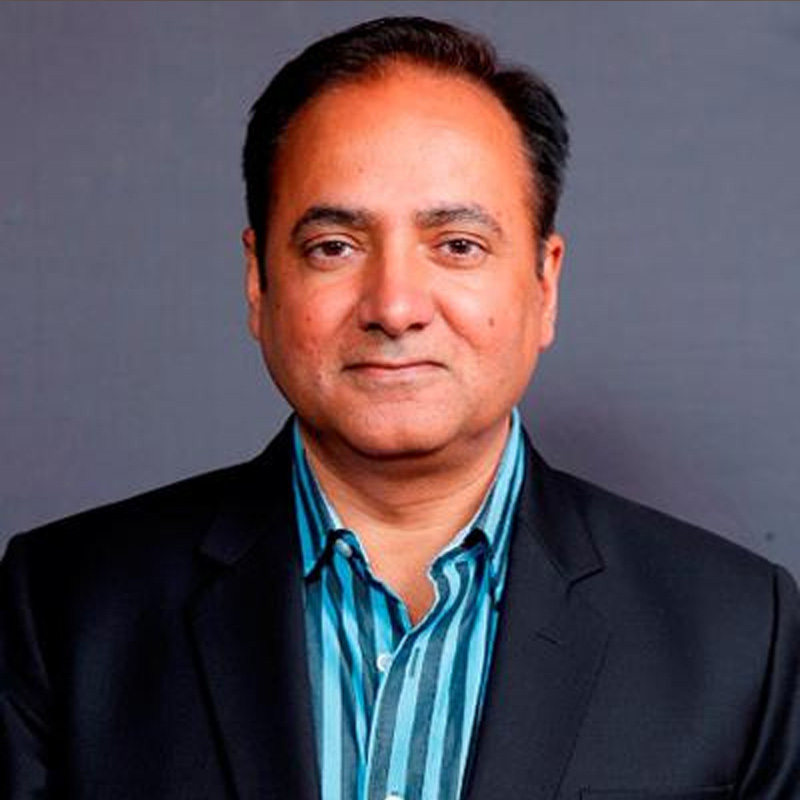
  • Let’s differentiate ‘News Channels’ from ‘Views Channels’ to save real journalism: TV9 Karnataka & News9 director Mahendra Mishra

    Let’s differentiate ‘News Channels’ from ‘Views Channels’ to save real journalism: TV9 Karnataka & News9 director Mahendra Mishra

    That there is a political-promoter-news channel nexus in the South of India is something that we have been aware for quite sometime. In all the four states-Andhra Pradesh, Karnataka, Tamil Nadu and Kerala – hardly a day goes by without the politician promoters using her/his media vehicle as a mouthpiece. After money and muscle, it’s media’s turn across South for politicos who seem to have gained mastery over the game. For them, the news channel appears to be the strongest weapon to run the political business.

    Now the big question is what happens to the sanctity of news if politicians convert the newsroom into their party office as we come across quite often…

    The words that define news are – independent, unbiased and factual. Clearly these words don’t reflect the character of these ‘news channels’.

    As a news channel, we are supposed to be the ‘conscience-keeper’ of the society. Also, we are the pillar on which the democracy rests. Aren’t we going to do just the opposite by adulterating ‘news’ with our personal agenda?

    We tend to believe that aam aadmi is intelligent enough to understand the design behind such attempts, but what we forget is that it’s the same aam aadmi that is spending time to consume (if not digest) the ‘adulterated’ news content being put out by these channels.

    It eventually leads to the dilution of the ‘real’ news consumption which sounds demoralising for the journalistically-driven news channels. It’s surely not a healthy sign for the growth of Indian news television, especially in the regional space.

    Secondly, these ‘adulterated’ news channels spoil the fearless, uncompromising and unyielding breed of journalists who are out there to make a real difference. Once you have worked with one of these news channels, it’s highly unlikely that your journalistic fire will still be alive.

    Essentially, these ‘views’ channels thrive on the propaganda, leading to a nearly deoxygenated journalistic environment. How do we expect fearless journalism to flourish in such a debilitating ambience? It’s a serious challenge we are going to face in the years to come.

    To top that, since these channels hardly command ‘sizeable’ viewership in their respective markets, they resort to underselling the channel. It means that real ‘news’ channels are also under pressure to sell the ‘air-time’ at comparable rates. This is the reason why most of the regional ‘views’ channels are bleeding badly across south today, but in the process, they have ensured that the real ‘news’ channels also suffer.

    Another important point is that the national television content regulators like News Broadcasters Association can’t really monitor the newscasts of these channels as most of them have deliberately stay away from being part of any such regulator. It poses serious risk for the audiences who may easily fall prey to their ‘luring’ tactics.

    Generally speaking, south India has around 20 news channels-directly/indirectly promoted by politicians, mostly in Andhra Pradesh and Karnataka while there are just a few which can be classified under the non-political and unbiased category.

    As TAM data suggests, the viewership share of regional news channels has grown by 15-20 per cent in south India in 2011, unlike other genres, as compared to the previous year and interestingly, this trend looks to continue in the years to come. The striking point here is that most of the growth has come from the political news channels being launched/or running across all languages in south.

    Is it clean, pure journalism that is driving this growth in South India? The answer is a straight ‘NO’. Then, can we call it a positive trend?

    Take Karnataka for instance. The state saw three major launches of political news channels-Janashri (Janardhan Reddy), Samaya 24/7(Karnataka’s Industries Minister Murugesh Nirani with Ex-CM B S Yeddyurappa’s backing) and Kasthuri Newz 24(H D Kumaraswamy).These channels put together have grown to occupy around 20 per cent of the total news viewership in Karnataka in 2011.

    I don’t see any reason why these channels shouldn’t exist or grow.These channels have as much right to telecast or show what they want as anyone else. But I believe that it’s unfair to call them a ‘news channel.’ My contention is why should a ‘views channel’ be allowed to run in the garb of a ‘news channel’.

    Let’s create another category for such channels and spare people getting confused with ‘news channels’. Let there be a different mechanism to handle this category. The idea is to ensure that people must not be fed ‘views’ in the form of ‘news’. Let’s not fake things. Let’s grow up and accept the facts as they are.

    I think 2011 will be seen as a year when these ‘views’ channels threatened to adulterate ‘news’ beyond recognition. And it went almost unnoticed. It’s high time that the country, especially south wakes up to the underlying risks of ‘adulterated’ journalism. This is going to be the biggest test for the ‘real’ news channels in the years to come. If the sancity of the news has to be restored, this battle has to be won. That’s the only way out…

  • Year of flux and expansion for English movie channels : Pix business head Sunder Aaron

    Year of flux and expansion for English movie channels : Pix business head Sunder Aaron

    The past year has been a great step forward for the entire English Movie Channel category which has gained both in size and viewership.

    2011 – Looking Back before Seeing Forward:

    The overall viewership for the category increased by a whopping 50 per cent. Channels have also realised the importance of creating brand extension programmes for their viewers to gain viewer loyalty and top of mind recall. Many new brand extension programmes have been launched by many channels to build a close relationship with their viewers.

    The Pix Movie Club is a great example of connecting with viewers beyond their television screens. The club is college-based community for students which allows them to watch new Hollywood theatrical releases for free. The main link between the channel and the club is Hollywood and not the content on the channel. Many sponsors and advertisers are also very keen to be associated with such properties since it establishes a direct and personal connection with prospective consumers.

    Distribution fees and carriage did not abate in 2011, and it was amazing in some circumstances to see new channels that address limited audiences launching and paying a high price just to make a splash in the market.

    Looking at the ratings pattern for the genre over last year you will see that the English movie category is competing as fiercely as the GEC channels. The channels are putting forth tight scheduling and great content to garner maximum eyeballs.

    There is fierce competition among the top four channels for the top spot. No channel remains at the same position for too long unlike the year of 2010.

    Pix has its own interesting trends worth quickly highlighting. 2011 has been a great year for us in many ways. The year began with Pix introducing major blockbuster films which we acquired through our exclusive output deal for all films under the SPE banner. It gave me immense joy to crack this deal since this was a foundation for a brand new Pix!

    The channel transitioned from a storyteller to a one stop destination for latest Hollywood blockbusters with current titles. The evolution is a continuous process for us and the channel is going from strength to strength. This is a very exciting time for us and even more so for our viewers who took a keen interest in the channel and its new content.

    Trends in 2012

    Content: Competition for content in 2012 will be more aggressive than ever. When it comes to the English movies category, fans of Hollywood films couldn’t be happier given they now have so many channels to choose from.

    Most of the popular titles come from studios and, therefore, scarcity cannot be avoided. Economics teaches us that with high demand and limited product prices will escalate. This trend started in 2011 and will only mount further in 2012. I expect high pricing to remain for the next year at least.

    Digitisation: Digitisation means channels must become more relevant for its viewers, since consumers will themselves hand select channels they want on their television set top box. This also marks a change in the television landscape which has been long overdue in India.

    Digitisation should also lead to greater transparency and rationalisation for all the stakeholders involved in the industry including consumers, operators and broadcasters. Indian cable systems that offer multi channel TV in India are technologically outdated and need to catch up with the rest of the world. The economics of multi channel television are better for operators as well as broadcasters.

    When you consider the great variety of channels that consumers have to choose from at low subscription prices, India may arguably have the greatest television market in the world. Keep in mind, our industry here is still very young; it’s less than 20 years old whereas private TV started in the 1950’s in the US. The evolution of television, the “Televolution”, will continue for some time.

    Digitisation is just the next stage of growth for all of those concerned. While we can look at the other markets around the world for lessons and guidance, we should also be careful not to believe that they are offering us lessons on the right or wrong way of doing things.

    The Indian television market is its own vast, and unique creature. Our own methods of packaging, pricing etc. will develop naturally as digitisation proliferates.

    Distribution: While we can expect digitisation to have an effect on the carriage fees and cost of placements, it’s hard to anticipate what exactly will happen and na?ve to expect carriage fees to go away entirely.

    Many of the channels and networks that launched with big carriage budgets meant to attain clear and immediate success are playing a valuation game rather than making their P/L a priority. At some point this will catch up with them.

    Perhaps 2012 will see some shake outs of these channels, and should digitisation be immediately successful, we might see several of them convert their business models. Hopefully in 2012, we will see lots more services being launched by cable operators including VOD, SVOD, PPV, broadband and data services, Internet radio and, perhaps, even telephony.

    Marketing: Marketing will play a more important role in a digitised environment than ever before. Marketers will need to utilise new and unique means to differentiate their brand from competition, while remaining cost efficient.

    In the highly competitive English Movie Channel category, the top 4 channels have similar programming and brand offerings. This makes it essential for the channels to market and promote themselves distinctly.

    For example, if I were to take a hoarding at Marine Drive to promote the Pix Super Movie of the Month, it may be successful in a typical (and costly) way, but it won’t create any differentiation for the brand (all movie channels have advertised themselves on prominent hoardings at one point or another). But if my communication has a differentiated message and/or is delivered via a distinct and innovative media vehicle, then the marketing communication would create a ‘differentiating’ factor for the brand as well as driving viewers to the channel.

    At Pix we try to conduct as much ‘Differential Marketing’ as possible, to really distinguish Pix from the rest of the category. It’s not always easy, and it’s certainly not always cheap. In fact, it often requires experimentation which can prove to be expensive. However, given the changing television landscape, the brands which don’t run work on their Differential Marketing will run the risk of losing out.

  • 2011: Destroying myths in the English movie channel space: Times Television Network CEO, English Entertainment Channels Ajay Trigunayat

    2011: Destroying myths in the English movie channel space: Times Television Network CEO, English Entertainment Channels Ajay Trigunayat

    The television industry in 2011 has seen a very positive growth curve, as English entertainment witnessed robust augmentation. Times Television Network decided to foray into the English movie channel category with the launch of Movies Now, in line with its commitment of bringing the best in entertainment to the urban affluent audience.

    In the year 2011, the players have faced and overcome a number of challenges which have been hampering the overall growth of the category. The first challenge was to set right the perceived notions about the category which are actually contrary to reality!

    One myth was that English movie channels viewership is driven by new titles. 89 per cent of viewership was library led in the English Movie channel category. The same has risen to 94 per cent now.

    English movie channels is a niche category. 56 million people watch English Movie channels week on week. This number is actually larger than the population of a few countries, thus making this genre an extremely popular and lucrative offering.

    English movie channels are dependent on the DTH availability for viewership. 88 per cent of English movie channels viewership emanates from cable households (HHs). India is not ready for High Definition (HD). More than four million HHs have HD/HD ready TV sets.

    While Movies Now has been a pioneer in the broadcast industry, setting up a 24-hour HD channel posed a host of problems. Times Television Network has no HD experience, unlike an MNC network which has extensive experience in many other countries! it involved extensive research, analysis, planning and implementation of the technology. Additionally, upgradation of current skill sets was done for all professionals.

    Unreasonably high carriage fee is a malaise that has spread like cancer and is impeding the growth potential of the TV industry in India. There is up to 90 per cent of underdeclaration on the number of HHs by the local cable operators (LCOs).

    While broadcasters should be earning subscription revenue, they end up paying humungous carriage fee which is highly detrimental to the business. However, the government mandate to digitise cable networks across India will bring a significant transformation in the industry.

    Challenging the genre leader: For the past two decades, two players, Star Movies and HBO, have duopolised the category with no other player even being able to get close to their performance.

    Movies Now launched with the aim to challenge the status quo and demolished the dominance of Star Movies & HBO.

    Movies Now changed the rules for the category, being the only English movie channel to provide homogeneous presence and reach across all eight metros as against 5/7 metros being provided by other channels. This marked the end of an era where Star Movies and HBO ruled the roost for over a decade.

    In a reverse of the accepted norm, the success of Movies Now has now prompted competition to drive programming on library led content instead of the new titles. As a result the viewership contribution of the library led movies has increased from 89 per cent to 94 per cent.

    The English movie channel category is riding on a robust TV growth in 2011. The TV industry in general has grown in both C&S and Digital HHs. Total Television HHs have now reached 142 million, C&S homes are at 116 million and Digital HHs have grown to 26 million. This is further expected to grow to 42 million by the end of 2012.

    Opportunities in 2012: All one million+ towns is the next big opportunity. There is a substantial growth in the reach of DTH and digital TV in rural India and we strongly believe that the way-forward for the television industry is capturing the audience attention in the 1 million+ towns.

    Since the time of launch, Movies Now has strengthened its viewer base and has been homogenously present across the eight metros unlike other players who spoke about 5/7 metros. In 2012, the focus is clearly going to be on the 1 million+ towns.

    The 2011 census shows that there are 53 towns with 1 million+ population from 35 towns in 2001.

    Digitisation: The government mandate to digitise cable networks across India will bring a significant transformation in the industry. Currently, the digital viewership contribution is 27 per cent to the English movie channels which will go up to 50 per cent by the end of 2012.

    The increased digital penetration will result in raising the bar of audio-visual reception and experience. Consequently, channels placed on high unwanted frequencies will also be clearly visible creating parity in reception quality and in turn result in enhanced viewership.

    With CAS being mandated soon, the carriage fee should go down and subscription revenues should take a leap, resulting in healthier margins for broadcasters.

    Digital & Social Media: The digital and social media space is growing by a whopping 140 per cent and there is a whole new host of avenue for the TV channels to engage directly and regularly with viewer beyond TV.

    Being a cost effective medium, we will see a major refocus in allocation of the marketing budgets towards digital and social media space.

    Electronic Programme Guide (EPG) Marketing: While this is currently non-existent in India, it is an important focus area and has the potential to considerably enhance user experience.

    The EPG allows television viewers to navigate scheduling information and can be made available through television (on set top boxes), mobile phones, and on the web. While this is being overlooked currently, a strategic focus and implementation is imminent with the right message in terms of text & design needed for aiding channel navigation.

    All in all, this is an exciting time to be in the English movie channel category and one can look forward to an action-packed 2012 with the players revving up for hot competition.

  • Coming Soon- A Tsunami of Creativity: Reliance Industries Ltd President of media and entertainment Jagdish Kumar

    Coming Soon- A Tsunami of Creativity: Reliance Industries Ltd President of media and entertainment Jagdish Kumar


    Year 2012: “I missed the TV show last night but watched the TV show on my IPad later”, a friend informs me.

    On the face of it, that statement looked perfectly normal. But wait…just think a bit more on that statement. Why should a video show be known as a “TV show” and be tagged only to television, which is but a mere technical device for watching video content?

    Extending this argument further why should the TV programming industry, which is a thriving and flourishing content industry, be known by only one of the many consumption devices which consumers use for watching video content? Nomenclatures like “Television industry” and “Film industry” is rapidly becoming meaningless; it is time to rename these industries by a label, which truly reflects their character: ” Content Industry”.

    Circa (not too far in the distant future): There will come a time when the same friend will tell me  “My IPad is not working but I watched the video on Television ” or ” I surfed the Internet on my smart TV”.

    Now for some statistics to set the background to the point, I am attempting to make on creative forces: On last count we are a nation with a population of 1200 million people. For a country of our size that prides itself for the progress we have made in the IT industry, it is a shame that broadband penetration is currently abysmally low at 1 per cent with 12 million broadband connections!

    The figure for broadband penetration will be embarrassingly smaller when we consider at least 1 Mbps as the cut-off to define a real broadband connection instead of the current definition of 256 Kbps. The network effects of ubiquitous real broadband connectivity on a nation‘s economy are well proven and demonstrated. Various research studies have shown that a 10 per cent increase in broadband penetration can increase GDP by 1.5 per cent. It is estimated that India lost approx. $100 billion in GDP due to the failure in achieving the broadband penetration target of 40 million by 2010 set by the National Broadband Plan, 2004.

    Thankfully various initiatives, both private and public, are at work to rectify this anomaly. The stated target of the Indian government is to reach a level of 100 million broadband connections by 2014. Given current indications and trends, we will hopefully surpass this target by a large margin, mainly driven by portable broadband connectivity devices like Tablets and Smartphones.

    Now back to the topic under discussion: The current state of the video industry is characterised by nearly homogenous content which panders to the overwhelming demands of a vast majority while completely ignoring the diversity and plurality of our nation. There is no system, which incentivizes and encourages creativity and innovation. All players in this space, be it moviemakers or producers of other forms of video entertainment, have been drugged by a market system which panders to the lowest common denominator. Viewers are narcotized into a cloistered environment by a constant barrage of award ceremonies, high-cost and alien format shows, “scripted” reality shows and highly emotive and blingful performances masquerading as social drama.

    The tyranny of weekly programme ratings and vagaries of an advertising based business model coupled with the imperfections in the content distribution system by way of under-declared subscribers and carriage fees has shackled the content industry. Resource allocation is governed by businesses, which are sustained on the principle that puts a disproportionate focus on combating competition to maintain pole positions in the weekly ratings charts rather than creating innovative content for the consumer. Add to this the vanities of the participants and ego clashes between creative personalities, we have a potent mix that has drawn the content industry into a vicious vortex trapping all the players: creators, artists, managers, media agencies,advertisers, distributors and consumers.

    What does the future hold for the content industry? I foresee a combination of 4 forces that will define the way forward for the content industry:
    a) The proliferation of DTH connections
    b) The last mile digitisation drive by the Government of India
    c) The growth in broadband connectivity and
    d) The unleashing of creative forces that can easily find avenues for exhibition.

    Digitisation enabled by the above mentioned forces would equip content providers with the ability to reach their target audience with minimal intervention from intermediaries. Content creation will become more consumer focused and not get distracted by short-term demands of the current system. Content will not fall into strait jacket formats of half hour episodes or three-hour movies; even a one-minute video can deliver a compelling and riveting story provided it has the ability to reach relevant viewers, who will be more than willing to attribute value for good quality.

    Consumers will be the winners in a digital environment. They will not be treated like sheep who are shepherded to watch content which is pushed down to them without any consideration to their time, needs or preferences. They will be freed from the clutches of the vanity of channels and their programming schedules.

    The technique for making videos is fast becoming easily accessible to the common man. Every person who has a smartphone with a camera has the potential to create a video to strike a primordial chord and become as sensational as the recent song, Kolaveri Di. Such smartphones are rapidly becoming a necessity rather than an item of luxury.

    In my view, the fourth force mentioned above, “unleashing of creative forces”, is going to be the surprise element in the future. With the inherent creativity and “jugaardness” in Indians, I am betting that we will witness some ingenious form of content, application or service, which ignites a primal human instinct and becomes a rage in a short time. Facebook is an example that springs to mind; Facebook tapped into a primary human need for social interaction and created an enterprise that has reached a value of nearly $100 billion in a short span of 8 years! Such an enterprise is waiting to happen in India in the content space.

    A word of caution to people who think that television as a device for media consumption is losing the battle for eyeballs. Evidence from developed markets has shown that newer media consumption devices like Tablets and Smartphones supplement television viewing. Research has shown that proliferation of newer devices has not cannibalized television viewing; it has actually increased overall media consumption. People watch television while simultaneously interacting with other devices to enhance their viewing experience.

    Like all other industries, the content industry is also akin to a living organism facing relentless forces, which may be either headwinds or tailwinds to the players in varying proportions. And like living organisms, the content industry will learn to adapt and change.

    The race to get to the Consumer is getting exciting. Thankfully, it is a never-ending race with only one permanent winner who has no rival… the Consumer!!

  • 2011: Building leagues and searching for life beyond cricket

    2011: Building leagues and searching for life beyond cricket

    2011 was a year where sports took a leaf out of the success of the Indian Premier League (IPL) and announced leagues following a similar franchise format. Leagues ranging from football to hockey are being built to offer content to sports broadcasters.

    Sports marketers believe that there is an audience for sport other than cricket as long as it is packaged, marketed and organised well in a professional manner.

    As far as cricket is concerned, the big news was the termination of Nimbus‘ rights for India cricket by the BCCI. On a more positive note, the sport did well for advertisers in terms of ROI.

    As far as the push towards non cricket is concerned, two leagues were announced this year in motorsports and American football. Nimbus and the Indian Hockey Federation (IHF) concretised their plans for World Series Hockey (WSH).

    The property for Nimbus will serve as a feeder for Neo Sports. Wizcraft International director Sabbas Joseph expects this franchise to break-even within five years. But given that politics has been responsible for the national sport going down the drain, it is not surprising that the initiative has run into some rough
    weather.

    In order to take the sport of horse racing to another level, R1 was launched marking Bennett Coleman‘s first big push into sport. The push also extended to sports entertainment with WWE opening an office in India.

    Life In The Fast Lane: It is not just mass sports that are going the league way to gain a wider audience and boost their commercial value. In motorsports, Machdar Motorsports announced the launch of a racing league at a cost of $12-15 million a year. It will no doubt be encouraged by the response that the first F1 race got in Delhi. The league, called i1 Super Series, will see the likes of Bollywood Badshah Shah Rukh Khan owning a team.

    The league, though, has been postponed to January next year, partly due to the fact that franchise owners want time for marketing activities. Also, it has been finding it tough to get corporates to own teams for I series, which is why it had reduced the ownership price from $5 million to $3.5 million.

    1 Super Series managing Darshan M expects the franchises, who have ownership for 15 years, to recoup their investments in the fourth year. Each team will race with two cars forming an 18-car grid.

    Aiming to grow the amount of sports it covers, Ten Sports has taken the broadcast rights for the event. Ten Sports CEO Atul Pande believes there is place for a domestic racing league. “Our programming mix is the best among the sports broadcasters and this property is a significant addition. With the kind of capital and marketing dollars chasing it, the event will gain traction,” he says.

    And for Khan, this offers an opportunity to get involved with other sports ventures apart from his Kolkata Knight Riders IPL franchise.

    GroupM ESP managing partner Hiren Pandit notes that the involvement of celebrities like SRK will lend visibility. “But ultimately it is the quality of sport being dished out that will determine its fate. At this point I am not sure if it will turn out to be a good TV sport. This will be a toy for the big boys.”

    Taking a Punt: In order to boost the profile of horse racing, RWITC formed a joint venture with Bennett Coleman and Procam to launch R1.

    R1 has 13 races lined up across the country in its debut year. Aired on Ten Sports, R1 kicked off with the Indian 1000 Guineas on 11 December 2011. The aim of the stakeholders is to position the sport as being cool and trendy so that younger viewers start tuning in.

    Zee is pushing the property on its other channels like Zee Café and Zee Studio. Bennett Coleman will also heavily promote the event across its different properties like Times Now.

    For the first time in the history of this sport, behind-the-scenes action will be captured, which include the jockeys‘ room and the stewards room. The live world feed will include new cameras including a Super Slo-Mo Camera.

    According to Pandit, horse racing operates in a tight segment. “It is seen in India as a gamblers sport. Some brands will associate with it. Whether they broaden the audience base or not remains to be seen,” he says.

    EFLI makes an entry: The Elite Football League of India (EFLI) announced a league aiming to grow American football in India. Based on the franchise model, it starts with eight teams, building up to a total of 52 by 2022 representing all Indian cities with a population in excess of one million.

    With Ten Sports as its partner, the league will kick off in November 2012 in Pune. Says EFLI CEO Richard Whelan, “American football is fast, furious and fun to watch. Indian viewers are now watching sports other than cricket. There is no doubt in our minds that the EFLI has picked the right time for its Indian touchdown. Even women are keen on watching sports.”

    Nimbus‘ Woes: Speaking of the bat and ball game, Nimbus is on a sticky wicket. It moved the Bombay high Court over its deal with the BCCI (the Board of Control for Cricket in India) that got terminated for non payment of dues.

    The BCCI has time to find a new broadcaster as there are several months to go before India plays a series at home.

    Ad revenue scene: Sports broadcasters earned an advertising revenue of around Rs 21 billion in 2011, a healthy growth over last year.

    Agrees Lodestar UN CEO Shashi Sinha, “2011 was special for sports as there was the cricket World Cup and the IPL. You had the highs of big properties as well as events that helped build the image of sports. FMCG brands also got more involved with cricket. The economic slowdown has not impacted sports ad revenue.”

    There is a challenge, though, in 2012 as ad revenue from cricket could degrow in terms of monies due to a lesser number of high profile events.

    Sinha finds the entry of new leagues an encouraging sign. “The surface of sports in India has not been scratched beyond cricket. There is scope for leagues to work as long as investments are made. It will be a question of how a property is leveraged and marketed.”

    The Cricket Rights Scene: On the cricket rights front, 2012 will see a lot of action as a host of properties come up for grabs.

    In 2011, Zee took the crucial step of renewing its rights for Cricket South Africa. Zee also renewed rights for Zimbabwe cricket, while ESPN Star Sports (ESS) retained Australia.

    The rights for India, England, West Indies, Pakistan, Sri Lanka, Bangladesh and New Zealand are all due for grabs.

  • Carving out a space for independent agencies: Scarecrow Communications founder director Raghu Bhat

    Carving out a space for independent agencies: Scarecrow Communications founder director Raghu Bhat


    Mark Zuckerberg started his company when he was 20 years of age and Steve Jobs when he was 22. However, most of the independent agencies in India have been started by guys above the age of 35. Also, a lot of them had already attained professional success in their jobs at network agencies. This means, an independent agency is largely born out of a network agency’s inability to retain its senior creative people. Dissatisfaction in their current working environment has forced them to turn entrepreneurs and start their agencies, rather than the Silicon Valley mindset – the fierce desire to create a multi-million dollar valuation firm in the minimum possible time.

    This brings us to the next question? Why are senior creative people unhappy in a network agency? In our viewpoint, there are two big reasons. One is lack of creative freedom or independence. In many cases, the final creative call is taken by a suit. This can stifle creativity and individualism. The other is, lack of compensation proportional to their contribution to the agency. The latter is still negotiable but the former is indispensable for a genuinely talented creative guy to survive.

    In an independent agency, the potential of the creative person gets unshackled. His ideas don’t die before they reach the client. For this reason, many independent agencies are doing sparkling work.

    We believe that there is loads of creativity in the big network agencies. What they don’t have is a mechanism to ensure that the best ones reach the client. They do good work but the hit rate percentage is lot lesser than the smaller agencies. Independent agencies offer quality creative thinking, flatter structures, quicker response times, personalised attention and lots of passion.

    The other big advantage is that in an independent agency, the creative people get to hear the business problem itself, from the horse’s mouth as they get to deal directly with the big decision makers. We believe the brilliance of the creative solution is proportional to the clarity with the business problem is articulated. This puts them in a vantage position to solve it with maximum efficacy.

    Creative people get the liberty to present ideas they truly believe in. There are no unnecessary rules, no baggage, no hierarchy. Both agency and the client have only one objective – to solve the problem at hand in the given budget and timeline. This single-mindedness of agenda and purity of purpose is hugely liberating, from a creative standpoint.

    The other big differentiator for an independent agency can be the ‘creative culture’. At one level, this is intangible but at another level, it is very real as it is something employees experience on an everyday basis. Culture is the aggregate of the agency’s actions, internally and externally. Most network agencies behave in a similar fashion. They do the same things while dealing with employees and clients. Also a culture is created when most of the people in the organisation believe in the same things. Therefore, it’s easier for an independent agency to carve out its own distinct culture. Doing so will help it become a talent magnet and lead to a happy productive workplace.

    Admittedly, there are many challenges too. Some of the them are not very different from those faced by a network agency. For example, the ability of an independent agency to grow depends on their ability to attract top talent, at the senior and junior levels. They have to manage finances well. A weakened economic sentiment, the prospect of Europe being in recession for 5-10 years and a bearish stock market might mean lower marketing spends by Indian companies. This could hit the agency’s capacity to invest in people as they aren’t sitting on huge cash reserves.

    The independent agency also has to ensure it doesn’t become a victim of stereotyping. Based on a hi-profile campaign, an independent agency can quickly acquire a reputation for specialisation, without even realising it. In India too, there are independents who are known as ‘lifestyle’ agencies or ‘mass FMCG type’ agencies. While the agency may have the capability to handle different products across diverse audiences, they can still lose out, as the perception might overpower reality. The best way to counter this is to aggressively showcase work across categories and acquire a varied portfolio as fast as possible.

    One of the accusations against independent agencies is that they are creative boutiques, dependent solely on a pair of creative people. They may not be seen as ‘organisations’. Their capacity to deliver integrated solutions or handle big businesses is sometimes questioned. Bandwidth can become an issue. Some of them may not have the ability to hire great account planners. This is a reality that the agency heads have to face.

    To deal with this, they should craft out a short term and long term strategy. It’s important to have one eye on the present without losing sight of the future. A conscious attempt should be made to expand the bouquet of communication offerings. The independent agency should be on the lookout to develop expertise in related areas like design, digital, strategy, retail, rural marketing and healthcare. This will make the agency less vulnerable to recessionary trends.

    Moreover, it will accelerate the learning curve and ensure that the agency heads aren’t caught up in attending to just the short-term contingencies. In case the agency head plans to sell off his agency after a few years, this will also help in the valuation. It’s also important to plough back some money into making a decent office as that’s where people spend 10-12 hours every day.

    Ultimately, the independent agencies will co-exist with the large network agencies. There will be ample opportunities for both. The Indian economy is a domestic consumption story and we expect that growth will happen at a steady if not spectacular rate. The creative people who will enjoy embrace the added responsibilities (Cash flow, staffing, client management, accounting) of running the independent agency, along with the creative tasks, are the ones who will stick it out. The creative guys who want to concentrate only on doing creative work will be tempted to sell out.

  • Sports broadcasting at the crossroads of survival and glory: Zeel Sports Business CEO Atul Pande

    Sports broadcasting at the crossroads of survival and glory: Zeel Sports Business CEO Atul Pande


    Well, another year has gone past for the sports broadcasting industry in India, and another year which has raised more questions than answers, as the industry stands at the crossroads of survival and glory.

    Year 2011 started with a bang. A very successful World Cup – at least from an India team view point driving record ratings. The Indian teams performance, a dream semi-final and a terrific final ensured that the ODI got back to an even keel against their more illustrious counterpart – the T20. IPL demonstrated first weakness in the ratings of this very successful event, and the English tour started the demise of an illustrious Indian team, and as I write this, our performance in Australia has affected the cash registers even more. The fans mourn the performance of a team, which could do no wrong a year ago, which is reflecting in immediate ratings and the general mood.

    In the middle of all this, there was a small matter of a broadcaster falling out with a cricket board, with ramifications which could redefine the sport going forward.

    We live in India, and sometimes we forget that sport is more than cricket, so it‘s time for some statistics. The sports genre delivered a growth of 11 per cent in gross GRPs (gross rating points) delivered in 2011. The growth comes down a bit if one includes IPL, but the market share of the genre hovers around 7 per cent of all GRPs delivered. Interestingly, cricket grew driven by the World Cup with 85 per cent share, and non cricket GRPs actually shrunk this year, demonstrating the event driven nature of the Indian sports broadcasting milieu. The reach also increased this year with 5 million more households gaining access to the viewing pleasure of sport.

    Football demonstrated selective growth, and in some metro markets is a clear number 2 sport to cricket now. Also, clearly as a genre, there is a divide between metro / non metro where in cities like Mumbai and Delhi sports genre share is now climbing into the teens in terms of viewership.

    The launch of the HD service this year has opened another vista for the serious viewers and will open a completely new high value market, which will grow rapidly. Sports viewers on HD will touch a million by the end of this fiscal and are expected to grow to 5 million in two years time – a significant constituency.

    The advertising revenues struggled, especially towards the later part of the year. Subscription revenues grew modestly, with DTH (direct-to-home) again driving most of the growth, and financial model of all broadcasters in this business continues to be challenged.

    As predicted last year, new sports leagues have started burgeoning , and there is clearly a ground traction towards this initiative. Long term , it appears that all key sports will have their own structured leagues, with revenue models around them. Whether television can support all of them is a matter of discussion and evolution, but the on ground model continues to develop in India. The numbers initially will be modest but will help towards building sustainable platforms for these products in India.

    What was also interesting was to watch the other cricket boards launch their own versions of IPL, and it remains to be seen how these products will impact their markets, and more interestingly, the Indian market – which will have to bankroll these products in some way. The role of our cricket board will also play a part in these leagues as they grow and develop. Sri Lanka Premier League was deferred to 2012 after an aborted take off in 2011, but the Bangladesh Premier League appears to be a reality in the earlier part of 2012.

    The elephant in the room continues to be Cricket, and that is the issue, which all constituents are grappling with. It should come as no surprise to all if I mention that all broadcasters are struggling with the P&L around the sport. The board / broadcaster issue which I mentioned earlier is driven by the commercial equations of the product. It appears that unless the end subscriber starts paying for the cricket which he watches, and the revenue finds its way to the broadcaster, we are heading into a rather convoluted puzzle with few immediate solutions.

    The regulatory piece also does not help with mandatory sharing and stipulated pricing, which depresses the pricing across all categories, and also limits placement and revenue generation opportunities at the distribution level.

    The other issue which needs redressal is the general structure of the game per se. There is a crisis of sorts on the cricketing structure. Test cricket and its primacy appear under threat; there seems to be too much supply of cricket happening and there seems to be lack of cohesion between the ICC and its members on the way forward with the overall structure and scheduling. For the broadcasters, it is becoming a difficult task to be able to value these events in a predictable way for future revenues. In some markets Internet is now a credible force, and Internet piracy is a significant dampener in the current scheme of things.

    It is incumbent upon all stakeholders now to come together and find solutions for the long term sustenance of the product. 2012 will be an interesting year, which may drive much structural action on our cricket broadcasting model.

    With so much uncertainty around the main sport, segmentation will be the buzz word in the industry around non cricket sports. While viewing shares in some of the sports continue to be relatively low, our sheer numbers will help us in building profitable models around various products. I expect that the non cricket action will continue to accelerate at the ground level. And while we may not see or feel much happening here because of the sheer mind space cricket holds in our ethos, the real story and action is here. What is happening now will change the Indian sports viewing landscape, the results of which we will see in 5 to 10 years from now.

    Impending cable digitalisation also needs a mention in the scheme of things. It is possibly the single biggest immediate opportunity facing the business today. The DTH experience has demonstrated that addressable systems can drive a lot of revenue traction for compelling content and sports is clearly at the top of the ladder in terms of specific customer affiliation. Also, with superior delivery vehicles, transparent reporting and better customer interface, this platform brings to all the broadcasters the opportunity to segment, differentiate and build revenue streams around the distribution strategy of specific operators. I foresee this platform to be the next driver of sports distribution revenues in India. The road promises to be rocky but the view in the end should be stunning for all concerned.

    So sit back, relax, and enjoy the action. 2012 will be a defining year for this business in our part of the world, and events as they unfold should be gripping !!